Tag: Pepsi

  • APPIES 2012: 100 best marketing campaigns to be presented LIVE

    By A Correspondent


    Fierce competition is expected at APPIES 2012 where 100 of the top marketing campaigns from 16 countries in Asia Pacific will vie for 10 Gold Medals. An annual two-day festival of the best marketing ideas, APPIES brings together the brightest minds in the industry from across 16 countries to celebrate excellence, network and exchange knowledge. Now in its third year, APPIES 2012 brings the audience up close and personal with some of the most compelling campaigns through its unique live presentation format.


    APPIES 2012 enables brand marketers/campaign creators to demonstrate their stellar ‘Show, Share and Sell’ skills, thanks to the unique ‘4-6-10’ format. Each presentation will begin with a 4-minute showreel video summarising the entire campaign, followed by a live 6-minute exposition of the campaign’s key highlights by the brand’s marketers/ campaign creators. Then comes the interactive 10-minute session where each campaign will be cross-examined by the judges and audience members.


    Building on last year’s list of campaigns by companies and brands such as P&G, Nestle, Pepsi, McDonald’s, Fonterra, Singapore Tourism Board, Bacardi, Adidas and Vodafone, APPIES 2012 will continue to showcase the best campaigns from various industries that span across highly-diverse markets in Asia Pacific region.


    The 100 selected marketing campaigns will cover a broad range of six product/service categories that include Consumer Durables, Consumer Services, Food & Beverage, Non-Food FMCG, Business Services and Government, Cultural, Social & Environmental campaigns.


    APPIES 2012 will also host special keynote sessions and panel discussions on The Future of Industry. Marit Kievit, Global Brand Director (Lux) at Unilever and Chris ter Steege, Director (Digital Integration), Integrated Marketing & Communications at Philips Asia Pacific have been announced as keynote speakers at APPIES 2012. With advisory and assessor panels comprising top marketers in the region, APPIES 2012 is designed to offer excellent networking and knowledge sharing opportunities for industry professionals.


    Marit Kievit is the Global Brand Director for Lux (Unilever). The multi-cultural team led by Marit has developed breakthrough and award-winning integrated campaigns. She was also a permanent member of Axe’s global brand team, setting the global innovation agenda for one of Unilever’s most successful brands. Most recently Marit joined the global leadership team for Lux as a global brand director, based out of Singapore.


    Chris Ter Steege is a communication professional with an obsession for innovation and creativity in marketing, brand communication, digital and social media, and leading the creation of impactful experiences through integrated communication strategies and tactics. With 10 years experience, Global to Local, B2B and B2C, at Philips, Chris now leads regional cross-sector digital programs in Asia Pacific, co-leads the region brand campaign, works with sector marketers to deliver award-winning campaigns, and manages the digital team in one of the most diverse and fastest growing regions in the world.


    Leanne Cutts is Vice President, Marketing for Kraft Foods Asia Pacific Region, based in Singapore. She is responsible for driving the growth of the gum, candy, and powdered beverages categories as well as leading consumer insights & analytics and driving marketing excellence in the region.


    The Institute of Advertising Singapore (IAS) was founded in 1990 with the aim to position Singapore as an internationally recognised “centre of excellence” with world class advertising professionals, international best practices and industry leading creative output. The IAS has several highly successful business platforms for the advertising and marketing communities to meet, collaborate and raise the standards of the industry as well as encourage continuous education. The IAS has also organised the Singapore International Advertising Congress since 1998.


  • Brand India saving grace in time of crisis

    By Namrata Singh & Reeba Zachariah


    There’s more to India than just its over-emphasized status of being the most populous democracy in the world. Random economic facts like India being the largest producer of milk, the largest consumer of sugar and spices as also the largest consumer of gold till last year, crop up now and then.


    But there have been achievements in the last few years which have put India on the world map. Over the last couple of years, India has been seen stamping its presence in the league of global leaders by the strength of its economic power.


    Consider these facts: The Tata Group is the largest manufacturing employer in the UK; Ireland’s richest person — Pallonji Mistry — is an Indian ; Coal India is the single largest coal producer in the world; India is the largest whisky manufacturer in the world and the Taj Group is the largest chain of hotels in Asia.


    Despite a generous trickle of negative news, the list of these positives is also getting bigger.


    Brand India today is not just about economics. A significant way in which

    India is asserting itself is through its soft power.


    According to Bhaskar Chakravorti, senior associate dean of international business & finance, The Fletcher School, Tufts University, this “soft” presence is India’s greatest asset in making sure it counts on the world stage.


    Household brand names such as Citigroup, Pepsi and Motorola are associated with an Indian CEO. Clearly, India has moved on from being a nation of snake charmers and appears to be on its way to become an economic power.


    Soft power aside, it’s also working its way through innovations. The list includes , Nano, the cheapest car in the world from Tata Motors; Aakash, the cheapest tablet PC in the world, priced at $46; and other cheap tablet PC initiatives by private companies.


    However, there are some missing pieces too. “India should surely move forward in the area of innovation where we can capture the value from our intelligent cheap resources from being just a provider of cheap labour. As of today, most companies (Apple, Microsoft, Google, Intel, etc), especially in IT, that generate maximum value from innovation, rely on resources from India and we are clearly not getting the deserved share of the value created,” said Thomas Kuruvilla, MD, Arthur D Little, a consulting firm.


    Richard Rekhy, head of advisory practice at KPMG, a global consulting firm, however, believes India has some way to go. “But India, with 100 companies of over a billion dollar market cap, has established its position globally which is why GE set up its first R&D centre outside US in Bangalore. At the same time, Indian banks have only 2 per cent bad loans versus 20 per cent in China,” he said.


    In the mid-90 s, on a representation made by Indian exporters, the government had removed the mandatory use of the ‘Made in India’ tag from goods exported. The law still exists on paper. Ostensibly, Indian exporters were embarrassed of using it then. But, today, no one is shying away from using the tag.


    Source: The Economic Times
    Copyright © 2012, Bennett, Coleman & Co. Ltd. All Rights Reserved


  • The Anchor: 5 ways a brand can stay relevant

    By Alpana Parida


    #1 Rejuvenate

    An old brand like Pepsi has remained relevant for Gen X in the ’80s and now Gen Y as it has constantly rejuvenated itself. If a brand never changes the way it appears – it atrophies and dies. It must constantly rejuvenate itself to infuse freshness and youth into the brand.


    #2 Reinvent

    Environment keeps changing and brands need to reinvent the brand proposition to create relevance. Amul Ghee was slowly losing relevance even in homes where ghee was loved. A dry roti was becoming the norm. At DY Works, we realized that the consumer needed a nudge in reassuring them that there was enough according to Ayurveda that said one spoon a day was good for you.


    #3 Repurpose

    No amount of logo rejuvenation can keep a brand from dying if it does not repurpose its core deliverables in a changing environment. By not taking the threat of digital cameras seriously and in a timely manner, Kodak joined the brand graveyard which is littered with examples of giants who did not read the writing on the wall.


    #4 Retract

    Flexibility is key. Admitting mistakes is greatness. Wrong decisions get taken but brand leaders, like great generals, know when to retreat. Coca-Cola became an American Classic when it quickly retracted its New Coke formulation.


    #5 Restore

    As I was passing by Metro Cinema in Mumbai the other day, I was struck by how little interest there is in restoring its glory. Metro Cinema (1938) is an example of our Art Deco heritage. Today it is a multiplex movie theatre in Mumbai. It was built and originally run by Metro-Goldwyn-Mayer (MGM), the Hollywood studio. This has the ability to become a destination landmark and the equivalent of the Kodak Theater in LA for Bollywood. Sometimes, all that great brands really need is a little restoration.


    Alpana Parida is President, DY Works.


  • IPL 5: Online ticket sales picking up pace

    By Ameya Chumbhale


    If ticket sales of the fifth edition of the Indian Premier League are anything to go by, India is certainly not cricket fatigued.


    Mumbai Indians, which began its online sales on March 1, claims to have sold close to a third of its tickets already. Some of these tickets are priced as high as Rs40,000 – the most expensive among all teams.


    Pune Warriors (PWI) and IPL winners Chennai Super Kings (CSK), as well as Delhi Daredevils are also doing good business, said bookmyshow’s chief executive officer Ashish Hemrajani. Bookmyshow is the online agent for five IPL teams, including Mumbai Indians (MI).


    Online sales are critical to the success of the IPL as stadium sales usually commence only a few days before the match. “Last year, we sold close to 60per cent of our ticket inventory online through thermal printing which enables us not to have restriction on quota for online sales. This means the system allows us to print tickets similar to international practices and also allows the Mumbai Indians fans to choose their own seats,” said an MI spokesperson.


    Hemrajani says bookmyshow has already sold 50,000 tickets this year. “Mumbai and Pune are doing really well, while ticket sales of Rajasthan Royals and Kings XI Punjab have picked up over the last two days,” he added.


    The inaugural match on April 4, between the CSK and MI in Chennai, is sold out. Chandrabhan, general manager, marketing at Chennai SuperKings said online tickets for the second and third matches are also sold out. CSK has kept 60 per cent tickets for on-ground sales as “Chennai is known for fans queuing up to buy (movie and cricket match) tickets,” he added.


    Since the first IPL season, on-ground ticket sales and television viewership have moved in tandem, say media planners. “Both went up for the first three years of IPL, and both came down last year. The link is very strong between the two,” said Ajit Varghese, managing director (South Asia), media agency Maxus and Motivator.


    Multi Screen Media, the company that operates Sony Max, which broadcasts IPL matches, has signed six sponsors till date. Among them are Vodafone, Pepsi, Hyundai, Idea and Tata Photon. It had nine sponsors last year. MSM, according to sources who did not want to be named, has sold only about 50-60 per cent of the ad inventory until now as against 75-80 per cent around the same time in 2011.


    According to industry sources, MSM is charging around Rs5 lakh per 10 seconds and they expect it to rise if television viewership goes up in the first seven to eight matches.

    MSM president Rohit Gupta confirmed that the company had signed six to seven sponsors and some of them have come on board for deals valued at over Rs40 crore.

    “We have sold nearly 70 per cent of the ad inventory and expect it to reach 80 per cent before going into the tournament,” said Mr Gupta who is confident of filling up the ad spots, as it will take only a sponsor or two more to do so.

    Generally, associate sponsors get a certain percentage of the ad inventory as a part of the deal.


    Source: The Economic Times

    Copyright © 2012, Bennett, Coleman & Co. Ltd. All Rights Reserved


  • Brand race as Ormax study reveals Day After Cricket recall

    By A Correspondent


    According to Ormax Media’s Cricket Advertising Recall & Effectiveness research – Day After Cricket (DAC), the top recalled brands during IPL 4 were Vodafone, Pepsi, Coca-Cola, & Hero Honda.


    Ormax Media released topline findings of Day After Cricket for IPL 4, while announcing the launch of the research for IPL 5. The table below lists the top brands recalled by the viewers in the day-after recall research conducted during the fourth edition of the IPL.


    Top 10 Brands Recalled (IPL 4)
    Rank Brand
    1 Vodafone
    2 Pepsi
    3 Coca Cola
    4 Hero Honda
    5 Airtel
    6 Tata Docomo
    7 Kingfisher
    8 Idea
    9 Volkswagen
    10 Nokia


    The top 10 most liked campaigns or promotions in IPL 4 are listed in the table below.


    Top 10 Most Liked Campaigns (IPL 4)
    Rank Brand
    1 Vodafone
    2 Cadbury Dairy Milk
    3 Coca Cola
    4 Tata Docomo
    5 Volkswagen
    6 Thums Up
    7 Glucon D
    8 Hyundai
    9 Hero Honda
    10 Kingfisher


    Top 5 innovations with the highest brand recall for the sponsor were Karbonn Kamaal Katch, Maxx Mobile Strategic Time Out and Kingfisher Third Umpire Decision, Kingfisher Fair Play Award and DLF Maximum respectively Day After Cricket for IPL 5 will be conducted in two phases. The first phase involves daily day-after tracking of Ad Recall, Ad Likeability & Innovation Sponsor Recall. The second phase is the post-event association effectiveness measurement phase, customized for a brand.


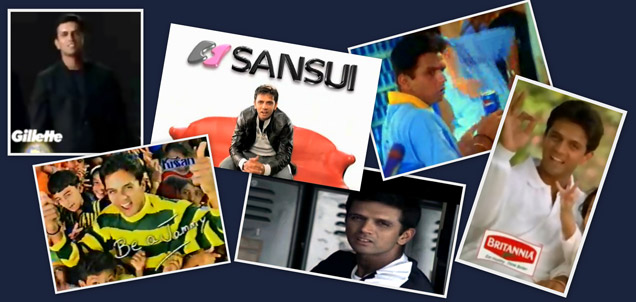
  • Celebrating Rahul Dravid via his TVCs


    By Johnson Napier


    He may have bid adieu to all forms of international cricket but it is impossible to erase the indelible impression that “Jammy” has left on the minds and hearts of his many followers and well-wishers. Having delivered with the bat consistently on the field for team India, Rahul Dravid also managed to contribute in pushing the awareness and popularity of brands that nominated him as their ambassador. Not that his brand endorsement journey will take a downturn now that he has called it a day – in fact advertisers may well flock to him even more as The Wall never crumbles even under dire circumstances – but India’s most dependable cricketer does demand a befitting advertorial tribute as we survey his endorsement journey that has spanned over 15 years. (pls also check: essay by R Sridhar + the Amul ads on Rahul Dravid)


    We dig up noteworthy endorsement commercials that see Rahul “The Wall” Dravid doing what he does best: assuring the authenticity, trust and longevity of the brand – attributes that best define the indomitable cricketer who has championed his country to umpteen unassailable victories.


    Kissan Jam

    Perhaps the only commercial that attempted to bring out the funny side to an otherwise very serious persona. It was from here that Dravid was to be famously nicknamed “Jammy” by his peers and fans alike.

    [youtube width=”400″ height=”200″]http://www.youtube.com/watch?v=J-dhgXJlCaY[/youtube]
    Nippo Batteries

    Another attempt at getting Dravid to do what he doesn’t wish to – wooing the gals into posing willingly as he shoots away with his camera. Don’t miss the attention that he draws from his female legion as he advocates the USP of the battery in question.

    [youtube width=”400″ height=”200″]http://www.youtube.com/watch?v=m6yKsFewK-E[/youtube]
    Pepsi with Shahrukh Khan and Team India

    This ad may all but belong to Sachin Tendulkar and King Khan, but Dravid’s presence made for quintessential viewing as he donned Team India’s favourite blue jersey.

    [youtube width=”400″ height=”200″]http://www.youtube.com/watch?v=wGsOgjAQuY8[/youtube]
    Britannia

    Trust ‘The Wall’ to play family guru and guide as he endorses the benefits of this product for FMCG major Britannia.

    [youtube width=”400″ height=”200″]http://www.youtube.com/watch?v=S3zS0WJub6M[/youtube]
    Britannia Milk

    Forget children, even teens and adults would have relished taking a sip of this brand of milk that Dravid so cooingly advocates – simple yet effective, character traits that define Mr Dependable to a tee.

    [youtube width=”400″ height=”200″]http://www.youtube.com/watch?v=0FD5viMQTxI[/youtube]
    Hutch

    even this telephone network operator couldn’t resist the rustic charm of The Wall as they used him as bait to woo the viewers to watch him play at the biggest tournament surrounding cricket – World Cup. But wait, how come the geek in the frame doesn’t recognise one of cricket’s most popular faces on planet earth? Wasn’t he off to watch a cricket match after all?

    [youtube width=”400″ height=”200″]http://www.youtube.com/watch?v=JXjcR26roFo[/youtube]
    Anchor electrical

    Another classic gem that shows The Wall playing motivator and mentor with elan. While his juniors are busy putting his plan into action, don’t miss the smiles that the team manages to bring on the faces of the children that are fraught with fear.

    [youtube width=”400″ height=”200″]http://www.youtube.com/watch?v=cRwIqudwOJU[/youtube]
    Max New York Life

    A bevy of aunties are seen making a headrush towards Mr Popular even as he struggles to hide his identity. No age is too less or more for his legion of fans – as is the case out here where he is hounded by 30-plus housewives.

    [youtube width=”400″ height=”200″]http://www.youtube.com/watch?v=NS6JO2z-aUQ[/youtube]
    Gillette Turbo

    Imagine being paired alongside a world sporting greats. Only a Dravid would’ve brought conviction to the role that needed him to match up to icons such as Tiger Woods and Roger Federer. Indeed, world’s envy, India’s pride!

    [youtube width=”400″ height=”200″]http://www.youtube.com/watch?v=hnmiEld-cFU[/youtube]
    Sansui

    Character traits are being compared between Mr Dependable and electronics brand Sansui. Turned out to be a perfect matchmaking exercise for the brand as they looked up to Dravid to give out the message of being a brand that is as worthy and reliable as the cricketer.

    [youtube width=”400″ height=”200″]http://www.youtube.com/watch?v=O6pfGwYbgNo[/youtube]
    Castrol

    Another instance that saw the man delivering the message with just a few words.

    [youtube width=”400″ height=”200″]http://www.youtube.com/watch?v=ughlUi8xvSs[/youtube]
    Bank of Baroda

    This was a phase when Bank of Baroda had announced a nationwide makeover and enhancement of services – who else to belt out superlatives than Mr Dependable himself? Notice the family man in him take precedence over the meek endorser.

    [youtube width=”400″ height=”200″]http://www.youtube.com/watch?v=wTaAQ3XA2mo[/youtube]
    Reebok

    This association dates back to more than 14 years but do not miss his passion and dedication towards the game – and also the brand objective, as he convinces us why his commitment is still as unmatched and endearing as his peers’.

    [youtube width=”400″ height=”200″]http://www.youtube.com/watch?v=V6yI3-8jVX8[/youtube]
    HDFC Life

    Putting team ahead of oneself – as was the prerequisite of the insurance player in the frame. One of the last endorsements involving Dravid and probably the one that will go on for a long time as he is committed to still play for the IPL. One can never tire of seeing the man deliver his rustic punches – a rare phenomenon in advertising today.

    [youtube width=”400″ height=”200″]http://www.youtube.com/watch?v=jgGFoMsg_zc[/youtube]


  • Life beyond cricket: 5 new leagues in 1.5yrs

    By Bhanu Pande


    If Pepsi’s latest commercial, ‘change the game’, prods people to switch from cricket to football, it hints at a fundamental shift in the way the cola major plans to use sports as a brand-building platform. It feeds off – and feeds into – a fundamental change happening in the Indian sporting landscape.


    Inspired by the success of the Indian Premier League (IPL) in cricket, almost every sport with some following in India is launching a city-based, professional league. Five new professional leagues have been announced in the last 18 months and, word is, two others are being revived. “The Indian sports consumer is looking for entertainment, diversion, passion and emotion,” said Shailendra Singh, joint managing director, Percept India, which is behind the Indian Boxing League (IBL). “League sport will ensure that.”


    But for leagues to become a permanent fixture, something only the IPL has managed so far, paramount is drawing sponsors and advertisers. If the initial response is any indication, sponsors of many hues are warming to them. Hero Motocorp is making big investments in hockey, the Mahindra Group in basketball, and the ongoing World Series Hockey (WSH) has Bridgestone and Vodafone among its sponsors.


    “Those chasing cricket will have to move to a life beyond it,” said Sanjay Sharma, head of JK Motorsport. “The canvas has to enlarge for brand marketers as cricket won’t continue to enjoy the status it does.” Besides cricket fatigue and the gathering momentum of other sports, there are three reasons why marketers and sponsors are gravitating towards these new leagues.


    Low-risk investment

    The new leagues offer a low-cost proposition. Unlike cricket, they don’t have to put a lot at stake. CVL Srinivas, chairman of Starcom MediaVest India, a global communication & media services group, said while sports is a good medium for brands to connect to the youth, the most popular of them, cricket, poses an entry barrier for many advertisers. “Many advertisers today see cricket as overpriced,” he said. “Emerging new leagues could give them an opportunity to enter sports in some way at a much lower cost.”


    Four years ago, when Bridgestone considered IPL as a medium for brand communication, it was put off by the price tags for premium rights. For example, DLF pays 40 crore per year to be the title sponsor of IPL. So, Bridgestone made a modest entry into cricket as a co-sponsor of IPL team Mumbai Indians. The decision to become the title sponsor for the ongoing World Series Hockey (WSH) came easy.


    The investment was low: Bridgestone is paying 2 crore per year in a three-year deal. And it gives the tyre company an opportunity to target North India, a market where hockey is popular and where Bridgestone was weak. “South India has always been our strong market and our association with Mumbai Indians is good enough to deliver there,” explained Vaibhav Saraf, GM (sales & marketing), Bridgestone India.


    Similarly, a 10-second spot on IPL cost 4-5 lakh, but just one-tenth on WSH. “Returns in non-cricket sports would be much lower,” Mr Srinivas qualified. Even then, the cost value equation works just fine for Bridgestone. “Even if our return on investment (RoI) from WSH is 10 crore worth of media mileage, we are happy,” said Mr Saraf.


    Besides Bridgestone, the other principal sponsors of WSH are Vodafone and Imperial Blue (Pernod Ricard India). “We evaluate all sponsorship proposals on a cost per reach and level of consumer engagement possible,” said Anuradha Aggarwal, senior vice-president-consumer insights & communications, Vodafone. “The WSH was efficient on both.” The early days of WSH have seen modest to half-filled stadiums.


    “Hockey is still not a proven sport, we are building it,” said Yannick Colaco, chief operating officer of Nimbus Sports, the promoter of WSH. “Some leagues in the past haven’t delivered, which is likely to make sponsors and advertiser sceptical for any new league.” Mr Colaco claimed the league has booked 15 brands on-air in the first week.


    He expects this number to increase to 40-50 by the time the tournament ends on April 2, yielding 50-60 crore from sponsorship and advertising revenues. “WSH is not here to topple cricket, but we hope to make it a strong number two property before we enter the second season,” he said, adding that marketers will have to have “realistic expectations” during early days and come in with a “long-term vision.”


    Proof of Concept

    One factor that gives the new leagues a greater chance is how they are structured. They follow the IPL model, which is city-based and essentially pays for itself by riding on a big TV rights sale. “IPL has proven that city loyalties exist, which has prepared the ground for other professional sporting leagues to take off,” said Darshan M, CEO of Machdar Motorsports, promoters of i1Super Car Race Series.


    In Premier League Soccer, Uro Infra Realty, a Kolkata-based real estate company, was the highest bidder for a franchise – 25 crore for Team Barasat over 10 years, or a franchisee fee of 2.5 crore per year. Each team can spend up to Rs 12.5 crore on players, which means Barasat (Uno Infra) will spend a total of 15 crore a year.


    Now, 50 per cent of the central revenues – essentially, the sale of TV rights and central sponsorships – would be equally divided among the six franchisees. In return, each team gets 2.5 crore as match rights fee for its five home matches. Then, each team can have eight sponsors, apart from ticketing and hospitality rights in home matches. “Considering the league will be broadcast in 50 countries other than India, it won’t be a problem for franchisees to recover their investment,” predicted Bhaswar Goswami, executive director, CMG, the promoter of PLS.


    The new leagues have learnt from the failure of the past. For example, the Indian Cricket League (ICL), promoted by Zee, died because it did not have a buy in from the Indian board that runs cricket in India and so could not draw the best of the current players. The new leagues are either taking the boards of their respective sports along (soccer, boxing and basketball) or are working towards it (hockey).


    Another learning is spreading it out. Premier Hockey League (PHL) – India’s first sporting league event launched in 2005 and WSH’s predecessor – was discontinued in 2008. “Any successful league the world over has had two fundamental elements: multiple ownership and multiple match locations,” said Mr Colaco of Nimbus. “PHL ignored both.” PHL teams were all owned by ESPN and all matches were held in Chandigarh. By comparison, WSH has eight franchisee teams playing in eight cities.


    When Fragmentation Works

    Sports promoters and marketers say sports like soccer and wrestling have a significant regional following, and brands can tap that. “For instance, a brand that wants to target audience in soccer-crazy West Bengal may want to ride the PLS,” said Indranil Das Blah, chief operating officer, Kwan Entertainment & Sport Solutions.


    Mr Aggarwal of Vodafone sees a fragmented market as more of an opportunity rather than a threat. “Marketing investments are fixed and need to deliver maximum RoI,” she said. “If local fragmentation delivers a higher RoI, marketers like us will not have any problem going regional.”


    Similarly, Mr Colaco points to how motor sports can target auto brands, be it cars, tyres, lubes or accessories. However, eventually, feels Mr Srinivas, leagues will have to make a national impact. “To sustain, they’ll have to become pan-India properties,” he said.


    Source: The Economic Times

    Copyright © 2012, Bennett, Coleman & Co. Ltd. All Rights Reserved


  • Has IPL become too expensive for advertisers?

    By Rishi Vora


    After Rahul Dravid announced his retirement from international cricket on March 9, senior journalists, fellow cricketers and fans pondered over the future ofIndiaas far as test cricket was concerned. While that’s an issue selectors for the Indian cricket team have to sort out soon, officials from IPL and Multi Screen Pvt Ltd have to come up with real quick ideas to woo key advertisers, so that they remain invested in the property, especially after the 10 per cent hike in the ad rates for Season 5.


    The 10 per cent hike in ad rates means that advertisers will have to pay upwards of Rs5 lakh per 10 second spot. Last year, afterIndia’s fabulous performance in the World Cup, MSM hiked ad rates by about 25 per cent.  The season delivered an average rating of 3.91, lowest ever in four seasons.


    So season 5 was always going to be a challenge considering the slowdown andIndia’s continued poor run inAustralia. However, despite these challenges, MSM has managed to rope in a few sponsors already. Pepsi, Vodafone, Tata Photon and Idea have been signed on as sponsors and, furthermore, the broadcast partner is in process of finalising a few more deals.


    But, as a matter of fact, there are a few advertisers who have raised concerns over low returns against large investments on IPL and two amongst those – LG Electronics India and Godrej that have been sponsors from the start of the tournament have decided to pull out this year. They don’t think it’s worth the money anymore.


    LG Electronics India’s Chief Marketing Officer, L K Gupta told MxMIndia: “It is true that we’ve opted out of IPL this year. While it is the single largest property on TV, the fact of the matter is that there is only a certain level to commit marketing funds and the return we get in terms of TRPs does not really justify the high level of spending. Last year we felt the pinch, so we decided to stay out this year.”


    Godrej too is said to have opted out on similar grounds.


    Maruti Suzuki, which as a policy spends about 23 per cent on sports every year, of which cricket commands a reasonable share, has always restrained from being associated with IPL. Shashank Srivastava, Chief Marketing Officer explained his stance: “We invested in the World Cup last year. We don’t invest in IPL because for a company like ours, one needs to put in a lot of spike. IPL gives you good reach. In terms of viewership, it gives you good returns for 5-6 weeks which is something ideal for new launches or new product offering. So the money which goes in on buying IPL, and in return what you get for a brand like Maruti is not much.”


    A senior media professional who requested anonymity said that India’s richest league commands nothing less than Rs65 crore for presenting rights and Rs45 crore for being an associate sponsor. He said: “This is serious money you’re talking about. They (MSM) have increased by 10 per cent on ad rates, and they are under tremendous pressure to cut down further.”


    Nitin Jain, Co-Founder, DoMor Communications said the broadcast partner will eventually have to come down to last year’s price which was around Rs4.5 to 4.75 lakh per 10-second spot. “I’m sure the broadcaster is in talks with many clients, but from what I understand, it is going to be a game of who blinks first.”


    Buying his point is Nimbus sports COO Yannick Colaco who said: “I think advertisers are just waiting to see if the rates can be brought down. It’s pretty usual for advertisers to do this as a practice to get better deals out of the broadcaster.  IPL is a big tournament and advertisers will eventually look to advertise on a property of that scale, so I think it’s just a matter of time before they (MSM) sell out and a formal announcement is made.”


    It is learnt that MSM has initiated talks with Cadbury, but it is not entirely clear if the chocolate brand has signed the deal officially. On-ground sponsors for season 5 are DLF, Hero Motocorp, Karbonn Mobiles and Volkswagen.


    Set Max officials could not be reached but it is said that this year the attempt is also to sell smaller packages of 20-25 matches to cash in on advertisers with limited budgets. Also, it is not leaving any stone unturned in promoting the mega event. It is believed that a whopping Rs45 crore is being spent to bring the IPL fever back among viewers.


    It will be interesting to see how things turn out to be for all stakeholders of the mega property.


  • Debrief: Pepsi: Game changer

    By Anil Thakraney


    Ah, so Pepsi wants to totally change the game for the upcoming summer. Previously their ‘change the game’ ads involved cricketers doing offbeat stuff. This time cricket itself is gone; it’s time for some football action.


    In the new TVC (and I suppose there will be many more as the heat picks up), brand ambassador Ranbir Kapoor asks a lad to forget practising his football skills, and instead opt for playing cricket. But the boy keeps ignoring him. Then they reach a non-functional Pepsi vending machine which Kapoor is unable to operate. The boy heads the ball onto the machine and a bottle pops out. Voila! Game changed!


    [youtube width=”400″ height=”200″]http://www.youtube.com/watch?v=Ior6SXL35NY[/youtube]

    Yes, it works for me. The idea taps into the single-game malaise this nation suffers from, and it’s time the other games got some attention. In that sense, the TVC reflects the opinion of many, and so it’s a good consumer insight. Also, the creative treatment is simple and fun, so that’s fine too.


    However, on a personal note, I wish Pepsi had changed the game to hockey, which is our national game and which is languishing big-time. It definitely needs all the attention it can get. Perhaps Pepsi will take that on in another commercial in this series, we’ll have to wait and watch. However, it must be said Pepsi has opened its innings on a promising note this summer.


    Rating: (On a scale of 1 to 5): 3. Moving away from thakela cricket refreshes the campaign.


  • Will Coke’s 200ml pack price cut cannibalise Thums Up?

    By Preethi Chamikutty


    Summer is still a few weeks away, but cola brands have already started feeling the heat. While most brands are closely guarding their marketing secrets for the season, Coca-Cola surprised pundits when it dropped the price for the 200 ml returnable glass bottle (RGB) by Rs2 to Rs8.


    That may not seem unusual – after all in the past, Coke has cut price. However, most of those reductions were across all brands in the portfolio, from flagship Thums Up and Sprite to Limca and Fanta. This time, however, the exercise applies only to Coca-Cola.


    Independent marketers are not convinced about the strategy as they feel that in the urge to close in on arch-rival Pepsi, Coke runs the risk of cannibalising Thums Up, its top cola brand and the country’s largest selling carbonated drink.


    So why is one of the world’s most valuable brands discounting itself in India? The official response from Coca-Cola is that the “special promotional price” will “fuel growth of the cola category. As the 200 ml pack is the entry point into the category, it will recruit new consumers into the cola segment since it is a very attractive price point,” said a company spokesperson.


    The promotional offer is being rolled out in phases across select markets; 70 per cent of markets will have the Rs8 price. Those familiar with the promotion say that this is a pilot project for three months, with an option to extend it.


    Clearly, Coke has trained its sights on Pepsi – which has yet to react to the price cut – and hopes to inch closer to it. Still, market observers wonder whether the drop in price is aimed at Pepsi or at Coke’s own brand, Thums Up, which is the leader in the cola category as well as in carbonated drinks.


    Latest market share figures are unavailable – both cola majors will not part with them – but those familiar with recent numbers point out that Thums Up has a share of roughly 42 per cent of the Rs4,000 crore pure cola market. Pepsi follows with 36 per cent, and Coca follows with a share of just under a fifth (a few regional brands account for the rest).


    An official at a beverage marketer says that Thums Up also leads the approximately Rs10,000 crore carbonated soft drinks market with a 15 per cent share. If marketers do not approve of Coke’s move, it’s with good reason. “Unless this is a global diktat, this strategy is flawed from Thums Up’s point of view,” reckoned Nobby Gupta, founder & CEO, Nobby Brand Architects.


    “In countries wherever Coke is present, it always has to be the market leader and all other brands have to follow; if that is the aim for India as well then this strategy falls in place,” he added. But he also goes on to say that this strategy will have a negative impact on the combined share of both Coke and Thums Up.


    Me Gupta’s logic is simple: Lowering the price of Coke will not put pressure on just Pepsi, it will also cannibalise the market share of Thums Up. “And if Pepsi drops price too, which is likely, there is a chance of it eating into both Coke and Thums Up,” added Mr Gupta.


    Then there are those who feel that dropping prices for short-term gain is dangerous. “Because when you go back to old prices consumers may well say: ‘Thank you very much for the discount, now I will go back to Thums Up,” said Anand Halve, co-founder of Chlorophyll Brand & Communications Consultancy. “Momentary bribing does not ensure long-term consumer loyalty,” he added.


    For a generation of Indians, Thums Up, with its relatively stronger taste, is synonymous with cola. “The preference for a strong cola continued even as new cola brands entered and are now expanding the category. Over all these years, Thums Up’s communication has remained consistent,” said Devendra Chawla, president, food & FMCG, Future Group, who is a former Coke associate.


    To be sure Thums Up has assumed almost cult brand status over the past two decades with commercials like ‘Taste The Thunder’ and ‘Toofani Thanda’ that had an international look and feel to them. Ashok Kurien, advertising guru and former chairman Publicis India, who was involved in the launch of Thums Up said: “Thums Up managed to crack the soul of Indian consumers through advertising and reached out at a deeper level. It was about struggles in life, the anxiety and determination to survive and succeed. This was probably the strongest concept in Indian advertising that connected to the young Indian male. And it still connects today.” When Coca-Cola acquired Thums Up, Kurien advised the Atlanta-headquartered company to only pit Coke against Pepsi and not touch Thums Up – as it already had an 85 per cent market share. “But Coke introduced both Coca-Cola and Thums Up in 300 ml bottle and people lapped up Thums Up, with Pepsi taking the second spot.”


    The battle between Coke and Pepsi continues, although Coke officials deny the attempt to spark off a cola war; they just want to step up per capita consumption by Indians, they say. “Indians consume only 12 200 ml bottles of beverages per year compared to 675 bottles by Mexicans – the highest consumers of Coca-Cola globally,” pointed out a Coke official.


    Source: The Economic Times

    Copyright © 2012, Bennett, Coleman & Co. Ltd. All Rights Reserved


  • Coke & Pepsi to sizzle summer with more drinks

    By: Ratna Bhushan


    Forget the Cola war; Coca-Cola and PepsiCo are heading for a high-pitched battle in the flavoured soft drinks segment this summer.


    Soon after reviving lemon drink Citra, Coca-Cola has decided to give fresh lease of life to orange drink Crush and tonic water Schweppes, said an industry official aware of the development.


    Rival PepsiCo, which has rolled out two variants of orange drink Mirinda and revived lemon drink Duke’s after a seven-year hiatus, plans to launch more flavours under its clear-lime brand 7Up, said trade insiders.


    Both are responding to the changes in consumption patterns in India’s Rs13,000-crore soft drinks market, said experts. “Flavours are growing faster than colas…heightened focus is recognition of the demand,” said Ravi Jaipuria, PepsiCo’s biggest bottler in South Asia.


    Crush For the Masses

    Coca-Cola plans to revive Crush and Schweppes, which it bought along with clear lemon Canada Dry as part of a global acquisition of Cadbury Schweppes soft drink business in 1999. Crush, like Citra, may target the low-income group with a lower price tag than Coca-Cola’s own Fanta orange drink, said an official familiar with the development. “That way, both brands can co-exist.”


    Schweppes tonic water and premium soda will be taken national across more than 10,000 outlets, and will be packaged in cans, the official says. Currently, Schweppes is available only in non-returnable glass bottles in a few restaurant channels and select modern trade stores.


    A Coca-Cola spokesman declined comment on the forthcoming launches of Crush and Schweppes, but said: “A combination of our ‘occasion, brand, pack, price, channel’ architecture along with brand activation plans and route to market focus will help us capitalise on the existing opportunity in the flavours segment.”


    Coca-Cola is already in the process of reviving Citra, which it had acquired from Ramesh Chauhan two decades ago, priced about 20 per cent cheaper than existing lime lemon drinks, Sprite and Limca, mainly to fight smaller regional B-brands.


    Unprecedented Rush

    Devendra Chawla, president of food and FMCG businesses at the country’s largest retailer Future Group, said launch of so many flavours and brands in one season is unprecedented in the industry. “While there would be some casualties among these by end-season, it’s good for the industry as India’s share of throat of soft drinks is minuscule; this engagement will grow consumption,” he added.


    Some experts say that a key factor that helped flavours outgrow colas is the widespread belief among Indian consumers that flavoured soft drinks are less harmful to the body than colas.


    Ruchira Jaitley, PepsiCo’s executive VP marketing, beverages (flavours), said flavours are growing in high double digits, without sharing exact numbers.


    But surprisingly, the new Mirinda flavours will be around only for three months and go off the shelves before peak season of May-June.


    Late last year, PepsiCo had relaunched its age-old Duke’s range of beverages, mainly as a regional brand in Mumbai, in lemon, raspberry and gingerale variants. It bought Duke & Sons in 1995. The rush for flavours is in the packaged juice segment as well.


    Source:The Economic Times
    Copyright © 2012, Bennett, Coleman & Co. Ltd. All Rights Reserved
  • Delegates from 15 countries to attend ad:tech New Delhi 2012

    By A Correspondent


    With less than ten days remaining, ad:tech, the world’s No.1 digital marketing, media and advertising event, is on its way to be oversubscribed again. ad:tech New Delhi 2012 has been registering an unprecedented number of entries from delegates, exhibitors and sponsors from all over the world, to make it even larger than last year.


    The event is being held over three days instead of two days as last year, and has an agenda full of insightful keynotes, panel discussions, workshops and networking opportunities. To be held between February 22 and 24 at Hotel Leela Kempinski Gurgaon, the first day of this conference and exhibition will be dedicated to in-depth master-classes on social media and search techniques for marketing professionals.


    The Master Classes will comprise of a hands-on, interactive workshop to provide in-depth learning on developing a web presence, digital brand building, SEO 2.0, evolution of technologies in PPC, social media monitoring, and imbibing search and social into an organization’s DNA. Leading experts from Google, Communicate2, Simplogy, Quova and Value Pitch will be conducting sessions during these pre-registered master classes.


    Rammohan Sundaram, Event Chairman, ad:techIndiaand Founder, CEO & Managing Director, Networkplay Media Pvt. Ltd. said: “This year is going to be a big game-changer forIndiain the digital marketing arena, and ad:tech is proud to be at the forefront in bringing the very best of minds together on one platform. We have global digital heads of top brands like Nestle and Pepsi are among the over 90 expert speakers fromIndia, APAC and the world.”


    Commenting on the people coming down to India to attend ad:tech, Mr Rammohan said: “Apart from India, we already have confirmations from delegates and speakers of as many as 15 countries, including USA, UK, Singapore, Australia, Japan, Indonesia, Singapore and Korea”.


    As the largest gathering of online marketers, the event also promises to showcase leading Indian and global brands, including Pepsi, Coca-Cola, Nestle, Hindustan Unilever Limited, Facebook, Dell, FordIndia, IBM, Nokia, Sony Entertainment Television, Bharti Airtel, LG Electronics, MTV, Linkedin, Homeshop18, Godrej Appliances, comScore, Ogilvy, Avaya, mydala.com, Yatra.com, Kotak Mahindra Group, Tata Teleservices, MotorExchange, and Domino’s Pizza.


    Mr Rammohan said: “We see a renewed energy among brands this year. Such an unprecedented response from brands puts to rest any doubt on the future of digital media in India, and proves that digital is the new arena where real marketing wars will be fought, and probably much sooner than we expect.”


    Besides the master classes, this year’s ad:tech will also feature an exclusive exhibition area for start-up companies in the digital space, which is almost full booked already.


    ad:tech, world’s No. 1 digital marketing ,media & advertising event made its successful debut inIndiain April 2011, withNew Delhi being the first city to host the two day event. With 10 shows in 7 countries, ad:tech has been providing media, marketing and technology professionals with the tools and techniques required to succeed in a changing digital world for over a decade.