Tag: Pepsi

  • Salman Khan to now endorse Pepsi

    By A Correspondent


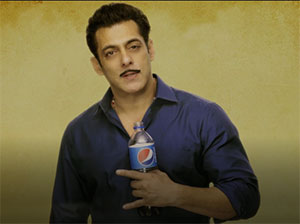
    Pepsi India has announced its collaboration with Bollywood actor Salman Khan.


    Speaking about the association, a PepsiCo India Spokesperson said: “We are excited to announce Pepsi’s collaboration with Bollywood superstar Salman Khan. Over the last year, swag has been the underlying message throughout Pepsi’s campaigns, celebrating the innate self-belief of the Indian consumer today. In 2020, we look forward to building the brand’s ‘Har Ghoont Mein Swag’ proposition with Salman in 2020.”


    The year 2020 will see brand Pepsi create a 360-degree campaign that will reflect the self-confidence of today’s youth with the actor, notes a communique.


  • GroupM strongman G-Man quits. Blockchain startup beckons

    By A Correspondent


    Gowthaman Ragothaman aka G-Man

    The name’s Gowthaman Ragothaman. Better known to the world as G-Man. With or without the hyphenation. The GroupM veteran is said to be moving on, with a blockchain start-up.

    For over two decades, Ragothaman has been crunching numbers – at HTA, Mindshare, Fulcrum and then the entire agency which he led for some years until he moved to Singapore for a role specially created for him – Chief Client Officer. A few elevations later, he was tasked with leading the global mandate for FAST, converging deliveries for client performance. He was also Global Client Lead of Team PepsiCo before taking on the additional charge of Global Blockchain Solutions Lead at GroupM.


    A message to G-Man got us no reply, but he has messaged a few friends in the business informing them of his decision. At 50, he clearly believes the time is right to do something of his and blockchain clearly excites him.

    Yehi hai right choice, we would say, recalling the popular adline of yore of Pepsi in India, a client he served for eons.

  • Pepsi gets pop artists to record latest track

    By A Correspondent


    Pepsi has announced a partnership between Simon Fuller’s new project, global pop group Now United, and rapper Badshah. Badshah, managed by Sony Music India and the group comprised of 14 singers and dancers from all across the globe will record a song titled “How We Do It” that will be released this week. The group will visit Mumbai, Delhi, Agra and Jaipur, sharing their experiences with their fans in India and around the world as they go.


    Speaking about the collaboration, Tarun Bhagat, Director-Marketing, Hydration and Cola, PepsiCo India said: “Pepsi has always strived to create experiences which resonate strongly with consumers, and music is such a tremendous platform to do that.  We are committed to identifying new and upcoming talent; and giving them a stage to showcase their art. Through the platform provided to them by Pepsi, Badshah and Now United will explore new ways of giving their fans a one-of-a-kind experience.”


  • ‘Live it Abhi’, exhorts Pepsi to the youth on today

    By A Correspondent


    Pepsi celebrates the fun and entertainment attitude of Indian youth by rolling out a new thematic campaign – Live It Abhi.


    With its irreverent spirit and dynamism, Pepsi has always led youth imagination and challenged convention. The new Live It Abhi campaign inspires young Indians to shake things up and leave a mark wherever they go. The campaign features a star-studded ensemble cast with brand ambassadors Ranbir Kapoor and Virat Kohli – two of the country’s hottest and most sought after youth icons. In an interesting twist, leading actress Anushka Sharma makes a special appearance.


    Speaking about the launch of Pepsi’s new Live It Abhi campaign, Ruchira Jaitly, Senior Director Marketing – Social Beverages, PepsiCo India, said “Pepsi has always shared a strong and culturally relevant connect with the youth. We have been an integral part of Indian pop culture and shaped opinion at every stage. This year is extraordinarily special at Pepsi, as we make the young Indian the focal point of all our campaigns and activations. In 2015, the consumer is ‘front-and-center’ for Pepsi, not just as a target audience, but in a much more exciting and meaningful way. This year, we will engage with Indian youth in a manner that has never been seen before in India.”


    The new TVC enlivens the Live It Abhi philosophy by urging the consumer to grab opportunities, dive headlong into life, and live it now. For the first time, consumers will see Ranbir and Virat together in a Pepsi ad; along with a sizzling cameo by Anushka Sharma. The film opens with Virat Kohli batting, and sending the ball over the ropes in a smashing stroke. Sitting in the crowd is Ranbir Kapoor, who catches the ball and with a Pepsi bottle in his hand, decides to Live it Abhi that very moment. Watch the link to know more.


    Talking about the TVC, Anuja Chauhan, Creative Consultant, JWT said “The ad celebrates the irreverent cheeky attitude of Youth today, who see life not as a spectator sport but as a stage – with spotlights to be stolen, whistles to be earned, and hearts to be won. And that it is better to try – and flop – than not try at all.”


  • Do looooong ads work for brands?


    By Priyanka Nair & Mukta Lad


    3.33. 3.53. 4.40. 7.16. Before you shut this paper and run a mile, we will have you know that this isn’t a complicated math problem coming your way, but the durations of some of the ads you’ve been seeing of late. With our daily dose of listicles masquerading as news for our seriously short attention spans, one would think quick and easy fixes are the way to go.


    The world of advertising begs to differ, though, offering a paradox. A spate of really long ads are the not-so-new kids on the block, where brands are taking the liberty to take as long as seven minutes to narrate their mostly heartwarming stories, The year is seeing a lot of the films that take their time to tell the tale, both internationally and back home.


    Pepsi’s ‘Ghar wali Diwali’
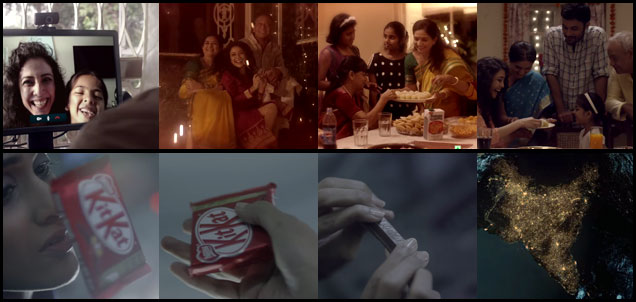
    KitKat’s Diwali
    Kissan’s ‘Joy of Togetherness’
    Fortune Oil’s ‘Ghar ka Khaana’
    Google’s ‘Reunion’
    Tata Sky’s ‘PrisonBreak’

    Most recently, KitKat and Pepsi jumped on the Diwali bandwagon, and two much talked about long-format films were born. They are usually released online, making it an inexpensive medium to tell powerful stories. But with such ads clearly becoming a regular trend, we have to ask; are brands really justifying the length of their communication with stories that are compelling enough? And do they work?


    Piyush Pandey executive chairman and creative director, Ogilvy & Mather India and South Asia, the man behind Fortune Oil’s emotive four-minute ‘Ghar ka khaana’ ad, believes, “With long-format, your single responsibility is to the viewer. It’s like people who make movies. A viewer of a long-format ad has made the effort to click on your film. It’s not like he was sitting around watching something else and the ad came on. It’s your responsibility to make sure he feels rewarded after the time spent and says ‘I must share this with my friends.’ I am assuming as professionals we know that we have a responsibility to the brand.”


    For T Gangadhar, MD, MEC India, it was the advertising during FIFA that has lingered on in his mind, especially the riveting spots by Nike and Adidas. “The episodic treatment, the fleshing out of the idea, the execution was such that there would have been no other way to create them except through the medium of long-format,” he says, admitting that he really didn’t notice the amount of time he was investing in watching them.


    Globally, too, brands have asked their agencies to deep dive into this particular style of creative build up for some time now. From Johnnie Walker to Dove and many in between, several brands have tried and tested using this narrative style for some years now.


    Apart from Fortune Oil, KitKat, Pepsi, Google’s ‘Reunion’ and #PledgeToVote, Tata Sky+’s ‘Prison Break’ and Kissan’s ‘Joy of Togetherness’ are some of the Indian ads that went much beyond the proverbial 30 seconds.


    Narayan Devanathan, EVP and national planning director, Dentsu India Group thinks of this trend as a fad, though. “To me, this seems like the work of diva creative directors who want to cash in on lack of extra mediabuying costs, the freedom the internet offers as a medium and the fact that they might be able to wiggle out a few favours from the directors in the same budget,” he says bluntly.


    Perhaps brand managers are looking at creating these epics as a feather in their cap. But Devanathan and Gangadhar would rather brands didn’t make long-format ads a fashion statement, please. It is best if the idea defines how much time it needs to unfold, instead of the other way around. But is there a formula as to who should or shouldn’t leverage this medium? “Boring brands have gone ahead to create some interesting long format ads, while some interesting brands have put out some boring ones,” says Gautam Kiyawat, CEO, Madison Media, implying that anyone with a good story should go ahead. But what makes marketers give a green signal to agencies?


    Mayur Bhargav, general manager (Chocolate and Confectionery), Nestlé India mentions that his digital centre noticed that India’s successful Mars mission was generating a lot of positive discussions on social media. They went ahead to create the KitKat Diwali film, knowing that its topical nature rated it high on the shareable scale.


    Gangadhar, however, wasn’t too convinced by the film. “If the video is going to be longer than 30 seconds, then it needs to become more content and less ‘advertising’, especially for the internet, where brands aim at making content people would want to share. The KitKat Diwali film, to me, was quite ‘addy’ in that sense.”


    Senthil Kumar, JWT India’s NCD and Suresh Eriyat, director, Eeksaurus, the men who made the KitKat film, believe that there making these spots can be a challenge. “It’s easier to hide the imperfections in 30 seconds, but the long format tests almost every limit that creative guys know of,” Kumar reveals. Eriyat elaborates, “Unlike short format ads, the biggest challenge in a long format ad is losing objectivity.


    Another danger is that it can end up becoming boring and monotonous. I am of the opinion that if one sees the KitKat campaign out of the context of Diwali, it may seem irrelevant.” At the end of the day, what do consumers feel about these ads, really? Devanathan, donning his planner’s hat, mentions, “The Pepsi ‘Ghar wali Diwali’ film, to me, lacked Pepsi’s youthfulness and Kurkure’s wackiness.”


    But advertising and planning be damned, he says, considering consumers didn’t really care about the ad’s length or whether it had the brand’s values at the core. They were touched by the emotion and shared the ad nevertheless, making it a viral success.


    The long and short of storytelling on digital is that the canvas is yet to reach its creative tipping point, as brands are taking their own sweet time exploring the medium.


    Source:The Economic Times

    Copyright © 2014, Bennett, Coleman & Co. Ltd. All Rights Reserved

    Licensed to republish
     

  • Anuja Chauhan of ‘Yeh dil maange more’ fame back at JWT to pep up Pepsi campaigns

    By Pritha Mitra Dasgupta


    Anuja Chauhan, who built a solid reputation in advertising (‘Yeh dil maange more’) before veering off into chick lit (‘The Zoya Factor’), is returning to J Walter Thompson India as creative consultant. She will be part of the Power of One (Po1) team that the ad agency is putting together to work on the PepsiCo contract, the first time that JWT will have a group of people solely dedicated to the promotion of one brand. Chauhan is returning to advertising at the behest of PepsiCo, having worked on several campaigns for the company, including ‘Mera number kab aayega’ and ‘Nothing official about it’, apart from the one cited above.


    The agency set up the team about two months ago to work on the 15 PepsiCo brands that it handles. JWT has had the account for the last 25 years and it’s the agency largest.


    Colvyn Harris

    Colvyn Harris, CEO, JWT South Asia, said the agency has similar structure in other geographies which are formed “on the specific requests of clients, and depends on their scale and ambition.”


    The Po1 team is headed by Babita Baruah, senior vice president and executive business director, JWT Delhi. Baruah, who recently took over the account from executive business director Saurabh Saxena, will be assisted by senior VP Mythili Chandrasekhar on the planning side. On the creative side, the account has been divided into three–cola, foods and juices–and placed under various executive creative directors.


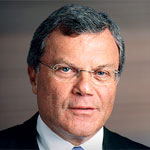
    Martin Sorrell

    Commenting on this new initiative, Martin Sorrell, CEO of WPP Group, of which JWT is a part, said: “In creating “Power of One”, JWT has brought together skills and capabilities from across our Group, for both foods and beverages, under one single unit to provide integrated solutions to PepsiCo’s brands and businesses.” Chauhan said she was “excited to be part of the team”, which she describes as nimble and flexible.


    PepsiCo is upbeat about Ms Chauhan’s return. “It’s great to have Anuja make a strong comeback on the PepsiCo portfolio,” said Deepika Warrier, vice president of marketing at PepsiCo India. “She conceptualised the #BackToSchool video that we recently released digitally. It became a big hit overnight!”


    Santosh Desai

    Santosh Desai, managing director and CEO of Futurebrands, said: PepsiCo needs to take risks and lead the youth rather than following them. Anuja Chauhan is associated with some of greatest ads and therefore the answer is clear. The company needs to go out on a limb and create some great advertising for others to follow.”


    Source:The Economic Times

    Copyright © 2014, Bennett, Coleman & Co. Ltd. All Rights Reserved

    Licensed to republish


  • With deals worth Rs 17 cr a year, Virat Kohli beats Dhoni and Sachin in endorsements

    By Samidha Sharma


    India’s hottest young cricketer Virat Kohli is setting the world of brand endorsements alight. The Indian captain-in-the-making, whose exploits on the field, combined with his youth, good looks and never-say-die attitude, makes him a winner off the field too, has inked a Rs 10-crore per annum deal with German sports goods giant Adidas.


    The three-year contract, perhaps the most lucrative to be signed by an Indian sports star, will see the swashbuckling right-hand batsman endorsing the brand’s apparel and shoes.


    The Delhi lad has also struck a Rs 6.5 crore a year deal with a tyre brand that had master batsmen Sachin Tendulkar and Steve Waugh as its ambassadors, a person familiar with the development revealed.


    The two deals will see Kohli topping the likes of Indian skipper Mahendra Singh Dhoni and Tendulkar in terms of annual earnings per brand endorsement.


    Kohli, who turns 25 later this year, pocketed around Rs 40 crore from endorsements last year, but that sum may swell up substantially with these two deals in his kit bag. Currently, he lends his face to as many as 13 brands, including  deodorants.


    When contacted, an Adidas spokesperson declined to comment on the development. Tendulkar, who is Adidas’ current brand ambassador, is perhaps at the fag end of his illustrious career.


    And Kohli fits the bill perfectly as he is being groomed to take over the top job from Dhoni after the 2015 ICC World Cup, an executive from a sports management firm, who did not want to be named, said.


    Bunty Sajdeh-led Cornerstone Sport and Entertainment manages the Indian vice-captain’s endorsement contracts. Mr Sajdeh was unavailable for comment.


    Kohli’s annual endorsement fee has seen a meteoric rise over the past year, rivalling the likes of Bollywood heartthrob Ranbir Kapoor, the hottest brand ambassador in the film industry. Till last year, the cricket star used to command Rs 3 crore per brand annually, which went up to Rs 6 crore.


    The Rs 10-crore a year deal with Adidas propels him to a different league altogether. “For the past few years, Dhoni has been ruling the endorsement space, but Kohli is catching up very fast. While Dhoni connected well with the masses, Kohli has a more urban appeal which a lot of brands want to cash in on,” said Indranil Das Blah, COO of celebrity management firm CAA Kwan.


    The price escalation in Kohli’s endorsement contracts has meant that a lot of brands which had signed him early on must shell out much more to renew their deals or simply end their association with him.


    “We are willing to pay a premium, depending on what that number is. He has been a great fit for our brand which targets youngsters, and he has grown with us,” said J Suresh, MD and CEO, Arvind Lifestyle and Brands which has had the cricketer on board for three years as Flying Machine’s brand ambassador.


    The jeans-wear brand signed Kohli before the World Cup at a moderate price and its contract is up for renewal. With Rs 10 crore becoming the new benchmark, many brands will find it hard to match up to Brand Kohli’s price tag.


    Until recently, Kohli and Nike were in a five-year contract inked in 2008. However, things turned sour between the two sides when the US sports goods major went to court claiming Kohli had breached the contract by disagreeing to continue as its brand ambassador till 2014. But the Karnataka high court ruled in favour of the cricketer, allowing him to sign endorsement deals with other sports brands.


    Source:The Economic Times

    Copyright © 2013, Bennett, Coleman & Co. Ltd. All Rights Reserved

    Licensed to republish


  • Early rains knock off fizz for Pepsi, Coke & other ‘thandas’

    By Ratna Bhushan


    Early and heavy rains flooding almost the entire country have hit soft drink sales in June, the most critical month for the Rs 14,000-crore industry.


    “June has been a bad month with sales down across the country because of early rains,” a leading bottler said. “Typically, if the month of June does robust sales, it sets the momentum for the rest of the year. But this year, that’s not been the case,” the person added.


    With growth slowing to single digits, soft drink giants Coca-Cola and PepsiCo are stepping up consumer promotions and trade discounts to push sales. “The firms are discounting heavily to trade and buying volume,” said an executive at a retail chain.


    The April-June quarter marks the highest spurt in soft drink sales in a year, contributing close to 40% of annual sales. A spokesman of PepsiCo India, which makes Pepsi Cola, 7Up lime drink and Aquafina water, however, said August could make up for the slowdown in June.


    For the beverages industry, the five-month period from April-August should be considered as the critical season instead of looking at just one month, he said in response to a query.


    “If monsoon arrives early in some years (say in June), the industry usually witnesses better than average August sales, as monsoon also recedes early in those years,” he said.


    To counter the impact of early monsoon, PepsiCo is focusing on providing better value to consumers through pricing in traditional trade and driving distribution, especially in rural areas. “We also have ongoing consumer promotions in modern trade to drive planned purchases of multi-serve packs for in-home consumption,” the PepsiCo spokesman said.


    A Coca-Cola India spokesperson maintained that the seasonality curve for beverages industry was ‘tapering off’ and that the firm was continuing to offer products in different packs at varying price points.


    Besides trade incentives, Coca-Cola has been pushing 200-ml glass bottles of brand Coke priced at Rs 8 in smaller markets at the cost of profitability, hoping to make up in volumes. In bigger markets, the firm is selling multi-serve packs such as 300-ml, 400-ml and 500-ml bottles.


    The world’s biggest soft drinks firm, which makes Coke, Sprite and Fanta aerated drinks, had posted a robust volume growth of 20% in India, the highest among BRIC countries in the April-June 2012 quarter.


    An industry veteran said the growth would not touch the levels of last year in the June quarter. “Market conditions are very different now and consumption is down. The unseasonal rains have added to the tough times,” the person said.


    During January-March, Coca-Cola had posted 8% volume growth in India. PepsiCo does not declare volume sales of its India division.


    According to India meteorological department, the country received its heaviest rainfall in 12 years in the month of June, and the monsoon season is expected to last through September. The department also said that the south-west monsoon has advanced the fastest this year over a period of 50 years, a month earlier than expected.


    Last month, rains and flash floods wreaked havoc in Uttarakhand, a sizeable tourism market for beverages, especially in peak season.


    Source:The Economic Times

    Copyright © 2013, Bennett, Coleman & Co. Ltd. All Rights Reserved

    Licensed to republish


  • Pepsi, sponsors set to score with IPL 6: Ormax Trac20

    By A Correspondent


    The findings of the pre-phase of Ormax Trac20, a syndicated research being conducted by media insights firm Ormax Media, suggest that the sponsors of the sixth edition of IPL are expected to benefit significantly from the tournament. In particular, the title sponsors Pepsi seems to have the ball out of the park even before the tournament started.


    As per the findings, the average number of sponsors recalled at an unaided level per respondent stood at a healthy 3.2, more than double compared to previous years. Title sponsors Pepsi contributed significantly to this performance, with an unaided recall of 82% even before the tournament started. DLF, the title sponsors till last year, scored less than 50% on recall in the previous seasons of IPL!


    Shailesh Kapoor

    Other sponsors with high unaided recall are Vodafone (37%) and franchise sponsors Nokia (32%). Commenting on the findings, Shailesh Kapoor – CEO, Ormax Media said: “This phase of the research was conducted in the fortnight leading upto the start of IPL 6. Such high recall levels are indicative of the strong association a brand like Pepsi has managed to build with the tournament, despite this being their first year of association. It is evident that the brand fit between Pepsi and the IPL has worked this year.”


    The Ormax Trac20 research is being conducted across 11 cities, in three phases, with a total sample size of 9,000: Pre-phase before the IPL started, mid-phase during the IPL and post-phase at the end of the tournament. The findings of the pre-phase have been released for the subscribers.


  • Leave marketing behind: Pepsi’s Shiv Singh


    Shiv Singh

    By A Correspondent


    On the second day of knowledge seminar sessions at Goafest 2013, Shiv Singh, Global Head (Digital) of Pepsi, spoke about “Why no one cares about marketing” and outlined five ideas which he said were important in the current climate.


    1 Leave marketing behind

    Expanding on this, he gave the example of Beyonce’s unmarketing campaign, #beyherenow. “It was not just an ad but a new lens into Beyonce,” he said. The ad also launched a new song, Grown Woman, and the visuals and lyrics were anchored in the culture of her past and her future. It was the start of a deep creative collaboration.


    2 Think about experiences, not more ads

    In an age when every brand can have a tangible relationship with customers, original programming, owned or shared distribution, and sustained engagement and loyalty are replacing traditional marketing, Mr Singh said. He said digital data should be used to drive new business insights. “The insights you get from social impact how you understand cultures, consumers, brands and products, and how you can predict sales and measure engagement.”


    3 Bet on Facebook.

    He said that though Facebook was here to stay, the mere number of likes a brand has on Facebook is meaningless. “Having a lot of likes is like having a large hall with empty chairs. It’s meaningless unless you have people sitting in these chairs,” he said, adding that it is more useful to have a smaller audience that engages.


    4 Develop a 365-day culture. When the customer is listening 365 days, the brand should be there too, Mr Singh said. Realtime marketing is the answer, with realtime insights, and response, content studio, co-creation and distribution happening in real time too.


    5 Capitalise on the India opportunity. He said advertising needs to look at new forms of creativity. “Commercials are videos. Embrace that notion now,” he said, recommending that agencies should hire as many journalists as they have creative directors.


    The Q&A with the audience at the end of Mr Singh’s presentation was moderated by Viral Oza.


  • Pepsi bags exclusive pouring rights with 8 teams at IPL

    By A Correspondent


    PepsiCo India has announced its association with eight out of the nine Pepsi-IPL teams as the ‘Exclusive Pouring Partner’ for the upcoming Pepsi-IPL 2013 tournament. After winning the title sponsorship for the biggest annual sporting event in the subcontinent, PepsiCo’s partnership with almost all participating teams further demonstrates its commitment to the sport of cricket and the ability to maximize value from the tournament.


    The association will extend to PepsiCo’s robust food and beverage portfolio including Pepsi, Mountain Dew, 7UP, Mango Slice, Mirinda, Aquafina, Tropicana, Lay’s, Kurkure, Aliva and Quaker Oats. These team partnerships, along with the title sponsorship coupled with the robust on-air, on-line and on-ground plans will ensure maximum visibility and engagement for PepsiCo’s brands.


    While activations with Delhi Daredevils will be led by both Pepsi and Mountain Dew; Kolkata Knight Riders and Pune Warriors will be led by Pepsi; Rajasthan Royals and Kings XI Punjab by Mountain Dew; Chennai Super Kings, The Sunrisers Hyderabad and Royal Challengers Bangalore by 7UP. Additionally, these associations also bring with it exclusive pouring rights, joint marketing association opportunities along with other benefits for both food and beverage brands.


    On securing the pouring rights with eight teams, Gautham Mukkavilli, CEO, Beverages, PepsiCo India Region said, “At PepsiCo, we believe that winning the title sponsorship of Pepsi-IPL was just the beginning and we are committed to back it with smart, strategic and high-decibel marketing and activation plans that will help us maximize the tournament’s potential. We are thrilled to announce our association with the eight franchise teams and will continue to build a campaign that will change the face of sport sponsorships and activations in India. Cricket lovers can look forward to a lot more excitement, never before experiences and a memorable sporting season”.


    PepsiCo has also signed the co-presenting broadcast sponsorship deal with Multi Screen Media (MSM), owners of the Set Max channel that will be broadcasting Pepsi-IPL 2013. Apart from a strong on-air play of its portfolio, PepsiCo is working on a series of customized innovations with MSM to maximize its association with the broadcaster.


  • Pepsi plans Rs 150-cr IPL splash to take on Coca-Cola

    By Ratna Bhushan


    PepsiCo is spending almost Rs 70 crore on top of its title sponsorship deal of the Indian Premier League to bag almost all possible on-air and on-ground sponsorship and branding deals for the upcoming T20 tournament.


    The US beverage and snacks maker has signed a Rs 50-crore deal with Multi Screen Media, owners of SET Max channel, to become one of the two presenting sponsors of the event, and will cough up another Rs 16-18 crore to become drinks partners of all eight IPL teams expect Mumbai Indians.


    Overall, it will be spending almost Rs 150 crore, or Rs 3 crore per day, on the 50-day tournament in what is seen as a strategy to block out arch rival Coca-Cola from the most lucrative sporting event in the country. In November, PepsiCo had bagged title sponsorship of IPL for five years for Rs 400 crore, or Rs 80 crore per year.


    Homi Battiwalla, senior director, marketing (colas, juices and hydration), at PepsiCo India, justified the huge investment, saying IPL is ‘the most relevant property’ in the season. “There’s a lot of opportunity to maximise the valuation… we are optimistic we will generate much more value over what we have invested,” he said.


    Experts said while the strategy of blocking Coke in peak summer season will surely help PepsiCo in branding and consumer connect, PepsiCo may be over-spending on a tournament which has been seeing declining ratings over the past two years. Also, it will have to back the plan with aggressive marketing strategy to make the most of it.


    “This could be the revival of the cola war,” said Basabdutta Chowdhury, CEO of Platinum Media, a division of media buying group Madison World that buys media for Bharti Airtel and ITC. “Though IPL coincides with peak season time for beverages, the investments are huge and will have to be backed by a robust marketing plan,” she added.


    The IPL will be played between April 3 and May 26. Navin Khemka, managing partner at media buying firm Zenith-Optimedia, said Coca-Cola may still buy advertisement spots. “I am not sure if they can be blocked off,” he said. As a presenting sponsor, PepsiCo will get a major share of advertising time on Set Max, which will telecast the matches live. Coca-Cola can buy limited ad spots at about 15% higher rates than what Pepsi-Co paid.


    An official directly involved with the developments said PepsiCo has bought 210 seconds of advertising time per match out of a total of about 2,500 seconds of ad time per match. PepsiCo’s Mr Battiwalla said: “The broadcast sponsorship allows us a very strong play of our portfolio. We are working on a series of customised innovations with MSM to maximise our association with the broadcaster.”


    Apart from its drinks brands, including Pepsi Cola, lime-lemon drinks Mountain Dew and 7Up, Mirinda orange, Aquafina water and Tropicana juices, PepsiCo will promote its snacks brands Kurkure, Lays chips and Aliva biscuits through IPL.


    It is also in advanced stages of negotiations with eight IPL teams to tie up as pouring rights partner, while Mumbai Indians already has a deal with Coca-Cola.


    With every team charging anywhere between Rs 50 lakh to Rs 2 crore for pouring rights and team activations, PepsiCo will end up paying close to Rs 16-18 crore to the teams.


    Coca-Cola was also in talks to buy pouring rights for the nine IPL teams, but opted out because it believes the valuation doesn’t justify the asking prices, a person aware of the beverage maker’s plans said.


    “Coca-Cola is minimising its association with the IPL and instead is looking to maximise branding activities outside of the IPL,” the person said. A Coca-Cola spokesperson declined to comment on the IPL association.


    Pouring rights gives a beverage maker exclusive rights to serve its beverages in the team’s home stadiums. The individual team rights also allow it to take space on T-shirts and jerseys of teams and advertise on perimeter boards at the stadium. Pouring rights is not a central sponsorship, and deals have to be inked individually between teams and interested companies.


    Meanwhile, Rohit Gupta, president of MSM, said the broadcaster expected 20% growth over last year from IPL. “We have 8-10 presenting sponsorship slots in addition to ad spots,” he said.


    This despite on-air rates having been cut this season by about 15%, in line with declining viewership. Data by TAM Media Research shows that the first 60 matches of IPL last year recorded average ratings of 3.27, down from 3.39 in IPL 4 and over 4.0 in the first three IPL tournaments.


    MSM has released a marketing campaign for the IPL with Bollywood director Farah Khan, and this season, the tournament will be simultaneously telecast on all MSM channels – Set Max, Sony Six and Sony Six HD.


    Source:The Economic Times

    Copyright © 2013, Bennett, Coleman & Co. Ltd. All Rights Reserved