Tag: Pepsi

  • Coke vs Pepsi wars to spill over cricketing pitch in IPL 6

    By Ratna Bhushan


    If 20-20 cricket is not your cup of tea, there’s another good reason to grab a ringside seat during the new season of the Indian Premier League (IPL): the cola wars that will spill over onto the cricketing pitch.


    While beverage maker PepsiCo has won the title sponsor bid for IPL-6, in what’s seen as an extravagant Rs 400-crore five-year deal, rival Coca-Cola has started talks to buy pouring rights for the nine IPL teams. Pouring rights for a beverage maker involve getting exclusive rights to serve its beverages in the team’s home stadiums.


    Coca-Cola, which makes Thums Up and Coke besides lemon-lime drink Sprite and orange-flavoured Fanta, is also in talks with individual teams to buy space on T-shirts and jerseys of teams and advertise on perimeter boards at the stadium. The beverage maker already has an existing associate sponsorship deal with Mukesh Ambani’s Mumbai Indians team, which gives it rights to serve its beverages when the team plays.


    Two officials involved with the developments said: “Coca-Cola is talking to all teams for pouring rights, placing its logo on the T-shirt or helmet of players and access to advertise on three perimeter boards.


    Though PepsiCo has coughed up twice the amount paid by earlier title sponsorship holder and real estate major DLF, the beverage and snacks maker will still need to pay more for serving its beverages at the stadium or on-air advertising deals with IPL broadcast rights holder Sony Max.


    “PepsiCo has also begun talks to the teams for pouring rights, but it may not be willing to pay an additional cost because it has already blocked a large part of its budgets for the title sponsorship,” one of the officials quoted earlier said.


    A Coca-Cola spokesperson declined comment on the beverage giant’s plans for the IPL. Whether and if Coca-Cola will end up ambushing rival PepsiCo in the IPL next season is not yet clear. But IPL CEO Sundar Raman said: “The BCCI-IPL ambush marketing clauses are stringent and will protect all rights of central sponsors.”


    A PepsiCo spokesperson did not want to comment on the prospect of a Coke ambush. Last month, PepsiCo won the title sponsorship rights of the tournament for Rs 396.8 crore for five seasons starting 2013 or Rs 80 crore a year -a bid many industry experts believe is overpriced.


    Although Coke had bought the tender document for the IPL’s title sponsorship, it did not bid for sponsorship, citing the steep asking rates.


    Still, that doesn’t stop Coke from either buying pouring rights of the teams, or advertising on team jerseys or helmets, or buying ad spots on IPL broadcaster Sony Max.


    Pouring rights is not a central sponsorship, and deals have to be inked individually between the teams and firms. Teams are charging anywhere between 50 lakh and Rs 1 crore for pouring rights. The IPL T-20 tournament, scheduled for April-May, coincides with the peak summer season for beverage firms.


    If Coke does cock a snook at Pepsi in IPL-6, it won’t be the first time that the cola giants have gone head to head. In IPL-2, for instance, Coke stole some of the thunder of Pepsi’s ‘Youngistan’ campaign by getting the latter’s brand ambassadors like Virender Sehwag and Ishant Sharma to be present at its promotional activities.


    Coke could do this because it was an associate sponsor and official pouring partner for Delhi Daredevils (which Sehwag captained) and Kolkata Knight Riders (of which Sharma was a part).


    But the credit for kicking off ambush marketing in India may well go to Pepsi. Pre-IPL, way back in the 1996 World Cup cricket series, Pepsi launched the ‘Nothing Official about It’ campaign to rival Coca-Cola’s sponsorship of the World Cup series.


    Source:The Economic Times

    Copyright © 2012, Bennett, Coleman & Co. Ltd. All Rights Reserved


  • Cos can’t claim irrelevant taglines: Court

    By Vishal Dutta


    A company cannot claim right over the punchline in its logo if it has no relevance with the products, a court in Ahmedabad has ruled last month, reminding of an earlier Pepsi Vs Heinz case, wherein the Delhi High Court disallowed monopoly over words commonly used to describe a product’s character.


    The latest ruling rejecting injunction appeal came after textile group Ashima sought trademark protection on its slogan Texcellence, inscribed in its logo, and urged the court to restrain a garments company Texcellence Overseas from using it. However, the court said Ashima Group never used the word “Texcellence” for its goods and there was no chance of confusion.


    In 2010, foods company Heinz won a case against soft drinks-maker Pepsi when the Delhi HC allowed it to adopt words used by Pepsi in the catchline for its sports drink Gatorade. Heinz’s Glucon-D advertisement said “Glucon-D Isotonik rehydrates fluids, replenishes vital salts and recharges glucose’, as against Pepsi’s tagline ‘Rehydrate, Replenish, Refuel’.


    In 2003, Gujarat-based Ashima alleged infringement by Ahmedabad-based Texcellence Overseas, saying it had originally coined the word “texcellence” from two different words Textile and Excellence. Ashima argued saying the catchline adopted since its inception in 1982 was synonymous with its reputation and goodwill, and Texecellence Overseas merely adopted the trademark in 1996 to confuse the public.


    Texcellence Overseas pointed out that Ashima did not sell any product with the trademark and that there were no instances of any confusion, according to its lawyer Samrat Mehta. An email query sent to Ashima Group remained unanswered.


    Abhishek Pandurangi, CEO, Closer2patents, says taglines or punchlines or slogans can be protected by trademark law only if one can show a relevant connection between commercial use of the products and the tagline.


    Trademark attorney Pranit Nanavati feels Ashima could have registered the word Texcellence separately and not just as part of the logo.


    Source:The Economic Times

    Copyright © 2012, Bennett, Coleman & Co. Ltd. All Rights Reserved


  • Saavn launches new ad platform

    By A Correspondent


    Indian music service Saavn has announced the launch of its new advertisement platform, Impact. This platform enables brands to identify, connect and engage with its 10.5 million users in India and across the globe.

     

    Impact is an innovative approach to digital and mobile advertising that gives brands 100 percent share-of-voice. Using Impact, brands get complete and exclusive access to all advertisement units on the Saavn web site and mobile apps for a set time period. These include Custom Skin, Web Display, Web Audio, Mobile Spotlight, Mobile Display, and Mobile Audio. Impact is a powerful model that allows brands to build positive associations with their products and services through music. The model has proven to create strong brand awareness, shape brand preferences and increase purchase consideration through undivided mindshare of listeners of Saavn across platforms.


    “In India, we all know that music plays an integral and meaningful part in every individual’s life. Impact is a powerful solution that enables the advertisers to build an emotional connection with their target audience during a passionate, social and engaging musical experience,” Vinodh Bhat, co-founder and CEO of Saavn, said. “The Saavn Impact model is based around engagement, curation and social sharing rather than the archaic click-through. Brands are able to measure ROI in meaningful ways, such as increases in perception, awareness, recall and purchase intent. The byproduct of our strong focus on the consumer experience is helping brands grow their businesses.”


    Some of the major brands utilizing Saavn to reach million of engaged users in India include: Samsung, Lay’s, Pantene, Pepsi, Nokia, Vodafone, Airtel, Hyundai, Domino’s Pizza, 7Up, Nielsen, MakeMyTrip, Max NewYork Life, Google Plus, Nokia, Vanish, Groupon, Intel and several others.


    Saavn delivers a comprehensive catalogue of Bollywood, Indian and regional South Asian music, licensed from more than 200 content providers. Saavn users can search, browse, and play a catalog of more than 1 million tracks; create and save their own playlists; and share their music tastes seamlessly via Facebook.


  • Debrief: Pepsi: Not the game, change the ad!

    By Anil Thakraney


    It must take enormous talent to botch up something like this. The creators of the new ad for Pepsi had all the power tools at their disposal: A funky, irreverent brand. Top Indian cricket heroes. The most happening Bollywood star. And a cool idea – Change the game- which packs in potential for super commercials. And yet, it’s all gone terribly wrong.


    In the TVC, designed to promote Pepsi’s association with the current T20 World Cup, the team bus has broken down on the road. Leading to crowds, noise and traffic mess. Ranbir Kapoor arrives out of nowhere, and advises Dhoni and his boys on strategies to use for the tournament. When Dhoni questions Kapoor’s ‘tameez’, the latter explains that T20 lacks tameez.


    [youtube width=”400″ height=”220″]http://www.youtube.com/watch?v=Y8YeNX6l5ek[/youtube]

    An extremely poor ad, I have a laundry list of problems. Boring interpretation of ‘Change the game’. Witless, uninteresting dialogues. Forced irreverence, which falls totally flat. Worse, Ranbir Kapoor looks like he has no idea what’s going on out here. And the cricketers leave you with a feeling they want this shoot done with very quickly, and their bills settled before the first ball is bowled.


    Truth be told, lack of tameez as a thought ties in well with T20 cricket. (That it promotes rowdy behaviour inside the stadia is another story, of course). But a tired, stupid commercial has killed even that little germ of an idea.


    Rating: (On a scale of 1-5): 0. Disaster with a capital D.


  • Priyanka Chopra back as Pepsi’s brand ambassador

    By Nandini Raghavendra & Ratna Bhushan


    Priyanka Chopra is making a comeback as brand ambassador for Pepsi after four years, riding on her new, yet to be released avatar as a singer and her recent success at the box office, which the beverage-maker believes will help connect it with young consumers again.

     

    The deal is estimated at over Rs 4 crore a year, one of the biggest deals for the actress, an official aware of the details said. “It is likely that Pepsi will extend their association to Priyanka’s debut music venture as well,” he added. Earlier in May, PepsiCo and social networking platform Twitter announced a global music partnership, called ‘Live for Now Music’.


    Priyanka, one of Bollywood’s highest paid actors, who endorses Nokia phones, Nikon cameras, Hero two-wheelers and Garnier cosmetics, among others, had walked out of a deal with Pepsi in 2008 over endorsement fee, two people in knowledge of the development said. Over the last four years, Priyanka has reworked her movie career and will release her first solo album for Universal Music later this year. PepsiCo, on the other hand, is looking for fresh campaigns to beat a slowdown in sales.


    A PepsiCo spokesman confirmed the association with Priyanka as the brand ambassador for Pepsi. She will be the only woman ambassador currently for brand Pepsi, also endorsed by Indian cricket team captain MS Dhoni and actor Ranbir Kapoor.


    Source:The Economic Times

    Copyright © 2012, Bennett, Coleman & Co. Ltd. All Rights Reserved

    Photograph: Fotocorp


  • Dentsu acquires 51% stake in Taproot, Management (&creative) controls stay with Agnello Dias and Santosh Padhi

    By Ravi Balakrishnan


    Japanese advertising behemoth Dentsu has acquired a 51% stake in Taproot, arguably the most creative among the Indian independent advertising agencies.


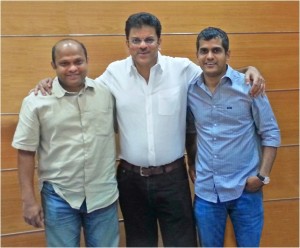
    Taproot's Agnello Dias (left) and Santosh Padhi (right) with Rohit Ohri of Dentsu (centre)

    With several of the most popular recent campaigns like ‘Har Ek Friend Zaroori Hota Hai’ and ‘Joh Tera Hai Woh Mera Hai’ for Airtel and ‘Change the Game’ for Pepsi under its belt, the five year old agency has seen a meteoric rise. It’s also won critical acclaim; the most recent being a Gold Lion at Cannes along with Ramesh Deo Productions for the ‘I Am Mumbai’ film for Mumbai Mirror, a newspaper from the Times Group, which also publishes The Economic Time


    The managements at both Dentsu and Taproot declined to discuss the financial aspects of the arrangement. Industry observers estimate the initial upfront payout at Rs 60 crore with another Rs 80 crore expected in future earn-outs


    In a global deal in July, Dentsu had paid $4.9 billion for British media buying group Aegis, valuing the company at 12 times its earnings before interest, taxes, depreciation & amortisation.


    The Economic Times had reported in June that Dentsu among other agency groups was speaking to Taproot about a possible acquisition. Says Rohit Ohri, executive chairman, Dentsu India group, who has previously worked with one of Taproot’s founders Agnello Dias at JWT: “They (Taproot’s co-founders & chief creative officers, Dias and Santosh Padhi) could have chosen anyone. What convinced them about Dentsu is that we are very entrepreneurial and evolving; and more willing to look at out of the box ways of working.”


    Adds Dias: “We felt it was the right thing to do. Of all the conversations we had, we felt most comfortable with the equation we were sharing with Dentsu. Another reason cited is Dentsu’s global strengths in the digital medium and that it is currently the leading network in Asia.


    Taproot will retain its identity and won’t be rebranded. Although Dentsu is a majority owner, management control of the agency continues to rest with Dias and Padhi. Dias says, “In terms of changes, there’s nothing in the pipeline. I think even Dentsu is saying ‘why should we upset a system that’s doing so well’?”


    What the arrangement brings Taproot is integrated communication, superior execution abilities and a national network. As far as Dentsu is concerned, Taproot, says Ohri, “is really the creative firepower we needed in the group.” However, the firepower is not likely to be immediately applied to any of Dentsu’s current client relationships.


    Both partners believe that Taproot will step in only when needed “on a case by case basis” according to Padhi. Interestingly enough, two of Taproot’s most productive client relationships have been with Airtel and Pepsi, brands that Ohri worked on in a previous stint at JWT. Ohri regards this as “a great bonus”, but he cites the talent of the two principals at Taproot and the chemistry with senior management at Dentsu as the main reasons for the merger.


    Among a spate of recently launched creative-led independent agencies which include Creativeland Asia and Scarecrow Communications, Taproot has arguably been the most successful with several marquee campaigns to its name for Airtel, Pepsi and The Times Group.


    The agency was founded in 2008 when Dias (then national creative director at JWT) decided to join forces with former colleague Santosh Padhi (executive creative director at Leo Burnett at the time). The 33 person strong agency has been particularly successful in wresting business from Dias’ former employer JWT, landing prestigious assignments from Pepsi and Airtel.


    Source:The Economic Times

    Copyright © 2012, Bennett, Coleman & Co. Ltd. All Rights Reserved

  • Games on, but GECs not worried


    By Meghna Sharma


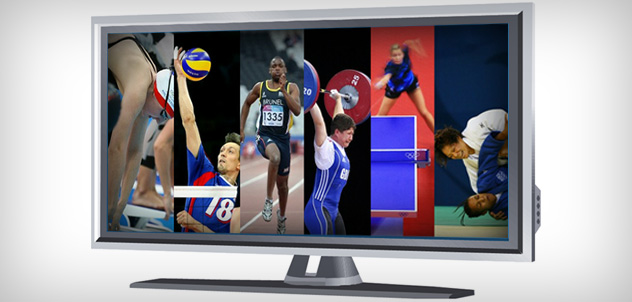
    The UEFA Euro Cup has made the Europeans forget all about the economic crisis; London, along with the whole world, is eagerly waiting for the world’s biggest sporting event – the Olympics – to begin. The world is buzzed about the various sporting events coming up in the next few months.


    Sports, around the globe, generate a major interest and channels – sports or otherwise – fight each other out for viewership and advertisements, and brands try to out-do each other through advertisements and activations to leave a mark on the public’s mind.


    The last event of such a stature in India was the recently concluded IPL which saw the entertainment channels fighting for eyeballs. With the next three-four months choc-o-bloc with sporting events, MxMIndia takes a look at how channels in the country are gearing up.


    Event Period Channel
    UEFA Euro Cup June 8- July 1 Neo Prime
    Wimbledon June 25-July 8 Star Sports
    India-SL series July 22- Aug 7 Ten Cricket
    Olympics July 27-Aug 12 DD/ESPN or Star Sports

    Time to worry?

    According to the media planners, for GECs and other channels, there is nothing to worry about. “Non-cricket fare is still appealing to a small niche segment and hence, its popularity is not reflected in ratings. India in the months of Jul-Aug has always been a moderate performer and not as high profile as some others and so this will also not have a major impact,” feels Shubha George, COO -South Asia, MEC.


    Suresh Balakrishnan

    And she is not alone. Suresh Balakrishnan, CEO, Brand Programming Network, agreed with her and added that though cricket is more than a sport in India, even IPL, which has both cricket as well as entertainment and was telecast at primetime, hasn’t been able to affect channels, especially the GECs in the recent past. “Lately, IPL has been able to get a rating of 2-3 which has hardly affected any GECs, so I’m sure other sports won’t matter to them at all. However, there is no denying the fact that viewership for other sports is increasing in the country. And major events might be able to at least reach the ratings which cricket gets, in the coming years.”


    Mr Balakrishnan, however, feels that sports channels don’t have much to worry about as there are many male-focussed brands which help them generate enough ad revenue. “Having said that, I also feel that channels showing sports other than cricket know that recovering money isn’t an easy task,” he added.


    The television behaviour showcases the interest of the masses which obviously tilts towards popular entertainment channels. However, most media planners agree that sports viewership is growing in the country and soon things might change but until then channels will have to make do with what they have/get.


    Amin Lakhani

    Amin Lakhani, principal partner, Mindshare said: “All leading newspapers and news channels have special coverage of important events, take Euro Cup for instance, but how much of it is being converted into viewership or readership? Even then, that hasn’t deferred them from covering the events because they know that, though tiny, there is a loyal following. Even brands are doing activations for sports which are gaining popularity in other sectors apart from Sec A&B – Pepsi is doing activations for football.”


    Business as usual

    Akash Chawla

    Entertainment channels continue to enjoy the largest share in the viewership pie. Although, they continue to compete with each other, when it comes to other genres, nothing has been able to write them off.


    Akash Chawla, Zee Entertainment Enterprise (ZEEL) marketing head – national channels, said: “Just like IPL, we are ready to combat any other sporting event. Our programming strategy does not depend on these events.”


    “For us, it will be business as usual. The channel is backed with strong and fresh content for its viewers, irrespective of the programming on competing genres,” said Hemal Jhaveri, general manager, Movies Ok.


    Hemal Jhaveri

    Other genres which focus on the same target audience as the sports channels are youth and news. But many in these genres believe that such sporting events don’t affect their viewership. Nikhil Gandhi, executive director, youth channels, media networks, Disney UTV claimed that most of the sporting events attract a majority viewership of urban youth, whereas they, as channels, focus on the HSM belt which includes 62 cities. Hence, such sporting events won’t affect their viewership.


    A broadcast veteran from a Delhi-based news channel too felt that news channels give enough coverage to the various sporting events, so there is no question that the events might eat into their viewership pie. He said that though both cater to the same TG, they are different genres and people might shift between the two, if needed.


    Nikhil Gandhi

    On the other hand, Neo Prime, the sports channel which is currently telecasting UEFA Euro Cup 2012, is aware of the competition within and between other genres and risk involved, but is still optimistic. “Sports is still a male-dominated genre, whereas other genres (read GECs) enjoy female viewership. But during big events, there are chances of a shift in the remote control. Sports do get eyeballs. And as for the advertisements, the brands which advertise on sports channels are different from the ones in GECs or other channels. Hence, nothing overlaps each other,” said Prasana Krishnan, COO, Neo Sports Broadcast.


    Prasana Krishnan

    Hopefully, as said by various media personalities, sports other than cricket in the coming years will be able to generate same interest among Indian citizens across sections and help sports channel to boom and enter the main TRP race as well.


     Imaging: Rafiq, Pictures courtesy: London2012.com


  • Vodafone, Pepsi & Kingfisher most recalled brands in IPL 5: Ormax

    From the MxM Infodesk


    The top recalled brands during IPL 5 are Vodafone, Pepsi, Kingfisher, Volkswagen and Hero, according to the findings released by Ormax Media’s Cricket Advertising Recall & Effectiveness research – Day After Cricket (DAC),


    The last week of IPL 5 however saw Pepsi lead the recall charts, touching a score of 44% on Unaided Recall, the highest achieved by any brand this season.


    Volkswagen and Kingfisher were the only brands which feature among the Top 10 brands in terms of both Unaided Recall and Ad Likeability.


    The Top 3 most liked ads were: Gems – Raho Umarless, Sprite – Raasta Clear Hai and Mazaa – Har Mausam Aam. Interestingly, none of these three campaigns featured a celebrity.


    The most recalled innovation sponsorship asscoation recalled was Karbonn Kamaal Catch. DLF Maximum Sixes and Vodafone Star Of The Match are a distant no. 2 & 3.


    IPL 5 Top 10 Brands Recalled

    Rank

    Brand

    1

    Vodafone

    2

    Pepsi

    3

    Kingfisher

    4

    Volkswagen

    5

    Hero

    6

    Coca-Cola

    7

    DLF

    8

    Idea

    9

    Nokia

    10

    Tata Docomo


    IPL 5 Top 10 Most Liked Campaigns

    Rank

    Brand

    1

    Gems

    2

    Sprite

    3

    Mazaa

    4

    Volkswagen

    5

    Cadbury’s Dairy Milk

    6

    Yatra.com

    7

    Kingfisher

    8

    Mountain Dew

    9

    Lays

    10

    Slice


    Day After Cricket is a consumer based day-after recall study, conducted among IPL viewers across six cities: Mumbai, Delhi, Bangalore, Hyderabad, Chennai and Kolkata. The TG for the study was Males 15-40 years and Females 15-34 years old.


  • Pepsi and IndiGo’s unique football surprise for air travellers

    By A Correspondent


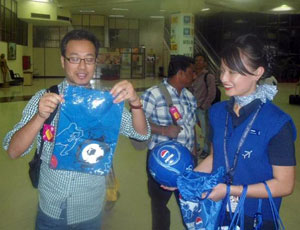
    As part of their ongoing football campaign, Pepsi partnered with IndiGo to Change the Game when they surprised hundreds of IndiGo passengers with a Pepsi Change the Game Football Kit across six airports in the country.


    Over 1,500 passengers who travelled by IndiGo during a certain time on a day received an extra football bag along with their checked-in baggage. This activity was organized at the Bangalore, Mumbai, Hyderabad, Kolkata, Goa and Bhubaneswar airports. Passengers across the airports were delighted with the extra travel kit by Pepsi and IndiGo which included a cool bag, football, t-shirt and a sipper.
     

    Talking about the initiative, Homi Battiwalla, Category Director – Colas, Hydration & Mango Based Beverages, PepsiCo India said: “Pepsi, as a brand, is known for creating clutter breaking campaigns. Our latest football campaign stands for all this and more. From irreverent TVCs to engaging online activities to an amateur tournament – Pepsi T20 Football, we are changing the game of football. We are delighted to have associated with IndiGo Airlines to create this surprise, which showed that you need not be a fan to indulge in some football fun.”


    Expressing his delight, Aditya Ghosh, President, IndiGo said: “We are happy to collaborate with Pepsi to collectively leverage their Change the Game campaign through this unique initiative. For us, the idea of surprising 6E passengers at six busiest airports with football kits was indeed an experience. Our endeavour is to provide the best-in-class experience to all our customers and execution of this initiative was to make their flying experience memorable. We hope our passengers enjoyed this surprise package.”


    This is Pepsi’s first football campaign in the country that was launched by an irreverent TVC starring actor Ranbir Kapoor, which set the tone for the real action. It was followed by a unique grassroots initiative, Pepsi T20 Football. It’s a revolutionary new format for amateurs, which combines the excitement of T20 cricket with the spirit of football. Organized in a unique metallic cage, the initiative was organized in major Indian cities including Chennai, Bengaluru, Kolkata, Mumbai, Lucknow, Ludhiana and Delhi.


    A total of 8-teams, including 1 winning team from each city and 1 wild card entry will compete to emerge as ‘Game Changers’. They will then get the opportunity to be coached by Didier Drogba before they face the Indian Cricket Stars for a game of Pepsi T20 Football at the Grand Finale.


    The campaign is supported by a 360-degree approach including on-air, outdoor & on-ground initiatives; special edition packaging featuring and digital engagement programmes.


  • Is Brand SRK losing sheen due to controversies?

    By Samidha Sharma


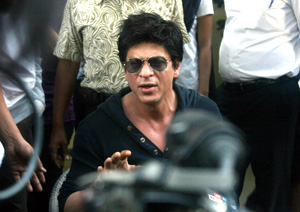
    He was, arguably, the biggest Bollywood superstar not long ago but with a few unsuccessful releases, a night club brawl and now a scuffle with officials at a Mumbai cricket stadium to his credit, Shah Rukh Khan’s brand is losing sheen.


    In the last couple of years the actor has not signed any big brand endorsement deals, although his portfolio still boasts of more than a dozen brands. People in the endorsement industry say that SRK’s image has suffered in the last couple of years not only due to the controversies that have surrounded him but also because he is an ageing celebrity.


    “Controversy does not make for good brand endorsers and any marketer will keep away from a celebrity like that. Besides the controversies that have courted him recently, what is a bigger concern is that he is ageing and that does not bode well for multiple brands in India that want a youth connect,” said Manish Porwal, MD, Alchemist, a talent management agency.


    Cola major PepsiCo, for which SRK was a brand ambassador for a long period, dropped him in 2009. In a move that was veering towards the youth, the cola major got on board Ranbir Kapoor. Later, telecom major Airtel did not renew its contract with SRK, although, they have not officially announced their disassociation with him.


    LOST IN TRANSITION?

    Endorsements: Tag Heuer, Hyundai, Belmonte, V-jon, Navratna, Dabur sona chandi, Lux Cozi, Linc pens


    SRK’s endorsement rates haven’t come down though as he charges around Rs 1.5 crore per day. But it’s 50 per cent less than what Aamir Khan commands.

    Today, his roster of more than a dozen of brand endorsements include Belmonte, V-jon, Navratna, Dabur sona chandi, Lux Cozi, Linc pens, besides a few marquee names such as Tag Heuer and Hyundai. SRK’s endorsement rates haven’t come down though as he charges around Rs1.5 crore per day.


    However, it’s 50 per cent less than what his contemporary Aamir Khan commands, but the latter has largely been off the endorsement market of late, say industry people.


    “What you are seeing is something that a lot of stars have gone through. It’s a transitional phase which all celebrities go through; while some bow out gracefully, some do not. It is an inevitable shift of power and it has not been a smooth ride for him,” said Santosh Desai, CEO at Future Brands.


    However, some of the brands that he endorses are sticking with him. DTH player Dish TV, which has him as a brand ambassador for over five years, says these incidents have had no rub-off as far as his brand appeal among masses goes. “There is no dent that has been made on Brand SRK, we will continue to have our association with him,” said Salil Kapoor, COO, Dish TV.


    Source:The Economic Times

    Copyright © 2012, Bennett, Coleman & Co. Ltd. All Rights Reserved


  • Debrief: Pepsi: Not really a game changer

    By Anil Thakraney


    It must have cost Pepsi a bomb to hire the services of football stars like Lampard, Torres and Drogba. Not to speak of expensive desi cricketers like Dhoni and Kohli. But does it work? Hmm, am not so sure.


    Pepsi continues with its ‘Change the game’ theme this summer. When they first broke with this idea it was quite refreshing in terms of the execution. But am afraid its losing fizz as the idea gets extended. Perhaps it has to do with the way they are extending it. In the new TVC, the football stars play football with a cricket ball.


    And there’s a ‘fun’ exchange between the cricketers and the footballers, as the two games collide.


    Here are the problems with this commercial: I wonder how many Indians would recognize the international football stars, since the sport is not really famous in India. Perhaps some uber urban lads will, but Pepsi is a mass brand. Which then makes one question the heavy expenditure. Also, the marriage of the two games is clumsily done and the treatment is very predictable. And this directly hits the entertainment value of the ad. The script had to be very spunky and very surprising for it to work. Lastly, the brand has been forced into the situation in a very, let’s just say, unsmart manner. They simply had to find a cool way to make Pepsi an intrinsic part of the storyline.


    In short, the ad lacks both, freshness and wit… the key ingredients of any Pepsi ad.


    Rating: (On a scale of 1 to 5): 1. Game changed. Now change the ad.


  • Disappointed at not winning the Grand Prix: Agnello Dias


    By Anil Thakraney


    Taproot’s Agnello Dias and Santosh Padhi ‘changed the game’ for Pepsi. And they’ve done ditto with the Indian ad world. Their huge, rapid success has prompted many creative directors to sit up and seriously consider starting their own little shops. Some have already branched out.


    Creative hotshops aren’t a new phenomenon in this country. Ravi Gupta, elsie Nanji and Mohammed Khan opened their boutiques many years ago. What’s different with Taproot is that they have been doing stunning work for large clients. Like Pepsi, TOI and Airtel.


    This makes the agency path breaking and special. In just three years they have won more Abbies than the number of people in their office. Including peons.


    I meet Agnello Dias for some steaming Southie fare at King Circle’s Mysore Cafe. As India’s most happening creative director shares his mantras and his plans for the future. Aggie is that rare advertising individual who listens more than he speaks. And that perhaps is one of the key reasons behind his enviable success.


    The last time we met was three years ago. You were running around buying computers and aircons for your new agency which had still to be named. How’s the journey been?

    It’s been like mounting a tiger you can’t get off because things have moved so fast in so many different ways. In terms of the actual structure of the agency and in terms of the actual advertising work.


    Did you expect to scale such heights?

    No. I had an idea where I would be and it was much lower than this. I thought we’d be a little quieter and much less in the spotlight. But things have happened and not in the way I thought they would.


    Runner-up agency at Goafest. That is something you would never have imagined three years ago.

    (Smiles). No! We knew we’d do well, we knew we had a couple of good campaigns. But statistical superiority was something we never expected.


    You must be a proud man.

    (Thinks.) Yeah. It was quite a pleasant surprise. I am proud but it’s also slightly unnerving because I wouldn’t like us to be measured against this every year. Though we are cognizant of the fact that it’s any given Sunday, and that the same jury judging the same work again today may have a different result.


    Disappointed that your ‘Har ek Friend’ work (Airtel) didn’t win the Grand Prix?

    Yes. It would be a lie to say that we weren’t disappointed. Because one was always given to believe that a Grand Prix isn’t just about good work, but also about work that has serious impact. And we felt it did have that impact, but the jury thought otherwise. (Shrugs.)


    Any major improvement needed in the Goafest judging process?

    I think we, as an industry, stretch ourselves too thin to find hundred judges. And so we end up having, to a certain extent, judges who are not yet ready for judging. One way to solve that would be to have two categories entirely judged by one set of judges. That itself would bring down the number of judges to fifty. That way we will have a far more concentrated, mature bunch of judges. I judged at the ‘One Show’ and it is the exact opposite out there. One jury judges everything. It’s a nightmare but it can be done.


    Don’t you at times miss the comfort of a large agency?

    I am not sure comfort is the right word, but definitely the conveniences. Figuring out your own airline tickets, talking to directors and producers about edit commissions, rates, etc because we don’t have a secretary and a films department. But one doesn’t really miss the conveniences because one is so engrossed in what one’s doing.


    Do you have a client servicing team and account planners? Are you following the structural format of traditional agencies?

    We don’t have pure strategic planners. We have servicing guys but the ratio would be the opposite of a large agency. It is 5:1 in favour of creative people. We have a managing partner, his name is Manan Mehta. He’s just about 28 years old and he’s the senior most servicing guy we have.


    Are you looking to expand into other cities?

    The only option we talk about is Delhi. We are looking at it, though it may not happen.


    How many clients do you have?

    Maximum ten.


    Want more or are you happy with that?

    If we have to do more than this we will have to hire more staff.


    When you started out you said to me that you guys don’t want to be a large agency. That the day you feel you aren’t able to give personal attention to clients you’ll shut down. Has that view changed?

    (Thinks.) It may be on the cusp of changing. Because so far we have been giving personal attention and therefore we aren’t taking on more clients. We are putting them on to other agencies. We are currently contemplating within the office on where we want to be. If we take on more people, they will be one step removed from Paddy (Santosh Padhi) and me. But we haven’t decided that as yet.


    What does your own heart say?

    I think one level removed is still fine. But no further than that. We don’t want a large reporting structure.


    Does money spoil?

    Yes, it does.


    Rumours have it that Aggie and Paddy are looking for investors to sell the agency and cash in.

    When the multinational networks come to town, they do meet us. We do meet them and talk about exactly this. But in this industry you can’t just sell and go away because no one will buy that. So even after an equity sale we will have to be around for at least five years.


    But you will still make a killing. Find that tempting?

    Yes, it is tempting. We have been talking to various people but it’s not worked out inside our heads.


    Basically they aren’t making offers you can’t refuse.

    Yeah, possibly.


    Okay, enough corporate talk. Let’s move to more interesting stuff. Like creativity. How do you go about creating an ad? Any mantras up your sleeve?

    The process is the same. But within that process there are a few quirks I personally have. We try to push a little more even after we’ve cracked it. We try not to go home early. It’s good old fashioned hard work.


    One campaign you’ve done at Taproot that you are most proud of.

    The ‘TeachIndia’ campaign (Times ofIndia). It was good creative and it’s also something I identify with.


    With ‘Har ek Friend’ I felt you guys have a good understanding of Young India. Did you hang out with the kids, or was that gut feel work? Do you research before starting out?

    Yes, I do. I try to walk the streets, I walk from Matunga (home) to Mahim (office) many times. I stop at all kinds of shops and observe. I once ordered from the teleshopping network just to see how the packet arrives. And I do these things even when there’s no brief. Also, what’s worked for me is that I get fascinated by people who disagree with me. I like to spend more time with them. I think it’s important for all young people in advertising, or anywhere else, to create a persona where people feel comfortable enough to give them negative feedback.


    When you hire, what is the one thing you look for in a young creative person?

    First, I look for resilience. Creative stamina. Because unless you come back as equally strongly as the last time, you will not have a long, successful career. Another thing is keen observation. People who notice things in a room which others don’t. And they should be good listeners.


    The biggest challenge facing the creative director of today.

    I think most national creative directors in large agencies are good. But the structure has turned on itself in such a horrible manner that they have no choice but to be so thinly spread that they are not able to do justice to a particular brand. And the reason for that is the accumulation of overheads by large agencies. So instead of one, you have to focus on eight other accounts because there are eighty other guys sponging off that account. See the number of designations going around. So the agencies should free their creative directors from having to do so much.


    What will the ad agency look like ten years from now?

    I can’t say ten or fifteen years, but the business will become craft agnostic. For example, there are some people who are creative thinkers or planners. And there are some who are not thinkers but craftsmen. Now these guys, because of their high level of craft, become indispensable. And they are given designations or titles which is actually a function of creative thinking. So good art directors become creative directors and attend research briefings though that’s not their core competency. In the future I see press ad shops, where you can get a press ad made. Or film scripting shops. And the ad agency would be a bunch of free thinkers. I think the unbundling of advertising will move to the unbundling of creative.


    Having said all this, is there one senior creative director you do admire?

    (Thinks for a long time.) I like Rajiv Rao (O&M). I think he has a naturally keen eye for aesthetics. He has the ability to boil complex problems down and come up with simplest solutions. And that’s visible in the Vodafone work.


    Didn’t you admire the way The Hindu hit back at your campaign for TOI, Chennai? even though it’s a rival brand.

    Yes, their response was very good. It’s a good contest. They could have done the crafting a little better, but otherwise it was very good.


    Was there any self-doubt when you started out? During the beginning period?

    Yes, there was a lot of self doubt. In fact, apart from The Times, for some time we had very little business. So we just decided to lie low and consolidate. We were open to the fact that we may have to find jobs again. even now if it doesn’t work out we’ll go and apply for jobs in creative agencies.


    One thing about the ad world you don’t like.

    The irrational level of competitiveness. I think it’s great to want to do better, but I wouldn’t applaud somebody else’s mistakes. For example, take the case of hard boiled sweets. Now every client wants to do wacky work in this category because someone started doing it. That’s great news for the whole category. The same thing is happening with electricals. Because of Havells we can’t do a normal ad anymore. We should applaud the people who started it, those who belled the cat. So what I am talking about is the difference between healthy and ruthless competition. The ruthlessness is what I don’t like. The attitude that ‘I didn’t do better so I will pull the other guy down’.