Tag: Omnicom Media Group

  • It’s 10 years for OMD in India


    By A Correspondent


    Omnicom Media Group-owned agency, OMD India completes a decade of being in business in India. The 10th anniversary will be celebrated through the year with a series of initiatives. OMD India commenced operations in Mumbai on February 7, 2007 and expanded to Delhi, Bengaluru and Chennai. The agency has over 550 staffers in India with a billing of over USD 650 million.


    Jasmin Sohrabji

    Commenting on the milestone, Jasmin Sohrabji, CEO, SEA & India Omnicom Media Group said: “It has been an amazing journey so far, marked by both global and local client wins, a full-fledged national presence and a great team committed to taking OMD to even greater heights. We have built a fantastic momentum based on a straightforward strategy of pitching, winning and growing,” adding: “Starting from Ground Zero, OMD has transformed into one of the country’s fastest growing media networks, and it makes me immensely proud to be a part of OMD India’s winning journey since inception.”


    Much of the rapid growth of the agency is attributed to digital and mobile prowess which has helped to future proof the business. In November 2016, OMD India scaled up its operations by consolidating Omnicom-owned DDB Mudra Group’s media business under the OMD brand. The consolidation has helped solidify OMD’s presence across all platforms and create an integrated media brand to take on the expanding India market.


    Harish Shriyan

    Added Harish Shriyan, COO, Omnicom Media Group India: “We have always encouraged a culture of growth built on a solid foundation of ideas, insights and results. Raising the benchmark on forward thinking especially in the realm of digital, diversification of our capabilities and being recognized for our work – rooted in consumer understanding and psyche – has certainly helped to offer integrated solutions to our clients. As we celebrate this milestone, OMD India is gearing for its next level of growth.”


    And what plans to take OMD India to the next level:  “We will continue to lead the industry by leveraging our strong foundation that incorporates the best of innovation and effectiveness. Adtech is a huge area of focus and we will be enhancing our data, analytics and programmatic offering by consolidating the expertise of Omnicom specialist units such as Annalect (data driven marketing) within OMD. Another area of focus is talent development with planned initiatives to further nurture entrepreneurism, diversity, fresh thinking and creativity of our work force as they are critical elements of an agency’s success,” added Sohrabji.


    Meanwhile, Mainardo de Nardis, Global CEO OMD Worldwide who was in India recently, has said in a communique: “OMD India has grown tremendously over the past 10 years thanks to an exceptional team and leadership. India will continue to be a market of importance, contributing to our growth across the region. I am confident that OMD India will charge ahead with the momentum of being a preferred agency of choice for brands and nurture the talent that fuels its growth.”


    Added Stephen Li, CEO, OMD APAC: “OMD India’s offering has gone from strength to strength and the team has been consistently delivering innovative work. As we celebrate this moment in history, I am confident that OMD ’s reputation will only get better in the years to come.”.


    The agency has experienced double digit growth in terms of awards over the last few years including being awarded as the Best Agency in Mobile Marketing at the Mobby’s and five of its planners being named in Businessworld and Digital Market Asia’s India’s Top Digital Planners list in 2016


  • Channel, Context, Content & Connect


    By A Correspondent


    An alert. The study on the basis of which this report has been written has nothing to do with India. So why the fur are we wasting your time on the the first day of the week? Because its findings are near-applicable for India too.


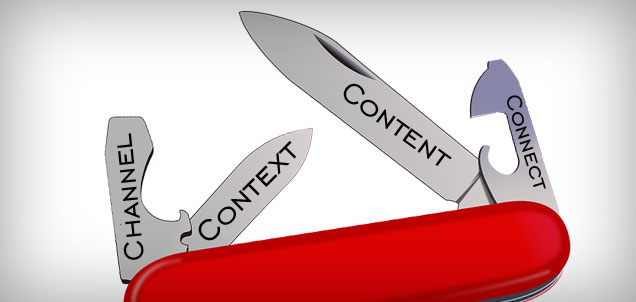
    Plus it’s not commissioned by some small little mobile services company cooking up responses to an internet-based study. This is commissioned by Omnicom Media Group in partnership with Epinion. The study is titled The Four Cs of Mobile Advertising and is centred around mobile advertising trends in Southeast Asia. The study redefines four key areas that are in the headline and that help in navigating the intricacies of mobile advertising – channel, context, content and connect.


    A few key findings form the study


    1. 77% of the surveyed respondents have clicked on or read a mobile ad in the past month, among which, 52% were intentional and 48% were unintentional clicks.


    2. Channel-wise, the most effective advertising mobile channels are communication related: email is high on both notice (45%) and click through (25%), followed by Facebook newsfeed and animated content or video ad on instant massaging app or website.


    3. Context-wise, 77% prefer personalised ads or ads they can choose. 60% prefer entertaining ads or ads that reward for watching. The study finds that consumers will be happy to see ads if they get something in return.


    4. 74% depend heavily on their phones to ease boredom. For content, their appetite for content does not stop at just entertainment or information. They are also looking for something with functional and practical value: self-improvement tips (43%), motivational or inspirational quotes (30%), recipes (27%) etc.


    5. In terms of Connect, 60% of them use their smartphones while watching TV, at least four out of ten times. This is higher in Thailand (66%) and among the youngsters aged 15 – 24 (63%). 75% use their smartphone to interact with the TV content: either talking, sharing or searching for programme-related info (47%) or TV ad-related info (28%).


    Commenting on the study, Guy Hearn, Chief Innovation Officer Omnicom Media Group said, “With saturated mobile phone penetration and growing ownership of smartphones, mobile advertising is integral for brands to connect with their audience. Despite the critical need for mobile advertising, many of us have no clear idea on how to capitalise it. One of the reasons is that while there is a lot of data available on consumers’ mobile usage, data on mobile advertising is still limited. This study unravels key insights which we hope will help marketers understand and leverage the power of mobile advertising.”


  • Tech is fine, but relationships will always be there: Jasmin Sohrabji


    Omnicom Media Group CEO India and South East Asia Jasmin Sohrabji says the agency goes public only when there is a need, like the establishing of its second agency, PHD. But who needs a constant spotlight when you’ve got a full trophy case and several ‘firsts’ in the industry to your name, particularly in the digital and mobile space, she tells Pradyuman Maheshwari. Hmmm. Read on…


    There is a perception that both you and OMD are extremely low profile. That you are doing great work, but you never talk about it!

    I set up a brand which didn’t exist in India, so there was some conscious effort to establish the brand. In the first four or five years, everything we did — every win, every office opened — we made it into a PR story. Once the brand was established, the focus was on internal consolidation of the second brand and the group. That’s why I think you won’t see the sort of media coverage we sought earlier. We did it again when we launched our second brand, PHD, year before last. We did the big Cannes wins that we had last year. And while we’ve been inundated with awards we’ve won, particularly for PHD, we didn’t PR the whole thing. By that time, we believed our fraternity and our potential clients, already knew us.


    Others who are well-established, are also high profile. Is this [reticence about PR], then, OMD’s personality?

    No, it’s not a personality and it’s not even my personality. We go in cycles of doing PR when we need to. We went through a cycle of establishing OMD, then establishing our second brand. Now the focus is on the overall group, and we will make a big group hiring. When we hired Shavon Barua as Managing Partner for PHD, we did some PR around that. But I think maybe you are right, to an extent we have not [gone public much].


    How is OMD doing? And PHD? What is your self-assessment?

    We’ve done very well in the last few years we’ve been there. Our growth has never been under 25 to 27 per cent. We’ve done very well both in terms of organic growth as well as new business. Not all of it is announced, or can be, sometimes. It’s not just the growth per cent, but we’ve established ourselves quite well across markets. When OMD launched, it was first a Mumbai entity, and later went to the south and Delhi. With PHD, it’s the other way around. We won the HP and SC Johnson [accounts]. The geographical balance is something I’ve always valued, because if you’re going to establish yourself as a group and grow, you can’t be seen as a one-city, one-market business. If you look around, many of the agencies – not just the top ones – have struggled to establish themselves in the south, west and north zones. I think we’ve been fortunate with our brands. Though OMD is stronger, PHD is relatively new since it’s been around for only two years. And so it still needs to be established and that’s why you’ll see more buzz around that.


    Other agencies have branched out into various areas like outdoor, digital, even activations. What about you?

    So have we, and on that we’ve done a little more conscious thinking. We’ve been one of the key agencies in the digital space, and it’s helped because of the kind of clients we’ve had. I think the biggest strength we had in digital is not just client and leadership, but the fact that because we were relatively new and launched in the heart of the digital era. In our case, digital didn’t come as a little add-on to offline; we’ve evolved it as a product as we’ve grown.


    You were among the first one to bring in mobile too.

    We’ve done a lot of firsts in digital. That’s been our key strength. We’ve focused on creative and content, in terms of both alignments as well as internal hiring, in digital. We’ve not done that much in the offline space. We focused on mobile too, very early on. I think the out-of-home space is an area we haven’t built, in-house.


    There are rumors that Mudra Max might merge with OMD

    When there is something to share, we’ll do it. Right now, there isn’t. Mudra is one of our partners. We’ve never gone the route of just one alignment because a lot of the clients are looking for a whole mix. So the pitches happen separately. The agency selection process is also quite different, and doesn’t always come as a part of the mix. So if you win the business, it doesn’t mean that you [automatically also] win digital and outdoor.


    Technology is virtually ruling the way business is done today. Is that a worry

    God, no! I think it’s great. It’s a huge positive for various reasons. New media has driven technology into the future. Old media has not seen the change as much yet, but it will. The change we’ve seen, however, are just in the efficiency of tools. We’ve not seen a smarter technology, just tool efficiency which means I can get my teams to finish their runs faster and spend time on the more interesting parts of brand communication. Although we haven’t seen a big technology change in the offline space, I believe it’s just a matter of time before they merge. It’s my belief that the more we go into technology, the smarter the machine becomes and the more important it is for us to then keep ahead and be smarter than the machine. The day we let the machine decide, I think we’ll have lost a large part of the value we bring to the client. We operate a lot on gut, so I think, we need to be smarter and always one step ahead of technology.


    And relationships do matter, don’t they?

    See relationships will always be there.. They will go up and down in terms of relevance, but will never go away. But if people let technology decide or guide their plans and think therefore they’ll sit back and see a run being done I think somewhere that, that individual or that agency will not be ready and prepared for the future. My expectation is, the more we advance in technology, the more quality people we’ll attract, the better our industry will be. Think of the kind of work that’s happening in our space today.. What was the conversation all you media people came and asked us about 10 years back? Every conversation is that do we have enough talent available. Why are people going and joining channels? Why are people going away to Asia? Remember all those conversations? Today who has that conversation? Today, we can attract very good talent because of technology. Because today our industry seems so much more in the front rung of decision-making.


    Are you able to attract talent from top B-schools and such?

    Top B-schools are not easy right now because of cost reasons. Top B-school graduates expect to get paid more than someone who has five or seven years of experience in our industry. We can’t give entry-level people those kind of salaries. So I may not be able to get that kind of talent yet, but in future I think we will. There is only plus and plus coming for us. The kind of work that we are seeing, that our network is doing globally in combining both offline and online data to better our strategies and such. When I see that, I wish I was still a planner at that time.


    You’ve been on the Cannes jury and you know that not too many Indian agencies make it [there]. So how do you rate our work versus the rest of the world?

    Firstly, I did media and we only get to see about 20 per cent of the work that’s out there. I didn’t see too of the India work, but I do know there was work like the Touch The Pickle Campaign this year, which generated a lot of talk. So while I think we have huge potential, we’re not up there on storytelling, when compared to work done globally. I don’t think the work is such a big issue with us as much as the way we tell our stories. If you’ve to wait for the idea after almost a minute into the video, that’s not good.


    OMD is not too active on the awards circuit in India, especially the Emvies

    OMD has not been as high profile as PHD. Yes, we aren’t at the Emvies. We don’t dominate that. Only PHD has been doing it, we’ve not been doing it.


    Any reason why?

    There is no reason; it’s just not happened. But this year we have. I’m going to send you a list of this year’s wins of OMD because I think you’ll be a little surprised.


    Do awards matter?

    It’s client specific. I feel the quality of your work, your team, your efficiency and savings takes precedence over winning awards, but it’s good PR. However, I don’t think that’s the reason we could be winning. Our product has so many elements to it; a big part is on savings, rates and negotiations. I don’t think [awards are] winning us pitches. So it’s important, but not the most important for a new business, for sure.


    Where do you see yourselves in 2020? How do see the business shaping up

    Earlier, I was a seeing a lot of data analytics and insight-informing strategy work. It was being done a lot more efficiently with technology in the digital space. Now all the conversations are looking at data across, because while digital makes sense in the evolved markets, data leading to insight-leading to solution-leading to optimisation may not work in India where there are a large number of activities happening offline. Four years later, I hope we will not be having these conversations and will have better integrated [online and offline] media. So there will be people who understand data well, and there’ll be people who can ideate and optimise from that data. Technology will help drive it, and I think people will eventually become online, rather than offline, specialists.


    Do you think going forward, media buying will get integrated as against just print or television or digital…

    I think it should. I really think it should because today you can afford the isolation but or the separation but I think as we go forward if there is a conversation… a buyer should know a conversation about buying a video versus buying a channel. And why am I paying this versus that? How can there be two separate conversations? It should be a video conversation. It shouldn’t be this channel and that Youtube kind of conversation.


    In terms of the kind of media you do, how do your digital spends compare with the rest?

    Our digital is way higher than the industry average. I think our digital spend is more than a component; the skew is more than 20 per cent of our overall.


    Over media investments?

    As a percentage of our overall media investment. We are very high on digital which is why our focus has been so much on the kinds of platforms we are launching, the technology we are investing in, the people we are hiring. When you think of long-term investment in other media, there’s an industry average. Everyone’s spends have similar amounts of outdoor and activation in their mix. But they are not growing at the same rate. Today, we are all at one level. Two years later, I might still be spending only 10 per cent on these mediums. But when you look at digital, it may have moved from one to five to 10 or even 20 per cent.


    Going forward, what new things can we expect from you?

    Now that our second brand is also established, I think the focus will be on consolidating individual brands and consolidating as a group. The work that we are doing in digital, research and technology, will be of benefit to all the brands. Earlier, we were carrying out initiatives for individual brands. We’ve hired a senior investment lead because it was time for us to compete at a group and brand level. Earlier we did have brand-level investment and trading leads. But now we feel the need to do a lot more of our initiatives, not just at the brand but also the group level. We recently launched a study called Touch Point Analysis, an OMD initiative. There’ll be more things which will benefit both groups.


    Is it the knowledge you provide or is it finally the kind of discount you offer?

    There is no one person or client in a pitch. There are multiple kinds of clients. For some, your rates have to be the best. For others, it could be the quality of your future thinking. How much are we able to read the future in our industry, and the quality of our people, is driving the pitches. That’s why clients want to meet more of the people going to be involved in the business.


    In your business, you can’t be isolated from the environment around you. Do you look at how others are playing? And where do you want to be, say, two years from now?

    Of course we do. When we started out eight years ago, we were very clear in our minds that we had to quickly catch up [with others] in terms of scale. Clients want to give their business to someone who is well established. The focus at that time was to ramp up very quickly, which we did really well and balance the geographies. We’ve seen agencies who’ve just focused on one market or another, and not been able to maintain their momentum over the long term because they’re seen as a Delhi or Mumbai agency, not a national one. Today, while we look at other agencies, we don’t look at what someone is doing right or doing wrong. I don’t think any agency styles itself on another agency. People just compare to see where are we on digital versus someone else on digital, or talent, or buying capabilities.


    And where would you say you are?

    We are always No 1 on everything. We’ve built a strong business for ourselves.


    This interview first appeared in dna of brands on August 24, 2015
     

  • OMD India’s Shyam Ravishankar moves to Omnicom Media Group Malaysia as Head of Digital

    By A Correspondent


    Shyam Ravishankar

    Omnicom Media Group Malaysia has appointed Shyam Ravishankar as Head of Digital. In his new role, Ravishankar will be working on key accounts across OMD and PHD to drive adoption of digital technology and create integrated marketing experiences.


    Ravishankar joins Omnicom Media Group Malaysia from OMD India where he was the business director incharge of digital and mobility services. A digital strategist with over 13 years of experience and a specialist in data-driven brand building strategies, Ravishankar has a wide depth of knowledge across key areas such as performance marketing, SEO, social media and digital analytics to name a few.


    Commenting on his appointment, Andreas Vogiatzakis, CEO of Omnicom Media Group, Malaysia said, “Shyam is a digital evangelist, and a great addition to the team. His experience will complement our existing talent pool and help us deliver an even better product and exemplary service. Shyam is particularly skilled in creating synergies that provide an integrated offering incorporating the best of digital and weaving them with offline strategies. As a network, we are committed to investing talent to ensure that we are ahead of the curve when it comes to digital expertise. We are thrilled to have Shyam on board.”


    Added Ravishankar, “It feels great to continue being a part of the network in a different market. This is an exciting opportunity to work with a talented and welcoming team in a market that has great potential when it comes to digital. I am looking forward to lead the network’s digital prowess and further strengthen our offering.”


    Prior to his roles at Omnicom Media Group, Ravishankar worked in Mindshare on the United Breweries, Tata Steel and Nike accounts.  He will report to Vogiatzakis and his position is effective immediately.


  • Shavon Barua joins PHD as managing partner. to manage HUL digital mandate

    By Pritha Mitra Dasgupta


    Shavon Barua, former president of Havas Worldwide, is joining Omnicom media group agency PHD in the newly-created role of managing partner. Barua will work closely with Jyoti Bansal, managing director, PHD India. With two decades of experience in creative agencies, this is the first time she will explore her opportunities at a media agency.


    One of her key responsibilities will be managing the entire digital mandate of Hindustan Unilever. Last year, PHD picked up the coveted gold at the Cannes Lion festival for its HUL campaign, Kan Khajura Teshan, the on-demand entertainment channel on mobile phones.


    “Shavon’s leadership experience with a creative communication agency will be a great addition in strengthening our product,” said Jasmin Sohrabji, chief executive officer, Omnicom Media Group, India and South East Asia.


    Barua started her career with SSC&B Lintas in 1995 as account director. She moved to Rediffusion Y&R in 2000 as client servicing director and in 2004 joined Ambience Publicis as associate vice-president. In 2007, she moved to JWT as executive business director and in 2009 shifted to Euro RSCG as director. She joined Havas in 2010


    Source:The Economic Times

    Copyright © 2015, Bennett, Coleman & Co. Ltd. All Rights Reserved

    Licensed to republish


  • Omnicom appoints Amol Dighe as Head of Investment India

    By A Correspondent


    Omnicom Media Group has announced the appointment of Amol Dighe as Head of Investment, Omnicom Media Group India. The appointment in India follows senior hires for the function in markets like Singapore and Hong Kong.


    Mr Dighe will lead strategic insight and analysis over the OMD and PHD investment portfolio to ensure the best possible client outcomes are secured across all media platforms. In addition he will be involved with special development projects across South East Asia.


    Prior to his new role at Omnicom Media Group, Mr Dighe has a depth of experience working with Unilever in a Regional Buying and Operations role for the Asia Pacific Region, working with Star TV Network to establish their Client Service Strategy and Planning unit and working with Group M India spanning over nine years. Most recently he was in a leadership role in Jakarta with Mindshare Indonesia.


    Jasmin Sohrabji
    Harish Shriyan

    Speaking on Amol’s appointment, Jasmin Sohrabji, CEO Omnicom Media Group India and South East Asia said, “Amol is a terrific addition to the team, bringing invaluable experience to further strengthen our Investment team. Leveraging his experience across the region he will additionally play a key role in special development projects in South East Asia.”


    Welcoming him to Omnicom, Harish Shriyan, COO Omnicom Media Group said, “As we consolidate and gear up for the next level of growth, we are excited have Amol as part of our management team that will enhance our client delivery capabilities in India.”


    Said Mr Dighe: “I am delighted and excited with this opportunity of working with the growing Omnicom Media Group team to add greater value to our client offering and making our business more robust for the future.”


    Commenting on the appointment, Paul Moreton, Chief Investment Officer, Omnicom Media Group APAC, said, “With our business growth, we are privileged to have the ability to attract quality talent. Amol will continue to develop our offering – delivering expertise in an area of increasing sophistication.”


    The appointment is effective immediately.


  • Jaldi 5 with Jasmin Sohrabji: Digital is always a focus for Omnicom Media Group

    By A Correspondent


    It’s been around a fortnight since the Omnicom Media Group announced the setting up of PHD, its second media agency in India. Some six years back, OMD opened shop and has since been recognized by all – competition included – as an established player in the Indian market.

    Although she didn’t reveal revenue targets, Jasmin Sohrabji, Chief Executive Officer – South East Asia and India of Omnicom Media Group spoke on the setting up of PHD, client acquisition and how digital is huge for Omnicom.


    01. OMD started operating in India in 2007. So why did it take so much time for PHD to take off in India, especially since it’s been here informally in the country for almost a year?

    We wanted to establish OMD’s value proposition clearly in the Indian market, and consolidate operations before launching our second brand. In the short span of six years, OMD has carved a distinct identity for itself in the market and provided Omnicom Media Group a strong base to launch PHD.


    02. From the year-odd that PHD has been in India, are there any learnings for the way the business is done here vis-a-vis other markets?

    While it’s still early days, we expect to see PHD India as a strong shining star within the global network given the focus on planning and digital already in our group’s DNA in India.


    03. The Unilever digital business is with you in India. Are you expecting other alignments to happen soon?

    Going forward there will be some restructuring and realignments for PHD India including HP, HTC, SC Johnson etc


    04. Is there too much reliance on these alignments happening, or is this what you expect will happen in terms of commitments?

    Global alignments provide an opportunity not a guarantee of business. Like OMD, we will grow PHD from wherever opportunities come, globally, regionally and locally.


    05. Digital is typically what PHD is focused on. But in India, the spends (and if one may even add trust) on digital isn’t much with the budgets of even the big spenders being very small. In what way are you looking at evangelising the medium?

    Not just at the brand level, digital is always a focus for Omnicom Media Group. In India, digital accounts for a significant percentage of our growth and we see this only scaling further.


    5a. Are you going to be working with creative solution providers externally or in the long run will you have some resources inhouse?

    We operate on a flexible model, with both internal resourcing as well as strategic partners.


  • Jasmin Sohrabji elevated to CEO, South East Asia and India @ Omnicom Media Group

    By A Correspondent


    Jasmin Sohrabji

    In a significant thumbs up to the progress that Jasmin Sohrabji has made as Chief Executive of Omnicom Media Group India, she has been elevated and will take on responsibilities of South East Asia as well.


    With an effort to sharpen focus on the continued growth of the Asia Pacific region, Omnicom Media Group (OMG) has introduced a new sub-regional structure effective Monday, June 3.


    Under the new structure, two sub-regional assignments covering South East Asia and Greater China are being added, in addition to Australia and New Zealand. Ms Sohrabji will continue to lead OMG India, as CEO and also take on the task of leading the South East Asian markets of Singapore, Malaysia, Philippines, Indonesia, Vietnam and Thailand for OMD, PHD and M2M – brands of Omnicom Media Group.


    Ms Sohrabji joined Omnicom Media Group in 2007 with the mandate of setting up OMD’s India operations and she has helped the media major grow into one of India’s fastest growing media agency today, with an impressive roster of clients.


    Commenting on the appointment, Barry Cupples outgoing CEO of Omnicom Media Group, APAC, said; “Asia is vibrant and the lens of the world is on this region. The media and communications industry is being shaped by seismic shifts, and the South East Asia region is at the heart of many of these changes. Omnicom Media Group SEA and India has a strong and talented leader in Jasmin. She has a clear vision that will help in strengthening our eco-system. Jas has our complete faith and trust to be an even bigger star in the new role.”


    Newly appointed APAC CEO of Omnicom Media Group, Cheuk Chiang said, “Bolstering our regional management capacity with a new sub-regional structure reinforces our commitment to this region. Jasmin is an asset to the senior leadership team and I am confident that under her guidance and vision, our presence in South East Asia and India will get stronger.”


    Said Ms Sohrabji, said, “Setting up OMD India was a huge opportunity and which the India team is very proud of. I am looking forward to the additional responsibility and working closely with the SEA team to further strengthen the sub-region.”


    Under the sub-regional structure, Doug Pearce, CEO of OMG China, will add Greater China responsibilities overseeing Hong Kong and Taiwan, while Leigh Terry will continue to lead OMG’s operation in Australia and New Zealand. Jasmin Sohrabji along with Doug Pearce and Leigh Terry will report to Cheuk Chiang.  OMD and PHD leadership in the region will continue in the same structure as today, with Steve Blakeman responsible for OMD and newly appointed CEO, Susana Tsui responsible for PHD. Barry Cupples will move on take the position of CEO, Global Investment and Accountability, a new role at an Omnicom Media Group Executive Board level.