Tag: Ogilvy India

  • The Ogilvy Way on Digital


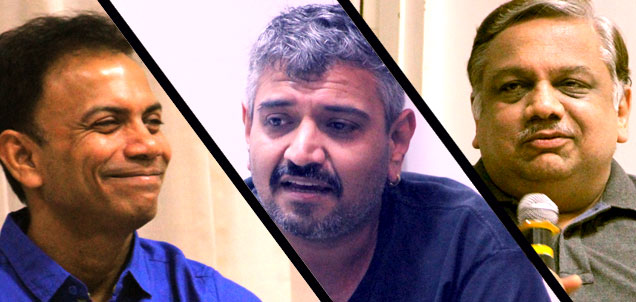
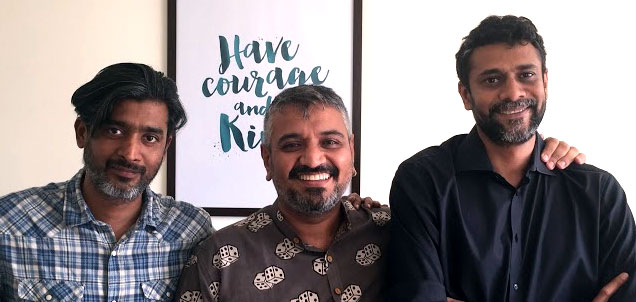
    It’s the numero uno creative agency in the country. And it was among the earliest big agencies to go digital. Even as it started this transition over a decade ago, Ogilvy India is still perceived as an agency tied to the more traditional areas of television, print and outdoor. For this discussion, Vikram Menon, President and Country Head, OgilvyOne Worldwide India and Neo@Ogilvy; Kunal Jeswani, Chief Executive Officer, Ogilvy India, and Rajiv Rao, National Creative Director,Ogilvy India got together to speak with Pradyuman Maheshwari about Ogilvy India’s digital outlook…


    Ogilvy has been in digital for many years, but it is perceived as a traditional television campaign agency. Why?

    Kunal Jeswani (KJ): Because it is the best advertising agency in India, and possibly in Asia too. When you want to build something else within that kind of a unit, it takes a lot of effort, and years, for it to shine.

    Rajiv Rao (RR): I think the shadow advertising agencies cast, is very large. If you are an independent agency, and into digital, people say: ‘Oh! Ogilvy also has digital’.

    Vikram Menon (VM): The sheer size of this agency and the work it delivers overshadows everything, from an advertising standpoint. So it becomes far more difficult for a unit — regardless of what the unit is — to stand out.


    Are you happy with the way things are?

    VM: Absolutely. As a part of Ogilvy, you have resources and talent you can always rely on. We are 500 people; I don’t think there are many agencies of that size anywhere in the country.


    Of all the large agencies, you got into digital fairly early. You acquired a digital agency many years ago, but the perception, that you are essentially not a digital agency, continues…

    KJ: Ogilvy One was one of the first agencies in India to start taking digital seriously. We started making a transition from being a direct one-to-one agency, to a digital agency almost 12 or 13 years ago. Now, three things could have happened at the time. Either the advertising agencies Ogilvy and Mather- could have started declining, in which case we would have seen Ogilvy One shine a lot more than it does now. Or Ogilvy One would have been scrapped, or – as it has happened — advertising has continued to hold its own, and [Ogilvy has been] the best agency in the country for the last 12 years. Ogilvy One has been built up, gradually, as the largest digital agency in the country, but in terms of perception, it is still hard to break out the ‘we-are-an-advertising-agency-first’ mode. People need to see that right next to the advertising agency, sits this big, shiny, fantastic digital agency. We churn out 250 to 300 fantastic films a year, and you see it a lot more because it is on TV. Television is difficult to outshine. But anyone who has worked with Ogilvy One and seen the capabilities we have, will know it is great. [We] have done fabulously in [awards events like] the D&A Echos globally. We are listed eighth on Warc, and are the only Indian agency in the Top 50 I think. I think we were a little ahead of our time. The demand for digital work, and client spends started only five or six years ago.


    Rajiv, Ogilvy has been a creative-led agency. Are you looking at digital as a part of the thing or you do stuff television and it is kind of shoveled in to digital?


    RR: The approach to what we do is the same, whether it is digital or advertising. We look at every brief and try to make something as interesting and exciting for digital as we would for advertising. There is a lot of work we have done that you do not see on television. Television is the most visible medium, so that is another reason you do not see a lot of digital works, which are less in-your-face. Most of the time we create work for television first, and then adapt it to digital.


    I was there at the Kyoorius Creative awards judging, the fact of the matter is while digital was there, print and radio, there were a 100-plus entries which entered but only four both categories which were shortlisted. Clearly, I think the focus is coming towards digital in a bigger way than the others.

    KJ: In terms of spends, yes. If  I asked a client five years ago, where their spends were, they’d have television, outdoor, print, radio and then digital. Today, digital is right after television. But it differs from client to client. We have clients even now coming to us and saying: “Where is my Digital First work? I want to see it.”


    Only an agency like Ogilvy can convince clients that they need to use digital and it is a better way to communicate something. Are you all doing that?

    KJ: I don’t think we need to. Every one of our clients is pushing us for fabulous digital work.

    VM: We have passed that point where we have to convince people that digital is a necessity. Earlier, it used to be a tick box. But now it is integral to the campaign in itself, and measured on several different parameters. So there is no need to convince people.


    What about digital-only clients?

    VM: I don’t think there are too many clients like that. It may be an Ogilvy One only client rather than an Ogilvy One plus advertising client, but they also have their advertising agencies, and a lot of cases where you see digital leading the campaign. So the idea is first cracked and then we decide how it will work on mobile, social and all other platforms. And then we may do television also.


    When a client is getting advertising work done for television, is separate thought going into digital, or is most of it the same?

    RR: About 50 per cent of work is outside of the main campaign. Yes, we do a lot of it.

    KJ: If you are doing a large ATL campaign, the campaign should have a digital face as well. It does not need to be the same thing, but it needs digital integration. There are times when you are silent on television. Most clients cannot afford to be on television throughout the year but you can afford to be on digital. You have your whole campaign amplification, idea amplification piece on it and then when you are off television, you do a digital-only campaign.


    Rajiv, would you say the agency has changed over the years given the fact that it is now more digitally-active than, say, five years ago?

    RR: Not just the agency, but even the environment across the industry. People are thinking of ideas and not films, about ideas that would go social and viral. It is a conscious decision which comes to people naturally.


    The essence of this conversation is to see how Ogilvy has changed. So what are the kinds of services that you have on offer at Ogilvy One?

    VM: We offer things across the spectrum. There’s just consulting at one end of the spectrum (which we do for a few clients like Aditya Birla), where we design programmes and then hand it off to the agency to execute it. From there all the way across is social media, in terms of what your presence should be across social channels, building websites, building your own media, the content that you are putting up there etc. For Rajasthan tourism, for example, we have done some hundred pieces of content for their website to make sure people keep coming back. Then there are things like social care, where we manage all the online complaints of Vodafone. Today it is very difficult to define digital as a space, but we have got a lot of offerings in that space, with full teams working on it.


    As digital gets mainstreamed into the agency, will the entire agency be seen as a digital agency also? And will all agencies eventually be viewed that way?

    KJ: Will Ogilvy be seen as a digital agency? The answer is no. I think the market will shift very fast, with all agencies, including Ogilvy, being able to do and deliver digital content and campaigns across the agency. Exactly the way we do a print ad, television or radio spot and outdoor. The entire agency will be able to churn out digital campaigns and video content and all other content seamlessly. At the same time, digital is going to get more fragmented and more specialist. You are going to need deeper e-commerce specialisation, performance-marketing specialisation, digital production and asset management-specialisation, data analytics specialisation linked to all the content and such, and all of that is what we, at Ogilvy, are going to be known for. I think that is where it is going to move. You need the digital content, campaign done; you do not need a specialised digital agency, every agency in the country will be able to do it soon.


    Many years ago, a similar thing happened with big, creative agencies. Media agencies were de-merged and became independent. In the last few years, there has been a growing realisation that it makes sense to have full-service agencies. Given this background – that is the advantages and disadvantages of having media separated — do you think the digital part of business should be integrated with the creative?

    VM: We are doing that, actually. We do have digital media, in a set-up called Neo, and it has been around for some time. But as of now, we are investing quite significantly in it. It has trebled in size in the last one-and-a-half years. We brought a new head, and we have been driving performance. We’ve got great models and tools for that, so you will see a lot more use from that.


    In the past, media agencies have broken away from creative agencies. Do you think it is better to have a separate digital thing?

    KJ: There was a time when you had one agency. Then it split, and media and creative were separated. Then came digital. You had digital agencies and you had digital media agencies. Every client is going to a separate media agency and a separate digital media agency. Then you had the digital media agencies splitting into three. Mainstream digital media agencies do all your buying and planning across channels, and you have specialist search agencies and specialist performance agencies. Now, most clients want one agency that does everything. Soon client will start asking, ‘Do I really need a digital agency to do all this stuff?’ Not really. They need specialist capability. So you will see more and more specialist capabilities inside the digital agencies separate, and you will see the basic capability delivered by integrated agencies like Ogilvy.


    Rajiv, how do you look at performance and..

    RR: (laughs) I don’t. But I agree with Kunal. I think there is a digital agency and there is an advertising agency and, I think at least for some time, it should be one unit. We are creating ideas which have to be adapted or transmitted into digital and vice versa, so it should be one unit. And yes, there are specialist parts of the digital thing which can be a separate entity. As Kunal said, the clients also want to go to one place and find all the digital solutions.


    If you had to make a pitch to clients to show how different you are from earlier, and that digital is very much part of your offerings, what would it be?

    VM: I would just like to position ourselves as a modern agency, in terms of the skills we bring to the table in delivering campaigns. I would stick to something as simple as that. Underneath all that, you have specialist skills that go towards making what I call a modern agency. It becomes complex to explain.

    KJ: Let us look at why anyone comes to Ogilvy today. Any client, why do they call us? What would your perception be?


    Piyush (Pandey) and Rajiv… (Everyone laughs)

    KJ: Perfect! What do Piyush and Rajiv stand for? They stand for a fantastic creative product. That is why anybody comes to us for. They come to us for a fantastic creative product. I will be completely stupid to try and do something different with that, because it is not necessary. This agency is built on great story telling and fantastic creative. The only job Vikram and I need to do with Rajiv’s partnership  and everybody else we have here is make sure that the great story telling, that fantastic creative spreads across every single channel that we have.


    And, is that happening?

    KJ: Yes, it is. We were already discussing that it is much more difficult for people to remember great digital campaigns because in India television campaigns come to you very easily as we are exposed to it.


    Once upon a time, most digital campaigns used to be Gabbar Singh and Rajnikanth

    VM: That was 10 years ago.

    KJ: At heart, we are going to be a fantastic creative agency which delivers great storytelling across every single platform. But the bit Vikram was talking about, about being able to do a degree of modern marketing, also means we need to get more tech-savvy in the way we approach advertising. The data backbone, the technology backbone of the agency and the ability to deliver on digital. From the delivery point of view, one is the story and the second is being able to give the client confidence that we can build his mobile applications, websites and manage his social platforms. So, at heart we will always be a creative agency. I just need to build enough backbone to ensure clients also understand that these guys also have the technology, data and delivery chops.


    Rajiv, are you looking at re-tooling your team for the new order, or is it just as it comes?

    RR: The way it is right now, I don’t see the need to. Everybody across the agency — whether it is advertising or digital – is thinking in the same manner, and whether they are thinking about film or editing or anything else, the approach is very similar. When you have a brief on an exciting thing, most teams are thinking [in multiple ways], unless they are asked to think only film or TV. I really don’t think I need to make any changes.

    KJ: At the same time in terms of messaging, everybody in the company understands we need to be fantastic. It is not a choice. We have training in place. We have done something called Digital Dojo, a three-day workshop for everybody. Right now, it is for our senior key managers, but it will distill down. Next month, we are doing an intensive digital planning workshop [about] the way we approach digital as a company.


    Is it for everybody?

    VM: The dojo was for creative; the digital and data-planning framework is going to infiltrate the entire organisation. So we are doing a two-day workshop next week for everybody again.

    KJ: Every week there is a global webinar on a different aspect of social done by the best people in the world. It is done from New York and it is available to all of us. Everyone accesses it.

    VM: Some of the sessions are for clients too.


    The thing has to come from top down.

    KJ: At the same time, our employees are not in school. I cannot take a ruler and hit people on their wrists and say, ‘you have to attend 10 sessions in the month’. We are not that kind of company. We are a creative company and at the end of the day we will make training accessible to everybody. Rajiv, Piyush, Vikram and I will send the message to everybody that this is important for them; they need to be thinking in these spaces and it is important for the company, and the rest of it is up to the employee.


    This story first appeared in dna of brands on June 13
     

  • Piyush Pandey awarded Padma Shri

    By A Correspondent


    Veteran adperson and Ogilvy bossman Piyush Pandey has been named as a Padma Shri recipient.

    Piyush Pandey                                                                     Â


    As reported by MxMIndia earlier today, Pandey was tipped to be named as a Padma Shri winner. He was the only representative of the advertising and marketing services fraternity in the list of 112 awardees, 83 of which are being accorded the Padma Shri. According to the grapevine, Ogilvy India bossman Piyush Pandey’s name is set to be announced in the list of Padma Vibhushan, Padma Bhushan and Padma Shri winners to be unveiled today.


  • Piyush is not a grumpy old man. Neither am I. WPP chief Martin Sorrell on retirement plans for the Ogilvy India boss and himself

    By Shephali Bhatt


    Piyush Pandey

    We caught up with WPP’s chief Sir Martin Sorrell on the last day of Cannes Lions 2015, to talk shop and to clear the air on some rumours. The latter first: Piyush Pandey, the executive chairman and creative director of Ogilvy & Mather (O&M) India and South Asia (a WPP company), celebrated his 60th birthday in Goa earlier this year. While David Mackenzie Ogilvy, the founder of O&M, retired at the age of 62; the industry has been abuzz for quite some time about Pandey’s imminent retirement plans.


    Is he finally retiring, we ask Sorrell. And he says: “I read an article featuring Maurice Saatchi, Jeremy Sinclair (founders of Saatchi & Saatchi and M&C Saatchi) and Bill Muirhead (executive director, M&C Saatchi) highlighting that these men were ruling their organisations at the age of 68-69. They said that the grumpy old men are going to carry on. Piyush is not a grumpy old man. He’s not dead yet. Neither am I.”


    On being questioned about the succession plan for both Pandey and him (since he’s 70 himself), Sorrell says, “We have succession plans across the top 200 employees, but I’m not going to discuss that with you.”


    Sorrell’s biggest concern

    His biggest concern about this business is that clients are too short-term focused. They think about the bottom line, and not the top line, especially since the Lehman Brothers crash that heralded the financial crisis of 2008. “Clients have been very focused on cost and not on developing brands and top line, for understandable reasons,” he says. The global GDP growth rate has been slow at 5% nominal and 3-3.5% real. There’s very little price inflation. “As a result you see the rise of procurement department on the client’s end. They get to their numbers, they’re focused on cost rather than developing the revenue. Which is why the irony that people are looking for growth from Western Continental Europe when that’s the one part of the world that hasn’t supplied growth for seven years, since Lehman basically,” he explains.


    Running a business between disruptors and investors

    Sorrell talks about running a business where on one end you have disruptors like Uber and Airbnb (in the old days it was Google and Facebook, and still is to an extent), on the other end you have zero-based budgeters like 3G, Valeant and Endo. And in the middle are investors like Bill Ackman and Nelson Peltz running a legacy business. “The businesses that do best are those that get the concentration of ownership,” he notes. “Indian oligarchs control the ability to make decisions which is good,” he adds.


    Narrowing gap between fast and slow growth markets


    At the moment, there’s focus on cost because growth is hard to come by. The fast growth markets still give you more growth than the slow ones but it’s getting more difficult, he says. “The gap has narrowed.”


    Why clients needs to shift focus from cost

    If you were a client faced with slower top line growth, no pricing power, the disruptors on one end, zero-based budgeters on the other, and the activist investors in the middle, there’s no running away then, Sorrell points out.


    “What you can do is map the top brands in every region using valuation techniques and you’ll find out that people who invest in brands grow their top line faster (which is logical, you would expect that). The biggest driver of total shareholder growth is revenue return, organic revenue growth,” he says.


    Trying to get someone to act on that when it’s for the long term is very difficult when everyone is thinking short term, he rues. “What we have to do effectively, is spend money on an online+offline campaign, which clearly lays out the argument that marketing is an investment not a cost.”


    Investing in tech, data and content – to differentiate the business meaningfully

    WPP has been focusing on bolstering their portfolio across technology – with AdNexus (ad tech for targeted marketing) and Xaxis (programmatics software); data – with Rentrak, Comscore and Kantar; and content — with Media Rights Capital (producer of ‘House of Cards’, ‘Ted’ and ‘Elysium’), refinery29, Snapchat, Truffle and more. “To differentiate the business meaningfully, to win businesses for factors beyond just the talent of the presenter and the price, we have to get the client to focus on these,” he asserts.


    On tech companies

    “Tech companies have gotten very active. Google may have got softer because of some regulatory issues but Facebook is more aggressive than ever. In a non-constructive way I’d think because they feel more ballsy about catching up to Google on Mobile. Yahoo is very hungry, constructively so. Apple is much more open now. Microsoft is much more coordinated. Twitter, LinkedIn and BuzzFeed have interesting opportunities as well.”


    Source:The Economic Times

    Copyright © 2015, Bennett, Coleman & Co. Ltd. All Rights Reserved

    Licensed to republish


  • Abhijit Avasthi goes Sideways

    A Correspondent


    Abhijit Avasthi

    Former Ogilvy India National Creative Director Abhijit Avasthi is moving Sideways. Literally. After having left the agency with effect from December 2014, he has teamed up with Sonali Sehgal, former Ogilvy Senior VP (Client Service) , to launch a new creative problem solving agency called ‘Sideways’.


    Although work at the agency will start in right earnest in July after Kinu, as Avasthi is known in the fraternity, is back from judging at the Cannes Lions advertising festival, the new company has incorporated, he said.


    “Sideways will adopt a creative and right brain approach to everything,” he said, clarifying that the outfit will look beyond branding and advertising. “It could be an all-new product or service or even finding a problem to an HR issue,” he explained.


    Other than Sehgal, there is no one from his former agency in the new venture. “We will have a dozen-odd people in the core team and other than the two of us, no one is from advertising.”


    Meanwhile, Avasthi’s Sideways has been roped in by Aamir Khan to help in the Maharashtra government’s Jalyukta Shivaar Abhiyaan where the actor has been appointed Brand Ambassador.


    The social sector is special in Avasthi’s plans for Sideways other than looking at problem solving for established large organisations and start-ups. “We will not do pureplay advertising,” Avasthi says with certainty.


  • Ogilvy India gets a new top deck of suits. Kunal Jeswani to be CEO

    By A Correspondent


    Ogilvy & Mather India has announced a new management structure. No, Piyush Pandey isn’t going anywhere. Yes, he isn’t. SN Rane will be there too.


    So what’s changing? Loads. But first read what Messrs Pandey and Rane have said in a statement:  “It is time that our very strong senior team joins us in all key management decisions of Ogilvy & Mather. Our clients should look forward to even greater impact from Ogilvy & Mather in the days ahead.”


    Effective March 1,2015, this is what the new structure will look like:

    :: Kunal Jeswani, currently Chief Digital Officer of Ogilvy India network, is promoted to CEO, Ogilvy & Mather India

    :: Hufrish Birdy, currently Exec Finance Director, Ogilvy India, is promoted to CFO, Ogilvy & Mather India
    :: Hephzibah Pathak, President – Advertising, Ogilvy India will assume a new role-Global Clients’ Director, Ogilvy & Mather India
    :: Kawal Shoor, earlier Head of Planning, Ogilvy India, has been promoted to National Planning Director-Ogilvy & Mather  India.


    Mr Shoor’s elevation had happened effective January 1. Meanwhile, the Board of Directors is also being expanded. Currently it comprises Piyush Pandey, SN Rane, Madhukar Sabnavis, Poran Malani, Hephzibah Pathak, Miles Young, Paul Heath, Paul Cocks and John Goodman. Kunal Jeswani  (CEO – India), Rajiv Rao (National Creative Director), Navin Talreja (President- Mumbai & Kolkata Geography Head) and Hufrish Birdy (CFO – India) will be Additional Directors.


    Ogilvy India has been CEO-less ever since Pratap Bose left the organisation in June 2008.  Mr Jeswani, a postgraduate in communications from MICA, started his career in advertising around two decades ago, joined Ogilvy in 2005 as Vice President-Client Servicing and has headed OgilvyOne Worldwide with the responsibility of managing Ogilvy’s digital business in India. Currently, he is Chief Digital Officer of the Ogilvy India group companies and he will retain this responsibility with his new role. He will report directly to the Chairmen’s office and will work in very close association with Geo/Discipline heads, Creative, Planning and business leaders. Last year, he was among the two captains of the crack Ogilvy group team appointed to orchestrate the BJP campaign.


  • Google pays tribute to e-commerce delivery boys

    By A Correspondent


    Acknowledging their efforts and considering the thankless nature of the job, Google decided to celebrate the spirit of the delivery boys, the unsung heroes of the e-commerce ecosystem. A special gift in the form of a customised helmet with their name on it was delivered to the homes of these delivery boys.


    Said NavinTalreja – President, Mumbai & Kolkata, Ogilvy India: “Brands with a social conscience and a sensitivity to the ecosystems that make them work are being preferred (loved) by consumers across the world. Google is one such brand which has led many such initiatives. #SpecialDelivery is a special gesture by Google for the delivery boys who bring parcels of happiness to homes in India.”


    To encapsulate the entire activity, a short video which showcases the life of the delivery boy was commissioned.


    The objective of this activity was to simply urge people to say, “Thank you”, to these heroes. And make it a #SpecialDelivery. The helmet was not just personalised but also visually designed to celebrate their journey.


    Reasons Sandeep Menon, Director, Marketing, Google India: “The Great Online Shopping Festival (gosf) was a roaring success in 2014, with all partners seeing great engagements across product categories. We got a total of 1.4 crore visits to the site and the user engagement is up by 7 times compared to last year. All this was made possible due to collective efforts of all our partners. And this video is a small gesture to thank the unsung heroes who keep the wheels of this growing industry moving.


    Added Sukesh Nayak, Executive Creative Director, Ogilvy India: “Today, we all shop online and enjoy the comfort of it. But somewhere we forget to acknowledge the most important person in this – the delivery man. Our idea was to recognise them and thank these faceless people. The helmet was not just personalised but also designed to visually depict their amazing journey. The expression on their faces when we delivered this at their doorstep was just priceless. It made us realise, that a little thank you goes a long way.”


    CREDITS


    National Creative Director: Rajiv Rao

    President, Mumbai & Kolkata: Navin Talreja
    Executive Creative Director: Sukesh Nayak
    Head of Planning, Mumbai: Kawal Shoor
    Senior Creative Director: Talha Nazim, Manasi Kadne

    Art Directors: Nobin Dutta, Noothan PR

    Copywriter: Aratrika Rath

    Business Head: Hitesh Patel

    Account Management: Kunal Rasania, Madhavi Unni

    Production House: @Asylum

    Director: Raaj A Chakravarti


  • Ogilvy unveils new campaign for IndiaProperty.com

    By A Correspondent


    Ogilvy India has unveiled a new campaign for IndiaProperty.com. With property search being a high involvement and complex task, the aim was to make the communication capture the psyche of a first-time home buyer, the fears, anxiety and the struggle he/she goes through while entering the home search maze and the role IndiaPropety.com plays in simplifyingthe experience.


    Ganesh Vasudevan, CEO IndiaProperty.com said, “We are very excited to announce our new brand identity, reflecting our promise of hand holding the user end to end in the home buying journey. For the campaign, we wanted to reflect the emotional state of a first time home buyer when he is making one of the biggest decisions of his lifetime. The creative team at O&M Mumbai got the brief perfectly and have moulded the idea that on one hand epitomises the first time home buyers hesitation and emotional state, while on the other hand addresses how our brand adds value to overcome a buyers fears through a combination of technology solutions and human touch.”


    Piyush Pandey

    Piyush Pandey, Executive Chairman & Creative Director O&M, South Asia said: “Buying a property is life’s biggest and toughest decision. Fear, anxiety, lack of clarity and trust are the emotions a property buyer goes through. They desperately seek assurance. The challenge was to think of a story, an idea that encapsulates this feeling best and is unique. The metaphor of a kid who is jumping into the pool as he doesn’t know swimming portrayed the emotions of the first time property buyer beautifully.”


  • Welcome, Content Marketing


    By Tanushree Bhatia


    It’s one of the biggest buzzwords in the media these days: content marketing. Advertising agencies are being forced to look beyond traditional ads to also include this new form of messaging in their offerings. And marketers have had to rejig their teams to be able to manage the new challenges thrown up by this new form of outreach. These and other issues were touch upon at a panel discussion at premier marketing and communications school MICA last Friday. The discussion was part of MICA’s annual marketing management festival Micanvas at its campus in Ahmedabad. The panellists were: Sanjay Tripathy, Senior EVP-Marketing, Product, Digital and e-Commerce, HDFC Life,  Kunal Jeswani, Chief Digital Officer, Ogilvy India, and Sanjay Mehta, Joint CEO, Social Wavelength and the proceeds were moderated by Pradyuman Maheshwari, Editor-in-Chief and CEO, MxMIndia and Consulting Editor, dna of brands.


    Sanjay Tripathy, Senior EVP-Marketing, Product, Digital and e-Commerce, HDFC Life

    Content was always a one-way communication. We then moved to blogs, social media and now there are multiple channels. It has increased manifold. It is very important to understand how the generation is changing. The readership of blogs has diminished over time. It is a checklist generation for example: 5 things to do, 10 things to do. It is all about instant gratification. Nowadays, constant monitoring and responding to user-generated content is more important than content creation.


    You can allocate 5 percent of the spends pie on digital and that can do a great job. I feel our social space is like personal space. Our social spaces are very segregated. You have to have a strategy as to what this strategy is best suited for.


    It’s not easy – but the age-old principle holds true: know your audience. For many companies, that audience is the always-on generation, which represents both their current (and future) customers, so smart marketing with them now can yield invaluable loyalty later on. If one is able to accurately target a few words or phrases that resonate with them, they will conjure a positive memory around your company, and, hopefully your product – so stay ahead of their game.


    Kunal Jeswani, Chief Digital Officer, Ogilvy India

    It’s about push/pull communication. Communication strategy focuses on push whereas content is around pull. It thus need not be created but can be sponsored. The content is designed to be either entertaining or add some value to the consumer. In the process of consuming the content, the consumer makes a brand association.


    My job didn’t exist five years ago. Things are changing and capabilities are being built. The digital medium plays a very important and large role in telecom, finance and auto sector.


    We have started to see things differently and the British Airways ad is the best example. The producer of the ad is not an ad filmmaker in fact he used to make expensive wedding videos. But the characters are real and none of the interactions are scripted. When you start capturing that kind of stuff is what I mean by content and not advertising.


    Consumers are very intelligent that way. No one can be fooled into it. Everything is usually branded example the Google ad. It’s clearly a Google film and no one is misleading you. But you still watch it like a piece of entertainment. What digital does is that it lets you do visuals. The only issue is how interesting you can make each element with a push.


    Sanjay Mehta, Joint CEO, Social Wavelength

    Today every company is a media company and they have a huge onus of creating tens of thousands of pages of content. A dilemma that is often faced by companies is the short attention span of a consumer. Gone are the days when there used to be long stories. We have shifted from emails to Whatsapp from SMS. And now there’s the Yo app. First the companies need to create content and then create content of interest. And who is the competitor? Everyone is a potentially great content producer. The world is rich with the quantity of content that gets created each day. Content has to align the agendas of both the brand and the user.


    There are question marks on user-generated content, but there are enough genuine reviews on the sites. There is a rating of the reviewer also for example in when I go to a Zomato, I see reviews by my connections first.


    This report first appeared in the dna of brands issued dated November 17, 2014


  • Ogilvy unveils campaign for season 3 of Satyamev Jayate

    By A Correspondent


    Post two successful seasons, Satyamev Jayate is releasing the main invite campaign for Season 3 captioned, “Satyamev Jayate wapas aa raha hai…Dekhna Zaroor – Mumkin Hai”.



     

    The campaign is a promotion for the show that will begin on Sunday, October 5, 2014. It will not just highlight stories and social issues affecting India but will also discuss the best possible solutions for social welfare and well-being in an individual capacity.


    In a lighter vein, the campaign communicates that change can happen in a society. It is not just another campaign for raising awareness about the malpractices happening around us, but also aimed to recreate brand appeal and invite viewers to the show.


    Abhijit Avasthi

    Abhijit Avasthi, National Creative Director, Ogilvy India said, “Satyamev Jayate has come to stand for the possibility of positive change and is symbolic of the collective efforts of all Indians in addressing the wrongs that plague our society. This campaign brings that alive in a light and optimistic way.”


  • O&M unveils campaign for Android One

    By A Correspondent


    As part of a larger initiative to bring high-quality smartphones to as many people as possible, Google launched the first family of Android One phones in India on September 15, 2014 in New Delhi. The Android One phones offer a high-quality experience, running the latest version of Android (4.4 KitKat). They will be some of the first phones to get the new Android L release – an update that will offer Google’s new material design, improved battery life, enhanced security features, and smarter notifications. The Android One devices will launch across the world with the initiative starting in India with Micromax, Spice and Karbonn phones.


    Sandeep Menon – Director, Marketing, Google India said, “We are very happy to partner with Ogilvy for this initiative. The anthem film for Android One is an integral part of our campaign as it showcases our key message for this initiative. Through this anthem we want to highlight that the Android One is meant for Indians from all walks of life. The team at Ogilvy has developed a great concept and we are very excited to see how people react to the anthem film.”


    Android One phones will have access to over one million apps that allow people to message friends, make video calls, socialize, check news and weather, and play games. Google apps such as Gmail, Google Maps, YouTube, Google Search, and Google Translate will come pre-loaded on the phones. The Android One platform will empower people to access information and get to a high quality smartphone with an affordable price.


    Abhijit Avasthi

    Abhijit Avasthi – National Creative Director, Ogilvy India said, “While working on the campaign our endeavour was to translate this powerful platform philosophy into a message that everyone could connect with. The campaign drives the message that everyone now has equal opportunity and access to experience the best in the world.”


  • Ogilvy announces slew of appointments in Mumbai office

    By A Correspondent


    Abhijit Avasthi

    Ogilvy Mumbai has announced the appointment of four creative directors into its fold. They will be based out of Mumbai and reporting to the senior creative and business heads in Ogilvy Advertising, Mumbai. 

    Abhijit Avasthi, National Creative Director, Ogilvy India said, “Last few months have been fabulous for us with lots of new biz coming in. In order to bolster our creative strength we have brought in these stars. Each of them has a unique way of thinking which will enrich Ogilvy greatly.”


    Neville Shah

    Neville Shah has been appointed as Group Creative Director. He is a post graduate from Symbiosis Institute of Mass Communication and completed Copywriting at The Creative Circus in Atlanta. His work experience spans over companies like MTV India & MTV Indies, Commonwealth Worldwide, McCann Worldgroup, Creativeland Asia, JWT, Mudra, TBWA, McCann-Erickson, Times of India Group, JAM, 107.1 FM Rainbow and The Company Theatre. Neville worked on Indian and multinational brands such as Chevrolet, Set Max, Standard Chartered Bank, Nissan, Airtel, Philips, ESPN, Star Sports, Bajaj Allianz,  Parle Agro, Dabur, ITC and several more.


    Syed Mohammed Talha Nazim

    Syed Mohammed Talha Nazim, has also been appointed as Senior Creative Director and has spent the first 19 years of his career (since the age of 19!) in Kolkata, Delhi, Bangalore & Kuala Lumpur. Having worked in agencies such as Burnett & McCann on prestigious clients like Chevrolet, BMW, Fiat, Petronas, Coca-Cola, Nescafe, Dutch Lady, Aircel, McDonalds, to name some, he chose to return to Mumbai when Ogilvy beckoned.


    Mahesh Madhukar Parab

    Mahesh Madhukar Parab, appointed as Senior Creative Director, is a BFA graduate from Sir JJ Institute of Applied Art. Mahesh has worked with agencies such as Da’Cunha Communications, Ambience Publicis, McCann Erickson, DDB Mudra and Contract Advertising. His work experiences spans across Indian and multinational brands such as Amul, Western Union, Siemens, HUL, Marico, Reliance, Yellow Pages, Hanes, Tata Indicom, BPL Mobile, NEO, Star Plus, Edelweiss, Tata Motor International, Asian Paints, Cadbury’s, BATA, Yamaha, Dabur, Wrigley’s, UTI Bank, Kotak Bank, to name a few.


    Talha Bin Mohsin

    Talha Bin Mohsin the fourth Senior Creative Director newly appointed, is a post graduate in Communication after doing his Bachelors in International Business & Finance. Talha has worked with agencies such as Contract, DDB Mudra, Leo Burnett & McCann Erickson. His work experience covers brands such as Coca Cola, National Geographic Channel, Schneider Electric, Philips Lighting, HBO, McDonald’s, Dabur, Godrej, Big Bazaar, Maharashtra Tourism, Parachute, Kotak Mahindra Bank, Barclays Bank, Radio Mirchi, Mediker, Twinings, Wrigley’s (Boomer & Orbit), Yamaha, Bata, Cadbury (Choclairs, Halls), Asian Paints (Tractor, Apcolite), Tata Motors.


  • Everybody wins with Vodafone’s new offer

    Ogilvy India has unveiled a new campaign for Vodafone India – a nationwide promotional activity where every customer is assured of a win. ‘Everybody Wins with Vodafone’ campaign was unveiled a few days ago with the objective to drive awareness on the two propositions on the prepaid voice promo offer.


    The brief given to Ogilvy was to bring alive the two key propositions of everybody wins and higher recharge – bigger prize so as to establish that Vodafone offers more (extra benefits) for every recharge. The key consideration while delivering the campaign was to ensure a big announcement feel as the shelf life of promotions in low so customer reach has to be ramped up quickly.


    In the first television commercial, a boxing match knockout moment is followed by the referee announcing the winner, raising his arm. But the winner repeats the same with someone else and the chain follows all around the spectators until it finally comes back to the losing guy. Thus demonstrating that there are no losers and in fact everybody is a winner. Much like Vodafone recharge, where anyone who recharges is sure to win.


    The second TVC explains further how higher amount recharges will get you bigger prizes. It is established over a local weightlifting championship. One contestant lifts weights and is applauded for his feat. Next contender repeats the task, but with a bigger weights. Both of them stand as winners, posing with their respective trophies, showing how a bigger feat has fetched a bigger trophy.


    Both the promo propositions are embedded in very simple stories such to drive message delivery. The campaign will be supported with a 360 campaign across mediums like TV, Print, OOH and Digital.