Tag: news

  • Star CJ Alive celebrates 3 million customer milestone

    By A Correspondent


    Star CJ alive, the home shopping channel from the Star group, has announced its 3 millionth customer – an incredible feat for a channel launched in India only three years ago.


    Kenny Shin

    Commenting on this, Star CJ Network India Pvt Ltd’s CEO, Kenny Shin, said, “It has been an exciting and enriching journey for us. Star CJ alive has grown because of the incredible faith our viewers have in us and we always Endeavour to involve them in our celebrations. We say a big thank you to our customers and felicitating our highest shoppers is only one of the many celebrations we have lined up.”


  • Acquisitions will continue: Publicis


    By A Correspondent


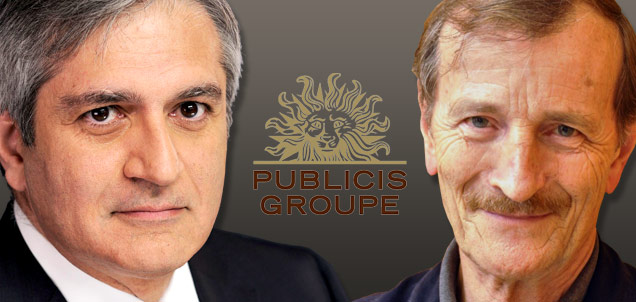
    This is Jean-Yves Naouri’s third officially announced visit to India. As Chief Operating Officer of Publicis Groupe and Executive Chairman of Publicis Worldwide, he has been the group with 19 years and knows perfectly well that India is a very critical market for the network over the next five years. Soon after announcing the acquisition of well-known consulting firm MarketGate and digital shop iStrat, Mr Naori addressed the media in Mumbai. He spoke to MxMIndia and a dozen other business and trade publications before flying back to Paris soon after midnight.


    Jean-Yves Naouri

    We had made a conscious decision a few years ago that Publicis will work with two strategic pillars – one is digital and the other is e-commerce. This is a long-term strategy that we have drawn out. So we are not considering tactical investments, we are moving forward using our previously devised strategy.


    When you talk about slowdown,  many countries dream to have the kind of growth that India has shown this year. We are very confident in the potential that India seems to offer and have taken some measures that seem to be promising. So we strongly believe in the potential of India going forward and by making investments we are not looking at the GDP numbers vis-a-vis the year 2012 but the longer implications that it would offer.


    Don’t you feel it would have been apt for you to have a one digital agency servicing all other agencies?

    This is not the approach that we have. For us digital is an intrinsic part of our vision and strategy and we want to make Publicis group the numero uno digital company. We want every single operation to become fully digital. This is a change of approach in order to better service our client. You cannot expect one digital agency to service all our clients not only because of cost reasons but also sometimes they do not have all the capabilities required to cover all areas. So we have made a choice to have a different approach where we want every single operation to become fully digital. We are consciously strengthening and adapting our every single operation and that’s how you see Indigo joining hands with Leo Burnett and participating in this transformation. Also, iStrat joining Publicis and Resultrix joining ZO… Saatchi has a very different organic approach where it is hiring digital talent to transform itself from the inside.


    So wouldn’t hiring hiring talent have been better?

    I do not think one strategy can be better; strategy is a result of the approach that we are taking or the conscious analysis of the best way by brands based on their contracts and situations and sometimes we feel it is better to do it organically and sometimes through acquisitions.


    How would you rate the performance of Publicis Groupe in India?

    Firstly, we have made India our true area of focus. As we’ve said, in the BRIC countries we have doubled the size of our operations in Brazil over two years, we are on the verge of doing the same in China and we continue to accelerate our efforts in India.


    And if you were to compare your network versus the others operating in India?

    I do not look at comparisons rather I look at our clients – that is what matters to us. This has been the driving force for us. When we announce our strategic plans the first element that we take into consideration is: what do our clients need and how can we take them to the next level? So the acquisition of MarketGate on the one hand that brings in some strong expertise in consulting to the CEOs and CMOs with undisputed talent is one such message. Also, the fact that we have announced our partnership with IBM in the area of e-commerce and have presence in China and in India is also a strong commitment to this domain.


    We also look at initiatives in the healthcare domain where India is very strongly placed.


    Is research something that you are looking at in a big way?

    No, we are not looking at research for some conscious reasons. We feel odd that a same company will be releasing a campaign and will also be judging its relevance through a market research company of its own. We see an ambiguity there and are not pleased with it. Secondly, there is a profound transformation of market research these days and it’s due to digital. It enables you to have access to the best sample of audience from around the world that can provide you immediate and more adequate reactions to your needs. So we do not feel comfortable investing in research.


    How active is Razorfish going to be in India?

    It is very likely that we will see some development of all our pure-play digital agencies.


    In 2010, you had mentioned that your revenue will double by 2015. Do you see that goal being achieved a bit earlier?

    If there is a surprise, I would announce it in due time.


    Any regrets on not bidding aggressively enough for Taproot India?

    We never look back; we look forward.


    Can we expect any more acquisitions in the near future?

    We will continue to explore possibilities and again, I use the word acquisitions in different ways. It’s a acquisition of talent, of companies etc.


    Are you looking at acquiring more creative agencies?

    We have no limitations in the areas that we are strong in. India is important for us and we will continue to strengthen our focus around it.


    ***


    The advertising business is not like Bollywood: Bertrand Siguier


    You could mistake him for a pensioner sipping his cup of coffee and reading the papers at the India International Centre or the Indian Merchants Chamber. At the media interaction at Mumbai’s Four Seasons Hotel last Friday, he was quiet looking around occasionally to figure what was happening.


    Bertrand Siguier has a rather long title: Special Advisor to Maurice, Levy chairman of Publicis Groupe. He was Executive Vice-President of the group till 2009. Mr Siguier has been overseeing India operations for a while and is familiar with the market here. Soon after the announcements of the twin acquisitions of MarketGate and iStrat, and as the mediapersons made a beeline for Jean-Yves Naouri (interviewed above) and MarketGate CEO Shripad Nadkarni or IStrat CEO Navneet Singh Sahni, MxMIndia caught up with Mr Siguier for a quick, freewheeling chat.


    Bertrand Siguier

    Wouldn’t it have been better if you would have had one digital agency that services various creative agencies rather than three that the Publicis Groupe has acquired this year?

    It is one of the ways to go about doing business but we have chosen to do it the other way round and that’s because of our agencies. For example, given that Leo Burnett is quite big and that it prefers to operate in a certain way, we didn’t want to twist their arms and force Arvind Sharma to follow a certain model. That’s one of the reasons that we acquired Indigo, which is one of the biggest and best digital agencies in this country. If you ask me whether Indigo would work with other companies in our group I would say, yes.


    Do you think the issue of fiefdoms or egos is an international trend or is it just limited to India?

    It’s an international trend I would say except a few countries. Like say India, which is a priority and a large market and has potential, we can yes. But in other countries that is not the case. It may be okay for India, Turkey or Germany.


    What about Saatchi & Saatchi? It’s still not up there in India?

    Saatchi will be back; we’re not going to let Saatchi go down. Saatchi has a huge history and we need to have a strong Saatchi in India, which hasn’t been the case for some time. It will be the case starting next year. There has been a change in leadership already last year with the coming in of Matt Seddon who is not Indian but has done a terrific job in restoring order in the organisation. It is not an easy job to do….


    What about Publicis – are you content with the way the agency is doing in India?

    Oh, yes, we are very happy with Publicis; altogether it is doing very well. If you ask me, I am not pleased with anything but given the overall picture Leo Burnett is doing well, Publicis has made a lot of progress but I still want to see more in terms of creativity and visibility. For example, we were not present enough in Goafest so, that is one area that we need to work on.


    But Publicis is not considered a sexy agency in India…

    You may be right but you have a very Indian focus. I do not know why this market is obsessed with stars – the advertising business is not like Bollywood. I know that in India some creative people are considered as stars. You see them in newspapers, you see them with beautiful ladies, you see them trying to film things for Bollywood…we are not in that league. I think we could do a bit more.


    With low margins, is it profitable to stay in the Media agency business these days?

    Low margins on big business can produce some satisfactory results. If you play legally and in a straightforward way and if there are no funny things going around and under the table, it’s a low-margin business.


    Will the doubling of turnover for Publicis happen sooner than the prescribed timeline of 2015?

    I only have a guesstimate and I think we can achieve that before the set timeline. It would be good if that happened.


    Are you looking at hiring more talent across creative agencies here in India?

    Yes, there is a possibility. It is a question of opportunity; I do not want to make a big declaration. If we come across companies that we feel are exceptional and have exceptional talent then why not…


  • Woodland on its Green Path

    By Tuhina Anand


    There has been an increased focus by brands today on being environment-friendly. The outdoor adventure brand, Woodland has been consistent in its effort to be Green conscious ever since its inception. However, now the company is making concerted efforts to imbibe a 360-degree approach going green. It started with in-house effort to go green in their manufacturing process to converting the retail stores to being environment friendly, now the effort it to communicate the same to consumers extensively and rope in partners who would help Woodland in their Green initiatives.


    Talking about their approach, Amol Dhillon, Vice President-Strategy & Planning, Woodland, said, “We have been constant in our effort to be environment friendly and sustainability. Our campaigns like Eco Everest, Leave No Trace and Proplanet have always conveyed the message. Our effort is to be carbon neutral by 2015. In this direction we have started listing the eco index on our products and educate our customers on the amount of carbon footprint that they are leaving with each Woodland product.”


    The company has been taking conscious effort to make earth a green place like its Eco Everest Campaign where teams of Sherpas who brought in trash from their climb in a bid to keep the Himalayas clean. Then there is the Leave no Trace campaign which is in collaboration with the music fests to connect with young TG and make them conscious about keeping the environment clean. In its effort, Woodland is looking at innovative ways to connect to the youth through popular interactive festivals and events like Sunburn (New Delhi) and Raagasthan (Jaisalmer). Woodland in partnership with these properties has been co-sponsoring the ‘Leave No Trace’ campaign to inculcate a sense of responsibility in the youth towards a clean and safe environment to meet their ultimate goal which is to inspire the next generation and increase their participation in the conservation of nature.


    The initiative is heavily promoted by a 360-degree approach thus Woodland making its stance clear on environment and sustainability once again.


    Mr Dhillon explained, “We are an outdoor and adventure brand and we believe that we must make an effort to keep our outdoors and environment clean thus we keep finding ways by which we can collaborate in our effort and thereby also connect with our TG.”


    The company is now looking at partners with whom they can collaborate in their green initiative. It has recently joined hands with Lufthansa as their green partner and even with Royal Challengers Bangalore in their green initiative. The focus is to partner with more stakeholders in this bid.


    Woodland last year committed 15 crore in its Proplanet campaign. In fact the focus is to allocate 5 percent of the total budget in innovation and communication of Green projects.


    Woodland hopes to end this financial year with 400 stores that are not just in tier 1 and II towns but also in tier III and IV tows too. The company has been seeing a year-on-year growth of 30 percent in the last few years and in fact the sales this year in November is 50 percent more than compared to the same month last year.


  • Tatas eye big foray into edutainment

    By Anshul Dhamija & Reeba Zachariah


    India’s oldest industrial house, the Tata Group, is sketching big plans for children’s edutainment market, a move signalling the tea-to-telecom conglomerate’s interest to tap business opportunities around the country’s 330 million population aged below 15 years.


    Bengaluru-based Titan Industries, a Tata Group company, is expected to finalize business plan for edutainment vertical, positioned as ‘after school education through gadgets and technology’, within a month, people familiar with the development said. This will be among the biggest growth drivers for watch and jewellery-maker, which is the fifth largest Tata firm by market valuation.


    The company’s new business division wants to develop a network of about 160 edutainment stores, expected to rake in more than $1 billion revenue by the end of the current decade. Titan scanned several business models targeted at the children’s market, including toy retailing, before narrowing its focus to edutainment stores.


    Titan’s edutainment business strategy will combine content with 3D and simulation technology with themes like ‘journey across time’, which sits well with the company’s watch business too. The company has prepared an extensive case study, with inputs from design architects, to be presented to the board of directors later this month.


    The edutainment business will be deemed to be formal only after the board approves it. A questionnaire to Titan Industries spokesperson remained unanswered at the time of going to press.


    Titan reported Rs 8,840 crore ($1.63 billion) revenue last fiscal powered by the watches and jewellery divisions. The company has explored plans to boost its top line revenue to $10 billion by 2020. The company, in which the Tatas hold more than 25% stake, closed the Friday trading on BSE almost flat at Rs 307.


    Tata Group companies with surplus cash on their books have been asked to draw up plans of how they would utilize their cash surpluses in adding value to shareholders. Titan had surplus cash of nearly Rs 800 crore at the end of last fiscal. The flagship edutainment stores will be more than 80,000 sq ft, located in the suburbs of the big metros, attracting investments of Rs 100 crore each. The stores in smaller cities will vary between 8,000 to 10,000 sq ft.


    Titan will start work on rolling out the initial stores in two southern metros, once the board approves the business plan.


    The $100-billion Tata Group’s interest in edutainment tracks the growing investments in this space. Last month, Bollywood star Shah Rukh Khan acquired 26% stake in the India franchise of Mexican edutainment brand KidZania, scheduled to open first store in a Mumbai suburb March next year.


    Source:The Economic Times

    Copyright © 2012, Bennett, Coleman & Co. Ltd. All Rights Reserved


  • Big Fame Star provides talent opportunity in Punjab, Central India

    By A Correspondent


    Reliance Broadcast Network’s regional general entertainment channels, Big Magic and Spark Punjabi, have announced the launch of India’s first-ever hinterland talent hunt with Big Fame Star, a hunt for the youth star in the markets of Central India and Punjab. The show has been conceptualized with the aim of reaching out to the youth in the smallest towns to realize their dreams of making it big in the world of entertainment.


    Television actor Gurmeet Choudhary and actress Tisca Chopra will judge the participants. Following the local auditions, 50 contestants from each region will be shortlisted to participate in the mega audition. 16 finalists will be selected per region for the galas, With on-ground auditions to be held across 12 cities in Central India and 6 cities in Punjab.


    BIG Fame Star will be promoted extensively via a multi-media integrated marketing approach through mediums which include print, television, radio, out of home, digital, on-ground activations amongst others.


  • MxM Monday: Is BTL gaining acceptance as a must-have in a media plan?


    By Ananya Saha


    Is Below-the-Line (BTL) advertising gaining bigger share of clients’ advertising budgets over the last few years? How innovative has BTL become, and what are the challenges it still faces?
     

    Anwesh Bose, Senior VP, DDB Mudra Max

    BTL has gained prominence over the years and will continue to do so as advertising communication is evolving from a ATL-BTL model to a Through the Line (TTL) model. The lines have blurred between ATL & BTL giving rise to a new phenomena where a medium can take the form of ATL or BTL depending on the need of the communication. The challenge today is for the communication professionals to justify the Return on Investments on any form of media and the pitch will keep getting higher. It is time for the industry to jointly work on a multimedia optimization model that would justify investments.

     

    Narayan Devanathan, SVP, National Planning Head, Dentsu India Group

    That’s a very broad question, but going by overall trends, the answer is probably yes. The more pertinent question, how much bigger is “bigger?” Who is measuring this? How does it differ by category? What all goes into the definition of BTL? For example, with the expansion of modern trade in retail, you’ll obviously see a lot more BTL money being spent on in-store merchandising, POS and promotional campaigns. A second factor affecting expanding BTL investments will likely be the short attention spans and the myriad of choices and screens that consumers interface with today. TV, radio, web and mobile are probably vying for the consumers’ attention simultaneously at all times. But with definitive metrics, the impact of last-mile tactics and campaigns will be a key differentiator between brand success and business success. All this does factor into the fact that, yes, BTL as a share of clients’ ad budgets is seeing an upsurge.


    Innovations can happen on three fronts: technology, measurability and the balancing act between strategic and tactical objectives of the campaign.


    On the technology front, something like RFID, for example, can turn walking behind a shopping cart into inputs for a shelf-stacking strategy in-store. A combination of GPS, augmented reality and a promotional scheme can turn a mobile phone into a CRM platform. But innovations like these and others depend on the evolution of both marketers and the retail (and other parts of the brand) environment.


    Technology can also be the difference between best-case guesstimates and data-driven strategies that reduce wastage of marketing investments.


    Finally, marketers have to find ways to close the gap between strategic and tactical goals. If brand-building is a strategic goal, how do you use BTL not just be a one-off tactic or part of promotions but contribute to brand-building?


    All said and done, as with ATL, the point of all communications, regardless of medium, is to create stories, conversations and transactions (not always monetary) that people want to engage in. If that perspective is missed, then we will continue to see a “line” and see “below” and “above” this imaginary line that only marketers – not consumers – see.

     

    Nina Jaipuria, EVP and Business Head, Sonic and Nickelodeon India

    Nickelodeon has always believed in the virtues of experiential marketing through on-ground engagements. While TV helps in reaching out to millions of viewers, it allows for only one way-communication. On the other hand, BTL promotions despite the high cost per contact have the potential of making the engagement truly memorable for consumers. There is nothing that can replace the experience and thrill that kids feel when they meet their favourite Nicktoons Ninja Hattori, Dora, SpongeBob or Keymon in person.


    In addition to engaging our young viewers at schools, malls, retail chains etc, we also conduct van activities that helps us reach out to smaller towns and villages in the interiors of India. For example during the launch of Motu-Patlu, we engaged kids in over 30 towns like Lucknow, Kanpur, Allahabad, Varanasi, Agra, Mathura, etc in Uttar Pradesh and Gwalior Khandwa, Indore, Ratlam, Bhopal, Jabalpur, etc in Madhya Pradesh. We often do mall activities to celebrate days and occasions that are important to kids.


    At Nickelodeon, we are constantly seeking new and innovative ways of connecting with kids all through the year. In-store promotions and toon visits at retail stores further helps in strengthening our on-ground presence when it comes to merchandize


    Brand partnerships also play a very important role in creating unique propositions for designing innovative on-ground programmes. BTL promotions are thus an integral part of our media plan as they enable us to connect with our consumers and give them a ‘Touch. Feel. Play.’ experience. In today’s day and age, it is imperative to be present across multiple touch points and to tangibilize the brand.

     

    Uday Mohan, Executive Director – North, MPG India

    With the increasing fragmentation of the media space it is not enough to just make “contact” with the consumer, but more importantly to “connect” with him. First hand experience of the product/service offering and the customization of it allow this impact extending it to sales as also brand perception. It is here where the relevance of BTL in the overall marketing/media mix is increasingly gaining importance.


    BTL is now moving from its earlier perception of basic activation to being an integral part of the consideration set at the media strategy formulation stage itself. FMCG for the mass audience spends even up to 25 percent of their advertising budget, luxury would spend more. Auto, telecom, food outlets also see the merits of BTL as we see more spends and ideas. It is getting very innovative using insights and planning; 3M Scotch-Brite came up with Wash your Bill, where you had the choice of washing dishes over paying the bill, adding a fun twist to the old adage of ‘pay your bill or wash the dishes’. The activation connected with a younger audience, made them use the product, gave immediate gratification, put it up on YouTube and created word-of mouth.


    Lack of quality data is a major challenge that BTL faces as there are as yet no set parameters for evaluation. Another challenge is the infrastructure and operational co-ordination required from global and nationalized brands of mass appeal where delivery to target audience becomes an issue. For example even Pepsi in its ‘Open Happiness’ campaign could create the reach because of the use of digital and social, else the cost would go out of hand. BTL activation for a mass brand would require innovative use of the media mix to get the desired effect.

     

    Ambika Sharma, MD & CEO, Pulp Strategy Communications

    There is a definitive shift in perception, below-the-line is media that barrier is fading, it is new media which adds the rich creamy layer to the traditional media plan. Inclusion of BTL in a plan has increased steadily but has seen a stronger spike in the last 2-3 years. It is not in the perfect place that it could be in the consideration set but it is no longer ignored like it used to be a decade ago.


    BTL is now increasingly being evaluated and included when developing the mix, for the simple reason that it cannot be ignored, as it is the only media that allows people to experience the product outside of the retail format. Below-the-line activations can be great when done cleverly. The medium provides the freedom to engage with your core consumers and almost always has the potential if designed wisely to be quirky and attention-grabbing.


    BTL needs to be carefully considered in the planning process and not as an after thought. A well-thought-out, through-the-line campaign (or 360-degree approach), will always have more impact than one curtailed to a limited approach. This is perhaps the most positive change where in some marketers are consciously choosing BTL within their plan with specific deliverables in mind. This way the plan is tighter knit, and the ROI is richer. This change has reflected in a higher share of voice for activation in the media budget.


    Other factors have also contributed, one is what we call the “Ego” slice in the media plan, prominent some time back its the forced fit into the prominent / upmarket ATL mediums because “presence there was a must” at times this ate into the working budget which would have been considered for new media including activation. This is no longer the case. Activation / BTL is holding its own in media plans and gaining its due in media budgets.
     

    Samar Singh Sheikhawat, Senior Vice President - Marketing, United Breweries Ltd

    We do not call it BTL, but refer to it as activation or leveraging. I would say that activation has always been an important part in the UB Group’s marketing intervention. And today it is almost equal to our sponsorship amount. So if we are involved with an event, property or platform, and suppose Rs 50 lakhs as sponsor, we will spend an equal amount in leveraging it or BTL. I would say, it is practically 1:1 for UBL and our portfolio of brands when it comes to the ad pie division of BTL with other media.


    I think a lot of things are happening apart from the display being used in this medium. The kind of consumer touchpoints being used, digital and social media is becoming a big thing and is being used increasingly as activation by us. Video mapping, production technologies have improved a lot. There are new techniques we are using from overseas in terms of projections, holograms, video mapping on walls etc. the ways to reaching out to consumer is getting innovative whether it be direct mailers that we do or CRM or get-togethers. The kind of media being used in activations is seeing innovation and substance that is being used in production is getting innovative.


    This medium faces challenges in terms of credibility and execution capability. Anything that you do in BTL needs to be relevant to your product, your target audience and to your brands’ positioning. A large part of differentiation in BTL goes towards execution.

     

    Raghu B Viswanath, Founder & Managing Director at Vertebrand Management Consulting

    Media today is fraught with many challenges. While the overall ADEX spends has been growing at a much higher rate than GDP increasingly clients are questioning whether they are getting enough bang for buck they have spent by advertising in media.


    Earlier brands focused on getting more eyeballs translating to more awareness on the brand. Since the competition intensity was earlier relatively low mere awareness got translated to purchase. That is not the case today. With increasing competition and very little differentiation, it is important for brands to not just enhance the brand – building efforts on awareness creation, but to go beyond and engage their customers meaningfully. This in turn means that brands need to connect with their customers through as many touch points as possible. So, non-traditional (BTL) lends itself to this two-way communication. The rules of the game is not about seeing or hearing. It is about experiencing the brand with all the senses. Hence, touch feel and other sensorial connects with the brand, is the need of the hour.


    For many brands, BTL is becoming a more significant component of their marketing spends (almost equal to ATL). I believe this trend is expected to grow, as brands pursue serious efforts to engage better with their customers.

     

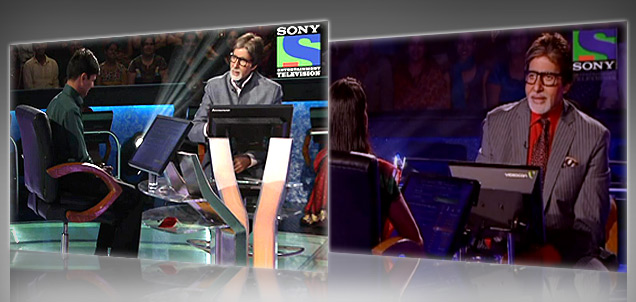
  • Did the switch to weekends impact KBC buzz?


    By Kshama Rao


    That the sixth season of Kaun Banega Crorepati opened with a massive 6.1 is old hat; but what also seems to be equally true is that the show has failed to cash in on the success of last season. The buzz in the TV industry is that there is no buzz around the show this time despite its lofty tagline of ‘Gyan hi aapko aapka haqq dilata hai’. That there are no ratings to corroborate this (in the wake of the announcement of deferring the TAM data during week 41 ((October 7, 2012,) to week 49 (December 8, 2012) by the industry bodies, Indian Broadcasting Federation (IBF), Advertising Agencies Association of India (AAAI) and Indian Society of Advertisers (ISA), in consensus with TAM Media. The nine-data is scheduled to release along with the week 50 (December 9-15, 2012) results).


    Says an industry insider, “Last year, KBC had a free run with no new big ticket shows at the same time slot on rival channels. They also got many sponsors on board at a premium and though the marketing and promotional buzz was as much or more for the current season, the hype amongst viewers is negligible as if viewer fatigue has set in and it’s no longer fun to watch yet another person with a background full of hardships win. Besides, Zee’s Sa Re Ga Ma Pa and Bigg Boss on Colors cut into KBC’s timings on weekends. Also, apart from crime shows on the weekends, nothing else has traditionally worked on Sony. KBC is no longer appointment-viewing.”


    What the industry thinks
    Basabdatta Chowdhury, CEO, Platinum Media

    Without the data and TVR, it will be difficult to comment. It is also about reach even though success is one parameter. The show has done well for the channel and they have got their revenues, so it is a success for them.

     

    Samir Khanna, EVP and Head, DDB MudraMax Media

    If you go by so-called numbers, KBC 6 is a success even though social media says otherwise. According to the common currency that we had precisely till October 8, KBC 6 was doing fairly well. Moving it to weekend was a good move since it is an episode-to-episode show and does not have continuity like serials. KBC format essentially works on weekend format, and it was a good strategy to move it to weekend slot. It might have become repetitive and getting to a point of viewer fatigue, but this fact has nothing to do with weekend.

     

    – Ananya Saha


    Also, unlike last season, this year, Sony gambled with the show telecast days. From weekdays it moved to weekends and that, say industry sources, did it in. A channel insider, who’s worked on the last two seasons of the show, on condition of anonymity says, “Well, it opened with a 6.1 which is huge but, yes, the sustenance ratings were affected. And with now the ratings coming in only on December 19, it’s a wait-and-watch game. Having said that, when it was on weekdays it consolidated the viewers, who were looking for more than just daily soaps as viewing alternatives. But this year, with KBC moving to weekends, the very same loyal audience has been fragmented. And that always happens because the weekend viewership is drastically different from the one during weekdays.”


    The source continues that while the show started with the noble intention of “gyan” being paramount and the tagline being “gyan hi aapko aapka haqq dilata hai”, it didn’t do much for the show in the later episodes. The channel brought the common man into the forefront with the last two seasons when the show moved from Star TV to Sony and we managed to surprise the audiences; that worked very well so unless you change the fundamentals, surprise your audience every time you bring in a new season, it won’t work in the longer run.”


    A member of the production crew who’s been instrumental in putting the show together says on condition of anonymity, “If you ask me, KBC is now settled in its orbit, so ratings don’t matter. But yes, change of telecast days made some damage.”


    Has the show run its course? “No,” says the channel source. “It is a great product. It has potential and like in case of any reality show, be it the Indian Idol or The X Factor, unless there is a surprise at the basic level for the viewers, the show won’t click the way you want it the way you want it to. Another very important factor that could have hampered the show prospects is the fact that it came too soon in the wake of the last season. Normally, there should be a healthy gap of say 12-14 months between the two seasons. This time, it ended in January last year and came back in September. The breathing space for the viewers was not adequate enough.”


    Another grouse against the show is its duration. The show last one-and-a-half hours. “I don’t think anything is wrong with the duration. 8.30 pm is absolutely fine because that’s when the viewers in the interiors tune in and by the time it’s 10 pm, the metro audience too has joined in. So it works. The celebrity specials too worked be it the Shah Rukh-Katrina Kaif episode, the Sridevi one or the recent Lara Dutta one,” the insider who wished to stay unidenitified told us.


    Siddhartha Basu

    Siddhartha Basu, chairman and managing director, BIG Synergy, which produces KBC, in a reply to our mail on the same, says, “These are highly subjective perceptions, and quite contrary to the depth and width of KBC’s impact, from the feedback we are getting. But please follow this up with the broadcaster who will be in a better position to respond on whether there is any objective basis or substance whatsoever to such a negative perspective.”


    Well, we can instead wait for December 19 when the ratings will come in and tell us the real story. Meanwhile, Kaun Banega Crorepati airs its last episode on January 19.


  • BBC TopGear Magazine India Awards 2012

    By A Correspondent


    BBC TopGear Magazine has announced its winners of its TopGear Magazine Awards 2012. Into its fifth edition, the TopGear Magazine Awards brings together a list of the most impressive cars and bikes launched in the past one year in India, which have won the most kudos from the jury comprising of automotive experts.  An award that recognises true passion in our exciting automotive world – BBC TopGear Magazine’s ‘The Stig’ trophy is fast becoming a symbol of recognition for those manufacturers who bring uncompromising and radical machines on Indian roads.
     

    To be held at the Kingdom of Dreams, Gurgaon on December 10, 2012, the ceremony will honour the most significant, game-changing and thrilling machines to set new tyre tread on Indian roads. The jury, comprising of the TopGear road test team, have chosen the best from a slew of launches that happened between November 1, 2011 and October 31, 2012. Unlike many jury awards that judges cars over a few laps over a day or two, the TopGear magazine’s editorial team of automotive experts drive, ride and practically live with these machines throughout the year; and thus, are able to come across key elements in cars and bikes that all vehicle buyers look for before a purchase – attributes that can never be gauged by a simple test drive.


    Tarun Rai

    Commenting on the BBC TopGear Magazine Awards, Tarun Rai, CEO Worldwide Media said, “BBC Top Gear is the biggest auto magazine brand in the world with editions in 31 countries. And in each of these 31 countries Top Gear is known for its authoritative take on cars and motorcycles. It is therefore, appropriate that the first auto awards of 2012 are also the most definitive. 26 best cars and bikes of the year, in various categories, will walk away with the Top Gear trophy – The Stig. The Stig trophy itself symbolizes Top Gear’s passion for cars and bikes. The night of Dec 10 will be a big night of celebration as we applaud the very best of the auto industry”


    This year’s winners include names like the Mini Cooper S, Renault Duster, Lamborghini Aventador, Mercedes-Benz M-Class, Audi Q3 and KTM Duke 200 among others who have managed to impress the TopGear Magazine team with their sheer capabilities. “We do not judge a car by numbers alone. That would be too easy and strangely, inaccurate. I think for all true car and bike lovers, they are not just machines but living beings whom we talk and spend time with,” says Girish Karkera, Editor, TopGear Magazine India. “The underlying common thread between all our winners is that they are the new benchmark in their respective segments. More importantly, they are brilliant in their own right.”


    Taking into account the expansion and diversification of the Indian automotive market, the 2012 edition of the awards have also evolved with all-new categories over last year to reflect the evolution of the Indian automotive scene. Especially, in the SUV segment where we have seen a lot of action. “We Indians don’t seem to have enough of SUVs,” notes Girish Karkera. “Which has prompted us to create new categories to justify the surge in the different kinds of these lovable machines that we now have access to.”


    The uncompromising methodology of picking the winners is based on not just engine performance or boot space but also the overall driving and lounging experience, value, reliability, coolness, refinement and the ability of the vehicle to touch a chord with its owner.


    TopGear Awards 2012 winners (in no particular order):

    1. Most Beautiful Car of the Year – Mercedes-Benz CLS

    2. Boy’s Toy of the Year – Trikke

    3. Driver’s Car of the Year – BMW 328i

    4. Two-Wheeler Design of the Year – Vespa 125

    5. Engine of the Year – Volkswagen Jetta 1.4 TSI

    6. Exotic Bike of the Year – Ducati Diavel

    7. Family Car of the Year – Maruti Suzuki Ertiga

    8. Automotive Game of the Year – Need For Speed: Most Wanted

    9. Hypercar of the Year- Lamborghini Aventador

    10. Most Improved Car of the Year – Audi TT

    11. Interior of the Year – Range Rover Evoque

    12. Luxury Car of the Year – Ferrari FF

    13. Luxury SUV of the Year – Mercedes-Benz M-Class

    14. Man of the Year – Sarath Kumar S (Two-wheel racer)

    15. Manufacturer of the Year – Honda Motorcycle & Scooter India

    16. Off-roader of the Year- Mitsubishi Pajero Sport

    17. Reader’s Choice Bike of the Year – Bajaj Pulsar 200NS

    18. Reader’s Choice Car of the Year – Renault Duster

    19. Saloon Car of the Year – Hyundai Elantra

    20. Scooter of the Year – Yamaha Ray

    21. Sportscar of the Year – Porsche Boxster S

    22. Compact SUV of the Year – Renault Duster

    23. Urban Car of the Year – Audi Q3

    24. Value Car of the Year – Jaguar XKR

    25. Bike of the Year – KTM Duke 200

    26. Car of the Year – Mini Cooper S


  • HBO, Eros tie up for 2 ad-free movie channels

    By A Correspondent


    HBO Asia and Eros International have made a joint announcement to launch two new premium advertising-free movie channels, HBO Defined and HBO Hits, in India.

     

    This landmark collaboration between two entertainment giants brings the best of Hollywood and Bollywood together to redefine the pay TV movie space in India.


    This first ever exclusive alliance will also provide for the development of both HBO’s existing formats for India as well as the creation of original content for the Indian television market and international distribution.


    Kishore Lulla, Executive Chairman of Eros International plc said,”I’m very excited about building the Eros brand in Premium Pay Television, particularly with an industry leader such as HBO Asia. There are few global companies that have mastered the premium film and TV space like HBO and their global success says it all. We look forward to cultivating new spaces together in India and especially the development of HBO content for TV and online.”

     

    “The opportunity to work with Eros, who has such a visibly dominant presence in the Indian film and entertainment arena, is tremendous and together we will aim to deliver a first class cinema experience in the comfort of your home, 100 percent advertising free,” said Jonathan Spink, CEO of HBO Asia.”We are equally excited to work with Eros in developing compelling original content for the Indian audience. We look forward to more good things to come.”


  • Hockey India wins for Meridian, OgilvyOne

    By A Correspondent


    Meridian Communication Mumbai has added the Hockey India League to its existing client portfolio, following a multi-agency pitch in Delhi a couple of months ago.


    Samrat Bedi, Head of Office, Meridian Communication, said, “Giving hockey its rightful place in India is something that we all talk about. The League is a superb opportunity for us to be a part of the team that will re-position the game in a manner that appeals to newer and larger audiences.”


    Hockey India Secretary-General and Hockey India League Chairman Dr. Narinder Batra said, “Meridian & Ogilvy One’s passion came through during the pitch. The league is going to showcase the world’s best talent and boundless energy. Meridian and Ogilvy One brought such energy to the table and we are happy to choose it as our communication partner.”


    Kunal Jeswani, President, OgilvyOne Worldwide, India said, “It is very exciting to have the opportunity to launch the Hockey India League and rekindle the country’s passion for the sport. It is a great challenge and we look forward to it.”


    Shashank Lanjekar, VP Planning, Meridian Communication, said, “Sport in India is uni-dimensional and that’s just so unfortunate. It’s easy to blame and complain about the lack of other sports facilities but it’s not easy to initiate a change. And that’s exactly what Hockey India has done. A spark that we hope slowly takes the shape of a flame and soon rages into a forest fire like the IPL. We hope to make this ambition our communication effort as well.”


  • WATSummit ’13 to discuss new era of digi mktng

    By A Correspondent


    WATMedia has announced its annual event, WATSummit that brings together eminent personalities to confer the evolving facets of social and digital industry. In its third edition, the theme of WATSummit 2013 is ‘A New Era of Digital Marketing’. The annual summit that is scheduled to take place on 15th Feb, 2013 at The Orchid Hotel, Mumbai, will also host WAT Awards 2013, wherein, thought leaders of Web, Advertising and Technology will be awarded.

     

    WATSummit 2013 will witness participation of prominent visionaries discussing topics that contribute to the growth of digital and advertising space.


    A panel of experts will be seen highlighting the prominence of social media with ‘Social Media Marketing – Making sense of jibber-jabber by brands’. The evolution of ‘Digital Media Marketing – Can it build a brand on its own?’ will be discussed extensively by a panel comprising Digital Agencies and Brands.


    The summit will also bring to light the E-commerce industry and the upspring of mobile marketing with in-depth discussion on topics like ‘Ecommerce Market build brand V/S build business’, ‘Mobile Marketing – Promises of reach V/S Actual Impact’. The final panel will be seen conferring the do’s and don’ts and the challenges of ‘Startup Marketing – Breaking the cluster and creating a Brand’.


    Sharing his views on the third WATSummit, Rajiv Dingra, Founder & CEO, WATMedia Pvt Ltd said, “I am pleased to announce WATSummit 2013. The response to the earlier summits has been encouraging, which brings us to its third edition. This year, at WATSummit 2013, we aim to emphasize on the new era of digital marketing. The medium has grown exceptionally over the past few years and brands and consumers across the world consider the digital medium a dominant tool. I am delighted with the participation of renowned speakers who will share their profound knowledge. With WATSummit 2013, our endeavor is to embark on a digitally successful journey.”


    The keynote speakers for the event include dignitaries such as Suresh Reddy – Chairman & CEO, Ybrant Digital & Neville Taraporewalla – Country Director, Advertising and Online- Microsoft Corporation.


  • Memories of Ayodhya, December 6, 1992


    By Ananya Saha


    Twenty years have passed since the Babri Masjid demolition. While the Ayodhya verdict did bring some cheer to the country, December 6 1992 has been engraved as a blot to India’s history. Two journalists, who were present on the scene, recall the horrific incident.


    Mark Tully former Bureau Chief for BBC in New Delhi was also present on the scene.


    My memory is of the complete failure of security to control the situation and of the extremely violent and disgusting slogans which were being shouted by the people who attacked the mosque. Lotof violence and damage was done to journalists. And I myself was surrounded by these so-called Kar Sevaks. There was an argument whether to beat me up or let me go. Eventually, a compromise was reached and they decided to lock me up in the temple room. That is my recollection.


    It was a sad day for India. It was a sad day for me because I have maintained that India is naturally, culturally, a secular country. But I believe that India has returned to its secular moorings. I think there are many lessons to be learnt from Ayodhya.

    Ajay Jha, currently, is the Delhi Bureau Chief for Gulf News. He was working with Mid-Day in 1992 and witnessed the demolition of Babri Masjid in Ayodhya in 1992.


    It feels that it happened just the other day. Even after 20 years, people feel anxious of the day. It was a blot for the country.


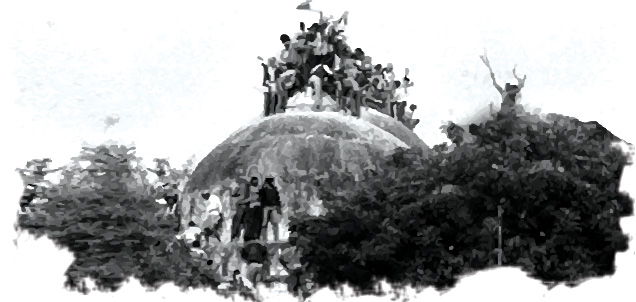
    I was staying at a hotel in Faizabad. I reached the spot about 9’o clock in the morning. It was, of course, not very easy to reach there due to security and administration. But finally when I reached there, I saw people running out of the Babri Masjid campus and shouting ‘Kaam hogaya’ (work is done).  As I went inside, I saw a mob atop tombs dancing and celebrating. There were three tombs at Babri Masjid. Then they started demolishing one of the central tombs. They were using iron bars to break it, which implies that they were prepared for the demolition. It continued for over three hours. It was not easy for them to demolish it.


    Suddenly I saw that lot of journalists were being assaulted. The reason, I was told, was something different. I was not the eyewitness to the reason. I was told that some foreign TV crew had apparently thrown biscuits towards the crowd that was hungry. They were angry that foreign media saw them as poor and hungry and second, that it should not go out to the world that demolition is going on until work is finished. Hence, the journalists were thrown out of the complex. Journalists were assaulted and mobbed. Probably, I was the only person who remained there throughout the evening.


    The first thing I did was to throw the pen and paper away. I started pretending that I was one of the Kar Sewaks. They looked at me suspiciously, and when asked I told them I had come from Delhi, they asked me to do kar seva, which I did.


    When they had demolished two tombs, they realised that it was already 1’o clock. They wanted to finish the work the same day because in winters it gets dark early, and it wouldn’t be possible for them to carry on after dark. After a while, we heard another noise telling the people, ‘sab hat jaao’ (everybody move away). It never came out in any of the enquiries but I can say it for sure, out came the huge dynamite sticks to blow up the remaining two tombs. The area was cleared. I could not see who said it, but heard it clearly, ‘ek dhakka do aur babri masjid tod do’ (give one push and destroy Babri Masjid).


    Finally, when everything was demolished by 3:30, lot of celebration was evident.


    While the demolition was going on, Advani requested the crowd to not carry on the destruction it in the name of Lord Ram. Whether it was union call or it could be that he created a monster he could not control. At least for public consumption he was urging the public to get off of the tomb.  But nobody would listen to him. In the evening when I left, I carried with me a small-sized brick on which was engraved 1516 in Hindi, the year that the brick was made.


    I had to walk a long way before I could reach Faizabad and file my report. It was very tough day. Interestingly, I reached there again the very next day around 9’o clock and I couldn’t see or find a single brick. Entire place was transformed overnight. They cleared everything and you could not recognise the area. Complicity of UP govt, administration, police, and to some extent govt also was evident. Policemen were present but were only watching what was happening. It was responsibility of Kalyan Singh govt, Narasimha Rao govt. local administration: everyone was working together towards the same aim that the mosque has to go and it went. It was all done in a planned manner – they brought their rods and what not to tear it down.


    I was told that dynamite sticks were brought from Punjab and that was the time that militancy in Punjab was at peak and it could have been done with Sikh militants.


    When I came back to Delhi, people used to come and worship the brick that I had as a reminder of the day. When riots had started next day, we were told to write timid reports so as not to create Hindu-Muslim tension.  I did visit Ayodhya thereafter as well. I still get the same feeling that what was the need to demolish it? It was a structure of mosque but it was temple inside. Now, you cannot get inside. You could not get the ‘mandir’ you wanted, and Hindu fanatics did not get anything by damaging a functional temple. You have to stay 50 metre away from structure, and only ‘pandit’ can do a ‘pooja’ on your behalf.


    Yes, BJP came to power after that, so probably that was the achievement. It was a power game, a political campaign.


     Image: Artist Rafiq’s impression of what happened on December 6