Tag: news

  • The lesson so far for FM players

    By Robin Thomas


    FM Phase-I Policy was approved by the Government in July, 1999. Under Phase I policy, a total number of 21 FM radio channels are operational in 12 cities. FM Phase II on the other hand has a total of 336 channels in 90 cities across the Country whereas the much awaited FM Phase-III policy seeks to extend FM radio services to about 227 new cities. Phase-III will cover all cities with a population of one lakh and above, simultaneously, there will be a total of 839 new FM radio channels in 294 cities. In addition to this Foreign Direct Investment (FDI) in radio has been raised from 20 per cent to 26 per cent, if allowed, multiple frequencies will bring new genres in radio leading to content innovations, and the overall advertising pie is also expected to rise from the estimated 5 per cent.


    While the FM phase II may have been well received by the industry, all FM stations have reported break-even. Smaller FM stations are more likely to face huge challenges ahead especially since the music royalty issue is yet to be resolved. Overbidding in phase I and II could be just one of the issues, MxMIndia asks some of the industry players what lessons the FM radio industry can learn in Phase III from the earlier Phase I and II.

     

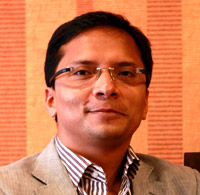
    Mr Prashant Panday
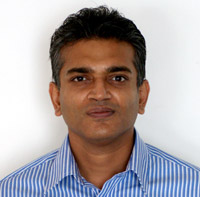
    Mr Rana Barua
    Mr Harrish M. Bhatia
    Mr. Harshad Jain
    Mr. Ashish Pherwani

    Mr Prashant Panday, CEO, Radio Mirchi observed, “One main lesson from Phase I and II – Do not bid so aggressively that you can never recover your investments. Those who bid sensibly in Phase-II (very few) are making PAT profits this year. Those who did not are at best making EBITDA break-even. Some are still making EBITDA losses. These people sometimes feel overjoyed that they have turned EBITDA positive; but fail to realise that the returns on investments only start after you turn PAT positive. There are barely 4-5 years left for the licenses to get over. If a company is not PAT positive yet, it has no hopes of generating any decent ROI. This is the main learning from the first two phases.”


    “The 2nd learning is about being able to bring brands. But to build brands, companies need profits. So again, if you have bid wrongly, you don’t have enough resources to build brands. That’s what our research shows every quarter. That except for Mirchi and maybe one-two other brands in some specific cities, no other radio station has been able to build a brand. They may have listenership, but they still don’t have a brand. There are no attributes that people assign to these brands. No values that the brands stand for. Without a solid brand, listenership suffers. Pricing suffers. And long term profitability suffers” he added.


    In an earlier interaction with MxMIndia, Mr Rana Barua, COO Red FM said, “One of the critical learning that a lot of us had in phase I and II is not to overestimate the potential of the market. The biggest challenge that lies for all of us is knowing that uncertainty has become such a huge thing today, therefore I think a cautious approach is going to be extremely critical.”


    According to Mr Harrish M. Bhatia, CEO, MY FM, “What was witnessed in Phase 1 and Phase 2 is totally different than Phase III. The Phase-3 rollout will increase radio penetration, making it a pan-India medium, reaching tier II & III towns. The most important thing that the radio players need to keep in mind is to bid realistically.”


    Mr. Harshad Jain, Business Head, Fever FM had a different viewpoint, he said, “The regulatory amendments in phase III are ultimately expected to facilitate industry growth.  FDI has been increased and might drive some additional investment in the industry. I do believe that FDI should have been raised further to actually fuel growth and overall industry development. Another key change is to allow multiple frequencies in the same city but we will have to wait and watch how this rolls out in practice. Another key shift in policy is the e-auctioning route as this will take the license fee to new highs, especially for frequencies in metros like Delhi and Mumbai.”


    Mr. Ashish Pherwani, Associate Director, Advisory Services, Ernst & Young, has seven point suggestions to the FM players, some of them are  the key aspects that all radio companies need to address vis a vis phase III are: –


    1. “Which licenses to bid for-  How well the new stations complement the existing bouquet of stations in terms of tactical sales, the future revenue potential from these stations both from the point of view of generating local revenues and adding on to the revenue generating ability of other stations, etc.”

    2. “Bid values- The bid value should logically be based on the revenue generating ability of the station over its license period, and expected costs.

    3. “Alliances.  Some radio companies need to consider which stations to bid for on the assumption that they will form alliances with other networks that together will provide advertisers with national, regional or state-wide reach.  In addition, radio companies with existing ad sales.” In addition to these, “Trade licenses that add value to other networks, Using FDI effectively, Build better MIS and control mechanisms to prevent operational chaos and Focus on People” are some of his suggestions to the FM players.


    As one of the industry player said FM Phase-III is not the same as Phase I and II, true, but it is bound to have challenges of its own perhaps even more bigger and tougher. MxMIndia will focus next on the challenges for FM radio in Phase-III.

  • All set for Effies on Dec 14

    By Tuhina Anand


    The Advertising Club Bombay is gearing up for the judging that is slated to take place this week for Effie 2011. The Effie awards recognize effective advertising is slated to take place on December 14, 2011 in Mumbai.


    Ajay Kakar, CMO – Financial Services, Aditya Birla Group and Chairman Effies Committee, Ad Club Bombay said, “As a Marketer I view the Effies as the most coveted awards platform, because it recognises work that works – for the brand and the business. It is also the only award that is given to both the agency and client. With regards to the format, this year we have given greater focus and recognition to a wider number of categories. Also, as a first – we are going to have the judging take place in Bombay and Delhi.”


    What is different this year that the Round One of judging which has traditionally taken place only in Mumbai will also be happening in Delhi this year. The Mumbai judging will take place on November 22 and 23 whereas the Delhi round will happen on November 29. The Round Two will only take place in Mumbai.


    Talking about the development, Bipin Pandit of The Ad Club Bombay said, “The Advertising Club Bombay is a national entity and not just Mumbai-centric. We want the club to spread its wings and believe that it should include players from the industry across.”


    This year almost 275 entries are expected and if the number seems low then one must understand that each entry costs Rs 21000 hence the quality of entries is highly superior. The awards will be given in 15 categories. “This year I do expect the number of entries to exceed the record of last year and I see the entries come from a wide spectrum of agencies and brands, across categories,” added Mr Kakar.


    The awards are the only ones that involve client as well as the agency and are given to advertising that has worked in the marketplace. The Effie Case studies are also most sought after and will be presented as part of the event. Besides, there is an impressive line of marketers and account planners on board who will be judging the awards.


    Times TV Network and Marico are the Associate Sponsor for Effie 2011 whereas Brand Equity is the Category Sponsor for Bravery Awards.

  • WMC 2011: We have to be innovators as much as publishers: Aroon Purie

    By Shruti Pushkarna


    Addressing delegates at the 38th FIPP World Magazine Congress in New Delhi, Aroon Purie, FIPP

    Chairman and Chairman and Editor-in-Chief, India Today, said much had changed since he first joined FIPP at the Paris World Magazine Congress 2000. He believes, “India has arrived at the world stage and the fact that the World Magazine Congress is being held in Delhi is a reflection of that.” Mr Purie leaves the chairmanship of FIPP at the end of the Congress.


    Compared to 2000, when the Indian media space had not opened up to the world, in 2011, the media space in India is bustling with activity. With 10, 500 newspapers and 58,100 magazines registered in this country, Mr Purie emphasized, “Although newspapers are shutting down in most parts of the world, and most cities have only one newspaper; in a place like Delhi, you can get 16 English newspapers delivered to your doorstep and there are 10 Hindi language newspapers. I don’t think that’s possible anywhere in the world.”


    The demographics in the Indian market, assured Mr Purie, will make any publisher “salivate”. We have 22 official languages which means you have that many more languages to publish in. In that sense, we are like Europe, except Europe has a population of only 739 million and ours is 1.2 billion.”


    India, Purie further added, is a country “straddles many centuries simultaneously”. “That is our

    uniqueness in a way. Not far from here you’re likely to see a bullock cart on the road next to a Bentley, both stuck in the same traffic jam. So it is in the media space. We happily straddle digital as well as traditional media and both are growing rapidly.”


    Citing the latest numbers, Mr Purie added, “Consider that magazine advertising is slated to grow by

    a compound annual growth rate of 13 percent for the next five years. Internet connectivity, although

    now low in terms of penetration, still has 100 million people accessing the net. This is expected to grow to 237 million by 2015. Smartphones now constitute only 5 to 6 percent of the total phones but this is expected to grow to a 25 percent by 2015. India has 31 million Facebook users which makes India the third largest market for Facebook. India is a country rich with promise.”


    But the uniqueness of Indian market does not take away the need to innovate. Mr Purie recalled, “When I took over FIPP two years ago as the Chairman, the mood among publishers was truly dismal. It was like watching terminal cancer patients just biting their time. There is now an aggressive optimism and a growing realization that the new technology is not a cancer but one of those injections that offer rejuvenation.”


    Mr Purie believes that tablets will be both “the saviour and the biggest challenge for magazine publishers”. “For us to succeed we have to know now to design content for eyes, fingers and ears too, and provide an immersive experience to our consumers,” he said.


    Drawing a parallel with this year’s theme, ‘The 360 Opportunity’, Mr Purie reiterated the need to

    integrate the traditional models of content with new technology and new platforms.