Tag: MSLGroup

  • Talking AI with Guillaume Herbette


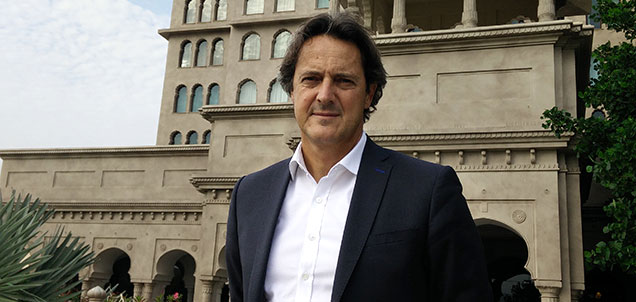
    Guillaume Herbette, Global CEO, MSLGroup is responsible for overseeing all MSLGROUP entities worldwide.  When he took charge of MSL in August 2015,  he brought with him over 25 years of varied experience to the role, including at FleishmanHillard as Global Vice Chairman of Operations, a US-based role that he took up in 2010.  Prior to that, Herbette served as chief operating officer for the firm’s US Eastern and Western regions and Canada regions, having initially joined FleishmanHillard in 1998 and working within the senior echelons of the company’s EMEA operations. Guillaume began his career at PwC, working for the professional services firm in both Paris and New York.

    At Praxis2017 held in Jaipur last week, Herbette had everyone in a thrall as he passionately spoke about the emerging technological frontier, Artificial Intelligence (AI) and its tools,  augmented intelligence, augmented reality and virtual reality. Herbette is convinced that AI will herald the next big technological revolution and feels that PR companies must learn it and use it in their communication. While an opportunity of an exclusive interview gave an opportunity to talk about how and what MSL is doing in India, but getting a global PR biggie to talk on a key tech trend was even bigger. In this chat on the sidelines of Praxis 2017, Guillaume Herbert speaks with Rahul Chandawarkar on AI, the theme of his keynote and how it’s the next technological revolution…


    We seem to be at the doorstep of the AI revolution. How should we be getting ready for it? 

    Frankly, we do not have a choice. AI will impact PR consultancies, FMCG companies and branding companies in a big way. All these companies need to create AI-enabling platforms within their organisations quickly.


    How can AI be combined with traditional storytelling?

    It will offer several new ways to create content and new ways to communicate our stories. It will accelerate the manner in which we tell our stories. Tools like augmented reality and virtual reality will amplify the  emotional resonance in a client’s story substantially. AI is the next big  technological revolution.


    And how is it being used currently to enhance the emotional resonance in storytelling?

    Visa International ran an augmented reality-virtual reality campaign in Poland recently which saw a zoo-like situation being created inside a shopping mall frequented by children and their parents. Children suddenly could see lions, elephants and polar bears walking around them. Visa enhanced its brand image because it could create excellent emotional resonance among the children and their parents. The event went viral on social media and gave Visa tremendous visibility.


    How do you foresee India adapting to AI?

    India is a land of many brands. Homegrown and multinational. The average Indian is getting more educated, technologically savvy and affluent. India will adapt to AI very quickly.


    India has a strong IT industry. Logically,  the Indian PR industry must lean on its IT counterparts to better understand and use AI, right?

    Absolutely right. Let me give you an example. Publicis.Sapient, one of our group companies through its Indian arm, Sapient Razorfish India has 7,000 technologists working on the artificial intelligence (AI) platform Marcel. Our parent company, Publicis Groupe, plans to use Marcel to communicate and collaborate across its global network of agencies within one year’s time.

    India has access to a highly technical workforce. The AI revolution will take place very quickly and rapidly in India.


    Will future PR teams have engineers and IT folk in their ranks?

    PR companies will surely need data scientists and IT engineers in their teams. These individuals will be necessary to leverage the benefits of  technologies like AI


    Are you planning to train on AI at a personal level?

    Yes, I am very interested in this topic and have a fair understanding of AI already. Companies like IBM run short courses on AI. I intend taking one of these courses to better understand the technology.


    Will you get your senior management team to follow suit?

    Yes, absolutely. I will be pushing my senior management teams across our network to follow suit and retrain themselves with AI.


  • AI & VR dominate discussions at Praxis 2017

    Image taken from a Facebook post by On Purpose Consulting


    By Rahul Chandawarkar


    When Guillaume Herbette, Global CEO, MSLGroup spoke passionately about how augmented intelligence, virtual reality and artificial intelligence were slated to become part and parcel of the public relations world in the not-too-distant future, he sure had several practitioners in the audience chewing their finger nails in anxiety at Praxis 2017, the premier national PR conference in India held in Jaipur on September 15 and 16.


    A sentiment which was clearly visible when Herbette’s post-talk interviewer asked him nervously: “If what you say is true, what will happen to all of us?!” The unruffled Herbette simply said: “We need to relearn and accept this reality. Artificial Intelligence is the next big revolution waiting to happen. We better get ready for it now. ”


    Key Takeaways:

    1) Artificial Intelligence is the next technological revolution. The Indian PR industry must embrace it.

    2) Video experts, computer engineers and social scientists will be part of future PR teams.

    3) Trust, faith and integrity must remain the cornerstone of every PR firm.

    4) There was no single brand in the world which enjoyed complete trust.

    5) PR managers needed to possess the combined abilities of lobbying, media relations and storytelling.

    Not just Herbette, but many of the international speakers who spoke at the event this year touched upon the topic of artificial intelligence and the advent of high-end technology in the world of public relations. To a large extent, Praxis 6 will be remembered for throwing the spotlight on emerging technologies like AI in a very big way.


    Herbette in his interesting presentation termed the digital revolution as the first technological revolution and explained how digital influencers had replaced traditional mainstream journalists as third party endorsers. He also shared a statistic on how people are spending as much as 45 minutes every day on the internet. “The capabilities and importance of these digital influencers in communications and marketing is exploding,” Herbette said.


    Speaking about artificial intelligence (AI), Herbette explained how PR companies would need to embrace this technology very soon. “AI best combines the best of science of technology with storytelling. It will change the way we work,” Herbette said. According to him, the AI business is expected to grow by 300 per cent worldwide in 2017-18 and create business worth $ 1.2 trillion in the coming year. “Most of this business will go to companies who use AI, Big Data and the Internet extensively,” Herbette said.


    Earlier in the day, Jose Manuel Guardado, chairman, Global Alliance speaking on the topic of ‘Challenges to the PR Profession’ also touched upon the topic of artificial intelligence and virtual reality. “The rise of automated communication and sharing experiences with the use of virtual reality is fast gaining ground,” Jose said. According to Jose, PR managers today would need to improve their technological, strategic planning, written communication and social media skills rapidly to stay in the game.


    The technological thread was also visible in Ketchum Global CEO, Rob Flaherty’s talk on ‘What it takes to be a fearless and fast communicator’ on Day One. Highlighting the importance of social media and how it had become a game changer, Flaherty said: “Today, our friends send us news on social media faster than the television. We do not have to find the news. News is finding us.” Driving home his point further, Rob shared a statistic which stated that 60 per cent of all Facebook stories in India in 2017 were in Hindi and not English.


    According to the Ketchum boss, PR managers will need to embrace high-end technology. “We would need to hire video experts, computer engineers and social scientists on our teams,” Flaherty said.


    Abhijit Bhaduri, the author of ‘Digital Tsunami’, who spoke on Day One also spoke on how present-day jobs were being shaped by technology and human longevity. According to the digital guru, retaining one’s job in a fast changing technological world was becoming a challenge. “Professionals, including PR practitioners would need to develop skill sets on their own. An ‘open talent economy’ is emerging and professionals would need to be ready to freelance with three different clients every day,” Bhaduri said. Bhaduri also pointed out that new jobs like drone engineers and robotics analysts would be created to meet demand.


    However, it was not all tech-talk at Praxis 2017. The spotlight was also turned on virtues like trust, faith and integrity which were also highlighted in depth by global PR CEOs like John Saunders and Fred Cook. Saunders, Global CEO, Fleishman-Hillard  in his ‘Staying true to the calling of communications’ topic shared the story of how he had to move the courts to clear his own name and integrity in his client, singer Van Morrison’s infamous ‘love-child’ case of 2009.


    Saunders stressed the need for PR companies to be brutally honest and truthful. In his post-talk interview with Ipshita Sen of Adfactors PR, Saunders said, “PR companies need to know when to draw the line. It is imperative that we say, ‘we cannot do this!’ when we feel that our ethics and integrity are being compromised.” Saunders  said.


    Similarly Fred Cook, Global CEO, Golin shared findings of Golin’s extensive survey on the ‘trust deficit’ prevalent for various brand categories across 13 markets, 13,000 people and four continents. The survey was not encouraging. There was no single brand in the world which enjoyed complete trust, he said.


    However, according to Cook, Indians were more loyal to their brands than the western counterparts. “According to our detailed survey, the State Bank of India among banks and the Honda car among automobiles were the favourite brands for Indians in the two categories,” Cook said.


    Besides the five keynote addresses, there were six power panel discussions at Praxis this year. Discussing the topic of hiring, senior corporate communication managers spelt out the various challenges facing them in picking the right  candidate. Sonia Huria of Viacom 18 said that potential PR managers needed to possess the combined abilities of lobbying, media relations and storytelling, while Nitin Thakur of Max India said that he preferred to pick sharp talent from B-schools provided they had a positive attitude and an aptitude to learn. While Shaily Vaswani of  VFS Global felt that the PR industry needed good storytellers.


    Similarly, in the panel discussions on taking healthcare closer to patients, Aparna Thomas of Sanofi pointed out there were an estimated 65 million people in India who are afflicted with diabetes and only fifty per cent of them knew about their ailment. According to Thomas it was important to use celebrities to endorse and popularise their products.


    Creativity was another focus area which was very well represented at the conference this year. On the first evening, the vivacious Romanian, Gabriela Lungu, founder, WINGS Creative Leadership Lab explained the urgent need for creating a culture of creativity within every PR organisation.


    According to Lungu, it was important to make creativity a business priority. “Setting clear and specific creative objectives is as important as setting up financial goals and any other business goal,” the acclaimed creative guru said.


    This creative thread was under the spotlight on the concluding evening too, when Margaret Key of Burson Marsteller and Darren Burns of Weber Shandwick shared some excellent creative campaigns conceived and executed in Asia.


    The Samsung film involving a mother and her autistic son, who refused to make  eye contact, until he was taught to shoot profile photos using the mobile phone was particularly touching.


    On Day One, in the first of the power panels, founder-CEOs of independent agencies Quik Relations (PK Khurana), PRHub (Xavier Prabhu), Media Mantra (Pooja Pathak) and Commune (Ruby Sinha) spoke about the value add they are able to bring to the profession despite their respective size of operations.


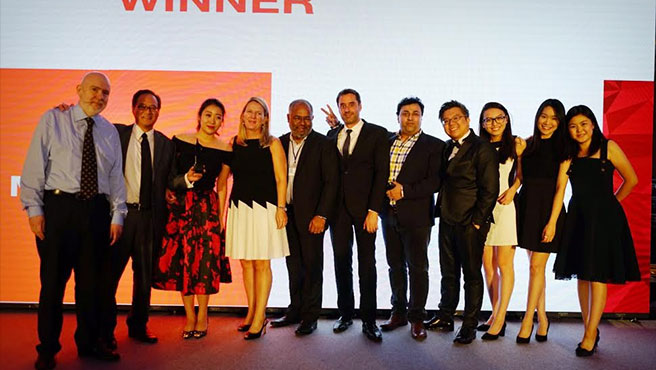
    The two-day conference ended with the Fulcrum awards with metals presented to individuals and agencies.


    Rahul Chandawarkar is a former editor who chucked the daily grind for an all-new life as a columnist, communications consultant and sportsman based in Colva in South Goa. Chandawarkar covered Praxis 2017 proceedings for MxMIndia


  • They’re back. Well kinda…

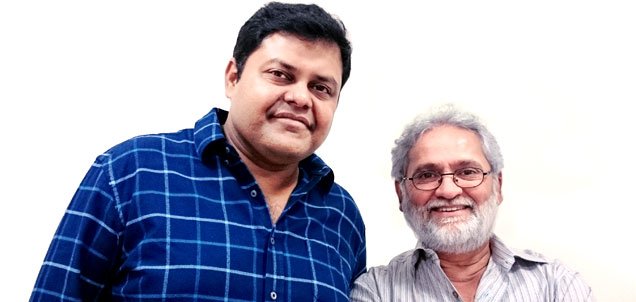
    Sunil Gautam (left) with Jaideep Shergill


    By A Correspondent


    After exiting MSLGroup in end-2014, PR industry captains Sunil Gautam and Jaideep Shergill launched Pitchfork Partners, a communications advisory with no direct linkages in executing PR or advertising functions. Work was farmed out to various agencies, and Pitchfork also worked with specialised communications specialists from elsewhere in the world.


    A quick Q&A with Jaideep Shergill, co-founder, Pitchfork Partners

    One remembers our interview with both of you when you launched, and the clear idea then was that you would not get into an execution mode on routine communications activity. But with the acquisition of Seven and the launch of Archer Freres, you’re now part of the PR brigade. I know you’ll had mentioned that you may acquire or tie-up with specialised service providers, but is this a ‘ghar waapsi’ of sorts?
    As the name suggests, Pitchfork Partners Strategic Consulting is and will be a Strategy firm across Brand & Corp comms and Business issues. Having said this, we have continued to support our clients who are front and centre for us with their execution needs by creating an ecosystem of partners across PR, Internal comms, CSR comms, Digital and Social media, Research, Creative, Design to name a few. This model has served us well and will continue.

    Archer Frères has been set up as part of one of the big areas we wanted to support in our original raison d’être of supporting and mentoring colleagues in the industry. The Seven Comms team has also been a part of out ecosystem since the beginning and we are only taking the relationship to the next level. The business will operate separately and its likely that we may have other partners in our ecosystem move to the same stature as Seven has now with the launch of Archer Frères, so watch this space!


    How would you say has the PR industry changed from 2014-end when you’ll exited PR full-time to now?

    We continue to believe that there is a huge untapped opportunity and we must continue to better our lot. In that sense, I am not sure too much has changed.


    What’s the aspiration for Archer Freres now that the two ‘maharathis’ are promoting it. Grow it to something like a Hanmer and eventually sell it? Or would you like to be a boutique agency, as it is now.

    Archer Frères will remain a boutique. Sunil and I are big believers in the boutique model and that’s how it will stay.


    One still remembers the early days of Hanmer, and the way it grew is by hiring top talent, and one of them included you, Jaideep. Are you looking at doing the same with Archer?

    Archer Frères already has great talent, having said this, we will always continue to groom talent and bring them in when we find them


    You’ve mentioned that you are looking at other acquisitions too, not necessarily in PR. Which are these domains going to be, and what’s the timeframe?

    All I will say is that you will need to watch this space. Soon enough!


    So what’s with this love for names… first Hanmer & Partners and now Archer Freres?
    All credit to Sunil. He is the one with the names! Its fun though. We have always loved having unusual naming conventions starting with Hanmer & Partners, Pitchfork Partners and now Archer Frères.


    While there were many large agencies whom Pitchfork assigned wrok to for its clients, one of the smaller ones was Seven Communications. And now, via a communique on Tuesday, Gautam and Shergill announced the acquisition of Seven Communciations and have rechristened it Archer Frères Communications LLP. It will be a full-service public relations (PR) and communications firm with Seven promoter Priyanka Shetty at the helm. Gautam and Shergill will play a strategic role, mentoring theArcher Frères team andits clients, notes a communqiue.


    Archer Frères will now be part of the Pitchfork Partners family, spanning the full-service gamut – from planning to media relations and content across corporate communications and brand PR.The clients currently include BBCWorldwide, Mogae Media, Zeotap, Miracle Foundation, Engage4more and Laqshya Event IP.


    Said Gautam and Shergill, in a statement: “We are excited to support the PR and communications ecosystem in India and privileged to mentor such a great team.After setting up Pitchfork Partners, we had been deliberating how to tap opportunities in the marketing services industry bysupporting young entrepreneurs.We hope that Archer Frères is the first of many such ventures we can support, mentor and invest in.”


    Meanwhile, when asked whether this could be considered a return of the power duo to PR, Shergill told MxMIndia that Gautam and he were set to announce a slew of other acquisitions, not necessarily in the PR space.


    He also clarified that while the Seven acquisition is 100 per cent, Pitchfork will continue to farm out work to other agencies as well, as in the past.


  • Nakamuraya unveils #CurryDhanyavaad campaign

    By A Correspondent


    Nakamuraya Co., Ltd., operator of the Nakamuraya curry restaurant in Japan, is commemorating the 90th anniversary of Japan-India Friendly Exchanges and the company’s Indian-style curry with ae “Thank you for curry” campaign. Ahead of the campaign, the company had placed a billboard in Gurugram saying “Thank you” in Japanese.


    Over the past 90 years, curry has become a staple of the Japanese diet. Now, more than 6 billion helpings are served annually. As a pioneer of Indian curry in Japan, the company is spearheading a campaign to thank the Indian people for curry. The curry was introduced to Nakamuraya by Indian freedom fighter Rash Behari Bose.


    As part of the two-part campaign, that is scheduled to run till September 30, the company will first launch a site (http://curry-arigato.jp) that collects images with the hashtag, “#CurryDhanyavaad”, to show Japan’s appreciation for curry to people in India. Diners who post pictures along with the hashtag on social media at one of the company’s restaurants or one of several other curry restaurants in Japan also taking part in the campaign will receive a sticker depicting curry and the campaign hashtag.


    Later, a portion of proceeds raised during the campaign will be donated to the Japan-India Association. In doing so, the company hopes to contribute to the continuing growth of relations between the two countries.


    The advertising campaign is reportedly initiated by Dentsu and MSLGroup is the PR agency handling the account. There is no one from Nakamuraya representing the country in India, and according to the PR agency the company has no stated plans to enter India.


  • Shop CJ appoints MSLGroup for PR


    Homes hopping major Shop CJ has on boarded PR agency MSLGroup for its public relations and media communications mandate activity. The account was won following a multi-agency pitch.


    Confirming the news, Dhruva Chandrie, COO, Shop CJ said “This marks an alliance between two companies that are extremely creative and have a passion for excellence. Essentially, we were looking for an agency well equipped to accentuate the brand voice and narrative. While MSLGroup understands the pulse of Indian consumers, the team’s focus on innovation, strong play in PR and media insights, makes it the right partner for us. Not to mention, the appointment of MSLGroup brings to us global best practices in engaging with various stakeholders across a host of platforms.”


    Commenting on the win, Amit Misra, MD, MSLGroup said: “We are delighted to have been chosen by Shop CJ as their communications consultants. Shop CJ has managed to carve a niche for itself in the T-commerce space. Additionally, with our expertise in brand communication and use of other non-traditional tools of communication, I am confident that we would be able to enhance the brand imagery.”


  • Hill+Knowlton Strategies India appoints Chetan Mahajan as President & CEO

    By A Correspondent


    Hill+Knowlton Strategies India (H+K) has appointed Chetan Mahajan as President & CEO of H+K India (called IPAN earlier). Mahajan joins from MSLGroup where he has been Managing Director of 20:20 MSL and Publicis Consultants Asia.


    Mahajan takes over leadership of H+K from Radhika Shapoorjee who will continue to lead H+K India until Mahajan joins in the new year to ensure a smooth transition, and will then leave to pursue other opportunities.  Mahajan began his career at 20:20 Media where he worked as head of operations before 20:20 Media was acquired by MSL. After the acquisition, he led 20:20 MSL and Publicis Consultants Asia with a proven track record of business success working on high-profile clients. He has also served as the President of Public Relations Consultants Association of India.


    Said Vivian Lines, H+K Asia-Pacific Chairman:  “Chetan Mahajan is known for his ability to grow clients and nurture talent and I am delighted to welcome him to H+K.”


    Mahajan added: “I am proud to take over the leadership of Hill+Knowlton Strategies and I look forward to getting a deep understanding of our clients, our people, and our opportunities in order to build the business across geographies, sectors, and competencies, in particular strengthening content and creativity.”


    About the transition, Lines adds, “Earlier this year, Radhika advised me she would like to move on once we had identified a successor. She has been a strong advocate of H+K and our network and has worked with me throughout this process which strongly reflects the care and commitment she has brought to our staff and our clients throughout her time at H+K. I wish her the very best for the future.”


  • MSLGroup named APAC Consultancy of the Year by Holmes Report

    By A Correspondent


    MSLGroup was named Asia Pacific Consultancy of the Year by the Holmes Report at the 2016 SABRE Awards ceremony in Hong Kong recently. It is the second time in four years that MSLGROUP has received this highest of Asia recognitions by the Holmes Report. In addition to the agency honour, Glenn Osaki, MSLGROUP’s Asia President, was presented the Outstanding Individual Achievement SABRE Award for his contributions to the company and the industry during his 30 years of leadership at MSL, especially the past 12 years in Asia.
     

    Said Osaki:  “We are very proud to be recognised as Asia Pacific Consultancy of the Year for the second time in four years by Holmes Report. MSLGroup has transformed itself to lead the growth and the revolution of the communications industry in Asia. Now even further powered by the closer collaboration with our sister agencies within Publicis Groupe, we will continue to support clients in their marketing transformation, delivering interdependent solutions with the Power of One.”

  • Mondelez moves to MSLGroup for comms

    By A Correspondent


    Chocolates to candies to cookies and dairy products giant Mondelez has moved its communications business for India to the MSLGroup.


    The Publicis Groupe-owned MSLGroup will take charge of all key communications activity for the Mumbai-headquartered company.


    Although MSL has been handling part of the Mondelez business for a while, Perfect Relations was the incumbent on a significant part of the business. MSL will also also oversee and execute the digital (and social media) mandate for Mondelez. While MSLGroup officials were not reachable for comment, MxMIndia has received a confirmation that the account has been won.  In fact, MxMIndia has been interacting with MSLGroup on Mondelez since February 2016.


  • Need for a new era of sustainable biz, notes MSLGroup study

    By A Correspondent


    The future of business and the future of sustainability are the two sides of the same coin, according to MSLGROUP’s latest People’s Insights report, A Chance for Change: The Tipping Point for Sustainable Business.


    Two weeks before world leaders convene at the United Nations climate change conference (COP21) in Paris, to negotiate an agreement on climate, MSLGROUP has spotlighted the voices of global leaders, Millennial change-makers and sustainability experts who are leading the momentum towards sustainable development and sustainable business.


    The report highlights key takeaways, through a series of expert-written opinion pieces.

    • Led by Millennials, people are demanding businesses take meaningful actions to address climate change. MSLGROUP’s global community of 250 Millennials* at BeTheChance.com, of which 90 of them are Millennials from China and India, share that they are frustrated, worried, and want immediate climate action. Similar to their global peers, both Chinese and Indian Millennials want to hear about greener products and expect businesses to collaborate with governments to address climate change. Interestingly, Chinese and Indian Millennials are different in one key way: Indian Millennials believe that the change starts with them personally, while Chinese millennials believe the change starts with the government.
    • With new global goals announced by the United Nations, business is expected to play a bigger role in sustainable development. Experts from the UN and Salterbaxter MSLGROUP view the seventeen new Sustainable Development Goals as an opportunity for business growth and global impact. Business will play an essential role in implementing the goals, especially as it relates to partnerships, innovation and investment.
    • Savvy businesses have already pivoted, raising the bar for others to transform and embrace disruption, innovation and new business models. MSLGROUP trend-watchers share examples of businesses that are already maximizing resources, creating positive handprints, collaborating across boundaries, changing people’s behavior and switching to clean energy. There is a race to the top that is widening the gap between businesses that already focus on sustainability and those that do not.
    • Climate change and sustainability are complex topics – businesses must make these easier to digest to successfully engage consumers and employees. Sustainability leaders at leading businesses and organizations share their approaches to sustainability and citizenship, with examples of their latest initiatives and their projections for the near future. Action on sustainability is essential to attracting and retaining top talent.
    • Human rights are a growing priority and responsibility for business, and a crucial part of the future of sustainability. Human rights experts and advocates highlight the growing pressure on businesses from the UN (and peers that are early adopters) to strengthen human rights policies and increase disclosure and assessments. Collaboration with human rights experts, and a proactive stance on newer human rights issues will help businesses achieve real impact.


    According to Pascal Beucler, SVP and Global Chief Strategy Officer, MSLGROUP, the shift to sustainable business is unstoppable: “Sustainability has become one of top-most priorities for businesses today. Businesses are now increasingly eager to find more ways to add value to their triple bottom line. One could say that there’s a collective desire to be socially and environmentally responsible in how businesses are conducted. Material sourcing and climate change realities are only pushing brands to introspect new ways to operate, and the upcoming COP21 Climate Change Conference in Paris is going to significantly accelerate the movement.”


    “Considering the fact that Millennials in both China and India have seen first hand the impact of human activity on their local environments, it is no surprise that they feel worried, anxious and sad about climate change. Millennials sense an urgent need to address the global issue, where Chinese and Indian businesses should seize the opportunity, engage concerned Millennials and involve them as active agents of change to make the difference that is desperately needed,” said Schubert Fernandes, Asia Practice Leader for Corporate & Brand Citizenship at MSLGROUP.


    The Tipping Point for Sustainable Business and BeTheChance.com are part of MSLGROUP’s global initiatives to give Millennials a voice on the issue of climate change. These efforts culminate at an event of the same name, Chance for Change, which takes place in Paris during COP21. The event will bring together business leaders and inspiring Millennials and will explore how the millennial generation can lead the response to climate change.


  • Amith Prabhu: When will there be a Cannes Lion Grand Prix for PR, by PR and of PR?

    By Amith Prabhu


    This is my customary, annual column focused on the Cannes Lion. I eagerly track and follow the Cannes Lions each year, ever since PR came to be included as a category a few years ago. Ever since, India has been represented on the jury by Prema Sagar in 2009, Veena Gidwani in 2010, Nandita Lakshmanan in 2011, Sunil Gautam in 2012, Dilip Cherian in 2013, Radhika Shapoorjee in 2014 and this year the original name was Ashwani Singla, who was replaced by Paresh Chaudhry. I’m hoping other PR pioneers like Madan Bahal, Bela Rajan, Archana Jain and Ameer Ismail are invited in the years to come. I listed these names for the record as well as for the singular purpose that the organisers know there are many more names to cover. If not, like a global power list that just came out last week, some critical names will get missed out because of limited knowledge about Indian PR that certain international editors possess.


    Finally, the grand prix went to a campaign entered a PR firm. This was MSLGroup New York office. I have high respect for this PR firm because the only time I was a client they were the consultancy on record and in my last consulting role before co-founding the PR school I was closely associated with this firm for most of 2014. Well, I was elated that MSL won it though Leo Burnett, the primary architect of this campaign #LikeAGirl for Always spared no effort to take ample credit for the work which no one has refuted. Interestingly, one of MSL’s senior executive who was on the jury also commented that he was aware of Leo Burnett’s contribution to the campaign. Well, the fact of the matter remains that this was a well-deserved win and the winner takes it all. Last year’s Grand Prix went to Creative Arts for the Chipotle campaign because they entered it and Edelman got credit for it. This year the campaign was entered by MSL and they won it. No dispute there.


    That brings me to the moot question. If the Cannes Lions is an advertising-led festival why is PR even there? It could possibly be because most PR firms are owned by one of the Big Four holding companies that owns most of the Top 20 advertising agencies. In that case there should be two sub-categories within the PR category. One for work created and therefore entered by PR firms and the other for work created and therefore entered by ad agencies. Then the post award bickering will not exist. I’m hoping there comes a time soon when there is no ad agency involved in the Grand Prix winning entry and the entire campaign and award belongs to the PR consultancy itself. Sharing and team work are great but then stealing the thunder is not done, after an award has been given away which is what the ad agency did very well.


    Now comes the real big question as to why not a single campaign from India-based PR firms made it to the shortlist. There were three campaigns that made it to the shortlist of 200 from India and they were from ad agencies which sends a bulk of the entries in this category. I have always being stressing on the high entrance fees of the Cannes Lions. An entry fee and the cost of packaging an entry is close to a monthly retainer that some clients pay. Then, comes the work in question. Do we do cutting edge work that is worthy of international recognition. I think we do but we fail to package it well, as always and miserably fail in sending them because of the cost involved.


    As the Cannes jury was being announced in April, India witnessed a fabulous campaign on Net Neutrality. As the jury was sitting to evaluate the entries, India witnessed one of the finest Public Relations campaigns of all time. The International Yoga Day. I have not seen another first time event getting the kind of talkabaility and free publicity that this event got. Unfortunately, they were not put together by an ad agency or a PR firm and they may never go to Cannes. I’m hoping I am wrong and they feature in the shortlist next year. These are surely Gold and Grand Prix material. Because they were simple ideas translated into magnificient campaigns.


    Well as we get on with another season of awards here’s opening three things change. A) There are more entries from India in the shortlist. That has only happened once. B) The Grand Prix winner is an idea completely planned and executed by a PR firm and the ad agency does not take credit. And C) India gets couple more good and credible awards. Sabre is great but there are no other of good standing where work can get recognized and rewarded.


    On that note I end with three cheers to MSLGROUP. For making history, no matter what their detractors say.


  • ParentCircle ropes in Leo Burnett, MSL Group and Edelman

    By A Correspondent


    ParentCircle has roped in MSLGROUP, Leo Burnett and Edelman Digital in India to handle Communications, Brand strategy and Digital duties in anticipation of its upcoming release of new products and platform.


    Announcing the move, Nalina Ramalakshmi, Founder and Managing Director of ParentCircle says, “We were looking for strategic and integrated communications partners to enable us to convey our brand message in the most appropriate manner to the broader world. ParentCircle aims to be a household name both in the country and across the globe. We are extremely pleased to partner with MSLGROUP, Leo Burnett and Edelman Digital. We are excited to work with all of them. We are confident that our brand will be portrayed exactly the way we perceive it, with the help and support of our partner agencies.”


    MSLGROUP, India will develop a comprehensive communication strategy that will accentuate the brand value in the media and will create and build brand awareness in India with its communications and engagement campaigns.


    Leo Burnett is entrusted with the opportunity of playing a crucial role in the branding communication strategy of ParentCircle. Leo Burnett will craft and execute integrated campaigns for ParentCircle.


    Edelman Digital has been mandated to create and implement an integrated social and digital media strategy with a comprehensive, creative and content-driven solutions for ParentCircle.


    ParentCircle with its partners, plans to utilise all possible means of communication to reach out to its target audience.


  • Meet the Pitchfork Partners

    Sunil Gautam (right) with Jaideep Shergill


    The announcement last November surprised many as Jaideep Shergill had a successful four-year run as CEO of the MSLGroup. He chose to leave the Pubicis Groupe to join former boss and mentor Sunil Gautam, the chartered accountant-turned-communications professional who founded Clear Advertising and PR and later Hanmer & Partners which eventually morphed into MSL India. SG, as he is known in the PR fraternity, was Chairman Emeritus of the MSLGroup. Effective January 1, Shergill and SG have set up Pitchfork Partners, a specialised consultancy which will handhold corporate and start-ups in their marketing service activities.  In an interview with Pradyuman Maheshwari, the duo share their vision and why firms like Pitchfork will thrive in the ecosystem.


    Fifteen years back, you chose Hanmer & Partners as the name of your agency. Now, Pitchfork Partners.  Sunil, what’s with you and your out-of-this-world names. Why Pitchfork?

    Jaideep Shergill (JS): Let me take this one. It’s what the devil uses. It’s his weapon of choice. We were looking for a mischievous, mysterious and magical name. Something that’s out of the ordinary. There are a lot of firms that do communication, creative, PR, digital, but all of them are very tactical and are not really putting their money where their mouth is. After running companies for many years, we’re fairly convinced there’s a vacuum out there. When we were thinking of a name, we wanted to think of something more irreverent. The devil stands for that. Pitchfork is his weapon of choice…


    So in what way does the name convey what you’re going to be doing?

    JS: Yes, it’s more than a name. The Trident, Pitchfork, is like the Trishul. In our scheme of things, there are three verticals.


    You were having a decent time, Sunil, near-retired, you could’ve invested here and there, played golf. Why get into an all-new activity with all the struggles?

    Sunil Gautam (SG): Yes, I was having a great time, but I want to have a better time. There’s lots to do, a lot of fun. I enjoy working, it’s my passion, it’s great to team up with Jaideep, we know each other for 18-odd years now.


    When did you decide to start Pitchfork? Is there an appetite for a business like this?

    SG: We’ve been talking about it for a couple of years but were in no hurry. With markets opening up, we feel the time is right. We hope there is an appetite for business like this. Our initial response has been very encouraging so far.


    Will you charge a retainer fee or…

    JS: Retainers and projects. Some long-term programmes where the client will work with us for six months or a year. If it’s a project, we’ll bill them as per our hours. We’ll have billable hours like a McKinsey. We’ll have hourly models.


    Will people agree to this? They agree to a McKinsey because they expect them to re-engineer their operations and offer high-end consultancy.

    JS: But we have had hourly systems in MSL historically anyway. We had a large number of clients who pay us a flat retainer fee. But even today, a large no. of clients also pay MSL by the hour. It’s not like that model doesn’t exist. It’s not new, but, yes, it’s not yet at a McKinsey level.


    Jaideep, you helmed MSL independently for four years and seemed to be on a high. So why give that all up?

    JS: Three or four reasons. Having been in the mainstream business for a long time, I’ve been through and seen a lot of change. The company we were a part of got acquired, we acquired other companies, I’ve seen the transition from traditional PR to modern communication. I honestly wanted to do something different. There was a wide space there. That’s what Sunil and I were looking at. It’s in three areas. Strategy consulting, because we want to move up the value chain, the second area is aggregation and disintermediary. We won’t work in the traditional PR alone. Given our wide-ranging experience in communications, we’ll be like a business or marketing or brand consultant to a company. That’s the wide space I saw.


    When you were with the MSL group, you had the opportunity to steer the company to do some of these things, right?

    JS: Yes, we did! 96% of our business was traditional. In the last four years, we moved it more significantly than any PR firm. Today 55% of MSL revenue is traditional and 45% is non-traditional. From 5% to 45% which comes from research and insight, creative, content, digital. It’s happening. Where Sunil and I see the gap is when we come in to the equation, we come in as people who can implement, execute stuff. The clients have decided what they want. We come in at a late stage, sometimes even after the ad agencies are brought in. We come in as the last mile. We want to change perceptions. We want to move up the value chain. We want to offer a service that can work directly with the top management, can be more strategic and can work with a complete backward and forward option. Literally from when the client is looking for a marketing director or a CMO or a Corp Comm Head, we want to come in even at that early stage, help the company through that evolution. That’s what we can’t do within a structured environment. You need to be out there on your own and at the end of the day our value is what he has and what I have. It’s two people bringing their collective wisdom, experience. We will give it a shot, this model hasn’t been tried before.


    Were you happy with the way traditional PR agencies have had to change course over the years?

    JS: They can certainly do better. They can do it faster. Speed is of the essence. When we’re together we’re more nimble because there’s just two of us. When you’re in a big institution, everything moves slowly. We want things to move fast.


    All going digital?

    JS: Of course! That’s the reality of life. If they don’t, they’ll die.


    You mentioned when an organisation is too big, you’re unable to do things. But the whole objective of setting up a new organisation would be to grow that big and do various things.

    SG: The whole idea is very few people who’ll be advising CxOs, the top levels, in terms of strategy. When it comes to implementation, may be we’ll outsource it. When you have to involve yourself at top levels to think strategy, you need to really give a lot of time. This is something you don’t want to delegate, which has been happening across agencies. We’ll be a very lean and mean set-up. At the peak, we may have not more than 10 people. Whoever worked with us will be a partner, will be handpicked, will deal with top level clients in terms of giving them strategic advice. We don’t want it to be large because we don’t want to implement things. We’ll get it done for clients, we’ll oversee it, under our advice and guidance.


    Wouldn’t that limit your scope in any way?

    SG: Not really, what we’re here to do is enjoy ourselves. Work closely with fewer clients but give a lot of quality time and thinking for them. Clients are willing to pay top dollar for this.


    Sunil, you’ve been part of the PR business since the time of the IPO boom. Unfortunately, clients do not use the services of PR consultants effectively unless there’s a crisis or a new development. They’re not really partners in their progress.

    SG: I don’ think PR agencies have really worked themselves to reach that level. That’s my opinion. I don’t think they’ve worked that hard to reach that level in terms of rubbing shoulders with CxOs to give that kind of advice. There are various reasons for that. But there are clients who are willing, who want, who recognise there is this gap and some of them are already talking to us.


    But isn’t all the PR advice they seek is getting the news out (or not out) the next day?

    JS: To begin with, we won’t just advise our clients on PR. That’s most important. We’ll be their communications and marketing advisors. It goes much beyond. It’s giving them a path on their communication needs. Advertising, digital, PR, events… whatever they need.


    Both of you known essentially as PR professionals. Do you think you can break that barrier and look at clients – blue chip clients – for their entire marketing services activities?

    JS: Absolutely! There’s no reason, why not? The walls have fallen any way. What’s the difference between the digital work an ad agency or a PR agency does? Everyone is doing everything. Even though we come from a more PR or communications background, there’s enough that we have to be able to guide somebody in the right direction. We’re not the people going to be sitting and writing the copy anyway. So, if a client has a creative requirement, we will find him the best creative talent.


    Tell us more about the start-up part of your business?

    JS: Yes, we will look at tech, digital, PR companies who’ve reached a strength of 20 to 30 people and they don’t know how to grow. Creative, digital companies now want to go to the next level. We’ll come in and guide them through the whole growth process, take them to the point where they can either get acquired or sell out or scale up and then we’ll buy into them early as early adoptors or seed fund kind of structuring. We don’t want to be private equity. We want to be mentors.


    If any of your MSL clients come in, would you entertain them?

    JS: We’d still want them to work with MSL. But if they are looking for something specific which we are doing, why not? You should also know we’re very transparent with Pubicis about what we’re doing. We also offer a complementary service which is also the reason why our relations with the group is as good as they are.


    So will Publicis be your first preference for your clients?

    JS: We’re more than happy to go with anyone. While we’re agnostic, we’ll look at Publicis as the first call. If we find a solution within, why go out? There are certain skillsets it may have not have like market research, for instance.


    Sunil, do you see the communications business headed this way with senior professionals like yourself setting up personalised consulting services?

    SG: I’m very confident the world will move that way. Clients today do not get time from senior guys who can think on their behalf.


    Do you have any targets on what you want to achieve in your business in the first year?

    JS: Not in terms of a number. As Sunil said, we’re in it to have some fun! The third pillar that we have will require us to give a lot of time for mentorship. We’ll be mentoring young professionals who want to grow. All that doesn’t have a revenue stream. There will be a long gestation period. As an example, if we’re advising a startup PR firm, we won’t actually get anything out of it for the next 5-10 years till it grows. We’re not setting business targets but goals we want to meet as individuals and getting to that self actualization place in life where we’re having fun, we’re working and are able to add some value to the people we work with.


    Would you at any point think of getting an investor on board? Maybe after 4-5 years?

    SG: It’s too early to say. This is just our first month.


    A shorter version of this appeared in dna of brands dated January 12