Tag: KV Sridhar

  • Ad Conclave Takeout #1: Technology is the new tool for creativity!


    By Robin Thomas


    ‘Ideas that impact the full circle’ is the theme for Goafest Advertising Conclave 2012, expected to be attended by over 3,000 members of the media, advertising and marketing fraternity from not just India, but various south Asian countries as well. Yes, this year’s edition of Goafest is billed as the biggest ever in the history of the event and will include delegates from Sri Lanka, Pakistan, and Bangladesh.


    The Goafest Advertising Conclave 2012 held on Thursday highlighted the fact that the next few years are going to be transformational as far as creativity in the industry is concerned. We live in an era where young people are growing up in a digital era, they spend more time on social network and brands are targeting their consumers on social networking sites. India is restless and what the country needs is not traditional creativity, but radical creativity. Technology is the new tool for creativity and India must immerse into it.


    Tim Love, CEO, APIMA, Vice Chairman, Omnicom Group spoke about how the world has become not only interconnected but also inter-dependent due to digitization and globalisation. He was also quick to point out living in an era of digitization, there is plenty of information available, but there is a need to know how to use that data effectively.


    Jonathan Mildenhall, VP, Global Advertising Strategy and Creative Excellence, Coca-Cola pointed out that there are two types of creativity – traditional creativity and radical creativity. What India needs today is not traditional creativity but, radical creativity. “We need to develop ideas and hence we need to integrate technology with creatives. We need to move away from 30 minute television storytelling to dynamic storytelling,” he clarified.


    Mr Mildenhall also explained that brand stories must add values and significance to the consumers’ life. The stories must engage the consumers and make them feel connected to the brand. “We need bigger creative thinking in our heart and we need online dialogue as well as engagement with our consumers. Nevertheless, we need to iterate our content and not replicate them.”


    While speaking on ‘Building brands in an era of multiple degrees of freedom’, Jayant Murty, Director of Strategy, Media and Integrated Marketing, Asia Pacific Region, Intel Corp  observed that most often brands bribe their consumers to get involved, but they fail to understand that the consumers do not want to be bribed. He added that brands must be remarkable and different. “Immerse in technology because technology is the new tool to creativity and find partners that understand the use of technology,” he further added.


    Keeping in line with the theme of ‘Ideas That Impact The Full Circle’, a panel discussion moderated by Anuradha Sengupta, Features Editor, CNBC TV18 and including panellists Tim Love of Omnicom Group, Jonathan Mildenhall of Coca-Cola, Jayant Murty of Intel Corp and Jean-Yves Naouri, COO, Publicis Group focussed on the need to present their agencies differently; the loss of long-term relation between the clients and the agencies and the need for multiple agencies to build a brand.


    Mr Love observed that advertising is actually an education, also noting that while the advertising industry is all about ideas and thus the need for young rebellious minds, there is also a need for the old and the wise to guide and direct the youth.


    Mr Jean-Yves Naouri, on the other hand, highlighted that creative agencies are here to respond to business and gain the trust, mind and presence in their client’s life. “Keep the dialogue between brand and consumer alive. Engage consumers as there will be people who will be inspired b the brands and this is what matters the most,” he counselled.


    Speaking on the agency-client relationship, Mr Mildenhall said that it is easy to maintain one relationship better that ten different ones, and therefore he would reluctantly look outside his roster agencies for creativity. However, he felt that brands may scout for multiple creative agencies if they find the need for specialist agencies that could help them reach out to their clients more effectively. He was also quick to point that although digital is showing robust growth inIndia, it needs to boost its creativity in this space. “Majority of the UK spends on digital, however the internet reality is bigger than the creative ambition inIndia.”


    KV Sridhar aka Pops, NCD, Leo Burnett talked about how advertisements look in a world of censorship. He was of the view that though advertising is a serious subject, it is nothing less than entertainment. Therefore, if one puts restrictions on advertisements, it may lose its enjoyment. Pops highlighted that there are two types of people in advertising, the ones that care and the ones that don’t care and therefore the industry must be sensitive to the sentiment of various people. He also said that while the industry should be governed by creativity and not regulations, there is also a need to keep a check of the contents as it is in our hands.


    Industry expectations are high, especially after the conclave on Thursday as was summed up by a variety of delegates. Said Niloufer Dundh, Head- Integrated Media, Hungama Digital Media Entertainment Pvt Ltd: “The advertising conclave was fabulous. Great speaker line-up and the points raised finally focused on digital. The international speakers don’t treat digital as an extra or add-on; it is part of their communication strategy. Jonathan Mildenhall’s speech on Global Advertising Strategy and Creative Excellence was awesome!”


    Another delegate who did not wish to be named said he was looking forward to getting the ”real” lessons from marketers. “I am glad Goafest is giving us this opportunity.” But, he said, the only problem is the “awful” heat. Now you can’t get all things in the world your way, can you?


    Click here to view all Goafest 2012 stories
     

  • Ad Strat: Whisper of possibility

    KV Sridhar, NCD, Leo Burnett


    1. Name of the Campaign/Ad:

    “Whisper Hai, Possible Hai”


    2. The Brief:

    Whisper was seeking to drive a stronger emotional connect with their consumers.


    3. Research insight:

    Whisper is irreplaceable to an entire generation of girls, and has enabled them to be unstoppable in their day to day lives.


    [youtube width=”400″ height=”200″]http://www.youtube.com/watch?v=l7daDKeG-tM[/youtube]

    4. The thought process behind the creative:

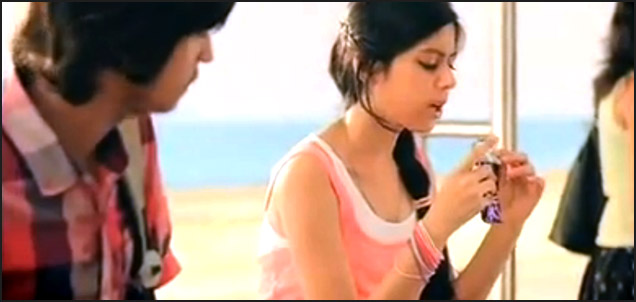
    While period communication has its own language (typically problem – solution), we were trying to show how the period experience differs for Whisper users who live confident and active lives. Therefore it seemed appropriate to find charming everyday moments and juxtaposing them… sometimes with humour (comparing window-shopping to shortlisting prospective grooms)… and sometimes with the “can do” spirit of today’s youth. We also wanted to leverage a brand ambassador who had risen to success with hard work and perseverance, and so chose Saina the badminton superstar who, like a crore of Indian girls, also counts on Whisper on the days that count.


    5. Media vehicles chosen:

    Television


    6. Key issues kept in mind while executing the ad:

    Keep it real, relatable and humble. Make it reflect the inner voice of the Whisper girl.


    7. Does the treatment do justice to the brief?:

    We used the narrative format of vignettes to connect with the girl across the country… North/South/East and West. As well as stayed true to the language we hear the Indian girl speak.


    8. What is the differentiating factor about the ad:

    The brand has a long-standing heritage in this country… A heritage of understanding and connecting with the Indian girl for the last 23 years. As well as a heritage of superior protection, which in its current avatar translated as 1 second absorbency.


    9. Market and client feedback:

    The client was very happy with the campaign, which qualified strongly, resulting in compelling in-market results and one of the highest historical value share reads on the brand.


  • Power of +ve campaigning: Why SP won & BSP, Cong lost

    By Rajiv Singh


    Political pundits talk about caste factor, anti-incumbency, development, corruption and so on to explain Tuesday’s assembly election results, but some advertising experts give a completely different explanation – negative advertising failed and positive campaigning clicked.


    It’s open to debate if people vote on the basis of advertisements or not, but look at some campaigns:

    “Utho, jaago aur badlo” (Rise, awaken and change) and “Jawab hum denge” (We will give a befitting reply) – the taglines used by the Congress to woo voters in Uttar Pradesh flopped.


    Power of Positive Campaigning

    Jeeta and Jaggi – the toon characters used by the Congress to connect with the people in Punjab by poking fun at the Badal government – too failed.


    “Na hatya, na phiroti, na balatkaar, hum denge saaf suthri sarkaar” (No murder, extortion or rape, we would give you a clean government) – the BJP’s election plank in Uttar Pradesh didn’t revive the fortunes of the party.


    Now, look at what worked: “Umeed ki cycle” (Bicycle of hope), the tagline of Samajwadi Party’s successful campaign in Uttar Pradesh.


    “While Mayawati’s BSP and Rahul Gandhi-led Congress were busy fighting each other, the SP talked about problems faced by the aam aadmi,” said veteran adman KV Sridhar.


    “That’s why their campaign clicked; it didn’t take a potshot or dig at the rival parties,” added the national creative director of Leo Burnett.


    One of the TV commercials made by Arkash Entertainment – the Mumbai-based production house in charge of Samajwadi Party’s campaign – shows a cycle racing past an elephant.


    “We wanted to say something without saying anything,” said Arjun Sablok, the creative head of Arkash Entertainment, who made his debut in political advertising with this campaign.


    “Our campaign focused on positives and avoided mudslinging,” added the 45-year-old adman and filmmaker who first met Akhilesh Yadav three years ago in a UP village. Saurabh Uboweja, director of brand consulting firm Brands of Desire, said this approach worked because the voter is not in a negative mindset.


    “Voters have seen growth recently as a general positive economic environment reverberates in the nation. When one has a positive mindset in general, positive campaigning linked to higher growth will tend to prove more beneficial than dragging voters into the past,” he said.


    Mr Sablok – who has made a film with Hrithik Roshan and a music video with Lata Mangeshkar besides several commercials with leading Bollywood actors – said he started preparations for his first political campaign a good nine months before the elections. An outsider in Uttar Pradesh, he travelled extensively to know about the ground realities there. And he used real-life situations and people.


    In one of the television commercials, for example, Raju, a rickshaw puller, talks about his problem of working everyday to pay back the loan and then a voiceover says the Samajwadi Party will implement an insurance programme for rickshaw pullers. Other such characters used in the campaign include Buddhiram, a farmer lamenting about lack of electricity, and Neetu, a housewife whose husband works in another state because of lack of jobs in Uttar Pradesh.


    Mr Sridhar of Leo Burnett said this smart and straightforward campaign worked at a time when Mayawati and Rahul Gandhi were busy blaming each other.

    So, in his mind, Rahul Gandhi’s relentless campaigning failed to revive the Congress in the country’s most populous state partly because the party’s advertisements failed to connect with people.

    The Congress campaign in UP, created by Percept/H, talked about the misrule of the Mayawati government and asked people to give Congress a chance. “The campaign had no insight into people’s lives,” said Mr Sridhar. Negative campaigning proved disastrous for the Congress in Punjab too, a state that had never before voted the ruling party back to power.

    The opposition party’s campaign, created by Delhi-based advertising agency Crayons, featured toon characters Jeeta and Jaggi who talked about corruption and other problems under the ruling Shiromani Akali Dal-BJP government.

    This failed to pull down the Badal government.

    The Akalis’ campaign, handled by New Delhi-based agency Brand Curry, highlighted the development work done by the government.

    “Over the past few years, there has been a demographic and psychographic change in the profile of voters. In terms of demographic change, young voters have emerged, who abhor negative campaigning,” said Brand Curry MD Subrata Chakraborty. “In fact, even the old voters have no appetite for advertisements that look down upon others,” he added.

    The BJP, which rose to national prominence in early 1990s with its Ram Janmabhoomi movement centred on Ayodhya in Uttar Pradesh, lost the plot in the state not only in terms of negative slogans but also due to lack of synergy between its print and television campaigns. “The TV campaign was not in sync with the print campaign,” said a BJP leader in the state.

    One of the TV commercials showed famine-like situation in the state and starving people, he said, requesting anonymity. “But this is not the ground reality. This election was not fought on starvation and malnutrition…This left the people cold.”

    Sushil Pandit, owner of Hive Communications, the ad agency that handled the print campaign for the BJP in UP, said the party highlighted too many issues without a clear focus. “There was no consistency in approach,” he added.

    But experts say it’s up to the agencies to help political parties with a nice strategy.

    “Political advertising is driven by politicians, and not the ad agency, but the strategy should come from agency,” said Prathap Suthan, the creative mind behind the ‘India Shining’ and ‘Incredible India’ campaigns and chief creative officer of tech support firm iYogi.

    Source: The Economic Times

    Copyright © 2012, Bennett, Coleman & Co. Ltd. All Rights Reserved


  • What’s more important? Creativity or Effectiveness? Or both?


    By Shubhangi Mehta


    [youtube width=”400″ height=”250″]http://www.youtube.com/watch?v=i6dEI6D_rcI[/youtube]

    Regardless of how ‘simple’ the end product may seem, creating advertisements for a brand has never been child’s play. It’s a task which only a creative mind can understand. And the complexities have grown over the years. When we spoke about campaigns 20 years ago, expectations were not as high as they are today.


    Today, it is the age of numerous and congregating media. While advertisers have many opportunities to reach to their desired audiences, the muddle can cause them to lose out. A beautifully executed campaign may not make its audience reach for their wallets, while an average one, creatively speaking, may end up garnering better results.


    What is the most important element, then, for the campaign of today? Is it creativity? Or effectiveness? Or a magic mix of both?


    MxMIndia posed the question to practitioners – people who create the campaign and people for whom the campaign is created.


    [youtube width=”400″ height=”250″]http://www.youtube.com/watch?v=odmcmnWjK10&feature=fvst[/youtube]

    Abhijit Avasthi, NCD, Ogilvy&Mather, said, “We only believe in creating effective communication. According to me people who separate the two cannot be called creative. If we look at the past 3-4 years’ trend, most of the campaigns that win at the Abbys are the ones winning at the Effies as well. A brand communication is complete only when it is an effective creative.”


    According to Ajay Kakar, Chief Marketing Officer, Aditya Birla Group – Financial Services, “What is the use of a knife that does not cut, or a gun that cannot fire? Similarly there is no use for a creative which isn’t effective. Such a creative work is only meant for Jehangir Art Gallery and not product promotion. According to me each and every creative needs to be effective and only then does it fulfil its very purpose”.


    The IPA/Gunn Report published in June 2011 examines the link between creativity and effectiveness. The original 2010 report had analyzed 257 campaigns over a period of ten years (1998-2008). The 2011 version of the report has been expanded to examine 435 campaigns over 16 years, from 1994 to 2010. The main aim of the report was to examine both effectiveness (a campaign’s ability to drive business like sales, profit and loyalty) and its efficiency for campaigns that have been awarded for their creativity and those that have not been.


    Some of the findings of the report include: creatively-awarded campaigns were seven times more efficient than non-awarded ones; between 2003 and 2010 creatively-awarded campaigns were 12 times more efficient; there is a pronounced time trend – creatively awarded campaigns are becoming more efficient over time, while non-awarded campaigns are becoming less so; the much greater ‘buzz’ effects of creatively-awarded campaigns appears to be why they are becoming more effective: in the multichannel world creativity is becoming more closely associated with buzz, leaving non-awarded campaigns struggling.


    Agnello Dias of Taproot said, “It is effectiveness that plays a key role. If the effectiveness is backed by a great creative it’s icing on the cake but if a particular campaign is effective for a brand then even mediocre creative can be accepted”.


    KV (Pops) Sridhar, NCD, Leo Burnett India, said, “One cannot really separate creativity and effectiveness in a brand communication. Both of them are two sides of the same coin. If one of these two elements is missing then it does not fulfil the purpose of an advertisement for a brand. There has to be an insight, entertainment, cut-through idea and it must break barriers. Hence it is impossible to choose between creativity and effectiveness. A creative is created for effectiveness of the brand.”


    Abraham Alapatt, Head – Brand & Corporate Communication at Future Generali India, said, “Neither the client nor the ad agency, have the luxury any longer, to choose one over the other. Given the growing media clutter, it is now more critical than ever to be creative and different to stand out and get noticed by customer prospects. I qualify ‘creative’ by using a phrase used by the Effie organizers – creative ‘work that works’ for real customers, in the marketplace. So put differently, both clients who are facing increasing competition, media clutter and tight budgets and agencies that are operating with these client constraints are now being called on to deliver marketing communication (which I don’t call advertising) that actively amplifies, complements and makes a tangible difference to the client’s pre-determined marketing efforts”.


    The debate may well rage on, but the market reality is that effective communication is the child of a creative mind. Both creativity and effectiveness are, thus, essential when creating communication for a brand.

  • Benetton’s shock treatment works, say creatives

    By Tuhina Anand


    Benetton’s Unhate campaign aimed at leaders and citizens of the world to combat the ‘culture of hatred’ with its Unhate Foundation has shocked many. One of its visuals showed Pope Benedict XVI in a lip-lock with Imam of Al-Azhar mosque in Cairo. This has caused such a furore that the ad had to be pulled off and an official statement on Benetton’s website said, “We reiterate that the meaning of this campaign is exclusively to combat the culture of hatred in all its forms. We are therefore sorry that the use of the image of the Pope and the Imam has so offended the sentiments of the faithful. In corroboration of our intentions, we have decided, with immediate effect, to withdraw this image from every publication.”


    Some of the other people in the lip-lock campaign are Barack Obama and Chinese leader Hu Jintao, Palestinian President Mahmoud Abbas and Israeli Prime Minister Benjamin Netanyahu, Angela Merkel, the Chancellor of Germany and Nicolas Sarkozy, the President of France and King Jong II, the Supreme Leader of North Korea and Lee Myung-bak, President of South Korea.


    The campaign is being used to launch the Unhate Foundation which champions a new culture of tolerance and combats hatred. What could be better than to show two political figures who are often at loggerheads kissing each other thus signifying the basic of love and reconciliation. Not to forget that the provocative images immediately catches the eye and even raises many eyebrows. So in that way Unhate Foundation and its advertising on its very first day of launch managed to create a stir.


    The campaign has been lauded by many in the fraternity. Prathap Suthan, Chief Creative Officer at iYogi, calls it brilliant.  He said, “I bet it’s taken them a million tons of conviction to come out with it. It’s not every day you get to showcase Presidents and Popes kissing each other. As a campaign, it doesn’t get much bigger, bolder or more controversial than this and yet remain hugely relevant. In the context of the world, where there’s violence, and gore, and all kinds of hate, unhate seems to be a great thought to own. Plus all the free PR this is bound to create.  This campaign has multiple layers – from colour to history to geography to homosexuality to religion to culture to love and peace. It’s a genuine Benetton campaign. And it comes at a moment when the brand is flagging. If you can get the world talking about your campaign, whether you like, love or despise the thought and the representation, the brand wins hands down. I would never have the spine, guts, and spheres to think/back this kind of a campaign. Not just me, none in India. Great campaign. Great brand. Lousy clothes, though.”

    In fact, the campaign is reported to have given a lift to Benetton’s flagging sales. But this is not a first for the brand. It has been championing social causes with its controversial ads even in the past. As Manish Bhatt, Founder Director, Scarecrow Communications Ltd, remarked, “If this attempt was made by any other brand one would dub it as a move to be controversial but Benetton has historically never been timid. It has been pushing boundaries hence the current ad very much adheres to brand personality. Creativity is known not to adhere to political correctness be it in art, poetry or advertising. Benetton has been consciously doing this for years.”

    Even earlier Benetton has pushed boundaries when it took on issues of racism and homosexuality with its simple, compelling but controversial advertising. Priti Nair, Founder, Curry Nation, says that it’s Benetton and the advertising remains true to its personality. She said, “I have read that Benetton is calling it a touch of ironic and constructive provocation. Which it is!”

    KV Sridhar aka Pops, the NCD at Leo Burnett said, “The intention of Benetton advertising is good, however shocking it might be, but then its Benetton. Hugging would probably be more easily accepted imagery but then it would not have caused any shock as the kissing is doing now.”

    The campaign is supported by film, guerilla actions across the world showcasing the visuals and the digital where a Kiss Wall is created and people invited to share their pictures of their kisses and opinions besides Unhate list, a Twitter-based list of the things and people that are not hated, which is constantly updated by visitors. There will also be an Unhate Dove, an art installation made using empty bullet shells sent in by residents of war zones around the world and recycled to make a dove, the symbol of peace, which will carry with it the Foundation’s message of peace.

    The campaign in that sense is encompassing an entire ecosystem to unveil the concept of Unhate which many may argue to be grammatically incorrect. The Foundation aims to be a think tank, attracting personalities and talents from the fields of culture, economy, law and politics, and people who have gone from simple citizens to leaders of movements, distinguishing themselves through their ideas and actions against the causes and effects of hatred.

    While the campaign is controversial and getting people to talk but the truth is that it is meant to just do that. Arun Iyer, National Creative Director Lowe Lintas, said, “The campaign is designed with all intention to court controversy and it’s successfully doing that. At the concept level, Unhate is something no will have any issue with whereas at the visual level this will cause lot of talk. I think it has succeeded in doing what it is supposed to do!”

  • The Diwali ads that crackle


    By Shubhangi Mehta

    Though the Diwali campaigns this season did not create much hype as they were fewer than in the past, going a little back in time we have seen some absolutely delightful campaigns, from Cadbury’s “Iss Diwali aap kise khush kar rahe hain?” and Coca-Cola to Samsung’s Diwali commercial or the latest Tanishq campaign featuring Amitabh Bachchan and Jaya Bachchan.

    Which is the Diwali commercial that has been an all time favourite for the industry? MxM India asked the biggies themselves.

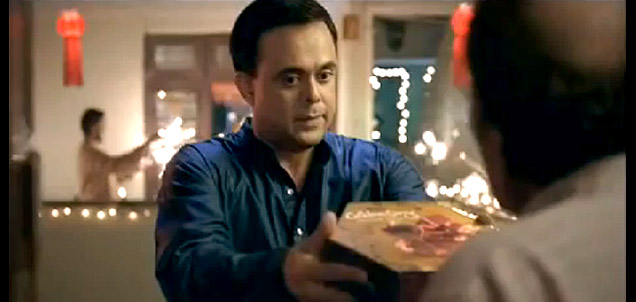
    Mr KV Sridhar aka Pops, NCD, Leo Burnett, said, “My favourite Diwali commercial would be ‘Iss Diwali aap kise khush kar rahe hain?’ by Cadbury, which was out almost a year ago. For me and I’m sure for everybody else, the best way to celebrate Diwali is to catch up with near and dear ones and make them happy. Hence I found the commercial very real.”

    Mr Dheeraj Sinha, Regional Planning Director, Bates, said, “The Diwali campaign that has appealed to me the most is the Fiat Festive season campaign done by Bates. The campaign goes a step beyond the Diwali promotional offers etc and talks about the philosophy of Fiat, therefore I find it more appealing.”

    Mr Rajiv Rao, NCD, Ogilvy & Mather, said, “I know it’s my own agency work but I can’t resist saying that it is Cadbury’s ‘Iss Diwali aap kise khush kar rahe hain?’ There is so much of humanity and it breaks the clichéd concept of just greeting only your family and close friends on Diwali. It is most definitely my favourite Diwali campaign.”

    Mr Bobby Pawar, COO, Mudra, however took a different tack, saying, “No ad campaign has been able to capture a place in my mind; I really cannot think of any Diwali campaign that has appealed to me so much as to be called my all-time favourite campaign.”

    Cadbury’s seems to be the brand and campaign to have captured minds and hearts, and the sweet taste of success is certainly well deserved. But with such a wealth of creativity on tap and such a rich diversity of cultural references available all over India, it is high time a new, iconic ad or campaign came forth.

    We’re waiting.

    [Link] Debrief: In the midst of the drought, the Diwali ads that caught Anil Thakraney’s eye.