Tag: KV Sridhar

  • Top agencies like O&M, Lowe, McCann, Creativeland to skip Creative Abbys

    By Pritha Mitra Dasgupta


    The seventh edition of India’s advertising festival, Goafest, will be happening minus some big names. Seven of the country’s top advertising agencies – Lowe Lintas, Ogilvy & Mather, Creativeland Asia, McCann Worldgroup, BBDO, Grey and Leo Burnett will not be participating in 2014.


    Entries to the festival this year are down 50 percent – last year Goafest had received 4,800 entries across creative and media, but this year it has received around 2,500 so far. That’s despite the introduction of two new categories Promo-Activation and PR, and opening up the awards to entries from broadcasters and publishers.


    Srinivasan Swamy

    “I expected the numbers to be down this year,” says Srinivasan Swamy, chairman, Goafest 2014 and chairman & MD of RK Swamy BBDO. “But I believe 2,500 is also a good number to have. I agree that agencies like O&M and Leo Burnett send large number of entries and their absence would bring the numbers down. But we are not badly off,” he adds.


    While some of the non-participating agencies have decided to send delegates to the festival, a senior Goafest committee member confirms that this year the number of delegates will be also down by at least 50per cent. While Swamy maintains, “Let’s celebrate people who are participating,” Piyush Pandey, executive chairman, Ogilvy & Mather says, “Even the winners won’t feel the joy of winning as half of the industry is not going to be there.”


    Piyush Pandey

    One factor that has played a role in the low participation rate is the timing of the festival. Says a source on the Goafest committee, “Agencies usually got at least two months between Goafest and Cannes Lions to work on their budgets, to decide which entries to send and to decide the team that would represent the agency. But this year since the festival is happening in the last week of May there is hardly any time for agencies to plan.”


    All this has only resulted in more flak for the Abbys, the country’s oldest advertising awards which was integrated into Goafest a few years ago. “I think the Abbys was running beautifully till they combined it with Goafest,”says MrPandey. He says that the principle on which the award show was merged with festival was that Ad Club would run the awards and AAAI (Advertising Agencies Association of India) would organise the festival. “But it got muddled somewhere down the line,”he says.


    K V Sridhar

    KV Sridhar, the outgoing chief creative officer India subcontinent at Leo Burnett, agrees, saying, “While the festival may have become bigger, there is no doubt that Abbys has lost its credibility.” Mr Pandey in turn believes that Goafest should have taken a break for a year, restructured and reorganised itself and then returned with a bang in 2015. The deadline for entries has been extended to April 28 from April 25, so there doesn’t seem to be much chance that participation will ramp up. But Swamy says that the Goafest committee will be meeting with heads of the non-participating agencies immediately after the festival, to discuss and address their concerns and clear the way for next year’s event.


    Source:The Economic Times

    Copyright © 2014, Bennett, Coleman & Co. Ltd. All Rights Reserved

    Licensed to republish


  • Pops plans to reinvent himself after May 4

    K V Sridhar

    By A Correspondent


    Leading creative advertising network Leo Burnett India has announced the departure of KV Sridhar, Chief Creative Officer for India and the subcontinent. Pops, as Sridhar is better known to the fraternity, will be with the agency till May 4. He has been with Leo Burnett for 17 of over three decades in advertising. Pops plans to reinvent himself and pursue other interests. Meanwhile, Leo Burnett has informed that a new creative leadership will be announced shortly. This is the agency’s second senior change in the agency in the last year with Arvind Sharma making way for Saurabh Varma as agency head in October 2013.


    Starting out as a Bollywood billboard painter, he helped the agency gain recognition at international awards shows including the Cannes Lions, New York Festival, and local Indian awards. Under his creative leadership, Leo Burnett India went on to win agency of the year in the Leo Burnett global network, twice. He also led the agency to be ranked by Creativity magazine to be among the top 20 creative agencies in the world. Pops has also represented the agency on many Indian and international award juries.


    “Pops has always been a young man at heart and once again his nomadic spirit has led him to look at things afresh and follow his heart to pursue new adventures.The agency and I will continue to build on the creative trajectory he has set,” said Varma who is Chief Executive Officer, Leo Burnett Group India.


    Said Pops, “It has been a purposeful journey for me at Leo Burnett, growing with and having a chance to play a key role in shaping the agency’s creative prowess. I have had the opportunity to work with and get to be friends with some of the brightest creative minds in the world, worked on some of the most exciting campaigns with some of the most amazing clients. For now, I would like to take a break to reinvent, rediscover and rededicate myself. I wish Saurabh and Leo Burnett great success.”


  • More khushi when there’s gham


    By Shobhana Nair


    Advertising and marketing have always been in a happy state in India. It’s an emotion that combines joy and delight of consumers, thereby creating a happy environment for consumption.


    Lloyd Mathias

    Before going for a macho refrain, soft drink Thums Up had embraced its tagline of ‘Happy days are here again’ nearly four decades back. In fact as one brand manager told us, it’s an evergreen emotion and always works magic for a brand. “Happiness is a very positive emotion with most brands wanting to build messages around it as it is a primary emotion,” says Lloyd Mathias, director Green Bean Ventures who was head of marketing at Tata Docomo, Motorala and Pepsico India.


    Indeed it is. From Thums Up to Domino’s Pizza with Khushiyon ki Home Delivery and from Khushiyon ki Planning at Max Life Insurance to Khushiyon ki Chaabi for Tata Nano and Khushiyon ka Khazana wali Maggi for Maggi, it’s khushi-ness all over. In fact the same line – Khushiyon ki Diwali – was used in the ads of brands Airtel and Asus.


    The recent Coca-Cola campaign with Deepika Padukone and Farhan Akhtar talks about the little moments of happiness. The entire sequence of missing the bus, chasing it and boarding it. “It makes a lot of sense to be associated with a positive emotion. Products like beverages and food are consumed by people in a positive frame of mind,” reasons Mr Mathias. “Another commercial by Nestle about a family adopting a girl child and how the boy makes up with her over food is a good campaign. There’s a lot of joy in the food category.”


    K V Sridhar

    Khushi, when there’s Gham: Although happiness is an emotion that has been used by marketers for decades, in times of a slowdown and a liquidity crunch, it’s often the possible solution to keep buyers happy. Says K V ‘Pops’ Sridhar, Chief Creative Officer India subcontinent, Leo Burnett: “When society is depressed, it needs something which is optimistic or makes people happy. Unemployment, corruption, politicians, etc add to this state. Therefore, brands are showing optimism and presenting a picture that not everything is going wrong. Today, it has become important for big brands to not talk about the values their brands have, but the values that the brands will bring.”


    Santosh Padhi

    According to Santosh Padhi, Chief Creative Officer & Co-Founder, Taproot, happiness is an emotion that’s employed by most brands. “If I want to sell something, I would rather do it in a positive way. In general, brands talk positive unless it is a category like insurance where you need to make your point in a negative way where it gets hammered and more understood. Otherwise, life is all about positivity. Happiness is one part of it; humour is another. And then there is hope and simply being positive.”


    Happiness is of course not a phenomenon that works only in India. It’s a global sentiment. Adds Mr Padhi: “In China, Pepsi released a big campaign on Happiness. There’s a man who’s offering happiness to people who are in need like education, shelter, umbrella, spectacles. Pepsi is running it for the past 20 years in China. So when Coke came a few years back with ‘Open Happiness’ as part of a global mandate, Pepsi China didn’t stop. In a huge market like China, two competitors are ‘doing’ happiness.”


    The Coca-Cola brand launched the campaign internationally in 2009 – around the time of the slowdown – and the ongoing  Deepika-Akhtar commercial is a part of the five-year-old activity.


    Bobby Pawar

    Over-used concept: Says Bobby Pawar, Director and Chief Creative Officer, South Asia, Publicis Worldwide: “I think in tough times, brands want to hold out people to heart. Happiness has a gravitational point for that. But it is such a broad concept unless you try to find true meaning in it. ”


    Mr Pawar believes not all advertisers are doing it right. “Happiness as a term is getting over-used. Coke has nailed it internationally. They do create happiness with their world machines,. Only Coke has got it right. Rest of them are like whatever.”


    Anand Halve, brand consultant and a veteran ad professional and Co-Founder, Chlorophyll adds on to Pawar’s sentiment:  “Not only happiness, all emotions are being over-used. Brands have started to use this term that aapki zindagi badal jaayegi. Just look at the number of brands that use the word ‘life’. Brands should aim to do beyond just the functional thing. You have to be careful about not going overboard and sounding incredible.


    “Coke is doing really well through Coke Studio. Music makes people happy and that to me is genuine happiness. Just hanging a line at the end of an ad doesn’t mean anything… agar mujhe khush karna hai toh, take me out for dinner…don’t just send a voucher,” says Mr Halve.


    But Mr Mathias believes, happiness is here to stay. “It can never go out of style. It is a very basic emotion and in a typical day one has a lot of happy moments. It is very logical for brands to show people in a happy frame of mind especially categories like beverages or food which are driven by this. It is an important emotion to build your brand on.”


  • Adland ‘Inkaar’ to film with NCD accusing agency CEO of sexual harassment

    By Rajiv Singh


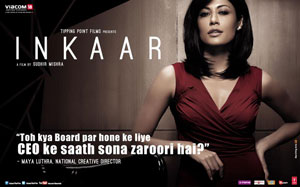
    Inkaar, Sudhir Mishra’s latest film, may have failed to set the box office on fire, but it has created quite a flutter in the advertising world, with the fraternity refusing to accept the way it depicts an ad agency.


    In the film, Maya Luthra (Chitrangda Singh), the national creative director of an ad agency, accuses CEO Rahul Verma (Arjun Rampal) of sexually harassing her.


    That, of course, is not the best advertising for the industry.


    Prasoon Joshi

    “Advertising is probably the only profession in the country where a woman can do what she wants to do, can speak her mind without even an iota of fear and can live her life the way she wants to be,” Prasoon Joshi, CEO and chief creative officer of McCann World Group India, says.


    Lack of knowledge and understanding about the industry could be the reason for choosing ad agency as the workplace for depicting sexual harassment, he avers. “It’s not an industry of exploitation but an industry of equality.” Almost everybody in the fraternity agrees. It’s a mad world, but not bad, they say.


    Priti Nair

    Priti Nair, director and co-founder of ad agency Curry-Nation, says the film falls to the stereotype that ad agency is glamour-laden and loose life. “You just have to show a woman wearing a nose ring, with a wine glass in hand, and yes smoking-and you have an ad woman,” she says.


    KV Sridhar, chief creative officer, Indian subcontinent, at Leo Burnett, however, believes that there’s no stereotyping. “Ad agencies have become a metaphor of progressive women and flamboyant men,” he says. Sridhar says it’s a good thing that a movie has been made on a sensitive issue. “There are not many movies dealing with sexual harassment,” he says.


    KV Sridhar

    Branding experts feel interpersonal dynamics ranging from fancy free flings to forced sexual innuendos at workplace connect with the audience because it’s a subliminal reality nearly everywhere.


    “Power disequilibrium is what fuels exploitation, sexually or otherwise,” says Smitha Sarma Ranganathan, a brand communication specialist who teaches marketing management at IBS Bangalore. “So, over-emphasising and contextualising this specifically to the advertising industry paints a biased picture of the fraternity at large.”


    Source:The Economic Times

    Copyright © 2013, Bennett, Coleman & Co. Ltd. All Rights Reserved


  • Arise, awake… and care for the girl child!


    By Fatema Rajkotwala


    Jaldi 5 with Dr A L Sharada: More ads must say: Yes, she can
     

    Population First has been at the forefront of the initiative on the way the girl child has been projected in the media. Dr A L Sharada, Director, Population First, spoke to MxMIndia on the girl child and the media and how we can prevent the celebration of the International Day of the Girl Child from being mere tokenism.


    01.  It’s good to see that the first ever International Day of the Girl Child is being celebrated. How do we prevent it from being mere tokenism?

    I welcome the UN, as a global body declaring October11, as the International Day of the Girl Child. This gives us an opportunity to take stock of the work that we have done so far, look further into what needs to be done and how we could take the issue at hand, forward. However the fear that it may turn out to be yet another gesture of tokenism is a valid one. The only way we can stop it from becoming yet another international day celebrated as a formality every year, is through concerted efforts to work on some of the major issues regarding the girl child.


    There are many issues concerning girls such as child marriages, low enrolment in schools and neglect of their health and nutrition needs. We need to advocate and lobby for more focused policies and programmes to improve the status of the girl child. We need to use the opportunity provided by the International Day of the Girl Child, every year to reflect upon achievements, fine tune our policies and redesign our programme, if required.


    Do you see that Population First’s efforts have had an impact on the media?


    I see lot of positivity and openness from the media towards these issues and a willingness to approach them differently. In the current media scenario, many of these issues are being addressed but more need attention. We, at Population First believe that we have to start a dialogue with all stakeholders, media being a primary stakeholder. We, as a nation have internalised, and have deeply ingrained patriarchal values to an extent that unless someone points it out, at times we are unaware of a possible patriarchal tone in our public communications. We need to initiate dialogues with all groups of society, so that together we can build a more gender-sensitive society.


    02, In your experience interacting with marketers and advertising agency professionals, do you think they are sincere in their attempts to appreciate the responsibility towards the girl child in a society like ours?

    Our experience with the advertising professionals has been very positive. We found them to be open-minded, willing to look at our standpoints and revise their current approach. From the time we began interacting with professionals in the advertising industry in 2008 up to today, we find a much greater presence of girls in advertising and many advertisements that are now projecting positive and non-stereotypical images of girls.


    03.  Do you think self-regulation bodies like ASCI, Advertising Club and AAAI should also take it upon themselves to promote the cause?

    Yes, definitely. It is important that activists working on gender issues and the regulatory bodies of media and advertising work together to ensure that the media does not project demeaning and negative images of girls. It is also imperative that  media does not consciously or otherwise, support or promote negative social attitudes and practices such as eve-teasing, commodification, objectification of women and violence.


    04.  What are your views on gender biases in today’s advertising?

    In 2008, during our analysis of advertisements showing girl children, we found that girls had a lesser presence and were often presented in a stereotypical fashion, for example mostly endorsing products that have been promoted by their mothers too. It was also observed that an ideal family is always shown as mother-father with one daughter and one son, or two sons. Rarely did we find ads showing two daughters. While a lot has changed in the last few years, in terms of projection of girls in advertisements, it is still rare to find an advertisement where two daughters are shown in a family setting. This, I believe, promotes the perception that a son is a must in the family. In a context where the country’s sex ratio is declining, this is a very disturbing trend.


    Television serials, television and print media content also further aggravate this image of women. What are your views here?


    Yes, it is true that the portrayal of women in print and electronic media is regressive and voyeuristic in flavour and we have to work on changing this. This is why we have instituted Laadli Media Awards for Gender Sensitivity. We have received 1500 entries this year and the quality of the content is improving. There is a lot of potential for change. The most pertinent example here is that of the popular show, Satyamev Jayate, which has suddenly got numerous issues into our drawing rooms. It shows the effect of one strong programme with a potent combination of Aamir Khan, an industry giant like Reliance and a media tool like Star TV. This shows that there is potential to bring social change. New media and its various options are also democratizing the way news now reaches out and has gained momentum with youth across the country as tools for creating public opinion. It is an exciting time to be, in terms of working with media on social issues


    05.  One view of marketers is that they need to sell to consumers, given the prevailing behavioural patterns, and that they are not in a position to correct these attitudes. How do we bring about a change in this view?

    I would like to highlight two ads here. For instance, an HDFC investment plan ad shows a father investing for his daughter’s education instead of a more common notion, such as saving for her marriage. This is a positive and refreshing approach to the product and in no way undermines the value of the product. The other ad I would like to mention is the Tata Nano ad where a small girl hugs the car, and the father gives her the car keys. This shows that the father is proud of his daughter. Giving visibility to girls in ads, is by itself crucial. We need to see more such instances where girls have to be shown in a capable light and in diverse concepts while selling a product. After all, communication is all about conveying the message effectively, is it not?

    (Interviewed by Fatema Rajkotwala)


    Last December, the United Nations declared that it would annually observe the International Day of the Girl Child, starting from October 11, 2012. Supported by the United Nations Population Fund (UNFPA), in partnership with Whisper, leading non-government social welfare organization Population First will celebrate the first International Day of the Girl Child today (October 11) at Mumbai’s Y B Chavan Centre (*see disclosure below).


    The first ever International Day of the Girl Child is marked to help prioritize girls’ rights as the salient issue in the coming decades. ‘Laadli‘ is Population First’s Girl Child campaign against sex selection and falling sex ratio. It focuses on creating a positive image of the Girl Child in society.


    Veteran adperson Bobby Sista is Executive Trustee, of Population First. Mr Sista spoke to MxMIndia about the positive response from the advertising world towards the issue, “The response from the advertising world has been encouraging. We, at Population First are absolutely delighted that at last a global body has recognised that the girl child is a special category that needs special, global attention. One of our primary focuses is to eradicate the horrible practice of pre-birth sex selection. I have been highlighting and propagating the economic value of the woman as a homemaker in our society and her contribution to the country’s GDP. A woman is at least four times better at being a manager, or doing any job today. Why always talk about the girl child in a suppressed context? What is it that a woman cannot do today, that a man can do?”


    Dr A L Sharada, Director, Population First spoke about the need for activists and media bodies to work together to bring about social change, “It is important that activists working on gender issues and the regulatory bodies of media and advertising work together to ensure that the media does not project demeaning and negative images of girls. There is a lot of potential for change. New media and its various options are also democratizing the way news now reaches out and has gained momentum with youth across the country as tools for creating public opinion. It is an exciting time to be, in terms of working with media on social issues.”


    Part of the multi-stage campaign, ‘Question Everything’ was a two-day workshop on Creative Thinking, Communication and Gender. Organized by ‘Laadli’ Changemakers Club of Population First, the workshop engaged students from Mass Media colleges across Mumbai, with an aim to involve the youth in a dialogue on gender issues, with a focus on enhancing the image of the girl child. Highly experienced advertising and media professionals such as Gautam Rakshit, Gopi Kukde, K V Sridhar (eka Pops), Dolly Thakore and Zoya Akhtar shared their expertise and guidance with students. The event will see the launch of 1MM, one-minute movies made by college students questioning gender inequality and injustice.


    Says Mr Sridhar, National Creative Director, Leo Burnett , “We have realised that at times, lack of knowledge and sensitivity tend to be the reason for negative content. But when you’re creating something, you have a white paper in front of you, you can create anything. We need to influence content creators first, then clients, then people themselves to come out of years of reinforced images of family planning. When you sensitise teens and youngsters, power to impact is higher. The new mantra for communication in the digital era is- Play, Buy and then Share. Young minds involved in making a one minute movie raise issues without fear to express and once you get involved, you think about it, play it with experience, then you buy into the philosophy, then you share it. Youth sharing via mass media tool such as Facebook or Twitter have a far reaching impact. This is a process that has been initiated. That is how social revolutions were made, religions and value were spread.”


    Part of the event’s agenda is to recognise young women achievers such as the female fire-fighters of the Mumbai Fire Brigade. The event will also felicitate celebrity parents and daughters who have made a mark for themselves in media, corporate and political circles.


    Population First has also introduced the Laadli Media Awards for Gender Sensitivity to encourage and recognise media content that has positive social messages for the girl child.


    Disclosure: MxMIndia has published for Population First a special volume on the First International Day of the Girl Child that will be released at an event in Mumbai this evening (October 11). Also, we strongly believe in the cause and feel that media and entertainment can play a key role in changing gender perceptions. – Ed.


  • Storytelling through the years

    By Shubhangi Mehta


    The trend of storytelling in an ad began with actors in the campaign sharing a fictional story that connected with the masses and now taking it a step ahead, advertisers are trying to connect directly with the masses and asking them to tell their original stories in the campaign.


    Storytelling commercials capture the emotional side of an audience.

    How beautiful or charming your story is depends on the imagination of the creator. How beautifully and effortlessly it’s told, depends on the media plan.

    Some stories need more time, some don’t. While one understands that media comes at a price, one often forgets that the  poorly told story, even if it fits the budget perfectly, is money down the drain as it won’t reap half the rewards as a beautifully told story will.


    KV Sridhar

    As KV Sridhar, NCD, Leo Burnett India, explains, stories are a “means of communicating to the world in an interesting manner and advertisements are no different. The only challenge is to tell a story in 30-60 seconds. Products have become brands and household names because of use of this concept in our commercials. The concept provides a benefit for the brand as it establishes an emotional connect with the consumers, it’s not just a sales message, but about narrating a story. In other words, we can regard a story as a sugar coated medicine. Initially, story telling in commercials was a one way process -brands created a virtual story to connect with the masses – but today it has become a two-way communication. And due to the popularity of social media – Facebook, Twitter – it’s become easier to interact with the consumer. Brands no more control the story, consumers do.”


    Sumanto Chattopadhyay, ECD, Ogilvy & Mather, cites an example: “Pond’s created a very successful series of TV commercial a few years ago. It was a love triangle starring Priyanka Chopra, Saif Ali Khan and Neha Dhupia. These episodic films spun a classic love story with all the trademark melodrama of a top-rated TV serial.”


    Sumanto Chattopadhyay

    The only downside of episodic commercials is the high budget required to make and air multiple TV spots. But if made with skill and backed by deep pockets, they can be a worthwhile investment. The international trend in contemporary popular culture is marked by a penchant for realism combined with a desire for the limelight.


    From reality shows that hunt for talent to advertising that is crowd-sourced, it is all about letting people step into the light to tell their own stories in their own voice. Andy Warhol was prescient when, decades ago, he said: “In the future everybody will be world famous for fifteen minutes.” Today, that is the mantra of many – offering the people the chance to have their names, faces and stories in the spotlight – which is also a shrewd strategy for brand success. The resulting authenticity has an inherent appeal to the modern mindset.


    Storytelling is the means by which our culture has been passed down

    Storytelling is the means by which our culture has been passed down from one generation to the next. Sometimes, through stories expressed verbally by our elders; at other times through pictures drawn on cave walls and later through sophisticated dance drama. So it is hardly surprising that we took like ducks to water to story telling in movies, TV serials and TV commercials.


    Rahul Matthew, ECD, McCann Erickson said: “Storytelling, to get a point or ideology across, is not a creation of advertising. Stories have been used forever to sell ideologies, morals, and wisdom to people. Panchtantra or Mahabharata are all illustrations of the same. The only difference is that in advertising we use it to sell brands. It’s probably because story-telling makes anything less preachy and we’re always ready to hear a good story. A story also makes things more relate-able since it borrows from life; the same life that our brands and products have to be a part of. This so-called real story-telling has always been there. What’s called testimonials is just that. We used to use models to give the impression of a real-life consumer sharing his/her experiences with the product. And today instead of models we are recruiting real consumers to tell us what they feel or think.”


    Mr Matthew further states that it’s more a reflection of a change in consumer behaviour than a change in advertising: “We are reaching out to reviews from unknown people through blogs/social media to make our choices, and at the same time proactively sharing our views for others to consume. And advertising has always merely reflected consumer behaviour.”


    Minakshi Achan, co-founder, Salt Brand Solutions feels that storytelling has kept us riveted for centuries as it is part of popular culture and has shaped and defined us for the longest time through religion, entertainment, history and music. “Brands have simply adopted the art and used it to tell stories and shed light about their products and services. There is no better way to connect with your consumers and the greatest of brands know the profound impact it has on people. Brands are the greatest story tellers and if you count religion itself as a brand, we know the power of story telling, and the continued effect on us. The big change has not been in the concept of storytelling, but in the way we communicate because of the platforms available to us. In the yester world, there were no platforms for two-way communication or rather it was difficult to do so. Today’s world is open and the exchange and engagement with a consumer is far easier. Far greater possibilities exist thanks to social media – whether it is the internet or mobile,” she added.


    Co-creation is the new way

    Consumers have stories to tell and today brands can listen to them and have their contribution to impact their brands. This apart, the stories are more real, straight from the horse’s mouth, which lend great credibility to brands. Since the engagement models have changed, I think there is far more meaningful conversations possible today, feels Ms Achan.


    All in all, we can say that stories surely are for everyone and quite naturally work across categories and consumer types. The length of time, the canvas of the medium may change but the premise is the same, and the objective for brands is just to impact the brand and consumers with this format. Whether it s a 3-hour movie or a 30 second commercial, the principles of storytelling remains.


  • Glory eludes India @Cannes Lions 2012


    By A Correspondent


    1992 is not a year on which I shall look back with undiluted pleasure. In the words of one of my more sympathetic correspondents, it has turned out to be an Annus Horribilis. Thus spoke Queen Elizabeth II describing the year that was quite horrible for the British royal family. Now as the world celebrates 60 years of her Accession, the Latin phrase could be used for India’s performance at the Cannes Lions.


    Now that the 7-day grand creative festival has come to a close in the south of France, agencies that have emerged tall and triumphant from across the globe will be heading back to their respective continents to kick off celebrations.


    And that we guess India will miss out on, as the contingent make its way back home. Some have done so already as you read this. The boardrooms, bars and smokers’ areas will be busy as a new week commences with agencies trying to figure out what exactly went wrong. Or perhaps what didn’t go right. Some obvious questions that’ll come up for scrutiny are whether agencies have become too complacent and are taking their creative skills for granted or whether other countries have simply outsmarted India in the game of creative one upmanship.


    Few doubt the creative aptitude India possesses, having given a tough time to most agencies in the past but 2012 could easily be billed as the worst year thus far – just 14 metals in kitty when the number of entries that were sent were the highest at 1,182.


    Even in a dry year like 2008 where India had sent only 982 entries, the total metal count stood at 23. The only bad year was 2007 where India bagged just 12 metals but then one expects performances to see an upward spike year-on-year and not the other way round. It will be interesting to see the kind of reactions that emerge from the entrant companies in the ensuing days.


    Though it was a forgettable year for India , there were some agencies that shone bright and whose entries managed to win a few metals. Those that were hopeful of a win did just that and came back lapping up either Gold, Silver or Bronze in the respective categories. Mentos Sour Marbles by Ogilvy & Mather continued its winning spree across festivals as it bagged a bronze in the Press Lions category.


    Another sureshot that bagged India its metal was an entry by Leo Burnett for its client Bajaj Electricals for their exhaust fans. The team of KV Sridhar and Nitesh Tiwari carried on with their winning spree bagging Silver in the Press Lions category.


    In fact, the team of Leo Burnett carried on with their rich display by picking up a Media Lion Silver for its Doorstep School campaign in the Best Localised Campaign category.  Another entry from India that was sure of a win was Cheil Worldwide’s campaign for Samsung Printers. The work bagged a Media Lion Silver in Best Use of Integrated Media in Media Lions. BBDO India’s You Shave, I shave campaign for Gillette continued with its winning streak as it bagged a Bronze in the Media Lions category.


    While those that were touted to win did just that, it was the Gold winners that were the talk among the delegates at the Cannes Lions festival. The tally was opened by McCann Worldgroup which won an Outdoor Lions Gold for its client Western Union.


    An elated Prasoon collected the coveted prize on the dais. DDB Mudra’s ‘The Hinglish Project’ for Ministry of Tourism, Government of India was another Gold winner as it bagged the metal in the Design Lions category. The same project also won a bronze in the same category.


    Abhinay Deo

    The third Gold winner was the entry ‘I am Mumbai’ that was entered by Ramesh Deo Productions and the advertising agency for which was Taproot India . Abhinay Deo, on bagging the award, said: “There is no thumb rule for success. All I can say is that one has to be honest to his craft. Never make a film to win an award be it Cannes or any other, because then you surely won’t.”


    Failures Unlimited

    While that was about the winners, the conversation that dominated the festival during the latter half was the lack of wins by India across categories. The discussion was compounded by India failing to make the shortlist across categories too. India would definitely want to forget its showing in the Mobile Lions & Cyber Lions category where it didn’t manage a single shortlist.


    Even categories like Film Craft, Creative Effectiveness, Branded Content & Entertainment put up a poor show by bagging just a handful of nominations. In comparison, categories like Radio and PR performed better with the shortlisted entries in either of them going on to win metals.


    In fact, the categories where India had the maximum number of shortlisted entries like Press and Outdoor too were failures as the conversion rate averaged about 10 per cent or so for each of them. Titanium & Integrated continued to elude the Indian contingent of bagging any metal.


    KV Sridhar

    The overall grim mood at the festival was highlighted by KV Sridhar, NCD, Leo Burnett India : “We are extremely satisfied with Leo Burnett’s performance at Cannes this year; getting three Lions is not an everyday event. The only disheartening thing being that India’s overall performance this year wasn’t gratifying. I think we need to push ourselves a little more to do well in such awards, because at the end of the day it’s not about how good your work is, but about how much better the world is performing than you.”


    Said Pratap Bose, COO, DDB Mudra Group, whose agency did win some big awards but not as many as they had hoped: “At the end of the day, as DDB Mudra, we were more hopeful as we did get 21 shortlists. Though this is an extended India problem as well. We did bag a Gold and that compensated a little. The standard to which the world has risen surpasses India to a very great extent hence India has got a lot of catching up to do. To sum it all, we are quite disheartened with the overall performance.”


    Pratap Bose

    Mr Bose’s comments on the creative standard of other agencies around the world rising to surpass India may all but be true. Why else would entries that stood a high chance of bagging a metal miss out on winning one? DDB Mudra’s work for Stedfast, Volkswagen and GeeBees Beverages were all assured of a win but sadly missed up winning any.


    Chaplin Chapters & Google Chrome by BBH India , Keeping the Legend Alive by McCann Worldgroup, Parle Agro by Creativeland Asia and A Day in the Life of India by Taproot were other worthy entrants too but were skipped for the sake of others that were found to be more deserving.


    Manish Bhatt

    Manish Bhatt, Founder-Director, Scarecrow and a jury member for Cannes, 2012, said, “I would say that winning at Cannes has a lot to do with probability, so many factors can work for or against a piece of work during the judging process. Also with my interactions with other jury members, I got a feel that many felt that while there is no disputing Indian creativity but the viability of that idea on various medium is restricted. As creativity is being redefined, there is a need to bring on an idea that can work on multiple platform. There is also a need to bring in more interactivity in our entries as thats what the judges are looking for.”


    Perhaps, it’s time for India to stop being looked upon as the ‘favourite’ one and for more creative ideas to spawn if we have to make a rousing comeback in 2013.


    We could then look forward to a wonderful year… Annus Mirabilis may be


    With inputs from Shubhangi Mehta, Tuhina Anand and Meghna Sharma


    Cannes Lions 2012 Winning Entrant

    Gold

    Silver

    Bronze

    Bacardi India

    1

    BBDO India

    2

    Cheil Worldwide

    1

    DDB Mudra

    1

    1

    Leo Burnett

    2

    1

    McCann Worldgroup

    1

    Ogilvy India

    3

    Ramesh Deo Productions

    1

    In alphabetical order of agency names


    Imaging: Rafiq

    Photograph of Abhinay Deo: Fotocorp


  • Heading high towards Cannes 2012


    By Shubhangi Mehta


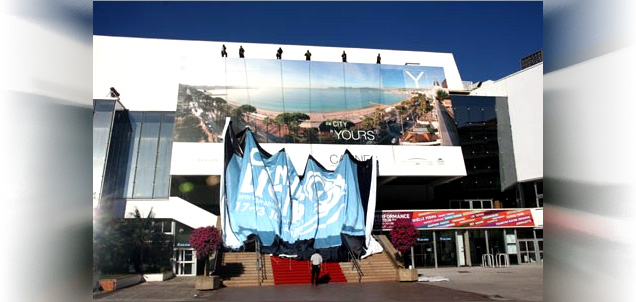
    In its 59th year, the Cannes Lions International Festival of Creativity, which will take place from June 17 till 23, is considered the largest worldwide gathering of advertising professionals, designers, digital innovators and marketers.


    Every year in June, around 9,000 registered delegates from 90 countries visit the fest to celebrate the best of creativity in brand communication, discuss industry issues and network with one another. Thousands of ads from all over the world are showcased and judged.


    Inspired by the International Film Festival, staged in Cannes since the late 1940s; a group of cinema screen advertising contractors from the Screen Advertising World Association (Sawa) felt that the makers of advertising films should be recognised similarly. They established the International Advertising Film Festival, the first of which took place in Venice in September 1954, with 187 entries from 14 countries. The lion of the Piazza San Marco in Venice was the inspiration for the Lion trophy.


    Cannes Lions juries are drawn from experts in each field from around the world. Each jury is headed by a jury president. They judge submissions in Film, Film Craft, Media, Press, Outdoor, Cyber, Promo & Activation, Direct, Design, Radio, PR, Creative Effectiveness and Titanium and Integrated.


    Inspiring creativity is at the heart of Cannes Lions. The Festival is where creative professionals come to debate, learn and be inspired; where the greatest industry honours are bestowed; where those pushing creative communications forward are celebrated. Amongst the featured agencies this year are names such as BBDO India, Leo Burnett India, DDB Mudra, TBWA India, JWT India, BBH India, Taproot India, Publicis India, Contract Advertising, Grey India , Happy Creative Service and Ogilvy India.


    Since the past couple of years, India has been doing fairly well at Cannes due to which the expectations are increasing with each passing year. Hence MxM India tried to find out what the experts think are India’s chances in the run for metals at Cannes Lions this year.


    Russel Barret
    Ashish Khazaanchi
    Kartik Iyer
    KV Sridhar
    Rajiv Rao
    Senthil Kumar
    Jishnu Sen
    Josy Paul

    Russel Barret, Managing Partner, BBH India, said: “India matches up to any other country when it comes to creativity. What we lack is the space between ideas and execution. The factors that affect it are probably budget and time. I am really hopeful that we will win just like any other agency which sends their work. Though out of all the Indian work that I have seen, the Tide (print) by Leo Burnett India and OOH Iconic poster by Mudra are my favourite works.


    Ashish Khazaanchi, NCD, Publicis Ambience was optimistic: “Our country has had some good and some not so good years at Cannes, but there has never been an extremely dreadful year for our country. India is amongst the countries having ‘great creative talent’ and the proof is the Grand Prix in the past. Our agency has done wonderfully at Cannes, but this year our focus was mostly on agency growth. My preferred work for this year would be Fox Crime ad and Gandhi booklet by Leo Burnett.


    Karthik Iyer, Owner, Happy Creative Service felt awesome: “Any agency would, to get recognition from the world’s best creative leaders on a global scale. India never lacked ideas, for sure. But I think more attention can be paid to craft. That’s an area we always get beaten, either because of the lack of time, budget or both. When it comes to my favourite work, there are so many it would be unfair to point a few. But a few that come to mind – Coke Studio Entry of the music from Coke bottles DM, I absolutely love that piece, Fox Crime should pick up something, Bajaj Exhaust fans and Sour Marbels to name a few.


    KV Sridhar aka Pops, NCD, Leo Burnett, India maintained: “The only place where our country lacks is exploring the new medium ideas such as digital. We focus more on the conventional mediums rather than the non-conventional ones, unlike countries in Latin America. The chances of India collecting metals at Cannes Lions are more in the categories like design, photography and sound design. For me the magic creators are Killer Jeans, Tide and Bajaj. I feel this will be a good year and we might get close to 20 odd metals, but we cannot regard it as a record breaking year. I’m hoping for the best for Leo – especially for properties like Tide, Coke Studio, a couple of Radio spots and Thums Up for branded content.


    Rajiv Rao, NCD, Ogilvy India said: “I think Indian work is absolutely fantastic, hence it does so well in the Indian market. The scenario in our country is such that we need to do a specific kind of work to appeal to our consumers, hence we do not appeal to the global jury at times. But that is not because of the quality of our work. All we need is to bridge our work in such a way that we appeal to the local masses as well as the international juries.”


    Senthil Kumar, National Creative Director JWT India was of the belief that they can only do their best and hope for God and the jury to do the rest: “Sure we have the potential but until the jury agrees, we won’t be striking heavy metal there. I have always believed that Indians are the most creative people on earth. We have to be more unabashedly Indian in our ideas and even in our ‘God is in the details’ execution. If only we’d stop aping the West and strive to unleash something very Indian every time, we’d have better chance at hunting down Gold Lions. This year, our creative hopes would ride on the following ideas: The Times of India Kerala Launch, RIN Eraser, Lifestyle’s Baddie bags, Nokia Recycle Films, and some other ideas that may just surprise the audience.


    From a potential point of view, these ads are the ones that could hunt down a few Lions for India this year: Google Chrome Tanjore, Mumbai Mirror, The Times of India Kerala Film & IPL 5 Carnival in Film Craft, The FOX Crime Series in Digital, the Nokia Recycle Viral Films, the Coffee House print work, the 3D Audi Website…


    Jishnu Sen, chief operating officer, Grey India, put forth his view: “The reason that the metal tally for India isn’t as high as some Latin American country is because of the international jury. Our work is always great and creative. Grey has done some great work this year with Killer Jeans and Cupid Condom. We are hoping to pick up some metals.”


    Josy Paul, Chairman and NCD, BBDO India felt: “India is a late entrant at Cannes, and taking that in consideration, we are doing fairly well and growing year by year. I am expecting the Gold and Silver winners from Abbys to do well at Cannes as well. As for my agency, Cannes is like a lottery, last year we did not expect to do so well, but we did. This year too, we are hoping our Gillette campaign would do well.”


    Main image: www.CannesLions.com


  • Being on Cannes jury is no mean task


    By Tuhina Anand


    Being on the jury of Cannes Lions means serious business – being shut in a room for endless hours and going through thousands of entries to make a case for the piece you like. Undeniably, despite the work involved, the experience of being a jury at Cannes is a learning experience in many ways.


    Ryan Menezes

    As Ryan Menezes who was invited to be on the Cyber Lions jury in 2011 puts: “I thought, cool, after winning India’s first ever gold lion in 1996, I now get to judge the most cutting edge category of all. I was looking forward to a week of sun, sand and schmoozing. Yeah, right! It was cyber boot camp from start to finish.”


    Giving a peek into the work, Mr Menezes explained that first there’s a preliminary voting to determine the shortlist, which takes place online. This is even before you set foot in Cannes. He added: “Once you’re there, barely recovered from the seven course welcome dinner, you plunge into this seemingly bottomless pit of entries where you see some of the world’s best work, and some of the world’s best case studies for mediocre work. You quickly learn to check out the work first and skim through the somewhat exaggerated case studies, but with around 500 entries to be judged over 6 days, you’re looking at around 9 hours a day of sitting in front of a computer, with headphones. By the end of the day, you’re too drained to do anything more than crawl back to your fantastic Hollywood themed suite at the Palais Stephanie and pass out.”


    But wait, there are good parts too: “You get to hobnob with some of the best minds in the world, you get a peek into what’s going to happen in the future in the digital category in India, as we are light years behind. You learn stuff that can help you win pitches when you return (I have used this to great effect in two successful pitches this year) and you learn that craft is not dead, it has been resurrected and is alive and kicking serious butt in cyberspace. You get VIP entrances to the gala functions, reserved seats at the award ceremony, invites to the hottest parties, but you’re too dead so you take off to Paris or Amsterdam or Monte Carlo for some peace and quiet. And to sum up, what made the experience really worthwhile was the flawless orchestration of everything by the organizers from start to finish. And, of course, the jury members were fair – there was no lobbying, no camps and no crab mentality. Just a desire to give great work it’s due. And that’s what makes Cannes, well, Cannes.”


    Amer Jaleel

    Amer Jaleel, NCD, LoweLintas who was invited to judge the Press Lions in 2011 agreed with Mr Menezes. It was his first experience of judging at any festival and after his experience he feels that coming out with great creative work is difficult but judging so many good works is even more difficult: “While people come and congratulate you on being on the jury and then take off to enjoy the French Riviera, you have to get back to some serious work looking at endless entries. However, besides seeing the best works, what I enjoyed was interacting with the mindset behind those works.”


    “The debating that goes behind each piece of work and when you knock your head against somebody else’s work is the enjoyable part of being on the jury. The questioning, the conviction behind the works helps in validating your beliefs, assurance and creative thinking. It also gives you a peek into human behaviour as you see few pushing for some works with vested interest,” Mr Jaleel added.


    Shashi Sinha

    Shashi Sinha, CEO, Lodestar UM, who judged media Lions in 2008 feels that the experience at Cannes was of superior quality: “The screening process is intense and it’s time consuming. What I remember is that one got to see an amalgamation of digital and activation at Cannes which one is now beginning to see in India. This was four years back!”


    Being actively involved in the organizing of advertising industry awards in India, Mr Sinha pointed that a large jury at Cannes for each category works in favour of minimizing the biases. He also points that the entire process being digitized adds to making it a tighter procedure of judging.


    Priti Nair

    For the experience of being on the jury, Priti Nair of Curry-Nation who had judged the print category said: “It was a fascinating experience. First and foremost you feel enormously good and they make you feel enormously important as a judge! I was judging print and there were some 7000 entries. You get to meet and interact and have lunch with people whose names you have only read and whose work you have truly admired. What strikes is the smoothness with which the whole thing moves. It is thought through to the last detail in terms of how do you divide, how you score and how you make sure it does not feel unfair. Apart from this, you actually get to see work that you would never ever see anywhere. It is work sent from all over the world.”


    These could be lessons that Indian awards committee could also emulate here.


    While everyone praises the well-oiled jury process, the chance to see works from across the world and even interact with great minds in advertising, some are also of the view that being on such a platform makes you realize the drawbacks in Indian advertising and people practicing advertising itself.


    KV Sridhar

    KV Sridhar aka Pops, who was on 2010 Press Lions jury, pointed that the Cannes jury is different from any other international fest as there is representation from different countries. If there are 22 jury members they will be from 22 different countries. He said:, “There would be silent Japanese who will make an apt observation and there will be vocal Indians or South American jury. However, the Indian jury becomes a lone member as representation from South Asia is not so strong. So they fail to gang up and explain the nuances of advertising coming from their part of the world as compared to those from Latin American countries who do make a case of work coming from their part of the world.”


    He added: “I have seen is that jury members from other countries are well versed with works not just coming from their agency but also from their country. So they really put a strong case for their works. It’s like putting their country first and then the network. One is not saying that be blindly patriotic but one must stand and fight for a good piece of work from their country and explain the various cultural nuances which will help the jury in better understanding of the work. Also, the jury should share their inputs with the industry so that for the next time one is prepared well when sending entries for festivals like Cannes. There should be a platform created to share their learnings.”


    Pops categorically said that one should be familiar with the works coming from their own country: “Fight for the creative you like, it doesn’t matter which country it belongs to. Double tick if you like a work, as in Cannes if you blink you will miss the entries!  Ensure that the works you like makes to the next level and that will only happen if you fight for that work and lastly be honest to yourself.”


    Ravi Kiran

    Ravi Kiran, who judged the media Lions in 2010, makes a valid point when he says that while Cannes is for celebrating work, there should be focus on learning too. While few make it to Cannes, there should be means to make the entries available to people who work behind these entries, but are not at Cannes. He also noted that when it came to countries, jury came with a certain mindset, like in the case of India one would always look at scale, given its vast population. So anything on a small scale in certain categories where it applies would not impress juries for Indian works: “While we have heard that how you package the work matters at Cannes, I did feel that many entries coming from our country lacked substance. Packaging is important, but you can’t bluff the jury with poor substance in the garb of good packaging. Also there were many videos that went with the entries and I particularly felt that one should ensure that these videos are not too long, as no jury has the patience when going through 70-80 entries. In fact, the videos should be similar to 30 second ads that we make.”


  • Rough roads ahead for M&E, but not everyone’s complaining


    By Johnson Napier with Tuhina Anand, Shruti Pushkarna, Meghna Sharma and Shubhangi Mehta


    Not many in the business arena would want to relive the harsh moments of 2008-09, which saw the economy at its most downward. While the phase did see a few corporate entities engage in a growth spree of daredevilry proportions, most brands were put to the ultimate test of surviving the slowdown odds or risk folding up business. The phase was, as most experts would agree, the toughest that had hit the Indian shores in a long time. And that there wouldn’t be anything harsher than that in a long time to come.


    But then that phase was a thing of the past and if one has to assess the current scenario, there is a sentiment of adversity that’s staging a strong comeback yet again. Given the spate of hurdles facing the economy like rising inflation, hike in petroleum prices, falling value of rupee and global uncertainty, the question doing the rounds is whether the current economic crisis is putting as much strain on the industry as it did in 2008-09? And, importantly, will the gloom see the growth numbers nosedive to lower levels than what was originally anticipated for 2012-13?


    To recap the growth numbers that was predicted for the media industry for 2012, Mindshare’s annual report – ‘This Year, Next Year: Indian Media Forecasts’ – had projected net revenue for 2012 at Rs37,397 crore, slated to grow at 12 per cent over 2011. This was somewhat close to the kind of growth that was witnessed in 2011, which stood at 12.8 per cent. But with the current crisis refusing to die down and with the sector already moving at a slow pace since January this year, the growth figures may see a marginal fall or remain stagnant.


    Sectoral evaluation

    Providing his outlook, Sujay Ghosh, Senior Vice President, DDBMudra South said that there is indeed a slowdown being felt across sectors. “There is a slowdown across several sectors like retail, apparel, real estate to name a few. As it happens with every slowdown, consumer spending gets concentrated on essentials and indulgences get affected. So, footfalls have shrunk and “like to like” buying has also come down. And with the petrol price hike, things will worsen further.”

     

    Divya Gupta

    Sharing a similar sentiment, Divya Gupta, CEO, Dentsu India said that there is a slowdown being witnessed in certain sectors, but then there are others that are doing business as usual.


    When analysed further across sectors, the buzzword that’s doing the rounds is “caution”. Expressing such a trend in the domain of television, Ravikumar Gilganchi, VP, Sales, Kasthuri TV shared that in the last two months there has been an increased demand from the advertisers on returns and they have become very rigid on spending: “The dip would be around 15-20 per cent. However, I would like to believe that this is a short-term scenario and by June things would bounce back to normal.” His reason being that since it’s just the start of the financial year many would still be getting their budgets approved and hence, June is when the action would begin.

     

    Sujay Ghosh

    He further shared: “For the first rung channels, there is not much choice for advertisers and they will go with whatever price is being quoted with not much negotiation as they would want that channel to be part of their media plan. They would start negotiating hard with second rung channels where there are many options available.”


    And it’s not just broadcasters who are feeling the heat. Production houses that play an integral part in the broadcast business too are seeing a rough patch. Hemal Thakkar, Director, Playtime Creations, whose show ‘Ruk Jana Nahi’ airs on Star Plus said, “This time economic slowdown has brought inflation with it which is the biggest cause of concern. This has led to a spike in manufacturing cost of product and budget limitation puts everyone in a spot. Interest costs too have shot up in last two years and so it triples the burden of execution in limited budget.”

     

    Hemal Thakkar

    But Rahul Kumar Tewary from Swastik Productions Pvt Ltd  whose show Navya airs on Star Plus thinks there is also an opportunity in all this: “The economic downturn has affected the industry as can be seen with the shutdown of channels like Imagine, but it hasn’t made any impact on the major players. The TV industry is on track for major growth as per the industry reports.” According to him, there are unlimited opportunities in the media space as it is a growing industry.


    Another sector that may see a saturated growth pattern is print, which is the second favourite with the brands after television. Alok Sanwal, Project Head & Editor, Inext, expressed concern as he said, “Largely, there is a note of caution for each one of us and this phenomenon is something that a lot of ad agencies had predicted from the beginning of the year for us. If we look at the larger advertising scenario, it was not good even last year. As of now things have been fine for most publications, including us. I feel each one of us have to be sceptical of how things would shape up in the second and third quarter of 2012-13.”

     

    Rahul Kumar

    As for the larger players, Sanwal feels that there is a word of caution there and the trend is utilitarian, by which he means, it is extremely sales driven: “So to that level, I think, it is a challenge for them. At the end, revenues may continue to grow but the larger challenge would be how to control expenses or optimise investments.”


    R Rajmohan, publisher, Open said: “What we are seeing now is worrisome but the print industry has been witnessing a slump from January this year onwards. The range varies across newspapers and magazines and in some cases it is much more than 20 per cent drop in revenues. The market sentiments have not been positive for a long time and this has led to people curtailing their ad spends on a large scale.” As for the brands, he feels they are playing the game of caution. “They will only spend where they see a genuine need. As for the genre, I feel the lifestyle magazines would continue to do well while the others may not do so well. But the scenario may change with the onset of the festival season. Till then it is wait and watch.”


    But there are those who believe that the scenario is not as bad for the sector and that it is on track for recording modest growth. Krishna Prasad, Editor, Outlook said: “I don’t know if the sentiment is as gloomy as it looks. If you look at the papers and magazines, there are so many sectors that are still promoting ads in them. The media, per se, has been witnessing tremendous action with so many new channels being launched and so many acquisitions and takeovers being the order of the day. So from a macro view, the economic gloom is not really taking a toll on our industry. But that does not mean all our problems are over, far from that. Oil prices are shooting through the roof, the value of rupee is falling further and all these factors will make our growth a challenge. We will have to see how things pan out in a couple of months from now.”


    He added: “Brands are being careful with their spends. Even big brands are treading cautiously and are not going overboard, unless required. We will have to wait and see what the forthcoming months will unfold for the print industry.”


    Agreeing with him, Mr Ghosh said that there are indeed pressures being felt by the clients as well: “There are client pressures in terms of numbers and therefore the client expects us to value add…in terms of strategic thinking on how to get more share of wallet. So our involvement with the client has gone up significantly. Similarly, the clients are concentrating on trying to get more out of their spends from everywhere.”


    He further stated: “I think the spends will remain constant or probably fall a little but nothing drastic will happen. Because the clients have been through it earlier and are experienced enough in not going overboard with expenses…especially with hiring, inventories and so on. So they won’t have to cut down much on marketing spends or any other spends for that matter.”


    Need for self-introspection

    KV Sridhar

    Always the one to be bridging the gap between the client and the consumer, the advertising agencies too are approaching the gloom with a note of caution. Providing his outlook, KV Sridhar, NCD, Leo Burnett, said: “If the industry is affected, the agency is affected and all this is caused by our internal issues more than the external issues. There are three pointers to this. First, advertisers do cost cutting and there are agencies available that are ready to work at lesser prices, this in turn affects the complete industry. Second, there are inefficient government policies, where the government is neither affected nor concerned about the sky-scraping inflation. And third, it’s the fact that we are all a part of a global family as an advertising fraternity. Keeping all this in mind we can still expect a double digit growth, the issue being that growth is also not enough for us, we are always aiming for more.”

     

    Agnello Dias

    Agnello Dias of Taproot India spoke on behalf of small and independent agencies when he said: “Ours is a small and independent agency, and hence personally, I do not think that agencies like us get affected by slowdown. It’s actually the bigger agencies having clients who play a part in the rise and fall of the economy of the country who get affected by the slowdown.”


    Representing the industry as president of AAAI and also the Executive Director – India Operations of Draftfcb Ulka Group, Nagesh Alai too feels that the current slowdown is affecting the advertising industry: “The advertising industry, to a considerable extent, is linked to the fortunes of the country’s economy/GDP. The recalibration of GDP growth to under 7 per cent, the high inflation, the high interest rates, falling FDI inflows and share portfolio pullouts, the plunging rupee, lowered credit rating, policy paralysis at the government et al have significantly heightened concerns in the business world and that is reflected in poor business confidence.” According to him, while a few sectors like FMCG seem a bit more confident, most other sectors are seeing a softening and are seeing revenue and profit pressures.


    Suggesting the possible solution that agencies could adapt, he said: “Overall, it’s going to be quite a challenging 2012. Most agencies will be affected and may have to relook at their numbers. Having said that, it is better to accept the situation as a business cycle and weather it with prudence and caution. It’s certainly not gloom and doom. My sense is that this time around, it is entirely up to us to rescue the situation and the sooner we do it, the better it will be for everybody. I only hope that the incumbent government gets out of paralysis and inaction and takes some positive steps in the interest of our economy and its people, if they are hoping to win at the 2014 general elections.”


    Though a relatively small domain, Out of Home too is seeing the effects of the slowdown. Sunder Hemrajani, MD, Times OOH highlighted the trend as he said: “After the last slowdown which happened in 2008-09, when the industry actually declined, subsequently the industry had two good years, 2010-11 and virtually 2011-12. The last year, 2011-12 started well for the industry, in the first half from April to September, the (Out of Home) industry saw good double digit growth rates. The slowdown started in November and carried on right upto March and April this year. So overall, you had a situation where the industry grew at about 8 per cent but first half was significantly better than the second half.”


    According to Mr Hemrajani, what has happened is the whole environment, and this is true not just of OOH but all media segments, has become very uncertain. “As a result of that uncertainty you find that people are holding on, clients are not making long term commitments. Earlier one used to get an annual deal or a six months deal, but now they have become three months and one month…so the level of commitment is becoming more short-term rather than long-term. Secondly, the pricing…it’s becoming difficult to increase prices and in some segments the prices have declined as well.”


    But the situation is not as bad for Rajan Mehta, Founder and CEO, LiveMedia. He said, “Contrary to the current economic situation, our business is growing quarter on quarter. Possibly because it’s new and hasn’t hit saturation as yet and also because it is very well targeted and hence cost effective. We are seeing that marketers for whom we were not a priority medium earlier are beginning to consider us as their media budgets have been reduced. They say ‘necessity is the mother of invention’ and therefore it is in these hard times that when advertisers are being challenged to get a bang for their buck that they are discovering and adopting mediums like LiveMedia.”


    Adding his thoughts, Haresh Nayak, MD, Posterscope Group India said, “From trade point of view we are seeing trends as close to 2008 and clearly non occupancy has gone up resulting in loss of business. This coinciding with monsoon which is supposed to be the lean period for OOH has brought down business and according to our estimates the non-occupancy has gone to 50 per cent. Though we implemented 18 campaigns last month, we are seeing a trend of quick availability and ease in implementing large campaigns due to slowdown.”


    With the rupee showing slow signs of recovery and with petroleum prices expected to be hiked further in the coming months, the M&E industry will have to look at alternative strategies to see itself emerge stronger from the economic broil. It may help that the mediums of digital, radio and so on are putting up a strong show, especially digital that is scheduled to grow in excess of 30 per cent. Radio, too, could make merry with the stage set for phase 3 rollout, providing them alternate streams for revenue generation. For now, players are opting to tread on the cautious route and one will have to wait a couple of quarters before the fate of the sector could be ascertained.




  • No (or low) ads on HD. Anybody complaining?


    By Meghna Sharma


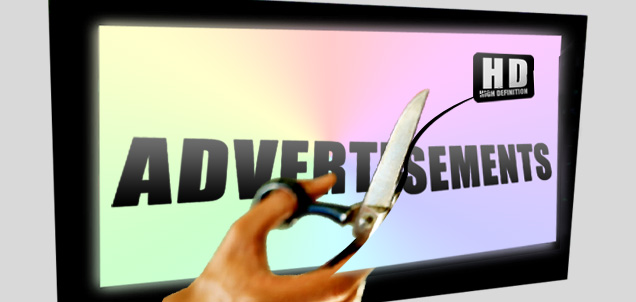
    While there is no denying the importance of advertisements in a world where subscribers are unwilling to pay subscription fee for channels, there exist many viewers who are tired of innumerable ads interrupting their favourite soaps or sporting. The good news for them is that their ordeal has been put to an end through HD channels. At least for the moment


    With various broadcasters launching HD variations of their channels, many upper-end subscribers are shifting to HD set-up boxes or subscribing to an HD channel. However, as there are no free lunches in the world, these channels come at a premium.


    What media planners think?

    Most media planners feel that since HD channels come with a certain cost attached to them, it is but obvious that they cater to a limited audience.  So, most channels are aware of it and their target group.


    Anita Nayyar

    Talking about the HD channels’ reach, Anita Nayyar, director (customer strategy), BCCL, agrees that not many avail of the facility. However, with digitization being made compulsory, especially in the four metros things might change. “Unlike the West, inIndia a broadcasters make most of their money through advertisements, and not distribution. So, if HD channels reach only a certain section, then how will a channel make its revenue?”


    Ms Nayyar added: “Today, one might pay a premium cost to watch an ad-free telecast, but in the near future, if availability doesn’t increase then channels won’t have an option but to make exception to the rule. They will be forced to show advertisements; however, they might charge a higher cost or have a limited time slot.


    On the other hand, Hiren Pandit, managing partner of Group M, felt that broadcasters with HD channels aren’t feeling the pinch, since they want to cater to a different audience: “Apart from the top-notch TG, most broadcasters have non-HD channels as well, so they capitalize through them. And over a certain period of time, they’ll be able to cut losses.”


    Agreeing with Ms Nayyar and Mr Pandit, Janardhan Pandey added: “It’s not just about reach or money, there is another reason which plays an important part in making HD channels a hit and that’s viewers’ psyche.  A person who might be able to afford HD package might still go for cheaper option because he/she might feel why pay more when the same can be watched at a lesser cost. For them, a few advertisements don’t matter.”


    Marketers’ foresight

    A brand reaches its target audience through advertisements and in today’s time one can reach a cross-section of society through television. Hence, most marketers spend their most of their ad-revenue on TV.


    Karthi Marshan

    Karthi Marshan, EVP & Head Group Marketing, Kotak Mahindra Bank said: “Our estimate is that of the 136mn cable and satellite homes in India, 44mn are DTH. Of these, about 8 lakh are currently HD subscribers. That is less than 2% of DTH homes and a tad over 0.5% of all C&S homes. Now whether this affects a marketer or not depends on who is her core TG. For the average brand with SEC A & B as their TG this probably does not matter much, but yes, premium and super premium brands do stand to miss out on what could be core TG due to the fact that some of the HD channels still don’t run advertising.”


    He added: “The next question that marketers will have to contend with is broadcasters expecting to be paid separately or additionally for these audiences. While brands will make the argument that we have bought programs or channel presences and hence our ads should carry seamlessly to HD as well, broadcasters may well have a tenable argument to the effect that they are in the audience delivery business, and a premium audience can and should command a premium for access.”


    Similarly, Ashutosh Tiwary, EVP- Strategic Marketing, Godrej, feels that one needs to observe the situation over a period of time to know what will happen next: “If the ratings and numbers of non-HD channels on which the media deals are based, get affected due to HD feeds, then HD channels will probably will have to air the ads to make up. However, if HD numbers prove to be totally incremental, then the converse might hold true. Overall, if viewer retention and engagement goes up due to higher quality and reduced clutter, HD might require specific treatment.”


    While Simeran Bhasin, marketing head, Fastrack and new brands at Titan said that as a consumer she loves to watch her favourite programmes on ad-free HD channels, but as marketer she’ll have to look for other methods to reach the TG. “HD is here to stay and marketers will have to figure out ways to reach out their consumers. Because with technology available everywhere, one can easily switch-off their TV sets to watch something online which is accessible without any interruptions. So, marketers will have to sooner or later adapt to survive.”


    Vipin Mehra, former sales head, Pidilite, said: “It’s very important for any brand to send constant reminders to its TG about its existence, especially in today’s competitive market. So, brands will prefer a channel which will help them in doing so.”


    Keeping their fingers crossed

    Creative people on the other hand aren’t very happy with HD channels as they affect their work/business, but feel that things will change for good.


    KS Chakravarthy, director, DraftFCB Ulka, felt that though one might want to enjoy an ad-free telecast, it’s just a passing phase because channels have to make revenue which comes from advertisements. KV Sridhar, National Creative Director at Leo Burnett, too agreed with Mr Chakravarthy, adding: “When and as HD channels availability increases, broadcasters might be forced to start showcasing advertisements as well.”


    Who’ll be the ‘real’ beneficiary?

    Advertisements or not advertisements, broadcasters have to follow a business plan and many feel that they’ll have to succumb to it. “One or two networks have begun taking a smattering of ads, and this will only grow, I am guessing,” said Mr Marshan. A business is run on revenue and if it cannot be generated, then changes have to be made. However, for the time being, the viewer can enjoy an ad-free programme.

    One will just have to wait and watch.


  • AdStrat: Limca ‘Pyaas Badhao’

    KV Sridhar, NCD, Leo Burnett


    1. Name of the Campaign: Limca ‘Pyaas Badhao’


    2. The Brief:

    Limca has been a long-standing brand with great equity among consumers, especially in markets like Punjab, Delhi, West U.P., Chennai and Andhra Pradesh.


    The ambition was to create a positive discontinuity for Limca that would build off the strong thirst-quenching & freshness credentials- while laddering upto a strong point of view as a brand philosophy.


    3. Research insights:

    While thirst quenching is the central attribute for the product, the brand needed to have a ‘larger than life’ emotional role in its story telling. With the feedback from the consumers, we had a well-researched and sharper take on what ‘freshness’ meant for the consumers. So we picked up this specific insight and created a communication interpreting thirst for a larger audience – the thirst to make it big.


    4. The thought process behind the creative:

    Limca’s took up the task of encouraging everyday ordinary people to aim higher and strive to reach their dreams – Where Limca quenches the physical thirst that one gets when one sets out to achieve more each time. And we encapsulated the thought in the call to action – ‘Pyaas Badhao’.


    5. Media vehicles chosen:

    We chose various mediums like TV, Outdoors, Print and Point of Sales to reach more and more people.


    6. Key issues kept in mind while executing the ad:

    It was important for us to strike the right balance between sincere efforts put in by the guy and the light-hearted ones. Also Kareena Kapoor’s tone and mannerisms were consciously kept towards the lighter side so that we don’t come across as preachy. The effort guy puts in the commercial also needed to capture the physical exhaustion he goes through to justify the well deserved and much needed bottle of Limca he gets in the end.


    7. Does the treatment do justice to the brief?

    Yes! The creative assigned a clear role to Limca – the previously unanswered question, Why should I have a Limca? – now stands resolved. Limca is about the physical thirst that one works up while chasing his emotional thirst (of his dreams)


    8. What according to you is the differentiating factor about the ad?

    Everyday people set goals for themselves and they go through a lot of hard work and perseverance in order to achieve it. With the powerful, real life message we as a brand have tried to talk to each one of those people inIndiawho thirst to achieve more and more.


    9. Market and client feedback:

    Early reaction is very positive from the market.