Tag: KPMG

  • Red FM partners with Chevrolet GiMA Awards 2012

    By A Correspondent


    93.5 Red FM has partnered with the Chevrolet Global Indian Music Academy (GiMA) Awards, the biggest annual celebration of Indian Music, for the third consecutive year. The awards are a pioneering effort to recognize Indian music, transcending genres in the country giving the music industry a unified platform to celebrate its talent.


    An initiative by Wizcraft International Entertainment, GiMA recognizes talent across various genres of Indian Music such as Bollywood, Classical, Ghazal, Devotional, Folk, Fusion, Carnatic and Contemporary.


    Nisha Narayanan, Senior VP – Projects & Programming, Red FM said: “GiMA stands for excellence and honours the best talent in the music industry and Red FM is all about playing the most contemporary super hit music. There is an unparalleled synergy between the two and we are delighted to be partnering each other for three years in a row.”


    “This time RED has decided to present issues to listeners musically with the on-going ‘Gaa ke Bajaa’. GiMA-nominated stars sang for Mumbaikars a unique song every day for their daily woes on ‘Mumbai Local’ hosted by RJ Rishi Kapoor and will be aired from Monday to Saturday between 5-9pm,” she added.


    “Today, GiMA has evolved into a major platform for the Indian Music Industry and brings together the entire fraternity, to honour and celebrate musical talent across various genres. This year, there is an interesting mix of nominees and I congratulate GiMA as they embark upon yet another musical journey,” said Javed Akhtar, noted poet-lyricist and Advisory Board Member of GiMA.


    Sabbas Joseph, Director, Wizcraft International Entertainment said: “We are glad to have Red FM as our radio partner once again, for the third edition of the GiMA. It has been a great association and we look forward to yet another spectacular celebration with them this year.”


    GiMA is the only Music Awards platform with a voting process based on peer-to-peer recognition. Nominees are selected by a jury panel of over 30 eminent members from the music & film industry and later presented to the GiMAAcademy for the final voting.


    The Academy’s votes are tabulated by KPMG, the process auditors for GiMA who determine the winners. To ensure a fair and unbiased evaluation, the Academy follows a thorough and meticulous voting process.


    While the country’s best talent comprises of the jury, as per a mandate by KPMG, all jurors do not adjudicate on categories/genres in which they are in contention. The illustrious Advisory Board members include Dr L Subramaniam, Hariharan, Javed Akhtar, Mukesh Bhatt, Prasoon Joshi, Pt. Shiv Kumar Sharma Rakeysh Omprakash Mehra, Resul Pookutty, Shankar Mahadevan, Shubha Mudgal, Vishal Bhardwaj among others.


    The Academy comprises over 300 members from the music & film industry encompassing industry stalwarts, music directors, producers, lyricists, singers, technicians, composers and leaders in the music business.


  • Paritosh Joshi: Everything I had to know, I heard it on my radio

    By Paritosh Joshi


    Three times this last week, radio has crept into my conversations, with three quite different people. Let me cite just one. We were talking about our preferences between playing music from our CD collection and dialing up a radio station. My guest was enthusiastic in his approbation for the radio, for a very simple reason too. “When you play music from your collection, you always know what’s coming up next,” he said, adding: “and what makes radio fun is it’s an endlessly unfolding sequence of surprises.”


    To which I would add that there is something rather relaxing about leaving the hard work of choosing what plays next to someone else, indeed someone else who is specialized in the art and craft of assembling and running through playlists.


    Got me thinking about radio, so it was the obvious next step to check out what the industry association offered up. Wasn’t hard to locate the website of the Association of Radio Operators for India (AROI). Promptly went there to discover – well, not a lot. Had to get something on the industry and thankfully, the good people at KPMG and FICCI had the latest “Indian Media & Entertainment Industry Report” available for download, which I swiftly proceeded to do. Here’s what I found.


    The Radio industry in 2012 is worth a mere Rs13 billion, ~ US $ 240 million and represents a mere 1.6 per cent of the overall industry of Rs 823 billion, ~ US $ 15 billion.


    In five years, it is projected to grow to Rs 29 billion, still just ~ US 540 million but representing a slightly more respectable 2 per cent of the overall pie. Evidently, this will require it to grow faster than the overall pace, which it is projected to do, clipping along at a 21 per cent CAGR even as the overall number doesn’t quite get to a 15 per cent CAGR.


    Dig deeper and you will find that a lot of the enthusiasm stems from FM Radio Phase III which will introduce private FM to as many as 227 new towns. So that is all it takes to make radio exciting, is it?


    Let’s take a look elsewhere and find out what radio is really about. A good place to start is any of these: Last.fm, “tunein.com” Radio or “shoutcast.com” Radio Directory. All of them are aggregators, like the portals of yore in some ways, which offer you an endless variety of radio stations from across the planet. An important aspect of what is on offer is the range of ‘genres’ by which the stations are classified. Here’s a list of the genres under the broad category, ‘Music’ on TuneIn:


    Adult Contemporary Country Hip Hop Rock Top 40-Pop
    Blues Decades Jazz Soul World
    Classical Easy Listening Oldies Spanish
    College Electronic-Dance Religious Specialty


    Just in case you might think this was a bewildering choice, I have news for you. ‘Sports’ offers a choice of 21 genres, including, trust me, ‘Fantasy League’.


    The point I’m making is quite simple really. Radio is all about precise choices and tightly defined audiences. Stations have an unapologetic and uncompromising commitment to their audiences and are only able to attract them because they stick to playlists that reflect the choices of their highly differentiated audience.


    What does the picture look like inIndia? Our earliest templates from what radio stations must sound like came from Akashvani, the one channel that catered to our teeming millions long before the brash youngsters arrived on the scene with FM Phase I.


    Akashvani was the ‘one size fits all’ / ‘any colour so long as it is black” radio station. From programming in two, even three, languages to carrying everything from mythologicals through adventure serials (anyone remember Inspector Eagle here?), to the News and various topical features, radio did everything – catered, as it were, to the lowest common denominator.


    Look at where we are now. Barring one station that chooses to play a purely Western playlist, all our major metros run a whole bunch of stations whose content is largely interchangeable, mainly because their music and even anchoring style – chatty, hip youngsters doing their clever, irreverent thing, are right out of a cookie cutter.


    Now before I get flamed out by radio folks pointing to the compulsions of recouping sizable licence costs, I must beg forgiveness and hide behind the defence of ignorance. What I do know, however, is this cannot possibly be the best way for radio to go forward.


    Radio must target tightly and then programme obsessively to that chosen audience. “Let me be just like everyone else” is not good marketing in any category, least of all radio. Keep in mind that radio will shift away from airwave frequencies to the Internet. That’s when the same-same (known, I believe, as Adult Contemporary) content will die anyway.


    I began by invoking Queen’s Radio Gaga and can’t help but quoting again from the same, wonderful song at the end.


    “You’ve yet to have your finest hour Radio – radio”


    Paritosh Joshi was until recently CEO, Star CJ. He has been a marketer, a mediaperson and a key officebearer on industry bodies. He is Strategic Advisor, Ormax Media. He can reached via his Twitter handle @paritoshZero
  • Beware! Walmart will not do business with corrupt businesses!!!

    By Rasul Bailay


    Walmart Stores plans to snap ties with companies that supply products to its stores if they are involved in any kind of corrupt practices, making it the first retail company to undertake such a stringent initiative in India.


    Stung by the bribery scandal that surfaced recently in Mexico, the world’s largest retailer has recently hired consultancy firm KPMG to conduct due diligence on hundreds of existing vendors as well as potential future suppliers to ensure that they are not involved in any unethical or illegal activity.


    Bharti Walmart, the equal wholesale retailing joint venture between the US retail chain and New Delhi-based Bharti Enterprises, sources supplies from vendors ranging from multinationals such as Hindustan Unilever and Colgate Palmolive to hundreds of small and medium enterprises.


    As companies in India, like in Mexico, are susceptible to pay bribes at various levels to get reams of licences required to start and operate businesses, Walmart wants to make sure they do business with only those vendors who don’t indulge in such activities.


    This is second such anti-corruption initiative launched by Walmart in India in recent months. Earlier, as reported by ET, the world’s number one retailer mandated KPMG to educate and create awareness among the Bharti Walmart’s staff about anti-corruption practices.


    As an American multinational, Walmart is bound to abide by the Foreign Corrupt Practices Act (FCPA), a US law that prohibits companies registered in that country and its subsidiaries across the globe from indulging in any sort of corrupt practices.


    A company spokesperson said this move was part of its “previously announced” worldwide review of its anti-corruption programme that was initiated in March 2011. “This includes developing and implementing recommendations for FCPA training, anti-corruption safeguards, and internal controls,” said the spokesman.


    The latest initiatives by Bharti Walmart are the direct fallout of the bribery scandal in Mexico, a person with the direct knowledge of the situation said.


    Earlier this year, a scandal surfaced in Walmart’s Mexico unit accused the subsidiary of bribing government officials in almost all the provinces in that country where the Bentonville-based retailer has operations. The US Justice Department has started its own probe against Walmart over the allegations of the systematic bribery to obtain licences in Mexico.


    In India, KPMG will scrutinise the vendors and classify them in three categories of red, amber and green, the person quoted above said asking not to be named. Bharti Walmart will continue to do business with vendors rated ‘green” by KPMG while it will immediately snap ties with retailers rated ‘red’. It will be Bharti Walmart’s choice to engage with vendors that are placed in the ‘amber’ category by KPMG.


    A KPMG spokesman said the firm does not comment on “company-specific matters”.


    The head of one of Bharti Walmart’s local vendors said his company has already passed the KPMG test more than a month ago and he added that such a scrutiny has happened for the first time in the last few years that his company has done business with the cash-and-carry joint venture.


    “It’s a very good step. It will help the retail industry if more and more companies undertake such initiatives,” says Saloni Nangia, president, Technopak Advisors, a consultancy firm. “Supplying goods to modern retailers are a huge opportunity and the vendors will not jeopardise this opportunity with companies like Walmart by not complying.”


    After unsuccessfully lobbying with various Indian governments to open the country’s closed retail sector, Walmart finally entered the country in 2007 through a joint venture with Bharti in the cash-and-carry or wholesale retailing segment, an area where India allows fully-owned overseas ownership. So far, Bharti Walmart has opened 17 Best Price Modern Wholesale stores in various cities, which sells multi-branded products, but only to other retailers and businesses.


    Source: The Economic Times
    Copyright © 2012, Bennett, Coleman & Co. Ltd. All Rights Reserved



  • @Media Abby: Mindshare bags Grand Prix; MEC, Lodestar sparkle too

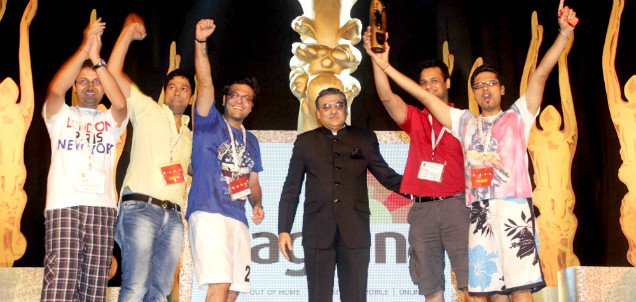
    The Grand Prix-winning Mindshare team with Jury Chair Ashish Bhasin


    By a Correspondent


    Having put an embargo on declaring the results of the Abby Awards before the event was to be staged, the Goafest Awards committee rewarded the patience of the media by calling in a press conference to declare the results much before it was made known to the audience at large. But the criterion to release it after 10pm remained -a diktat which was honoured wholeheartedly by all.


    In keeping with its attempt to play up the awards in as simple a way as possible, the committee was generous in stating that there was no big winner for the Media Abbys – a decision which was left for the media to decide. The reason was simple. For the first time the organisers had introduced a Grand Prix in the Media Abby awards and didn’t want that award to deter the attention from the other noteworthy winners. The points too were not awarded against individual metals, leaving it open for the media to decide the winner for the night.


    So if one went with Grand Prix as the criterion for the award, it was Mindshare that emerged as the No 1 agency having bagged the only single Grand Prix at the Media Abby. But then there were no points allotted for the individual metals leading to no clear winner at the top. The total count for Mindshare read: 1 GP, 1 Gold, 2 Silvers and 2 Bronzes (total metals 6).


    If one went by the gold count, it was MEC that emerged at the top, bagging 2 Golds, 1 Silver and 1 Bronze. Lodestar was next having bagged a total of 6 metals (the same as Mindshare) leading by 1 Gold, 2 Silvers, and 3 Bronzes. Madison Media Infinity was next as it bagged 1 Gold, 1 Silver and 1 Bronze followed by Starcom bagging just 1 Gold. Maxus follows with 2 Silvers and 3 Bronzes. (full table below)


    The Grand Prix was bagged by Mindshare for Surf Excel in the Best Use of Branded Content, which also won the gold in the same category. The GP was chosen from amongst the Gold winners. Other Gold winners include MEC that won two including one for Reliance 3G in Best Use of TV and the other for Best Use of Newspapers and Magazines. Lodestar UM won a Gold in Pro Bono Marketing for Bombay Psychiatric Society.


    Ashish Bhasin, chairperson of Media Abby said that the attempt this year was to reward the hard work put in by agencies, and therefore the Grand Prix. There were 16-17 per cent more entries from 31 agencies that were received this year, totalling 628 – last year the number was 530. It involved the efforts of more than 61 juries in putting this act together.


    Reacting on the agency’s win, Nandini Dias of Lodestar UM said: “I think we have performed very well this year. The total number of awards this year is only 27, which I guess is quite a small number. But within that we have won 6 awards, which is amongst the highest this year. So all in all, we are very pleased with our performance.”


    Also staged at the same night were awards from three verticals in the Creative Awards category including Design, Digital & Interactive and Direct. While the other categories would be announced on day 3, these three awards were awarded on day two itself. Ogilvy emerged the big winner as it won the Grand Prix for Fox Crime in the category – Online Integrated Campaign. DDB Mudra, BBDO, Leo Burnett were the other notable winners across the three categories.


    In all there are 101 awards that were given out in the Creative Abby awards on Friday night. An ecstatic Shashi Sinha said that the Creative Abbys were different this year as they received a record 4,250 entries as against 3,600-odd last year but what was remarkable was the participation of agencies from South Asia including Pakistan, Sri Lanka and Bangladesh. In fact the big winner tonight from South Asia was Grant McCann Erickson that won two Silvers across two separate categories.


    The awards were validated by research firm KPMG who have been doing it for two years now.


    Photograph: Shailesh Mule/Fotocorp


    Click here to view all Goafest 2012 stories


  • 9 Days to Go-Goafest | Shashi Sinha on the judging process

    Shashi Sinha, President of Ad Club Bombay and Chairman of Awards Governing Council has played a critical role in the cleaning up of awards at the Goafest which has come under a scanner post the incident of self voting and leaking of award results. Having started the process last year to bring credibility to the awards, Sinha is now upbeat on crossing the first hurdle and promises that this year the work showcased at the Fest will be high quality. Here’s Sinha throwing some light on the judging process.


    Yesterday evening, as I stepped out from the Direct jury discussions, I must admit that I felt overwhelmed by the quality of conversation this year. We have been encouraging the jury to engage in long discussion as that is the only way to understand the nuances involved in the work. More the discussion, more the clarity in judging the works.


    In fact, this year we have increased the number of jury in each category from 6 to 8 in the last year to 10 to 12 this year, thus having a better representation of people. We have fine-tuned the judging process and added more categories. We have also increased the number of Grand Prix that will cover all the 9 verticals (10 if you consider Print and Print Craft separately) where again role of conversation will play a critical role in finding ‘the work’. We have also moved to secret voting thus allowing the jury to make their choice without worrying about upsetting anyone from the fraternity which was the case when voting happened by show of hands.


    We had tackled these issues last year, but I would say that last year at the Fest the focus was to get the process right and clean up the issues that had marred the awards. We were focusing on bringing transparency to the entire judging process and make it tight and fair. The AGC and KPMG are now familiar with how things ran last year hence there is more comfort with the procedure and protocol.


    Now with process in place we are working towards improving the quality of work being showcased. I must admit that we have achieved this seeing the quality of discussion we have been having, I feel proud to be part of the industry.


    We have also been giving a week’s break after the R1 of judging just so that there is a gap and judging happens with a fresh perspective, without any preconceived notions. Also, while shortlists were announced earlier, we are not doing this now, so that even for judges as they walk in for R2 there is an element of surprise to see the shortlist, paving way for fresh conversation. As earlier, where all the shortlists were showcased at Goa, now we will only showcase the finalists, resulting in a better quality of display as the works would have gone two filtering process.


    In fact, we are finished with the R1 in all categories this year and almost in the last leg of judging with 3 categories left. Today, we will judge the interactive which I am looking forward to. It is an upcoming category and I am sure it would be fun being a part of it. This year, we have also had entries from South Asian countries and even though the number is not much but it is good beginning that will give the fest a larger footprint.


    We have also split the award to two days as that was a feedback we got from people. So the 3Ds- Direct, Digital and Design will be given on the night of April 20, the rest will be given on April 21.


    In my mind, the judging process may have become complicated and is time consuming but the changes have happened for good. Goafest is here to stay and each year we have bettered it, like this year we have an impressive list of international speakers, given the fact it’s been a rough year for the industry. We have also managed the location issue as the Zuri White Sands is a better location as opposed to the beach. I think we have got the formula right for the Fest now. Just keeping my fingers crossed.


    Click here to view all Goafest 2012 stories


  • Brand India saving grace in time of crisis

    By Namrata Singh & Reeba Zachariah


    There’s more to India than just its over-emphasized status of being the most populous democracy in the world. Random economic facts like India being the largest producer of milk, the largest consumer of sugar and spices as also the largest consumer of gold till last year, crop up now and then.


    But there have been achievements in the last few years which have put India on the world map. Over the last couple of years, India has been seen stamping its presence in the league of global leaders by the strength of its economic power.


    Consider these facts: The Tata Group is the largest manufacturing employer in the UK; Ireland’s richest person — Pallonji Mistry — is an Indian ; Coal India is the single largest coal producer in the world; India is the largest whisky manufacturer in the world and the Taj Group is the largest chain of hotels in Asia.


    Despite a generous trickle of negative news, the list of these positives is also getting bigger.


    Brand India today is not just about economics. A significant way in which

    India is asserting itself is through its soft power.


    According to Bhaskar Chakravorti, senior associate dean of international business & finance, The Fletcher School, Tufts University, this “soft” presence is India’s greatest asset in making sure it counts on the world stage.


    Household brand names such as Citigroup, Pepsi and Motorola are associated with an Indian CEO. Clearly, India has moved on from being a nation of snake charmers and appears to be on its way to become an economic power.


    Soft power aside, it’s also working its way through innovations. The list includes , Nano, the cheapest car in the world from Tata Motors; Aakash, the cheapest tablet PC in the world, priced at $46; and other cheap tablet PC initiatives by private companies.


    However, there are some missing pieces too. “India should surely move forward in the area of innovation where we can capture the value from our intelligent cheap resources from being just a provider of cheap labour. As of today, most companies (Apple, Microsoft, Google, Intel, etc), especially in IT, that generate maximum value from innovation, rely on resources from India and we are clearly not getting the deserved share of the value created,” said Thomas Kuruvilla, MD, Arthur D Little, a consulting firm.


    Richard Rekhy, head of advisory practice at KPMG, a global consulting firm, however, believes India has some way to go. “But India, with 100 companies of over a billion dollar market cap, has established its position globally which is why GE set up its first R&D centre outside US in Bangalore. At the same time, Indian banks have only 2 per cent bad loans versus 20 per cent in China,” he said.


    In the mid-90 s, on a representation made by Indian exporters, the government had removed the mandatory use of the ‘Made in India’ tag from goods exported. The law still exists on paper. Ostensibly, Indian exporters were embarrassed of using it then. But, today, no one is shying away from using the tag.


    Source: The Economic Times
    Copyright © 2012, Bennett, Coleman & Co. Ltd. All Rights Reserved


  • Double-digit growth in Jan for consumer electronics, cars & lifestyle retail chains

    By Sarah Jacob, Writankar Mukherjee & Neha Dewan


    Sales of consumer electronics, cars and lifestyle products bounced back in January after a tough quarter, raising hopes of a revival in consumer sentiment in 2012.


    Companies, including Samsung, Nokia, Hyundai Motors and Reliance Retail, have reported up to double-digit sales growth in products such as flat-panel televisions, smartphones, cars and fashion garments in January, as aggressive discount offers on the back of a recovering stock market and appreciating rupee lured shoppers back to the main street.


    “Not just consumer but overall economic confidence has also picked up in January due to a host of factors such as rupee appreciation, stock market and some policy-level changes like single-brand FDI,” said Adi Godrej, Godrej Group Chairman.


    “So the fear of declining stock market and rupee depreciation has been replaced by positive consumer sentiment, which is interlinked and is reflecting in healthy consumption,” he added.


    Shantanu DasGupta, durable maker Whirlpool’s VP (corporate affairs & strategy-South Asia), stated that sales increased across product categories in January. “While demand has been bullish across the country, certain pockets in the north and west performed exceptionally well. The summer looks positive,” he said.


    Carmakers too are upbeat after a tough 2011 when sales rose just 4.24 per cent. Companies are optimistic that new models and stable interest rates on loans could bring back the boom.


    “The new year seems to have started on a positive note,” said Arvind Saxena, Hyundai Motor India Director (marketing and sales). Hyundai saw a 12 per cent jump in sales to 33,900 cars in January.


    But marketers are still cautious. Several segments are still growing on the back of heavy discounts and end-of-season sales. Consumer sentiment not clear ye


    Analysts say consumer sentiment is not clear despite the positive signs. “The environment is still challenging. Interest rates are high and consumer sentiment remains uncertain,” said Anand Ramanathan, associate director at management consultancy KPMG.


    Sandeep Kulhalli, VP-retail and marketing at Titan Industries’ jewellery chain Tanishq, said: “Much of the positiveness is because the whole market is on discount offers.” In January, Finance Minister Pranab Mukherjee said this fiscal would be challenging.


    With GDP growth forecast being tempered to 7.2 per cent from 8.6 per cent, the economy had been wrestling with high commodity prices, sharp increases in interest rates and the Euro zone crisis, which dampened consumer confidence in the third quarter.


    All eyes are now on the Union Budget over whether the growth momentum in January will sustain over the next quarter by increasing disposable incomes or moves to boost demand.

    Rupee impact

    The rupee’s gain in January after a downward spiral in the second half of 2011 helped stabilise prices of consumer durables and electronics products, which require imported raw materials, and boost demand.

    Korean electronics maker Samsung’s flat-panel television sales grew 50 per cent over last January and more than 85 per cent compared with December 2011. “The rupee stabilising against the dollar is one factor for higher sales,” said Mahesh Krishnan, Samsung India VP-home appliances.

    Rupee depreciation had prompted several companies to increase prices by 5-10 per cent in several tranches late last year. The personal computer market bounced back to low double-digit growth in January compared with November-December when it shrunk around 15 per cent.

    Several brands also reduced prices that brought back the market into shape, said S Rajendran, Acer India chief marketing officer. New launches too helped boost demand. The country’s largest phone maker, Nokia India, launched five new devices under Lumia and Asha series that boosted sales in January, both over last year and compared with November-December.

    Sunil Dutt, MD of Research in Motion India, which makes BlackBerry smartphones, said smartphone sales increased 40-50 per cent since the second week of January compared with a flat November-December 2010. “The market is back to its natural growth momentum.”

    Bijou Kurien, president and CEO of Reliance Retail-lifestyle, said good performance of export and IT firms in the third quarter had a rub off on consumer confidence in terms of bonuses and increments. “This will help the upward trend continue through February and March,” he said.

    Reliance Retail’s lifestyle division posted an upswing in retail sales since January 7, reaching its peak over the Republic day weekend. J Suresh, MD and CEO of Arvind Brands and Retail, which makes Arrow, Flying Machine and US Polo in India, however, cautions that it would be best not to get carried away by performance in the end-of-season sales period just yet.

    Pushpa Bector, senior VP of another New Delhi-based mall, DLF Promenade, said: “People are getting far more conscious today. If they get a good deal, they tend to stock up.”

    – With inputs from Chanchal Pal Chauhan


    Source:The Economic Times

    Copyright © 2012, Bennett, Coleman & Co. Ltd. All Rights Reserved


  • Recent deals point to consolidation in media, say experts

    By Ravi Teja Sharma & Meenakshi Verma Ambwani


    Purveyors of news are rarely objects of news themselves, but India’s splintered media landscape has made news in the past two weeks. A flurry of deals or talk of more similar transactions have stirred up the sector in recent days, putting the spotlight on the possible motivations and some crystal ball gazing on what lies ahead.


    Last week saw a little-known chemical and fertiliser company Oswal Green Tech buying a 14.17per cent shareholding in New Delhi Television (NDTV) through two block stock market deals. Media reports said Mukesh Ambani-controlled Reliance was looking at buying into Network18, which runs CNBC India. Before him, younger brother Anil’s firm Reliance Capital increased its shareholding in UTV News, which runs Bloomberg TV, by buying out UTV founder Ronnie Screwvala’s 66 per cent stake.


    Industry executives and experts believe the consolidation trend will pick up momentum in 2012, separating the men from the boys in this highly splintered sector that is being increasingly hobbled by cost pressures and revenue challenges in a slowing economy.


    With more than 700 television channels in India and only few making money, experts believe consolidation in the industry is inevitable.


    “Consolidation has to happen. It is required,” said Mr Haresh Chawla, who recently announced his resignation as group chief executive officer of Network18 and Viacom18 after leading the company for more than a decade.


    One major problem for the industry is that it has been too dependent on advertising revenues, while subscription revenues have been elusive.


    Analysts say some signs of consolidation are already visible, as media companies cobble together bouquets of channels.


    “It is already starting to happen and going forward, media companies will look at building a portfolio of broadcast assets across genres, geographies and languages to create a national setup,” said Mr Jehil Thakkar, head of the media and entertainment practice at KPMG.


    The move towards regional channels, spread across geographies and genres, is triggered by the high growth in advertising revenues in the segment. Growth in advertising revenues in big cities has been around 12-13 per cent even in good times because of an inventory overhang, while regional advertising has been growing at more than 20 per cent for the last few years, say analysts.


    Analysts say this could explain why Network18 may be looking at Eenadu TV. “Network18 does not have any regional channels in its portfolio. This move will give them an entry into the fast growing regional market,” said one analyst. Buying Eenadu TV could give Network18 a bouquet of 11 regional channels.


    What may also be attracting new investors such as the Ambanis and foreign media companies such as Walt Disney is the promise of higher revenues and growth as the full benefits of digitalization kicks in. Collateral benefits of media ownership include access to content sources to power non-media business and potentially even some influence.


    In the case of Reliance Industries, which is setting up a national 4G broadband service, ownership of a media company will give it an edge over competition, with access to exclusive content from a bouquet of channels as well as web properties.


    The Cable Television Network (Regulation) Amendment Act, enacted two weeks ago, could help subscriptions finally become a good source of revenues for media companies, reducing their dependence on advertising. Today, a viewer pays as little as 50 paise to watch an hour of TV. Even this revenue does not reach the channels completely because of under-reporting by local cable operators.


    “This (the digitalisation law) will be a game-changer for the television business if well executed,” said Mr Sunil Lulla, managing director and chief executive officer of Times Television Network, which runs Times Now, ET Now and Movies Now channels.


    Meanwhile, some deals have already happened in the non-news segment, in anticipation of large changes in the sector. In July this year, Walt Disney Co said it is buying out rest of the 49.56 per cent stake in UTV Software Communications that it does not own from public shareholders and other promoters of the company for Rs 2,000 crore.


    “There is clearly a need for sellers to look at strategic investors. For the buyers, in the long term there is value in Indian media,” said Mr Nikhil Vora, managing director and head of research at IDFC Securities.


    India’s entertainment and media industry is estimated to grow at a compounded annual rate of 13 per cent to Rs 1,19,890 crore in 2015 from Rs 64,600 crore in 2010, PwC’s India Entertainment and Media Outlook for 2011 revealed earlier this year.


    The sector’s woes, notably because of high costs and low subscription revenues, coupled with the general weakness in the markets have cast a dark shadow over media stocks. The market value of NDTV stood at Rs 171 crore on December 21, 2011, the day Oswal Green Tech, formerly Oswal Chemicals & Fertiliser, acquired its stake for around Rs 24 crore.


    The company was worth Rs 215.66 crore on January 3, 2012, Rs 552.5 crore at the beginning of 2011 and Rs 3,300 crore at its peak in January 2008. Network18’s market value has dropped from Rs 1,540.7 crore on January 1, 2011, to Rs 535 crore as on January 3, 2012, while that of TV18 has dropped from Rs 2,122.4 crore to Rs 1,220.13 crore in the same period.


    The sector trades at price earnings multiple of 18.3 compared with nearly 19 for the telecom sector or 21.43 for the technology sector.


    While digitalisation will help increase subscription revenues and remove capacity constraints, it will also aid the process of consolidation in the sector by forcing smaller regional channels into the embrace of larger, pan-India players. Smaller regional channels are enjoying better advertising growth today, but after digitalisation they could face problems in getting themselves well placed in the line up of channels and may feel the need to be aligned with larger players either by selling out or through a distribution deal.


    “Larger players with a bouquet of channels will have more bargaining power with cable operators. Smaller channels will find it difficult to get into prime tiers,” said Mr Chawla.


    With valuations low, experts feel now may be the time for consolidation. “The overall multiples for media companies have been low for a while. This is a good time to buy. Broadcasting does present a good opportunity,” said Mr Thakkar.


    Source: The Economic Times

    Copyright © 2012, Bennett, Coleman & Co. Ltd. All Rights Reserved