Tag: KPMG

  • M&E CAGR of 11.5 per cent over FY15-FY19: KPMG


    By A Correspondent


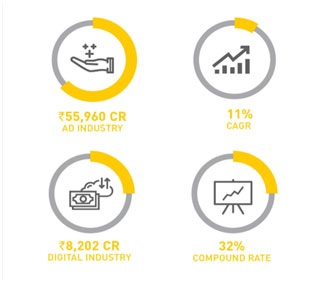
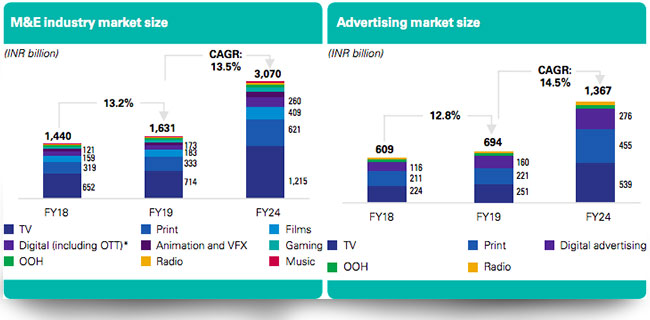
    The M&E industry in India posted a solid growth of 13 per cent during FY19 to reach a size of INR 1631 billion with a CAGR of 11.5 per cent over FY15-FY19. KPMG India launched the 11th edition of its Media and Entertainment (M&E) report titled ‘India’s Digital Future: Mass of Niches’.  Digital has been a recurring theme across all segments of M&E causing disruption in TV and print and fueling growth in digital advertising and gaming. The digital market is poised to become the second largest segment in India after TV, and also attract the maximum advertising spend by FY22.


    The report examines the evolution of India’s digital demography to 2030. It also covers the industry’s performance across segments, along with the key underlying themes and growth drivers.


    The study notes that there are favourable factors for both digital access (smartphone penetration and low data costs) and content supply (investments in original and regional digital content), which together will continue to drive up online consumption. The investments in regional content is an outcome of the growing importance of regional language markets in India, which is another key theme of the report this year. With the digital migration of English-speaking audiences almost complete, most new users coming online – and there are expected to be 500mn of them by 2030 – will access the internet in a local language.


    The 500mn new users by 2030 present digital businesses with an unparalleled market opportunity but not without some complexity. Segmentation will become important as the market evolves into a mass of niches. The report examines major consumer archetypes that together provide a framework to better understand the socio-economic profile as well as media and entertainment consumption patterns and preferences of the projected billion internet users.


    Said Girish Menon, Partner & Head Media & Entertainment, KPMG in India: “The theme of the report this year is India’s digital future – and although the term ‘digital revolution’ has become somewhat of a cliché, there can be no other way to explain the extent of digital integration in our lives today. With no major constraining factors, digital is expected to be a dominant force going forward and in FY23, it is likely to be the second largest segment after TV and attract the highest marketing spend among all media formats. In 2019, as digital behaviour evolves, there seems to be a growing consensus that in the future, subscription models will have a greater role in monetisation of digital platforms. Further, evolving technologies are also presenting opportunities for companies in the media and entertainment industry to achieve greater operational efficiencies.”


    Added Menon: “In the coming years, it will be hard to ignore the pessimistic signals emerging from global economies but they will not have long term impacts on the industry and are unlikely to alter the strong fundamentals and momentum of M&E consumption, especially digital, in India. As an industry, we will remain upbeat on the prospects for both.”


    Said Satya Easwaran, Partner & Head Technology, Media and Telecom, KPMG in India: “By 2030, we estimate that there will be a billion people in India who are connected to the internet. Our initial hypothesis is that the user will primarily be a non-English speaking, mobile phone user, from a developed rural area/ non-metro urban setting who is increasingly willing to pay for content online. But why is the profile of India’s digital demography relevant? The digital disruption has forced a pivot of business models in media and entertainment from an erstwhile B2B2C model to a D2C one. And therefore, segmentation and demographic, psychographic and behavioral profiling will all become increasingly important, as they have historically been in other consumer businesses.”


    Click here for Media Report


  • KPMG mandates On Purpose for ADB project

    By A Correspondent


    On Purpose has been signed on by KPMG in India for a two-year period, as part of a larger mandate from Asian Development Bank (ADB). As the communications agency, it has has been charged with implementing an integrated communications programme for consumer awareness and behavioural change for solar rooftop adoption across seven states/Union Territories.


    Said Girish Balachandran, Managing Partner, On Purpose: “Given our expertise in the clean energy sector, we are excited to once again help drive behavioural change by punching up the narrative on solar roof top adoption. We have recently bolstered our team strength with senior hires who will help us deliver on this pan-India integrated communications programme.”


  • Here’s how the various M&E reports compare…


    By Indrani Sen


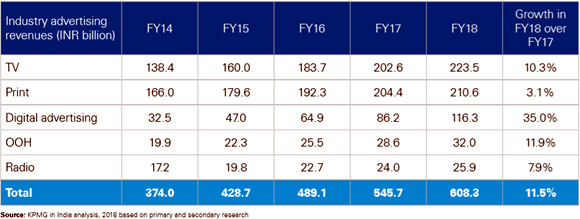
    The Media & Entertainment Industry has got another report which was released last week by KPMG, the longstanding partner of FICCI whose tie-upended in 2017 when FICCI awarded its M&E report mandate to EY. So, the Advertising and Media industry has now several reports to refer to for estimating the size and the growth of Indian Advertising Industry. KPMG has reported the following estimates and predictions for Indian Advertising Industry:


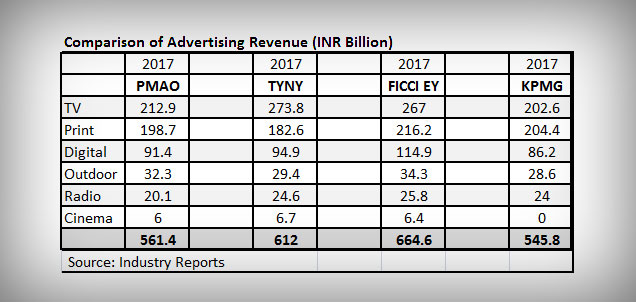
    How do these reports compare when it comes to estimating the total advertising expenditure in India? The following table will give the top line information:

    Comparison of Advertising Revenue (INR Billion)  
      2017 2017 2017 2017
      PMAO TYNY FICCI EY KPMG
    TV 212.9 273.8 267 202.6
    Print 198.7 182.6 216.2 204.4
    Digital 91.4 94.9 114.9 86.2
    Outdoor 32.3 29.4 34.3 28.6
    Radio  20.1 24.6 25.8 24
    Cinema 6 6.7 6.4 0
      561.4 612 664.6 545.8
     Source: Industry Reports    

    The above analysis shows us that TYNY and FICCI reports estimates are in one bracket with PMAO and KPMG reports in another bracket with a large gap in estimates between the two brackets. For two consecutive years, the TYNY and PMAO reports were released during the same week in January. TYNY closed the estimate for total ADEX 2017 at Rs 61,263 crore with a growth rate of 10% over 2016and PMAO showed a growth rate of 7.4% in 2017 over 2016 and estimated the total ADEX as Rs 53,138 crore in 2017.

    Digital is going to have the highest growth in ADEX as perthe two studies, 30% according to TYNY and 25% according to PMAO. KPMG has pegged the Digital growth rate even higher at 35%. Both reports predict 13% growth in TV AdEx and 4% (TYNY) and 5% (PMAO)in Print AdEx. KPMG has reported lower growth rates for both TV (10%) and Print (3%).

    PMAO and TINY both agree that the highest growth after Digital will be achieved by Cinema (20% TYNY & 14% PMAO) which has the smallest share of the advertising pie. The FICCI EY 2018 report shows statistics for cinema industry revenue from domestic theatrical, overseas theatrical, cable and satellite rights, digital/OTT rights, in cinema advertising and home video.  KPMG has not been reporting in cinema advertising in FICCI reports over the last few years as they have been clubbing it with digital/OTT rights and home video as ancillary revenue stream and they have continued with that trend in their own report. As the FICCI EY report 2018 has shown the detail break ups and I have taken the liberty of using the in cinema advertising revenue as a part of FICCI-EY total advertising projection. However, the growth rate cannot be estimated without access to KPMG’s research data.

    Both have shown similar percentile growth rates for OOH and Radio (15% TYNY & 10% PMAO). The KPMG report also predicts good growth rate for OOH (12%) and Radio (8%). The FICCI report and the Group M report are closer in terms of overall projections, but they differ in details but more or less agree about trend of growth in digital media.

    Before KPMG, we also had the DAN Report with estimates closer to PMAO and now KPMG. The Pitch Madison report and the DAN report are closer in terms of overall projections, though they differ in details, particularly in case of digital media


    Source: DAN Report 2018

    The gem of an insight which KPMG has been able to mine and share with the Advertising & Media Industry is reflected in the following quote: “This year, we saw telecom-media-technology (TMT)convergence take centrestage and the emergence of media ecosystems…. media companies need to take a relook at their strategies and business models to successfully operate and thrive in the new paradigm.”

    This insight adds a tremendous value to the KPMG 2018 report and warns the industry about the significant changes which we are going to experience about how media is created, distributed and consumed by Indian consumers.  We will not be able to borrow a business model from another country, as the Indian model will be unique. Our law makers, particularly TRAI needs to tighten their belts and churn out rules and regulations capable of dealing with the changes in media consumption along with the ongoing changes at a pace which will keep pace with the TMT convergence.


    The KPMG report and executive summary can be accessed at :https://home.kpmg.com/in/en/home/insights/2018/09/india-media-entertainment-convergence-report.html


  • Mobile to fuel apparel & accessory buys


    By A Correspondent

    India has emerged as one of the world’s fastest growing fashion markets over the years. Traditional brick-and-mortar brands are increasingly adopting digital channels for engaging with and selling to Indian consumers while maintaining their competitive positioning. In order to help these brands understand and eliminate reasons for consumer drop-outs in their path to purchase of apparel and fashion accessories, late last month, Facebook released the next installment of the research report under its Zero Friction Future programme titled “Eliminating friction in Fashion path to purchase”. The third in the series, the reports are authored by KPMG, based on primary research and insights basis the survey conducted by Nielsen for various industry verticals, across different cities in India.


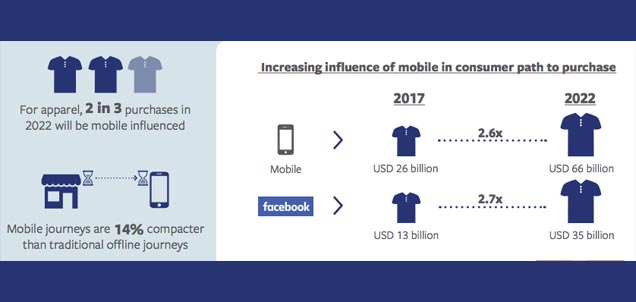
    According to the findings of the report, friction accounts for 19% of consumer dropouts, in apparel category, and more than two-third of this friction is caused by media. In accessories category, friction accounts for 22% of consumer dropouts, and around two-third of this friction is caused by media. It further highlights that by 2022, seven in ten fashion accessory purchases in 2022 will be mobile influenced, nearly half of which will be driven by Facebook, amounting to a USD 110 billion sales opportunity. Additionally, mobile will influence two in three apparel purchases, amounting to USD 66 billion opportunity for brands, half of which will be driven by Facebook.


    Commenting on the launch of the report, Pulkit Trivedi, Director, Facebook India, said: “Fashion spectrum in India has evolved so considerably, that the apparel and accessory market is projected to reach USD 102 billion and USD 155 billion individually, by the year 2022. Today, mobile has become central to the way brands market and sell their products and engage with customers end-to-end. With our Zero Friction Future report, we aim to help fashion brands adopt relevant marketing strategies and reduce friction in consumer journeys across multiple touch-points, leading to improved conversion rates and increased revenue opportunity.”


    The study reveals that mobile enabled purchase journey is 14% and 25% shorter than offline journeys of apparel and fashion accessories respectively. The friction faced by consumers can be reduced with the higher use of mobile in the media mix, creating ~USD 14 bn worth of potential revenue for fashion brands by 2022. It also suggests that mobile can reduce media friction by 3 percentage points for apparel category and 4 percentage points for accessories, allowing the brands to tap into ~USD 5 & 9 billion market opportunity respectively.


    Speaking on the report findings, Sreedhar Prasad Partner & Head –E-Commerce and Internet, KPMG in India remarked: “The fashion consumption story of India is evolving and demand for quality fashion products is on the rise. This phenomenon is not limited to Tier 1 markets, but also Tier 2 and below towns, on account of growing per capita income, mass urbanization and increasing access to digital content. Rising affluence of the middle income group is creating demand for aspirational brands. In order to capture a larger share of mind, time and wallet of their target customers, fashion and e-commerce brands should continuously evaluate their marketing mix to ensure presence where the customer is. The report aims at exploring the customers’ path to purchase and associated friction throughout their journey.”


    Added Ashish Karnad, Executive Director – Marketing Effectiveness, Nielsen India: “We wanted to measure the influence and impact of media touch-points on consumers’ path to purchase route – right from the time they have a need to buy an apparel or fashion accessory, to finally buying it. We designed the study to get a zoomed-in view on how buyers are now interacting with various media touch-points. Unsurprisingly, mobile is playing a key influencer in the entire journey. While other touch points have their own roles to play in a buyer’s journey, Mobile helps in reducing friction at each stage. We hope this study will give a strategic view on the opportunities being missed by marketers due to media friction and bring in further optimization.”


    According to the research, top friction areas for different demographic cohorts vary and hence marketers need to customize their marketing strategy accordingly. Some key consumer friction areas across touch points include:

    :: Gender based: Both men and women display different drivers for entering the purchase funnel. Men seek clear next steps after watch and advertisement. On the other hand, women are more susceptible to ignore ads if they fail to either capture their attention or provide relevant information. As they both ahead in the purchase journey, credible information and better ‘value for money’ become important decision making parameters for both men and women. While buying fashion accessories, women are more sensitive to price and lack of trust at point of sale. Men, however, are more likely to ignore an advertisement at top of the funnel, but seek lucrative offers and detailed information for evaluating their shortlisted products.

    :: Age specific: 35-49 year old are more sensitive to inaccurate targeting of ads, or lack of clear call-to-action. However, younger age group of 18-24 year old have a higher propensity to drop-out at the intent stage. Highest friction is accessory purchase across age groups is observed at the top of the funnel. Across age groups, more than 1 in 3 consumers shopping at retail stores are likely to change their purchase decision. Consumers from all age groups discontent for lack of options to compare and choose from, lack of attractive offers and expectation mismatch at point of sale. This creates an opportunity for e-commerce players to deploy full-funnel marketing strategies by addressing these friction points. Brand’s communication strategy implemented in tandem with e-commerce strategy could capture leads at top of the funnel and facilitate their movement through the purchase funnel.

    :: Socio-economic: Both NCCS A and NCCS B consumers display comparable tendency to enter and complete the apparel purchase journey. However, more than three fourth of prospects abandon apparel purchase at either awareness or intent stage. NCCS B consumers are more likely to abandon an accessory purchase after entering the purchase funnel as compared to NCCS A, and half as likely as NCCS A to transact online. Contextualization of content and call-to-action mechanism could extend the proposition of online medium to NCCS B consumers.


  • Jagran.com launches campaign to measure City Liveability Index

    By A Correspondent


    Jagran.com has launched a new citizen connect initiative – My City, My Pride – to measure and drive development of cities through public participation. The key objective of the campaign is to produce data-driven insights that will help raise citizen awareness and generate ideas of change through collaboration leading to an actionable plan for development of cities.


    During the first stage, the programme will invite citizens to score their respective cities across five fundamental pillars – health, infrastructure, economy, education and safety. These scores will be analysed by knowledge partners – KPMG and ICFJ, along with Jagran’s editorial teams. Towards the end of this stage, a City Liveability Survey Report will be published in partnership with KPMG.


    Commenting on the launch of the new campaign, Apurva Purohit, President – Jagran Prakashan Ltd. Said: “Being cognisant of our responsibility to be enablers of change, with this initiative we aim to provide robust data driven insights and help solve civic problems at a local level. The idea is to encourage city development in an interactive way through public participation – since no one knows a city better than its citizens. We hope that this platform will act as a catalyst for change by bringing together citizens and administrators, thereby forming communities that identify core issues and develop solutions for a better city”


    Added Bharat Gupta, CEO, Jagran New Media: “As a media organisation, we are the voice of the people, and so we want to provide them a platform where they raise their concerns and we can find a solution to their problems in a collaborative way. My City, My Pride is one such initiative from Jagran New Media, where we are engaging users using online and offline mediums and enable action through user participation.”


  • 10 Trends Shaping Digital Media


    By A Correspondent


    KPMG, in association with NASSCOM, Kalaari Capital and YourStory launched a report titled – ‘India Trends 2018: Trends shaping Digital India’, that delves into the key internet trends that are likely to shape businesses in India in 2018.


    We publish here the 10 trends as listed in the report.

    1. ‘Mobile-first’ consumption for media, gaming, entertainment generating significant avenues for consumer outreach and engagement.

    2. Digital future lies in the Indian language internet users

    3. Rise of social and content-based commerce

    4. Ecosystem creation by internet business players to increase monetisation avenues

    5. Emergence of ‘alternate commerce’

    6. Emerging sectors – Health-tech, Agri-tech and Ed-tech

    7. Emergence of Indian brands accelerated through digital platforms

    8. Robotics pushing boundaries

    9. Digital payments going mainstream

    10. Frontier-tech solutions like AI, ML and blockchain likely to gain precedence


    The report is available at https://assets.kpmg.com/content/dam/kpmg/in/pdf/2018/05/IndiaTrends2018-Trends-shaping-Digital-India-Internet.pdf


  • KPMG’s new customer engagement framework identifies key consumer trends

    By A Correspondent


    KPMG in India has unveiled a new, distinctive customer engagement framework designed to help businesses understand the increasingly complex and multi-dimensional forces that influence decision-making and preferences of today’s ever-evolving consumer. It leverages the Five Mys, Customer Wallet and Generational Surfing that gives businesses fresher and deeper insights on consumer behavior, helping deliver a multilayered view that strengthens the race for the customer.


    Said Aditya Rath, Partner, Management Consulting at KPMG in India: “Transactional data, traditional market research and demographic profiles alone cannot give a comprehensive view of what customers are doing and why. Every day, new influences impact consumer motivation, behavior and consumption, and eventually what makes the customer open his wallet. Understanding these multi-dimensional forces is essential and the report shares a new, intelligent, multi-dimensional model that uses predictive insights to help companies understand the journey and who their customers really are”,


    Giving the India perspective, he adds, “In India, the foundations for a thriving, connected economy are in place, and the shifts in consumer spending power are already underway. What’s following now is a new set of consumer motivations, expectations, aspirations and an evolving customer wallet. Understanding the wide variations among Indian consumers, as well as the cultural context behind larger changes throughout the country, can help businesses understand how to make effective progress in India.”


    Notes a communique: KPMG’s inaugural ‘Me, My Life, My Wallet’, is a global analysis of how the seismic influences of socio-political and economic shifts, accelerated mass adoption of new technologies, and mobility are upending fundamental beliefs around what drives consumer behavior. The Five Mys focus on five key dimensions, or behavioral drivers: My Motivation, My Attention, My Connection, My Watch and My Wallet. Each of the Five Mys in isolation tell only one aspect of a customer’s story. Together they enable companies to navigate the complexity of consumer decision-making, and build a richer understanding of what affects changing customer preferences and needs.


    Other key findings specific to India are:

    – 41per cent of people in India trust online reviews and 80 per cent of people in India like technology and apps to automatically filter information for them in handling info overload

    – 51 per cent of people in India glance at their phone without being prompted by a notification at least every ten minutes and 57% of people in India would rather lose their phone than their wallet

    – 72 per cent of people in India open their phone to relieve boredom and 88 per cent of people in India use WhatsApp

    – Percentage of boomers that use devices regularly: 88% use android phone, 73 per cent use laptops, 62 per cent use desktops, 21 per cent use mobile Wi-Fi hotspots, and 15 per cent use iPad

    – 68 per cent of Indian total wallet share is spent on necessities rather than luxuries

    – 57 per cent of people in India feel a need to keep stress under control to stay healthy


    The baby-boomer echo effect in India is often referred to locally as “reverse mentorship”. Culturally, Indian consumers aren’t wired to question their elders and aren’t expected to teach or instruct them, but there is an expectation of sharing, facilitating and introducing. When demonetization was introduced in November 2016 and the country experienced a short-term cash shortage, the flight to digital payment methods was rapid and significant, and the adoption of this new technology was very heavily influenced by millennial children reverse mentoring their parents.


    Companies that identify and engage the digitally progressive millennial, and create locally relevant and intuitive experiences that are primed for sharing across the long tail of generations in the same households, have the opportunity to be a part of what’s set to become an accelerating period of technologically fueled change across the nation.


  • KPMG’s new customer engagement framework identifies key consumer trends

    By A Correspondent


    KPMG in India has unveiled a newcustomer engagement framework designed to help businesses understand increasingly complex and multi-dimensional forces that influence decision-making and preferences of today’s ever-evolving consumer. It leverages the Five Mys, Customer Wallet and Generational Surfing that gives businesses fresher and deeper insights on consumer behavior, helping deliver a multilayered view that strengthens the race for the customer.


    Said Aditya Rath, Partner, Management Consulting at KPMG in India:“Transactional data, traditional market research and demographic profiles alone cannot give a comprehensive view of what customers are doing and why. Every day, new influences impact consumer motivation, behavior and consumption, and eventually what makes the customer open his wallet. Understanding these multi-dimensional forces is essential and the report shares a new, intelligent, multi-dimensional model that uses predictive insights to help companies understand the journey and who their customers really are.”


    The Five Mys focus on five key dimensions, or behavioural drivers: My Motivation, My Attention, My Connection, My Watch and My Wallet. Each of the Five Mys in isolation tell only one aspect of a customer’s story. Together they enable companies to navigate the complexity of consumer decision-making, and build a richer understanding of what affects changing customer preferences and needs.


    Other key findings specific to India are:

    – 41per cent of people in India trust online reviews and 80 per cent of people in India like technology and apps to automatically filter information for them in handling info overload

    – 51 per cent of people in India glance at their phone without being prompted by a notification at least every ten minutes and 57% of people in India would rather lose their phone than their wallet

    – 72 per cent of people in India open their phone to relieve boredom and 88 per cent of people in India use WhatsApp

    – Percentage of boomers that use devices regularly: 88% use android phone, 73 per cent use laptops, 62 per cent use desktops, 21 per cent use mobile Wi-Fi hotspots, and 15 per cent use iPad

    – 68 per cent of Indian total wallet share is spent on necessities rather than luxuries

    – 57 per cent of people in India feel a need to keep stress under control to stay healthy


  • Digital infra will boost OTT: KPMG


    By A Correspondent


    KPMG in India brings this report at a crucial juncture when the era of on-demand content has reached a tipping point with consumption shifting to the mobile screens and going ‘mass’ – particularly on the back of a successful 4G roll out. OTT consumers will demand seamless access to services, compelling stories and value for money.  As the OTT landscape gets hyper competitive, organisations which are able to tick all the above boxes may stand a chance to emerge as the preferred platforms for consumers. To pivot from their traditional businesses, media organisations would need to commit zealously to an organisational transformation initiative, which aims to harness the collective energies of all stakeholders towards a single minded ‘Digital First’ cause.  Right from telling the digital story to the internal stakeholders to implementing the digital architecture on ground, each step in the digital transformation process holds the key to survival and potentially to success in the market.

    The report gives an insight into the key themes of the Indian OTT market, key pillars of success for an OTT platform, roadmap to a digital transformation journey divided into four significant phases from a digital vision and strategy, customer proposition, business design and execution planning. The report also delves into operationalisation of the actual pivot of a traditional technology organisation into a digital avatar, highlighting two nodal frameworks for digital enablement, strategy and architecture realisation. The last section highlights the critical considerations for implementation of digital initiatives.

    Commenting on the OTT evolution in India and road ahead for digital and digitising businesses in India, Girish Menon, Co-Head, Media and Entertainment at KPMG in India, said “OTT consumption in India has reached a tipping point, with the 4G rollout and related data wars which have resulted in a dramatic and rapid growth in internet penetration and video consumption.  This has also fundamentally altered the consumption demographics and patterns, with OTT viewership becoming more mass.  Organisations can no longer afford to take baby steps and will need to wholeheartedly commit to build out their digital businesses.  However, pivoting to a digital business requires a change in organisational DNA and a ’digital first’ mindset. Building a digital business is an evolving process and organisations would need to adopt a systematic approach balancing scalability and flexibility with speed to market and customer centricity.”


    The ‘Over the top’ (OTT) video consumption in India has rapidly evolved over the last year, given the advancements in digital infrastructure and efforts by platforms to create compelling content for consumers at price points which provide value.


    Market potential

    Growing internet penetration and data consumption is likely to help increase digital advertisement spends in India at 30.8 per cent CAGR between 2016 and 2021 with mobile advertisement spends and social media aided digital video advertisement spends expected to grow at 50.9 per cent and 40 per cent CAGR between 2016 and 2021 respectively.

    The OTT landscape in India is punctuated by the following key enablers, around which both the growth of the segment as well as potential success of platforms are woven.


    Digital infrastructure

    The mass launch of 4G services by Reliance Jio in H2, 2016 and subsequent launches by incumbents was an inflection point in India’s data story. This disruption led to a rapid surge in data usage on the back of promotional offers by all leading telecom operators.

    Further, other enablers such as Government of India’s ‘Digital India’ initiative, growing usage of affordable smartphones, rising internet penetration in rural India and rapid growth of digital payments has further strengthen India’s digital infrastructure. This has resulted in video dominating data consumption, which is expected to continue to grow in the near future.


    OTT content consumption and evolving trends

    The OTT content consumption is evolving from niche to mass based content and long form content is gathering traction. The increased popularity of large screens and investments in original content creation is further driving the consumption. Live streaming has emerged as a focus area for OTT players, with the sports genre especially attractive from a viewership and monetisation point of view.


    OTT distribution

    The OTT distribution landscape is dominated by own platform players, although social media platforms YouTube and Facebook still constitute a major chunk of video viewership in India. With telcos betting big on data, partnerships with telcos is also emerging as an important medium to reach a fairly large, and a mass user base.


    Monetisation models and associated challenges

    While Advertisement Video on Demand (AVOD) remains the primary source of monetisation for the OTT players in the country, the Subscription Video on Demand (SVOD) and Freemium models are seeing traction, largely on the back of compelling content, including sports. Sponsored content has also emerged as an important monetisation tool, with brands baking in the advertising messages into the content itself.

    The growth in monetisation though, is partially held back due to challenges around digital viewership measurement and rampant content piracy which must be addressed in order to realise the true potential of OTT platforms and build a sustainable model in the future.

    Further, digital video businesses require high investments, and returns are currently not commensurate given the still evolving business models. Media organisations are currently attempting to bridge the gap between market share acquisition and economic viability, as they attempt to build long term sustainable digital video businesses.


    Changing consumer demands mandate companies to transform digitally

    When users stream videos on their mobile phone through an OTT platform, little do they know the entire digital infrastructure that is set in motion to ensure that the content streams flawlessly. It is this internal infrastructure that defines the ‘OTT player of today’, and is a key ingredient for ensuring continue success in the competitive OTT landscape.

    The adoption of digital infrastructure has evolved from resistance towards digital technologies to their mass adoption. Success in the digital world is dependent on various factors such as time to market, customer experience and the will to constantly innovate and change with the relevant developments in the market. This requires OTT platforms to identify and design digital solutions comprising strategies to predict, influence and respond to customer behaviour.

    Building a successful digital video business in the long run requires sustained commitment to the digital transformation process and a ‘digital first’ mindset.


    Digital transformation rests on four pillars

    The path to digital transformation encompasses a holistic approach including; clearly defining the organisation’s digital vision and strategy, thorough understanding of the customer proposition, accurately assessing the business design and, finally, carefully designing the execution plan.


    Key drivers for successful digital transformation:

    :: Innovation focussed mind-set: Innovation has become hygiene for OTT players, given India’s crowded platform market. For a fruitful digital transformation, it is critical for the leadership to evaluate their business through a number of facets and set up in-house labs to drive both internal and consumer focused innovation. Companies could also look to set up incubation centres in the form of accelerator programmes, or partner with third-party innovation labs.

    :: Integration across organisational DNA: Digital transformation requires a holistic strategy that permeates across the entire organisation including front, middle and back offices. The OTT organisations should move past silos that have a traditional media (for eg: TV) bias and adopt a ‘Digital First’ mindset.

    :: Data analytics: Data has evolved in type, volume, and velocity with rapid uptake of digital technologies. It has become a new currency and key for OTT players to understand the consumers and decode their viewing patterns. Big data technologies along with advanced analytics help answer key content and engagement questions, enable quick reaction and draw meaningful and actionable insights to fuel the customer facing productivity and enhance overall performance of the platform.

    :: Data protection and IP security: With OTT business models inherently digital in nature, data and content security has become even more paramount. It is vital for the platforms to protect data and content across systems, devices and the cloud.


    A successful transformation needs a strong technology foundation

    A strong technology foundation acts as the backbone of any digital transformation initiative.

    The pivot from a traditional IT to ‘today’s’ digital function is underlined by an architecture that is agile, flexible, and is able to deploy technology frameworks to give quick insights for decision making around customer behaviour and content strategies.

    The ‘all-in’ commitment of the entire organisation to the cause is a non-negotiable and is a precursor to embarking upon the technology deployment.

    In conclusion, the digital transformation journey of a media company comprises a marked strategic shift, with customer centricity at the core, and an internal thinking process that needs to change the organisational DNA into ‘Digital First’ mind-set.
  • Khelo, India, Khelo!


    Republished from a KPMG-Google report on online gaming titled ‘Online Gaming in India: Reaching a new pinnacle’


    The advent of India’s online gaming industry can be dated back to 2000s, when console and PC gaming brought several middle-income group Indians on digital gaming platforms. During mid 2000s, online gaming was largely in the form of social games. This adoption was facilitated primarily through global games by international developers. Indian development ecosystem acted primarily as service providers for international developers. Since then, India has been a volume based story enabled by rise in internet penetration and increase in smartphone user base.


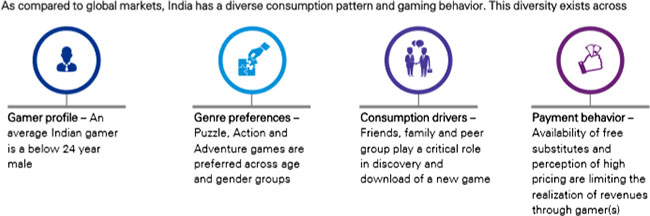
    Online gaming market realised impressive volumes with 120 million online gamer(s) and market value estimated at ~ 290 million USD in 2016. The key driver of market volume was proliferation of low cost smartphones amongst urban and rural population. The monetisation is realized through revenue streams like in-app purchase, pay per download, subscription service etc. by gamer(s) and in-app advertisement, incentive based advertisement etc. by ecosystem. Today, monetisation is dominated by advertisers and publishers.


    However, challenges like limited local games development and monetisation of gamer(s) are still restraining the high potential. In recent years, local internet ecosystem has initiated the course correction by end to end local game development and adoption of digital payment solutions.


    The online gaming consumers market, characterised by large volumes, is rising fast in terms usage and monetisation. The local development is characterised by highly skilled manpower and expertise.


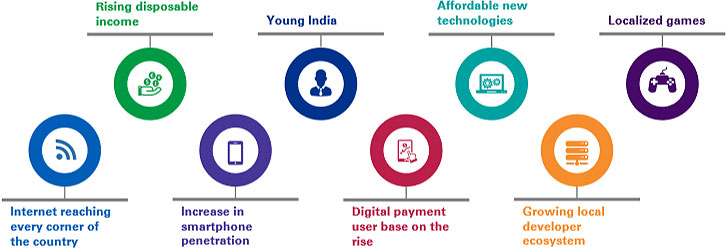
    In the future, India is expected to move towards value driving consumption and comprehensive local development. The industry is expected to gain momentum and reach a market value of 1 billion USD and ~310 million online gamer(s) by 2021. This ~28% CAGR growth will be driven by:


  • India Shining for Mobile Internet


    By A Correspondent


    India is projected to have 23.6 crore mobile internet users by 2016, and this will leapfrog to 31.44 crore by 2017. This was reavealed in a report by the IAMAI & KPMG “India On The Go – Mobile Internet Vision Report 2015”.


    The report also points out that India will have over 50 crore internet users by 2017. As of June 2015, internet users in India stood at over 35 crore. According to the report, 2G user base in India is projected to decline in the coming years as more and more customers are expected to migrate from 2G to 3G. The 3G user base in India is rapidly gaining market and is projected to grow at a CAGR of 61.3 per cent from 2013-17. There were approximately 8.2 crore 3G subscribers in India by the end of year 2014 and the number is projected to reach 28.4 crore by end of year 2017.


    Commenting on the release of the IAMAI-KPMG report, Ashvin Vellody, Partner – Management Consulting, KPMG in India said, “With more than 30 crore internet users, India has the second largest internet user base in the world. But the internet penetration at 19 per cent (approx) is poor and limits the potential. The next wave of growth in penetration of internet will driven by adoption of mobile internet. The mobile internet growth story would be written by the large population in the hinterland and meaningful and compelling content/ use cases would enable adoption of mobile internet.” He further stated, “It is imperative to connect Indians through internet of which the mobile internet will play a key role since reliable accessibility will be the killer app that will bind the internet ecosystem together, increase adoption and enable innovation in business models around voice and data services.”


    Speaking at the launch, Dr Subho Ray – President IAMAI reiterated that growth in the internet space will come from the non-metro and rural areas. He said, “While the urban market has not reached its saturation point, it will be non – metros and rural India that will be driving internet growth in India. And this is where mobile internet will be playing a pivotal role. The advent of low cost smartphones coupled with low mobile tariffs has empowered consumers in the hinterland to use data connectivity and we will seeing more usage of internet from these areas in the months to come.”


    As per the Report, rural India is steadily moving towards a more Internet friendly and exploratory mind-set. As of 2014, the Active Internet User (AIU) base in rural India was 6.7 per cent of the overall rural population of 90.5 crore and accounted for 61 million users. 4.4 per cent of the total rural population used a mobile device to access the Internet; a figure that stood at a meagre 0.4 per cent in the year 2012.


    The Report has found that the rural growth story in the coming years will likely be written by 2G technologies. 3G and 4G may continue to be primarily an urban phenomenon for the next few years. Increased Internet enabled device penetration, decreasing handset prices and data plans tariffs are helping to create a suitable environment for a rapid growth of Mobile Internet in India, with rural India set to take the lead. As of June 2014, nearly 50% of the AIU in rural areas accessed Internet using mobile phones, Community Service Centers (CSC) and Cyber Cafes. 38% of the Active Internet Users use Mobile phone as the main access point.


  • Way to go for Franchising


    India, by witnessing huge demographic transformation fuelled by the consumption led growth, stands as an attractive destination globally for the franchising fraternity. Consumerism is growing rapidly aided by high population, increasing household incomes over the last two decades. Overall, the Indian economy has witnessed a structural shift from an agricultural based economy to a service based economy.


    Franchising as a concept has been prevalent in India since a long time. However, shifting consumer trends including growing preference for branded products, global exposure and use of international brands is driving adoption of the franchising route to growth. According to KPMG in India estimates, the franchising industry is expected to quadruple between 2012 and 2017. There is scope for the franchising industry to contribute to almost 4 percent of India’s GDP in 2017 (assuming 6 percent Y-o-Y GDP growth between 2012 and 2017), growing from a current estimated contribution of 1.4 percent of GDP. This is also expected to create job opportunities (including to create job opportunities (including additional 11 million people by 2017).


    KPMG report released at CII Franchising Summit
     

    At CII’s Franchising Summit, Bhaskar Bhat, Managing Director, Titan Industries Ltd, Ninad Karpe, Chairman, CII Maharashtra State Council and CEO & Managing Director, Aptech Ltd, SKV Srinivasan, Executive Director, IDBI Bank Ltd, Alan Branch, President – Global Development, Global Franchise Partners Pvt. Ltd, Australia and Dinesh Kanabar, Deputy CEO, KPMG in India released the report titled ‘Collaborating for growth’: Report on Franchising in India 2013.
    According to the report, the franchising industry is expected to quadruple between 2012 and 2017. There is scope for the franchising industry to contribute to almost 4 percent of India GDP in 2017 (assuming 6 percent y-o-y GDP growth between 2012 and 2017), growing from a current estimated contribution of 1.4 percent of GDP. This is also expected open up a deluge of job opportunities both (including both direct and indirect) for an additional 11 million people by 2017.


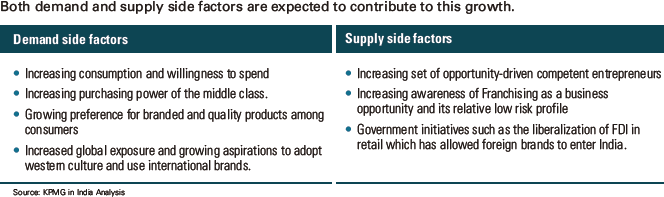
    While increasing consumption, willingness to spend, growing preference for branded products, global exposure and use of international brands are driving the demand side of franchising, increasing set of opportunity-driven competent entrepreneurs, growing awareness of franchising as a business opportunity and its relative low risk profile are driving the supply of new franchisee units.


    Even as market potential is huge in the retail sector, KPMG in India estimates that the franchising opportunity would be relatively high in consumer services, food service, and education and health and wellness sectors. Cumulatively, these sectors have a potential to add 1 lakh franchisees in the next five years. Franchising in health and wellness sub-segment is estimated to grow six times the current penetration.  With FDI in single and multi brands retail now permitted, this segment is expected to emerge as one of the high potential service sectors within franchising to cater to the prevailing consumption boom. KPMG in India estimates that over 43000 franchisee establishments (valued at USD 36 billion) may be required by 2017.


    “The franchising industry in India has potential to grow to USD ~50 bn in the next half decade – around four times the current size. This is also expected to create job opportunities (including both direct and indirect) for an additional 11 million people by 2017. Franchising will be extremely critical for brands to scale up quickly and profitably in India. While policy and financial institutional support is important – the critical growth enabler is going to be the extent of self regulation that franchisers introduce for sustainable and profitable growth of their franchisees.” said Anand Ramanathan, Associate Director- Management Consulting, KPMG in India.


    Ninad Karpe, Chairman, CII Maharashtra State Council and CEO & Managing Director, Aptech Ltd said. That franchising is a popular way to grow through collaborative efforts, reaching territories where opportunities exist. The umbrella of a popular brand aided by power packed processes makes for a sound business proposition.


    Overall, the franchising industry in India is expected to witness an above average growth rate over 2012-17 across sectors. The growth would be fuelled by rising income and expenditure levels of the young population along with the recent FDI policy changes, economic and socio-cultural developments.


    Franchising Opportunity: Sector Overview

    As per KPMG in India analysis, retail and consumer services sectors are expected to emerge as high potential service sectors within franchising to cater to the prevailing consumption boom. Non-traditional segments such as food service, jewellery, pre-schools etc. also present a huge opportunity for growth in franchising.


    Despite the challenges the country presents, there have been many successful case studies of franchising in India. From franchisors such as Aptech and NIIT which have pioneered the franchising model in India to new age franchisors  such as Gitanjali and VLCC who are adopting innovative expansion models within franchising, many brands/companies are adopting the franchising model to expand and provide a consistent and quality experience to its end customers.


    Franchise Business Models

    Firms that have created an easily replicable business model, often choose franchising as their preferred route to expand their operations and scale their brand. However, within the realm of franchising, there are several franchising models that differ significantly in terms of operation, control and legal scope. While certain operating models within franchising – such as area development and regional master franchisee – appear more attractive than others, diversity in Indian consumer preferences and degree of localization impact the choice of the final model to be adopted.


    Attractiveness of India in Global Franchising

    Many international brands have already entered India and are adopting the Franchise route to growth. Global brands such as Domino’s, KFC, Baskin Robbins have adopted variations of the franchise models to grow in India. Many other international brands are contemplating entry plans into India.


    However, India’s growing but fragmented market can seem chaotic and difficult to deal with. The international franchisors consider the following factors as challenges while entering into India:


    > Transparent Legislative framework: Due to no specific rules or laws promulgated in India to address the functioning of franchisors and franchisees, international players perceive a higher risk to business continuity.

    > India is not ‘one’ market: Entering a new market becomes more complicated in case of India where consumers hail from diverse cultural backgrounds. Several cultures, languages and socio-economic diversities make it a set of multiple markets. It becomes a challenge for an international franchisor to understand all diversified tastes and preferences, to establish and expand business in India.

    > Bribe and corruption: International franchisors remain threatened with the bribe and corruption cases in India. Due to no legislation around ‘anti-bribe’ in India, as in the US; it not only discourages the expansion strategies of many brands, but also impacts India’s credibility in the international market.


    Franchise Industry Survey – Key Highlights

    While the survey carried out by KPMG in India corroborated the above key reasons for growth in franchising and operating models, it also brought out certain key findings as mentioned below:


    > Franchisors believe that they are providing adequate support to their franchisees; however the latter are expecting more support particularly in the post launch phase of operations. Response to another related question in the survey suggested that almost half of those interviewed were not willing to take up additional franchisees with the existing franchisors suggesting certain level of dissatisfaction.

    > While franchisors adopt franchising model for growth, many entrepreneurs are opting for the franchising route as it primarily offers a safe and relatively easy way of establishing business and is expected to offer higher than market levels of profitability. This trend necessitates the need for franchisors to educate the franchisees on potential profitability and investment returns from the business. Sectors such as jewellery where payback periods could range between a minimum of four to five years are particularly vulnerable to such mismatch in outlook.

    > Real estate rentals are posing a major challenge for the success of franchising. Collaborative efforts between franchisors and franchisees in structuring business models that are sustainable even under such conditions could address this concern.


    Regulatory Scenario

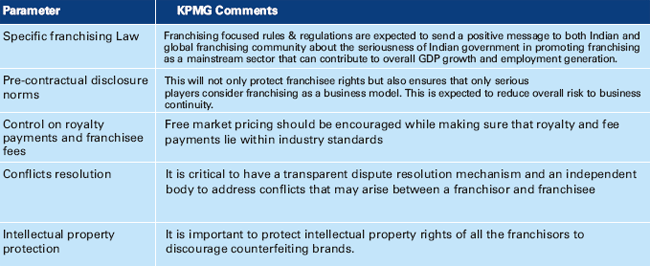
    While franchising sector in India, per se is not regulated, there are multiple laws which have an impact on franchise operations. Any future regulations in this area should allow conducive growth of franchise systems along with protection of franchisee rights. KPMG India’s comments on a few areas of regulations have been highlighted in the table below:


    Source: KPMG in India Analysis


    Financing the Franchise Business

    One of the key criteria of franchisors while selecting a franchisee is investment capability and financial strength. This in itself is an indicator of how difficult it is for a franchisee to tap the debt route to investment. Most lenders do not treat franchisees as a separate customer segment and usually cover them under the ambit of the broader Small & Medium sized Enterprise (SME) sector classification. This gets particularly magnified in case of ‘services’ franchising where there is an absence of asset base on which a collateral can be taken to provide a loan.


    A comprehensive and collaborative mechanism is once again needed to address this issue. While lending institutions can offer innovative financial products to franchisees, adequate support from the franchising ecosystem including that of franchisors and industry associations is necessary to make this a success.