Tag: Jaldi 5

  • Jaldi 5 with Vivek Srivastava, Digital Head, Colors: Jhalak online pageviews will double this year

    There’s more to the new season of Jhalak Dikhhla Jaa, the Indian version of the BBC show Strictly Come Dancing, than just the airing on Colors from June 1. The channel has planned an online offensive that will not just extend the on-air excitement, but also engage internet users with the show and its stars. MxMIndia posed a few questions at Vivek Srivastava, Digital Head of Colors, to get a sneak peek.


    01. We’ve been hearing about the various online activities that you are doing for Jhalak. How critical is online for the promotion of a television programme? Or are you looking at attracting an entire set of people online who may not necessarily watch it on telly?

    Digital is a critical part of our promotion strategy. This year, we are taking the brand Jhalak and our promise to make Non-Dancers dance to the next level. Throughout the season,  we will release one dance tutorial every day for our viewers. This will be from different dance forms , for example, Seven Steps salsa etc. These videos will be released every week on our website, Jhalak app and social media. To make this more exciting we have tied up with Dancewithmadhuri.com – Madhuri Dixit’s online dance academy. Viewers can now learn, practise and upload their videos. Madhuri Dixit will herself select the winners and one lucky winner will get a chance to dance with Diva herself.


    Apart from this, we are also launching a microsite for Jhalak and soon we would also be launching a Jhalak app. Also, there will be lots of action happening on the day of the launch – June 1, as viewers will get a chance to come face-to-face with Madhuri on our website and Facebook page at 11:30am. In the afternoon (3pm), we have a 20-min web premiere on YouTube.


    02. Some of the content that you have on the internet requires fast broadband speeds, which is a reality only with people in offices… at least in India. What were the numbers like last year, and what do you expect it to be this year?

    Connectivity has been improving –  Smartphone/tablet penetration, 3G and access to Internet has gone up significantly in the last few years. We did 100 million pageviews on our website last year. We are looking at doubling these numbers this year.


    03. In terms of audiences, how many of them from India and abroad? And in India, where are the people coming from? Could you share some of these statistics?

    At over all level approx 30 percent of our consumption is from outside India. In India, the consumption is across states and towns the Tier 2 however are slowly gaining in numbers and we expect them to be a sizable number this year.


    04. In terms of revenues, are you going to be having the same set of sponsors, or will your digital presence have an all-new sponsor set?

    The on-air title sponsors will get preference since they have a existing association. However, we do approach a larger set for digital sponsorship.


    05. Until last year the TV show (JDJ) winners were decided by votes received via phone (smses). Will this year’s edition be factoring in votes received via the app?

    A JDJ viewer has the option of voting through sms and the website, last year too, the SMS voting option was incorporated in the JDJ app. We will have the same option this year as well.

     

  • Exclusive! Jaldi 5 with Rob Norman, Chief Digital Officer Global, GroupM: There’s no doubt mobile internet will be massive in India

    Meet Rob Norman. In August last year, he took charge as Chief Digital Officer of GroupM Global from the position of CEO of GroupM. The job requires him to oversee the world’s largest buyer of online media with more than $5 billion in billings.

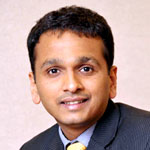

     

    Prior to taking this role in 2012, Mr Norman served as CEO of GroupM North America where he was responsible for the general management as well as strategic and administrative activities at each of GroupM’s four media agencies-Maxus, MEC, MediaCom and Mindshare.  He assumed that role in March 2010 after serving since 2007 as head of Group M Interaction.


    Mr Norman has worked for more than two decades in the media agency business in a wide range of increasingly senior roles, mostly at MEC, where he was named UK Chairman in 2003.  He joined the company in 1986 prior to the merger, when the agency was known as CIA. In 2002, following the merger of CIA with Mediaedge, Mr Nomran was appointed Worldwide Director of New Business Development.


    On the eve of his visit to India, Rob Norman addressed MxMIndia’s question and gave a special message to the fraternity in India.


    A message for India as you embark on your visit here?

    Millions of young people with a desire for media and connectivity is the most fertile imaginable ground for growth. Your telecom industry and the infrastructure it creates are an outstanding asset and if they provide access to bandwidth and devices they will be rewarded by high engagement from consumers, content creators and brands. Together this is a god recipe for economic growth.


    01. As you oversee the the world’s largest buyer of online media, are you happy with the way the online media is progressing globally?

    Yes, in broad terms. There is a direct relationship between e commerce as a % of GDP and online as a % of advertising. E-commerce depends on infrastructure in connections, payments and in retail and other sectors. Where those things are slow to develop so is online advertising.


    02. Why do you think has the progress in markets like India been so slow?

    Infrastructure. India has limited PC broadband distribution and limited smartphone penetration as a % of all phones. Not much is going to change the former but Airtel, Vodafone, Samsung and Android are changing the latter. There’s no doubt in my mind that the mobile internet will be massive in India.


    03. In markets like India, consumption of mobile media has far overtaken that of computer-based. Given the growth of the smartphone market, do you see mobiles ahead of traditional large-screen-based internet?

    Yes. The only barrier is keeping the price of data to the consumer down. There is a huge social and economic upside to a vibrant connected mobile population and wide distribution of devices, content and commerce depend on data pricing


    04. One of reasons why the lack of quality advertising on digital in India is that the monies which agencies earn on digital is much lower. There aren’t million-dollar TV commercials and there are much lesser spends. Is this the scene globally? How do see things changing in markets like India?

    This is an Indian challenge but a global one. The fragmentation of audiences and service / device proliferation allows sharper targeting by behaviour, geography and time. The economics of this are good for brands and it would be a terrible thing if brand owners invested more in the agencies that manage these channels and the assets required to populate them.


    05. Do you see the return of full-service agencies in digital given that clients are desirous of all services under one roof?

    No. Structurally, the full service model is dead. It needs to be replaced by client mandated behaviors that align the financial incentives of disparate experts.


  • Jaldi 5 with Robert Bakish & Sai Kumar: It’s fair to say that we have a pipeline

    Robert Bakish
    Sai Kumar

    Most of their broadcast products in India attained leadership position in the genre that they operate in. In recent years, some of them have managed to attain that in record time like the Hindi GEC Colors or English comedy channel Comedy Central.


    Viacom has had a fantastic innings in India thus far and much of that growth has been possible due to its win-win partnership with entertainment hotshop Network 18 in India.


    On the sidelines of FICCI Frames 2013, MxM India caught up with Robert Bakish, President & CEO, Viacom International Media Networks and Sai Kumar, Group CEO, Network 18 to find out what’s making the network surge ahead in India and what’s in store next. Excerpts:


    01.  With Viacom being a major player, what is your top-level view of the content business that exists in India?

    Robert Bakish: Like most things there are some common elements and there are some unique elements where content is concerned. Generally speaking, it’s about creating content that an Indian consumer is very engaged with. They could be watching their content anywhere, so in that sense the dynamics remain the same. The next end is funded partially through advertising and distribution and through consumer products. Now some of the specifics to India are different. Today everybody is talking about digitization and that’s a seismic shift in the television distribution marketplace in India, which quite frankly has been a long time coming. This has been a market where you have to pay for distribution where you really didn’t get paid. In most markets around the world on that basis they are making a lot of money from distribution. So we look forward to the day that happened in India and thankfully it’s happening now. So that’s one big unique element and that’s certainly to the benefit of leading content companies. So unless you have very strong content and brains you may not be able to do that and that’s what Viacom 18 is in a good position at.


    Another thing about this market is that there are many countries within India itself. These are still early days for exploitation by major content companies like us but there are tremendous opportunities ahead.


    In a sense you are going to have many countries in the Viacom 18 umbrella itself given Hindi and the various languages under ETV. So you do not have to look elsewhere for refashioning content in other languages…

    Robert Bakish: One of the advantages of Viacom 18 being a global company is that we can cast a very wide net for hit content in terms of format etc. But at the same time we can focus on the Indian market whether it is something that came out of our national set of services or may be some regional opportunity… or maybe from Eenadu with which we are still doing some regulatory diligence but there are already some national formats that are travelling to regional it’s only a matter of time before some regional format moves over to become national on Colors and maybe even exported to the US, the UK, Middle east etc. So there’s pretty broad opportunity that exists there.


    02.  Like you’ve said, Colors and the regional channels have had some successful content to their credit. Are you looking at taking that content and repurposing that for airing in international markets?

    Sai Kumar: That has already started whereby content from Colors is now available across 130 countries. That’s pure syndication. Now if you see, syndication is largely for the Indian market oversees. But if you look at the local market we have already started shipping formats. Uttaran has entered Africa as a format so it is going to be completely produced. Now that’s a green shoot that we have seen in the past two months. We are already having conversation around 3-4 of our soaps… so reverse migration has started. By which I don’t mean only syndication, I mean format migration which could be a very healthy revenue line for us.


    03.  In terms of revenues, what are the numbers you are expecting post-digitization?

    Sai Kumar: I’ll tell you what our wish-list is: two years down the line we will be happy if Viacom 18 gets about 45 per cent of its revenues from domestic distribution and about 10 per cent of revenues from international distribution…so a range of over 30-60 per cent is what we are looking at over the next two-four years which is something that will change our P&L dramatically. And I dare say that we are on track.


    04.  Comedy Central has been a big success in quick time. Are you looking at playing that content across other languages in India?

    Robert Bakish: Comedy Central is our third great global brand behind MTV and Nickelodeon. If you look at the last 12-18 months with Comedy Central, we have not only lit up India but also Russia, South East Asia, Africa, Latin America etc. So Comedy Central is a big deal for us. The brand obviously has a great ability to connect with the consumers all over the world, and obviously the services are different all over the world. So we will be launching additional services in India; we are not going to say what they are going to be but there will be more opportunities.


    05.  In terms of new offerings from the Viacom stable, can we look forward to more channel offerings…

    Robert Bakish: We are not here to announce any new products but it would be fair to say that we have a pipeline. From a Viacom standpoint, India is a very important market with a huge potential ahead of it. We know that part of accessing that potential will involve creating more products… we launched a couple of new national products last year including Comedy Central, Sonic etc and it’s safe to assume we will launch additional services in the future.


    Robert Bakish (pic source: blog.viacom.com)


  • Jaldi 5 with Sorbojeet Chatterjee: Events like half-marathon deepens bond with readers

    It’s been a hectic fortnight for DNA’s vice-president – marketing, Sorbojeet Chatterjee. The women’s half-marathon was a show of strength for the newspaper and one wrong move could lead to much embarrassment. But, as those who visited the event tell us, there is much reason to cheer for Sorbo, as the CMO is better known as, since not only was the event a big success but it also offered reason to cheer as a positive rub-off to the newspaper brand and as a successful sports-cum-cultural property. He took some time off to respond to MxMIndia’s questions a day after the event.


    01.  It’s been an all-new team at the helm at DNA… organizing a successful event like the half-marathon must be a marathon effort?

    A new team also brings in some fresh thinking and added dynamismThis year the mandate was to scale up on all fronts.


    Since the event has been fully sponsored, wouldn’t it have been nicer for the entire entry fee to have gone in to the charity cause selected?

    We are the only half-marathon of stature that contributes 50% of the registration fees to charity. Going forward we plan to make the scale bigger by adding more NGOs and a larger corpus


    02.  From the point of view of the benefit to the brand, would you say DNA benefitted?

    A newspaper brand needs to be a relevant and integral part of the local milieu. Marquee events like a women’s half-marathon allow us to create special engagement opportunities that deepens the bond with our readers. Besides differentiated and innovative offerings are the best way to widen the reader family. Thus a one-off women’s half marathon will add some value to the brand, but the larger objective is to create a steady flow of events and engagement platforms that will strongly seed the brand in the “DNA” of our readers.


    03.  We’ve seen events run by publications becoming big and standalone properties of the publishing company (eg Filmfare, Femina awards). Do you see the Stayfree I Can Women’s Half-Marathon also becoming that?

    ‘I Can’ is an extremely powerful ethos and the long-term strategy is to extend it to various round the year engagement opportunities for women across multiple interest areas. There will be always be a finite limit to how much one standalone event can grow. However, the moment we create a strong umbrella brand the opportunity to scale up is infinite


    04.  We know it’s too early, but a couple of things that you would like to do to make it bigger and better next year?

    We would definitely like to grow in scale in terms of participants in the existing market as well as expand to newer markets. While we have almost doubled the registrations this year – there still exists a tremendous potential that can be tapped. Besides, every year we have been looking at ways of bettering the “runner experience”. We need to continue to innovate to further broadbase participation.


    05.  DNA is also published from other cities. Will you take this to other publishing centres (like Bengaluru, Pune, Ahmedabad etc)?

    This is only the second year. This year the focus was in terms of scaling up the event in Mumbai. The integration with Zee TV helped get national awareness. The logical step is to take it to the other ‘DNA’ markets in due course.


    It’s unfortunate that other media vehicles do not report on what their competition is doing… even if it’s for a good cause. Your comments?

    This year the media coverage for the event has been fantastic. Every news channel has covered it extensively. They realize that if an event is an integral part of the city – they must be true to their consumers and cover it.


  • Jaldi 5 with Sunil Manocha: Aggressive expansion is the motto

    By Johnson Napier


    Sunil Manocha, who has been responsible for Sales, Business Development, Television Production, Rights Distribution and Sponsor Servicing at Nimbus Sports for over two decades, has taken charge as Chief Operating Officer. Mr Manocha replaces Yannick Colaco who has moved on to join NBA India as its MD.
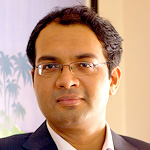
     

    Post his elevation, Mr Manocha speaks to MxMIndia on what would be his priorities in his new position at the company and what viewers can look forward to from the network in 2013-14.


    01) What would the new role entail for you at Nimbus Sport?

    Nimbus Sport is looking at aggressive expansion across all key verticals including Event Management, Rights Distribution, Sponsorship Services and TV Production. The immediate focus of the role would include working closely with the team to drive this growth.


    02) The past few months have seen the emergence of competitive players in the space who are jostling to provide equally competitive services such as yours. What are your plans to resist competition?

    We are entering a new, exciting era in the sports business. Clients want turnkey solutions from partners who have proven international expertise, yet have an intimate understanding of the local market. Nimbus Sport has built these capabilities with a track record of success, and is a truly integrated sports management firm.


    03) What are some of the hot and emerging properties that you would be looking at in 2013?

    At this point in time, marquee events in our kitty are spread across sports, including cricket, golf and hockey. We have Asia Cup, the star-studded multi-nation ODI tournament for Asian cricket teams, lined up in early 2014. In addition, there is the Hero Indian Open, the premier golf championship on the Asian Tour, and World Series Hockey, the world’s first franchise-based hockey league. We have relationships with multiple stakeholders including global sports federations, rights holders, sponsors and broadcasters and are constantly exploring opportunities with them. Watch this space for more.


    04) Any immediate changes one could expect at Nimbus Sport – in terms of talent, strategy, etc?

    We will continue to build a strong pool of professional talent as we move ahead with our aggressive expansion plans across verticals. Golf Event Management will be a key focus area and we will soon be making announcements about our new acquisitions in this space.


    05) What is the growth you expect your division to throw up for 2013?

    We are looking at robust growth with all the planned activities over the next financial year.


  • Jaldi 5 with Amit Nair: Khana Khazana should do well with digitization

    Indians love food. Yes, it is a fact and Khana Khazana is a proof of that. In the early 1990s what started as a show with Chef Sanjeev Kapoor as host and in 2010 turned into a full-fledged channel just certifies it. India’s first-ever food channel is all set for re-branding and give its viewers better and new shows to look forward to. MxMIndia’s MEGHNA SHARMA quizzed the channel’s business head, Amit Nair, to get a taste of channel’s strategy. 


    1.After the new and refreshed content, what can the audiences expect from the channel?

    The content strategy is very info-entertainment oriented. All our shows are very chatty, conversational and interactive unlike regular cookery shows. We are delighted to announce the start of four new shows on air all back by research and by understanding the pulse of women by interacting with them extensively. These our shows are Food Ka Mood, Bacha party, Breakfast express and Ab Har Koi Chef. Each of them have been designed with specific needs in mind. In the coming months we plan to launch a lot of new shows that will also target a broader TG. There will be more travel + food related to reality shows and will dish out more theme based or concept driven shows every quarter keeping our TG in mind.


    2. So how has been the ride so far?

    Khana Khazana has always been synonymous with great food experiences and has a unique place in the heart of homemakers and cooking enthusiasts. Hence, since our evolvement to a 24-hour food channel the response has been very heartening.


    3.Is there enough audience for a food channel in India? Where do you see the genre in the next few years?

    Food as an offering on television has been growing since the days of Khana Khazana. GECs had cookery shows, then we started having food shows within the regional space. Subsequently even news channels got into it and on the GEC front it evolved from instructional cooking to food reality. With dedicated food bands on lifestyle channels the time was ripe for a dedicated food channel and Zee was the first to do so. In mature television markets, there are 3 -4 dedicated food channels so we are very bullish about this genre. With digitization and greater monetization, specialized offerings like food are expected to do very well.


    4.But given the limited viewership, do niche channels like yours see enough advertisers?

    While our core target audience is female, we have seen enough and more men venturing into the kitchen to try out recipes that are different from the norm. So while we may have FMCG and durables as main advertisers there is a lot of interest from home and lifestyle related brands to advertise.


    5. With competition growing, what is the marketing strategy of the channel?

    We will be closely working with our DTH/cable partners to increase interactions with consumers. Focus predominantly will be on digital and activations and build close viewer connect.


  • Jaldi 5 with Ashwin Padmanabhan: Going retro for differentiation

    By Ananya Saha


    Over the past 12 months, 92.7 Big FM has seen a phenomenal growth in the Delhi market with the average share growing to 11.3 from an average share of about 6. Ashwin Padmanabhan, Business Head, Big 92.7 FM speaks to MxM India about the station’s remarkable growth in Delhi, and other markets.


    01. What has contributed to this growth?


    Late last year we did studies and research to understand the unique and mass position of Big FM in Delhi. And with this research we decided to go retro. We took a clear-cut and distinct positioning of a retro music station with ‘Hit The, Hit Rahenge’. Within eight weeks of changing our music positioning along with a new RJ line-up that was more mature and new local shows, we saw a trend of increasing listernership. So, sampling started happening. In the 52nd week, we started averaging to 11.2 points from the previous 6. It tipped in second week of 2013, when three FM stations in Delhi stopped airing for a week. It became a two-horse race between Fever and us. What is heartening for us, we tipped Fever, which has been leading in Delhi, in this week. Our share went upto 33 percent in that week.


    02. Is Delhi witnessing faster growth than other markets where Big 92.7 is present?

    We have grown across markets. As per the Q2 and Q3 IRS figures, we have seen significant growth and continue to be leaders in Hindi-speaking markets. We have actually grown further from last quarter to this quarter. In Bengaluru, we have been growing and are a strong No.2. We did see a dip about an year back, and we have clawed back since then. We have been a very strong No.2 in Kolkata but now, our big shows like Breakfast Show are consistently No.1 in Kolkata. In Hyderabad, we have traditionally been strong, so we are maintaining that. In Chennai, we are witnessing quarter-on-quarter growth. According to IRS and the last round of RAM that happened in Chennai, we came at No.3.


    We have seen overall growth happening across our markets.


    03. Has the growth resulted in higher ad revenues?

    The growth has resulted in the brand becoming more visible and audible, and top-of-mind for our potential advertisers. We are seeing a larger offtake from advertisers. A lot of this is also being driven from smaller markets where SMEs and large brands from Tier II markets are taking to our network in a big way. Many of them are actually using our network to launch their products.


    Have the ad rates increased?

    We have been looking at increasing. At this point in time, we have been able to maintain our ad rates. But we are surely looking at increasing yields 15-20 percent depending on the market.


    04. Do on-ground or off-air and on-ground marketing initiatives help an on-air brand?

    When we lauched and introduced Retro in Delhi, we initially just allowed the people to sample our station for good three months. Then we did our first campaign in Delhi – Mohabatien, which was to promote our 11am-2pm show. Then we did the concert with Kailash Kher. And then on, it has been primarily driven by content that we have been creating on-air. Our marketing has been from weekly street-level perspective when we have tried to reach our listeners and tried to acquire new listeners through street-level activations that we do on weekly basis.


    There has been a lot of consumer engagement on-ground. It has been sampling and activation-based marketing rather than marketing in the pure sense.


    05. What can we expect from 92.7 FM in the coming months?

    We have Retro positioning in four stations: Indore, Delhi, Bhopal and Surat. We are looking at engaging with consumer at 2-3 levels in this market. We are creating platform for consumers to come on and express themselves. In Indore and Bhopal, we have just finished this initiative called Big Hindustani.


    In Delhi, we are looking at series of concerts – Hit The, Hit Rahenge that we’ll do every quarter. It will be Retro music celebrated by today’s musicians and singers. We are also launching talent hunt across our network in March – Big Star Voice. The big gratification being – a chance to sing for a movie. There are going to be local activations that will happen in each of these markets, which will be driven by the positioning of our station in those markets.


    We invest, and will continue to invest in differentiated content.


    Is Big 92.7 FM looking at internet radio?

    At this point, obviously everyone is looking at internet radio. But we need more time in terms of clarity on music licensing policies on internet. Hopefully, when we get that clarity, we will surely look at it.


  • Jaldi 5 with Ashish Mishra: ‘Great deal of confusion in brand consultancy sector’

    By Johnson Napier


    Having flagged off its operations in India, brand consultancy firm Interbrand will be aiming at living up to its global reputation of being the only integrated brand services offering that completes the loop of creating, managing and evaluating brands.
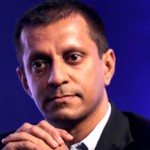
     

    Ashish Mishra, Managing Director, Interbrand India responds to queries by MxMIndia on the agency’s strategy for the Indian market and what one can expect from it in the near future.


    01. It’s been almost a year since Interbrand had announced its launch in India through acquisition of Water. You waited almost a year to kick off operations in India? Why the delay?

    Interbrand as world’s leading brand consultancy is very particular who represents the Brand Interbrand. Yes, like we advise our clients, unless we are sure of being completely aligned to the Brand internally, we do not encourage our representation. With an intent of migrating Water to Interbrand, we undertook the course of imbibing the Interbrand way. Of thinking, doing and behaving. The interesting part was that the unlearning turned out to be a bigger challenge than learning!


    a What does the Interbrand team in India look like?

    We have attempted to build our team as well as our clientele on the lines of ‘big & few’. So


    the lean team has very senior people from diverse backgrounds as­ Business & Brand Strategists, ex marketing heads from some of the top Indian corporates, arguably some of the best design talents in the market, architects, pop culture experts, financial analysts, etc. That’s how the Interbrand India team looks like.


    02. Though yours would be a pan-India approach, what would be the initial priority markets that Interbrand would be focusing on in India?

    We are geography neutral. Our business priority is around the nature of work. We would like us to do most upstream work in the area of Branding as we establish Interbrand in India. We are known for our strategic rigor and especially for the concept of Brand Value that we have pioneered in the world. We would like to do assignments that bring alive our positioning ­that of creating & managing brand value.


    a How have clients taken to your offerings in India? Would you be doling out services across categories in India?

    Interbrand has tremendous reputation in every market around the world. We were the first global brand consultancy and we are world’s leading brand consulting firm today as well. We are also uniquely placed as the only integrated brand services offering that completes the loop of creating, managing and evaluating brands. Our entire suite of brand services are on offer in India as well.


    03. While Mahindra is a global client, what would be your approach towards local clients who’re looking to go global in approach?

    One of the clear agendas we have set for ourselves is to partner the Best Indian Brands and help them become serious contenders for becoming Best Global Brands. Having done Brand Valuation for TATA, Re Branding, Valuation & Engagement for Godrej, we have a rich history already to build on around this agenda.


    04. In a market that’s stayed flat in a tough economic year, do you see clients increasingly opting for redesigning/branding exercises going forward?

    The tougher the market, the higher the relevance for Branding. Simply because, best brands enable strategic focus, synergy and efficiencies. Very clearly, good branding doesn’t just create long term brand value but immediate business value.


    05. How will you leverage intra-group expertise to for Interbrand’s growth in India? And what do you foresee for the brand consultancy sector in India?

    We are fortunate to have the benefit of all the Omnicom Group companies in India. DDB Mudra is a tremendous local network and is always a great option for the communication and implementation aspects during the expression part of branding value chain.


    It is still a nascent industry with great deal of confusion. Almost all agents and departments consider themselves to be brand custodians, while the true understanding of brand creation and management evades most. Marketing, advertising, marketing services, creative productions…almost everyone talks of brands on a superficial basis. I believe some good demonstrations of brand & business value creation will prove to be educative. We are on a growth path as an economy and globalization imperatives will be a key driver of branding in India. The tone once set would create both an aspiration as well as a competitive compulsion for the rest to emulate.


  • Jaldi 5 with BCCC chief AP Shah: Unedited foreign programmes lead to more complaints

    By Ananya Saha


    The Broadcasting Content Complaints Council received 8,628 complaints and suggestions as of November 30, 2012. Should it be a cause for concern? Should the industry focus more on self-regulation? MxM India spoke to BCCC Chairperson Justice (Retd) AP Shah about the issue.


    1. What kind of role does BCCC play in the regulation of the broadcast medium?

    We have to strike a balance between preserving free speech and expression on the one hand, and on the other see that the guidelines and advisories are followed.


    2. What are the major complaints or suggestions that BCCC gets?

    Broadly 47 percent of complaints are on sex, vulgarity and nudity. Some 30-40 percent pertain to harm and violence. Others are related to religion or are general complaints. I think the complaints have increased due to increase in import of foreign programmes, which are telecast unedited.


    3. What is the advisory you issue on ‘unedited’ programmes?

    Some are asked to go off-air, or some episode is asked to be pulled. Or be put in night slot, which is the restricted slot of 11 pm to 5 am. Or we ask them to modify the content. The good thing is that when it comes to self-regulation, we have had 100 percent compliance from the channels.


    4. What about content on regional entertainment channels?

    Yes, there are concerns in regards to regional channels. We receive a large number of complaints from South but since we do not know the language it becomes a problem. We get complaints in language programmes such as Kannada, Telugu, Tamil; not so much in Malayalam though. We need to have a BCCC person in South India who understands the languages.


    5. Does MIB interfere with BCCC’s advisories?

    No. There are times when the ministry refers a complaint to us. But the ministry has not interfered with our work. We have fairly succeeded in implementing the guidelines.


  • Jaldi 5 with L V Krishnan: Core viewers of genres is up

    By Ananya Saha


    Digitization is having multiple ramifications for all stakeholders: MSOs, LCOs, broadcasters and advertisers. On the sidelines of the ‘Digitization Begins’ conference convened by afaqs.com, MxMIndia spoke to LV Krishnan, CEO, TAM India to get upclose to the real picture after mandatory digitization was implemented in the three metros.


    01. What can broadcasters learn post DAS, given that the two metros (Delhi and Mumbai) have shown differential changes towards genre preference?
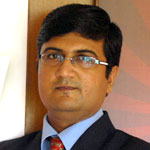
    There are two aspects to it. One, distribution is bringing order in the chaos post-DAS, where channels are getting in two metros. In a way, order that you now see will be much more systemised order and consist of core audience wanting to watch that genre than the trespass audience. This will go the long way in Phase II. The learning of Phase I is good enough to say what the next step should be. Step one is marketing: tell the consumers what the channel has and come and watch it. The second step would be much stronger content of engagement.


    02. So, do we have any surprises post-DAS?

    Overall, the core viewers of the genres have gone up. However, the overall reach of mass channels has gone down. Engagement levels have marginally increased with the genre and strong properties that are marketed are getting the audience. The core audience is still sticking to the preferred genre; it is the trespassing audience that are no longer accessing it. The broadcasters can create strong properties and communicate those properties to the audience so that the audience becomes loyal.


    03. How do you see the audience trend of Delhi and Mumbai replicating in other cities?

    Rollout of digitization will exhibit same phenomena in other markets as well. But the difference will be those markets already have strong penetration of digitization, eg MP and Gujarat. In metro markets, we see 50 percent penetration so such cities will see much smoother rollout of digitization than a Delhi or Mumbai.


    04. Many channels are claiming a spike in viewership. Have things shaken up much with digitization?

    These are the initial stages of digitization. The channels have worked hard to get their communication across to the audiences and have created better content and engagement.


    05. What is in it for the advertiser in the post-DAS scenario?

    They are getting targeted with audiences getting skewed to genres. Therefore, they can target their advertising more efficiently unlike the pre-DAS scenario. Secondly, geography is becoming clearer, especially for niche genre. Communication will be much easier in the digital era.


  • Jaldi 5 with Arun Sharma: Friendship will never be boring

    While Airtel has been making the right noise with its ‘Jo Tera Hai, Woh Mera Hai’ campaign, is it moving towards saturation? Arun Sharma, Vice President Marketing, Head Media & Rural at Bharti Airtel Limited, speaks to MxMIndia about this and other issues.


    01. Is the ‘Jo Tera Hai, Wo Mera Hai’ not reaching a point of saturation, though it remains the clutter-breaking communication from Airtel?

    No, I do not think so. The whole campaign is only a few months old. The campaign is around the theme of friendship and there are different renditions of it. So when ‘Har friend zaroori hai’ campaign was ongoing, we actually cut it short even when it was early to do that. The ‘friendship’ theme will remain, but every year or so we will bring out new renditions so that there is no boredom.


    02. Digital’s role in the media pie for Airtel is increasing. How is it leading to innovation in advertising on this medium?

    Digital and creativity or innovation are synonymous for me. I do not see any difference. Digital, however, is not a linear medium; people have the control of skipping your ad at any point of time. Hence, creative is very inherent to this medium. The medium, with technology seeping in, allows you to do so many things, which is not the case with so many other media. Attention span here is less when compared to others such as outdoor or television.


    03. Digital ROI: Much appreciated yet criticized. What do you think?

    ROI is getting measured. We are in the eCommerce platform and can actually track our ROI to the last decimal. But it so happens that the more the data is re-routable, the more you want. More questions are raised when there is data. In terms of outdoor, there is no data but no questions are raised. I believe the problem is the part of the solution and vice versa.


    04. Which is showing more digital growth penetration: Rural or Urban?

    Rural.


    05. Going forward, what can be expected from Airtel on the digital platform?

    It’s too early to say. But whatever we do, it will be core to the brand idea and it will be available to those audiences. What we do has to be relevant to their language, to their needs and for the devices they have. For instance, in rural areas we cannot create communication on smartphones because there the device penetration is different.


    As told to Ananya Saha


  • Jaldi 5 with Mayank Shah: ‘When you use digital, it becomes participative’

    Parle-G recently launched its recent campaign on the digital medium in two phases, Teaser and Launch Phase. In first phase the company released three teaser videos on YouTube, Facebook and Twitter on 30th December, 2012. Along with this they also ran a contest on Twitter with the hashtag #Ifiwereaparent.


    In the second phase, the new TVC “Roko Mat Toko Mat” was launched online and went on-air recently. The new concept revolves around “Aao Banaye Kal Ke Genius”. MxM India spoke to Mayank Shah, Group Product Manager, Parle Products for more insights into using digital as a core medium.


    01. Why did Parle G choose to employ digital so extensively?

    The importance of digital medium is increasing. However, if you look at the penetration and reach of digital media, it has not reached the level where FMCG brands can actually think about using it. Honestly, if I was doing a regular campaign I would not have thought of using this medium. We used it because this is not a regular campaign. It is more like a movement we are talking about. we are talking to parents and bringing a change in mindset is what we are talking about. The campaign is more participative or interactive rather than a one-way communication where brand talks to the consumer. When that is the idea, the medium becomes very important. Here we are talking about providing an interactive and participative platform to our consumer to come together to own a philosophy and a movement that is about allowing kids to do what they want, nurturing their creativity.


    This is why we have launched our campaign through digital.


    02. Has Parle G used digital medium before for its campaign for a participative and interactive communication?

    Not so extensively. It was huge but not as extensive as this campaign.


    03. Would you say that measuring effectiveness of digital is easier compared to other media?

    It is far easier to measure effectiveness of digital medium used than mass medium. Integral mass mediums, the only surrogate you can use are after-sales recall or those kind of things. However, when you use digital, it becomes participative. You do not only use digital to propagate your message but also asking consumer to interact with you. You can see how many people are coming in and talking to measure the success of the campaign.


    04. For this campaign, what will be the communication strategy?

    We have broken our campaign with digital. And then a 360-degree campaign including outdoors in 12 cities across India. As I said, we broke the campaign with digital since this is not a regular campaign. In fact to drive crowd towards digital, we used other media such as outdoor.


    a What is the pie that digital commands in this 360-degree campaign?

    It would be roughly around 10 percent.


    05. Would you focus on brining out digital campaigns more often to engage and interact?

    There is no doubt that the importance of digital is going to increase. However, it might take some time before we look at it as a standalone platform. Today, FMCG and mass-goods manufacturers look at digital as a good supportive medium rather than the principal medium. We launched our campaign on digital, and used it in the first phase as principal medium only because the campaign was participative in nature.


    As told to Ananya Saha