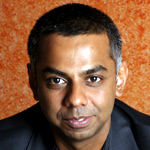
Tag: Jaldi 5

  • Jaldi 5 with Kartik Sharma: Emvies is the most coveted award in this part of the world for media agencies

    Alhough just seven months as Managing Director of Maxus South Asia, Kartik Sharma has been around with the GroupM agency since seven years. While there is a good roster of clients, the media agency business is very competitive and it’s in this scenario that winning the ‘Agency of the Year’ at Emvies 2014 means a lot for Team Maxus. Excerpts from an interview with Kartik Sharma…


    01. While Maxus has been doing well at the Emvies over the years, the Agency of the Year is a significant achievement. What does this win mean for the agency’s India office?

    Emvies is the most coveted award in this part of the world for media agencies, simply because it’s an award for not only innovation, but also effectiveness. Even a single award would suffice since it’s getting judged by best-in-class clients across various companies, In the last seven years, we’ve always had a dream to be the No 1. We have done exceedingly well at most other forums, but at the Emvies we have come a very close second, sometimes third. So that feeling of “You can do it, but it’s not coming” was always there. I think this means much to ourselves as a team and also to the clients who kept the belief that yes, Maxus can and has everything it takes to get the Agency of the Year award.


    02. The Power of 49 obviously worked for you?

    Yes, fantastic work done on the ‘Power of 49’. We sent in entries for 10 clients and are delighted that nine of them won an award at the Emvies. So, it’s also satisfying to see that the diverse nature of work the agency is putting across. Also, it’s not just innovation that we are doing well at, we have strengthened our research and analytics focus, our strategy focus…


    03. Does the push for winning awards put too much pressure on your team on a day-to-day basis?

    No way. We never do work to win awards. We do great work which eventually wins awards. So, our goal is always to excel. And if you set that goal then awards are just a by-product. We never go to Tata Tea saying that let’s do ‘Power of 49’ and we will win awards. We are there to solve a problem or a challenge, we did that and the great work ends in good results.


    04. How will you ensure that you win the top place next year too?

    I think, first is attitudinally, the passion to do great work is fundamental. So, that will continue. Second is that goal which I spoke about, if you put that goal as excellence in building clients, getting awards as a by-product is far more simpler. That’s something that will continue to work.


    05. And how is the rivalry with Mindshare?

    I won’t call it rivalry, I think it’s a healthy competition. I think they’re a great competitor to have. They are extremely professional, we really respect all the work they do. It’s good to have a competitor who will push you to do your best. And I think some of the manifestations that we got was also on the healthy competitor spirit. It’s not rivalry at all.


  • Jaldi 5 with Lavneesh Gupta, COO, RBNL: Big Magic has taken over mantle of ‘challenger’ in comedy genre

    It took the age-old tales of Akbar-Birbal to work the magic for Reliance Broadcast Network Ltd’s Big Magic channel. The channel went national with a focus on humour and is now ecstatic with the numbers that it has been generating on the ratings roster. MxMIndia interviewed Lavneesh Gupta, COO, RBNL on how the channel is doing and its plans for the near-future.


    01. It’s been a little over four months since Big Magic relaunched as a GEC serving light-hearted entertainment. How has the channel’s journey been so far?
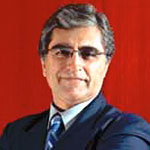
    It was in April end-May this year, with the launch of Akbar Birbal that we decided to take Big Magic national. The channel’s value proposition of clutter-breaking and fresh content in the humour space is largely responsible for the success the channel has seen in the last few months.


    There are challenges and we still have a great distance to cover but I think the report card this far has been very healthy and positive. In the recent past, we have also launched a whole slew of content with new shows and bigger faces:  Uff Yeh Nadaniyaan with Upasana Singh, Raavi Aur Magic Mobile and Ajab Gajab Ghar Jamai with Himani Shivpuri and Sumit Vats. We are building block-by-block. Today, we have about 2.5 hours of original content, and we will take it up to 3-3.5 hours by the end of this quarter.


    We have proven dominance in the Hindi-speaking markets, offering marketers 10% incremental reach in the markets of UP, MP and Rajasthan when compared to the Top 6 GECs. With content that satisfies the entertainment quotient of the entire family we are seeing excellent traction amongst audiences and marketers alike.


    02. The Hindi entertainment is hotting up with yet another GEC having launched on Monday in the form of Pal. Zindagi was launched in the premium genre and then there are the channels airing Classic movies. Does this pose challenges to a channel like Big Magic?

    When we were in the process of planing our national rollout we were very conscious of one key aspect that we observed in Indian GECs and that was marginal differentiation. We decided that for our channel the positioning has to be absolutely clear for our viewers to help us create a space for ourselves. The opportunity existed in the humour space and we capitalized on the same. Also, we serve original programming, which is backed by insights and research undertaken in the core markets, which ensures greater appeal amongst audiences.


    The current performances (average of last 4 weeks) are testimony to how the channel is performing vis-a-vis the newly launched channels. In GVTs, Big Magic stands at 42 mn GVTs, as against Rishtey and Zindagi at 35mn and 26mn GVTs respectively.


    More channels means healthy competition and a larger palette for the end-consumer. Having said that, every market has a threshold and a limit to how many GECs it can accommodate. We have seen scenarios like this about four-five years back too and eventually, the broadcasters will have to re-look at consolidating their positions based on market dynamics.


    03. In the Hindi light entertainment genre, Sab is the clear leader. What are Big Magic’s plans to get closer to that and get to the three-figure ratings number?

    Sab TV had the foresight to create a product that moved away from the traditional programming. From our perspective, we have been able to re-brand Big Magic as a national channel and take over the mantle of being the ‘challenger’ in the comedy genre, all within a short timespan. We have performed well in our core markets and have our distribution in place.


    In terms of reaching the three-figure ratings, four months is too early to say. However, our strategy is to have our ear to the ground, listen closely to the viewers and keep them laughing ‘with’ our programming. In our core markets in fact Akbar-Birbal performs better than several of Sab’s shows like Balveer, Chidiya Ghar and Tu Mere Agal Bagal Hai.


    04. Will Akbar-Birbal be an infinite run or will we see it in seasons? What new serials on the anvil? Any reality shows?

    Akbar-Birbal is still a young show, but it has caught on superbly amongst audiences. The show does very well and we have some of the best talent faces on it like Kiku Sharda, Vishal Kotial, Delznaaz Irani and Kishwar Merchant. We have received a very encouraging response and should see a long innings.


    Yes, we are looking at an interesting line up of new shows too which are in the pipeline for later this year.


    05. How has the channel done with advertisers? Do we any innovations on the channel that could make the proposition (more) attractive to advertisers?

    We have all the leading advertisers on board, and our inventory is full, and the fact that we are able to achieve this target inspite of the fact that we recently hiked our ad rates by 70 per cent underlines the confidence that advertisers have in the brand.


    On the innovation front, we are exploring several new IPs and AFPs with brands to help them leverage our local reach. One such recent innovation, where we customised the communication, was the launch of Freshpanti – an on-ground activation with Clean and Clear, a college contact programme which is the hunt for the fresh face of the year. The idea here was to take a reality show to multiple on-ground locations, with a gratification for the winner to feature on one of the channel’s shows.


    Any special initiatives on the channel’s distribution and marketing?

    We have an extremely effective and robust distribution in place and are available on all leading DTH platforms and MSOs. We also have exhaustive distribution in the LC1 markets with our availability on DD Free Dish which gives us significant incremental reach over the top GECs. We have recently also inked our contract with Tata Sky which completes our entire spectrum of DTH operators and we will be up shortly.


    On the marketing front, we are going all out with focus in our core markets to seed the brand further through a 360 degree approach.


  • Jaldi 5 with Gurbir Singh, Chairman, Press Club Mumbai: We’ll engage with those who’ve expressed grievances

    Other  than his skills as a senior journalist Gurbir Singh is perhaps better known in media circles as the man who transformed the Mumbai Press Club from a dingy watering hole to a happening spot for scribes to meet, greet, drink and work. In the recent past, the Club has often been activisty and taken up issues concerning journalists. However, there was a section of journalists – mostly from television channels – who felt that the Club was discriminatory against them and wanted Mr Singh and his Progressive Democratic Alliance panel out. At the elections held on Saturday, two PDA candidates were defeated and Gurbir Singh himself won with a slender margin of 9 votes.


    Prakash Akolkar was elected as President. Gurbir Singh was elected Chairman with Kumar Ketkar as Vice Chairman. Rajesh Mascarenhas was re-elected as Secretary. Abhijit Sathe was elected Joint Secretary while Mrityunjay Bose was elected unopposed as Treasurer. The following 10 candidates were declared elected to the Managing Committee: Santosh Sakharam Andhale, Santosh Bane, Preeti Sompura, Dharmendra Jore, Om Prakash Tiwari, Ayaz Memon, Ashish S Raje, Ajit Joshi, Sudhakar S Kashyap and Anahita Mukherji


    Excerpts from an interview with the victorious Chairman of the Press Club Mumbai:


    01. Your views on the elections of Saturday… Happy with the results given that, save two contestants, all your panel members have won?

    I take the overwhelming support for the election win as a humbling vindication of the path of growth we have followed over the last decade. It is not only a better Club with more facilities that we have delivered, it is the transformation of the Club into an institution that stands for sharply defining our profession and providing a voice to it. This has resonated with our members, who have repeatedly chosen us to lead since 2002.


    02. The television journalists were upset with your dispensation. Your victory margin of just nine votes being an indicator of that. Comments?

    I have been around for a long time, and perhaps it is time to pack up and leave. When you are there for so long, there are some feathers that are ruffled, and there are mistakes we make. All that added up to shades of anti-incumbency. With the TV journalists, as a community they have come recently to the Club. Some of them have felt a step-motherly treatment vis-a-vis print journalists; it is not justified, but some perception like that gained ground. We may have made some mistakes too, and I hope we can remedy them. After all, the Club must stand with all journalists on an equal footing.


    03. Now that it’s all behind us, do we see you meeting some of the demands put up by your opposition. Especially the TV journalists’ lobby?

    Yes, we are very much in touch with the TV journalists; in fact two very active TV journos have been elected on our panel – Preeti Sompura, bureau chief of TV9 and Sudhakar Kashyap of IBN Lokmat. We will engage with those who have expressed grievances; we’ll try and understand their problems and solve them.


    04. While you are undertaking the task of a new Club building, the Mumbai media is now located across the city. Would you at some time consider having ‘satellite’ club premises in, say, Bandra and Navi Mumbai/Thane?

    Satellite clubs in Navi Mumbai and the western suburbs have been talked about, but there are no concrete plans yet. Land is always a difficult problem in this city, so we will have to wait a while. Meanwhile, we will concentrate on adding to the size and facilities at the existing location in South Mumbai. This will help us host more members and activities and provide more revenue.


    05. On a lighter note: the Press Club was closed for Pest Control on the day after polling (and the results). Coincidence? Too many pests in the system

    Yes, the Press Club needs to be cleaned out occasionally of the pests that have occupied our chairs and crevices. If we don’t get rid of the vermin, those being bitten will blame us. We don’t want unhappy bottoms!


  • Jaldi 5 with Ajit Thakur: Loads to fix & learn before we set our eyes on #1

    There was much cheer last week when Life OK took the #3 slot amongst Hindi GECs in the weekly TAM ratings. But we held back and said that we should wait for another week before interviewing Ajit Thakur, Star India General Manager and Business Head of the channel. The weekly numbers that came out yesterday saw Life OK ahead yet again. MxMIndia spoke with Mr Thakur, hours after it was known that Life OK was the #3 Hindi GEC for the second consecutive week as per TAM numbers.


    01.When we met you in December you said Life OK would be No 1 channel in the next 18 months and exact 6 months since then, Life is more than OK. What has worked for the channel for it to be the no 3?

    Firstly, we have not consciously chased rankings. When I said we want to be the No 1 GEC, we wanted to be No 1, and everything else in the middle didn’t matter. No 1 both in terms of perception and market share. What we had gone about doing in the past six months was to up the game. For instance, one of the things we focussed on was to bring in some scale on the channel. In January we started with Life OK Screen Awards and then we did a couple of more events, the recent being Life OK Now Awards which are a television and film monthly awards. Second, we are continuing to work on our disruption agenda. When we last met, we had just launched Tumhari Paakhi and Hatim, both come from very different schools of thought, one is a fantasy tale, targeting kids, while Tumhari Paakhi is an adaptation of a Sarat Chandra novel. Yes we have some originals, there are some ever-lasting characters, we picked those characters and turned them into now what is one of the better shows on TV. It is a drama but not a saas bahu show. In fact as we speak, we are shooting in Singapore….


    02. What would you attribute the current rise to, especially in the last two weeks? Savdhaan India turning into an hour?

    There are about 4-5 shows have contributed to it, which is a good thing, right? It is not a one-show wonder. Savdhaan India’s extended hours has worked for sure, Tumhari Paakhi has grown, another shows called Ek Boond Ishq at 8.30 pm has grown, and we have also had Shapath and the Life OK Now awards on weekends. But what worked well for us and not just individual shows was that while everyone was waiting to do their highpoints in the week post-IPL, we went and tried everything in the last week of IPL because I believe there is enough scope for GECs despite cricket. The last week ratings that came in were of the IPL finale week. Everyone fell and postponed their high points while we went and did all of them in that week!


    So if you don’t want to watch cricket, we are the channel which is giving you enough and more! I think this is what worked for us first and then the momentum continued. Going forward, while today we are ahead and tomorrow somebody else could be ahead of us, the important thing is if you look at the past 18 months, the channel that has steadily grown and recruited viewers and continued to do that by not showing same kind of content is Life OK. Everything else is going up and down, but we have continuously and steadily grown.


    03. You still don’t have too much have on the reality front. You have tried it in the past on Life OK but nothing has turned out to be as big as what some of the others have.

    Yes, partly conscious, partly not conscious. We did try a couple of things like Bachelorette India and Sacch Ka Saamna at launch but both didn’t work as well as we would have liked them to. But at the same time we have not done the tried and tested, singing and dancing which everybody has and that is the conscious past of Life OK’s DNA that we won’t do the regular stuff. I am comfortable in saying that we are growing, we are young, we are learning from our mistakes.


    03a. Any format that you would like to do or would like to licence in the near future?

    No International formats, we don’t find anything interesting. This festival season we will be doing our first big talent reality show. Though it is very early to talk about it, what I can tell you is that it will be a creation of genre and we are going to get a mega star on board and that the show will be shot out of India.


    04. You have got to No 3, the key thing now is to maintain the lead. How do you plan to ensure that?

    According to me, there are three highlights of where we are today. First and foremost is that being the younger No 3, we will try harder to retain the humility we have shown. We will continue to be resilient and stay focussed.


    Second, we will keep breaking rules, that’s our DNA. Everybody does singing-and-dancing, we will do something else, everybody does saas bahu, we will do something else, and we will try and change the rules of content and marketing.


    The third and one of the most important things we learnt when we started out was that many of the established producers and writers were engaged with the top channels. We said we will build our own talent pool. In the past two-and-a-half years, we have worked with loads of new people. Half my heads of department have never done TV before, one person has come from publishing, another from research and marketing. We will continue engaging with new people and work with new producers, get new people in and give them a chance. But we also have some of the big producers coming in. Our next big shows is by Ekta Kapoor, the no 1 talent in Television. We have 3-4 from other big producers, but at the same time we will continue working with new talent.


    04a. Does that mean that you will now be spending more on production, up from the relatively low spends you’ve done so far?

    Our spends were moderate, not low. But remember, I am just talking about fiction, we are not going to spend a lot on non-fiction. I think the return on investment on non-fiction is very questionable. Even the best products are not making money.


    05. Back to your earlier statement of wanting to be No 1 by June 2015. You are #3 already, but you are just 12 months away from your target?

    The top slots keep yo-yoing but the one to beat is Star Plus. It has set high benchmarks, so, yes, we would like to set our eyes on it. But we still have a lot of our own problems to fix and have some learnings. Once we figure things out in the next six months, we will take a shot at it. Right now, I am not looking at Star Plus.


  • Jaldi 5 with Ravish Kumar, ETV Kannada: Movies are like steroids, they do great things for the channel but one should never get used to them

    A quick chat with Ravish Kumar, EVP Viacom18 and Business Head, ETV Kannada who is riding high on the success of ETV Kannada. From a #5 two years back, the channel has emerged as a strong #2 in the Kannada GEC space. Driving synergies from the Viacom18 bouquet with the Kannada remake of Madhubala (Ashvini Nakshatra) and Balika Vadhu (Puttagowri Madhuve), it is the slot leader in the fiction genre with the shows constantly crossing the 900TVT mark.


    01. From #5 in 2012 to #2 in 2014, ETV Kannada has taken rapid strides. What would you attribute this success to?

    Well I would like to attribute this success to three things – People, Programming and Passion.


    The entire journey from being at # 5 to now being at #.2 has been totally driven by the kind of content we produce and showcase on our channel that is overlooked by our Programming Head Parameshwar Gundhkal. Under him, we have our Fiction Head Chitrasri and our Nonfiction Head Raghav and it’s them and the amazing attitudes of the team that has helped us become a success story. This team has a proven track record, they have an intuitive understanding of the Kannadiga consumer and their needs. Coupled with interesting concepts for shows across genres, this is now a dream team to work with.


    Secondly, at ETV Kannada, our aim and belief is to play on pure-content/programming philosophy. On the non-fiction front, ‘Bigg Boss’ was a big gamechanger for us and then working on strength to strength we followed up by a show called ‘Indian’ that is a home grown format and right now we are doing ‘The Dancing Star’ wherein we have licensed the content from BBC and we are producing it which makes for a hybrid format. All three formats of programming seem to work for us and provide the same numbers.


    Lastly, being a young and creative team at ETV Kannada the content on-air reflects the enthusiasm, passion and the creativity of the team. Like on the fiction front, we had reached a plateau with the ratings for our show Ashvini Nakshatra and we needed to peg the marriage of an ordinary girl to a superstar on a large scale. We brought in the wife of southern superstar Sudeep Kicha to give tips to our protagonist on what it’s like to be married to a superstar and cut a promo on that which had the TRPs plummeting upwards thereafter.


    02. There is a charge from purists that the channel lacks enough original Made-in-Kannada programming, given that you have Madhubala and Balika Vadhu remakes, dubbed international shows etc. Comment?

    Well, we have experimented with both – fiction and non-fiction programmes. So while in the non-fiction line-up we have the remake of ‘Bigg Boss’ , at the same time we have built our own IPR with ‘Indian’ that gave us the same ratings. On the fiction front, we have 5 shows that feature in the top, of which 3 are original programming led- Charanadaasi/ Lakshmibaramma and Agni Sakshi followed by Ashvini Nakshatra (Madhubala) and Puttagowri Madhuve (Balika Vadhu) that are remakes. Both models of airing original content and adaptations that suit the sensibilities of the Kannada market have worked successfully for us.


    03. ETV Marathi has seen much success with KHMC. While Suvarna has had the KBC in Kannada, is it a format that you would look at acquiring in future?

    Well, we are always looking at adapting big format shows to the Kannada market and if this opportunity comes our way, then we would be open to it.


    04. Since ETV has in its bouquet a slew of Indian language channels, are there any characteristics of the Kannada channel that are noteworthy vis-a-vis the others

    The Kannadiga viewers have a voracious appetite for content but content that is well-made. They have a flair for adventure – they love shows like Indian that are task led, wherein the contestants have to walk the talk and prove themselves. Bigg Boss is a format that is a perfect blend of high voltage drama and emotions that brings out the voyeur in viewers across regions including the Kannadigas. They appreciate drama that is both relatable and progressive which is supported by our fiction programmes and these are their basic characteristics.


    05. It’s interesting that you’ve grown despite showing Kannada films. Is that going to stay as is or will you change as you go along especially as you take a shot on reaching #1?

    Well we are the only channel in the Kannada GEC space that do not rely on movies for gaining viewership. I personally believe that movies are like steroids as it does great things for the channel but one should never get used to them. Also in the coming future, the strategy/thought will probably not really change since the movie acquisition market has reached a point where it is not economically viable to acquire films.


  • Jaldi 5 with Anupriya Acharya: Need for more enthusiasm around awards

    With just two winners and one commendation at the Festival of Media Asia Pacific that concluded last week in Singapore, there have been question marks raised on the quality of work done in the country. While Mediacom bagged a prize for Gillette and PHD for Brooke Bond Tea, Madison Media Infinity received a ‘highly recommended’ tag for Parachute Advansed Hair Oil.
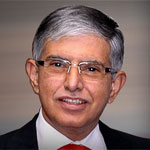
     

    We spoke with Anupriya Acharya, CEO, ZenithOptimedia Group India who was on the jury of the FOMA APAC on what went wrong.


    01. Just two winners and commendation from India. And this is where we are competing with just APAC entries. Does this speak for the kind of work Indian media agencies are producing?

    Yes, it was indeed a bit disappointing but then the shortlisted entries this year were down to 13 from the whopping 31 last year! While this was my first jury experience at Asia level, I have closely followed this space of regional and global awards. I gauge that the competition is increasing tremendously with each passing year, with more countries and more brands and agencies participating. In fact even at the Asia level, the work is quite globally competitive – 12 shortlists in Festival of Media Global recently from India is a case in point.


    02. Anything noteworthy that you would like to highlight?

    The few things which truly caught my attention was that the quality of AVs has improved tremendously but Australia still stands head and shoulder above the rest in that aspect. Something we must learn from. The other thing is that a large number of the entries, especially the Indian entries, is dominated by FMCG brands – where traditionally the strategic planning and hence just the sheer competence of articulating the entry, as well as availability of added data-points to demonstrate the results is, in general, better.


    03. So what should the media agency agencies be doing?

    I think we, as an industry, should encourage and spread enthusiasm around awards for some of the other categories too. I find some very good work happening there.


    04. The Best use of Mobile is possibly the first big ‘Mobile’ award India is winning amongst advertising industry awards. Are we now producing better work? Do you think we could get more awards in Mobile at Cannes?

    Yes, as an industry, the work on mobile is becoming better. More and more marketers are rising to the acceptance of it being an integral part of their communication and even sales plan. More importantly, in the Indian context, a lot of work is linked to feature phones rather than smartphones. These solutions require some massive data and tech support, given the sheer volumes and numbers of the country. This aspect gets lost to the the jury coming from the developed markets and they feel that some of these solutions are so archaic. Hence it is imperative that some key points are brought forth: the penetration of feature phones and its context in India, the fact that it is the largest medium, crossed TV too, that most consumers that can be reached by this cannot still be reached by any other media and the sheer complexity of execution given the volumes.


    05. Any specific global trends that you would like to highlight?

    I am still finding the digital, social, entries a bit weak and part reason of this could be that maybe a lot more work in these areas gets directed to the specialist digital awards rather than platforms like FOMA. We will have to do some work in that area. I do believe that as more and more digital specialist shops get into more mainstream solutions for advertisers and more generalists agencies get into specialist offerings given acquisitions and always on training, this divide will become lesser.


  • Jaldi 5 with Sam Balsara: Industry’s cautious approach could be replaced by buoyant

    Like is the norm every year, Sam Balsara, CMD, Madison World took on the mantle of showcasing to the industry how the trade fared in the year gone by and what is expected out of it in the oncoming year. Johnson Napier chatted up with the media veteran on the sidelines of the Pitch-Madison report presentation and got him to spell out the mantras and growth trends expected in 2014. Excerpts:


    Is the media growth outlook a much positive one from what was initially expected from the year 2013?
    The year 2013 has been more than good for the media industry in India with growth estimates at 11.1 per cent. That was much more than what was initially projected where the number was 7.4 per cent. So, yes, it has been good and I believe that the ‘cautious’ approach the industry was taking could be replaced by ‘buoyant’ where the growth projections for 2014 are concerned.


    Medium-wise, did you expect any surprises where market share was concerned or was it the same as last year?

    It was more or less what was predicted where Print continued to occupy the top slot followed by TV and Digital. In fact most of them have managed to post marginally higher rates than what was originally estimated from last year. So it’s a good sign. Moreover, I believe even 2014 will manage to throw up a few surprises if we go by the current trend.


    Apart from elections that you said will occupy a bulk of the adspends share, any other factors that you think will propel growth for the industry?

    In fact elections will be the single biggest thing to take place in 2014. What is heartening is that 50 per cent growth is expected to come from the elections coffers across political parties. Rs 5000 crore is quite a huge number, which is what we are estimating the revenues from elections to be.


    Which are the mediums that will largely drive the growth for the industry in 2014?

    All mediums would contribute in a significant manner with Print and TV continuing to be big, but Digital is something that will post good revenues again next year.


    Do you foresee any challenges for the industry in 2014?

    Challenges will always be there but we have to constantly strive to deliver good ROI to the advertiser and also pray and hope that advertising works. After all, an advertiser spends money so that he can increase his sales and if that does not happen then the entire foundation of advertising gets shattered. Agencies like us have to continuously be on the wall to discover newer ways of assuring the advertiser of adequate returns.


  • Jaldi 5 with Ashwin Padmanabhan: 92.7 Big FM’s rise to No 2 in Mumbai is about content, not just music

    While the success of all radio stations is critical, when the all-important Mumbai station sees a steady growth to the No 2, there is some reason for celebration. On the back of turning its format to retro, the 45-station 92.7 Big FM network tasted much success in Delhi. It switched to retro in Mumbai in June 2013 and in around eight months rose to #2 in Mumbai as per RAM figures quoted by the station*.
     

    01. You’ve obviously achieved much with the retro repositioning. First Delhi and now Mumbai. In a country where the youth segment is huge and growing, what would you attribute as the reason for the success of the switch to retro?

    The kind music we play today in Delhi, Mumbai and a few more cities across the country is timelines – that’s why we call it as “Hit They Hit Rahenge” The appreciation and love for this music cuts across generation, the fact is the music has meaning, love, emotions and a king of connect that has universal appeal. The other aspect of our programming is that our RJ-speak is honest, responsible, reflects the current environment in the city and seeks to engage and entertain. In fact while we have become the No-2 Radio station in Mumbai, we also have the No 1 Breakfast Show there !


    It appears the results on ratings took more time to show in Mumbai as against Delhi. True? And would you be able to attribute any reason for that

    Not really, we moved to playing retro music all day in Mumbai at the end of June 2013, so it has taken six months to move to the No 2 spot – which has actually been a rapid growth.


    02. In which decade or age segment would you say is there maximum listenership for retro?

    The listenership is being driven by the 25+ audience…


    03. Have you looked at experimental with retro English or that in other regional languages?

    As a brand we will continue to create and deliver content that connects with the masses, English content is still a very small niche. In regional languages: yes. Our Kolkata station is also 100% retro. In Bengaluru, where we are a Kannada station; we have a five-hour Retro Band from 12noon to 5pm.


    04. On the back of retro, one finds you have also created some popular shows. For instance, Annu Kapoor has seen a new lease of life after the demise of Antakshari. Comments?

    Like I mentioned earlier, it’s not just about the music, it’s also about the content that we create. In 2013 and we will continue this year, we invested in creating some really entertaining formats like Suhana Safar, Yadon Ka Idiot Box, Caravan E Ghazal, with brilliant Artists like Annu Kapoor, Nilesh Mishra, Talat Aziz in Hindi;  Sabyasachi in Bengali and Shi Kay Chandru in Kannada. Entertaining content will always be key to get engage with listeners..


    05. What next, given that the retro format is easily replicable? In fact the retro zone does exist on other stations too.

    Most formats are replicable, it is the content that we build around it that helps in differentiation, and this is our focus, so in other words our success with Retro format is not just about the music, it about delivering superior entertainment to audiences.


    *Note: RAM does not supply figures directly to MxMIndia, hence these figures are unverified


  • Jaldi 5 with Nitin Chaudhry, HT Media: More than just media sponsorship of the Kala Ghoda Festival

    It was a coup of sorts for Hindustan Times when it was awarded the title sponsorship of the the Kala Ghoda Festival. Built over the last few years as the leading festival of art and culture in Mumbai, the newspaper group has attempted to go beyond the role of a media sponsor and integrate with the events. MxMIndia spoke with Nitin Chaudhry,  Business Head – West and part of the HT Media leadership team on the Hindustan Times association with the Kala Ghoda Festival 
     

    01. How is the Hindustan Times Kala Ghoda Festival different from last year’s The Times of India Kala Ghoda Festival?

    Well, a few things on the programming side have changed. We have tried to make it bigger. We have international authors coming in for the first time, as compared to Indian authors only. We have bigger stars like Farhan Akhtar this time. More importantly, we have added a very Mumbai-specific vertical. Earlier it used to be all around art and culture, but we have Urban Architecture and Design. We have installations and panel discussions some of the issues that Mumbai as a metropolis faces – whether it is unplanned growth or traffic despite the fact that we have the best public transport system in the country.


    02. And how much of these changes are thanks to HT’s involvement?

    In fact, this is one big difference between previous Kala Ghoda festivals to this year’s edition. We have been very involved with the designing of the whole programme right from the beginning. Other than programming, we also looked at how do we make it more accessible and spread more awareness to people because the festival happens at multiple venues and people get overwhelmed with the schedules and how to get there. We have developed an app which does two things: one is at the tap of key it gives you the calendar of every day, of every vertical. You don’t have to download one big app from the internet, all have to do is scan the Kala Ghoda logo, which is available everywhere and the app downloads on you phone, whichever phone you have.


    Second thing is, if you go to kalaghoda.hindustantimes.com, the microsite syncs with your Outlook calendar and you can pick and choose events. Most of these changes have happened because both of us have been talking for the last few months, wanting to make it better and more accessible to everyone. The promotional campaign was not limited to the newspaper. We have created a full programme for radio and have a live studio at Rampart Row where people walk in and talk about their experience. On the social media, we have created a Facebook page, there is a Twitter contest and there is also a photography contest.

    There’s also this huge wall which displays the pictures our photographers have taken. So we tried to bring out the role of a newspaper in a far more integral way that rather than just supplying our ad columns for generating awareness.


    03. The one problem with associating with events which have had a long relationship with another publication or sponsor is that people still recall the old association. Like in the case of the Screen Awards, it was Star and in the case of the Kala Ghoda festival, The Times of India was the sponsor for many years. Did you factor that when you took this on?

    Yes, it had an association with The Times of India. But what we also figured was that the association was more in the minds of the media audience than that of readers or consumers. No one called it Times of India Kala Ghoda Festival, it was Kala Ghoda Festival. But yes, nevertheless the transfer of the association and the brand will have to be done, which is why the connect can be seen throughout the city, in all media. Because we want to make the transfer of the association and the brand as quickly as possible…


    And is this a five-year contract?

    To begin with, it’s a three-year contract. But the intention is to make it a life-time one.


    04. Since Kala Ghoda is located in South Bombay, people from the suburbs are hardly able to make it there to partake in the festivities. Have you thought of doing other festivals elsewhere or will it be only this one?

    I completely agree with you. Mumbai cannot be served by one event. We talk about the western suburbs, the central suburbs, Navi Mumbai and South Bombay separately, although I would still think, the decibel level created in the market has reached everywhere. But given the commute issue, the distances and the hectic lifestyle of people, it is very difficult for people to reach the venue and we should ideallty have multiple events in multiple geographies throughout the year. And we will also be working towards that. So, for example, last year, when we launched the Navi Mumbai edition and although the scale was smaller than that of Kala Ghoda, we had a mini-cultural event in Navi Mumbai over two weekends, where we called artistes, did plays, musical recitals, and concerts in Navi Mumbai.


    05. The worry is that when events such as the Kala Ghoda Festival which are all about culture, art and literature, have an association with a paper like Hindustan Times, the competition between various publications comes in the way of the coverage of the festival. And hence art and culture suffers.

    I completely agree with you. It is very unfortunate. If you look at the Hindustan Times of the last four, five or seven years, even though a rival publication was sponsoring it, we always published schedules, carried photographs of people having fun, of what is happening, and that is the spirit one should have. It is a festival of the city, ahead of it being a festival of The Times of India or Hindustan Times.

    If a small play were to happen at the NCPA or Rang Sharada, everyone covers it. Why then should we not cover an event where four or five lakh people come and have fun? It is unfortunate that the rivalry comes in the way, but that’s not how it should be.


  • Jaldi 5 with Paritosh Joshi, IRS TechCom head: Await one more round before arriving at judgement

    The best way to get Paritosh Joshi to respond is to your mail is to write to him in Verdana, 10 points. We did exactly that, with a request to respond to our questions on the Indian Readership Survey (IRS). Mr Joshi is head of the MRUC’s technical committee as also a member of the core technical committee of BARC. With an eye for detail – in research methodology, numbers and words, the broadcast industry captain was heading to the capital for the Delhi leg of the IRS announcements when MxMIndia requested him for this quick Q&A:


    01. From RFP to the release yesterday, the new-look IRS has taken a while in making. The fact that it has been released indicates you are satisfied with it, but are you happy with the way the entire process has gone?

    Yes, I am. This edition was not easily constructed. A brand new JIC, RSCI had just been formed after years of inconclusive dialogue. The legacy study was discredited for suspect fieldwork and overburdened by ad hoc modules. Negotiating through all this history and delivering a completely overhauled study less than a year after the final release of the old edition has been very satisfying.


    02. It has surely thrown up some surprises with some sharp rises and exits from the top performers list for some? For instance, Hindustan forging ahead of Dainik Bhaskar, Mid-Day being among the Top 10 English dailies and dna exiting that list.

    I am of the view that as a TechCom person, I have to do the best possible job of design and process management. The numbers are outcomes that distill the voice of respondents. I will add that any audience measure only makes sense as a time series. I would humbly urge all stakeholders to let at least one more round be published before arriving at judgement.


    03. In fact, dna has put out a front-page note below the masthead questioning the data put out. While one is not questioning the credibility, integrity and intent of anyone, how can we explain such sharp variance from the last study findings?

    Our study release notes are at pains to explain the big changes not just in design and data gathering but even in key definitions. I might add that we jettisoned the old model precisely because it had been repeatedly questioned for ethics and methodology. If it is now being held up as a standard of evaluation for the new study, we need never have gone to all this effort.


    04. In terms of the data thrown up, there’s a fair bit beyond the hard numbers. Although it may not be your concern as technical committee head, but the true advantages of the new IRS study will be realized only if the data is employed optimally? Are subscribers being educated on how to use the data?

    Our curtain-raiser yesterday was very emphatic on this subject. There are mountains of data that IRS gathers and the only ones that get attention are the AIR numbers. The deep insights, though, lie in demographics, product linkage, media mix consumption patterns and so on. I don’t think RSCI or MRUC can really conduct training sessions for this but anyone who plays around with the data will readily find all this material.


    05. As a media practitioner, what according to you is the biggest takeaway from the new IRS?

    Our practices in the Audience Measurement Sciences are dated and in urgent need of overhaul. If we want the underlying media markets to grow, we cannot afford to ignore measurement.


    06. One last question:  chairing the technical committee at MRUC or being part of the core techcom at BARC is a thankless job. It’s like being secretary of your housing society. And there’s no money to be made either, at least officially. It’s obviously prestigious and satisfying, but wouldn’t you be rather doing something more fun. Potter around the house, play golf, write a book?

    The pottering and writing happens anyway (don’t play golf but I DO run). The joy of giving something back to the industry that has given me so much is a reward in and of itself but the ability to stay abreast of everything and connected with all the participants in the business is a huge cherry and icing on that confection.


  • Jaldi 5 with Nisha Narayanan: Small cities will be as important as Delhi or Mumbai

    With its ‘Bajaate Raho’ credo, Red FM has been making an impact – with content innovations as well as embarking on marketing tie-ups and affiliations to gain salience. Red Live, the network’s onground music and events has been very active and according to COO Nisha Narayanan, smaller, regional markets will see growth this year. In a quick Q&A with MxMIndia, Ms Narayanan talks of how 2013 was for Red FM and plans for this year as well as her forecast for the entire radio sector in terms of adspends in 2014.


    01. How was the year 2013 for Red FM?

    It has been a very busy and rewarding year for Red FM. Even though the metro markets were slow initially, the non-metros compensated by showing good growth. In terms of brand, we engaged our listeners and clients with some very interesting innovations on-air, on-ground and digitally. From our concerts under the Red Live vertical in Delhi and smaller towns like Varanasi and Guwahati to our programming-led activities such as Sachin-200 and Bigg Boss integration, the year has been abuzz with innovations. We have had some very good client-based innovations across our markets, such as Thappa and Tashanbaaz. Our digital wing has been engaging listeners online by continuously giving them interesting content. The Red FM Facebook page reached a milestone of half million likes and is a sizeable community for any brand.


    And what plans for 2014?

    2014 is expected to be a somewhat slow year in terms of market buoyancy. Regional markets will be very important and one of the keys to growth in 2014. As bigger markets get saturated, smaller towns will emerge with a vast potential which has not been realized yet. For Red FM, small cities across the country will be as important as Delhi or Mumbai.


    Most of 2013 was spent in waiting for Phase 3. Do you see it happening before the elections and ahead of the time the election Code of Conduct gets into force?

    We are still not very clear on when the Phase 3 will come in, where we are headed, what happens once the present license period gets over, and what kind of migration fee we would have to pay. We have already submitted our recommendations to TRAI.


    Though we would be happy to see Phase 3 earlier, but looks like it has been put on the backburner once again and will only happen after the general elections now.


    02. You spoke on digital… are you looking at an online rebroadcast of your stations?

    Our key focus in 2014 will be on digital engagement. Be it streaming music or offering more differentiated products digitally as extension of the radio brand, digital is one strong wing that any radio station today will have to eventually get into. The competition here will not be between different radio stations, but between radio and technology. The natural progression for the radio industry is to move towards digital. As and when the government policy allows us, we will be more than happy to broadcast Red FM online. It is imperative for a radio brand to have a strong digital presence as most of radio consumers are very active on the digital space and it is important for any radio brand to engage with them there. Digital is the way forward and a leader brand like Red FM will be present in anything that the youth (in terms of age or at heart) consumes. The consumption of internet in India is growing every day, and Red FM believes in remaining in tune with the times. With almost 50% of consumption of internet being on smartphones, it is important to be constantly innovate therefore. Red FM as a brand will keep on extending itself on these platforms.


    03. Tell us more about Red Live. And what plans do you have for it? Could it be an independent P/L?

    Red Live is Red FM’s IPR, under which we offer Live Super Hit music experiences to audiences in the form of concerts and other entertainment gigs. It helps us have a deeper level of engagement with the audience in a medium (radio) where one hardly gets to see the Voice one loves. Interactions with listeners on-ground help in creating a connect which would stay long after the radio has been switched off. They help in getting the brand and the RJs directly in touch with their listeners. 2013 has been a very good year for Red Live. With Mika Singh in Delhi, Sugandha Mishra in Varanasi and Zubeen Garg in Guwahati, we have had a rocking year in terms of Live music gigs across country.


    We will continue to grow Red Live in 2014, organising gigs every quarter, and expanding into both metros and non-metros. The year gone by with numerous successful concerts has strengthened our confidence in Red Live, and we plan to make it bigger and better in 2014. Innovation, consistency and excellence in the experiences offered to customers will be the mantra to success for its success.


    04. The adspend forecast for radio for the year 2014 is varied. ZenithOptimedia says it’s 5 percent while that of MagnaGlobal is 11%. Even the MagnaGlobal estimate has gone down from last year. Your comments?

    Even though 2013 was not a very industry-friendly year and so most of the agencies have lowered their growth expectations, the sentiments for 2014 are buoyant. Adex estimates suggest radio industry having shown a growth of 15% year-on-year in 2013. All three metro markets have shown a healthy double digit growth due to revival of real estate, BFSI, white goods and retail spending.


    We are expecting it to continue showing double digit growth in 2014 as well. With the general elections and elections in several state assemblies scheduled to be held 2014, political parties’ spending will be a substantial driver of revenue for radio. Adcap on TV Broadcasters will also help radio increase its share in the advertising pie as media planners are trying to diversify budgets and take maximum ROI on their money by better media mix of Print, TV, Radio, OOH and digital. Although expansion through phase III is being planned, the impact of that will be seen once we have more clarity on when and how it is happening.


    While one can look at healthy double digit YoY growth in H1 of 2014, the H2 should see flat growth till festive season, post which the spends should again pick up. Overall, one can expect radio growth to be in the range of 5-10% YoY in 2014.


    05. Is independent news on the FM radio anywhere on the horizon?

    The government considering to lift ban from news on private and community radio stations is a step in the right direction. It is high time we relooked at the rules that bar private FM radio channels from broadcasting news and current affairs. Radio, being the most accessible medium, is in fact the most suitable for mass dissemination of news and information. Indian FM stations are an anomaly in that none of the private radio stations in the USA, Spain, Italy, France, Greece, Australia or most of the countries of the world are barred from airing news and related content.


    News and current affairs are the most relevant when they are localized, so as to suit the requirements of a particular community, city, town or village. It therefore makes sense to de-regulate the Indian radio industry, as opposed to the restrictive Phase 3 guidelines that allow private FM radio only to re-broadcast the news bulletins of All India Radio without any addition or modification. Surely, the 36 news generating units of AIR cannot cater to the local news requirements of over 200 cities that private radio is expected to cover in Phase III.


    At a time when all other media are free to broadcast news, including the digital medium where we see numerous news portals emerging every day, radio should also be evangelized a people’s medium, and not just limited to entertainment. The regulations that are holding back radio from reaching its full potential should be re-examined.


  • Jaldi 5 with Aditya Swamy: Making voting cool with Rock the Vote campaign

    If Sunday’s Assembly elections results have already rocked the nation with the emergence of the Aam Aadmi Party as a potent force, youth channel MTV has unveiled a campaign asking young voters to register with the Election Commission and vote on Polling Day. MTV has partnered with 21-year-old non-profit organisation Rock The Vote for the initiative. Speaking to MxMIndia, Aditya Swamy, EVP and Business Head, MTV India spoke on the ‘Hero Rock the Vote’ campaign and how he hopes to drive home the point that it’s ‘cool’ to vote and sport the indelible ink marker


    01. And we thought at least on MTV, we could have things beyond elections. Politics and voting sure is in the air for you guys too?!

    Clearly, voting is the flavor of the season. Everyone is doing a voting campaign, especially the news guys. And they are talking to the electorate as a whole. But some interesting facts were thrown up from the Election Commission saying that 12 crore first-time voters this time. And that’s more than the number of votes the leading party got last time. And if they are all young people, then why not have a call to action that is only talking to young people in their language.


    So when we scoped out the environment we figured that internationally MTV works with the US-based organization Rock the Vote. Their sole objective is to make it a fun election campaign. It’s not calling it a youth parliament, it’s not calling people to debate on the Top 5 issues of the country and looking for ways to change them.


    It deals with issues that touch the youth everyday in their lives. It’s simple things like ice-cream has become expensive so you and your girlfriend can’t have two ice-creams, you have to share one. Your bike…you don’t go for a joy rides anymore, you go from Point A to Point B…because petrol has become expensive. It’s about talking about issues that are relevant to young people and talking in their voice with their ambassadors.


    The biggest platform for Rock the Vote is using music and humour. All communication is very tongue-in-cheek. One of our ambassadors we have selected is YoYou Honey Singh, the music star. He’ll reach out to the youth through music videos and music anthem. The effort is to talk the youth in their voice, with things that interest them, and not make it preachy.


    We are not saying log onto the MTV and register. We are not saying become a fan on MTV Facebook page. We don’t have to build our audience through this. All we are saying is: ‘Go Press the Button’. It is – ‘Dabao na Button’ …that’s the tag line for the whole campaign. As we build the campaign we’ll say… Log on to electioncommission.com. A lot of people think we are doing this to build our brand, to increase our Facebook fans, to add Youtube views, to boost viewership to the channel. But that’s not it. We don’t believe it doing it just on TV. We start with the first leg on TV. And then we have 200 college campuses that have tied in with an MTV programme currently where we have campus ambassadors. So we will actually go down to campuses and engage with them. And the fun part is, at the end of it, we hold a mega concert for which there are going to be no tickets. All you need is the voting ink on your finger. And that’s how you get entry.


    When is the concert?

    After the elections, a couple of days after the elections. We have worked this campaign out in multiple phases. It has a bunch of promos on air, there are several kind of creatives, we’ll have a lot of user generated videos, we have nice set of animation videos made by some young kids, we have college contact programme, we have the music video and the song, we have a mega concert.


    02. Do you think this campaign will be able to address the real issues as to why people don’t go out to vote?

    Of course yes! Like I was in Delhi last week and I was able to drive from Gurgaon to the airport in less than half an hour. When I asked the cab driver why the roads were empty, he said it was because of elections. Voting is essentially considered a holiday, so most people take off on short breaks. I think as it becomes more and more cool to vote… that’s the change we want to bring about. We want to make voting a cool thing to do. So an Arnab Goswami asking the youth to vote versus Honey Singh urging them will be different. So that’s what we are trying to tap.


    Our second ambassador is Rannvijay, the most followed celebrity on Indian television. Now on the Roadies audition (which will be aired in January), the first questions being asked of participants is – ‘Do you Vote?’. So we have woven it into our content as well. The idea is to make voting cool. Why do you think we are calling it – Rock the Vote…because its with music..it’s with concert… it’s with cool stuff.


    03. Are you also looking at reaching smaller towns?

    Yes. These 100 colleges are spread over 25 cities. The idea is spread to the interiors. I’ll take him Honey to Jabalpur, to Kanpur.


    Essentially the HSM markets?

    If I take him to Kerala or Karnataka, the language becomes an issue. Rannvijay connects with a crowd that speaks in Punjabi. If I take him to Chennai, and he speaks in Hindi, he’ll will be a loser there.


    So you are not looking at South?

    If we find some interesting people, who want to be a part of the campaign, we would love to go South. If there is a cricket icon like Rahul Dravid who wants to talk to masses in Kannada, I would love to do it in Karnataka as well. But right now, we are largely at the Hindi belt.


    How else are you promoting your campaign, besides television?

    We are looking at Twitter in a large way. Twitter has come in as a strategic partner. We don’t have a press partner. I don’t think young people read newspapers that much. I would rather have Twitter as a partner. And Twitter is a partner with MTV Rock the Vote in US as well. So through Twitter, we hope to engage the urban youth.


    04. Don’t you think it will be good to have the youth as consumers of news so that they understand the real issues?

    Before, young people just wanted to fight the system, fight their parents, be very cynical. Now the attitude is: I will go get drunk, I will go party, I’ll go for a concert, I’ll have a girlfriend, but I’ll also go plant trees, I’ll also use eco-friendly bags and I’ll vote. There is a thing if I am not being responsible about the world around me, I’m not been cool anymore. Some of the lines we have used is : “I can’t picture myself sleeping with a non-voter.” “If you don’t do politics, politics will do you.” “Waiting in line to vote is a welcome respite from waiting in line for gas”.


    We’ve had campaigns like these in the past like Jaago Re of Tata Tea. As a campaign it was feel good. What is it that you’ll think will actually get people to get down to come and vote and not take Voting Day as just another holiday?

    If voting becomes a fashion, having a tick, the colour on your hand has to be a cool thing. Looking the number of people who posted their picture on Facebook – “I voted, have you?” It has to become the coolest tattoo in town is the ink on your finger. Every young person today, boy or girl, wants to have a tattoo. Tattoo means rebel, no tattoo means mainstream. We had an office party on Wednesday. Thursday was voting day in Delhi. Lot of people flew back to Delhi just to vote. And some of them couldn’t. And you should have seen the thing on Facebook, Shit man, I missed the voting. Ink your pink…that was one of the things. If you have not inked you are not cool. We are talking about things that young people are.


    05. Are you going to sync this with Roadies?

    Right from Barney wearing Rock the Vote T-shirt. For us, Roadies has been a great huge place to partnership. One, that’s the audience we are talking to. Two, it is a great partnership with a hero who is in Roadies, and thirdly, we are using Rannvijay as a very powerful face of the entire campaign, and he is the face of Roadies as well.


    And you’ve got Hero which is a Roadies sponsor to back Rock the Vote too?

    We’ve got Hero as our partner. We’ve also got Karbon Mobile. Hero has been associated with us for long time. It is interesting to have Indian brand talking Rock the Vote. They genuinely want to involve the youth to make a better India. Otherwise why would it go and sponsor hockey, when everybody is supporting cricket. Hockey is India’s national sports. Also, Hero’s huge network with their dealership huge is a good way to take the campaign to the masses.