Tag: Jaldi 5

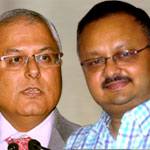
  • Jaldi 5 with Partho Dasgupta & Neville Taraporewalla: No boring panel discussions and screaming on IAA Debates

    The India chapter of the International Association of Advertising has had a superactive calendar over the last year-odd. And one of the events that’s been making waves is the IAA Debates which are held across major cities on issues and themes that are vital to the industry and of course are much debated*.


    MxMIndia spoke with the co-chairs of the IAA Debates – Neville Taraporewalla (General Manager, Microsoft India) and Partho Dasgupta (CEO, BARC) on the success of the event series:


    01. The IAA debates have been a huge hit. While it would looked like a winner idea even before it started, did you think it would be so much fun when you embarked on them?

    At the outset, we need to thank Mr Srinivasan Swamy,  the IAA ( India Chapter ) President to give us this platform and allowing us blue ocean the opportunity. Yes, at the cost of sounding a bit arrogant, we knew it was a winner of an idea. We have dime a dozen panel discussions happening in Industry events all over but they are all very mushy and goodie-goodie discussions. Television debates have become monotonous and one way where the anchor tends to drive the discussion as to where he wants to. Our objective was to ensure that there was truly a debate! Thoughts and ideas are shared by leaders supported by hard facts and data to make a point rather than shouting and screaming that we see on television being based of as a Debate. Further, we wanted to infuse some energy into this and make them relevant with topics that are being discussed today. Hence we made the format very tight, went with classical debating and had some amazing speakers. It had to be a winner !!!


    02. Normally such properties have a fixed element in the form of the moderator. But you’ve gone out and changed them. Any reasons? Also, wouldn’t it be great to have it on a fixed day of every month – like the first or last Friday of a month?

    The fixed element in this is IAA Debates. Nothing or nobody can be bigger than that brand. We try and invite senior people for the debate so a fixed schedule is logistically difficult hence we have to be flexible. I guess this has worked very well for us. Our objective is to ensure that our topics are debaters are relevant to ensure we are able to help the industry actually take a point of view based on the arguments made by the debaters. That has resulted in some interesting results. For example in the first debate, the audience post the arguments continued to support traditional media than digital! We all thought the team speaking on behalf of digital would have a cakewalk but once the arguments were put forth, the audience actually voted for traditional media. Though it was a slender margin, but it was in favour of the underdog creating some excitement for everyone at the event. Similarly, the one in Bengaluru, and then the one at Social Media Week actually gave very different results.


    03. Have you had any reservations from industry captains who do not want to be seen on the losing side, at least in pubic?

    Not really, we have on the other hand, been surprised at the way everyone agrees to take part, whatever maybe the outcome. Take for example, Arun Anant, Group CEO of The Hindu who you wouldn’t have heard him in many forums. One call and he was on. We are building momentum. When we invite speakers, they know that to get a invite for this event is special and in most cases we get positive responses. We have been transparent and clear that the topics cannot be changed to suit the speakers and they like the stand. Our topics are carefully selected by the two of us and worded to ensure it appeals to the format that we have designed. Our speakers have loved it and we have got a pat on the back from our sponsor too.


    04. Your first edition was on television, why weren’t the others? It would be good for television, na?

    Yes, there are some contractual issues. We will sort out. The format is ideal for packaging for television. In fact, we would be happy to discuss this and take the IAA Debates onto the television platform.


    05. You’ve raised the bar on guests already with Subramanian Swamy and Jawhar Sircar… so who’s coming up next?

    Aha!!! You surely don’t want us to give out the surprise elements. Be assured – you will hear and see great names, and many whom you have not heard before. Our effort is to build this property over time and the fact that we have consistently done it is a good runway for many more debates in the coming months


    *Disclosure: MxMIndia has been partnering IAA’s Face to Face webinar series


  • Jaldi 5 with Jasmin Sohrabji: Digital is always a focus for Omnicom Media Group

    By A Correspondent


    It’s been around a fortnight since the Omnicom Media Group announced the setting up of PHD, its second media agency in India. Some six years back, OMD opened shop and has since been recognized by all – competition included – as an established player in the Indian market.

    Although she didn’t reveal revenue targets, Jasmin Sohrabji, Chief Executive Officer – South East Asia and India of Omnicom Media Group spoke on the setting up of PHD, client acquisition and how digital is huge for Omnicom.


    01. OMD started operating in India in 2007. So why did it take so much time for PHD to take off in India, especially since it’s been here informally in the country for almost a year?

    We wanted to establish OMD’s value proposition clearly in the Indian market, and consolidate operations before launching our second brand. In the short span of six years, OMD has carved a distinct identity for itself in the market and provided Omnicom Media Group a strong base to launch PHD.


    02. From the year-odd that PHD has been in India, are there any learnings for the way the business is done here vis-a-vis other markets?

    While it’s still early days, we expect to see PHD India as a strong shining star within the global network given the focus on planning and digital already in our group’s DNA in India.


    03. The Unilever digital business is with you in India. Are you expecting other alignments to happen soon?

    Going forward there will be some restructuring and realignments for PHD India including HP, HTC, SC Johnson etc


    04. Is there too much reliance on these alignments happening, or is this what you expect will happen in terms of commitments?

    Global alignments provide an opportunity not a guarantee of business. Like OMD, we will grow PHD from wherever opportunities come, globally, regionally and locally.


    05. Digital is typically what PHD is focused on. But in India, the spends (and if one may even add trust) on digital isn’t much with the budgets of even the big spenders being very small. In what way are you looking at evangelising the medium?

    Not just at the brand level, digital is always a focus for Omnicom Media Group. In India, digital accounts for a significant percentage of our growth and we see this only scaling further.


    5a. Are you going to be working with creative solution providers externally or in the long run will you have some resources inhouse?

    We operate on a flexible model, with both internal resourcing as well as strategic partners.


  • Jaldi 5 with Liza Saha & Umesh Nair, co-chairs, Praxis2013: No old speakers… and the biggies aren’t upset

    Liza Saha
    Umesh Nair

    While Promise Foundation co-founder Amith Prabhu is still very actively involved with Praxis 2013, the nitty gritty of the organizing has been passed on to two young co-chairs – Liza Saha and Umesh Nair.


    Ms Saha is an Indian Insitute of Mass Communications graduate and has been with Text 100 for six years. And Umesh Nair, an MBA from the Indian Business Academy, has spent time with GBM in Mumbai and then Fleishman Hillard in Mumbai, Bangalore and now Kuala Lumpur.


    Given that they are not the grey-haired officebearers that one has come to associate associations and conferences with, our questions too had a slightly hat ke tone. And may we add, the dudes handled it well. Read on…


    01.   If I am a PR or corporate communications professional, is there any reason why I shouldn’t come to Praxis 2013?

    No, absolutely none. Fabulous line-up of speakers, grand second edition of the Summit, great location to spend a weekend indulging in knowledge and bonding – what more could a PR or Corporate Communication professional ask for.


    For those not able to make it to Praxis 2013, make sure you don’t miss next year’s summit.


    02.   We read somewhere (ah, well, on MxMIndia) that none of the speakers from the last year are being repeated this year. The holy cows must be upset, na?

    Yes, that was indeed a bold decision.  Our approach to the event design has been different in every possible way. We were very clear post the first edition that we will keep this Summit unique in terms of speakers, content and give preference to new faces.  Surprisingly, most of the speakers from last year have taken this in the right spirit and are supporting our decision wholeheartedly.


    03.   While it’s good to see you move venues – so from the south to west and next the north or east, but Summits across the world are known to prefer a fixed venue. Goa in the off-season isn’t too expensive?

    It has been a conscious decision to not restrict the Summit to a particular venue. There are three reasons for doing that. First, we want attendees to have equal opportunity in terms of proximity and attendance from the three metros. Second, we intend to make this Summit, the one that the entire fraternity looks forward to attend on a yearly basis purely for its rich content in an aspirational locale. New speakers and new locations is the mantra. And third, this aligns well with our approach to do things differently. We do not want to do what most Summits follow across the world.

    03a. Gosh, three metros only. So no Kolkata and around… why nothing in the East?

    We are open to going to zones from where there is enthusiasm about an event like this. We are looking for places closer to the hubs/major locations of the profession. Watch out for the next location till then and look forward to your recommendations.

    04.   Given that this is the fourth question, can you give us in four tweets – hence 4 x 140 characters – what the unmissables are at this year’s edition

    Two keynote speeches, one by Peter Chadlington, CEO – Huntsworth Group and Mukund Rajan, Chief Ethics Officer – Tata Group


    Watch out for the panel on Public Relations and Journalism: The Changing Equation on Day 1 with some leading editors and the panel on Indian PR’s place in Asia on Day 2 with three regional CEOs


    The three masterclasses on Public Affairs, Measurement and Employee engagement have been carefully designed for participants by experts


    Lastly, the Ambili Menon concert on Day 1 and music by BayBeat Collective on Day 2


    05.   Anything you are happy not doing at Praxis?

    There are two things we are happy not doing – one is on-the-spot registrations, which just complicates a lot of things and the other is live streaming because the idea is to get people together and we can always upload videos in the future.


  • Jaldi 5 with Toby Daniels, CEO, Crowdcentric: Mumbai felt like a natural fit for SMW13

    Toby Daniels, Founder & Executive Director, Social Media Week, and CEO, Crowdcentric is going to be among the speakers at the Social Media Week Mumbai (September 23-27), and is excited about the concept taking shape in India and Mumbai specifically. Fatema Rajkotwala engaged him in a quick Q&A on the eve of the event.


    01. How has the experience been so far in the process of organising the maiden Social Media Week in Mumbai?

    We are always excited to SMW expand. Given India’s presence in the mobile and tech space, Mumbai felt like a natural fit for SMW13. SMW is a distributed conference and we’re honoured to have RSquare Consulting taking the helms for SMW Mumbai. The team has been responsive and quick to help us understand the cultural aspects of hosting SMW in India. We can’t wait to see the week unfold.


    02. Tell us how India and Mumbai specifically are viewed globally in terms of digital footprint?

    India is emerging as a major digital force. The Facebook userbase here has amassed more than 60+ million. Yet, we know that it’s only beginning to grow. Social media is available for only 60% of the entire Indian audience, and we think Mumbai’s digital industries will be a leader in helping bridge this digital gap.


    03. What is Crowdcentric’s vision and philosophy for SMW now on?

    We are experiencing one of the biggest shifts in how we communicate in human history. Because of this, our aim is to provide the best information, ideas and inspiration to help people understand how to achieve more in a hyper-connected world.


    04. Social media is the flavour of the season now, but a decade hence?

    We are often asked about the direction we plan to take Social Media Week and what we’ll do when social media is no longer en-vogue.


    Whether social media as a term is popular in the future or not has no bearing on the mission we’re embarking on.  The world is changing is fundamental ways due to the speed at which technology has permeated our lives and created a connected society.  For example, in the past 10 years, 3 billion people have connected to each other through the Internet and mobile technology.  This has already created a seismic shift in how we connect and communicate, but it’s really just the tip of the iceberg.  In the next ten years, as technology continues to advance, as the global population continues to grow, especially in emerging markets such as China, India and in Latin America and Africa and as mobile technology becomes even more ubiquitous we are going to see an additional 3 billion people  join the grid and come online.


    05. And the impact of Social Media on society?

    We can’t tell what impact this will have and we’re not sure how societies, governments and economies around the world will change as a result, but with the support of some of the world’s brightest minds, our community, our Local City Organizers, we aim to be the biggest and most influential platform that connects people around the issues that matter and a be the most important platform that provides a way for us to explore how our lives, culture and human behavior will change in the future.


  • Jaldi 5 with Rajesh iyer, Marketing Head, Colors: Bigg Boss has become a cult show on Indian television

    As a programming property, Bigg Boss has become huge for Hindi GEC Colors. Not just in terms of the efforts to put it together and bring in celeb guests, but the push on marketing and promotions. Season 7 of the show which is being aired for the sixth consecutive year on the channel took off on Sunday, September 15 with much fanfare. MxMIndia posed a few questions to Rajesh Iyer, Head of Marketing at the channel on the format of this year’s edition and Bigg Boss’s role as a buzz creator for his channel


     

    01: This year sees some interesting twists to the Bigg Boss format. In fact, the division of contestants makes it for ‘alag chhe’ as against ‘Saath 7’?

    Last year’s theme was ‘Alag Che’ because there were a lot of new elements introduced whether it was the talking parakeet or the Talking fish. This year’s theme is truly Saath 7. It acknowledges the co-existence of Good and Evil inside of each one of us  – that none of us are  entirely good or evil, but it is the circumstances that bring out the best or the worst in us.


    The division of the Bigg Boss House into 2 parts aims to drive this concept further by making it a part of the product


    1a: The 9PM slot would of course mean that the family values would be maintained in what we see on the tube?

    We brought Bigg Boss back to the 9PM slot last year to family audiences and were successful in making the show an integral part of dinner-table conversations. This season, even with the Heaven and Hell format, we are catering to family audiences – something that becomes evident with us including a husband-wife duo within the list of contestants who have entered the house.


    02. Do you see it generating a greater buzz and consequently ratings for you?

    Bigg Boss is a huge property for us when it comes to generating buzz. In fact, the launch episode which aired on Sunday, 15th September saw Bigg Boss trending on Twitter at the #1 spot. With regard to ratings, the show’s fan following has been growing by leaps and bounds season-upon-season. We are certain that the incredible mix of contestants that have been roped in for Bigg Boss Season Saath 7 will be received really well by audiences.


    2a: Any target for TVTs?

    A: Bigg Boss has become a cult show on Indian television. Ratings are just one by-product of the show. The buzz that the show generates amongst audiences is too huge to measure. Also let’s not forget the unending discussions on radio stations and news channels – regional and national – once the show gets into its element.


    2b: Any specific reasons why the Salman Khan episodes have been moved to Saturdays and Sundays instead of Fridays and Saturdays?

    A: With the success of Jhalak Dikhhla Jaa and Comedy Nights With Kapil, we have realized that there exists a huge audience group that tunes in to watch their favourite shows and artists on television on Saturdays and Sundays, owing to which we have introduced ‘Wow Weekends with Salman Khan’.


    03: The competition from rival channels in buzz-creating shows is a lot more this year. There’s Mahabharat on Star Plus, Sanjeev Kapoor on Sony… Too much to watch on the Hindi GECs?

    Yes. There are a lot of options for audiences and that is always a good thing. But Good content always prevails. The Bigg Boss franchise has done well for so many years now and we are confident that this year too it will triumph.


    3a: Jhalak Dikhhla Jaa has just completed, Bigg Boss has just started and 24 very soon… In fact we, in the media, have received an invite for the launch presser on Thursday (Sept 19). Plus some interesting movies. For COLORS, the season’s more than just busy. Any more action expected?

    The last quarter of the year is always a busy quarter for us with the launch of Bigg Boss. This year, we have the added bonus of 24 launching as well and India’s Got Talent will be launching later this year.


    Bigg Boss 7 has a fairly high voltage digital presence? Is that the way to go for big budget Hindi shows?

    The Bigg Boss content has always found favour with the digitally savvy audiences.. This is primarily because the show caters to a voyeuristic audience giving them something new to discuss every day for the period of 104 days thereby making it viral and keeping them engaged throughout the duration of the show.


    05. One is aware of Bigg Boss’s role as a buzz generator for Colors. So do you’ll internally see the spends on it as a marketing cost or a content/programming cost?

    This is one of those shows which delivers both on buzz and ratings.


  • Jobs in Media: Slow & Unsteady


    By Johnson Napier


    With news of employees being given the pink slip occupying news space almost frequently, the going has been getting tough for many in the Media & Entertainment sector. While experts and analysts had predicted a recovery a few quarters ago, the situation seems to be almost static or on the downfall in some cases.


    When MxMIndia had spoken to experts almost a year ago, the opinion seemed divided on the prospects of a recovery. Whether the situation has changed and whether jobs will be hard to come by at this juncture is anybody’s guess. We speak to the job experts to assess the situation…


    Abha Kapoor, Executive Director, K&J Search Consultants
    The turbulent economic environment that is marred by tight liquidity, slow economic growth, the devaluing rupee and rising inflation has impacted advertising revenues. Subscription revenues are far below their potential as the benefits of digitization are yet to kick in. With margins under pressure many media companies are in consolidation mode whereby they are rationalizing marketing, distribution, programming and people costs. The hiring sentiment is therefore subdued. In fact, hiring is happening mainly at junior and mid levels with almost no movement at senior levels. This ensures that costs are low and fresh young talent comes in. Contractual/consultant hiring is also on the upswing. Specialist professionals are being pulled in for specific projects and not on payroll basis thereby controlling the fixed costs, in an extremely dynamic industry scenario.


    Also, the M&E sector has been overvalued and over leveraged in the past and hence in the current scenario, funding to this sector is further constrained. Therefore new initiatives/expansion plans with the exception of digital/new media have slowed down or are on hold which means – fewer start-ups and fewer replacement requirements as professionals hold on to their jobs!”


    Ashish Pherwani, Partner, Media & Entertainment, Ernst & Young LLP
    The first quarter of FY13-14 has seen some good results from companies, whether television, print or radio, and there has certainly been both ad volume and (a slight) rate growth. The new reality is that one can expect a tough working environment till the next elections. There are several positives for the media industry today such as increased revenues from DAS, rising cover prices of newspapers, the (always) imminent Phase III of radio licensing, and rising box-office collections of films on the one side, but this is being countered by a weakening rupee which is pushing up prices, falling stock markets and investor confidence, slowdown in some industrial sectors like auto, etc. It’s a precarious balance, and the winners will be those who can optimise costs, deliver audiences, and demonstrate that delivery.


    Pankaj Raj, Director, Search Value Consultants Pvt Ltd
    The M&E sector is poised to double in size by 2017. With a surge in digitization and a future forward election year approaching, the sector is poised to see sustainable growth.

    It’s easier today for global media organisations to dig deep in the market. They have understood localisation of content and strategy is the biggest leverage in the market.

    To produce this for the consuming millions, it is necessary to tap into relevant talent which now upgrades itself as fast as technology.

    The job market in the M&E has been slow in the last few quarters but there is still a lot opportunity for people having three specific competencies


    1) Ability to work and deliver in chaos and difficult situations

    2) People who have a genuine consumer and customer connect

    3) Can reinvent themselves with changing times and situations and regulations. What got me here is not going to take me further.


    Another trend we are picking up is the opening up of relatively unheard of sectors in the media space - digital, digitised distribution, VFX, online video, films finally seeing a level of corporatisation, the opportunities are still aplenty for the right people. One needs people with new skills to run these domains and hence this opens up parallel industries of training, creativity and new age leadership modes.


    Lastly, the sector seems to be open to the “non-media” talent like never before. There are many examples of people who joined the sector from consumer facings business backgrounds and have made a success of themselves.


    Sarabjeet Sachar, Founder & CEO, Aspiration
    The media sector is in a bad shape at the moment with the advertising revenues plummeting by significant levels. With reducing value of rupee, rising inflation etc traditional mediums like newspaper, television, radio, out of home etc are either in a static state or have gone down. If one were to see the hiring trends taking place right now, it is taking place in the digital and mobile domains. It will probably take a long time for a recovery to happen; I presume it will take even longer after the elections are over. If an economy like US takes about five years, we may take double of that to return to normalcy.


    From the business perceptive, the only domains where there is action being witnessed is experiential marketing and digital and mobile. Also, hiring is taking place at the junior level while at the middle and senior level there is hardly anything being witnessed.


  • Jaldi 5 with Amit Nair, Khana Khazana: There’s enough space for all and more channels to co-exist

    By Johnson Napier


    With plenty of options to toy around with, channels catering to food and lifestyle are leaving no stone unturned in offering programming of varying nature. Like Zee Khana Khazana that has announced the launch of its new show ‘World of Food’.


    According to Amit Nair, Business Head, Zee Khana Khazana, the show will seek to offer inspirational stories about how food has changed the destiny of people. He converses with MxMIndia about the show and what more the channel has in store for its audiences in the coming months.


    01. What’s unique about ‘World of Food’ that you think will create a distinction in the marketplace?

    The kind of stories that we carry on our show is what makes it unique. There are inspirational stories about how food has changed the destiny of people. There are stories about landmark eating joints of Indian cities plus of course we are getting India’s best chefs to the fore front. We believe these kind of stories will resonate strongly with our audiences who like varied content in the food space.


    02. How has your channel handled competition being put up by other channels catering to food & lifestyle genre?

    There is a huge demand for food content and there is enough space for all and more channels to co-exist, what distinguishes us from the rest is the interactivity our shows have and the fact that we are in Hindi. We are also strong on the digital space with our website – www.zeekhanakhazana.com and on social. We also do regular ground connect activities across many cities where we have seen very high response.


    03. What has been the effect of digitization on your channel?

    Digitisation has helped us increasing our presence across all major digital cable networks in the country. This increased presence has shown a marked increased in our TVT numbers showing more tune in and time spent.


    04. Is the current economic scenario a cause for concern for your channel? What has been the response from advertisers/brands towards your channel?

    The business model of the channel is set as a subscription based channel. With our revamped content we have found very good traction from our viewers.


    05. What is the way forward in terms of programming for your channel?

    We have many exciting offerings planned for the consumers in the coming months both in the instructional and experiential space. In the near future we are launching “How se Wow tak” which seeks to demystify cooking and provide answers to queries that people have related to cooking , post that we will be coming out with a show targeted at the urban working audience. You can expect new launches practically every month.


  • Jaldi 5 with Nikhil Madhok: Be prepared to be amazed by Junior MasterChef talent

    While the seniors were busy showcasing their culinary skills to the nation a few weeks ago, it is now the turn of their junior counterparts to prove that they too can match them all the way. With the inaugural season of Junior MasterChef – Swaad Ke Ustaad set to be kicked off this weekend, Nikhil Madhok, Senior Vice President, Markerting, Star Plus tells MxMIndia’s Johnson Napier what the show has in store for its audiences and why it could be a game-changer in the kids programming genre.
     

    01.We’ve seen much promotion on Junion MasterChef. Can you highlight what’s different about the Indian edition of Junior MasterChef that goes on air this week?

    After three successful seasons of Amul MasterChef India, we wanted to do something different for our viewers. So we decided to launch an edition with kids. For the first time, you will see kids showcasing their cooking talent. You’ve seen kids singing, dancing and acting, but never seen them doing some serious cooking. With Junior MasterChef, they enter a territory that was till now assumed to have been owned only by adults. You will be amazed by their talent.


    02.Worldwide, how has the junior version of the renowned series been received by the audiences? And what are your expectations form the Indian edition?

    Junior MasterChef has been very successful internationally and we believe the Indian edition will also do very well. The recently concluded third season of MasterChef did very well and we are hoping to recreate the same magic with JMC as well. These kids have some serious cooking talent and can take on adults both with their culinary skills and knowledge. Not to mention the fact that is much more amazing and inspiring to see kids cook.


    03.Does it matter that corresponding season shows in India are not consumed as generously compared to the first? What has been your experience on that front?

    That’s not true for all shows. The recently concluded 3rd season of MC 3 was extremely popular and reached out to millions of viewers. In fact the success of the third season has prompted us to bring out a new variation in the form of Junior MasterChef.


    04.Do you see the digitization exercise bolstering your chances of delivering good ratings especially from newer markets?

    Digitization gives the viewer not only a better access to the content but also a superior viewing experience.  This is beneficial to all content not only JMC.


    05.What has been the response from the advertisers for the inaugural JMC?

    The response from the advertisers has been great. Amul’s association with the show goes back a long way and they continue to be the main sponsors for JMC as well. In addition Fiona, Pigeon and Yippee Noodles are already on board as associate sponsors.


  • Jaldi 5 with Arun Anant, CEO, Hindu: No plans to launch ‘Hindu’ in Mumbai

    By A Correspondent


    So does the entry of Hindu’s schools edition into Mumbai mean that the bigger daily will follow suit soon? MxMIndia asked this and some other questions to Hindu CEO Arun Anant, and got responses which are clear, direct and unambiguous. Excerpts:
     

    01.  While The Hindu is well-known brand, not all schools and school children in Mumbai may be familiar with the brand. Why this decision to launch the Hindu in School in Mumbai?

    We have a  product based on the Hindu editorial values customised for children that we launched last year and has been well-received by the children, teachers and parents. We therefore felt that it would be good to increase the footprint of the school edition to other markets


    02.  Any plans for a launch in Mumbai for the main paper? Is this move an effort to catch them young?

    No. We have no plans for a launch in Mumbai.


    03.  Other than being a circulation-booster for the parent edition, what kind of revenues does your schools edition generate currently in the rest of the country?

    We expect this initiative to be cost-neutral.


    04.  What are your targets for the Mumbai schools edition Will you also extend this to Pune and around Mumbai?

    We would like to extend to Pune. We have no specific targets for Mumbai yet.


    05.  Are you looking at marketing promotions and any activity for schools who subscribe in bulk?

    We will do some events and ground level education initiatives for schools across the country


  • Lokmat Samachar launches 7th edition in Chhindwara, MP

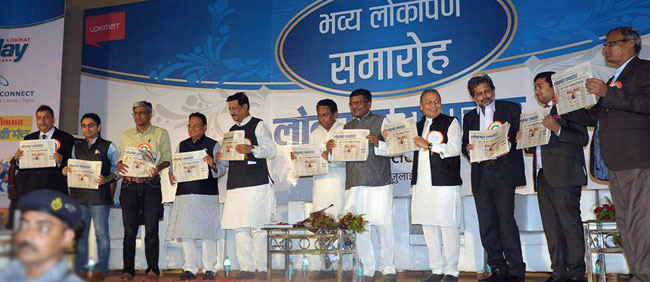
    Senior politicians and journalists at the launch of the Lokmat Samachar edition

    By A Correspondent


    The Lokmat group launched the seventh edition of its Hindi daily Lokmat Samachar with much fanfare in the industrial town Chhindwara in southern Madhya Pradesh last Friday (July 12).


    The edition was launched by Union urban development minister Kamal Nath who praised the Lokmat group for launching the paper in Chhindwara. “While Bhopal cannot become Chhindwara, Chhindwara can become Bhopal,” he said adding how the city had changed a lot over the years with its citizens redefining their concept of development.” An aggressive marketing drive was also initiated to coincide with the launch.


    Jaldi 5 with Vikas Mishra, Editor, Lokmat Samachar: Loads of surprises in store for readers

    A quick Q&A with Vikas Mishra, senior journalist and Editor of Lokmat Samachar.  The Hindi daily is published from Nagpur, Aurangabad, Akola, Kolhapur, Jalgaon, Pune and now Chhindwara

    01. It’s interesting that you have launched the first edition of Lokmat Samachar in Madhya Pradesh from Chhindwara and not a larger city like Indore or Bhopal? What was the reason for this decision?

    Chhindwara has very close contact with Nagpur and the distance is only around 130 km and earlier also Madhyanchal edition of Lokmat Samachar was circulated to Chhindwara and adjoining areas. There was a demand of readers to have a separate edition for Chhindwara because it’s a fast-growing city of Madhya Pradesh, hence we have launched our edition from here.


    02. You already have six editions in Maharashtra. Editorially, how much of a change will the Chhindwara edition have from the others edition in Maharashtra?

    We are having a separate edition of Lokmat Zamachar for the readers of Madhya Pradesh named Madhyanchal since two decades and it’s quite acceptable in several districts which are situated on the border of Maharashtra and MP. We already have bureaus in Bhopal, Indore, Jabalpur, Ujjain and Ratlam. We are making them more stronger.


    03. Any specific issues or campaigns that you expect to take up in the next few months at Chhindwara?

    Wait and watch. We have a lot of surprises for our readers which will be unveiled on a regular basis


    04. The language spoken by people in Chhindwara would be dramatically different from that of people in, say, Pune or even Kolhapur? Is the Hindi that use in the headlines and stories different in the Pune and Chhindwara editions to suit the local taste?

    Chhindwara edition of Lokmat Samachar may be the first independent edition of Madhya Pradesh but as mentioned earlier, we have had our Madhyanchal edition for two decades and hence have had a strong relationship with the readers of Madhya Pradesh. I personally know the journalistic taste of MP because I have spent 25 years in the state.  As far as the headlines and stories are concerned, we always try to write simple Hindi which is acceptable to each and every Hindi reader.


    05. In the run-up to the State Assembly elections in MP later this year, are you looking at expanding in MP and Chhatisgarh?

    The decision will be taken by the management.


    The event was also attended among others by Leader of Opposition in the Rajya Sabha Ravishankar Prasad, Maharashtra Chief Minister Prithviraj Chavan, Chairman and Editor-in-chief of Lokmat Media and Rajya Sabha member Vijay Darda, Maharashtra School Education Minister Rajendra Darda, Executive Editor of Aaj Tak Punya Prasoon Bajpai and Ashutosh, Managing Editor of IBN7.


    Editorial Director and Joint Managing Director Rishi Darda, Executive Director Karan Darda, Lokmat Samachar Editor Vikas Mishra, Product Head Mateen Khan, Resident Editor of Lokmat Samachar’s Chhindwara edition Devesh Thakur  were among those present on the occasion.


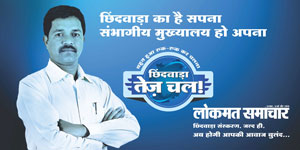
    The brand campaign for the Chhindwara edition launch of Lokmat Samachar


    A seminar on “Role of politics and media in the development of common man” was held on the occasion. The Maharashtra CM stressed the need for the media to maintain its neutrality and impartiality. He said both mediapersons and politicians carried a heavy responsibility on their shoulders. He expressed concern over a section of the media resorting to unscrupulous means to increase circulation. He said it is the primary duty of the media to inform the policies and programmes of the government to the masses.


    Speaking on the occasion, chairman and editor-in-chief of Lokmat Media  and Rajya Sabha member Vijay Darda said the main duty of the media is to bring about change in the life of the common man.


    He said Hindi can play a prominent role in unifying the country. He also added that Lokmat did not represent any political party but just acted as an impartial organ of public opinion.


    Maharashtra school education minister Rajendra Darda said there is a sea change in politics and media in the last two decades. During the pre-Independence era, there was coordination between the media and politics which is no longer seen. The media is the protector of the public interest.


    Ravishankar Prasad stressed the need for the media and politicians to establish a dialogue with the masses to prove their relevance. “The media should understand the agony and anguish of the common man and reflect the same through its columns only then it will win the appreciation and trust of the masses,” he said, adding: “The common man stayed buoyant about the future of the country.”


    Punya Prasoon Bajpai said there was a communication gap between the politicians and the common man. The politicians often use the common man during elections and then forget them till the next election. He also said the media needs to highlight the common man’s concerns to establish a link with the masses. If mediapersons or politicians establish a line of communication with the common man, the country will progress.


    Ashutosh said there has been a massive transformation in the country since 1950.  The country has seen technological as well as intellectual development. Common man has changed his thinking a lot. The Indian society has attained a maturity and they can no longer be conned by anybody. This is high time both politicians and mediapersons established a close contact with the common man and reflected his concerns.


    The Chhindwara launch marks the Lokmat group’s 21st edition in the country..


  • Jaldi 5 with Ashwin Padmanabhan: The retro way to rise in ratings in Mumbai

    Two Sundays back, Reliance Broadcasting Network Ltd’s 92.7 Big FM in Mumbai switched from being a current hits radio station to one that plays retro music. Last year, after it did the same in Delhi, the station leapfrogged the RAM ratings charts to the Top 3. With the change to retro, the RBNL thinktank hopes to achieve much success in Mumbai too.We posed a few questions to Ashwin Padmanabhan, Business Head of the 45-station 92.7 Big FM. Here goes the Q&A.


    1. So why the switch to retro in Mumbai too?

    We initiated an exhaustive research to evaluate the preferences of our listeners and understand our brand positioning better. The results showed that listeners favoured retro music and there emerged an opportunity to offer listeners music and content of their choice. This decision was also influenced by the success generated at the 92.7 Big FM Delhi Station, which went retro sometime ago and the market has reacted exceedingly well. The response from listeners was overwhelming, with the station reaching leadership numbers.


    2. Would you go retro with your other stations too?

    We have never believed in a one-shoe-fits-all format. We evaluate and treat each market independent of the other and understand the requirements of each individual market. We have gone retro in six markets – Mumbai, Delhi, Baroda, Kolkata, Bhopal and Rajkot.


    3. 92.7 BIG FM was meant to be a mainstream FM radio station. By going retro, while your listenership rises, you move away from the mainstream… something that you would’ve possibly have as your second station do post Phase 3?

    The team has mapped out its positioning strategy based on unique yet strong on-air and digital concepts, while taking into consideration the lifestyle of Mumbaikars, the amount of time they spend in travelling and the blend of listeners in Mumbai. Although the stationality has been changed to retro, the revamped content strategy will also bring to listeners a plethora of current happenings in the city including stock and gold updates, city affairs, traffic and weather updates, sports, music-related trivia and more. In addition to this, 92.7 Big FM Mumbai intends to keep up with the local roots of Maharashtra by airing Marathi music and will have Marathi-speaking RJs as well. So no, I would think we are still very mainstream.


    3a. Tell us more about the local Marathi content? How much of it will be at peak hour?

    We are still working on this and might be a little early to talk about.


    4. How do you anticipate the retro positioning faring in terms of ratings?

    Well, we believe this will work in the Mumbai market. Our endeavour is to break the clutter and offer listeners content that is engaging and meets their aural preferences. Right now might be a little premature, but the feedback coming in from across the city has been extremely encouraging. We are confident it will work well with listeners.


    4a. Yes, your Delhi ratings have most certainly improved… In terms of ads, how has the higher ranking helped?

    Advertisers pan India have supported our decision. Differentiation is the way forward, and our advertisers realize that.


    5. What does your Delhi experience say… does retro music alienate the young and restless?

    Certainly not. We think the music from the sixties and seventies has always been appreciated by listeners across age groups. We think 92.7 Big FM can offer a distinctive change from the monotonous pattern of music that is heard elsewhere. We have seen an increase in listenership and are very happy with the results of the new positioning.


  • Jaldi 5 with Ritu Dhawan: Hindi news is for both masses and the classes

    For someone in the news television business, Ritu Dhawan prefers to stay away from the limelight. But with India TV having established its numbers and an A-team in place, the objective has been to assert the channel’s supremacy over others. In this Q&A, Ms Dhawan, Managing Director and CEO of India TV, speaks on how Hindi news channels score over their English counterpart, the recent ad campaign in the trade and preparations for the channel’s 10th anniversary.


    01. It’s interesting to see your latest ad campaign taking on the English news channels on viewership numbers. Why this desire to put down English channels… it’s not the first time that a Hindi news channel has done so?

    We don’t intend to put down English channels or any other channel for that matter. Our attempt is to clear the misconception in a small section of the trade, that India TV is not for the affluent. Some rivals have been indulging in this propaganda for some time. It is high time that we told the truth. This campaign communicates a ground reality. All English news channels put together have been used only as a unit that a section competition has used over a period of time for comparison. We have just added a bit on numbers and made it holistic with top Hindi News Channels compared against the said unit.


    01.a Is it because advertisers are biased against Hindi news channels to advertise their premium products?

    The fact is that there is a set of advertisers who prefer to advertise premium products on niche channels including English news. But we don’t look at it as a threat. No genre can take care of overall advertising objectives alone. It is about co-existence. In fact Hindi news is for both masses and the classes and this is the biggest strength of the genre.


    02. We did a dipstick on the theme of your current campaign and the feeling has been that leading Hindi news channels such as yours should stick to their core strength of reaching out to the masses. Your comments?

    While we agree that we are a mass leader, but who says that a mass leader cannot be a class’ choice. Numbers speak louder than words. The campaign in question only compares competition over last 3 months but having said that if you delve a little deeper you will find that the same trend continues, particularly in terms of leadership rankings on same data parameters and markets spread over last two years. Thus, it is safely claimed that India TV is a consistent leader even on the parameters as communicated in this specific campaign. And yes, we are sticking to our core strength only.


    03. If you are indeed looking at positioning yourself as reaching out to the urban elite, would you also look at making any shifts in your content strategy and packaging to appeal to those sensibilities?

    Precisely this is what we are communicating. We are already reaching out to the urban elite. In fact we are the undisputed leader in India’s top two markets – Delhi & Mumbai for a very long time now. We just have kept a little low profile on this till now. Thus content strategy doesn’t need any major changes, but yes, as we have always been, we will always be innovative and adapting to the fast changing preferences of our vast and varied audience.


    04. How has digitization (Phase 1 and 2) been for you (as in, how has it impacted you)? Also, have things improved post the LC1 measurement by TAM given that it tracks more markets in your stronghold of HSM?

    Smooth transition during digitization has been the challenge for TV industry in general & news genre in particular. With digitization, India TV has emerged even stronger. In digitized markets of Delhi and Mumbai,(which also are the highest weightage markets for Hindi news viewership and priority markets for advertisers), India TV is leading with a huge gap now, with the nearest competitor thus establishing that India TV content is viewers’ choice.


    Presently, LC1 markets are not an advertiser’s top priority in general (except for categories like FMCGs of course). We are doing reasonably well here but there is a slight scope of improvement here. We are sure that the said improvement will happen pretty soon… much sooner than these become priority markets for advertisers.


    05. India TV launched on May 20, 2004. As you embark towards the 10th anniversary mark, are you looking at any new launches? Any plans on the English Channel which was once being discussed? It is also a big year for news channels given some state and of course the general elections? Do you see space for regional channels?

    Certainly yes, you can expect certain announcements soon. We have been waiting for the digital-transition to smoothly settle down. We have our plans ready. Timing you will get to know soon.