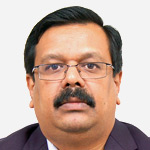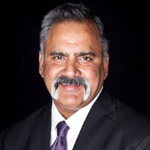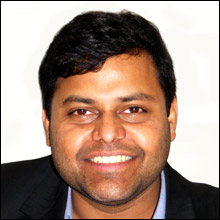
Tag: Jaideep Shergill

  • MSLGroup Asia finance summit chalks out new initiatives for Asia market

    By A Correspondent


    MSLGroup, Publicis Groupe’s flagship strategic communications and engagement company, hosted its third Asian Finance Summit on April 18 and 19 in Hong Kong.


    The 2013 Finance Summit was the first one after the senior leadership appointments and the new organization announced recently. MSLGroup Asia puts financial and strategic communications at the heart of its development model, and decided to turn Hong Kong into the Asia hub for Financial Communications at the end of last year.


    Par Uhlin, Managing Director of MSL China, who has recently added Hong Kong to his portfolio of markets, has already started to strengthen business relationships between MSL HK’s financial communications department (led by Antoine Denry) and the two other financial communications practices in Mainland China – Shanghai, headed by Linda Du, and Beijing, headed by James Hawks.


    Dedicated to financial communications issues, the Finance Summit gathers more than 30 financial communications consultants from MSLGroup network, not only from Asia but also from Europe and the US. The agenda this year called for a mix of meeting room activities as well as offsite visits which were designed to drive future growth and focused on the following key areas:


    To explore the achievements and perspectives for financial communications across the region: organization, collaboration between offices, staffing, marketing plan;

    To identify the specificity of the Asian market compared to Europe and the US in regards of the clients’ needs and the macro-economic environment;

    To dig out the role of Financial Communications in financial transactions, especially in cross border M&As;


    To discuss how the financial communications offered can be renewed; new and original offers as well as best practices to share and circulate throughout the network, with a special focus on social media.


    The two-day seminar was also an opportunity to get the points of view of different experts about financial markets or financial communications trends. Among the speakers who joined the roundtable/discussion:

    A Hong Kong Stock Exchange spokesperson who detailed the competitive advantages of the HK market place and looked back on the last transactions;

    A journalist from Thomson Reuters shared his views of the ECM market trends in Hong Kong and in Asia overall;


    The APAC Head of Communications for a major financial institution highlighted the key points that agencies have to keep in mind to answer clients’ needs efficiently at a regional level.


    Jaideep Shergill

    Jaideep Shergill, Asia practice leader for Financial Comms, said, “We are in Hong Kong to address some of the foremost challenges on the market. It is important that we focus on turning these challenges into business opportunities. We must work together to showcase our strengths and specificities, to provide best-in-class advisory and grow in a sustainable manner on this very important market for MSLGroup.”


  • MSL announces six new wins

    By A Correspondent


    MSL India, part of MSLGroup India, Publicis Groupe’s flagship strategic communications and engagement company and the largest public relations and social media network in India, today announced the win of six new clients; Singapore Tourism Board (STB), Lenovo Smart Phones, Sheth Developers & Realtors, Usha International, V-Guard Industries and PC Chandra Jewellers. This large number of client wins reinforces MSLGroup’s position as India’s leading communications agency.


    MSL India will provide creative, strategic programmes, unbound by channel to drive brand building, corporate reputation management, corporate responsibility and crisis and issues management.


    Jaideep Shergill

    Jaideep Shergill, CEO, MSLGroup India, said, “Today, it’s not enough to offer capabilities within one channel. MSLGroup India is perfectly positioned to partner with our clients for integrated communications offerings, where our strategy and creative are communicated through traditional PR, social media, digital solutions, creative, content, marketing and experiential.”


    MSL India fought a multi-agency pitch to win an integrated communications brief for Singapore Tourism Board (STB). The mandate will draw on MSL India’s strength in delivering engagement campaigns across traditional PR and social media. The agency will be providing strategic counsel for digital campaigns and manage social assets in order to drive perceptions of Singapore as an international tourist destination. This assignment reflects STB’s strong relationship with MSLGroup, with the brand now working with the agency in two of Asia’s key growth markets – India and China.


    As Lenovo, the world leader in personal computers, continues its expansion into smart phones, it has tasked MSL India to support their business objective of consolidating its leadership position across all four screens – computer, TV, mobile and film.  MSL India will develop an integrated strategy to communicate the arrival of the PC+ era and the brand’s commitment to technology and innovation. Expanding their technology portfolio, MSL India will also work with V-Guard Industries to develop its core communications strategy to support business expansion plans.


    PC Chandra Jewellers, one of the largest and most established jewellery brands in eastern India has entrusted MSL India with an integrated assignment spanning PR, social media and experiential. MSL India will help position and promote PC Chandra Jewellers as a leading lifestyle brand. In addition, MSL India will partner Usha International, a renowned name since 1935 in multi-product consumer durables manufacturing, marketing and distribution. MSL India has been entrusted with corporate reputation management and product-related communications for the company’s diverse portfolio.


    MSL India also won Sheth Developers & Realtors, which has extended its real estate presence in India with its retail development Vivacity in Thane – one of the largest malls in India. With deep expertise and experience in the real estate and retail sector, MSL India will provide strategic counsel to the brand, executing holistic communications solutions reaching out to key stakeholders in Mumbai.


  • Jaideep Shergill now CEO of MSLGroup India

    By A Correspondent


    MSLGroup, Publicis Groupe’s flagship strategic communications and engagement company, has announced the appointment of Jaideep Shergill as Chief Executive Officer for MSLGroup India.


    While Mr Shergill has led MSL India, MSLGroup’s flagship full-service agency for some years now, he will now lead the group’s other arms as well – specifically, Creative+, Social Hive, 20:20 Social. MSLGroup Asia President Glenn Osaki said, “Mr Shergill has been instrumental in helping us position MSL India as one of the leading networks in the nation today, and has already been working with me and other MSLGroup India senior leaders to chart our aggressive growth and development plans for 2013 and beyond. His passion for our business, commitment to our people and will to win are relentless. I am honored to make this long overdue announcement to one of the most deserving individuals in our entire organization.”


    Mr Shergill’s senior-level appointment follows a landmark year for the MSLGroup network in India. MSL India shifted towards a more strategic consultancy approach, and repositioned itself from traditional PR practitioners to strategic communications and engagement consultants. The agency refined its brand identity by re-branding Hanmer MSL to MSL India, and led the market in thought-leadership by developing a series of compelling whitepapers that explored the Indian PR industry, economic reforms, e-commerce and society. Its second annual PR industry report, ‘Public Relations in India: Inside the Industry’s Mind and the 2013 Outlook’ was launched on January 16. The network also won many of the client pitches in India including Sony, eBay, Singapore Tourism Board, Intel, Haier, Bangalore International Airport, KPMG, Pfizer and many others. With Mr Shergill’s appointment, MSLGroup India enters a new chapter of growth and development that will increase its level of engagement with key local, regional and global clients.


  • LGBT as TG: For pride and prosperity


    Shielding themselves from social stigma, India’s gay people lived double lives – one for the world and one in which they were true to themselves – for the longest time. Today, thanks to aggressive activism, growing awareness and an increasing number of LGBT people coming out of the closet, a new world has opened up for them. They are now carving out their space as niche consumers, giving marketers a new target group.


    Smart marketers are taking note of this newly empowered community. A report on Business.com said that gays and lesbians spend more than $600 billion every year across the world. They’re a business owner’s dream because they are:


    » Affluent: The average annual income for a gay household is $61,000, 20.4% higher than a heterosexual household’s, said the website


    » Educated: About 83% of gays and lesbians have either attended or graduated from college


    » Loyal: Approximately 89% of gays and lesbians are brand-affiliated and are highly likely to seek out brands that advertise to them


    Jaldi 5 with Ashraf Engineer: ‘LGBT community in India is making its presence felt in various ways’

    By Johnson Napier


    ‘Out of the Closet and into the Marketplace: The Birth of India’s Pink Economy’ report released by MSL Group India, has thrown up some stark realities about a community that for long has been a subject of neglect by many. That marketers chose to stay away from them for long is something that this report terms as surprising but suggests that there are opportunities galore for brands if they want to tap into this community.


    Ashraf Engineer, until recently Senior Associate Editor, The Hindustan Times – Mumbai and now Content Head, MSL India answers a few queries posed by MxMIndia on the report and the immense scope it presents to the marketers.


    01. The Pink Economy report has brought to the fore many facets concerning the LGBT community. What are some of the noteworthy observations from the report that you would like to highlight upfront?

    The biggest insight that we received is that even after the decriminalisation of consensual homosexuality I think the LGBT community is making its presence felt in various ways. Among that, one of those ways is economic manners where they are expressing their consumerist desires etc where we are seeing the first steps towards them becoming an important consumer group. I would be wary of stating that an economic boom or revolution is happening but the report takes the pains to say that is not the case. What the report makes very clear is that we are seeing the first signs of the pink economy emerging in India.


    It’s interesting to see a few businesses already taking advantage of this trend like apparels and accessories, travel and also events. These three have already recognised the opportunity and are working towards catering to this community.


    02. Why conduct a study/research towards a community towards whom the society is least concerned about?

    Through this study, we’ve looked at what is happening in the market, spoken to experts and then have come up with insights that are transpiring within this community. You could rather term it as being a business insight report. As for the need, any business-related organisation like ours where it is our job to support various businesses and communication strategies – it is our job to spot a trend early. We believed that it is going to be an important segment in the days to come and therefore felt the need to do the report.


    03. How have the marketers taken to the findings from this report? Do you see them more eager now to reach out to this section of the population?

    The response so far has been very positive. They also seem to understand that there could be an opportunity in time to come. In fact we have received a good response from the Media too. But this segment is not as evolved as it is in the West where marketers in various sectors specifically draw up business strategies and launch products centered towards this community. In fact apart from apparels and travel, even the BFSI industry abroad has been coming out with customised solutions that are aimed towards this community.


    04. Do you foresee obstacles regarding marketing or brands reaching out to this community, especially in a socially conscious market like India?

    In India, brands who are open and brash about this community may be a bit withheld for the moment but I think somewhere down the line they will understand that they need to continue drawing up plans for this community. As a consumer segment, for this community to attain full potential will take some time.


    How would you segregate this population basis their socio-economic classification? Does it throw up any interesting trend?

    The fact is that we only have international data to fall back on but in India there is no such study that tells us what the SEC standing is or for the matter even what the population base of this community is. If one were to go by the international pattern observed, the LGBT community is said to have more discretionary income. They have large incomes as they do not tend to have children; that trend is only now picking up. So as a consumer segment they are really very powerful.


    05. According to you, what are some of the learnings that Indian marketers can pick up from foreign counterparts when catering to this segment?

    Marketers first need to understand that this group does exist as a consumer segment and that there is an immense opportunity there. We already know of apparels and travel as potential segments but even lifestyle products in general need to wake up to them. Going forward, just like you have several banks abroad that offer solutions tailored towards their needs I think the BFSI industry in India needs to consider doing something similar.


    Know the market

    The LGBT market is different because it is many layered and poorly researched. It is crucial, therefore, for companies to study the market and understand which cross-section to target. This will help in getting maximum return on investments.


    Surveys conducted by various agencies indicate that gays and lesbians look at more magazines and newspapers and watch more TV than heterosexual consumers. They are also more driven by marketing campaigns to make purchases.


    One of the biggest strengths of the community is its resilience and its tendency to bond closely. When they come together for events, festivals or concerts, the energy is unparalleled. For marketers, this is a tailormade platform.


    Jerry Johnson, a marketing professional and TEDx speaker, said: “It is important for marketers to understand that the LGBT community is not just about sexual orientation. Our identities can also be identified with our interests. For any campaign to appeal to us, it should stay away from stereotypes and clichés. It would be best to keep it normal and inclusive. The Benetton ‘Unhate’ campaign was a great one as it had a simple message and yet had a strong impact. It conveyed that it is OK to be different. GAP too had a campaign that had two men wearing one shirt. These are big brands that are trying to be inclusive and we appreciate that.” Marketers have also identified that the LGBT community as an opportunity for gadget makers.


    Marketers are reaching out to them through social media, smart phones and other new media. Gay web portals are a great marketplace and have a captive audience. “Social media is the biggest tool; we are very active online. There are several online groups, websites and social forums that attract huge traffic,” said Johnson. “The internet gives customers the luxury of privacy. The best way to reach us is through our mediums.


    We become very loyal to corporations that advertise on our mediums and we also become their advocacy customers.”

    Apple, for instance, has several apps that help the community connect with a wide network. Apple’s DowneLink provides a space “for Downe (LGBT) people and their friends to exchange ideas, build friendships, and utilise local and nationwide services”. The app offers features such as social networking, blogs, e-mails, bulletins, forums, video/audio chat and instant messaging. It also has ‘365gay News’, which provides a space for LGBT people to stay abreast of current news and happenings in the world.


    The keys to success

    » Understand the segment:

    In Johnson’s estimate, there are 70 million gay people in India – many of them urban professionals with great purchasing power. “This is a huge segment and marketers are taking note of it. Mumbai, for instance, has three to four gay-related events every week. While they may not openly advertise them as so, community members spread the word and join the party,” he said.


    » Make business sustainable:

    In India, there are several challenges before pink businesses. The community is not very visible and, while there are many who are openly gay, there are millions still unwilling to come out in the open. For businesses, it is therefore best to cast the net wide than have explicit marketing campaigns. It isn’t wise to start an exclusive store as many still don’t like to be branded as gay and would shy away from visiting them.


    » Social media engagement and mobile marketing:

    Telecom and internet are two of the biggest opportunities in the LGBT space. Johnson explained that the gay people are eager to reach out and connect to others like them. “We spend a lot of time on the internet, on long-distance phone calls and BlackBerry Messenger groups. Domestic travel is another strong market. We love to travel and meet other members of the community,” he said. Since many gay couples have no children to support, their disposable income is high – something the automobile industry also recognises. Furnishings and home décor are important segments too.


    » Be sensitive and inclusive:

    Being flashy does not always grab eyeballs. It is the approach and attitude of marketers that can make or break a business when it comes to a niche market. “Gay-friendly businesses don’t need to spell that out. It is in the attitude. For instance, at hotels and restaurants, it is important that the staff are trained and sensitised. They need to treat customers with respect. Owners and managers realise that, at the end of the day, it is a business transaction and that they need to give customers the best possible service,” said Johnson. Jaideep Shergill, CEO, MSL India added: “The only tip I would give marketers is to treat them like other consumers. The more differently they are treated, the more the stigma is likely to remain.”


    Success stories

    While undoubtedly nascent, India’s pink economy has already tasted success. There is no market study, but entrepreneurs and observers have said that sectors such as tourism and apparel are catching on.


    A journey of a thousand miles…

    The pink rupee is finding its way into the bank accounts of travel companies catering to a gay clientele. Firms like Indjapink, Le Passage to India and Bangkok-based Purple Dragon are leading the race. The tours cover everything, from honeymoon packages and candle-lit dinners to wildlife safaris and spiritual retreats. Some tour companies have even conducted weddings with traditional rites for gay couples.


    The packages are mid-range to luxury and most of the clientele comes from the US and Australia. Though most agencies cater to only men, there are indications that lesbians in North America are interested in the country too.


    “India is high on the wishlist of many customers. The big attractions are history, culture, cuisine, shopping… We are happy about the Delhi High Court ruling and this might put some of our prospective India customers at ease,” Douglas Thompson, MD, Purple Dragon, told ‘The Indian Express’. Purple Dragon sends 200 to 250 customers to India every year.


    Delhi-based Indjapink specialises in gay tourism. “We create tours for the gay community, offering them outstanding personalised service and make them experience India in a discrimination-free atmosphere,” founder Sanjay Malhotra said. He felt that the reading down of Section 377 had liberated the community from discrimination and abuse.


    Malhotra told Reuters that his firm started off with 20 gay customers, but now has more than 100. “They feel they can breathe easy, live the life they want to. After the court order, we started getting more inquiries from gay men, both in India and abroad,” he added.


    Arjun Sharma, who founded Le Passage to India in Delhi, said: “It’s a $3 billion industry worldwide. Gay tourists are wealthy and have expensive hobbies like arts and fashion.”


    The Indian gay travel industry got a boost when the International Gay and Lesbian Travel Association listed the country as a destination site for gay travellers, with 11 gay-friendly or exclusively gay travel agents as partner businesses. “The gay community had so many apprehensions travelling to India,” Malhotra told Reuters. “Now, they look at the option of travelling to India without acting heterosexual.”


    India seems to be following the lead of Nepal, which became the first South Asian country to decriminalise homosexuality and legalise same-sex marriages three years ago and has since been actively courting the gay tourism market. American Thomas Roth, who runs an LGBT community market research firm in San Francisco, is among those hooked to India.


    Thirty years ago, when he first visited the country, he would evade questions about his wife and children. “Like most gays in India at the time, I was basically invisible,” he told Reuters. Today, he said, “With Gay Pride events, film festivals and parties, gay visitors can have it all.” A survey conducted by Roth’s firm last year ranked India as the second most desired cultural or adventure destination, just behind Thailand.


    When clothes set you free

    ‘The most powerful politics is the politics of economics,’ read the sign on the door of Azaad Bazaar, a clothes store that catered to the gay community in the Mumbai suburb of Bandra. Set up in 2009 in a garage, AzBaz – as it was popularly known – was the brainchild of Simran and Sabina (they both go by their first names only), strong voices in Mumbai’s gay rights movement. Their commitment to the cause was reflected in the way the store was designed – it doubled up as a coffee shop, where gay people hung out, sipped tea and chatted. It was as much a community house as a retail store.


    “A lot of people came in with their parents, and they usually come up to us with an awkward ‘hello’ but often end up in conversations ranging from the polite (‘So, how is the store doing?’) to the personal, about how they felt when their child came out to them,” Sabina told the ‘DNA’ newspaper. The store – which has now moved to Goa – also hosted book readings, film screenings and community meetings. “When we were younger, the community was not so accessible,” Sabina added.


    Sabina and Simran started AzBaz by retailing their own ‘Jailbird’ brand of T-shirts, which they marketed largely by word of mouth. It was a humble beginning, so imagine their surprise when several local shoppers started to walk in. “Once we explained the concept of the store to them, we got a variety of reactions that ranged from the evolved (‘You mean there is only one store like this in India?’) to the very excited (‘Oh, I have to tell my gay best friend about this!’),” Sabina told ‘DNA’. “This is not just about retail – it’s about understanding the concept of the store.”


    “The gay community is a targeted consumer and it’s growing now,” Simran told ‘The Indian Express’ newspaper.


    Excerpted with permission from ‘Out Of The Closet And Into The Marketplace – The birth of India’s ‘Pink Economy’ an MSLGroup India publication. If you wish to have a PDF copy of the report, write to editor@mxmindia.com with subject ‘Pink Economy Report’


    Image: LGBT community at the Bengaluru Pride and Karnataka Queer Habba 2011. Image by Fotocorp

     

  • MxM Monday: Has the role of PR diminished?


    By Ananya Saha

    It’s a trend that’s not going unnoticed. Increasingly, companies prefer to be socially more active than depend on good PR. Journalists prefer to reach out directly to the spokesperson, bypassing the PR altogether. And given that every company, well almost, has a corporate communication department, the PR agency role appears to have  diminished. But has it really? Has the PR role limited itself to preparing documents and slot meetings? Or is it that the PR role has now evolved and moved beyond just that of a ‘postman’, thanks to the way media itself is changing? The issue that we are discussing on MxM Mondays today is:  has the role of PR diminished?

    We spoke to a cross-section of industrypersons for their (in alphabetical order of their last names) and added our own:


    Hemant Kenkre

    Hemant Kenkre, VP, LinOpinion

    PR has evolved tremendously social media. Both the sectors are increasingly cross-pollinating, which has grown beyond the traditional media relationship. The brand uses both the mediums: PR and media, to amplify the message. Media is the biggest tool that PR uses since the messaging has to go out. And hence, PR and media share a symbiotic relationship. PR needs to work with the media, and media need to work with PR to get across to the information they need.


    The most well-known brands rely solely on PR to get their message across. PR played the biggest role if you look at the brands that have been built over time. PR is not only the biggest tool, it is the most critical tool too.


    Prema Sagar

    Prema Sagar, Principal and Founder, Genesis Burson-Marsteller

    Society, Government, Corporations, Consultants, Media – all, need and depend on each other. So therefore, in this case too, Media, Corporations and other Stakeholders have to necessarily work together.


    Companies have small teams to manage external communications as a function. They need national reach – including new markets that go beyond metros. The mediascape is complex with different languages, sensitivities and expectations. Therefore the Public Relations industry is thriving.


    Genesis Burson-Marsteller and some other firms are known for developing the Message and the Campaign Plans that they create for the client. This is critical to building the Reputation of a client. The experience of working with several organisations, gives the public relations professionals the width and depth to develop a strategy that has insights and expertise. Public Relations firms today have domain expertise and multiple services that go beyond public relations – public affairs, advocacy, corporate responsibility, financial communication, digital and content creation – while others are a pure play media relations.


    Journalists reach out to us and a great relationship develops while managing communications during issues and crisis for our clients. In fact, most often, one develops a great working relationship between the journalist and ourselves during such a time.


    We have no issues about relevant journalists and CXOs from client organisations engaging directly. For us, the larger role of discussing and developing Thought Leadership platforms with publications, co-creating story ideas and participating in significant events – is the value we bring to clients. Innumerable journalists reach out to us for interviews, story ideas and industry issue-led discussions with clients. This is our role.


    If your question was the reverse – ‘Can PR function without Media?’ – No! Even though online and social media is taking over. So we have to stay focused on providing value to our clients and the media.


    Deeptie Sethi

    Deeptie Sethi, Head of Corporate Communications at Ford India

    No. Media cannot function without well informed PR. To build brands more and more companies are relaying increasingly on public relations and the function is critical to contribute and be part of the success of the business. The PR industry has significantly evolved and people who are serious about the business of PR understand the value this can bring to a brand. PR companies are no longer considered a ‘post-office’ service to disseminate company information. They have to be engaged deeply with the brand and its philosophy to define how, when and where to communicate with consumers with the power of relationships, understanding of media platform that are measurable. In today’s evolved environment, PR has a more conclusive role to perform.


    At Ford India, the Communications plans are integrated with the marketing plans to create a holistic approach to deliver a more compelling and consistent story telling. We truly understand the power of one plan and a good example of that is Ford Figo’s exemplary launch in India. Much before the car was launched, our PR strategies kicked in to create brand awareness and essentially single-handedly drove the buzz for close to two years in the pre launch phase and marketing complemented when the product was available for retail – our booking were in tune of 10,000 units in the first month of launch itself.


    When it comes to social media, it’s a platform for engagement and listening – and more importantly to get feedback real time! The conversations are already happening and it’s up to a company if they want to participate in them or not. Both social and PR mediums have their own identities and have a role to play in shaping communication strategies. One has to define what each of them will achieve for the company and tread carefully to keep the distinction.


    Jaideep Shergill

    Jaideep Shergill, CEO, Hanmer MSL

    The media and public relations (PR) enjoy a strange relationship – deeply symbiotic, yet edgy. Depending on which side you stand, you would think that PR is an invaluable source of information and access or that it’s little more than a mouthpiece for brands.


    The digital age is changing the way consumers interact with the media and brands. Round-the-clock news, the internet and social media have created an aware and empowered consumer. This has, in turn, changed the relationship between the media and PR professionals.


    When you analyse the relationship, it’s important to remember that media relations is only a subset, not PR as a whole. Hence, while connecting with the media is important, establishing a solid relationship with the consumer is vital. In so many cases, traditional media do not figure in a PR plan at all.


    PR is about understanding and shaping your stakeholders’ perception of the brand. These stakeholders include consumers, employees, vendors, government and the community, not just the media.


    In the past, a well-thought-out media relations campaign was considered the best way to achieve the PR objective. However, the internet has changed the rules. We can now reach out across borders to spark the connections a brand needs, bypassing traditional media altogether. Now, when we think of media, we include social media influencers, bloggers, YouTube, podcasters, etc.


    All this means that PR is getting less dependent on the media, but it also means that the media doesn’t always need PR to get information or for access to the relevant people for their stories.


    However, it would be a mistake to think that the relationship is dying or is being scaled down. PR firms are managing the information flow from businesses to the outside world, which in turn is being tapped by the media. Also, strong big-picture PR campaigns are often the first level of engagement for the media. Websites, blogs, electronic newsletters, etc, are becoming important media touchpoints, and they’re being managed by PR professionals. All this is vital to the media looking for news, resources and data.


    So, can the media do without PR? In my opinion, no!


    Pradyuman Maheshwari

    Pradyuman Maheshwari, Editor-in-Chief, MxMIndia

    Can PR function without the media? And can the media function without PR? The answer to this question could’ve been in the negative, but for the various things technology has facilitated in the last decade, and especially in the last 18-odd months.


    By PR, my reference is to an organized public relations activity in an organization or outside of it, via a specialized consulting firm. There are several individuals and organizations continuing to reach out to the media without a designated PR manager or agency. Some of these have been doing fantastically well, but my sense is that it’s the scale of operations which eventually decides whether there is a need of a specialized resource, or if it can be managed without one.


    Mind you ,there are enough on people on both sides of the fence who would rather not do with each other. For, the fact is that there is enough disdain for the PR-persons from journalists and vice versa. So while the relationship ought to be that of an ally, it’s often of an adversary. Sad.


    I must confess that there are enough rotten apples out there. Journalists who just don’t take calls or play too hard to get.  And PR honchos and executives who don’t really do their homework well (on the journalist or the client/industry s/he is dealing with) or, like journalists, are just not available when they are needed the most. Adding to these issues are assorted forms of corruption, dishonesty and inefficiency.


    Thankfully, technology has been an equalizer. PR newswires aren’t as ‘hot’ in India as they are elsewhere in the world, but it’s possible to bypass a PR official to get information. And, yes, journalists are not necessarily the only people who are sought after PR professionals. Bloggers, regular tweeters and even regular Facebookers are aggressively sought after by corporates, celebrities and PR agencies.


    In fact, there are many organizations – especially in the technology and lifestyle space – who reach out to bloggers (and now even ‘tweeters’) ahead of traditional media in the PR exercise. So while the process has gotten more complex in the sense there are more people to reach out to in multiple media, the mainstream print, electronic and digital media entities aren’t the only vehicles available for publicity. In fact I have often heard murmurs of discontent amongst some journalists on how the social media and blogs were being given preferential treatment by tech biggies for sneak peeks to products and access to top management.


    However, even though there is simmering between the two sides of the fence, I don’t see either side doing without the other.  Not in the near future in India at least. The human interface of a specialist will not fade away in a hurry.


  • The Half-Year That Was-III

    By Team MxM


    Presenting the concluding part of our feature asking some business leaders to review how the January to June 2012 period was for the industry as a whole and/or their specific sectors and organizations.


    Read the earlier parts at: Part 1 Part 2


    Mohit Joshi

    Mohit Joshi, MD, MPG

    There has been a marginal growth (under 5 per cent) in adex in Jan-June 2012, as when compared to the same period in 2011. Some sectors that have been slightly depressed are auto and cellular phone service while sectors that have gone up are education/ institutes, jewellery and insurance.


    Jaideep Shergill, CEO, Hanmer MSL

    Jaideep Shergill

    I would say the PR space is growing but it has not been a year where there have been some big pitches that one would expect. That was what 2010-11 was all about. Although there has been some business, it has been more of an organic one. One of the factors that led to the sluggish growth is the economic scenario which has been going through a hard phase recently. But I would want to think of it as otherwise – when there is a general lack of trust in the market, I think that is where PR has a larger role to play. But that is not what usually happens. For our group too, it has been a good year but it could have been better.

    As the market conditions get more complicated, clients are looking at other streams to expand their business. And that’s where social media is playing a huge role. Our social media unit itself has been seeing some tremendous traction and we have hired more people in the unit. So the medium will continue to see some good growth. But the other thing about social media is that it is evolving continuously – what was happening a year ago and what is happening now is completely different. The medium has been evolving at a good pace.


    Pankaj Raj

    Pankaj Raj, Director, Search Value Consultants Pvt Ltd

    I would summarize hiring as still being slow and sluggish in this space. There are 2-3 observations that I would like to bring across. The first is that most organisations today are in ‘sensible hiring’ mode. This is really about replacement, immediate benefit kind of hiring. The second trend that I am seeing is that there is a huge sense on cost consciousness, whose effects are seen in the hiring space as well. The third trend that I am seeing is that increments haven’t been really good. So there is a level of concern amongst employees in the M&E sector. But having said that, some organisations are still hiring and not in standstill mode.


    As for the next six months, it’s a function of revenues – on how the September quarter turns out for the advertisers. Also, the December quarter is a peak season from an advertiser point of view; a lot of advertisers are active during this period. But to predict growth for the March quarter next year is a bit difficult. We will have to wait and watch how the growth pans out till then.


    Abha Kapoor

    Abha Kapoor, Executive Director, K&J Consultants

    The Media and Entertainment sector is not an island. This space is as affected as any other by the global and national environment. What’s going on in the rest of the world, and in our own country – the economic indices, inflation, governance or the lack of it, have a universal effect on all sectors, not just Media. So if the indices and sentiment are looking southward, then we are as affected by it as any other sector. You have to consider the macro perspective as also the ones specific to us to probably understand the lull in the hiring market.


    There is likely to be a spike from September-October onwards, during the festival period. That’s when you see brands spending more. Therefore, there is likely to be a more optimistic/feel good factor and an expansion (need-based) in hiring. But it is not likely to be at the rate and scale that we have seen in the past.


    In our case at K&J – we are used to working on three start-ups simultaneously like television, radio and digital – which used to be the case a couple of years ago, but no more! So the pace has definitely slowed down. Digital is the new kid on the block, so there is a lot of activity happening in that vertical.


    K Jayaraman

    K Jayaraman, MD and CEO of Hathway Cable and Datacom Limited

    The industry is been focused on digitization, as its on the anvil and the Indian broadcasting space is in the process of witnessing the dawn of a new digital era with its implementation proposed by the Government of India. With this, the government has paved the way for transition to a Digital Addressable Cable TV system (DAS).


    For the average Indian family, the TV is the primary source of news, entertainment and education. The liberalization of the Indian economy starting 1991 has led to what it termed as an explosion of channels catering to different genres. Today we have more than 550 channels broadcasting leaving out the count of local channels specific to regions.


    As per The Cable Television Networks (Regulation) Amendment Bill, 2011, the cable TV industry is required to migrate all subscribers from analog signals to digital. The overall objective of the industry has been to expose every television viewer to an experience which will invariably give consumers the opportunity to resolve some of the issues they have faced with analog cable systems.


    At Hathway our aim has always been to providing consumers with enhanced viewing experience.


    Sanjay Dua

    Sanjay Dua, CEO, Network18 News Media

    This year has been a mixed bag for the industry quite frankly. On the advertising front, the decline in economic sentiment has created a challenging environment, especially for some genres. So, while growth continues to exist, its pace has been muted and variable. However, given the positive move towards digitization, a possible revival in outlook and the impetus of festival spending, the second half holds a lot more promise for broadcasters. We are cautiously optimistic about the scenario going forward.


    Rahul Razdan

    Rahul Razdan, President – ibibo Games & Mobile

    The gaming industry in India witnessed a concerted shift towards mobile gaming on the iOS and Android platforms. Games are now ubiquitous across platforms.


    Games exploiting the touch and tilt features of smartphones were very well received. Our game – Can You Draw, which we’d made for our web platform two years back – became one of the top games on the Android platform within weeks of being launched there.


    While the first phase of web social games plateaued out, live multiplayer games maintained their growth and continue to be the top games on our platform.


    Dr. Subho Ray

    Dr Subho Ray, President – Internet & Mobile Association of India (IAMAI)

    I would say that the year began with a bang. Between January and April there were serious hopes that that this would be a bumper year for the industry. However, in the last two months, there have been some caution and apprehension. The very positive performance was the result of key factors like secular growth of traffic both in urban and rural areas, investments coming in on time and some friendly regulatory announcements like removal of service tax on digital advertisement. The more recent sentiment of caution is led by primarily European crisis. However, so far it is only a caution and alert stage.


    Jogi George

    Jogi George, CEO, Percept Sport & Entertainment

    To be frank, the first half wasn’t as it was expected to be. There was business, but it was more about collections. Also, for our company, some of the major projects have been moved to the second half. Hopefully, this trend won’t continue and things will improve once the rupee stabilizes. As for the overall industry, it’s not that people aren’t  ready to spend, but they have become more cautious and selective as some of the sectors are experiencing a gloomy outlook. Hence, there is a wait and watch attitude.


    Hemal Thakkar

    Hemal Thakkar, producer, Playtime Creation

    It’s been a mixed year so far, a major setback was Imagine shutting down and a big welcome was Life Ok. Lot of new format shows have been launched this year – the biggest being Satyamev Jayate. Inflation has put lot of pressure on the industry, and with rising cost of programmes, we have to put together a skilled team to manage our shows within budgets. In future, rising expenses are going to be major burden for the industry. Playtime Creations has had good start with Ruk Jana Nahi and as a company, we feel that this show has given us the opportunity to experiment with new content. There are couple of other projects in the pipeline which we are excited about. The best aspect of our industry is it keeps us on our toes and so we expand rediscover and reinvent and keep breathing.


  • MSLGroup India releases e-com report

    By A Correspondent


    On June 8, MSLGroup India, Publicis Groupe’s flagship strategic communications and engagement company announced its latest executive report on ‘E-commerce inIndia: Evolution, Growth and Challenges.’


    The Internet and Mobile Association of India (IMAI) estimated that India’s e-commerce market is growing 70per cent every year. The report unravels and shares insights on this e-commerce story in India, detailing how the industry’s growth on the back of a fast-multiplying internet population is changing the way many Indians are shopping and impacting how businesses function.


    ‘E-commerce in India: Evolution, Growth and Challenges’ highlights the opportunities for companies operating or looking to operate withinIndia’s e-commerce market including:

    • Global trade: How e-commerce has changed the way businesses approach globalisation
    • Lower search costs: How the internet has changed pricing strategies
    • The rise of facilitators: How internet banking has created new opportunities


    It also flags potential hurdles for businesses. The challenges explored by the report cover:

    • Payments: Cash remains king, forcing inefficient options such as payment on delivery
    • Logistics: Courier costs and shipping
    • Cyber crime and online security


    Commenting on the report, Jaideep Shergill, CEO, Hanmer MSL, said: “Today, in India, the e-commerce landscape provides opportunities for companies, but also potential hot spots.  E-commerce in India: Evolution, Growth and Challenges shines a light on this growth market, provides insights on how to negotiate the challenges that arise within this category so that brands can effectively use e-commerce to make a difference to their business.”


  • Hanmer MSL wins Bees Award for eBay.in

    By A Correspondent


    MSLGroup India’s Hanmer MSL has been awarded ‘Best Social Customer Relations Management’ at the third edition of the prestigious Bees Awards for its social media engagement campaign of eBay India.


    The Bees Awards is the first international social media competition honouring communication and marketing professionals and judged campaigns from agencies and brands from across 40 countries.


    The eBay winning campaign – eBay India Wins with Social CRM – received the award for its creative customer engagement strategy that identified female consumers as brand evangelists and developed rich, visual talking-points to create a viral effect and foster brand loyalty. The agency also established a strong customer relationship management mechanism that focused on seamless integration of the user-facing CRM process on Facebook with eBay’s back-end processes to create a real-time response set-up.


    The award win follows MSLGroup Asia’s finalist nomination at the Bees Awards in 2011, for MSL China’s work with IKEA in the ‘Best use of Microblogging Platform’ and MSL Singapore’s nomination in the ‘best relationship with blogs’ category for feminine care brand Whisper, “Happy it’s Here!” social media campaign.


    Commenting on the win, Jaideep Shergill, CEO, Hanmer MSL, said: “I’m extremely proud of our social media team for notching up an impressive win at the Bees Awards this year, and for being the only agency from Indiato do so. This award acknowledges our industry – leading, best-in-country social media engagement expertise and creativity. We are truly proud to have been honoured in a competition that brings together brands and agencies from the communications industry across the world.”


    MSLGroup’s MSL Nordics also won the “Best Use of Alternative Tools” category with Ariel Fashion Shoot, undertaken in partnership with Saatchi & Saatchi.


  • Eight new wins for Hanmer MSL India

    By A Correspondent


    Hanmer MSL, part of MSLGROUP, Publicis Groupe’s flagship speciality communications, Public Relations and events network and one ofIndia’s leading communications agencies on Thursday announced seven new clients.


    The new client wins include HISTORY (A+E Networks & TV18 JV), NEO Sports, Biocon, CREDAI Bengaluru, BOC India Limited, HTC Corporation and SBI General Insurance for strategic communications assignments, reaffirming the agency’s reputation as one ofIndia’s leading speciality communications firms.


    Hanmer MSL will provide strategic communications consultancy programmes to help these clients in the areas of brand building, corporate reputation management, corporate responsibility and crisis and issues management.


    Hanmer MSL will also draw on expertise and capabilities within MSLGROUP to support these national and multi-national companies expansion withinIndiathrough its extensiveIndianetwork of eight offices in eight key cities and an additional 29 network offices which focus on tier 1, tier 2 and tier 3 cities.


    Commenting on the new business wins, Jaideep Shergill, CEO, Hanmer MSL said: “As an agency we have always focused on enhancing and improving our capabilities, providing our clients the best of our services. As part of this commitment, we are thrilled to be working together with brands that are considered to be some of the industry’s most respected professionals.”


    Hanmer MSL’s media and entertainment portfolio has expanded further with the History and NEO Sports wins. Hanmer MSL’s ability to execute holistic campaigns has positioned the agency at the forefront of media and entertainment speciality communications.


    History, in itsIndiaedition, is part of a joint venture between TV18 and A+E Networks. Hanmer MSL has the responsibility of handling the strategic communications assignment of History inIndia. Hanmer MSL will provide strategic counsel to create maximum exposure for the brand amongst target audiences and key stakeholders. Hanmer MSL will also work with the channel towards expanding the genre and ensuring that it is not perceived as a niche channel.


    Neo Sports Broadcasting has appointed Hanmer MSL to support the premier programmes on its two channels, Neo Sports and Neo Cricket, and highlight popular and potentially popular sporting events and series to help the company achieve its key business priorities of growing viewership and market share.


    Established in 1978, Biocon isIndia’s first bio technology company. From its inception, Biocon has worked towards developing cost-effective drug development capabilities and significant manufacturing capacity. Hanmer MSL will join hands with Biocon to leverage and add media worth and value to their diabetology campaign and help grow this campaign into a successful venture. Hanmer will also handle the corporate mandate of Biocon as well as help Biocon launch and build on its online presence.


    The Confederation of Real Estate Developers’ Associations of India (CREDAI) Bengaluru has safeguarded the interests of real estate developers and builders while protecting the rights of buyers and home owners around the state of Karnataka. Hanmer MSL will work towards developing CREDAI as a thought leader and help in ensuring quality media mileage for all their ventures, events and business developments. Hanmer MSL will be working with specific focus on creating the right image of the real estate sector.


    BOC India Limited (BOCI), a member of The Linde Group, provides a one-stop solution to all businesses for gas supply and related equipment and services. The company manufactures cryogenic and non-cryogenic vessels and also designs and commission projects. Hanmer MSL has been entrusted with the mandate to communicate the brand transition and change management process and establish and elevate the profile of Linde Group in Kolkata, Mumbai,Delhiand Chennai.


    HTC Corporation (HTC), one of the fastest growing companies in the mobile phone industry, creates innovative devices that better serve the lives and needs of individuals. Hanmer MSL will have the responsibility of executing corporate as well as product PR for HTC.


    Hanmer MSL will be in charge of SBI General Insurance Company Limited’s corporate PR and product PR, including product launches. The company is a joint venture between the State Bank ofIndiaand Insurance Australia Group (IAG),Australia’s leading general insurance provider.


  • [PR CHANNEL] We are happy being No 1 as MSL group: Jaideep Shergill

    By Johnson Napier


    It was a year of jumps and gains as also of twists and pains for one of India’s leading PR agencies Hanmer MSL. After a fruitful 2010 that saw the company acquire a host of clients leading to a healthy growth story for the agency, 2011 was a challenging year given the lull in financial markets and the possibility of another slowdown striking the industry. But the company did post a 20 per cent growth rate in 2011 that was followed by the launch of a host of new ventures.


    Jaideep Shergill, CEO, Hanmer MSL India puts on his thinking cap and scrutinises the year gone by in a brief conversation with Johnson Napier of MxM India. From an increased focus on digital – led by social media – to acquiring a host of new clients and getting the talent platform right, Hanmer MSL is on track to be amongst the best in 2012, he says. Excerpts:


    Q: As the year 2011 draws to a close, how would you describe the journey so far for Hanmer MSL?

    The year has been a good one, I would say. From a business point of view, the year was good because we tried a few things differently. We started focusing on certain practices and industries; started looking at offering better solutions for our clients… Also, in areas like content and insights where we were not doing much earlier those are the areas that we have invested in now. We have started pursuing digital very aggressively although we were doing that in the past few years as well. The other area that we have gotten into is employee engagement and working with companies on their employee communication.


    But while we had a good year it was also a tough one – partly because the market has become very competitive. My feeling is that 2010 has been a bit better than 2011 and that’s also because of the fact that there has been a slowdown in the second half of 2011. Overall, it has been an okay year for us.


    Q: How would you rate your company’s performances in the last two-three quarters since you took formal charge from Mr Sunil Gautam?

    We continue to do the things we did when Sunil Gautam was around. It’s been a year now that I have been running the company. Sunil and I have been working with each for a long time now and we both had a common vision, which we continue to follow even now. So in that sense there is nothing new that we are doing.


    Q: Could you quantify the growth story of your agency with appropriate figures?

    I would say both in 2010 and 2011, we have grown by 20 per cent plus. We couldn’t grow at that rate in 2009 because of the slowdown.


    Q: While your roster of clients boasts an aggressive line-up, how has the client acquisition exercise panned out for you in 2011?

    It has been fairly good. Like I said, from the market point of view 2011 was not as good as 2010 although we did grow by 20 per cent – the thing is that we could have grown by more than 20 per cent. Normally what happens is when you’ve grown by 20 per cent one year, the next year you are expected to grow by 25-30 per cent. In terms of business development too, it was an okay year for us. We did win a lot of business. As for the centres, Delhi is an important market for us. In Mumbai we keep winning accounts consistently given our size and reputation but I think we need to do more in Delhi. We have grown to 60 people in Delhi though now. Bangalore is another market that has been performing well for us. There are already markets where we are established and are doing well like Pune, Chennai, Ahmedabad, etc. But with Delhi the thing is that there were a lot of agencies who were bigger than us when we entered that market, so they have a natural advantage over us.


    Q: Any (client) win that was worth the effort more than the others in 2011?

    I don’t just want to talk about 2011 but the last couple of years. Airtel, Star, World Gold Council, Western Union…and also across industries like Biocon (pharma), Volkswagen (auto), etc. So there has been a fair mix of clients and across sectors.


    Q: How would you rate Hanmer MSL on the parameter of client retention? How faithful have your clients been to your group?

    The retention levels have been fairly good. I would say 2010-11 have been our best years so far. We have hardly lost any business – less than two per cent, so to speak. This is a good number where the industry in concerned. For a long time the problem would be the inability of the agency to hold on to a business and clients too would not stick to an agency for a long time. But that is not the case here also because of the fact that we are investing in the right people and systems and making things work.


    Q: There was the famous recession of 2008 and now there is financial turmoil that has gripped Europe and to an extent, the US as well. How do you see the PR and communications industry being affected going forward?

    I don’t see an immediate impact right now. But there are signs that it is about to take place – pitches are slowing down, new clients coming and investing in communications is on a downward slide…and it is being observed across sectors like media buying and planning, advertising, etc. Moreover most of it is also psychological; it’s an artificial fear that is created in the market because of which companies start cutting back on their budgets. But after the 2008-09 slowdown, we should have learnt how to tackle the problem, which I believe we are ready for this time around.


    Q: How has the social media as a unit under digital grown over the past year for Hanmer MSL? What can be predicted from the unit going forward?

    It’s a medium that is going to continue to grow. Digital as an industry is growing by over 100 per cent. Currently it’s a very small pie in the entire media mix. As for the budgets, only 2-3 per cent of the budgets go into digital, which is very less. But I would say that digital is a medium that is here to stay. We started investing in the medium in 2008 itself and this year we have seen fairly good numbers.


    Q: You recently announced the launch of a separate Crisis Network unit; what was the need to branch off and launch it as a separate vertical under Hanmer MSL?

    We’ve only now started calling it by a separate name. Actually all global PR firms do crisis communications and we also have been doing it for a long time. The reason we have decided to package it and launch it like this is because we see that the world is changing very quickly and crisis and issues is becoming an integral part of people’s and companies lives and futures. 10-15 years ago nobody cared as such when crisis broke out as there was no social media – digital was largely undeveloped. So something would happen in the US and we in India wouldn’t know about it until later. But today the rate at which it spirals is a matter of concern.


    For us, there are a few things that we see as trends. The first is trust. People don’t trust companies as much as they used to. There’s more accountability because ever since banks and financial systems collapsed in 2008, people have started raising doubts on trusting people and systems. There is also a trust issue when it comes to government. So when there is a lack of trust, an issue or crisis can become much bigger. And the other big reason is digital, as I already explained. So that is the reason we launched the unit in a formal way so that we can strategise and build around it going forward.


    Q: What is the rationale behind agencies hiking their budgets when tending to clients in crises? Is this a common practice that most agencies follow?

    Crisis communications is a very big part of the PR business. I wouldn’t say that clients are over-charged; it’s just that we charge them the right amount of money. Normally they undercharge, so this is the right charge. The fact is that when there is a crisis then money is not the concern – things like reputation and all takes precedence. Also, what happens is that because it’s a crisis, the PR agencies and clients are willing to invest more time in more people and more money because they have to make it work. I am not saying that they would be overcharged but that you will have to spend a certain amount of money or resources or people to make the crisis work in your favour. Moreover we don’t have to do it on a day-to-day basis so it is okay to go the extra mile.


    Q: While pleasing the client is an attribute sacrosanct to any PR firm, is it right to gloss over the wrongs when engaging in a damage control exercise?

    I think the best thing that one can do is have a point of view. So if there is a negative sentiment floating around a company, it’s their job and that of the PR agency to correct that and give the right perspective or message. But that doesn’t mean that media or people can be gagged or stopped from writing; I don’t think that should be the approach.


    Q: How would you analyse the entry of foreign entities into India? Do you see more standalone Indian agencies being acquired in the future?

    The PR industry will see the coming in of more foreign players and also the existence of domestic players. There are advantages of multinationals coming in as they get in systems, practices and other such things. There is also an opportunity for talent acquisition. But at the same time the domestic agencies will continue to exist and operate as well.


    Q: How would you rate Hanmer MSL’s standing amongst your peers in the industry?

    As a group we are definitely No 1 but Hanmer as an agency is amongst the top 3. If the market is valued at Rs 400 crore (rough estimates), then MSL occupies double digit numbers. But it’s difficult to put a specific number as there is no clear indicator of the size of the industry. Even the figure that’s being put out by ASSOCHAM puts the industry at an unthinkable number whereas industry experts peg it to be in the vicinity of Rs 700-800 crore.


    Q: On the industry per se, do you see an order in the way the industry is organised or is it still work-in-progress?

    I don’t think there is a single solution; time is the best healer — like advertising agencies got consolidated with time. There will still be fragmentation – small, medium and large agencies will coexist. In a country like India, you will need to have agencies of different sizes and shapes to service an array of clients. Our market is still not mature enough; it will be another 5 years for that to happen, I guess.


    Q: What is the roadmap you have charted out for the agency for 2012?


    To survive another year and keep on posting healthy growth. If there is a slowdown this time we will be better prepared because we have a game plan. So let’s see how it pans out.


    Q: When do you see Hanmer becoming a clear No 1?

    Only Hanmer becoming No 1 – maybe two years, but we are happy being No 1 as MSL group. We prefer to operate as a single brand under MSL.