Voltas Beko, a JV between Voltas and Europe’s Arçelik, has launched a film titled ‘It Is Her’ on the occasion of International Women’s Day.
Speaking on the campaign, Prasenjit Basu, Head of Marketing, Voltbek Home Appliances Pvt Ltd said: “At Voltas Beko, we firmly believe that women hold the power to shape a better future. Through our campaign, we wanted to pay a tribute to the incredible talent and dedication of our women employees who not only assemble home appliances but pour their heart and soul into every unit they craft.”
Research & Ranking, the equity investment advisory brand and a part of Equentis Wealth Advisory Services Limited, has announced the launch of its #InvestorsForLife campaign, an ode to the countless women who selflessly dedicate their lives in the betterment of their loved ones.
Said Alok Arya, Chief Marketing Officer of Research & Ranking: “At Research & Ranking, we advocate long-term investing as the path to success. This mind-set demands commitment, discipline, consistency, and patience – qualities inherently reflected in a woman’s ability to nurture. At every turn, they invest in us and our relationships, fostering lifelong growth. While everyone is an investor in some capacity, women are #InvestorsForLife. Through this campaign, we aim to bring light to their invaluable contributions and honor their immeasurable impact on the world. As a token of gratitude, we’ve created #InvestorsForLife badges for male colleagues to wear, symbolizing appreciation for their female counterparts.”
The film shows a montage of heart-warming scenes where women and girls in different roles are taking care of people around them and investing their time and efforts. The slice-of-life visuals are paired with an emotional VO in a male voice to express gratitude.
The Creative Agency Digital Refresh Networks has shot and edited the video. The campaign is being promoted across all major social media platforms such as Facebook, Instagram, Twitter, LinkedIn and YouTube.
It was the official International Women’s Day yesterday. The 8th of March. Another day and another round of conclaves, purpose-led brand associations, events, and hype. Another day when inspirational anecdotes featuring women achievers were circulated and celebrated. Women exploitation, empowerment, POSH, Glass Ceiling breakers were the focus of discussions. And then, life returned to abnormal. Because what one desires should be normal and what exists, what one is trying to change the abnormal. I am not sure if I got that right. May be it is the other way round.
Advertising is always ahead of the curve, reflecting aspiration and desire. Brands try to mirror evolution of women and changed status on and around women’s day. A life full of unconstrained new social flexibility and age-old constraints.
The purpose-led intent of the brand and its advertising fails to nudge a behaviour change or change the life of women. But, this focused women’s day advertising and brand associations bringing attention and focus to inequalities, non-inclusive, exploitation, unjust norms, and expectations must not stop. They are the reality check and a good reminder.
Socially we have come a long way, and we collectively accept the new emerging scenario and challenges. However, when we look deep, we remain the same in more ways.
NOTHING CHANGED.
Trust me, other than for the minuscule population, women’s day is like that dinner in a marriage or the political rally full of promises. In a short time, every evidence of the celebration is removed, and the promises are forgotten.
Everyone tries to exploit the opportunity. In Mumbai, a sizeable residential society and the Municipal corporation representative celebrated Women’s Day last week. The corporator is also a woman. Speeches happened; examples of achievements were shared. And at the end, women were given a branded Tawa and pan as a gift. PR opportunity over. It tells how much nothing has changed.
On TV, debates and conclave on women’s interests happened. Newspapers devoted pages, and FM will bring stories to life. Digital will have its moment marketing, and that’s it. Most probably, at most debates, it will be a male-dominated panel. Or perhaps not.
Even today, sharing household jobs and load still sounds like ‘Share Her Load’, and we know we have not moved further.
WE HAVE BEEN OVER-AMBITIOUS.
I think somewhere, we have missed a trick. We are trying to move too fast. We want tectonic impact without grassroot changes and acceptance of role, responsibility, and contribution resulting from gender inequality. And we have moved to discuss women’s role in Climate control. We have missed the basic need to nudge behavioural change in terms of Gender respect, gender equality and inclusiveness.
NO SHIFT.
In 2021, MTV said: ‘There is more to a girl’s Life than Shaadi ‘. Facebook featured a woman football coach to make a statement. Ijazat Hai by OkCupid reminded you that women still need permission for everything she does! Most try to establish that running and maintaining a home is not her and not only her responsibility.
In 2022, the 121st Women’s Day celebration is no different.
We are still in the same area and area. The brands are trying to establish and talk of a similar thing. Designing a world without a glass ceiling and barriers. We still work with contrived expectations. Prega News harps how women can carry both worlds. The world she is expected to- her home and the world of her job responsibilities.
Wow skincare demonstrates the power with #SheMakesUs. Kalyan jewellers push for I am more than enough and tries trending #BreakTheBias. Hera uses International women’s day as a cover to launch and even includes a hashtag #NoMoreCompromise in the creative; such initiatives undermine the efforts of other well-intending brands.
Greenlam Industries, in a very contrived way, try encouraging gender equality. Still, it is not her right.. #CanDare, #Impossible, and such Hashtags appear and disappear like the celeste bodies.
MISSING CHAPTER.
A special mention to Whisper for ‘Keep Girls in School’. This initiative will go a long way and will have a considerable impact. We need more dedication from brands- ‘Missing Chapter’ is a move in the right direction. And yes, I wait to see the wall paintings that the brand wants to use to raise awareness about mensuration.
WE HAVE BEEN STUPID.
We have always kept high expectations from purpose-led advertising. Yes, the right communication is known to trigger behaviour change and nudge society toward the right direction, but they are rare and few. A significant societal change requires working at an individual level.
THERE IS HOPE.
It will be wrong to say that all efforts are wasted, and no change has happened. The new generation is far smarter, more cued for their acceptance and rights. I do think the tsunami of change is just ahead, and the process will only get accelerated. Till then, let’s raise a toast to the new generation of aware women and wish that things do change.
YOU CAN MAKE A DIFFERENCE.
Forget the buzz associated with International Women’s Day, and forget its existence. Go, celebrate the women in your life. Whosoever is important in your life. Your grandmother, mother, sister, wife, daughter, daughter-in-law, friends and relatives.
Start afresh. Start small.
Listen to their ambitions, desires, barriers, and complaints. And make some positive contribution to their life. Start treating them as equal. Allow them to express be inclusive in education, social interaction and freedom and flexibility. Give them the freedom to be listened to and act.
Network18 has partnered with Truecaller to launch #ItsNotOk campaign, to raise awareness about why it’s important for women to ‘Call It Out’ on harassment issues, leading conversations on how the society can enable safer digital environment for them.
The campaign, #ItsNotOk believes that policy makers, social support systems, and media platforms have a collective responsibility to stop women harassment in our country. The key focus of the campaign will be on what women can do at an individual capacity and what our society can do collectively to curtail harassment of women.
The initiative will be bringing together all stakeholders including State Police, NGOs, counsellors, legal help and government representatives to talk about how, we as a society, can work together for a safer environment, where women feel empowered.
Said Smriti Mehra, CEO, Business News Cluster, Network18: “Through this campaign Network18 and Truecaller aim to push for providing a safer digital environment for women. We believe that it is crucial for policy makers, social support systems and media platforms to increase awareness around all aspects of women safety.”
Added Rishit Jhunjhunwala, Chief Product Officer & Managing Director at Truecaller India: “This International Women’s Day, we want to reiterate that the safety of women is critical and we all need to come together to put an end to harassment in digital communication. Every woman has the power to achieve a lot more when empowered to #callitout. The campaign #ItsNotOk was launched in 2017 with the aim to support women and ensure a safe environment. This year, with support of Network 18, we are taking a new path and urging women to come forward to #callItOut and take action against unwanted communication.”
L to R: Richa Bansal, Shalini Khanna, Shanti Raghavan and Shilpi Kapoor
By Shruti Pushkarna
Whether it’s Valentine’s Day, International Yoga Day, World Braille Day or International Women’s Day, I don’t believe in tokenism. A cause or community needs attention, acceptance and accolades round the year. One day can never be enough. But maybe an annual observance has a sense of association and awareness that can permeate through the societal mindset.
Earlier this week, when the world was celebrating International Women’s Day on March 8, I decided to speak to four powerful agents of change. Each of these women, armed with their passion, commitment and instinctive leadership, are transforming the way we look at disability and inclusion.
Richa Bansal, Founder and Managing Director of Saarathee CRM Private Limited, is a social evangelist on a path to influencing an inclusive corporate culture, by being the driver of an equal opportunity workplace.
Shalini Khanna is Country Head at discovering hands gUG (haftungsbeschänkt), Director of NAB India Centre for Blind Women and Disabilities Studies, and a rehabilitation specialist with a corporate background in market research.
An Electronics Engineer by degree, Shanti Raghavan is the Co-Founder of Enable India, an Ashoka Fellow and Schwab Social Innovator of the Year 2020.
A serial entrepreneur with a passion for technology and disability, Shilpi Kapoor is the founder of BarrierBreak and 247 Accessible Documents that focus on digital accessibility. Shilpi was recognised as one of the Top 15 Women Transforming India by Niti Aayog in 2019.
I posed five questions to these Visionistas, do read their responses below.
1. Why did you choose to work in the space of disability/ accessibility/ inclusion?
Richa Bansal: My first brush with disability happened in 2009 when I drove a pilot project to include persons with vision impairment in tele-calling teams of our external channel partners at Vodafone. We mobilised 20 women at National Association for the Blind (NAB), Hauz Khas. The pilot was extremely successful, however the initiative could not sustain due to lack of consistent rigour and persistent focus. Coming from a Sales and Marketing background, I realised how important brand image was for companies, and the frontline sales and customer service people played a critical role in either enhancing or destroying it. I realised that disabled people bring some innate qualities which are difficult to find in the job market- Empathy, Commitment, Simplicity, Eagerness to learn and Prove the world wrong. This was a ready package for a corporate job, all it needed was an upskilling, grooming, conducive environment and nurturing. I wanted to do something of my own which was impactful and sustainable. I started Saarathee, to address the problems faced by brands and a solution to the employment issues plaguing the disabled.
Shalini Khanna: Disability or inclusion is a creative field which gives you opportunity to apply your ideas to make vocations accessible and opens doors for those who need it the most. And opening new arenas for the visually impaired women was even more challenging compared to many other disabilities. The field needs more professionals and every bit of your work creates a step ahead into an untrodden path.
Shanti Raghavan: I chose to work in the space of disability because of personal experiences with my brother, who started losing eyesight at the age of 15, and through working on his rehabilitation. I felt that there are so many others who are like my brothers and sisters, and that’s how the work on disability inclusion started.
Shilpi Kapoor: My first encounter with disability was with my boss when I was working as a Security Analyst for US based website. One day, I discovered he was a paraplegic, paralysed below the neck. He used a sip-and-puff device to operate his computer. This changed my life dramatically and I realised the role assistive technology can play in the life of people with disabilities. I started the first ever computer-training centre for the blind/ visually impaired in Mumbai but soon realised that even after ample training, there were no job opportunities for the disabled in India. In an age where technology has become a way of life, disabled people have been ignored to a large extent. There are approximately there are 1 billion disabled people in the world and about 70 million in India alone. So, I founded BarrierBreak with a strong belief that technology can empower them to live independently.
2. As a woman, has it been harder to challenge stereotypes?
Richa: I don’t think so, may be because I have never been stereotyped in my life either by my family, my partner or colleagues. I also believe if you don’t consider yourself equal, the world won’t consider you so.
Shalini: Not so much in the urban regions, but in the rural sector it was a little challenging as the travel and reach was not so easy. One had to negotiate with the lack of appropriate accommodation and sanitation. In my 15-year career in market research, I travelled far and wide to rural, sub urban areas but with adequate facilities paid for. With limited resources in the non-profit sector, travelling and working deep into the rural parts is not easy and safe as a woman.
Shanti: Not really, because of the strong foundation set by my very ‘include-able’ parents. ‘Include-ability’ is a competency which normalises differences, pushes a person’s boundaries of strengths, not focusing on a person’s differences. The way I was raised, I didn’t even know I was a female or a woman, there was no differentiation. I could go anywhere, I could do whatever I want, so I never even noticed when others behaved differently towards me. There may be one or two times when somebody looked at me and said, “Oh she is a woman”, but that didn’t affect me.
Shilpi: Most women do not identify themselves as entrepreneurs and many hesitate to get into this leadership role due to self-doubt, lack of mentoring, limited understanding of customers/market, difficult access to finance and/or lack of family support. Luckily for me, I’ve had my family supporting me and mentors guiding at every stage. I can surely say that being a woman has been an asset for me. I have worked closely with the government in India, building policies around disability and accessibility and have always been invited to the table. I always wanted to be an entrepreneur because I wanted to make a difference. It was tough, not because of gender stereotypes, but due to the stigma around disability.
3. Do you think women bring a multi-faceted approach and they can be more innovative in solving the problem at hand? (in the context of issues related to disability)
Richa: Oh yes! You will notice that most initiatives to drive change in the society are taken up by women. It’s not a coincidence, it’s who we are. We bring in the perfect blend of empathy, courage and grit. Persons with disabilities come with a lot of insecurities as well as a sense of entitlement. To deal with both at the same time is a difficult task, but being a woman, I have always felt that I come armed with the ability to work with such challenges.
Shalini: Totally. As a woman, I have an added advantage in the empathy and comfort I offer to the disabled women I work with. Again in the rural sector, when you have to convince parents of disabled girls to get them trained, being a woman helps as they are likelier to believe me. Women definitely bring more sensitivity to the issues at hand and a realistic approach, when it comes to education and training in the disability field.
Shanti: I feel that a woman, especially the mother, has more responsibility in general. And because of that, she is constantly thinking of solutions or trying to find ways out. We’ve seen a lot of mothers who have done a tremendous amount of work to get their children to the next level. Also, in the NGO world, I see so many women leaders and they are a force to reckon with. I don’t want to say that women are better than men or anything, but I would simply say that the women leaders I’ve met are a class apart.
Shilpi: I personally feel women with disabilities bring along a unique insight into problems. They are passionate to prove themselves to the society, and this makes them more productive and innovative in solving the problem at hand. The desire to achieve beyond the normal fuels them. 57% of BarrierBreak’s team comprises women. We see them bring ownership and integrity to the table.
4. In your personal experience of working/ interacting with persons with disabilities, how are disabled women different? Do you think they can contribute a lot more than the society imagines or realises?
Richa: 36% of the total disabled population is in active workforce. Given the disparity that exists amongst women and men in the workforce, you can imagine how poor the numbers are for disabled women. This pushes disabled women who find employment to stretch their boundaries further and deliver their best. If given a chance and a conducive environment, they can do wonders. They simply have to come out of their shells.
Shalini: Disabled women are a lot more courageous, resilient and determined as their support system is almost non-existent. Women with disabilities face exploitation within their homes too. But their sense of commitment and discipline is evident in training or employment. In my experience, they push themselves harder towards self-reliance as that’s their only security since their deprivation is much larger. I’ve been fighting for opportunities and independence of blind women as they face discrimination by parents, educational institutions and employers. Fear of parents and caregivers for their safety keeps them confined and untrained, leading to lifelong dependency in many cases. When given a chance, even at a later age, they strive with their full might to carve a life for themselves.
Shanti: I just look at women with disabilities and feel so proud. Each one has broken barrier after barrier, done what it takes. I think when it’s so difficult to get something, to have access to things or how people perceive you, the interest level and the capacity to absorb is so high; the want, the need is so palpable. It’s like saying, ‘I’m going to make the best of what I have’. There is an extraordinary focus and mental strength coupled with the willingness to take action.
Shilpi: 57% of BarrierBreak employees are women, of which 35-37% are disabled. I see them prove themselves as equals and that might be why so many of them are a part of my senior management and leadership team. Frankly, I think it’s time to take away some of these conversations about women or men, disabled or not. In fact, I can say I do not see any difference working with any of my employees. I think it is time for organisations to give opportunities and provide workplace accommodation and embrace women with disabilities in the workforce.
5. This year’s Women’s Day theme was #ChooseToChallenge. As a woman working towards creating an inclusive world, what do you choose to challenge in 2021?
Richa: I #ChooseToChallenge the HR leads in corporate India to take a leap of faith and include more women with disabilities, you will be surprised how beautiful your organisation will turn!
Shalini: I choose to challenge the concept of diversity in India and discrimination by employers and educators between different disabilities and genders.
Shanti: I choose to challenge things at the level of the population. The issues of disability cut across every facet of life, be it education, health or employment. In 2021, I’m looking to work at a societal platform level, (societalplatform.org) addressing the size of the problem with respect to disability.
Shilpi: Women entrepreneurs need recognition. I chose to start a for profit business model for disability. I choose to give women a chance, I choose to give them a seat at the table, I choose to let them be themselves.
Like these women, I too grew up with no differentiation. I made my own choices, vociferously shared my opinions and contributed financially. But in the workspace, whether it was in my journalistic avatar or in the non-profit sector, I realised not all women were as fortunate. Yes, things have evolved over time, mindsets are beginning to alter, but a mere celebration of Women’s Day will do little to include women with disabilities into the mainstream. They need opportunities to step out and overcome the barriers of gender, education and economics.
Shruti Pushkarna heads operations of the New Delhi-based Score Foundation where she works as Director-Programmes & Communications. She is a former journalist (part of the founding team of MxMIndia) who has moved full-time to the social sector. Shruti writes for MxMIndia every other Thursday. Her views here are personal. She can be reached via Twitter at @shrutipushkarna
LinkedIn launched its first global integrated campaign for International Women’s Day 2021. The campaign sees LinkedIn bring together influencers and its community to share content that helps and supports women, creating global engagement across the platform.
The film, directed by Jessie Ayles, features stories of seven women professionals from seven countries from varied industries. From India, the campaign features pastry chef and entrepreneur Pooja Dhingra.
Said Senior Director of Brand & Communications, EMEA, LATAM & APAC at LinkedIn, Ngaire Moyes: “Women have faced greater economic hardship through the Covid-19 pandemic, disproportionately losing jobs and income. Decades of progress in gender equality has been undone in a matter of months. This shift has impacted how our female members interact on the platform and we have seen countless examples of the LinkedIn community sharing their stories and supporting each other in whatever way they can. Seeing the way our community pulled together in this crisis was the inspiration for our first international integrated campaign to mark International Women’s Day. Through the #WeCanDoIt campaign, we hope to elevate the voices of our female members across the platform and encourage others to share their personal stories in a bid to help and empower working women around the world.”
Ceat Tyres launched a digital campaign called #UthaoSawalBadloKhayal on the occasion of International Women’s Day (IWD). As part of the campaign, Ceat released a digital video that highlights the need of change in the mind-set of the society on how it perceives women and their abilities.
Said Amit Tolani, Chief Marketing Officer, Ceat Tyres: “Today’s women are breaking all sorts of barriers and stereotypes and succeeding in every sphere of life. This campaign is a small tribute from CEAT to all such women. The idea of this campaign is to build awareness of the biases that society still holds about women and their abilities and how we all can proactively change that mind set.”
March 8, International Women’s Day is just around the corner. The annual celebration of Womanhood and Empowerment. A day with the spotlight on women. Just like the Diwali lights, when the day is over, these spotlights on women and their issues will be neatly packed and tucked away till next year.
As I write, many brands and organisation will be giving the final touch to their Women’s Day celebrations. Nothing has changed. Celebrating Women’s Day is a statement of truth and reality. It tells you that the bias exists. That there are created stereotypes by men, barriers and obstacles in the life of a woman. That society still needs to mend its way.
I don’t think in my lifetime the need to celebrate women’s day will become obsolete.
WOMEN’S DAY MARKETING
Suddenly many brands wake up from deep sleep. They find a new purpose. Shamelessly try speaking on behalf of women and demonstrate how wrong the society is. Treating the audience with wonderfully crafted videos. All in good intent! But the intent counts for nothing.
The brands will speak of women empowerment, her right to decide, multitasking, contribution as homemakers, how the male in the house should support her and how motherhood is a challenging journey. Brands celebrate women achievers across society. They amplify how they care for them.
Women-centric brands will be vociferous in their solidarity with women. They will go out of their way to associate with the occasion. And in this fake make-believe world, few brands with real intent and action will also be lost.
WOMEN’S DAY JUDICIARY, POLITICS AND GOVERNMENT
Even the government and some politicians treat women’s day as an opportunity. They talk about how statistics prove that things are changing. How they have been conscious of the need and what they have done for women. Few schemes addressing women vote-bank will be announced may, only to be forgotten later.
Other than the few landmark judgments, you will keep hearing of questionable views—no rape in marriage, the rapist should marry the victim. And many more that will shake up your belief.
MEDIA AND WOMEN’S DAY
Newspapers, television channels will dig into their archives and bring alive the multifaceted women. Interview woman high achievers and dedicate a whole supplement to them. Most of them will paint a rosy picture of how things have changed. And when you ask women, you will realise, nothing has changed, or the change is just not enough.
A brave few will take realistic stock of the situation. But, most will continue to undermine the role and position of women in the society.
Social media will celebrate the day as they do every other moment. Maybe with a little bit of more sensitivity. But mostly, it will be the mask that you will see.
You will find predominately male panels discussing the life of a woman. Polarised views on empowerment, second innings after motherhood, sanitary hygiene, girl child education, love jehad, right to abortion and same-sex marriage, all will find their slots in the discussions.
Sites dedicated to advertising and marketing will do an in-depth analysis of how brands have tried communicating what they may not believe in. It happens every year. (MxMIndia doesn’t do it any longer, but we know who Mr Kotnala is referring to. – Ed)
MEN WILL BE MEN
The males will leisurely wake up and wish ‘Happy Women’s Day’ to the women in the house. They will carry that to the workplace with a knowing smirk. And then they will pat themselves, a job well done. Job is over. Even before Women’s day is few hours old, they will be back and jokingly say, men, will be men.
Wisecracks will be shared on social media. There will be jokes on women day and their problems. A few politically inclined will talk the right things but will never walk the talk in reality. But most myopic men will continue to be scared of women empowerment.
Net-Net
The day will leave the homemaker and the working women equally fatigued. They will be emotionally, mentally and functionally scarred through the year and mostly not in a position to appreciate the well-intended efforts! They still have to work about work arena biases, sexual molestation, rape, murder and unsolicited advice. They will always remain worried about returning late at night from work and the prying eyes. Nothing would have changed.
The little change that would have happened would have been because of the lockdown. Instead of Government and brands, they would thank Coronavirus.
YOU CAN MAKE A DIFFERENCE.
If you are really concerned and want to take a proactive step, start celebrating women’s day every day of the year. Encourage education and financial independence. Stop child labour. Promise yourself not to remain a silent observer if you witness women being targeted unnecessarily. Be fair in your dealing and expectations. Be gender-sensitive.
Because every small step and acts count.
And in the process, prove that the cynical me is wrong.
On the occasion of International Women’s Day, Nihar Naturals unveiled its digital campaign titled #Unstereotype, to recognise and showcase stories of real women and their experiences of breaking stereotypes. Through this campaign the brand aims to drive an impactful message leading to change in perception about correlating a woman’s look and her capabilities.
Commenting on the campaign, Koshy George, Chief Marketing Officer, Marico Limited said: “Nihar Naturals believes that every woman has unlimited potential and strength and stereotyping them basis their looks overshadows their efforts and hard work. The women featured in our videos have done extraordinary work in their respective professions and we salute their strength, determination and capability. The brand has always championed the cause of women’s progress and is a perfect embodiment of the spirit of these strong women.”
In celebration of International Women’s Day, DBS Bank India debuted a new episode of its mini-series, ‘Sparks’ featuring brand ambassador Sachin Tendulkar. The series is centered around the theme “Everyday Heroes for a Better World” and focuses on innovative social enterprises addressing key social and environmental issues.
Said Shoma Narayanan, Executive Director – Group Strategic Marketing & Communications at DBS Bank India: “We are moving towards creating conversations and engaging customers through innovative storytelling and authentic content. Being purpose-driven has always been a part of DBS’ value system, and we aim to drive meaningful change through Sparks. It celebrates real-life heroes working towards creating a sustainable future, and on the occasion of International Women’s Day, we are bringing you the story of one such enterprise. Even cargo helps women work in professions that have traditionally been inaccessible to them. We are delighted to join hands with Sachin Tendulkar for this episode, and are committed to championing our shared vision of gender equality.”
Added Yogesh Kumar – Founder and CEO, Even Cargo: “At Even Cargo, our endeavour is to help in the skill development of women, leading to an increase in their participation in the labor market and therefore, helping them overcome the barriers of unemployment. Women are the driving force behind our organisation’s mission, and we are delighted to celebrate their contribution this Women’s Day. DBS Bank and Sachin are equally passionate about championing inclusivity, and we thank them for supporting us in our journey.”
TVS Srichakra rolled out a social media campaign “#TheRealSpecialist” to commemorate International Women’s Day 2020. The social media campaign aimed to acknowledge and celebrate the contribution of each woman and the roles they play in our everyday lives.
Commenting on the campaign P. Madhavan, EVP – Sales & Marketing, TVS Srichakra Limited, said: “TVS Eurogrip takes this opportunity to celebrate today’s women who embrace diverse roles and emerge specialists in whatever they endeavour to do. It is only befitting we call them The Real Specialists. Through this Women’s Day campaign we celebrate their success.”
On the occasion of International Women’s Day, Opancho, a for-women-only, contemporary footwear brand, launched a social and digital media campaign titled #Youareyou that highlights and celebrates the uniqueness of every woman individual. The internet campaign showcases powerful stories of some of India’s successful women personalities who have broken the glass ceilings to achieve something meaningful and big in their careers.
Explaining the thought behind the newly rolled out campaign, Dipika Agarwal, Founder-Director, Opancho said: “Being a woman in India is not easy. One of the major reasons that deter women to be the best version of themselves is the questioning and constant criticisms of the people around them. Also, the hardwired conditioning of the patriarchal society many a times makes women believe that their own judgments are flawed, and they need to change their personality attributes to fit in to the society. At Opancho, we have always believed that women are incredibly powerful and capable of breaking all such myths and social stereotypes. So, through our company’s latest digital campaign, we are taking a step ahead to remind every woman to not let go her distinctive personality in trying to satisfy anything or anyone; just be confident and proud of yourself, because even if you seem to be different, ‘You are you’.”
 It was the official International Women’s Day yesterday. The 8th of March. Another day and another round of conclaves, purpose-led brand associations, events, and hype. Another day when inspirational anecdotes featuring women achievers were circulated and celebrated. Women exploitation, empowerment, POSH, Glass Ceiling breakers were the focus of discussions. And then, life returned to abnormal. Because what one desires should be normal and what exists, what one is trying to change the abnormal. I am not sure if I got that right. May be it is the other way round.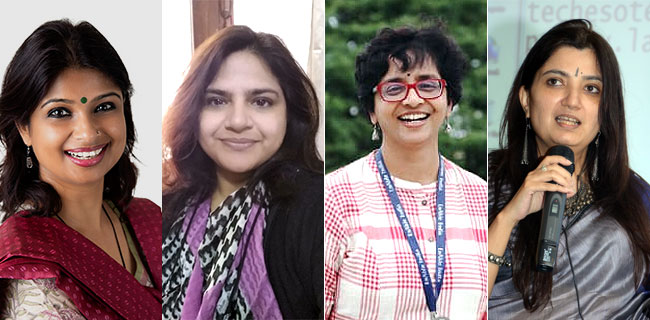
 Whether it’s Valentine’s Day, International Yoga Day, World Braille Day or International Women’s Day, I don’t believe in tokenism. A cause or community needs attention, acceptance and accolades round the year. One day can never be enough. But maybe an annual observance has a sense of association and awareness that can permeate through the societal mindset.
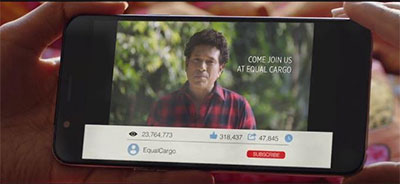 In celebration of International Women’s Day, DBS Bank India debuted a new episode of its mini-series, ‘Sparks’ featuring brand ambassador Sachin Tendulkar. The series is centered around the theme “Everyday Heroes for a Better World” and focuses on innovative social enterprises addressing key social and environmental issues.
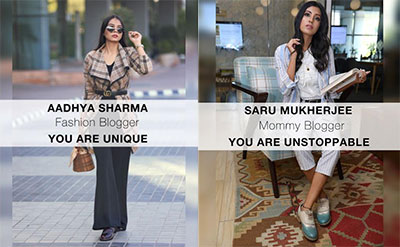 On the occasion of International Women’s Day, Opancho, a for-women-only, contemporary footwear brand, launched a social and digital media campaign titled #Youareyou that highlights and celebrates the uniqueness of every woman individual. The internet campaign showcases powerful stories of some of India’s successful women personalities who have broken the glass ceilings to achieve something meaningful and big in their careers.