Tag: INMA

  • 7 Indian finalists at INMA Awards 2012

    By A Correspondent


    As many as seven Indian entries are among the 89 finalists announced in the world’s premier competition for marketing newsmedia brands by the International Newsmedia Marketing Association (INMA) on Tuesday.


    Of the 89 marketing campaigns from 66 newsmedia companies in 23 countries selected as finalists for the INMA Awards 2012 competition by a global panel of judges. In India, there are seven finalists from five newsmedia companies for the INMA World Congress May 6-8 in Los Angeles.


    According to the INMA site, from these finalists, 30 first-place recipients across three audience groups will be announced Tuesday evening, May 8, at the conclusion of the INMA World Congress at the JW Marriott/LA Live in Los Angeles.


    The announcement also said, “The INMA Awards 2012 competition judging was completed recently by 24 industry expert judges from media companies, advertising agencies, trade magazines, and more. Judges came from the Australia, Canada, China, France, Germany, India, Mexico, Oman, South Africa, Spain, Sweden, Turkey, United Kingdom, and the United States.”


    Earl J Wilkinson, executive director and CEO of INMA, said, “Almost all of the finalists were multi-media in nature aiming to motivate cross-platform subscription sales, integrated advertising solutions, and hybrid print/digital products.”


    Indian Finalists for the INMA Awards competition:

    (under each of the 10 categories, there were three sub-categories of under 75k, 75-300k, above 300k)

    Category 1: Marketing Campaign With the Best Results

    Over 300,000

    • The Economic Times, Mumbai, India, “The Economic Times – Young Leaders.”
    • The Telegraph, Calcutta, India, “t2.”


    Category 3: New Brand/Product/Audience Development

    Over 300,000

    • The Economic Times, Mumbai, India, “The Economic Times – Young Leaders.”


    Category 5: Marketing Solutions for Advertising Clients

    75,000-300,000

    • Mint, New Delhi, India, “Mint Brand Solutions – Values & Fortunes.”


    Category 6: Digital Audience Usage and Engagement

    Over 300,000

    • The Economic Times, Mumbai, India, “The Economic Times – Young Leaders.”


    Category 9: Print Single-Copy Sales

    Over 300,000

    • Malayala Manorama Weekly, Kottayam, India, “Haritham Kitchen Garden.”


    Category 10: Public Relations and Community Service

    75,000-300,000

    • Mid Day Infomedia Ltd., Mumbai, India, “Mid Day Domestic Violence Campaign.”

    Read more and check the complete list of 89 finalists at: http://www.inma.org/blogs/main/post.cfm/89-top-marketing-campaigns-named-finalists-in-inma-awards-2012-competition#ixzz1p1VpGNoJ

     

  • INMA in LA to host digital revenue models and transformation strategies

    By A Correspondent


    INMA World Congress will hold a two-day conference on May 6-8 in Los Angeles on digital revenue models and transformation strategies. Earl J Wilkinson, Executive Director and CEO INMA said, “We have a fantastic program coming together for the INMA World which will be pushing our industry to identify new growth paths and revenue models under the theme “New Oxygen, New Growth. This will be a conference of aspiration and strategy, and I encourage participation in a program that will transcend national borders and media boundaries.”


    Some of the speakers at the conference focusing on digital revenue models and transformation strategies include Digital Revenue Models of the Future by Michael Lamb, Principal, McKinsey & Company. As news publishers aim to price content and get consumers to pay for digital access, McKinsey & Company has developed a four-point look at what media companies should be prioritising in the next five years. They include consumer-paid content, next-generation premium display advertising, how to build lead-generation networks, and video. Learn about the best practices across media companies and the strategies behind these best practices.


    Christian Unger, CEO, Ringier AG will talk on Digitisation, Diversification, and Entertainment. Ringier has a 180-year-old history of innovation. Recent years were all about the transformation from a traditional (print) publishing company to a digital and diversified media and entertainment house. This presentation will outline the course Ringier decided to take and experiences made on this journey. Ringier is a Switzerland-based media company with newspapers, magazines, and more in eight European countries as well as China and Vietnam.


    The Anatomy of Transformation will be delivered by Clark Gilbert, President and CEO, Deseret News Publishing Company. The Internet is forcing choices. If made definitively, these focusing decisions can lead to new growth and successful transformation. Most newspapers are unwilling to make these tough choices: inching their way down in print costs, still trying to cover every type of story, and trying to do both print and digital in the same organisation. The Deseret News has had unprecedented growth in both print and online areas by focusing its editorial emphasis on stories that are distinct to its voice for faith and family. This has enabled the company to double print circulation, launch a national Sunday, and create a separate digital division – leading to double-digit audience growth and three straight years of 50%+ online revenue growth. This session will focus on the organisation, financial, and content implications of a digital-first strategy.


    The early registration deadline is Friday, March 9.


  • The future is rosy, says Ravi Dhariwal


    By Tuhina Anand


    Newspapers have a strong future ahead, says Ravi Dhariwal, President, INMA Worldwide and CEO, The Times of India. Sharing his views with the audience at INMA: 5th South Asia Annual Conference on the Global Newspapers and South Asian Opportunities, he said that the industry can unitedly face down the challenges confronting it, and continue on the growth path.


    Print players in developed markets when faced with pressure on profitability coupled with losing their revenues started focusing on the cost. The result was a cut in journalists, cut pages, and cut quality. They got seduced with the argument that the business was not well balanced, circulation not earning enough money and being too dependent on advertising to recover the cover price. On the other hand, the consumers have tons of option, multiple platforms while the truth of newspaper also exists that the brand has slimmed down from 48 pages to 24 and journalism was not of the same quality that they were used to. Consumers had to pay double the amount for a newspaper so the value equation particularly in the US got horribly wrong. This led to increased pressure of people but Dhariwal pointed that the situation is stabilizing now particularly on accounts of circulation, balance sheets and profitability pressure.


    He said, “I think the industry went through a phase of evaluation where they were came to a basic conclusion that digital is where the growth is and they must invest heavily there at the expense of print. That difference led them to doing things first for the digital and at the expense of print because they didn’t have monies to put both sides. They said all growth will be in digital so let’s invest there.”


    After making this point, Mr Dhariwal said that this assumption has a few problems, the first being that Digital at best in most advanced environment comprises only 10 per cent of the revenue, the rest being still from print. He said, “So if you put all your money in 10 percent and neglect the 90 percent there is a problem.” He also said that digital for a news media company is an inherent problem because very little of a person’s time on digital gets spent on news. As a result digital for a news company will always be the country cousin. Also the demographics in South Asia, with increasing urbanization, literacy, income and a young curious democracy, works as a great combination for newspapers to grow. He said, “The industry does grow in our country by 4-5 percent per annum. Readership doesn’t grow as fast, though it is not declining, but it doesn’t get reflected because of the way readership is measured in India currently.”


    Another reason why he remains bullish about the growth of newspapers is because the newspaper adds fantastic value to households. He said, “It’s a medium that allows an individual to spend 20 minutes of their quality time for less than Rs 3 and if you have a thrifty wife like mine you will get a rupee back at the end of the month by selling it in raddi. So for Rs 2 you get a newspaper at great pricing but what is even better is that it gets home delivered.”  Another reason for growth is because the editorial quality has improved. He said, “I think our editors are increasingly aware of what is happening to our readers and the newspaper reflects the interest of the readers – politics, local, community. Increasingly quality of newspaper is getting better and I am confident that the paper I read is getting better every day. Also in our country people in newspaper business are ambitious, they are not happy with just influencing people but want to see their business grow. They have brought multiple editions and geographic expansion; like it’s astounding that Dainik Jagran has 295 editions. Even at TOI, we have many editions but there lies tremendous opportunity in markets like Kerala, some big city in TN, AP. In expansion we not only give our readers great value but also great choice.”


    What one should worry about, he said, is how to manage cost and how to continuously innovate to give more to advertisers. He said, “As long as we invest behind innovation, quality of editorial product, keep price low, and the product is home delivered, then we don’t have to worry. We have a reason to celebrate.  The opportunity is that we have an editorially curated product which is now being able to be displayed and expressed in different platforms. We should go after that because the reader is going after that. I have always maintained that for us it’s not digital first or print first. It is not print dollars and digital dimes but Its Print and Digital.” Even media companies have realized this and have become multimedia companies, adapting to this change.

    The biggest of the challenges, he said, is that of managing cost, newspapers not being attractive to FMCGs who are the biggest advertisers and have turned to TV, environment where the government tries to create misunderstanding and rift among employees and lastly lurking fear of ‘what if’ digital expands dramatically and affects print. However, to a large extent he said that these challenges can be overcome by collaborating as an industry to find solutions and bring about a change.


  • TOI launches TWeek at INMA

    By Tuhina Anand


    The Times of India Group launched TWeek, first of its kind digital magazine at the INMA platform. The weekly will be released every Friday and can be accessed from iPhone, iPad or any Android tablet device.


    Elaborating on the product, Rishi Khiani, CEO, Times Internet Ltd, said, “The idea to launch this came seven days ago and digital provides the platform where content can be put together at such a short time. TWeek is largely sourced from content that is available on our blog verticals that we put together. Its content that has long shelf life and brings out the flavor of a week.”


    He added, “Its content that is repackaged in a format that works on iphone, ipad and whatever other android tablet devices available. It allows interactivity associated with the medium but at the same time is low on cost of production.”


    Mr Khiani calls TWeek the first digital magazine that doesn’t have print counterpart in India. However, he did add that the print version of the magazine could be planned in future. The magazine will cater to the youth. Apart from content that is available in form of blogs, it will also have original content like its cover story to attract more consumers to access it.


  • INMA 2011: Membership targets in sight, says Tariq Ansari

    By Tuhina Anand

    At the concluding ceremony of INMA’s 5th South Asia Annual Conference, MXM India caught up with Tariq Ansari, INMA South Asia’s outgoing President and Managing Director, Mid-Day Multimedia Ltd. From Mr Ansari, Sanjay Gupta, Director, CEO and Editor, Jagran Prakashan Ltd takes over as President INMA South Asia.

    Mr Ansari has played a key role in bringing INMA to South Asia and has held the position of President for the last two years. Talking about his task at INMA, he said, “I have been responsible for running the INMA platform in South Asia, making conferences happen and ensuring we build a significant membership.  On all these, I think we have progressed significantly.  The idea is to be of use to the industry and give back to the industry. As past president I remain on the board and I am available when required.”

    Explaining why the INMA membership remained confined to just 13 organisations even though there are many players in this category, he said, “INMA had the target of going after large newspapers first. While we have only 13 newspaper organization members, there are around 500 people in this country who have access to INMA through these companies. As we come of age – and we haven’t been here for long as this is the 5th conference in South Asia – there will be conscious effort to build our membership and deliver its benefits to a larger audience.”

    Mr Ansari said he hopes that INMA delegates after attending the seminars would take away some questions on what is going to be the future of their enterprise and directions it can take both in terms of strengthening the business and where future opportunities might lie.

    Talking about what ails the print industry, he said, “Speaking from the perspective of an urban English newspaper, I think the readership is getting stagnant but on the other side the cost of inputs – the cost of journalism, newsprint, running the business – is driving the rate of advertising very high. So we have got a situation where readership is not growing but advertising rates are going up. That is the fundamental problem to the business to my mind.”

  • INMA 2011: New Oxygen, New Growth

    By Tuhina Anand

    Earl J Wilkinson, Executive Director and CEO, INMA spoke on New Oxygen, New Growth at the INMA-5th South Asia Annual Conference, titled ‘Roots and Wings – strengthening our core business and exploring new opportunities’. During his presentation, Wilkinson spoke about the transformation from being a newspaper to newsmedia which is where the opportunity for growth lies. The key is to identify the platform values of each medium be it newspaper, Smartphones  or tablets and use them accordingly.

    Wilkinson said, “The consumer view of newspaper is changing today as they are accessing news from webs or apps. With the changing view there is also need of new skill sets for the new media including next generation data analysis and deep understanding of consumer behavior among other factors.” He pointed that culture change is the foundation for growth story line.

    He listed three challenges that publishers are facing today- identify growth, how to remain relevant and manage complexity. He also listed the growth levers for news publishers which include operational efficiency, superior competitive strategy, best practices, sales excellence among others but what is relevant is that in this list culture change has moved up the ladder and become a key lever for growth.

    On Culture Change, he underlined the importance of listening to the market, focus relentlessly on differentiators and prioritize expenditure while putting away the rest. Wilkinson said, “Culture change is the only path to growth and in the new ecology to succeed one needs to prioritise platforms and diversify revenue streams.”

    He also talked about integration being the future and pointed how many print people are touching digital but not vice versa. He added, “While culture change is crucial to revenue, there is also a need to speak, understand and invest in readers and not indulge in one way conversation with them.”

    Opening the session and giving an overview, Tariq Ansari, INMA South Asia President and MD, Mid-Day Multimedia Ltd said that the sessions over the two days will look at imparting pointers on ways of strengthening existing business , understanding verticals where investments can be made and at the same time think on new horizons and take their business forward.

    I Venkat, Conference Moderator and Director, Eenadu talked about reinventing the print medium. He mentioned how print has undergone change with segmentation with introduction of city supplements and focusing on its target audience. He also highlighted the example of Filmfare and Femina which have enlarged their purview with awards and beauty competition. The newspapers are leaving no stone unturned to reach its TG by getting into festivals, awards, educations and job fairs too.

    He also talked about localized newspaper where Eenadu has gone beyond city, district, zone to constituency. He concluded by saying that for a newspaper every column is an opportunity. He added, “The print advantage is that while you can zap an ad on television, same is not possible in print.”

  • INMA 2011: Readership, Rate Cards & a small newspaper’s success

    By Tuhina Anand


    On Day 1 of INMA-5th South Asia Annual Conference, there was a CEO Roundtable which saw discussion on the topic: ‘Have we reached an end to readership growth?’ The session was moderated by Bhaskar Das, President, The Times of India Group and on the panel were Sanjay Gupta, Director, CEO and Editor, Jagran Prakashan Ltd, KN Tilak Kumar, Joint Managing Directorand Editor, Deccan Herald, Shahrukh Hasan, Group Managing Director, Jang Group Pakistan and Tariq Ansari, MD, Mid-Day Multimedia Ltd.


    Mr Das started the session by saying that it’s a known fact that the newspaper business is undergoing challenging times and one of them is about finding a balance between a content that caters to a diverse age group at many Indian homes and remaining relevant. He also remarked that if one is bothered about physical readership when a consumer is accessing media through various touch points, shouldn’t virtual readership also be considered? He also questioned the merit of measurement vis -a-vis frequency and periodicity.


    Mr Ansari said, “The truth is that the readership of urban English newspaper has reached a plateau and the growth in terms of numbers in SEC C and D but the question is if that category is also the one which advertisers would be interested in and then the answer becomes doubtful.”


    The session also looked at growing readership in a new market with an old product as well as raised question on the need to show yoy growth of readership where in actuality it should be yoy growth of advertiser?


    In all this grim scenario, Titak Kumar of DH brought the example of Karnataka language daily which has been seeing growth since both income and literacy levels have gone up.


    Another staggering point that gives players to think about is the pricing of a newspaper. While in India, the you can get a newspaper even at Rs 1.50, Shahrukh Hasan from Jang Group pointed that in Pakistan the paper would cost anywhere between Rs 15-23 and yet not cover its production cost.


    The idea that emerged was to innovate and seize the opportunity in the industry today. Also if multiple touch points is the new reality how does one update, upgrade and monetize from these various platforms.


    In another session, the panel discussed, ‘The Advertising Challenge: Space Selling in the Age of Multiple Platforms and Vanishing Rate Card’. On the panel were, Ambika Srivastava, Chairperson, ZenithOptimedia and Vivaki Exchange, Bijou Kurien, President and Chief Executive, Lifestyle, Reliance Retail, Jayen Mehta, GM, Marketing, Gujarat, Co-Operative Milk Marketing Federation, Rohit Gupta, President, Sony Entertainment Television, Bhaskar Das, President, The Times of India Group and Aritra Sarkar, VP, Strategy, ABP Pvt Ltd.


    The panel discussed if the rates cards have a value and Ms Srivastava endorsed this view along with Bhaskar Das though he differed that the rate card can be in different format and packaged differently to create a value proposition. Mr Gupta however giving the TV industry side of the story was of the opinion that in his industry rate cards doesn’t apply as the window of opportunity is less in television and rates vary from deal to deal and client to client.


    There was another session on ‘Good Editorial Content and Credibility are Good Business Also’  where Harisvansh, Chief Editor, Prabhat Khabar took the audience on the journey of success of the newspaper which is through doing hard hitting, pro people stories that have brought transformation in the lives of a common man. For them its trust and credibility that has paid off and just like Indian Captain MSD who is also from Ranchi like Prabhat Khabar both have emerged victorious by being dependable.

  • The Anchor: 5 reasons you shouldn’t miss INMA if you’re a print professional

    #1 The theme and agenda of the INMA conference has always been useful to the print industry. Unlike other conferences where there is lot of gyaan and conference is reduced to either networking or picnicking, INMA’s focus is the industry. I am not running down anyone but the interest of the newspaper industry is really met at INMA, and therefore every publisher should attend.
    #2 There are about 30 speakers who will share their views over a period of two days. These people are experts in their field and present different aspects of publishing. So it’s not restricted to just one aspect of advertising or revenue but circulation, readership and other aspects are also discussed. At some conferences, the agenda is only one-dimensional but that is not the case here.

    #3 Newspapers themselves have treated various functions within their organization as compartments and not departments. There is little communication happening across functions but the way ahead is to change this way of working. This conference can give that kind of perspective and help people in the industry to practice collaboration within their organization and take advantage.

    #4 At INMA, subjects are not just discussed but opportunity is given to clarify and understand what is being said. It’s fairly interactive.

    #5 The conference is a good opportunity to network and the food is excellent. So why miss it!?


    Bharat Kapadia is the Chairman of Whatuwant Solutions.

  • Newspapers: Reinvent or Perish?


    By Tuhina Anand

    The newspaper industry is undergoing transformation and the only way ahead is to look within and reinvent. While it may be too much to say that for the print industry the only option is to reinvent, else they will perish, but it won’t be far from the truth to say that if they don’t adapt to the changing times they will be groping in the dark and will only pave the way for their downfall. Early adoption and partnership with technology are a few ways by which the industry can look at transforming itself to cater to the Gen Y.

    Expressing his view, Mr I Venkat, Director, Eenadu, said, “Yes, we have to reinvent. I think the time has come when we no longer can continue in the traditional way. While the future of newspapers in India is still strong and will be for at least for 10-15 years and what happens henceforth I can’t really say. But in that time period, one should have reinvented and come up with multiple platform and strengthen them so that they become established models to generate revenue.”

    He maintains that printed word will remain sacrosanct though the content would undergo change to meet with the various platforms. In fact, Mr Venkat points that even now the way news is being consumed is changing where they have witnessed a significant rise in people coming to digital platform to access news.

    Shahrukh Hasan, Group Managing Director, Jang Group, Pakistan is of the opinion that the newspaper industry would not perish even if they don’t reinvent because there is lot of inherent growth still left in the print business. He said, “That said, I think reinvent I would, even if there are no threats as it is imperative for our continued growth. As it happens the print media is under lot of strain and we have seen globally it has been losing readership but in our part of the world the fundamentals that drive the business is strong, like literacy rates going up, growing middle class, migration from rural to urban areas, a very young population and the erosion of the joint family system. These are factors which impact growth and circulation. In fact they are all working in our favour.”

    “The important thing is that we have to realize that the business we are in is evolving and we have to adapt for that reason. We have to abandon tradition and adapt to reengineer to remain relevant. We are not competing with new media or television but we have to adapt in terms of how we process the news and understand what kind of news we have to provide to our readers in these changing scenario where different platforms with different speed of delivering news exist.”

    While Mr Hasan points that reinvention is not necessary but he will still go with it to be future ready. There is also another opinion which stresses that the newspaper business doesn’t need to be reinvented but it’s the newsroom that need to reinvent. Sanjay Gupta, Director, CEO and Editor, Jagran Prakashan Ltd, said, “Newspapers will remain. It will never die and it’s seen that in the most advanced economies where digital has taken over newspaper still exist. But it’s their relevance to the marketers that is changing.” Newspapers may not be relevant to the marketer as a touch point because of more varied and systematic approach that digital offers and for media companies to make journalism sustainable, Mr Gupta points that there is need to go into different revenue streams and digital comes into play in that aspect.

    So the interesting point that comes in this discussion is the decreasing relevancy of newspaper to a marketer hence bringing the digital platform to up the revenues. Also many media company pointed of unbundling of packages to advertisers that comprised a 360 degree approach.

    Reinvention in terms of digital may be the mantra for many to follow but for KN Tilak Kumar, Joint Managing Director and Editor Deccan Herald, the potential in print in its existing avatar is immense.  He said, “There is a lot of scope for print media especially rising population, growing literacy and urbanization signify that there is a lot of potential for print media to grow. We have been trying to reinvent in terms of content, design and layout. Digital is the future but it’s not a concern In India as we see it now.”

    Content is the key and even for Prabhat Khabar’s MD, KK Goenka. He reaches to his consumers in Bihar, Jharkhand and West Bengal and the paper has reached the status of the 7th largest read Hindi daily and this has happened primarily by the physical newspaper. Digital he says doesn’t play a role in the growth of his paper but yes content is the key. He says, “It’s the credibility and trust of people that we have built over the years that is responsible e for our success. It’s the issue that we have taken that is no less than a movement that has helped in building what Prabhat Khabar is today.”

  • INMA conference starts, packed house!


    By Akash Raha


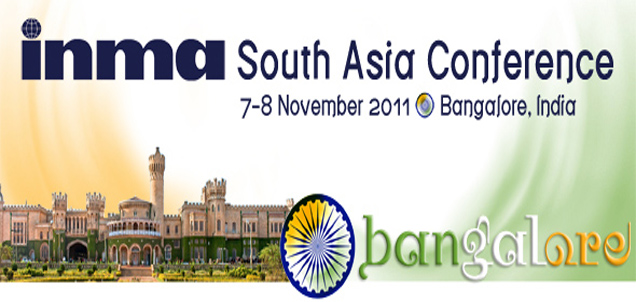
    The International Newsmedia Marketing Association, better known as INMA,  kicked off its annual South Asia conference in Bengaluru today to a full house. The two-day event is taking place at ITC Gardenia under the theme ‘Roots and Wings: Strengthening Our Core Business and Exploring New Opportunities.’ MxM India spoke to Earl J Wilkinson, Executive Director and CEO, INMA to know about his expectations from the conference. Around 220 delegates from India, Pakistan, Bangladesh and Uganda amongst others are in attendance.


    Mr Wilkinson said, “What I’m looking for from the Bengaluru INMA South Asia Conference is, where are the new pockets of growth in the region? Have newspapers hit a peak with readership? What are the value drivers in advertising for newspapers as competition intensifies? Where does the creativity reside among South Asian newspapers? To what degree are global trends in digital media being adopted by South Asian newspapers? Where does the Indian newspaper story fit in the broader global context of transformation and culture change?”


    This INMA conference will also focus on the unique opportunities ahead for South Asian newspapers in which they seek profitability and would also like to adapt and create more revenue streams in the digital domain. The INMA conference will host top newspapers publishers and marketers in India, Pakistan, Bangladesh and Sri Lanka, and give them the opportunity to share learnings with each other. The sessions are expected to take delegates through a world of ideas and innovations which will give them insights into ways to grow newspaper advertising, circulation and brand across titles and across consumer platforms.


    Mr Wilkinson further added “It’s a very high-level, relevant programme for South Asian newspaper executives. I don’t just want to hear from the speakers. I want to hear from the delegates. Are they curious and pushing for answers and ideas?”


    Mr Tariq Ansari, INMA South Asia president and Managing Director, Mid-Day Multimedia welcomed the delegates and Mr I Venkat, Director, Eenadu, who is also the conference moderator, gave his opening remarks, charting the changes that have been seen in the newspaper publishing scene.


    Image courtesy INMA.org

  • AdAsia: From chat rooms to Twitter

    By Akash Raha

    That the digital revolution is already here, and is here to stay, is a given. But marketers are still perplexed on how to make full use of this phenomenon. In AdAsia 2011 a complete session was devoted to this very issue, and to be more precise, the subject of social media was discussed. The session in context was called ‘From chat rooms to Twitter… what next?’

    The panelists at this session were Kate Day, Communities Editor, Daily Telegraph Online, Arvind Rajan, Managing Director & Vice President, Asia Pacific and Japan, LinkedIn and Earl Wilkinson, Executive Director and CEO, INMA. The session was moderated by Rishad Tobaccowala, Chief Strategy and Innovation Officer, Vivaki.

    The session proposed that discussions were going to be a reverse of what this conference is about ‘Uncertainty: The new certainty’. What the session proposed was ‘Certainty: The new uncertainty’. It is certain that over the next few years the driving force will be social media. However, the uncertainty aspect is only what it means to marketers, media company etc.

    Ms Day said, “The question one often asks is, ‘What is the next big platform?’ My answer is it’s all about the people rather than the technology. Actually the underlying shift is with the patterns of behaviours of the people involved and audiences. Brand and customer relationship is the key. If that’s the case, then what platform is next does not matter because the people are here.”

    All the panelists stressed on the need to build consumer relationship and make the social media experience more real and humane. The consumers today want to interact with a human rather than with an automated interface, they want real conversation, moreover, in real time. It is essential to “get your own house in order and make the customers feel at home”. Also, often while we talk about social media, there are assumptions made about the product, content and consumers. Such clichés are something one should stay away from and not base one’s social media plans on them. Crating content and platform for ones invaluable customers is the key.

    FB, Twitter and LinkedIn are three global platforms, but as Mr Rajan said, the reason they are used still remain different. Twitter is a syndication platform. FB is for friends and family and LinkedIn is a professional network. The social media platforms are still new, there is still a lot to be done and lot of understanding needed. The essence is to have meaningful conversation with the audiences, connect with the customers and once that is done, it can be leveraged upon.

    Earl Wilkinson, of INMA also shared his learning in the field of social media apropos newspaper publishers across the globe. He pointed out how sharing has becoming the value added special sauce for journalism online. And in a way, he emphasized that digital times have saved journalism. Now that social media is here already, and everyone knows that communication is essential, the trick is how to structure the communication. For newspaper publishers, the way forward is going to be projecting newspapers and news brands as a trusted voice out in the community and the blog-sphere and get the audiences back on the websites.

    Arvind Tobaccowala of Vivaki said that the essence to being leader in social media space is differentiating content. Speaking about social media platforms he expressed hope for Google+. He said “Google is an amazing company… Believe it or not, Google+ will work, and it will work in a very big way. I don’t know how it will fit into broader eco system but it will be interesting to watch.”

    Pointing to sharing content on the social space as an interesting behavioural aspect and social media phenomenon, the panelists expressed hope that it will only grow further as it is a great way to engage with the audiences. Mr Tobaccowala also pointed out that on the social media space it is important to understand the behavioral aspects of the consumers. There are heavy users and heavy influencers. Right now the focus is less on heavy influencer… Heavy influencers can be further be divided into advocates and detractor. In a nutshell, he stressed that it’s imp to talk to detractors because they are the ones who are more vocal, even more than the advocates. Social media helps rediscover the idea of sharing in new and different ways to new and different audience. The essence is to start with Social media and start with it now. The panelists beseeched everyone to get on it and one might stumble upon something wonderful… “It is not necessary that you always know what you are doing,” said one of the panelists. Also, one should not look for any returns, one will get it eventually. Social media is new and still developing. Not everything that one experiments with comes out right, but one should try nevertheless. Ms Day emphatically suggested, “Don’t throw the baby out with the bathwater,” advocating that even if a few ideas don’t turn out right, it is a must to explore social media, as it is the big thing of the future.