Tag: Harish Bijoor

  • Harish Bijoor: What’s in a Name?

    By Harish Bijoor


    So STAR News is ABP News. STAR Ananda is ABP Ananda. And STAR Majha is ABP Majha.


    Here’s a brand name change once again, and the question is out in debate again: What’s in a name?


    What’s in a name? Plenty! Shakespeare-dada was wrong!


    For a start, the name is a brand. The brand is a name. And the name is a very important starting point in the voyage of discovery of a brand.


    Let me start with my definition of a brand. It is a simple one. I define the brand with the consumer simplicity it deserves. “The brand is a thought”! A thought that lives in people’s minds. A thought that thrives in the soft-space of the human mind.


    By this definition, everything that lives as a thought in your mind is a brand. Shantabai, the multi-tasking maid is one, Osama Bin Laden, the late terrorist is one and so is the young Akhilesh Yadav. Each of these brands possibly rub shoulders with other brands such as an Amul and Bata and Tata in your head. The brand is a thought. Nothing more. Nothing less.


    What does a name transition mean to companies and brands? Plenty really. Plenty in the initial six months for sure. The first 180 days of a brand name change are the most crucial and critical days. It is in these frenetic days of frenetic brand activity that a name change can be made successful or not. No wonder then that you see a flurry of advertising activity that goes in to establish a new name solidly in the mind of the consumer.


    There are brands that have done it well. Vodafone is a veteran of many changes. An Orange became a Hutch seamlessly, just as a Hutch became a Vodafone seamlessly. Every change was accompanied by a high decibel campaign that had transition elements of one collapsing seamlessly into another. The first 180-days are therefore the most critical. You can make a brand name transition happen or collapse. Both are possibilities. The period after just does not matter. This is really the Golden six months of a brand name transition.


    UTI Bank did it seamlessly as well, with a transition into an Axis Bank so seamlessly that today UTI is a non-important part of its total brand equity and recall altogether. That is the power of a powerful brand-name transition plan.


    In the case of this current transition from STAR to ABP, there are indeed two big brand names. One is a region-centric one (ABP) and the other (Star) is a world-brand for sure. Moving from one to the other will require some degree of panache and scientific brand action.


    There are really two sets of dynamics in this transition. One is a B2B dimension. Out here, MCCS is the back-end brand. It is the company that runs the show. It is the company that is the backbone. Employees, clients who advertise, distributors and vendors are all key participants here. These key actors are the easiest to communicate to. These key actors will buy into this name change without a whimper.


    The second set of dynamics is that of the viewer. This is B2C space. This is where there is bound to be ruffled feathers and ruffled sentiment. This is where there is bound to be confusion and lack of clarity. This is really the end that needs to be handled well and seamlessly through a process of cogent communication.


    STAR News is a thought. The thought of a channel can be a potent one. It starts with the name at hand, and goes on to attach to itself a host of other meta-tags that bring to mind the memory of a channel that is an intrinsic part of compelling and credible viewing experience.


    The brand to that extent is plenty. It is a name. A slogan. A symbol. A colour. A character. A personality. A charisma. An image. A reliability. An emotion. A passion. A perception. And lots more. ABP needs to handle each of these. With kid gloves, speed and scientific brand action.


    The author is a brand-expert and CEO, Harish Bijoor Consults Inc.

    Twitter.com @harishbijoor
     

  • Is radio not good enough for premium brands?


    By Robin Thomas


    Over the years, growth of Radio as a medium has been restricted, thanks to TV. But, to the credit of many a radio expert over the years and advertisers who have believed in the medium, radio continues to sail; and sail even more promisingly when times are choppy.


    Also, sample this: The FICCI-KPMG Indian Media and Entertainment Industry Report 2011 states that the radio industry in India is expected to grow at 20 per cent CAGR (Compounded Annual Growth Rate) from the current base of around Rs 1000 crore. Radio’s share of media spends is also expected to rise from 4 per cent to 5 per cent by 2015. Among categories that advertise on Radio, Real Estate, Telecom, Retail, Education and TV channels are the ones advertise the most.


    The medium promises reach, greater recall and marketing solutions that are cost-effective. Despite this, why do premium advertisers shy away from advertising on the medium? It is known that premium brands prefer speciality magazines, internet and mobile and TV more than radio.


    Harish Bijoor, CEO, Harish Bijoor Consults agrees that premium brands don’t advertise much on radio. “Premium brands look at radio as a non-premium medium. There is ample research available which reveals that premium-category shopper do not depend on awareness scores for luxury brands from radio. In fact, radio tends to negate effort for luxury brands as of now and proves counter-productive to the effort. Radio is much too mass for luxury brands.”


    According to B Surender, Senior Vice President and National Sales Head, Red FM, the share between national and local advertisers on radio are 50:50 of which premium advertisers contribute merely six to eight per cent of the overall national advertisers. BMW, Volkswagen, Mercedes, Skoda, Blackberry, Marks & Spencer, Louis Philippe, Tanishq, smartphones , Lufthansa , British Airways ,Virgin Atlantic, Singapore Airlines, Emirates are some of the premium advertisers advertising on radio.


    For most of these premium brands radio is more or less a reminder medium, it is an extension of the television or print advertisements. Luxury watch brand, Seiko for instance does not advertise on radio at all whereas Jet Airways and HDFC Life heavily advertise on internet and television.


    Both internet and television have an edge over radio on premium luxury brands. While television has the benefit of being an audio-visual medium, internet is a highly interactive medium.


    Manish Dureja, Vice President, Marketing, Jet Airways said that the airline brand banks more on internet and mobile as against radio. “We are not advertising much on radio or on television as most of our marketing budget is performance driven, where we look to generate sales through search engine marketing and predominantly digital marketing. With internet penetration and the emergence of internet mobile, it has become mandatory for us to be present in the online domain. Radio, on the other hand is a localised medium and caters to a specific city. More importantly through digital media, I am able to reach consumers far more effectively than any other medium.”


    For Sanjay Tripathy, Executive Vice President-Head Marketing and Direct Channels, HDFC Life, television and the internet are the preferred medium because of the reach and better ROI. “Television is the preferred medium for HDFC Life because of the awareness it creates, and maximum reach it offers, whereas the internet has delivered better ROI for us. Radio on the other hand is more of a brand recall medium so most of our marketing budge or the media spends is skewed towards television and the internet” he said.


    Disagreeing that premium luxury advertisers are apprehensive about advertising on radio, B Surender of Red FM said that although there was a perception issue in the past, some of them wrongly assumed that the quality of FM listenership profile may not be very good. “Contrary to this belief, there are instances of advertisers abroad specifically using radio to target billionaires and rich entrepreneurs, since radio could reach out to them better than other mass media. But, in the past one or two years there is a positive change in our country as well with more and more premium brands in automobile, international airlines, consumer durables, telecom, jewellery, finance, retail etc have regularly started using radio as a part of their media plan. However, I feel there is enough scope to further improve the usage of radio by luxury brands in the near future.”


    With the rollout of phase III, radio will see an increase in reach in India. Multiple frequencies will allow FM stations to offer targeted or niche programming for the elite listeners. However, there are many challenges too: The radio industry will have to educate the premium luxury advertisers, not only about the effectiveness of the medium in delivering better ROI for their brands, but also about the quality of its listenership profile.


    Perhaps for now at least, radio is too large, too ubiquitous; a bit too common a medium for the un-common luxury brand. There is more thinking required on the part of radio station heads to get premium brands on board.


  • Brands get a designer touch


    By Tuhina Anand


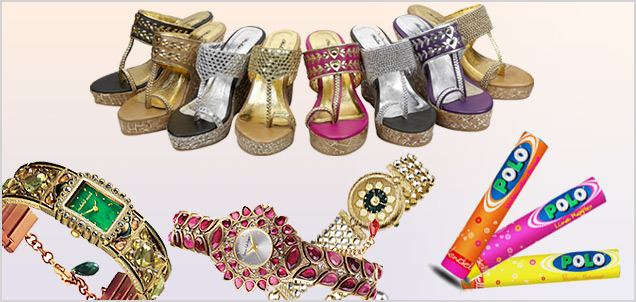
    Wendell Rodricks for Polo, Malini Ramani for Bata, Tarun Tahiliani for Timex… Some of the top Indian fashion designers have moved from their familiar territory of creating haute couture to creating new lines for popular brands.


    Wendell Rodricks has designed four new flavours called the Polo Fashion Flavours for Nestle’s Polo and has even given a funky new look to the staid-looking green and blue packaging of the mint.


    Malini Ramani, who is known for her bohemian style, has associated with Bata to come out with a new collection of footwear called Malini Ramani for Bata.


    Tarun Tahiliani has designed a special collection for Timex to help the brand break away from the sporty image it is associated with.


    Giving his views on this trend, Harish Bijoor, brand expert and CEO of Harish Bijoor Consults Inc. said: “I would call it bringing bizarre into branding. Fashion designers have no connect with the (product) category and it’s a stretch to think of them designing footwear or a designer mint. This is done to just get eyeballs and media share, and not necessarily about gaining market share.”


    For brands, it may be an effort to garner eyeballs, especially now, when they jostle with numerous others to grab the consumers’ attention.


    For Bata the association came at a time when they were looking at opportunities at designer footwear market inIndia. This, in fact, is the first time that Bata India has roped in a designer to design a special collection for them.


    On the reason behind associating with a fashion designer, Rajeev Gopalakrishnan, Group Managing Director, Bata India Limited, said: “The designer market is unique and full of innovations and Bata, as a brand, believes in constant innovations to bring forth the best for their customers. Therefore, we decided to rope in Malini Ramani, who is one of the most coveted designers in the country.”


    The footwear major has had a positive feedback of its association with Malini Ramani and hopes to further strengthen this association and even look for similar opportunities with other designers in future.


    Mr Gopalakrishnan added: “With the increasing demand for footwear in the Indian market, it is essential for any brand to introduce various designs and variety often. BataIndiaoffers various footwear ranges in every category. We bring out new designs for our customers as per the global trends and standards every month. The entire collection is changed every quarter to cater to the changing needs of Indian consumer.”


    Besides the Malini Ramani collection, BataIndiahas genuine leather casual collection for men under Bata and North Star Collection for the young customers. For customers with an active lifestyle, Bata launched a new collection under the Weinbrenner brand with personalized branding. It has Marie Claire collection for women, Power brand for the sports enthusiasts and variety of designs in attractive colours for children under Bubblegummers and Baby Bubbles, besides school shoes for children.


    For Timex the association with Tarun Tahiliani was to give break to the stereotype image that the brand has been associated with. VD Wadhwa, MD & CEO of Timex Group India, said: “Timex has been perceived as a sporty and outdoorsy brand since its inception and we want to move beyond that image. To strengthen our connect with the women costumers; we associated with ace designer Tarun Tahiliani. The aim of this association was to establish credibility amongst the women customers at comparatively higher price points and cash in on the wedding and festive season.”


    Mr Wadhwa stated that the response has been tremendous as far the collection is concerned. In fact, many costumers have come back asking for more options in this line. Though Timex doesn’t have any plans to add to this collection with other designers.


    “Marketers are increasingly leaning on homegrown designers for business associations to launch signature or limited edition lines. All this is done to attract the young and ambitious Indian consumers who would happily pay a premium price to stand out in the crowd. Indian designers are the best bet, since each one of them has a specific style and can fuse Indian and international designs brilliantly to develop an aspirational product,” said Mr Wadhwa.


    Fashion designer Manish Malhotra has also been featured in La Opala Diva ads and there is a possibility that he may design for the crockery brand, though the plan has not been finalized yet.


    One may even recall that few years ago, Sabyasachi had designed Bombay Dyeing’s new bed and bath range. It is clear that the marketers have started tapping the designers to give a fresh appeal to their products.


    It could be to create an aspirational value or tap consumers that have remained away from the brands and lure them in. In a cluttered market, this may be the way to at least garner eyeballs and somewhere succeed in getting an increase in sales too.


    Polo image: Nestle.in, other images: courtesy company spokespersons

  • Brand Kingfisher in the red


    By Tuhina Anand


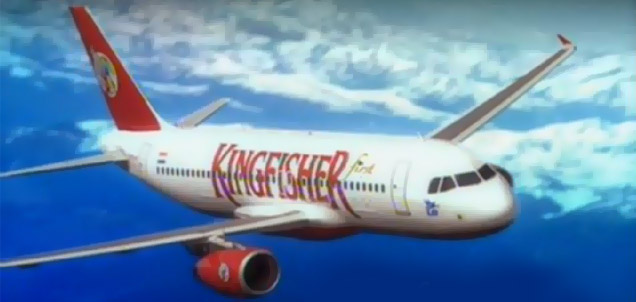
    The King of Good Times is battling bad times, and all eyes are waiting to see how much the whole bailout issue will cost Brand Kingfisher. Right now, the airline business of Kingfisher is under deep scrutiny and the media focus has only heightened the negative atmosphere. Public memory, of course, is short and all ‘bailout’, ‘bleeding’ and ‘those who die must die’ phrases will be forgotten once Vijay Mallya is able to arrange the corpus to manage the airline’s functioning. Remember, Jet Airways employees’ protests against job cuts some years ago didn’t do much harm to the brand in the long run.


    Kingfisher, known primarily for its beer, is unlikely to be affected. The brand has been there for a long time and people vouch for it. Even in this scenario, it’s the airline business that is under the scanner. The airline business is diversification of the core business, hence the impact on Kingfisher the brand would not be much. But when it comes to Kingfisher Airlines, people – especially frequent flyers and privileged guests wooed with the airline’s promise of an extraordinary experience – would stay away, considering flight cancellations and the consequent inconvenience.


    Expressing his view, Harish Bijoor, brand expert and CEO of Harish Bijoor Consults Inc, said, “Kingfisher is a dominant brand in the Indian context. The brand for a start is a beer. And from there on has developed the brand equity of brand Kingfisher Airlines. To that extent, the recent sets of issues in aviation tends to hurt the equity of Kingfisher Airlines more than the beer. The airline is a service brand that touches the lives of hundreds of people. The beer is a product brand. To that extent there is less of an issue there.”


    “The negative publicity that hits Kingfisher airlines is really about the pains of the traveller more than anything else. A traveller faced with flight cancellations at the last minute is impacted the most. This is where the biggest pain point of Kingfisher Airlines’ brand equity vests,” added Bijoor.


    So at one level where the crisis has hit most is the frequent travellers, but that is more of a short-term problem. In fact, the brand has taken a beating but not as much. Even V Balasubramanium, Director at RainMan Consulting, is of the opinion that the brand would have been affected if the issues were that involving ethics or credibility but something like a ‘bailout’ and being cash-strapped will not impact it long-term as people already know that the airline industry is bleeding and the same goes for Kingfisher Airlines. So while the issue has not come as a surprise, it’s true that the rumours about large-scale layoffs or the airline shutting operations don’t exactly help Mr Mallya’s case.


    One view that also emerges is that whenever UB has tried to diversify and move away from its core business of alcoholic drinks, they haven’t really succeeded. Ramanujam Sridhar, CEO, Brand-Comm said, “The next two to three months will be critical for Kingfisher, and how they manage to emerge out of this crisis and do damage control. There will be close scrutiny and overcoming this will be a challenge. There is a negative undercurrent especially among those who have raised eyebrows over the extravagant lifestyle and now the financial mess. I think it’s a wait and watch policy and the next couple of months will be make-or-break as far as the Kingfisher Airlines brand goes.”


    As it stands, the Kingfisher brand which is primarily associated with liquor will not be impacted in any case, as it will have its loyal followers, but for the airline business, which is actually a brand extension, it’s time to be cautious and move carefully. “Kingfisher needs to get off the pedestal and talk and emote with its users and those sitting on the fence with reference to its usage. It’s important to be transparent and admit folly where folly lies. In reality nothing succeeds like success. I do believe this is a temporary blip in the brand equity fortunes of Kingfisher Airlines. With some degree of fund infusion, it will be business as usual,” concludes Bijoor.


    Image: Grab from Kingfisher Airline TVC