Tag: Harish Bijoor

  • Mathrubhumi to host Kerala 2.0 Conclave

    By A Correspondent


    Mathrubhumi Group will be hosting the Kerala 2.0 Conclave on Consumer Durables, Kitchen Appliances and Mobile Phones today (July 17, 2019) at Grand Hyatt Convention Centre, Kochi.


    Brand thinker and practitioner Harish Bijoor is the keynote speaker at the Conclave and will be speaking on ‘To market to market, to buy a fat market share’ followed by panel discussions on consumer durables, kitchen appliances and mobile phones.


    Said MV Shreyams Kumar, Joint Managing Director, Mathrubhumi Group: “The Mathrubhumi conclave will offer sparkling insights and discussions on driving business growth for a fabulous upcoming Onam season. An illustrious list of names comprising managing directors, CEOs and CMOs of various national and international brands would be participating in the event”.


  • Has the Cyrus saga dented Brand Tata?


    Has Brand Tata been adversely impacted or tarnished because of the Cyrus Mistry ouster? Even as all may not have always been very well at the group, it has been India Inc’s most trusted business group over the years. Will a possible backlash from the Cyrus Mistry camp lead to a further devaluation of Brand Tata? We posed this question to a few brand gurus for their views:


    Harish Bijoor

    CEO, Harish Bijoor Consults

    The brand Tata has a rather deep equity and a change in the Chairman or a change of a Director does not hurt the image of Brand Tata as much fundamentally because it is all about the fact that the equity of brand Tata. It’s a Rs 100bn+ company and is in operations in 100+ countries and in the corporate world these kind of things are accepted. People get excited about it and then they forget. It will be seen as a corporate activity.


    Trust is a macro issue and trust happens over 100 of years and decades. Trust happens with your experience with the brand. Consumers statically interact with brands and not necessarily with corporate brands. So the Tata brand has got a front-ended facet which is far and wide. When you pick up a Titan watch you are interacting with the Tata brand, when you pick up Tata Coffee packet or Tata Tea packet you are interacting with the brand, never mind what happens behind. If you take the corollary of Kingfisher brand, people have asked me if the brand Kingfisher – the beer is affected because of Vijay Mallya and everything that happened I say, not at all. Anybody who is interacting with Brand Kingfisher and drinking the beer will continue to do so with a great degree of gusto. Tata is a consumer company by and large, whether it is a Tata truck, Tata bus, Tata car or Tata coffee, people are touched by these brands on a continuous basis and these brands are the ones that evoke trust. I really do believe that this will be seen as a corporate hiccup rather than a corporate turmoil.


    Avik Chattopadhyay

    Co-founder, Expereal

    The Tata brand has been a benchmark for business propriety, professionalism and patience. But it seems the old guard got rattled by Cyrus’ plans of restructuring the organisation. His direct, no-nonsense style questioned a lot of deadwood, emotional baggage and personal ego-trips. The group went through a same phase of restructuring when RNT had taken over around 25 years back, but nobody objected then and obediently went through the slash and chop. Guess an ‘outsider’ did not help matters. And this episode does not help the Tata brand either. Bombay House is back to incandescent lightbulbs from LEDs. And its corridors shall be a bit darker now!


    Alpana Parida

    Managing Director, DY Works

    There is widespread consternation about this move. The belief- right or wrong – is with the establishment as correcting  a trajectory that was at odds with its value system. The true equity of the brand has not been so much its size or success- which apart from TCS and JLR – seems to be in question. The real reason for the Tata equity has rested on its value system. Both as a corporate citizen and as an employer.


    Tata has been the tall face of Indian global corporate ambitions and a move such as this has the country taking sides.
    Amrita Chowdhury

    President, DY Works​

    Clearly this is a dramatic move for a heritage- and values-driven firm. We have seen such high profile ousters in companies like HP or even Apple, driven from a divergence in the beliefs of the CEO/Chairman and the Board.


    When we think of Tata Group what remains in our minds is its brand value. Their challenges in innovation or quality or profitability are systemic in nature. Recalling Lou Gerstner’s stories on the remaking of IBM, such transitions can be brutal. Or it could be steered over a long period of time. What is the right strategy for Tata Group in an Indian and Global context remains to be seen.


  • Can Maggi make a Thumping Comeback?


    By Harish Bijoor


    So Maggi is back. For those who ask ‘what the #@*& is Maggi?’, this is India’s most darling brand of instant noodles that has made contemporary marketing history, not only by notching up a humongous turnover in hard-earned Indian rupees from middle-class Indian homes, but by also going through a recent trial-by-fire of its own, thanks to an over-zealous food regulator. Maggi is now out of the frying pan, but is it in the fire? Is the Maggi comeback going to be easy? Will Maggi really regain its lost glory?


    I do believe it will. In fact, in the case of Maggi I just have no doubt at all. Here are three compelling reasons why.

    1. The Brand Angle: Maggi has emerged from the tumult stronger. The six days of trial-by-media that the brand went through, gave Maggi top-of-the-mind, top-of-the-mouth, top-of-the-psyche, top of everything recall. Those six days made the brand the talk of the town and village alike; never mind the fact that this was mostly negative publicity, these six days had the nation breathing fire over a Nestle brand. This has bestowed Maggi top-of-the-mind status for days and months to come. Maggi went through all the paces of check and counter-check, and emerged a winner. When the brand returns, it is sure to regain its glory. Later than sooner. Awareness is it!


    2. The Retail Angle: Maggi vacated valuable shelf space from an alleged six million-plus outlets in the country during its two-month ban. This might well have been India’s single largest brand-recall exercise. This vacation meant that retail counters across the country lost valuable contributions that the brand made to retailer turnovers and incomes. Retailers scurried around to fill vacated shelves with alternatives, which just did not match up and retailers realised that nothing can really replace Maggi. Now, they are waiting to stock up once again on a brand that gives them effortless offtake, and consequently effortless and assured profits. Money talks with retailers.


    3. The Consumer Angle: Consumers love Maggi. This is a brand that is both prescriptive and proscriptive. Mothers prescribe the brand for their kids, and the kids love the taste prescribed. There has been a vacuum. Kids are tired of waiting [for Maggi to return] and harassed mothers, looking for alternatives. The kids are tired of the sandwiches and are looking to get back to the good old funky noodle. Yet another thing to remember is that the consumer is convinced that Maggi did no wrong. Maggi has gone ahead to reinforce that in its communication, and in the stance it has taken not to change packaging colour and graphics. Consumers seem to believe that Maggi is the wronged party. That’s good for Maggi; consumers always root for the underdog and the wronged. In this case, that is Maggi.


    Harish Bijoor is a well-known brand expert and founder of Harish Bijoor Consults. This article first appeared in dna of brands dated November 16, 2015


  • How social media has impacted the world for marketers, politicians & even journalists!


    Hate it or be hooked to it, social media has revolutionised the communications industry. While some people say for the better, others point out its various flaws. We bring together expert views from a cross-section of influentials – actor Gul Panag and social media strategist Hareesh Tibrewala, brand expert Harish Bijoor, former Member of Parliament Milind Deora and journalist-columnist and MxMIndia Consulting Editor Ranjona Banerji — to tell us more. Dyanne Coelho listens in


    Do you think social media has really revolutionised the communications industry?

    Amith Prabhu: Social Media has impacted a lot of areas in an individual’s life, includinginterpersonal communications. We often see people expressing their strongest feelings and views personally or otherwise on social media. This behaviour has also transformed the way the communications business functions in a big way. Unlike in the past, a customer-brand relationship is not a one-way communication anymore. Social media has enabled consumers to voice out their opinions to brands directly which helps them grow. They take the customer feedback seriously and act accordingly. Social Media is a healthy support system in a brands communication chart which ensures a vigorous growth of a company if this medium is applied and used intelligently.

     

    Gul Panag: For starters, it’s two-way communication, which was missing earlier, because you had people talking at you. Now you have people who talk, and those who speak back to you. That’s the one big change social media has brought in, and it’s revolutionary.


    Hareesh Tibrewala: Communication in the pre-social media days meant a monologue: the brand talks and the consumer listens. Now, communication has become a dialogue. This monologue-to-dialogue transformation has been the biggest impact of social media on communication.



    Harish Bijoor: Social media is a revolution for sure. Media, which was hitherto owned by publications, television and radio channels alike, is today open to all. Everyone can broadcast. My tweets are read, liked, re-tweeted, even massacred, by thousands in an instant. In the era before social media, this was not the case.


    Milind Deora: Social media has really democratised the ability to communicate. Most of it is free, which also makes it extremely attractive. It’s a new, accessible way of communicating with friends and with people you want to reach out to, if you’re a politician or an entertainer. Social media has disrupted traditional mediums [of disseminating news] such as newspapers, magazines, television.



    Ranjona Banerji: I was an early sceptic about Facebook and Twitter, and only tried them out to confirm my reservations. Since then, however, I’ve been hooked. Twitter is now the top way to get news first (often, along with some outrage and hysterics). The Arab Spring – or whatever happened to it along the way — would not have had any success without Twitter. This, more than Facebook, has truly broken down barriers of language and distance, and allowed people to get in touch, like never before.


    Would you say it has been a gamechanger in influencing public discourse in India?

    Amith Prabhu: The last Lok Sabha and Delhi Assembly elections are a fitting proof of this phenomenon. We saw Mr. Kejriwal winning the election with a record breaking number of seats even after he was widely criticised for his resignation. His campaign is a perfect of example of how social media was used intelligently. Similarly, the success of Mr. Modi in winning the national elections can be attributed to the smart use of social media to a large extent.


    Gul Panag: Political discourse has gained a lot because of social media. Never before in our history have so many people, and across socio-economic strata, discussed politics as they did during the 2014 General Elections. Also, people and issues that never got attention earlier, now have more of a chance of this. For instance, the North East was never a part of mainstream public discourse. But thanks to social media, the Manipur blockade from a few years ago, got attention. It was already in its third week when some of us posted about it on Twitter, but once it started trending, it made it to the front pages of most newspapers as well.


    Hareesh Tibrewala: Indian society is a very communicative one. We have an opinion on everything. Till now, public discourse was limited to views expressed by celebrities or the media. Now social media has made everyone “the media”, and the collective opinion of a large majority starts influencing public discourse.  At times, it may lead to mobocracy, where half-baked ideas find emotional resonance with a majority and subsequently force public opinion. But that is the price to pay for democracy


    Harish Bijoor: Public discourse is public today in the true sense of the word. There is a democracy in social media that was not visible in the pre-social media days. Though there is anarchy as well, of course.


    Milind Deora: It has made not just politicians, but the government and even corporations more accountable. Today, if people are outraged over the Maggi issue, the company has to respond. Even journalists, who hold stakeholders like politicians and businesses to account, have been kept in check by social media. It really is the ultimate accountability tool.


    Ranjona Banerji: In India, although there is a vast nation outside the world of social media, there is no doubt that social media dictates conversations. The fact that politicians and the police get upset about Facebook posts, and the more savvy try to have Twitter accounts, only underlines social media’s reach and importance. Both newspapers and news TV are forced to keep an eye out for what’s happening on social media. Though you could also argue that sometimes they forget that there is a world beyond hashtags as well.


    And while social media has given new voice to people, how do you think has it changed the way brands, marketers, politicians and journalists communicate with their stakeholders?

    Amith Prabhu: As pointed out earlier, social media if used intelligently is a big advantage to brands. It gives brands a ready platform to engage with its audience and take their feedback to alter their products and services as per the needs of the customers. Brands are now more interactive with their audience which hugely works in their favour.


    Gul Panag: Brands need to realise that it is not just a one-way conversation where they talk at consumers. It is not only about talking to your target audience, but getting your target audience to talk about you. Brands like Redbull don’t employ direct marketing. They sponsor an F1 team, or an aerobatic flight squad for air shows, and that makes people think Redbull is cool. It is rewarding for a brand to have people talk about it, rather than it talking to people, because that also comes at a very large cost.


    Hareesh Tibrewala: The best example of how social media has influenced consumer behaviour, is TripAdvisor. If you are in the hotel business and don’t get good reviews on TripAdvisor, you might as well shut shop. It no longer matters how you ‘market’ your brand. All that matters is the opinion of consumers who have used your product. Social media is now about building brand advocacy among consumers.


    Harish Bijoor: Marketers, who are essentially used to marketing to the ‘patient’, need to embrace this quick and decisive media for their brands. Time to wake up, smell the social media and learn the art, science and philosophy of marketing to the ‘impatient’. Social media management is a different skill altogether. Marketers cannot hide behind the cloak of their PR outfits anymore. They need to be hands-on and quick in this medium.


    Milind Deora: I use it as a good way to get feedback on issues. The current joke on social media is that the Prime Minister tweets to wish Algeria on its national day, but won’t tweet about scams in the government. But sooner or later, this will build up to a crescendo where he’ll have to say something. Social media makes you, as a politician, more accountable. It is all about a viral communication strategy and it’s different and more interactive than any other medium.


    Ranjona Banerji: I think the corporate world has not yet fully understood how to exploit social media. The internet community is averse to intrusive advertising and many companies have not yet understood this. However, Twitter is a great way to complain to service providers and in my experience you often get a far prompter and more effective response from social media handles than you would if you had the courage to take the call centre ‘press 1 to be ignored, press 2 to be insulted’ route.


    Conversations have now moved from the coffee table to a social media platform. What do you envision for the future of the communications industry?

    Amith Prabhu: Communications business in India has a lot of potential and social media is a big part of it. A couple of years ago a PR conference was born thanks to a conversation on a social network. PRAXIS was born on twitter basis a single tweet. Similarly there are innumerable things that one can do with the help of social media. Social media opens up new ideas, infinite avenues and amazing possibilities for people who are ready to explore its power. I even secured a job at the global co-headquarters of the world’s number one PR firm using social media.


    Gul Panag: In the future we’re going to see periodic, disruptive changes. For example, the first round of disruption came with Twitter, then Pinterest and Snapchat. You will always find a disruption the moment we settle into a status quo, and you can either evolve yourself, or you will be forced to evolve because of the disruptions that will happen. Instagram began as a photo-sharing medium, but it also has videos now and that’s enabling people to put their stories across in a manner like never before. So that’s disruptive change.


    Hareesh Tibrewala: Mass communication in its current form will remain. However communication strategies going ahead need to have active social listening (to understand public chatter), social engagement strategy to engage in one-on-one conversations as well as influencers and advocates strategy as something integral to any communication architecture.


    Harish Bijoor: Yes, discussions which were one-on-one in the physical world are today all about one-to-many in the virtual world. This is a trend. On social media, your friends are those you have never met, but seem to know well.


    Milind Deora: I think the future of media will really be a hybrid of social media and television. Back in the day, if I was an artiste, a fan would write to me and I would respond. Now the fan is not writing to you privately, but in a public forum, letting the whole world know what he thinks of your music, and you are responding to his comments publicly. So one has to be very careful about using it. But it’s definitely opened up individuals, corporations, governments to greater standards of transparency.


    Ranjona Banerji: Perhaps people sitting at the dining table tweeting to each other instead of talking? The methods of communication keep changing. Who knows, if you ask me these questions 10 years later, we might be saying: “Wow, I’d forgotten all about social media!”


    First appeared in ‘dna of brands’ dated July 20, 2015
     

  • Could Nestle have handled it better in a world of social media & 24×7 News TV?


    By Dyanne Coelho


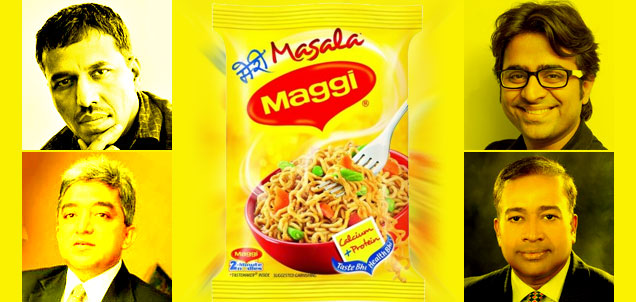
    The boycott, the pull-out of stocks and the subsequent bans have put the popular Maggi noodles in an avoidable mess. The brand has been brought under severe scrutiny for high content of lead; above the permissible limit as well as MSG; a taste enhancer. While at a press conference convened last Friday, Paul Bulcke, Global Chief Executive Nestle, defended the brand saying it is safe for consumption, regulators point out otherwise. The controversy has hit Nestle hard and communication with the consumers and others seems to have taken a backseat, causing distrust and confusion. MxMIndia spoke with senior marketing and media professionals (in alphabetical order of their last names) Manish Bhatt (Founder-Director, Scarecrow Communications), Harish Bijoor, Brand Advisor and Commentator, CEO, Harish Bijoor Consultants, Rajiv Dingra, Founder and CEO, WATConsult and Lloyd Mathias, Marketing Head, Hewlett-Packard India and requested them for some insights on what went wrong for Brand Maggi, how such a crisis ought to be handled in the age of the digital media and 24×7 news television and the role of celebrities as brand ambassadors.


    Would you say the controversy around Maggi has been badly handled in terms of the way the company has communicated with all stakeholders especially consumers?

    Manish Bhatt: No, I would not say that. I would say that this happens. There must have been something that went wrong. This is a decision between the company and the food and drug authority. It’s a very scientific matter. It’s a scientific and chemical lab kind of matter. Marketing and communication is an absolutely different thing. We can’t command authority and say whether they are right or wrong, especially with a reputed company whose products we have grown up with. Now communication is a completely different ball game and this can happen to anybody.

     

    Harish Bijoor: Most certainly yes. Each of the stakeholders need a different degree of communication. The regulator, the traditional media, social media and consumer communication needed to be quick, forever-on and active, more active than what was seen.


    Rajiv Dingra: The handling has been efficient but not effective. During crisis it’s not only important to clarify or state facts but it’s also important to come across empathetic and concerned for your consumers. Nestles responses have been defensive and at some point dismissive as well, which is why they have been ineffective even though they have been quick to react.



    Lloyd Mathias: I think Nestle could have been far more proactive when the issue first surfaced by directly communicating with stakeholders and clarifying issues.  Their initial silence – on both paid and unpaid media – has complicated matters and contributed to the issue spiralling out of control.



    Has the presence of a hyperactive news media – especially 24 x 7 news television and the social media make matters worse in handling crises?

    Manish Bhatt: Yes, but this can happen to the media also, some things can go wrong. Everyone wants information round the clock. Today news is not like a morning event, where the newspaper comes in the morning and you get your news. With social media, the news is not getting analysed by the right kind of people. It is done by anybody and everybody.


    Harish Bijoor: Absolutely. Today, brands cannot escape the scathe and scythe of television and social media.  If you are not agile, you need to pay the price. At times an unfair price of reputation erosion even. I do not believe Maggi deserves the kind of reputation-erosion it saw in the last week.


    Rajiv Dingra: The world has changed and the power is in consumers hands since the advent of social media. It only grows in their hands and brands need to embrace and not fight this reality.


    Lloyd Mathias: No. 24×7 news and social media is a reality and one must come to terms with it.  For corporations it means devising communication strategies and means to stay responsive to this medium. Consumers tend to air their grievances and concerns on social media and these need to be addressed effectively.


    Would you say that the social media and TV news media often becomes a mob and hence all consumer-facing organisations need to train themselves better to interact with both?

    Manish Bhatt: Today people get swayed by these things. But after sometime there will be more maturity and there will be more understanding and people won’t get affected by it. Today it becomes a mob and if any issue happens, people throng to social media, twitter, etc. It’s uninvited, but social media is at such a stage. But maybe after some time, it will mature and people will not get affected by these things. What happens on social media is really out of your hands. People also are 24×7 sitting at Ramlilamaidan, and if any issue happens they protest, it’s the same attitude on social media. It makes everybody nervous. I’ve worked with the present company, and they are pretty systematic and organised and very concerned and responsible. But what can one do in such a situation?


    Harish Bijoor: Absolutely. This is the new reality. No corporate and brand entity is perfect and infallible. You need to have the ability to manage the tender and weak-points of possibilities in this day and age.


    Rajiv Dingra: Mobs happen when you frustrate people by either not answering them or try to talk over them in a loud voice. People have busy lives no one wants to indulge in non-productive banter. But when products that concern them let them down they do speak up. Brands need to realise that consumers place their trust in them and hence when trust is broken there will be noise. Brands need to be more caring and humane in the era of social media.


    Lloyd Mathias: The viral effect of social media together with 24×7 news certainly tends to magnify issues – often unreasonably. Consumer facing organizations and indeed all businesses must devise strategies to address this. Keeping communication lines open, putting out clarifications, responding real time to social media posts, having spokespersons addressing live media – help considerably in crisis situations.


    Would you have advocated Nestle to be apologetic in their assertiveness about the safety standards as against being defensive and uncommunicative?

    Manish Bhatt: It is not right for us to comment on this. It is absolutely none of our business. As a consumer if it affects us, then yes, the sales would be affected, but I would not say that anybody is right or wrong right now. It’s like the law. You have to wait for the law to take its course now.


    Harish Bijoor: No. I do believe Nestle has handled that well. It has taken the high ground of quality and it has withdrawn packs occupying that high-ground.


    Rajiv Dingra: Maybe apologetic is too strong but certainly more empathetic and more concerned for consumer health. The war is not proving oneself right, it should be about ensuring consumer safety. A great way could have been to pause Maggi supply and redo packaging which reassured consumers and relaunch. They could also release videos on how Maggi is produced. Cadbury did that when worms were found years back. It showed commitment to consumers on ensuring they upped their safety and product standards.


    Lloyd Mathias: Being communicative always helps.  I think stating the facts clearly while highlighting safety standards the company adheres to both locally and globally would have helped.


    Do you think it is appropriate for celebrities endorsing brands to take the heat and while legally they may be protected, they must take the moral authority for the product’s attributes?

    Manish Bhatt: Whoever the celebrity may be, he/she is not a chemical engineer or anything. He can’t really check what is there in the product. Beyond a point, nobody can go into anything to that extent. You really can’t accuse them. They can’t check everything. This is the technical and moral responsibility of the company who produces it, or it is the duty of the governmental authorities to keep on checking things on time. You can’t accuse the endorsers.


    Harish Bijoor: No. Celebs are really indemnified. No celebrity can be 100% certain of everything about a brand.


    Rajiv Dingra: Consumers don’t think legally but logically. Logic is that if you endorse it and I eat it and I fall sick then I will hold you responsible.Consumers will always question celebrities on their actions because celebrities are there due to consumers love and fandom. Though it’s an opportunity for the celebrity brand too to take a higher moral ground and win more fans.


    Lloyd Mathias: I think celebrities must be selective and fair in their selection of products, as their endorsement often swings public opinion.  So, yes, they carry a moral responsibility. However, in specific instance of Maggi, I don’t think the brand ambassadors are to blame at all. Instant noodles are a relatively safe category and if the food safety authorities had cleared the product, the celebs would obviously believe them. Clearly the brand ambassadors can’t be expected to have independent labs checking on product safety beyond what food safety authorities do.


    And lastly: Do you think celebrities need to be more careful in their selection of products while signing up endorsement deals

    Manish Bhatt: They should have one more clause added in the agreement that says that they will not be responsible in such an event.


    Harish Bijoor: Yes, celebs need to be and will be more careful in the future.  And celebs will continue to take risks in the future as well. Let’s accept it. What one celeb refuses, another will pick with glee.


    Rajiv Dingra: Maggi is an iconic brand and no celebrity would be able to say no. What comes across from this incident though is that brand aside what’s the actual impact of products on consumer health is also to be considered. The future is one where the consumer is an evolving and educated being and his needs and reactions will be far more evolved than consumers of yesteryears. He will be more profound in his articulation of needs and wants and will also create more movements together due to social media. The powerful thinking and action oriented consumer is here. Brands need to be ready for him.


    Lloyd Mathias: Yes, they always need to be careful.  As I said above their endorsement is meant to swing public opinion, so they need to be very careful.


  • Five ways to break a consumer’s trust in a brand


    By Delshad Irani


    It’s never been easier for a brand to break up with a consumer than it is today in our authenticity obsessed times where people make themselves up to take a candid morning selfie. No irreconcilable differences, tears or fuss, all one needs is a breach of trust for a separation, if not divorce, to happen. In this age of complete transparency, a non-negotiable expectation people have of their brands, it’s a tweet that breaks the camel’s back. So what’s a little thing like trust? People, nowadays, have tumultuous relationships with brands anyway, so one need not expend too much energy to push them away. To make matters easier, we’ve listed some guaranteed ways to do just that. Now, we’ve left out a few, limited real-estate et al. But liberally use this Dummy’s Guide to breaking a consumer’s trust in the brand. Or treat it as a guide of what not to do. The choice depends entirely on what you want to achieve, dear reader


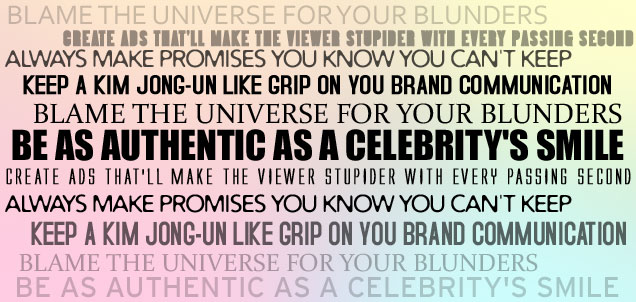
    Keep a Kim Jong-Un like grip on you brand communication.

    Whoever said communication today is a two-way street needs to go back to driving school. Learn a thing or two from the Supreme Leader of the hermit kingdom about keeping adoring fans unconditionally loyal to, and in love with, you. How? Just don’t listen to what common citizens have to say. And yes, especially if the twittering is unflattering. Hush the hashtags and ignore the critics, (Alas, labour camps are not an option here.) In fact, pretend discontent doesn’t exist. Who listens to the educated opinion of influencers and critics, anyway? And there are so very many of them. In fact, not paying any attention to what’s buzzing amongst users has its benefits. American brand DiGiorno Pizza didn’t bother reading beyond #WhyIStayed, a widespread discussion between victims of domestic abuse. That was fairly apparent when DiGiorno tweeted “#WhyIStayed You Had Pizza”.


    If you’d like to smash trust, don’t acknowledge the naysayers and customer feedback. Certainly don’t follow in the footsteps of, to take a local example, the food chain Faaso’s, or the etailer Amazon, who move mountains to please customers, keeping lines and tweets open 24/7 and directly addressing those who have publicly expressed their dissatisfaction with service or product.


    There’s another way to go about taking total control of the brand’s destiny. Do what Apple did, a brand with fans who possess the kind of dedication Annie Wilkes (the obsessed fan from Stephen King’s Misery) would find hard to match: Force U2’s Songs of Innocence, an album the company paid $100 million for the right to distribute, upon 500 million iPhone and iPad users, whether they like the Irish or not. Even lifelong devotees who write reams of web pages dedicated to extolling the virtues of brand Apple hated the move. It was the best thing that happened to Microsoft since 1984.


    Blame the universe for your blunders.

    Never admit one’s shortcomings and mistakes, for, pray tell, what good can come of it? Consider the curious case of an etailer. Just days before Big Billion Day sale, Flipkart went to town allegedly poking fun at Amazon and its chief Jeff Bezos with cheeky hoardings. Not two weeks later, Flipkart’s Diwali super sale brought a section of its shoppers to distressed tears and tweets when the portal failed to keep its promise of giving users the mother of all sales. One incensed arm-chair shopper swore never to buy products on the site again. And she was not alone in taking that pledge.


    A textbook case, then, of trust destruction. Or it would have been if the Flipkart co-founders had just shrugged, merely kept mum or given the sort of non-apologetic apology so many CEOs specialise in. Filled with corollaries and dodges like “Sorry if you were upset/offended.” But instead, co-founders Sachin and Binny Bansal stood before the world, asking it to forgive them in a note that was a masterclass in contrition and remorse. What they didn’t specifically ask people to do was to go back filling their flipkarts with goodies – whether required or just powered by a deal too good to ignore. But many formerly irate members of the public did that anyway, touched by this act of public repentance and acknowledgment of failings. To say nothing of the people who bought the goods worth $100 million that Flipkart claims to have sold in one day flat.


    Be as authentic as a celebrity’s smile.

    Temporarily latch onto whatever trending topic or cause that has everyone in a fleeting tizzy. Be phoney, pile on and don’t forget to slap your logo on. Green, pink, the colours of the rainbow or feminism, pick your cause. It’s only paint it’ll fade away quickly. Perhaps corruption or hygiene and sanitation are more your cup of tea? Pretend to bleed for the greater good while doing nothing constructive and the yawning gap between your deeds and your insincerely articulated words will cause any vestige of trust to quickly disappear.


    Also, one would do well to look at marketers (the whole lot, practically) who try their damndest to fit in, like the Papa who thinks he’s one of the kids. Blinded by the power and influence of millennials, marketers of all ilk have commissioned the best surgeons to make their brands look and seem younger. There’s no better strategy to confuse both old and new users. And yes, get them wondering whether you can be trusted.


    Or, one could try to do something that just isn’t in the brand’s DNA. Just imagine now the damage Dove could inflict upon itself if the brand turned away from its “real beauty” positioning and hired a Kardashian or Kapoor to do the talking.


    Whatever you do to break trust do not emulate Tata Tea and Lowe Lintas who for over five years have been hard at work awakening the consciousness of the citizenry with Jaago Re moving from mere TV commercials to online and activation programmes that encouraged people in general and women in particular to vote.


    Create ads that’ll make the viewer stupider with every passing second.

    Dumbing down a brand’s advertising is a mechanism that has acquired a recent bump up in pace. Just sign on a celebrity that fits the brand like knock-off couture. Stop thinking out-ofthe-box entirely. Stop innovating, really. In fact, take it up a notch.


    Look what BlackBerry achieved when they hit the brakes on keeping pace with times, competition and value for the price paid. Even though there are a few hangers-on still, for every BB wielding consumer who refuses to move on, their resolve wavering, there are countless who lost the connection.


    Always make promises you know you can’t keep.

    After centuries of practice, politicians have mastered the art of promising their constituencies the sky but delivering no more than abject disappointment. Becoming an expert serial promise-breaker doesn’t happen overnight though. But one tries. There are lessons to learn from oral care brands that promise no cavities. Or, for instance, low-cost airlines and telecom brands. Over the years, air-fare and air-time wars have only become bloodier, much to the delight of travellers who salivate at the thought of flying away for the weekend (with data-packs active) at less than the cost of a Chinese smartphone.


    Then watch them come crying to the company when they discover a few extra digits in the full-and-final tariff. (It’s them, not you.) Take a customer’s expectations and aspirations to stratospheric heights and then kill the engine to give them an experience damn hard to forget. There’s no better way to end a relationship built on trust.


    With additional insights from marketing consultants Harish Bijoor, Nabankar Gupta and Shripad Nadkarni


    Source:The Economic Times

    Copyright © 2014, Bennett, Coleman & Co. Ltd. All Rights Reserved

    Licensed to republish


  • Power points to target & track youth


    Youth is more homogeneous today than ever before: D Shivakumar Reach the younger & funkier generation 
     

    D Shivakumar

    CEO, Pepsico India


    Youth and youthfulness are evergreen concepts. The eternal truths of college, friends, and hangouts, falling in love and falling out persist. There are some differences in this generation due to technology and wider exposure.

     

    Earlier generations saw basic brands and services. This generation has challenges with everything from quality education seats to public utilities. Let’s look at life, technology, relationships with brands and what marketers need to do to connect better.


    Youth is more homogeneous today than ever before; they dress the same, talk the same, tap into the same sources for information and quickly form digital tribes. However, small town youth is about conformity, values and tradition playing the role of glue as well as shackles.


    They try balancing between being trendy and managing family expectations. Their urban peers are about group belonging, but wanting to stand out -a ‘first amongst equals’ syndrome. They are more ‘global’ savvy. So, brands can be traditional and leading edge with the youth.


    Indian youth recognise the world’s fragilities and life’s insecurities. This makes them ambitious about material success. It is about fulfilling potential and owning the badges. The markers are visible ‘money can buy’ symbols.


    Their role models are talented sporting geniuses like Messi, Ronaldo and Tendulkar, smart tech guys like the Flipkart founders (Sachin and Binny Bansal), Mark Zuckerberg, Steve Jobs and Edward Snowden, the whistle blower.


    They admire the journeys of Dr APJ Kalam and MS Dhoni and anyone who has achieved rare competence in his or her field. Celebrities are aspirational and advertising which offers a peek into the celebrity’s world wins.


    They are idealistic, realistic and competitive, all at once. The choice of careers is getting more diverse. They keep things light and aren’t deeply attached. They realise relationships have side exits.


    Girls are postponing marriage to experience independence and be financially secure. Priyanka Chopra’s ‘it’s more than a phone’ ad which tapped into this attitude was a big success.


    A competitive society pushes youth to be extra smart or hardworking. Most find the latter a difficult and boring path. Hence they resort to ‘jugaad’, the ‘chota short cut’ or ‘patli galli’. White lies are okay truths for them to get to the goal.


    This dark side of youth is sometimes admired and often not condoned by peers and society! Movies have captured this; brands haven’t done so as yet.


    Let’s look at the impact of technology. Every young Indian has access to a cellphone. India’s youth population dominates the 200 million Internet user base, the 100 million Facebook users, 80 million YouTube users and 30 million Twitter users. Technology allows youth to have multiple identities, mostly anonymous. It has made them multitasking champions and reduced attention spans.


    Mobile phones and social apps have given them a way to connect with the opposite sex in their own private space and express themselves through words and visuals. Youth from ‘love marriage’ families do talk about their girlfriends and boyfriends with their parents. Boys and girls are open to discussing their relationships candidly. Can brands use these insights in their communication?


    Technology makes youth consume, converse and create and gives youth social currency, however transient. It needs to be acquired by doing new and different things. ‘Talk value’ brands play a big role in building social currency. Brands can co-create by tapping into this consume, converse, create cycle.


    Indian youth are comfortable with consumerism. They happily switch between branded and unbranded choices and use a wide repertoire. Brands give them identity and are important to expressing their coolness but always at the right value.


    They want and respect socially conscious brands, however, they do not necessarily reward them with more business. Recycling in technology is a good example. How do brands get youth commitment to ecology and societal issues while staying on business strategy?


    The challenge is to market inclusiveness memorably, and be authentic. The good of the brand is in its product promise and delivery, the challenge is in behaviour and responsiveness in the social space. Brands need to engage with youth on their turf, on their terms.


    Youth passion revolves around sport, music, movies, shopping and hanging out. The emergence of English Premier League, the Spanish La Liga, NBA and F1 threaten cricket’s position. Brands that connect these broad passions do well; brands that force connection do poorly and are mocked for trying too hard.


    Youth and aspiration are two sides of the same coin in every generation, aspiration of a new way and today a new technology. Youth always seek ‘the next wave to surf’.


    India has 55,000 brands in the FMCG sector. Most of these brands view youth as the prime target segment. Yet, few get it right. Brands fail because they try too hard to be cool and in reality are too cold to be hot!


    Source:The Economic Times

    Copyright © 2014, Bennett, Coleman & Co. Ltd. All Rights Reserved

    Licensed to republish


    Harish Bijoor

    Brand expert & CEO, Harish Bijoor Consults Inc


    Youth and trends – that’s really an oxymoron, moron! And that opening sentence, in-the-eye, in-the-face, and in the gut, is the way the youth talk. “Hey Dawg” is a loving appellation. Aside hug follows, that could get your shoulder dislocated, but it’s away of bonding and telling you we come from the same generation, and are headed to the same hell.


    Youth and trends are words that don’t necessarily go together.The moment something sets in, the category moves its cheese, chips and Coke. Trend is for the old.The young believe in change that is forever, and discontinuous.Anda discontinuous trend is really not a trend; difficult to track with method, science and meaning.Those who believe they are trend spotters live in a fool’s paradise.


    The trend you write about is as old as the day it was written. This piece is therefore not as much about telling you trends as teaching you how to trend-track. Teach a man to fish, rather than give him the now-truly dead Pomfret you caught this morning.


    Since trends are difficult to track, and have this yen to change, there is a great way of keeping in touch with the youth;what they do, wear, speak, eat and drink. Just watch them at it. Track them without them knowing. Catch them in their natural surroundings.


    By the way this is not home, school, college or even a spanking new entry-level office. Instead, it is the third-place where they are letting their hair down. Gyms, beauty-parlours, cafes, pubs, discs and more. It is here that they are themselves.


    Catch them on Twitter, Facebook or Tagged. Catch them with their pants down, with their second and third digital handles, on sites you never thought guys and girls like them would ever visit.The footprints you track today must be both physical and digital.


    Just as there are “physical third-places”, there are “digital third-places”. And thenwhen you havewatched them 1:1 inmyriad “third-place” locations, build that sketch of theirs.This will change in three months flat.Therefore, keep building, calibrating their mind, mood, language, tone and tenor. You just might be on the right track, then. I call this generation “The I-Gen” where I stands for Impatient.


    It’s the hallmark of youth. Patience cycles have progressively become smaller. Impatience is the newvirtue.The more impatient you are, the more of a ‘go-getter-youth’ you are.Whenyou can be Impatient, why be patient? Impatience hits you in the face all around.The youth are impatient with love.There are relationships on the front-burner, just as there is a parallel one on the back-burner.


    Multi-hob is the way to go. There is impatience in sex and no binding yourself tight within the confines of a marriage. Impatience is everywhere, and the salivating marketer is ready to cater to it.Whenyou fracture your patella and rush to the hospital, there are two cures possible.


    The patient one is to be in a cast for six weeks, and the impatient one is dowhat the doctor in the big hospital is recommending. Put in those nuts and bolts and be up and about in a week flat.The marketer here (in benign disguise) is the doctor recommending the high-priced quick-fix versus the low-priced plaster of paris in blue. This is everywhere in the youth space.


    Pay the price and get the lost time back.Welive with two currencies today: time and money. And often, time is at a premium. There is impatience in the foods we eat, fast food versus regular. Restaurants versus QSR’s. Quick-serve restaurants versus slow-serve restaurants, if you will. There is impatience in the yen to create wealth, just as there is impatience to spend it all.


    The bio-clock of the youth at large is ticking at a pace that seemsmuch more frenetic than at any time in our marketing history.There seems to be very little time to live, might as well live it fast and furious. Fashion, lifestyle, entertainment and digital use is witnessing this impatience all around. What then is the real problem at hand? It’s not what, it’s who.


    The marketers in the country who are an older lot,much older than the people they sell to.Whoare good at the old marketing format: Patience Marketing. Impatience is a mindset they just do not understand well enough. Even if they do, there is lip-service done to it.


    There is also this dominant attitude and notion in the minds of older marketers (and by old I mean age 30 and above, ouch!), that this impatience is a fad, and it will pass. Marketers instead need to learn and practice impatience. Embrace it within your brand DNA.


    Pack it within your brand offering, and showcase it to the youth. Resonate with this impatience and be a part of it rather than criticise and passes value-judgments, as an older person is bound to. Re-check your ‘young quotient’ dear marketer, before you attempt to market to the youth effectively.When was the last time you hit a discotheque and grooved to the tune of Timber and Dubstep? Do you even know what we are talking about? Ouch!


    Source:The Economic Times

    Copyright © 2014, Bennett, Coleman & Co. Ltd. All Rights Reserved

    Licensed to republish


  • How advertising helped Modi get on road to PM


    By Shobhana Nair


    It’s a campaign that’s sure to enter India’s advertising hall of fame. A blitzkrieg that marketing boys from across the country are drooling over. The advertising mania around Brand Modi began a few months ago in right earnest. The seeds had been sown by way of a belligerent presence on the social media ended on the counting day.


    Piyush Pandey

    While the victory of Prime Minister-designate Narendra Modi has been attributed to many factors, one can’t overlook the advertising muscle put behind promoting a great brand. As Piyush Pandey, Executive Chairman and Creative Director for Ogilvy & Mather India and South Asia says, “You can only position and market something which is good and based on what the product is all about. Nobody has ever been able to sell a bad product. Nobody can as people are not stupid. So a good product is presented with its attributes and the marketing of the brand which was done by Soho Square is only a presentation of what is good in its intrinsic value.” A team of 25-odd creatives, planners and account management were working round the clock for three months in Mumbai and Delhi on the job. Soho Square, a part WPP’s Ogilvy & Mather India, bagged the account after nine rounds of pitching.  “The brief was to firstly, address the common man’s key issues through a comprehensive agenda and secondly, project Mr Modi as the next PM this country deserves,” shares Anuraag Khandelwal, Executive Creative Director and Creative Head, Soho Square, Mumbai.


    Ad campaigns like Abki Baar Modi Sarkar, Janata Maaf Nahin Karegi and Achche Din Aane Waale Hain were able to convey both – the current sentiment of the country and the BJP mandate – powerfully and effectively.


    Prasoon Joshi

    There was also Prasoon Joshi and his team from McCann’s TAG too who were involved to articulate the philosophical aspect of the party. Desh Ki Pukaar, Modi Sarkaar and Desh Nahi Jhugne Doonga were some of the campaigns which Joshi was involved in. “It is very important to know what your product has to offer and what people need. Only then will it resonate with the people. One of my biggest learning is that you need to have a right product, the right ingredients and you can’t confuse people with 10 things.”


    “Modi was portrayed as a single-minded person of the party with one single mandate. There has to be clarity of focus & product has to be superior. A great campaign in isolation will not work,” says Joshi.


    Ask the brand gurus on why the campaigns worked in favour of Modi and here comes the reply. Jagdeep Kapoor, Brand Guru & CMD, Samsika Marketing feels that the communication and advertising was simply strategic. “It entered the minds and heart, but more important was the great performance of Brand Modi over the decade, which helped them communicate.”


    Harish Bijoor

    Well-known brand expert and CEO, Harish Bijoor Consults Inc gives a thumbs up to Modi’s marketing, “Modi is the ultimate political marketer. He had able support, and he was decisive in the way he managed his campaign. His campaign was a 360-degree campaign that had everyone else watching with awe. The best of product marketing gyaan was brought into this campaign. And it worked. Modi is a product. And this product promised what the people wanted. And in him people saw a strong and decisive leader, someone who was an anti-thesis of sorts to the persona India was used to in the past decade with Manmohan Singh at the helm of affairs.”


    The media buying and planning was handled by Sam Balsara’s Madison World and he admits that a campaign as large as this came with its set of challenges. “Outdoor in UP posed huge challenges because of unfair play by the ruling party in granting permissions for putting up hoardings. The other challenge was negotiations with media, some of whom artificially inflated their rates for political campaigns! Random numbers floating around in the media of the budget of our campaign made our task more difficult.”


    While it may appear to have been all hunky-dory as one looks back at the BJP’s advertising campaign, Piyush Pandey adds: “No brand is built in a few months; a brand is built over a period of time. What Narendra Modi has done in the last 10 years has been valuable to him.”


    Pandey also hastens to add that good advertising wasn’t the only reason for the Modi’s success. “No election is ever won or lost because of advertising. Advertising is only an element. Advertising only presents it. With a great product, I can do great marketing.”  Indeed.


  • Piyush Pandey, Jagdeep Kapoor & Harish Bijoor on what worked for Modi and the BJP

    Piyush Pandey
    Harish Bijoor
    Jagdeep Kapoor

    Even as the final results were coming in, it was clear that one of the many factors why Narendra Modi and the NDA emerged victorious in the General Elections 2014 was the advertising and public relations campaign. Shobhana Nair spoke to Piyush Pandey, Executive Chairman and Creative Director for Ogilvy & Mather India and South Asia, Harish Bijoor, well-known brand expert and CEO, Harish Bijoor Consults Inc and Jagdeep Kapoor, Brand Guru & CMD, Samsika Marketing to discuss the rise and rise of Brand Modi


    So what worked for Brand Modi since last year?

    Piyush Pandey: No brand is built in a few months; a brand is built over a period of time. What Mr. Modi has done in the last 10 years has been valuable to him.


    Harish Bijoor: Hard work. Very hard work. Add to it the fact that Brand Modi started off the block much before elections were announced. Brand Modi established itself first when it saw Narendra Modi as a hat-trick CM of Gujarat. This image was further boosted with development as a cue. And then came the announcement of Modi as a PM candidate of the BJP. This was decisive and focussed branding. And then kicked in the campaign.


    The solus attention on Modi has helped the BJP immensely in this victory. If you remove Modi from the BJP, you will find a huge crevice in terms of the resultant imagery. To that extent, this is a pure Modi win. In many ways, this paves the way for an epochal shift in the way campaigns will be run in this country. The individual will become more important than the party. Parties that hide behind the cloak of group-think will need to think individual personas, American style, in the future.


    Jagdeep Kapoor: Brand Modi has been persistent, has been insistent and has been consistent.


    Do you think it was smart marketing that gave Mr Modi the comprehensive victory?

    Harish Bijoor: Absolutely. Narendra Modi is the ultimate political marketer. He had able support, and he was decisive in the way he managed his campaign. His campaign was a 360-degree campaign that had everyone else watching with awe. The best of product marketing gyaan was brought into this campaign. And it worked. Modi is a product. And this product promised what the people wanted. And in him people saw a strong  and decisive leader, someone who was an anti-thesis of sorts to the persona India was used to in the past decade with Manmohan Singh at the helm of affairs.


    Jagdeep Kapoor: Yes. Very big. Because of 3 reasons:

    1. He does not need anyone’s help now. Therefore he will only help the country.

    2. Despite all the criticism for the last decade, he was clear in his strategy and ruthless in his implementation.

    3. He genuinely wants to benefit all Indians, just like he did for all people in Gujarat.


    Would you say the BJP’s ad agencies produce great advertising, or at least advertising that worked?

    Piyush Pandey: You can only position and market something which is good and based on what the product is all about. Nobody has ever been able to sell a bad product. Nobody can as people are not stupid. So a good product is presented with its attributes and the marketing of the brand which was done by Soho Square is only a presentation of what is good in its intrinsic value.


    Harish Bijoor: They did. I love the “Abki Baar Modi Sarkaar line”, as did I love the jingles that captured the need of the people in bundling hope: “Acchhe din aane waale hain…” And media organizations loved the amount of money that was spent in airing all of this for sure.


    Jagdeep Kapoor: Their communication and advertising was simply strategic and entered the minds and heart, but more important was the great performance of Brand Modi over the decade, which helped them communicate.


    And do you think the Congress loss was caused by bad advertising?

    Piyush Pandey: No election is ever won or lost because of advertising. Advertising is only an element. Advertising only presents it. To say that Congress’ advertising was bad will be incorrect. What are you presenting is an issue and to say Soho Square’s advertising was great for Mr Modi will be incorrect too. Soho Square did a great job in interpreting the right side of Mr Modi strategically and creatively. But at the end of the day, advertising doesn’t make you win an election or any product for that matter. With a great product, I can do great marketing. A good product has to be presented properly for that I complement my partner Soho Square. I will conclude by adding “Acche din aane waale hai!”


    Harish Bijoor: Not really. In the beginning, it is all about strategy. I do believe the gaps lie in the strategy rather than in the advertising executions. I do believe enough of emphasis on voter insight was not given. The campaign was top-down and ignored the bottom-up possibilities.


    Jagdeep Kapoor: Advertising has a limited role. Performance has a major role. Good performance gives good results and vice versa. Brand Modi was able to set a high standard not only in Gujarat, not only in India, but also in the world.


    How does Brand Modi not suffer from the same fate as various Opposition/non-Congress governments have in the past?

    Harish Bijoor: Brand Modi is beyond it all for now. His assessment will start happening one year from now. And that will be the biggest challenge to tackle. Every single promise needs to be fulfilled. With care, tracking and passion.


    Jagdeep Kapoor: In the case of Brand Modi, he’s positive. He focuses on growth proposition and not negative opposition.


  • The Rise & Shine of Brand Modi


    Even as the final results were coming in, it was clear that one of the many factors why Narendra Modi and the NDA emerged victorious in the General Elections 2014 was the advertising and public relations campaign. Shobhana Nair spoke to Harish Bijoor, well-known brand expert and CEO, Harish Bijoor Consults Inc to discuss the rise and rise of Brand Modi


    Harish Bijoor

    On what has worked for Brand Modi in the last year?

    Hard work. Very hard work. Add to it the fact that Brand Modi started off the block much before elections were announced. Brand Modi established itself first when it saw Narendra Modi as a hat-trick CM of Gujarat. This image was further boosted with development as a cue. And then came the announcement of Modi as a PM candidate of the BJP. This was decisive and focussed branding. And then kicked in the campaign.


    The solus attention on Modi has helped the BJP immensely in this victory. If you remove Modi from the BJP, you will find a huge crevice in terms of the resultant imagery. To that extent, this is a pure Modi win. In many ways, this paves the way for an epochal shift in the way campaigns will be run in this country. The individual will become more important than the party. Parties that hide behind the cloak of group-think will need to think individual personas, American style, in the future.


    Do you think it was smart marketing that gave Mr Modi the comprehensive victory?

    Absolutely. Narendra Modi is the ultimate political marketer. He had able support, and he was decisive in the way he managed his campaign. His campaign was a 360-degree campaign that had everyone else watching with awe. The best of product marketing gyaan was brought into this campaign. And it worked. Modi is a product. And this product promised what the people wanted. And in him people saw a strong  and decisive leader, someone who was an anti-thesis of sorts to the persona India was used to in the past decade with Manmohan Singh at the helm of affairs.


    Would you say the BJP’s ad agencies produce great advertising, or at least advertising that worked?

    They did. I love the “Abki Baar Modi Sarkaar line”, as did I love the jingles that captured the need of the people in bundling hope: “Acchhe din aane waale hain…” And media organizations loved the amount of money that was spent in airing all of this for sure.


    And do you think the Congress loss was caused by bad advertising?

    Not really. In the beginning, it is all about strategy. I do believe the gaps lie in the strategy rather than in the advertising executions. I do believe enough of emphasis on voter insight was not given. The campaign was top-down and ignored the bottom-up possibilities.


    How does Brand Modi not suffer from the same fate as various Opposition/non-Congress governments have in the past?

    Brand Modi is beyond it all for now. His assessment will start happening one year from now. And that will be the biggest challenge to tackle. Every single promise needs to be fulfilled. With care, tracking and passion.


  • Brands show the way – in or out – this election season

    By Shobhana Nair


    The ongoing election fever has certainly caught the attention of everyone concerned including individuals and companies alike. This year especially is one where a host of brands have joined the opinion bandwagon and have gone on to express their hopes or angst against a host of political parties and their candidates. Recent examples include Fevicol that has joined the group with its recent ad campaign that humorously reflects the current election scenario in India and also Maruti’s Wagon R that has released a campaign around elections.


    Harish Bijoor

    Explaining the approach being taken by brands, Harish Bijoor, Brand Expert & CEO, Harish Bijoor, Consults Inc said, “Politics is a very important part of the fabric of societal life. Every being is essentially a social being first and then a political. To that extent politics touches every one of us. Since it does, marketers salivate at the prospect of using politics and election time is a great time to piggy back on the one big event that gets the eyeballs: Indian elections.”


    That may sound like a great marketing strategy and that’s why brands like Tata Tea has been a clear favourite amongst both the experts and the aam junta in throwing light on issues that need attention. This time around, Power of 49 had the backing of popular TV faces and the response received has been phenomenal. The brand has received over 1.7 million responses till date with a majority of these responses coming in from the states of Uttar Pradesh, Madhya Pradesh, Maharashtra, Bihar and Rajasthan. Of the 1.7 million calls, more than 0.6 million have voiced specific issues that concern women.


    Vikram Grover, VP – Marketing, India and South Asia, Tata Global Beverages said, “What is noteworthy is that not just women, but men too have participated in a major way. With such phenomenal participation from the general public and an increasing focus on women in political discourse, we hope that the reach of our campaign could play a small but a significant part in paving the way for women’s empowerment and hence aiding the nation’s progress.”


    This isn’t the first time that Tata Tea has taken up a social cause. One is aware about their Jaago Re campaign which was established in 2007 to awaken and empower citizens to ‘be the change they wished to see’. A well-planned and tactical communication strategy surely helps in winning a few brownie points along with building goodwill in the market.

    Another tea brand Wagh Bakri had released a campaign ‘Sahi Chuno’ in November 2013. Spending around Rs 3 crores on this campaign alone, the brand managed to create higher customer awareness in newer markets with a mix media plan comprising of TV, Radio & Outdoor. Parag Desai, Executive Director, Wagh Bakri Tea believes that tea plays the role of a catalyst in bringing people together in India. “When people come together and have tea they establish a relation. Our TVC went one step beyond and said that do not just vote but ‘Sahi Chuno (choose wisely), be it a tea brand or your candidate.”


    In fact, even a global brand like Google couldn’t resist from contributing towards the election fever. It released a 3 minute video ‘Pledge to Vote with Shyam Negi’ inspiring millions of Indian digitally to come out and get inked. That’s exactly what brands needs to do – inspire and encourage.


  • It’s IPL time and the Zoozoos are back!

    By Deepali Gupta


    It’s IPL time folks… and the Zoozoos are back! The poofy-loveable white creatures, Zoozoos, return this Indian Premier League (IPL) season, participating in familiar TV shows, promoting personalised services that Vodafone India can offer.


    The first two advertisements that will be released on Wednesday will feature a Zoozoo coming back for performances in a competitive dance show until the three judges give him a Perfect 10. The message: Get the number you want. The second is a quiz show in which the contestant uses ‘Phone a friend’ but runs out of credit to avail an instant small recharge.


    The entire campaign that will run till the finale of the IPL cricket tournament on June 1, will promote a number of other such services which “address customer pain-points,” said Vodafone’s senior vice-president, brand communications, Ronita Mitra.


    In India’s intensely competitive telecom industry, ease of usage often termed as customer experience is the biggest differentiator, apart from cost, for users while choosing between two mobile phone operators at a time of increasing popularity for mobile number portability (MNP). Customer experience assumes even more importance as operators like Bharti Airtel, Vodafone India and Idea Cellular target people who spend more, and not just focus on user additions.


    Harish Bijoor

    Brand consultant Harish Bijoor, who runs his own firm, however thinks the Zoozoo property is now jaded and it is time for it to be retired. “The point to remember is that the audience watching the IPL is a young audience. It is irreverent, wanting change. They (viewers) tend to tire when they see the same creative again.”


    Bijoor said if the first appearance of Zoozoo’s scored a nine on a scale of 10, in his assessment by last season that rating had already halved and is likely to fall further this time around. “There is definitely a blip (in brand value) after every IPL.”


    This marks the fifth season for the Zoozoos since their debut in 2009. The campaign that continues to account for nearly a quarter of the company’s annual brand spends also yields results.


    When the Zoozoo’s came, Vodafone had broken away from its runaway success campaign with the Pug (dog), which was initiated by its predecessor. It was the first conspicuous change in advertisement campaigns for Vodafone that made an entry into India after buying the existing operations of Hutchison Whampoa in a $11-billion deal.


    Then Vodafone embarked on replacing all Hutch branding with its logo, but kept all other communication in sync with Hutch’s activities.


    The Zoozoo’s were another runaway success for ad agency Ogilvy and Mather. In 2012, the agency had proposed to break away from the Zoozoo campaign in the IPL season and replaced it with Internet promos through a series of tele-matches. The Zoozoo’s have been used to communicate service-specific messages in the past and similar to their second season, this time around too they will be promoting products across segments like voice, internet, and customer service.


    Source:The Economic Times

    Copyright © 2014, Bennett, Coleman & Co. Ltd. All Rights Reserved

    Licensed to republish