
Tag: Harish Bijoor

  • New affluents redefine luxury market segment

    By A Correspondent


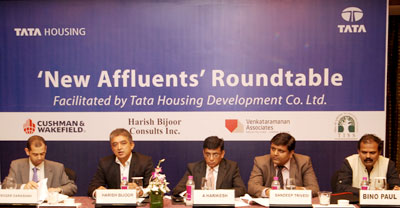
    L to R: Roger Darasha, Harish Bijoor, A.Harikesh, Sandeep Trivedi and Bino Paul

    India’s rapid advance from an emerging to a developed economy has given rise to a new breed of luxury consumers, a highly opinionated and demanding set of consumers, which is heavily influenced by global tastes and beliefs. New affluents, while retaining a distinctly Indian identity, are redefining the market, taking marketers by storm, concluded a roundtable discussion organized by Tata Housing Development Co. Ltd in Bengaluru last week.


    According to the Boston Consulting Group, the numbers of affluent class are around 13 million households in India. Among affluent households, education and occupation help define consumption patterns and attitudes, creating two distinct segments: New and Traditional. The recent emergence of the affluent class in India highlights this demographic group’s obsession with the love for technology, high living and new-age affluence – in a nutshell, an opulent lifestyle. This has led to conversation amongst manufacturers and marketers on who these ‘affluents’ are and why their consumption habits are of relevance to India.


    According to the panel, the new affluents will “not simply mimic western spending patterns but retain distinctly Indian characteristics, a type of jugaad that marries affluence with aspirations, with a strong focus on the former.”


    The discussion had A Harikesh, Senior Vice President, Marketing & Sales – Tata Housing playing host with Harish Bijoor, Business Strategy Specialist and CEO of Harish Bijoor Consults Inc, Bino Paul, Professor and Chairperson at Tata Institute of Social Sciences and Sandeep Trivedi, Director, Growth Market at Cushman & Wakefield in attendance.


    Speaking at the roundtable, Mr Harikesh said, “New affluents are the ones driving the realty market today. They are ambitious and aspire to live a life of sheer luxury. They have the advantage of having both good education and as well successful careers. Most have travelled internationally and have lived abroad, a life they now want in their own home town as well.”


    Mr Bijoor, said, “In the marketing sector, we have changed the way offerings are assessed, while at the same time delving deep into the buying psychology of affluent consumers. For new affluents, products should flaunt their value and brand name always trumps affordability.”


    Social researcher Mr Paul commented on the societal change saying, “New affluents are pivotal in transforming urban agglomerations into global cities whose steadfast longing for novelty and structural changes forms potent base for new ideas, products, markets, spaces and socialization milieus. They seem to be different from conventional Indian middle class, in assimilating dynamic contexts that are enmeshed in social-spatial-economic-cultural changes.”


    According to Mr Trivedi, the growing working population of people in the age ground of 27-45 is the “primary reason for this change”. “The age of a homebuyer has drastically decreased over the years. Today, the average age of a first home buyer is in the age bracket of 28-32 years. This trend has transformed the residential market and created a niche within,” he said.


  • Harish Bijoor hits 10k corporate speaking hours milestone

    By A Correspondent


    Harish Bijoor

    Harish Bijoor, CEO of the private-label brand and business strategy consulting practice, Harish Bijoor Consults Inc, has completed 10,000 hours of corporate public speaking. His 10,000th hour session was completed at the CII National marketing Committee Meet in Mumbai recently.


    According to a communique, Harish Bijoor started speaking to public corporate audiences 18 years ago and has spoken to diverse sets of audiences over these two decades. He has spoken to coal miners in Poland, women’s’ groups in Iran and to audiences across 28 different countries.


    Says Mr Bijoor: “Audiences over the decades have changed. In the old days audiences, were passive and sat imbibing top-down stuff. Today, audiences are much more active. Today, audiences want to be a part of the talk, and today audiences are all about peer-to-peer sharing. My tone, tenor and decibel of delivery has therefore changed over the decades. As a corporate speaker you need to calibrate your delivery to your audience as it changes.”


  • Is negative publicity a positive for brands?


    By Meghna Sharma and Ananya Saha


    The Indian Premier League had more than its share of negative publicity this season. Did the brands associated with IPL get affected too? And is it possible for brands associated with an event to avoid negative publicity around the event? Or is any publicity good publicity? MxMIndia spoke to industry professionals to find out what brands can do in such a negative scenario.


    Harish Bijoor, Marketing & Brand strategy specialist and CEO, Harish Bijoor Consults Inc

    Brands are like human beings; they are born, they live, they thrive and then they die. In this entire life-cycle, if a brand has a slur cast onto it, this slur lasts as long or as short as the memory of the brand-audience. A controversy is both good and bad for the brand. It is good as it keeps the brand in public mindsets longer, it is bad because it is a canker that affects the image of the brand at large.


    Brands that are active, dynamic, have large mind-shares and market shares alike, cannot really stay away from controversy. The silver lining is the fact that public memory is proverbially short. Very short. Irreverent brands love all kinds of publicity. Possibly IPL is on the cusp of being an irreverent brand. All controversy is good for such brands.


    Vandana Das, President, DDB Mudra Group, Delhi

    I do not think that any brand associated with IPL got affected with the recent controversies. Brands have their own long-standing equity. Controversy is the pivot, but not necessarily everything in the periphery will get affected. What is important to note is that controversies are short-lived and brands have a longer life than a controversy. While one can say that IPL is in trouble, one cannot say that the brands are in trouble. It is not that the brands knowingly get into controversy. Brands do not have the control or have influence over such controversies. The brands tend to tide over it. At that particular moment, controversies seem big but brands tide over it.


    But this in no way means that any publicity is good publicity. At the end of the day, even short-lived negative publicity can affect a brand. And if a brand is not strong enough, it can even dilute its equity. Just like people, brands also need to avoid any negative publicity around them.


    Sachin Kapur, Chief Marketing Officer, Groupon India

    I particularly do not think that brands associated with IPL will get affected by negative publicity, primarily because it is not in the brand’s or brand manager’s hands. Yes, there are brands riding on the popularity of the event, the association is more to do with individual team or player. The overall interest in the IPL might go down, and while brands might have associated with the event to gain from it, it is still a long shot to say that it might have affect on the brands.


    Today, with active social media, even one negative blog post or tweet spreads like wildfire. It will reach your customer.


    There are times when there are situations, negative situations, surround a brand. These are times that challenges or reactions from the brand do not go down well with the consumer or audience. But no brand, whether six-sigma complaint or not, can stay down for long. The strategy of every brand should be to focus on customer.


    Amitabh Khona, Communication Consultant

    Today, crisis management is very important. Everyone knows about the Cadbury and Coke controversies, but have people stopped eating or drinking them? No. It depends on how a brand strikes back. For instance, Cadbury changed its packaging after worms were found in one batch. Also, another factor is the short memory of people. We will talk about something for a few days or months, but forget about all of it later and move on with our lives. Same can be said about IPL, although the recent events are all over the news channels and newspapers, people haven’t stopped watching the matches.


    Also, today where there are too many brands, one can say that any publicity is good publicity. No one will go out of business because of negative publicity or controversies. Such things keep happening and will continue to happen, everywhere in the world.


  • The Anchor: Harish Bijoor on 6 reasons brands need good consultants

    By Harish Bijoor


    #1 Brands tend to get inward looking. You need a guy from outside to get you looking outward. Get that guy!


    #2 Brands are about outside people: Consumers. Your consumer facing may need to be corrected. Aligned. Modified. Get an outsider to do that!


    #3 Brands need outsiders more than insiders. There is a certain degree of insider-incest that needs to get ventilated and aired, more often than not. Get him in!


    #4 Brands get jaded by being continually fondled by insiders. Get the outsider in! For a while, before he starts behaving like an insider!


    #5 Brands get pompous. You need a good consultant to get you off the pedestal of pomposity!


    #6 Brands need Devil’s advocacy periodically. Get a consultant who is a devil!


    Harish Bijoor is a brand expert and CEO of Harish Bijoor Consults Inc. His Twitter handle: @harishbijoor


  • The Magic of Narrative


    By Tuhina Anand


    In advertising it is about finding an emotional connect. If you have managed to do so, you hit a home run. Hence it’s no surprise that one finds many advertisements today that rely on a narrative style which is sometimes no less than poetry, and instantly strikes a chord with the viewers. The focal point is that the words should express the emotions and bring out both the joys and the trials and tribulations.


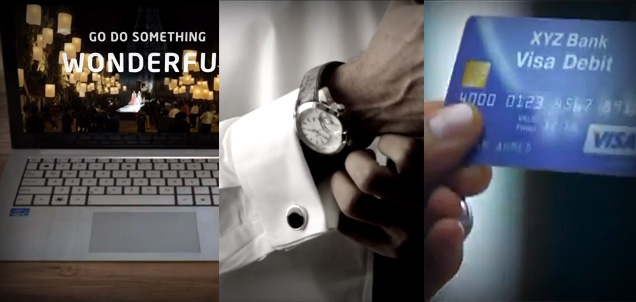
    Take for example the recent Visa Debit campaign. It has the best talent from the industry that has worked to craft the concept and the result is a fabulous example that blends a narrative style with human aspirations thus bringing out what Visa can do for a common man. End result – a narrative that resonates with common man and an ad that aligns well with the brand and its offering.


    VISA DEBIT

    [youtube width=”400″ height=”220″]http://www.youtube.com/watch?v=T44lW5FIq2g[/youtube]

    Shubhranshu Singh, Marketing Director, Visa, said, “The TV commercial that launched our ‘Dream to Advance’ campaign was visualized to deliver the core message that Visa Debit empowers people to achieve their dreams no matter where they reside. The integral human truth about an aspiration to achieve was brought alive in an authentically Indian setting. The narrative written by Gulzar engages and connects not only from an emotive point of view but also from the message delivery perspective. The music by Shantanu Moitra amplifies the beauty of the quest set against the majestic canvas of Kashmir’s landscape. Directed by Amit Sharma of Chrome Pictures, our latest TVC has ensured that the end result is a seamless blend of creativity and brand positioning.”


    Intel has launched its campaign on the theme – go do something wonderful. The campaign uses a narrative style similar to Visa. It talks about Intel helping in realizing dreams, and the powerful narrative only makes it more convincing.


    INTEL

    [youtube width=”400″ height=”220″]http://www.youtube.com/watch?v=M0QJc_rPYY0[/youtube]

    Sandeep Aurora, Director of Marketing, Intel South Asia, said, “Today’s youth are optimistic about what the future holds, but there is an underlying anxiety about tomorrow. Things around them are changing so fast that they know there are opportunities out there, but they don’t always know how to grab hold of them. The new Intel campaign maximizes relevance to this audience by showing stories that don’t focus on the technology that Intel makes, but what that technology makes possible. Based on the famous quote from Intel co-founder Robert Noyce, the ‘Go do something wonderful’ campaign the narrative aims at shining the spotlight on the partnership between consumers and PCs with Intel inside – that personal passion , big ideas and creativity can come alive when they meet a Intel Powered PC.”


    Then there is the recent ad for Xylys that uses the voice of Farhan Akhtar, who has also been featured in the ads.


    XYLYS

    [youtube width=”400″ height=”220″]http://www.youtube.com/watch?v=9DEbak91UeQ[/youtube]

    Giving his take on the narrative style of the ads, Harish Bijoor, brand expert & CEO, Harish Bijoor Consults Inc, said, “These ads are aspirational, hope-filled and hope-fuelling pieces of advertising that find their way into our advertising culture when times are tough. When the times are tough, one needs positive strokes. These pieces attempt these positive strokes. To an extent I would call them “economopause advertising”! When the economy hits its andropause moment, it needs advertising such as this.”


    After taking a look at these ads, Rahul Jauhari, National Creative Director, Everest Brand Solutions, opined, “This narrative style is tried and tested. Yes, it works. Given the right choice of voice and rendition, it can add magic to a film. It can raise the level of a film. Of the three, the narrative in the Intel and Visa one suit the film. The Visa narrative adds charm to the story. The one in Xylys? I think Farhan’s voice lets it down. Yes it’s his voice since he is in the film. But his voice, per se, is not a great one for narratives, and falls flat for me.”


    Opinions will vary but there is no denying that the narrative style definitely packs a punch.


  • An overdose of Kareena Kapoor?

    By A Correspondent


    (c) Perfetti Van Melle India

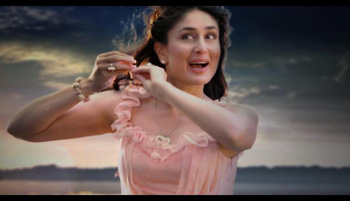
    Some time back it looked like Priyanka Chopra had gone on an overdrive with her brand endorsements; and now it looks like it’s Kareena Kapoor’s turn. She has just been roped in to endorse Philips’ hair care range. This development comes close on heels of the announcement that she is being signed to endorse iBall’s mobile phones. Then there is Head & Shoulders’ new ‘namaste’ campaign with beau Saif Ali Khan that is being aired on the TV currently. Besides these, she already endorses Airtel, Sony Vaio, Vivel, Alpenliebe Choco Eclairs, Lavie, Boro Plus, Mahindra Duro, Anne French, Lux, Pepsi, Globus, Citizen, Sangini Diamonds and few others.


    So what is it that makes Ms Kapoor such a hot pick for brands? Her popularity as a style icon and being one of the most recognizable faces for the consumers, is definitely is a pull. So like any celebrity who rules the endorsement brand wagon when at his/her peak, Ms Kapoor seems to be doing the same. However, the question is, whether there is an overkill of Kareena Kapoor for brand endorsements and should the lady now go slow rather than mint money when the sun (her popularity) is shining?


    Manish Porwal, Managing  Director, Alchemist said that it’s given that female celebs will be used heavily for personal care category, hence we see a lot of Kareena, Priyanka and Katrina endorsing these categories. He added: “However, the change today is that female stars are being used for non-FMCG categories, hence we see Kareena endorsing i-Ball, Mahindra Duro and even Sony Viao.”


    He also pointed that the heroines have a lesser shelf life than their male counterparts, so we do see them going for lesser brands and more days or more brands and lesser days. He said: “I don’t think Kareena Kapoor has gone on a signing spree all of a sudden. The truth about endorsements inIndiais that it is heavily skewed towards celebrities, especially those in the movie business.”


    Talking specifically about Ms Kapoor and her visibility, Harish Bijoor, brand expert & CEO, Harish Bijoor Consults Inc, said: “Yes, there certainly is too much of Kapoor, Sharma and Chopra altogether on the small screen. When brand endorsers endorse more than two brands at a time on television, there is a lack of credibility and distinction between brands, appeals and values. There is a brand-endorser promiscuity going around in the market, and this is a disease for sure. We need a bigger menu of star-faces that endorse diverse sets of brands.”


    He however feels that the brands that Kareena represents use her well. She is fresh, sleek and fits brands that want to appeal to groups that seek sleek and fresh. Kareena does not however work equally well with the broader mass of the population.


    Mr Bijoor cautions though: “It is important for Kareena to phase out one endorsement deal before taking on another.”


    When bringing a celebrity on board, the brand should think about the fit and not just rope in the flavour of the season, which is usually the norm. Alpana Parida, President, DY Works feels that there is lot of vanity branding in case of Ms Kapoor which is not appropriate. She said: “There has to be an alignment between the personality of a brand and that of the celebrity who is brought in to endorse it. In Kareena’s case it’s not been true in few cases. She is definitely not the girl next door, so she could be used for products that want to portray aristocracy or exclusivity.” Giving an example of good use of a celeb in recent times, Ms Parida points towards the Aliva ad featuring Vidya Balan which portrays her in her on-screen avatars, thus making it relatable.”


    With so much of Kapoor and brands, one thing that comes to the mind is that has she left behind the males in this race and emerged as the lead in celebrity brand endorsements? To this, Mr Bijoor, said: “That is a good sign. I do believe we need to break this gender inequality in Bollywood and its more important commercial avatar of ‘advertisingwood’ as well. Female stars firstly need to be paid as well as male stars are in advertising endorsements.”


  • HUL, LG etc look beyond regular advtg

    By Bhanu Pande & Ratna Bhushan


    PepsiCo is organising seven-a-side soccer tournaments in neighbourhoods, LG is showcasing its durables in residential complexes, Cadbury is standing outside super markets with its cookies, Hindustan Unilever is standing with a shampoo to assess the state of your scalp… These are some of the biggest companies, with hefty advertising budgets. Yet, to market their wares, they are increasingly looking beyond conventional, passive advertising and spending more on marketing activities where the connect with the target consumer is active and direct.


    In marketing lingo, such on-the-ground events and promotions are called ‘brand activation’, and they generally form the largest chunk of a company’s non-advertising activities. Spurred by brand activation spends, such non-advertising spends, called below-the-line (BTL), are gaining share over advertising spends at several leading consumer companies.


    According to LK Gupta of LG Electronics, 60 per cent of the company’s marketing

    budget is going towards BTL activities, against 35-40 per cent three years ago. “With increasing choices, the consumer has become more discerning,” said Mr Gupta, vice president-marketing. “Therefore, ground activations are gaining traction due to the added impact they give beyond the media clutter.”


    Elsewhere, Homi Battiwalla, category director, PepsiCo India, labels the increase in his company’s BTL spends as “significant”. “Today, consumers have started saying, ‘show me something real’,” he added. In April, in its advertising, PepsiCo India switched from cricket to soccer, and launched a campaign, ‘change the game’.


    Alongside, it hit neighbourhoods with ‘T-20 Football’ – a seven-a-side, 20-minute soccer tourney. “We realised plain advertising wasn’t enough,” said Mr Battiwalla. “We wanted to build the idea, and create an experiential engagement that is grassroots with our target audience.”


    All this is translating into more business for firms like New Delhi-based Candid Marketing, which helps companies with their brand-activation strategies. Its managing director Atul S Nath says its business is growing 25 per cent a year. “Clients are questioning the delivery from plain advertising,” he said. “Delivery from brand activation is almost immediate, though the latter has its limitations.”


    Mr Nath predicts that, in the next five years, the split between BTL and ATL (above-the-line, or advertising) spends will be equal. Currently, companies spend more on mass-media advertising than on events and promotions. He, however, feels, advertising budgets will not fall in absolute terms, but more of the incremental allocation will be to BTL activities. “Overall spends on BTL will significantly rise as people begin to see its impact,” he said.


    Mr Gupta of LG agrees, and attributes it partly to the rise of online marketing and social media, which conveys details of a product quicker than conventional advertising. “The influencing touch points are shifting,” he said. “The customer comes armed with his own research. So, conversion with demo and explanation has become an area of great focus.”


    It’s also the current tight business environment, said brand consultant Harish Bijoor, who sees advertising symbolising ‘theme’ and BTL representing ‘sales’. In a tough market, cash flows are an imperative. “So, they are putting their big bucks on BTL, and money is certainly moving from theme to scheme,” he said.


    Mayank Shah of Parle Products says the idea is to engage with the consumer despite the higher costs. “In case of traditional advertising on television or print, cost per contact is very low,” said Mr Shah, group product manager. “BTL activation is costlier, but it’s the quality of engagement with the consumer that makes a lot of sense. He feels, it is very important to generate trials in food products, which is the company’s main product category. “Sometimes it’s necessary to make consumer sample your products,” said Mr Shah. “And where there’s a big rural and semi-urban opportunity, we need to go BTL.


    Dabur India too has been relying heavily on BTL activities in tier-II and tier-III towns. “With rural consumers increasingly moving towards branded products, just leveraging mainstream media is not enough to connect with them,” said George Angelo, executive director-sales, Dabur.


    The company has the Dabur Amla ‘banke dikhao rani pratiyogita’, a rural beauty and talent hunt where rural women are groomed by trained beauticians. Another of its recent BTL activity was the Dabur Gulabari Miss Rose glow contest – a regional model hunt from state capitals, with the eventual winner receiving a wildcard to the Femina Miss India contest. “A BTL initiative involving Vanya Mishra (a wildcard who was one of the winners at the Miss India contest) resulted in Dabur Gulabari reporting its highest ever monthly sales in April,” said Mr Angelo.


    Source: The Economic Times

    Copyright © 2012, Bennett, Coleman & Co. Ltd. All Rights Reserved


  • Will marketers now woo KKR?


    By Tuhina Anand


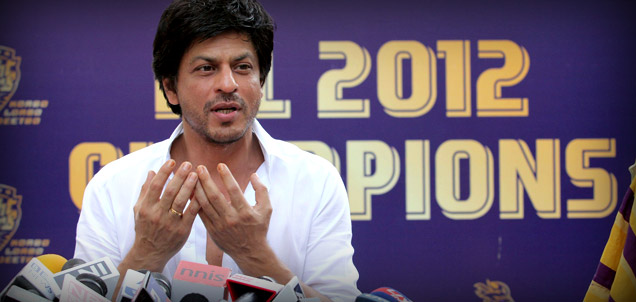
    They have pocketed the trophy, and as celebrations continue, one wonders if Kolkata Knight Riders’ (KKR) win will help them in upping their brand value. There is a direct relation with success in any sport and for a sportsperson, and how suddenly the sportsperson becomes the flavour of the season.


    Mind you, it’s just season, meaning a good series and one might bag few endorsements here and there, but offers from bigger brands don’t come pouring in unless you are the one on whom marketers can bet their monies for long-term. And in KKR’s win, the case gets even more complex as the players are completely overshadowed by the owner who is a super star, Shahrukh Khan. Though one might frown at his shenanigans, the truth is that people still like to know what SRK did when KKR won and not what Gautam Gambhir, Manoj Tiwary, Manvinder Bisla or Yusuf Pathan did as they lifted the trophy. Not to forget that co-owner Juhi Chawla too brings in a bit of star element to the show.


    Harish Bijoor

    Harish Bijoor, Brand expert & CEO, Harish Bijoor Consults Inc felt that from the lot, the one darling face that will emerge for endorsements will not be of any cricketer from KKR, not the team KKR, but the owner, Shahrukh Khan. He said: “I think this win and the subsequent hype and hoopla will benefit Shahrukh on the endorsement circuit for sure. It is a great boost at a much needed time for him. In many ways, in a completely diametrically opposite manner, what Satyamev Jayate is doing for Aamir Khan, IPL does for Shahrukh. Odious, but true!”


    Bijoor also pointed out that both SRK and Juhi Chawla will gain in terms of brand value, however the gain will be more for SRK than Juhi.


    However, Indranil Das Blah, Chief Operating Officer, Kwan Entertainment & Marketing Solutions has a different take on SRK and Juhi’s rise in brand value. His opinion is that it’s highly unlikely that both the owners would gain in terms of brand endorsements as he points that the triumph was on the pitch, and if anyone will see a rise in brand value, it will be the players, and not the team owners. Jagdeep Kapoor, MD, Samsika Marketing Consultants too agreed: “I don’t think the owners will gain as they are known for performances on screen and off-field. People who will benefit are those who have performed on field and off-screen.”


    Indranil Das Blah

    So who is the KKR player who will gain most after the win? Manish Porwal, Managing Director, Alchemist Talent Solutions rightly pointed that the KKR skipper Gautam Gambhir will be the winner here: “Gambhir has shown that he is consistent, delivers and is a leader. Having played on the national level, he already is a known name and with some murmur on him being seen as potential TeamI ndia captain, his brand value will definitely rise. Brands that have used Sachin Tendulkar and MS Dhoni in the past and want a younger icon, Gambhir fits the bill perfectly.”


    Mr Porwal also pointed that Gambhir does not have a flamboyant personality and has been fairly neutral in his approach which might be an added advantage for brands wanting to hook him.


    A similar view is voiced by Mr Blah: “The one player who will probably get quite a few new offers from marketers would be the KKR captain, Gautam Gambhir. Not only was he amongst the most successful batsman of the IPL and led from the front, but he also stood out as a captain. He is now being talked about as a future Indian captain and that is bound to have a positive impact on his brand value.”


    So while Gambhir emerges as a winner here, especially because of his personality traits like stability and performance, he could be a good catch for young MNCs or for financial and banking clients.


    However, brands will definitely fall for for KKR team members like Bisla who shone in the IPL. As far as other players are concerned, they may get a couple of regional or local endorsements but nothing on a national scale unless they are actively and constantly playing for the Indian team. “You need to be playing international cricket and be constantly in the media eye for a brand to want you as a brand ambassador; just performing in the IPL for two months out of 12 won’t result in endorsements. Examples from past IPLs include players like Swapnil Asnodakar and Paul Valthaty who performed brilliantly in the IPL but couldn’t sustain their forms and hence, didn’t get any endorsements,” added Mr Blah.


    But Mr Kapoor of Samsika has found another ace for marketers. He picks Sunil Narine and thinks that he would benefit from the win and from his excellent bowling performance and get endorsement offers as a thinking, clever, successful sportsman.


    While Mr Bijoor is not too optimistic about KKR future with marketers, he says that the problem with sports fervour and fever is that it is short-lived. Sporting success such as the one achieved by KKR diminishes very fast. With the next cricket tournament round the corner, everything will be forgotten rather swiftly, therefore the potential to leverage is really a mirage.Indiahas a surfeit of cricket as of now.


    Rahul Jauhari

    Some see rise in brand value for SRK or Juhi Chawla, others have pointed that Gambhir will gain the most, however, Rahul Jauhari, National Creative Director, Everest Brand Solutions has a slightly different take: “I have largely a pessimistic view on the rise in brand value for KKR team and its owners and its future with marketers. IPL is not the same as the World Cup, so the passions are divided and not national in its strength. Bisla should benefit post IPL, but I think it’s too early to say he can be the next darling for brand endorsements. The fan following post IPL is largely limited and regional. He could be rocking in Kolkata, but not in Chennai.”


    “Somewhere I feel the KKR win has been sadly overshadowed. It’s been played out as SRK win, not a KKR win, be it in terms of media bytes, attention or simply footage consumed. SRK’s brand value is already high. The IPL isn’t going to push it up. In a rather pessimistic view, I’d say the IPL has dented his image. I didn’t like the SRK I saw during this IPL. And a lot of people think the same way,” concluded Jauhari.


    However Mr Blah of Kwan feels that KKR has managed to establish itself as a successful brand.  He said: “Nothing succeeds like success. The team previously had all the trappings of a successful brand (star players, influential and high profile owners, a tremendous and diverse fan base and a plethora of sponsors). The main ingredient they were missing was success. Now they have that and it will have a direct and positive impact on how the team is perceived. As defending champions, they should be able to command a premium when they are out scouting for sponsors for IPL 6.”


    Mr Kapoor concluded: “KKR is a successful brand and would attract more advertisers. They can be a bigger brand if they show great performances on the field, rather than off the field.”


    Photograph: Fotocorp


  • Chris Gayle to endorse Mallya’s Cariba Rum

    By Anshul Dhamija & Boby Kurian


    Swashbuckling cricketer Chris Gayle has extended ties with Vijay Mallya’s United Spirits as the latter tries to spin a Caribbean rum story off the cricket pitch. The big hitting Jamaican, and arguably the most valuable player in Mr Mallya’s Indian Premier League (IPL) team, has signed an endorsement deal for the company’s latest brand, Cariba Rum.


    This is the first major standalone deal for Gayle, the highest run scorer in the current IPL season, on the Indian brand endorsement pitch. The move is probably part of Mr Mallya’s multi-million dollar strategy to retain Chris Gayle, who has been eyed by rival teams. Mr Mallya’s Bangalore team bought Gayle for $560,000 just before last season and managed to retain him in the fifth edition this year.


    While Gayle’s IPL price remains the same, his overall package, including endorsement fee, may touch the maximum $2 million for an individual player in the T20 league. United Spirits, which also owns the Bengaluru team, didn’t disclose the endorsement fee but said the contract was for “more than one year”.


    Outside cricket, USL’s move to use Gayle to build a Caribbean rum brand is part of the company’s premiumization strategy aimed at checking the rapid advance of MNC rivals. Prestige and premium brands will contribute almost 60% of the company’s profits in the current fiscal, up from just under 10% in 2005.


    Mr Mallya, who had Caribbean business interests when he owned Berger Paints, is rolling out Cariba with a blend imported from the islands where rum was first distilled more than 300 years ago. Gayle, who embodies the Caribbean free spirit, may help United Spirits to develop a rum story closer to the original home. Cariba rum aims to tap the upgrading rum drinkers in a market where most brands in the flavour category (barring exceptions like Bacardi) are regular and economy priced.


    “Gayle is the best fit as brand ambassador for a rum brand. Dark, brooding, and hard-hitting – all these facets make for great rum,” said brand consultant Harish Bijoor. “However, sportsmen and alcoholic beverages have always been a question mark in the minds of people. But then, Mr Mallya knows the cricket story,” he added.


    Source:The Economic Times

    Copyright © 2012, Bennett, Coleman & Co. Ltd. All Rights Reserved


    Photograph: Fotocorp


  • Marketers make hay in Rural India


    By Ritu Midha


    There’s no denying the unprecedented push being issued by marketers in getting their brands to reach out to rural cities and towns. Most marketers, who earlier had shied away from reaching out to these markets, are now reviving their interest and want to be a part of the action in the so-called Rural India. Till recently, the interest was not translated into action due to various issues like lack of infrastructure, information and consumers loyalty to a few brands that braved adversities and made inroads into these difficult-to-reach markets. However, things are changing now and, to a large extent, the change can be attributed to information access and the penetration strategy adopted by the mobile networks, which were closely followed by handset marketers.


    Harish Bijoor
    Avinash Oza
    Mihir Mody
    Mayank Shah

    As per Harish Bijoor, CEO, Harish Bijoor Consults, the rural consumer is just getting the taste of experimenting and owning, and hence a larger opportunity lies there. He elucidates: “I would segment the hinterland into urban, rurban and rural. The hunger deepens as you go from urban to rurban to rural. The opportunity for marketers therefore deepens as one penetrates further down this strata.”


    There are a number of pull factors attracting marketers to these areas; one also shouldn’t ignore the emphasis being laid by the government in improving infrastructure and education levels across the country. Avinash Oza, Director Brand Communications, DDB Mudra Max reflects on this sentiment: “The government’s infrastructure vision of connecting rural with urban through construction of roads and rail network has led to migration, mobile working population, and better education – it has also provided an opportunity for marketers to reach out to rural areas, thereby increasing accessibility across categories. In addition to infrastructure, Doorsanchar Kranti (Telecom Revolution) has bridged the rural-urban divide via satellite cable, and DTH connections.” He, incidentally, believes that it is a crime to call them villagers – they are distant urbanites.


    Presenting his outlook, Mihir Mody, Founder & CEO, Adwallz, said: “There is awareness and good spending power. Gradually these markets are becoming urban in attitude and awareness, thanks to the medium of television. Marketers, too, are exploring a new world in rural – FMCG and telecom success stories are now attracting other product categories… the sheer numbers are formidable.”


    Marketers have taken note of this evolution, and there is an increased focus on rural markets across product categories. Mr Krishna Mohan, CEO, Sales, Emami Limited said: “The great rural-urban divide in household consumption patterns has reduced drastically. Bharat is indeed keeping pace with India when it comes to spending on most fast-moving consumer goods. Rural sales contribute more than 40 to 50 per cent of total sales in various categories for Emami. We have increased emphasis on engaging rural consumers. The market is huge with a lot of potential.”


    Mayank Shah, Group Product Manager, Parle Products too is of the opinion that rural markets are indeed opening up, however there might be a difference in purchase behaviour and consumption pattern. He states: “In case of rural buyers, it is smaller units. Instances and opportunities of buying are less and they buy if the right quality is delivered at the right price.”


    It is not only the FMCG marketer who is witnessing an increased awareness and demand, but also the durables and electronics sectors. Kamal Nandi, VP – Marketing & Sales, Godrej Appliances explains: “It is not only the towns in these areas which are seeking a metamorphosis, but demand in rural markets too has increased. Though it might still be the entry level products that are being sold there – the aspirations are high, and demand is increasing. For instance, we have seen remarkable growth in sale of single-door refrigerators in these markets.”


    The consumerism in rural areas is being led by youth who are better connected, informed and travelled than the generation before. As Mr Oza stated: “Youth here are fast adopters, acceptors and can be termed as change agents. To reach households, the route is to bring youth on your side. Marketers can use youth by following ‘learning with livelihood’ model when they plan to penetrate hinterlands.”


    Another trend that has shown marked improvement is penetration of media in rural areas. This has resulted in more number of consumers who are being exposed to brands and their promises. However, the success of a brand in rural areas, to a very large extent, lies in the retailer’s hands – and it is important for the marketers to win them over. Citing an example, Mr Oza said: “Each retail store has 3-4 shop boards. On my visit to Khandwa in Madhya Pradesh, I came across unique shop boards. One brand – Pariwar tea, even deployed shop boards with retailers’ photographs. This shows that Maslow’s hierarchy pyramid works the opposite in the hinterland.”


    Beyond being in the good books of retailers, marketers have also realised the importance of educating consumers in these markets. The objective, of course, is to increase awareness levels and thereby consumption. Krishna Mohan stated: “The way forward is to help consumers, especially in the rural areas, to make the switch from loose to branded products or aid new consumption habits, either with novel products or new formats. We have embarked on a project called Swadesh, where Emami through its field staff would cover rural markets directly through dedicated organisation structure for rural operation.” He added: “Communication is another vital factor in ruralIndia. We need to reach out the consumers through innovative ways and create brand recall.”


    Though a number of theories have been floating around on the scope that rural markets throw up for brands, what is certain is that this is where the action would come from – and obviously more moolah. This would be driven largely by consumers from these belts that are increasingly becoming savvy, have better disposable incomes and are ready to spend. However, at the same time, the consumer is discerning, price conscious and desires to take small steps. The need of the hour is to communicate to him in a right manner and offer him the right product in the right size – win him over by giving the right advice and see your brand grow. But it must be mentioned here that word-of-mouth or buzz marketing is still the key to a making higher purchase decisions. As one jilted consumer might lead to many being drawn away and that’s the last thing a brand might want to confront itself with.


    Imaging: Rafiq, Photograph: Fotocorp


  • Hindi Hinterland: Happenin’ & How!


    By Ritu Midha


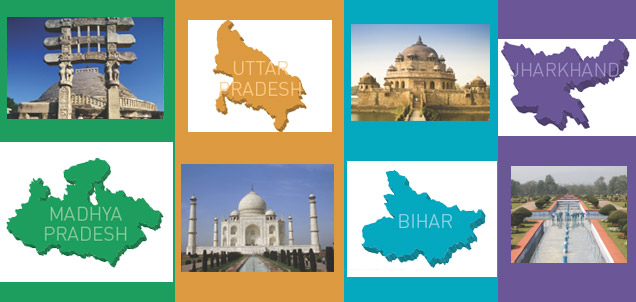
    The four key Hindi Hinterland states – Uttar Pradesh, Madhya Pradesh,Biharand Jharkhand, till less than a decade ago were considered to be sluggish in their outlook. That’s because consumers there were not really top-of-mind for marketers and if at all they became part of a media plan, especially television, it was done so by default, as Hindi television that catered to metros was available in the hinterlands too, and there was not much effort made to engage consumers there. If one looks at a broader picture, a similar tale rang true for most states across India, perhaps a decade-and-a-half ago.


    Cut to the present day, where India is the second-fastest growing market in the world, its middle class is the favoured target group of most marketers (both national and multinational), and in most global consumer surveys Indian consumers emerge to be the most gung-ho among the lot. Of the several states showing signs of speedy growth, the four states that are set for a big leap include:


    • Bihar, which is the second fastest growing economy in the country
    • Uttar Pradesh, which is the second largest contributor to the country’s GDP and also has the second largest urban populace in the country
    • Madhya Pradesh, which is touted as being an upcoming economic power centre and a major tourist destination
    • Jharkhand, which has always been an industrial hub


    One often reads of Indians leaving their cushy jobs overseas and returning to their roots to contribute to, and be a part of, the India growth story. In fact, stories of residents of Hindi Hinterland moving back home from metros too are not uncommon.


    Evolution of the Hindi Hinterland consumer

    Mayank Shah

    Consumers in these states are evolving rapidly and much of the credit for their evolution could be attributed to access to information and awareness boom. Mayank Shah, Group Product Manager, Parle Products reflects on the consumer psyche: “If you look at aspirations, there is no significant difference in Hindi Hinterland and metros. However, the urge to excel is far greater as they come from a modest background and the readiness to put in effort is definitely there. Even in semi-urban and rural areas, aspirations have grown – they are ready to consume CPG (consumer packaged groups), which is similar to their urban counterparts.”


    The increased awareness and steady GSDP enhancement has made the consumer ‘consumerist’, whereby it’s not only low-ticket items that are catching the consumer’s attention, the high-ticket ones are doing it in a big way too.


    Kamal Nandi, VP – Marketing & Sales, Godrej Appliances asserts: “Hindi hinterland is becoming an important market for consumption of durable goods. Consumer affordability has gone up, leading to a shift in lifestyle and consumers becoming more urban in their approach. Also, their top priorities are convenience and comfort.”


    Sushil Bajpai, President, Ghari Detergent, too, is of the view that it is no longer the market to be targeted sometime in future. For Mr Bajpai, the time is now: “There is excellent scope for marketers. Industries too are finding it attractive now. Consumerism is growing at a fast pace, and urban markets in Hindi heartland are no different from metros. The need right now is to understand the consumer mindset.”


    Krishna Mohan

    While the big cities in the region are getting ready to rub shoulders with metros, the semi-urban and rural areas too are getting out of dark areas. States Krishna Mohan, CEO, Sales, Emami Limited: “The great rural-urban divide in household consumption patterns has reduced drastically. Bharat is indeed keeping pace with India when it comes to spending on most fast-moving consumer goods. Rural sales contribute more than 40-50 per cent of total sales in various categories for Emami. We have increased emphasis on engaging rural consumers. The market is huge with a lot of potential.”


    Youth – Change drivers

    The change, as is expected, is being driven by the youth who are more adaptable and are akin to the youth from the metro – at least in urban areas. Having said that, awareness and information in semi-urban and rural areas is also growing and so are the aspirations.


    Somprabh Singh

    States Somprabh Singh, Head Marketing, Titan: “In attitude, they are not very different. They are independent, very ambitious and well informed. The only difference is that their exposure to many international brands is lower but that’s the function of the retail environment, which will change in sometime.” And, true to his vision, a change is currently underway across these cities.


    Harish Bijoor, CEO, Harish Bijoor Consults, believes that the booming Hindi Hinterland is the right place for marketers to be, more so for those catering to the youth. He exhorts: “The robust growth numbers in the education sector is proof enough. Add to it the entertainment market, the market for mobile phones, gadgets of every kind, clothes and accessories, cosmetics, shoes, exercise oriented products, and you have a solid market of the future emerging. There is spurring consumption of not only functional products, but products of cosmetic value as well. Products that relate to health, well-being and proactive health care, rather than just reactive care, are being craved for as well.”

     

    Harish Bijoor

    As per Mr Bijoor, there is a definite opportunity waiting, especially for brands meant for the youth, and the marketers need to make the most of it. He asserts: “The youth in these towns have a far bigger hunger quotient than the privileged youth in the bigger cities. I would segment this territory into urban, rurban and rural. The hunger deepens as you go from urban to rurban to rural. The opportunity for marketers, therefore, deepens as one penetrates down this strata.”


    Interestingly, while the debate between urban and rural might take some time to die down, it is the semi-urban areas that are attracting a lot of attention. Interestingly, the leap is expected to be bigger there, as they are keen to catch up with their urban counterparts, who themselves are always in a moving state.


    States Lloyd Mathias, the marketing honcho with experience around industries: “Youth in the urban areas of these states are quite close to metros in their awareness and aspirations, more so in case of bigger cities likeIndore,Lucknow,Bhopal,PatnaandRanchi. Though the semi-urban youth might be a little behind, they are catching up, what with the inroads being made by social media. Moreover, the influencers are the same, which are rapidly dissolving the differences.”


    Consumption pattern

    While rising aspirations is one part of the story, these regions are seeing an increase in activity by discerning marketers who are becoming more conscious of the finer nuances of the region, and are staying away from the one-size-fits-all approach.


    Explaining the phenomenon, Mr Nandi says: “While we have seen growth in double door refrigerator model in urban markets, in semi-urban markets it is the single door model that works.” However, it has not stopped Godrej from providing the entry-level consumer best value for money. He adds: “Even an entry-level consumer looks for high-end product features. A few years back, toughened glass shelves were there only in high-end model, today they are there in entry-level models as well. Brands have to seek to fulfil aspirations.” The company has also developed a refrigerator with a ‘Stay cool’ feature – powering cooling at the same temperature for 24 hours even after a power-cut.


    Coming back to the India analogy, the Indian consumer is perhaps one of the most price-conscious in the world. For him, value for money seems to be the mantra, but the consumers’ buying capacity is no longer questioned – the global marketers are tailoring India specific strategies, and the same is true of Hindi Heartland as well.


    Affirms Mayank Shah: “Instances and opportunities of buying premium products might still be less but they buy if the right quality is delivered at the right price. For example, premium biscuits like Hide and Seek cookies were rare in Hindi heartland, apart from cities likeLucknow,BhopalandAllahabad. However, now it has changed; we made it available in smaller packs, which has definitely led to sales enhancement.”


    The growth is not being noticed in purchase of a few specific product categories but across the board – a clear indication that the consumer is not seeking to fill just the need gaps, but is also looking for comfort, convenience and a bit of pampering.


    States Lloyd Mathias: “There is dramatic growth in categories like wireless broadband, consumer soft goods, mobiles and more; the consumption pattern is similar to other parts of the country. It is the sheer numbers that make it more lucrative.” He adds: “There is a homogeneity in these markets – the same is not true of any other part of the country, be it South, West or East.”


    Mr Krishna Mohan suggests that marketers look at a closer interaction with the consumer to understand him, and also to make him understand the brand. He asserts: “The way forward is to help consumers, especially in the rural areas, to make the switch from loose to branded or aid new consumption habits, either with novel products or new formats. For us, the categories of cool oil, cool talcs and fairness creams are doing extremely well with double-digit growth.”


    At this juncture, the Ghari Detergent success story can be an inspiration for many. With its origins inKanpur, it is the largest selling detergent brand in the country today. And a major focus on Hindi Hinterland has definitely propelled growth for the brand. Sushil Bajpai states: “Hindi hinterland is the biggest market for us; the brand name on our packs is prominently written in Hindi, and then in regional language. RoI in Hindi Hinterland is not lesser than other parts of the country; the key is to convey the right message accurately.”


    Key challenges

    Having assessed the scope that these markets present, one can safely assert that Hindi Hinterlands have come of age. And the marketers, of course, are in no mood to miss the bus. Thus, as per Somprabh Singh, it is important to “Act fast and act now, else be left behind. This is in terms of creating exciting products and new channels that will help reach them.”


    As per Mr Nandi, it is not just about being there; the key is to be relevant and to belong. He says: “You have a winning story in hand if you are able to provide relevant technology and play a role in them (consumers) fulfilling their aspirations.”


    Mr Bijoor agrees that relevance and market-specific approach is mandatory to be successful in these markets: “Marketers need to tailor-make themselves to the market, rather than take their tailor-made solutions to the market. Bottom-up marketing is the mantra to adopt.”


    Emerging markets indeed

    So while there exists an array of products that are being tailored to these markets, there is keen interest in interacting with the consumer there and understanding him and there definitely is an increase in the consumer spends. Are these markets ready for all the attention they are getting or would it be a case of yet another opportunity going bust?


    Laughing off the suggestion, Mr Bijoor states: “Hindi heartland is the new market that is just about emerging. What was derogatorily called the “cow belt” and the “Bimaru states” in the past, is a market that is coming to roost in the future. These states have become very progressive in their development indices. They boast of a GDP growth rate that is, at times, even more robust than the national numbers. This clearly means that these markets will see faster consumer growth in terms of demand and in terms of volumes, value and innovation.”


    Interestingly, the consumers staying in these markets are a very large demography, accounting for 20 per cent of the country’s population. And there has been a dramatic improvement in the standard of living in these states too. As these markets poise for the next big leap, it’s time the true potential of these markets is understood, and the consumer is serviced to the optimum.


    Click here for larger

    This article is part of ‘High on Hinterland’,  a special volume presented by Big Magic and produced by MxMIndia. If you wish to have  a copy of the volume, please email subscribe@mxmindia.com with your name, company details and address. We’ll courier you a copy within a week. Since we have limited stocks, we will mail a PDF to those who we are unable to send a printed copy.


  • Indian consumers highly impatient with customer service execs: Study

    By Sagar Malviya & Maulik Vyas


    If you have been using foul language on the customer service associate, threatening to switch to competition, you aren’t the only one to do so. In fact, 64 per cent of Indians lose their temper with a customer service executive, far higher in comparison to an average of 48 per cent in other markets, says a survey that highlights the rising importance of customer service in the country.


    Nearly two in five Indians threatened to switch to a competitor while a third of them hung up the phone on customer care executives.


    While around 61 per cent insisted on speaking to a supervisor, 12 per cent of Indians use profanities or abusive language as against an average of 7 per cent globally, according to the survey by American Express and global research firm ‘echo’.


    “Great customer service is great business and positions a brand with staying power,” said Pradeep Kapur, Senior Vice President, World Service India & Process Excellence, American Express said.


    The American Express Global Customer Service Barometer – an annual survey of attitudes and preferences towards customer service in India and ten other countries -was done online among shoppers above 18 years of age.


    Over than a quarter of the survey participants said the whole ‘customer service experience’ that marketers talk about missed their expectations completely.


    “We are very relationship-oriented country and we love to know the name of the person and see the face of an individual who caters to us at other side of the phone call,” said Harish Bijoor, brand consultant and CEO of Harish Bijoor Consults Inc. “Moreover, Indians are very new to remote complain and data services, hence their aspirations will obliviously higher compare to other mature markets such as the US.”


    Indian consumers discuss good customer service more than any other nationals; 97 per cent of the participants talk about ‘after-sales service’. Indians are becoming quite vocal about poor quality service too as each one tells approximately 47 people about their bad experience. One out of every five consumers feels businesses pay less attention to providing good customer service. And four out of five believe that smaller businesses give more importance to customer service than large ones.


    “When customers know that a company is listening to them and addressing their needs quickly and responsively, they will not only spend more – they will spread the word to others as well,” added Mr Kapur of Amex.


    As per the survey, seven in ten consumers intended to conduct a business transaction or make a purchase, but decided against it due to poor service experience. This particularly applies to service sectors such as hospitality, healthcare, finance, telecom, airlines and retail that contribute around 60 per cent of the country’s GDP.


    Source: The Economic Times

    Copyright © 2012, Bennett, Coleman & Co. Ltd. All Rights Reserved