Tag: GroupM South Asia

  • CVL Srinivas to helm WPP India


    By A Correspondent


    It’s a Diwali announcement that has caused much.

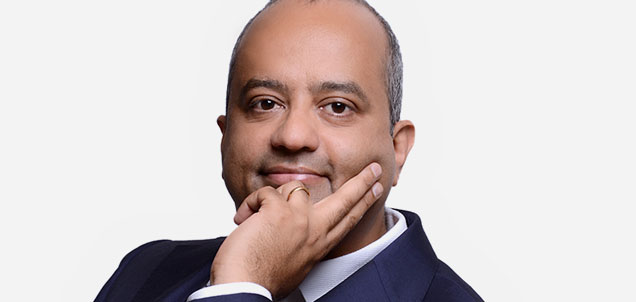
    WPP, the world’s largest communications services group and also the biggest in India, has announced the appointment of CVL Srinivas at Country Manager of WPP India. He takes over from Ranjan Kapur, in addition to his responsibilities as head of GroupM

    South Asia. Kapur will continue as Chairman of WPP India, helping Srini, as Srinivas is better known in the fraternity, and focusing on his schools (including the ISDI WPP School of Communication in India) and foundation initiatives.

    “Horizontality is WPP’s number one strategic objective and Srini’s additional role in India will be to ensure that WPP works together as effectively as possible to provide clients with effective and efficient solutions,” the communique notes. This quote has also been attributed to WPP CEO Sir Martin Sorrell in some media.

    Srini took charge of GroupM South Asia as CEO in January 2013, taking over from Vikram Sakhuja, now Group CEO, Madison Media and OOH. Sakhuja had taken on a global role of CEO, Maxus Worldwide (now merged with MEC to form Wavemaker).

    A media industry veteran of over 20 years having done his mechanical engineering from BITS Pilani and an MBA from XLRI Jamshedpur, Srini spent most of his career with GroupM/WPP where he helped incubate India’s first media agency ‘HTA Fulcrum’ in 1995 when Hindustan Unilever awarded the media AOR to HTA (now JWT). Srini later led the setting up ‘Maxus’ in India and helped grow it in a very short span of time into one of the leading agency brands in the country. He was made the Asia-Pacific CEO of Maxus in 2006. Srini has also held leadership positions in Madison, Starcom and The Times of India group.

    So what’s got Srini the top job? For one, Srini championed a transformation program at GroupM South Asia to make it a future-ready organisation. Under his leadership GroupM has won a record number of new businesses, incubated several path breaking initiatives in digital, mobile, content, data analytics, talent management and won numerous prestigious awards making India one of the most successful GroupM operations globally.

    Well, that’s what the communique tells us. What insiders and industry biggies tell us that Srini has been quietly aggressive and led the Sorrell agenda of making his various media businesses future-ready. Which he did very efficiently at GroupM.

    Sorrell, like captains of other leading media services networks, has underscored the need for collaboration and integration across WPP’s various arms in India and across the world. “Srini achieved this with much success within GroupM too,” says a former GroupM senior employee, adding: “Remember, leading the various arms of GroupM is also a challenging ask, but Srini did that successfully.”

    A senior employee of a rival network said that one of the highlights of Srini’s success is that he has allowed his CEOs to flourish, but also kept ensuring that the GroupM brand gets more dominant. A CEO of a media company told MxMIndia that it was thanks to Srini’s backing that BARC could be up and running in super quick time. Remember, TAM is a jv with Nielsen and Sorrell would’ve obviously liked to protect his business interests by keeping TAM active on television viewership measurement.

    In fact that appeared to be the sentiment for a while, until Srini is said to have emphatically backed BARC. His role with with other industry bodies like the AAAI, RSCI, ABC and MRUC have also been praised by peers. He is also a founder member of the Mobile Marketing Association (MMA) in India, and is active in industry conferences and events.

    In India, WPP companies (including associates) generate revenues of US$600million with 15,000 people, and it will be Srini’s agenda to ensure that all elements of the business work in unison. WPP also owns large agencies/networks like Ogilvy, JWT, Kantar, Genesis Burson-Marsteller amongst others.

    A question that has been asked is that while Ranjan Kapur was exceedingly senior in the system when he took charge of WPP as Country Manager, will other senior CEOs in WPP India companies like Piyush Pandey, Tarun Rai, Preeti Reddy agree to work under Srini’s leadership? According to what some insiders and a former WPP/GroupM biggie told us, that Srini is perhaps the best person for the job. He has hands into various businesses already and will hence help achieve the horizontality, and by his very nature and temperament, he will not come in the way of various group companies at all.

    But the clincher was what one WPP hand who is now in a global position said: “Does anyone have a choice? The media business is going through interesting, yet tough times. Digital is going to dominate us, though we don’t really know how. It is critical that even a successful network like WPP ensures that its various companies do not work in silos.”

    Indeed.

  • GroupM agencies top Emvies leaderboard


    By A Correspondent


    It was what one would call a Kodak moment. As the leaderboards were being announced by emcee Brian Tellis, it was evident that the crown of the Agency of the Year could well rest on the all-new head of the recently established Wavemaker agency, set up by the merging of Maxus and MEC. Or of course the good oi’ Mindshare, winner of the crown for some 10 times thus far. The suspense grew when it was Madison that bagged the Grand Emvie, and not the two GroupM agencies.


    On the stage when the winner was being announced were Sam Balsara, Shashi Sinha, Vikram Sakhuja and CVL Srinivas. For Srinivas, as CEO, GroupM South Asia, it’s never an easy task when one sibling is  pitted against the other. It’s like the Williams sisters competing with each other on centre court.


    Srinivas put his hand on his eyes, as Tellis was set to unveil the Agency of the Year winner. Mindshare is the old warhorse and hence deserved to win, but for the all-new player Wavemaker, it would’ve been the perfect beginning.


    Adjudged by a jury of around 211 industry leaders through intensive judging sessions across the country, Emvies 2017 saw over 816 entries. Note the entire Publicis Groupe’s media and digital agencies stayed away from the awards given the global decision to be off all awards for a year.


    The Client of the Year which has seen Hindustan Unilever bagging the title comfortably over the last few years saw joint winners in Star India and Vodafone. Interestingly Star India works with Mindshare and Vodafone is with Wavemaker. The marketing heads of both commended the excellent partnership with their agencies as a contributor to their winning the title.


    Meanwhile, there was much happiness for both Prasanth Kumar, CEO of Mindshare and Kartik Sharma, CEO of Wavemaker.  For, even though Sharma’s team did not clinch the title, it went back home with a clear indicator to the world that it’s a significant force to reckon wit.


    Speaking about the changing dynamics of campaigns and the importance of being relevant, Punitha Arumugam, 2017 Awards Chairman for EMVIEs, said, “India has been at the forefront of many ingenious campaigns that showcase high effectiveness and the Emvies remain committed to recognising such outstanding communication stories. Being one of the most trusted and coveted awards in the category, the Emvies continue to scale with increased participation and representation from across industry stakeholders.” Arumugam has been spearheading the Emvies for five years now.


    Elaborating on the scale and the entries, Partha Sinha, 2017 Awards Co-Chairman for Emvies said, “The Emvies 2017 has successfully contributed towards recognizing high impact media campaigns that have made a difference. It continues to be one of the most coveted awards within the industry.”   For Sinha, who confessed that he wasn’t exposed to the Emvies much thus far because the awards event is out of bounds for creative agencies, co-chairing Emvies 2017 has been an enriching experience.


    In his welcome address on Emvies night (Friday, October 13), Vikram Sakhuja, President of The Advertising Club said: “In its 17th year now, the EMVIEs has continued to grow in scale and strength, emerging as the gold standard amongst media awards. With a jury consisting of over 211 distinguished industry leaders from across the country, this has been a transparent process to select transformational work.  We are engaging with some top global content sites to showcase the best of our archives to the world.


    Colors was presenting sponsor yet again for Emvies 2017, as MTV, Rishtey Cineplex and Republic TV powered the event.


    EMVIE 2017 CLIENT OF THE YEAR TALLY

    EMVIE 2017 RESULTS

  • Kartik Sharma to head new Maxus-MEC entity


    By A Correspondent


    GroupM has announced the leadership structure for the proposed Maxus-MEC merged entity (codenamed ‘NewCo’) in India and South Asia as also for the digitally-led agency Essence in South and North Asia.


    As speculated in a report on MxMIndia a few weeks back, Tim Castree, Global CEO of MEC and CEO of “NewCo”has named Kartik Sharma as Managing Director of the new media, content and technology agency in India and South Asia when it launches in January 2018. Sharma has been Managing Director of Maxus South Asia since 2014 and in that time, has led the agency to outstanding new business growth and success.


    Said Castree: “We’re creating a brand new billion-dollar revenue media, content and technology agency, dubbed ‘NewCo’ for now. With such ambition, comes a need for brilliant talent to lead and inspire, and so today’s news is very exciting for us. Under Kartik’s leadership, I am confident that we will have the right team in place to truly make NewCo a formidable future-facing agency in India and South Asia.” Sharma will report to GroupM South Asia CEO CVL Srinivas and Castree.


    Following GroupM’s recent commitment to adding offline media capabilities, an expanded geographic footprint and an influx of talent to the agency, Christian Juhl, Global CEO of Essence, a global digital-first agency, has announced that T Gangadhar, current Managing Director of MEC South Asia, will transition into the new role of Chairman of India and Managing Director of North Asia, Essence. Gangadhar will report into Kyoko Matsushita, CEO of Essence APAC. He will continue to be based in Mumbai.


    Meanwhile, Anand Chakravarthy, who has served as Managing Partner at Maxus India since 2015, will be transitioning into the role of Managing Director of Essence India. Chakravarthy will report into both Gangadhar and Matsushita and will work closely with the regional leadership in his new role.


    Both Gangadhar and Chakravarthy will assume their new roles by January 2018. The Essence teams will be strongly supported by the GroupM network as they look to expand their presence in market.  Said Christian Juhl: “India is such an important market for so many of our clients whose business challenges we work tirelessly to solve.  Essence has built its credibility on being a data-centric agency that infuses technology and measurement across all media.  We’re excited to expand our geographic footprint and apply our unique approach for our global clients looking for relevance in India.  Gangadhar and Anand are experienced leaders who will help expand our presence.”


  • Diversity will help GroupM grow as an organisation: Rohit Suri

    On Wednesday (May 24), GroupM took newspaper readers by surprise with a front-page advertisement in business daily ‘Mint’. While it’s not uncommon to find ads on Page 1, this one was special because it was inserted by media agency conglomerate, it was an appointment ad and it was an ad inviting talent as diverse as anthropologists, musicians and coders (see image).
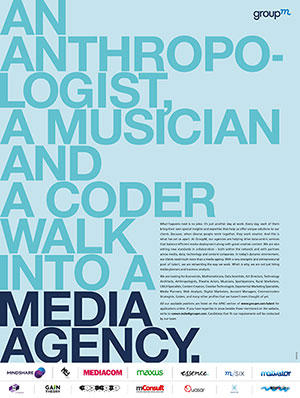
     

    While broadbasing its scope and activity to beyond tradition media buying and planning has been part of what GroupM South Asia CEO CVL Srinivas has been telling us over the years, the ad actually puts into action what Srinivas has speaking about. We spoke to a few people from diverse backgrounds on whether they would like to join GroupM given the clarion call. The reaction was mixed, but the sentiment was that one needed more details on what the job would entail if the attempt is to get high performers from amongst the talented to apply. “For one, we don’t know too much about GroupM. But now that you’ve told us, it looks very interesting. As a young musician with what I think will be a very bright future ahead of me, the draw to this kind of a creative job has to be significant to pull me into making music a secondary vocation.” A student with a psychology major from a liberal arts college said the proposition was attractive and he would consult his parents and apply.

    We asked GroupM a few questions given the ad and this is what Chief Talent Officer Rohit Suri responded via email.


    What was the rationale behind the ad – in terms of attracting a very diverse set of background… musicians included?
    Over the last few years we have diversified our talent pool to keep up with what our business will need in the future and are just intensifying the pace of this change.


    Given the ad as an indicator of the profile of people you are looking to hire, what would you say will GroupM as an organisation be?

    GroupM India is a digitally charged, data-centric marketing services conglomerate. With our seven agencies and specialty services, GroupM India gives clients the advantage of global operation and learnings, along with local expertise and market insight. With our investment in data, technology and diverse talent, GroupM India aims to shape the future and transform challenges into opportunities for our clients.


    The general perception of a media agency network is that it’s involved with media buying, planning… crunching numbers, offering media innovations. So what’s the GroupM 2020 going to be like?

    The industry is changing rapidly and the landscape evolving at a pace faster than ever seen before due to evolution of technology and we are nimble to imbibe this change and have worked tirelessly to transform our business to adapt to these changes.


    While traditional media agency employees may have had a certain affinity to their profession and hence the organisation, but isn’t there a risk of “outsiders” not having the same kind of loyalty to the business and the organisation?

    We do not believe this is true. Diversity will only help us grow as an organistaion, it will fuel collective insight and lateral thinking within GroupM India. In today’s media environment collaboration and open source is paramount and loyalty towards the profession will come when people get to do great cutting edge work which they are passionate about and are rewarded fairly.


  • GroupM estimates 10% AdEx growth in 2017


    By A Correspondent


    Media services conglomerate GroupM released its biannual advertising expenditure futures report ‘This Year Next Year’ (TYNY) 2017 on Monday forecasting India’s advertising investment to reach an estimated Rs 61,204 crore in 2017. This represents a growth of 10% for the calendar year 2017 over the corresponding period in 2016.


    As per GroupM, the adspends in 2016 were Rs 55,671 crore. Even though the year began on a very optimistic note, the overall AdEx took a downturn due to lower than expected adspend growth from sectors like FMCG, traditional retail, telecom and sporadic spending in categories like Ecommerce. In the January-October period itself the Adex was growing at a lower trajectory than forecasted. Furthermore, demonetisation in the last quarter had a negative impact of about 2% on the total Adex in 2016.


    Speaking on the TYNY 2017 report, CVL Srinivas, CEO, GroupM South Asia said, “Despite a volatile 2016, we are estimating advertising expenditure growth at 10% in 2017. The first quarter will give a slow start to the year, with the market picking up from March-April, fueled by a stable recovery process post demonetization. Sectors that are contributing to this positive trajectory include Auto, Media and e-Wallets. In addition, Government and Political parties will increase spending with elections in several states this year.” Explaining the media scenario, he added. “Digital is leading the Adex growth with a 30% growth, while TV continues to be the largest medium in the mix. Print continues to grow at a stable rate of 4.5% and is still the second largest medium in the Adex.”


    Looking at the advertising industry worldwide, GroupM estimates the global advertising expenditure (AdEx) to grow by 4.4% and Asia-Pacific to grow by 6.3%. With an estimated adex growth of 10%, India remains one of the fastest growing ad markets globally. While 80% of incremental ad spend growth in major markets comes from digital media, in India the numbers are more evenly split betwen traditional and digital media. Digital media accounts for about 40% of the incremental ad spend growth.


    GroupM estimates the Digital Adex to grow by 30% in 2017 to Rs. 9,490 crores. The digital Adex is estimated to take a 15.5% share of the total Adex this year. There will be a high emphasis on viewability metrics and outcome based optimization. Ad spends will grow on OTT platforms, as internet speeds improve and catch up TV gains ground.


    2017 is estimated to be a modest year for newspapers with 4.5% growth. The increase in ad spends expected from print heavy sectors like Auto, BFSI, e-wallets will contribute to this growth. Vernacular and regional newspapers will see a higher growth rate.


    Television continues to be the largest medium contributing to the Adex with close to 45% share. This year, the growth rate for TV is 8%, with ‘Free To Air’ channels adding more inventory, and pure HD content gaining ground. The market will also see a consolidation of niche channels.


    While Radio is expected to grow at a little over 10%, there is scope for the medium to pick up as the Phase 3 rollout is completed in 2017. Higher growth is expected as stations will see the supply impact of the full year.


    Other media such as OOH will witness good traction from sectors addressing rural audience and premium niche audience. As per the trend in recent years, Cinema advertising will grow at a high double digit rate of 20%. Cinema consolidation has led to investments in infrastructure, this coupled with the growing acceptance of premium Indian and Hollywood content by advertisers augurs well for the medium.


  • Exclusive: Sam Balsara on GroupM acquiring 76% in MediaCom India: In today’s world, you can be a partner and competitor to the same entity…


    By A Correspondent


    Sam Balsara

    In today’s world, you can be a partner and competitor to the same entity. That’s how MadisonWorld founder and chairman Sam Balsara sums up the new arrangement in the joint venture with GroupM on media agency MediaCom’s India operations.


    As per the original agreement, WPP’s GroupM reportedly had the right to acquire a majority stake after a period of eight years, which they just did.


    Earlier, Madison owned 51 per cent and GroupM 49 per cent. Now, GroupM has bought 25 per cent, making its total stake to 76 per cent. For Balsara and team, it’s matter of great pride that the jv was a success for the last eight years.


    And does this mean anything at all on possible ownership of mother ship Madison? “There’s no connection whatsoever,” Balsara laughed it off underscoring that this was a completely independent transaction.

    ~~


    At mid-morning on Tuesday, Balsara tweeted a clip from The Economic Times of last week where Madison Media had announced a tie-up with Bangladesh’s independent media agency Mediacom. Mediacom, the report noted, is part of Bangladesh’s industrial conglomerate Square Group and handles media planning and buying for Perfetti Van Melle, Asian Paints, Ispahani Group, Singer and some products categories of the parent company. As a part of the deal, Mediacom will have access to Madison Media’s tools and operating software.


    Less than 10 hours after this tweet, came in this missive from the GroupM headquarters in north-west Mumbai: The media services network had announced that it will be acquiring a majority stake in MediaCom India.


    While MediaCom India will continue operating as an independent brand, the agency will have the advantage of access to GroupM’s global infrastructure. This acquisition continues WPP’s strategy of investing in fast growth markets, new media and digital, notes a commuique. The news on the Bangladesh tie-up and what happened closer home had of course no connection. Except the timing of Balsara’s tweet.


    Stephen Allan

    “The majority acquisition of MediaCom in India represents a significant evolution in one of the world’s fastest growing economies. As India becomes a very attractive business hub for global clients, we are confident our talented team in India will deliver exemplary growth and results for all stakeholders.” said, Stephen Allan, CEO, MediaCom Worldwide.


    CVL Srinivas

    Speaking on the acquisition, CVL Srinivas, CEO, GroupM South Asia said, “MediaCom India has won several prestigious clients, developed a strong digital presence and has delivered award-winning campaigns for clients. As a network, we have taken giant strides globally and in India towards a more Data and Tech-led core to our business. MediaCom India can harness our world-class media infrastructure to provide more value to its clients and people.”Interestingly, the Mediacom Bangaladesh tieup allows that agency to dig into Madison’s tools and infra.


    Flashback to April 2008 when Balsara announced with much fanfare that he had acquired 51 per cent stake in MediaCom India. And also the coveted P&G business. Over the last eight years, MediaCom India has established itself as one of the Top 5 media agencies in terms of market share (Source: RECMA ratings 2015). In 2016, WARC ranked MediaCom India’s Mumbai office as one of the top 10 media agencies in the world based on performance in effectiveness and strategy impact for its clients.Its client roster includes Proctor & Gamble, Tata DoCoMo, Future Group Retail, Shell, Dell, Makemytrip.com, SAB Miller, Subway, Bose,Vespa and Urban Ladder amongst others.


    Industry observers meanwhile don’t read too much into the development. Although Mediacom may technically have been owned by a majority by GroupM, over the last few years, GroupM is said to be representing its interests very actively. A scenario which Balsara says was fine given that it was all for the good of MediaCom.


  • GroupM acquires majority stake in MediaCom India


    By A Correspondent


    At mid-morning on Tuesday, Sam Balsara tweeted a clip from The Economic Times of last week where Madison Media had announced a tie-up with Bangladesh’s independent media agency Mediacom. Mediacom, the report noted, is part of Bangladesh’s industrial conglomerate Square Group and handles media planning and buying for Perfetti Van Melle, Asian Paints, Ispahani Group, Singer and some products categories of the parent company. As a part of the deal, Mediacom will have access to Madison Media’s tools and operating software.


    Less than 10 hours after this tweet, came in this missive from the GroupM headquarters in north-west Mumbai: The media services network had announced that it will be acquiring a majority stake in MediaCom India, a joint venture between GroupM India and Sam Balsara, the principal shareholder of the Madison Media group. While MediaCom India will continue operating as an independent brand, the agency will have the advantage of access to GroupM’s global infrastructure. This acquisition continues WPP’s strategy of investing in fast growth markets, new media and digital. The news on the Bangladesh tie-up and what happened closer home had of course no connection. Except the timing of Balsara’s tweet.


    “The majority acquisition of MediaCom in India represents a significant evolution in one of the world’s fastest growing economies. As India becomes a very attractive business hub for global clients, we are confident our talented team in India will deliver exemplary growth and results for all stakeholders.” said, Stephen Allan, CEO, MediaCom Worldwide.


    Speaking on the acquisition, CVL Srinivas, CEO, GroupM South Asia said, “MediaCom India has won several prestigious clients, developed a strong digital presence and has delivered award-winning campaigns for clients. As a network, we have taken giant strides globally and in India towards a more Data and Tech-led core to our business. MediaCom India can harness our world-class media infrastructure to provide more value to its clients and people.”Interestingly, the Mediacom Bangaladeshtieup allows that agency to dig into Madison’s tools and infra.


    Flashback to April 2008 when Balsara announced with much fanfare that he had acquired 51 per cent stake in MediaCom India. And also the coveted P&G business. Over the last eight years, MediaCom India has established itself as one of the Top 5 media agencies in terms of marketshare (Source: RECMA ratings 2015). In 2016, WARC ranked MediaCom India’s Mumbai office as one of the top 10 media agencies in the world based on performance in effectiveness and strategy impact for its clients.Its client roster includes Proctor & Gamble, Tata DoCoMo, Future Group Retail, Shell, Dell, Makemytrip.com, SAB Miller, Subway, Bose,Vespa and Urban Ladder amongst others.


    Industry observers meanwhile don’t read too much into the development. Although Mediacom may technically have been owned by a majority by GroupM, over the last few years, GroupM is said to be representing its interests very actively. And while MediaCom India ought to be part of the Madison Media, the two agencies have fought pitches including recently for Coca-Cola India.


  • Kyoorius announces ZEE MELT 2016

    By A Correspondent


    Kyoorius announces ZEE MELT 2016, a unique festival that brings together advertising, digital, marketing, emerging technologies and the media & PR industry. MELT is a 2-day festival conceptualized in partnership with Zee Entertainment, Hindustan Times, GroupM, and D&AD.


    The festival is scheduled to be held on 11 and 12 March at Hotel Pullman Suites and Novotel, in Aerocity, New Delhi. Over the two days of MELT, Aerocity will transform into a buzzing zone of activity where 2000 people connecting creativity with marketing shall convene to discuss, inspire and learn through sharing and interaction.


    MELT 2016 will consist of a range of conferences, seminars, exhibitions, showcases, workshops and networking sessions for delegates from advertising, digital, media & PR, marketing and emerging technologies by industry experts, catering to all experience levels. To name a few, Ted Mellström (Art Director at Forsman&Bodenfors, Sweden); Mark van Iterson (Director Global at Heineken, Amsterdam); Mark Curtis (Founder & Chief Client Officer at Fjord Net, London); Tom Betts (Chief Data Officer at Financial Times, London); Gaurav Mishra (Digital Director at Conde Nast, Mumbai) for Media and PR and Darren David (CEO at Stimulant, San Francisco).


    The content for MELT 2016is divided across 4 key pillars:

    :: Learning – These events are based on imparting knowledge and provide inspiration in the form of vocational or skill workshops


    :: Showcase and Gallery – To excite visitors with newer experiences, with curated content from partners


    :: Networking – Encouraging new, meaningful and relevant interactions with people from the industry


    :: Celebration – No festival is complete without opportunities to have a good time with peers and friends


    Each of these pillars are being driven by content partners and participating brands at MELT 2016. Each of these will give delegates an opportunity to gain real insights into the creative communications industry from industry specialists.


    Punit Goenka

    Punit Goenka, MD & CEO of Zee Entertainment Enterprises Limited (ZEEL) said: “As we pursue our vision 2020 of being ranked amongst the leading global media companies, there has been a conscious effort invested in creating and partnering brand IP’s. ZEE MELT will enable stakeholders from Media, Marketing and Communications to meet at a common platform and exchange experiences, knowledge and insights. This is the second edition of MELT and I firmly believe that it grow and be accepted as a premier Industry event in the years to come.”


    Rajan Bhalla

    Rajan Bhalla, Chief Marketing Officer, HT Media Ltd said: “HT is delighted to associate with MELT, which bring together doyens from the world of branding, advertising & media, creating an excellent opportunity to interact and engage with them through intellectually stimulating sessions. I am especially excited about ‘HT Osmosis’ at MELT, which will provide creativity new wings.”


    CVL Srinivas

    Renewing their association with MELT 2016, CVL Srinivas, CEO, GroupM South Asia said: “We are delighted to continue our association with MELT. It is a platform where leaders from technology, content, data and digital interact with young talent to help shape the future of our industry. Like last year, GroupM agencies and specialist units will help curate content for the event in addition to holding workshops.”


    Rajesh Kejriwal

    Rajesh Kejriwal, CEO and founder of Kyoorius said: “We are delighted to announce the second edition of Zee MELT. This two day gathering of the best speakers and presenters from the industry with the addition of experience zones and workshops is definitely going to set us apart. It is heartening that our founder partners, Zee, Hindustan Times and GroupM, have increased their involvement, bringing more compelling content for delegates to enrich themselves.”


  • Soon mobile will be 2nd biggest medium…


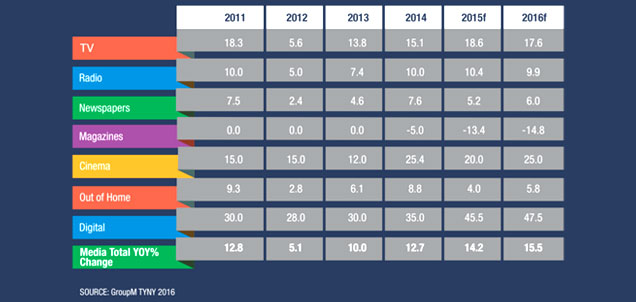
    With a surge in growth to 14.2 per cent last year and a prediction of 15.5 per cent for 2016, the good times are finally here for the A&M industry. FMCG and e-commerce have buoyed the sector by spending beyond expectations, while digital is another lucrative opportunity lurking just around the corner, says GroupM South Asia CEO CVL Srinivas as he talks about the This Year Next Year (TYNY) report for 2016 with Pradyuman Maheshwari


    With a 15.5 per cent growth forecast for 2016, would you say it’s ‘achche din’ for the industry now?

    It’s definitely good; in fact it’s been good since last year. Last year, we grew at 14.2 per cent as an industry in 2015, over 2014. This year we are seeing it go up to 15.5 per cent.


    Your prediction at around this time last year, was 12.7 per cent. So what led to the 14.2 per cent growth?

    There were two or three sectors that spent much more than projected. The first was e-commerce. While most studies did predict that e-comm will be a top contributor to growth, across the board there was an underestimation of what the quantum of spend would be. The other was FMCG. Don’t forget, today,  FMCG is supposed to be 30 per cent of the adex, and an increase of a couple of points here or there, leads to quite a swing in terms of the overall number. Despite all the pressures we were going through in 2015, FMCG as a sector continued to invest overall in brand-building through the year.


    The adex percentage for e-commerce is just 8.1. Does that mean it wasn’t as much as we all thought it would be given the large number of jacket and television ads?

    But don’t forget an 8.1 per cent contribution from almost zero two or three years ago, is a phenomenal jump in the overall adspend. Today it is a number comparable to other established and mature categories like auto, In fact, e-commerce is probably the third biggest category today, after FMCG and auto, in terms of overall spend. Not counting the government sector, of course.


    The government and the media sector account for almost 20 per cent, so that’s significant…

    The government sector, we believe, is going to contribute quite a bit in 2016 because of all the schemes that are being announced, and a lot of activity is happening both at the Centre as well as the states. There are going to be five Assembly elections in 2016, with related advertising spend in the regional media, making the government a big contributor this year. With media companies, there is competition today, with new shows and players looking to build their brands in Tier II and III markets.


    While mobile advertising is what will be the future. But the real numbers are still not significant enough…

    We are still growing from a relatively smaller base when it comes to overall digital and mobile advertising. It was close to 10 per cent in the price area in 2015, and in 2016, overall digital will be close to 13 per cent, month-end onwards, but we believe a lion’s share of it is going to come from mobile. The base is smaller, but given that it is growing between 45 and 50 per cent year on year, very soon we will see mobile becoming the second-biggest medium after television in terms of ad spends.


    When do you expect that to happen?

    It will take a few years, because in terms of absolute amounts, print as a medium is still pretty big. It contributes about 20 per cent to growth in terms of adex. There is still a lot of headroom for growth in certain clusters, and among certain audiences and markets. There are categories that are undergoing a phase of evolution where they will need print. So while it’s not going to happen in the next one or two years, we are definitely headed in that direction. Also, all the media players – whether TV or print — are establishing their own mobile platforms and becoming content providers across multiple platforms. We will have to start looking at some of these studies a little differently, going forward.


    Are there anxieties about media segments or any other categories that you think people should watch out for?

    I think overall the mood is still cautiously optimistic although we think it is slightly more optimistic than cautious at the moment and at an overall levelI think every medium has challenges when it is going through an evolution in its measurement system — whether it’s expansion, or loss of viewership or leadership to digital — and I think it all depends on how each of the players’ deal with the challenges.


    The prediction is that magazines are going to de-grow 14.8 per cent. That’s huge…

    Magazines have been under pressure for a while, and we have seen advertising money shift from them to digital. I think this sends out a larger message that [if you have content that is] available on the go, 24×7, consumers would rather have it in a format or device they are comfortable with. There has been quite a shift in consumer behavior and consumption of content, and whomsoever we advise, we suggest they transform themselves into digital entities, because many of them are strong brands with loyal readership bases. They have great content so the sooner they transition, the better.


    What is your prediction about how the various genres of television will do?

    We don’t put up those numbers because these are estimates and projections. But within different genres, it’s going to be a good year for sports with the ICC World T20 to be played in India in February and March, and with the IPL coming in after that.


    I think regional language channels would do extremely well. Regional clusters and GEC channels are continuing to do well because it is like carbohydrate for any media plan; they provide stability to the mass brand which is present in the market. Generally speaking, across the board it will be a good year for TV. In fact, TV had close to a 19 per cent growth last year, and we see much the same in 2016.


    You are saying today that the growth is 15.5 per cent. Could it be more, a lot more?

    We will review this in the middle of the year, and take stock in July. We will have actual data from about three months [by then] so we will have a better idea.


    This interview first appeared in dna of brands dated January 25, 2016


  • GroupM predicts adspends to grow 15.5% in 2016…


    By A Correspondent


    Marketing services conglomerate GroupM says India’s adspends will grow 15.5 per cent in the year 2016. The media agency network also reported that adspends grew 14.2 per cent in 2015 over the similar period 2014.


    Said CVL Srinivas, CEO, GroupM South Asia said, “India is the fastest growing ad market among all the major markets of the world. 2015 was the best year for ad spend growth we’ve had in the last five years. While global headwinds are building up in the new year, there are a number of positive factors that will help the Indian ad sector grow at higher levels in 2016. While FMCG, Auto and Ecommerce which have been the top sectors contributing to ad growth in 2015 will continue to invest, Telecom, BFSI and the Government sector will see a ramp up. Events like the T20 World Cup, IPL and many state assembly elections will give a further impetus to ad spends. India is one of the few large markets where all traditional media platforms will show positive growth.”


    FMCG remains the most dominant sector with a 28 per cent share of the AdEx. In 2016, e-commerce adspends are expected to be high on the back of increasing competition, market expansion and newer players entering the space. Many leading traditional retailers will be expanding their e-commerce presence in 2016 even as consolidation continues in the sector. Another exciting development is the opening up of e-commerce as a platform for advertising, which will see further traction in 2016.


    With the advent of 4G services in India, telecom service providers are expected to roll out extensive marketing campaigns across media. According to GroupM, another big contributor to the Indian AdEx this year will be the auto sector, on the back of multiple launches across both 4-wheelers and 2-wheelers.


    GroupM’s biannual advertising expenditure (AdEx) estimate report This Year Next Year (TYNY) has forecast India’s advertising investment to reach an estimated Rs 57,486 crore in 2016.  The last calendar year saw ad expenditure  closing at Rs 49,758 crore.


    Added Lakshmi Narashimhan, Chief Growth Officer, GroupM South Asia: “With a significant number of users accessing internet primarily from a mobile device, adspends on mobile will become as large as the digital AdEx from two years ago. With digital media achieving audience reach numbers that are next only to Television, multiscreen planning is the order of the day. We have seen focused targeting of digital and native advertising with programmatic buying over the last two years, and this momentum will continue in 2016, as automation increases”.


    GroupM estimates the Digital AdEx to grow by 47.5% in 2016 to Rs. 7,300 crore from the earlier Rs. 4,950 crores. A significant part of this growth is on the back of higher investments in cross-screen campaigns. The digital AdEx is estimated to take a 12.7% share of the total AdEx in 2016.


    The year 2016 is estimated to be a better year for newspapers than 2015, the report notes. The increase in adspends expected from print heavy sectors like Auto, BFSI and the government sector augurs well for newspapers. Regional advertising of telecom and FMCG brands will benefit language dailies. While print as a medium is facing a lot of pressure from digital there is still headroom for growth in certain pockets and amongst certain audience clusters.


    While radio is expected to grow at a little over 10%, there is scope for the medium to pick up towards end 2016 when most of the new stations (set up after Phase III licenses, round 1 were issued) are fully operational. Digital audio platforms are gaining in popularity, opening up a new format for radio.


  • We are all winners: CVL Srinivas

    Your position would be like that of Serena and Venus Williams’ father – to have one daughter win and the other lose, isn’t it?

    For me, I think, we are all winners. All [the agencies have] done extremely well and at the end of the day, one agency has to come out as a winner, and it happened to be Mindshare. Maxus, I thought, put up a tough fight and ended up in the Top Three. What’s heartening to know is that we did well across agencies and across clients. Overall, it’s been a fabulous night and we’re going to party hard.


    What do you think led to Mindshare gaining the No 1 spot?

    Mindshare had a fabulous body of work, not just across clients, but also across all the different categories. They’ve really managed to institutionalise excellence across the entire agency. Mindshare is India’s No 1 standalone agency. But when you become No 1 and keep winning, it’s also challenging to keep the team motivated and continue to do well, year after year. That’s something that’s there in the DNA of Mindshare. They have a new leader in Prashant Kumar who took over the reins at Mindshare a few months ago, and I think that has brought in a lot more energy and passion. They’re growing from strength to strength.


    Madison gave a pretty good fight at the end?

    The Emvies night is really the big night for all of us in the media industry and it’s the most looked-forward-to event in the year for all the boys and girls who toil very hard in the office every day. There’s been a lot of build up and anticipation in the last few weeks. Of course, Mindshare had a lot of shortlists, so they were expecting to do well. But as we’ve seen in the past, it’s not necessary that the agency with a lot of shortlists will win the Agency of the Year title. But I think they managed to pull through in the end by quite a healthy margin. Madison also did pretty well. In fact, there was great work, not just from Madison, but some of the other agencies as well. So we need to ensure that we don’t get complacent. We have to come back next year and try to do even better.


    What were the trends that you could see from the results of this year?

    Winning an award has become important not just for agencies, but also clients. Today, we find a lot of our clients telling us to work hard and to actually get them fame as well. All the hype that goes into awards in our industry, is actually helping the fraternity raise the bar in terms of quality of work. And today, we’re getting a lot more support from our clients and partners. A good thing that was done this year was that there was a recognition for media partners too at the Emvies. So it’s good if all stakeholders are celebrated equally because all of us come together to create great work.


    What would be your message to the team at Maxus?

    Maxus has won many titles in the past and continues to do well in many other awards. I’m sure they’ll be a tad disappointed for having come close and still not winning the Agency of the Year title. But knowing Maxus, I’m sure they’re going to go back and put shoulder to the wheel and try and come out Number One next year.


  • Is it time for brands and services to go app-only?

    By Amit Bapna


    The ongoing debate on the ‘right time’ for brands to go app-only does not seem even close to getting resolved. It’s however on the minds of several companies in a market that’s reportedly adding a staggering 5 million smart phones every month. Some brands have leapt aboard the app only bandwagon: Myntra, Ola and most recently food-brand Faasos on realising 97 per cent of its customers place orders via the app.


    In principle, while the app has much going for it, the debate remains focused on the readiness (or lack) of the market. The journey is also a function of category and target audience. For instance furniture, household electronics etc. lend themselves better to omni-channel.


    Rathin Lahiri, CMO, Meru Cabs claims an app-first strategy is better than app-only for many reasons. “Ecommerce is still under-penetrated. While the mobile is a more personal shopping device, the website is just easier to browse.” Adds Sabyasachi Mitter, managing director, ibs, “Going app-only is a bad idea at this stage. The market needs more users to experience the online ecosystem.” Once a user sees the benefit of a brand he will naturally look for its app.


    The world’s most valuable start-up Uber is apponly and that is not by coincidence. Taking a leaf, the Indian aggregator Ola has become app-only since August 1 this year. Its call centre is no longer a booking channel but acts purely as customer care. As per Anand Subramanian, senior director – marketing communications, Ola, “The choice was between the call centre and the mobile app since the desktop was never a large contributor.” To keep the experience inclusive, the app has been kept very simple which is the secret sauce is in his view.


    For Myntra, fashion is a very personal experience. Prasad Kompalli, head of eCommerce platform believes that mobile can truly deliver this experience as it captures user’s lifestyle and context in manner that the desktop cannot.


    On the other hand, flipkart has reportedly gone cold on its app-only plans for now, and as per the company spokesperson, “We are constantly experimenting with various aspects of our service to create the best shopping experience for users on our app. Meanwhile, we continue to offer both desktop as well as mobile options.”


    Points out Tushar Vyas, chief strategy officer, GroupM South Asia, “There are significantly more users getting added to mobile internet than PC internet and the battle has moved to owning real estate on the consumer’s phone and becoming a destination of choice.” The app-only approach, thus, is a bold move for the future. According to Milind Pathak, COO, Madhouse, the app gives the brand far more control. Also due to the handset native presence, even when the app is closed, it will pass signals making for personalised interactions.


    With access to location data, relevant push notifications could be bundled, deals, for instance. Adds Rahul Pandey, CEO and co-founder of mobile advertising agency Bonzai, “An app install on consumer’s device provides a higher chance of engagement, and the ability to collect user specific data, build engagement and do re-targeting.” Apps could well be the pillar leading to the maturity of analytics based marketing as against the currently prevalent acquisition driven model.


    According to Joono Simon, co-founder of Bengaluru-based Brave New World, “The marketing efforts to drive traffic to the site and the app are a resource drain. The websites in the current avatar won’t last long.” Agrees and adds Vivek Bhargava, CEO, iProspect-Communicate2, “A key advantage of this approach is that brands have to advertise less once the user starts to order through the app.” However common wisdom is pointing to the fact that shifting consumers desktop to mobile will require a more engaged and evolved ecosystem.


    Whether and when a company decides to go app only requires a careful calibration of how its core consumers are evolving. Flipkart backing down obviously had a lot to do with buyers in big ticket categories that require a lot of comparison and browsing before purchase — electronic goods and computer components for instance — threatening to shift en masse to the competition. While marketers often dream of leading the consumer, following her will perhaps be the best way to go, this time around.


    Source:The Economic Times

    Copyright © 2015, Bennett, Coleman & Co. Ltd. All Rights Reserved

    Licensed to republish