Tag: Goafest

  • MxM Comment: Sad to see an Abby minus Ogilvy… Time to ‘lagao’ pressure to get ’em back!


    By Pradyuman Maheshwari


    Doom in the world outside almost always rings music to the newsperson’s ears. So, while it was heartening to have scooped the news on Ogilvy choosing to skip the Creative Abby at Goafest 2013, we were saddened by it. Deeply.


    This is not the first time that an agency is boycotting the Creative Abby. Lowe/Lintas has been doing it for years. R Balki has his reasons, which some believe are valid. Every year, there are stories of agencies not sending in any entry – many essentially because they don’t believe they’ve done awardwinning work in the year and some because it’s a drain on resources.


    This is also not the first time that Ogilvy is threatening a skip. It took all of Colvyn Harris’s persuasive power to convince a Piyush Pandey in 2009. I still remember giving the headline ‘Please Piyush, Please’ to an Impact magazine cover carrying Colvyn’s interview around that time.


    The JWT (then-also-Goafest) boss was lucky that Team Ogilvy agreed to participate, but Ad Club prez Shashi Sinha, AAAI chief Arvind Sharma and Goafest committee chair Nakul Chopra haven’t been successful in winning them over.


    The reason that Abhijit Avasthi gave my colleague wasn’t convincing. There’s obviously a lot more that he’s not telling and is perhaps being polite on record. This is what he told us: “We won’t be entering in the awards as we have felt that they were not energizing our people as they used to earlier. So we decided to take a break and may be see later what happens.”


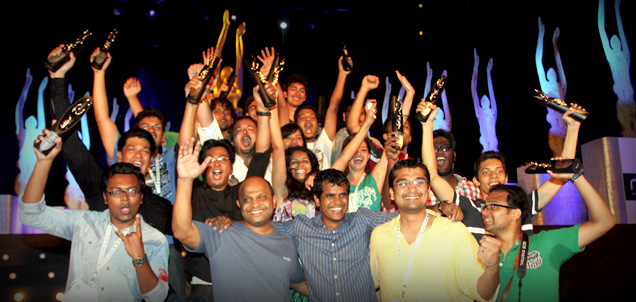
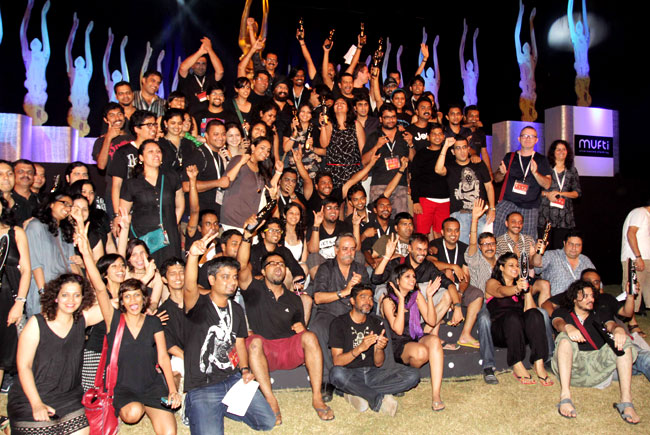
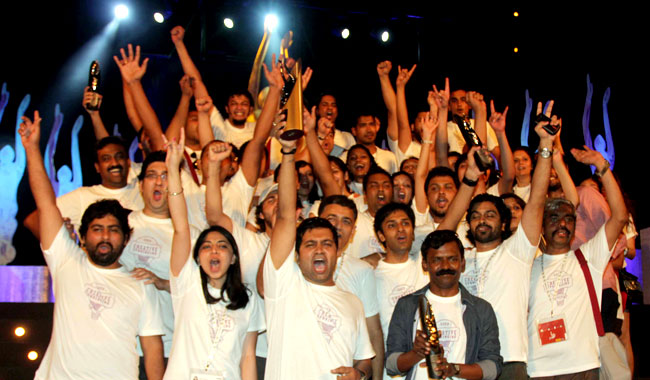
    A Goafest grand prix or gold not energizing employees enough! Wtf!!!!! The cheers from the team every time a winner is announced, the run to the stage and the final group picture with everyone yay-ing (and not to mention the various interviews given after the wins) are testimony to the sentiment in the Ogilvy camp after every Goafest. Look at the picture alongside… this is at the Creative Abby last year. No energy?


    It’s evident that there’s more to this boycott. I am told one of the issues is that Team Ogilvy believes there’s not much done to ward away scam ads. I agree that there are many ads which are made-for-awards. But, there’s little that the Ad Club can do, especially when an entry is found eligible as per rules. If a well-known agency and hotshot creative guru have no scruples and aren’t embarrassed about sending a scam ad, the best deterrant is exposure. Let them get exposed! And I am sure they will – over time – stop sending scam work.


    The Advertising Club is not the personal property of any individual or group. It’s a body of elected members from within the fraternity. Madhukar Sabnavis, Vice Chairman and Country Head, Discovery and Planning, O&M India and recently appointed Member of the Worldwide Board of O&M is Treasurer of the Ad Club and member of the 13-member managing committee. Let me repeat this: The #3 honcho of Ogilvy India is one of the five big officebearers of the Advertising Club.


    Couldn’t he have done something to avoid this from happening? Whatever happened to the meeting of Creative Directors?


    Goddammit, an Ogilvy not participating in the Creative Abby is like a China or USA not competing in the Summer Olympics! Or an IPL without Chennai Super Kings. Or idli served without chutney or sambar.


    Okay, comparing an adfest to the Olympics or even an IPL is stretching it, but you get the sentiment?!


    When I spoke with Shashi Sinha yesterday and asked him to react to the fact that it’s a huge, huge setback, he said setback is too strong a word. He did admit though that it will affect the Abby. Sinha is a pragmatic man. He has successfully managed to clean the Creative Abby judging process and the awards have been happening without a hitch (or a leak) over the last few years.


    Most people my colleague spoke with were shocked to hear the news. And all those who I interacted with unequivocally said that the Abby this year will lose its sheen. “The credibility of the awards takes a major blow, as will the attendance at Goafest,” commented Anant Rangaswami on Facebook.

    So will we now have a Balki participate in the Creative Abby? I don’t think Lowe will this year, because his peeve is with the process followed.

    There’s a belief that it’s the participating that’s critical, not the winning. That’s good to say and hear for losers, but, remember, it’s all about winning.

    It’s critical that the advertising fraternity gets together to work on a solution. And it’s important for the Advertising Club to effect these in doublequick time.

    From what I am told, Ogilvy’s absence this year is a done deal. No comebacks. Sad, as we’ll now also have cynics making remarks that one of the reasons why Ogilvy isn’t participating is because it doesn’t hope to win much this year.

    I still think another attempt should be made. Push them hard! Do it via the clients, do it via Miles Young or Sir Martin Sorrell. Lagao all the pressure!

    It’s not a Fevicol ‘jod’ yet… and am sure the impossible can be achieved.

    In the interests of God, awards and advertising 🙂


    As for the energy, let’s send the Red Bull kids!


    MxMIndia believes that the advertising fraternity must get together and ensure unity. Forums like Goafest and the Abby must not be allowed to fade in importance and/or value.


    See link:

    Advertising Club mancom: http://theadvertisingclub.net/index.php?option=com_content&view=article&id=234&Itemid=77


  • MxM Mondays: Are delegates ready to face the heat at Goafest 2013?


    By Johnson Napier and Ananya Saha


    The festival that has been hailed as the Cannes of India beckons upon the advertising industry. April 4-6, 2013 are the days when the who’s who from advertising will be joined by a few from the media and marketing domains in keeping with the tradition of making it to the venue every year. The venue this year remains the same – Zuri White Sands in Goa! Like every year, the Goafest committee will be going all out to ensure that the event remains world-class, be it in the quality of speakers or the introduction of new initiatives or simply by bringing about a twist in the awards tale.


    But in doing their bit in raising the bar of the festival, what they have not achieved so far is holding the event in some other month in Goa – by now the biggest peeve facing delegates. The Goafest committee led by Nakul Chopra of Publicis this year, has been making attempts to actively bring it forward by a few weeks if not a month or two. But that doesn’t help solve the issue of the torrid heat that delegates have to put up with in order to enjoy a festival that boasts of being the largest of its kind.


    MxMIndia speaks to a few committee members and also some members from the ad and marketing fraternity and explores possibilities of whether the delegates can expect the unexpected…


    Nakul Chopra, Chairman, Goafest Committee

    There is a logistical issue with doing it in February from a perspective of the location. As one would know, the tourism season here starts from October right until March. The same is the case with Cannes where it is not a vacation season when the awards are held there. But we’ve tried our best by getting the event ahead in the first week of April. We do understand that the heat gets unbearable but we would make provisions to have more cooling areas in the venue.


    As for the non-participation dilemma, I don’t think that with Abbys and Goafest in its current avatar, anybody is staying away in protest. Probably some agencies have a principle of not participating in awards or any other personal reason but not because of some issue from our end. These were issues of the past and as an industry we have managed to fairly overcome them in recent years. Due credit should be given to the fact that Goafest is the only award of this size and stature that is being run by industry bodies. This enables us to reach out to as many agencies and delegates as possible and not be limited in our approach towards the industry.


    Ajay Kakar, Chief Marketing Officer, Aditya Birla Group – Financial Services

    The heat and passion of advertising industry is stronger than the heat of Goa. Whenever you have it is immaterial. On a serious note, there is an economics of the whole thing. We try to do it away from the peak season, which helps us in two ways. One, of course the economics and second, it helps us with avoiding the crowd and congestion all over.


    It is a democratic country but it is too early to think or know who might not be a part of Goafest. So far, we have the support of every agency. And it is too early to think anything to the contrary.


    Anant Rangaswami, senior editor at Firstpost.com and author of The Elephants in the Room

    On the timing, all I can say is that April first week is better than April second or third week. That they managed to get it to the first week is not a bad thing. Also, it’s not easy to get an event of this scale to be held in February/March; it could be a logistical nightmare. Whether they should hold the festival at some other venue, I don’t know what’ll be the right thing to say as they had envisaged the festival with a certain concept in mind. I think it is a trap that they are finding difficult to get out of. Goa will continue to remain the venue as long as the name remains Goafest. That is not the case with other awards like Spikes that can be held at Bali, Singapore etc. For me, it looks like a big trap that they cannot get out of.


    As for non-participation in the awards, the number has come down significantly. As for McCann Erickson preferring to opt out last year, it  did not opt out of the awards because of any issue with the way it was conducted. Prasoon made it quite clear that he did not think that they had a body of award-winning work. I can understand that, because the awards are an expensive business, and it makes sense not to enter unless you stand a decent chance of winning. In this industry, every sector apart from television is about scam and scam requires investment, time, energy…it’s not easy. There’s serious money that goes in the development of scam. But what the committee has done in the past two years is also noteworthy as they have managed to eradicate issues like bias in judging by the jury, favouritism, leaking of results and other such things involving the awards.


    Arvind Sharma, President of the Advertising Agencies Association of India (AAAI)

    The real challenge is getting rooms for so many delegates. With so much international tourists pouring in and domestic travel also seeing a spike it becomes difficult to arrange for rooms for so many delegates. But can it be held in early March, yes it certainly can. We are working towards it.


    Any awards show around the world, a few agencies will chose not to participate for a variety of reasons. We should be looking at the fact that the number of participating agencies is increasing every year at Goafest. It also means that the number of winners are increasing every year because part of the purpose of an awards show is to be a beacon of light for excellence and I am particularly excited that we are recognising excellence in more than 119 organisations.


    Shashi Sinha, President – The Advertising Club and Chairman of the Awards Governing Council, Goafest

    The event is a very low-cost affair and not on the scale of what one gets to see at Cannes. There is no-profit motive behind this event and the effort is to try and accommodate the youngsters by offering them subsidised rates. This whole exercise is designed on the basis of sponsorships. The goal is to ensure that we have the right balance of sponsorships and also encourage more youngsters to come and attend the event. The other point is that October-March happens to be peak season for tourism and therefore the rates are pretty expensive. To accommodate more than 3000 delegates therefore becomes a huge task. We have tried our best to bring it forward by hosting it in the first week of April. But we would be providing more cooling options at the venue like the display area that saw heavy movement last year by the youngsters.


    On the issue of non-participation by agencies, we have managed to successfully bring down that number significantly in the past two years. In fact last year there was only agency – McCann Erickson that did not participate. What we have managed to do is that if somebody is not participating we have made it clear that it is not because of the process; it is because of some other reason. Previously it was very convenient to blame the committee etc for the drawback but that is not the case today. One of the biggest reasons why agencies now participate openly is because of the transparency that we managed to bring in the process. That has cleared doubts that existed among agencies.


    Prathap Suthan, Managing Partner & Chief Creative Officer, Bang In The Middle

    I personally have not been there too many times and I did find that the heat was a torture. It is actually the old in the industry that are affected by the heat, the younger lot are not. It is a bit of summer blast everywhere in India at that time before summer actually begins. For youngsters, it implies lots of time on the beach, lots of time to run around, lots of beer, hang out in the shacks. It is going to be, let us say, 200 seniors and rest are going to be juniors. From that perspective, it does not really matter. Going to Goa, for youngsters, is the big thing no matter what time of the year. Seniors, anyway, are used to be driven around, staying in air-conditioned homes and offices. So to be outdoors, it is terrible. I am in creative, so I go for shoots, I do not complain. If I am in Goa then, I would prefer to stay in the auditorium or watch and learn rather than go out and stand in the sun. If I were young, say 25, I would be enjoying going everywhere. For organisers, to get hold of amenities is possibly a better deal at this time of the year. Since February and March are tourist seasons, availability of rooms could be a problem for organisers.


    For the agencies refraining from participating, I would say that everything is fair. It is all about the money at the end of the day. If I have ‘X’ amount of money and I am sure of winning a metal at international festival, I would rather put my money at Cannes rather than Goa. It is also about the fight of action between two or three groups. Personally, I do not ascribe to any awards. I do not want to be part of any awards. I am very happy doing whatever I am doing. I am not here cutting any favours. My whole responsibility is only towards the clients that I handle, and towards my juniors.


    I may or may not go. But boys and girls from my office will definitely go.


  • Are suit-led agencies creatures of the past? And why AAAI must reinvent Goafest…


    Just a day after the vicinity was in grief over the Shiv Sena chief’s death, at Central Mumbai’s tony nightspot Blue Frog, friends and well-wishers of senior journalist Anant Rangaswami came in to witness (and celebrate) the release of the book ‘The Elephants in the Room – The Future of Advertising in India, 2016’. It was a simple event – emcee Karthik Iyer of Bengaluru-based Happy Creative Services made us chuckle with his wisecracks, Anant’s kids Rohan and Anya presented the first copy to his former boss and mentor Arun Arora (Chairman, Edvance and formerly President and ED, Bennett Coleman & Co Ltd) and finally a few words from Anant Rangaswami. For the rest of the evening, there were good spirits and food for company. The book surely asks some tough questions, and then puts recent history of the business in perspective. Our sub-140-character review: Unputdownable. If you’re in the biz of advertising, download now!

    To get a flavour of the book, we present two passages – one on suit-led agencies and the other on Goafest and why it must reinvent. Enjoy.


    The Elephants in the Room

    By Anant Rangaswami


    The very reason that suits ran most of the agencies in India till the late 1990s was due to a simple fact: the creatives didn’t care about, and didn’t know much about, managing a business and managing money. As a result, however talented and however critical to the business a creative was, he or she reported to a suit. It suited both well, during that time, till clients latched on to who, in the agency system, was the magician – and the answer was, ‘the creative’.


    [Creatives who aspire to head agencies must learn that, however painful it may be, they will have to gain more than a rudimentary understanding of accounts, of finance, of administration, of taxation. Currently, a number of agencies have suits as CEOs ONLY because the creatives fail at what are hygiene skill sets for managers].


    Ranjan Kapur perhaps saw this trend coming before anyone else. While he was clearly the head of Ogilvy in India, he saw the opportunity in leveraging the growing reputation and charisma of Piyush Pandey. During Kapur’s years, we saw the face and image of the agency change. While JWT (then HTA) had built a redoubtable reputation for their planning, by the late 1990s, Ogilvy was transformed into the most creative agency in the country as far as popular perception was concerned. Not just Ogilvy – it was Piyush Pandey who had become the God of Advertising Things.


    While Kapur pushed himself, cleverly, more and more into the shadows and pushed Pandey more into the sunlight, his contemporaries at the two largest competitors of the time, Prem Mehta at Lintas and Mike Khanna (and later Colvyn Harris) at HTA (to become JWT later), failed to notice what Kapur was up to – and why he was up to whatever they were up to. Mehta held on till he sold his stake in Lintas to Lowe; the status quo remains at JWT, and Ogilvy has, without a doubt, occupied the number one creative agency spot in India.


    Kapur, I would argue, saw the future and bet on it. It could not have been easy, at that time, to buck the trend and allow and encourage a creative to become the face of the agency. In hindsight, some of the most memorable advertising work in the past two decades have been on brands handled by Ogilvy – Cadbury, Fevicol, all the avatars of what is now Vodafone, and so on. All these resulted in glory for Pandey and a small amount of reflected glory for Kapur.


    But that was a small price to pay – the success of the agency, as far as Kapur’s boss Sir Martin Sorrell was concerned, was due to Kapur.


    Today, Lowe is run, whether you like it or not, by Balki. JWT is still run by a suit.


    It’s important, for many reasons, for the agency to be run by a creative. The foremost is that when it is apparent that a creative runs the agency, and is not just the head of the creative department, it sends a signal that the ‘environment’ will be more creative-friendly. It makes it easier to recruit and retain creative talent for the creative-led agency than for the suit-led one.


    It’s not that the only solution is to insist that a creative heads the agency. It could be in the form of the Piyush-Rane partnership (which was defined by Kapur’s formula), where the creative is the face of the agency. In Rane’s case, he has defined his job as one that will ensure that the environment allows Piyush and his team to focus on the creative product, while he looks after the mundane essential tasks such as finance, accounting and general administration.


    But make no mistake about it – the suit-led and the suit-as-the-face agency is a creature of the past. For a moment, let me get back to Salt, which is a new agency headed by a suit, Mahesh Chauhan. Why is Salt doing well, defeating my entire premise? Because, while Chauhan calls himself and sees himself as a suit, his clients and his creative colleagues see him as a creative. Chew on that.


    Take a look around you – at all the agencies headed by suits – and at all the agencies headed by creatives. Look at who is winning. Look at who is struggling.


    It’s not a surprise. As Sir Hegarty said, I’ll repeat, “How can we not have a creative person at the top of a creative business?”


    It’s time for the suits to actively push their creative heads forward and actively recede into the backgrounds. The creatives must be the faces of the agencies – otherwise the creatives will begin leaving.


    So will the businesses, as many have sadly learned.


    It’s not going to be easy, but it has to be dealt with, sooner rather than later. I told you, it’s an elephant in the room.


    A few days ago, my brother, JP Rangaswami, wrote in his blog: “Business is personal. It’s about relationships. It has always been so. Until we tried to forget it and concentrated on making money, not shoes. [As Peter Drucker said, people make shoes, not money]. Then, for a short while, business became not-personal.”


    In India, the entire advertising industry is about relationships. It’s personal. And, to paraphrase Drucker, in this business, you create communication, not money.


    ****


    The AAAI, in the current form, has become an elephant – a white elephant. Unless they change, there is no reason for them to exist.


    Which brings me to another elephant. The AAAI has given birth to it and, by some accident and aided and abetted by some office bearers (almost all heads of large creative and media agencies who convince their friends in media houses to sponsor it) it is still alive. The elephant is called Goafest.


    Speak to any event manager and tell him you want to do a major event in Goa in April – and he’ll tell you that you’re nuts. It is, verifiably, the hottest month of the year in Goa, with the average temperature being around 33 degrees C (high) and 27 degrees C (low). I’ve checked historic data to save you the time.


    Yet, from the time that Goafest was created, it’s been held in the first fortnight of April. Never earlier, never later.


    If you live in Mumbai, you’re tempted, every month, to run away to Goa and get away from the pressures of living in the megapolis. Every month except April – because not only is it hot, it doesn’t rain. March is alright, because it is cooler. May is alright, because it begins raining. April is a bummer, because it’s hot and humid.


    Yet Goafest is held every goddamned year in April.


    Why? Why? Why? When I first thought of the question, I was reminded of a lecture I attended when The Times of India, my then employer, sent me to a course at IIM Ahmedabad. The lecture was on the Toyota system, where ‘Seven whys’ would help Toyota employees on the assembly line arrive at the root cause of problems.


    Hazel Rogers from Australia makes the 7 Whys easy to understand.


    “The 7 whys is a technique that I believe was developed as part of the Toyota factory quality push, back in the mists of time. It’s since been taken from the manufacturing paradigm and used in IT quality theories. It’s a great method for getting to the root cause or at least one of the root causes of any problem. So it’s a great tool to use with EFT!


    What is it? Start with a problem. Keep asking “why?”, until you’ve gotten to where you can’t go any further, or you’ve found some interesting “hidden” thinking! You don’t HAVE to ask why 7 times precisely.


    For example:

    I’m procrastinating…


    Q Why do I procrastinate?

    Because I’m stuck on using the tools I have here (on the computer)


    Q Why am I stuck, when there people available to help me?

    Because I haven’t asked for help


    Q Why haven’t I asked for help?

    Because they will think I’m stupid, I should be able to figure it out.”


    I’m not going to the 7th question, as much as I didn’t need to when trying to figure out the answer to why Goafest is held in April.


    It’s held in April because the planning is appalling, so there’s little time to raise the money to afford Goa hotels in months with better weather.


    To give you an idea of what can be done with better planning, you need to look no further than another event held annually in Goa, Kyoorius Designyatra. Their 2012 edition was held in September; they’ve already announced that their 2013 edition will be held in August.


    As I write this, I’m certain that speakers are being spoken to, that hotel room prices are being negotiated and sponsors being contacted.


    Compare this with Goafest. Going by the history of Goafest that I can claim to be associated with (which is from the 2008 edition), it’ll be sometime in January 2013 before the AAAI management committee discusses the April 2013 event. Once they meet, and they decide on possible dates, they need to talk to The Advertising Club, the owners of the Abbys, the awards which are held at Goafest. Once The Advertising Club agrees, they will begin the process of contacting possible speakers – for whom, unlike Designyatra, they have no budget for. (They do pay for airfares when requested and for the accommodation within India). Ideally, they look for speakers who are happy to come to India at their cost – and that shrinks the pool of prospective speakers dramatically.


    It doesn’t help that speakers get notice of less than two months from the day the request is made.


    So this, then, is the product that is Goafest:

    1. On the Thursday, a meaningless Conclave ( I use the capital C to emphasise how AAAI views it), where the entry is by invitation only to CXOs and to the handful of marketers who are bullied into attending by their agency partners


    2. On Friday, the event is open to the public, and the bar is open as well. Kids loll around drinking and flirting (as I would if I was their age), while speakers like Dan Wieden, Sir Martin Sorrell, Sir John Hegarty, to name a few, are besieged by trade media for interviews in the burning April Goa sun.


    3. Speaker sessions start by around 4. Most of the kids are too drunk to attend; some have success with their flirting. It’s difficult to fill the seminar hall. All kinds of devices have been attempted, including a chance to win an iPod if you attend. So Scott Goodson of StrawberryFrog has an audience of less than 300, of the 3000 who are attending the fest.


    4. Friday evening sees the Media Abbys. Those from the creative agencies don’t care and they’re off to Martin’s for a piss up. The youngsters from the creative agencies continue to flirt. The media agencies win and lose, and there’s a piss up as soon as the bars open (inexplicably, they close during the awards presentation ceremony).


    5. Saturday morning sees most of the media agency executives leave. The bar is open, those who remain do the same as described in points 2 and 3 above.


    6. Saturday evening sees the Creative Abbys (during the presentation of which the bar is still closed).


    7. Losers bitch about the judging (admittedly, it was the least in 2012) but head for the bars once they’re opened.


    8. Some of the lucky delegates have sex with partners they’ve met for the first time in Goa.


    9. International visitors tell Indian trade media that they’re very happy with how their Indian offices are doing, even if their Indian offices are doing terribly.


    10. Sunday morning, all fall down.


    This is absolute rubbish. What the AAAI demonstrates, first by scheduling the event in April, and then by the content they create, is an absolute contempt for the intelligence of the average advertising professional in India. They have the temerity and the arrogance to call it the “Cannes of India”, much in the same spirit that Maharashtra’s chief ministers compare Mumbai to Shanghai.


    Unless the AAAI reinvents Goafest, it’s a downhill ride from here.


    The AAAI needs to re-focus on the premise of Goafest. To begin with, they’re trapped, by the very name of the festival, to hold the event in Goa. Goa has become, over the years, a very expensive destination – except if you live in Mumbai or Pune. To someone from Kolkata , Singapore and Bangkok are cheaper. At short notice, even in April, it could cost you a small fortune to fly to or from Goa at short notice. Ask Lodestar’s Shashi Sinha, who had to make a last minute change a few years ago and ended up spending Rs.18000 on a one-way ticket from Goa to Delhi on the Sunday after Goafest.


    Forcing the event to stay at Goa makes the festival exclusive and not inclusive. It is slowly becoming an annual ritual for the industry from Mumbai to take a few days off. We see a few hundred each from Delhi and Bangalore; from the rest of India, the number will be in the low double digits. Perhaps 10-15 from Kolkata, and another 10-15 from Chennai.


    It’s time to become truly inclusive, and start moving the festival around the country. That’s why Goafest traps you. For God’s sake, if the entire advertising industry cannot come up with a new name for an advertising festival, it’s a little sad.


    (In the short term, you can be sure that next year’s attendance will take a beating, thanks to the sluggish market and the pressure on margins).


    Learn from Designyatra that content is King, not the entertainment. I’ve attended two editions of Designyatra in Goa and one in Mumbai – and all three have had superlative content. Content that keeps you riveted to your seats and taking notes. Speakers you want to walk up to and hug once they’ve finished. Conference halls that are packed to the rafters.


    And there’s no free alcohol, no parasailing, no tattoos. Designyatra is serious business – and the delegates seem to profit from it – there are more attending every year. There are no major costs in event management, as all the sessions are held in hotel banquet halls. Sponsors are happy to support the event, because they’ve seen, over the years, the quality of the delegates and the level of involvement.


    The old adage goes, if it ain’t broke, don’t fix it. On the other hand, if it is broke, fix it. Goafest is broke. Fix it.


    Extracted with permission of the author Anant Rangaswami

    from The Elephants in The Room – The Future of Advertising, 2016.

    Pages 152, self-published.

    The book is also available as a free download from Firstpost.com.

    More information and interactions at facebook.com/theelephantsintheroom


  • Amith Prabhu: PR frat needs a Goafest-like event

    By Amith Prabhu


    Goafest has become the annual jamboree for the advertising folks in India. And nothing wrong with that if it serves the purpose of those organizing and those attending. It is an expensive programme, especially for younger people. The cost to attend Goafest for a person varies from as low as Rs12,000 (if a person under 30 from Mumbai travels by road or rail and lives in very simple accommodation for 2 nights) to Rs40,000 (if a person over 30 from Delhi flies low-cost and lives in decent three-star accommodation).


    The point is that in all this effort and investment or spending (depends who pays the bill) very little is achieved for the industry in terms of learning. Most high profile speakers either use the opportunity to make a sales pitch or are not effective enough to make an impact (I have been to two events and seen for myself).


    The few who are impactful and are not making a sales pitch have few takers because they are either not well known, haven’t got the right publicity in advance and therefore those who should be listening to them are either on the beach or in their luxury rooms or sightseeing.


    The real achievement is for those who want a break and get it (most often fully or partially company sponsored), great work done in the year gone by gets rewarded (sometimes with controversy), people seeking a job change get to meet their potential employers and those who want to catch up in a non-work environment with former colleagues and buddies get to do that.


    Some PR professionals attend because they are involved in some way with the organizing and some others are connected with the ad agency that has a big role to play.


    But most inspiring of all the achievements is that all the big boys and girls in creative and media agencies who fight it out like bitter rivals in new business pitches and industry awards between May and March come together in April to celebrate the profession. And this to me is remarkable. No doubt there are a handful of boycotts that happen each year, but those are bound to happen and frenemies come and go.


    Cannes, around which part of Goafest is modelled, embraced PR a couple of years ago by including a separate category for PR and having a full-fledged PR jury. I’m not saying Goafest should do that. I’m here to seed the idea of a gathering of PR professionals from around the country. Head honchos of PR firms can collectively do a lot for the industry and the young and mid-level professionals. The three things they should do at break neck speed is put together a forum for PR professionals modelled on PRSA, create an industry award that is transparent, world-class and the gold standard for younger professionals to gain inspiration from and plan a gathering of PR professionals over a weekend to learn from each other. Networking is no longer a major need in the age of Facebook, Twitter and frequent after hours parties in the metros.


    There are several forums that function formally and informally in the PR space. But none that brings together corporate communication executives and public relations professionals, at all levels and of all ages, under one umbrella. It is time for a body that works closely and learns from PRSA. There is so much it does through several chapters for the betterment of the practitioner. With almost 15 of the Top 20 global PR firms present in India there is scope to even be handheld by one of the well-established forums.


    Thereafter, this organization should establish a PR award that enables entries to compete in the global arena. There is a major vacuum that needs to be filled and no one can help us on this but ourselves.


    Finally, the PR fraternity of India needs an annual event where PR professionals get together, listen to experts fromIndiaand around the world and celebrate the profession keeping aside differences for 48 hours at least, if not more. Maybe this could be called PondyPoweR and be held at Pondicherry on the east coast ofIndia. Symbolically, a quaint town with a rich heritage, near the beach for those who want to mix learning with fun.


    Hope this happens sooner than later, so public relations people can ponder on how to do some Public Relations for themselves, their firms and most importantly for the profession.


    Amith Prabhu is a public relations professional who spent a large part of his career in India and is now based in Chicago working for a PR major. Views are personal and do not reflect that of the writer’s employer. 


  • We’re here 2 get inspired & celebrate: Ajay Kakar

    Ajay Kakar, CMO-Financial Services, Aditya Birla Group shares his idea of the changes spotted this year at Goafest and the inspiration it has on the youth of today.


    What’s there for clients at Goafest?

    Goafest 2012 is a boiling pot for media, marketing and advertising industries to come together and think, discuss and get inspired. And I think 2012 was no exception.


    Key takeaways from sessions…

    Takeways remain the same: whatever you do, whoever you are there is so much more that you can do, there is so much work for you to get inspired and learn from. You go back thinking that whatever I have done, I have not done enough. We need to tap the real potential.


    Emphasis on digital…

    Digital has been given due focus for many years now. My one request or regret is that we should stop calling it digital and new medium; it is the medium of today and it will be the medium of tomorrow. How do we bring the potential upfront with the many success stories, I think that should be the focus going forward.


    Recognition through awards…

    Awards are just another recognition for marketers and agencies to do more better. This year, the number of entries, the number of agencies from which these entries came and the quality of entries have really done us proud. I think that’s the important part – it’s the work that we are here to get inspired by and celebrate. That’s been a great reality this year.


  • We hope digital could translate into more benefits to clients: Ajay Chandwani

    Ajay Chandwani, Director, Percept talks ton MxM India on what shone and clicked at Goafest 2012 and spells out his expectations for 2013.
     

    What were the key takeaways from Goafest 2012?

    Even though I may have missed some of the sessions at Goafest 2012 since I wasn’t there at that time, however, I was told the sessions were very impactful and that it had covered every length and breadth of the subjects. I was also told how the 3D’s i.e. Design, Direct, and Digital stole the limelight at the day one of Goafest 2012 awards. In fact, it is no longer just the media awards, but the day one awards cover the media and the 3D’s, so I am happy that it has reached that point. Besides, I also found Professor John Philip Jones’ session very interesting and insightful.


    On the emphasis given to digital this Goafest:

    Digital is certainly the flavour of the day, may be flavour of the year or the last few years. If you look at most of the seminars, digital has been the talking point, it is because digital is a new medium, it is an evolving medium and it is very fashionable these days to talk about digital. We are hoping that it could translate into more benefits to the clients because today it is still a television and print led economy as far as advertising is concerned. Ironically, not more than 3 or 4 per cent of clients’ money is actually going to digital. So I am hoping that this would change, I am also hoping that through these seminars it will enlarge the digital complementary, it will create interest in the mainstream creative people to enter digital and when this happens then the medium will expand.


    Has there been an improvement in digital creatives over the years?

    Yes, there has definitely been an improvement in the digital creative which was not so until two years ago because it was a new medium, it is still not attracting the top talent of, say, the mainstream creative, but when this happens, only then we will see the real growth of digital happening in India. However, the fact that we won a grand prix in digital in itself is a very good trend.


    Expectations from Goafest 2013…

    We expect Goafest 2013 to be even better and even brighter and smarter in terms of selection and more participation from companies is also expected.


  • ASCI, Goafest announce winners of ‘ASCI Mobile Movie Challenge’

    By A Correspondent


    The Advertising Standard Council of India (ASCI) announced the winners of the ‘ASCI Mobile Movie Challenge’ during the closing event of Goafest 2012, the Creative Abbys. The competition, conducted to promote responsible creativity, and to encourage self regulation in Advertising, under the theme of ‘Creativity with a conscience’, garnered huge public support during the 3 day ad-fest.


    The winning entries came from team Leo Burnett consisting of Nikhil Pai, Abhineet Agarwal & Almas Ahmed and team O&M consisting of Parth Gadhiya, Harshad Salian, Aishik Sengupta. All the six winners received an iPad sponsored by media house, Rajasthan Patrika.


    The competition received a total of 120 registered entries through 41 mobile movies, from across the country. Of all the movies registered, 8 were shortlisted by a jury of eminent ad-makers and 2 were chosen as winners.


    As per the contest, teams of 3 young professionals, under the age of 30 years, were asked to create a short film (between 30 and 60 seconds), using their mobile handsets. Each team was assigned a mentor film maker who guided the team members on the nuances of film making. The teams were asked to create the art forms on one of the four briefs provided by ASCI which were based on the four tenets of ASCI’s code of self regulation: Honesty & truthfulness in advertising; Decency in advertising as per generally accepted societal norms; Safety & avoiding exploitation of vulnerable sections of society, especially children and Fairness in competition


    Mr Subhash Kamath, ASCI Board Member, said: “Through this competition, we wanted to inspire young professionals to abide by the guidelines set by ASCI and implement the same in their work. We’re extremely happy with the kind of response we’ve received and thankful for all the support. Next year, we hope to make this initiative larger and stronger by reaching out to many more media, advertising professionals.”


    The films were showcased at Goafest 2012 and uploaded on youtube.com and select online portals, so as to inspire professionals to understand the importance of self-regulation in advertising. The entries were judged by a jury of top creative directors and film makes of the industry.


    Advertising Standards Council of India is a self regulatory voluntary organization of the advertising industry. The Role and Functioning of the ASCI & its Consumer Complaints Council (CCC) is in dealing with Complaints received from Consumers and Industry, against Advertisements which are considered as False, Misleading, Indecent, Illegal, leading to Unsafe practices, or Unfair to competition, and consequently in contravention of the ASCI Code for Self-Regulation in Advertising.


  • @Goafest, Taproot emerges tall. And how!


    By Tuhina Anand (with inputs from Robin Thomas)

    Photographs by Shailesh Mule/Fotocorp


    When Big Dad of Indian advertising Ogilvy pockets 51 metals at Creative Abbys at the Goafest 2012, it is something that one expects, so no surprise here really. But when a three-year-old agency goes on to become the runner-up, leaving behind the much settled Leo Burnett, DDB Mudra, Grey and JWT, it is indeed a proud moment for Indian advertising. It says that all is not lost and what still matters in the advertising business is creativity and if you have the ingredients right then there’s no one to stop you from writing your success story. Taproot India and its founders Agnello Dias and Santosh Padhi have shown the industry the might of small and given hope to many aspirants on the same path.


    Talking about Taproot’s success, Agnello Dias said: “It’s been great, a satisfying feeling, but it is also slightly scary because we have got to do even better than last year as expectations have gone up, but as of now, we are just happy that we have performed well at the awards.”


    On Taproot missing out on the Grand Prix as there were huge expectations from Airtel campaign, Santosh Padhi said: “Yes, a lot of people said that our Airtel or Pepsi campaign would win us a Grand Prix, so I think that itself is a Grand Prix for us. Therefore, we have no grudge and we are happy with the way things have turned out for us. And definitely there were two strong competitors against us for the Grand Prix.”


    The victorious Ogilvy team


    The most awarded work at the Goafest was for  brands, including The Times of India, Volkswagen India and Airtel. Even for Ogilvy India, the work that fetched them maximum awards was for Fox Crime. Also the work that got CreativeLand Asia its Grand Prix in the Integrated category was for Audi 8L 3D.


    TOI’s ‘Wake Up Chennai’ (that fetched accolades at Goafest) has been embroiled in controversy as it spoofed its rival, The Hindu. the ad showed how reading the old player (read The Hindu) puts people to sleep and the readers should wake up to something more exciting – The Times of India. The ad was crafted by Taproot which also created Airtel’s Har Friend Zaroori Hai that fetched many awards for the agency across various categories. In fact, Har Friend… can be dubbed among the most popular campaigns of the year.


    A happy Creativeland Asia team


    Ogilvy’s work for Fox Crime titled The Photographs case, made by Good Morning, is in keeping with the genre of the channel and creates a mini thriller for its audience, building anticipation for what to expect on the channel. Talking about the wins, Abhijit Avasthi, NCD, O&M said: “It’s been a great year as always and I think the best part is that we have done well in every category, from design to direct to digital to integrated. Obviously there are some works where one wishes we had got more recognition, like the Cadbury in home campaign, but, overall, we are very happy. I think we have got the best clients who allow us to do really some very interesting work.”


    “It’s very reassuring that we have managed to win the Grand Prix back to back and this year I hold the digital grand prix to a greater importance, simply because it demolishes the myth of lots of clients that digital is something big network agencies cannot do,” he added.


    Volkswagen, which brought awards to DDB Mudra, Grey India and Nomad Films, is a brand that has caught attention because of its innovative use of media since its launch inIndia. While the fraternity may not have lauded all the innovations that Volkswagen did, but it cannot be disputed that the work did catch the attention of the people and fraternity.


    However, if one were to look at the Creative Abbys 2012, it will be remembered for Taproot India, which carved a name for itself among the behemoths, only because of its creative supremacy. More power to all those who want to chart their own path and keep in mind that great ideas zaroori hai and the rest will follow. Right, sirji?


    Click here to view all Goafest 2012 stories


  • Goafest 2012: Creativity plus content, the Coca-Cola way

    By A Correspondent


    Speaking about creativity at Goafest, Mr Jonathan Mildenhall gave a ten point plan on creativity plus content which included key points like ‘evolving creative agenda’, ‘case for change’ and ‘the evolution of storytelling’.


    Mr Mildenhall illustrated how Coca-Cola moved from creative excellence to content excellence and the way they created popular culture – which is very important in building a brand – through conversation. Highlighting the three key drivers in the ‘case for change’, Mr Mildenhall said that distribution of technology plays a key role in the growth of a brand. Citing the example of the Vodafone zoozoos, he was of the view that technology enables creativity and hence a brand must have a direct relationship with the technology company.


    He also explained how a brand must encourage its consumers to express their stories because there is a need to move to dynamic storytelling. He said that brands need to converse, and not just listen to the consumers, and thereby create an inspiration provocation.


    Mr Mildenhall felt that a brand’s story should connect with the consumers as there is a need for more collaborative, adaptive and connected content. He explained in detail about how a brand need to understand how to use research to expand its ideas to the creative best and the importance of brands to iterate and not just replicate content.


    During the Q&A session, moderated by Mr Sanjay Behl, CEO Reliance Digital, when Mr Mildenhall was asked on the consequences of negative conversation on brands and the dramatically changing role of marketers in the road ahead, he said:’It depends on how we are creating conversation content that users are generating. If brands inspire good conversation, it will no doubt benefit the brand because I believe that eventually good wins over evil but, brands have to be a lot more open or transparent in their conversation and relation with their consumers.”


    Click here to view all Goafest 2012 stories


  • Need for industry leaders to deliberate on biz of advertising: Sam Balsara

    Always the one with the questions, Madison’s Sam Balsara was his usual self at the sessions as he questioned a few ideas and provided his solutions on the same. MxMIndia got Mr Balsara to briefly share his stance on the sessions this year and sought his recommendations for Goafest 2013.
     

    What would be the takeaways from the sessions over the three days?

    I think the sessions this year have been excellent; the quality of speakers has been high this year. I think it’s all credit to the growing brand equity of Goafest that we have been able to attract so many international speakers of repute. There have been some good broad learnings; it’s not that we didn’t know about them but these speakers of stature have reinforced the belief that advertising is moving from one to many – from conversations to stories. Clearly digital seems to be the mantra of today. The sessions were woven around the magic of advertising, I think John Philip Jones came out with a refreshing and different quantitative view on how not to get carried away on what you think and I think are the required numbers. His basic message of not having share of voice or a good share of the market means that you are getting into a dangerous area. I think it is pretty important for many brands inIndiato take note of.


    A word on the Media Abby awards held this year…

    Though we did emerge a big winner, I think the enthusiasm among the crowd was low compared to the earlier years. This possibly may be due to the awards being distributed far more in quantity this time – but this is a good thing for the industry and will encourage more participation.


    What are your recommendations for 2013 to the Goafest committee?

    A significant recommendation that I have is more related to the Business Conclave, which I feel needs to be relooked at. The original idea of a business conclave is for a few industry leaders across the spectrum of advertising, media agencies and so on to sit together in a roundtable and discuss the issues of business of advertising and how to make it profitable. Also, we need to invest more in talent and learning. Right now I think it has become an extension of the sessions and we need a sharp a dividing line between the business of the advertising seminar and the knowledge seminar. I think we need to bring that back.


    Click here to view all Goafest 2012 stories


  • Special to MxM: Shashi Sinha on Day 2

    By Shashi Sinha


    The good thing about the last day at Goafest was the quality and number of gold and silver metals that were given out this year. A number of members came on the jury this year and there were much more metals that were handed out this year compared to last year.


    As for the sessions, the big one for me was the one by John Philip Jones, which was media-based and I really found it interesting. It must have been a complex thing for the students and youngsters gathered at the venue, as it was based on investments and so on, but it was a good one for those in upper hierarchy. It was all about how one can spend clients’ money smartly; in fact I am going to do a detailed presentation for my team later on.


    While that was about sessions, the event had its share of fun too. Rain dance was an occasion that was enjoyed to the fullest by the young adlanders. It was good to see so many youngsters revelling together. Unfortunately for me, again I was stuck up with a press conference and had to give it a skip. But that said, I think the Creative Abbys were the highlight of the evening. Compared to Media, Creative Abbys had more Grand Prix on offer and were bagged by deserving candidates, including Ogilvy and Creativeland Asia.


    As the president of AAAI and we were discussing that if we had ten thousand to spend, how would we spend them. So while the focus till now was to get the event going, the plan going forward would be to plan three years’ ahead and see what can be planned for the future. But having said that, the event will continue to remain big and will continue to stay as relevant going forward.


    So it will not be only about 2013, but about the next 3-5 years because right now we have attained the critical mass and the focus would be to maintain the success levels going forward.


    Click here to view all Goafest 2012 stories


  • Don’t ignore TV & print: Joy Chakraborthy

    Joy Chakraborthy, CEO, TV Today gets candid as he talks with MxM India about the quality of sessions that were held at Goafest 2012 and what the committee needs to consider for 2013.


    How would you rate the several sessions that were held this year at Goafest?

    It’s good to see some good speakers at the sessions this year, but I would still suggest that they should have had some sessions on media because we are talking about future technologies while we are also talking about existing technologies like television and print – that is what I found missing. It’s always good to come back to Goafest because you get to meet all your friends, interact and network with them and partake of the nostalgia. So it’s great place to network, party and go back.


    Is digital receiving too much of a prominence at Goafest?

    Digital is getting prominence everywhere but people should not forget that all existing mediums are going to coexist; nothing is going to replace anything. The focus should also be on television and print and they should have got some speakers from these mediums too, as they need to be told what are they doing to sustain in these mediums because they are also growing. I have already put forth these recommendations to the committee. If you see, all sponsors are from print and broadcast, so they need to make these mediums inclusive in their plans.


    What are your views on the awards that were held this year?

    I think the awards got a little boring towards the end. Till Media Abbys were given it was good, but once it got to digital and other verticals it became boring. A few moments at the awards were interesting like the laser presentation made by Google.


    What are your travel plans for Goafest 2013?

    I think it’s always good to come here but I hope they accept our recommendations. I felt a bit let down this year, as you are setting standards of Cannes, you cannot afford to have technological glitches (as it happened on the first day at the Conclave); it reflects badly on us Indians. Such issues need to be addressed better.