
Tag: DTH

  • The sunset gets closer…


    By A Correspondent


    The Lok Sabha has passed the much-awaited Bill for digitization of Cable TV in India with the assurance that cable operators will not be harmed from the proposed move. The digitization sunset date for the four metros is June 2012. For complete digitization of cable sector in cities with population of more than one million, the date is March 30, 2013, all urban areas by September 30, 2014, and the entire country by December 31 2014.


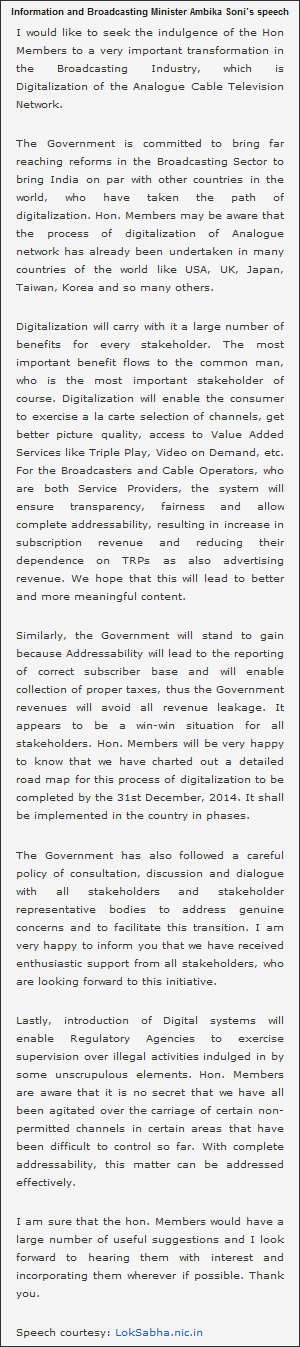
    Information and Broadcasting Minister Ambika Soni said that the move to convert Analog TV into Digital will bring India on par with other countries like US, Britain, Korea and Taiwan.


    As a matter of fact, digitization of TV will bring subscription revenues for broadcasters and of course the elimination of carriage fees from the broadcast ecosystem – something which, as experts believe, would eventually happen as complete digitization would set in. As for now, carriage fees is one big challenge all broadcasters are facing. Industry estimates suggest that roughly 20 per cent of a channel’s cost account for carriage fees. As per the new regime, all satellite channels will be beamed to houses through set-top-boxes.


    While most members supported the Bill, a few raised their voices against content being broadcast on some channels and the unjustifiable hike in the cable rates. Soni assured Cable operators that the move will not render them jobless, and that the government’s major concern was the viewers’ interest. She said that an enabling provision had put in place to the effect that only Rs 200,000 to Rs 300,000 would be needed by cable operators to move to digitisation.


    On the prices of set-top-boxes, she said, “The prices of set-top-boxes will fall. These will be available on installments and rent. Also, viewers don’t have to take a whole bouquet of channels. TRAI will impose a tariff capping for subscribing to channels.” She also said that digitization would provide consumers a la carte selection of channels and video-on-demand among other things.


    She added that the Headend-in-the-sky (HITS), which had so far failed, would take off with greater investments


    The ordinance was passed earlier this year to meet the deadline set for full digitization by December 31, 2014. The government will complete the process in four phases starting with metros.


    The Bill will now go to the Rajya Sabha for passing and then go to the President for her assent after which it becomes law. Mr Dinyar Contractor, Editor-in-chief, SCATMAG, is of the opinion that it is only a matter of time before Rajya Sabha will pass the bill.


    According to Mr Devendra Parulekar, Partner & Segment Champion – TV Distribution Ernst & Young, the development is a positive one as this will lead to transparency in the entire system while creating a win-win situation for every stakeholder. “Digitisation will provide customers with wider choices, better signal quality, HD content and niche content tailored to suit niche audiences.”


    Whether there will be an effect on pricing, he said, “With hyper-competition, I don’t think price points will rise significantly; they will more so be determined by the market forces. ”


    On what it means to MSOs, Mr Parulekar said that MSOs focus will shift from B2B to B2C. However, due to the short implementation time-frame, he said that MSOs are likely to lose round one of the battle to DTH players, who have already invested in mature back-end systems. She also said that there were punitive clauses against cable operators, MSOs or DTH operators who failed to show the must-carry channels, including the Lok Sabha and Rajya Sabha TV channels.


    “The jury is still out on how the sector would fare in the medium to long term, as digital cable+broadband has some inherent technological advantages over DTH, as well as the advantage of personalised service that cable offers to end-subscibers. These service enhancements will need infusion of large funds and hence the sector may see some transactions (M&A activity). With increased transparency in collection of subscription fees as well as tax collection, broadcasters can de-risk their revenue streams versus advertising revenue that they are presently overly dependent upon,” he added.


    Big story image: Fotocorp
  • Tata Sky expands its channel offerings

    By A Correspondent


    Tata Sky, the leading Direct-to-Home service provider, has announced the addition of three new channels to its vast line-up of relevant channels for its subscriber base of over 8 million connections.


    A strong advocate of offering a wide range in every genre, Tata Sky has added MOVIES NOW to increase the Hollywood movie quotient on its platform. And continuing in the endeavour to offer channels that mirror the voice of the nation; Tata Sky has also launched Suvarna News 24X7, Asianet’s Kannada news channel from the heart of Karnataka and Zee 24 Ghante Chattisgarh, the only 24-hour satellite news channel in Chhattisgarh.

  • TV-wallahs eager for digital wave


    By Rishi Vora


    The television distribution scene in India has for many years seen the dominance of cable wallahs. Digitization only started in a big way when DTH players pumped in huge sums (there was no ordinance then) and succeeded in building a critical base of subscribers in the country. As a result cable operators were seen as laggards. Sample this: there are about 40-45 million DTH homes out of the total viewing population of more than 225 million households, so DTH has grown despite competition from cable and is likely to increase the subscriber base substantially with the recently passed ordinance by the government.


    As for the cable operators and MSOs, they are left with no option but to invest in infrastructure. Den Networks is investing Rs 1,000 crore and expects to get 2.5 million subscribers in the phase one. Hathway will invest Rs 500 crore and they are also bullish about increasing the subscriber base. Analysts feel that now is the perfect time for MSOs to increase their share in the business.


    So, while it seems all good for the industry, the fact is that digitization is something that was always talked about, and is now a work in progress as far as complete digitization is concerned. The government has, in a recent development, pushed the sunset day for four metros from March 2012 to June 2012. The date for cities with a population more than 1 million is March 31, 2013.


    For broadcasters, this is a big relief from the carriage fees, which in the past have resulted in loss of revenues. The four metros is a big market with 20 million households; and digital homes eating into cable and analogue… But, digitization, for broadcasters, also means that the consumer will now have a choice of what channel to pay and watch. That in experts’ minds is a challenge many broadcasters will have to face – to keep their viewers’ interest levels high and for the long run.


    Subhash Chandra, Chairman, Zee opines, “Digitization will only help the television industry further grow. The government’s decision on clearing the ordinance is a very positive move. It will give a boost to the cable and satellite industry and help create a more sustainable business model for the television industry.”


    On the growth of DTH players in the county, he said, “DTH is leading the adoption of digital technology. There are about 39 million gross DTH subscribers in the country. Now they have a great opportunity to consolidate their businesses.”


    However Dinyar Contractor, Editor-in-Chief of Satellite and Cable TV Magazine, has a contrary view to the whole scene. He feels that there is still some time for digitization to happen pan-India (2014) as the ordinance states. And that broadcaster are wary of going digital, or are wanting to delay the process of digitization of TV in India, as the profits are not much, plus there is the risk of losing eyeballs, as there will always be viewers who are not open to the idea of paying and viewing, as against the concept of free-to-air channels.


    Tarun Katial, CEO, Reliance Broadcast Network Limited, feels, “Digitization will bring-in fair reporting of subscriber base, which will lead to standard pricing and subsequently eradication of local monopoly. It will help companies increase subscription revenues and reduce down carriage fees for broadcasters in a phased manner.


    Ajay Chacko, President, A + E Networks | TV 18 JV, says that the move will bring in more accountability in the business. And apart from additional subscription revenues, he believes that digitization offers a whole new benchmark for broadcasters, and a platform which is more measurable than cable and analog.


    Neo Sports COO Prasana Krishnan welcomes the ordinance. “This is the much needed change in the industry. What it will do to the industry? I think it will revolutionize the broadcast landscape in India.”


    If the ordinance were not passed, Mr Katial is of the opinion that the current capacity constraints in analog cable would have stifled the growth of new channels and introduction of technologically advanced content. “The carriage costs paid by broadcasters which currently remain high in view of the limited bandwidth of analog cable would decrease post digitization. This would allow broadcasters to make higher investments in programming and marketing, thus improving the customer experience,” he explains.


    Another advantage the industry will see over the years in the fast adoption of HD television and 3D, which will open new revenue streams. As far as television distribution industry is concerned, the ordinance will lead to more transparency and greater accountability. It means opportunity for all stakeholders – broadcasters, distribution platforms including cable companies, MSOs and DTH.

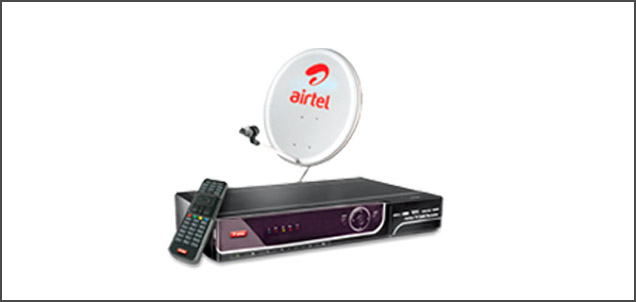
    Photograph: Airtel Digital TV HD Recorder from airtel.in