Tag: Dentsu

  • Taproot goes great Gunns, No 1 in India

    By A Correspondent


    Taproot India has earned the honour of becoming the top most creative agency in India in The Gunn Report 2012. Taproot has also entered the list of the Top 50 Most Awarded Agencies in the world. As one of the 12 new inductees in the winners list on creative excellence in advertising worldwide for the year 2012, Taproot has not just opened the account for India but has also brought the country’s creative ingenuity to the centre stage globally.


    Taproot leads the pack as the number one agency in India in The Gunn Report’s country-specific rankings for 2012. In the country listings of the most awarded agency networks in India, Taproot has taken the top slot leaving behind agency networks like O&M, Leo Burnett, Creativeland Asia, Contract and McCann Worldgroup at the second, third, fourth and a joint-fifth rank respectively.


    Earning seven points in the Film category and three in the All Gunns Blazing segment, Taproot earned the maximum 10 points to top the charts. The agency entered the country-specific The Gunn Report rankings in 2010, when it was placed third behind O&M (Mumbai and Delhi) and JWT (Mumbai) then.


    The Gunn Report, created in 1999, combines the winners’ lists from all of the world’s most important awards to establish the annual worldwide league tables for the advertising industry. In 2012 this encompassed 46 shows in total – national, regional and global – and the winners at these shows in TV, Print, Digital and All Gunns Blazing. In short, it identifies the most awarded new work in the world each year as well as who did it and celebrates both.


    With 44 points, India ranks 13th in the list of Most Awarded Countries in the World in 2012 that is topped by the US, the UK and Australia at the first, second and the third ranks respectively.


    Agnello Dias
    Agnello Dias

    According to The Gunn Report, “Any agency that ever makes it into the Top 50 Table has to be a great place to work and a great place to be a client of.”


    Being a part of the prestigious winners’ list, Agnello Dias, Co-founder and Chief Creative Officer, Taproot India, said “It is humbling, intimidating and exhilarating all at the same time, if ever that was possible. The amount of parameters The Gunn Report takes into account to arrive at the results is vast and wide-ranging and therefore something like this is always going to be unexpected. What can I say; it’s quite hard to believe actually.”


    Santosh Padhi

    “We have done this quite often in the last few years – second most awarded creative agency in the country, followed by the Creative Agency of the Year India and South Asia title. We have earned our position as one of the top three creative agencies in this country with sheer great cutting edge work year after year. Be it in creative awards or Effies, be it local or international awards, we have topped the table on many occasions. It will be a big challenge to retain the top slot and keep delivering. But we at Taproot love to be challenged,” said Santosh Padhi, Co-founder and Chief Creative Officer, Taproot India.


    Rohit Ohri

    Commenting on the inclusion of an Indian advertising agency into the league of the most awarded creative agencies globally, Rohit Ohri, Executive Chairman, Dentsu India Group said, “2012 was a remarkable year of creative achievement for Taproot. And this ranking by The Gunn Report is a testimony to that. Taproot has truly done the Dentsu Network proud.”


  • Dentsu Digital launches mobile marketing platform iButterfly

    By A Correspondent


    Originally developed by Dentsu Inc., “iButterfly” was first launched in Japan in 2010 as a “Coupon Entertainment” platform. It’s innovative design and simple user experience soon connected with consumers across the country and became a massive marketing success story.


    After creating waves in Japan, iButterfly has been successfully launched across the Asian region by many Dentsu network agencies. Markets include Singapore, Indonesia, Vietnam, Hong Kong, Thailand and others.


    The iButterfly application, which has won many industry awards, works through a combination of three technologies : Augmented Reality, Motion Sensing and GPS. It creates a virtual environment where marketers can push branded messages or promotional information to their target audience by transforming simple content into colourful virtual butterflies that can be ‘caught’ on mobile devices and stored through a simple swipe action.


    Once these butterflies are caught they can be collected and redeemed or traded for exciting offers. These virtual butterflies can also be exchanged amongst friends & family. iButterfly is also integrated into social media, ie Facebook, where consumers can keep track of new offers and information on various brands by signing up for and following the iButterfly conversation.


    Dentsu Digital India is introducing this engagement platform in India for the first time with more enhanced features that are custom-built for the Indian consumer.


    With the increasing smartphone penetration in urban India, as well as the huge demand for mobile apps and games, from a marketers perspective the uniqueness of “iButterfly” is that one can select a designated time, range and location where butterflies can be introduced – this adds to the flexibility of running multiple campaigns across various locations.


    Apart from offers and privileges, marketers can also publish brand information or hyperlink the butterflies to their own official website , apps or even Facebook fan pages. iButterfly can also trigger consumer purchase behaviour by driving them to visit retail stores to collect special edition brand butterflies, therefore stimulating impulse purchase for a brand and increasing the opportunity to sell.


    Rohit Ohri, Chairman of Dentsu India Group, said, “iButterfly is a truly transformational platform that will help brands in India create massive differentiation. In a highly fragmented media environment today, brands need to connect with consumers in a disruptive yet simple way. And iButterfly does exactly that by putting the experience right into the hands of the customers.  For customers today, it’s all about the power of immediacy and instant gratification.”


    How to play iButterfly:-

    1. Free download iButterfly at iTunes store

    2. Turn the mobile device left and right to catch butterflies

    3. Once the Butterfly is saved and stored

    4. Click the Butterfly to view details of content

    5. Hyperlink to brand’s website

    6. Enjoy special offers and discount at retail points

    7. Search for your favorite Butterflies via Google maps and continue to catch them at various locations

    8. Now share your Butterflies via Facebook or Bluetooth with friends and family

    To find out more about iButterfly, visit http://www.iButterfly.in


  • Dentsu creates madness for Chingles

    By A Correspondent


    DS Group has marked its entry into the Rs 1,600 cr gum category with ‘Chingles’ mini-gums. Launched under its flagship brand ‘Pass Pass’, Chingles is positioned as an antidote to the seriousness of adult life.


    The campaign ‘Aaj Lee Kya’, conceived by Dentsu Marcom, is a call to the audience to break the monotony of their daily rut and infuse a little laughter and light heartedness in their lives with some harmless pranks on friends, family and colleagues. The tagline also works as a reminder to use the brand almost on a daily basis. In the communication the product can be seen as a prank enabler.


    The communication is presented in a series of TV commercials. The first one introduces the ‘Lee’ family. A crazy household with triplet brothers, who are always busy taking each other’s case through harmless tricks and gags. Their names, UngLee, KhujLee and GoogLee, each represent an expression commonly used to refer to taking someone’s trip.


    The five TVCs are anecdotes of the three brothers playing pranks on each other. Another character that’s a part of this crazy set-up is JuLee, the neighbourhood damsel and the object of desire for all the three brothers. Apart from pulling pranks on each other, the three brothers are constantly trying to oust one another to get JuLee’s attention and to destroy the chances of the other if any.


    The commercials are fast paced to almost give a Charlie Chaplinish feel; the retro execution, unique outfits and voices and innocently hilarious plots add to the frenzy of the films and make the campaign more memorable.


    The Lee brothers return with yet another hilarious prank of theirs. This time the brothers KhujLee and GoogLee depict the proverb ‘Idle mind is a devil’s workshop’ in their classic style. The film opens on an ordinary day in the Lee household with UngLee lazing around with a book in his hands. But the peace doesn’t last long, as KhujLee and GoogLee exploit sibling rivalry to trick UngLee.


    Credits:

    Campaign elements: TVC/ Print/ Digital/ Cinema/ Outdoor

    Client: Dharampal Satyapal Ltd

    Creative Agency: Dentsu Marcom Pvt Ltd

    Account management: Sunita Prakash, Dhruv Lavania

    Planning: Narayan Devanathan, Rabia Sooch

    National Creative Director: Titus Upputuru

    Creative Director: Abhinav Karwal

    Art Director: Sumit Vashisht

    Copywriter: Titus Upputuru, Anish Nath, Kapil Rana

    Director (of the film): Amit Sharma

    Production House: Chrome Films


  • Dentsu in talks to buy out digital agency Webchutney

    By Ratna Bhushan


    Japanese advertising agency Dentsu is in advanced talks to buy out leading digital advertising agency and consulting firm Webchutney.


    This will be Dentsu’s first local acquisition in the digital agency space. Network18, which holds 70.06% stake in the Sidharth Rao-promoted Webchutney Studios, is looking to exit from the alliance, two officials with knowledge of the development said. The deal size is estimated at between Rs 40 crore and Rs 60 crore for Network18’s 70.06%, which values the agency at roughly Rs 90 crore on the higher side.


    “Dentsu is expected to buy out Network 18’s stake in Webchutney. The promoters of Webchutney will continue to hold their stakes,” one of the officials quoted earlier said.


    Rohit Ohri

    Rohit Ohri, Dentsu India group’s executive chairman said: “We are looking to scale up our digital capabilities in India. Obviously, acquisition is one of the options. We are currently discussing the various options and putting together our plan.” Officials close to the development say Webchutney, which was ranked the No 1 digital agency in the latest Brand Equity Agency Reckoner, is the front-runner in Dentsu’s quest for inorganic growth in this space.


    Network18 had invested in Webchutney through its investment arms, Capital18 Ltd and Capital18 Fincap, in 2007. The agency, which services firms like Airtel, Microsoft, Hindustan Unilever, Marico and Titan, posted a profit of Rs 6.35 crore in the financial year 2011-2012 on revenues of Rs 21.55 crore. Network18 owns 49.42% of the shareholding through Capital18, Mauritius and 20.64% through Capital18 Fincap.


    Webchutney’s Rao said: “It’s very early to talk about any new alliance… nothing has been finalised as we are evaluating many options.”


    Sarbvir Singh, Capital 18 MD, too neither denied nor confirmed if Network18 was exiting Webchutney. “In the normal course of business, at any given point in time, we are approached by several interested parties and we speak to them as appropriate. We have no other comment to offer at this point.”


    Webchutney was set up in 1999 by entrepreneurs Sidharth Rao and Sudesh Samaria. The agency’s area of work includes online advertising, website design, mobile marketing and social media. Its employee strength is about 200.


    In July, globally Dentsu had acquired British media buying group Aegis for $4.9 billion. Back home, too, the Japanese agency has been on the prowl. In August, it acquired majority stake in creative hotshop Taproot.


    Founded by ad men Agnello Dias and Santosh Padhi, Taproot has created clutter-breaking ads including PepsiCo’s ‘change the game’ and Airtel’s ‘jo tera hai wo mera hai’.


    Denstu also has an indirect alliance with mobile marketing agency ad2c, a collaboration between Japan’s D2 Communications and Singapore-based Affle, led in India by Madan Sanglikar. In mid-August Aegis had acquired D2 Communications, a digital marketing and search agency. Indirectly, this deal gave Dentsu access to the digital space.


    Dentsu’s clients include car maker Toyota and electronic firm Panasonic whilst Aegis services brands such as Adidas and Philips.


    Digital agencies are increasingly being wooed by traditional ones. Earlier this year, Publicis Groupe bought out digital and performance marketing firms Resultrix and Indigo Consulting in two back-to-back deals. And in mid-June this year, WPP Group bought out a majority stake in Hungama Digital Services through its agency JWT Singapore.


    Source:The Economic Times

    Copyright © 2012, Bennett, Coleman & Co. Ltd. All Rights Reserved


  • Dentsu wins creative & media mandate respectively for Orangina

    By A Correspondent


    Dentsu Communications, Dentsu India’s full service advertising agency has been awarded the creative duties for Orangina. And Dentsu Media has bagged the media mandate for the beverage which willbe manufactured and marketed in India by Suntory Narang Private Limited, a joint venture between Suntory Group and the Narang Group.


    Commenting on awarding the creative and media mandate to Dentsu Communications & Dentsu Media respectively, Avik Sanyal, COO of Suntory Narang said “We are very excited and confident for a successful launch of Orangina. Partnering with Dentsu will propel our communication and media strategy to build a strong brand equity”


    Commenting on the win, Dentsu Media CEO Divya Gupta said “Dentsu Media is excited, looking forward to working on Brand Orangina in India. Together with the Suntory Narang team, we will craft passionate and incisive media strategy to shake the market.”


    Said Arijit Ray, CEO Dentsu Communications, “Orangina is a great brand to have on the roster and we’re looking forward to working closely with the Suntory Narang brand team to build and evolve a distinctive communication charter for Brand Orangina in India.”


  • Dentsu Media wins mandate for SEBI’s investor awareness campaign

    By A Correspondent


    Securities and Exchange Board of India (SEBI), the apex regulatory authority for the securities market in India, has selected Dentsu Media as the Media Agency for its Multimedia Investor Education and Awareness Campaign.


    Thirteen renowned agencies participated in the competitive pitch in an open tendering process, in which Dentsu Media was awarded the mandate. The Selection Committee was headed by Mr K.V.Kamath and comprised of senior persons from various fields such as Advertising, Marketing, etc along with senior SEBI officials. The appointment is for a period of two years.


    Dentsu Media, along with Ogilvy & Mather as creative agency, will provide communication planning to SEBI in its Investor Education and Awareness Campaign, which is aimed at educating and creating awareness amongst retail investors and also converting the current savers into investors.


    Commenting on this mandate, a senior SEBI official said, “We are glad on appointment of Dentsu as the Media Agency for our Investor Awareness Campaign. The appointment has taken place after a detailed competitive and transparent process and we now look forward to work together, so as to achieve the objectives set out for this campaign”.


    Divya Gupta
    Rohit Ohri

    Divya Gupta, CEO, Dentsu Media said, “It is an absolute honour to handle SEBI’s media business.  We are extremely proud to have won this opportunity of partnering with one of the apex regulatory authority of India and we look forward to the kind of work that we would be able to do in this category.”


    “This is a really prestigious win for us. We are hoping to be true partners to SEBI to help deliver the greatest value for the Investor Awareness Campaign,” said Rohit Ohri, Executive Chairman, Dentsu India Group.


  • TVS appoints Dentsu for Wego scooters

    By A Correspondent


    TVS Motor Company has announced that it has appointed Dentsu Communications to handle its Wego brand of scooters.


    Commenting on the development, H S Goindi, President Marketing, TVS Motor Company said, “I must thank the earlier agency BBH for the award winning creative work in creating a differentiated position for Wego. Equally, I eagerly look forward to a very fruitful and long term association with Dentsu Communication. We are confident that the team at Dentsu Communication with its deep experience and understanding of automobile brands will make their presence felt on future Wego campaigns.”


    Commenting on the win Dentsu Communications CEO, Arijit Ray said, “TVS Wego is a great product and we are looking forward to working very closely with the brand team to carve out a distinctive communication position for the brand. Our team at Dentsu Communications Bangalore has the right mix of youth and experience, with significant exposure to the automotive category to help craft and build a robust integrated strategy, for Wego, going forward.”


    Dentsu will work on various campaigns for Wego and will be responsible for the account’s campaign planning and creative executions across television and print mediums.


  • TAPROOT! We will not mess with what’s working wonderfully: Rohit Ohri

    When one speaks to Rohit Ohri, Executive Chairman, Denstu India Group, one can sense the passion and excitement with which he has embraced his role at Dentsu. However, he does admit that when he had taken the role more than a year back he was himself not sure if he was doing the right thing considering that he was moving out of a familiar environment where he had spent 21 years! But things couldn’t have been better for him and he certainly is enjoying being a part of the transformation that Dentsu is undergoing. Mr Ohri talks to MxMIndia post the news of Denstu Inc acquiring 51 % of Taproot India.


    By Tuhina Anand


    What a day it has been! Dentsu and Taproot coming together is certainly big news. However, what intrigues is that you already have 3 full-service agencies under Dentsu India. So what is the reason behind acquiring a creative agency?

    We are constantly working towards bringing the best skills and capability in the organization. We have three full service agencies under Dentsu India Group – Dentsu Marcom, Dentsu Communications and  Dentsu Creative Impact and we have the best of creative minds including Soumitra Karnik, Titus Upputuru and Harish Arora leading our creative units. In a year that we have worked together, I think we have come out with some great creative works like Canon India’s What Makes Us Click or Hero Motorcycles’ Sach Kar Denge Sapne. These are excellent works that have helped the clients remarkably increase the market share and put them on a growth trajectory.


    I have been reading that we lack creative prowess but I think that’s not the case. I think it has more to do with a perception that needs to be changed. We have been doing a lot to improve the quality of work that has been coming out of the agency. But we decided that we needed a dramatic shift to change the perception of Dentsu and we needed to make a quantum leap. Our decision of aligning with Taproot is a move in that direction. I would say that the change was already happening in the agency it’s just that now it has been accelerated with this development.


    Dentsu is a Japanese-held company but it is not a Japanese agency. If we are in India it means that to succeed we need to create advertising that clicks with the nation. We have Japanese counterpart in the system where they bring an understanding and expertise in our offering. It’s a happy marriage where we leverage each other’s strength.


    A well-thought of strategy then!  How will the partnership work on a daily functional basis?

    Very clearly we will not mess with what’s working wonderfully. So there is no name change or any change in the way Taproot has been functioning. The agency has been handling big clients on project basis and for them to handle them on a regular basis would mean that they need bandwidth and expertise like media or digital. That is where we step in by helping them to cut the labyrinth and give them direct access to our network’s strength. Taproot will grow on its creative capability and remain the iconic agency that it is today. The difference is that the support from Dentsu will come in when required thus helping them to focus on their creative output.


    There will be a Taproot Board that will be set up which is part of the process of the post merger integration. The Board will have four directors from Dentsu and I shall be one of them and three from Taproot. The key decision like the future of the agency will  need to be passed by the directors but I repeat that in day-to-day functioning Aggie and Paddy will run it as they have been doing till now. They will have complete freedom.


    With you coming on board, it appears Dentsu India is on an overdrive to get in the top race in the industry, how do you see the agency poised today and the road ahead?

    Dentsu is the number one agency in Japan for the past 110 years. We want to be the agency that clients want to work with. We are 100 percent integrated agency and have a holistic approach to communication. Today, the separation among various functions like creative, media or digital has become so deep that it is difficult to straddle across them. However, the clients want one-stop solution and that is Dentsu’s strength. Tim Andree, the President and CEO of Dentsu Network Global, says that we are network of agencies which collaborate with each other meaning we build complimentary skill and not competitive.  This is what we truly believe in.


    For you personally, how is the role different from your previous stint?

    Honestly speaking, I wasn’t sure of my move as I had spent 21 years of my career at JWT but now that I am here I can confidently say that I am having the best time of my life. Last year has been fantastic as well as challenging nevertheless satisfying.


    I think the biggest difference in the agency today is the culture that we have created within the organization which encourages creativity. I have got enormous amount of support from Dentsu Inc on this. The deal with Taproot was initiated by me and I got phenomenal support thus helping in making it happen. We had envisioned this almost a year back and it is extremely gratifying to get the congratulatory messages and calls from the industry and your peers which kind of validates that what one has planned was in the right direction. I have been overwhelmed by the support that the industry has shown on this move.


    I can feel the change in the agency, in the way people are approaching us now or during our discussions with the people from the industry. It’s just that we have accelerated that change with the move.


    Must be a tiring day for you given the buzz the news has created… how do you plan to celebrate?

    I think I just want to enjoy and savour the moment. It has been a significant move and to be accepted by the industry gives me immense pleasure and kind of validates that our strategic thinking was in the right direction. However, one must understand that the move of partnering with Taproot would have not have created much ripples had we not already been doing something to show that Dentsu was undergoing a transformation. It would have been just passed off as a one-time move.  I think we had already made a difference by getting the right kind of people on board, by our work and the culture that we have created within the organization. So there was some foundation and people knew that there was an agency undergoing change albeit at a slower pace. With Taproot we have increased the pace of change. Coming back to the celebration, I think we will do one when Aggie, Paddy and I get together.


  • TAPROOT! | What would make an entrepreneur sell?

    By Ananya Saha


    Some create to sell. Some create to keep. Why would an entrepreneur who has created, built up and nurtured a company, wish to sell it? And given that the reasons are good, what then is a good time for this sell-out?


    PV Sahad, Editor of VCCircle, a news website dedicated to covering private equity, venture capital investments and M&A in India, said, “The right time to sell a business depends entirely on the objective of the management or the entrepreneur.”


    Mr Sahad added, “Usually, the companies are sold off when the markets are high or if there are suitable buyers for the company. The suitable buyers knock on the doors when the company is at the peak performance stage. This is when a buyer looks at the company and makes a good offer.”


    Prof Kavil Ramachandran of ISB Hyderabad opined, “There are various reasons why a company sells out. One, when the entrepreneur gets excited by something more challenging and wishes to move away from something he has established and toiled over. The entrepreneur and/or management might wish to sell out when the Return on Investment (ROI) and Return on Time and Investment (ROTI) for the effort put in seem good in terms of the valuation.”


    One more reason could be that the management of the company feels that the pressures of growing the company further are beyond their current means, and the entrepreneur starts to feel that someone else might be able to do a better job, added Prof Ramachandran.


    Mahendra Swarup

    Mahendra Swarup, President, Indian Venture Capital and Private Equity Association (IVCA), said that the reason to sell out depends vastly on the outlook of the entrepreneur. “If one’s company is heavily invested or has raised money through IPO, then the compulsion to exit the business is much more.” According to him little or less equity rights with the entrepreneur is also one reason when the companies prefer to sell out.


    The companies usually try and scale up their business with the money that an investor (for a stake sale) brings in, or it the entrepreneur wishes to exit the business altogether.


    Mr Swarup added that a good time to sell company is also dependent on the entrepreneur. “They can sell when the company is doing well, or is actually not doing well. But usually, companies are sold when the entrepreneur has an alternative scheme of things that can be a new investment horizon or venture.”


    Sanjeev Bhikchandani

    Sanjeev Bhikchandani, founder and executive vice-chairman of Naukri.com, said, “There are no general answers to when is a good time to sell a company. The motive to sell depends solely on the goals and objectives of the entrepreneur. If they wish to make a quick buck, they might scale up and sell. If they wish to create a huge company, they might not. The time is decided by the motive of the entrepreneur.”


  • The Complete Story: Win-win for Dentsu,Taproot; big loss for WPP (from yesterday)


    By Pradyuman Maheshwari


    So is it bigger win for Dentsu or Aggie and Paddy? Both parties, one would say. It’s not that Dentsu has no creative talent, but the Taproot India of Agnello Dias and Santosh Padhi has by far been the biggest creative story of Indian advertising in the last three years.


    An Ogilvy, Lowe or McCann may be thriving and a Mudra has won some great awards but nothing to beat Taproot, a CxO with an international network told MxMIndia on receiving MxM’s BBM alert at 6.30 am today.

     

    Agnello Dias

    The news of the announcement was made to the staff on Monday and key clients have also been informed. The nitty gritty of the deal was completed last week and the announcement by Denstu was made on Tuesday morning 10am local time in Japan.


    Although some estimates (and an Economic Times report that MxM carried as part of its syndicate arrangement) say that the deal is valued at Rs 140 crore (with Rs 60 paid immediately and Rs 80 crore in earn-outs), MxMIndia learns that this amount is exaggerated.


    No surprises here
    By Tuhina Anand 

    Taproot India in many ways has rewritten the fate of independents in India. In fact, Taproot would be an excellent example of a successful brand created in such a short span of time. The credit for this goes to its co-founders Agnello Dias and Santosh Padhi who have never looked back since launching the agency in January 2009.Like any new set-up Taproot would have had its ups and downs but the message that came out to the world from the agency was clear that the work they produced were superlative and consistent. The agency has done some memorable work like Airtel’s Har Ek friend zaroori hota hai or Pepsi’s ‘change the game’ which catapulted them in the big league and bigger brands which hitherto were prerogative of bigger agencies.Taproot continued its association with the TOI Group which had managed to win India’s first grand prix at Cannes Lions led by Mr Dias when he was with JWT. At Taproot too this association with TOI got them recognition at international platform like Cannes. It was also recognized as Cannes Lions top 20 independent agencies in the world. So it seems like a simple success mantra where the duo let their work do the talking and in return created a substantial equity for their agency.


    That Taproot decided to sell its stake doesn’t really come as a surprise as the talk was doing rounds that the founders were looking for partners. In their pursuit to get partners what probably helped was that Taproot had proved its mettle in a short span and there were prospects already willing to get a share in the agency. Then their choice of partner-Dentsu Inc- might come as a surprise initially as one would have expected an international hot shop to enter India via Taproot but if one stops to think the association seems perfectly aligned. Dentsu Inc has acquired 51 per cent stake of Taproot India.


    Taproot gets the scale and bandwidth of Dentsu besides the moolah. In fact, the deal is just at the right time for Dentsu Inc when the Japanese major has taken full control from Sandeep Goyal and is trying to get its arithmetic right in India starting with a managerial change where Rohit Ohri, ex-JWT was roped in as the Executive Chairman forDentsu India Group and later Divya Gupta to head its media busienss.


    For the latter, which is not really known for its creative prowess, Taproot is just the right fit as that’s the field where the agency scores highly.


    The fact that Ohri and Dias have worked together at JWT also makes them familiar with each Other’s working style.


    On the association, Rohit Ohri, Executive Chairman, Dentsu India Group, said, “Taproot has, very quickly, become one of the most respected communication agencies in India. In fact, Aggie and Paddy are globally recognized and celebrated creative talents. We are delighted that they have chosen to partner with Dentsu. This alliance will give a significant fillip to our growth plans for India. Our collective vision is not to be the biggest but to be the best in the industry.”


    On how this acquisition impacts Taproot, Mr Ohri added, “Taproot’s everyday operations and management will remain unchanged. We will ensure that Taproot’s independent spirit and fiercely creative culture stays intact. It will just have a lot more firepower added through integrated communication execution capability and an all-India network.”


    Agnello Dias, Co-Founder and Chief Creative Officer, Taproot India said, “While we are doing alright on the creative front, we felt that we needed to add a bit more logistical and service capabilities across markets. With Dentsu as our partner we feel we can scale up several areas of our operations very quickly without losing what has been working for us so far.”


    Santosh Padhi, Co-Founder and Chief Creative Officer, Taproot India added, “Most importantly, we are assured that this alliance will be mutually beneficial to Taproot India and also to each one of its employees going forward, without changing our creative offering or the nature of the relationships we share with all our clients.”


    Taproot India brings to Dentsu 33 full-time employees and a roster of clients that includes PepsiCo, Airtel, The Times of India, Polycab, Marico, Karbonn Mobiles,Myntra.com, Mumbai Mirror, Nirma, DSP BlackRock Mutual Fund, UTV Bindass, and UTV Stars among others.


    A wholly owned subsidiary of Dentsu Inc., Tokyo, the Dentsu India Group comprises three standalone full-service advertising agencies-Dentsu Communications, DentsuMarcom and Dentsu Creative Impact-as well as Dentsu Media and Dentsu Digital.


    However, in this entire celebration one question that really comes up is that for an independent who has bigger ambitions, the only way out is to become a part of a bigger network. In earlier MxM India’s conversation with industry players, some of the successful independents like Raj Kurup of Creative Land Asia and Manish Bhatt have voiced their opinion to remain solo. Mr Bhatt had explained to being open to partnerships but not a sellout. Mr Kurup had clearly stated, “I have started CLA with the prime motive of building it up, selling it definitely not in the plan.” (See: Stay solo or scale up with a biggie? http://www.mxmindia.com/2012/07/ stay-solo-or-scale-up-with-a-biggie/)


    With Taproot’s decision to go with Dentsu, the question of staying solo or scaling up with a biggie becomes much more relevant for the independents.


    The company is not valued above Rs 100 crore, and the amount paid to Messrs Agnello Dias and Santosh Padhi (both of who own equal stake) would be in the region of Rs 40 and 50 crore, we learn.


    Santosh Padhi

    There is an element of earn-out, but this depends entirely on the performance of the agency. So it could Rs 80, 180 or even 40 crore, is how one Dentsu insider told us after the announcement was made.


    Big loss for WPP

    There were many suitors for Taproot. While Publicis and Omnicom (via TBWA) were out of the race early, the choice was between Dentsu and WPP. In fact, MxMIndia learns that it was a decision that had to be taken by Messrs Dias and Padhi.


    WPP sources told MxMIndia that they were taken by surprise that the deal had been inked, as they were still hopeful that Taproot would pick them.


    So why was Dentsu chosen and not WPP, which has a huger presence in India and internationally. Ironically it’s WPP’s ‘bigness’ that’s perhaps one of the biggest reasons. While Dentsu has various arms, it is essentially one company in India, whereas WPP has various separate entities in Ogilvy, JWT, Group M and its new digital, BTL, etc interests.


    What Taproot realised in its journey is summed by Aggie’s statement in a Dentsu release: “While we are doing alright on the creative front, we felt that we needed to add a bit more logistical and service capabilities across markets. With Dentsu as our partner we feel we can scale up several areas of our operations very quickly without losing what has been working for us so far.” And this scale could be provided by Dentsu and not WPP was the thinking. The comfort factor with Dentsu was also greater, given the opportunities to grow.


    The likelihood of Taproot growing in the Dentsu fold is greater than it is with WPP.  There are big agencies like Ogilvy and JWT with WPP and folks like Piyush Pandey, Bobby Pawar etc who would always be centrestage and may try and pull rank given their seniority in the business. Not so with Dentsu, where even though there is talent within the India set-up, Taproot will have a star presence.

     

    Rohit Ohri

    Victory for Ohri, Future within Dentsu

    That the acquisition happened is a big feather in the cap for Mr Rohit Ohri, Denstu India’s executive chairman. It is Mr Ohri who is said to have initiated the discussion and gave the comfort factor to the Taproot co-founders.


    Some industry folk may remember there was a minor skirmish between Mr Ohri and Mr Dias when Taproot was awarded a Pepsi campaign and Mr Ohri was still at JWT heading Delhi operations, but all of that is history. In fact one of the main factors that Aggie and Paddy have inked the deal is the relationship with Mr Ohri.


    It may be noted that the stake sale deal has been signed with Dentsu Inc and not Dentsu India, and the reporting is to the Board of Dentsu headquartered in Japan. The other advantage this offers is that the fortunes of Dentsu India and the vagaries of its business will not impact Taproot. So, clearly while Mr Ohri is Dentsu’s face in India, Taproot will not report to him.


    What if?

    There is a three- to five-year lock-in period for most such deals, and the arrangement with Messrs Dias and Padhi is said to be of five years. However, there are various possibilities in the future as Dentsu grows in the scale post the Aegis acquisition and India becomes a bigger play for all advertising networks. The Dentsu insider we spoke to also said one shouldn’t be surprised if either Mr Dias or Mr Padhi or both could be given bigger roles in India or internationally.


    Since the deal helps both Taproot (scale, international network) and Dentsu (grow in India, creative powerhouse in its fold) the chances of a break-up are remote in the short and medium run, but even if there is, there will be no financial implication to monies paid out.


    Meanwhile…

    The papers are signed, the money may well be in the bank. There are no governmental clearances needed. People who do know Aggie and Paddy, as they are known in the industry, are aware that they have an easy, simple lifestyle. So don’t expect a cruise to the Bahamas or Hawaii or some such. The dosh will be well-invested. For the moment, it is getting used to being called Aggie San and Paddy San.




  • Dentsu acquires 51% stake in Taproot, Management (&creative) controls stay with Agnello Dias and Santosh Padhi

    By Ravi Balakrishnan


    Japanese advertising behemoth Dentsu has acquired a 51% stake in Taproot, arguably the most creative among the Indian independent advertising agencies.


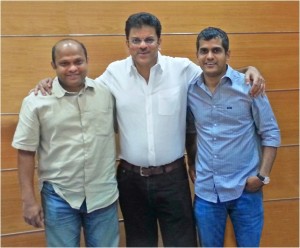
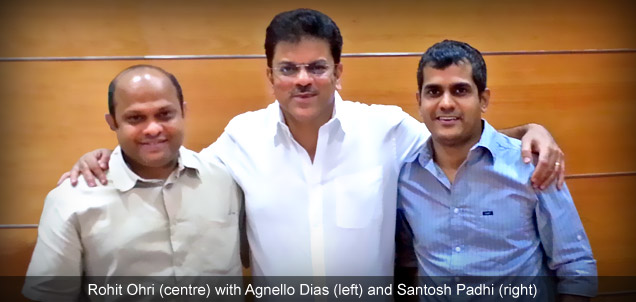
    Taproot's Agnello Dias (left) and Santosh Padhi (right) with Rohit Ohri of Dentsu (centre)

    With several of the most popular recent campaigns like ‘Har Ek Friend Zaroori Hota Hai’ and ‘Joh Tera Hai Woh Mera Hai’ for Airtel and ‘Change the Game’ for Pepsi under its belt, the five year old agency has seen a meteoric rise. It’s also won critical acclaim; the most recent being a Gold Lion at Cannes along with Ramesh Deo Productions for the ‘I Am Mumbai’ film for Mumbai Mirror, a newspaper from the Times Group, which also publishes The Economic Time


    The managements at both Dentsu and Taproot declined to discuss the financial aspects of the arrangement. Industry observers estimate the initial upfront payout at Rs 60 crore with another Rs 80 crore expected in future earn-outs


    In a global deal in July, Dentsu had paid $4.9 billion for British media buying group Aegis, valuing the company at 12 times its earnings before interest, taxes, depreciation & amortisation.


    The Economic Times had reported in June that Dentsu among other agency groups was speaking to Taproot about a possible acquisition. Says Rohit Ohri, executive chairman, Dentsu India group, who has previously worked with one of Taproot’s founders Agnello Dias at JWT: “They (Taproot’s co-founders & chief creative officers, Dias and Santosh Padhi) could have chosen anyone. What convinced them about Dentsu is that we are very entrepreneurial and evolving; and more willing to look at out of the box ways of working.”


    Adds Dias: “We felt it was the right thing to do. Of all the conversations we had, we felt most comfortable with the equation we were sharing with Dentsu. Another reason cited is Dentsu’s global strengths in the digital medium and that it is currently the leading network in Asia.


    Taproot will retain its identity and won’t be rebranded. Although Dentsu is a majority owner, management control of the agency continues to rest with Dias and Padhi. Dias says, “In terms of changes, there’s nothing in the pipeline. I think even Dentsu is saying ‘why should we upset a system that’s doing so well’?”


    What the arrangement brings Taproot is integrated communication, superior execution abilities and a national network. As far as Dentsu is concerned, Taproot, says Ohri, “is really the creative firepower we needed in the group.” However, the firepower is not likely to be immediately applied to any of Dentsu’s current client relationships.


    Both partners believe that Taproot will step in only when needed “on a case by case basis” according to Padhi. Interestingly enough, two of Taproot’s most productive client relationships have been with Airtel and Pepsi, brands that Ohri worked on in a previous stint at JWT. Ohri regards this as “a great bonus”, but he cites the talent of the two principals at Taproot and the chemistry with senior management at Dentsu as the main reasons for the merger.


    Among a spate of recently launched creative-led independent agencies which include Creativeland Asia and Scarecrow Communications, Taproot has arguably been the most successful with several marquee campaigns to its name for Airtel, Pepsi and The Times Group.


    The agency was founded in 2008 when Dias (then national creative director at JWT) decided to join forces with former colleague Santosh Padhi (executive creative director at Leo Burnett at the time). The 33 person strong agency has been particularly successful in wresting business from Dias’ former employer JWT, landing prestigious assignments from Pepsi and Airtel.


    Source:The Economic Times

    Copyright © 2012, Bennett, Coleman & Co. Ltd. All Rights Reserved

  • The Anchor: Yutaka Kamoshita’s 5 must-have digital strategies to improve brand ROI

    By Yutaka Kamoshita


    #1 Set clear agreement amongst stakeholders on what is ‘Return on Investment’

    This is where everything begins.


    Digital is not a magic wand. Users don’t close their browsers and run to the nearest store just because they saw a brand’s digital marketing campaign. But if a user comes across a brand hoarding and remembers that brand’s digital campaign which ran say, three months ago, then perhaps one can say that digital has worked to some extent. In case of this example, the brand stakeholders’ perspective would be “At this phase, our ROI should be evaluated by users’ content consumption behaviour and not yet by sales.”


    Unlike this example, ROI is clearer for web-service brands such as eCommerce. But still, is volume of sales the only critical KPI? Or is someone on the brand team looking at number of new user registrations as well? It is a marketer’s responsibility to define what the KPI really are. They need to identify the KPI and develop clear, concise agreement with stakeholders. These are time intensive and not easy, but inevitably, the best way forward.


    #2 Let users decide – not ‘gut-feel’

    Decision-making is a subjective action. If you are stumped between short-listing one main copy line from two other options, create three different versions and roll-out a quick test run on the web. It’s the user feedback and opinion and not gut-feel that is the best measure to prove what works. This works well after Step 1 as it helps brands identify what to evaluate from the result.


    #3 Let your content travel by itself

    Brand websites are just another set of html files on the world wide web. They are not a ‘physical property’ of a brand. Remember where Hotmail succeeded in their marketing in ’90s? Sometimes, it helps for marketers to loosen their emotional attachment with their own website just a little and try looking at it objectively. Content can travel anywhere in the internet. Content should be designed to make it as much accessible as possible. Users would love to spread brand messages to others for free. Copying, in other words ‘WOM’ or brand advocacy is the beauty of both digital and advertising. This works best after Step 2 so marketers get a sense on the potential of their message.


    #4 Think about the 99 percent

    Usually CTR of display ads is below 1 percent. Where does the other 99 percent go? Users don’t click display ads, because it is too much for brands to ask.


    What do TV commercials require viewers to do? Nothing but that they stay seated and wait for a few minutes till the commercial break is over. How about display ads? They compel users to stop what they are doing, move the cursor on a banner, click and go to another website which is a totally unknown environment for the user.


    Ninety nine percentile of human beings are very passive who don’t like taking risks. How can brands convert this 99 percent? Like you do for the 1 percent, solutions need to be implemented for the 99 percent! Services such as third party ad serving platforms or attribution tracking tools are available for evaluating the behaviour and usage/ consumption patterns of this 99 percentile.


    #5 Get out from your comfort zone

    Market saturation is inevitable. No demand means no business. If a marketer senses that something is stuck, then it may be the right time for him to extend his areas of consideration/ activity.


    SEM not performing as well as it used to? Before changing bidding price for keywords, isn’t there anything that can be done to create such demand? We don’t need search engines if we don’t have a specific demand in our minds. In general, activities to create demand end up with worse ROI, compared to activities to collect existing demand like SEM. But why compare two activities that have different purposes?


    Get out from what you have been doing before. Step out of your comfort zone and try something that had been avoided because of wrong expected ROI. This something could be viral video activities, advertorials with publishers, FB applications among several other options! It is advised to close Step 1 before this, so that all stakeholders are aware that CPA from a viral video is not being compared with CPA from SEM campaigns.


    Yutaka Kamoshita is Digital Strategist, Dentsu Digital