Tag: Covid-19

  • Shruti Pushkarna | Lessons from 2020: Time to think mainstream solutions for all

    Shruti PushkarnaBy Shruti Pushkarna


    2020 is finally coming to an end. We all agree on what a waste this year was, considering how our plans were reversed, lives disrupted and holidays canceled. As for work, we found new ways of functioning and remaining productive amidst a global pandemic. Truth is we survived this terrible year and the next one is just round the corner.


    Typically, in December, people think of resolutions, goals, budgets, but our lives are still shrouded in uncertainty. When will the vaccine be rolled out? Will it be effective? How long before we build herd immunity so that we can go back to normalcy just like in the pre-Covid days?


    No easy answers there. How about ending 2020 by acknowledging things that SARS COV-2 helped us discover, as individuals and as a society?


    The most important thing I have learnt especially while working with persons with disabilities is, the key to surviving (and thriving) is ‘acceptance’. When Covid struck, people were frustrated. The government called for a nationwide lockdown leaving us with no choice but to accept our situation. When we accept, we stop fighting with the problem and start channelizing our energy into finding possible solutions.


    Operating from home is a case in point. In the absence of physical spaces to work, study, exercise, hang out or play, we found alternatives within our residential confines. We modified our living situations to make room for daily routines that were conducted outside earlier.


    Acceptance leads to possibilities. Yet another learning.


    There are always alternatives, a different line of thinking and a new way of processing limitations. The disabled world knows it well. For persons with disabilities, the only real barrier is a negative attitude. Responses like ‘no, can’t do’, ‘not possible’, ‘not equipped’, ‘can’t happen’, exclude them from majority of mainstream activities.


    The past year may have helped the ableist society realise some such truths. Thanks to Covid, now we know that possibilities are only limited by our (collective) imagination. When able bodied people like you and me were denied access to our regular environment, we created a close replica in the form of a virtual universe.


    Barrier-free access is something persons with disabilities across the world have been fighting for, over decades. Attending school or college, getting a job in an office, watching a movie, reading a book, traveling, dining, sightseeing, even accessing social media or other digital services, poses serious challenges to the disabled. But we have never thought of mainstream solutions to these problems because their impairment has been grounds for an almost legit exclusion.


    We are all intrinsically selfish, is also a lesson learnt, though this one’s hardly exclusive to 2020.


    If the society accepts differences in abilities rather than typecasting people as ‘incapable’ or labeling them as ‘invalid’, we can start building an inclusive environment for all. Innovation in technology and increased internet penetration makes it easier to allow access to a larger, heterogeneous group.


    Let me state some obvious examples from the current scenario. Disabled students are attending online classes with the help of smartphones and computers along with able-bodied peers. Similarly, jobs are being carried out remotely, irrespective of physical impairments. OTT platforms have a wider share of the content viewing pie and their audience includes persons with different types of disabilities. Banking and other financial transactions are taking place online, albeit certain access issues. And the list goes on.


    When Covid-19 rendered us helpless despite all our defence mechanisms, we didn’t give up. We simply started safeguarding afresh. Among those who have survived the virus, some have experienced temporary disabilities, and there are others who have developed chronic illnesses due to partial respiratory or renal failure. But we are not blaming their karma for the medical outcome, are we?


    Why can’t we see the disabled people without the stigmatised lens too? If there is hope for a better tomorrow, then why shouldn’t similar optimism be extended to someone with a hearing, speech, visual or locomotor impairment?


    It’s time we acknowledged that the differences we see in people and situations, first emanate in our minds. What we actually choose to see outside is a mere reflection of that mindset.


    Here is an idea to carry forward to 2021. Let’s never forget what a person is capable of, given appropriate environment and aids. Let’s stop walling off people with problems presumably different from our own.


    Shruti Pushkarna heads operations of the New Delhi-based Score Foundation where she works as Director-Programmes & Communications. She is a former journalist (part of the founding team of MxMIndia) who has moved full-time to the social sector. Shruti writes for MxMIndia every other Thursday. Her views here are personal. She can be reached via Twitter at @shrutipushkarna




  • And the award goes to…


    By Avik Chattopadhyay


    Seems that the vaccine is playing spoilsport taking so much time to be readied and launched in India. Otherwise our world would have been so much safer by now. Damn pharma!!


     

    Over the last nine months, we have seen both product transformations and new product introductions that profess to either “boost immunity” or “kill 99% of the virus” or do both!


    Old brands have got resurrected in the process. Existing brands have gone into product extensions and new ‘verticals’. Thank the virus for all this feverish surge of innovation and quick-thinking. Advertising has also seen an upswing to promote all these wonderful solutions to beating the virus. Some brands have also taken the role of “public service” promoting hygiene rather than merely their own products.


    As this [calendar] year draws to a close, award functions have also started. I was waiting for one that would recognise these heroes. Why not? As long as they happen virtually, they are most welcome. Even the Nobels are going to be offsite and online this year.


    As no one has come forward, I have created my own ‘Indian Covid-19 Fighter of the Year’ Awards.


    Who qualifies for this? Not the doctor, the nurse, the healthcare worker, the vaccine volunteer or the ventilator, for they are merely ‘saving lives’ and nothing more. Boring jobs. No drama. Routine stuff. The ones who qualify are these amazing new products and solutions that boost immunity or kill 99% of the virus or do both. Highly exciting stuff, out-of-the-box thinking and disruptive. There were many that vied for a place on my list of “top 15 finalists”, across categories and segments.


    How did I arrive at the results? By studying their claims and clamour for attention through their communication across all media. Also, a quick dipstick with a few friends, and I was done with the ranking. While a few rankings had divided opinion, there were a few that drew unanimous agreement.


    So here are the 15 finalists in ascending order. They have been assigned to four clusters based on their ranking up the order. Ladies and gentlemen, boys and girls, the “Indian Covid 19 Fighter of the Year Awards”…


    Cluster #1 – The also-ran – the ones who gave a good fight but lost out in the eliminators


    15. Social distancing – started off quite well but lost steam as many took to distancing from other faiths, castes, and beliefs; clans got together stronger than before counterproductive to reasons of hygiene.


    14. Sanitiser – now as ubiquitous as salt and sugar in a household, this comes in all colours, fragrances, and concoctions; squeezees, spouts, atomisers, splash-ons; it is now India’s second most favourite cottage industry.


    13. Mask – this is the first one and who would have ever imagined that an item restricted to the hospital or a Japanese tourist would now become a fashion statement; this is haute couture now in various forms from the Madhubani cotton to one in gold encrusted with diamonds; only the Dilliwalas have been early adopters given their bi-annual tryst with air pollution.


    12. Face shield – usually comes in combination with the mask and had hoped for larger adoption but that did not happen; a nation that does not even wear helmets cannot be expected to wear a silly visor looking straight out of Star Wars; also does not have the potential of being a fashion accessory like the mask, so loses out.


    11. Soap – every soap worth its bubble now kills not only germs but also the virus…only that we do not know which exact one; pedestrian beauty soaps that only gave you supple and glowing skin are now your knight in shining armour too; but they kill only 99% of viruses leaving that one little black squiggle on the television screen staring at you, hence does not make the last six.


    10. Spray – take an aerosol can, fill it with ethanol, add some perfume and voila, you have a magic spray that kills the virus not only on surfaces but also in the air; if one were to believe some pieces of advertising, the virus behaves like those mosquitoes who hide behind curtains and sofas when confronted by the home maker and her aerosol can; definitely good business to be in as a paint brand has also thrown its own spray into the fray.


    9. Ordered Food – fright, anxiety, work-from-home and spending too much time with your spouse…all conditions for bingeing on food ordered online; a good counter to people learning culinary skills online, the service providers have had a field day, happy with the fact that crores have ordered so why should you be left out!


    8. UV Steriliser – that was not a microwave?! Case closed.


    7. Paint – if you are going to work from home, cook at home, fight at home, rear children at home and binge on OTT webseries from home, you home better be the safest ever, so, move aside sprays and sterilizers, here comes the paint that is the scourge of viruses. And it also smells good, so no more stepping onto your balcony for the morning ‘pranayama’. Just breathe in more of this wonder paint and you are taken care of.


    Cluster #2 – The winners – they nailed it and typically should have been gold, silver, and bronze but when you read further you realise why these ranks…


    6. Masala – 10,000 years ago when we were building our first city underwater, the first virus clashed with the first cumin seed leading to the ‘masala wars’; the home remedies came to the fore and our grandmothers nodded their heads in approval or smiled from garlanded frames; brands started rolling out “immunity boosting kits” containing a collection of various condiments that would put western pharma to shame – turmeric, garlic, cumin, coriander and ginger became the Panch Pandavas in our fight against the Corona Kauravas; definitely good for a bit of chest thumping but it’s just that we are going through the third wave of the pandemic!


    5. Ceiling fan – I could not believe this when I first saw this piece of advertising but one company has actually built a fan with a special coating that repels the virus; now all our problems are more or less solved with the fan and paint combination; why could this incredible piece of innovation not have happened before the virus hit the ceiling is anybody’s wonder!


    4. Namaste – if nothing else works then this definitely will; no more handshakes or hugs…just the age old “namaste” will be the answer; historical references to this posture go back to the Indus Valley Civilisation and while its purpose is surely noble, whether it keeps the virus away is worth a deep thought.


    Cluster #3 – Respondents’ choice – the final three ranks were additions were made during the dipstick; obviously beyond my ability to have even thought them up but then we are a democracy and people’s voice is what finally counts…


    3. Gamchcha – the rural towel has become a status symbol now as people in the corridors of power swear by its powers to keep the virus away; in various patterns, though always in cotton, it has symbolically built a bridge between the migrant worker and the minister for the ‘gamchcha’ is the latter’s way of demonstrating solidarity with the former. Surely a touching moment for the nation.


    2. Go-mutra – this was a special one; two drops of this magical potion can do wonders to your health, be it as a drink or as a floor cleaner!


    Cluster #4 – Legend – this requires no explanation


    1. Beard – it is THE beard, not just any beard; THE beard will ward off all evil just like it drove away the virus within 21 days of its landing on our shores; the ignorant spread useless canard about lack of hospital beds, loss of jobs and shuttered businesses for they do not realise that the more THE beard grows the weaker the virus becomes. This is what legends are made of.


    And that brings me to the end of the award function.

    Hope you enjoyed it. If you did, obviously you are having more fun in life than allocated to you. If you did not, it is expected as this year has taken its toll on our sense of humour. Hope it finally gets over and we crawl into a new one…


  • At a Theatre near you… A Film will Eventually Release!


    By Shailesh Kapoor


    As we enter the ninth month since the start of the Covid-induced lockdown and the various unlocks that have followed, most sectors, including those in the entertainment business, have started their journey back to recovery. But there’s one sector whose journey is still waiting to kickstart: The theatrical business.


    It’s been over a month since theatres started opening in the country. Being a state subject, it was left to the discretion of the various state governments to allow theatres to open or not, within the broad guidelines set by the Centre. Eventually, most states have given the nod, and multiplexes have started to open.


    But there is no audience yet. Except a couple of festive weeks in West Bengal and a few footfalls in the South where some niche films have started to release, the audience have not gone back yet. It could be easy to see this as a measure of audience’s sentiment regarding the perceived Covid threat in a theatre visit. But that’s not a valid argument. Not for now, at least.


    Audience in large parts of the country have not gone back simply because there’s no new content to go to. The first 3-4 weeks saw reruns of old Hindi films. It was understandable that with Maharashtra theatres still closed, no new Hindi films will release. But now, that’s not the case, and all major states have allowed theatres to re-open. A lot of single screens have chosen not to open yet, because unless they get new content, the running operational cost would far exceed the ticket sales from rerun content.


    It’s the classic Catch-22. ‘What comes first: The audience or the content?’ The Hindi film industry is hoping the answer is ‘the audience’. But that’s wishful thinking. We saw that this week with the first proper Hindi release since March. It was brave to see Zee taking the plunge and releasing its film Suraj Pe Mangal Bhari on November 15. The film didn’t get much traction, but it may have struggled even during normal times. The film simply lacks the scale that’s needed to get the audience back.


    The only practical answer to the question above is “the content”. And some content needs to announce its arrival soon. We are entering the sixth week of theatre re-opening, and there’s no announcement on the release date of Sooryavanshi or 83 (both Reliance films that were ready for release pre-Covid). Christopher Nolan’s Tenet has released in all the major countries worldwide, but awaits a specific date for its India release. It may end up being the first major release of a Hindi or Hollywood film since March. Wonder Woman 1984 is scheduled for a Christmas release, but given the escalating Covid situation in the US, that date may not be met.


    In this tentativeness-laden scenario, single screens and smaller multiplex chains in India wait eagerly for some announcement. When theatres were closed, announcements regarding films releasing on OTT platforms came in thick and fast. But the same level of urgency is evidently absent when it comes to theatrical announcements. Tamil and Telugu industries have been more proactive in putting out some teasers and dates, but there’s been complete silence from their Hindi counterparts.


    While one can understand the scepticism regarding the potential loss of business a big film can suffer if it releases “too early”, someone has to simply take the plunge for the larger good of the industry. Otherwise, the case for smaller theatres to permanently shut down will become stronger by the week. And that damage may last years, not months.


    There’s enough research to indicate that the audience is willing to come back, but also to indicate that they will not all come back on Day 1. It will be a slow process over a few weeks, over three-four major national releases, flanked by key regional ones. But we need a brave soul to set the ball rolling by locking a date and put it out in the public. Or at least announce clearly what their plans are, and the rationale behind those choices.


    Inaction can be worse than imperfect action. I hope the Hindi film industry doesn’t have to pay a huge price for its current state of indecisiveness.


  • MxM Live with Ajay Gupte


    By A Correspondent


    Wavemaker India celebrates its third anniversary on Monday, November 9, and we speak with Ajay Gupte, CEO – South Asia, Wavemaker, on the occasion.


    Gupte took charge in January 2020, and we know of the tumultuous times across the world after that. A coincidence of course. The marketing services business was badly hit given the events and advertising spends going south post that.


    But in this period, Wavemaker – part of WPP’s GroupM network – has managed to reinvent itself and forge ahead, says Gupte. There is a beefing up of the top deck. Some noteworthy work. And development of analytical tools that are now adopted within Wavemaker global framework.


    In a freewheeling interview with MxMIndia Founder and Editor-in-Chief Pradyuman Maheshwari, Ajay Gupte speaks on a cross-section of issues around the business, around Wavemaker, his settling back into the country, the job, Gurugram versus Mumbai, the rivalry with sibling Mindshare. And more.


    Watch. Enjoy. Like.


  • The Great Churning of the Media Cauldron


    By Indrani Sen


    Last week, KPMG published its M&E Industry Report 2020, six months after the FICCI EY Report on M&E Industry 2019 was published on March 27, 2020. KPMG had ample time to study the effect of Covid-19 on the M&E sector during the lockdown and the unlocking period before coming up with its final report by FY20 and its predictions for the next two years FY21 and FY 22.
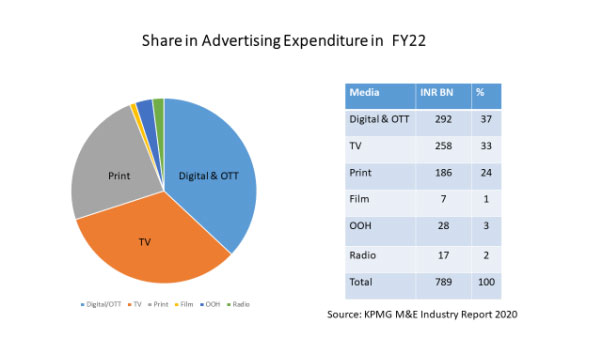
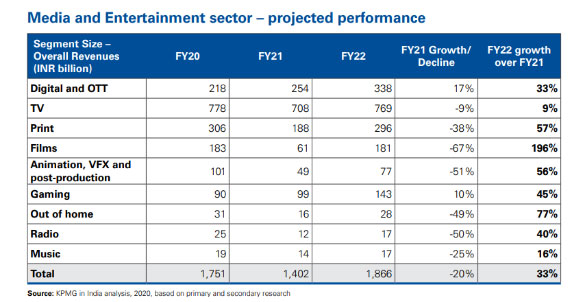
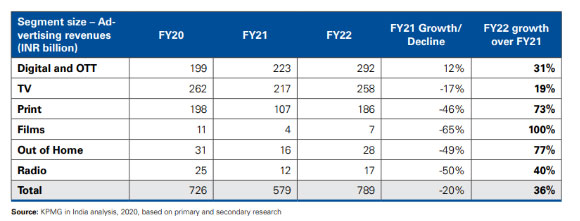
     

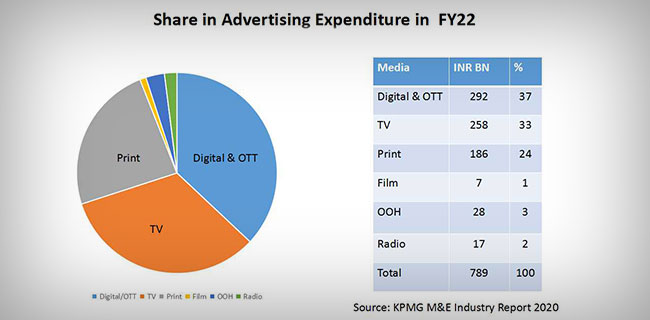
    As we all have realised by now, 2020 is a milestone year in Indian M&E Industry, with digital and OOT emerging as the number 2 in the share of the overall industry size as well as in the share of advertising revenue. The KPMG report confirms the same and springs a surprise by predicting that in FY21 and FY22 Digital and OTT will become #1 in terms of share in advertising revenue, overtaking TV. As per the trends seen in western countries, this seismic shift was written on the cards, but we were definitely not expecting this shift to happen so soon. The pandemic COVID19 seems to have acted as a catalyst accelerating the process of change.  As a result, the KPMG Report 2020 predicts a great churning of the media cauldron over the next two financial years.


    As far as the overall industry size is concerned, TV is by far ahead of Digital & OTT as shown in the next chart, though the growth rate of TV is much lower than Digital & OTT. The absolute size (769 INR BN) of the TV industry in FY22 will be slightly below their size (778 INR BN) in FY20, while Digital & OTT will be growing year on year in their overall size. Print will take a big hit in FY21 with 39% de-growth and will recover hugely in FY22. However, like TV their overall size (296 INR BN) in FY 22 will be slightly below their size (306 INR BN) in FY20. Similar trends are reflected in case of Films, OOH, Radio and Music while Gaming shows a huge gain in size (143 INR BN) in FY22 from (90 INR BN) in FY20. Animation, VFX and post-production is the only sector which in FY22 (77 INR BN) will be much below the size in FY20 (101 INR BN), in spite of the recovery of the Film industry.


    The chart showing the share in advertising revenue represents a different picture with Digital & OTT predicted to overtake TV in FY21 and continuing in the #1 position in FY22. Print which had neck-and-neck share with Digital & OTT in FY20, is predicted to go down to the #3 position in FY21 and FY22. In FY21, the size of Print advertising (107 INR BN) will be less than half of the size of Digital & OTT advertising (223 INR BN). In spite of a growth of 73% in FY22 over FY21, Print advertising will be 106 INR BN less than Digital & OTT advertising in FY22. As per KPMG’s predictions, Films, OOH and Radio will also not be able to regain in FY22 the size of advertising revenue which they had in FY20, with Radio being the worst affected among the three media.


    All is not well for Digital & OTT as a comparison of the total industry size and the share of advertising revenue in the same both in FY21 and FY22 reflects a lack of growth in subscription revenue and an unhealthy dependence on advertising. In FY21 and FY22 the share of advertising revenue will be respectively 87% and 86% in Digital& OTT, which does not reflect the trend of growth in subscription. This is also contradictory to the findings of FICCI EY M&E Industry Report 2019 which showed that growth rate of subscription outpaced the growth rate of advertising led by digital media. The pandemic should have boosted the subscription growth which however is not getting reflected in the KPMG report.


    It is very difficult to compare the two reports on M&E Industry as FICCCI EY reports are based on calendar years and KPMG reports are based on financial years. However, at the time of the release of their report in Mach 2020, FICCI EY promised to review and revise their estimates for future. As and when the revised report of FICCI EY is released, we would be able to assess if similar shifts in the share of the advertising pie is also reflected there reconfirming the predictions made by KPMG and the churning of the media cauldron.


  • ASCI resolves 257 complaints in June & July

    By A Correspondent


    In the months of June and July 2020, the Advertising Standards Council of India (ASCI) investigated complaints against 363 advertisements, of which 76 were withdrawn by advertisers. The independent Consumer Complaints Council (CCC) of ASCI evaluated remaining the 287 advertisements, of which complaints against 257 advertisements were upheld. Of these, 150 belonged to the healthcare sector, 40 to education, 20 to food and beverages, 4 to GAMA complaints, 12 to personal care and 31 to the other category.


    Subhash Kamath

    Said Subhash Kamath, Chairman of ASCI: “There has been a flood of advertisements with dubious claims about COVID-19 cures and preventions. Especially at this time when consumers are feeling more vulnerable about the virus, it becomes more important for us as regulators to ensure that these ads don’t exploit the consumer’s anxiety.  We understand that such claims can adversely affect consumers and we are committed to work closely with the Ministry of Ayush to help eliminate such malpractices from society.”


  • Froth, flavour and Feluda!


    By Avik Chattopadhyay


    Over the last one week three specific developments in the world of brands have encouraged me to ponder over them, share my viewpoint and throw up some questions to all brand practitioners amongst you.


    Each development is unique in its business space, timing and impact. Yet, each is a situation that many of us do face in the world of managing and nurturing brands.


    #01 – Froth

    After a pretty high decibel launch of Vodafone Idea’s new brand identity “Vi” campaign a fortnight back, the company announced an advertising and promotion blitz of Rs.800 crores till March 2021 to establish the new brand and more importantly, arrest an eroding user-base. Half the amount would be on advertising and sponsorships like on IPL. The rest on signage, outdoor visibility, and promotions.


    For a brand that has to raise Rs.25,000 crores to pay off the AGR dues and more, why go into a rebranding at all? I find no logic working here. This is not a new brand, nor is India a new market and neither are there any new solution offers. Damn, it is not even a new owner. Merely changing one’s name to raise money to pay dues cannot be convincing enough even as a business school case study. It is merely new wrapping paper and ribbons, not even deserving a wine bottle. So why spend all this money? And it all going to be borne by the subscribers through a price increase being contemplated right now. By the way, Jio announced a post-paid package through IPL that is undercutting competition and giving them sleepless nights.


     For a brand practitioner, why would one ever recommend this window dressing? When one is challenged with protecting higher ARPU vis-à-vis a depleting subscriber base, is an expensive rebranding exercise the best option? Has the ‘brand’ ceased to be the promise of an experience delivered consistently over time? Has it been downgraded to mere theatrics, at the cost of almost disrespecting your existing user who is quite aware of the situation you are currently in?  


    #02 – Flavour

    Nikola was till last week a poster boy in the world of electric mobility. Nikola proposes to make electric light trucks for the US market. Not really new, as it was founded in 2015 by one Trevor Milton after his previous venture dHybrid lost a lawsuit and was gobbled up. From then till now, all that Nikola has done is present lot of prototypes at various fancy events and raised money on fancy projections.


    Milton is a terrific social media manager, always remaining in the limelight through his quirky, maverick image, building millions of followers who salivate on every word he says. As the valuation of Nikola went through the roof [based only on announcements and no demonstration over 5 years, mind you] General Motors stepped in with a huge investment, not wanting to miss out on this amazing bubble being blown.


    Early September, just two days after the GM investment, one of the investors [could be a competitor plant, for all you know] blew the ‘whistle’ claiming that Nikola actually had no technology to back up all the claims and had actually staged product performance. The stock price fell by 10%.


    The Securities and Exchange Commission stepped in to investigate. And the Department of Justice joined in. Milton resigned. The stock fell another 35%. The poster just folded up on the September 21.


    What really does it take to “build” a brand? What are the fundamentals that ensure sustainability and stakeholder return in the long term? Can social media management and event coordination build valuations? Is the science behind creating reality show celebrities and valuable organisations the same? Is valuation the true parameter of brand success or actual demonstration? Will the Indian “unicorns” of today stand steady and deliver on their promises tomorrow and the day after, or will they one day fold up like the Nikola poster?   


    #03 – Feluda

    As a piece of positive news in the Covid-19 gloom, the Drugs Controller General of India approved an accurate low-cost test to detect the virus using a paper strip in 30 minutes for commercial production. Jointly developed by CSIR and Tata Group, the test has been called “Feluda”! The two CSIR scientists Debojyoti Chakraborty and Souvik Maiti named it after the popular fictional detective created by Satyajit Ray.


    Feluda is the nickname of Prodosh Chandra Mitter, who was first introduced to the Bengali in 1965. Like his “guru” Sherlock Holmes, he too has an equivalent of a Watson in the form of his younger cousin brother Topesh, lovingly called ‘Topshe’. Over the next two decades a total of 39 ‘adventures’ were written by Ray, some being made into movies for theatre and television, serials and also radio stories. Feluda evolved from being meant for children into becoming a Bengali icon for all ages, with some of the best actors playing roles in the movies and television serials. Doordarshan ran a serial on Feluda in Hindi, the character played by Rajit Kapoor.


    Ray portrayed Feluda as the Bengali he wanted all Bengalis to be like. Sharp, witty, intuitive, rational, respectful, challenging, inquisitive, adventurous, helpful and always detecting the truth from the mess around us.


    Like Feluda, there are another half a dozen detectives in Bengali literature that deserve to be globally amplified and followed. Similarly, there would be a handful each in every language in this country. Yet they remain largely regional. Why can a Feluda novel not be part of the mainstream school curriculum? It will definitely teach the younger generation to be what Ray envisaged them to be like.


    India has been very poor with her non-corporate brands. She has millions of them, like little jewels in a treasure hunt that one needs to dig out and savour. As Indians, it is our duty to bring them out into the open to be experienced, by all within the country and also across the world. What will it take to do so, in a sustainable manner? Who should be the custodians of this unending repository? Do we not need a central body that takes this on as the core responsibility in making each valuable Indian non-corporate brand come alive? Definite food for seriously long thought…

  • How India’s Gen Z is addicted to Streaming


    By Indrani Sen


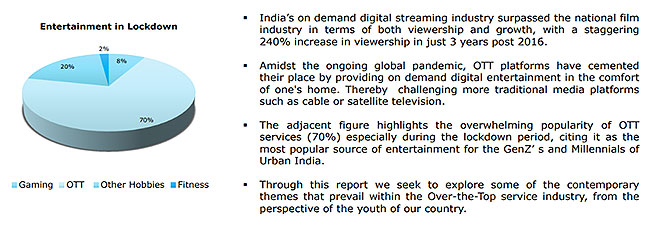
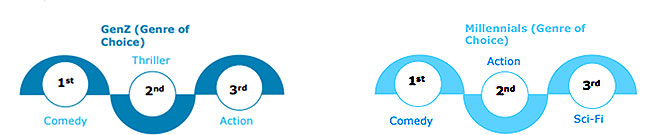
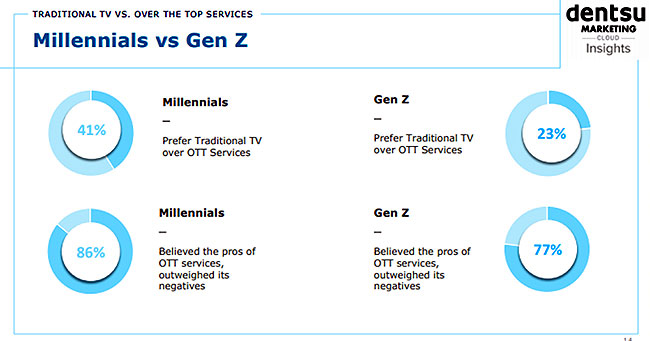
    Covid-19 has transformed the media consumption trends in India. Globally, streaming platforms gained in a big way since the pandemic struck and India is no exception. The report published by Dentsu Agies Network – “Now Streaming: The Indian Youth OTT Story” – is a study conducted among urban India’s Gen Z & Millennial reconfirms this trend. These trends could be reflecting behavioural changes of the two younger generations which are likely to last even after the cloud of pandemic shifts from the Indian sky. The highlights of the findings from the report are shown below:

    Source: https://dentsumarketing.cloud/dmcinsights.php


    As many as 74% of the respondents came from the Top 8 metros with 26% coming from rest of urban India. 47% of the respondents were male and 52.2% were female. 78.5% came from Gen Z (5 to 25 years) and 21.5% came from Millennials (25 to 39 years).  The report therefore cannot be taken as uniform trends across urban youths across India but trends which are visible among youths residing in the top 8 metros and mostly below 25 years of age. They are, however, the future targets of marketing and advertising in India.


    Average daily time spent in hours

    Gen Z Millennials
    On line Gaming 1.97 1.11
    Binge Watching 4.45 3.66


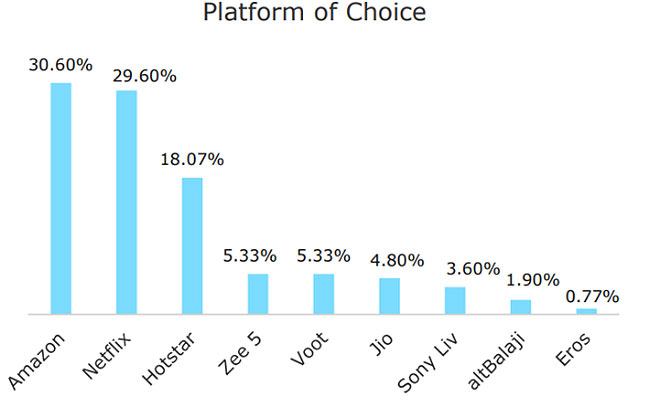
    Among the various OTT platforms, Amazon Prime and Netflix lead the pack, followed by Hotstar. The other OTT platforms are yet to build up significant presence among the Indian youths. Gen Z spends more time than Millennials both on gaming and binge watching on OTT platforms.


    The choice of genres by the two sections of youth explains the popularity of the top three platforms which offer more content as per their preference. Zee 5, Voot, Jio, Sony Liv, etc have less content to offer in the Comedy, Action, Thriller and Science Fiction genres. Amazon Prime, Netflix and Hotstar have also invested more in production of original content. However, the report has also shown that both in North and South India across different demographics the primary usage of OTT platforms were for viewing TV shows and movies.


    During the lockdown north Indian youths invested on an average in three OTT subscriptions than their counterparts in south India who invested on an average in two OTT subscriptions. The Gen Z invested on an average in 3 OTT subscriptions while Millennials invested in 2 OTT subscriptions during the same period. The report does not give details of the demographic profile of the sample, but we can safely assume that the sample was skewed towards higher SECs as indicated by higher spends on OTT subscription by Gen Z, most of whom would not have been financially independent and had to ask their parents for the subscription money. Obviously their parents were not financially affected due to the economic slowdown during the lockdown and could afford to indulge their children. The report therefore captures mainly the trends of OTT consumption of urban youths from 5 to 25 years age belonging mostly to NCCS A and the top 8 metros.


    The report has also captured that 73% have no concern about the content of the OTT platforms. The other 27% have stated obscene content, anti-national content, strong and bold language of the content as well as content hurting sentiments of religion/ caste as causes of concern related to OTT platforms. On the other hand all respondents had concerns about internet connections, pop-up ads and buffering related to steaming of the contents. Both Millennials and Gen Z have shown a clear preference for OTT services and believes that the positives factors outweigh the negatives.


    The report concludes that content distribution, attractive marketing, transitioning the gaming industry and personalisation are the key factors which is helping consumption of OTT platforms to dominate over consumption of traditional TV viewing. The analysis does not mention about the tie ups between OTT platforms and Telecom giants like Airtel, VI and Jio, a practice which began in 2017/ 2018 and has been continuing since then.


    As per the range of packages offered by the three telecom companies, it appears the leading OTT platforms do not believe in exclusive tie ups with any single telecom company and have created a level playing field for all the service providers by having tie ups with all of them. It seems this survey did not probe into this aspect of free subscription with mobile connection among the Gen Z and Millennials, most of whom would have been enjoying some such free benefits through a single sign in. The findings of the reports outweigh the apparent skewing of the sample and a few gaps and have provided all of us a crystal globe for gazing into the future of media consumption.


  • India Today’s Safaigiri Awards to recognise Covid warriors

    By A Correspondent

    The India Today group has announced the sixth edition of the Safaigiri Awards. This year the group will recognise Covid-19 warriors who have been leading the fight against Covid-19 from the front.

    Safaigiri AwardNominations have been invited from individuals/organisations who have contributed and brought about a significant change during this pandemic. The categories for this year are:

    •         Best State in Combating Covid-19
    •         Best Celebrity Contribution in Spreading Awareness
    •         Best Far-Reaching Corporate Contribution for a Wider Social Impact
    •         Best Testing Facility
    •         Best NGO or other Entity that Extended Timely Help to Migrants
    •         Best Innovation for Covid -Related Activity in Times of the Pandemic
    •         Best Logistics Services Provider
    •         Best NGO or Other Entity Offering Healthcare Services
    •         Best Health Manager

    Nominations with all details can be sent to safaigiri@intoday.com or they can be filed on www.safaigiri.in. The last date of filing nominations is September 12, 2020.

    This year’s jury comprises Aroon Purie, Chairman and Editor-in-Chief, India Today Group; Anu Aga, Former Member of Parliament, Rajya Sabha, Businesswoman and Social Worker; Manish Sabharwal, Chairman, TeamLease Services Ltd; Dr Srinath Reddy, President, Public Health Foundation of India; Dr Devi Shetty, Chairman and Founder, Narayana Health; Dr Naresh Trehan, Chairman and Managing Director, Medanta;  Dr Gagandeep Kang, Vaccine Expert and Dr Swati Piramal, Vice Chairperson, Piramal Group

  • Edelweiss’s #HelpYourHelp campaign for domestic helps

    By A Correspondent


    Edelweiss Group, one of India’s leading diversified financial services conglomerates, recently announced a public service and awareness initiative, #HelpYourHelp, a platform that helps build awareness and facilitates change for the domestic help community, who have been impacted by Covid-19.


    Commenting on the thought behind the campaign, Shabnam Panjwani, Group Head – Marketing & Communications, Edelweiss Group said: “Rising to the needs of the community we operate in and giving back in a meaningful way has been a constant endeavor at Edelweiss.  Moving beyond the  simpler ‘feel good’ & ‘look good’ area, we have attempted to take this initiative into the ‘act good’ space via www.HelpyourHelp.com, enabling all of us to finally walk the talk. It is our hope that if every individual steps up to help this community of helpers in their own lives, it will encourage them to chase their dreams and empower them to truly #BeUnlimited.”


  • Zeel donates to Tamil Nadu to fight against Covid-19

    By A Correspondent


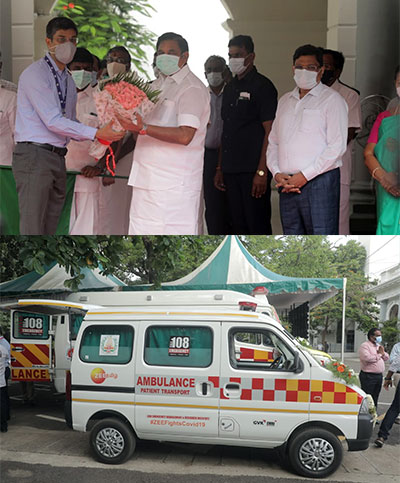
    Zee Entertainment Enterprises Ltd (ZEEL) has handed over critical healthcare equipment to the state of Tamil Nadu, further strengthening its fight against Covid-19.
     

    In the presence of Chief Minister Edappadi K Palaniswami, the first batch of 18 ambulances were handed over to the TN government. Additionally, Zee has donated 12,500 PPE Kits, 5,000 Face Shields, Surgical Masks and Sanitisers each, to the state.


    Speaking on this initiative, Punit Goenka, Managing Director and Chief Executive Officer, Zee said: “Zee is committed to provide a strong support to the Tamil Nadu government in its fight against Cvid-19, with a key focus on strengthening the overall healthcare infrastructure. We also stand together with the dedicated police force of Chennai who have been at the frontline in this fight against the pandemic.”


  • The Grave Crisis in OOH Continues


    By Indrani Sen


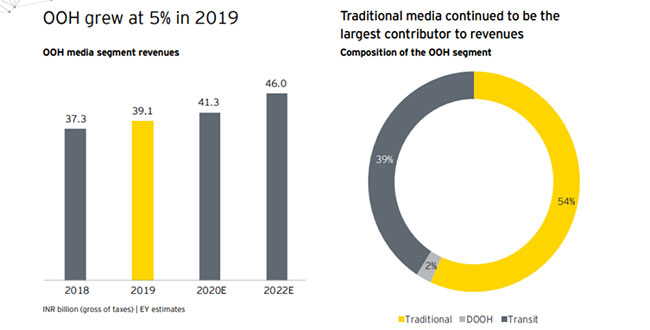
    The EY-FICCI 2019 Media & Entertainment Industry Report estimated that the Indian OOH industry grew by 5% in 2019, taking the industry size to Rs 37.1 billion. The traditional OOH formats, driven by increased advertising opportunities in tier-II and tier-III cities, contributed 54% to the overall revenue. However, according to the report the main driving factor behind the growth is recent development of infrastructure network, including upcoming airports, smart city projects, malls, metros, bus shelters, public utility, coffee shops, etc.


    Source: EY-FICCI 2019 M&E Industry Report


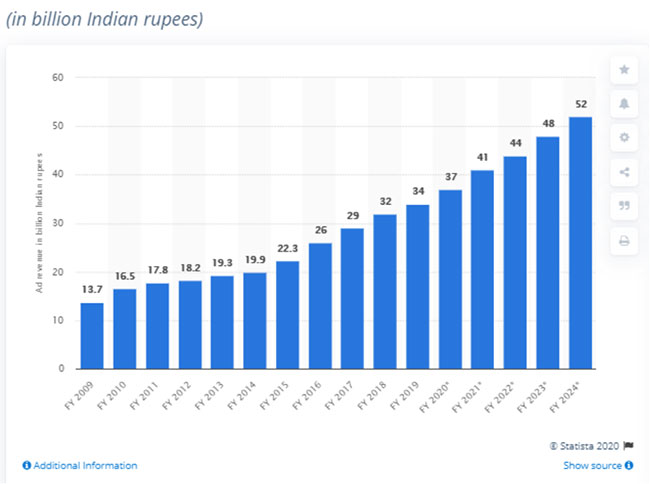
    A couple of years back, www.statistia.com published an estimate of out of home advertsing in India from 2009 to 2024 as shown below. It is interesting to note that overall size of OOH industry estimated In the FICCI EY report is higher than shown in the chart for 2019 (Rs. 34 billion).


    Source: https://www.statista.com/statistics/233491/out-of-home-advertising-revenue-in-india/


    The growth of the OOH industry has been stalled completely as an effect of Covid-19. In the ‘FICCI Frames 2020’ virtual conference, WPP’s CEO Mark Reed remarked that OOH was the most impacted medium due to Covid-19. While we are seeing some signs of revival in digital, TV and print media, the trend has not yet been seen in OOH media under the gradual process of unlocking. While we are still waiting for FICCI EY to release a revised estimate for M&E industry in 2020, the mid-year review of the Pitch Madison Advertising Report 2020 has estimated 35% to 50% de-growth in OOH advertising revenue in 2020.


    At the early stage of lockdown, IOAA also estimated that their annual revenue may see a 50% drop in 2020 and appealed for financial relief to the various state governments who have not yet responded positively. The association also requested the central government to declare the pandemic as natural calamity which is covered under ‘force majeure’ clause of all OOH contracts which also has not received any definite response. In US and couple of other countries, OOH industry registered as small business has received some financial relief, but we have not seen any such relief measures for the OOH industry in India.


    An article published on August 10, 2020 has predicted four key trends for OOH medium in 2020 and beyond (https://www.advendio.com/4-key-ooh-advertising-trends-2020-beyond): 1/ build brand awareness with smart creatives; 2/ adapt value for money messaging approach; 3/ the evolution of touch screen OOH advertisements and 4/ curbside pickup and digital OOH are here to stay. Apart from the first trend, there is hardly any scope seeing of the other trends happening in India. It is high time that our outdoor advertising agencies take stock of their inventories and consider disinvesting in traditional formats and channelize their attention to building up standardised digital OOH formats as per the global trends.