
Tag: Covid-19

  • NEW SERIES! Lockdown Day 2: Stay@Home with Ajay Kakar: 5 Things to Ask Yourself

    Introducing an all-new series called ‘Stay@Home’ with some of the biggies in the advertising, media and marketing fraternity. Hope you enjoy it. We start with Ajay Kakar, Chief Marketing Officer, Aditya Birla Capital. In this article, the veteran marketing services executive writes on: 5 things to ask yourself.


    5 Things to Ask Yourself


    By Ajay Kakar

    1. Do you have a family album?

    Today, you carry all your pictures on your mobile. But what about the pictures taken in the era when photographs were clicked on a camera, films were developed and prints taken. And stashed somewhere. Your pictures are all over the place. Remember where all they are strewn. Find them. Collate them. Update them. Index them. Create your family album. Update your family album. Enjoy flipping through your memories.

    2. Do you know your roots?

    In today’s fast-pace world and nuclear families, speak to your elders, reach out to your relatives and enjoy creating a family tree that captures your roots. Add photographs to the names. Spend time with your immediate family and run them through your family tree. And familiarise them with their roots.


    3. Have you discovered your kitchen?

    Get to YouTube, discover new recipes for old favourites. And time tested
    recipes for new dishes. And try your hand at cooking your favourite dishes. Apne haath se bana hua khaana khaane ka mazaa kuch aur hi he.


    4. Have you updated your playlist with your old favourites?

    We all enjoy the “latest hits”, which have a short shelf-life. What about the “oldy-goldies”? Songs you grew up to and have been your all-time favourites? Exchange notes with friends and classmates. Compile a list. Enrich your playlist.


    5. Have you looked out of the window?

    We have a fixed routine. A predictable routine. A daily routine. A weekly routine. And our time passes running from one commitment to another. In air conditioned homes, cars and offices. When did you last open a window? Look out of the window? Heard the sound of silence? The sound of birds?

    Yeh mauka na milega dobara. Go for it!


  • So who do we trust for authentic news?


    By Ranjona Banerji


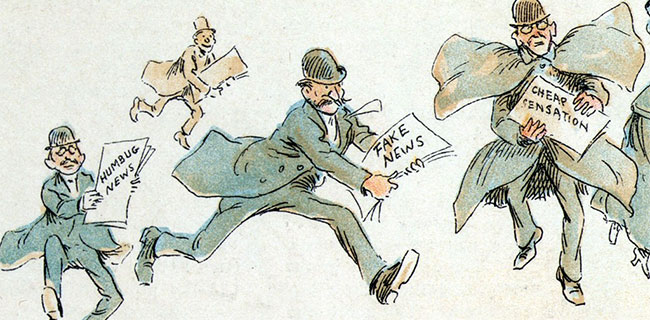
    Where does one go to for accurate news in these times of Covid-19? In spite of all warnings and recommendations by the authorities, fake news about the virus spreads unabated. People, no matter their age or education, have no qualms it seems about forwarding unsubstantiated rubbish via Whatsapp and whatever else they use.

    Over the past two months, we have all received “information” about garlic, Vitamin C saving us, various homoeopathic and ayurvedic remedies (some from Government of India), and then of course the huge cow dung and cow urine cure, basically from BJP ministers, members and their affiliated associations.

    The problem is that not all of this rubbish is via Whatsapp. How does one combat the cow dung, cow urine stuff when ministers advocate its uses on TV? Or when a Central junior health ministers announces that standing in sunshine for 15 minutes will kill the virus? Or when another Central minister sings a song to plead with the virus to go? Or Wion TV runs a story that wildlife has returned to cities as humans go into quarantine, soon debunked as fake?

    https://api.nationalgeographic.com/distribution/public/amp/animals/2020/03/coronavirus-pandemic-fake-animal-viral-social-media-posts?__twitter_impression=true&fbclid=IwAR0j_xVviPSRLLnIZqGklqLRic8rIPc_IFgpzjHCQAXMIkvUb92lfKIejAg

    And then there are legitimate news channels. What business did NDTV have interviewing “spiritual guru” Jaggi Vasudev about Covid-19? Is he an expert of any sort on medical matters? Why was Sri Sri Ravi Shankar on Times Now? It’s one thing trying to control bored senior citizens playing “Me first” on Whatsapp. Why should these news channels display this level of irresponsibility?

    As we saw with the debacle over Prime Minister Narendra Modi’s borrowed idea of clapping and banging pots and pans on March 22, it is India’s most celebrated commentators who are the most irresponsible and least worthy of being called journalists. It’s time to get back to those days when everyone hated us. Several journalists called the clapping diktat a “mantra”, a “masterstroke” and their usual breathless accolades whenever the Prime Minister opens his mouth.

    This is what happened as a result:

    https://thewire.in/society/coronavirus-janata-curfew-racket/amp/?__twitter_impression=true&fbclid=IwAR0qipE84zekALm9ssqPZpMVd4WJeWisykDDgsXzJD8OKXAYd43NTOTFNzo

    At least Twitter has woken up and started taking down the dangerous misinformation being spread, largely by rightwing handles, about astrology and whatever saving us from Covid-19. Many of these came up after Modi’s speech, with superstars like Rajinkanth and Mohanlal releasing videos on how claps and vibrations would kill the virus. They were taken down by Twitter. Superstar Amitabh Bachchan had to delete a similar tweet after social media outrage.

    https://www.boomlive.in/fake-news/how-celebs-amplified-misinformation-around-janta-curfew-7317?fbclid=IwAR0cXAJ6_UoTMutGlyFc64rO0JJS1DessMlwOZzMfh0N5kzBWa7JYhhpITE

    If this is the level of irresponsibility amongst India’s celebrities, perhaps we cannot blame the beleaguered and misinformed common person.

    Luckily, health reporters across India, most of them in print and news sites, have done a tremendous job. They have highlighted inaccuracies in government claims, they have brought the problems faced by doctors to the forefront, they have questioned lack of testing and equipment. Sadly, these stories do not get widely shared on Whatsapp because 1. There is no hail the dictator element in them and 2. There is no hocus pocus element either.

    https://amp.scroll.in/article/956866/investigation-crucial-coronavirus-gear-supply-clouded-by-allegations-of-government-malintention?__twitter_impression=true&fbclid=IwAR2gB7QN8-oOY4wIf-E-f6rGYGha2gjVqXpUbWxtlOm0sQ_HgbtR826Zpdc

    https://frontline.thehindu.com/cover-story/article31129076.ece?fbclid=IwAR28uDbTfrUD1b1Mo1smzblcrVnKrRhJxVEuo3SzezbUDSfmiDZfUPCepWw

    The CPJ released this advisory for journalists covering Covid-19 in February. It still contains some vitals points:

    https://cpj.org/2020/02/cpj-safety-advisory-covering-the-coronavirus-outbr.php

    Incidentally, still no press conference by Modi. Although he did have some “videoconference” with media heads. Whatever that means.

    Stay safe. Believe no information until you have checked the source.


    Ranjona Banerji is a senior journalist and commentator. She is also Consulting Editor, MxMIndia. Her views here are personal

  • Lowe Lintas partners BMC in spreading Covid-19 awareness

    By A Correspondent


    Given the threat of Coronavirus in Mumbai and the lack of awareness of its severity, Brihanmumbai Municipal Corporation took it upon itself to ensure that Mumbaikars too the necessary precautions to prevent the spread of the virus. And to help them do that was Lowe Lintas.


    Said Anaheeta Goenka, President, Lowe Lintas: “We had a single-minded brief on “no panic just prevention” from the BMC – to create awareness of basic actions across citizen profiles we needed a sharp active idea.”


    Added Sagar Kapoor, CCO, Lowe Lintas: “We created the simple idea ‘Corona Se Mat Darona’ which aims to calm the anxiety in this time of crisis, although by arming people with corona prevention methods.”


  • The Ripple Effect of Coronavirus


    By Indrani Sen


    A lot has happened in the last one week, when we speculated about how Covid-19 might affect the AdEx in 2020. As India fights against all odds to stop the accelerated outbreak of the virus through community transmission with the entire country is facing partial to total lockdown, there is no doubt that our economy will be badly affected like many other developed and developing countries. So, along with the rest of the world, India will be getting into a severe recession for the rest of the year. The point we need to speculate, will there just be a dip in the growth rate of AdEx or will we see a negative growth as we saw in 2009?


    The international financial crisis of 2008 which originated in the sub-prime mortgage crisis in the US and led to a severe recession in many countries over 2008 and 2009 also affected the Indian economy and we saw first a dip in the AdEx in 2008 and then a negative growth in 2009. However, AdEx recovered quickly from that recession and we saw a healthy growth in 2010.


    Source: Pitch Madison Media Advertising Outlook 2015


    The ripple effect of Coronavirus is going to create an employment crisis across the globe and India will not be an exception. We were already at a high unemployment situation before this crisis hit us. With industries experiencing forced shutdowns, many are asking their employees on go on leave without pay or with truncated pay.  Employees who work on the basis of contracts, as per terms and conditions of the contracts are often not paid unless they report to work and in the present situation are likely to lose financially. Financial loss will be experienced by the lower end of self-employed workers (Ola/ Uber drivers, auto drivers, rickshaw pullers, plumbers, electricians, etc.) as well as the daily wage earners. MSME sector which is known as the engine of growth and employment in India will also take a big hit. A combined effect of these muted wage or loss of wage will lead to decrease in consumer demand. In addition, there will be a disruption in the supply chain also due to temporary closure of production, lack of transport for distributing the goods, etc.  These changes in demand and supply will have adverse effect on the marketing and advertising budget forcing the advertisers to curtail their expenditure.


    Circulation of our print media so far has not been affected like global print media many of who have stopped the printing of hard copies, thanks to the last mile delivery by newspapers delivery persons and hawkers as against the sale through news-stands in developed countries. Indian newspapers managed to develop a schedule of work from home for their reporters and a system of rotation for other essential staff in order to reduce the number of employees present on their premises.


    The ‘Janata Curfew’ on March 22 followed by lockdown of some cities/ districts from March 23, may force newspapers also to take a call regarding their production as the distributors/ hawkers and the delivery boys will also get hit by the lack of local transport. Probably, newspapers from second-tier cities under lockdown will be less affected than the newspapers from metros facing a similar situation. So, some Indian newspapers may experience temporary closure and fluctuations in their circulation and readership and subsequently lose ad revenue as supplies of goods dwindle due to logistical issues related to production, transportation, etc. and consumer demand drops.

    There is going to be an increase in TV viewership, particularly the viewership of news and entertainment channels as people try to stay abreast with Covid-19 related news and entertain themselves with serials and movies during their stay at home. With all production of Film and TV industry closed till March 31, there is a chance that the serials will run out of their banked episodes which have been already shot and canned. Lack of new episodes will affect the viewership of serials adversely. Even if the viewership of GEC and Movie channels increase, ad revenue may go down due to demand and supply related issues as mentioned above in relation to print.


    Sports Channels are going to lose both viewership and advertising revenue with cancellation of sporting events and their telecast. As TV still accounts for the major share of our ADEX, the extent of loss of TV revenue will determine the fate of AdEx in 2020.

    Contributions of radio, cinema and outdoor to the overall AxEx are much less than Print and TV. However, ad revenue of FM radio stations will be affected as listening to car radio goes down with people being forced to stay at home. In the US, Nielsen is working on special analysis as well as a quick survey to give the advertisers some idea about how Covid-19 has affected radio listenership. Our Radio Audience Measurement is already affected by lack of financial support from the sector and it may not be possible for them to react in a similar way (http://www.insideradio.com/free/nielsen-to-release-study-on-covid–impact-on-radio/article_6c1e0246-6a81-11ea-8ab4-17d484c1eb56.html).


    Many of radio advertising deals are linked with on ground activities and consumer activations and radio ad revenue will see a decline due to curb on all such activities. With closure of malls and cinema halls, cinema will lose the ticket sales money as well as advertising revenue. Traffic on the roads, stations, airports will dwindle due to lock down of cities, social distancing and work from home which will have a negative impact on OOH advertising.


    Usage of digital as well as social media will increase during this troubled days as people are trying to get constant update on the pandemic, keep in touch with their friends and relatives while staying at home and opt for some entertainment of their choice on OTT platforms. There is a good chance that advertisers will try to utilise this opportunity by stepping up their budget on digital and social media till the ripple effect of Covid-19 force them to stop advertising.


    So far, we have seen only an estimate for loss by events and experiential industry which has been estimated as Rs 3000 crores with ten million jobs at risk which was published on March 17, 2020. (http://everythingexperiential.businessworld.in/article/Loss-to-events-experiential-industry-in-India-estimated-at-Rs-3000-Cr-due-to-COVID-19-ten-million-jobs-at-risk/16-03-2020-186335/). Other media sectors have not yet made any forecast of their probable losses.


    The ripple effect of Coronavirus will be directly proportional to the number of days that India takes to control the spread of the virus. In some European countries currently experiencing community transmission, economic analysts are already forecasting that at least 12 to 16 weeks period will be required to curb the virus. If India gets into a similar situation, it may take us longer to curb the virus given the expanse of our country and irresponsible behaviour of our citizens. In that case AdEx will end up with a negative growth like we experienced in 2009.


  • No newspapers in Mumbai given curfew and Covid-19 fears. Crucial vendor meet today on way forward

    By A Correspondent


    Mumbai, like possibly some other Indian metros, has a unique problem. The vendor has to most often travel far to get to the work of distributing the morning papers.


    Given the extension of the Janata Curfew till 9am today and the restrictions on travel that were notified, newspaper vendors sent out a list of concerns on account of the curfew. According to a senior newspaper executive, the concerns were genuine as all their staff travels by trains and in sorting and distribution, they come in contact with several people and hence are scared.


    While the epapers of most editions were published online, the decision on the way forward will be taken at a meeting of vendor associations at 11am today (Monday, March 23).


  • Viacom18’s network-wide roadblock with 310-sec PSA

    By A Correspondent


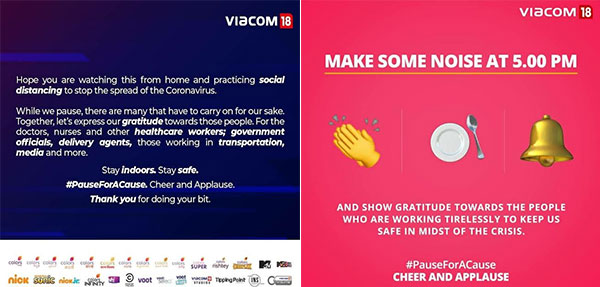
    Supporting and amplifying Prime Minister Narendra Modi’s appeal towards social distancing and call for a Jantaa Curfew on Sunday, March 22, media and entertainment conglomerate Viacom18, launched the #PauseForACause. Cheer and Applause. campaign across all its media assets. The campaign was frontlined by a 310-second ad that aired once on all Viacom18 channels simultaneously  at 4:59:50pm on March 22. Viacom18 further used its reach on its social media channels as well as on its OTT platform VOOT thus amplifying the message in the digital ecosystem.


    Sudhanshu Vats

    Speaking on the initiative, Sudhanshu Vats, Group CEO and MD, Viacom18 said: “At Viacom18, we are deeply invested towards using our presence to create awareness around issues however large or small. We have always leveraged the power of storytelling to ensure that our viewers become more socially responsible while being entertained. The current health and social crisis has created unprecedented disruption at the national and global level. While constant efforts are being made by the Government to keep it in control, we would like to play a small role to amplify the message. Keeping this in mind, we would like to pay our tribute to medical, paramedical and all other professionals who have been providing round the clock support during this pandemic with our campaign #PauseForACause – Cheer and Applause. We are deeply grateful for all their efforts. We urge citizens to practice social distancing, avoid travel and social gatherings at a personal level to help the Government flatten the curve for the greater good of the society.”


  • Asianet suspends ‘Bigg Boss Malayalam 2’

    By A Correspondent


    In the fight against Covid-19, Asianet stalled the shooting of Bigg Boss in Malayalam and has been temporarily suspended from March 21 onwards.


    Notes a communique: “The decision was made in support of the government’s proposals to prevent the spread of coronavirus.”


  • Das ka Dum with Dr Bhaskar Das: How are you planning to spend the 14 hours of the Janata Curfew on March 22?

    Bhaskar DasSo we asked Dr Bhaskar Das on how he plans to spend the 14 hours on Janata Curfew day on March 22. Here’s his response in todays edition of Das Ka Dum. Read on…


    If you wish to access the archives, please go to the Das Ka Dum tab on the website’s top navigation bar.


    Q. Given a chance, we all love to stay indoors on a Sunday. But now that we’ve been asked to, we wonder how we’ll do it. So how are you planning to spend the 14 hours of the Janata Curfew on March 22?


    A. It’s not just about been asked to voluntarily participate in the Janata Curfew on March 22. I think it’s a way of symbolising the concept of social distancing at this grave juncture of human existence. Am I hyperbolic? I don’t think so. If we don’t collectively believe the implications of this pandemic virus and work for looking after ourselves and others, we can face unsavoury consequences, specially given the size of our country.


    Janata Curfew is a larger metaphor for that. Coming to your specific query about how to spend the day, there are so many ways. Sometime in the rush of life, we forget to appreciate the finer things of life starting with one’s own family. Obviously each individual will have their predilections and choose what they love. So far as I am concerned, I love reading a wide range of subjects, love to listen to my favourite songs… I will get time to stand and stare, play with my dog. Finally, the key lesson has been imparted by Jeremy Bentham: “It is the greatest happiness of the greatest number that is the measure of right and wrong.” Or United we Stand, Divided we Fall. The relevance of these axioms have never been more pertinent. We have to live now with this conviction.

    My advice to you and others:

    1. Do an online course to upskill oneself (so that one can face economic headwinds)

    and

    2. Love oneself and do some daily physical exercise.

    Both the suggestions are beyond Sunday to equip oneself with the unfolding medico-economic tsunami.

  • 2020: Already The Year To Not Remember


    By Shailesh Kapoor


    Even as we feel life has slowed down just a bit, so much is happening so fast. In times of continuous newsbreaks, one can simply lose a sense of time. Covid-19 numbers have surged in the last week across Europe and the US, and India remains on the edge, wondering what’s in store ahead.


    There couldn’t be more disruptive times for the media industry. And I don’t mean it in any good way. Every single category is taking a hit. And this is no short-term impact. The cascading effect may be visible over months, if not a year or even more.


    IPL was postponed last week, and we all realise by now that it’s very unlikely that it will happen anytime soon. This is true for sporting events worldwide, and the biggest of them all, Tokyo Olympics, faces a question mark as well.


    Film and TV shoots have stopped across many parts of the world. There’s no content in the theatres, most of which are shut anyway. As and when they reopen, the release schedules will be redrawn, and several big films are bound to shift to 2021. Hollywood has already started announcing that, while Indian studios wait and watch with caution. As a conservative estimate, we are staring at a minimum loss of 25-30% in India’s box-office revenue in 2020 vis-à-vis 2019.


    Staying at home could have led to TV viewership going up, but that’s unlikely to happen by much, given that no original content is under production, except live news. Even the news category will eventually struggle. Viewership share may go up significantly, but the category relies heavily on ad revenues, and those numbers will be hard to come by, for at least another few months.


    The only medium that seems unaffected is the SVOD OTT business. Surge in OTT viewership because of more time at home is a general expectation. I read this morning that there’s a suggestion from EU that Netflix and other streaming platforms should disable their HD streaming, to prevent the internet from crashing.


    While higher time spent on OTT is a likely outcome, growth in subscriber base will be muted, as economies around the world come under pressure. You can have existing subscribers streaming more, but also witness a major slowdown on new subscriber growth rate.


    There really cannot be any real silver lining here, except that the entire world is in it together. In times of hyper-nationalism, this irony tells us a story of its own.


    PS: If you are missing live sports, watch The Test on Amazon Prime Video. It’s the most exhilarating sports content you could see in a while.


  • Grappling with Coronavirus Concerns


    By Brian Wieser


    Global concerns around coronavirus escalated meaningfully in the past week. Despite some encouraging signs in parts of Asia, the announcement of travel suspension between and the United States for a 30-day period and some country-wide lock-downs, much of the world was faced with the stark reality of the potential consequences of a widening human, societal and economic problem, one that might be prolonged by the actions and inactions of government policies


    Capital markets are now better incorporating the pandemic into their expectations. The announcement of part of the US-Europe travel ban policy amplified a stock market downturn already underway.  It occurred as the world’s largest financial markets were beginning more fully incorporate the potential impact of the virus in the near-term, including the likelihood of an economic downturn that may persist beyond the time of the virus’ spread, the limited capabilities of the U.S. Federal Reserve, and further knock-on effects.


    For example, the decreased demand for manufacturing and global travel has resulted in a decreased demand for oil. This leads to an oil production and price war between low-cost producers Russia and Saudi Arabia, which leads to less oil production in the United States, a net exporter of oil. This increases the likelihood of economic weakness in oil producing regions of the U.S. and the country more broadly.


    Turmoil in the capital markets will have several potential implications for marketers to consider for their businesses and their industries:


    • Changing costs of capital and liquidity for different companies can lead to consolidation. Weak stock prices and cheap capital mean companies that are cash-rich are well positioned to make acquisitions of companies that are particularly depressed. Also, early stage companies that were planning on becoming publicly traded hold off on their IPOs rather than doing so under depressed conditions. Although transactions are not typical in times of great uncertainty —or at least great volatility—in certain instances some companies could be at risk of a takeover. However, transactions are not very likely in the early stages of a stock market correction, but as markets recover unevenly and the outlook for businesses become clearer, they can become more likely. Marketers in categories already prone to consolidation will want to be mindful of the potential for M&A— not only transformational combinations, but “tuck-in” transactions (larger companies buying smaller ones) that follow from stock price disruptions.


    •  Commodity price changes can alter operating cost structures. Lower commodity prices are obviously negative for producers and the countries that host them.  On the other hand, users of those commodities and the countries in which they live clearly benefit, at least to the extent they still need those commodities. Marketers whose product categories are highly dependent on input costs can fare relatively better than others, especially if they are able to stockpile those goods or lock in prices.


    •  Currency changes can make different countries relatively more or less attractive for marketers to invest in. Weak currencies are often driven by the aforementioned commodity price declines, by “flights to safety” and/or changes in interest rates in other countries. This leads to further disruptions, such as higher costs for consumers buying imported goods but lower costs for consumers in other countries buying exports. The impact of such disruptions can vary widely by country. For marketers, these changes can make different countries differently attractive to deploy or withdraw resources to better support short- and long-term growth opportunities on a global basis.


    In tangible terms, marketers in much of the world are only beginning to assess how to address evolving circumstances. Some markets have had more time to adapt and marketers have adapted within them. For example, conditions in China have gradually improved or, put differently, have stopped getting worse. Spending declines, however, are still likely as media owners have indicated in their guidance. Other territories in the region are adapting to their “new normal” with business and leisure travel, retail, food and beverage and entertainment all hurt by the absence of travel, people working from home and consumers avoiding crowded places.


    While Italy has been hit hardest so far among European markets, this is primarily because it was hit earliest. The impact on media is so far unclear: as Mediaset, Italy’s largest media owner, described matters on its earnings call last week “the advertising trend…is a week-by-week situation. So just to give you the idea, we had the first breakthrough situation on the 22nd of February…the last week of February, 23 to 29 was really, really negligible,” adding that until March 6, “we were in a situation with a moderate impact. Of course, the new restriction rules approved by the government on (March 8 and March 9) change the situation…. we are not able to assess the overall impact on March (yet).”  The company’s management went on to state that advertisers “are obsessed by a key thing, business continuity…and communication is a key leverage in ensuring this business continuity. This is a key leverage now during these days, this week, to stay in touch with consumers, and they are fully aware that will be even more strategic.”


    As we wrote previously, it is important to note that the changes impacting societies around the world do not necessarily mean that individual marketers should alter their media strategies. Marketers need to be mindful of long-time horizons during crises and make decisions on this basis. We emphasise that marketers should continually assess the relevance of a given medium for a given marketing strategy and creative message.


    They can also continually look for ways to add value to the consumers they service, the media owners they buy from and the societies in which they operate. A crisis like this will have many unfortunate consequences, but the changes in behaviours that will follow could create new opportunities for marketers to engage with all relevant stakeholders.


    With luck, governments and societies who have not already done so will quickly identify and embrace best practices for managing the crisis.  This will include aggressive moves to encourage or mandate appropriate social distancing and preparing medical infrastructure that anticipates worst-case scenarios for the crisis. Where this occurs, countries and markets may face only weeks rather than months of significant societal disruptions, with casualties minimised. Either way, normalcy will eventually return, and if the choices marketers make during this period resonate, they and the world will hopefully come through all of this better positioned to thrive in the future.


    Brian Wieser is Global President, Business Intelligence GroupM. Republished from https://www.groupm.com/news/coronavirus-update-march-16-2020. An earlier version of this article appeared on https://www.mxmindia.com/2020/03/cornoavirus-scare-considerations-for-marketers/


  • Working from Home during Covid-19


    By Sanjeev Kotnala


    The Covid-19 situation is worsening across the globe.

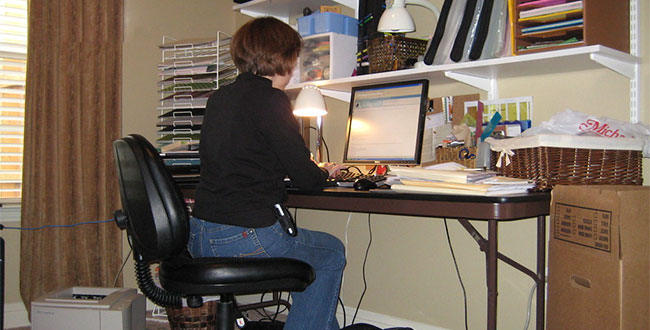
    Functions and events are getting cancelled or postponed. People are avoiding large gatherings, and travelling is curtailed. The result: people and organisations are promoting work from home, which could be a new experience for many of us.


    DEFINING MOMENTS.

    For most organisations, this is new. Some think they will lose out as productivity will drop. In contrast, there are people who believe that workers will be happier and more productive. You will decide the post-Covid-19 way of working for your organisation, by the way, if and when you act and deliver during this period.

    It is just the location of your office that has changed. There is no change in the role, responsibility and expectations. So, similiarly, it is for you to ensure that your family role, responsibilities and the expectations don’t suddenly change. Most of us will be back to working in and from office in a short time.


    WORKING FROM HOME.

    Working from home requires self-discipline. In such a situation, it is natural for people to first relax and see it as an opportunity to get away from their pressurised, timeline-dictated schedule. With hardly any travel time to work and for meetings, things may seem better. However, nothing much changes. The need to be productive and still deliver the timeline soon catches up.

    This leads to experimentation and re-educating people on working from home. And when the situation improves, quite a lot of organisations would have learnt the advantages of this ‘new’ way of working. Moreover, they would have recognised the degree and quantum of unnecessary travel they had been indulging in. And how new era technologies like Skype, Facetime, Slack, Zoom, Google Hangouts, cloud computing, drop boxes etc. can be of help.


    MY EXPERIENCE.

    Till 2014, I too was trapped in a 10am-to-you-don’t-know-when office-working syndrome.

    Then I turned independent and started working from my home-office. It took me time to realise how one can remain productive in such a work scenario and the amount of self-discipline needed while working from home. Otherwise, it can have a reverse impact. The life-work balance instant of improving may deteriorate as a result of you being available all the time or having the flexibility of stretched working hours.


    KEEP THE OFFICE HOURS FOR WORK.

    Do not redefine your work-day. Stick to your office timings. I have found that dressing up for the day- as you would do if you were going to work helps. It psychologically keeps you in a work mood. At the same time, do not give office time to house or family work. Sounds so silly. But in case there is essential housework, then apply for leave to yourself and then attend to the tasks or re-schedule your work, just like you would have done if you were working from the office.


    DEFINE YOUR WORK AREA.

    In case you have space, please mark an area as your work station. It could be a study table, dining table, living area. It does not matter what it is, but it matters that you have a defined work area. Better if it can be quiet, well lit private space that is nearer to the router. Not to add, that minimise distractions.


    GET THE TECHNOLOGY YOU NEED.

    Make sure you have the technology and infrastructure required to do your job. From getting to a higher speed internet connection in case, you need it, to having an electricity point or an extension cord to charge your phone and laptop. Remember, your home WiFi is going to be heavily overdrawn and divided with multiple family members accessing it.

    Check if your job profile and the organisation allow logging in from public or domestic WiFi. If not get alternate arrangements made.

    It is best, unless your work requires it, avoid facing the television and watching the news or any other programme. This is not really the time to catch up on all the episodes you missed on Netflix, Amazon Prime, OTT platforms, or surfing through the enticing e-commerce platforms.


    FIND THE BEST HOUR TO WORK.

    Experiment. Remember, we all have our unique work clock. Most of us do not have any idea, which is the period we are most effective and productive. Use this opportunity to realise, if you are the morning person, the mid-day person or late afternoon person and once you know that, schedule your most important task during this period.


    BE BETTER PREPARED AND AVOID PROCRASTINATION.

    Now, you don’t have the liberty of cooler talk, discussing things over smoke, or lunch or repeatedly meeting over the same thing over and gain. It would be helpful and far more productive to be better prepared for meetings over the phone and drafting easy to understand simple e-mails. The advice will be to do more on-mobile and face-time communication with colleague them on e-mail. E-mail should be the best use to share document and or record decisions. Otherwise, the ping-pong you will end up playing over e-mail will be the ultimate destroyer of the advantage of working from home.

    You will need to let people know when you are available for discussion. And more importantly, if you are interacting with multiple sets of people, get into a habit of also defining end time for such distance meetings and conversations. Maybe this is the time to really use the calendar on your mobile to best advantage.


    DON’T DO ANYTHING YOU WOULD NOT DO AT OFFICE DURING OFFICE HOURS.

    Please don’t keep the TV on and start watching OTT offering on it. If you used to keep your Whatsapp and Facebook off during work hours, keep the good habit. Don’t spoil yourself with the newfound liberties.


    AVOID STRETCHING WORK HOURS.

    Try sticking to your office reporting time and exit time while working from home. Give the additional hours to your family. It always belonged to them. This extra time is what you had previously stolen from your family time and sacrificed it at the altar of your professional career.


    BATTLE OF EXTRA TIME.

    This will be battle you will have to win on yourself.. Now you are more at home. So what constructive use you put these additional hours may really be the key to working from home. Use it to connect with friends and relative over the phone. Use the internet to gain further insight and updated in your field. Or maybe read books or chit-chat with the family.


    RELATIONSHIPS REDEFINED.

    One can only hint at it. Once you are now at home all the time, the relationship gets redefined. Your role in how you tackle them will be important. For example, I ensured that my tea breaks were defined. My lunch hour was fixed. And if my wife suddenly wanted to go shopping, I refused getting trapped without prior notice. That was not the covid-19 period, and you could actually go out to pubs-malls without any fear.

     

  • Godrej Protekt urges citizens to join #ProtektIndiaMovement

    By A Correspondent


    Considering the severity of the Covid-19 outbreak, Godrej Protekt has embarked on an initiative called #ProtektIndiaMovement. It aims at building awareness amongst people by keeping them informed about the preventive measures to ensure protection against the coronavirus. The brand kickstarted this initiative with a digital anthem highlighting the importance of regular handwashing, featuring children as the messengers in order to create more awareness about hand hygiene.


    Conceptualised by Creativeland Asia, Godrej Protekt’s digital anthem is developed with the understanding that although coronavirus is a pandemic that can potentially affect anyone, it can be prevented by simply washing hands at the right times.


    Commenting on the initiative, Sunil Kataria CEO India and SAARC, Godrej Consumer Products Limited (GCPL), said: “GCPL always pioneered programmes against diseases posing grave threat to public health. With #ProtektIndiaMovement and this anthem, we want to make sure that the message of washing hands regularly and correctly is conveyed to every Indian.”