Tag: Cannes

  • Road to CL2013: The way to win at Cannes is by not aiming for a metal

    The Cannes metal wins for India has been disappointing. There could be various reasons for it and the metal tally definitely doesn’t point that the work coming out of India is of inferior category. However, it does point that there is something more required from India n agencies to gain attention of the international jury. Who better that people on the Cannes jury this year to show us some light on where the agencies could improve and what really went behind the judging. We spoke to a few on the jury this year to understand where India went wrong and what can be done to reclaim some of the lost ground this year.


    Rahul Jauhari, National Creative Director, Everest Brand Solutions
    Rahul Jauhari

    I don’t think you can aim at Cannes by doing something that can win at Cannes . Most winning entries at Cannes are brilliant solutions to one business issue or another. “Let’s do something like that one” ­ is not going to get you anywhere. The point is to solve the business issue facing your brand with a wonderful idea and execution. If it is that wonderful, it will win.


    And yes, the glorious part is in doing it in a way that is relevant to the India n audience. The jury are not fools. They can see through scams, in most cases. They ask relevant questions and give a lot of importance to the logic of the communication. They reward ingenuity, but not at the cost of authenticity.Brazilwins a lot of awards at Cannes . But their work is unmistakably Brazilian. The same goes for other countries. So, the language of your entry is not a minus point, as long as you send in a good explanation.


    The jury at Cannes is now well represented by different countries. And that shows in the selection of work. “Let’s do something that integrates social media” is not the answer either. More Facebook likes is not equal to higher chances at a Cannes metal. If the idea is loved, people will spread it on social media. A print ad can lead to online furore or fan-following. The same goes for a TV ad or a radio spot. The consumer builds in social media integration without asking you. So there.


    Simply put, the way to win at Cannes is not by aiming for a metal at Cannes . Aim for a brilliant solution or idea. Execute it brilliantly. Even the simplest of ideas can win. There is that little bit about the packaging, though. When a jury member has to sift through a thousand plus entries, he or she will not suffer a poorly packaged entry. Keep it simple, keep it to the point. Sure make it enjoyable. But remember, the jury wants to know how you did it, why you did it and what it achieved. Inform them, but don’t bore them to death. And don’t try to con them. Most are highly experienced and can tell a fake from a real. Instantly.


    Sunil Gautam, Founder, HanmerMSL

    This is the fourth year for Cannes PR Lions which saw 1,130 entries from 61 countries, the highest number of entries received by Cannes Lions in this category ever. 134 entries were short listed. India had 19 entries, 1 was short-listed.


    The composition of jury was very good and it represented the cross-section from the world over. There was a lot of interaction and discussion before finalising the winners. According to me, it was very professional judging and the experience was awesome.


    India had 19 entries in this category, and many of them came up for lively discussion. Of these, one entry was short listed. Unfortunately, this entry didn’t get any metal. But the overall effort by the India n agencies was excellent. All the campaigns that were reviewed were very imaginative, with good strategy, execution and measurable impact and results.


    My advice to the India n public relations industry is to focus on innovative strategies, immaculate execution and measurable results in such a way that the campaigns that they implement for a client are a huge success. And not to plan campaigns from the short sighted of just winning awards. Good campaigns are appreciated everywhere and they may end up with the awards. The client comes first and they will get awarded if they deserve.


    Vikram S Gaikwad, Partner & Executive Creative Director, Creativeland Asia
    Vikram S Gaikwad

    I think there are three simple yet significant aspects to any entry. The idea, its execution and the category in which it is entered. A brilliant idea can miss out simply because it is not entered in the right category.

    With the number of entries running in thousands even in each category, each panel has a unique criteria while judging entries. So, the chances are that a great entry submitted in a wrong category might fail to even get a shortlist.

    Also, we should look at the new categories introduced at Cannes every year.I was disappointed to see little or no work in categories like Mobile, PR and Brand Entertainment & Content categories. With the size of the Indian
    market, number of brands, consumption etc, we are very much capable of capitalising on various opportunities and entering more quality work in the future.

    This year the number of metals that India won has gone significantly low. This definitely is disappointing. So, I am hoping we will make up for it
    next year.

  • Anil Thakraney: Yes, We Cannes!

    By Anil Thakraney


    I have been to Cannes just once, and this was in the year 2000. To represent the ad mag I was editing at the time. I have many interesting memories of that trip, but the one that stands out is this: While I did run into quite a few eager desi ad men and women, India did not win a single award. In fact, the scenario was so bad, global ad gurus and the fest organizers would treat Indian journos with the same degree of respect as those from Eastern Europe. Okay, perhaps slightly better. And this made even a simple thing like obtaining interviews with the ad biggies a Herculean task.


    I am happy to discover that in the interim period a lot has changed. While India may still not be setting Cannes on fire, our creative directors do return with a decent number of trophies. This was inconceivable in the year 2000. I am particularly pleased that the Mumbai Mirror TV commercial scored a Gold. Not only because I have worked for that newspaper in the past, but also because I recall giving the ad very high marks in the review I did for mxmindia. This is a clear indication that the ad frat must take my ad reviews very seriously… the Cannes jury gets influenced by them, hehe.


    So then how did India turn the corner in the last decade? I would say there are three reasons: In the last few years, thanks to the economic boom and the efforts of some filmmakers (most specifically, Sir Danny Boyle), the India story has become interesting for the goras. They want to know more about us, we excite them now. This also means that the jury members now pay more attention to the Indian approach to advertising, they try hard to get our culture. Plus having more desi judges out there helps. All this then results in a better strike rate.


    Second, the quality of our ‘creamy layer’ work has gone up in the last ten years. And I use the phrase creamy layer because 90 per cent of the mass advertising continues to be bollocks, and this is the case with the rest of the world too. But we have significantly improved on our good work. I also think some of our creative directors and ad filmmakers are paying a lot more attention to execution, a very important reason behind our increasing medals tally.


    But most importantly, the clients have evolved in the last decade. Many of them want to push the envelope, they want to innovate; they don’t mind taking risks. This has naturally helped matters a lot. This was not the case in the past. Back in the bad old days, one was paid to do safe work, and risk takers used to be punished.


    Maybe I will visit Cannes next year, it’s the right time. Think I will be given as much bhav as the American and the Brit journos. 🙂


    * * *


    PS: Interesting blogpost on the biggest advertising lies. Lies that get bandied around so often, they become truths. Here’s exploding some popular myths.

    Link: http://adcontrarian.blogspot.co.uk/2012/06/advertisings-5-biggest-lies.html


  • Rules of creativity rewritten at Cannes

    By Ravi Balakrishnan


    As the week progresses, it’s become obvious that you need to ‘friend’ social media if you’d like to win atCannes. Almost every single award case study this year in the more functional result- driven categories like Direct, Promo and Activation and Creative Effectiveness came complete with a laundry list of social media successes.


    Indian agencies and the smattering of marketers who continue to lament the country’s performance atCannesthis year would do well to heed some of the new rules of creativity. According to Manish Bhatt, founder, Scarecrow Communications, and a jury member on Direct: “The definition of creativity is changing. Everybody is now talking about making a difference to the world. It’s a tall claim we all know, but creative effectiveness alone cannot get you to a Grand Prix.”


    A few jury members go so far as to say creativity is almost playing second fiddle in some cases to ‘earned media’ – getting spontaneous mentions in news sources – the more global, the better and being widely shared across social media. And in rare cases, an endorsement from the president of the United States Barack Obama who tweeted about Small Business Sunday, a campaign from American Express that won both in Promo and Activation and Direct and is said to be a close contender for the highly prized Titanium category.


    Even this year’s press winner for Benetton, ‘Unhate’ which featured photoshopped images of notoriously antagonistic political leaders kissing, was a news and social media success long before it reached the jury. It’s not thatIndiadoesn’t do socially relevant advertising; it’s just missing a trick in viewing such campaigns as ‘awardworthy.’


    Prasoon Joshi, president – McCann Worldgroup,South Asiasaid: “If Team Anna had entered their campaign that would have been a Grand Prix in my book. It was well managed in social media and everything. But in our country that consciousness is not there: that social movements and social good by brands is a big thing.”


    The serious exception to the rule of corporate ‘good’ winning applies to work that takes a radically different view of the possibilities a category represents; never mind if it seems almost too bizarre for their own good. A global brand like Mercedes lost the Grand Prix on radio to an entry fromBrazil’s Go Outside magazine from Talent,Sao Paulofeaturing a radio station with allegedly mosquito repellent properties.


    Source: The Economic Times

    Copyright © 2012, Bennett, Coleman & Co. Ltd. All Rights Reserved


  • DDB Mudra, Leo Burnett within touching distance of each other on metals tally

    By A Correspondent [updated]


    With 11 out of 15 categories already finding their fate at the grand creative stage of excellence-Cannes,India’s performance at this juncture doesn’t paint an impressive picture. Out of a total 84 shortlists that India has managed to garner against its name across the 11 categories announced till date, only 12 have managed to find their way into the winners tally. A recap of India’s performance thus far shows the country having two Golds, three Silvers and 10 Bronzes in its kitty.


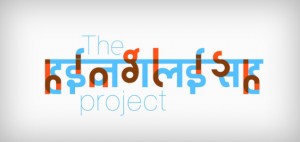
    On day 4, India managed to pick up 1 Gold, 1 Silver and 5 bronzes. The Gold was bagged by DDB Mudra Group for its entry ‘The Hinglish Project’ in Design Lions category. It also won a bronze for the same entry. The other Gold for India was bagged by McCann Worldgroup for its client ‘Western Union’ in the Outdoor Lions category. As for the Silvers, it is Leo Burnett that is leading the way with 2 Silvers including one in Press Lions for its client Bajaj Electricals and the other for Doorstep School in the Media Lions category.


    Leading the list among the agencies is DDB Mudra with 32 points (including 22 points from shortlists). At the second place is Leo Burnett with 30 points against its name. If not for the points accumulated from shortlisted entries, Leo Burnett would’ve been placed at the top spot. Coming in third is Ogilvy India that has a total of 19 points against its name, including 3 Bronzes that it has bagged so far. It is a close call between the fourth and the fifth spots with BBDO India sitting at 14 and McCann WorldGroup sitting at 13. Cheil Worldwide is next with 8 points including 1 Silver that it won for Samsung. Brand David is next with 4 points followed by Publicis and Bates at 2 each. The remaining ten agencies are placed at the same spot (tenth) having bagged a point each for their respective shortlists.


    With four more categories to go, including Film Lions, Film Craft Lions, Branded Content & Entertainment and Titanium & Integrated Lions, the table is still wide open. Whether a new contender will emerge at the top and whether India will compare this year’s metals tally to that of the past will be known in a couple of days. Note this does include the shortlists announced today.


    Agency Titanium Grand Prix Grand Prix, Titanium Gold Silver Bronze Shortlist Total
    Points 12 10 7 5 3 1
    DDB Mudra 1 0 1 22 32
    Leo Burnett 0 2 1 17 30
    Ogilvy India 0 0 3 10 19
    BBDO India 0 0 2 8 14
    McCann Worldgroup 1 0 0 6 13
    Cheil Worldwide 0 1 0 3 8
    Brand David 4 4
    Taproot India 3* 3*
    Bates India 2 2
    Publicis Communications 2 2
    BBH India 1*+1 1*+1
    JWT Mumbai 1 1
    Creativeland Asia India 1 1
    TBWA\ India 1 1
    M&C SAATCHI 1 1
    OMD India 1 1
    Mindshare 1 1
    Draftfcb + Ulka 1 1
    Grey Worldwide 1 1
    PERCEPT/H 1 1
    Bacardi India 1* 1*


    * Winners to be announced on Saturday late evening @ Cannes


  • ‘The Hinglish Project’ and 6 other wins add on to India’s tally on Day 4

    By A Correspondent


    Day 4 at the Grand Auditorium, Palais des Festivals was not as eventful for the Indian contingent as the metals failed to come in big numbers as envisaged. India managed to clinch only 7 metals, including 1 Gold, 1 Silver and 5 Bronzes in the four categories for which the winners were declared – Design, Press, Radio & Cyber. In Cyber there were no shortlists from India.
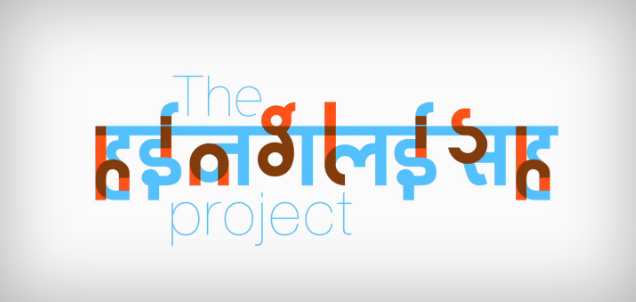
     

    The Gold was bagged in the Design Lions category which had a total of eight shortlists from India. DDB Mudra Group was the winner of the lone Gold for their work ‘The Hinglish Project’, bagged under the Consumer Services category, the work was for Ministry of Tourism under the Incredible India initiative.


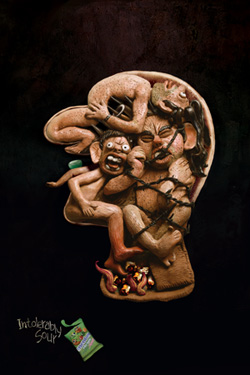
    Ogilvy & Mather’s work for Mentos Sour Marbles saw it bag a Bronze

    The creative credits for the entry include Sonal Dabral, Chairman & Chief Creative Officer, Pratap Bose, Chief Operations Officer, Louella Rebello, ECD, Shirin Johari, Associate Creative Director – Copy & Art, Michael Remedios, Agency Producer & Warren Pereira of W Films.


    Incidentally, The Hinglish Project also bagged a Bronze in the Design Typography category. Reacting to the win, Louella Rebello, ECD, DDB Mudra Mumbai said: “The Hinglish Project has been a labour of love. We named it ‘The Hinglish Project’ because it is exactly that. A project that aims to demystify Hindi and make it familiar and more approachable by using a wonderful blend of the two languages. It was very well received and appreciated even before it was entered and the Cannes Lions are testimony to this. Kudos to Shirin Johari. At DDB Mudra, it’s champagne time as we bring home our Lions.”


    Perhaps the biggest disappointment for the Indian contingent was in the Press Lions category where it managed only four metals out of a total of 30 shortlists. The big winner was Leo Burnett as it bagged Silver for its client Bajaj Electricals. Leo Burnett bagged the award in the Home Appliances & Furnishings category; the creative team for which included KV Sridhar – CCO, Nitesh Tiwari – ECD, Vikram Pandey – CD, Vikram Pandey – Copywriter, Brijesh Parmar – Art Director, Amol Jadhav – Photographer, Sushma Singh/Adya Thakur – Account Supervisor and Beena Koshy – Advertiser’s Supervisor.


    The Print category also brought in three Bronzes forIndiawhich included one by Ogilvy & Mather for Mentos Sour Marbles – the team for which included Abhijit Avasthi/Rajiv Rao, CCO, Priti Arora, CD, Tushar Pal, Copywriter, Deelip Khomane, Illustrator and Typographer.


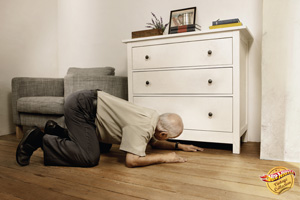
    O&M bagged another Bronze in Press Lions for its work around Hot Wheels

    The other bronze went to BBDO India for its ‘White Collar Hippies’ campaign – the team for which comprised Josy Paul, CCO, Rajdeepak Das, ECD, Sandeep Sawant, CD, Yohan Daver, copywriter; while the third Bronze went to Ogilvy & Mather for ‘Hotwheels’ for its client Mattel Toys – the team for which included Abhijit Avasthi/Rajiv Rao, CCO and Sukesh Kumar Nayak, ECD & Copywriter.


    The other Bronze was bagged in the Radio Lions category by Leo BurnettIndiafor Strand Bookstall. The team for the campaign was led by K V Sridhar, CCO, Nitesh Tiwari, ECD and Ashwiny Iyer Tiwari, CD of Leo Burnett.


  • 1 Gold, 1 Silver & 5 Bronzes on Day 4


    By Delshad Irani


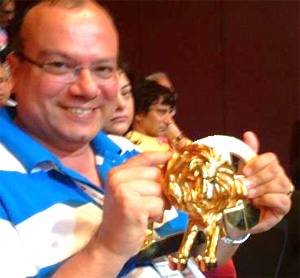
    DDB Mudra Chief Operations Officer Pratap Bose put up this picture with the Design Gold on his Facebook page

    Cannes on Day 4 won more gold for India, taking its tally to two. ‘The Hinglish Project’ from DDB Mudra Group took home a gold Lion in design.


    The design entry is part of the ministry of tourism’s Incredible India campaign. Abhijit Bansod, jury member and principal designer and creative head, Studio ABD, said this is perhaps a new beginning for hybrid typographic design work that combines cultures.


    “It really stood out amongst the typographic work we saw during the judging process,” he adds. India had a total of eight entries on the shortlist with three originating in DDB Mudra Group, including a campaign for Volkswagen India.


    ‘The Hinglish Project’ has been awarded a bronze Lion, too. A total of four categories were judged on the day. Press, a traditional favourite with Indian entrants, kept India’s ad engine chugging along. There is one silver Lion in Press for Leo Burnett’s work for Bajaj Electricals.


    Ogilvy took home two bronze Lions in the same category for its work for Perfetti Van Melle and Mattel Toys’ Hot Wheels brand. And, BBDO India has one bronze Lion, courtesy its work for White Collar Creatives.


    The Grand Prix winner in Press is United Colors of Benetton’s Unhate campaign that cooked up a storm in many places around the world and got it the much-coveted top prize at the Cannes Lions.


    In radio there’s a lone win, another bronze Lion for India as well as Leo Burnett. Titled ‘Punishment’, the work interestingly was written entirely in Hindi. The work for Mumbai-based book store Strand Book Stall is in the form of a conversation between Mahatma Gandhi and a little boy.


    According to Rob McLellan, executive creative director, Network BBDO South Africa, and Radio Lions’ jury president: “It is a heart-warming piece of work. India is very similar to South Africa in many ways. Radio is still the most popular medium and sometimes the only way to reach people. I think the piece is a worthy winner.”


    This brings us to Cyber category, a disappointment of digital proportions. Out of the 27 entrants, not one made the shortlist. About India’s non-existent presence in this category Anita Varma, jury member and director of Digital Driftwood, said it’s a shame because we are great storytellers but falter on how best to use the technology at our disposal.


    Source: The Economic Times

    Copyright © 2012, Bennett, Coleman & Co. Ltd. All Rights Reserved


  • India@Cannes: Shortlists announced today: 2 in Radio, 8 in Design & 0 in Cyber


    By A Correspondent


    India drew a blank in the digital domain yet again with zero entries shortlisted. However, in the other shortlists announced today, there was reason for cheer. Two Indian entries were shortlisted in Radio Lions and Eight in Design Lions.


    In Radio, McCann (for Lasky Herbal) and Leo Burnett for Strand Book Stall were shortlisted.


    In Design, the following entrants were shortlisted:


    BBH India for Movies Now

    DDB Mudra for Volkswagen Beetle

    TBWA Gurgaon for MKV Household Products (Elephant Combs)

    DDB Mudra for Geebes Beverage (Coffee Gold)

    DDB Mudra for Volkswagen (Attention Assist System-Moustache)

    DDB Mudra for Volkswagen (Attention Assist System-Jingle)

    DDB Mudra for Ministry of Tourism (Incredible India)

    DDB Mudra for Ministry of Tourism (Incredible India-Hinglish)

    [please await detailed reports]


  • Happy launches Design Cell

    By A Correspondent


    Bangalore based boutique agency Happy just announced the launch of its Design Cell. This comes post the announcement of their Mumbai operations in January earlier this year.


    “We have been offering design services to many from the day we started. We’ve also been fortunate to win a few awards for our work in Design. We took our time to build a body of work and crystallize on a strategic design process that is our own. The design cell shall work as an independent unit with its own business targets and talent pool. We see a huge opportunity in this space and are confident we can inject new energy and excitement in this space” said Kartik Iyer, CEO, Happy.


    Happy’s Design Cell shall focus on offering services in the space of identity creation / Branding / Packaging and some amount of retail / environment design. It will be led by Shilpa Colluru in Bangalore and Pallavi Nayak in Mumbai. While business development will driven from these two offices, the objective is to serve clients from across the country with the creative delivery happening out ofBangalore.


    “Having a specialized design cell only seemed like a natural progression for us as it allows us to do a lot more for our clients. It also makes more sense for companies and brands that have been newly formed and are preparing for a launch,” said Praveen Das, CCO, Happy.


    “Design is more than just making things look pretty. There is science behind effective design.India is at a stage where her people have begun to develop a strong aesthetic sense and appreciation for design. We believe that this will play a strong ancillary role in shaping the way Indian businesses look at branding and design as a key to drive growth,” added Mr Iyer.


    Happy’s work in design has been well noticed and appreciated in the past. The Lee Never wasted Bag went on to win many awards including a Cannes nomination. The Skinny jeans packaging they created for Lee also won a D&Ad nomination. Happy was also behind the new logo of online fashion retailer Myntra.com. The agency also created the logo and worked on the store experience of fashion retailer, Basics Life.


    Happy’s inner wear packaging design for fashion brand Basics 029 has also been appreciated and featured on most leading design websites in the world. Happy also recently won 2 bronzes in design at Goafest 2012 – one for direct mail and the other for environmental graphics.


  • [MJR] Wanted: sponsors to cover the Olympics!

    Ranjona Banerji

    By Ranjona Banerji


    The biggest sporting event in the world (no, not the FIFA World Cup) is due to begin in a couple of months. So how many Indian newspapers are going to send someone to cover the Olympic Games in London? This is where Indian sportspersons are hoping to make a breakthrough after Abhinav Bindra won the first individual gold medal by an Indian in Beijing. The Indian hockey team did very well in the qualifiers, leading to expectations that they will shine again in a sport which has won us eight gold medals but no one in India really watches.


    So what’s the grouse? The reluctance of Indian newspaper managements to spend money on newsgathering. The Olympics are not just any old event. They represent an ideal – of human endeavour, of a global spirit and a desire to push back boundaries of achievements. Editorials will declaim with thundering authority about the significance of “citius, altius, fortius” but when it comes to actually reporting on the efforts to get there, everything depends on a “sponsor”.


    That is, a newspaper or journal will often only cover an event like this if the marketing department can get someone to cover its expenses. One can understand the reluctance in the days when foreign travel was prohibitive and foreign currency limited by the government (yes, I know it almost seems like we’re back in those times!) but in today’s world, depending on agency feed is nothing short of laziness and taking your reader for a ride.


    Yet strangely, in the olden days (that is, when I was young), the idea of “junkets” was anathema and people I know lost their jobs for accepting favours. Over the years, managements realised, “why pay for something when someone else can be convinced to do it”. This is why so many sports pages – like The Times of India’s for instance – are so full of “sponsored columns” that there is hardly any place left for actual news.

    One doesn’t know yet of course how many newspapers are going to go for the easy route to the Olympics, but one hears rumours…


    Meanwhile, the entire film journalism community appears to be in Cannes for the film festival, where given the quality of our cinema, almost nothing makes it even within shouting distance of a tin palm, let alone a golden one. But visits to Cannes are now de rigueur on the junket circuit, so no dip in the newspaper’s bank balance there. And credibility? Well, we stopped worrying about that a long time ago.


  • The Anchor: Manish Bhatt on 5 myths people have about an independent agency

    Manish Bhatt

    By Manish Bhatt,Founder Director,Scarecrow Communications Ltd.


    Myth 1: Independent agencies are the land of scamsters

    Just like the world thought India is a land of snake charmers and elephants… We think every man in Jaisalmer wears a turban and has royal mustaches and a parting beard… People who haven’t visited the South of France always think that every beach of French Rivierais a nudist beach… People think independent agencies are the breeding grounds and shelters for scamsters. Dear Scamsters, beware… The creative department of Independent agencies are not governed by Global Creative Council in Chicago. Neither by those aspirant NCDs who want to score high in Cannes by indulging in some scams, so that he or she can attend the next global creative council meeting in the exotic destinations like Sao Paulo, Santa Clara or Jamaica.


    Myth 2: Independent agencies are cheap

    The Network Agency with presence in 24 countries and 100 offices across the world can charge premium. But thinking that Indian independent agencies with presence in 2 cities are cheap to hire – if this is true, then buying clothes from Big Bazaar (with around 1,000 stores across cities) should be more expensive than clothes sold at Versace or Armani with 2 city presence.


    Myth 3: Independent agencies are small creative hot shops

    If size would have always been proportional to the potential of things, then microprocessor chips would have never got invented. In 2 years’ time, Scarecrow has 2 offices, 50 people, a separate Design division, an Art Gallery, more than 25 brands across 4 cities, will you call us a creative boutique or a full service agency?


    Myth 4: Independent agencies can never attract MNC brands

    When an Indian can buyout global brands such as Jaguar and Land Rover, why can’t an Indian independent agency attract global brands? Look at Pepsi working with Taproot, Audi with Creativeland Asia and we at Scarecrow working with MNC Brands like Nestle, Eristoff (Bacardi), Viacom, Danone, Anchor Panasonic and Barclays.


    Myth 5: Independent agencies can never attract great talent

    People with good taste always prefer to stay in an isolated cottage, a countryside vs  a multi-storied apartment in the hustle bustle of the city. That’s why we have one of the best design minds of the country like Kapil Tammal in our Mumbai office and Andy at Delhi office – the man behind ‘Mein aur meri Maggi’ campaign.


    Manish Bhatt is Founder Director, Scarecrow Communications Ltd.


  • Amith Prabhu: PR frat needs a Goafest-like event

    By Amith Prabhu


    Goafest has become the annual jamboree for the advertising folks in India. And nothing wrong with that if it serves the purpose of those organizing and those attending. It is an expensive programme, especially for younger people. The cost to attend Goafest for a person varies from as low as Rs12,000 (if a person under 30 from Mumbai travels by road or rail and lives in very simple accommodation for 2 nights) to Rs40,000 (if a person over 30 from Delhi flies low-cost and lives in decent three-star accommodation).


    The point is that in all this effort and investment or spending (depends who pays the bill) very little is achieved for the industry in terms of learning. Most high profile speakers either use the opportunity to make a sales pitch or are not effective enough to make an impact (I have been to two events and seen for myself).


    The few who are impactful and are not making a sales pitch have few takers because they are either not well known, haven’t got the right publicity in advance and therefore those who should be listening to them are either on the beach or in their luxury rooms or sightseeing.


    The real achievement is for those who want a break and get it (most often fully or partially company sponsored), great work done in the year gone by gets rewarded (sometimes with controversy), people seeking a job change get to meet their potential employers and those who want to catch up in a non-work environment with former colleagues and buddies get to do that.


    Some PR professionals attend because they are involved in some way with the organizing and some others are connected with the ad agency that has a big role to play.


    But most inspiring of all the achievements is that all the big boys and girls in creative and media agencies who fight it out like bitter rivals in new business pitches and industry awards between May and March come together in April to celebrate the profession. And this to me is remarkable. No doubt there are a handful of boycotts that happen each year, but those are bound to happen and frenemies come and go.


    Cannes, around which part of Goafest is modelled, embraced PR a couple of years ago by including a separate category for PR and having a full-fledged PR jury. I’m not saying Goafest should do that. I’m here to seed the idea of a gathering of PR professionals from around the country. Head honchos of PR firms can collectively do a lot for the industry and the young and mid-level professionals. The three things they should do at break neck speed is put together a forum for PR professionals modelled on PRSA, create an industry award that is transparent, world-class and the gold standard for younger professionals to gain inspiration from and plan a gathering of PR professionals over a weekend to learn from each other. Networking is no longer a major need in the age of Facebook, Twitter and frequent after hours parties in the metros.


    There are several forums that function formally and informally in the PR space. But none that brings together corporate communication executives and public relations professionals, at all levels and of all ages, under one umbrella. It is time for a body that works closely and learns from PRSA. There is so much it does through several chapters for the betterment of the practitioner. With almost 15 of the Top 20 global PR firms present in India there is scope to even be handheld by one of the well-established forums.


    Thereafter, this organization should establish a PR award that enables entries to compete in the global arena. There is a major vacuum that needs to be filled and no one can help us on this but ourselves.


    Finally, the PR fraternity of India needs an annual event where PR professionals get together, listen to experts fromIndiaand around the world and celebrate the profession keeping aside differences for 48 hours at least, if not more. Maybe this could be called PondyPoweR and be held at Pondicherry on the east coast ofIndia. Symbolically, a quaint town with a rich heritage, near the beach for those who want to mix learning with fun.


    Hope this happens sooner than later, so public relations people can ponder on how to do some Public Relations for themselves, their firms and most importantly for the profession.


    Amith Prabhu is a public relations professional who spent a large part of his career in India and is now based in Chicago working for a PR major. Views are personal and do not reflect that of the writer’s employer. 


  • 10 Days to Go-Goafest! It’s all about celebrating ideas: Arvind Sharma


    As the countdown begins for Goafest 2012, Arvind Sharma, Chairman Goafest 2012 and Chairman, India Sub-continent, Leo Burnett, speaks to MxMIndia’s Tuhina Anand on the festival this year and why it is truly the celebration of creativity at its best.


    What can one expect from Goafest 2012? How will it different from last year?

    The Festival will stay true to its fundamental vision. It is a platform for celebrating creativity and a source of inspiration. Most importantly for the entire fraternity comprising young and not-so-young, Goafest is the preparatory ground for the industry to gauge where and how to go forward. I feel that the core, sometimes, is forgotten in the bid to do something new.


    I mean, we live in a world which is changing rapidly, so having something new is inevitable. If you look at successful festivals around the world 90 per cent remain the same. Similarly, at Goafest, we have defined categories and 95 per cent remain the same in terms of predictability of entering, judging, Awards Governing Council and Goafest Committee. There is consistency in that format and our effort of providing conversations. All this is same as what one had last year.

    Having said that about the predictability factor, let me also add that moving forward is equally important.


    So, what’s new?

    This year we are looking at ways to involve clients in a meaningful way. The fact is that, there would be no advertising if there were no clients. The business of advertising is about partnering with the marketers. We, at Goafest, believe in evolving vision that doesn’t really mean evolving identically, but in evolving together. We look at bringing in more opportunity for conversations and that’s the reason why we have brought clients this time into the seminar.


    There is a slight change in the format. So far, there have been series of international speakers, while some of these presentations have been received well, some weren’t, and there have been questions on the relevance of those to India. Changing that, we have brought in senior Indian clients to raise questions after the presentation. So there will be 30-35 minutes for the speaker followed by 10-15 minutes of Q&A led by a senior Indian client. He or she will be the voice and mind of the audience and bring in the Indian perspective to the entire presentation by agreeing, challenging, bringing contextual light and interpreting the whole presentation.


    We have also brought the Marketing Wizards to Goafest. This is calling the under-30 staff of the marketing community. We have had a good response and we expect overall 70 to 80 major advertisers to participate, which include team of two people representing to some even registering team of 30 people even though we have a limit to numbers.


    Why this whole idea of bringing in Grand Prix to all verticals?

    Grand Prix, traditionally, has been awarded in Print, TV and Integrated. This year, we have expanded the Grand Prix to cover all the 9 verticals. This was not an easy decision and the step was debated. We believe that the time has come for specialists in area to move to the centrestage. I don’t really know if the jury will find works worthy enough for Grand Prix in each of the vertical, but this would help in finding worthy advertising and celebrating it around India and even around the world.


    For a young designer who is always on the periphery of an agency, winning gold is good but winning the GrandPrix might help in moving the same person to leadership position. We hope that the move will catalyze long term fundament change in the way we create advertising.


    We hear this year there are entries from other South Asian countries?

    Yes, we have entries from Sri Lanka and Pakistan and we will have delegates from Sri Lanka and Bangladesh. In South Asia, we have different cultures but there are more similarities than differences within those cultures and we can learn a lot from each other. Unfortunately, the politics of the subcontinent is more difficult. We had planned a road show in various countries but our passports got stuck and this could not happen.


    Can you throw some light on the conclave and the seminar?

    We have put together an enviable list of names and these are speakers who really are worthy of listening. Jean-Yves Naouri, COO Publicis Group spends almost 150 days in flight. He knows what is happening in the business around the world and will share his valuable insight. Tim Love has been involved with theCannesand he played important role in the shaping of the future of Omnicom Group. Jonathon Mildenhall, VP of Global Advertising Strategy and Creative Excellence, CocaCola promises to be stimulating session. Steven King, CEO, ZenithOptimedia will also be on panel. Anuradha Sengupta, who loves throwing challenge, will be part of the session.


    On the seminar speakers, Amir Kassaei, Chief Creative Officer, DDB Worldwide, Rishad Tobaccowala, Chief Strategy and Innovation Officer, VivaKi and Prof John Philip Jones, Emeritus Professor at the Newhouse School of Public Communications,Syracuse University,New Yorkwill be speakers. While the world is talking video as the future, Lucas Watson, Vice President, Global Sales and Industry Marketing, YouTube will tell us how and Simon Wardle, Chief Strategy Officer, Octagon will be worth listening to for all the planners in the industry. Erik Vervroegen, International Creative Director, Publicis Worldwide will give his take on creativity. We will announce one more name in this list soon. From the Indian marketers side who will be part of Q&A, we have Sanjay Behl from Reliance, Kainaz Gazder from P&G, Viral Oza from Nokia, Gayatri Yadav from Star India and Hemant Bakshi from Unilever.


    Awards have been under the scanner, do the controversies surrounding it mar the event in anyway?

    Awards show will have criticism. What is driving us is the celebration of creativity and look at this Fest as a platform to prepare ourselves for the way industry will go forward.


    Why did the Goafest Committee decide the theme – Magic of Ideas?

    Everything that happens at festivals is ideas. While advances in technology and database is important, but what we celebrate is ideas. If we add everything on an excel sheet, we will see that when a brand gets a lot of traction or if it is ignored, it is all to do with ideas. No client launches a product with the intention of not succeeding, so getting it right is important. For a product to be embraced, it has to connect with people and this cannot be reduced to a formula but has to do with the magic of ideas.


    The awards have been leaked in the past, losing some of its credibility, how do you ensure that this doesn’t happen this year?

    We believe that awards will not be leaked. In this, the media as well as the organizers have a role to play. There is a symbiotic relation. We do our best to avoid any such incident. Some information has to be shared with the media beforehand, but there is an embargo on release information and last year journalistic fraternity showed a sense of responsibility. I will add that the media has equally a big stake in the Fest.


    What will you say to the agencies that have decided to stay away from the fest?

    Whether to participate or not is an agency’s decision. We on our part, including the AGC, have been ensuring that our job that includes category, rules, audit and the jury does their job well. Let creative minds debate as for us touch wood, thing are going as per planned.


    If you have to send a formal invite to the industry for the Fest what would you say as to why must the fraternity attend?

    You will get to see the best of work and see the best creative minds judging what they think is worthy of awards. You get to interact with seniors and bright creative minds which many times is impossible in the busy schedules that we lead. Besides you will get to hear exceptional speakers’ line-up.


    Goafest creates the space for debate with peers and youngsters, which includes large group discussions and one-on-one interaction. We are expecting around 2,500 people to attend Goafest this year. Not to forget that Goafest is not heavy-handed like training sessions but good learning place where you also have loads of fun.


    Personally for you, how has it been plugging all the gaps before the festival?

    We have a very big team working across agencies. There is a sense of joy and shared sense of purpose to make Goafest a success. We are in it together and there still is a fair bit of work to be done. However, it’s been an enjoyable experience.

    Click here to view all Goafest 2012 stories