Tag: Cannes

  • Mediocre performance by India @ Cannes Lions


    By Sandeep Puraname


    The Cannes Lions International Festival of Creativity, the world’s leading celebration of creativity in communications, has announced the final winners that will take home trophies from the 2014 awards.


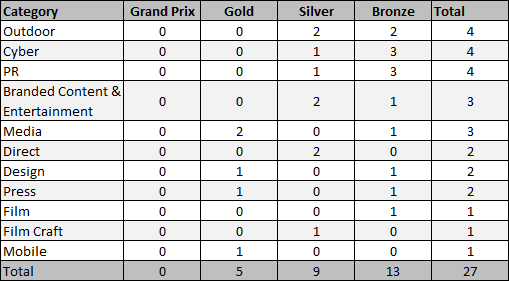
    India drew a blank at the Titanium and Integrated category which was presided over by Prasoon Joshi, Chairman, CEO, Chief Creative Officer, India/South Asia, McCann Worldgroup. However, the good news is that Indian entries earned metals in the Cyber and Mobile categories. After having drawn a blank in these two categories over the years, winning here was critical given that both media vehicles are growing worldwide, as well as in India where the smartphone and internet penetration has leapfrogged over the years.


    The awards presented at the final evening ceremony were:

    Lion of St. Mark to Joe Pytka in recognition of his outstanding contribution to creativity in advertising and communications


    Agency of the Year was given to Adam&EveDDB, London. Dentsu, Tokyo came second and AlmapBBDO, São Paulo third.


    Independent Agency of the Year went to Forsman & Bodenfors, Gothenburg. Second place went to Lemz, Amsterdam and third to Wieden + Kennedy, Portland.


    The Palme d’Or, given to the most awarded production company, was presented to MJZ, USA. O Positive Films, USA came second and Outsider, UK third.


    The Network of the Year award was presented to Ogilvy & Mather with BBDO taking second place and DDB in third.


    The inaugural Regional Network of the Year winners were announced as:

    APAC -BBDO

    EMEA – DDB
    North America – BBDO
    South America – Ogilvy & Mather


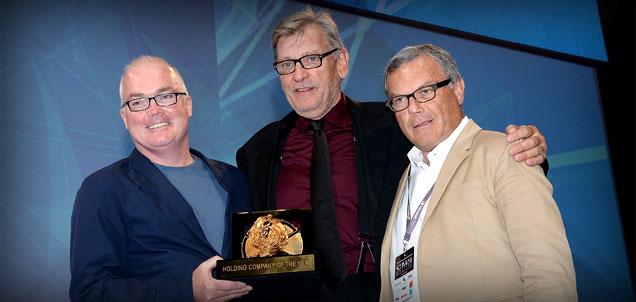
    Also awarded was the Holding Company of the Year which went to WPP. Omnicom took second place and Publicis third.


    The coveted Creative Marketer of the Year trophy was presented to McDonald’s in honour of their consistency in placing creativity at the heart of its advertising and communications and distinguishing themselves by inspiring innovative marketing of their products. Steve Easterbrook, Senior Executive Vice President and Global Chief Brand Officer, was present to collect the accolade.


    The winners of the Young Lions Film Competition were also announced, with the Bulgarian team, Vladimir Gerasimov and Zhelez Atanasov winning the Gold medal.


    The Young Marketers Competition saw the dedicated jury award the team from Russia, Marisol Diaz Rozic and Marianela Frick from Pepsico, with the Gold medal.


    Cannes Lions was been attended by 12,000 delegates and seen seven days of non-stop content delivered by more than 500 speakers, over 37,400 pieces of work showcased at the Festival, inspirational academies, seven young lions competitions, four awards shows, two galas and unrivalled networking opportunities throughout. Visit the Cannes Lions YouTube page, http://www.youtube.com/user/canneslions, to catch up on the highlights of the week or the official website, www.canneslions.com, to view the winners of the 61st Cannes Lions awards.


  • Cannes sees record number of entries from across the globe

    By A Correspondent


    Cannes Lions entries have reached an all-time high with a total of 37,427 entries submitted from a record 97 countries across 17 awards categories – Branded Content & Entertainment (1,178 entries), Creative Effectiveness (80), Cyber (3,660), Design (2,624) Direct (2,676), Film (2,838), Film Craft (2,073), Innovation (206), Media (3,127), Mobile (1,187), Outdoor (5,660), PR (1,850), Press (5,007), Product Design (194), Promo & Activation (3,241), Radio (1,448) and Titanium & Integrated Lions (378).


    The top ten entrant countries include USA (6,213), Brazil (3,321), United Kingdom (2,757), Germany (2,376), France (1,838), Australia (1,543), Japan (1,146), Canada (995), India (976) and China (952). Countries that have entered for the very first time include Albania, Ghana and San Marino.


    The work will be judged by 17 international juries made up of 327 top-level industry peers from 44 countries who will vote, deliberate and finally award the coveted Lions to the entries worthy of the honour which will go on to inspire and shape the industry in the future.


    “Overall entries are up close to 5 per cent on last year, and we’re delighted with the response to the inaugural Product Design Lions category as we bring into the Cannes Lions mix a whole new sector,” observed Philip Thomas, CEO of Lions Festivals.


    “Some interesting analysis from these entries figures include: the astonishing leap in Cyber Lions, now the third largest category at the festival (+39 per cent) which we attribute to the restructure of the category to bring it in line with current digital trends to embrace Social, Branded Technology and Branded Games. PR Lions has also increased dramatically (+43 per cent) as the category is embraced by agencies around the world as the definitive and much acclaimed honour for the PR industry. Other awards categories that have equally seen a significant growth are Branded Content & Entertainment now in its third year (+22 per cent), Design (+11 per cent), Mobile (+12 per cent) and Promo & Activation (+9 per cent).


    Interestingly entries into some of the traditional categories have dropped as the industry yet again changes shape; Film (-9 per cent), Press (-12 per cent) and Radio (-7 per cent). And for the first time ever, Outdoor entries have overtaken the number of Press submissions.


    Cannes Lions will take place from 15-21 June 2014 in Cannes, France.


  • Ije Nwokorie appointed new Design jury head at Cannes

    By a correspondent


    The Cannes Lions International Festival of Creativity has appointed Ije Nwokorie, the new Global CEO of Wolff Olins as the Design Lions jury president. Ije replaces Karl Heiselman following his recent departure from Wolff Olins to Apple.


    Born in America, Nwokorie spent his early years in Nigeria, an experience he credits with underpinning his creative outlook, as it is a world where commerce, culture and creativity are necessarily intertwined with everyday life. He completed his architecture training at Columbia University and has worked on urban regeneration projects in Africa, special effects in New York and computer gaming in London. Nwokorie joined the Wolff Olins team in 2006 as a senior strategist, was appointed managing director of Wolff Olins’ London office in 2010 and became global CEO in 2014.


    In his new position, Ije Nwokorie will lead Wolff Olins’ global business forward into an exciting new chapter; to inspire, as well as drive, facilitate and deliver strategy and innovation for big corporations. Wolff Olins is responsible for brands such as (RED), Orange, GE, Mercedes-Benz, New York City, London 2012, Tate, Unilever, Target, Hero MotoCorp, Tata Docomo and AOL.


  • Juries for Cyber, Design and Direct Lions announced by Cannes

    By a correspondent


    The organisers of the Cannes Lions International Festival of Creativity, the largest global annual awards celebrating excellence in creative communications, have announced members of an additional three juries set to participate at this year’s event for the Cyber, Design and Direct Lions categories.


    Commenting on the jury line-up, Philip Thomas, CEO of Lions Festivals said, “The prestige associated with winning a Lion is largely a result of the calibre of the professionals judging the work. It is therefore fitting to have such a formidable group of industry experts, who will no doubt help inspire and advance the global communications industry with the outcome of their deliberations. We very much look forward to welcoming them all to Cannes in June.”


    The juries will be chaired by Susan Bonds, Chief Executive Officer, 42 Entertainment, USA (Cyber Lions); Karl Heiselman, Chief Executive Officer, Wolff Olins, USA (Design Lions); and James McGrath, Creative Chairman, Clemenger BBDO Melbourne, Australia (Direct Lions).


    Three Indians have made it to the list including Meera Sharath Chandra, Founder Chief Executive Officer & Chief Creative Officer, Tigress Tigress, India in the Cyber category; Mangesh Rane, Founder Director, Open Strategy & Design, India in the Design category; and Rajat Sethi, Partner, Strategic Caravan International, India in the Direct category.


  • Anil Thakraney: Cannes winners, release your media plan

    By Anil Thakraney


    Congratulations to the Indian ad world, it was a very satisfying show at Cannes; 33 trophies is really wow when you consider that till only a decade back we used to win zilch.


    However, the rumour mill is buzzing. Again. Gossip suggests that some of the winners at Cannes are ‘scam’ ads, because ‘nobody’ has seen the winning entries in the media. The PR winnings sound dodgier, the work appears to have been designed to please an international jury. For example, that bit about adopting a pothole. Wouldn’t firangi judges just lurve stuff like this from Incredible India? Everyone out here is wondering exactly how may potholes got sorted.


    Now, it’s quite possible that the gossip is unfair to the winners, it’s very likely that none of them are scams. But to know that, we need access to the media plans of the winning entries, and that’s impossible. One could have filed an RTI application, but sadly, the ad world doesn’t come under its purview, not yet at least. So then what’s the way out? I would urge the winners to publish their media plans in the trade media. With details of the number of insertions for press ads, number of hoardings used, etc. And the PR winners should publish full details of the operations and the effectiveness of their campaigns. I think this is important for it shall help kill the gossip. In any case, if you have done genuine work, why not proudly publish the facts?


    On another note, must say our continuing disappointing run in the digital category is a cause for concern. I can only think of one reason why we aren’t winning anything: Our old world creative directors who are obsessed with the traditional media, and have failed to evolve. Well, they better change this fast. By finding people who can help them understand the digital space. (By the way, many of these giants haven’t even tried out social media, I kid you not.)


    Lastly, a pat on the back to the TOI group. Despite being a huge, huge organization, they consistently find a way to inspire their ad agencies into doing scintillating work. Marketing directors and brand managers of other large companies should borrow a leaf from them. On why bigness should never come in the way of good creative work.


    ***


    PS: Cool idea from the makers of Homeland, the hugely popular US TV serial. They are looking for ‘extras’ for the next season, and are inviting members of the janata to come forward and apply. Great way to promote a soap, Indian TV serial makers should try it too.


    Link: http://www.wired.com/dangerroom/2013/05/homeland-casting-call/


    Anil Thakraney is a senior journalist and commentator. He is also Editor-at-Large, MxMIndia. The views expressed here are his own. He can be reached via Twitter at @anilthakraney


  • Can(nes) we give our best in 2013?


    By Johnson Napier


    With 3 Golds, 3 Silvers and 8 Bronze Lions the Indian tally at Cannes Lions last year ended at a disappointing 14 metals. This was a sharp decline compared to the 24 metals that India had bagged in 2011. But the dismay of last year seems to be forgotten as the Indian camp gets ready to put up a better, if not the best, show this year.


    MxM India gets a few biggies of the ad fraternity to share their expectations from camp India this year.


    Prasoon Joshi, President – South Asia, McCann India

    The tally apart, I go to Cannes with a completely open mind to discover new surprises, works, etc that are done from around the world. To be able to predict India’s performance would be unfair on my part because the festival is such that agencies from around the world come and participate. As a result one goes there with a very open mind to see what are the new trends that have emerged in recent times. Also, where India’s performance is concerned it keeps wavering; I do not go there with too many expectations ever. It’s always a bonus if you win more. But as I said it is always a learning experience where one can learn a lot more.


    As for McCann India, we did well last year and managed to win a Gold. For this year I am counting on work around Stayfree to win us metals. It is work that we are very proud of. The work managed to win Gold at Abbys too. We have managed to use multiple mediums very well for the campaign like video, uses advocacy of intention of people to drive home an important point of social change with the brand. It’s all about girls drop out of school because of toilet/sanitation issues and therefore try and create awareness of the issue and try and educate girls in the process. The project also benefits the brand equity in the market and also encourages good social habit. When such work gets awarded it kind of encourages the whole team to do more.


    Abhijit Avasthi, National Creative Director, O&M India

    I am an eternal optimist and hope that this year will be India’s best ever. Across agencies, across disciplines and across categories there is some very interesting and original work we have submitted as a country. Yes there is always a lot of cultural nuancing in our work but therein lies the responsibility of our country’s jurors to educate the jury about the brilliance of our work. Judges from other countries, especially Latin America, do make the effort to do the same and hence they benefit from it.


    Sridhar Kondiparthi, Chief Creative Officer – India Sub Continent, Leo Burnett

    I think India stands a good chance this year. We should do better than last year and I hope we win in all verticals including Digital and Mobile. But I do not think this will be our best year ever at Cannes.


    Mahesh Parab, Executive Creative Director, DDB Mudra Delhi

    I am quite confident of Indian talent and craftsmanship so I am expecting India to win a lot. I would also like India to see India winning in some of the most challenging categories like Titanium, & Integrated, Promo & Activations Lions etc. As technology evolves, so does the possibility of what you can do with your ideas. So I would expect more innovative stuff from India this time around.


    As for the tally, it’s going to be tough to go past the tally of 25 Lions (2009). After the glory of 2008, India’s first Grand Prix ever, it’s going to be a Herculean task for Indian agencies. All the best.


  • More smalltown India folks are joining advtng: Prasoon Joshi


    This interview with Prasoon Joshi was done around a fortnight back, and the orginal transcript went into twice the length of what you read here. There are many industry leaders whom you can cut short in a conversation, but with the McCann Worldgroup President – South Asia, you are transported to another world and you can’t get him to stop.


    Perhaps it’s the other hat that he wears that does it to you. The poet in him takes over. As he goes about discussing every facet of the business of creative advertising. What was intended to be an interview on the problems plaguing creative awards in India ended up being a freewheeling interview…


    The industry sure has changed much in the recent past…

    The whole scenario is changing. It is very tough to survive in the advertising industry. No compensation model, there is no IP in this industry. For example, any other industry which is ideas industry has IP. I do music and I have IP; films have IP, technology has IP. Advertising industry has no IP of ideas. So, in the earlier days, the relationships with clients and agencies were longer, and the IP, in a sense, was taken care of because the client lived very long with an agency. One idea was used for a longer time. For example, an ad used to run for 4-5 years, sometimes 10 years. Today it is so perishable, so here and now that you might have cracked a big idea, but quickly you are changing the product and having versions and versions of it. And even relationships aren’t that long; a client may stay with an agency for a year and then move on. The hard work you put into the business, you reap the benefits of it through compensation over the years.


    Which is not too bad…

    The commission model is not there. There is a fee model, now, mostly. So, before you can actually get compensated, the client has moved on. And there are practices that client moves on with the creative idea and continues with it without you being any part of it. You probably got paid for eight months, six months or one year. These protections need to be there for the industry.


    But it’s an international malaise.

    I’m talking about internationally only. I’m saying that IP has become a big problem for the advertising industry. This model has not being able to take care of the changing landscape and as a result, it’s tough. Every client whether big or small wants similar attention, dedicated resources. Sometimes what they pay you can’t even take care of two people’s salaries, and they want six people on the team. How do you do it? So right now agencies are pitching every day, and you can’t take a stand that you only want to do a certain scale of business, that you want to be compensated in a certain way.


    The economic scenario isn’t much to talk off. The long-term compensation may be there over the years, but the amount of work required today on one brand is huge. The fatigue factor of the consumer is very high as the consumer is bombarded with so many creative things, so many channels, so much of entertainment. Earlier you had one channel, you made one good ad like jab mein chota bachcha tha badi shararat karta tha and everyone knew it. Done. Now, even on hit programmes, how much of assured appointment viewing do you get? It has declined.


    So business has gotten tougher.

    The challenges have increased. Yes, more complex media habits of consumers, more distractions, more challenges.


    And this is when one digital is not big enough in India.

    Digital is still at its nascent stage in this country. But in the western world, is has become very definitive. Given the co-existence of various kinds of consumers, media habits and the exposures people have and economically it is so diverse that affordability, reach, and penetration are a problem. I don’t think that internet penetration is such a big problem in the west.  There are problems of literacy and infrastructure. Mediums will co-exist and television will stay on. My driver bought his first TV two years ago. You can’t even imagine that somebody bought his first TV two years ago in America – it’s not possible!


    Do these complexities impact creativity?

    Creativity thrives from challenges. Eventually, it has only helped creativity. It is only going to challenge you and you are going to come up with better ideas. But right now it really makes it complex, especially for the brands. Certain brands are clearly very niche brands wherein you know your TG. But when you have to use the mix of media in this country then the problem is complex. You have to be little bit everywhere. You have to have an idea, which can travel across – you can’t be messaging differently on TV and online. And when something is at inception, a lot of jargons are at work. The fear of the alien, unknown is there, which is there in clients when clients talk about digital. There is a fear – ‘we will not be able to understand digital’. There is nothing like you can’t understand digital… it is also communication.


    How to do deal with getting the right talent? One of the problems agencies face for account planning and client servicing is that business models do not allow hiring of top talent. Is that impacting the creative side also?

    Advertising is still a destination for many creative people in India. That might not be the truth everywhere else in the world. But in India, it still attracts a fair amount of talent. In fact, it attracts more talent than it used to in my time. Then, someone like me who came from a small town did not have any knowledge about advertising. So we found it very difficult to tell our parents what we do. It was difficult for me to explain to my father who was a civil servant – he understood IAS, medical, engineering, he also started understanding management and MBA, but advertising wasn’t easy to explain. There is a science attached to advertising that is very difficult for a common person to understand.


    Would it be right to say that when you began the composition of an ad agency was mostly 90 percent people from urban areas? Has that changed dramatically? What is it at McCann?

    It has changed a lot. I think we have a lot of people from smaller towns now. There are still people who are brought up in metros. They know about the profession or have families in the profession unlike our families who didn’t know anything about it. There are people who are second-generation advertising people, whose fathers were probably in client servicing in some small agency and they feel like working at an MNC now. There are people like that. But lot of people, talent have heard about Piyush or me and know that we were from small towns. You require people to know about people before they can get attracted to a profession, especially a creative profession. See, the creative profession is not that music happens. It’s like Zubin Mehta does this kind of music or Mick Jagger does this or Kishore Kumar sings like this or Gulzaar sa’ab writes like this. There is always people’s association in creative field. Creative profession also has desire to get accolades because you want to be acknowledged. If you tell a journalist you will not have a byline, he might not feel good about it. Because he wants to own his thinking, there is some kind of proprietary thing that you feel for your ideas. That happens with the creative field.


    So what is the percentage of urban v/s smalltown India in agencies?

    It is a good question. I should have done this exercise. But I can tell you from my perception, from my understanding that there are many people now who come from smaller towns. I see people from Nagpur, Pune, parts of North India like Lucknow, Bareilly, Trichy, not where advertising agencies used to be.


    If you had two people to be selected – one say from Mumbai and other person from a smaller town, say Barielly. Assuming all else is equal, who would you prefer to take?

    I would go for talent. I have another observation to make. I would prefer to take someone who comes from the grassroots, who has seen more life than just metros. That’s where the market is going to expand. Though I won’t have a bias, anybody can have understanding, anyone could have travelled the world and understood things. I do not have that strong a bias. But I would want people to come from various parts to make my offering more robust and widespread.


    But sometimes my experience is very strange, I meet people whom I hire for their background at times, but I don’t know they want to shun that, they want to be someone else. What I expect them to do is to borrow from their lives and they are psychologically blocking that part. And say I want to be part of this big town, they start dressing up differently, they suddenly start pretending like they have not heard certain words in the language. So I may be talking to them in Hindi, and they reply in English, almost feeling that he is being thought of as a person from a small town. Some people want to shun that and rather than that becoming a strength, it becomes a liability because you are neither here or there.  They don’t want to be known to have an understanding of middle-class India. Hence, they are not borrowing from it. And it’s not they are doing it consciously, they do it unconsciously as they want to be part of this upwardly mobile life. So, that becomes almost like a deterrent.


    Do you think there’s a domination of the North Indian mindset in advertising… there’s Piyush and you. Of course there’s Balki and others…

    There are many South Indians. We have Balki, Pops, Chax who are from South India. Then you have Aggie who is also from South, he is from Kerala. Many more people. So it is a misconception.


    Moving on… we have had recession and a mixed year in the creative world. How do you think India will do at Cannes this year?

    For me Cannes is a by-product of what you did throughout the year. I wrote the script of Bhaag Milkha Bhaag. While I was looking at Milkha Singh’s life, his target was metal – Olympic, Commonwealth, Asian Games. I work with a target. For us, it can’t be. It is just an icing, it is some activity which happens in parallel, where you get acknowledged – that is how it should be seen.


    Today, awards are becoming targets. Of course, you should enter and win. And there are some rules which you need to follow. There are various other ways of measuring what you are doing is right or not. The biggest measure is your connect with the consumer. Not only here but even the other field I operate in – the films. There are few songs of mine which are very popular, which have done a great job but never been awarded. I consider the song Arziyan, Maula, Maula, which I wrote for Delhi 6 as very good pieces but I didn’t win for that. It doesn’t matter to me. Here also, a lot of campaigns like Thanda matlab Coca Cola, these films didn’t win at Cannes but outdoor won, print won. ‘Yaaran da Tashan’ did not win a Cannes Gold. I won later on for Happydent. I don’t think that the work was not correct. It didn’t meet the jury sensibility and when it comes to Cannes. I feel that we have entered our work and if I don’t win, we don’t get disappointed. For us the bigger worries are if the brands we work for are not doing well in the market or the consumer connect is not there or the sales are not in place. Cannes is something which I would love to win and feel happy if we do but if I don’t, we don’t re-strategize to perform better in Cannes.


    Is there pressure from the clients to win at Cannes?

    I would say an absolute no.


    Won’t marketing managers want that…?

    No. marketing managers never want it. In fact there are a few cases that someone might say, change your work. And it is there that they get derailed. And they are not doing their job.


    May be they are not telling this to someone like Prasoon Joshi. May be they are telling your juniors.

    None of the sensible clients would ever tell you to get an award but will want good work which will spark great conversations. Brands need to occupy a mindspace in this cluttered space. No one leaves the house saying I will buy ketchup or soap like a lifestyle product. But if I have been able to make someone even think for one second about buying a certain toothpaste, then I have done my job. Clients may ask you to create work which will create conversations. There is nothing wrong in this.


    How many entries have you sent to Cannes this year?

    I don’t remember. Maybe 25-30.


    No conversation will be complete without talking about what happened at Goafest. Now that it is past us, how do we make sure that things are not repeated next year?

    About proactive or one-off works that people create, I have said earlier as well that creative people keep looking for experimentation. And it starts off like you needed one room for experiment and they asked for client permission and they gave you permission. But what started as a one-off can become an epidemic. I believe that creative people should experiment but not at the cost of brands. Because brands are not made overnight. Credibility can be shaken in a second but it takes years and years to build brand equity. So it’s not correct to play with a brand equity which has not been created by you alone but a lot of people. I feel that we have to give a window for creative people to experiment. It can’t be at the brand’s expense, at all.


    So what do we do? We don’t allow or indulge in such work. I won’t approve of it. But being a creative animal, creative people have an urge – why can’t I do this or that? You can say why don’t you do it at home and why get out with it? But we need to get out with it because we need opinions from people like you. You want to know what people think of it – is it good or not? I have suggested that at award shows, we should have a showcase award or window where people are allowed to exhibit their work so that they can sharpen their tools. But you can dismiss this argument by saying, why don’t they do it on regular work? Because sometimes they don’t get an opportunity. We should be a little kind and generous for people to showcase their talent. However, it’s unfair to think that clients will face the damage at the expense of something you created.


    We need to keep in check the desire and importance we attach to awards. Because if you start attaching undue importance to it then we will derail from what we are there for – to help build brand equity and not win metals. It’s an art to sell products and that’s why brands come to us, because they think we have the art of selling. So you need to create forums where art can be practised. The role of award shows should be sharpening and sharing.


    And plagiarism? 

    About plagiarism, it is a very subjective thing. Before this year we had not heard of it. I think somewhere it went overboard. Similarities can always be found. I think I have judged at Cannes and other respectable shows, I have never ever received a request to judge anything again. What went wrong I think is that after the jury process is over it should be over. You can criticize it because then otherwise throughout the year we will be doing it. Highlight it but not get paranoid with it.


    But the Ad Club accepted the complaints and decided to act on it?

    That is the reason why the super jury happened. We collectively took a decision that there has to be a line drawn. We cannot keep it open. Every year, someone will say I’m not happy. And some might say that I don’t think our industry is into plagiarism, but in the last one year plagiarists have entered our industry while aliens have attacked. What are people talking about?!


    It’s not that we are not creating brands, selling brands or the advertising industry is collapsing. We know that lately, award shows have become a little unhealthy as there is too much importance given to them, people take them too seriously.


    Are clients okay with being exposed?

    Most clients don’t track of so many awards shows. It is for the advertising industry, they say.
     

  • Cannes Lions Young Media Academy to launch at 2013 festival

    By A Correspondent


    The International Festival of Creativity, Cannes Lions, has announced the launch of a young media academy which will complete a line-up of six academies at this year’s festival.


    Aimed at young media professionals working within media agencies and media companies, the Cannes Lions Young Media Academy is a week-long structured programme focusing on creativity in media. The objective is to inspire, focusing on demonstrating the value and execution of creativity in media channels, while providing a greater understanding of the global media and advertising community. During the programme delegates will develop a deeper understanding of the impact of creativity, how to manage relationships between the idea, the media channel and consumer behaviour and gain insight into the major issues and challenges that lie ahead.


    The class will follow a bespoke week of exclusive academy presentations and will include:

    – Understanding and providing effectiveness – case studies and presentations from previous Creative Effectiveness Lions winners

    – How do clients judge creativity? The breakdown of a Lion winning campaign presented by the client and agency

    – Understanding the ways clients think and act – insights from global brands

    – Deconstructing analytics and metrics in a creative advertising world

    – Understanding the challenges of social media and measuring ROI

    – The technological evolution of media, channels and consumers’ behaviour – presentations from technologists and developers


    Leading the Academy will be Maria Luisa Francoli, founder of global digital agency Media Contacts and former Global CEO for the global media network MPG. She said, “I am thrilled with this initiative and feel very honoured to have been invited to lead the academy. The fact that Cannes is allocating so much attention and resources to promote creativity among young media professionals is great news for the industry and a wonderful privilege for the first 35 members of the academy. I will do my best to ensure that we all take maximum advantage of the opportunity.”


    Commenting on the addition of the new academy, Steve Latham, Head of Talent & Training, Cannes Lions said, “Understanding how creativity can be used within media strategy is essential if the industry wants to innovate. This academy will provide inspiration and tailored training in a focused and distilled environment. We’re delighted that Maria Luisa, with her wealth of experience and knowledge, will be leading the academy.”


    The academy will run throughout the festival week from June 16 to 22, and is open to young media professionals aged 28 and under. The cost of the academy is €1,945 and details of how to take part can be found online at www.canneslions.com or by emailing academies@canneslions.com.


  • Jaldi 5 with Tripti Lochan, CEO-Asia, VML Qais

    Tripti Lochan

    By Tuhina Anand


    1. Does the tag of ‘Cannes Lion winning network’ make it easier for VML Qais to make inroads into India?

    Winning Cannes Lions is a fantastic achievement – because being recognized for something like Cannes is a validation of one’s work. But in India clients are looking for our local portfolio as much as they are looking at what VML has achieved globally. To that end, awards are great – but equally important is the context of work you do in that market for brands that are recognized.


    2. How do you perceive the Indian digital advertising space and the opportunities here?

    The Indian digital advertising space is an extremely interesting place to be. There are fantastic opportunities, and brands that have global aspirations. But, digital is still at the “lets experiment seriously with it” stage. As brands get successful with their digital initiatives, we will see the real opportunities open up.


    3. What will be your focus for the next year in India?

    Continuing to build a solid company, hiring the right people, delivering against the promise we have made to clients, and ensuring that best practices from around the world are show-cased to our clients.


    4. What is one factor that differentiates VML from others in India operating in a similar space?

    It’s our insights-based strategic thinking. What we recommend to clients is based on real knowledge of what users want from specific brands. We create actionable insights through research that drives strategy. We have a full research team that does 360-degree research that drives strategy. This is our differentiation.


    5. What is the biggest drawback in India that is holding back the progress of digital advertising/marketing making the most of its potential?

    Frankly, India is like the rest of the world in its evolution of digital. The budgets put against digital advertising do not reflect the amount of time consumers are spending online. When this imbalance gains equilibrium, that’s when we will see the real potential of digital unfold!


  • Industry remembers V Ramani’s path-breaking work

    By A Correspondent


    V Ramani

    August 1, 2012 will be remembered as a sad day for  digital media as V Ramani, the man who championed the sector way before most others, , passed away. A prayer meeting will be held in his memory at 6pm on August 3 at the Bombay Tamil Sangham Hall in Sion in Mumbai.


    Mr Ramani worked as a media professional for nearly three decades, with years of experience in advertising with stints at Lintas, Draftfcb Ulka, McCann Ericsson, Contract and Euro RSCG.


    Mr Ramani helped establish Internet and Mobile Association of India (IAMAI) and was also the first Indian Cyber Jury Member at the Cannes. He is the Co-founder, Ignitee, and also the man behind the first ever branded programmes (Surf Mashoor, Philips Top 10).


    In 2011 he launched Pariental Innovative Solutions, a full service cross media consultancy and planning company, along with Harminder K Datta as co-founder and principal consultant.


    Remembering Mr Ramani, Ravi Deshpande, Chairman and Chief Creative Officer, Contract Advertising said: “From what I recollect during my brief interaction with V. Ramani at Contract, he was truly a passionate person and a professional who would always be committed to the task at hand. Sadly, today media industry has lost an important contributor.”


    Ishan Raina, MD and CEO, OOH Media remembers Mr Ramani as an outstanding mediaperson and a loyal friend: “He was an outstanding media person with a high degree of intelligence, and a loyal and an emotional friend. He would be remembered for a lot of path breaking initiatives, right from Philips Top 10 which is the first sponsored programme on television 25 years ago to various internet initiatives. But he would also be remembered as a good friend.”


    Said Atul Hegde, CEO, Ignitee Digital Services: “V Ramani was a true trailblazer, always pushing the boundaries to see new ideas come to light. He gave us gems like Philips Top 10; was the first jury member at Cannes for the digital category and always had an eye for great talent. He mentored many a career in the media industry and will always be remembered for making the media function in an ad agency ‘Creative’.”


    Even Twitter was abuzz after media professionals heard about Mr Ramani passing away, Former CMO, Tata Teleservices, Lloyd Mathias tweeted: “RIP V Ramani. A man who embraced digital long before it became fashionable.”


    Karthik Nagarajan, National Director, Social and Insights, Group M tweeted: “Just heard about V Ramani. Feel genuinely down. Rarely happens with someone you knew only professionally.”


    Lakshmipathy Bhat, Advertising Professional, New Media Enthusiast, Vice President, Draftfcb+Ulka - Bangalore tweeted: “Ad Industry veteran V Ramani passes away – he was one of the earliest in the digital space inIndia. Sad.”


    Dhunji S Wadia, President, Everest Brand Solutions, tweeted: “Sad to hear the news of V Ramani. RIP.”


    Faisal Farooqui, Founder – CEO, Mouthshut.com tweeted: “RIP. Ramani was one of the first who loved Mouthshut. Will miss him.”


  • Paritosh Joshi: Who will cast the first stone?

    By Paritosh Joshi


    You’ve got to give it to Aamir Khan. Any theme he raises through his cinema, and now his television show, instantly becomes the issue du jour. Dyslexia (Taare Zameen Par), rigid education practices (Three Idiots), anguish at the political establishment (Rang de basanti), morality of terrorism (Fanaa) and now in rapid fire succession the weekly episodes of Satyameva Jayate (everything from female foeticide to medical malpractice). If the worlds of the social media are anything to go by, people in the Media & Communications industry are particularly engaged in Aamir’s weekly broadsides. Minutes after the week’s episode goes on air at 11am on Sunday, Twitter is deluged with views and opinions agreeing, and less often disagreeing, with Mr. Khan.


    You would imagine, looking at the stridency of tone that characterizes a lot of the chatter, that we belong to an industry that has solid claim on the high moral ground. Does it?


    I became involved with the Advertising Standards Council of India (ASCI) about 6 years back. As a communication professional, I was conscious of the close and incessant scrutiny that our industry attracted and of the permanent Damocles’ Sword of statutory regulation that hung over it. The ASCI charter’s commitment to self-regulate resonated strongly with me and joining the Consumer Complaints Council, which gives force to the Self Regulatory Code of the ASCI, was a natural next step.


    If Awards Functions like the Abbys and Cannes are the Halls of Fame of the industry, CCC must qualify as its identification parade for the Rogues’ Gallery. Education institutions that claim their superiority, not based upon quality of education facilities they offer, but the acreage of their campus. Cooking oils that assure you of defence against cancer. Fairness potions promising enhanced employability. Malted beverages that deliver anything from height gain to better grades in the exams. A whole spectrum of beers and spirits veiled very thinly under guises of ‘Music CDs’, ‘Unique Events’, ‘Golf Equipment’ or ‘Soda’. Apparatuses that promise the benefits of a cardio workout by merely placing your feet in a harness and allowing them to shake about for a few minutes. Perfumes and deodorants that will instantly cause the user to become a sexual dynamo around whom people of the other gender experience spontaneous orgasms. Plastic beads and metal baubles that will ‘guard against the evil eye’, pacify irate planetary deities and result in a shower of wealth. Or in a particularly horrifying instance, a hospital that advertised radical hysterectomies as a permanent solution against pre-menstrual syndrome. We’ve seen them all.


    While some offenders are no-name businesses, the largest majority are big and prominent businesses that we all hold in high esteem. Indeed, we must look well beyond the brand owners to understand the circle of culpable accessories that enable the offending communication to reach the consumer. The creative work originates in an advertising agency. A marketing team approves it for release. A media agency sets up a media schedule. Multiple media outlets finally convey it to the consumer. In many cases, all the organisations that are involved through this value chain are members of the Advertising Standards Council by virtue of which they are presumably committed to the ASCI Code. While the complaint is made and upheld against the brand owner, the actual burden of guilt correctly lies with all the accessories that participated in the process.


    Interestingly, whenever the issue of legally dodgy, false, misleading or vulgar advertising crop in professional discourse, the ASCI is indicted forthwith, for its abject failure in bringing the perpetrators to book. Of recent days, the Ministry of Consumer Affairs has joined the chorus, promising a ‘National Consumer Protection Agency’ aka the other NCPA, to become the consumer’s paladin against advertising mischief. Apparently the phrase ‘Self-regulation’ is indecipherable to the average communication industry professional.


    Self-regulation begins by a body representing all stakeholders in a particular context agreeing to a code of ethical practice. This code is then widely shared with all stakeholders so that they may understand and assimilate its letter and spirit. Once this has been done, self-regulation transfers the burden of compliance upon the practitioner. The overseeing authority is not a policeman. It is a conscience keeper.


    This is an exhortation. A humble request. How clean is our own escutcheon before we pronounce moral judgment on all and sundry? Or as Aamir might say, “Apne ghirebaan mein jhaank kar dekha hai kabhi?”

    Paritosh Joshi was until recently CEO, Star CJ. He has been a marketer, a mediaperson and been a key officebearer on industry bodies. He can reached via his Twitter handle @paritoshZero

  • The Anchor: Rajesh Mehta on 5 highs for a marketer winning a Gold at Cannes

    By Rajesh Mehta


    1.  Winner at a global level:

    It was a campaign that was conceptualized and visualized by the team and received laurels globally. The appreciation that we received was absolutely exciting. The admiration that we got withWestern Unionwining at such a global platform was thrilling for our entire team.


    2. Not expected from financial services:

    Western Unionmoney transfer, being a financial services company, is associated as the category from which cutting edge creative work is not expected. But to break the standard belief that the category can also be innovative was an achievement in itself. The entireWestern Unionmarketing team, along with McCann (creative agency), worked together to develop the campaign, that enabled us to cut through the clutter.


    3. It’s a Gold:

    There couldn’t be a better feeling than winning a Gold at the Cannes. And apart from that, it was the first Gold win forIndiaat the Cannes 2012. Western Union accomplished two victories with one Award – won the Gold at Cannes and the first gold forIndiafor 2012. There couldn’t be a greater feeling for us than winning these accolades in one night.


    4. Befitting to theWestern Unionbrand:

    As a marketer, it is a thrill to know that the ad campaign has captured the essence of the brand and has reached out to the right audience. The win at Cannes not only proves the creativity behind the campaign but the spot on messaging captured through it. The out-of-the-box thought process of our creative agency, along with theWestern Union’s internal marketing team’s insights, made this campaign an award winning one.


    5. Stood out among all the entries:

    For all of us, standing out in a crowd matters more than anything else and that’s exactly what we achieved with this win. There were 4,843 entries from 87 countries sent this year in the OOH Category which was higher than last year. This clearly indicates thatWestern Union’s win of the Cannes Lion Gold stood out and it certainly speaks volumes about the brand.


    Rajesh Mehta is Director-Marketing, Western Union India