Tag: Cannes

  • Dealing with Disbelief of Winning at Cannes

    Dealing with Disbelief of Winning at Cannes

    Sanjeev KotnalaWell, there comes a time in life when one is shaken to the core. This is the case of Naveen (name changed), who mostly appreciates the excellent work in the advertising industry and usually refrains from attacking or downgrading any work because he knows how much goes into producing the collective output. As an advertising marketing professional, he prides himself on his ability to judge campaigns and their reflection or alignment with the brand identity. However, without naming the campaign or the brand, he was shocked and shaken when a few campaigns he believed were lacking or were majorly misaligned with the brand’s perceived core values or the changing market dynamics won awards at the Cannes Lions. It has him questioning the judgment, the possible reasons the jury saw while making the decision, and the creative process.
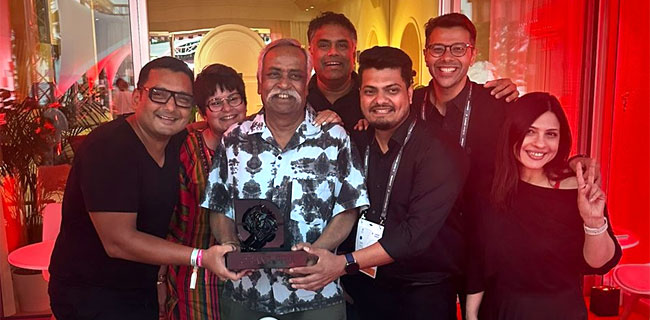
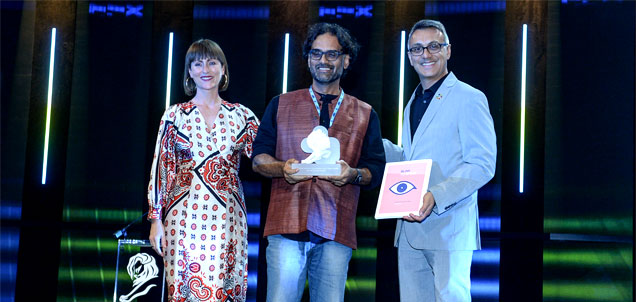
    He has been honest. He is one of the numerous creative-client–agency personals who entered their work confident of a win.  Understandably, not making the shortlist gave him time to recover. Making the shortlist and not winning for another entry was painful but acceptable. Where it crossed the line was someone else (a known competitor in India) winning it. Yes, he celebrated with the other delegates from India. He drank the whole night, but the pain was immense. And that’s when dear Vermajee, my mentor and friend, a brand and marketing consultant, came out of semi-retirement to counsel him.

    The result of Vermajee’s surprisingly effective counselling helped Naveen. Here is what Naveen said and wanted to share with the other potential winners who did not make the cut.


    The Shock of Disbelief

    My initial reaction was naturally of sheer disbelief. How could a campaign so flawed be recognised as one of the best? How did the jury miss the clinks in the armour or the details that made the piece of brilliance a has been? Several factors compound this shock:

    Trust me, at such times, it is hard to reconcile to the jury’s apparent admiration and point of view when my evaluation finds the campaign’s creative execution, messaging, or strategy lacking. When I see that the campaign is clearly misaligned with the brand’s core values or identity. Did the jury miss this crucial aspect? Have I not moved with the industry? And if my expectations are unjustified? What was my campaign lacking?


    The Imperative of Self-Evaluation

    Beyond the initial stage of disbelief, the next stage forced me to introspect and critically evaluate my professional judgment.

    I mustered enough courage to reanalyse and see the winning campaigns from a different perspective. I’m trying to understand what I might have overlooked. Were there any innovative elements or insights that escaped my notice during the first interaction? What made it resonate with the judges? I then engaged with colleagues and industry peers to gather diverse perspectives. Their constructive criticism and different viewpoints illuminated aspects of the campaign that contributed to its success. And still, I could not negate the possibility of biases or preconceived notions that might have influenced the jury or my judgment. I look back to check and recheck if my personal preferences cloud my professional assessments. And the silly answer is, maybe.


    Questioning the Jury and self.

    Naturally, I was not going to escape this question: whether the jury was wrong or if my perspective was limited. Did they see something I missed? Is their collective wisdom superior to my assessment? These questions are tough but necessary for growth.


    Maintaining Self-Belief.

    On the other end, I am shaken, and it is essential for me to regroup to maintain self-belief, stay motivated and confident:

    So, I took the emotional insurance of strategic thinking and acknowledged the subjectivity inherent in creative output and engagement. What resonates with one person may not resonate with another, and hence, there is a wider jury panel that could be given the benefit of better wisdom against a verdict of sample size—1.

    The Cannes Lions jury, like every other respectable award, has diverse industry leaders who bring differing spectrums of perspectives and likes to the table.

    I reiterate, telling myself that embracing differing opinions does not negate my expertise. Instead, they enrich the creative landscape. Acknowledging and embracing a broad spectrum of perspectives enhances my creative approach and broadens my understanding of successful advertising. Such an inward-looking examination is a learning opportunity. It is an opportunity to reframe my own set of expectations. A window to channel my energies into developing innovative ideas and strategies that align with my client’s creative vision and professional standards.


    Net-net

    There is no need to repeat that staying resilient and open-minded is crucial in advertising. The disbelief explosion caused by the unexpected success of some campaigns should not deter me, but it should inspire a deeper commitment to excellence and continuous learning. Creativity is a journey, not a destination—so are awards and market results.

    The relentless pursuit of improvement and a willingness to see things from different angles will help drive my success. I celebrate the achievements of others, learn from them, and use those lessons to fuel my creative endeavour. After all, in the world of advertising, the ability to adapt and evolve is as crucial as the ability to create. Cannes 2025 will be a different ball game. Thanks for the long call over WhatsApp, and I tell you- Mere Number Aayega.

  • W+K mulls legal action given no credit in Earlyman’s twin wins @ Cannes

    The Cannes Lions is said to be a celebration of creativity, but back home in India it led to much heartburn on Tuesday. Even after the dispute between Jindal Steel and Wieden + Kennedy was settled over the ‘Steel of India’ ad after a Delhi High Court intervention, Earlyman’s Films entry at Cannes Lions for the ‘Jindal Steel- The Steel of India’ film has led to a fresh dispute. Santosh ‘Paddy’ Padhi, W+K Chief Creative Officer and the prime force behind the agency, declined to comment on the issue, even as he rued the state of affairs.

    Earlyman bagged a Silver and a Bronze on Day 2 of the 2024 Cannes Lions. Which is good news. except that the credit for the idea/creator hasn’t gone to W+K. This is what Ayazppa KM, Earlyman Films co-founder has told The Economic Times: “We tried to push the boundaries of the way montage is viewed in India with experimental imagery and sound. We would like to commend Venkatesh Jindal, Kondurkar Studio and every member of the team for wholeheartedly supporting and sharing our vision.”

    It may be noted that Kyoorius Creative Awards had rejected the entry given the dispute on the credits. Said an industry senior who is familiar with the awarding process: “The entry couldn’t have gone to Cannes without the approval of Jindal Steel. Assuming that has been done, and due credit hasn’t been given to W+K, there is good reason for W+K to cry foul on this. These are the Cannes Lions after all, and the awards are meant to celebrate ideas and creativity.”

    Another industry person who is familiar with the development said that W+K must alert the Advertising Agencies Association of India and the Indian Society of Advertisers on it being the authorised apex bod of all ad agencies and advertisers respectively. “It is impossible for Cannes Lions or for that matter any awards body located elsewhere in the world to keep track of disputes on credits. It’s hence key that AAAI and ISA step in to clear the mess.”

  • It’s a Grand Prix for Ogilvy

    Ogilvy India Chief Creative Officers Kainaz Karmakar, Harshad Rajadhyaksha, and Sukesh Nayak with Piyush Pandey and some representatives of Mondelez


    By Our Staff


    The year: 2023.

    The date: June 23.

    The tally of metals so far: 23.

    Just a coincidence on twenty-three, no significance.

    But the big breaking news is that Ogilvy has bagged a Grand Prix.

    Now we now that a Grand Prix is one of the biggest accolades an entrant can get at Cannes Lions.

    But it’s also in the category that is valued most. Creative Effectiveness. Which means an a creative (as in an ad) which has bee found to be effective for an advertiser.

    So it’s not for a creativity that’s just a cool ad, but also a creative that has helped the business of the client.

    It’s the Shah Rukh Khan-My-Ad campaign made for Mondelez’s Cadbury Celebrations. Notes a communique on the Ogilvy website: “It was created in the wake of the pandemic, as local businesses in India struggled to fight back from economic hardship compared to big brands with deep pockets. Together, Ogilvy Mumbai and Cadbury Celebrations helped make Shah Rukh Khan – the world’s biggest movie star – a brand ambassador for thousands of small businesses, using machine learning to recreate the real-world Bollywood celebrity’s face and voice to use in ads for local shops, bringing more power to the people.”

    This is what Ogilvy India Chief Creative Officers Kainaz Karmakar, Harshad Rajadhyaksha, and Sukesh Nayak have said: “We are overjoyed and humbled to be given the Grand Prix for Creative Effectiveness for “Shah Rukh Khan-My-Ad.” This is a result of the dedication and effort of our fabulous teams at Ogilvy and Mondelez. We also thank Rephrase and Wavemaker for their valuable role in making our idea a reality. This Lion is the biggest acknowledgment of how this campaign has helped over 200,000 small stores across India through a tough time. This is personalisation at scale and more importantly, generosity at scale.”

    Btw, we didn’t miss the line: for their valuable role in making our idea a reality. So clearly, the folks at Ogilvy have said that it’s their idea. Of course sibling Wavemaker (both O and W are owned by WPP).

    Meanwhile, we asked the Ogilvy to send us a list of the various awards it has won for the SRK add, and here’s a list. And, mind you, this is not exhaustive. There are a few YouTube awards that aren’t a part of the list. Note Ogilvy doesn’t participate in the Abby awards. It does of course participate in the Effie.


    YEAR 2021


    SMARTIES APAC AWARD  2021

    Gold- Cadbury Celebrations ‘Not Just A Cadbury Ad’ in the ‘Location Targeting’ category

    Bronze – Cadbury Celebrations ‘Not Just A Cadbury Ad’ in the ‘Video Advertising’ category


    LONDON INTERNATIONAL AWARDS 2021

    Silver – Creative Use of Data – Data-Led Targeting for Cadbury Celebrations titled ‘#NotJustACadburyAd’

    Bronze – Creative Use of Data – Real-Time Data for Cadbury Celebrations titled ‘#NotJustACadburyAd’

    Bronze – Evolution – Best Use of Real Time Advertising for Cadbury Celebrations titled ‘#NotJustACadburyAd’


    EFFIE AWARDS INDIA 2021 – WINS 4 AWARDS

    Gold – Cadbury Celebrations – Not Just A Cadbury Ad in Interactive Marketing Category

    Gold – Cadbury Celebrations – Not Just A Cadbury Ad in Experiential Marketing/ Brand Experience: Product Category

    Gold – Cadbury Celebrations – Not Just A Cadbury Ad in The Disruptive Differentiators Award: Product Category

    Silver: Cadbury Celebrations – Not Just A Cadbury Ad in Food Category


    I-COM DATA CREATIVITY AWARDS 2021

    Ogilvy’s ‘Not Just a Cadbury Ad’ was a winner in the ‘Overall’ and ‘Location Based Category’


    WARC AWARDS FOR ASIAN STRATEGY 2021

    Ogilvy India wins Grand Prix + The E-Commerce Excellence Award + The Early Adopter Award for Cadbury Celebrations ‘Not Just A Cadbury Ad’


    APAC EFFIE AWARDS 2021

    Bronze – Mondelez’s ‘Not Just A Cadbury Ad’ wins a in Crisis Response / Critical Pivot – Products category


    AD STARS 2021

    Bronze – Mondelez – Not Just A Cadbury – Data Insights category

    Bronze – Mondelez – Not Just A Cadbury – Mobile category

    Crystal – Bronze – Mondelez – Not Just A Cadbury – Direct category


    YOUTUBE WORKS AWARDS 2021

    Mondelez along with Wavemaker & DeltaX and Ogilvy India, bag the Grand Prix for its ‘Not Just A Cadbury Ad’

    Mondelez along with Wavemaker & DeltaX and Ogilvy India, bag the Ruby for its ‘Not Just A Cadbury Ad’


    CANNES LIONS 2021

    Bronze in Creative Data Lions category – #NotJustACadburyAd for Mondelez under Data-driven Targeting sub-category


    KYOORIUS AWARDS 2021

    Black Elephant:  Best Of Show – #NotJustACadburyAd – Cadbury Celebrations

    Blue Elephants: Kyoorius Advertising Awards – Direct – Digital & Online – #NotJustACadburyAd – Cadbury Celebrations

    Blue Elephants: Direct – Targeted Video – #NotJustACadburyAd – Cadbury Celebrations

    Blue Elephants: Topical Advertising – Digital Media – #NotJustACadburyAd – Cadbury Celebrations

    Blue Elephants: Topical Advertising – Integrated Campaign – #NotJustACadburyAd – Cadbury Celebrations

    Blue Elephants: Creative Use Of Data – Targeting – #NotJustACadburyAd – Cadbury Celebrations

    Blue Elephants: Technology – Activation By Location – #NotJustACadburyAd – Cadbury Celebrations


    ONE SHOW 2021

    Mondelez #NotJustACadburyAd – Craft – Data-Driven Personalization category


    THE ONE SHOW ASIA SHOWCASE 2020

    Mondelez India #HeartTheHate in Public-Service & CSR | Corporate category

    Mondelez ‘The Cadbury Unity Bar in Design’ | Packaging Design category


  • The Montreux Advertising Festival entries open till March 31

    By Our Staff


    The 34th edition of Golden Award of Montreux Advertising Festival is scheduled this year at Montreux Switzerland in April, 2023. Montreux Festival has been a precursor to Cannes for 30 years now and is one of Europe’s premier Advertising, Media, Digital & Design Festivals.


    At last year’s Montreux Festival, Indian entries were successful and they won 4 Golds and 9 Finalist Certificates. BC Webwise, Blink Digital, Cog Culture and Tree Design won a Gold each. HT Labs, Blink Digital and BC Webwise won 2 Finalists each while Cog Culture won 3 Finalists. The Grand Prix of the Golden Award of Montreux was presented to Energy BBDO Chicago.


  • Grand Prix for TBWA heralds Good News on Day 2 @ Cannes


    By A Correspondent


    TBWA\India ‘Blink to Speak’ campaign bagged a Grand Prix for Good for the second consecutive year for India on Day 2 of the Cannes Lions festival for creativity.


    Blink to Speak has been created by TBWA\India for the Asha Ek Hope Foundation and the Neuro Gen Brain & Spine Institute. Said TBWA India CEO Govind Pandey to The Economic Times: “We believe in the power of disruptively simple ideas to make a difference to humanity. This was not done for awards. This was a heartfelt intervention from a team that genuinely wanted to help and make a difference.”  (Link: https://tbwacannes.com/blink-to-speak-asha-ek-hope-foundation-and-neurogen-brain-spine-institute-tbwaindia)


    Meanwhile, India had a fair day with awards. TBWA also bagged a Gold in Pharma. Meanwhile, DDB Mudra and Grey bagged Silvers fro Stayfree and Mahindra Rise and McCann Health bagged a Bronze for Kwality.


    Last year, McCann had bagged the Healthcare Grand Prix for Good for “Immunity Charm” for the Ministry of Public Health, Islamic Republic of Afghanistan.


    India has sent a total of 979 entries this year. Last year, the number of entries was 1227, which if one excludes entries from the Publicis Group and those categories that been deleted/ merged is 953.


  • Brooke Bond Red Label 6-pack band live at Cannes

    By A Correspondent


    At Cannes 2016, it won for Mindshare the coveted Grand Prix Glass Lion. A year later, India’s first transgender band, the Brooke Bond Red Label 6-Pack Band performed live at Cannes, its first in an international arena.
     

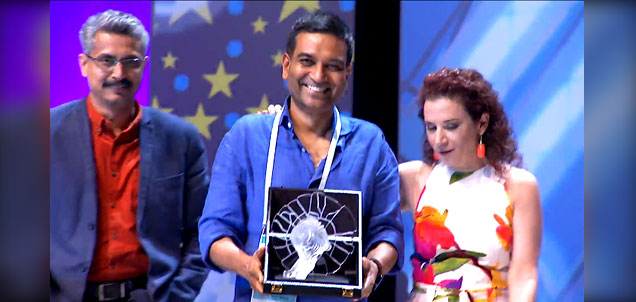
    Speaking about the event, Shiva Krishnamurthy, Brooke Bond Red Label spokesperson and Category Head – Tea, Hindustan Unilever Limited, said: “It is a wonderful feeling to see the Brooke Bond Red Label 6 Pack band getting acknowledgement and accolades at the Oscars of advertising. It feels great to know that through our association with the campaign, we have been able to spread our message of inclusiveness, encourage people to become more accepting, break barriers and bond over a cup of tea.”


    The campaign is also a ‘best-in-class’ example of Unilever’s Unstereotype initiative in action. Unstereotype, launched last year at the 2016 Cannes Lion Festival of Creativity, aims to advance advertising away from stereotypical portrayals of gender; delivering fresh campaigns that are more relevant to today’s consumer. The Brooke Bond Real Label 6-pack Band was formed in response to the insight that deep-rooted stereotypes hold us back from forming new relationships.


    Added Gauravjeet Singh, Head Media South Asia for Hindustan Unilever: “We are grateful to the committee at the Festival of Creativity, Cannes to recognise the Brooke Bond Red Label 6-Pack Band. The journey of the band has been challenging as they have fought social barriers throughout their lives without losing hope. The strength of these 6 individuals is truly inspiring and today we see them perform on a global platform.”
    Said Amin Lakhani, Leader, Fulcrum, Mindshare South Asia: “It is indeed a proud moment for India as our work is showcased at Cannes – the mecca of creativity. We are grateful to the Festival of Creativity, Cannes and to the Mindshare global leadership to recognise the Brooke Bond Red Label 6-pack band, and invite them to perform for a global audience. This is a testimony and belief in our work that began almost two years ago at the HUL Content Day in June 2015. The band faced a lot of challenges throughout their journey, which now culminates to the Cannes stage. Their inspiring performance today is symbolic to their determination and ‘make it happen’ spirit. Truly a collaborative effort between Unilever, Mindshare, Yash Raj Films & Music boutique- who have partnered in this magnificent journey”


    Added Ashish Patil, Head of Y-Films, Producer, Brooke Bond Red Label 6-Pack Band said, “We have always known that music can change the world because it can change people. We are super thrilled that our little band, India’s 1st Transgender band, the Booke Bond Red Label 6-Pack Band is on such a massive platform at the prestigious Cannes festival. Here’s hoping we can take this important message of love and equality out to as many people in the world as possible. Full power to them!”


  • Integrating medical, creative and strategy, the Medulla Way


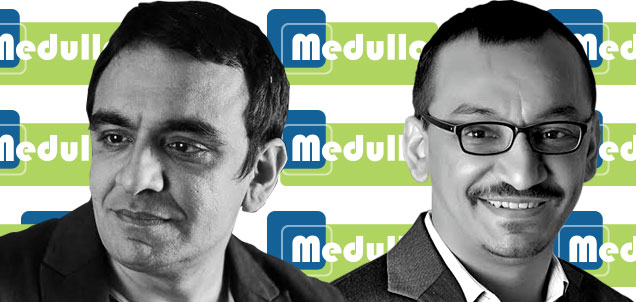
    India had a great start at the 2016 Cannes Lions Festival of Creativity, with Mumbai-based Medulla Communications bagging the Healthcare Agency of the Year in the Lions Health category – a first for the country. Praful Akali and Amit, former Grey creative chief , front men of the agency, bagged seven Pharma Lions in all: two Golds, two Silvers, and three Bronzes. Their campaign, ‘Last Words’, for the Indian Association of Palliative Care, hit home. They speak to Anuka Roy about their win, the healthcare advertising scenario in India and what lies ahead.


    You are a young agency, having been set up in 2008, but your works have been winning awards over the years. But being ‘Healthcare Agency of the Year’ is a big deal. Your sentiments as you look back on your eight-year journey…

    Praful Akali (PA): We feel proud to have won ‘Agency of the Year’ for India. We are happy to have made India proud.


    A B-Pharm degree followed by a PGDM from an IIM is a winning formula to lead a healthcare agency. Plus a brother who is among the top creative professionals in the country. So what would you attribute your success to?

    PA: Our success is based on our philosophy of integrating medical, creative and strategy, which is why all our communication — whether for clients or awards — has been appreciated. The rest has been about focusing on the advertising basics. If you look at any healthcare advertising agency, either in India or even abroad, they understand healthcare but not necessarily advertising. So the planning pieces of advertising, the basic creative and strategic processes, are not followed. An advertising agency does not necessarily get healthcare and very few have a healthcare arm. We felt that we needed an agency which got both advertising and healthcare. When Amit joined us, we used him as Chief Creative Officer to bring a basic creative strategy and philosophy on board, and also hire great creative people.


    Amit Akali (AA): When I left Grey two years ago, I felt that the level of strategy and creativity in a niche industry, was not the same as in mainline agencies. In the healthcare agency that already existed six years ago, called Medulla, while the strategy (coming from Praful’s background of IIM) was world-class, and their medical team was among the best in the world, where creativity was concerned Medulla had benchmarked itself against the Indian healthcare industry. We were clear that with the medical expertise already there, the creativity had to be benchmarked to the best in the world, and so we benchmarked it against Cannes. Last year was the first time we entered at Cannes, and became the No. 3 agency in the world. That is when we decide that we owe it to ourselves to now become No. 1.


    What are the challenges of being a healthcare agency as against a regular creative shop?

    PA: The communication you have in healthcare can genuinely impact the lives of people. But the regulatory barriers, in terms of more complex messaging, also have to be medically robust. The complexity of medical advertising means that my creative has more pegs to hang things on. And the other things – like medically robust communication, saying the right thing and being ethically correct — is the same for all kinds of advertising. Agencies from Mexico, South Korea and Indonesia have been telling us that they are glad that an Indian agency won because the work has been truly inspiring for them.


    AA: Healthcare has its regulations and restrictions. All your life you work on briefs for cold drinks, chips and chocolates and suddenly, over here healthcare is a completely new sector and the briefs are very specific. For me, coming from mainline, the propositions were really fresh. In healthcare, you also have a medical team that is part of the creative process. They come up with the knowledge of the product and they really give you very sharp briefs to reap off.


    Tell us about your client, the Indian Association of Palliative Care, for whose campaign (‘Last Words’) you bagged two Golds and a Silver.

    PA: ‘Last Words’ is not a simple campaign. It is a huge project for the Indian Association of Palliative Care (IAPC), and gave us a lot of emotional connect with everyone, including the jury. The campaign has been a personal journey for us. Our mother was suffering from cancer and wanted to die at home, and not in the hospital. At the last stage, she was in such bad shape that we had to move her to a hospital, and she died in the ICU. We were not sure if we had done the right thing since we had not heard of palliative care. Later, when IAPC was looking for a campaign, we were inspired by our own journey. Palliative care reduces pain in the last stage and provides counseling to both the patient and the family to prepare them. You always expect that your last words will be heard by your family, but when we realised that the last words are actually heard by nurses, we did this campaign with nurses, and chose the strongest last words to become a part of the AV and online film.


    Healthcare advertising is not really big in India. Do you think winning ‘Agency of the Year’ will change that?

    PA: I think it is already happening. When we were there, we met everyone from the Indian advertising fraternity, and they were all proud of the win. A lot of them may not have heard of Medulla because healthcare advertising was not necessarily on their radar, but they were proud. Realising the potential of healthcare advertising is already happening. Between last year and this year, I think the number of entries from India in the Cannes Lion Healthcare category has increased five-fold while entries from across the world have gone up by 40 per cent. People are realising that healthcare advertising can genuinely change lives and is an opportunity for people to do more impactful communication.


    AA: At Cannes, we presented JWT’s Blood Bank project and the Blue Dot project by McCann. Clearly, the focus this year was on healthcare, not just from Medulla but India. Healthcare is a very important sector in a developing country like India. Twenty years back, Ogilvy worked for the Pulse Polio campaign and helped eradicate polio. In a country like India, healthcare and healthcare communication have importance, but specialised healthcare agencies are not doing as much creative work as the mainline agencies. That is something Medulla set out to change two years ago, and that has clearly happened.


    A Grand Prix still eludes you. Are you aiming for that next year?

    PA: The ‘Last Words’ campaign, we were later told, was considered for a Grand Prix. For us the big aim was clearly to become Agency of the Year. I do not think that a Grand Prix is necessarily the peg, but there are pegs of winning even more awards the next year, and making people realise that it was not a flash in the pan, but that Indian advertising is very mature when it comes to healthcare. We want to do some of the best international advertising work in pharma and healthcare, and if tomorrow we do that and people laud the work done by an Indian agency, that would mean more for us than a Grand Prix.


    This interview first appeared in dna of brands on June 27


  • Discussing Content with Spike Jonze and Shane Smith at Cannes 2016

    By A Correspondent


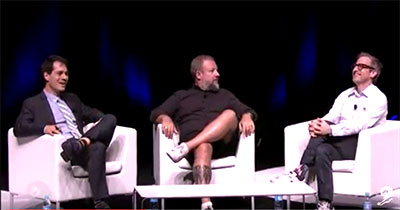
    ‘Content is King’ is one of the over used lines in the last few years. But what content does the youth want to see is something that everyone is figuring out. To try and find more about it, Vice hosted a discussion on ‘Making Content We Care About’ with Shane Smith, Founder and CEO, Vice and Spike Jonze, Co-President, Viceland, Vice. The session focused on the importance of making content that young people care about and was moderated by Joel Stein, a well-known journalist from Time magazine.
     

    A video made by Vice was aired before the conversation began. The video dealt with issues that today’s youth are concerned about, from LGBT issues to adventure sports. ‘Quirky’ was the best way to describe the discussion. Stein started the conversation by asking Jonze on how it feels to see so many mobile phones focused at you instead of people. Though Jonze ducked the question and blamed jet lag as the reason that he cannot think anything right then, it was Smith’s mocking reply about how technology is the future and he feels good about it, cracked up the audience.


    The conversation was to an extent dominated by the old school media versus the new school media debate. With the former being afraid to make content which did not follow traditional rules while the latter almost broke all the rules. “I think we are not scared of making something that we feel strongly about is because we do not have the fear of getting fired. So, we make things which we believe in,” said Academy Award winner Jonze. Smith added, “What we do is, we just say make it. Just go out and do it. If it is bad we will fix it or not make it and if it is good we will make it.” The key point here is that most of these new age content makers are not afraid to experiment and make new content. They have embraced failure as a part of the journey and not a hindrance to it.


    They also discussed about the transition of Vice. Stein felt that it has become more serious. Which both men agreed to and said that it is a part of their growing up as people and also the organisation getting expanded. So, what is it that appeals to the youth? They have a different view about almost everything and they are opinionated. “There has to be some purpose and meaning to the content they watch. It just cannot be another reality or talent show,” said Smith.


    Meanwhile, on the awards front, India has received seven shortlists in the Film category. Indian agencies have bagged 23 metals so far, one of which is a Grand Prix and with four Golds. Guess just a day before we get the final picture.


  • @Cannes2016: Sessions on VR & Gender Equality


    On a Virtual Reality adventure!

    Google took the audience on a Virtual Reality adventure at Cannes Lions 2016


    By A Correspondent


    Virtual Reality (VR) has arrived. For the first time, you can step inside experiences and feel like you are actually there. VR lets you travel to faraway destinations, stand on stage with your favorite artists, and play in new worlds. From Cardboard beginnings to fully immersive experiences, Google is bringing virtual reality to everyone.


    On Tuesday, Google hosted the session ‘Adventures in Virtual Reality’ at Cannes Lions 2016. The session was started by Clay Bavor, Vice President of VR, Google. “The thing that is so compelling about virtual reality is something that you really got to see first-hand to get it fully,” he said. Bavor did a quick poll, through a show of hands, about people who have used a VR instrument. The results were impressive as most members of the audience had experienced VR.  He explained what really appealed to him about the concept of VR. Bavor’s ‘obsession’ with VR began from his childhood when he saw pictures made with acrylic and oil paints, which felt very really. He said, “I have always been intrigued by this idea of creating something that looks and feels real out of stuff that is not.” VR, according to him, is not just going to be restricted to gaming but it will change the way we communicate, create, travel and how we think and remember more. He gave the audience a glimpse of that future.


    Not only was the future of VR was explained, Bavor took the audience through the journey of VR at Google. The VR projects that the organisation is working on or has introduced in the space of VR were also showcased. Through VR brands can bring in people to experience their products virtually. He spoke about ‘Daydream’ one of the projects to enhance VR expiences on mobile phones.


    Bavor went on to explain how ‘Story, art and memory’ will be influenced by VR. Basically, when a story is unfolding in VR, you will be in that story. And, to explain further JessicaBrillhart, VR filmmaker, Google took the stage. Brillhart has been with Google for seven years and made films about search, quantum computing and artificial intelligence. “And, just when I thought my career cannot get any more nerdy, a year and a half ago Google engineers gave me this,” said Brillhart. She showed a clip shot with the help of VR. In the process, she realised VR is not about filmmaking. She said, “It is an existential crisis for a filmmaker, whose job is to make VR content.”


    But filmmaking in this context can be used as framework to create something new. From the filmmaking point of view, the frame is the most important thing. In traditional filmmaking you cannot move the frame but in VR if you are not moving it, then you are doing it wrong. “VR is the potential for frames and the frames can be everywhere and anywhere,” Brillhart explained. She explained the use of VR with the help of some more videos.


    Bavor came back to explain VR’s influence on art. Artists can create things that look and feel real with the help of VR. “There are artists who are using it to create and express their art,” Bavor continued. But he handed it over to Glen Keane, Animator / Artist, Glen Keane Productions who has worked on many Disney projects to explain the concept about the new type of VR paint that can be used. “I can be anything I imagine,” began Keane. After spending 40 years in Disney, his desire to find something new out there made him leave the job.  He introduced and demonstrated the ‘tilt brush’ to the audience. With that tool he made a painting in front of the surprised audience.


    “We place enormous values to our memories,” said Bevor by explaining the effects on memory. Photographs are something which everyone is attached to as they help people recreate those memories and experience that are captured in it. Bevor spoke about a prototype camera that he used to capture some moments of his life. “A few years from now, I will be able to relive those moments virtually,” he said. With VR people will be able to connect with people who live afar whenever they like.


    “VR would be profoundly additive to the human experience,” Bavor said in conclusion.


    @Cannes2016: Gender equality: No laughing matter

    Gender Equality Is No Laughing Matter was by The Girls’ Lounge at the Cannes Lions 2016


    By A Correspondent


    Gender equality has been a burning issue these days. Right from advertisements to movies everyone seems to be trying to advocate this issue. And, discussing this issue in the context of humour on Day 3 of  Cannes Lions 2016, Shelley Zalis, Founder & CEO, The Girls’ Lounge hosted a panel discussion with three cast members of Saturday Night Live (SNL)- Cecily Strong, Aidy Bryant, Vanessa Bayer and Linda Yaccarino, Chairman, Advertising Sales and Client Partnerships , NBCUniversal. The topic was ‘Gender Equality Is No Laughing Matter’, Gender parity or gender parody? Sensationalise gender equality to make you laugh, so you don’t cry. Let’s get real.


    “The best conversations are unplugged, nonlinear and conversational. And, that is how we are going to do it,” said Zalis. She referred to it as ‘girls’ style of conversation’ rather than a panel discussion. “Sometimes we have to sensationalise the issue to know where we are going,” Zalis began. She gave an example of how a candy bar is sold at a lesser price to women than men to kick start the conversation about ‘gender parity’.


    The discussion began with Yaccarino answering about NBC’s initiative towards bringing more women to comedy and behind the camera as well, in the light of equality. “Commitment to women and diversity is one of the top priorities of the entire company. Our news division, the on air talent, has over 40% women. And, when you look behind the camera it is equally important for the company. We are leading in this front and would hopefully continue to do so,” was the NBC Chairman’s reply.


    But we have been seeing that in the case of comedy shows, it is the men who get their independent shows more than women comedians or actors. Also, the fact that many believe, ‘Men are funnier than women’. So, does it affect any of the actors who have been doing sketch comedy in SNL for quite some time? “No!” came a quick reply from Bryant. “I do not get that statement but I am sure there are people who think that way, you just need to ignore them, because it is boring to even answer them,” she said.


    The star cast also discussed how in most of the scripts that they are offered they are supposed to just push the plotline. “It is like you are never given the joke, you are the hot girl,” said Strong. But these women have used these stereotypes to create funny sketches on the show, which has been extremely popular. They spoke how earlier women were afraid to speak up due to the fear of getting fired but now with more women joining comedy and other parts of the industry, it has changed but there is still a long way to cover.


    Well, with so much talk in the media about gender equality, it sure is headed in the right direction. But to reach the finish line, the path is quite long.


  • It’s a Grand Prix for Mindshare!


    By A Correspondent


    It’s been happy days for the Indian contingent at Cannes.


    Some rich pickings in the awards that were presented on Monday evening, the second day of the International Festival of Creativity, better known as the Cannes Lions.


    After Medulla being crowned the ‘Healthcare Agency of the Year’ on Day 1, Day 3 saw really rich pickings for India, even though there may have been some disappointments for a few favourites.


    Mindshare India bagged the Grand Prix for Glass Lions for ‘The 6-Pack Band’, a branded content campaign for Hindustan Unilever’s Brooke Bond Red Label tea.


    This is the second consecutive year where an Indian agency has won a Grand Prix in the Glass Lions. Last year, it was BBDO India for Touch the Pickle. The award was picked up by Ashutosh Srivastava and Gowthaman Ragothaman as Mindshare South Asia CEO Prasanth Kumar was in Mumbai.


    Meanwhile, BBDO India and Ogilvy bagged Gold at Glass Lions for their works ‘Ariel Matic – Dad, SharetheLoad’ and ‘Make Love Not Scars – Beauty Tips by Reshma’ respectively.


    Earlier in the evening, in Radio Lions, L&K Saatchi & Saatchi was awarded two Silvers for Thomas Cook and Contract Advertising won a Bronze for Nokia in the same category. In Print & Publishing, JWT won a Bronze for its Sleep Apnoea campaign. In Promo & Activation, Leo Burnett India brought home a Bronze Lion for Bajaj V.


  • Bullish on India @ Cannes Lions


    The 29th annual Cannes Predictions were published by Leo Burnett Worldwide recently, projecting some of the major contenders for wins just ahead of the 63rd Cannes Lions International Festival of Creativity, which will be held in the French city from June 18 to June 25. And, for the first time in the history of the predictions report, an Indian agency has been shortlisted: Leo Burnett’s own ad for the Bajaj V, ‘The Nation’s Bike’. Pradyuman Maheshwari had a quick chat with Saurabh Varma, CEO, South Asia – Leo Burnett, before he left for the biggest advertising event of 2016.


    All set for Cannes? It seems like Bajaj V is going to win.

    Honestly, it is a big deal for us. We are back on the awards scene after a long time, and we are going straight to Cannes. We are very excited about what we have on the table, but Cannes is Cannes. We are going to be competing against the best pieces of work in the world. While we have given our best, we have to see whether it is good enough at the moment. And in a few days, we will have the answers.


    The bar is set pretty high for India at Cannes this year


    The festivities at Cannes Lions 2016 have begun and although India put up a fairly forgettable showing in terms of number of metals one last year there is confidence that our agencies will fare better in 2016. Here’s what a cross-section of industrypersons told Anuka Roy:


    Agnello Dias, Co-founder and Chief Creative Officer, Taproot Dentsu: We always hope that India does well. It was only some eight or nine years ago, India started showing significant hope at Cannes; before that it was not so. That’s why the expectations go up every year. I hope we really do well, particularly in the non-traditional medium categories like digital and activation. Ariel’s ‘Share the load’ campaign has a strong chance of winning.


    Josy Paul, Chairman and Chief Creative Officer, BBDO India: I think India is going to do better than last year. I have seen some fabulous work from other agencies and there are a lot of probables this year. So I think we are on a good wicket. There is also a lot of contributive work. I think everyone will do well. Every agency will have something, and a lot more is happening in the country, so there is new energy and things that are fresh, for the jury.


    Shubhajit Sen, Chief Marketing Officer, Micromax Informatics: We have set pretty high standards over the last few years, and we have got to beat that. I think the industry is moving to a place where we are creating communication that obviously works in India, but we are articulating why that is a global property, that is one of the reasons we have been winning in the past. So I am looking forward to some interesting stuff. As for the winner – we’ll have to wait. Never make a prediction or speculate. That is the golden rule.


    Dhunji S Wadia, President, Rediffusion Dentsu Young and Rubicam: I think there has been terrific work. And I think India is really poised to have a great run at Cannes this year. Regarding the winners, it is for the juries to decide. I just feel that there is so much work, that collectively India would be among the strong contenders this year.


    Nandini Dias, CEO, Lodestar UM: Hopefully, we will do well. I think since we have done well in the last couple of years, the expectations have grown. Hopefully we will fulfill them this year. I have no clue about the winners, but I think there are campaigns across the creative end which I thought were worth looking at and I hope they win.


    Even at the Ad Club ad review there was talking of how the Bajaj V commercial is something dramatically different from what we’ve seen so far, and sort of raises the bar for nationalistic advertising. From your experience, how do you rate the Bajaj V work versus the various things that Leo Burnett has done over the years?

    I am truly grateful that the whole industry has praised an idea like the Bajaj V. Grateful to Josy (Paul), (R) Balki and many other industry leaders for speaking positively about an idea like this. We think this may be the best piece of work we have ever done in India. I think we love it because it is really about business. An idea which leads to the production of bikes — which essentially translates into a sale of half a billion dollars. So we are very positive about the idea. I think the challenge lies is whether the judges at Cannes will understand what INS Vikrant meant for the country. Will they get the narrative and the story? That is going to be the challenge, we feel.


    You have been to Cannes over the years. What do you think works very well with the jury there?

    I think what works at Cannes is one of the toughest questions faced by all of us. First, I believe it is really about work which is purposeful. There has to be purpose in whatever we do. Second, it has to be surprising. It has to be an idea which makes you go ‘Ahh!’. And third, it has to be scalable. So in our minds, it has to be purposeful, surprising and delightful. It has to be something which uses technology, media and creativity to have an impact on business. Those are the things which we would like to look at, at Cannes.


    You have been taking a large team to Cannes every year. Apart from the awards, the Cannes Lions are also about consuming a lot of knowledge, interacting with a lot of people internationally and such. What, according to you, do the Cannes Lions mean for the advertising fraternity in India?

    Every year we have people going to Cannes. It is a big investment for us and it is not just spent on the senior leadership team. We take young planners and account management people, and they all experience Cannes. For us, it is actually the best learning ground. This is an opportunity where 25 people are exposed to the Cannes experience and to the best from around the world. It is about understanding differences, [generating the] best ideas and it is also about understanding where the industry is moving, and then working together with this team to share what we want to build here as Leo Burnett India. I think that is the opportunity and possibility that Cannes offers. And for us, it is one of the most critical things we do in the year, in terms of exposing our young teams to the best works. So their benchmarks and world view changes, and ultimately they start giving shape to the work that we believe is needed for us to evolve as an industry.


    Would you like to make any predictions about the Lions?

    My prediction is that we have some great work coming out of India. We have the Khali ad, which is from Publicis, and we have ‘Share the load’, and these are real, honest and big pieces of work for brands. I think we, as a country, will do really well this year. That is my prediction.


  • Tough & wanting to be in the Top 5


    Saurabh Varma, CEO, Leo Burnett, was considered an ‘outsider’ when he took charge of the network of agencies 18 months ago. But that didn’t stop him from taking some bold steps in acquiring talent, setting goals, and generally shaking up an organisation that was doing well. But, as Varma tells Pradyuman Maheshwari, just being among the best in India is not enough. He wants Leo Burnett’s India operations to be counted among the Top 5 in the world in two years. And he doesn’t mind being the tough taskmaster boss as long as achieves results.


    It’s been a year-and-a-half since you came in. How has been the journey so far, between Leo Burnett then and now?

    It’s been 18-odd months but it seems like a lifetime. For us, the journey always starts with a shared belief and common purpose for collaboration. If you ask any of the leaders or youngsters who have joined us, in the last 18 months, we’ve managed to make sure everybody understands what our shared belief is. As an organisation, we want to become among the Top 5 creative agencies in the world by 2017. Once you have that overall vision, it’s about having a clear strategic roadmap to get there. And that is a function of structures, systems, people, the talent you hire, how you brand yourself in the marketplace and the kind of product you create. In the last 18 months, we’ve been very focused on our growth strategy, which is around integration and specialisation. Integration is not equal to generalisation; it’s not an idea that travels across different media. True integration is when you have a bunch of specialists working together to create magic. We’ve been focused on building our specialist pillars one by one, making sure they have the ability to work with each other. Every client wants integration, but not at the cost of not having specialisation.


    Burnett wasn’t doing badly when you took charge. So why the need to reinvent and fix things?

    In 2013, we were already the Creative Agency of the Year, but our benchmark was India. We were not looking to become the best in the world. Now we are. If you don’t refocus on a new strategic mission, on a new ambition, you will become complacent and not move forward. That’s why the need to reinvent.


    For us, this journey is a function of three things — people, product and profits. Profits are critical in the overall scheme of things, because our belief is, great creativity across centuries has only happened when you have prosperity. On the people front, we’ve made some significant changes. When I joined, everybody wanted a sense of comfort as far as creative leadership was concerned. There were some standard names floating around in the market, and everybody advised us to go for them.


    But you opted for a rank outsider…

    Yes, and it was driven by strategy. We operated without fear, because when the agency is already going through a big change in the leadership at that point, to make one more significant change and change everything, is risky.


    Did you have the full support of your international offices on that?

    Absolutely. I’ve had the blessing to do what is required to create a model organisation. For us to hire a 35-year-old Chief Creative Officer was a bold move, but it was a function of our ambition to be among the Top 5 in the world.


    Were your clients okay with it? You’ve had some pedigreed, long-standing clients. Did they require any convincing?

    I think the question is not whether they were fine then. The question is whether they are fine now. Obviously, we needed to have conversations with clients and share the reason we were making such a big shift. We needed to convince them about our strategic direction, and why it would benefit them in both the short and long term.


    People, product and profits are the mainstay of any business. How have you performed on these?

    I’ve already mentioned one part on the people front. The other part is, if we look at our teams across the board – the business directors, strategic planners or creative leadership team –. there’s a new team in Bengaluru, and a new leadership in Delhi. All of this is a function of knowing we need people who are digital by blood and understand modern paradigms. The industry is full of prima donnas, especially in India, but we’ve steered clear of them. One of the keys to driving integration is a focus on people who can collaborate with each other. So we’ve hired what we call the ‘Positive A’ types – those who have the ability and guts to deliver, and also have a positive spirit about them.


    Was it easy bringing this about? Or was it tough getting the old-timers to believe in this whole new philosophy?

    When you have a clear strategic roadmap, and you share your vision continuously with the teams, they start getting a sense of confidence that you genuinely believe in that vision yourself. They look at the leader to see whether he has the confidence to deliver against that vision. When they start seeing results, it creates more momentum.


    We’ve heard stories that Saurabh is a very tough guy, a taskmaster and all of that. Is all of that true?

    I would think that would be absolutely true. I think we have ruthlessly pursued a single agenda to be the best creative agency in the world.


    So what comes first, the carrot or the stick?

    No it’s not about the carrot or the stick, it’s about decision-making, it’s about making sure that everybody is aligned to a single vision, and I think if you look at what’s happened with us, most of the people have stayed back because they believed in that vision.


    All of us, on the outside, were closely following the many changes taking place [at the agency]…

    Most people have stayed back because they believed in the vision. People who did not are the ones we felt were not going to add to the energy and the momentum that we wanted, and are not with us anymore.


    Was it easy getting a few of the older guys to exit?

    A lot of what you call the ‘old guys’ are still in our system and they’re thriving and succeeding. I think what people want to see is a shared belief and a shared destiny, and everybody who exists here, believes in that.


    What about profits? How are you doing in terms of your bottomlines?

    Right now, we are the fastest-growing Leo Burnett agency in Asia. We are growing twice as fast as the industry average, and I wouldn’t be surprised if we are the fastest-growing agency in the country at the moment. We have huge momentum as an agency and this happened because of focussing on our clients, solving their problems and doing great work, that’s all.


    How has the change in strategy impacted your other arms like Orchard and Indigo?

    So like I said, first, we’re united by that single ambition, which is to be among the Top 5 creative agencies in the world. Second is the function of deciding what the unique purpose of each company is: What is the leadership we need in that country and how we’re going to grow. If you look at Indigo, we are blessed that it’s a build agency. About 18 months ago, we were only a Mumbai agency. Today, we are one of the best holistic digital agencies in the country. For us, Indigo has been a unique growth story, but that’s only one part of it. The second part is integrating it with Leo Burnett as a network. Till18 months ago, there were hardly any shared clients; Indigo and Leo Burnett had their own sets of clients. Today, we have integrated across the board on clients for whom we do multiple things, from search, social and retail to activation and ATL. There are teams from Indigo, from our park shopper unit, from activation unit all working together seamlessly to create solutions.


    Wouldn’t it have been better if you had to integrate Indigo within Leo Burnett to make it fully forward-looking?

    It already is integrated incredibly well at the moment. When you say integration, it is merged; we have one P/L, that’s the great part about Leo Burnett at the moment. We don’t have the same silos you see in some large organisations. Our ability, therefore, to create a systemic solution for clients, is far more dynamic than other agencies. The way we work on these solutions is that we have one integration manager, rather than an account manager, who runs everything and understands search, social, e-commerce, retail, and that requires a very different kind of training as far as the individual is concerned.


    In the last 18 months, while you have possibly been putting your house in order, you’ve been away from most industry events. Was that deliberate?

    It’s deliberate for two reasons. First, the only thing that really matters is our clients’ work. When you spend too much energy on extra-curricular activities, it defocuses you from your true objective. Second, we don’t think there is enough maturity as far as the awards in India go, to participate. There are too many factions, and we don’t want to be a part of any of them.


    But some amount of collaboration with other agencies always helps, right?

    We have been collaborating. The Publicis group has 13,000 people, and that’s where we want to collaborate. We have access to one of the best PR agencies, MSL, and some of the best media agencies with huge digital capabilities, like Starcom and Zenith, and that’s where we’re collaborating. We have lots of shared exercises and shared programmes.


    And awards?

    Every agency loves awards. We participate in Spikes, Adfest, we have a huge battalion going to Cannes – the biggest you can possibly imagine, right from youngsters to account people, HR people etc. We do believe in awards; in seminars and listening to the best people in the world really matters. It tells us what the benchmarks in the world are. What we do not want to be a part of, is what’s happening at the moment.


    You have the D&AD-backed Kyoorius Awards, but you didn’t participate in that either…

    I think the whole industry has not come together. I’ve been pretty vocal about my sentiments on this. Until the time awards are driven by a sense of maturity and not agendas, we will not participate.


    One of the things said about you not participating is because there’s not enough work that you think can win awards. Is that true?

    I am certain that if you put our best work alongside the best work of any other agency, we will be among the Top # in India any time. So that’s not the problem. The issue is what kind of awards do you believe in? We’re not an agency which believes in doing a poster for or press campaign for an award. If you see some of our work you will see what we believe in, is great work.


    Are you looking at any acquisitions, any more organic growth, to achieve becoming among the top five agencies of the world?

    We are continuously looking at building our specialist functions but we’re not looking at acquiring agencies for scale. That’s never been part of our strategy. For us it is very strategic; if there is an agency or a specialist function which is in line with our strategic intent, we will go for that acquisition.


    Coming back to your start at Leo Burnett, there were questions being asked about whether you can do it. You were not from an Indian scenario; you were put into a system which was doing fairly well, but had to reinvent. Do you think those disadvantages actually proved to be your strengths?

    I never thought of it as a disadvantage. For us it was a strategic decision. We started discussing this move four years ago. We planned for this move for the last three years. So it wasn’t done all of a sudden. The industry will say what it will; we’ve never really bothered about that. For us it’s about following through all our strategy and delivering on what we believe is the right thing to do for ourselves and for our clients.


    The fact that your predecessor Arvind Sharma and Co put in some great work would’ve helped?

    Yes, we’ve always focused on great work. Work for our clients and solving their problems. That’s the strength of Leo Burnett and that’s an advantage we continue to build on.


    And great work is possible even through a non-star creative head?

    No I think we have the biggest rock star in the making. And mark my words on that. Raj Deepak Das will be the biggest star, I’m not talking about India, but globally. I’m only betting on my belief in that, and my ability to partner with him in making that happen. So for us all, what we’ve done is we’ve strategically decided what we need to do, we believe we have the talent, we’ve identified the talent to take us into that trajectory.


    Are you looking at hiring more talent?

    All the time. With our growth we need to continuously find new talent to join us, and like I keep saying, talent is what we call the ‘Positive A’ types.


    On a lighter note, now that you’ve reached close to where you are, do you think you would be less tough on everybody, or is that something that you need to be?

    See I don’t think I’m tough, I’m single-minded. I’m single-minded in my ambition, and single-minded in my focus. That’s what I’m doing and I think some of those decisions, might not seem the right decisions at a certain point of time, and I can live with that.


    This interview first appeared in dna on brands on June 15, 2015