Tag: BCCI

  • Anil Thakraney: Gavaskar’s silence is deafening

    By Anil Thakraney


    For many guys from my generation, Bachchan was the childhood hero. But even at a young age I was smart enough to be able to differentiate real and reel life, and therefore the movie star meant little to me. Today when I see Big B moronically sell us cookies and jewellery (don’t those ads make you cringe?), I am glad I did not make him my idol. My one and only hero was Sunil Gavaskar, and I still admire him for his cutting insights on cricket. I vividly recall Gavaskar taking on the most lethal fast bowlers of this world, wearing only his white floppy hat… that was sheer guts. More than physical strength, it needed nerves of steel. He was THE man to me.


    About two years ago I chased him hard for an interview for a magazine. But failed. I can think of two reasons why. Some retired cricketers now prefer to speak only in exchange for money. Or, perhaps my nasty reputation preceded me, and therefore my childhood hero thought it’s best to duck this one. If that was so, he made a terrible mistake. Being a fan for life, my knees will have trembled in his presence; Gavaskar could have had me for lunch.


    However, today when I watch my hero desperately play those ultra defensive shots on the IPL scandal, it breaks my heart. This could be because he has been and desires to be on the BCCI’s payroll, and he does not want to risk losing that revenue stream. Therefore in his appearances on NDTV (another paid contract), all he does is side-track important questions, or defend the organization that has ‘Controversies’ enshrined in its mission statement. This man cannot be my childhood hero, this must be an imposter. It deeply saddens me to state this.


    I wish India’s finest batsman ever (I rate him above Tendulkar) chooses cricket over money. And takes the bull by its horns. Gavaskar is universally respected in this country, his views will make a huge difference. The IPL mess has put the credibility of the game on the line, and we need heroes like Gavaskar to rise to the occasion. Cricket has given the master batsman everything; it’s time to give something back to it.


    Throw that helmet out of the TV studios, Sir. If blokes like Andy Roberts, Malcolm Marshall and Michael Holding could not intimidate you, why would you worry about a businessman called N Srinivasan? Be the hero you always were in my eyes. Take him on, and hit him out of the cricket ground.


    PS: Terrific idea. Hold an exhibition of posters containing the worst client feedback, and make a charity organization happy. Indian creatives need to do stuff like this. So much better than indulging in dirty scam ads.


    Link: http://www.boredpanda.com/sharp-suits-worst-client-comment-posters/


    Anil Thakraney is a senior journalist and commentator. He is also Editor-at-Large, MxMIndia. The views expressed here are his own. He can be reached via Twitter at @anilthakraney


  • Anil Thakraney: IPL 6 FAQs

    By Anil Thakraney


    Okay, so as Indian television’s biggest annual reality show draws to a close, there are five pressing questions left unanswered. Let me try to deal with them.


    Does the IPL have a future following the fixing scandal? Will it shut down?

    There’s no way this tamasha is going to close shop, even if more skeletons tumble out of the stinking cupboard. Frankenstein BCCI has created a huge monster, and there’s no taming it now. The masses adore this monster because the IPL is fulltoo entertainment for the full family. It’s less about cricket and more about all the natak that goes around it. The TV ratings for this year have been good, and the stadia packed to the gills once again (the Delhi cricket ground was full house for the two play-offs despite the home team having been knocked out). And, Sreesanth & Co’s antics had zero effect on popularity. The IPL is here to stay. Period.


    Will we see a clean IPL season next year?

    Nope. T20 cricket is a fertile hunting ground for spot fixing, all it takes the bookies and their agents is a few dishonest players to co-operate. And this is particularly easy with the IPL because it’s teeming with players who have either been kicked out of the Indian team or aren’t talented enough to find a place in it. Also, India is a vastly corrupt nation, so to expect all our cricketers to be blessed with squeaky clean genes is being downright stupid. Some boys will sell their souls again, but I suspect they’ll behave more smartly than the three idiots: Sreesanth, Chandila and Chavan. Fixing will continue, the procedures will get refined.


    Can’t the tournament host, the BCCI, clamp down on fixing?

    Well, according to media reports, the BCCI boss’s darling ghar jamai is allegedly involved in the betting racket, haha. So to expect that organization to follow Gandhian principles is like expecting Phaneesh Murthy to practice celibacy for the rest of his life. It ain’t gonna happen. Therefore what I predict is hyperactive policing next year (match fixing seems to bother our cops more than rapes) and various sting operations by the maha excited media. And yet, the show will go on.


    Aren’t sponsors and advertisers furious over the various IPL scandals? Should they not put pressure by threatening to pull out next year?

    Well, ideally they should, but they won’t. That’s because the corporate suits aren’t out to make India a better place, that’s not in their mission statement. The advertisers are only and only interested in one thing: Eyeballs. As long as the IPL continues to draw in the audiences (which it will), the money will keep getting pumped in. In fact, secretly, some of the sponsors must be elated with all the scandals, they help keep the tournament buzzing on the news channels. That’s a much bigger bang for their buck.


    Will Rajya Sabha MP Shri Sachin Tendulkar announce his retirement this Sunday?

    No. He’ll be playing IPL 30 too. Am willing to, er, bet on it. 🙂


  • IPL 6: In the mood for Extraaa

    The nine IPL team captains line up after signing the MCC Spirit of Cricket board at the Pepsi Indian Premier League opening ceremony held at the Salt Lake Stadium in Kolkata on April 2. Copyright: BCCI. Photo by Ron Gaunt/SPORTZPICS


    By Johnson Napier


    The opening ceremony of one of today’s most popular and expensive sporting properties may have matched its impressive track record over the years. And the organisers could thank celebrities like Shah Rukh Khan, Katrina Kaif, Deepika Padukone, rapper Pitbull et al who were joined in force by cricket legends as they steered their way into winning the hearts of the audiences. In fact, the viewership numbers being predicted from the opening ceremony this year is expected to exceed 55 million, a fact that is being reported extensively even across foreign media.


    There’s no doubting the effort that has been put in by the organisers and broadcast partner Set Max as the task facing them this year was winning back the audiences that had gone adrift over past few seasons. Apart from a string of new measures and a high-profile marketing campaign, the buzz that was created around IPL 6 was dubbed as being the loudest so far, or so is the claim. Much of the credit to that is being owed to ace choreographer Farah Khan who bought in an element of newness this year with some signature moves involving cricket.


    Highlighting the experience this year, Neeraj Vyas, Business Head, Max said, “Firstly, the sentiments have been very positive around the IPL. It follows India’s recent performance against Australia which has kind of boosted cricket sentiments in the country. The other thing about the IPL is that it is cricket of the highest quality and degree and is extremely competitive and edgy, but there is also a lot of entertainment value attached to it. For example, the IPL campaign that we did around IPL this year is very entertainment-led and had director-choreographer Farah Khan playing host. As you’ll observe she is advocating everyone to not just sit but to be a part of the game by dancing to three key moves commonly associated with cricket – fours, sixes and falling wickets.”


    In fact the campaign has been a huge hit on the online space where it has crossed the 2 million mark on YouTube. “So the whole scale around IPL is much bigger this year than last year. It definitely has managed to arouse enough hype and curiosity. In fact if you see our marketing budgets, we have invested 15 per cent more than last year. There has been a substantial effort that has gone behind the marketing campaign this year. The same can be reflected through the huge buzz and reach that can be sensed everywhere and across all platforms.”


    Not to be left behind in the production department, Set Max has gone the extra mile this year where its studio and expert panelists are concerned. Affirmed Mr Vyas, “We have a brand new set of Extraaa Innings this time around; it is a set that is bigger than any other set that you’ll see in recent times. And joining Gaurav Kapur and Samir Kochhar will be two new hosts, Karishma Kotak and Rochelle Maria Rao. The there’ll also be big names associated with cricket like Navjot Sidhu, Harsha Bhogle, Ajay Jadeja and Sunil Gavaskar. What we’ve also done is added new names to the roster like Kapil Dev and Rameez Raja. They’ll primarily be driving the show in Hindi. So it’s also the best line-up that we have where studio names are concerned.”


    Not wanting to stop at that the broadcasters sensed immense opportunity in reaching out to the masses beyond the metros and tier 2, 3 towns and who until now were denied their share of voice in the affair. The wishes of the many Indians who reside in far-off towns and rural belts will be realised as they can enjoy the matches in Hindi as well. Asserted Vyas, “Another new addition this year is the airing of content in Hindi. That was done to essentially reach out to interior pockets of India who are more comfortable with Hindi commentary. Also, if you saw our coverage last year we had upped our quotient of Hindi usage on XIDs. So there was a lot of Hindi banter that happened between the expert panellists which was a decision that was taken intentionally. And this year we have just expanded that by having a dedicated Hindi feed. So the idea was to reach more and more people.”


    Number-crunching affair

    It has been widely reported on how the IPL this year has heeded the demands of the marketers and have offered them advertising value worth a steal. According to estimates, the channel expects to earn close to Rs 900 crore overall this year and much of this will come from top clients like PepsiCo, which is the title sponsor for the tournament, having signed a deal in the range of Rs 50-60 crore. Set Max has also sealed associate sponsor deals with eight clients including Godrej, Havells, Panasonic, Karbonn Tabs, Usha International, Cadbury, Tata Docomo and Samsung Mobiles.


    Highlighting the response received from the clients this year, particularly new entrant PepsiCo, Mr Vyas said, “The response from the clients goes to show that IPL is still a massive brand and secondly, as I said earlier, it is the reflection around the positive buzz surrounding Indian cricket at the moment. So there has been an extremely positive sentiment from the viewers as well as the advertisers.”


    He added, “Client-wise if you ask me, the best thing to have happened is Pepsi’s association with IPL – who are the on-ground as well as on-air partners. Given their past history, they will naturally bring in their own flavour to the tournament. I know for a fact that they are planning some special campaigns that will begin during the IPL. In a sense, Pepsi probably understands cricket better than most other brands as they have been associated with the sport for around 15-20 years. So one can expect them to bring in their own creativity around cricket, which is always entertaining to say the least.”


    Confirming Mr Vyas’ sentiments, Vinit Karnik, Head of Sports and Live practice at GroupM ESP said through a statement, “We’ve been part of IPL since its inception and we strongly believe that IPL is India’s biggest and the most powerful marketing platform for brands to leverage the combined appeal of cricket and entertainment. This season has been a busy and fruitful season. We had the opportunity to work closely with the Sun Group’s Sunrisers and have enabled the new franchise get off to strong start with 10 on-ground official partnership/sponsorships including Make My Trip, 7UP, Garnier, Kingfisher, Live In Jeans, Manyavar, Sheltrex, RN Sports etc…. We also advised Vodafone backed by a comprehensive valuation exercise based on proprietary data and insights which helped them build a case to renew their on-ground associate sponsorship for another 5 years. Other high profile deals which we managed to facilitate this year included Bajaj Allianz and Mumbai Indians, Flying Machine and Royal Challengers Bangalore among others.” The total value of all the on-ground deals enabled and activated by GroupM ESP in IPL 6 is estimated at US $ 15 mn.


    On to another important number that’s watched closely by all, the ratings for IPL 6 is expected to outdo that put up by the previous season. According to statistics released by MEC-Meritus, average TV rating for the league stage is expected to go up from 3.8 last year to 3.9 – an increase of 2.6% (15+ years, Male/Female, SEC ABC). Also, MI (23%), Chennai (19%) and KKR (14%) are the most popular teams while support for Hyderabad has gone up by 200% (2% to 6%). Further, the study notes that Sachin Tendulkar (80), MS Dhoni (79), Yuvraj Singh (76), Virat Kohli (74) and Virender Sehwag (73) are the most popular Indian players in the League while Chris Gayle (60), Ricky Ponting (55), Brett Lee (51) and Kevin Pietersen (50) are the most popular foreign players.


    T Gangadhar

    T Gangadhar, Managing Director, MEC India, said, “Our study suggests that the IPL seems to have matured as a property. The study clearly establishes that ratings in the first phase (first 18 games) impact the fate of the entire league. With Pepsi activating their title sponsorship in a big way, the BCCI launching the IPL Fantasy League and India’s strong performance against Australia, the first stage of the league could get further momentum.”


    According to Mr Vyas, in terms of ratings expectations, “People need to realise that IPL is now a mature and a long tournament that last 76 games spanning 54 days. Nothing of this scale ever exists in the country. In fact about 30 per cent of the games are played in the afternoon…so despite all these ground realities it sustained an average rating of 3.5 last year, which according to me is nothing short of a miracle. If you look at GEC shows today, no one manages to retain audiences over such long periods. And this despite the fact that about 30 per cent of the matches are played in the afternoon. So we will be happy if we are able to retain the ratings at that level or even better it to around 4 or so.”


    Amin Lakhani

    Agreeing with Mr Vyas, Amin Lakhani, Principal Partner, Mindshare said, “I’ve always maintained from the start that where cricket and especially IPL is concerned, there has been a positive sentiment observed. It kind of picks up in terms of popularity and buzz closer to the start of the tournament. The thing about IPL is that it is now a time-tested property; only last year was an aberration. It has always been a winning property and will continue to do so. It is too early to write it off. And frankly, I am not even bothered about viewership as it a 76-match affair spread across 54 days…whatever ratings it has achieved has been brilliant so far. I can’t think any other property that has managed to do so in such a scale and manner. Where viewership is concerned, I feel even if it manages to hold at 4 or above would be a very good thing.”


    Mona Jain

    But feelings seem to be mixed for Mona Jain, CEO of Vivaki Exchange, who remarked, “I expect the ratings to display a similar trend to that of last year. Also, where the campaign is concerned I believe they should have started that much earlier on mediums like television, outdoor, radio etc. And the fact that IPL is an established property maybe that’s the reason the broadcaster maybe wanting to push the property closer to the start of the event. I guess more emphasis was paid on leveraging the event then trying to build it up.”


    While there may be a few naysayers who’ll be raising questions on the waning demand of the sport in India, SET MAX would want to prove them wrong by posting numbers a notch better than at least the previous season. One will have to wait and watch if King Khan managed to work his charm to at least get the inaugural event off to a flying start.


  • Delhi HC upholds Star India’s cricket rights on mobile phones

    By A Correspondent


    The Delhi High Court has prohibited Telecom Operators and Mobile Value Added Service (MVAS) providers from exploiting Star India’s exclusive cricket media rights by providing live updates of matches to their subscribers. Star India has the exclusive media rights to cricket matches organized by the Board of Cricket Control in India (BCCI) until 2018.


    The court, in its order on Wednesday, reaffirmed Star India’s exclusive digital rights to BCCI cricket matches on mobile as well and barred telecom operators from using match and score updates for commercial gains. It asked telecom operators and MVAS providers to either disseminate score updates with a lag of 15-minutes or pay a fair share of revenue generated through broadcast of live and contemporaneous scores to Star India by procuring a license. This is a vindication of Star India’s stand that match information and facts generated from a sporting event is a proprietary right which accrues to the event organizer in the digital space.


    “The honourable High Court has vindicated Star India’s stand by passing this historic judgment. The lack of clarity was severely compromising the ability of rights owners to invest to create great experiences for sports fans.  This decisive verdict finally creates clarity on who owns the rights and a mechanism for monetization and fair revenue share. For me, this is a huge boost to the entire digital and mobile space. Finally, we have a foundation on which to build great products as well as successful businesses and the biggest beneficiary will be the consumer,” said Uday Shankar, CEO of Star India.


    Hearing Star India’s petition, the High Court also observed that providing live score updates prevents Star India from effectively monetizing its exclusive rights.


    “It would be just and reasonable for the defendants to either obtain a license and gain equal rights to their subscribers, or make them wait for some time, in order to not prejudice the right of the plaintiff (Star India) to earn revenue from the match information,” the court said in its order. “Those who do not obtain a license from the plaintiff, may not disseminate the score update or match alert before 15 minutes from the moment such score update or match alert is telecasted or broadcasted by the plaintiff (Star India).”


    Star India intends to provide content to sports fans through multiple engagement platforms, including web, mobile phones and tablets.

  • Where the economics stand for 4 key stakeholders post IPL’s fifth season

    By Ravi Teja Sharma


    Beyond the brawls and the bustups, there was cricket. And business, which became steadier and better. As millions continued to watch the cricket, IPL 5 strengthened the league’s business credentials.


    Franchises

    Their costs are mostly fixed and they are squeezing more out of each revenue stream. In the humdrum of IPL3, the operative word was ‘valuation’. The then-IPL chief Lalit Modi proudly announced two new franchises, Kochi at $333 million and Pune at $370 million.


    In other words, Pune’s owner, the Sahara group, was paying 3.3 times the priciest original franchise (Mumbai, $112 million), setting a new benchmark for valuing a team.


    More insanity followed: Modi was dismissed by a tweet, Kochi imploded, and Sahara had second thoughts about its $370 million investment. Sanity returned in season five. “Initially, it was more about valuations, not viability,” said Venky Mysore, CEO of the Kolkata team. More than any other season, IPL 5 has been about viability.


    Not of the surviving kind, but of the thriving kind. “For the first time, most of the franchises will be financially better off,” said IPL commissioner Rajeev Shukla.


    “Many have become profitable after IPL 5.” Like Kolkata. “We reduced our combined losses by about 50 per cent in IPL 4,” said Mr Mysore. “This year was equally good or better than last year…we should wipe out the remaining losses.” Chennai and Delhi say they have been profitable since season three, and that this year was better.


    The economics for a franchise are simple. Every franchise incurs two kinds of costs, and both are essentially of a fixed nature: the licence fee and player costs.


    For a metro franchise, the licence fee is around Rs35 crore a year, while the player cost is Rs55 crore. Add sundry expenses, and a franchise is looking at total costs of Rs100-120 crore. On the revenue side, there are essentially three revenue streams.


    The biggest revenue contributor is the ‘central pool’. All the money the BCCI raises by selling broadcasting rights and sponsorship goes into a common pool. The BCCI keeps part of this and distributes the rest among teams.


    With the BCCI negotiating hard with the broadcaster and sponsors, each franchise’s share of the central pool has steadily increased-from Rs29 crore in season one to Rs40 crore in season four.


    “The central payout will increase to Rs 50-60 crore this year,” said Mr Shukla. The franchises have no control over the central pool. They do have control over the other two main revenue streams: ticket sales and sponsorships, from where the good franchises raised, on an average, Rs30 crore and Rs30-40 crore, respectively.


    In both these areas, IPL-V saw the franchises, with one eye on growth and another on the bottom line, pushing new levers. Teams say they increased ticket prices and reduced the number of passes, and consequently made more.


    “Gate collections in season five would have doubled compared to earlier years,” said Rakesh Singh, joint president, India Cements, the South-based cement company that owns the team, without giving specific numbers.


    Amrit Mathur, CEO of the Delhi team, too declined to share numbers, but described ticket sales as “phenomenal”. “We limited passes only to our contractual agreements,” he said. What teams did more was to reach out to the paying fan.


    Kolkata, for example, had 10 cars going around the city and doubling up as ticket counters. The team also did corporate sales to fill up the 80,000-seater Eden Gardens.


    For next year, it is looking to convert some of those seats into hospitality boxes, whose revenue potential is 20 per cent more. Teams earned more from sponsors too by selling advertising on 10 designated spots on a player’s uniform.


    “We expect it (sponsorship revenues) to be 50-75 per cent higher than year one,” said Mr Mathur. Chennai’s strategy was to cut back on sponsors. “We wanted to clear the clutter and charge more instead,” said Mr Singh of the Chennai team, whose sponsors include Aircel, Gulf, LifeOK, Amrapali and Usha.


    Some other nascent revenue streams are gaining ground, like merchandising. “About 10-12 per cent of our revenues this year came from licensing and merchandising,” said Colonel Arvinder Singh, COO of the Punjab team. And the Delhi Daredevils is looking to lend its name to sports bars, the first of which has come up at the Delhi airport.


    For teams owned by corporates, in addition to a tangible payback, there’s also an intangible one for the main business. For example, all the branding on the Bangalore players is from the liquor and airline brands owned by team owner Vijay Mallya.


    “That has been our main priority,” said Russell Adams, vice president-commercial operations for the Bangalore team. Similarly, India Cements has used IPL to drive into markets other than the South.


    Besides the visibility from player jerseys, it has been wooing cement traders in cities in Gujarat, Madhya Pradesh and Rajasthan with a package of an IPL match in Chennai and a pilgrimage to Tirupati.


    “This was a masterstroke for us: to enter a market dominated by biggies like Ultratech,” said Mr Singh. It all contributed towards viability-of the long-term kind. And valuations, today, stand forgotten.


    Broadcaster

    Viewership addition tapered, but it’s still a critical mass watching. There’s pressure on two of the numbers that matter for SET Max. According to TAM, which tracks TV viewership, the number of people who tuned into IPL grew just 0.4 per cent this year, against 12.9-19.8 per cent in the previous ones. And they watched less.


    If they saw 4.5 per cent of all the minutes they could have in the first three years, they saw 3.5 per cent in 2012, the same as in 2011. Or, a TVR (television viewership rating) of 3.5 per cent. That said, even a TVR of 3.5 per cent is top draw, more so if it comes with a reach of 162.9 million.


    “No programme will give the pan-India reach that IPL does for two months,” said Nandini Dias, COO of media-buying house Lodestar Universal. It is why, she added, SET Max commands a 60-70 per cent premium in pricing over another programme with an identical TVR.


    This year, SET Max charged Rs5 lakh per 10 seconds, the same as in 2011 and 150 per cent more than in 2008. “Ratings fell, but we did not drop our price,” said Rohit Gupta, president of Multi Screen Media, which runs SET Max. Mr Gupta declined to disclose revenues, though he admits it is “lower than 2011”.


    A senior official from the channel, not wanting to be named, said revenues from IPL-IV crossed Rs1,000 crore, against Rs800 crore in IPL 3and Rs260 crore in IPL 1. SET Max’s original deal, struck in 2008, was for $1.02 billion (about Rs 4,000 crore) for 10 years.


    This was revised in 2009 to $1.64 billion (Rs 6,560 crore) for nine years. When the number of matches increased from 60 to 74, in 2010, this number increased further, said Mr Gupta, on a “pro-rata basis”. Back-of-the-envelope calculations show the current deal would be for about Rs 8,000 crore and that SET Max needs an average of Rs 1,050 crore a year over the remaining five years to break even.


    “IPL has become a brand that is big enough to sustain for many more years,” said Piyush Pandey, executive chairman of Ogilvy & Mather India. Added Ms Dias: “If IPL remains in the top five programmes through the coming year, it could still command its 60-70 per cent premium.”


    The other broadcaster, Times Internet, which owns the rights for international broadcast, Internet, mobile and valueadded services, and radio, expects to break even this year. According to CEO Rishi Khiani, Times Internet is paying Rs 67 crore a year to BCCI.


    It reached 26 million viewers this year-an increase of 55 per cent over 2011. “If you sell it right, there is an opportunity,” said Mr Khiani.


    Sponsors

    They got their bang, in different ways. For more, they will likely have to pay higher. IPL’s main sponsors only have good things to say about their pricey tie up. The established talk about reaching a wider audience.


    “We were well-known in the north, but now have spread awareness in other parts as well,” said Rajeev Talwar, group ED at DLF, which paid Rs 40 crore a year for the title sponsorship. The fledgling talk about IPL as the main piece of their brand strategy.


    Karbonn Mobiles started in 2009 and tied up with IPL in 2010. Sashin Devsare, ED, said IPL put Karbonn “in the consideration set of a mobile buyer.” Likewise, Volkswagen, which came to India in 2007.


    “We needed to raise brand awareness,” said Lutz Kothe, head of marketing and PR, Volkswagen Passenger Cars. “All these sponsors would have got five times worth exposure for every rupee spent,” said Hiren Pandit, managing partner with media-buying agency Group M.


    “But over a period of time, that exposure becomes a blind spot if there is no other engagement.” For example, Vodafone used ad campaigns to push specific business ideas: ‘happy to help’ in 2008, the Zoozoos in 2009 and 2010, 3G in 2011, and Internet services this year.


    In contrast, DLF was content being the title sponsor and having an on-ground presence. All sponsorship deals are due for renewal.


    “Most were done on an anticipated performance of the league,” said Basabdutta Chowdhury, CEO of Platinum Media, a unit of Madison World. “Now that it has a proven record, BCCI would be looking at higher value.” The season of BCCI hardball is beginning.


    Promoter

    BCCI’s golden goose is IPL and it is making it work overtime. Just how important the IPL is to the entity that runs cricket in India can be gauged from one statistic. In 2010-11, the IPL accounted for 48 per cent of the revenues of the Board of Control for Cricket in India (BCCI).


    Add revenues from the Champions League Twenty20, which owes its existence to the IPL, the figure shoots up to 60 per cent. IPL is BCCI’s golden goose, and the board is making it lay as many eggs as it can.


    This means birthing new revenues streams by adding more dates to a packed cricketing calendar or earning more from existing streams by negotiating hard with those who want a piece of the IPL. Both have yielded smart financial payoffs for the BCCI.


    Thus, in 2009, was born the Champions League, which essentially gives the BCCI and the top four IPL finishers a revenue kicker. The same year, BCCI renegotiated the TV deal with Set MAX and squeezed out 78 per cent more.


    In 2011, it added two teams to the IPL (one has since folded) at a valuation that was about thrice the maximum from the initial lot in 2008. Overall, the number of matches increased, which translated to higher TV and sponsorship revenues.


    The BCCI earned more. So did the franchisees, as the BCCI shares some part of its broadcast and sponsorship revenues with them. BCCI’s ‘surplus’-the equivalent of a corporate net profit-has increased from Rs 11.6 crore in 2008 to Rs 118.8 crore in 2010.


    Numbers for the last two years are not available, though the BCCI had forecast a surplus of Rs 209.9 crore for season four.


    “BCCI revenues have gone up,” is all that Rajeev Shukla, commissioner of IPL and vice-president of BCCI, is willing to disclose. Revenues could increase further as all sponsorship deals are due for renewal now. And even as it says it will address scheduling concerns, the BCCI has allowed all franchisees to play three T20 matches with teams from tier-II cricketing nations like Canada, the US, Netherlands and Ireland.


    “This will spread awareness about IPL and improve the league’s reach next season,” said Mr Shukla. And also improve the BCCI’s financial health.


    Source: The Economic Times
    Copyright © 2012, Bennett, Coleman & Co. Ltd. All Rights Reserved

     

  • From Cricket to Prime, Neo takes a spin

    By A Correspondent


    It was cricket – in the form of the Indian Premier League – that made the most noise amongst all other sports that were being aired on sports channels in India during April-May. But the tide has now turned and has switched partners in the form of Neo Prime, which may now be leading the viewership race by not airing cricket but three different live action sports in India – Azlan Shah Hockey, French Open and Euro Cup (starting next week). For those unaware, Neo Prime is the rechristened channel from Nimbus which earlier went by the name Neo Cricket.


    While most broadcast networks have been contemplating launching a channel solely for airing cricket, it is surprising to see Neo take a turn on the same. Then of course, there was the ugly episode that saw the channel losing its rights to host India matches. Explaining the rationale, Prasana Krishnan, COO, Neo Sports said, “We were one of the first channels to go in for cricket and are probably the first one to be going away from it. When we had the BCCI rights, it made sense for us to do that as you had a lot of domestic cricket that was available; there were a number of days that were available at our end. So we kept the channel for the volume of the game that was available with us. But then it is also about reacting and responding to the change. Though we have lost the BCCI rights, we will continue to take part in the bidding process for other cricketing properties as and when the opportunity arrives. As of now, we have our hands full with a lot of live actions sports and are the only channel that has so much on its plate currently.”


    In fact the network carried out a vital evaluation exercise months ago before it decided to go in for the change. And it had some interesting facets to throw up apart from just cricket. Explained Mr Krishnan: “The basis for our evaluation was that we have five other sports apart from cricket – tennis, football, golf, badminton and hockey, and what really happens is live sports is played mostly during weekends where you have multiple sports being aired simultaneously. So we were faced with the problem of having more than one event at the same time and therefore airing a certain sport and not being able to relay the others. If you look at the sports being aired right now on our channels, one channel is showing Sultan Azlan Shah Hockey while the other is showing French Open tennis. And next week, we will have French Open and the Euro Cup on at the same time. So the scheduling conflict is a constant problem that arises at our end and our effort has been to maximise and ensure that maximum events are being made available to customers as possible.”


    In fact, according to Mr Krishnan, the same pattern was observed in other networks as well where they had scheduling clashes. “What was happening for us was that we were playing hockey and other sports on the cricket channel, which really didn’t make sense. So in that sense, Neo Prime would be more generic and would be playing different genre sports and not just cricket.”


    In fact there was another motive for the channel to contemplate the move. Explains Mr Krishnan: “What we are also doing is that all the content that is being produced is likely to switch towards HD mode sooner or later. Those are the kind of properties we plan to put on Neo Prime. Over the next few months, once we are comfortable with the working of the content, we will also provide a HD feed of the channel. So it is a HD-ready channel that is focussed and programmed in a manner that it is ready to relay action as it happens.”


    When asked on soft stance taken by the channel to communicate the change, Mr Krishnan said: “It’s not that we are going soft with the new change or anything, it’s just that we got approval from the Ministry for the change only on June 1, 2012. So the action and communication will take place over the next few days. Anyways, it’s not as big a news for us as currently all live sports action is happening on my channel be it French Open, Azlan Shah Hockey or Euro Football starting next week. So the idea was to time it with the best of sports action and combine that with a good campaign.”


    Advertisers have been advised of the change and so far the response has been positive. But the channel is not looking at that and has some big plans up its sleeve for the coming months. And yes, it would do so without banking on popular sport – cricket. Affirmed Mr Krishnan: “The change has been communicated to the advertisers and they have been reacting positively to it. But one must understand that it is the property that the brand gets interested in and if they appeal to them then they will obviously come on board to partner the event. And I am proud to state that in the January to March quarter, our network was ranked second by TAM in terms of viewership and that for the April to June quarter, we would easily be the No 1 network for sports in India going by the amount of live properties that we have on our hand right now.”


    It may just be the perfect start that the network is looking for by making a rousing comeback with its many live events. After all, as the saying goes: the past is well forgotten but the future is what you make of it.


  • Anil Thakraney: The IPL diary

    By Anil Thakraney


    The two month long drama is done and dusted. (I use the word ‘dusted’ hesitatingly… goodness knows if there are more skeletons waiting to tumble out.) It’s a good time to take stock of the IPL and make some suggestions for the next season.


    Since the overall television ratings were on the lower side this year, it indicates a strong possibility of audience fatigue having set in. My hunch is there are just too many matches in the tournament… the numbers must be scaled down. I think the IPL should be a one-month event, this would make sure audience attention doesn’t flag. And the tournament doesn’t lose its appeal.


    There have to be very powerful and effective mechanisms put in place to rid the tournament of all the scandals it’s associated with. Match/spot fixing, black money transactions with players, rowdy behaviour of some franchise owners, drunk players going berserk at the IPL parties, cheerleaders being hit on, crowd mismanagement at the venues, etc, etc. I don’t know if the BCCI is aware of this, but the IPL carries very little respect and credibility across the world. I was stunned by the constant allegations of match fixing on the social media right through the two months. Clearly that’s not good for the IPL brand.


    The auctioning process needs to be made transparent. And the fee paid to all players made public. (We still don’t know how much Sachin and Dhoni get paid.) Since the IPL is not a private party, its financial records must be made public. This will only help the tournament gain some much needed brownie points.


    There have to be clear guidelines laid out for all members who get free passes at the venues. On how they must conduct themselves, and the exact benefits allowed to them. The reason Shah Rukh Khan got into a skirmish at the Wankhede stadium is because no one told him he’s not allowed to take children onto the cricket ground.


    Navjot Sidhu, Ravi Shastri, Laxman Sivaramakrishnan, Danny Morrison and a few others should be given a break from commentary duty for a few seasons. And instead, some old boys and T20 misfits like Ganguly and Dravid must be removed from the field and brought into the commentary box.


    Lastly and most importantly, a separate contract needs to be signed between the BCCI and the Royal Challengers team owner, Dr Vijay Mallya. This contract should make it clear that throughout the duration of the tournament, his very bigda hua beta, Sid, shall be barred from tweeting.


    * * *


    PS: Speaking of the IPL, in case you missed it, here’s SRK’s fantastic speech at Yale. Full of beans and full of humour. This is not the SRK who landed up at Wankhede that night, and indulged in deeply vulgar behaviour. I guess basically he’s a cool guy. But is unable to exorcise theDelhimawaali who still lurks inside of him.


  • [MJR] Media has to protect freedom of expression and thought

    Ranjona Banerji

    By Ranjona Banerji


    The knee-jerk government response to the Ambedkar cartoon controversy – banning cartoons from text books – got a very strong response from Sunday’s newspapers. The need to protect freedom of speech, why cartoons frighten those in power, the personal attacks faced by cartoonists were covered by The Times of India, Indian Express and Hindustan Times in special features and detailed stories.


    Many also carried cartoons which have caused trouble in the past and tried to examine just why cartoons are seen as dangerous.


    Indian Express had a comprehensive interview with historian Mushir-ul-Hasan who has just written a book on Parsee Punch, a cartoon magazine brought out by Parsis in colonial India. The British in India at the time either had a good sense of humour or the good sense to realise that going after cartoons was hardly likely to end subversive thinking.


    The media has to come out and protect freedom of expression and thought – because in any battle against it, it will be the first casualty. The threat does not come just from those in power but also from pressure groups in civil society. Unfortunately in India, the first response by the government is to cave in to the demands of those whose “sentiments are hurt” rather than stand up for the Constitution.


    * * *


    After running through the IPL as the scourge of human civilisation, TV channels found something else to amuse themselves. Not, of course, the Indian economy, which seems perilously close to bad times ahead – there is after all little scope for a melodramatic studio-based jatra based on a falling rupee and rising inflation. Much better instead to concentrate on parties (not political ones, but the others where people gather to eat, drink and make merry and thus promote unconscionable evils), why the BCCI has insulted Kapil Dev by not giving him lots of money (and then providing the answer – because Dev hooked off to the rebel league ICL) and for all I know whether the sun will rise tomorrow or not.


    * * *


    It is always interesting to see journalists take the moral high ground when it comes to other people eating and drinking. Everyone knows that there are journalists who will do anything for a free meal and many attend press conferences only for the free drinks at the end. Even those who are not quite so greedy enjoy a drink or two at the end (or the middle) of a long and stressful working day. So why this moralistic posturing when it comes to others? Just to appeal to a puritanical audience or has alcohol dimmed their memories of their own excesses?


    In fine contrast, of course, the glamour sections of newspapers and glamour segments on news channels only serve to glorify the “having fun” lifestyle and employ almost no critical faculties at all.


    Just because the general public doesn’t know what you get up to in your spare time does not mean that you have to give in quite so much to hypocrisy.


    * * *


    Now that the Lokpal Bill has been put off till the next session, one can predict an all out publicity campaign by the Anna Hazare brigade – that’s easy. However, it is also possible to predict that while the movement may not fizzle out, the media coverage will.

  • Anil Thakraney: The BCCI has to be controlled

    By Anil Thakraney


    Constant readers of this blog might remember my post on IPL 5 when the tamasha had just gone underway. And in that post, I had spelt out various reasons why the tournament doesn’t interest me in the least. Now, I know it isn’t very nice to boast ‘I told you so’. And yet, on this occasion, I feel no hesitation in reporting that I had mentioned at the time that I would be mighty surprised if there was no match fixing going on in this cricket ‘fest’. I also recall saying that for the tabloid media, IPL is a goldmine for sensational stories.


    Don’t know if the India TV guys read my post or not, but their sting operation has confirmed my fears. Good story. The only little grouse I have with the channel is that maybe they went out with the story a bit too soon. Perhaps if they had been more patient and had cared to dig a little harder, they may have nailed some big fish too.


    To be fair, it isn’t entirely BCCI’s fault if some youngsters decide to sell their souls for some extra moolah. Surely the board cannot keep an eye on the activities of every single player. So perhaps we can’t slam only them for this scandal. The real question is this: What will the BCCI do NOW? Their future conduct will determine if they are serious about protecting the credibility of these games. They have to not just impose a life ban on the offenders (if proved guilty), the richie rich cricket board has to draw out powerful anti-corruption mechanisms to make sure the games are run cleanly.


    And this is where the problem lies. How can an organization that’s not answerable to anyone, that has been following dodgy practices as standard operating process all these years, be trusted to run clean and transparent games? Which is why I really think the government, through the sports ministry, must clamp down on their activities. To begin with, they must bring the BCCI under the RTI regime. Of course, this is going to be tough because a whole lot of netas are involved with cricket in India, but it simply has to happen. As long as the BCCI is run like a private party, a personal fiefdom of a chosen few, rats will keep crawling under their glitzy carpet.


    If the latest shameful expose doesn’t trigger massive changes in the functioning of the BCCI, nothing will. And yes, thank god I chose to stay away from the IPL. Imagine wasting so many man hours each day watching this nautanki, only to discover later that some players have been busy cutting private deals with freelance agents. Bollocks, mate!


    * * *


    PS: An interesting billboard created by JWT, London. The National Centre for Domestic Violence, through this interactive billboard, asks people to use their cell phones to drag an abusive man away from his partner. Folks can visit a website featured on the billboard, and click on that to remove the man. Good way to directly involve people on the issue of domestic violence. Wonder when India’s hoardings will get a little imaginative!


  • MSM hits the ball hard for Six

    By Rishi Vora


    It’s been about two years since it was first heard that Multi Screen Media Pvt Ltd (MSM) will launch a sports channel. The wait is finally over as the channel was launched on April 7. This is MSM’s sixth channel – one of the reasons why the network chose ‘Six’ as its brand name.


    The TG for Six is skewed slightly towards the younger lot of sports fanatics and the first phase of the content plan is to  make most of the Indian Premier League’s five editions and evoke special interest among fans to watch non-cricketing sports such as mixed martial arts, basketball, badminton and football. Its main property, to begin with, is Ultimate Fighting Championship (UFC), a martial arts contest that has more than 30 events globally. The next season of IPL will be aired on Six.


    The channel will reach out to 80 million homes on DTH and analog platforms in India with a reach of 20 million in phase 1.


    Six is being promoted heavily on network channels and the on-air biggest cricketing property, IPL. Quite surprisingly, the channel has not gone for a 360-degree marketing blitzkrieg – the usual strategy adopted to support the launch. It is learnt that outdoor and radio will subsequently follow promotions on TV.


    If one looks at the sports broadcast arena as is currently placed, it makes an interesting read. Neo Sports and Ten Sports are facing a tough time sustaining business. And, of course, the fact that IPL was running on a sticky wicket as far as sponsors are concerned, tells the story – that advertisers feel there’s no point investing big monies where the returns are not very good. Plus, the recent development of Star winning the BCCI rights… something which MSM was eyeing to provide that much required impetus for the new channel, is a sure-shot big miss of opportunity.


    “We have the IPL and as we move along, we hope to acquire more rights,” said NP Singh, Network COO. He confessed that the BCCI rights was an opportunity missed, however, he also said: “It was in our long term interest to launch a sports channel. We had been talking about it, so it wouldn’t have made sense to further delay the launch just because we did not win the rights to broadcast Indian cricket.”


    According to a senior media planner who wished anonymity, the launch of Six has happened at a time where it may not be easy for the channel to make a mark. “Cricket is the only sport India loves. Besides IPL, Six doesn’t have much to offer. Also, there isn’t much left as far as rights are concerned, so the channel will really have to do well on non-cricketing sports, which is a big challenge in a country like India.”


    Ms Basabdatta Chowdhury, CEO, Platinum Media is of the opinion that though the channel might face many roadblocks, in the end it’ll be a sustainable business. “I think there is space for one more sports channel. It depends on what kind of content they bring to the channel. Football is quite popular in some sections of the country and they will look to target them. Similarly, other sports which have their specific audiences in the country. If the channel does well in targeting these niche sections, it’ll sustain. And of course, they have the IPL and the New Zealand board for cricket lovers.”


    Mr Anwesh Bose, Senior Vice President, DDB Mudra Max offers a similar view: “MSM has made very good profits this year and that would give them muscle to gain rights from other cricket boards around the world, they already have the New Zealand Cricket rights. In addition, there is football and a few other sports to look forward to. With the new channel, new vistas would open for Sony and given their past successes, they can surely make a profitable venture out of the sports channel.”


    He further added: “They still have five years of IPL left and they will make good use of it.”


    Overall, there are mixed reactions on the prospects of MSM’s new channel, Six. One major worrying factor is that there aren’t many rights left to be acquired, and those which are, are available at exorbitant prices, making sports broadcast a challenging business.


    As the Network’s COO mentioned, every time they’ll (channel execs) step out to get the much important rights, the attempt will be to go for a six.


    Time will tell how well they hit the ball.


  • Will IPL 5 ratings match those of earlier seasons?


    By Johnson Napier


    The Indian cricket team’s performance over the last year has left much to be desired. Having suffered humiliation at the hands of several opponents and having failed to pep up ratings with their cricketing prowess, it was a telling sign that all was not going well for the men in blue who were crowned World Champions just about a year ago. Had such a downfall in form gripped any other country, it would have attracted the wrath of the fans that would’ve boycotted the sport by staying away from the game even if it meant empty stands (in stadiums) or viewership ratings on television taking a plunge.


    But that is precisely what is different about India, especially the bond that its people share with their favourite sport – cricket. Lose or win, big score or small score, there will always be a legion of fans who will continue to stand by the sport (and their idols), and be there in good times and in bad. This probably even sums up BCCI’s recent move in selling the broadcast rights of Indian cricket to Star Group for a staggering Rs 3,851 crore for a period from 2012-2018. One can only empathise with the broadcaster who now requires to come with a foolproof strategy that would see it recover revenues and also arouse curiosity levels amongst advertisers. But that is for later. For now, all eyes are on the most-anticipated tournament – IPL, that kicks off from April 4, 2012.


    Not wanting to take sides and given the string of ups and downs surrounding cricket in the recent past, experts are opting to play it safe and are predicting viewership ratings to be at par or slightly lower than the past year. In a sense, this augurs well for the wellbeing and popularity of the sport given the uprising it has faced in the recent past particularly with brands many of whom have opted to stay away from the event given the high costs being quoted for a 10-second ad. Also, the fact that a few franchise owners were left in the lurch awaiting divine intervention from the BCCI and with big players not being picked up by stake owners during the bidding process didn’t help solve matters either. And so while an average rating of 3.5 was what IPL managed to throw up in its fourth season, experts predict a somewhat similar rating for the fifth instalment too.


    Avg. Viewership of all IPL Seasons
    Tournament Number of Matches Avg. TVR
    IPL Season 1 59 4.81
    IPL Season 2 59 4.17
    IPL Season 3 60 4.65
    IPL Season 4 74 3.5


    Viewership of first match of all IPL Seasons
    Tournament First Match TVR
    IPL Season 1 L/T DLF IPL T20 KKR/RCB-BG 7.19
    IPL Season 2 L/T DLF IPL2 T20 MI/CSK-CT 5.09
    IPL Season 3 L/T DLF IPL3 T20 KKR/DC-NM 5.86
    IPL Season 4 L/T DLF IPL4 T20 CSK/KKR-CH 7.14

    (Source: TAM Peoplemeter System / Market: All India / TG: CS 4+)

    * In IPL 1 one match was abandoned due to rain

    * In IPL 2 two matches were abandoned due to rain

    * In IPL 4 one match was abandoned due to rain


    According to data from TAM Sports for season 4, the inaugural match between Chennai Super Kings and Kolkata Knight Riders had notched up a 7.14 TVR in the all India market for CS4+ (refer table for data). The number was much higher than what the previous seasons had managed to notch up. But despite the number of matches being increased to 74, the tournament managed an average TVR of 3.5. For season 5, while the tournament average is touted to stay the same the opening day numbers are estimated to be below par than the previous year. Asserts Anita Nayyar, CEO India & South Asia at Havas Media: “There is some commonality in the average ratings that season 5 is expected to throw up from the previous year but where for the opening day numbers are concerned, it could fetch a TVR of 5 or so.” Elaborating on why the numbers would not be as high as the previous years she said, “If you see, there has been an overdose of cricket in the past one year leading it to be a cricket-heavy year for team India. This has resulted in some form of fatigue setting in amongst the masses. The fact that a host of advertisers have opted to stay away from the event this year further signals the plight of the event in the days to come. But one could look forward to the event garnering an average rating of 3-3.5.”


    Echoing a similar sentiment, Nandini Dias, COO – Lodestar UM said that this year could be one of the bad years for the event where ratings are concerned. “The average ratings have been slipping over the years and would hover around the 3-3.5 mark this year. But what is more concerning this year is the way the advertisers have been treated despite trends suggesting an expected downfall in ratings. With such exorbitant rates, most advertisers have preferred to stay away from the event.” On the opening day numbers to be expected from the event, Dias said, “The buzz around the event this year has been surprisingly low and much of this may have to do with India’s dismal performance in the year gone by. I expect lower opening day numbers compared to last year given the low decibels around the event. Even the sale of tickets is low-profile with many preferring to stay away from making a purchase.”


    So while a dip in numbers is what is forecast, it would be interesting to see how the broadcasters play up the viewership numbers game as there is a slight change in the opening day schedule of the event. While in previous years, the opening ceremony was followed by a match on the same day, this year the organizers have split the two for separate days. Explains Jai Lala, Principal Partner – The Exchange, Mindshare: “Last year and in the previous years the opening ceremony was followed by a match being played on the same day and the number as such was high but this year there would be a difference in the numbers as the opening ceremony and the match have been separated from each other. So just the ratings from the opening day of the match per se, I would say it would be marginally low but as suggested that is due to the splitting of events. We’ll have to watch how the broadcaster plays up the numbers.” In fact according to Lala, “Season 5 may have an upper hand where the average ratings are concerned as one, there was no World Cup like last year that resulted in fatigue amongst viewers and also the fact that a lot of teams were in a sense rehashed last year resulting in small drop in ratings. But that shouldn’t be the case this time around; hopefully the ratings could be better than what was last year.”


    Preferring to stay optimistic, Neelkamal Sharma, COO – Buying of Madison Media Group is hopeful of the event managing a good opening in terms of ratings. And his supposition stems from the fact that the “general public’s mood being low due to economic slowdown/ scams/inflation etc hence they may look forward to watch something more entertaining and something that will drive away their attention from regular news.” As for the average numbers per se, he expects the numbers to be somewhat similar to last year +/-5-10 per cent.


    Having faced the heat last year for reporting a drop in viewership numbers that was backed by an unwarranted hike in ad rates, MSM would probably have to come up with some magic formula that would see them gain their way into the hearts of the viewers and naysayers too. It may help that the reach numbers for the tournament are estimated to be 8-10 per cent higher than last year due to rise in C&S households but the question is: will the viewer cling on to see the event complete the journey in its entirety or will he (or she) quit midway resulting in depleting numbers than previous years? The ball, for now, is in MSM’s court.


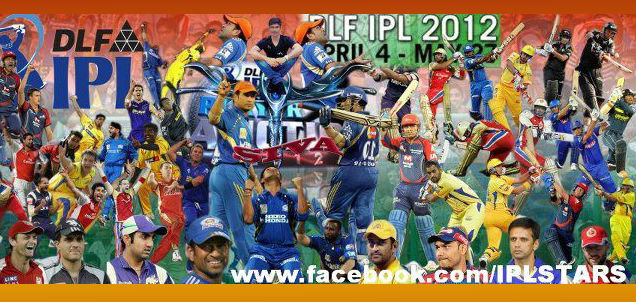
    Image courtesy http://www.facebook.com/IPLSTARS

  • Starry starry rights from BCCI

    By Rishi Vora


    Star India’s winning the rights to broadcast Indian cricket for six years – from 2012 to 2018 – is a significant development in the Indian sports arena where cricket is the only celebrated sport, and the one that attracts the maximum moolah.


    Though Star has won the rights much to the joy of the senior management team, the fact is that it has come at a staggering cost of Rs 3,851 crore for 96 matches.


    What this means is – for every single match played in India till 2018, Star will pay BCCI Rs 40 crore as part of the contract. The contract also says that Star will also have the rights for internet and mobile besides TV.


    Mr Uday Shankar, CEO, Star India said in a prepared statement, “BCCI is a great property and we are overjoyed to have an opportunity to develop it further. It was decided amongst ESPN Star Sports, ESPN and Star that Star would bid for the rights and if Star were to win the rights it would be exploited in collaboration with ESS.”


    So while it is great news for Star India for it augments its position as a network, there are some murmurs within the industry on whether it is a viable deal as far as profitability is concerned, especially when Indian cricket has seen one of its worst ever phases of late.


    A broadcaster of a sports channel who requested anonymity said, “It’s a move from Star to dissuade MSM from its cricketing interests. MSM already have the Indian Premier League which is one of India’s biggest properties, so the BCCI rights would have put them in a superior position in the industry. Hence it’s a setback of sorts for them, especially when they’ve been in the news on launching a sports channel.”


    He further said, “The price Star is paying is on the higher side. But it’s not very surprising that they’ve won it for the price they have, as they have the strength and the clout to pull off a high-value deal such as this one.” MSM came second to Star with a bid of Rs 3,700 crore.


    T Gangadhar, Managing Director, MEC India commented on the development: “Sports is a rights-driven genre and channels compete on that basis. As faras exploiting rights is concerned, Star India has announced they will collaborate with ESPN-Star Sports, an already established player. To that extent, life is as usual. However, going by the size of the winning bid, it is clear that Star is betting big on digitisation and increasing subscription revenue therefrom.”


    With the BCCI deal, ESS has now become a significant player in Cricket. They’re the official broadcasters of ICC matches, plus Australian and England cricket. Ten Cricket – the channel from the Zee stable airs matches played in South Africa, Sri Lanka, West Indies.


    Neo banked on World Series Hockey after having lost the rights for Indian Cricket. They however continue to own Bangladesh rights – the Asia Cup which was recently concluded was aired on Neo Cricket.


    Neelkamal Sharma, COO – Buying, Madison Media Group said, “For sports as well as for Star, it is really a big news – Star TV acquiring the rights for Indian Cricket for next six years. Since rights are with Star TV and not ESS, there could possibly be some more development on the way forward and time will tell what will those developments be.


    He further added, “There will be some consolidation of sports companies in the near future to leverage this opportunity. I will not be surprised if Star becomes a dominant player in sports as and fiction”


    According to Mr Mahesh Ranka, it will take some time before the investments could be recovered. “I can say that by the end of six years, Star will make money out of this deal on the back of subscription plus advertising revenues. It’s just not the Indian market. There are a lot of viewers who follow Indian cricket in other countries. Plus they have the mobile and the internet rights too. So it seems to me that it’s a good win for Star.”


    On what it means to other players in the sporting arena, Mr Ranka said, “Sadly cricket is the biggest game in India and quite clearly, other players such as Neo and Ten Sports would face a bit of a setback. They’ll survive, but that’s not the big question. The big question is whether they will be able to grow and build from where they’re now.”


    Advertising revenue may not be much in the first few years, and experts predict price points to range from 2 lakh to 3 lakh per 10-second spot. Profitability will be an issue.


    Star Network is poised to gain more strength. But will the Star shine yet again?