
Tag: BCCI

  • Thoughts on IPL Media Rights, a week after


    By Indrani Sen


    Indrani SenLast week, on June 14, 2022, the final results of the e-auction conducted by the Board of Control for Cricket in India (BCCI) were declared with the Board earning a whopping Rs 48,390 crore for all the packages offered by them for auction. The amount is almost three times of Rs 16,376.5 crore, the money which Star India paid for TV and Digital media rights for the 2017-2022 cycle. This has made IPL the second most valued sports league in the world, next to America’s National Football League pushing English Premier League to the third position.


    By now everyone knows that this time Disney Star India has won only Package A containing telecast rights (India sub-continent) for next five years 2023-27 by bidding Rs. 23,575 crore. Viacom18 has bagged Package B containing digital rights (India subcontinent), Package C containing digital rights of 18 matches per season and part of Package D containing media rights (both TV and digital) for three global regions, Australia + New Zealand, the UK and South Africa, the main cricket playing countries whose players have been regularly participating in the IPL tournament. There is some confusion in the market related to the total payment of Rs.23,758 crores made by Viacom 18 to BCCI as lot of people have concluded that the amount has only been paid for the domestic digital rights whereas Viacom18 actually paid Rs 20,500 crore for the domestic digital rights. The media rights for the balance global regions have been won by Times Internet.


    Lalit Modi has been getting lot of coverage related to IPL media rights auction this time as cricket historian and author Boria Majumdar timed the release of his book on Lalit Modi “Maverick Commissioner” last week right after the announcement of the winners of IPL’s e-auction for media rights for 2023- 2027. Majumdar also announced that his book will soon be made into a film. Suddenly. media channels are busy interviewing Lalit Modi who is having a field day. At the time of writing, I read his interview on www.mykhel.com where he has said that BCCI should make it mandatory for all IPL franchises to own a women’s team in order to start a Women’s IPL in India. Last week, in an interview to NDTV Sports, he said that value of media rights will double again in next cycle as IPL viewership is probably the highest in the world in terms of people watching the matches (https://sports.ndtv.com/ipl-2022/ipl-viewership-probably-highest-in-the-world-lalit-modi-to-ndtv-3079226 ).


    While the Indian M&E industry is still struggling with its overall growth after the pandemic, one wonders from where the growth in the value of IPL media rights will happen? According to the EY FICCI report 2022, digital advertising grew by 29% in 2021 and TV advertising grew by 25% in 2021 which was still slightly short of the pre-Covid 2019 level. TV subscriptions continued to fall in 2021 for the second consecutive year. In the last few weeks of IPL, there was a sharp fall in the TV viewership which had raised doubts about the base rates fixed by BCCI for the e-auction. If any particular media property grows at a much higher rate than the market average for a certain period, it does so at the cost of other media properties in the same media bucket which cannot be sustained in the long run. Only time will tell if the value of IPL media rights based on the current e-auction will be actually attained.


    Back in 2016, when Star India won the TV and Digital rights for IPL (2017-2023), a lot of doubts were raised about the possibility of their success in achieving the targets. This time, industry people are speculating more about the winning bid of Rs 20,500 made by Viacom 18 for the digital rights and the implications of TV and digital rights going to two different organisations.  The Reliance-backed Viacom18 seems to have played its cards well based most likely on a deep-routed strategy for increasing their market share in online video viewing backed by the huge share of Jio in the telecom market. The introduction of 5G is expected to change consumers’ choice for live viewership of sports events from TV to mobile during this 2023-2027 cycle.


    According to an article by Javed Farooqui on Exchange4media on May 7, 2022, London-based Omdia’s recently published report on online video viewing trends shows that in India Disney+Hotstar leads the chart with 41% share. The article also shared the following graphic from the research.


    Source: https://www.exchange4media.com/digital-news/disney-hotstar-has-41-share-of-indian-online-video-subscription-market-omdia-112817.html


    Disney+ Hotstar’s subscription base tripled during pandemic years from 8 million to around 25 million by the end-2020, thanks mostly to IPL’s coverage and the competitive pricing of its annual plan. Omdia believes Disney+ Hotstar will continue to lead the standalone subscription online video market. The same report estimated that online video-on-demand (VOD) subscription market in India reached a value of $639 million in 2020, up by 142% from 2019. Disney+ Hotstar and Netflix together accounted for 78% of the total online video subscription market.


    ViacomI8 may be planning to revive Voot with this bid for digital media rights of IPL and may be also ready to write off losses, if any, as part of marketing cost for promoting Voot. With 41% marketshare, Disney+Hotstar was not required to invest proportionately high amount in winning the digital rights of the IPL. On the other hand, Disney Star India has a greater need to protect its turfs in the various TV genres where competition is much stronger.

     

  • It’s raining monies at the IPL 2023-07 media rights auction


    By Our Staff


    There’s a popular reality show on general entertainment channel Colors called Khatron ke Khiladi. It requires contestants to perform daredevil acts, including tasks with snakes and scorpions, jumping off helicopters. And walking the tightrope. Literally.


    Now, veteran media professional Uday Shankar who has invested a fair deal in Viacom18 is now set to do a Khatron ke Khiladi act himself (lest it’s missed, the ‘fair deal’ pun was intended). The word ‘khatron’ should of course not be construed in the negative sense, but it’s just that what Shankar has bet really big on with the digital IPL win making him a ‘khiladi’ of the really big stage.


    Every summer, at the beginning and end of the cricketing extravaganza when the revenues will be aggregated, there will be an intense sweating, like it’s on the reality show. We should add the word ‘perhaps’ after ‘there will be’. Coz surely this is more than just playing fear factor. Unlike 2018 where he was an employee of Star, now he’s an investor in the project. So we can be sure there’s a method to the bidding.


    So, let’s get past the foreplay. Disney Star India and Viacom18 have bagged the TV and digital rights for the five-year 2023-2027 period of the Indian Premier League (IPL).


    The Board of Control for Cricket in India (BCCI)’s media rights for IPL 2023-27 will – as of now – generate Rs 44,075 crore, up from the Rs 16,347 crore paid by Disney Star for 2018-2022. An official statement from BCCI is awaited.


    Package A (television rights for Indian sub-continent) has netted it Rs 23,575 crore


    Package B (digital rights for Indian sub-continent) has got it Rs 20,500 crore


    Package C sundry digital rights have already touched Rs 1800 crore. The final outcome is awaited


    Package D rights results are also awaited


    It may be remembered that the entire television and digital rights were owned by Disney Star India until this year. In fact after bagging TV rights for 2023-27, Disney Star challenged Viacom18 in a fresh round of the e-auctions. Finally, Viacom18 took the big leap and closed the bidding with Rs 50 crore per match as its fee. Disney Star will need to pay Rs 57.5 crore per match for television. Overall, as of now, BCCI will earn Rs 107.5 crore per IPL encounter.


    During the media rights auctions that were held on June 12 and 13, TV rights fetched Rs 23,575 crore for broadcast rights and Rs 20,500 crore for digital, said people tracking the media rights auction.


    What’s balance is Package C and Package D rights, the results of which will be known later today (June 14).


    According to industry sources, ad rates will go north by 20-30 per cent on both digital and television. Industry commentators say the IPL 2023-27 dynamics will see a structural change happening in the media landscape. Linear television is going south in terms of viewership, and digital consumption is going to leapfrog. However, even though digital can allow micro-targeting, ad revenues are still found wanting. The play will surely be in the case of subscription-led revenues, and given that Viacom18 is part of the Reliance Industries stable which owns the Jio telecom network, there will be synergies.


  • On the field and off it: The big IPL year


    By Shailesh Kapoor


    Shailesh KapoorThe biggest sporting event in India is currently underway. With each passing year, IPL seems to only grow in stature and brand value. This time, there are two new franchises, and the spectators are back in the stands too, albeit with a cap of 25 per cent. More franchises mean more matches and more talent on display, all of which eventually leads to higher monetization and valuation of brand IPL.

     

    But the eyes this year are not just on the ongoing IPL but also on what’s to follow on the IPL front over the next few weeks. IPL broadcast rights are up for renewal, and we are set to see a fierce battle in the auctions scheduled for mid-year.


    IPL is a crown jewel for Disney (Star), not just in India, but even worldwide. Hotstar, on the back of IPL, contributes more than 30 per cent to Disney+’s global subscriber base. Needless to say, Star India will stretch itself beyond its limits to retain both television and streaming rights.


    But there’s the newly-merged entity that goes by the working title Zee-Sony, which is a serious contender. Sony has been down the IPL road before, being the first ones to put their money on it, when the league was only an experiment, not a proven success story. With the combined might of two big networks, Star India’s competition is tougher than it was five years ago.


    Add Reliance (Viacom) to the mix, and we have a three-way tussle for IPL rights on the cards. BCCI’s decision to not go for combined bids this year makes things even more interesting, because it puts streaming platforms like Amazon Prime Video into the reckoning, along with Google and Facebook.


    No amount of speculation can prepare us what may eventually happen when the e-auction commences on June 12 this year. But whatever the outcome is, it will shape the landscape of the Indian media industry for the next few years, even the next decade.


    The television industry is India has been struggling for relevance, despite being the medium with the highest reach, and by some margin too. IPL (and cricket in general) is one of the few things that keeps television relevant to the times, as far as media planning and buying goes. Digital viewership may have gone up, but television remains the dominant medium of sports consumption. The entire television industry, and the advertisers’ group (brands and media agencies), will be keenly awaiting the outcome.


    Till then, there’s some real cricket on the grounds to keep us busy. For another seven weeks, the cricketing action will continue to enthrall millions across the nation. It will also act as a reminder for the potential bidders everyday, on how big the opportunity in front of them is.


  • Havas Sports & Entertainment relaunched

    By Our Staff


    Havas Media Group India has announced it is relaunching Havas Sports & Entertainment, the sports and sponsorship vertical of the agency. To begin with, Havas Sports & Entertainment India has facilitated a two-year deal between Board of Control for Cricket in India (BCCI) and Swiggy Instamart, as the official on-ground partner for Indian Premier League (IPL) 2022 & 2023.


    Rana Barua
    Rana Barua

    Said Rana Barua, Group, CEO, Havas Group India: “The sports advertising market in India is estimated upwards of Rs 8000+ crore. The sports genre is pegged to explode further giving advertisers across sectors various opportunities to create long term value. The relaunch of Havas Sports & Entertainment 2.0 comes at a significant time, and we’re excited to kickstart its journey by facilitating a landmark partnership between India’s biggest sporting event, IPL, and our long-standing unicorn client, Swiggy. We look forward to further consolidating our position in the sports and experiential market by forging many more strategic partnerships and offering integrated and meaningful solutions.”


    Ashish Lingamneni
    Ashish Lingamneni

    Added Ashish Lingamneni, Head of Brand, Swiggy, said, “Over the years, our association with the mega cricketing event has helped establish the fact that food and cricket go hand-in-hand. IPL is one of the most celebrated sports leagues in the world, and this year, we are excited to partner with the BCCI to offer a wholesome experience to audiences with our large assortment of munchies, beverages and other snackable options through our quick commerce grocery service, Instamart. The association brings with it the IPL fandom and reach to elevate the match viewing experience of millions of viewers. It will additionally help us drive clutter-breaking campaigns, varied consumer engagement, and business offerings at scale.”


  • With IPL, have the Tatas finally found the right vehicle after all these years?

    Photograph source: IPLT20.com


    By Avik Chattopadhyay


    Avik ChattopadhyayNew terminology at IPL…

    Fours and sixes – Tata Assault

    A quick single – Tata Steal

    Strategic timeouts – Tata Consultancy Time

    Wicket – Tata Bye-Bye

    Man of the Match – Match ka Ratan


    So goes one of the many WhatsApp messages since BCCI announced that Tata will be the title sponsor of IPL from next season. There is a GIF too being circulated done by someone called Outcry Entertainment which shows the batsman in the IPL logo whacking Vivo out and the Tata logo emerges to the signature tune!


    This is certainly big news, beyond just the world of sports as India’s “most trusted” corporate brand chooses to play tag-team with India’s biggest sporting brand. What would have made this happen?


    After Galwan and Doklam, BCCI needed a non-Chinese brand to be the title sponsor for its marquee annual entertainment event. The optics were not good for the government and BCCI. Here you have skirmishes every month, chest-puffing galore and even the 14th round of talks breaking down while there you have a Chinese brand sitting proudly on the IPL trophy. Terrible paradox! It had to change. Dream 11 did not apparently have the shareholders’ nod to carry on with such spending beyond a year. The solution had to be more sustainable. Adani and Ambani are not the best brands to reach out to if you do not wish the opposition to have a field day. So, what are you left with? The Tata brand. You have returned Air-India to it. You have awarded it the Central Vista contract. Over the last few years, it has been cosying up to you for a significant pie of ‘Atmanibhar Bharat’. The brand is the talisman of trust and respect. Nobody will ever raise a finger at you.


    For the Tata brand wanting to appeal to the digital WFH generation, IPL is a terrific platform to ride. Given its forays into more D2C businesses like BigBasket, 1mg and Cliq, it can get a hold on the Indian family sitting in front of television watching their superstars create magic. Non-metro India can be reached even better on the mobile phone through the IPL platform. The brand wants to markedly shun its image of being big and bulky and behave young and connected. Also reach out to the diaspora who celebrate their biggest annual festival in IPL. The brand has had a long association with sports in general, having invested in football [TFA and FC Jamshedpur], archery, marathons, Formula 1 and a few more. One cannot forget the fact that one end of Wankhede Stadium was called the Tata End. Only that given the stature of the brand, I would have expected them to go more grassroots in sport development rather than join a filthy rich sport and make it richer!


    This looks like a win-win.

    BCCI has saved itself the blushes and finally turned nationalistic.

    Tata might have finally found the right vehicle after all these years!


  • Suffocating Creativity in an Opinion Polarised Country


    By Sanjeev Kotnala


    Sanjeev KotnalaLast week was involuntarily hectic with a trip out to Mahabaleshwar with family and Milo Kotnala, my lovely pet. I enjoyed the lack of connectivity at Forest County Resorts, a pet-friendly hotels. Even with limited connectivity, it was clear that everyone on thesocial media was trying to hit a chawka on every mauka. It seemed that getting trolled is becoming a passionate hobby for few and a legitimate communication strategy for some brands. How can one explain this repeated insensitivity and lack of touch with audience reality?
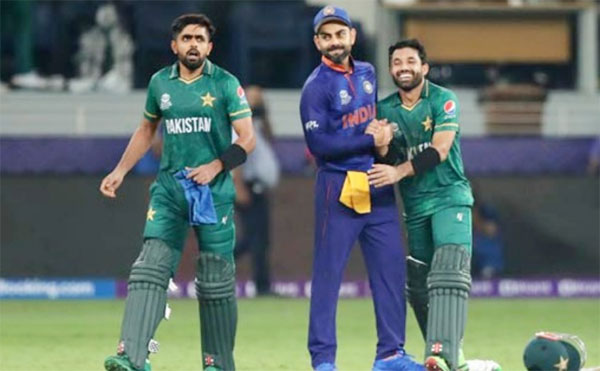
     

    It was maha confusing for me. Despite my angst against some of the advertising and events, I fear that we are suffocating brand communication and creativity as a very touchy audience. Where do you draw the line if the brands need to be sensitive to the polarised audience? In a few instances, I have raised my voice, questioning the creative. No, it is not a time of remorse or guilt trip. It is different.


    Towards the end of the week, we finally lost to Pakistan in our first match of the T20 World cup. We lost unexpectedly and badly to the arch rival. Maybe MaukaMauka will eventually be retired. However, I would expect the channel to pull a rabbit out of the hat. A new woke Mauka may be there in case Indian, and Pakistan meet in the final. Possibilities exist.


    And then the kneeling of the team in support of Black Lives Matter (BLM) took everyone by surprise. Why? It seems it was a directive from ICC/BCCI. But why? I have never seen the same bunch kneel or speak out against the religious racism in the country and across the border.


    Everyone was so upset that they forgot the games the team had won in the past. Again demonstrating passionate following has its price, and we have a short memory. It also said that the spectre of Pakistan will never get wiped out.


    Virat showed sportsmanship in loss, and the picture found support from intellectually oriented people. However, most did not like the emotion or the expression. Everyone has their reason. We just had a bad day in the field, and hopefully, by Sunday, we will see a turnaround.


    Source: Internet


    The loss hurts, the trolling hurt patriotic feelings. However, no one should be trolled for such failure. No one can win all the time.


    Fem Bleach tried to cash on a new mauka called Karwa Chauth. It got a mixed reaction to its same-sex couple Karwa Chauth. It was not well-made but was branded a progressive approach in a not-so-progressive product category. It seemed such communications were made to fuel controversy and get the brand some hype and buzz. Every publicity counts. In the past too, Fem had Karwa Chauth ads, but that was in complete sync with the public opinion. A simple SMEAR check and evaluation of the script would have said it is going to be trolled.


    I missed out on watching the T20 debacle, thanks to Karva Chauth. While India was losing the match, I was with my wife on a long drive. So, she is aptly distracted during the last few hours of her waterless fast before moonrise. No, I am not suggesting the script for a Karwa Chauth ad.


    Fab India joined the list of brands trolled this year. The urdunisation of the Hindu festival did not sit well with the audience. The audience is widely divided and polarised on this subject. I do not find anything wrong. Oh, yes, it could have been more celebratory. But, should that not be something the brand should decide. The brand must have some creative freedom.


    Frankly, I do not want advertising to find rituals in other religions and suggest something they have done with Hindu festivals and rituals. I want them to stop playing with Hindu festivals. However, I would love to watch brands mining rituals across religions to prove that they have not picked on Hindu religion and festivals because they are easy targets. They are so divided that they cannot retaliate. Brands know it will be playing with fire if they try such stunts and purpose-led creative suggestions on other religions.


    Case in point, Ceat’s advertisement featuring Aamir Khan- but that was the week before. And well, we have almost forgotten the Tanishq ad of Goad Bharai or the advertisement of Manyavar how the brands are not sensitive to audience reality of the largest audience segment.


    Everything is not doomed. There was a positive feeling too.


    I applaud Mondelez’s efforts. The favourite chocolate brand took advertising to the next level, serving a different level of mauka to local businesses, presenting them an opportunity to get a brand endorser like SRK! The approach is exciting and worth all the effort. It rightly garnered a lot of earned media, and the buzz was Megha. The smile on local business owners:- priceless.


    It is time for brands to cautiously tread on purpose if it is around religious and community sentiments. The purpose should be inherent, not forced.


    Meanwhile, there seems to be no complaint at ASCI against Fogg for misleading communication that could be leading to complacency in people approach to Covid. Is it the truth? Does it have government approval to make such a statement? Is the brand right in suggesting that  Hathi Nikal Gaya – Poonch Bakki hai! Now, don’t tell me that I am unnecessarily raising a non-issue and encouraging someone to take it up.


    The festive season is on.


    Keep your eyes open and your fingers free to play the social media game


    There will be two-three more opportunities for every one of us to question the advertising and marketing fraternity decisions and brand communication. Well, they could always pre-check their communication for SMEAR.


    As I said earlier, I don’t know where to draw the line on freedom of creative expression and brand communication. The brands take a strategic conscious-eyed decision based on research, deliberations and strategic insights. And they have every right to do what they do, including taking pot-shots at the majority- their biggest audience.


    Freedom of expression works both ways. The audience has the right to react the way they want to. Sometimes these incited emotions can be dangerous. In a democratically secular country, where the minority defines the majority, no one knows Unth Kis Karvat Daihega.


    It will be a wild west between brands and polarised skewed audiences, where everyone must stand for themselves. The tectonic plates of hurt emotions have been under pressure for a long. I suspect some brand communication may trigger an earthquake of reaction- we all would want to avoid.


    Sanjeev Kotnala is a senior brand consultant and educatior. He writes on MxMIndia every Wednesday. His views here are personal


  • Will the New I&B Minister fulfil M&E Industry’s Expectations?

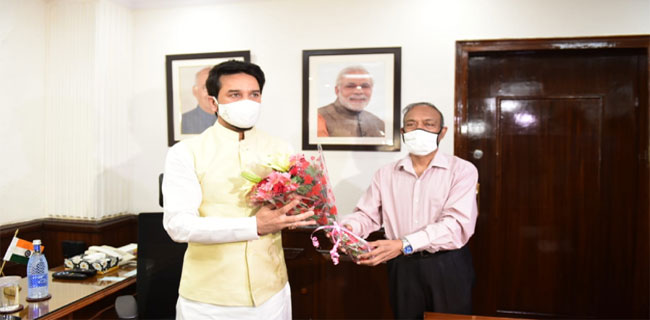
    The Minister taking charge (PIB photograph)


    By Indrani Sen


    Indrani SenLast week, in the reshuffling of the cabinet of ministers of the Central Government, Anurag Singh Thakur took over a double-barrelled charge of Sports & Youth Affairs Ministry from Kiren Rijiju and Information & Broadcast Ministry from Prakash Javadekar. He was elevated to full cabinet minister rank from minister of state rank in which capacity he has been working in the Finance and Corporate Affairs Ministry since 2019.


    Two years back, I first read about Anurag Thakur when he was appointed as a Minister of State “…’You elect Anurag with a record margin, I will make him a big leader,’ Shah had urged the voters at an election rally in Bilaspur, Hamirpur, on May 12. They did. And Shah kept his word, with Thakur being sworn in as a Union minister last Thursday.


    (https://economictimes.indiatimes.com/news/elections/lok-sabha/india/from-bcci-to-union-cabinet-anurag-thakur-enters-big league/articleshow/69585917.cms?from=mdr). Thakur first got elected to Lok Sabha from Hamirpur through a bypoll in 2008 and then won the same seat three times in 2009, 2014 and 2019.


    Amit Shah has continued to honour his promise as in two years Thakur has not only got elevated to the rank of a full cabinet minister, but has also been entrusted with the charges of two key ministries considering the importance of young voters in India and the dynamically changing media scenario in the digital age. It is expected that Thakur will be able to resolve the issues faced by both the M&E Industry and the sports industry given his record as a parliamentarian from 2008, former Chairman of the IT Committee and President, BCCI.


    Last week, various leaders from M&E industry welcomed Thakur as the newly appointed I&B minister and expressed their hopes that he would be looking into various concerns and demands of the various sectors and would provide a level-playing field for TV broadcasters, publishers on print & digital platforms, radio operators, cinema producers, etc. The various issues which are on the cards currently can be divided into two categories, one related to the content of the media and the other related to all non-content issues. Let us first look at the issues in the first category related to the content of media.


    Starting June 18, the Centre has sought public comments on the draft bill of the proposed Cinematograph Amendment Bill (2021) which includes fine and a jail term for film piracy, introduces certification on the basis of age and empower the Central government to order recertification of an already certified film following receipt of complaints. Centre had sought public comments on the draft bill starting June 18, 2021. Six film trade associations have already sent a joint representation to I&B Ministry objecting to the revisionary power sought to be provided to the Centre. Well-known filmmaker Shyam Benegal has also opposed this bill, saying that the government has no role in film certification and recertification. As this proposed amendment enhancing the role of the Central Government in deciding on the content of the films seems to be part of a bigger gameplan of the Central Government to choke the voice of Indian media, it is doubtful if Thakur in his new role will be prepared to listen to the voice of the industry.


    The timely adoption of the new IT rules by OTT and digital news channels also belongs to the content category and the bigger game plan mentioned above. Under this rule digital media publishers, publishers of digital news linked to traditional media, and over-the-top (OTT) media service platforms to furnish basic information about themselves and their self-regulatory mechanisms creating a role for a government appointed regulator for overruling the decisions of self-regulatory bodies. As I wrote earlier on this topic (https://www.mxmindia.com/2021/06/will-indian-netizens-lose-their-digital-rights/), so will not elaborate on it again. Subsequently, many publications moved court against the IT rules 2021. The Supreme Court has turned down a transfer petition filed by the Centre seeking transfer of all cases related to IT Rules to the apex court. Thakur will be expected to handle the legal cases and resolve the issue to the satisfaction of the Central Government.


    About two weeks back, the Central government introduced a three-tier grievance redressal mechanism as an amendment to the Cable Television Network (Regulation) Act with the intention of making the content related grievance redressal system for TV Broadcasters at per with the OTT and digital news platforms. The TV industry requires more clarity on this issue and its implementation.


    Among the pending issues pending for some time in the non-content category, the following require immediate attention from the new I&B minister:

    :: Certain long-standing demands of broadcasting sector related to their demand for an infrastructure status, liberalised licensing regime and a stable regulatory climate. The proposal of IBF seeking stimulus package based on economic relief and flexibility in the regulatory system.


    :: Addressing broadcasters’ concern about 5G system disrupting their transmission. Almost all C-Band satellites use spectrums between 3.7 GHz and 4.2 GHz for their downlinks and band of frequencies between 3.7 GHz and 4.9 GHz are used by most television channels for their operations which are adjacent to the band of frequencies identified for 5G usages in the country in the range of 3.00 GHz to 3.6 GHz.


    :: To come up with a solution for audience measurement of TV channels by either introducing reforms in the current system of BARC or by setting up an alternative TV measurement system. In November, 2020 I&B Ministry formed a committee headed by Prasar Bharati CEO Shashi Shekhar Vampati to examine the matter and to give a recommendation. The Vampati Committee submitted its report to the I&B Ministry in January, 2021, but the content of the report was not shared with public at large. The recommendations may also provide some guidelines for resuming the ratings of the news channels which have been suspended by BARC.


    The M&E industry at large and the TV broadcasters in particular are hoping that Thakur will address their immediate concerns impartially and will take positive steps towards making constructive changes in the media ecosystem. Industry watchers like me are keeping our fingers crossed as only time will prove the efficiency and effectivity of our new I&B Minister.


  • So what does the IPL postponement mean for the Indian sports & marketing ecosystem

    Screengrab from IPLT20.com


    By Mahesh Ranka


    Mahesh Ranka

    The Indian Premier League is the biggest marketing and entertainment extravaganza that has had everyone hooked on to it for almost a decade-and-a-half.


    That the 2021 edition will happen or no was a question raised by many, who were only shooting their thoughts, while BCCI and all the franchise owners were very sure and positive for the show to go on. With so much at stake and all the possible arrangements, it was only safe to assume that IPL would set an example in keeping live events alive in these unforeseen and testing times.


    Come May 4, 2021, IPL was suspended and then postponed, to a date that’s not been decided yet.


    There were many quarters constantly voicing concerns about three key things happening – the Assembly Elections, the Kumbh Mela and the IPL in these pandemic times. To me, IPL was the safest bet and the BCCI took the right step in putting a pause to the event.


    In the past, IPL has shown it’s as much a festival as Diwali, as many category purchases have significant spike during these two festivals in India. Marketers will now be scratching their brains already to think of a Plan B.


    Will the impact of this be felt? It’s a no-brainer, the question should be where all, will the impact be felt?


    For IPL/ BCCI

    IPL is not going to see a significant loss of revenue from the central sponsors or the broadcasters for sure as the agreements ensure that.  IPL valuation may also undergo a correction, which may reflect on the teams too.


    A key aspect that will be at the centre of sports discussions will be from the global market perspective. Will this lead to concerns around many other cricket events, and other sports to be held in India?


    ICC T20 World Cup isn’t too far and there are already talks of “if it moves to Dubai, BCCI will still hold the rights”. While this is great for cricket, for sponsors of the ICC event, they would be merely exposed as brands on broadcast and would run a campaign that will not have the same flavour as the event being hosted in India.


    If it happens, the movement of the T20 World Cup will put tremendous pressure on holding a bi-lateral series and other sporting action in India, leading to opportunity and revenue loss to the board, fans as well as marketers.


    Commercial stakeholders:

    All the commercial stakeholders across would have to plan for a situation probably as unique as someone hitting a six off every ball in every over for 10 overs!


    Disney – Star India:

    As probably the single largest commercial stakeholder of IPL, Star India, has an uphill task on multiple fronts to realign its business and financial plans for the year. With a major part of the plan being IPL for Star Network as well as for Disney Hotstar, it’s going to be impossible in the near-term for Star to:

    :: Find quality and engaging content to fill the programming  gap on television as well as HotStar.


    With OTT growing significantly in  India, Disney-Star will have to scramble to get some very attractive programming to be on the growth path.

    :: Build advertising revenue and plan for longer deals.

    :: Push for subscription on OTT as well as television platforms. IPL being a key property to push subscriptions, a new plan will be in play to achieve objectives or even probably revise targets.

    :: Revenue loss for now from all the syndication of rights globally, will also be a revenue gap that will not be filled by any other means.


    All the above may leave an option open for competition to plan and execution some bold and radical moves to woo the audience.


    A Brand’s Biggest Vehicle – The IPL

    Brands and businesses plan their launches and campaigns specifically with IPL in mind. For them, the current situation will be a massive letdown, while some sponsors/ advertisers will be fine with the shift if IPL (whenever it happens), many will have to take a deep hard look at their half yearly plans if not annual.

    Very clearly, new age brands like Cred and Dream11 had massive plans, so did the beverage companies – especially soft drinks in their prime season. For these three  categories, the opportunity to exploit is suddenly missing, and they’ll have to think hard and formulate new plans, with revised targets, in shortest possible time!

    In fact their existing efforts (ad film, media plan, activation, etc)  and investments would have to be redeployed, scrapped or modified, as necessary.

    Let’s think about Kotak – that was targeting topical credit card sales, with  seven team associations Or Upstox, who apart from growth, would have also had valuation gains in their radar by the end of IPL 2021!


    Areas of concern for marketers that would crop up :

    Timing & Seasonality: Season time  for some and in the first part of the business year for others, all calculations would go haywire and would need some extraordinary thinking, planning and execution to see through the year as planned.

    Growth plans : The planned growth on the back of IPL campaign, will get a deep hard look-in for the scenario would change significantly. The impact of IPL is visible on any of the plans.

    Reeling with uncertainty : Even if the brands are happy waiting for IPL, in the current scenario Uncertainty is the only Certainty. A third and probably a fourth wave might hit us, and no exact idea when. In such situation, everything is going to be fluid! And it will constantly keep the marketers  on their toes for the  plans they want to  prepare and execute.


    IPL Teams:

    All the franchisees have secured reasonably good revenues from sponsorships. And with no more franchise fee, they are sitting pretty on top dollar earnings from the central pool, in addition to their own sponsorships.

    Almost all teams had made significant plans to leverage and build digital platforms and engagement, with the current development event those plans would  find it a challenge to meet the set objectives. A good chance of engaging with their fans will diminish fast, now that the IPL has been postponed.  Moreover, with the uncertainties, teams and their plans for to rest of the year will be fluid.

    BCCI had announced and wanted to auction two more teams to be brought into the fold of IPL making it a 10-team affair from 2022. With the current scenario – pandemic and economic, and uncertainty for now, BCCI may find it challenging to unlock the value as per earlier estimates. It could lead to rescheduling the auction and inclusion of two more teams in IPL by a year or so.


    Non Sponsor Brands – competing brands

    With the leading or newer brands  going big on IPL, one thing is for sure, each of them hoped to gain handsome returns.

    These brands end up simplifying  as well as amplifying the category (Upstox, Dream11, Unacademy) and also expand the market.

    The other brands in these categories would have plans basis the market familiarity and growth because of the larger spending brands; trying to take a small part of the pie.

    With the expansion of the market limited, each competitor would have to create new plans to further their growth.


    Ancillary Businesses

    All the constituents – ground management, display boards, bio-bubble, travel and  stay, production and other equipment , manpower etc. that are working with IPL directly or indirectly, will now have to look for opportunities, especially freelancers, temporary hires or contracted resources. IPL runs its own ecosystem and this time the ecosystem has been halted. There is a definite challenge in the market with respect to deployment of the resources.


    Opportunity for BCCI / IPL

    With the current situation and mood in the country, IPL could generate decent amount goodwill, by creating a movement towards support and help for the victims or sufferers of Covid19. Each IPL team and state board can take up a support role, helping patients with Oxygen, to  organise medical supplies.

    While the easiest way  to help is to donate  money towards the treatment of Covid-19 patients, they would serve themselves and the community well by creating a path breaking idea, involving all cricket fans similar of the one that Sport Club do Recife did in 2014 in Brazil.


    Mahesh Ranka is among the early specialists in the business of sports in India and is Founder and CEO, GamerChangerZ and Founder, Indus Sports. His views here are personal.


  • Shailesh Kapoor: IPL 2021: Cricket without Controversy

    By Shailesh Kapoor


    Shailesh KapoorThe rapid escalation of the Covid-19 crisis in India has dominated headlines over the last week in particular. The ‘second wave’ has pushed the health infrastructure to its limits, and beyond. Mixed messaging from the governments, both at the Centre and in the various states, is not helping the cause. Instead of talking about vaccination and masking, our leaders are busy managing elections and overseeing religious events. It doesn’t make any sense. But that’s how it is.

    A medical emergency, when combined with political apathy, can make for a grim picture. And lockdowns and economic disruptions don’t help either. In this atmosphere, a very unlikely candidate that emerged as a mood-uplifter: The Indian Premier League!

    IPL has been ridden with endless controversies over the years. The league has been badgered, often justifiably so, for being obscenely commercial. Fixing, corruption, legal battles… IPL has seen it all. It’s hugely popular, but not unblemished by any stretch of anyone’s imagination.

    Last year, BCCI managed to pull off a season in the UAE about six months after the scheduled season was canceled, which led us to a unique scenario of two IPL seasons within six months. Earlier this year, when England toured India and the Narendra Modi Stadium in Ahmedabad was inaugurated with much fanfare, spectators were allowed in. Images of 65,000 spectators packed in that stadium in a T20 International, with no social distancing at all, became a huge talking point on social media, even at a time when our Covid situation didn’t seem like a crisis.

    The decision to hold matches to empty stadia may have come in too late in that series, but there has been no such indiscretion with IPL 2021. Well before the current Covid wave came in, BCCI was clear that this IPL season will be held without in-stadia spectators, and with minimal team travel.

    Absence of in-stadia spectators makes the IPL come across as highly Covid-appropriate. Coming from a league not always known to be mature and sensible in the past, this has turned out a mightily wise move. Home stadia and gate money are key components of the sports franchise model, and any compromise on them is hard on the league and the franchise owners. Thankfully, such commercial temptations have not coloured sound judgment this time.

    So, we are in the middle of the most controversy-free IPL season of all time, it seems. With more people at home and the possibility of disruption in prime-time content on GECs because of shooting restrictions, it is likely to be one of the most-watched seasons too. Now let’s hope BCCI does not do something silly between now and the end of the IPL.

  • IPL 2021: The Show Will Go On, but…


    By Indrani Sen

    Indrani SenThe second wave of the pandemic has hit India, record number of cases have been reported across the country just a week before the IPL 14 scheduled to take off at the Wankhede Stadium in Mumbai on April 9, 2021, Maharashtra has been declared as one of the worst affected states by the second wave, night curfew has been declared in Mumbai, Pune and other cities of Maharashtra, yesterday a lockdown over weekends has been announced in Maharashtra, at the same time the BCCI has announced that IPL matches will be held as per schedule.

    On April 3, a total of 18 people connected with IPL tested Covid positive, 2 players, 10 groundsmen of Wankhede Stadium and 6 members from IPL Event Management Team. BCCI has already arranged to replace the groundsmen, which was not easy as five IPL teams are currently in Mumbai training on different grounds. Alternative venues in other cities have been lined up in case matches cannot be held at the Wankhede stadium. Huge logistical issues will arise in case last minute changes are made in venues. In order to hold night matches and matches over the weekends in Mumbai during night curfew and weekend lockdown, BCCI must have sought special permissions from the state authorities.

    The show must go on as too much is at stake financially not just for BCCI, but also for all the IPL franchisees, the players playing in the teams, the official broadcaster of the tournament on TV and OTT platforms – Disney Star India, many advertisers and ad agencies who have already invested in the property and have planned marketing activities accordingly and last but not the least the viewers who are eagerly looking forward to watching again the annual festival of live cricket and provide the currency for justifying the rates charged by the broadcaster to the advertisers.

    It is estimated that in 2020, Star Sports and Hotstar together earned around INR 3000 crore in ad revenue from IPL 13 held in Dubai in 2020. This year, they are apparently eyeing a target of INR 3600 to INR 3800 crore. A more conservative estimate also envisages a 17% to 18% growth over last year’s ad revenue. As per the recent TVC released by Disney Star India, the broadcaster has bagged 17 sponsors for IPL 14. Disney+ Hotstar has already acquired 14 sponsors and are negotiating with couple of others. Altogether more than 100 brands across different categories are expected to advertise on TV and OTT platforms riding on the band wagon of IPL 14.

    As per industry estimates, co-presenting sponsorship on Star Sports is priced at Rs 110-Rs 125 crore and associate sponsorship at Rs 65-70 crore. While the cost of 10 seconds is pegged in the range of 13.2 lakh to 13.6 lakh for sponsors and cosponsors, the same for spot buyers is charged at the rate of Rs 14 .3 lakh. Traditionally 50% of the total time available for advertising is allotted to the sponsors and the other 50% is sold to the spot buying deals. The broadcaster has already announced that from April 1, 2021 the remaining ad inventory will be sold at 20% higher rate as apparently 90% of the total time available has already been sold. Usually, before the semi-finals and finals, IPL spot buying rates on TV are hiked again for last minute spot buying deals, so a further hike may be expected.

    Ever since the IPL 14 was announced, we have seen many articles based on various advertisers’ experience of advertising with earlier IPLs, particularly IPL 13 and the returns which they got on their investments in terms of growth in awareness and consideration scores. IPL has established beyond doubts that there is no other TV property which can deliver the leap in awareness and consideration scores within the span of 8 weeks. It is the ability of IPL to connect with target audiences across age, sex, education, occupation, income groups and states which attracts advertisers to invest in the property.

    Many women-centric brands have been considering the option of advertising with IPL 14 as the popularity and viewership of IPL among women has seen an increase over the last few years. As per the BARC Report, women viewership of IPL 13 grew by 23% over 2019 while the male viewership grew by 22%. In 2020, IPL 13 registered 171 billion viewing minutes of female audience, while in 2019 IPL 12 registered 139 billion viewing minutes of female audience. From 2018 to 2020, the share of male viewing has dropped from 58% to 57% while the share of women viewing has increased from 42% to 43% in the total IPL viewing minutes.

    Most industry sectors are now on a path of recovery after the disastrous year of 2020, as discussed earlier many advertisers have already invested in IPL 14, ad agencies have been hoping to earn relatively better fees from their clients advertising in IPL 14, when the increasing fury of the second wave of pandemic is threatening to upset all the plans. Postponement of a cricket tournament of the scale of IPL and finding another slot of 8 weeks in the international cricket calendar is not an easy task. Cancellation of the tournament at this stage is not desirable as it will amount to huge loss for all concerned. BCCI needs to get ready for firefighting on a day-to-day basis to hold the tournaments of IPL 14 on home grounds in 2021.

  • Leagues Over Legacy: The Future of Cricket


    By Shailesh Kapoor


    Shailesh KapoorIt’s been a bizarre cricket week. A Test match that didn’t last even two full days. The shortest Test match ever since World War II. Test cricket needs exciting games like tone at Gabba. It needs higher batting run rates to attract more audience. It needs innovations like pink-ball, day-night Tests. But a Test that gets done in about 10 hours is no advertisement for a format that’s meant to last four days, if not five. After that spectacular Australia series, this one runs the risk of becoming a tad farcical, though India’s qualification to the World Test Championship finals will mask that conversation fairly quickly.

    The much-hyped Narendra Modi Stadium was inaugurated less than two days ago. Its first-ever Test may have seen India on the right side of the result, but it hasn’t flattered the cricketing media. The venue, however, has its hands full. There’s another Test and then five T20s, all at the same stadium.

    Which brings me to the itinerary of this England tour. When the T20 format was first introduced about 15 years ago, a solitary match on a tour was all it merited. Over time, that one match became two matches, but Tests and ODIs remained the primary competitive formats for nation vs. nation cricket.

    But times have changed. IPL is a huge hit, finding new benchmarks of success with each passing season. Attention spans have dropped anyway. A three-hour format is well-suited to the times, and highly inclusive compared to the other two formats.

    But this co-existence of cricketing formats also reflects upon the crossroads cricket administrators, including ICC, find themselves at. It seems they want to keep all three formats alive, and nurture them with nearly-equal priority. For a sport that’s primarily restricted to a dozen nation, a strategy that doesn’t make a conscious choice cannot be a growth strategy.

    In my opinion, ICC and its national affiliates are trying to avoid the unavoidable. They are only buying time by keeping all three formats alive. Of the three, the Test format is fairly secure. It’s the niche, connoisseur-endorsed format that can doesn’t need to make much money, as long as it can broadly earn for itself. But it’s the 50-overs format that could have been retired a while ago. It’s an in-between thing that achieves nothing in particular, except keeping a legacy going.

    From a broadcast perspective, one would expect the leagues to get stronger with each passing year. Australia’s Big Bash League (BBL) can do well with some Indian players, as its quality of play and telecast makes it one of the most watchable cricket tournaments across the world. The match timings are not India-friendly, but weekends double-headers can take care of that, if India (read BCCI) decides to play a more active role in BBL, say from a talent pool perspective.

    Other leagues, like those from Pakistan, Bangladesh, West Indies, England and Sri Lanka, are in initials stages of building some traction among the T20 audience base. But it’s almost certain that this is the direction the viewership will move to, over the next decade.

    All that is still a thing of the future, though. The next season of IPL is fast approaching, and one can sense that a blockbuster is in the offing again. So, brace yourself for the most popular cricketing gala, even as a rather bizarre International series plays out before it.


  • Bounceback in TV Ad Rev… but 19.3% drop


    By Shripad Kulkarni


    Why and how TV was decoded

    Coming on the back of the India adspends degrowth in 2019 second half, the pandemic dealt a big blow to advertising. Undoubtedly, print bore the brunt of the C-19 impact, followed by Radio. Digital has had a field day, in terms of media consumption and e-commerce.

    Digital Spends too have got a good boost, but it will take some time to translate the digital consumption into a commensurate huge spike in paid media. On the other hand, at about 37% of Total Spends, Television is pretty much the mainstay. The massive rise in News Viewership saw a commensurate thrust on the News Genre from Advertisers.  In Aug-Oct, IPL led a bounceback to get the advertising on a much better wicket. Live Telecast of IPL, in many ways has helped in the kickstart of advertising during festive. So, decoding TV-led bounceback helps us understand many facets of Indian advertising. While we will look at the spends trend based on prevailing rates during the various pandemic phases, ad volumes help in a detailed understanding of the strategies deployed.

    However, care has to be taken to do a like-to-like comparison. So, IPL of 2019 to be compared with IPL 2020 (though it was in festive). And general entertainment/news separately for same period.


    Look out for an interview with the author and veteran mediaperson on Thursday, December 10.


    I have looked at Average Monthly Commercial Airtime by Key Channel Genres. We looked at the top-rated channels in each genre as a group, which contribute to 75-85% genre revenue. So, Genres detailed are: Top 4 Hin GEC1 channels, next 4 Hin GEC2, 6 Hin Mov, 6 Hin News, 4 E News, 12 Reg News, 5 Eng Mov,  and 15 Regional Channels of South, Marathi and Bengali. The Balance are grouped as Long Tail. 10 months of 2020 are compared with the corresponding period of 2018 and 2019.Till October 30, 50 IPL matches were completed, so IPL is compared with 50 matches of 2019

    Summary of the findings

    1. IPL – a grand marketing success


    IPL was a grand success, not just as an event, where BCCI showed exemplary guts and execution, but also of the Disney Star AdSales team. That’s because you have to pre-sell an event like IPL. And, at a 5% additional airtime in live, at a premium over last year is a fantastic performance which kick started the advertising rebound. I estimate IPL to have got a 12% Revenue increase over last year.


    2. The rebound was driven by E-com, BFSI and Healthcare

    IPL as well as News and General entertainment both were driven by these categories.
    It looks like the new economy will have to use offline media for the top of the funnel
    So, BFSI and the New economy brands will continue to be the drivers for next couple of years.


    3. Jan-Oct TV ad revenue shrunk by just 19%, due to the rebound

    As we know, in Apr-Jun 2020, there was a big drop in adspends. Listed companies Zee Entertainment, Sun TV and TV18 reported a whopping 60% average drop in revenue, while TV Today reported a 35% drop (over same period LY). By Jul-Sepm this drop was reduced to about 26% for the GEC Groups while TV Today bounced back to last year’s revenue level. Studying the average rate trends across the Pandemic phases of Apr-May, June-July and Aug-Oct, we estimate that the TV Spends, in fact have dropped by a significant 19% so far – which is a good rebound considering we were staring at a minimum 40% drop in ad revenue!


    4. Long tail of Advertisers has to wag for Advertising to grow

    Just 27 top advertisers contribute to 50% Commercial airtime and just under 500 Advertisers contribute to 90%. We have a long way to go to realise the potential of India. We need a significant no of advertisers from the long tail to move up and graduate to big advertisers. The process has started. Even in this period, over 1200 insignificant advertisers moved to being significant. This was largely, on the back of news and Hindi/regional channels.

    5. Long tail of Channel Genres will shrink

    Today the long tail contributes to a whopping 81% of Airtime and 23% revenue.

    The Revenue of the Long tail, however has dropped by 32%, with English dropping by over 50%


    6. Amul and Dabur have shown the Industry how to make the best of a crisis

    Both Amul and Dabur, our homegrown Master Brands went aggressively promoting many more brands than last two years and growing their commercial airtime by a whopping 125%.