Tag: BARC

  • Comment: Government must not interfere in TV measurement!


    By Pradyuman Maheshwari

     

    MxMIndia has been consistent on its position that the government mustn’t have any role in the television ratings process. We wrote this in 2018, and earlier in 2016 and perhaps a few more times. That the government would appoint a committee to review guidelines on television rating agencies in India, was known. Earlier this year,  on the eve of BARC’s fifth anniversary (https://www.mxmindia.com/2020/04/on-eve-of-barcs-5th-birthday-trai-issues-recommendations-on-tv-audience-measurement/), TRAI issued recommendations on the way ratings should happen.


    So while we were appalled when on Wednesday, the Ministry of Information and Broadcasting constituted a committee to review guidelines on television rating agencies in India notified by it in 2014, we weren’t surprised. We thought that in the spirit of ‘Ease of Doing Business’, the government wouldn’t interfere. That we guess was asking for too much. It’s the government after all.


    It’s time the media ecosystem – broadcasters, advertisers and media agencies – must ask the government to not interfere.


    While a review of how BARC is performing is good to do, and what measurement should be like is a must and must be evaluated often enough, did it require the MIB to do it? Couldn’t the joint owners of broadcasters, advertisers and advertising agencies have conducted this? After all, they run businesses of over crores of rupees and are mostly fair in their decision-making. Mostly fair, because we’ve seen some regressive acts in the past. It may be noted that the BARC Board – the meetings of which happen very regularly – is constituted of members of all stakeholders.


    But back to our concern that the government shouldn’t be getting involved in measurement. As always, vested interests have evidently got onto the act and prevailed upon the government to do this.


    It appears that the genesis of the problem is the unity (or lack of it) amongst and within the three constituents. It is incorrect to let the government interfere. In fact, I may add here that the government’s intervention is a slap in the face of the stakeholders.


    The government-appointed TRAI should not have any role in the television audience measurement. Just as it doesn’t have any role in print, radio and internet audience measurement. There is some bizarre view that the reason why the government is involved is because its ads buying arm – the DAVP – loses monies because of incorrect measurement. So what about print which also earns its largesse? The government is scared of the big print players and isn’t able to bully them the way they are able to control the TVwallahs.


    The data that is thrown up by measurement is used by advertisers (and hence ad agencies) to decide on advertising and by broadcasters to aid its content and distribution. And since successive governments are aware that the media ecosystem is divided and people love to pull down others, it takes advantage of the situation. Look at print: even though an HT may hate Times, a Dainik Bhaskar may take on Dainik Jagran or Rajasthan Patrika, all rivals are almost always on one page when it comes to warding off government influences.


    Frankly, if I am advertiser, I can decide on the criteria for advertising on a certain channel. It could be ratings, it could the colour of the CEO’s shirt or saree, it could be whatever. Why should anyone else decide what the ratings should be. Will the government ask HUL, Amul, Dream11 to give reasons why it is paying XYZ crore rupees to Channel X or Y for its ads? Will the government ask Media Agency ABC why it is suggesting Channel V or W for its advertising. That’s a contract between the advertiser and the agency… Aap Inke Hain Kaun?


    Also, there can be multiple ratings agencies that can co-exist. Competition is always good to have, but measurement is an expensive exercise to conduct, and someone has to pay for it. From what I understand, the downturn has already impacted the subscription monies of BARC. It’s alright to talk of the need for competition, but one must remember that it doesn’t come free. That is if you want a quality measurement exercise.


    Bottomline: Broadcasters, advertisers and advertising agencies need to do some tough talking with the government. BARC must not toe the government’s line. BARC must not subject itself to the government’s demands.


    If BARC doesn’t do its job properly, its joint owners and subscribers will stop paying for its services. That by itself will ensure that it will provide good service. If a channel feels aggrieved, it can petition the association it is a part of to advise/tell/order BARC.


    Simple. Hai na? Time for the ecosystem to flex its muscles. And say: Hum Aapke Hai Kaun? And Kyun?


    This is the communique from the Press Information Bureau website:


    Ministry of I&B constitutes committee to review Guidelines on Television Rating Agencies in India

    Ministry of Information and Broadcasting has today constituted a committee to review “Guidelines on Television Rating Agencies in India” notified by the Ministry in 2014.

    The present guidelines issued by the Ministry of Information and Broadcasting (MIB) on Television Rating Agencies in India were notified after detailed deliberations by the Parliamentary Committee, Committee on Television Rating Points (TRP) constituted by the MIB and recommendations of Telecom Regulatory Authority etc.

    It has been found, based on the operation of the guidelines for a few years, that there is need to have a fresh look on the guidelines particularly keeping in view the recent recommendations of Telecom Regulatory Authority of India (TRAI), technological advancements / interventions to address the system and further strengthening of the procedures for a credible and transparent rating system.

    A committee has been hereby constituted to study different aspects of the television rating system in India as they have evolved over a period of time.  The Committee shall carry out an appraisal of the existing system; examine TRAI recommendations notified from time to time, overall industry scenario and addressing the needs of the stakeholders and make recommendations for robust, transparent and accountable rating system through changes, if any, in the existing guidelines.


    The composition of the Committee shall be as under:-

    i)             Shri Shashi S. Vempati, CEO, Prasar Bharti                 …. Chairman

    ii)            Dr Shalabh, Professor of Statistics,

    Department of Mathematics and Statistics,

    IIT Kanpur                                                                           ….Member

    iii)           Dr. Rajkumar Upadhyay, Executive Director,

    C-DOT                                                                                  ….Member

    iv)           Professor Pulak Ghosh, Decision Sciences

    Centre for Public Policy (CPP)                                         ….Member


    The Terms of Reference for the Committee shall be as under:

    a. Study past recommendations made by various forums on the subject of television rating systems in India and matter incidental thereto;

    b. Study recent recommendations of Telecom Regulatory Authority on the subject;

    c. Suggest steps for enhancing competition in the sector;

    d. Review of the presently notified guidelines to see if the intended purpose(s) of issuing the guidelines have stood the test of time and has met needs of various stakeholders involve The lacunae, if any, shall be specially addressed by the Committee;

    e. Any issues related or incidental to the subject;

    f. To make recommendations on way forward for robust, transparent and accountable rating system in India; and

    g. Any other related issues assigned by MIB from time to time.


    The Committee can invite any expert as a special invitee. The Committee will submit its report to the Minister for Information & Broadcasting within two months.
     

  • So who is India’s Most Progressive Celeb?


    By A Correspondent


    The Indian Institute of Human Brands (IIHB) has released its Tiara Research Report on Celebrities as Human Brands. The Report was released by the Coach of the Indian Cricket team, Ravi Shastri and Dr Sandeep Goyal, Chief Mentor of the IIHB on Dussehra day in Mumbai.


    Sandeep Goyal

    Said Dr Goyal: “The sample size of the TIARA Report is 25% bigger than the universe of TRP data collection currently being done by BARC. Our respondent base is 60,000; while BARC only covers 44,000 respondent homes. So, the study is comprehensive and representative of the entire India market. We have covered 23 cities. No study on celebrities hitherto has been so detailed and exhaustive. We have used 64 active attributes in the analysis of every single celebrity. Totally, there are over 100 data points that have been used in the analysis. This report, for the first time provides a DNA analysis of almost every prominent celebrity in the country. More importantly, our proprietary tools allow cross comparisons across celebrities, across attributes, across demographics, across cities, and more.”


    INDIA’S MOST BEAUTIFUL

    Deepika Padukone is India’s Most Beautiful. She scores 59.9 on the TIARA ratings. Padukone is way ahead of Aishwarya Rai Bachchan who leads the list of beautiful ladies in Bollywood, with a score of 45.0. In Television, Divyanka Tripathi Dahiya top scores with 39.1 TIARA ratings. Cricketer Mithali Raj has been voted Most Beautiful.


    INDIA’S MOST GLAMOROUS

    Deepika Padukone is also India’s Most Glamorous with a top score 60.3. In Bollywood, Priyanka Chopra and Ranbir Kapoor are seen to have the highest glamour quotient. In Television, Rannvijay Singh and Shilpa Shetty are top rated on glamour. In Sports, Virat Kohli and Sania Mirza occupy the top ranks. As a couple, Virushka are most glamorous.


    INDIA’S MOST INNOVATIVE

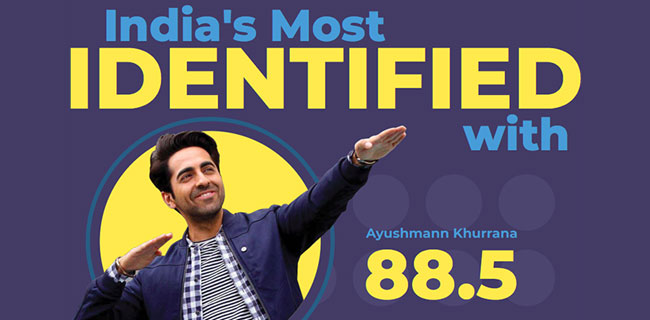
    Retired Indian Captain MS Dhoni is seen to be India’s Most Innovative. He top scores with a TIARA rating of 59.7. In Bollywood, Ayushmann Khurrana is easily No.1 in males, while Deepika Padukone leads on innovation amongst females. AR Rehman top scores in Television, Bharti Singh excels at top spot amongst women. Virat Kohli and Smriti Mandhana top score amongst sportspersons. DeepVeer – Deepika + Ranveer are the Most Innovative power couple.


    INDIA’S MOST  RELIABLE

    Shuttler Saina Nehwal is rated as India’s Most Reliable with a high 69.0 TIARA rating. In Bollywood, old warhorse Anil Kapoor ranks at No.1 while Nushrat Bharucha is top amongst the females. Zakir Khan and Surbhi Chandna are in top places in Television. Sachin Tendulkar and Harmanpreet Kaur are rated best in Sports while Virushka are rated the Most Reliable amongst couples.


    INDIA’S MOST PROGRESSIVE

    Vikrant Massey who was recently in the lead role in Ginny weds Sunny, is rated as India’s Most Progressive, surprisingly ahead of Ayushmann Khurrana who sits on top in the Bollywood list, alongside Deepika Padukone. In Television, Dharmesh Yelande and Mouni Roy top on Progressive. Jasprit Bumrah and Sania Mirza score best on Progressive amongst those in Sports. Virat Kohli and Anushka Sharma top score as a couple on Progressive.


    Other category toppers include:


    INDIA’S MOST RESPECTED : Amitabh Bachchan


    INDIA’S MOST APPEALING : Akshay Kumar


    INDIA’S MOST TRENDY : Virat Kohli


    INDIA’S MOST DISTINCTIVE : Nawazuddin Siddiqui


    INDIA’S MOST VERSATILE : Nawazuddin Siddiqui


    INDIA’S NO.1 HEART-THROB : Ranbir Kapoor


    INDIA’S MOST SEDUCTIVE : Radhika Apte


    INDIA’S MOST SEXY : Priyanka Chopra


    INDIA’S MOST DOWN TO EARTH : MS Dhoni


    INDIA’S MOST FEARLESS: Virat Kohli


    About the Tiara Report:

    The TIARA Report, notes a communique, is the largest and most comprehensive study of celebrities in India.

    • A sample size of 60,000 respondents pa- India.

    • 23 cities (Delhi including NCR), Mumbai (including Thane), Chennai, Kolkata, Bangalore, Hyderabad, Ahmedabad, Surat, Pune (including Pimpri and Chinchwad), Jaipur, Lucknow, Kanpur, Nagpur, Vishakhapatnam, Indore, Bhopal, Patna, Vadodara, Ghaziabad, Ludhiana and Agra.

    • 180 celebrities : 69 from Bollywood (37 male, 32 female); 67 from Television (46 male, 21 female), 37 from Sports (30 male, 7 female), and 7 celebrity  ‘power couples’.

    • The field study was conducted by Japanese research agency Rakuten.


    Tiara is an acronym for Trust, Identify, Attractive, Respect and Appeal. The study uses the research data across 64 active attributes covering image, personality and human factors; and a battery of confirmatory statements to quantify key celebrity dimensions.

    TIARA Research Final-Online


  • Present Imperfect. Future Shock. News Channels lose as GECs gain

    By Pradyuman Maheshwari


    Ring-a ring-a ratings

    Claims versus shoutings

    Cops, CBI, advertisers & viewers frown

    And we all fall down!


    So here’s another take-off on our favourite nursery rhyme, partly courtesy a friend and fellow-columnist. But before you look at the graphs: here’s an exercise.


    Fill in the Blank:


    The News Channels genre is getting _______.


    Since you have to putting the answer in your own language, choose whatever word you would like.


    The numbers tell the story.


    Here they are:

    Please click on image if you find this unclear


    If you prefer graphs, look at these:


    May we alert you that these numbers are not validated from BARC. They have come in from two different sources. But we will update if necessary, when we’ve got it from BARC. Btw, we chose 2+ and not 15+/22+ AB one mn plus or all-India, because it was easier to compare with GECs.


    The message is clear. News channels – in Hindi, Regional, English and Hindi Regionals (like MP, Bihar etc) need to do some soul-searching.


    If they continue to fight, if they continue to not do the right things, there’s bound to be trouble. For themselves.


    News channels owners, editors and managers need to stop fighting. The best of political and corporate forces have buried their differences. Many moons ago, India TV had exited the News Broadcasters Association for reasons that are best not recalled now. More recently TV9 quit the association and we heard of some talks of a possible litigation. So there’s no reason why NBA and NBF can’t combine forces. Call it something else if necessary. Rejig the set of officebearers. But it’s important to have a strong, joint force.


    Be competitive. Stop fighting. Let’s stop putting each other’s images on telly. Let’s stop group media entities to participate in a ‘maaro saale ko’ campaign.


    We’ve seen what’s happened thanks to all of this. It could only get worse. Serious.


    Advertisers have not yet said goodbye, but if they see lower ratings, they could.


    Enough said. Have a good weekend.


    And this Dassera, Dussehra or however you spell it, let’s kill the (d)evils within us.


  • Comment: The Suspension of News Ratings


    By Sundeep Nagpal


    At the outset, let me state that this piece is not meant to comment on whether or not there have been any malpractices in the TRP measurement process. Nor is it designed to be an opinion on whether any channel is guilty of abetting such unscrupulous practices or not. It is not my role to comment on this aspect. That’s the job of the law-enforcers and the fact that there is an FIR on this, certainly suggests that there could be a serious problem. Most importantly, given that some skeletons may still tumble out of the cupboard, as we are seeing in the course of the daily investigations, it’s too early for anyone to pronounce judgment.


     

    So, what is this article about? It’s meant to lend a perspective on various aspects of the issue at hand. And it is being written purely on the basis of my experience as a media professional, who not only uses data to allocate brand advertising budgets to channels, but also as someone who has worshiped data, trained no less than a thousand individuals on its utilisation and strongly propagated its application in the decision making process, even to advertisers, for over three decades now.


    For a media professional, all it would take is a keen sense of observation and some common sense to read between the lines, to understand the reality.


    So, here are the aspects that are being addressed in this piece.


    Aspect No 1: The Suspension of News channel ratings, for upto 12 weeks, apparently for them to clean up the mess?


    Aspect No 2: Did someone say, that this a scam, and that too of the order of Rs. 30,000 crore… seriously?


    Let’s talk about the First Aspect:  The suspension of the News channel ratings, for upto 12 weeks, ostensibly to clean up the field issues in data collection.


    There could be three possible reasons for this:

    1. As claimed by a faction of news channels, there have been frequent and inexplicable fluctuations in the ratings of some news channels, and that ought to be examined and corrected, in case there are measurement flaws (In fact, in this context, readers would recall, that recently, the sudden growth in viewership of a wild card Hindi news channel, had become a big bone of contention, and this was vehemently debated by both sides, without any significant outcome. By now, perhaps the ratings have stabilised – as evident from the graphs). So, viewership fluctuations have been a way of life for media planners to contend with.

    2. Secondly, given the dust storm that has risen on news channels, another unstated consideration for this temporary suspension, could possibly be to let the dust settle on this matter, and until such time, to adopt some interim measure to avoid any further controversies, and mitigate the risk.

    3. This tussle between the state machinery on the one hand, versus the controversial network on the other, is only likely to bolster the network’s viewership, (yes, let’s not forget that the majority of viewers, regardless of how they’re inclined, just tend to get excited about such developments), and that may actually happen at the cost of some of the network’s competitors.


    So, one faction of news channels (called the NBA – which comprises mainly of the said network’s competitors), has been very vocal about supporting this move of temporary ratings suspension. Whereas the other faction, called the NBF – which comprises of he said network and several other regional networks, is dead against this temporary embargo. In fact, last Thursday, NBF released a statement to the effect that ratings agency, BARC has been unfair by singling out the news genre, for an overhaul, and that it was done without any consultation with its member channels and that other genres are equally fraught with anomalies, and hence are also in need of an overhaul, and therefore implying that all ratings should be re-examined, etc. etc. etc.


    So, the fact that BARC has suspended the news ratings, even temporarily, can actually be due to any one or more of the above reasons, but this embargo in itself, can be looked upon as an admission of a systemic problem.


    Now let’s talk about the Second Aspect: Rs 30,000 crore? Really?  Where did this number come from? Has any industry professional provided this figure or verified it? Can anyone substantiate and explain how it has been arrived at? Has BARC even hinted at such a large figure? Let’s understand, that Rs 30,000 crore is (probably less than the profit of Reliance Industries, but it is), still humongous, for anything to do with the advertising/ media business.


    So, again, where did this number come from? Or is it that, after the various ‘Bad Boy Billionaire’ scams, the yardstick for any issue to be labelled as a scam, has suddenly increased to a few thousand crores, by default? Just so that it is taken seriously !


    Hence the question here is not just as to what the general public is being told, but what lay persons end up believing !


    There can only be two reasons for such a headline – it’s either a desperate attempt to grab audience attention (sensationalise) or it reflects the ignorance of the claim maker, about the reality of the BARC system, or perhaps, both !


    As media/ marketing professionals, we must try to understand this: even if there is some malpractice about households (HHs) being paid to keep certain channels on, then how many such HH’s can make a significant difference to the viewership of the allegedly rogue channels? How much can some HHs in a single city, affect the national ratings of that channel? How much money would have to change hands to make a significant difference to the channel? And even if the viewership did rise, how much additional advertising could the channel in question attract, in return for this unscrupulous investment?


    Moreover, if the viewership number did not rise sufficiently enough, would that channel retain the loyalty of its existing advertisers? In other words, do advertisers select every channel only on the basis of viewership? Or do other intangible factors, like content synergy and audience profile also have an important role to play, in the decision making process?


    The answers to these questions are obvious.


    Incidentally, the number of channels that are included/ covered by the system, are in excess of 400.


    Also, the total amount of advertising revenue generated, annually, by all channels put together could be somewhere in the region of Rs 30,000 crore. (the exact number is not necessary here when we are only trying to understand the bigger picture)


    So, by logical extension, any such claim that alleges a scam of Rs 30,000 crores, must necessarily imply that all (approx.. 400+) channels, have been indulging in this fraudulent and illegal practice, of artificially boosting their viewership ratings, by paying some amount of money to sample households (HHs), right through the last 12 months !


    Now, for the mathematically inclined, here’s a small extension of this theory. Of the 44,000 sample HHs in the country, only about 2000 of them are in Mumbai. It’s impossible that all of these HHs could ever be paid off, in the above manner. So, as a ratio of the sample HHs all over the country, where viewership is being measured, to what extent can the viewership of these channels stand to gain, from this small allegedly rigged sample? In other words, how much can the TRP go up, even if the viewership in these few sample HH’s is artificially boosted?


    So, the claim that this is scam of the order of 30000 crores, seems preposterous, given that so far, just three channels have been alleged to have indulged in it.


    So, firstly the “scam”, if there is one, is probably not worthy of the magnitude of the hue-n-cry/ attention that it has generated so far. In my opinion, the newsworthiness of this entire ‘so-called scam’ (and I’m being objective, here), comes from other reasons, such as the controversial nature of the channel being implicated.


    Another reason for this, is that this is really not the first time ever that such a malpractice has come to light. There were at least two similar instances in the distant past, which were curtailed and rectified in a short time. And so, hopefully, so would this.


    Further, consider this. Do advertisers, media planners, marketing professionals rely only on TRP data for their decision-making? Don’t they understand the limitations of the data collection methodology? Surely there’s got to be some way in which their experience and first-hand feel/ non-data related expertise, come into play?


    It is also my humble opinion that any media analyst, worth his salt, understands when and where not to apply the data, in the decision-making process, and how to make the decision on other, less tangible/ non-tangible factors.


    It is my strong belief and contention that niche/ special interest channels, from genres such as English Entertainment/ English News/ Lifestyle/ Infotainment or even the Children’s channel genre, mostly do not attract advertising based on their viewership estimates. These channels are chosen by advertisers primarily based on their content and profile, which need not deploy the use of any data.


    This aspect can further reduce the intensity of the issue at hand, (for whatever has unfolded up to this point in time, unless more skeletons come out from the cupboard later).


    So, given the above two aspects – the question that arises is, why such a brouhaha over ratings? If there’s even a shadow of doubt on the field practices, then just correct those, why suspend the release of the ratings in the public domain, …. unless of course, there is enough evidence that the disease has reached pandemic levels.


    Ultimately, I believe, that no matter how superficial audiences may be, w.r.t their understanding of somewhat technical issues, they are not idiots. Their ability to connect the dots and come to their own conclusions, about the underlying causes of this issue, must not be undermined.


    Because, obviously, these developments are more than what meets the eye. It’s not just a question of news channel ratings, but it’s a no-holds barred business warfare between channels, and the Kurukshetra (battlefield) is not just the TV news arena, but in fact, a larger political arena as well.


    Some media professionals must believe that this entire TRP saga makes about as much difference to their jobs, as a drop of cyanide in the Atlantic (whereas it is being made out to disrupt marine ecology). All the same, true professionals (journalists or media planners), ought to be more concerned about how to retain and enhance the credibility of our own role / effort. But are we doing any better than the lay viewer ? We’re only being a little more than innocent bystanders, coz, we’re also basically just watching the drama unfold.


    Satyameva Jayate !


    Sundeep Nagpal is a veteran media profession and Director, Stratagem Media Pvt Ltd,  an independent media specialist firm, in the business for nearly three decades. His views here are personal

  • The Ratings Tangle: All 3 Standpoints Converge into Nullity


    By Shripad Kulkarni


    The current ‘scam’ on TV Ratings is suddenly primetime news, topic of newspaper editorials and has of course rattled the advertising and marketing industry a little. I want to look at this as a marketing communications industry event. For clarity, I will not be looking into the ethics of news journalism or the stance news channels have taken on India’s political affairs. These are very different discussions.


    So, let’s look at the ‘event’ from three standpoints in the marcom ecosystem viz the research science behind it, the users of this data and the direct stakeholders in the event.


    We will look at the research science behind it and its challenges and their implications. Next we look at the relevance and role in decision-making of this data for users. And thirdly, we will look at the direct stakeholders in play, the TV channels and the external regulatory system. We will logically examine the implications of this event from each standpoint.


    THE RESEARCH SCIENCE STANDPOINT

     At the heart of the science (statistics) of a measurement system like BARC is a statistician’s nightmare. Let me elaborate on this nightmare. There are, as is often said ‘Many Indias’ from the rural land labourers to the Zoomers (born between 1997 and 2012). To cover these audience segments, the consumer classification system (which by the way, already needs a refresh) used by current research defines elaborately 12 segments.


    In reality, this number is now multiplied manifold by the digital-led fragmentation of consumer video habits. It is impossible to be able to afford the sample size required to handle each of these segments adequately. It would take easily 10-15 times the current expenditure on research.  This is the statistician’s nightmare I am referring to. Naturally the scope and coverage of any audience measurement system will need to be restricted.


    The current system, broadly speaking, compromises on the upscale audiences and focuses where Big Advertising Monies reside viz Mass Viewership Categories like General Entertainment Channels and Cricket. Hence even a relatively big viewership category like Hindi News gets a lower representation in sample. English News is quite unrepresented. This just cannot change anytime soon – surely not because of this event.


    By simple deduction, the low sample size genres like News, stand to get massive ‘benefit’ with a slight tweaking of data. And since this is linked to the Revenues directly, every once in a while, it leads to a shot at gaming the system by some players. The current event is alleged to be this gaming of the system.


    A good research system has adequate checks and balances, without which it can’t exist. The current system does have all these and more. So, what will happen to the research science of BARC after a fresh look? It may, at best, need a few more checks and balances. That’s about it. In effect nothing much will change from a Research Science standpoint.


    THE USER STANDPOINT

    Typically, a Media Planner is the key user of TV Viewership data and in close consultation with the Brand Manager, takes decisions on Channel selection. The user is concerned about lower representation in the sample for Genres and Target Groups she/he is interested in for the Brand/s handled. Where the sample size is lower, the user finds other logical data points to estimate the relevance or popularity of Media. One way is statistical ‘normalisation’ (average over a period is the simplest example). Other ways are content analysis, specialised surveys, social media analysis and listening. Most of the users are experienced and use TV on an ongoing basis, and also have adequate past experience to rely on. In the case of Hindi News, such additional logic-based datapoints are used for validation while for significantly lower sample size situations like say English News; they could get a higher weightage.


    The Logical data points are even more important for the user when there is any consistent, significant change in the channel pecking order, like the rise of Republic TV Network in the recent past. And this change in ranking order of channels keeps happening every once in a while. Yes, sometimes due to fieldwork manipulation attempt, as is the allegation in the current case in point.


    If there is some kind of manipulation, which is missed by the checks and balances of BARC, it somehow always shows up in the logical data points. So the experienced users does own adjustment for it. By and large, gains from such a manipulation are temporary and can’t beat both these systems for a long time, is the industry experience.


    The current scam, and the plausible manipulation as a reason behind it, is pretty much what the experienced expert users have seen and handled a few times. Over and above what BARC will do to crosscheck and validate the news genre viewership, the user needs to take a rigorous fresh look at the logical data points. And needn’t do anything more.  So, again there will be no real change in the Users day-to-day life.


    THE DIRECT STAKEHOLDERS

    The media being measured are the biggest stakeholders here. In this case, however, there are also ‘external’ stakeholders due to the positions taken by News media vis a vis prevailing Political affairs. The outside stakeholders, by definition, will be involved for a temporary period. So when the dust settles, we will be left with only internal stakeholders.


    Now let’s look at the channels. As a rule, if Channel A shows better numbers, and Channel B doesn’t, both will take opposing positions, no matter what. Given the checks and balances of the BARC system, at worst, a Channel or two might be guilty of manipulation. Since BARC is an Industry body, there will mostly be a technical committee, which will probe impartially. If there indeed is a malpractice not captured by the existing checks and balances system, a newer better system has to be in place with action against the Media concerned. If despite the corrections, the pecking order remains, nothing changes.


    So, here again we pretty much arrive at the Nullity!


    Full Disclosure: I have been a user of all Media Research since the days of scientific calculators, and also served on various Technical Committees of BARC and MRUC


    *The concept of Nullity:

    I have drawn from linear algebra the concept of Nullity, a vector with all Zero values. I would define Nullity in Marcom as an event, which is a necessity, forced upon the ecosystem by an external stimulus trigger. Such an event seemingly affects various stakeholders in the ecosystem. But, in the end, whichever standpoint you choose, there is no gain or loss for anyone in the ecosystem. In other words it’s a ‘Nullity’.


  • BARC says it hasn’t commented on TRP issue. Says mail contents made public by Republic are confidential

    By Our Crime Correspondent


    Dear God, Grant us a day’s break on a Sunday. In a week, a day’s chutti should be fine, no?


    But the A&M beat is suddenly on an overdrive.


    So we just received this statement: ” BARC India has not commented on the ongoing investigation and it is providing necessary assistance to the law enforcement agency. BARC India is highly disappointed with the actions of the Republic Network by disclosing private and confidential communications and misrepresenting the same. BARC India reiterates that it has not commented on the ongoing investigation and without prejudice to BARC India’s rights, it expresses its dismay at the actions of the Republic Network.”


    So what’s this “action” about Republic all about? Since it’s about a confidential mail, we’ll stick to a story on Republicworld.com. Here’s the link https://www.republicworld.com/india-news/general-news/barc-email-shreds-param-bir-singhs-trp-case-lies-against-republic-fa.html


    Meanwhile, our siesta has been disrupted. Dear God…


  • BARC issues statement. Effort on to “combat infiltration”. Committed to “generate ratings that subscribers rely on”

    By A Correspondent


    Measurement body Broadcast Audience Research Council has issued a statement today (Saturday, October 17). Here goes:

    Over the last several days, there have been various news reports as regard to Television Ratings and Broadcast Audience Research Council (BARC India). BARC India as an Industry body has representation from bodies that represent Broadcasters, Advertisers, and Advertising and Media Agencies. BARC India owns and manages a transparent, accurate and inclusive TV audience measurement system.

    BARC is providing the necessary assistance to the ongoing investigation by law enforcement agency and this should be seen in the light of larger stability of the panel and in the interests of self-regulation, rather than in isolated cases of particular channels which leads to a distortion of facts.

    Our efforts on combating infiltration are focused on the individual(s) responsible for these activities and we firmly believe that television channels are committed to maintaining a clean and transparent ecosystem.

    BARCs management team works with full confidence and support of Board and the various Committees. BARC continues to be driven by only one goal: to generate ratings that its subscribers rely on which are deeply rooted in science, report with the greatest sense of responsibility and truly reflect ‘What India Watches’.

  • Daggers drawn. NBF opposes BARC move. Says it wasn’t consulted on ratings pause

    By A Correspondent


    The News Broadcasters Federation (NBF), the ‘other’ industry association of news television channels, has strongly objected to BARC’s statement to pause audience estimates (ratings) of news channels. The NBF statement assumes significance given that it is led by Republic Media Networks MD and Editor-in-Chief Arnab Goswami.

    In a statement issued to the media on Thursday, the NBF has said:


    1.BARC did not consult the News Broadcasters Federation, before such a crucial decision, which impacts news broadcasting industry, the single-largest genre within television sector. BARC would not have taken any such crucial decision if it had involved any genre, without consulting GECs member channels.

    2. BARC meters do not single-out the news genre in its audience measurement system. If BARC sincerely wants to review and augment its system, it should pause ratings for all genres including General Entertainment Channels (GEC), Sports, Infotainment, Movies, Music, Kids, Youth and Lifestyle.

    3. Information has come out recently about a channel which has been found guilty of TRP manipulation and has been fined by BARC Disciplinary Committee. NBF is shocked that a member of the same channel has been included on the board of BARC. It’s not just conflict of interest and no reasonable decision making process can happen with a person named in ratings manipulations. What has happened itself is shocking. Now the matter is in public domain, this individual on the Board of BARC should voluntarily remove the said executive from the Board of Directors for a period of at least one year.

    Said R Jai Krishna, General-Secretary, and News Broadcasters Federation: “The decision is unilateral, one-sided and undemocratic, impacting and targeting one single genre within the broadcasting ecosystem. The decision will severely impact news broadcasters, who have seen a surge in ratings despite the challenges of a lower-than-expected economic growth that has impacted their revenues already, in addition to the financial impact created by the lockdown to prevent spread of Covid-19.”

  • Ratings Bandh! BARC to stop releasing viewership data for individual news channels


    By Pradyuman Maheshwari

    [updated with News Broadcasters Federation story link]


    Ring-a-ring-a Ratings,

    A mess-up full of claims,

    Yeh Dishoom, Yeh Dishoom!

    We all fall down


    Pardon this hurriedly written parody of everyone’s favourite nursery rhyme by a friend. But kya karein. C’est la vie.

    As we wrote last week, ask anyone associated with the television broadcast business, and they’ll tell you how news channels are the Indian television measurement business’ Achilles’ heel. However advanced the measurement craft, successive regimes in the TV measurement business have experienced testing times thanks to the mess dealing with the news business. Plus the penchant to run to the government, and complain. “Uncle, uncle, see this guy is acting very funny.” Not funny at all.

    It happened with the previous ratings body TAM. NDTV took it court, and that eventually led to TAM losing its measurement business, its mojo. And this despite all the might of then co-owners WPP and Nielsen.

    Then BARC happened, it was all hunky-dory in the early days. NDTV was still not high on the ratings roster. But soon enough the news biggies started getting tough on the BARC bosses.

    But we aren’t batting for BARC and TAM. Ask the newswallahs. They too will cite various reasons for being upset with things. With reason. After all when your ratings are low, despite the belief and in actuality you are doing a good job.

    The final straw was the ratings controversy of last week. Mumbai Police Commissioner’s declaration that threw in Republic’s name for allegedly rigging ratings, and Republic’s expose of an FIR naming India Today.

    Conventional wisdom would say that it’s not right to base stories on allegations by folks or FIRs. They are not based on any investigations and chargesheets. Or even court orders. But, darlings, that’s conventional wisdom. We are talking of the news business.

    Over the last week, there is been a bloodbath. Unfortunately. Some media companies haven’t fallen short of anything. Arnab Goswami is being painted as Villain #1. There are many who don’t like his journalism. There are many who think he’s too pro-BJP and the Narendra Modi government. But then there are issues with many others too.

    This report is not an attempt to list the kind of stories which news channels keep doing. And their editorial stance.

    It’s about the decision that BARC has taken. In the light of the recent developments, the BARC Board has proposed that its Technical Committee (Tech Comm) review and augment the current standards of measuring and reporting the data of niche genres, to improve their statistical robustness and to significantly hamper the  potential attempts of infiltrating the panel homes. This exercise would cover all Hindi, Regional, English News and business news channels with immediate effect.

    Therefore, starting with the ‘News Genre’, BARC will cease publishing the weekly individual ratings for all news channels during the exercise. This exercise is expected to take around 8-12 weeks including validation and testing under the supervision of BARC’s Tech Comm. BARC will continue to release weekly audience estimates for the genre of news by state and language. So no individual numbers.

    Explaining the need for this move, Punit Goenka, Chairman of BARC India Board said: “Given the most recent developments, the BARC Board was of the opinion that a pause was necessitated to enable the industry and BARC to work closely to review its already stringent protocols and further augment them to enable the industry to focus on collaborating for growth and well-natured competitiveness”.

    Added  Sunil Lulla, CEO, BARC India: “We at BARC take our role in truthfully and faithfully reporting ‘What India Watches’ with the greatest sense of responsibility and work with integrity to ensure that our audience estimates (ratings) remain true to their purpose”. He added: “Besides augmenting current protocols and benchmarking them with global standards, BARC is actively exploring several options to discourage unlawful inducement of its panel home viewers and further strengthening its Code of Conduct to Address Viewership Malpractice”.

    Meanwhile, the News Broadcasters Association has welcomed the 12-week suspension of TV ratings. NBA, which represents a large section of news broadcasters – but not the entire universe of news channels, believes that the suspension is an important step in the right direction. [update: News Broadcasters Federation has opposed the BARC move. Please read: https://www.mxmindia.com/2020/10/daggers-drawn-nbf-opposes-barc-move-says-it-wasnt-consulted-on-ratings-pause]

    Said Rajat Sharma, President, NBA: “Recent revelations have brought disrepute to the measurement agency and by extension the broadcast news media. The corrupted, compromised, irrationally fluctuating data is creating a false narrative on What India Watches and has been putting pressure on our members to take editorial calls that run counter to the journalistic values and ideals of journalism. The current atmosphere of toxicity, abuse and fake news is no longer tenable and NBA as the custodian and guardian of Indian broadcast media believes a bold step of putting ratings of news genre on hold will help in improving the content. For many years NBA has been highlighting its concerns about the veracity of TV viewership data, which have been prone to irrational fluctuations. Recent events have shown that there is much more at stake than just the measurement of news channels’ popularity. Indeed, a healthy and vibrant TV news industry is vital to Indian democracy. We expect that the period of suspension will be utilised to implement important reforms at BARC. To safeguard the integrity of viewership data, human intervention in its collection and processing must be totally eliminated. Data security, including encryption and restricting access to key information, must be ensured. Complaints, if any, should be dealt with in an independent and transparent manner. NBA also expects greater consultation and openness when important decisions are taken by BARC.”

    What led to this? Loads of things. The last straw was the expose, the threat of government intervention, and the summoning of media agency network stalwarts for an intense conversation with the Mumbai. Madison World CEO Sam Balsara is said to have spent seven-and-a-half hours with the cops. IPG Mediabrands CEO Shashi Sinha and GroupM CEO Prasanth Kumar some 4.5-5 hours. All on Saturday, when many of us may have been taking it easy with a siesta.

    So what happens now? You couldn’t have invested so much time reading this just to get the same stuff that’s on other platforms. It’s a win-win for everyone. But only prima facie. Channels that are doing well currently will be stay on top in terms of perception. So Advantage Republic TV and Republic Bharat. Not too much of a disadvantage for the others who are getting the revenues – like Aaj Tak and the other leaders of the pack. For those which are emerging or getting out of the woods, the absence of ratings is a setback.

    That something needs to be done with the ratings has been spoken about by TAM and BARC in the past. LV Krishnan will tell you that. As will Partho Dasgupta. And now Sunil Lulla will as well. But folks like Goswami and some others are said to have been opposed to the idea. The leader after all wants it to be known that s/he is the leader.

    And what does it mean for BARC? Some peace of mind. Messrs Lulla & Co can sleep those extra 10 minutes every day, and 20 on a Thursday, the day ratings are published. Also, as a wag said: Even if news channels were to go out of BARC’s measurement it would mean 10 per cent revenue gone but 90 per cent of the problems as well.


  • BARC to pause ratings of news channels

    By A Correspondent

    (this story is based on two communiques… propah report coming up)


    In the light of the recent developments, BARC Board has proposed that its Technical Committee (Tech Comm) review and augment the current standards of measuring and reporting the data of niche genres, to improve their statistical robustness and to significantly hamper the  potential attempts of infiltrating the panel homes. This exercise would cover all Hindi, Regional, English News and Business News channels with immediate effect.


    Therefore, starting with the ‘News Genre’, BARC will cease publishing the weekly individual ratings for all news channels during the exercise. This exercise is expected to take around 8-12 weeks including validation and testing under the supervision of BARCs Tech Comm. BARC will continue to release weekly audience estimates for the genre of news by state and language.


    Explaining the need for this move, Punit Goenka, Chairman of BARC India Board said, “Given the most recent developments, the BARC Board was of the opinion that a pause was necessitated to enable the industry and BARC to work closely to review its already stringent protocols and further augment them to enable the industry to focus on collaborating for growth and well-natured competitiveness”.


    Added  Sunil Lulla, CEO, BARC India: “We at BARC take our role in truthfully and faithfully reporting ‘What India Watches’ with the greatest sense of responsibility and work with integrity to ensure that our audience estimates (ratings) remain true to their purpose”. He added, “besides augmenting current protocols and benchmarking them with global standards, BARC is actively exploring several options to discourage unlawful inducement of its panel home viewers and further strengthening its Code of Conduct to Address Viewership Malpractice”.


    Meanwhile, the News Broadcasters Association has welcomed the 12-week suspension of TV ratings. NBA, which represents a large section of news broadcasters, believes that the suspension is an important step in the right direction.

    Said Rajat Sharma, President, NBA: “Recent revelations have brought disrepute to the measurement agency and by extension the broadcast news media. The corrupted, compromised, irrationally fluctuating data is creating a false narrative on What India Watches and has been putting pressure on our members to take editorial calls that run counter to the journalistic values and ideals of journalism. The current atmosphere of toxicity, abuse and fake news is no longer tenable and NBA as the custodian and guardian of Indian broadcast media believes a bold step of putting ratings of news genre on hold will help in improving the content. For many years NBA has been highlighting its concerns about the veracity of TV viewership data, which have been prone to irrational fluctuations. Recent events have shown that there is much more at stake than just the measurement of news channels’ popularity. Indeed, a healthy and vibrant TV news industry is vital to Indian democracy. We expect that the period of suspension will be utilised to implement important reforms at BARC. To safeguard the integrity of viewership data, human intervention in its collection and processing must be totally eliminated. Data security, including encryption and restricting access to key information, must be ensured. Complaints, if any, should be dealt with in an independent and transparent manner. NBA also expects greater consultation and openness when important decisions are taken by BARC.”

  • Peace or Perish!


    [updated with India Today Group quote & Republic TV statement]

    By Pradyuman Maheshwari


    Ask present and past TV audience measurement professionals who or what is pulling down the reputation of their business, the response would be an emphatic: news channels.


    TAM, a joint venture of Nielsen and Kantar (then owned by WPP and now majority owned by Bain), lost its measurement contracts from broadcasters, advertisers and agencies thanks essentially to news channels warring against it. Premier news network NDTV took TAM to court over allegations of faulty data, and this hastened the effort to set up the joint industry owned body Broadcast Audience Research Council (BARC). Eventually TAM sold its measurement business to BARC.


    Like TAM in the past, the BARC team faced turbulent times from the news channels, and in a letter to the BARC chairman Punit Goenka, the News Broadcasters Association (NBA) is said to have expressed its reservations about the BARC leadership of the past.


    There are murmurs that BARC CEO Sunil Lulla too has experienced some angst from news channels.


    The problem is always with ratings. That some of the channels have deep political connections makes matters worse. So every time there is a peeve, news channels flock to the I&B minister for intervention. In the past, matters have also gone to Parliament and there have been committees set up to examine nuances of the business. And if it’s not the law-makers who assert themselves, it’s regulator Telecom Regulatory Authority of India (TRAI) which intervenes.


    Frankly, the government ought not to have role in the business of news television. Except for running its own Doordarshan news channels, its publicity department DAVP which doles out advertising and monitoring objectionable content and addressing the media on issues and make announcements.


    But by running to the government often, channel owners have invited the ministers and bureaucracy to step into a territory which they shouldn’t be treading on.


    For instance, BARC’s weekly viewership data ensures that advertisers and the agencies make wise media buying decisions. It also helps broadcasters and content-makers better their content, sales and marketing act.


    But the ecosystem dominated by broadcasters inflicted on itself the government’s intervention (or interference?) and got BARC to be governed by a set of rules and regulations.


    There’s nothing new with what happened on Thursday. It occurred when TAM was around and it’s taken place under the BARC regime. There has been pilferage of information on the placement of set-top boxes, but the machinery is well-oiled to issue alerts when necessary.


    That’s what happened when Hansa Research, one of BARC’s vendors on engagement with panel homes, alerted the police about a mess up.


    Was Republic named in any written complaint? We don’t know. An FIR shared with MxM has a mention made of the India Today channel. Both Republic and India Today (by way of a report on the site) have presented their points of view.


    What we did find last night was various channels shaming Republic TV and founder, editor-in-chief and managing director Arnab Goswami. Newspaper reports today – owned by media companies which also run news channels as well as a few others – have also named Republic and Goswami prominently. The reference to other channels and India Today has been understated or is missing.


    So when did it all start? The war of words and ratings began even when Goswami was with Times Now. The channel was doing exceedingly well, on the back of the heated debates that it would air.


    But when Goswami quit the Times Network to start Republic, the daggers were pulled out from all directions. All sides are to blame. Times Now had its issues with Goswami for quitting, hiring some ex-staffers and making no bones of the fact that he was taking on his former employer. The others got on to the act the moment Republic shot to #1 in the ratings roster. ‘News without Noise’, became India Today’s credo.


    Various attempts were made to isolate Republic, including the rest of the news channels pulling out their watermarks so as to boycott BARC. On its part, Republic too countered the others – and compared its ratings with that of the others. Nothing wrong with it, except that the comparison was accompanied by much bombast. Surefire formula to rile others.


    But the war took on a new turn when Goswami launched Republic Bharat. While English news channels are influential and earn fair monies, the real bucks is in Hindi news. Aaj Tak, ABP News, Zee News have been raking in the moolah over the years. While Bharat made its presence felt, it didn’t create much of a dent until the Covid-19 pandemic-led lockdown happened and the Arnab Goswami brand of hyper-aggressive, right of centre journalism took over.


    And then came the controversy around actor Sushant Singh Rajput’s death. The line that Republic Bharat took on the controversy ensured it was numero uno. And not just for one week, but for now many weeks.


    Advertisement buying decisions are not taken in a hurry, but buoyed by its success, Republic Bharat has hiked its ad rates.


    On Thursday evening, the Mumbai police commissioner named Republic TV based on what appear to be unverified complaints and allegations. Later, on its primetime bulletin, Republic TV showed scans of the FIR naming India Today. The joint commissioner of police is reported on the India Today website stating that while India Today was named in the FIR, neither the accused nor the witnesses supported the claim. “On the contrary, the accused and witnesses are specifically mentioning the names of Republic TV…”


    The India Today Group issued a statement late on Friday: “There is a malicious campaign on right now by a few vested interests to drag the name of the India Today Group into the TRP scandal that broke out on October 8, 2020,” adding: “We welcome any probe the police may wish to conduct and are fully confident that we will come out unscathed as we have not acted in any inappropriate manner. What we have right now is nothing but malicious, unsubstantiated allegations by a vested party.”


    Republic TV has taken on the Maharashtra government and Police Commssioner Param Bir Singh over the last few months in Sushant Singh Rajput case. Meanwhile, Goswami has threatened to sue Singh.


    So what next on this? The news channels business in India is a divided house. There is the News Broadcasters Association (NBA) which comprises most of the big players operating nationally and there’s News Broadcasters Federation (NBF) which is spearheaded by Goswami and Republic. Recently TV9 pulled out of the NBA with the association lodging a complaint with BARC saying that the network had used unfair means to forge ahead on the ratings roster. The network is now back as its member.


    Singh was quoted on a channel saying that advertisers may also be called for interrogation. So will Amul managing director R S Sodhi have to make the rounds of the commissioner’s office? Perhaps he will be. Will media agency network bosses Prasanth Kumar of GroupM and Shashi Sinha of IPG Mediabrands also be questioned by the cops? If Sodhi is, surely Kumar and Sinha will be called in.


    It suits the government perfectly well to have channels warring each other. But if the police summons advertisers and agency bosses for questioning, there could be trouble. Large, pedigreed advertisers would prefer to stay away from the murky world of news television. Channel owners would do well to smoke the piece pipe.


    If warring countries and corporates can get together, surely Arnab Goswami and Rajdeep Sardesai can.


    Updates:


    Media agency bosses Sam Balsara, Shashi Sinha and Prasanth Kumar have been called to the police station for seeking information. So these may not be summons, but a request from the cops is never for a chat about the weather. There are rumours that names of certain advertisers have also been handed over to the police.


    The Republic Media Network has issued a press release: https://www.republicworld.com/india-news/general-news/full-news-release-from-republic-media-network.html. “The Republic Media Network has approached the Honourable Supreme Court of India. We have served notices of our legal action to the Maharashtra Government as well. While we will follow the law, we are determined to seek a legal remedy against this atrocious witchhunt,” the release says.


    Although Pradyuman Maheshwari is Editor-in-Chief and CEO of MxMIndia, the views here are personal and are not necessarily that of MxMIndia. He can be reached via Twitter at @pmahesh. A version of this has also appeared on The Wire at The ‘TRP Scam’ Could Open the Doors for the Government to Enter the Picture


  • Indian Society of Advertisers (ISA) re-elects Sunil Kataria as the Chairman

    By A Correspondent


    Sunil Kataria

    Sunil Kataria, Chief Executive Officer, India and SAARC, Godrej Consumer Products Limited, was re-elected Chairman of the Indian Society of Advertisers (ISA). Kataria has has led the ISA over the past four years..The newly elected Executive Council met on September 21, 2020.


    On his election for the fifth consecutive term as the Chairman of the ISA, Sunil said, “In our journey towards creating greater value proposition for the ISA in the industry, the focus will be to make this unique body future ready for the new normal that is emerging around us and to provide value added support to our members. With the digital advertising having ascended as second only to TV and growing even further, our endeavour this year would be take forward our efforts in the area of digital measurement .The ISA has plans ahead to work with BARC to create a Multimedia Measurement that can be implemented very soon. We heartily thank all fraternity organisations for their strong partnering and this will surely help us accomplish new milestones. I also acknowledge the continuing support by our members in all our endeavours.”


    Other members of the Executive Council are:

    :: Atul Agrawal, Senior Vice President – Corporate Brand and Marketing,Tata Services Limited

    :: Abraham Mathew Alapatt, President & Group Head-Marketing, Service Quality Financial Services & Innovation, Thomas Cook (India) Limited

    :: Narendra Ambwani, Director, Agro Tech Foods Limited

    :: Ravi A. Desai, Director, Mass & Brand Mktg International, Amazon Seller Services Pvt. Ltd.

    :: Paulomi Dhawan, Independent Director, Whistling Woods International Ltd.

    :: Girish Kalyanaraman, Senior Director Brand Operations, Procter & Gamble Hygiene and Health Care Limited

    :: Chandru Kalro, Managing Director, TTK Prestige Limited

    :: Sandeep Kaul, Divisional Chief Executive – India Tobacco Division, ITC Limited

    :: Bharat V. Patel, Independent Director, Aditya Birla Sun Life AMC Ltd.

    :: Ramakrishnan Ramamurthi, Adviser J. K. Enterprises

    :: Amit Tiwari, Vice President – Marketing, Havells India Ltd.

    :: Subhadip Dutta Choudhury, Chairman of the Board of Directors and Chief Executive Officer, Hawkins Cookers Limited

    :: Anuj Poddar, Executive Director, Bajaj Electricals Limited

    :: Ram Raghavan, Managing Director, Colgate-Palmolive (India) Limited

    :: Gauravjeet Singh, General Manager – Media Services (South Asia) Media, Hindustan Unilever Limited

    :: Sanjeev Handa, Sr. V. P.  Corporate Communications, Maruti Suzuki India Limited