Tag: ASCI

  • Indrani Sen: Destroy the Demon

    By Indrani Sen


    Advertising Standards Council of India (ASCI) greeted the Indian Advertising Industry this year with ‪@#‎HappyDussehra  Destroy the demon of misleading ads! Dassera, the time when the entire country celebrates the triumph of good over evil, is probably the right time to introspect how we have fared in the area of self-regulations over the last 30 years.


    Founded in 1985 with support of three main constituents of our advertising industry, viz. advertisers, advertising agencies and media owners along with other professional /ancillary services connected with advertising practice, ASCI has come a long way in three decades. The Cable Television Network Rules 1994 included ASCI’s Code for Self-Regulation in Advertising in the Advertising Code under Cable TV Act’s Rules. The 2007 amendment of Cable and TV Network Rules reconfirmed it. For some time, ASCI have been taking part in all committees working on advertising content in every Ministry of the Government of India. Many misleading ads are short lived, thanks to ASCI’s rulings.


    Yet, we find that at times rulings by ASCI are not followed by the parties concerned. Last year, an advisory issued to all TV channels by the Ministry of Information & Broadcasting on August 21, 2014 spoke about violation of ASCI’s rulings by some TV channels and advised not to carry ads found ‘violative’ by ASCI. In 2014-15, 80% of the advertisers agreed to accept ASCI’s rulings and agreed to withdraw the misleading ads while 20% did not.  It is more common to find that advertisers, agencies drag their feet before they finally withdraw the offending ad from the market. The media houses very rarely take the onus on themselves and do not refuse any ad even when there is a clear ruling given by ASCI against it. So, the demon of misleading ads continues to haunt our advertising industry with many organisations turning a blind eye.


    Can we collectively take some steps to strengthen ASCI’s hands for destroying this demon? Can the various industry bodies like ISA, AAAI, IBF, INS etc. take some positive steps to ensure that all their members abide by ASCI’s rulings? Can our law-makers help ASCI by introducing specific penalty for violation of ASCI’s rulings? I would humbly like to propose a few suggestions to all concerned.


    Extend Membership of ASCI

    Currently, the membership of ASCI is voluntary and therefore optional. While ASCI cannot enforce the advertisers, agencies and media houses to become their members, the various industry associations can consider making it compulsory for all their members to become a member of ASCI. This would help to spread the awareness about ASCI which currently in many non-member organizations rest on the back burner.


    Support Funding of ASCI

    As an independent NGO funded by its members, ASCI is not very cash-rich. An extended membership pool will help to increase its resources. In this context, our industry and our law-makers may like to review the system of funding Advertising Standards Authority (ASA) in UK which is funded mostly by the advertisers through a remote control mechanism. There is a 0.1% levy on the cost of buying advertising space/time and the 0.2% levy on direct mail which are collected by the Advertising Standards Board of Finance (Asbof) and the Broadcast Advertising Standards Board of Finance (Basbof) for funding the ASA. Advertisers in UK can choose to pay the levy, but they cannot choose to comply with the Advertising Codes or the ASA’s rulings.


    Introduce Penalty for Disobeying ASCI’s Rulings

    The Advertising Standard Authority (ASA) in UK , which is a part of the European Advertising Standards Alliance (EASA), ensures primarily obedience by broadcasters to their rulings – “Broadcasters are obliged by a condition of their broadcast licences to enforce ASA rulings.  If they persistently run ads that breach the Codes broadcasters risk being referred by the ASA to Ofcom, which can impose fines and even withdraw their licence to broadcast.” (https://www.asa.org.uk/Industry-advertisers/Sanctions/Broadcast.aspx) ASCI have an associate membership of the European Advertising Standard Alliance, but the obligation to comply with ASCI’s rulings rest primarily with the advertisers and agencies in India. Would it be possible for our law-makers to impose fines and withdrawal of licences on Broadcasters/ Newspapers for disobeying the rulings of ASCI? Can IBF and INS who are very strict with advertisers and agencies when it comes to credit control, introduce some such disciplinary measures for their members for disobeying rulings of ASCI?


    Introduce Pre-clearance of Ads

    Currently, there is no system to ensure that no ad is misleading before it is released. “Some countries’ eg France have pre clearance of ad by self regulatory body requirement, UK TV channels also pre clear advertisements just like DD does it in India”(http://ascionline.org/index.php/faqs.html).The broadcasters in the UK have established and funded two pre-clearance centres: (i) Clearcast for television commercials and (ii) Radiocentre for radio ads. Considering that most of the ads that the consumers complain against in 2014-15 were from TV media, would it be possible for IBF to introduce a similar system of pre-clearance of all TV commercials in India?


    Make ASCI Certifications compulsory in Agencies

    ASCI’s new websites has introduced an E- Learning Portal offering 14 modules of self learning courses with certifications at a nominal cost. Agencies should make it compulsory for their creative people to take these courses. I am sure that ASCI would be willing to consider discounts against bulk enrolment, particularly from their member agencies.


    Promote ASCI through Corporate Social Responsibility Projects

    The aim of ASCI is to maintain and enhance the public’s confidence in advertising. Their mandate is that all advertising material must be truthful, legal and honest, decent and not objectify women, safe for consumers, especially children and last but not the least, fair to their competitors. In 2010, ASCI launched a national campaign against dishonest, misleading ads. Advertisers, who have to spend on Corporate Social Responsibility, may like to consider promoting the aims of ASCI through similar campaigns to public at large and through specific activities to various industry constituents.


    Let good sense prevail on each one of us in the industry! Let all of us join hands to support ASCI in destroying this demon of misleading ads!!

     

  • Benoy Roychowdhury elected ASCI chairman

    By A Correspondent


    Benoy Roychowdhury

    At the Board Meeting of The Advertising Standards Council of India (ASCI), Benoy Roychowdhury, Executive Director at HT Media Ltd. and Whole time Director of Hindustan Media Ventures Ltd., was unanimously elected Chairman of the Board of ASCI. As a member of the Board of Governors for four years, he has represented print media and provided active support to Self-Regulation.


    Srinivasan K. Swamy, Chairman and Managing Director, R.K. Swamy BBDO Pvt. Ltd., was elected Vice-Chairman; and Shashidhar Sinha, CEO, Media Brands Pvt. Ltd. was re-appointed the Honorary Treasurer.


    Other members of the Board of Governors are Abanti Sankanarayan (Vice President, CIABC), Al Rajwani (Managing Director & Chief Executive, Procter & Gamble Hygiene and Healthcare Ltd), Arunab Das Sharma (President, Bennett Coleman and Co Ltd), D. Shivakumar (Chairman & CEO, Pepsico India), I Venkat ( Director, Eanadu), Narendra Ambwani (Director, Agrotech Foods Ltd), Paritosh Joshi (Director, Provacateur), Prema Sagar (Vice Chair, Burson-Marsteller, Asia Pacific & Principal/Founder, Genesis Burson-Marsteller), Rajan Anandan (Managing Director, Google India Pvt Ltd), Sameer Singh (Executive Director Personal Care, Hindustan Unilever Ltd), SK Palekar (Management Educationist, S.P. Jain Institute), Subhash Kamath (Managing Partner, BBH Comms India Pvt Ltd) and Sunil Lulla (Chairman & Managing Director, Grey Group).


    Narendra Ambwani, the outgoing chairman of ASCI said “It has been quite an eventful year for ASCI. We had set four key priorities for the year i.e. Collaboration with the regulators, easier consumer access to ASCI services, inculcate self-discipline among creators of advertising and be seen as fair adjudicator by all stakeholders. Not only were we able to deliver on all four priorities; but we also received recognition for all the good work ASCI has been doing. The Department of Consumer Affair (DCA) engaged ASCI as their “Executive Arm” to curb misleading advertisements and has entrusted ASCI to process complaints received on DCA’s portal “Grievances Against Misleading Advertisements (gama.gov.in)”. Recent launch of our mobile app ASCIonline is a major milestone and an example of how technology is helping bridge the gap between ASCI and consumers. The app brought home The Maddies Mobile Bronze Award in the “Social / Not for Profit Mobile App” category.  Launch of E-Learning Program to educate the creators of advertisements and our Mega Event titled “Creativity for Goodness’ Sake” have been our other significant accomplishments.


    The incoming Chairman, Benoy Roychowdhury said, “There has been a remarkable transition in the last couple of years of how newer sectors like e-commerce and media such as digital advertising have changed the game. Over 90% of consumers send in their complaints to ASCI online or via e: mail versus letters or phone calls. ASCI has also evolved to match the pace by significantly improving the efficiency and speed in ASCI’s consumer redressal process. These continuous efforts are now being backed by regulatory agencies such as the Ministry of Information and Broadcasting as well as the DCA, and more and more Government organizations are approaching ASCI to seek help in adjudicating on various complaints related to advertisements. Responsibility for the success of self-regulation rests with every player – Advertisers should advertise with a conscience, media which carry the ads should be more responsible and regulators should back self-regulation by lending their support.”


    During the year 2014-15, the CCC met 47 times and deliberated on complaints against a total of 1877 advertisements. Of these, complaints against 1389 ads were upheld, while 486 were not upheld and 2 were outside ASCI’s purview.   ASCI has been able to achieve close to 90% compliance, which is certainly a healthy figure for a Self-Regulatory Organization.


  • Who’s Afraid of ASCI?


    By Sanjeev Kotnala


    Normally communication is not given high enough an importance and it’s common to point out that it is just a small part of the whole system. Right. But when it comes to brand image and perception, suddenly all fingers starts pointing at it. In case of an erroneous advertisement called to attention by the media or a consumer, communication and the stakeholders in the process become direct scapegoats. It is a situation that could be avoided with proper planning and sensitising people involved in the process.  Unfortunately, we have a whipping boy ASCI; the designate self-regulatory body – the Advertising Standards Council of India, which keeps low, and no one is afraid of.


    There are many things that go against ASCI, including their own processes and lack of willingness to be in focus other than infrequent press reporting in some remote page position. It fails to have an effective impact in brand and consumer life.


    The Time Trap or Time Warp. ASCI suffers because of its dependence on processes that were designed for a non-digital, non-instant and highly non-intrusive era. These processes designed to create fairness in hearing of a complaint and the gap between council meetings creates buffer that are more than sufficient for the brand-at-fault to take advantage of.


    Though ASCI has been at it and has done wonderful work in streamlining the processes, I submit they have been inadequate. Even an ‘express’ system is not fast enough for current times.


    There is a need to have council members who are passionate about ASCI’s role. Have rules that allow council members to consider, remarks and vote from a remote location. Maybe create a larger bank of council members so that not much pressure is exerted on their time and always there are available a set of members that will complete the quorum.  How nice it would be to get a direction and a verdict within 48 hours of complaint submission!


    If the brand has willingly strategies to create the ad, that has been produced, the background support should be available at the flick of a button or a click of the pad. Time we did away with that long time given for brands to reply.


    The Soft Velvet Touch treatment. No smart Brand manager is afraid of ASCI. When the max penalty for releasing a misguiding advertisement is just withdrawal, it makes life so simple. It’s easy to take advantage of this window between complain and resolution. In fact some brands can even plan the release to increase the window of opportunity.


    What needed is to give ASCI the power it deserves. At least the penalties awarded must be complied with before re-evaluation in legal system is entertained.  And during this readdressing of verdict, the default communication must remain caged.


    The wish to have ASCI as nodal autonomous body with final verdict may be far-fetched and full of legal loopholes. In current digital era when so much rides on communication, it should not be left to chance.


    May be it’s time we went a bit rough on defaulting brands. On first default, the brand should be asked to withdraw the communication. This is also the current practice. For a second default by Brand (even if a different communication), it must be forced to run a corrigendum in same size, duration in three main media. Vehicle used for the misguiding communication. For the third such act, the brand should run a corrigendum and be debarred form advertising in the media where the misguiding communication had appeared.


    Meanwhile like DND phone numbers, ASCI should create an easy to access archive of defaulting communication and brands. It must get its member media access and power to deny releasing a defaulting brand communication. May be in addition to the RO, brands must also provide a statement of ownership and confirm that the claims are not objected by ASCI or there exist sufficient data or reports to support the claim.


    Media B2B Communication: Something that is very near to the ASCI governing members. And maybe for media B2B communication a directional advice can be given to the brands through remote voting without waiting for defending the brand’s answer.


    I would want to see a situation where a brand is prevented from lodging any fresh complaints for a pre-decided time period if the last two complaints by it have not been upheld. Also, a brand against which complaint has been upheld should not be allowed to advertise for some period. I know this will never happen.


    Creative Agencies Becoming Mini-Regulators: There is a definite need to sensitise creative and media agencies. They must willingly and as ask their client clarification or detail in case the claims and supports do not match.


    There is even a pre-release checking facility at ASCI, where the brands can get an initial non-negative check done wrt the claims and representation. I am not sure how many are aware of and how many have availaed fo the service.


    Trust me, the era of taking things for granted is over. The offended brands are not going to remain silent. The common man – the ultimate consumer – now knows his/her rights and is willing to challenge brands on their promises. Social media is acting as a sword with twin edges.  Time to cultivate habit of self-regulation at every possible checkpoint. Time to have sub-regulatory teams in client office, in agencies and in media. Time to be far more transparent and vocal against the offending brands and to give ASCI decisions and progress a wider reach.  Or let us be ready for the alternate, which is a terrifying thought.  A new nodal agency thrust upon this industry. Then we know nothing will remain impossible.


    Sanjeev Kotnala is Founder and Head Catalyst at Intradia. A Brand, Marketing and Management Advisor. He conducts specialised workshops in the area of IDEATION (Harvest and Liberate) and Innovation (InNoWait). His focus energy in enhancing client’s internal team’s potential and capabilities. In process decreasing their dependence  on external resources. To contact email sanjeev@intradia.in  or tweet at s_kotnala visit www.intradia.in  www.sanjeevkotnala.com.


  • Mediaah! Why is ASCI mum on CNBCTV18-ET Now issue?

    By Pradyuman Maheshwari

    The stakes are high in the news television business. The winner – in this the leader of the pack – generally takes it all – and given that it’s not an easy business to run, there are just too many claims on counter-claims on which is the #1 channel.

    Earlier this month, ET Now released large ads in The Times of India claiming it’s the No 1.

    On Monday, June 15, we received a mail from a PR agency claiming to represent CNBC-TV18 that ASCI asks ET Now to withdraw the misleading ads.

    Quality journalism requires some no-brainer rigour. You don’t trust the source even it may otherwise be credible. If Company X says it has won a case in the courts, you want to see the Court Order. Ditto with an FIR with the cops.

    But for some, publishing is pure commerce. Like that phrase we’ve been hearing in the ongoing political drama: quid pro quo! This is not the time to shout out loud about the rigour we follow. On to the case…

    So I called the ASCI secretariat on Monday and asked if the advertising self-regulator ever gave out individual dispute orders. The person taking my call said “No”, and was surprised that the channel had done so because ASCI normally discourages the winning party from going to the media about winning a certain dispute.

    In fact the outcomes of each complaint is made public only after allowing enough time for a review request by the losing party.

    I thought it was fair.

    What this basically meant is that while CNBC-TV18 may have had its complaint upheld, the order was conveyed officially but privately to both parties (CNBC-TV18 and ET Now) and not expected to go public… ASCi would do that after two months (on June 2, we received info on upheld complaints of March 2015).

    I asked ASCI if it had indeed issued the order restraining ET Now. I got no comment. I could approach either CNBC TV18 or ET Now for more, I was told. I thought that it was a strange reaction, but then ASCI is esteemed Self-Regulator.

    We dug into ASCI’s CCC reports over the last six months and did not find any complaints against both channels.

    The story was simple until Tuesday evening. Yesterday, that’s Wednesday, June 17, The Times of India’s Mumbai edition had an ET Now ad under the paper’s masthead (on Page1) claiming the channel is #1. It was similar to the earlier one which was contested by ASCI. Now. while technically, ET Now is required to withdraw ads by June 22, the operative word is ‘by’ and not ‘after’.  In all fairness, after hearing of the ASCI order, it should have stopped carrying the dispute ad.

    My immediate response was to write to ASCI, the Advertising Standards Council of India.

    My questions:

    1. What steps does ASCI take if and when an advertiser violates its advisory and continues with its advertisements even after the advisory has been issued to the advertiser?

    2. Has ET Now contested the ASCI advisory/order on withdraw advertising that was found to be misleading.

    I waited all day only to be told by the Secretary General late evening by mail that I will not get the answers. The reason: “In our last conversation I have very clearly indicated that as a policy, ASCI does not comment on individual cases. Your query below not being generic, it would not be right to comment on the same. Our request would be to not quote ASCI since this news has not been issued by ASCI.”

    Needless to say, I was surprised with the ASCI response. At MxMIndia, our intent in approaching ASCI was simply this: “If CNBC-TV18 made a false claim on Monday, it must be exposed and if ET Now has mocked at an ASCI advisory and gone ahead with an ad, then it must be exposed too.”

    By not responding to our query, and possibly because it doesn’t want its name dragged into a controversy between two powerful media groups, we are being compelled to look at motives behind ASCI not being transparent on the incident, even if there aren’t any. As my namesake ACP Pradyuman would say in the serial CID: Kuchh toh gadbad hai!

    Also, clearly, ASCI – as a body needs to be vigilant in its attempt to lay standards in the business and craft of advertising. Perhaps it makes sense for ASCI to have in its fold some non-advertising/media industry biggies who would not be soft on erring members of the fraternity. And be strong and aggressive with advertisers who are incorrect and do not honour the ASCI code in letter and spirit.

    By not doing so, it’s only doing great disservice to the industry that has set it up.

    Remember, it was not very long ago that a minister of the central government had raised questions on ASCI’s efficacy. Some industry commentators had even raised questions about whether ASCI can deliver.

    We believe it can, but not if chooses to stay mum on key decisions such as these.


    Here’s the press release we received from a PR agency representing CNBC-TV18:

    ASCI asks ET NOW to withdraw misleading ads

    June 15, 2015, Mumbai:

    The Advertising Standards Council of India, (ASCI) has upheld CNBC-TV18’s complaints against the advertising campaign released by ET NOW news channel on May 31. ASCI has advised ET NOW to withdraw or modify appropriately the said ads by 22nd June 2015.

    Their campaign, launched on 31st May, 2015, was declared to be based on BARC data and their ‘internal data’.  In its ruling, ASCI made the following observations:

    On ET NOW’s claim – “India’s No. 1 Business Channel.”

    ASCI has upheld the complaint against this claim. Firstly, the data provided by the Advertiser is for leadership among English Business channels only and it does not consider the other regional business channels. Hence it was concluded that this declaration is misleading by omission on the advertiser’s part and contravenes Chapter I.4 of the ASCI Code.
    Secondly, the source quoted is of BARC covers only two weeks of data. It refers to TV audience in the 10 to 75 lakh town class and this does not constitute the whole of India and this contravened Chapters IV.1 (b) & (d) of the ASCI Code.
    On ET NOW’s claim – “Built on Expertise. Monthly Positive Stock Calls: ET Now – 1044 CNBC TV18 -326”

    ASCI has upheld the complaint against this claim. The proprietary data source quoted for the claim, “Monthly Positive Stock Calls: ET Now – 1044 CNBC TV18 -326” was “Research – Consult Kraft | Period: Nov ’14 to Apr ’15 | Based on Avg.  Monthly Positive Stocks recommendations All Market Days, 7:30am to 3:30pm. This data period does not overlap with the viewership data period referred to in the advertisement.  The data provided therefore, was likely to mislead by implication and ambiguity and this contravenes Chapter I.4 of the ASCI Code.
    On ET NOW’s claim – “Built on Speed. 6 out of 10 Business Stories Break on ET Now”
    ASCI has upheld the complaint against this claim. This claim was not substantiated with evidence to prove that the Advertiser was indeed able to break more stories / break stories faster than others and was therefore misleading. This contravened Chapters I.1 and I.4 of the ASCI Code.

  • ASCI launches mobile app to curb misleading advertisements

    By A Correspondent


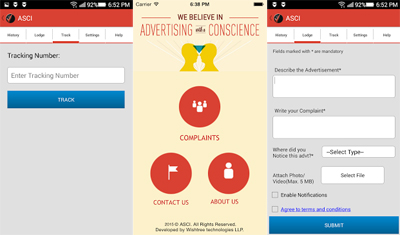
    Continuing with the mission to address misleading advertisements, Advertising Standard Council of India (ASCI) has launched India’s first consumer complaint mobile app – ASCIonline, to provide consumer complaint services on a mobile app besides providing the facility online. The mobile app is currently available on android and iOS platforms.


     

    Speaking on the occasion, Narendra Ambwani, ASCI Chairman added, “One of the goals of ASCI is to provide convenient access for lodging complaint and hence this launch of mobile app. Today mobiles devices are more widely used compared to desktops. With growing use of smart phones consumers want apps to put power of doing transactions in their pocket. ASCIonline Mobile App is consumer friendly and can be freely downloaded. It will be very useful as one can track the status of the complaints which he or she registered on our portal with the help of the App.”


  • ASCI frowns at Ullu-Banoing, finds Idea ad defaming Haryana

    By A Correspondent


    In February 2015, the Consumer Complaints Council (CCC) of the Advertising Standards Council of India (ASCI) upheld complaints against 125 out of 167 advertisements. Of the 125 ads against which complaints were upheld, 73 belonged to Personal and Healthcare category, followed by the Education category with 29 advertisements, followed by others.


    Says a communiqué on the Idea ad: “The advertisement of Idea Cellular shows the practice in Haryana of girls not being allowed to step out of homes to study, is defaming Haryana and tends to bring this State into disrepute.  Also, the TVC is misleading by implication as the product/service promoted (Idea Internet Network) is shown as a substitute to and equating to college education.”


  • ASCI launches e-learning training on responsible advertising

    By A Correspondent


    The Advertising Standard Council of India (ASCI) has launched an online training programme for advertisers and communication professionals at http://ascionline.org/asci-learning.html). It is offered at a nominal price and is available to organizations, educational institutions and individuals. It is powered by e-learning platform e-veda and individuals can enroll in the course for Rs 1000.


    Speaking on the launch,   Narendra Ambwani, Chairman – ASCI said: “It is a proactive approach that would enable the creators of advertising to get their advertisements “Right the first time”. There is a direct and tangible business benefit associated with it, as a trained individual would be able to avoid costly reworks of modifying or pulling down of advertisement by adhering to simple do’s and don’ts set out in the code.”


    ASCI’s e-learning programme will see leading professionals like Piyush Pandey, R Balki, Sam Balsara participating and lending their support to the various modules.


    Users can complete as per their own pace within a six-month window. Each of these modules consists of engaging multimedia content followed by a quiz

    • Introduction to ASCI (1 module)- Advertising Self-regulation and ASCI
    • ASCI advertising Codes (4 modules)- Truthful and honest representation, Non-offensive to public, Against harmful products/situations and Fair in competition
    • ASCI category guidelines (4 modules)- Brand Extension, Food and Beverages, Educational Institutions and Automotive vehicles
    • ASCI processes (4 modules)- Supers, Complaints Registrations and Monitoring, Complaint processing and ASCI Membership


    On successful completion, the user is awarded with a certificate.


  • Soon Consumers will be Regulators…


    By Labonita Ghosh


    A few years ago, global consumer goods giant Unilever found itself in a sticky situation. A new advertisement for its margarine Flora, had sparked a huge row. The ad showed a bullet going straight for a human heart made of china. The bullet, fashioned by the words “Uhh dad, I’m gay”, was followed by Flora’s tagline, “You need a strong heart today”. Amid largescale protests against the clearly homophobic nature of the ad, Unilever first distanced itself from the campaign, saying it had been produced by an agency in South Africa and had not been approved by the company. Then, as the protests refused to die down, the company pulled the campaign altogether. “The ad seemed to indicate that finding out your son was homosexual, was like taking a bullet to the heart. It was a very uncomfortable situation for us,” said Marc Mathieu, global SVP marketing for Unilever, who was in Mumbai last week, speaking at an event organised by the Advertising Standards Council of India (ASCI), on responsible advertising.


    ASCI has been pushing for self-regulation in the advertising world to ensure ethical and responsible handling of campaigns, and also for punitive measures against companies and agencies that put out misleading ads. Earlier in the week, the Department of Consumer Affairs announced it had set up a website called GAMA (Grievances Against Misleading Advertisements) and was partnering with ASCI to take action on the complaints filed online and penalise offenders. The prevalent idea, however, is that there may be no need for action if the industry decides for itself to toe the line.


    One oft-repeated grouse by the industry is that too many guidelines curb creativity. “The assumption often is that rules are a barrier to creativity,” said Shantanu Khosla. Managing director, P&G India at the event. “But we should not think of regulation as a constraint. It comes from the same source as my fundamental consumer insight, ie society. The people we serve, write the rules, and no one else.” Indeed, it is from these rules, added Khosla, that companies can also build leverage and trust for their brands with consumers.


    In fact, sometimes thinking out of the box can lead to some great advertising, felt John Hegarty, founder of BBH. He cited the example of how, since the socio-cultural conditions of various markets differ, there are some regulations that – literally — come with the territory. And trying to find (legitimate) ways around this, can often lead to innovative solutions. Like a hair care commercial that was prepared for the Malaysian market. “How do you advertise for women’s hair care product in a country where women wear headscarves and are not allowed to leave their head exposed?” Hegarty said. “The agency found a way around it.” The ad focuses on a comb instead, first with strands of hair on it, and later without, to show how the product could stop hair fall.


    Unilever’s Mathieu felt that understanding people is what unites the marketing and advertising agencies. “Insights into certain human truths are the most important thing,” he said. “So companies need to ask themselves what is the human truth that I can use for my campaign that will resonate with people?” Making campaigns more people-centric and creating more purposeful brands, will automatically yield ads that are less offensive and more acceptable to consumers.


    Experts, however, feel consumers themselves are the best regulators. “Self-regulation is our job, yours and mine, and not ASCI’s,” said Paritosh Joshi, head of media and communications consultancy unit Provocateur Advisory. “The more everyone believes they are a part of this, the more they will believe that enforcing truthfulness and honesty is a collective responsibility. Self-regulation is not about curtailing creativity, but about establishing a framework of rules that one might have for, say, golf or cricket or boxing. If you’re not allowed to punch below the belt, you’re not allowed to punch below the belt. There are good reasons for this, and we should all be aware of them.” When that awareness comes, there may not be a need for a watchdog at all.


    Sanjeeb Chaudhuri, CMO and global head of brand at Standard Chartered agreed. “Increasingly, the response of the consumer, will be driven by the consumer,” he says. “This consumer’s choice will, in turn, drive the choices that advertisers and agencies will have to make. They will find that they can’t go against the grain [of the consumer].”


    Santosh Desai, MD and CEO of Future Brands, saw things a tad differently. “I think the issue of self-regulation will only become more contentious till such time that business can see itself as an intrinsic part of society,” he said. “Considerations [about regulation] should not stem from things like the consumer becoming more empowered and taking to Twitter to complain. These will always be half-solutions. It will happen only when corporations begin to believe that they don’t have immunity from society.” Indeed, it should be impossible to separate the consumer from the business. “The business of business is people,” said Bobby Pawar, director and chief creative officer at Publicis Worldwide. “Just as products have consumer benefits, companies should too. They must also benefit society in some way. The thing to keep in mind is that if you are a person with a conscience, you should also try to develop one for your brand, and stay true to it at all times.” A tough ask, perhaps, but certainly doable.


  • Telling the truth in ads always works


    A little exaggeration is ok to make a point. But agencies must stand up to their clients if they are being forced to make tall claims, ad guru and BBH founder Sir John Hegarty tells Labonita Ghosh. And in such instances, self-regulation by an industry body is always better than guidelines being imposed from the outside


    Can creativity happen without some exaggeration and tall claims?

    Creativity always involves some exaggeration because you exaggerate to make some point. Since the beginning of time, mankind has done that. But in advertising it must be done in a way to engage people and not just try to shock them. That’s the real creative skill


    So where does one draw the line, given that the exaggeration and tall claims may be subjective?

    There’s the idea that the truth is a moving feast. Your truth isn’t necessarily my truth. The Japanese film Rashomon deals with some of this – what is the truth and what did you see. People genuinely think they saw one thing or another. I like to use the word integrity, because it imposes upon you a responsibility. Did you do something because you believed it to be true, as opposed to someone seeing a different truth? And once you’re doing what you believe to be true – and I don’t mean being dishonest with yourself – then I think that’s all you can be expected to do. I don’t think you can do more than that. So we try and build our strategies around some truth because that’s what will resonate more with people. And [such advertising] is much more effective.


    One could argue that that’s a bit cynical. But actually, the truth really does work, as an advertising and commercial strategy. Trouble is, a huge number of brands don’t believe that they can tell the truth. In hair care ads, why is that they always show someone with lovely, long hair? It’s such a cliché. But a brand that finds a way of talking about hair and what the product does for it in a way that is more unique, and more relevant, is the brand that will walk away with the prize. The point is to make that truth relevant at that particular moment in time. After all, circumstances change. I may have different requirements at different times from the product I buy. So it needs to be relevant at that point in time for me. It isn’t just enough to sit up and say ‘I tell the truth”.


    For instance, we always tall about the famous ad campaign done by DDB for Volkswagen in the early ’60s. It’s famous because it created more than advertising. What it said was that the Volkswagen is ugly, but it works. This, at a time when American cars were selling luxury, size and volume and such. The ad worked against the current point of view, and there were enough people with whom this idea resonated, for the campaign to have become a huge success. The point is that it has always got to be relevant.


    You mentioned integrity earlier. But isn’t that different for different people? Whose integrity do we trust?

    [As a brand] you have to do it. Because you’re the one communicating the message which will then make people decide whether or not they want to buy your product. That’s the choice you make. I don’t think we should be afraid of making choices – after all, that’s what brands are about. Great brands stand out because they stand for what they believe in. They don’t try to be all things to all people. All brands define themselves in some way or another, so you shouldn’t be afraid of doing that.


    What happens when, as an agency, you have the client twisting your arm about projecting something?

    That happens all the time. Agencies are handed the information and they can only trust that their client will stand by it. But if they think it’s incorrect or not working, they should also tell the client so. We were working for a large, rather famous cola company many years ago, and the reason they said their product was failing slightly was because their competitor had more sugar in their drink. We found that hard to believe so we tested it ourselves and discovered that [our client’s] product actually had more sugar, and their product failing had nothing to do with this at all. We shared this information with them and they had to back down on their claim. So agencies can’t just be the messenger. They have to be a responsible messenger too.


    Given that there will always be a bit of a gap between the broadcast/ printing of an ad, and action being taken on a claim, can self-regulation work effectively?

    Self-regulation has certainly been effective in the UK. There, the Advertising Standards Authority, which is financed by the advertising industry, regulates, brings out reports and issues condemnations if there are any. I think it’s better if there’s self-regulation rather than outside regulation. Advertising campaigns now are very expensive. So a client won’t be happy if it has to pull a campaign [because of some irresponsible advertising]. But one of the things I find amazing is somehow companies manage to distance themselves from the advertising when they’re in trouble. As a company you are employing the advertising agency and you are making these claims. So you should be taking responsibility. One way to make companies toes the line is by constantly naming and shaming them as offenders. If you keep have your ads withdrawn, it’s not going to be good for your mage, it won’t go down well with your shareholders and all sorts of things will begin to impact them, which will make a company think twice before making tall claims.


  • Consumer Affairs ministry engages with ASCI to curb misleading ads

    By A Correspondent


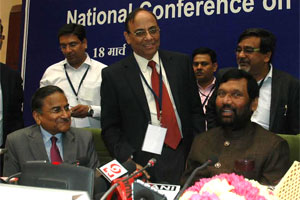
    From L-R Mr. Narendra Ambwani- Chairman, ASCI & Mr. Ram Vilas Paswan- Minister of Consumer Affairs, Food and Public Distribution

    Continuing with the mission to address misleading advertisements and avoid unfair trade practices, Department of Consumer Affairs (DoCA) launched web portal GAMA recently – GAMA being an acronym for “Grievances Against Misleading Advertisements”. The portal was launched by the Minister of Consumer Affairs, Food and Public Distribution Shri Ram Vilas Paswan at the National Conference on Consumer Rights in New Delhi. DoCA has partnered with the Advertising Standard Council of India (ASCI) as an Executive Arm to process the incoming consumer complaints.


    The collaboration will see joint efforts to evaluate and pass strictures against the violators. The six priority sectors that would be covered are:

    – Agriculture and food

    – Health

    – Education

    – Housing

    – Financial services

    – E-commerce


    The complaints will be evaluated across media like print, packaging, internet, outdoor, wall paintings, posters, bill boards, etc.


    The complaints of misleading advertisements received on GAMA portal (gama.gov.in), will be handled in a three level system i.e. first by ASCI, the second level of escalation in case of non-compliance would be by a sub-committee headed by the Joint Secretary DoCA, under Inter Ministerial Monitoring Committee (IMMC) and in the end the concerned regulator will take action in case of persistent offenders. DoCA is also leveraging the network of Grahak Suvidha Kendra to make it easier for consumers in remote areas to complain.


    Commenting on the partnership, Shri G. Gurucharan, Additional Secretary, DoCA added, “The problem of misleading advertisements and the consequent unfair trade practices that arise is widespread – across sectors, mediums and geographies.  DoCA’s partnering with ASCI is an important step in empowering self-regulatory bodies and demonstrating “More Governance – Less Government”.


    Speaking on the occasion, Narendra Ambwani, ASCI Chairman added, “We are very happy to have been entrusted with this responsibility by DoCA. GAMA portal will be very consumer friendly as one can track the status of the complaints which he or she registered on this portal.”


  • Action time at ASCI


    Narendra Ambwani, chairman of advertising self-regulator Advertising Standards Council of India (ASCI), talks to ‘dna of brands’ about the extensive campaign to connect with consumers and educate them on how to file complaints, and seek redress, against ads which make tall claims. Everyone, from local agencies and state governments to the Centre, are now happy to partner with ASCI.


    Although established way back in 1985, would you say that 2014 was a landmark year for the Advertising Standards Council of India (ASCI), given all the activities that were undertaken in its capacity as a self-regulator for advertising?

    We have seen growth in leaps and bounds at ASCI every year, but 2014 was definitely a notable year for the organisation.


    The year started off with ASCI bagging a gold at The European Advertising Standards Alliance (EASA) Global Best Practice Awards for ‘significantly reducing’ average time taken to handle complaints. We were credited with reducing the lead time for processing complaints from an average of 45 days in 2011-12, to 28 days in 2012-13 and just 12 days in 2013-14. Recognising our efforts to curb misleading advertisements, ASCI was also made a key stakeholder in the Inter-Ministerial Monitoring Committee (IMMC) by the Department of Consumer Affairs. Further, during the year, ASCI’s role was strongly appreciated and acknowledged by the Medical Council of India (MCI) for taking action against misleading advertisements by doctors. We were approached by various ministries for a potential partnership to look into this issue. So all in all, last year was indeed a landmark year for ASCI.


    From a government that was, some years ago, questioning the role of ASCI as self-regulator, to one that is collaborating with it, ASCI has a come a long. Your comments?

    Even though ASCI was considered a self-regulating industry body, it has received considerable support from the Ministry of Information and Broadcasting (MIB). A notification dated August 2, 2006, issued under the Cable Television Network Rules, 1994, states that “no advertisement which violates the Code for Self-regulation in advertising, as adopted by the Advertising Standard Council of India, Mumbai, for public exhibition in India, from time to time, shall be carried in the cable service”. After that, ASCI received statutory recognition. The FDA authorities have also been sending us complaints against advertisements violating the Drugs and Magic Remedies Act. Besides this, ASCI is a key stakeholder in the Inter-Ministerial Committee of the MIB, as well as the Inter Ministerial Monitoring Committee of the Department of Consumer Affairs. Efforts at ensuring ethical advertising practices have earned ASCI its credibility, and the confidence of the government of India.


    While policing unethical ads is taking place through ASCI’s Consumer Complaints Council (CCC), there is still a view that by the time any penal action is taken, the damage is already done. Is this correct?

    ASCI has to provide due process for the advertiser, whose advertisement has been complained against, to respond to the allegations. Providing adequate time for the advertiser to respond, is mandated by law. However, ASCI has recently instituted three new initiatives to speed up the CCC decision process. One is to have the CCC meet four times a month instead of once, so that decision-making takes places within 12 days on an average (as opposed to a month or 45 days previously). And two, starting the Fast Track Intra-Industry complaint (FTCC) redress process, where decisions regarding complaints from one member advertiser against the advertisement of another, are taken within seven working days. Since March 15, 2013, ASCI has initiated the Suspension Pending Investigation (SPI) process. According to this, ASCI can, ex-parte, ask an advertiser to suspend an advertisement, pending final decision by the CCC if, prima facie, it is seen to cause harm or hurt to consumers and the society in general.


    If one feels an ad is making unrealistic claims and complains to ASCI, in how much time can one expect a response?

    In the past few years, ASCI has made significant changes in the complaints processing system. Thanks to electronic communication, weekly meetings of the Consumer Complaints Council and the Online Complaint Monitoring Services, the average lead time to take a decision on a complaint is 12 working days from the date a “complete” complaint was received. This includes full details of the print advertisement, the name and date of publication, and clippings or a copy of the print advertisement. In case of a TVC airing, we require the name of the channel, the date and time of the broadcast; a reasonable description of the clip, specific claims or visual depictions which are considered to be false, misleading or objectionable, and the reasons for the same.


    Would you recommend a Censor Board-like pre-release certification for ads, just as it exists for films?

    Throughout the country, there are a large number of advertisements being released every year. Under our National Advertisement Monitoring Service (NAMS) initiative, we scan at least 45,000 print ads and 1,500 TVCs every month. It is impossible to create a mechanism and run an efficient system to pre-approve every advertisement which is released in the country. No system would be able to cope with such a large number. So we as an organisation, from inception, have been promoting the concept of “self-regulation in advertising content”, and truly believe in this best practice which is being implemented all over the world.


    There are several advertisers who release ads directly through specific media, like mailers or SMS blasts. How do you check these, especially if the publication is not an ASCI member?

    Ever since the launch of our Online Complaint and Monitoring Service (OCMS), we have received complaints against misleading advertisements across all media. While complaints relating to mailers and SMSes comprise a small percentage, they are increasing year on year. Currently, we are monitoring print and TV advertisements via NAMS. However, we do have plans to also track digital media. The processing of complaints is uniform across advertisers, regardless of whether they are an ASCI member or not.


    Your Clean Ad Campaign seemed to have been quite a hit. Tell us more about it. Are you going to make it an ongoing exercise?

    We launched the ‘Swachh Ads Abhiyan’ to mark National Consumers’ Day on December 24, 2014, and made a splash about it on social media (Facebook, Twitter, LinkedIn and YouTube). Since it resonated with the Swachh Bharat campaign, it created a great amount of media buzz. The aim of the campaign was to increase awareness about false claims [made by advertisers] and combat misleading advertisements to safeguard consumer interests.


    We engaged with consumers through our virtual platforms, and this drove consumer attention towards the campaign, educating them about not to be misled through advertisements, and the importance of taking action by lodging an online complaint. We believe this initiative has empowered and encouraged consumers to make the right choices, when it comes to advertisement claims.


    The campaign was conducted through videos that lent clarity to misleading claims and invited interaction from consumers culminating with a call for action to lodge a complaint online. This resulted in 150% more people engagement and the message reached more than 2.5 lakh consumers. It also resulted in tangible change that was sustained by the social media thrust. For instance, the number of online complaints increased by 166%.


    What’s next at ASCI? What are the other activities you propose to take up?

    Our priorities for the year have been chalked out as self-discipline by creators of advertising, easier access to ASCI services, collaboration with regulators and we are keen on being viewed as fair by all stakeholders. Our major focus, therefore, would be on activities enabling these goals. We are going to launch, shortly, an online training programme called the ASCI e-learning. We have plans to further increase awareness and accessibility regarding ASCI. As mentioned earlier, in terms of collaboration with the regulator, we are in talks with the Department of Consumer Affairs and the FSSAI.


  • ASCI hauls up brands with misleading claims

    By A Correspondent [updated]


    ASCI’s Consumer Complaints Council (CCC) upheld complaints against 113 out of 144 advertisements in November 2014. Out of 113 advertisements against which complaints were upheld, 61 belonged to Personal and Healthcare category, followed by the Education category with 33 advertisements.


    In the Healthcare category, the CCC found the following claims in health and personal care product or service advertisements of 58 advertisers to be either misleading or false or not adequately/scientifically substantiated and hence violating ASCI’s Code. Some of the health care products or services advertisements also contravened provisions of the Drug. Some of the complaints that were upheld include:

    – Hindustan Unilever Ltd (Lifebuoy): The advertisement of Lifebuoy claims to provide “10 x more germ protection” and “10 x more skin care” than any other soap which was not substantiated.


    – Richfeel Health & Beauty Pvt Ltd (RichFeel Trichology Centre): The advertisement of RichFeel Trichology Centre claims to be the best hair transplant from the best hair care brand at the best price of Rs.55, 000.


    – Godrej Consumer Products Ltd (Goodknight): The advertisement of Goodknight shows “a child standing near the mosquito vaporizer”, whereas the product’s leaflet includes a precaution that the electrical liquid vapourizing machine should be kept away from the reach of children. The advertisement features a dangerous practice, manifests a disregard for safety and encourages negligence.


    – Dr. Batra’s Homeopathy Clinic: The advertisement of Dr Batra’s Clinic claims to offer “Consultation with the Doctor and computerized hair test worth Rs. 2,000 now at just Rs. 250.”, “Limited period offer”, “Avail easy EMI options”, and the Website claims, “Confirm your appointment online @ Dr. Batra’s clinic, Pay just Rs. 99/- and get products worth Rs. 175/- free.” “It also offers 10% off on treatment in its animation slides”, were not substantiated. The Website shows Dr. Batra promoting the clinic which is in violation of the Code of Medical Ethics for Homeopathy practitioners.


    – Richfeel Health & Beauty Pvt Ltd (RichFeel Trichology Centre): The advertisement of Richfeel Trichology Centre is in breach of code of medical ethics as the advertisement is soliciting patients and also mentions the names of Dr. Apoorva Shah and Dr. Ferrari, promoting the Clinic, which is in violation of the Central Council of Homeopathy Code of Ethics Regulations Clause II 6.1.


    – Dr. Batra’s Health Clinic: The advertisement of Dr. Batra’s Health Clinic claims to offer revolutionary hair growth treatment from France which is a painless and non – surgical treatment. They further state that 77% have seen hair growth results in just eight weeks.


    – CordLife Sciences India Pvt. Ltd:  The advertisement of Cordlife claims to be Asia’s largest stem cell bank. The advertiser did not provide the market size in each country and the total market size in Asia to arrive at total market share data to establish that Cordlife is the market leader in Asia.   The CCC concluded that the claim, “CordLife is Asia’s Largest stem cell bank”, was not substantiated.


    – AyurMana Centre for Advanced Healing: The advertisement of AyurMana Centre claims to help weight loss of up to 30 pounds in 4 weeks without starvation diet or strenuous exercise.


    – Lifespan Diabetes & Cardio metabolic Clinic: The advertisement of Lifespan claims “Diabetics are 50% more likely to have a heart attack”. This claim was not substantiated with data specific to the Indian population.  Also, the claim was misleading by exaggeration.


    In the Education category, the CCC found following claims in the advertisements by 33 different advertisers were not substantiated and, thus, violated ASCI Guidelines for Advertising of Educational Institutions. A few complaints that were upheld include:

    – Arcot Sri Mahalakshmi Women’s Institute of Management:  The advertisement claims 100 per cent employment in India and foreign countries. The claim was not qualified with the appropriate disclaimer.


    – Mahanadi Education Society (Raipur Institute Technology – RITEE): The advertisement of RITEE claims job guarantee or money back; super *conditions apply* which was not substantiated with supporting data.


    – Bright Career Academy: The advertisement of Bright Career Academy states “Job Assured on pursuing 3 month’s course” and “7+ Bands assured on undergoing IETLS 7 hours classes daily”, were not substantiated with supporting data.


    Other categories that were pulled up include:

    – Godrej Consumer Products Ltd (Cinthol Deodorants): The advertisement shows alcohol-based deodorants being sprayed on ball pen art (art done by a ball point pen) resulting in the art getting dissolved. The advertiser seeks to instill fear in the mind of the consumers as if alcohol based deodorants can melt the human skin. Thus, the advertisement denigrates alcohol based deodorants.


    – Mahindra Retail Pvt. Ltd (Mom & Me): The advertisement of Mom & Me claims “Interest free EMI” which is misleading by omission, as the EMI scheme was not free since interest was to be paid after six months, which was not mentioned in the advertisement.


    – JK Cements Ltd (JK Wall Putty):  The advertisement of JK Wall Putty claims “seelan mein bhi papdee ka koi chance nahin” was not substantiated with technical evidence.


    – Videocon Industries Ltd (Videocon Split A/C): The advertisement claims to offer zero percent interest and zero process fee by Bajaj Finance – just pay Rs. 2014 and the balance in equal EMIs. This is misleading as the processing fee is not zero as the complainant had to pay the extra processing charges during the purchase of the product.


    – Bajaj Allianz General Insurance Company Ltd (Bajaj Allianz): The advertisement claims to provide value added services such as 24×7 spot assistance, key and lock replacement cover along with the policy, fastest claims servicing through their 24 x7 call centre. The advertisement claims “3400+ numbers of garages across the country”. It also claims to offer battery, fuel, spare keys assistance flat tyres, minor repairs and towing. They further claim to provide “Legal Advice and Medical Coordination”, “Message Service and Taxi Benefits Accommodation Benefits” and “Additional savings of upto 30% on medicines, eye care, dental care and many more outlets.” These claims were not substantiated.