Okay, there are the hiccups. The plea to push digitization in Chennai was successful with the Court extending the date to November 5. In Mumbai, the plea was rejected even as local cable operators are gathering in the afternoon to decide on the next course of action. They may even go in for an appeal to the Supreme Court.
What the stakeholder body bosses say:
Man Jit singh
Man Jit Singh, President IBF and CEO, Multi Screen Media
This has been the biggest step in the broadcast industry. Not only is digitization good for broadcasters as it will bring subscription revenues in line but will also enable us to launch new channels, the carriage fees will be lower; but it is also good for consumers. This is the chance for consumers to get different content, it is also a chance for them to get broadband connectivity, which will bring a great information revolution. It is great for MSOs as they will get fair revenues from customers after having invested in the boxes. FDI is allowed too, so the MSOs can look for investments. For LCOs, ARPUs will go up when they offer services like cable modems and broadband connectivity. Government will get more taxes. It is going to be a fantastic phase.
Arvind Sharma
Arvind Sharma, President AAAI and ASCI and chairman and CEO of India subcontinent, Leo Burnett
Digitiation will be a big leap for everybody involved, either as an advertiser, as a businessman, as an agency. So all of the stakeholders are looking at the day with the hope that all will go well.
Roop Sharma
Roop Sharma, President, Cable Operators Federation of India
We all were waiting for digitization. But i have mixed feelings for the day. We have not been able to deliver what we had promised the consumer. There is no transparency, the electronic bill system is not in place, and moreover, the required number of boxes have not been seeded. What can one say? Chennai has extended the deadline. Mumbai will now be moving to Supreme Court for the extension of deadline.
In Kolkata, the opposition is kind-of state-sponsored with Chief Minister Mamata Banerjee objecting to the mandatory digitization and the impact it has on the poorest of poor.
In Delhi, there were some objections raised, but they appeared to have fallen on deaf ears.
The result: mandatory digitization in three metros is here. And at long last there is going to be some order in the broadcast business. One is not very sure whether those who are very elated about the move will be so in future. Because transparency comes with its own set of problems. Especially for those who have been used to the inefficiencies for far too long.
See also: Shailesh Kapoor/TV Trail: Channel Brand: The Digitization RealityThe Anchor: 5 problems and that you and I will face thanks to digitization
So, who gains and who loses by the digitization:
Consumers: Will they gain? Yes and No. It’s great for those who can afford it, but for the lowest common denominator already burdened with rising salaries and falling incomes, it’s going to pinch.
Broadcasters: Content-makers will now get the money they ought to get as they will know how many people are subscribed to their channel, but no longer will they be able to give the spiel of millions of viewers watching their channel without the relevant proof. Â They will save some of the carriage fees paid to Multiple System Operators (MSOs)
MSOs: Monies coming from carriage fees will take a beating, though it won’t vanish entirely as some revenues from placement etc can be made. Their incomes could rise with better reporting from the local cable operators.
LCOs: While quality of content will mean greater number subscriptions to niche channels and hence more commissions, the overall revenues will reduce as the set-top boxes will mean zero unaccounted connections (unless of course there’s pilferage)
Distribution Bouquets: MediaPro with Star and Zee channels in its fold will be the biggest gainer as will be IndiaCast with the Network18 and allied group channels. However, others smaller group but with key channels like, say, Times Now could also flex their muscles.
Advertisers and Media Agencies: They will now have a better idea of the reach and may be able to negotiate harder, but there may be a few hiccups
Hiccups there will be for all. The next few months – possibly till end-December – will see a state of uncertainty for stakeholders. The fight for mandatory digitization may have been won, but the battle has just begun.
The Advertising Standards Council of India (ASCI) has appointed Arvind Sharma, Chairman of India Sub Continent, Leo Burnett, as Chairman of the Board. Partha Rakshit, Proprietor, Partha Rakshit Associates, was elected Vice-Chairman; and Vikram Sakhuja, CEO-South Asia – Group M Media India was re-appointed the Honorary Treasurer.
I Venkat, Director – Eenadu, and the outgoing Chairman of ASCIÂ said, “The last year has seen ASCI take various initiatives to strengthen the self-regulatory system. These included increasing the frequency of Consumer Complaints Council to twice a month, introduction of the Fast Track Service, having a National Conference on Strengthening Self-Regulation of Advertising Content, engaging with young creatives through a Mobile Film Contest at the Goafest, interacting with the Department of Consumer Affairs and participating in their conferences on misleading advertisements. ASCI has taken a giant leap forward in introducing the National Advertising Monitoring Service (NAMS) which monitors 1,500 TV and 45,000 newspaper ads per month. All in all a very satisfying year for ASCI. ASCI is the first self-regulatory body in the world to initiate monitoring of almost all newly released ads in print and TV nationally with NAMS.”
Arvind Sharma said, “It is indeed an honour to be elected as Chairman of ASCI which has progressively contributed to effective self-regulation in advertising content. We are confident that the ad sector, industry body’s regulators, consumer activists and the general public will actively seek ASCI’s services and take self-regulation forward.”
As a member of the Board of Governors for seven years, Mr Sharma has provided active support to self-regulation in the advertising movement.
During the year 2011-12, the Consumer Complaints Council (CCC) met 16 times and considered 2,986 complaints against 176 advertisements. Of these, complaints against 103 ads were upheld, while 69 were not upheld and 4 were considered non-issues. In 89 cases, the complaint upheld ads have been voluntarily withdrawn or modified as per the CCC’s decisions resulting in over 86% compliance rate.
The other members of the new Board of Governors include: Advertisers: Narendra Ambwani (Agro Tech Foods), Hemant Bakshi (Hindustan Unilever), Rajiv Dube (Aditya Birla Management Corporation), Shantanu Khosla (Procter & Gamble Hygiene & Health Care), Media: Rajan Anandan (Google India), Sunil Lulla (Times Global Broadcasting Co.), Benoy Roychowdhury (HT Media), I. Venkat (Eenadu); Advertising Agencies: Subhash Kamath (BBH Comms India), Srinivasan Swamy (R.K. Swamy BBDO). Allied Professions: Dilip Cherian (Perfect Relations), Dhananjay Keskar (IBS), Pranesh Misra (Brandscapes Consultancy P. Ltd.).
The Indian Society of Advertisers (ISA) and the Advertising Agencies Association of India (AAAI) called a joint meeting on August 16 for TAM to present facts as they are relevant to the users.
TAM shared its perspective with ISA and AAAI and outlined six key action steps:
Appointment of a security officer and a security agency
Expansion in number of meters in the existing 6 top metros
A review by the industry of research processes that determine what TAM reports in its weekly reports. And what meter homes are left out of reporting for being data outliers
Getting the outlier homes independently audited
Faster panel rotation
An internal audit team to be put in place as soon as possible
“We look forward to speedy implementation of the six action steps outlined by TAM. With the formation of Broadcast Audience Research Council-BARC on the anvil, it will be appropriate for us to request BARC to review if these steps are adequate,” added Messrs Patel and Sharma in the statement.
Advertising Agencies Association India (AAAI) has elected Arvind Sharma, Chairman, Indian Subcontinent, Leo Burnett as the President for the year 2012-13. MG Parameswaran, Executive Director and CEO, Mumbai at Draftfcb Ulka has been elected as the Vice President. Nagesh Alai, the outgoing President will be the ex-officio member of the new AAAI Executive Committee.
When MxMIndia congratulated Mr Sharma and asked about his agenda for the year ahead, he said: “AAAI is an industry body and it is a team work. We will be meeting on August 17, where we shall be listening to each other’s views before setting up the agenda.”
He added: “The industry is growing and transforming at a rapid speed, thereby also providing newer opportunities to an advertising agency for growth. The amount of monies being invested in advertising has increased, and newer avenues have opened up for investments, thus the challenge is to understand and adapt to the changes. As an industry, we need to understand what lies ahead and prepare the agencies for the future.”
Other elected members of the Executive Committee include Ganesh Baliga (Fifth Estate Communications), Ashish Bhasin (Aegis Group), Nakul Chopra (Publicis Communications), Tanya Goyal (Mogae Group), Kunal Lalani (Crayons Advertising), Vinod Nair (Network Advertising), Pranav Premnarayen (Prem Associates Advertising & Marketing), Sridhar Ramasubramanian (Matrix Publicities and Media India), Vikram Sakhuja (Group M), Umesh Shrikhande (Contract Advertising) and Srinivasan Swamy (RK Swamy BBDO).
Continuing with the feature we carried on July 2 (Link: http://www.mxmindia.com/2012/07/the-half-year-that-was/), we bring in more views from the industry on the six months gone by. This half-yearly report card is again a mixed bag – while some have had an excellent run, others had few hitches on the way. Here’s bringing views from some leading players of the industry.
Broadcasting:
Rohit Gupta
Rohit Gupta, President, Sony Entertainment Television
So far, it’s been an excellent year for Sony network. And I’m sure it’s been same for the industry, at large. The industry is still growing and there have been no cuts in spends. People are still putting their money in the medium. I’m sure there is no gloom surrounding this industry. Even the 2008 slowdown didn’t affect us. So, there is nothing to worry about too.
Sunil Lulla
Sunil Lulla, MD and CEO, Times Television Network
I would say, it has been testing six months for the broadcast industry. The biggest set-back has been the extension of the digitization implementation. The IBF ran a very good campaign for it but since MSOs couldn’t fulfill the requirements, unfortunately it has to be postponed. My advice to the ministry now would be to take strict actions and make sure the new deadline is met. It is important for the industry since it will shape the industry and help us understand it better too.
By and large, important events in the broadcast industry like IPL, Indian Idol did well and a new show like Satyamev Jayate was launched. However, there is still a gap between how a show performs and what the viewers really want. Hence, I think TAM needs to be more clear and needs to increase its sample size too.
But what really shocked the industry was the new adult timings and ‘A’ restrictions on television. What happened with Dirty Picture’s telecast was regrettable. Nevertheless, after the self regulation imposed by various channels – news and GECs – the quality of content has improved.
As from the business point of view, from January till April, it was good; but May onwards the marketers have had a watchful attitude. It might not impact the industry at large, but a certain sections might get affected. Also, given the current economic climate, one will have to keep a very watchful eye for the near future.
The last six months have been eventful for the broadcast industry. First it was the whole discussion regarding digitization – from notifications to it finally getting delayed. Hopefully, the new deadline will be met as it is positive for the broadcast industry. Also, the new advertising guidelines set by TRAI will make sure that the market doesn’t get diluted.  Such moves will only benefit the industry and help it grow.
However, there has been a slowdown in ad sales and revenue generation. Everyone knows what happened during an event like IPL. It is a slow phase right now, but the costs of purchasing rights are still high. So, it won’t be wrong to say that testing times are ahead.
K Sriram
K Sriram, GM, Vijay TV
The last 6 months in the Tamil GEC space has seen a dramatic change in programming. KBC travelled into Tamil Nadu and with actor Suriya donning the role of anchor. The barrier between the big screen and television was truly breached for the first time. KBC Tamil ensured that prime time television in TN was redefined, as it not only cut across audiences, but also surged ahead of the power cuts and the IPL fever and eroded into SUN TV’s prime time shares. Vijay TV saw a growth of 41 per cent in the year in a market which was otherwise declining. Content came to the fore.
Tamil television also saw the movie acquisition game being taken to another level with Nanban, the hit Tamil adaptation of 3 idiots, being screened within 100 Days on Vijay TV. Another path breaker given that A+ titles before were insulated for a year. Loud and clear in the Tamil GE space – the game just got bigger and in the last 6 months there was only one player playing the game. Competition is sure playing catch up.
Marketers:
Harkirat Singh
Harkirat Singh, MD, Woodland
The overall market in the branded retail segment has been seeing growth. The biggest change that one sees in this segment is that now the growth comes from smaller towns. In the earlier phase, the growth came from metros; and if one ventured into smaller towns in branded retail say a decade back, most likely, things would not fall in place. Now the risk factor in venturing into the smaller towns is much less and there are many players in branded retail who are turning towards these cities knowing that growth opportunity lies there.
For Woodland, last six months have seen steady growth and we intend to open 60 stores this year, though the rider is to expand but be selective. The market, I would say, has been slow. But that is the trend I would say during a particular time of the year where each year business is slow and picks up only later. As for retail, I think the market is vibrant and the sector has been seeing activity and is slated to see increased activity with FDI in retail being relaxed.
Vikas Jain
Vikas Jain, Executive Director and Co-Founder, Micromax
For the mobile phone industry there has been no concern about consumption, as the demand for new sets continues to be on rise. The change being that now the customers are well-educated on the mobile sets they want to buy and with change in technology there have been change in the preference on the type of mobile sets. The key, therefore, is to recognize and anticipate the product in demand and meet the needs of consumers. The players need to create a roadmap of the products to be launched rather than get carried away by technological changes. Keep an eye on the changing trends and tweak the launches accordingly.
On the flip side, the devaluation of rupee has put pressure on the margins and Micromax being a player that vouches for being cost effective will not yield to increasing prices of the phone sets. As for following any trend on cost cutting on the marketing and communications front, we have not done any. We continue to be associated with Bollywood and Cricket and would associate if any good opportunity came to us.
Media Agencies:
PM Balakrishna
PM Balakrishna, COO – Allied Media
I think the months of April-May were on par but June was not so great. The feeling is that of a slowdown for sure. But an advertising perspective there is cause for worry. It’s a reflection of the economy not looking good in the past few months with petrol prices seeing a hike, inflation seeing a rise and other such factors. These factors play a part in the way media spends pan out.
Where television is concerned there were some properties that did well like the Euro Cup recently and also the IPL before that, but then there are signs of slowdown with advertisers not being too keen to be associated with properties and also with the rates coming down. With Print, which sees ads from sectors like Real Estate and so on, there was a sudden upsurge that was seen in June with most property dealers advertising a lot in dailies and magazines. But that may be a sheer sign of desperation because transactions are not really happening or consumers are not really picking up stocks. There has not been a surge from other sectors as well and they are treading cautiously. So if one were to do a quarter to quarter analysis, one would see that there has been a decline in April-June this year compared to the same quarter last year.
As for the revival, what I have observed recently is that clients have been drawing up plans which they might want to unveil soon, probably around the festival season. But I think overall, the growth will meander along in the next quarter also. Probably the last four months of this year may turn out to be good but whether it is enough to offset the slow-burn over the first six months – I am not too sure.
Anamika Mehta
Anamika Mehta, COO – Lodestar Universal
Although we are six months into the year, I do not think the industry will record the original projections that were forecasted. We are just into the first quarter and therefore we cannot conclude much but overall some categories are seeing a slowdown. Sectors like real estate and finance have seen a slowdown in the spends but FMCG companies are yet to go slow. They are playing a cautious game though.
Also, much of the growth is also the result of the current economic conditions which do not look good at the moment. But it will not be all gloom and doom as is being witnessed in Europe but it will also not be a great story as was being propounded forIndia. Also, one cannot predict the exact figure beyond a point but the approach is going to be that of caution.
Sundeep Nagpal
Sundeep Nagpal, MD, Stratagem Media
I would say the media industry in India is already feeling the effects of the economic gloom that has been in the works for some time now. From what I have been given to understand the first quarter of this fiscal has been reasonably difficult. In fact nothing can be said about the trend that will emerge in the next six months as there is some amount of scepticism in the industry. Unfortunately, in our industry fluctuations are happening faster than what we have witnessed before – whether up or down. It takes a lot of deeper understanding and attention to details if one has to figure out what the current media scenario correlates to. Frankly, even I do not have an answer to that. It’s very easy to say that it is dependent on the overall global or Indian outlook but that is too macro a view to attribute to. If I was a media planner, I would be looking at ways to look out for the early signals and accordingly find out the relevant methods to adopt. Overall, the industry may just about see a decline in its growth numbers for 2012 than what was originally anticipated.
Advertising:
Arvind Sharma
Arvind Sharma, Chairman, Indian Subcontinent, Leo Burnett
As the GDP numbers have been showing a slowdown, one can see that it is getting reflected in the advertising spends too. While at peak the advertising industry was showing a growth of 25 per cent, it would be somewhere around 7 per cent in the first half of 2012. At individual agency level, while we have seen a growth on 40 per cent in 2010 and 25 per cent in 2011, in the first half of 2012 we would see a growth of around 15 per cent. But I think at an individual agency level we still can manage fairly good growth as India has close to Rs35,000 crore advertising expenditure hence the need of the hour is to get aggressive and lay claim to the bigger pie from that budget. This will happen from organic growth from current clients to acquiring new businesses. This growth will also come from making our offering robust.
If one were to look at growth, then in our case, I would say that we have seen growth from our existing clients but growth from new clients or from new major initiatives have been significantly less. However, I would say that the mood currently is to be cautious.
PR:
NS Rajan
NS Rajan, Managing Director, Ketchum Sampark
While we have grown by about 20 per cent in the first half, we are witnessing headwinds gathering across various sectors which can in turn affect growth in these segments and consequently the PR business in the second half.
Also margins could be under pressure in the coming months as the increased cost of servicing may not be compensated by incremental revenues unless the economic environment changes significantly which can lift up sentiment.
MxMIndia spoke to a cross-section of media professionals to elicit their views on the JWT Singapore acquisition of a majority stake in Hungama Digital Services
Hungama’s telecom business is intact
By A Correspondent
Make no mistake. Hungama hasn’t sold out. Of the 1000+ employees, only 120 will be off to the new company which will only be 51 percent owned by JWT Singapore. And the key telecom business is intact, as are various others.
When on Wednesday, leading advertising agency JWT confirmed its acquisition of a majority stake in Hungama Digital Services, the digital and promotions marketing division of Hungama Digital Media Entertainment. The size of the deal is not known, though the digital services division is said to have aggregated a turnover of Rs50 crore last fiscal. WPP reportedly earns revenues of over Rs 2500 crore from India and Hungama earned around Rs 450 crore last fiscal.
The new entity which will be called Hungama Digital Services Pvt. Ltd.will be a full-service digital agency specializing in digital marketing and social media solutions. As part of the acquisition, Hungama’s activations arm, Hungama Promo Marketing will become a part of Hungama Digital Services Pvt. Ltd. and provide an engagement platform linked to online and offline deliveries.
However, it is not known who from the existing team at Hungama Digital Media would move to the jv. “We haven’t received the new org structure,” a Hungama spokesperson told MxMIndia.
Said Neeraj Roy, MD and CEO, Hungama Digital Media Entertainment, “With JWT, we are now part of the largest advertising network in the world. Hungama Digital Services is the coming together of two exceptional teams in a globally relevant market.” “With this partnership with JWT we hope to offer integrated digital and experiential services to our clients and prepare brands to connect, interact and now transact with their customers.”
Hungama Digital Services has been a dominant player in the digital space for 13 years and is spread across six cities in India. In fact the creative services devision is what Hungama started out with over a decade back. The 120-strong team will continue to drive the agency, including servicing old and new clients and offer creative and promo marketing services, viral marketing campaigns, social media marketing and mobile marketing, applications, managing websites and video services.
For JWT, it’s a good acquisition, an insider told MxMIndia. Said Colvyn Harris, JWT India CEO: “Digital is our next new frontier.The idea of the partnership is to build a digital offering for our clients so we can live up to being a ‘single source’ partner across all their ‘marketing solutions’ needs. What will be most effective in the future is a new set of talented, digital high end specialists who will add new skills and capabilities to what JWT already offers to its clients. We want all our clients to be leaders in their respective categories.”
“We have greatly expanded our digital capability across the region, and we are not standing still. JWT will continue to hire new digital experts and explore possible acquisitions across the region this year,” said Michael Maedel, President, JWT Asia Pacific.
See earlier report:Â JWT acquires 51% stake in Hungama Digital
Raghav Anand, Segment Leader-Digital, Ernst & Young (The observer and often advisor)
Raghav Anand
I think Digital is an extension that every creative arm should have, but the real efficiency comes from how well it is syndicated with the overall collusion. Most of the agencies which have bought digital companies have not been able to integrate them into the overall setup, and hence not been able to leverage the synergy. So, how well you integrate and leverage the synergies will really decide whether it’s a fantastic acquisition or not. Apart from that, the other important things is that companies like Hungama are not just agencies, they are more of digital workflow companies which do a lot more than advertising and creative. They integrate into mobile and few other things. So it’s important for an agency to fully leverage them.
Arvind Sharma, Chairman of the Indian Subcontinent, Leo Burnett (He recently acquired Indigo, a digital agency)
Arvind Sharma
Setting up an outfit from scratch has its own merit as you don’t have to pay a hefty acquisition price. However, I think this is a chicken and egg situation as the challenge is that when starting from scratch, you lack the scale and expertise in the beginning which is a handicap when attracting talent or meeting the needs of a client. You get stuck in sub-optimal size and scale. Particularly in Digital, one needs technical expertise and should be armed with a suite of capabilities to meet the clients’ demand. Therefore, it makes sense to acquire an agency of 150-plus people who are specialists, especially in the digital category which is witnessing a lot of interest from clients too. It immediately gives you scale and expertise. Also today clients want gamut of services under digital. They are not looking for few pieces of digital work; hence having an in-house digital agency helps in delivering.
Mahendra Swarup, Former CEO, Indiatimes, Chairman, Smile Interactive (He’s worked with Pepsico, Indiatimes, Smile Interactive whose Quasar was acquired by WPP, and is now a well-known VC)
Mahendra Swarup
I think Digital is not an easy space to get into for traditional agencies. And at this point of time, digital agencies’ valuations are pretty realistic, so it’s always good for the traditional agencies to take over an existing team which understands digital. Also, the digital space is going to start growing at a fast pace, although at this point of time, it has a very low share of the total spends. But it will probably end up growing almost by 75 to 80 per cent year on year. So, it’s a big growth area. Also, I think organic development of a digital agency within an existing traditional agency is just not possible, the existing teams will not understand this space at all. So it’s more an acquisition of knowledge and competence, rather than of revenues. It’s only a question how do they (traditional agencies) get into a space which they will then grow faster.
Alok Kejriwal, CEO & Co-founder of Games2win (He’s a contemporary of Mr Neeraj Roy…)
Alok Kejriwal
Whatever be the nature of the investment, I think it is brilliant that Hungama Digital has managed to get a partner like JWT. It shows that people who have been around and helped build the digital landscape over the last 10-12 years have finally begun to see the fruit of their labour as it has been one long arduous battle. Neeraj Roy has fought many battles to get media owners and brand planners to get convinced about the digital platform for India.
Creative people are not like cement bags where you can go to the market and buy them. They are like yogis in the mountains. So when you get hold of a yogi, you’d do anything to keep him. It’s not one size fits all. JWT has a large client portfolio while Hungama has the digital capability. There are some cutting-edge creative digital agencies in the world that are the ones trying to set shop inIndia. For them to buy it makes a lot of sense, but then there are existing creative agencies inIndiathen why buy an outside agency when they are cutting-edge themselves? If you look at Quasar, which is a WPP company, they too are doing a good job. So it varies according to the needs of the marketplace.
Mahesh Murthy, Founder, Pinstorm (He embraced digital early and is known for his forthright views on everything!)
Mahesh Murthy
India is one geography in the world where MNC agencies are absent among the large digital agency houses. The basic reason is perhaps their unwillingness to give up on their bread-and-butter – that is media kickbacks and TV film production over-billing. Both of these tend to disappear when you move online and digital-first agencies like Pinstorm have built large practices by focusing more on new technologies and processes, having avoided the kickback-led business that still drives mainstream advertising. Given India’s importance on their global client rosters, the MNCs here have finally figured out that if they can’t build a digital business themselves, they’ll try to buy one. I personally don’t think these random purchases will make much of a difference.
Vikas Tandon, Founder & Managing Director, Indigo Consulting (Indigo was acquired recently by Leo Burnett)
Vikas Tandon
It is no surprise at all. The pace of change in the world today is stupendous, and digital media is causing consumer behaviour to change very rapidly. There is no time to build the expertise from scratch, and scale is also critical to success. Another compelling reason is there is not enough digital talent out there – a lot of the experience and expertise resides in entrepreneurial outfits. Hence acquisitions make eminent sense.
Karl Gomes, Co-founder – AgencyDigi (He co-started the agency after a great run as a digital CD)
Karl Gomes
When it comes to digital, any news is good news. In fact if you look around in the media marketplace, there have been similar news developments that have happened in the recent past. The focus for agencies should be about coming up with the right idea and focus on the consumers and brands. In today’s world you have to collaborate. My only worry with these acquisitions is I hope they don’t treat them as another division but they work together and in a synergistic fashion. They need to be sitting together on the table when a brief comes across to them rather than just approach it passively. So, an acquisition like this should be good for both the people buying them and for people selling them. We have been approached by agencies but we are completely funded by clients and their business. So we will continue to run independently.
Compiled by Shruti Pushkarna, Johnson Napier and Tuhina Anand
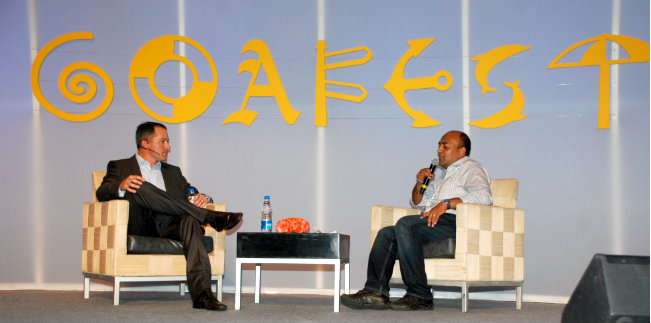
Goafest 2012 kicked off with the lighting of the lamp by the industry dignitaries, Mr Arvind Sharma, Chairman Goafest 2012; Mr Nagesh Alai, President, AAAI; Mr Shashi Sinha and Mr Ambi Parmeswaran, ED and CEO, Mumbai Draftfcb Ulka Advertising. Mr Sharma said that he was thrilled as Goafest 2012 over 3,000 participants, including representatives from Sri Lanka and Bangladesh.
Mr Parmeswaran said that he was ecstatic about the event this year as there was a restructuring of knowledge sessions. Mr Sinha observed that with more metals and more categories at the awards than last year, more participants, representatives from foreign countries, exciting prices for the audience, Goafest 2012 is aiming to give participants an experience with qualitative improvement every year. And unlike previous years, presentations by speakers were followed by the Q&A sessions moderated by industry veterans.
The first session, ‘Magical Ideas Come when You Harness the Power of Many People’, commenced with a flash mob from YouTube, taking everyone by surprise and perhaps sending a message that it was one way of using consumers to building your brand.
Mr Lucas Watson, Global Vice President, YouTube spoke about how passionate consumers can help one build brands and how online videos can help even startups spread awareness and the reach needed in a very cost effective and efficient way. “Just get started online, you don’t have to be a big brand, all you have to do is gain trust among your consumers and you will be surprised how passionate people are to participate in the brands they love. The magic of YouTube is available for all to see, as it allows everyone to participate and that too in a cost efficient manner.”
The first session was moderated by Mr N Rajaram of Airtel. When asked about the scope of co-existence between television and online videos, Mr Watson said: “Like many industries, we too are going through a transformation. There are brands which are afraid to disrupt their current mode of functioning and there are brands who want to try new and better ways of reaching out to their consumers. So I believe there will be some co-existence, nevertheless there will be winners and losers as well.”
Gerson da Cunha, stage and film actor, social worker and author dedicated Ad Katha, a book that tracks the history of Indian advertising to the late Bal Mundkur, founder of Ulka. Mr da Cunha gave the audience a glimpse of the Indian advertising right since it started through the present day advertising. He also pointed out that advertising bloomed in India from print media and that in 1991 it even opened doors to the global economy.
Mr Jonathan Mildenhall, Vice President, Global Advertising Strategy and Content Excellence, Coca-Cola spoke on the use of creativity and content and how Coca-Cola moved from creative excellence to content excellence. He also explained that there is a need to encourage consumers to express their stories and how a brand must move to dynamic storytelling. “A brands story must show that it’s committed to make world a better place. There is a need to converse and not just listen to our consumers but to create inspiration and provocation.”
In the session moderated by Sanjay Behl, CEO, Reliance Digital, when asked about a marketer’s role in the future and the consequences of negative conversation on a brand, Mr Mildenhall said: “Brands have to be a lot more transparent, if you inspire good conversation, it manages itself and I believe good eventually wins over evil. Brands, therefore, need to rethink the creative story they are telling their consumers. A 30 second media spot is valuable and it should be a gateway for brands to reach higher grounds.”
Mr Tim Love, CEO, APIMA and Vice Chairman, Omnicom Group spoke about ‘The Magic of Ideas- Our Language Impediment’. He was of the view that innovation is the magic of ideas and that language is a technology. Mr Love also pointed out that as internet penetrates further in India, language communication will be going to new heights.
The session (all of them held at what’s called the ‘Dome’) on Language Impediment was moderated by Kainaz Guzdar of P&G. When asked for his suggestions on how marketers and advertisers can come up with great ideas on language impediments, Mr Love said that they will have to be more cognizant in language and respect the sensitivity of various people. He also said that ideas are best when communication is from one individual to another.
Mr Charles Wright, MD of Wolff Olins shared his insights about how consultancies are equally important to creating and building brands. He spoke about how by combining rigour with magic, one can solve complex business problems and how a Wolff Olins experience of branding may be completely different from an advertising agency’s experience despite working on the same product or brand. “In order to build brands that succeed, it is important that one understands what is important to the customers. We are all living in a world of perception but branding is all about changing the way people behave, and simply making promises is not important but, delivering on those promises is far more important.” He added: “Design, as a language, can help change people from hating a particular brand to making them like the brand and then probably even love that brand.”
It takes quite an effort to put up an event of Goafest’s scale where delegates assemble to exchange and co-share ideas that have evolved over a period of time. As the first day of the festival kicked off with the Advertising Conclave, MxMIndia spoke to Arvind Sharma, festival Chairman, to gather his perspective on the start and expectations from the rest of the event.
On Ad Conclave being evolutionary
We are only half way through and there are still two days to go. From what I have heard, the start has been brilliant so far. There are more than 3,000 delegates expected, the quality of entries have gone up and the speaker line-up is exceptional. So all in all, it should be a magical Goafest.
The idea is never to make it different; the idea behind festivals like this is to make it evolutionary, than revolutionary. That’s because about 2,500 people came here last year and they expressed their liking towards what we had put up for them. So it would be irresponsible on our part to do something different. How we can make the event more relevant to the industry in the coming years, how we can add pieces, how we can add streams of participants like clients, and so on… all of these things are evolutionary. I think it needs to remain the same 90 per cent and 10 per cent, you say, how can I make it more attractive and relevant to the delegates?
On ideas taking centrestage
The media environment is changing and the consumer is changing. There are infinite number of conversations happening and they will continue to happen. But if they happen in private drawing rooms, you wouldn’t know about them, but now they happen in public. So, if two of you are chatting the whole world can see you chat.
And that creates anxieties and it creates opportunities. The speakers presented their take on how to deal with it, have stories that are linked to the brand, allow stories to evolve, and to curate the best thing that is done. The most powerful way is if you use these ideas in creative, unorthodox combinations and make people the centrepiece of everything that you do.
Future belongs to digital
I think client spends and advertising agencies’ attention and commitment have been lagging behind, where the consumers already are. We need to believe and commit to the medium of digital. So if you are not embracing digital, you would be doing disservice to your brand. Nobody disagrees on the importance that the medium bears but we need to have conversations and invite people to come and share their ideas and aspirations around the medium and that is what we intend to do at Goafest this year.
It’s the time of the year when the adfrat congregates in Goa for the sun, sand and loads of learning. And may we add: gallons of beer. As Goafest 2012 begins at The Zuri White Sands in South Goa today with the industry conclave, one will see more than 3,000 people get together to celebrate creativity.
Says an ecstatic Arvind Sharma, Chairman, Goafest 2012: “We were ourselves surprised with such an encouraging response. This year will see the biggest crowd gather in the history of Goafest.” If the number of registrations has skyrocketed, guess will so be the consumption of beer and assorted liquids. Remember, the excise levies are perhaps the lowest in the country in Goa!
“Goafest 2012 is a brand owned by the advertising and marketing fraternity. The high numbers that will attend the festival goes to show that fraternity looks at it as an extremely responsible event that is representative of the industry. We have an outstanding line-up of speakers this year, the process of judging has been rule-based and transparent and the jury has been extremely happy with the quality of entries that have come in. I just hope that people will enjoy the Goafest, Mr Sharma adds”
Goafest will start, as has been the norm, with the Advertising Conclave with the theme Ideas That Impact the Full Circle. The session will begin with the welcome address by Nagesh Alai, President, AAAI. Srinivasan K Swamy, Chairman, Goafest Advertising Conclave will give his address on the theme of the Conclave. This will be followed by introduction of speakers by Arvind Sharma, Chairman, Goafest 2012.
Jean-Yves Naouri, COO, Publicis Groupe and Tim Love, CEO, APIMA, Vice Chairman, Omnicom Group will give a global insight to the theme of the conclave. Jayant Murty, Director of Strategy, Media and Integrated Marketing, Asia Pacific Region, Intel Corp will speak on building brands in the era of multiple degrees of freedom. The last session will be a panel discussion on the theme which will be moderated by Anuradha Sengupta of CNBC TV18.
Post the Conclave, April 20-21would have seminars during the day and awards night. On Day 1, the sessions will start from 2.30pm and the speakers would include Lucas Watson of Youtube, Jonathan Mildenhall of Coca-Cola, Tim Love of Omnicom, Charles Wright of Wolff Olins. On Day 2, one would get to hear author and brand guru Prof John Philip Jones, Rishad Tobaccowaala of Vivaki, Erik Vervroegen, Publicis Worldwide and Simon Wardle. These sessions will begin from 11.30 am.
This year, Goafest has included segments that would appeal and include the marketers to their fold. During the seminars, a leading marketer would pose questions to the speaker and also bring an Indian context to the entire session even giving his or her interpretation.
Some of the marketers who would be part of the sessions include: N Rajaram of Airtel, Sanjay Behl of Reliance, Kainaz Guzdar of P&G, Rajesh Jejurikar of Zee, Viral Oza of Nokia, Gayatri Yadav of Star and Hemant Bakshi of HUL. Goafest has also introduced the Marketing Wizards encouraging marketers under 30 years of age to participate in the fest.
In the case of the awards, the number of jury members in each category has been increased to give a better representation. The number of Grand Prix too has been extended to all 9 categories (10 if film and film craft is considered separately).
The focus has been to make the awards bias-free (as they ought to be!) and the Goafest Committee has brought in many filters to ensure that awards are held in high esteem by the fraternity. Also there are entries and delegates from Sri Lanka, Pakistan and Bangladesh this year.
On April 20, the Media Abbys Night will be held where Digital, Design and Direct Abbys will also be presented and on April 21, the rest of the awards will be given including the coveted Creative Abbys.
On the downside, while Lowe continues to skip the awards, among the bigger agencies, McCann too did not send any entries though it is learnt that folk from the agency will attend the fest.
As the countdown begins for Goafest 2012, Arvind Sharma, Chairman Goafest 2012 and Chairman, India Sub-continent, Leo Burnett, speaks to MxMIndia’s Tuhina Anand on the festival this year and why it is truly the celebration of creativity at its best.
What can one expect from Goafest 2012? How will it different from last year?
The Festival will stay true to its fundamental vision. It is a platform for celebrating creativity and a source of inspiration. Most importantly for the entire fraternity comprising young and not-so-young, Goafest is the preparatory ground for the industry to gauge where and how to go forward. I feel that the core, sometimes, is forgotten in the bid to do something new.
I mean, we live in a world which is changing rapidly, so having something new is inevitable. If you look at successful festivals around the world 90 per cent remain the same. Similarly, at Goafest, we have defined categories and 95 per cent remain the same in terms of predictability of entering, judging, Awards Governing Council and Goafest Committee. There is consistency in that format and our effort of providing conversations. All this is same as what one had last year.
Having said that about the predictability factor, let me also add that moving forward is equally important.
So, what’s new?
This year we are looking at ways to involve clients in a meaningful way. The fact is that, there would be no advertising if there were no clients. The business of advertising is about partnering with the marketers. We, at Goafest, believe in evolving vision that doesn’t really mean evolving identically, but in evolving together. We look at bringing in more opportunity for conversations and that’s the reason why we have brought clients this time into the seminar.
There is a slight change in the format. So far, there have been series of international speakers, while some of these presentations have been received well, some weren’t, and there have been questions on the relevance of those to India. Changing that, we have brought in senior Indian clients to raise questions after the presentation. So there will be 30-35 minutes for the speaker followed by 10-15 minutes of Q&A led by a senior Indian client. He or she will be the voice and mind of the audience and bring in the Indian perspective to the entire presentation by agreeing, challenging, bringing contextual light and interpreting the whole presentation.
We have also brought the Marketing Wizards to Goafest. This is calling the under-30 staff of the marketing community. We have had a good response and we expect overall 70 to 80 major advertisers to participate, which include team of two people representing to some even registering team of 30 people even though we have a limit to numbers.
Why this whole idea of bringing in Grand Prix to all verticals?
Grand Prix, traditionally, has been awarded in Print, TV and Integrated. This year, we have expanded the Grand Prix to cover all the 9 verticals. This was not an easy decision and the step was debated. We believe that the time has come for specialists in area to move to the centrestage. I don’t really know if the jury will find works worthy enough for Grand Prix in each of the vertical, but this would help in finding worthy advertising and celebrating it around India and even around the world.
For a young designer who is always on the periphery of an agency, winning gold is good but winning the GrandPrix might help in moving the same person to leadership position. We hope that the move will catalyze long term fundament change in the way we create advertising.
We hear this year there are entries from other South Asian countries?
Yes, we have entries from Sri Lanka and Pakistan and we will have delegates from Sri Lanka and Bangladesh. In South Asia, we have different cultures but there are more similarities than differences within those cultures and we can learn a lot from each other. Unfortunately, the politics of the subcontinent is more difficult. We had planned a road show in various countries but our passports got stuck and this could not happen.
Can you throw some light on the conclave and the seminar?
We have put together an enviable list of names and these are speakers who really are worthy of listening. Jean-Yves Naouri, COO Publicis Group spends almost 150 days in flight. He knows what is happening in the business around the world and will share his valuable insight. Tim Love has been involved with theCannesand he played important role in the shaping of the future of Omnicom Group. Jonathon Mildenhall, VP of Global Advertising Strategy and Creative Excellence, CocaCola promises to be stimulating session. Steven King, CEO, ZenithOptimedia will also be on panel. Anuradha Sengupta, who loves throwing challenge, will be part of the session.
On the seminar speakers, Amir Kassaei, Chief Creative Officer, DDB Worldwide, Rishad Tobaccowala, Chief Strategy and Innovation Officer, VivaKi and Prof John Philip Jones, Emeritus Professor at the Newhouse School of Public Communications,Syracuse University,New Yorkwill be speakers. While the world is talking video as the future, Lucas Watson, Vice President, Global Sales and Industry Marketing, YouTube will tell us how and Simon Wardle, Chief Strategy Officer, Octagon will be worth listening to for all the planners in the industry. Erik Vervroegen, International Creative Director, Publicis Worldwide will give his take on creativity. We will announce one more name in this list soon. From the Indian marketers side who will be part of Q&A, we have Sanjay Behl from Reliance, Kainaz Gazder from P&G, Viral Oza from Nokia, Gayatri Yadav from Star India and Hemant Bakshi from Unilever.
Awards have been under the scanner, do the controversies surrounding it mar the event in anyway?
Awards show will have criticism. What is driving us is the celebration of creativity and look at this Fest as a platform to prepare ourselves for the way industry will go forward.
Why did the Goafest Committee decide the theme – Magic of Ideas?
Everything that happens at festivals is ideas. While advances in technology and database is important, but what we celebrate is ideas. If we add everything on an excel sheet, we will see that when a brand gets a lot of traction or if it is ignored, it is all to do with ideas. No client launches a product with the intention of not succeeding, so getting it right is important. For a product to be embraced, it has to connect with people and this cannot be reduced to a formula but has to do with the magic of ideas.
The awards have been leaked in the past, losing some of its credibility, how do you ensure that this doesn’t happen this year?
We believe that awards will not be leaked. In this, the media as well as the organizers have a role to play. There is a symbiotic relation. We do our best to avoid any such incident. Some information has to be shared with the media beforehand, but there is an embargo on release information and last year journalistic fraternity showed a sense of responsibility. I will add that the media has equally a big stake in the Fest.
What will you say to the agencies that have decided to stay away from the fest?
Whether to participate or not is an agency’s decision. We on our part, including the AGC, have been ensuring that our job that includes category, rules, audit and the jury does their job well. Let creative minds debate as for us touch wood, thing are going as per planned.
If you have to send a formal invite to the industry for the Fest what would you say as to why must the fraternity attend?
You will get to see the best of work and see the best creative minds judging what they think is worthy of awards. You get to interact with seniors and bright creative minds which many times is impossible in the busy schedules that we lead. Besides you will get to hear exceptional speakers’ line-up.
Goafest creates the space for debate with peers and youngsters, which includes large group discussions and one-on-one interaction. We are expecting around 2,500 people to attend Goafest this year. Not to forget that Goafest is not heavy-handed like training sessions but good learning place where you also have loads of fun.
Personally for you, how has it been plugging all the gaps before the festival?
We have a very big team working across agencies. There is a sense of joy and shared sense of purpose to make Goafest a success. We are in it together and there still is a fair bit of work to be done. However, it’s been an enjoyable experience.
Keeping up to the promise of a ‘bigger and better; Goafest 2012, the organizing committee on Monday announced the launch of “Marketing Wizards” open to the Indian Society of Advertisers (ISA) member companies for delegates under the age of 30.
Marketing Wizards is an interesting initiative wherein each ISA member can nominate up to two rising stars from their marketing teams under the age of 30 years to experience the highs and thrills of Goafest 2012. This offer is available at a discounted fee of Rs 6,000 only. This amount will covers two nights at a five star hotel, food & beverages, local transportation, seminars, award shows and much more with no further costs.
Speaking about the programme, Arvind Sharma, Chairman of Goafest 2012 said: “This year we are focusing on getting clients to Goafest 2012. We hope to see many more senior marketers and a large contingent of young advertisers at the festival. Marketing Wizards has been created as an initiative to drive young advertisers’ participation and ensure that everyone is aware of what is in store for them at Goafest 2012.”
Mr Sharma added: “There are many firsts for Goafest 2012. The inclusion of SAARC nations, Grand Prix’s across categories. The latest addition, Marketing Wizards, will be an ideal platform for marketers to reward their rising stars. Goafest 2012 will not only help them widen their advertising horizons they will also have a great time at the event.”
Mr. Bharat Patel, Chairman, ISA said: “We welcome this initiative from AAAI & Goafest to increase participation of our members, and specifically their rising stars. Successful partnerships between advertisers and their advertising agencies are fundamental to the success of brands. In many ways, Goafest and the Abbies are a celebration of this success. Equally, they are opportunities for our bright young marketers to imbibe and learn. I believe our rising stars will benefit immensely by actively participating in this opportunity. The ‘Marketing Wizards’ initiative is indeed very attractive and I am sure our members will make the most of it.”
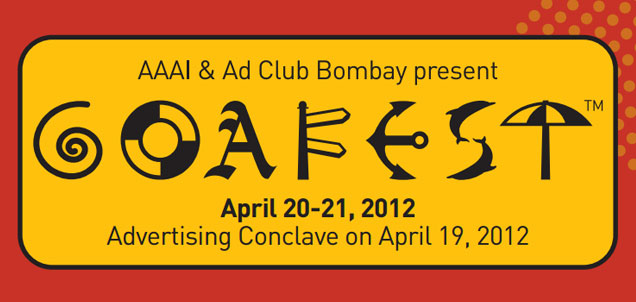
Goafest 2012 is being organized by AAAI and Ad Club Bombay in partnership for the fifth year and will be held from April 20-21 at the Zuri White Sands in South Goa. It will be preceded by an advertising conclave on April 19th. The festival is themed the ‘Magic of Ideas.’
Over the years, specialist areas like Out of Home & Ambient, Design, Interactive Digital Advertising, Direct, and Integrated Advertising have been growing in importance. In recognition of this phenomenon, in 2012, Abbies at Goafest will have provision for Grand Prix in all the nine verticals – the Grand Prix is being introduced in media awards as well.
Advertising Agencies Association of India (AAAI) is the official, national organization of advertising agencies, formed in 1945, to promote their interests. The Association promotes professionalism, through its founding principles which uphold sound business practices between advertisers and advertising agencies and the various media. The AAAI is recognized as the apex body of the advertising industry at all forums – advertisers, media owners and associations, and even government, as the spokesperson for the advertising industry.
The Advertising Club Bombay, incorporated in the year 1954, is arguably the biggest Advertising Club of its kind in the world, and, according to many, also the busiest. It has over 1,400 members drawn from media organizations, marketing companies, advertising agencies and allied professional bodies.
Goafest 2012 has been extended across South Asian countries. Pakistan, Sri Lanka, Bangladesh and Nepal have been invited not only as delegates, but also as award entrants. Specialist agencies have been encouraged to participate in Goafest 2012, and Grand Prix have been introduced in more categories. These were some of the announcements made by the Goafest Committee. The advertising festival is scheduled to be held from April 19 to April 21, 2012 at the Zuri White Sands in South Goa. The theme this year is ‘Magic of ideas’. Goafest 2012 has been presented by AAAI and Ad Club Bombay.
Since specialist areas like Out-of-Home, Ambient, Design, Interactive Digital Advertising, Direct and Integrated Advertising have been growing over the years, Abbies at Goafest 2012 will have a provision for Grand Prix in all nine verticals. Last year the Grand Prix was given only in Film, Print and Radio verticals. Grand Prix will also be introduced in the media awards.
Goafest 2012 is said to be looking at strong client participation with senior clients expected to be an integral part of knowledge seminars. The Goafest committee is also said to be looking to attract young client delegates in large numbers. It is offering special packages for under-30 marketers.
In order to spread awareness about Goafest 2012, the committee has decided to conduct roadshows across South Asian countries.
In conversation with MxMIndia, Arvind Sharma, Goafest Committee Chairman said, “The theme is inclusiveness, we clearly present what value each one will get by participating at the festival. We haven’t really reached out and marketed ourselves. We have not sent out a clear message about inclusivity and the importance of participation. It is said the nature of business is changing, and that there are a whole lot of specialist areas to be ventured into. By allowing Grand Prix in each of the verticals Goafest 2012 has highlighted the importance of each of the verticals. Goafest is a property like no other else therefore it is important to bring in specialist agencies that have traditionally not been part of Ad Club.”
On his expectations from Goafest 2012, Shashi Sinha, President, The Advertising Club Bombay and Chairman of the Awards Governing Council said, “With Grand Prix opening up and more organizations participating, hopefully even from other countries, expectations are quite high. This time although the delegates are much higher, there will be a lot of fragmentations because of increased participations from different agencies.”
The decision is also expected to encourage many more specialist agencies to come forward and enter their work in the show. This is likely to give a further impetus to the trend observed over the last few years. Consistent with its growing importance, digital will find a place at Goafest 2012. Digital Awards will be held on April 20, 2012 as will Media Awards. Design, Direct Awards will also be held on April 20, 2012 and as in past the rest of the Creative awards will be held at the awards night on April 21, 2012.
In line with the overall festival theme, Goafest 2012 Conclave theme is ‘Ideas for impacting the full circle’. The Conclave aims to help the entire industry gear up for opportunities that lie ahead. The festival is said to be inviting global leaders from major clients as well as major communication groups to participate in the Conclave.










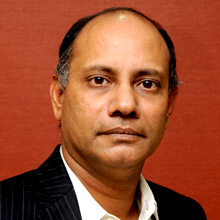





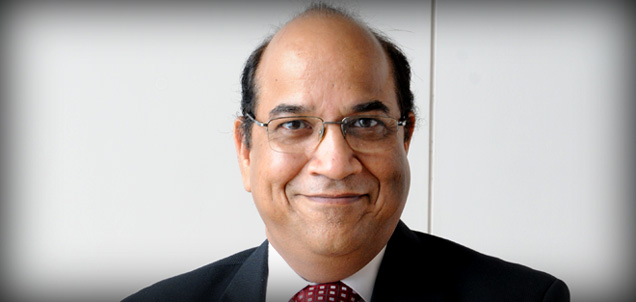
 As the countdown begins for Goafest 2012, Arvind Sharma, Chairman Goafest 2012 and Chairman, India Sub-continent, Leo Burnett, speaks to MxMIndia’s Tuhina Anand on the festival this year and why it is truly the celebration of creativity at its best.
 By Robin Thomas