Tag: Arvind Sharma

  • Arvind Sharma to be conferred with AAAI Lifetime Achievement Award 2021

    By Our Staff


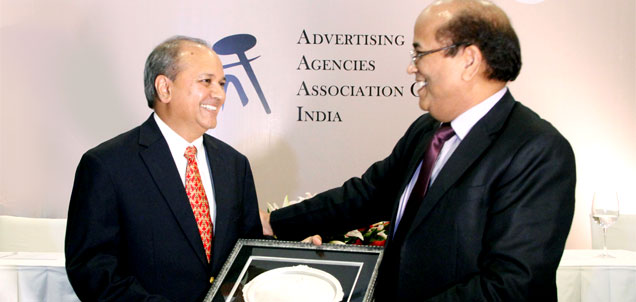
    The Advertising Agencies Association of India today announced that AAAI Lifetime Achievement Award for 2021 will be conferred on advertising veteran Arvind Sharma.


    Sharma, an alumnus of IIM Ahmedabad (1975-77), led Leo Burnett for 21 years in a three decades-long association with the agency. He has led most A&M industry organisations and is now a serial investor and mentors to many entrepreneurs.


    Making the announcement, Anupriya Acharya, President, AAAI, said: “Mr Arvind Sharma has been a true pioneer. Apart from singlehandedly making Leo Burnett a top agency and a force to reckon with he has also groomed some of the finest talents in our industry. But more than that he has made a tremendous contribution to our industry across both the art and science of advertising. He is truly deserving of this honour.”


    Added Ashish Bhasin, Chairman of the AAAI Lifetime Achievement Award Selection Committee: “Arvind is a deserving winner of this prestigious honour. Not only has he been a successful advertising professional, he has also contributed significantly to the industry in various capacities, including as President of AAAI and a key driver in launching Goafest. I am pleased to say that the entire committee was unanimous in conferring this award upon Arvind.”


    Some of the past winners of this award include Subhas Ghosal, Alyque Padamsee, Mike Khanna, R K Swamy, Piyush Pandey, Sam Balsara, Prem Mehta, Roda Mehta, Ram Sehgal, Madhukar Kamath and others.


    Although AAAI hasn’t announced the date, according to information received, the award event is likely to be held in Mumbai on December 16, 2021.


  • What will Brahm say to this at the next AGM?


    He was more than just the Hawkins big boss. A great marketer with a keen sense of (and on) advertising. His contribution to the various industry associations has been huge, and will always be remembered by those who knew him. Brahm Vasudeva passed away late on Friday, July 10. He was Vice Chairman and Managing Director of Hawkins from 1968-84, Chairman and Managing Director from 1984 to 2006 then Non-Executive Chairman. Our ‘Namaste’ to him.


    We carry here tributes by senior industrypersons Arvind Sharma, Ramesh Narayan, Narendra Ambwani and Jayesh Ravindranath.


    Brahm Vasudeva, RIP

    By Arvind Sharma


    On July 10 afternoon, many industry WhatsApp groups started sharing the news of Mr Brahm Vasudeva’s passing away. He was eighty-four years old.


    This sad news got me reflecting. About Brahm and about me.


    When I joined the advertising industry in my early 20s, a handful of large consumer marketing companies wielded enormous clout in the industry. That is true to a degree even today. However, what was strikingly different in that era of nascent consumer marketing was the influence a few individual consumer marketers exerted on the industry. They punched far above the weight their revenues or their marketing budgets should have given them. The position they commanded in the industry came from their intellectual caliber.


    Brahm was one such individual.


    He used the might of his intellect to change consumers’ lives for the better. His pressure cookers liberated Indian housewives from hours of sweaty drudgery in the kitchen. He constantly innovated- in products, distribution and marketing. Pressure cookers on EMIs, I’m told, was one his category penetration driving ideas. Of course, he built a very successful business in the process. But what many of us admired him most for were his enduring contributions in moving the industry forward on a number of fronts.


    We live in an era where we get agitated about our leaders bending the truth. And that is the way it should be. But can you imagine an era where there was no way of knowing the truth! Or no agreement on how to go about discovering the truth!!


    Brahm pushed on so many industry fronts to change that.


    As a major voice at the Indian Society of Advertisers, he demanded that media should charge for exactly what it delivered based on precise measurements. Whether the measurement was in terms of column centimeters of ads actually printed or in terms of opportunities to see delivered. His sessions with his agencies with piles of newspapers to measure the exact sizes of ads seemed quirky to many. But his insightful and counter-intuitive-to-many stance that for dependable media measurement, advertisers and advertising agencies must contribute their share of measurement costs has been proven right over time. It is now the bedrock principle underlying two major media measurement institutions in the country- Media Research Users’ Council and Broadcast Audience Research Council. Among others, they provide measurement on two of the most important media in the country- Print and TV.


    While being a champion of freedom of commercial speech, Brahm understood and advocated that as industry consisting of advertisers, ad agencies, media and associated advisory firms, we must self-regulate ourselves and our content. Otherwise somebody else will. He was one of the moving spirits behind creation of the Advertising Standards Council of India. He was actually the pen that wrote ASCI’s code of conduct. In 1985, in mere 3500 words, he wrote the principles that define good advertising. Those principles hold good even today-after 50 years of rapid change.


    The four pillars of these principles are taught in every advertising class in India today


    # Truthfulness and honesty in claims

    # Non-offensiveness to the public

    # Against harmful products & situations

    # Fairness in competition


    Brahm selflessly championed these and many other ideas he believed were good for the industry while he was in office at these institutions. And for decades after that at every possible opportunity. And long after he had physically left these boardrooms, the force of his thinking has continued to guide them with a simple question, repeated often: “What will Brahm say to this at the next AGM?”


    Brahm will not be there anymore at the AGMs of these institutions. And the truth is that he has not been there at most of them for the last few years. But the question, ‘What will Brahm say to this at the next AGM?’ has become such a habit with the industry that it has continued to echo in the boardrooms. It is the industry’s way of internalising the ideas and principles of a man who shaped its past and will continue to influence its future.


    About a decade ago, Brahm started championing the use of ‘Namaste’ in place of a handshake. But then Brahm always had great foresight! He was always ahead of his times!


    Brahm, those of us who knew you personally, will miss you as a friend. As an industry, we will do well to keep your memory alive by continuing to ask ourselves: ‘What will Brahm say to this at the next AGM?’


    Arvind Sharma is a veteran adperson and former Chairman & CEO, Leo Burnett

    ~ ~


    Namaste Brahm!

    By Ramesh Narayan


    The Year was 1982. Delhi was hosting the AdAsia 1982.


    I was an aspiring advertising person, attending the Congress to see what advertising was all about, and whether it could offer me a career. And there, one of the things etched in my memory was the final session where Mr Brahm Vasudeva summed up the entire proceedings.


    I was so impressed with his presentation. The way he chose the right points to highlight, his impeccable delivery, the ease with which he held the attention of the audience, it was just perfect.


    And perfection is something I would grow to associate with Brahm.


    I told him about the impression he had made on me and he always chuckled that he was responsible for me getting into advertising.


    Fast forward to an IAA Congress in Cancun. As a rookie, I was using conferences as a place to learn more about my profession. Brahm, for want of any other company, was indulging me. “Nice hotel” I said, nervously. “Yes”. he replied. “Why do you say so?” he  asked me.


    “Large rooms, great view”, I said. And countered: “Why do you like it?”


    “Wooden hangars,” was his laconic reply. And then went on to add: “the little things really matter”.

    Quintessential Brahm, as I was to learn as the years rolled by.


    The IAA was a fledgling association with and managing committee meetings would be held at the Trattoria restaurant. Pradeep Guha was the Hon Secretary and I was the Hon Treasurer, and I was presenting the annual accounts to the small committee which included Brahm. At one point he raised his index finger and I paused and said “Brahm, any doubts?”


    And he replied in his even tone, “Doubts? When Ramesh presents, I have no doubts. Just some clarifications maybe?” A lesson in using the right word at the right time.


    Somehow, Brahm was slightly intimidating to most people. Yet, he was uniformly gracious and kind to me. He even confided in me one evening at the Oberoi (now Trident) that he really didn’t care much for my father (whom he knew earlier) but “you, Ramesh are different”.


    Somehow, I didn’t take offense to that statement because there was something very genuine in his tone and demeanour.


    I learned that perfection in every little thing was important to him. Preparedness for a meeting, or presentation and equally, he valued the intent of a suggestion, so I made it a point when I was President Advertising Club to talk to him before the meeting and explain my point of view. After that, he was a formidable ally.


    And of course, I was tickled pink that he made it a point to publicly announce, every time we met, that the only desk calendar that adorned his table, was the one I sent him.


    Long before Corona, he had decided that Namaste was better than shaking hands.


    Rest well, my friend. Your life was a lesson worth learning from.


    Ramesh Narayan is a veteran adperson and Founder, Canco Advertising


    ~~


    He chose every single word he spoke so patiently

    By Narendra Ambwani


    I used to love his refusal to shake hands and do namaste. So thoughtful an idea well ahead of Corona times. Also I admired the way he would think and chose every single word he spoke so patiently.


    Narendra Ambwani is a veteran corporate leader and coach, and Former Managing Director, Johnson & Johnson

     ~~


    A Man Ahead of His Time

    By Jayesh Ravindranath


    As the person who helmed and ran what was then Pressure Cookers & Appliances Ltd, now renamed as Hawkins Cookers Ltd, Brahm Vasudeva was a legend. There were people who either hated Brahm or adored him. Very few who dealt with him, were in the ‘grey’ area.


    I had the good fortune of working closely with him when I was with Everest Advertising in the 80s. While most people saw him as a difficult man to deal with, I believe I understood what made the man tick, and hence created a rapport and an equation with him.


    He had a phenomenal eye for detail and a great believer in offering high-quality products to his consumers. I learnt a lot from him, and this is what I would like to acknowledge today, about the man and his work.


    Brahm was a stickler for detail and a man who spent copious hours going through every aspect of his business, be it product design, packaging, advertising and communications, media plans, or even the recipes that went into the legendary Hawkins cookbook. The end-product that would reach his consumers was nothing but the best.


    Some examples:

    In the 80s, before the advent of the internet, all communication was through postal mail. Users of Hawkins products would regularly write in to the company, commenting on the recipes Hawkins would offer, or they would send in their own recipes. Brahm would have each and every postcard and inland letter sent to the agency for translation from the respective Indian language to English. This translation would then be reviewed by his team, an appropriate reply drafted in English and sent back to us, the agency. We then got our translators to translate the English to the relevant language on an inland letter, which then got mailed to the person who wrote in! All this clearly at a cost. This was Brahm. He wanted to ensure his customers were engaged positively, and got the best product and service from Hawkins, even though he had to expend a huge resource to do so. I cannot think of any organisation then, that would go to such lengths.


    He ran a full-fledged professional kitchen with properly experienced F&B people, at his Mahim Mumbai service centre. This kitchen was constantly preparing and testing recipes for inclusion in the cookbook. The food prepared was then trialed on housewives who hailed from that particular ethnicity or state of India, to get feedback & approval, before the recipe was published.


    His eye for detail was such that he would spend hours with his technical and engineering team on minute details of the range of cookers, to ensure that the best quality of material was used to make the final product, and that they were tested before being put out to retail. One of the results of such an eye for detail was that the Futura was the only pressure cooker in the world to have been displayed by The Metropolitan Museum of Art, New York. When I saw it there during my visit in 1997, my heart filled with pride!


    Equally, his eye for detail on all advertising that went out was legendary. We would start meetings at his corporate office in Cuffe Parade at 9.30am with an agenda of say 15 items to be covered. By 8pm we would have barely touched 5 or 7, much to the consternation of those around the table, but those 5 or 7 would have been thoroughly discussed and closed.


    I recall one instance where he had asked for a logo unit to be in a particular size on the Futura packaging, which was underway. I took back a layout and Brahm’s sharp eye felt it was not the right size. He fished out his scale and ticked me off for not following his instructions. His next comment to me was – “Young man when I ask you for something please follow my request, as I am paying for this service. If you have another view, or your creative team would like to propose another option, by all means, but do not dishonor my request”. Lesson learnt!


    The other aspect about Brahm was in spite of his reputation for being a task master, he was a fair man. He was also one of the few advertisers who back then paid his agency on time! Unheard of then in India, where clients where notorious for paying two or three months beyond the due date. One instance I would like to highlight. At Everest one day I got a call from my then Chairman Ahmed Ibrahim saying that we were short on funds and INS (Indian Newspapers Society) payments were to be made. In those days, not paying the media would get the agency on the black list. So, I trotted off to Brahm and requested for a payment of that month’s dues, one week ahead of the schedule. Brahm looked me straight in the eye and asked me with a smile though, why he should finance the agency! He made his point, and a few seconds later he called his Finance head Teckchandani to issue the cheque immediately.


    Such was the man, principled, an eye for detail and a businessman and business partner with integrity. A man way ahead of his time.


    Jayesh Ravindranath started his career in advertising in Mumbai in the 80s. After 20 years he moved over to marketing. Now he runs an independent consultancy focusing on business mentoring & strategy, out of Dubai.

  • Tough & wanting to be in the Top 5


    Saurabh Varma, CEO, Leo Burnett, was considered an ‘outsider’ when he took charge of the network of agencies 18 months ago. But that didn’t stop him from taking some bold steps in acquiring talent, setting goals, and generally shaking up an organisation that was doing well. But, as Varma tells Pradyuman Maheshwari, just being among the best in India is not enough. He wants Leo Burnett’s India operations to be counted among the Top 5 in the world in two years. And he doesn’t mind being the tough taskmaster boss as long as achieves results.


    It’s been a year-and-a-half since you came in. How has been the journey so far, between Leo Burnett then and now?

    It’s been 18-odd months but it seems like a lifetime. For us, the journey always starts with a shared belief and common purpose for collaboration. If you ask any of the leaders or youngsters who have joined us, in the last 18 months, we’ve managed to make sure everybody understands what our shared belief is. As an organisation, we want to become among the Top 5 creative agencies in the world by 2017. Once you have that overall vision, it’s about having a clear strategic roadmap to get there. And that is a function of structures, systems, people, the talent you hire, how you brand yourself in the marketplace and the kind of product you create. In the last 18 months, we’ve been very focused on our growth strategy, which is around integration and specialisation. Integration is not equal to generalisation; it’s not an idea that travels across different media. True integration is when you have a bunch of specialists working together to create magic. We’ve been focused on building our specialist pillars one by one, making sure they have the ability to work with each other. Every client wants integration, but not at the cost of not having specialisation.


    Burnett wasn’t doing badly when you took charge. So why the need to reinvent and fix things?

    In 2013, we were already the Creative Agency of the Year, but our benchmark was India. We were not looking to become the best in the world. Now we are. If you don’t refocus on a new strategic mission, on a new ambition, you will become complacent and not move forward. That’s why the need to reinvent.


    For us, this journey is a function of three things — people, product and profits. Profits are critical in the overall scheme of things, because our belief is, great creativity across centuries has only happened when you have prosperity. On the people front, we’ve made some significant changes. When I joined, everybody wanted a sense of comfort as far as creative leadership was concerned. There were some standard names floating around in the market, and everybody advised us to go for them.


    But you opted for a rank outsider…

    Yes, and it was driven by strategy. We operated without fear, because when the agency is already going through a big change in the leadership at that point, to make one more significant change and change everything, is risky.


    Did you have the full support of your international offices on that?

    Absolutely. I’ve had the blessing to do what is required to create a model organisation. For us to hire a 35-year-old Chief Creative Officer was a bold move, but it was a function of our ambition to be among the Top 5 in the world.


    Were your clients okay with it? You’ve had some pedigreed, long-standing clients. Did they require any convincing?

    I think the question is not whether they were fine then. The question is whether they are fine now. Obviously, we needed to have conversations with clients and share the reason we were making such a big shift. We needed to convince them about our strategic direction, and why it would benefit them in both the short and long term.


    People, product and profits are the mainstay of any business. How have you performed on these?

    I’ve already mentioned one part on the people front. The other part is, if we look at our teams across the board – the business directors, strategic planners or creative leadership team –. there’s a new team in Bengaluru, and a new leadership in Delhi. All of this is a function of knowing we need people who are digital by blood and understand modern paradigms. The industry is full of prima donnas, especially in India, but we’ve steered clear of them. One of the keys to driving integration is a focus on people who can collaborate with each other. So we’ve hired what we call the ‘Positive A’ types – those who have the ability and guts to deliver, and also have a positive spirit about them.


    Was it easy bringing this about? Or was it tough getting the old-timers to believe in this whole new philosophy?

    When you have a clear strategic roadmap, and you share your vision continuously with the teams, they start getting a sense of confidence that you genuinely believe in that vision yourself. They look at the leader to see whether he has the confidence to deliver against that vision. When they start seeing results, it creates more momentum.


    We’ve heard stories that Saurabh is a very tough guy, a taskmaster and all of that. Is all of that true?

    I would think that would be absolutely true. I think we have ruthlessly pursued a single agenda to be the best creative agency in the world.


    So what comes first, the carrot or the stick?

    No it’s not about the carrot or the stick, it’s about decision-making, it’s about making sure that everybody is aligned to a single vision, and I think if you look at what’s happened with us, most of the people have stayed back because they believed in that vision.


    All of us, on the outside, were closely following the many changes taking place [at the agency]…

    Most people have stayed back because they believed in the vision. People who did not are the ones we felt were not going to add to the energy and the momentum that we wanted, and are not with us anymore.


    Was it easy getting a few of the older guys to exit?

    A lot of what you call the ‘old guys’ are still in our system and they’re thriving and succeeding. I think what people want to see is a shared belief and a shared destiny, and everybody who exists here, believes in that.


    What about profits? How are you doing in terms of your bottomlines?

    Right now, we are the fastest-growing Leo Burnett agency in Asia. We are growing twice as fast as the industry average, and I wouldn’t be surprised if we are the fastest-growing agency in the country at the moment. We have huge momentum as an agency and this happened because of focussing on our clients, solving their problems and doing great work, that’s all.


    How has the change in strategy impacted your other arms like Orchard and Indigo?

    So like I said, first, we’re united by that single ambition, which is to be among the Top 5 creative agencies in the world. Second is the function of deciding what the unique purpose of each company is: What is the leadership we need in that country and how we’re going to grow. If you look at Indigo, we are blessed that it’s a build agency. About 18 months ago, we were only a Mumbai agency. Today, we are one of the best holistic digital agencies in the country. For us, Indigo has been a unique growth story, but that’s only one part of it. The second part is integrating it with Leo Burnett as a network. Till18 months ago, there were hardly any shared clients; Indigo and Leo Burnett had their own sets of clients. Today, we have integrated across the board on clients for whom we do multiple things, from search, social and retail to activation and ATL. There are teams from Indigo, from our park shopper unit, from activation unit all working together seamlessly to create solutions.


    Wouldn’t it have been better if you had to integrate Indigo within Leo Burnett to make it fully forward-looking?

    It already is integrated incredibly well at the moment. When you say integration, it is merged; we have one P/L, that’s the great part about Leo Burnett at the moment. We don’t have the same silos you see in some large organisations. Our ability, therefore, to create a systemic solution for clients, is far more dynamic than other agencies. The way we work on these solutions is that we have one integration manager, rather than an account manager, who runs everything and understands search, social, e-commerce, retail, and that requires a very different kind of training as far as the individual is concerned.


    In the last 18 months, while you have possibly been putting your house in order, you’ve been away from most industry events. Was that deliberate?

    It’s deliberate for two reasons. First, the only thing that really matters is our clients’ work. When you spend too much energy on extra-curricular activities, it defocuses you from your true objective. Second, we don’t think there is enough maturity as far as the awards in India go, to participate. There are too many factions, and we don’t want to be a part of any of them.


    But some amount of collaboration with other agencies always helps, right?

    We have been collaborating. The Publicis group has 13,000 people, and that’s where we want to collaborate. We have access to one of the best PR agencies, MSL, and some of the best media agencies with huge digital capabilities, like Starcom and Zenith, and that’s where we’re collaborating. We have lots of shared exercises and shared programmes.


    And awards?

    Every agency loves awards. We participate in Spikes, Adfest, we have a huge battalion going to Cannes – the biggest you can possibly imagine, right from youngsters to account people, HR people etc. We do believe in awards; in seminars and listening to the best people in the world really matters. It tells us what the benchmarks in the world are. What we do not want to be a part of, is what’s happening at the moment.


    You have the D&AD-backed Kyoorius Awards, but you didn’t participate in that either…

    I think the whole industry has not come together. I’ve been pretty vocal about my sentiments on this. Until the time awards are driven by a sense of maturity and not agendas, we will not participate.


    One of the things said about you not participating is because there’s not enough work that you think can win awards. Is that true?

    I am certain that if you put our best work alongside the best work of any other agency, we will be among the Top # in India any time. So that’s not the problem. The issue is what kind of awards do you believe in? We’re not an agency which believes in doing a poster for or press campaign for an award. If you see some of our work you will see what we believe in, is great work.


    Are you looking at any acquisitions, any more organic growth, to achieve becoming among the top five agencies of the world?

    We are continuously looking at building our specialist functions but we’re not looking at acquiring agencies for scale. That’s never been part of our strategy. For us it is very strategic; if there is an agency or a specialist function which is in line with our strategic intent, we will go for that acquisition.


    Coming back to your start at Leo Burnett, there were questions being asked about whether you can do it. You were not from an Indian scenario; you were put into a system which was doing fairly well, but had to reinvent. Do you think those disadvantages actually proved to be your strengths?

    I never thought of it as a disadvantage. For us it was a strategic decision. We started discussing this move four years ago. We planned for this move for the last three years. So it wasn’t done all of a sudden. The industry will say what it will; we’ve never really bothered about that. For us it’s about following through all our strategy and delivering on what we believe is the right thing to do for ourselves and for our clients.


    The fact that your predecessor Arvind Sharma and Co put in some great work would’ve helped?

    Yes, we’ve always focused on great work. Work for our clients and solving their problems. That’s the strength of Leo Burnett and that’s an advantage we continue to build on.


    And great work is possible even through a non-star creative head?

    No I think we have the biggest rock star in the making. And mark my words on that. Raj Deepak Das will be the biggest star, I’m not talking about India, but globally. I’m only betting on my belief in that, and my ability to partner with him in making that happen. So for us all, what we’ve done is we’ve strategically decided what we need to do, we believe we have the talent, we’ve identified the talent to take us into that trajectory.


    Are you looking at hiring more talent?

    All the time. With our growth we need to continuously find new talent to join us, and like I keep saying, talent is what we call the ‘Positive A’ types.


    On a lighter note, now that you’ve reached close to where you are, do you think you would be less tough on everybody, or is that something that you need to be?

    See I don’t think I’m tough, I’m single-minded. I’m single-minded in my ambition, and single-minded in my focus. That’s what I’m doing and I think some of those decisions, might not seem the right decisions at a certain point of time, and I can live with that.


    This interview first appeared in dna on brands on June 15, 2015


  • Dear Santa…


    On the occasion of X’mas 2014 so we asked some industry captains to tell us what goodies they would like Santa Claus to bring them this Dec 25. Interviews by Shobhana Nair here goes:


    Srinivasan K Swamy, Chairman and Managing Director, RK Swamy BBDO

    If I were to wish for something, then this would be double digit GDP growth of our economy in 2015!


    M G Parameswaran, Member Management Board, FCB Ulka Advertising
    I wish Santa Claus to bring to the advertising agency business a big bottle of confidence tonic! An elixir that will infuse everyone in our exciting world of advertising with extra courage, confidence and spirit; to believe in the industry, to believe in their own competence and contribution to the success of brands and most importantly a unshakeable faith in the greater purpose of advertising: to move consumers from their inertia, to keep the wheels of industry moving, to make the world a better place, one OTS/ one TRP at a time!


    Piyush Pandey, Executive Chairman and Creative Director, South Asia

    Ogilvy & Mather India

    I’d like Santa to distribute small and beautiful packets of wisdom for everybody in the industry.


    Satyan Gajwani, CEO, Times Internet

    New consumers are buying smartphones everyday, but for them to be useful, the cost of data needs to reduce. When users want to pay for something, it shouldn’t be as cumbersome as it is today.


    Ashish Bhasin, Chairman & CEO South Asia – Dentsu Aegis Network

    If Santa Claus could meet with the Finance Minister and emphasize upon him that in the forthcoming budget he needs to give a sensible taxation regime, particularly with respect to service tax and VAT applicable on the advertising and marketing communications business, I think it will go a long way in helping our industry grow. A an industry, we want to show our creativity in the area of advertising and not in the area of creative accounting!


    Prashant Panday, MD & CEO, ENIL

    The one thing is that Phase-3 auctions get completed before March 31 and migration of 21 Phase-2 licences which are lapsing on March 31st happens on time.


    Anirudh Dhoot, Director, Videocon

    In line with our Prime Minister’s vision of “Make in India”, we expect policies and infrastructural support for electronic components and panel manufacturing in India. India has the potential to become a global electronics manufacturing hub not only for internal consumption but also satiating global requirement.


    Sanjay Mehta, Joint CEO, Social Wavelength

    The one thing that I’d want Santa Claus to bring to our industry, would be Better Retainer Fees :)  For all the hard work that the social media agencies do for clients, from strategy to execution, from creatives to media, from technology to ORM, we still don’t get adequate respect, reflected in terms of decent monthly retainer fees! As we get into 2015, I hope Santa Claus makes our clients acknowledge the role we play and compensate us better!


    Santosh Padhi, Chief Creative Officer & Co-Founder, Taproot India
    I’d want Santa to give us an emotional gift in the form of ‘unity within the industry’. We are fighting so much within ourselves and are even ready to kill each other for business. We are going from bad to worse now. There’s a long list of things that I am seeking from Santa but I definitely feel that people should follow ethics and morals. We need to make it a human industry. There’s just no humanity left and that’s a huge disconnect.


    Arvind Sharma, former President, AAAI
    There was a great deal of optimism and hope during BJP’s election campaign. And so far it has translated into foreign investment flowing into financial markets. But as far as the ground is concerned, things have to yet get better. We hope 2015 will bring strong growth in the economy for the overall business. Advertising industry depends on the client’s growing business, their budgets and spends. They have been really tight for the last two-and-a-half years. We hope that will change in the coming year.


  • Hic, Hic, Hurray!


    By Pritha Mitra Dasgupta


    On Monday, @BudweiserIndia tweeted out a cheery message to its 6,000 followers: “How are you coping with your #MondayBlues! Keep your #Buds close and watch them disappear!” Does a tweet urging beer consumption constitute advertising? It’s not quite clear. The rules banning the advertising of liquor products are at least about half a century old and predate the computer age. Social media is, naturally enough, a grey area.


    No matter, liquor companies have been happily making use of the platform. Diageo, the world’s biggest liquor company, the UB Group’s Kingfisher beer, Budweiser, Tuborg, SAB Miller, Johnnie Walker are all active on Facebook and Twitter, using them to spread the message about their brands, complete with visuals. Kingfisher tweeted to its 44,000 followers on Wednesday from @kingfisherworld: “Okay so beerheads, here we go. Remember that 1st #KFBeer you ever had?


    We want to know the story! Tweet to #HowIMetMyKFBeer right away!” Last year, Diageo’s vodka brand Smirnoff, using the handle @SmirnoffIndia, had this to say: “You don’t need an occasion to gift someone gold! Treat your friends to the royal taste of Smirnoff Gold today.”


    Samar Singh Shekhawat, senior V-P (marketing), UB, said: “The guidelines do not clearly define ban on social media and there are no clear clauses for liquor companies by the I&B (information and broadcasting) ministry on social media and online advertising.”


    However, he added that liquor companies tend to self-regulate by strictly following the age-restriction policies of the sites. “So whoever comes on to the social media platform are well within the drinking age limit. Whatever is not allowed on mainstream media we do not put on as digital advertising unless it is age gated,” Shekhawat said.


    However, while brands ask consumers to enter their age or date of birth in order to access their websites, there is no way to restrict the visibility of tweets.


    A top executive at another leading liquor brand said, “The maximum traction that social media gets is from our core target audience. The absence of any law has made it easier for us to interact with them directly.”


    Arvind Sharma

    Arvind Sharma, former chairman of the Advertising Standards Council of India (ASCI), said social media messages from a manufacturer qualify as advertising.


    “On the whole any message put out by a company is an ad,” he said. “It is not an ad if it is created by the consumer.


    While ASCI is yet to receive any complaint against liquor brand related to social media activities, “such messages should not be allowed as social media is also a form of media”, he said.


    Although the rules haven’t been amended in the last 50 years, the spirit of the law can still be implemented, said Prem Rajani, managing partner of legal firm Rajani, Singhania & Partners. “While one may argue that you need a clear statute to pin them, I would say the current statute if interpreted properly should be enough to pin them down.”


    The information and broadcasting ministry hadn’t responded to queries as of press time. Interestingly, tobacco brands in India which are also barred from advertising, have not taken the social media route. Even international brands such as Marlboro don’t have any social media engagement with Indian consumers.


  • Adland Nice Man Ramesh Narayan given a fitting Salute

    Ramesh Narayan being felicitated by AAAI President Arvind Sharma. Photograph: Sakshi Kapoor/dna


    By Shobhana Nair


    Veteran ad and media personality Ramesh Narayan was felicitated by the Advertising Agencies Association of India (AAAI) with the Lifetime Achievement Award last evening (Thursday, July 24) at an event attended by top ad and media trade professionals.


    Arvind Sharma

    Making his opening remarks, AAAI President Arvind Sharma said, “Everybody says do good to others but Ramesh is one guy who actually follows it. He practises it and has been doing it for over a quarter of a century. That’s why he has many admirers in the industry. He has made so much of a difference to the industry.”


    Mr Narayan started his career in the media in 1982 and established his agency Canco with no experience in advertising and without a client in hand. However, soon there were clients who came on despite having the bigger agencies empanelled and Canco had on its roster among the biggest advertisers in the country. Mr Narayan wound down his agency in 2006 even as there were some serious overtures for an acquisition.


    He has been active in all trade associations and instrumental in the organizing of the Ad Asia conventions in the country.


    Accepting the award from the AAAI, Mr Narayan thanked his friends and peers who had flown from all across the country on the occasion. He also remembered his father, the late CA Narayan, who had made the maximum impact on him.


    Said Nagesh G Alai, Group Chairman, FCBUlka: “Ramesh has been a long-time advertising veteran who believed in some ethical way of doing business. However, since the ethics were moving out of the business, he decided to move away rather than falling prey to it. Even after retirement, he has been quite active in terms of engagement with the industry like awards, recognition of young achievers so on and so forth.  He truly deserves the award because of his continuing engagement and professional approach to it. At a personal level, he is a good human being. I have known him for 25 years. He truly deserves it.”


    Summing up the sentiment of the fraternity, Ashish Bhasin, Chairman & CEO South Asia Dentsu Aegis Network, and Honorary Secretary, AAAI added: “A lot of credit for the work on policies and the strength of the AAAI goes to Ramesh. If one person deserves the Lifetime Achievement Award, it is him.”


    Some more comments and reactions to the felicitation of Mr Narayan:

    Sam Balsara, Chairman & Managing Director of Madison World: I think it’s a very well-deserved award for Ramesh. It is really creditable that even after so many years of him closing down his agency, he is still involved with the industry and continues to contribute substantially for the overall well being of the industry which I think is very creditable.


    Srinivasan K Swamy, Chairman and Managing Director, RK Swamy Hansa group: I nominated Ramesh Narayan for the AAAI Lifetime achievement award. The committee found him fit to honour him. I have known him for many decades and we have worked together for many years. It was thanks to Ramesh Narayan that we got the IBF and AAAI agreement signed. He is a very nice, humane, hospitable, caring and friendly guy. I have not come across any industry colleague who is as humane as him.


    Pradeep Guha, Managing Director, 9X Media: Truly anything that happens in this industry and certainly in the last 15 years, I can say Ramesh has had a role to play. The only thing is he is just too shy. He doesn’t take credit for anything. He’s the hidden hand in everything that happens in the industry and he continues to do so. Without him, our industry would have been a lot poorer. We are really blessed to have a person like him in our industry.
     

    K V Sridhar, Chief Creative Officer, SapientNitro: Ramesh Narayan is a wonderful human being. You can’t find a human being who is better than him in advertising. He has done such selfless service to the industry through AAAI and now with IAA. He is one of those industry veterans who has stood for the industry and represented the industry across many forums in the world. He has held the image of the industry and took that forward everywhere. That’s the reason why he deserves it. There are very few industry spokespersons as people look into their own business, agenda and people. But he has nothing.
     

    Bharat Patel, ISA Member and Independent Director, Birla Sun Life Asset Management: Ramesh Narayan has been the backbone of the Indian advertising especially for the associations like AAAI and IAA. I have not seen anyone like that who has supported advertising in India like this. These are people who have been successful in advertising but there has been no Ramesh Narayan who really got the advertising community together and achieved so much.


    Shekhar Swamy, Group CEO, R K Swamy Hansa: Ramesh Narayan is a great guy who has done many things for the industry and he deserves the award for the amount of time that he has put. He has worked selflessly into the promotion of the industry. We are here to celebrate with him. Congratulations to Ramesh!


    Partho Dasgupta, CEO, BARC: Ramesh is one of the greatest guys that I’ve met. I am here to wish him for the rest of his life. At the peak of his career, he renounced everything. How many people can do that? It is an amazing thing to do. So many people aspire to do so but will not be able to achieve it.


    Madhukar Kamath, Group Chief Executive Officer and Managing Director, DDB Mudra: If ever there’s a person who truly deserves this award then it is Ramesh Narayan. Apart from the accomplished professional that he is which I am not qualified to talk abou, Ramesh is one of the nicest persons in the industry. We require more and more of Ramesh Narayans. A person with no agenda, clear heart,  and one who wears his heart on his sleeves. He never says no and importantly, a person who gets things done. Ramesh is an idol for me. Less talk, more action is Ramesh Narayan.
     

    Rana Barua, CEO, Contract Advertising: It’s absolutely an honour to be here. He is one of the most silent and hard working people in the industry. Though he is very silent but he goes about doing things meticulously. This is something which should have happened many years before.


    Paritosh Joshi, Principal, Provocateur Advisory: “Ramesh Narayan is somebody who has given so much for the development of the industry. He had his own agency which he exited it. He moved on after spending so many years. The profit motive was gone for him. He was not running his agency anymore but here’s a guy who genuinely believes in the development of the broader communication professions. There are very few people who do that with a genuine sense of selflessness. Hats off to him on all fronts.”

     

  • MG ‘Ambi’ Parameswaran to be AAAI president

    M G Parameswaran

    By A Correspondent


    Author and Adviser, FCB Ulka M G Parameswaran is set to be the next President of the Advertising Agencies Association of India. Ambi, as he’s popularly known in the fraternity, and is currently vice-president of the apex association of advertising agencies. A formal announcement of this is to be made shortly, MxMIndia learnt at Goafest 2014 last week.


    Former Leo Burnett Chairman and CEO Arvind Sharma has been President of the AAAI since 2012 and his term is expected to end next month. Mr Parameswaran will be the 44th head of the body (48th if you include those who held mulitiple, non-consecutive terms).


  • Rebuilding Leo Burnett India


    By Ravi Balakrishnan


    The only reason I am here is to disrupt the market and change the game,” is quite literally the first thing that Saurabh Varma, the recently appointed CEO of Leo Burnett India tells us. Over the last year and a half, several global operations struck by similar epiphanies have disrupted their agencies, “trying to change the game” as seen in the management makeovers at Saatchi & Saatchi and TBWA.


    The exit of Leo Burnett’s former chairman and CEO, Arvind Sharma and his chief creative officer, KV Sridhar six months later is believed to be the same phenomenon playing out. Mr Varma quickly points out: “Leo Burnett is in great shape blessed with incredible talent and clients. And it’s still had the courage to make this bold move. We?ve done this at our best rather than at a time when we are coerced to do it.”


    Indian advertising is apparently a business that needs fixing even if it’s not visibly broken. Mr Varma represents a discontinuity and not just in terms of age and his background in strategic planning. Through seven years in India and eight overseas, he’s examined the desi ad business from up close and afar. And unlike the perfunctory noises made by many of his corner office contemporaries, he’s clear that he doesn’t like it one bit.


    He sees an industry stuck in a time warp where the 30-second TV spot is still lionised. An industry that relies on copy-art partnerships. A market at least five years behind comparable countries in its approach to problems and solutions. Asked if there’s any Indian agency that’s been able to navigate the change better than others, he replies “None.”


    Mention industry growth figures and he says, “Size cannot be equal to performance. For me, it is whether people engage with or share the content we create. And whether it ultimately leads to brands winning in the marketplace.” He has a clear idea on how he’s going to take Leo Burnett (and maybe even Indian advertising kicking and screaming) into the future.


    Instead of film, marketing content could be an act or an experience. He argues, “When there are opportunities to connect through mobile and Bollywood or create content which works on the shop floor, why limit ourselves to 30 seconds? Why not launch a TV channel for a brand? You have to create something that touches lives.”


    It starts with a change in team composition and roles. Ad shops typically boast about acquiring digital agencies. Instead, Mr Varma would like a digital producer, technology lead or user experience specialist working as part of the team as opposed to being brought in as last-minute window dressing. Singapore solved this eight years ago. “If you walk in, you can’t figure who the digital guy is since it is everyone,” he says, speaking excitedly of a near future where integration specialists are part of traditional account management.


    And if these people can’t be found here, the agency will get them from Australia, South East Asia, Scandinavia or America. The other fatal flaw in India is too much focus on solutions and too little on the problem. He explains, “The client brief carries the marketing problem but not the behavioural issue which needs to be defined in a clear and succinct manner.” It would sound like typical planner rhetoric that creatives in India roll their eyes at, if Mr Varma didn’t have examples he’s personally been involved with.


    For instance, ‘Beautifully Imperfect’ from Leo Burnett Singapore. The client defined the problem as young people not getting married. Mr Varma says, “The first instinct would be to create a dating website.” However the real problem was young men and women looking for perfection. This was found not via consumer research but after speaking to dating agencies and local love gurus.


    He says, “They were waiting for Angelina Jolie or Brad Pitt to come along and make the first move.” Instead, Yasmin Ahmad of Leo Burnett Malaysia came up with ‘Beautifully Imperfect’ which celebrated imperfections and a platform on Facebook where people discussed real stories.


    He’s taking this approach to Indian advertising too: trying to crack a problem where clients pass over “new age” solutions for the comfort of working with a creative legend. Says Mr Varma, “Marketers need someone to trust since they are trying to mitigate risk. When a personality says “this is the right thing?” because of his experience and wisdom, they go ahead.”


    He hopes marketers will realise risk can be mitigated in other ways: teams creating experiential content with a direct link to ROI for instance. Which sounds suspiciously similar to something we heard recently; except it was from KV Sridhar shortly after taking over as chief creative officer, Sapient Nitro.


    This apparent ideological alignment could not translate into a working relationship. Mr Sridhar claims it’s because the pace of change at agencies is glacial. For his part, Mr Varma smiles and recommends we meet his new chief creative officer Rajdeepak Das (executive creative director at BBDO), who is scheduled to join the agency this month. Mr Das was not available for comment at the time of going to print. But Mr Varma says, “His work on Gillette is remarkable and refreshing.


    It’s on a large brand and not for a small irrelevant client who buys things easily. Speaking of his close associate, Josy Paul, chief creative officer, BBDO says, “He has an unhinged sort of mind and is like a blotting paper for the new world.”


    He agrees that the time for change is long overdue in Indian advertising: “If you look at Cannes, only 20% to 30% of the show is talking to ad agencies. The rest speaks to media houses, designers, inventors, hobbyists, branded content creators? Advertising is shrinking not just in Cannes but in the total budget map.”


    Industry opinion is however sharply divided on Leo Burnett: its past and future. A former associate of Mr Varma argues, “It was never a good creative agency but the award rank was high since they won a lot of scams and managed the media very well. Where we came from, we’d look at them and say “but where is the real work?”  before using some strong language to describe its flagship campaigns for Thums Up and Maaza.


    A gentler evaluation comes from Anil Nair, CEO and managing partner, L&K Saatchi & Saatchi, “With minimum noise and only one or two recognisable faces, they consistently did good work. They had some controversies in the last few years but if you came up against them, they’d pack an awesome punch.”


    As for the future, while swelling numbers on the digital end are impressive, Mr Nair believes, “We are still a country where digital is important but it’s a supplement and not the absolute. Activation is something you have to fight the client for since they can do it cheaper and more effectively. That would be the twin task that Saurabh will have.”


    And since we are thick in the middle of award season, it’s only natural the sword raises its head often in every conversation. Some of his associates are glad that it seems Mr Varma has a strict no-scam policy.


    Says his former associate, “They have to rebuild the agency with real work which will take them time: two or three years. My fear is in the quest of being different it shouldn’t become another avatar of scam. You have to do a few good films in India. How else will you sell a Rs 3 product available in 500,000 outlets?”


    So the only question that remains is will the cooks at Leo Burnett India make an apple pie or crumble?


    Source:The Economic Times

    Copyright © 2014, Bennett, Coleman & Co. Ltd. All Rights Reserved

    Licensed to republish


  • Goafest unveils first list of speakers

    By a correspondent


    The Goafest Organizing Committee has released the first list of speakers for Goafest 2014 Knowledge Seminars. Unlike in the previous years where the focus was principally on international speakers, this year the Knowledge Seminars will have a good mix of international speakers, inspirational speakers, spiritual speakers and speakers on innovative aspects.


    The outcome is the result of a survey among the last three years’ Goafest delegates. “Based on the findings of this survey, we have put together a very special list of speakers for Goafest delegates to listen to and interact with,” said Arvind Sharma, President of Advertising Agencies Association of India.


    For the Knowledge Seminars, the initial set of names include Preethi Mariappan- Executive Creative Director at Razorfish, Germany; Melanie Varley- Chief Strategy Officer, Global at MEC; Norm Johnson- Chief Digital Officer at Mindshare; Alicia Souza- illustration designer/artist/ e-commerce entrepreneur; Shravan Kumaran and Sanjay Kumaran, the youngest app developers in India and a group known as AIB(All India Bakchod), Devdutt Pattanaik, Mythologist, Author, Leadership, DK Hema & Hema Hari, Founders, BharathGyan.


    Srinivasan Swamy

    “We are delighted that we have been able to get some very inspiring speakers on a cross section of subjects which delegates are normally not exposed to,” said Goafest Committee Chairman, Srinivasan Swamy.


  • Goafest to be held from May 29-31. Abbys expanded

    By A Correspondent


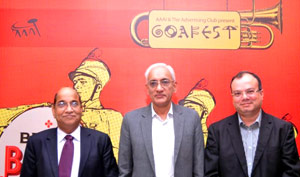
    L to R: Arvind Sharma, Srinivasan Swamy and Pratap Bose

    Okay, so the Goafest 2014 is being held in the same hotel where a certain editor alleged raped a junior colleague in November last year.


    We don’t know whether CC TV cameras have been installed in the elevators, but the hotel may well be mulling extra security and ‘watch’ men or women around the expansive land of what’s an excellent property.


    Uff, let’s not scare the Hyatt folks. The advertising fraternity comprises sober, decent people. And even if they aren’t all sober after a few drinks, they won’t do what Mr T is supposed to have done.


    Jokes apart, Goafest 2014 will be held from May 29 to 31 at the Grand Hyatt hotel at Bambolim in North Goa.


    “This year we aim to dial up the excitement by expanding the festival”,said Srinivasan Swamy, Chairman, Goafest 2014. “While strengthening the initiatives undertaken in the previous years, Goafest 2014 will be a three-day event with the Knowledge Seminars being held on all three days. The Advertising Conclave, which was ‘Only By Invitation’ so far and was held on the day before Goafest will now be on Day Two and will be open to all delegates. The Conclave aims to create more engagement between advertisers, agencies and the rest of the media industry. We will continue to have leading advertisers talk on issues that have a strong bearing on the industry. And as for the three days at Goafest, none of the fun elements will be missing for which Goafest is known! It will only get enhanced.”


    The rain dance did you mean, Sir?


    With the fest now turning into a three-day event, there will be two options of delegate passes. A two-day delegate pass priced at Rs 14,000 will allow the delegates to attend any two consecutive days of their choice. A three-day pass priced at Rs 18,000 will allow delegates to attend the festival for all three days. Under-30 delegates will continue to enjoy a special discount of 50% on these rates.


    Pratap Bose, President of The Advertising Club and Chairman of The Awards Governing Council (AGC) said, “The Abbys will be augmented with new categories this year. We will include Promo-Activation and PR. The Branded Content category,which was added last year,will be expanded. And most excitingly, we are adding Broadcaster and Publisher Abbys at Goafest. These will recognize outstanding advertising and communication ideas for promoting broadcast and print properties. Broadcaster and publishers will be entitled to send in entries for these categories.” Mr Bose shed more light on this by stating that, “These changes are being made with the aim of honoring the great work that is being done by all media professionals.”


    Continuing with the changes that were inducted in 2012 – there will be a Grand Prix for Film, Print, Radio, Outdoor, Design, Interactive Digital, Direct, Media and Integrated.


    Award shows for various verticals will be held on the following evenings:

    May 29: Publisher Abbys. Media Abbys

    May 30: Design Abbys. Direct Abbys. Promo-Activation Abbys. PR Abbys. Outdoor Abbys. Print Craft Abbys. Branded Content Abbys. Broadcaster Abbys.

    May 31: Interactive Digital Abbys. Radio Abbys. Print Abbys. TV Abbys. Integrated Abbys


    There will also be significant changes in the judging process. There will be a window of a clear 10 days before the final judging round. During this window, shortlisted entries will be available for the entire industry to review. However, the Abbys once awarded will stay awarded. So no superjury tamasha like last year. Participation in the Abbys will continue to be open to all who want to participate. Membership of the AAAI or The Advertising Club is not required. The award entry fee will be Rs 6500 per entry for general entries and Rs 9500 for integrated entries.


    Marketing Wizards, the initiative under which young client delegates can avail of the special under 30 delegate fees as well free accommodation will continue this year.So will the special ‘Rest of South Asia’ awards.


    “Goafest is recognized as a platform for celebration of communication excellence and as a platform for exchange of ideas across the advertising, marketing and media fraternity,” said Arvind Sharma, founding Chairman of Goafest and current President of the Advertising Agencies Association of India (AAAI). He added, “Last year’s Conclave where leading advertisers shared their candid points of view with the industry was seen as a super success. This year’s changes in the festival format – including a client-led Conclave open to all and introduction of Broadcaster and Publisher Abbys – make it a true industry-wide platform.”


    We are sure the beer and booze will also be flowing in enough measure.


  • It’s mid-Feb and no Goafest/Abby dates yet!

    By A Correspondent


    Arvind Sharma

    It’s the second week of February and no date has been announced for the 2014 edition Goafest , pointing to issues that the committee is facing on the dates. When MxMIndia called AAAI President Arvind Sharma late last month, he said he would announce them last week.


    When MxMIndia asked an officebearer about the date, he replied in the same vein: The dates will be announced soon.


    The reason for the delay is that the organizers want to avoid a clash with the general elections. But that an agency told us is not tenable as a reason because this is not the first time the elections have clashed with Goafest. “Do it in the last week of March or first week of April, and there will be no clash,” he said. “The question is do we have enough quality participants at the Creative Abby. And do we have enough sponsors coming in for the festival and the Industry Conclave.”


    What MxMIndia  has been told is that despite the absence of some of the top agencies, the event will be held.  One of the dates mooted is April 28, but that too could clash with the polls, is the worry.


    As has been reported, the London-based international not-for-profit D&AD has announced its intent to bring its awards with Kyoorius, a not-for-profit body which would conduct an annual design fest in Goa. TheKyoorius Awards are scheduled to be held around June 2014 in Mumbai, and the entries will be accepted with effect from March 20.


  • The Face of Leo Burnett India bows out

    Arvind Sharma

    By A Correspondent


    The late 50s is a horrible age to be at. Retirement rules make 58 the cut-off, though not every one follows it. For Arvind Sharma, the long-standing Face of Leo Burnett in India, that milestone is coming up next year.


    Saurabh Varma

    Everyone knew that this was to have happened sooner or later, so in a sense the winds of change were surely blowing at the India headquarters of the network. Although discussions are said to have been on for a while with the global bosses, Mr Sharma, designated Chairman and CEO of the India subcontinent, is moving on. Saurabh Varma, Regional Chief Strategy Officer of the network’s APAC office will helm India ops.


    The transition is swift as Varma takes charge with effect from Friday, November 1, and will report to Jarek Ziebinski, President, Leo Burnett Asia Pacific. While Mr Sharma is said to be leaving to pursue business interests outside of the industry, he will be available as a strategic advisor until July 2014. Nitish Mukherjee, Director on the Board of the company, will play a key role in this transition as a strategic consultant.


    Tom Bernardin, Chairman and CEO, Leo Burnett Worldwide made the announcements in Mumbai on Monday. Said Bernardin on the leadership changes, “Arvind Sharma has worked tirelessly over the past 30 years to build Leo Burnett into one of India’s leading creative agencies. During his tenure, Arvind built a stellar client base that includes blue chip multinational and local clients and nurtured some of the brightest stars within the Indian advertising industry today.” Added Ziebinski, “I’d like to thank Arvind for his contribution to our success and close collaboration over the past four years since I arrived in the region. I wish Arvind nothing but the best for his new future.”


    While Mr Sharma hasn’t revealed details of the venture he is getting into, he said:,”I had a very long and fruitful run as the leader of Leo Burnett in the Indian subcontinent. As I approached the company-defined age of 58, I would like to start something totally new. I look back at my 30 years at the agency and 21 years of leading it with a great deal of satisfaction.”


    Continued Mr Bernardin, “We are fortunate to have a strong management team on ground in India and equally fortunate in having the bench strength in the region in naming Saurabh to this role. Saurabh’s combined experience and knowledge of having worked across creative, media and digital agencies is invaluable as we look to elevate the agency to its next stage of development in India.”


    Mr Ziebinski said, “In our search for the next generation leader of Leo Burnett India, a strategically important market for us and our clients, Saurabh came up as the best candidate.”


    Commenting on his new role, Mr Varma said, “India is home to me, this new role is coming full circle to where it all began. Being a part of the regional team for Asia Pacific has given me a unique perspective and experience of diverse markets across the region and I look forward to bringing this understanding to my new role.”