Tag: Apple

  • Narendra Nag on 5 reasons why no marketing campaign can do without social

    By Narendra Nag


    1. Your audience is online: 58 million Indians are on Facebook and half of them log in everyday. Younger people, usually the most attractive demographic for brands, spend more time on Facebook than they do reading the newspaper or watching TV.


    2. People don’t easily believe what brands tell them any longer – but they do trust what they hear/read about from real people. So, a blogger or someone of Twitter has more influence on purchase decisions than an ad on TV.


    3. Apple, mobile phones, health and wellness products/services, luxury brands and car/bike brands have it easy – people like to say nice things about them. For everybody else, pretty much the only time somebody mentions their washing machine or microwave is when it isn’t working. To combat all that negative sentiment, your marketing campaign needs to be social in nature – connecting with people over something they care about.


    4. Social stretches out each marketing rupee to the max. That event you’re doing at the mall, promote it on social and you’ll get a lot more people involved and engaged. That ad campaign on TV – don’t just show the ad on YouTube, create a social campaign that goes on a lot longer than the four weeks your ads on TV.


    5. If you’re not social, you’re dead. Brands no longer get to tell consumers what to make of them, audiences who’ve never bought the product are defining what a brand stands for. If you’re still thinking communication, your brand is dying a slow death. Start listening and participating in conversations to get a handle on what your brand truly means.


    Narendra Nag is Co-Lead, MSLGROUP India Social


  • The Anchor: Abraham Alapatt on 5 Ways a Brand survives with intense competition

    By Abraham Alapatt


    1. Relevance:

    As a category gets crowded and differentiation gets blurred, the biggest challenge for a brand to survive both with existing customers (survival) and to appeal to prospects (growth) is to become and stay relevant to the customer’s life and lifestyle. Unless a brand can stay relevant enough for customers (existing and prospective) they are in serious danger of losing mind share – and therefore eventually, wallet share.


    Category relevance may be relatively easier in some categories that are frequently used/discussed – cars, mobile phones/providers, FMCG and personal care products, fashion and lifestyle  and so on, because category relevance is a given. The challenge for brands in these categories is to remain constantly relevant to the customer’s evolving needs and aspirations in these categories where competitors are constantly changing the boundaries of relevance either at product/service/technology level or at a brand/imagery/status level.


    On the other hand, brands operating in relatively less “involved” categories like furniture, cement, insurance and others – need to constantly find ways to “create” category relevance and then brand relevance to stay relevant within the category. They usually attempt to do this with innovations, service +1s, etc.


    2. Personalization:

    Again, as categories (and brands within them) grow exponentially, “impersonalization” in product/service/process begins to become the norm – to handle the growing number of customers and resultant demands.


    Successful brands (especially in service categories) use this opportunity (provided by current market leaders being “impersonal”) to target a growing set of customers and prospects who are disgruntled with this and who demand/seek a higher degree of personalization or customization, by tapping into their innate need for recognition and acknowledgement.


    Customers (especially the more educated/affluent) increasingly demand to be “recognized” as individuals/names and not merely by a number/ID. Brands in the service space that manage to balance the need for this personalization with the added economic price that this entails are able to not just retain their existing customers, but actually grow their business because they do this effectively. Banks, especially the private-foreign banks and airlines demonstrate this well, using highly developed HNW programs with exclusive personalization privileges to their most valuable customers.


    3. Relationships:

    In tough times, the power of relationships to sustain and grow business cannot be overstated. The most powerful marketing brands, actually invest more heavily in building customer/prospects relationships during slow/recessionary periods as they see the very tangible benefits of this intangible asset.  So whether it’s an Apple (that grew/grows exponentially even when their peers like RIM/Blackberry are going out of business) or an Indigo Airlines that breaks even and declares record profits while the aviation industry is reeling from its worst years in recent history – there are enough examples to suggest that powerful brand-customer relationships can see brands through the toughest competitive phases.


    4. Transparency & fairness:

    Across the world, one of the most frequently used attributes used by loyal customers of their favourite brand and (alternately, one of the most often heard causes for customers to reject/move away from their existing brand) is transparency/fairness of dealings or their absence.


    Customers expect a fair and transparent relationship with their brands. So from the advertising to the salesperson’s pitch, from the showroom experience to the call centre response, from the application form to the statement/bill, from the welcome letter to the post sales complaint/service handling – brands that want to survive a hostile competitive environment, need to ensure that their processes are simple, easy to understand/use and their technology platform capable and robust enough to ensure error free billing/service and so on.


    Banks like HDFC inIndiahave demonstrated that fair, understated and transparent efficiency work with customers as well (if not better) than some of their peer banks that are a lot bigger, flashier and more aggressive.


    5. Consistency of service quality:

    Seemingly the most obvious, but sadly often the most overlooked. The mobile network that is often down/out of range, the bank ATM that is down often, the mutual fund that delivers consistently below the benchmark index/market, the car that breaks down often – these are often the most likely causes for customers to move away from their existing brands – especially when competition is tough and enticing them with juicy deals.


    Poor or inconsistent service obviously does little to retain customers during these testing times. Brands that want to survive and even grow during tough competitive times, would do well to review their basic product/service delivery quality and consistency to ensure it is on par if not better than peers – or run the risk of losing their customers much faster and easier than they gained them.


    Abraham Alapatt is Senior Vice President & Head – Brand & Corporate Communication at Future Generali India Life Insurance Company & Future Generali India Insurance Company


  • [PR Channel] The digital revolution: Opportunities for PR

    By Luna Biswas


    It would be incorrect to say that traditional media is losing its sheen from the perspective of news vis-a-vis the digital media. While the latter is gaining ground, it is imperative to understand how the internet can be effectively used to position communication from PR perspective. In today’s day and age, web provides the platform to create and publicise content without waiting for a newspaper to print the same. Every individual has the power to write/upload about anything, be it good, bad or ugly without being vetted.


    The problem that comes to the fore is the legitimacy. While online versions of newspapers and portals have the credibility factor, it is the individual who can – through blogs and social media – impact a brand, for that individual has a captive audience who trusts him more than they trust a news item. and this is where the difference between traditional and online media is for the PR community. a potent tool that has to be integrated and monitored for reaching out to the key target audience.


    Where, then, is the solution? For PR agencies it is impossible to overlook the digital world. Every available tool counts to create an effective public relations campaign. The paradigm shift, or at least partial shift, has to be from depending on social networking sites and moving towards creating online mastheads for clients. Social media or social networking sites have to be used as tools and not the end means to reach out to the target audience. The problem with social media is that it doesn’t engage customers with brands after a point in time but actually takes users from brands.


    Integrated communication agencies need to advise clients, and create for them a strong masthead by sourcing their audience from the social media spaces. Unless a digital campaign encompasses the “own” space for audience to engage with a company/brand, the campaign will not be successful. a platform has to be created where the audience can engage with the brands in terms of proactive interaction.


    Dell and apple are two great examples that have created platforms to communicate with customers and vice versa. What they have ensured is that the audience uses “that own” space to interact, vent their ire and communicate requirements. From a digital campaign perspective, it is something that needs to be deeply looked into. The mechanism used by these companies has resulted in keeping the audience on one platform, without them using another platform to complain or run down the brand.


    a successful online PR campaign has to be evolved keeping in mind how best the consumer can be attracted and kept within the precincts of the brand for which the communication has been devised.


    For this to take place, communication agencies need to make two elementary changes in their outlook towards the digital space. First, they need to recognise the need to build unique spaces because they are the mastheads of the digital world, not simply search tags or social media ‘like’. For each brand and company, the agency has to build different grand strategy of owning the constituents and making their masthead the most powerful gathering point for the brand.


    The planning of these spaces has to be unique for each brand, and based upon content power that drives conversations around the brand. Like advertising, which has learnt that the most effective way to build memorable brands is by creating cultural connects, the chore for integrated communication managers will be to create new spaces where the audience is offered the entire gamut of experience that he would experience from a newspaper. The current approach of engagement with social media is dangerously short-sighted because the brand is engaging in a conversation with the audience.


    Luna Biswas is Vice President, Member-Leadership Team, Hanmer MSL Communications Pvt. Limited. a part of the MSLGROUP


  • Steve Jobs – The Vision and the Conviction

    By Prasanto K Roy


    It’s a well-worn cliché to speak of the end of an era when someone well known has passed away.

    Today, however, it does feel like something has changed forever in the world of tech.

    The brilliance and clarity of vision, the courage of conviction, the fiery intolerance for imperfection.

    I really don’t see another individual impacting technology in anywhere near the same way, in our era, as Steven Paul Jobs did.

    He wasn’t just the guy who made the world’s coolest gadgets. Oh, well, that too. I don’t know of any other company for whose products buyers queue up for three days, ahead of launch.

    Steve Jobs created markets and product categories. He changed how we consume information and entertainment. He redefined leadership.

    I can’t think of another person whom I have been so proud to have merely met, once, for a few minutes, or sat through as many as two of his “oh, and one more thing” launches. When he pulled that first iPod out of his jeans pocket, we all stood up, and I didn’t even notice when my new notebook slid from my lap and cracked its display. It was a small price to pay to be a part of a piece of history, to experience the famous Jobs near-field distortion. “The Force is strong with him”, an elderly, pony-tailed journo sitting next to me said, perhaps to console me.

    There’s so much about Steve Jobs that marks him out from the many tech visionaries that dot Silicon Valley and the rest of the world. His never-say-die reinvention of himself and the companies he started, repeatedly turning adversity into advantage, described most famously in his Stanford address. His candor about shamelessly stealing the best ideas he came across, and then turning them into life-changing gadgets. His violent intolerance for ‘good enough’, making life hell for his design and execution teams, but turning out extraordinary products.

    Can you think of another person who would have had the vision to take his company into uncharted waters like a mobile phone with no keypad, which no market research had showed any demand for, and then change the world with that? Or who’d have the courage to bet upon and live with one, just one, model to take on the world’s phone vendors… and then to edge them out, with the world’s most brilliant, and most profitable smart phone? Or have the vision and execution to back great design with the amazing apps and accessories ecosystem that led to the re-invention of the tablet?

    This is a eulogy from a non-fanboy, and indeed something of an Apple critic. Though my first computer was an Apple IIc and my home is today dotted with iPads and iPods, I am no fan of Apple’s closed-garden approach, its secrecy and indeed its arrogance, or its historical lack of interest in India.

    I know that all of these largely derive from Steve Jobs, despite his old ties with India, which famously made a big impression on him as he backpacked through it (or when he went for his meals to a Hare Krishna temple in California).

    But we lived with all that that, and still bought Apple products. The secrecy and arrogance were an inseparable, even necessary part of the picture of Steve Jobs and Apple, especially if you go by results: stunning, life-changing lifestyle devices.

    With every chapter that ends, there is a new beginning.

    Of course the world, and Apple, will produce more outstanding, life-changing products. But yes, something has changed in the world of tech today, leaving (for Star Wars fans) not just a disturbance, but also a major discontinuity, in the Force.


    Prasanto K Roy is the chief editor of CyberMedia’s ICT group, and can be found at http://www.pkr.in/ or found on twitter.com/prasanto

  • Those iconic Apple ads

    The famed Superbowl ad [youtube width=”300″ height=”200″]http://www.youtube.com/watch?v=HhsWzJo2sN4[/youtube]
    Apple ads [youtube width=”300″ height=”200″]http://www.youtube.com/watch?v=3OZg3ljsbc0[/youtube]
    Apple ads 1997-2001 [youtube width=”300″ height=”200″]http://www.youtube.com/watch?v=2fl3Ifv9yGQ&feature=related[/youtube]
    They have a Mac [youtube width=”300″ height=”200″]http://www.youtube.com/watch?v=HGmjr4p34Y8[/youtube]
    Airplane Middle Seat [youtube width=”300″ height=”200″]http://www.youtube.com/watch?v=H7oLj6NW1jM&NR=1[/youtube]
    12 and 17-inch PowerBook [youtube width=”300″ height=”200″]http://www.youtube.com/watch?v=wjoQF4kJOYs&NR=1[/youtube]
    Macintosh switch [youtube width=”300″ height=”200″]http://www.youtube.com/watch?v=DXaYwTzkNaA[/youtube]
    The iPod Nano commercial [youtube width=”300″ height=”200″]http://www.youtube.com/watch?v=rfywLP0rXxU&NR=1[/youtube]
    iPhone ads [youtube width=”300″ height=”200″]http://www.youtube.com/watch?v=0lfmlKYZ-vU[/youtube]
    iPod Nano 4G ‘Bruises’ by Chairlift [youtube width=”300″ height=”200″]http://www.youtube.com/watch?v=bk32oCGKvzQ&NR=1[/youtube]
    iPod Nano Touchscreen [youtube width=”300″ height=”200″]http://www.youtube.com/watch?v=PK2WulMuyDs&feature=fvwrel[/youtube]
    iPhone 4 ads
    Longer: [youtube width=”300″ height=”200″]http://www.youtube.com/watch?v=wU7s0EMaXp8&feature=relmfu[/youtube]
    Smile: [youtube width=”300″ height=”200″]http://www.youtube.com/watch?v=niOCmIuts90&NR=1[/youtube]
    Big News: [youtube width=”300″ height=”200″]http://www.youtube.com/watch?v=6CRfHl1Glwk&NR=1[/youtube]
    Hair Cut: [youtube width=”300″ height=”200″]http://www.youtube.com/watch?v=diUjVY8zRJc&feature=relmfu[/youtube]
    Grandfather: [youtube width=”300″ height=”200″]http://www.youtube.com/watch?v=N2Wn7rYSBVQ&NR=1[/youtube]
    Retina: [youtube width=”300″ height=”200″]http://www.youtube.com/watch?v=IeDTJZtFfI0&NR=1[/youtube]
    Santa: [youtube width=”300″ height=”200″]http://www.youtube.com/watch?v=3_vGH96kfM0&feature=relmfu[/youtube]
    MacBook Air [youtube width=”300″ height=”200″]http://www.youtube.com/watch?v=q6oGhLvLfgs&feature=related[/youtube]
    iPad [youtube width=”300″ height=”200″]http://www.youtube.com/watch?v=R41NNPBqRCk[/youtube]
    iPad2 [youtube width=”300″ height=”200″]http://www.youtube.com/watch?v=xRwBpjm2kQE[/youtube]
    We believe: [youtube width=”300″ height=”200″]http://www.youtube.com/watch?v=tyEpaPEbjzI&NR=1[/youtube]
    Smart Cover: [youtube width=”300″ height=”200″]http://www.youtube.com/watch?v=naVZDRcI0p4&NR=1[/youtube]

    Btw, Apple also did some cool print ads. Here’s a sample at the New Yorker:

    http://www.newyorker.com/online/blogs/backissues/2011/10/pitch-me-another-apples-ads.html

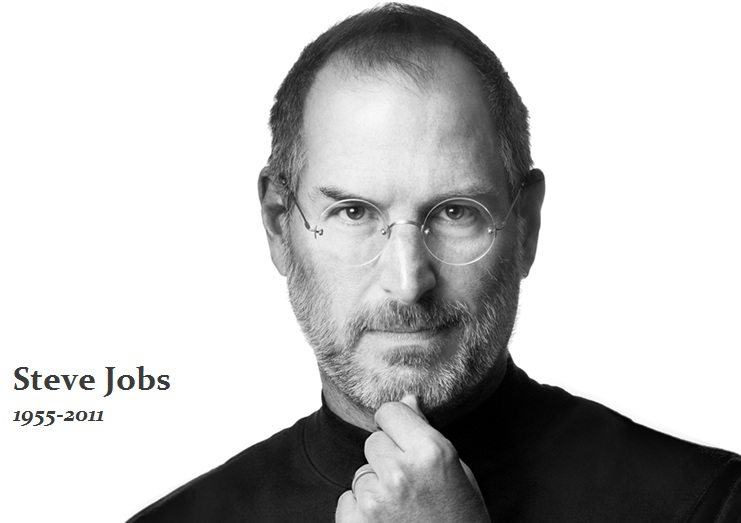
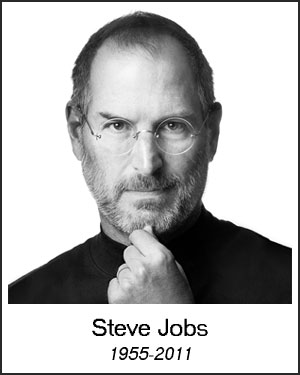
  • Steve Jobs. 1955-2011

    Steve JobsWe woke up to this rather sad news on a Dassera morning. Steve Jobs has passed away.


    Sad. Very, very sad.

    He has of course named Tim Cook as successor but  there will be questions on whether Apple will continue to produce such wonder products and services.

    On behalf of the vast number of Apple users and tech watchers from amongst India’s marketing and media fraternity, our Salaams.

     Tell us how Steve Jobs or his products and services have impacted your life. Email MxMIndia at editor@mxmindia.com

    Recommended reading:
    A look back at Steve’s life, in pictures wired.com/gadgetlab/2011…

    New York Times link to stories: http://topics.nytimes.com/top/reference/timestopics/people/j/steven_p_jobs/index.html?inline=nyt-per

    Bill Gates: http://www.thegatesnotes.com/Personal/Steve-Jobs

    Huffington Post obit: http://www.huffingtonpost.com/2011/10/05/steve-jobs-dead-apple-obituary_n_997256.html?ncid=edlinkusaolp00000003

    Time magazine’s Top 10 Apple Moments: http://www.time.com/time/specials/packages/article/0,28804,1873486_1873491_1873530,00.html

    Poynter: How he changed journalism. http://www.poynter.org/latest-news/media-lab/mobile-media/144051/how-steve-jobs-has-changed-but-not-saved-journalism/


    Picture: www.apple.com