Tag: Apple

  • Google, Tata Motors, Amazon, Jio & Apple Most Inclusive Brands in India

    Google, Tata Motors, Amazon, Jio & Apple Most Inclusive Brands in India

    Leading marketing data and analytics firm Kantar has launched its Brand Inclusion Index (BII), a global study which reveals that 75% of consumers say that a brand’s diversity and inclusion reputation influences their purchase decisions.


    A staggering 68% Indians claim to have been discriminated against, and in majority of cases in commercial places and brand touchpoints, which is substantially higher than the global figure which stands at 46%. The study also showcases that DEI is important for an overwhelming majority of Indians, both in life and while making brand choices, with 86% of respondents.


    The first edition of India Brand Inclusion Index study explores skincare, banking, automotive and Technology categories. In its Index of the world’s most inclusive brands, Kantar ranked Google, Amazon, Nike, Dove and McDonald’s in its global top five while in India, it is Google, Tata Motors, Amazon, Jio and Apple. The brands were recognised by consumers for setting a positive example by demonstrating a genuine commitment to diversity, equity, and inclusion (DE&I).


    The study identifies that inclusive marketing is a significant opportunity to drive brand growth. It is clear that brands who fail to address discrimination, risk alienating a significant portion of their customer base. Despite progress made by some brands, the Brand Inclusion Index 2024 reveals a significant inclusion gap that businesses must address. This gap is the difference between the proportion of people in a market who have experienced discrimination and the percentage who believe in the importance and influence of diversity and inclusion.


    Kantar’s Brand Inclusion Index 2024 is a survey of more than 23,000 people in 18 countries, the India leg comprises 1000-plus respondents with an inclusive demographic which is gender expansive, disability, socio-economic class, religion etc.


    The findings of the Brand Inclusion Index sit in the context of preliminary research from the Unstereotype Alliance with Oxford University’s Saïd Business School, using data from Alliance members including Kantar. This study has found that progressive, inclusive advertising drives a significant sales uplift of over 16% when compared with less progressive ad content and has a significant impact on consumer loyalty, buying intentions and a brand’s pricing power. Respondents assess brands on different dimensions – brave brand DEI strategy, diversity, equity, and inclusion – from the absence of negative actions, to the presence of positive initiatives.


    Key findings:

    • There’s an urgent need for brands to address DE&I failures: A staggering, 68% Indians claim to have been discriminated against, and in majority of cases in commercial places and brand touchpoints, which is substantially higher than the global figure which stands at 46%. The study also showcases that DEI is important for an overwhelming majority of Indians, both in life and while making brand choices with 86% respondents
    • Consumer expectations are high, globally: 75% of consumers globally say that diversity and inclusion – or a lack thereof – influence their purchase decisions
    • DEI is yet to make its mark on Indian advertising:
      • More women are seen in Indian ads than global average but they remain bound by traditional roles of homemakers and mothers (7% women are featured in non-traditional roles)
      • Fairness of skin may have transitioned to glow but skin colourism continues to exist in creatives
      • Sizes remain slim and small. (7% diverse body shapes)
      • Ageism dominates with 40+ women represented in less than one out of five ads (15% in India vs 26% globally)
    • Underrepresented groups are most vulnerable: Ad protagonists and characters in India are painted in broad strokes of what they, their homes, beliefs and lifestyles look like, ignoring ethnic minorities, LGBTQ
    • Ads that successfully portray people positively provide greater predicted ROI for advertising investment. There has been growth in the industry in positive portrayal of Males over the last year, but a drop in Female portrayal since last 2 years
    • Globally, people with disabilities and LGBTQ+ individuals report the highest rates of discrimination (81% and 62% respectively), emphasising the need for targeted efforts to create more inclusive environments and content
    • Google, recognised as most inclusive brand in India as well as globally. It emerges as a beacon of hope, ranked by Kantar as the most inclusive brand globally. Consumers, particularly in marginalised communities, praised Google for its unwavering commitment to DE&I in its internal policies, products and marketing, its authentic representation of people from all walks of life and its leading-edge innovation for inclusion
    • Alongside Google, Tata Motors, Amazon, Jio and Apple emerged in the top five winners in India. Category wise, the India top Brand Inclusion Index scorers are – Google (Technology), Tata Motors (Automotive), SBI (Banking), Dove (Skincare).


    Said Valeria Piaggio, global head of diversity, equity and inclusion at Kantar: “It’s a myth that inclusion marketing is about marketing to minorities. Inclusion marketing is expansive marketing. One of the fundamental ways to grow your brand is to predispose more people to it. Yet when brands exclude consumers – whether that’s because people don’t feel welcomed when shopping in stores or their advertising doesn’t reflect diverse communities – it’s an easy miss.


    “Millennials and Gen Z prioritise diversity and inclusion even more than other groups, and as these populations grow in size and buying power these issues will carry more weight. Brands will be rewarded if they stand by their values – especially in the face of vocal communities which stoke the culture wars by pitting minority groups against one another.”


    Said Soumya Mohanty, Managing Director & Chief Client Officer- South Asia, Insights Division, Kantar: “In a country of India’s size, the term under-represented groups can be misleading for brands to use as a guiding light. Minorities can translate into millions of people who may choose or not choose to buy your brand, based on how well they feel seen, heard and voiced in your brands. It is a business imperative for brands to prove that they are serious and committed about DEI. The Brand Inclusion Index – our breakthrough study on brand inclusion – gives clear indications of how to achieve the inclusivity imperative. Our analysis of what’s behind the most inclusive brands is that they all have three things: a well-thought-out DEI strategy that stems from company actions and is committed long-term, impeccable creative execution, and bravery. The element of bravery will be increasingly important. As in other moments in history, when there’s significant social change, there are groups of society that seek to maintain the status quo, feel threatened, and as a result, react loudly,” adding: “To avoid backlash, brands today need to be extra careful. Full inclusion needs to work at both ends of the spectrum: reaching out to underrepresented populations and making them count, while avoiding negative reactions from people who are used to seeing themselves well-represented by brands and don’t want to be left behind. This study brings understanding of how people perceive brands based on their DEI efforts, focusing on populations that tend to be excluded, underserved, or misrepresented. The Brand Inclusion Index gives marketers clear benchmarks for brand inclusion and inspiration from brave brands that are seen as diverse, fair, and inclusive.”

  • Obsolescence vis-a-vis Relevance


    By Avik Chattopadhyay


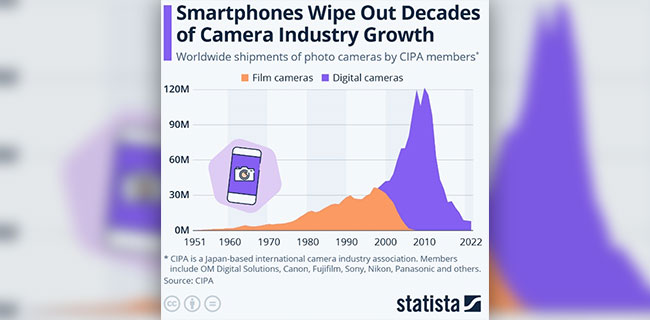
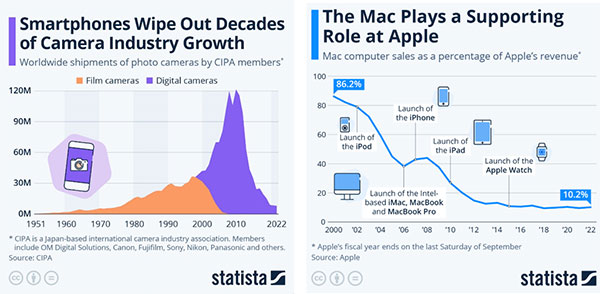
    Avik ChattopadhyayI came across two very interesting infographics by Statista last week. Though they are different pieces of information, to me they seemed bound by the common thread of a problem that every brand faces in its lifetime – obsolescence.



    Brands are scared by this very word. It is a stage in life that no brand wishes to ever experience. Yet, every brand must.


    I was discussing the infographic on cameras with a friend and he said, “These Japanese brands have become obsolete. They are nothing today. In just 15 years.” Little knowing, he had posed a crucial question that every brand manager would ask oneself and try the best to answer.


    Does a brand become obsolete?


    I do not think so, if it is a true brand in the first place. A brand is the promise of an experience, consistently delivered over time, as my guru Wally Olins used to say. Hence, a brand not merely a physical product, method or process. It is the experience that the product or method or process provides. Kodak was not about making cameras. It was about preserving memories. The day it forgot this basic and obsessed with making better cameras, it lost the plot. Just like Canon or Nikon or Panasonic or the hundreds of camera brands that believed their purpose was making a camera.


    Those that realised that their purpose was to help capture occasions, share experiences and create memories did not get bogged down by just one product format or process and devised new formats and methods. While many had written off the European camera makers in the 1990s due to the sheer dominance of the Japanese, they are back in business, collaborating with the smartphone makers in engineering their optics. So you have One Plus or Oppo collaborating with Hasselblad. Nokia had collaborated with Zeiss. Xiaomi has collaborated with Leica, which had a previous partnership with Huawei. Amongst the Japanese brands, Sony too realised its brand calling was much bigger than just a camera box, hence happens to be one of the largest optics partner for smartphone and smart device makers.


    If Colgate thinks of itself only as a toothpaste and not about dental health and happiness, its days are limited. Similarly if Maruti Suzuki thinks of itself as a maker of personal 4-wheeled vehicles and not as about democratising mobility in India, it will get gobbled up by someone who provides mobility solutions, however large it might be.


    A brand never becomes obsolete. A product does. A method does. A process does. And if a name thinks it is only the means and not the end, it surely does become obsolete.


    Now, the second infographic says that the Mac is now merely around 10% of Apple’s annual revenues. Which raised the second question in my mind – are brand relevance and obsolescence correlated? Which means, if a brand remains relevant, it cannot become obsolete, and vice versa.


    In just 22 years, the share of the Mac in Apple’s revenues has fallen by 8 times. Does that mean that the Mac is losing relevance in Apple’s future scheme of things? Does that imply that the Mac is on the verge of becoming obsolete?


    Not at all. The Mac continues to play a critical role in the larger ecosystem that Apple has created. Just that the ecosystem is so damn huge that its financial impact has reduced. However, it continues to do robust numbers, is always a focus at every annual product announcement day and is a critical lifeline for students and creative people. Without the Mac, the ecosystem will be incomplete and other business lines will get adversely impacted. And the fact that Apple keeps regularly upgrading the entire range demonstrates the key role it plays.


    So, a lesser share of revenue does never mean waning or lesser relevance of a brand both for the organisation as well as the marketplace. Even though share goes down, profitability can go up. And that critical brand can actually open doors for the organisation into other customer needs and applications. A student buying the first Macbook will certainly be a prime target for the phone, watch and every future solution that Apple comes up with.


    Just like the lesser numbers of the Tata Harrier does not imply it has lost its relevance vis-à-vis the Nexon and Punch. The Harrier plays a key role of demonstrating a certain level of engineering, design and performance shoulder to shoulder with a Honda, Hyundai and Kia. Hence, it plays a critical role for the larger Tata brand and its mobility ecosystem.


    The next time someone casually comments that a brand has become obsolete or irrelevant, just pause for a moment, give a deep think and then decide whether the statement holds any water, or is it just a temporary phase in the brand’s lifecycle.


    Peugeot had started off its brand lifecycle making water mills and steel knives and forks.

    So there!


  • Apple, Musk and AI


    By Ashoke Agarrwal


    Ashoke AgarrwalI coined Concierge Intelligence (CI) as a type of Artificial Intelligence (AI) owned by and dedicated to an individual and fully protective of his privacy. CI would aid the individual in understanding herself better and leading to better life outcomes in health, education, career and relationships – in general, as a putative ad copy would say: ‘Be A Better You’. Further, CI would handle routine tasks like shopping, bill paying, appointments, correspondence and travel arrangements based on a deep understanding of the individual’s preferences and needs and an up-to-the-minute and universal understanding of options. CI would be under the complete control of the individual, who can switch it off and on and decide on the level of access granted.


     

    When I first wrote about CI in Feb 2021, the concept seemed at least a decade or more away. Not any longer. Like the world, I was unaware of the rapid progress of Large Language Models (LLM) technology.


    Today, many factors indicate that the first generation of CI is around the corner. A CI prototype might already be in the hands of hundreds of millions worldwide! Let me explain.


    For a couple of years now, Apple has been communicating the following:

    :: Many of the functions and Apps on its devices – Siri, Keyboard Suggestions, Health, Messages, Mail, Music, Books, and Apple TV – use AI to enhance user experience and utility.

    :: Apple puts ensuring user privacy as the highest priority. Therefore, all its AI works on data and software residing on the user’s device, under complete user control, and cordoned off from other entities, including Apple.


    The penny dropped when I first read about the Journal App that Apple is readying for release with iOS 17. Journal App gives iPhone users the means to record their day-to-day activities and uses advanced prompt features enabling users to track their emotional state and the causes.


    The latest iPhones carry specialised chips that allow the device to run sophisticated AI programs on the device itself. With the breadth and depth of information, the iPhone has about its users, the phone’s processing capabilities and the level of trust Apple had built with its users, all the conditions that make for a CI already exist. Over the next few years, iPhone users, prompted by Apple, will increasingly find use cases for the CI that resides over the phone. With each new generation of iPhones, the CI will get more powerful and within the next decade, Apple will likely brand this as a proprietary feature and build a revenue model around it. CI by Apple could be the next big thing from Apple after the iPhone. If Apple keeps its promise of protecting user privacy, iPhone CI will add to the quality of life and be one of AI’s boons.


    While the wizards of Cupertino are coming at AI based on an individual’s shared experiences, the wizard who has given the world Tesla and SpaceX is taking a different tack.


    Musk wants Tesla to be the first to launch a fully self-driven car without a steering wheel or a brake pedal to allow a human driver to take control. While many companies, Alphabet being one of them, are at work perfecting AI systems, Musk’s approach is entirely different from the rest.


    Alphabet and others are trying to build a self-driving car based on an algorithm that relies on the following:

    :: Signals from a hardware system consisting of cameras and radars that transmit in great detail, second by microsecond, the physical environment of the car as it drives through a roadscape.

    :: And rules that codify the signals into millions of scenarios and actions that are needed to respond to the system.


    The above approach is similar to the early days of Natural Language Processing, which tried to create language models based on the contextual meaning of words and rules of grammar and idiomatic usage.


    In one sense, Musk’s flip on the AI needed to build a self-driven car is simple. He believes if humans can drive cars based on just visual inputs, so can AI. So, radars are the first things he has taken out of the equation. His second lead is even greater. Large Language Models (LLMs) like GPT 4.0 work through patterns that a Deep Learning AI system detects from a large enough set of training data without needing an explicit set of rules. Musk’s leap is that he can build AI systems that can operate in the physical world through a large enough training data set. The difference is that in the case of the physical world, the data set is visual.


    Every Tesla carries a set of high-resolution cameras. And its software records all the actions that a driver takes. Further, all the data from the cameras and the software systems are transmitted to Tesla’s servers. With millions of Teslas worldwide, Tesla has an ever-increasing training data set.


    Musk is not stopping at building self-driving Robocars but is busy building a human-like robot branded Optimus on the same AI principles. The training data for Optimus-like robots will come from recording humans engaged in various activities – cooking a meal, navigating a home, an office or a mall, playing a sport, etc.


    Further, in all cases, the training data will be culled so that the robot learns from the best drivers, champion players, chefs, etc. So ipso facto, robots will come out of the gate better than humans because they learnt from the best and have the advantage of being faster, connected and untiring.


    Paradoxically, Musk also pays lip service to the dangers of AI and contends that he is trying to build something like Assimov’s Three Laws of Robotics into the AI systems he is busy inventing.


    So, between the CI that Apple is fast making a reality and Musk’s promised Robot Intelligence (RI), AI is set to impact the daily lives of all of us significantly.


    Another AI revolution is brewing in the scientific field, launching tectonic shifts that will alter human civilisation. But that is grist for another post.


  • We need more sustainability reports like Apple’s


    By Sanjeev Kotnala


    Sanjeev KotnalaIt was a regular weekend evening meeting with my dear friend and consultant, Mr Vermajee. The point of discussion was the recent ‘Apple-Mother Nature status report’ film that excited both of us. A lot has been said about the films. Like any good communication, it has given rise to polarised reactions.

     

    Apple Mother Nature Status Report 2023

    It is a dramatic status report on the Apple 2020 promise to be completely carbon neutral by 2030. Apple then promised to innovate and work through materials, clean energy, low-carbon shipping, and restoring natural ecosystems- to ensure it meets the deadline.

    Mother Nature (played by Octavia Spenser) needs a status report from Apple’s environmental team. As in every other such status report meeting, the news needs to be good and in alignment with 2030 targets. The advertisement also features Tim Cook.


    Powerful Commitment & Confidence

    I love the frame where Mother Nature has a faceoff with Tim Cook, who holds the stare because of his commitment and confidence to deliver on the promise. Cook and his team provide logical and good news on every aspect Mother Nature scrutinises.

    It is aptly demonstrated that Apple takes its sustainability and carbon neutrality promise seriously. The status report results reiterate the promise with a sense of well-deserved pride.

    The boardroom setting, the nervousness, and the evaluative tension are well-crafted and build up naturally.


    Saying a Lot

    Undoubtedly, the brand had to prioritise the actions to communicate, and there would have been many more fighting for attention. One understands that the brand, in the case of many rare earth elements, completely uses recycled material.


    Engaging Audience even with dry cold Facts & Figures

    I find the ad as powerful as the Think Differently ad. It is a tricky subject that has been well-handled with soft touches. It has the potential to impact the brand image massively. The brand linkages are solid and present throughout the film. The film presents Apple’s first completely carbon-neutral product: the Apple Watch.

    A very cut-and-dry factual corporate data has been presented in a very watchable way.

    It is engaging and involves the viewer. There is an apparent honesty while detailing the actions taken by the brand. The film adds to the already strong brand values and trust. And that is what a film should do.


    Be ready for more Reports

    Like every iconic good film, it will give birth to many more status report ads by corporates in different formats and treatments. They are much needed in a market full of purpose-led statements, promises and communications with the least of references, responsibility, and accountability in delivering on the same.


    No News is Not Always Good News

    In the Indian context, I don’t remember a brand trying to reach the masses with status reports on sustainability promises or any such purpose. The data, if there, remains hidden or needs to be inferred from statements on their websites or annual reports. Even Tata Tea or Ariel fail on this parameter.

    The figures are shared in presentations, which are more about media success in terms of impact and impressions than real change at the ground level. And such reports and facts are presented in the annual reports much away from the glare of public attention.


    Net-Net

    One believes this is the time for purpose-led brands and companies to willingly present not just a scorecard but also share what has been done and achieved on sustainability claims and promises it has made. How impactful have been the campaigns that have won them the awards.


    Meanwhile, Apple bites a second time

    Apple’s ‘HAPPY BIRTHDAY’ film fades before the Mother Nature film. However, as a standalone communication, it would tick most boxes, impacting the brand’s trust and preference scores.

    I like the way the film has been crafted.

    The film takes you on a ride. It is all about happy birthdays. When the audience joins in the overall cheerful mood, the brand shares its product role in saving lives proactiveness and by timely sharing of information. How it has made these Happy Birthdays happen.

    Apple always had style in communicating its advantages. The thematic brand films make so much sense, engagingly delivering the message. Watch the films Escape from Office‘, ‘The Greatest- Accessibility’, ‘Apple at Work’ and ‘Your Data is being sold- fake auction’. The ‘Happy Birthday’ is miles ahead in content, context and relatability.


  • Size matters, or does it really?

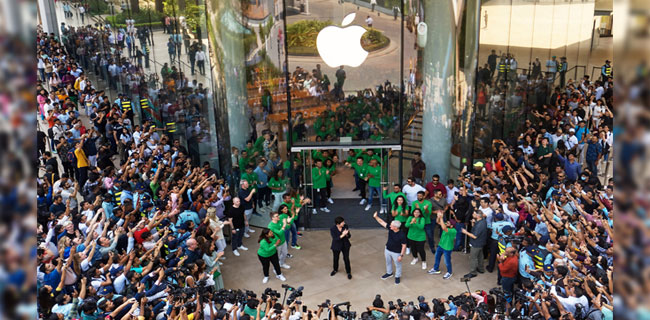
    Apple CEO Tim Cook and Senior Vice President (Retail and People) Deirdre O’Brien with staffers and crowds at the Apple BKC store opening in Mumbai on Tuesday, April 18. Photograph source: Apple.com/in


    By Avik Chattopadhyay


    Avik ChattopadhyayOn March 31, the former Reserve Bank of India deputy governor and noted economist Viral Acharya had commented that the ‘Big 5’ Indian mega-corporations needed to be broken up into smaller firms to dismantle their near-monopoly on pricing and market reach. They are Reliance, Tata, Aditya Birla, Adani and Bharti Telecom. “Creating national champions, which is considered by many as the industrial policy of ‘new India’, appears to be feeding directly into keeping prices at a high level,” said the professor of economics at New York University Stern School.  “The rising concentration of corporate power risks making inflation even more persistent and creating a vulnerability on the external sector front given India’s outsized fiscal and cyclically sensitive current account deficits,” he further commented in his report.


    Mega-corporations are not good for any economy or market. Through backward and forward integration, they end up controlling the entire value chain and price mechanism, virtually holding the end consumer at ransom. For example, a mega-corp retail chain will shut down competition by offering the most competitive prices and gaining rapid customer following finally leading to a situation when only that chain remains to serve the market, at a price it then wishes to operate on. This not only destroys local competition but also deters foreign players from exploring the market.


    When Standard Oil was broken up into 43 little companies in 1911 by the still fresh US Anti-trust Laws, it had assets worth USD400 million. It was 65-70% of the entire US market. When AT&T was broken up in 1974, it had revenues of USD70 billion. At that size, they could and were dictating governments on policy matters. They were monopolistic enough to manipulate both value chain costs as well as end consumer prices.


    On April 18,  India celebrated the opening of the first official Apple store. A USD400 billion mega-corporation! In the context of a Standard Oil or an AT&T, isn’t Apple Inc. not large enough to attract attention of the anti-trust regulator? Or is the very context of the market very different from before, being global in scope rather than just in the US which is what took the previous two down? Its nearest competitor, Samsung, is a bit more than just half its size.


    Are brand size and trust inversely proportional values of an organisation? Not really, if it is not monopolistic in its inherent behaviour and its size is spread across multiple markets with varying degrees of penetration with none being too large to be of competitive concern.


    Apple is one of the world’s most valuable ever brands with some of the most loyal following ever seen or recorded. It has thousands of stories about itself circulating in hundreds of languages and formats. Its founder is one of the most iconic global personalities ever, across business, politics, entertainment, sport and culture. Yet, the brand is not without the chinks in its shiny armour. It has not had a very good record on how it treats its workforce in countries outside of the US, though it tries to slither away citing they are contractual. It has been dodgy about its sourcing of materials and rare earths for its products. It has been known to use tax havens for years which technically speaking is nothing wrong but ethically is a misuse of lax regulations. There have been issues about its environmental impact, though it has made progress over the years to ‘clean’ up its image when it comes to recyclability and repurposing.


    Is the end-consumer really bothered about the negatives? When people line up at BKC in Mumbai from the wee hours for the first Apple store to open and then post millions of videos and photos to establish the love and admiration for the brand, you wonder whether looking at two sides of a coin does even matter when it comes to such formidable brands?!


    Even if five million iPhones are sold in a year in India, it will still not be 1% of a total market of 700 million smartphones. But size does not matter here as aspiration, admiration and benchmarking does. Size therefore is a contextual and relative measure to use when evaluating a brand. General Motors is large globally and very large in the US but not present in India at all. The same is with other global brands like Ford and Harley-Davidson. So, does it mean that in a market like India, with huge economic inequalities, brands need to play out different strategies of building the brand narrative and managing themselves depending on their product or service relevance? Can there be no universal truths that apply to all brands operating in India? Is there no universal truth about India itself?


    Or will history always be written by the victor, whether in battle or by ballot? There is a huge furore about the modifications being made in the NCERT history books. While the anger is welcome and justified, is this showing of just one side of India’s history being done for the first time? Are we sure that what was written in the 1970s and 1980s was the most balanced and unbiased? Are we certain that each constituent of this land’s rich and diverse history was given its due weightage, whether it be the Chola empire or Subramanya Bharati? Are we comfortable with a certain section of our freedom fighters being termed as “extremists” just because their method of action was not in tandem with the method of the majority? In fact, are we sure that we attained independence by using just one method of protest or was it actually a mix of many? There were half-truths then just as there are half-truths now. Just that the victors have changed and so have the overall agendas and resultant narratives. Just like when one CEO gives way to another and the ‘old order’ gives way to the new. New narratives are born and old shoulders are used to fire missives.


    However, that did not seem to happen in 2011 when Jobs gave way to Cook. The narrative remained the same. In fact, its application gave birth to new product categories and solutions that helped further reinforce the cause and level of addiction. That makes its fan and follower overlook its chinks and go only for all that shines. Hope NCERT adds a chapter on Apple in our history books soon. The learnings will certainly be deeper!


    Avik Chattopadhyay is a senior brand and marketing strategist based in Gurugram. He writes on MxMIndia every other Thursday. His views here are personal.


  • The Cookies are Dead. Long Live the Cookies!


    By Indrani Sen


    Indrani SenEver since Google announced its decision of withdrawal of third-party cookies, which were a driving force behind programmatic advertising and digital marketing, there has been lot of speculations in the digital industry about the future course of actions for digital media planning and marketing. For years, marketers have relied on third-party cookies for behavioural targeting, re-targeting and data-driven advertising and the decision of Google suddenly shook up the core of existing digital marketing strategies. Before Google, Apple’s Intelligent Tracking Prevention (ITP), and Mozilla’s Firefox enabled them to stop the practice of collecting data through third-party cookies which did not raise such hue and cry. As Google holds 60% plus share of the worldwide browser market, it is not surprising that its decision had a widespread reaction. While no one could argue with the need for user privacy, many marketers as well as publishers panicked and scrambled for finding alternative digital marketing strategies for their brands. However, this is not the end of working with cookies as first-party cookies can be a very useful tool for marketers.


    While the third-party cookies will no longer be available, first party cookies will continue to exist. First-party cookies are set by the websites viewed by the users and are stored by the websites.  First-party cookies help the website owners to collect anonymous data about their users and improve user experiences. Consumers do not complain about these first party cookies as these help in improving their digital experiences leading to higher satisfaction. However, consumers object to invasion of their privacy by third-party cookies which are created and set by third parties other than the publisher or owner of the website which they are visiting and stored at the browser ends.


    These third-party cookies became ubiquitous on the internet for behavioural targeting, retargeting, audience extension, tracking and ad serving and at the same time they were the main bone of contention in the crusade for consumer privacy in the digital world. Google has argued that the removal of third-party cookies will not only create more privacy for consumers, but also will provide the marketers opportunities for better digital advertising. First-party cookies will help the advertisers to have a better and more direct relationship with their consumers which in the long run will reduce their dependency on distribution platforms like Google, Facebook, and Amazon. Consumer Relationship Management (CRM) which has been gaining importance over the last two decades, will play a key role in building direct contact with the consumers.  Data tie-ups between advertisers and digital publishers based on first-party cookies can be leveraged for marketing.


    Google had been working on developing alternative analytics platforms based on first-party cookies, etc. even before they made the announcement about removal of third-party cookies. Universal Analytics was built for a generation of online measurement that was anchored in the desktop web, independent sessions, and more easily observable data from third-party cookies. With elimination of third-party data this measurement methodology will become obsolete. In mid-October 2020 new version of Google Analytics GA4 was launched as the new default analytics property for Google for the replacement for Universal Analytics. Google has been urging all their users to move over to GA4 as soon as possible in order to build the necessary historical data before Universal Analytics stops processing new hits. As it stands now, all standard Universal Analytics properties will stop processing new hits on July 1, 2023, and 360 Universal Analytics properties will stop processing new hits on July 1, 2024.


    GA4 collects both website and app data to better understand the customer journey; it uses event-based data instead of session-based data. It has been designed with privacy settings at its core, can track consumers across touchpoints and measure their engagements and conversations and has predictive capabilities.  GA4 offers behavioural and conversion modelling to improve ROI with data driven attribution, it can activate consumer insights. Apart from GA4, Google Chrome has also offered marketers the Privacy Sandbox technology for interest-based advertising which will target groups of people with common interests instead of individual consumers. This tool hides individuals “in the crowd” and uses on-device processing to keep a person’s web history private on the browser.


    However, elimination of third-party cookies will have certain effects on the publishers as the flow of targeted ads will stop. So, publishers will have to look for alternative ways for monetising traffic to their sites. In order to make up for the loss of ad revenue, publishers may try to introduce Paywalls which in turn may reduce the traffic to their sites as some of their regular customers may not opt for paid subscription.


    There will be growth of walled gardens of data collected through first-party cookies. Google and Meta already have their own first-party cookies and logged-in user data, Amazon is also likely to develop such database. Various video and audio streaming services such as Netflix and Spotify also have such first party data and can join the group of walled gardens opening new digital marketing opportunities.


    Departure of third-party cookies is likely to be a big challenge for Indian programmatic industry which has been thriving on start up ventures and consultancy outfits. The programmatic marketing and advertising will become more an expensive and difficult proposition. We can review how our programmatic industry is planning to cope up with the new challenges in another article. In conclusion we can only say ” The cookies are dead. Long live the cookies!”


  • Dealing with Disability: It’s a question of mindset…


    By Sanjeev Kotnala


    Sanjeev KotnalaSeeing the videos of a differently challenged or differently-abled people or person with a disability (no longer called disabled) performing tasks forces one to question the term disability and look at the possibilities. It not only puts one in awe of the potential and demonstrated capabilities but also makes one wonder how much one has been able to achieve in life. At times, it makes one wonder who is the one who is differently challenged.

    Seeing the videos of persons with disability (no longer called disabled) performing tasks forces one to question the term disability and look at the possibilities. It not only puts one in awe of the potential and demonstrated capabilities but also makes one wonder how much one has been able to achieve in life. At times, it makes one wonder who is the one who is disabled.


    YOUR JUDGEMENT MY DISABILITY 

    So, it strikes a chord when one sees the Future Generali campaign #DisabledByYourJudgement sensitising people to the disabled community. There is no reason for one not to appreciate the skills and talents of persons with disabilities and realise how we tend to discourage them with our judgements and reactions.

    The film questions seeing every simple task, achievement, or action by persons with disabilities as magical and inspirational. Why can’t others see them as regular with the usual demands of life, emotions, relationships and things to do? Watch and then decide if it is not time to free disabled people from such perception.


    HIRING A PERSON WITH A DISABILITY

    My first direct interaction with a disabled person in the service industry happened at Lemon Tree Noida. He was a deaf-mute person from the housekeeping department. It took a moment for me to realise first the difficulty and then the ease with which he functioned. And then there was no difference. Still, a few corporates take that extra step in employing persons with disabilities. They hesitate and see it as charity or social obligation, which is wrong. The truth is that someone has to take the first step, and others can follow. This Hiring Chain film makes the point simple. May the tribe of corporates and businesses hiring disabled grow.


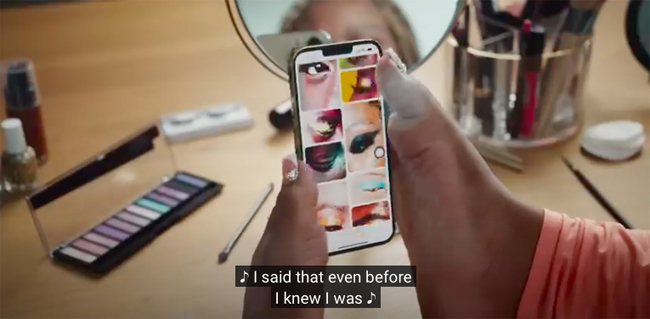
    It is a question of mindset. A question of opening your mind and seeing persons with disability as an integral part of life and society. With the enhanced new technology, some of the challenges are being addressed. Brands are working towards more inclusiveness. Here is a film: Accessibility by Apple. The film shows how technology embedded in a simple standard device like the mobile phone can help persons with disability by enhancing accessibility.

    Apple claims it takes on accessibility as a Human right. Hence, features like Door Detection, Sound Recognition, Voice Control, and more are designed to let the devices work in ways that work best for disabled people. 

    Apple accessibility is all about multiple solutions that help users with limited physical or motor abilities use your apps. Voice Control and Switch Control use the accessibility hierarchy to interact with elements within the app. The brand adds, Make Apple yours, make it big, make it clear, make it speak, make it listen, listen and make it simple. Here is more about Apple Accessibility and accessibility support, extending to even app development. Here are some of the innovative accessibility features.


    NET-NET.

    Disabled people are special, just like we are. Everyone needs one or the other in life to feel supported, respected, valued, and capable of better things. Needing support only makes us human beings. And that’s true, differently abled or people with disability.

    We have branded these people earlier as handicapped and then as differently challenged, differently-abled, Divyang and Persons with disability. Every time making a minor adjustment based on the new term and implied empathy. The time has come when we are inclusive in the best possible way and no longer see them differently. However, they are willing to accept the cards life has dealt them and eager to work around it to the best of their abilities.

    We can at least normalise our behaviour and reaction when we meet a person with a disability, interact with and see doing things we assume will be tough.

    So, it will be nice and polite if one asks before offering help. It is wrong to assume that disabled people always require assistance leading their lives, and the first step is treating them as equals. It will be good to see the Corporates and the Government working on accessibility across Information & Communications, Employment, Transportation Standards, Public Spaces Design and Services.


    MFPA

    I regularly contribute to MFPA– Mouth and foot painting artists and get beautifully painted cards and envelopes. MFPA works with over 800 artists across more than 78 countries with the simple motto “Self-help, not Charity’. And I have found that most people with disability demonstrate- reflect this attitude in life. Do visit their https://imfpa.org/paywebsite and if interested buy some product.


    ADD-ON

    Maybe you would do good and watch this video. You Are More Disabled Than Me by Nick Vujicic and another one for Amrita institute for the differently abled.


    An earlier version of this article had a few usages which are not considered kosher when one writes or talks about persons with disabilities. Like differently abled and differently challenged. We’ve made the corrections. As a publication which has been highlighting the need for using the right descriptors, our apologies.  – Ed

  • Blond-haired blue-eyed brands!


    By Avik Chattopadhyay


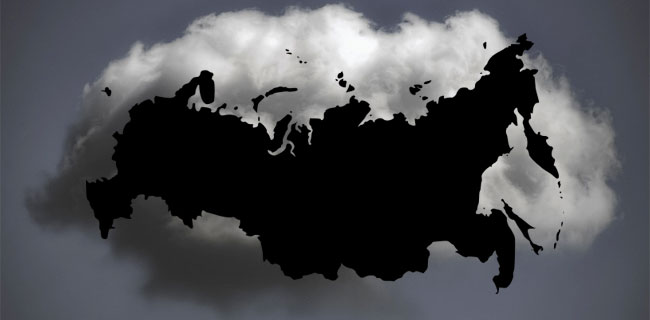
    Avik ChattopadhyayAs we read this, over 300 brands from across the world have taken a stand against Russia since it invaded Ukraine. Some real big names like Apple, General Motors, Volkswagen, Levi’s and MasterCard have decided to halt/ suspend operations and shipments. Consultancy firms like BCG, McKinsey and Deloitte have taken a call. Even some Chinese brands like Bank of China and Tik Tok have joined the list. All non-Russian energy companies have moved away either like BP and Shell divesting their shareholding in Rosneft or ExxonMobil walking away from the Sakhalin 1 project.


    While tracking the updated status on the internet, I came across an interesting Twitter feed that I cannot help but share here.


    While such economic ‘sanctions’ are very much expected, it is interesting to note that equally big brands like Coca-Cola, Unilever, Bridgestone, Pirelli, Pepsi, Philip Morris, Nestle, McDonald’s, Mondelez, Kellogg, Citi, Marriott, and Caterpillar still continue to do business in Russia.


    But the situation is very fluid. In fact, as I write I have an update that Coca-Cola and McDonald’s have also decided to suspend operations.


    Yale School of Management is keeping a real-time track of the status. Over 300 Companies Have Withdrawn from Russia – But Some Remain | Yale School of Management


    So, what makes some take one stand while others take another, or do not take the same one? Does this mean that McKinsey does not support Russia while Mondelez does? Or does BP denounce war while Bridgestone does not?


    While the ones who have taken a call against Russia are obviously being lauded for calling out an “imperialist” like Putin, are the ones who consciously have not, being subjected to criticism and pressure to fall in line? Will they experience serious fallouts on brand image and reputation in the long run?


    During my internet studies on the rise of Vladimir Putin and his oligarchs over the last two decades, I came across a term called “The Moscow Rules”. Bing! I remembered reading about this in ‘Tinker, Tailor, Soldier, Spy’.


    The Moscow Rules is a collection of 10 one-liners supposedly used by the Soviet secret service. They are also displayed at the International Spy Museum in the US. Post-Cold War, the rules remain as per the grapevine, now being used by the oligarchs to spread their presence across the world. They go as follows…


    1. Assume nothing.

    2. Never go against your gut.

    3. Everyone is potentially under opposition control.

    4. Do not look back; you are never completely alone.

    5. Go with the flow, blend in.

    6. Vary your pattern and stay within your cover.

    7. Lull them into a sense of complacency.

    8. Do not harass the opposition.

    9. Pick the time and place for action.

    10. Keep your options open.


    The stark simplicity hits you right away. There is no fancy business school jargon. Just plain common sense. Reminds me of Confucian precepts. Or Murphy’s Laws.


    Each is very much applicable to the world of brands. Each is fundamental to brand strategy and nourishment. Each feels more honest and powerful over the previous one. And the obvious paradoxes are simply brilliant! Just read 7, 8 and 9 together and you will get the drift. The sequence is intuitive, clinical, and utterly brutal. It’s like Machiavelli, Sun Tzu and Kautilya rolled into a Karpov move on the chessboard. Cold, calculated and thoroughly revised and rehearsed. Yet, #10 tells you that it could all go wrong, and you need to go back to #1.


    In the context of the Rules, I asked myself a few questions about the strategic decisions taken by brands in the context of the invasion of Ukraine.


    Pulled the plug or switched off power?

    Have the brands who have shown empathy with Ukraine pulled the plug altogether or merely switched off the power supply for the time being? The list by Yale uses terms like suspended and halted. These are all temporary measures and not finite ones. Once the invasion is brought to an end, whatever the outcome, they will be back for sure. Russia may be seen as a villain today but tomorrow it will all boil down to Putin, even if he wins this round. After all, a huge market of 145 million cannot be left alone to the Chinese and locals, can it? This is just like al Chinese brands, except for Tik Tok, were back in business in India just weeks after Galwan. The pressures of the marketplace and the shareholders are just too strong to pull the plug.


    Out of fear or fervour?

    With no disrespect to any brand that has suspended / halted operations in Russia, the action was taken more out of fear of political reprisal at home and other key markets rather than a foundational abhorrence of all war and military aggression. If it were so, similar stands could have been taken in cases of Iraq, Syria, Yemen, Palestine, or Tibet. It is all a matter of convenience. Most brands believe in #10 when it comes to morals. They take the high ground as the situation suits them.


    Hypothesis or hypocrisy?

    There are brands and then there are… brands. While a lot of posturing goes around about being led by and aligned with greater purpose[s], at the end of the day it just boils down to market share and share value. Most brands will not bat an eyelid to see their weaker competition die. Most would not hold themselves back from steamrolling a market. Most would love to enjoy ‘command and control’ in the markets they operate in, at the cost of unsafe working conditions, unethical influencing tactics, use of child labour and paying off officials and systems for staying a step ahead.  And they would not mind preaching to the ‘lesser’ ones, typically local / domestic. While constantly conspiring on how to gobble them up or bleed them to capitulation.


    These brands have blond hair and blue eyes.

    No harm can befall them.


    I end my tirade with a cartoon by the Russian cartoonist Aleksey Merinov that speaks about the harsh reality and futility of war. Either with tanks or tweets!

  • Prabhakar Mundkur: An Ode to Steve Jobs

    Prabhakar MundkurBy Prabhakar Mundkur


    “Think different” was written by Craig Tonamoto, art director at Chiat/Day who also did the initial concept work on Apple. In a way that shattered the notion that art directors are meant to do art and copywriters are meant to do copy.  But the world had changed already in 1997 when this tag line was written, breaking the boundaries between different disciplines in creative, a notion that existed in the advertising business of the 60s and 70s.


    October 5 of course brought back memories of Steve Jobs because it has now been a decade since he passed.  As an Apple user for the last 15 years, I couldn’t help feeling a twinge of sadness when I read the statement that his family put out on this memorable day.


    “For a decade now, mourning and healing have gone together. Our gratitude has become as great as our loss.

    Each of us has found his or her own path to consolation, but we have come together in a beautiful place of love for Steve, and for what he taught us.

    For all of Steve’s gifts, it was his power as a teacher that has endured.

    He taught us to be open to the beauty of the world, to be curious around new ideas, to see around the next corner and most of all to stay humble in our own beginner’s mind.

    There are many things we still see through his eyes, but he also taught to look for ourselves. He gave us equipment for living, and it has served us well.

    One of our greatest sources of consolation has been our association of Steve with beauty. The sight of something beautiful – a wooded hillside, a well‑made object – recalls his spirit to us.”


    With that statement was also released a film that encapsulated the essence of Jobs and Apple.


    Before I started using Apple, I would be amazed at the instant connection that two Apple users felt in a room when they first discovered each other to be Apple users. The connection was almost electric. It was magical, the sense of camaraderie and the feeling of belonging to a secret cult of Apple lovers.


    When I saw the shape of the newly launched iPhone 13 this month, I couldn’t help feeling that it reminded me strongly of the Apple iPhone 5 which was the last phone launched by Jobs.


    I can’t get over the brilliance of the commentary of the Think Different commercial.  It makes me proud to belong to a cult of Apple users.


    Here’s to the crazy ones

    The misfits

    The rebels

    The troublemakers

    The round pegs in square holes

    The ones who see things differently

    They are not fond of rules

    And they have no respect for the status quo

    You can quote them, disagree with them,

    Glorify them or vilify them

    About the only thing you can’t do is ignore them

    Because they change things

    They push the human race forward

    While some may see them as the crazy ones

    we see genius

    Because the people who are crazy enough to think

    They can change the world, are the ones who do


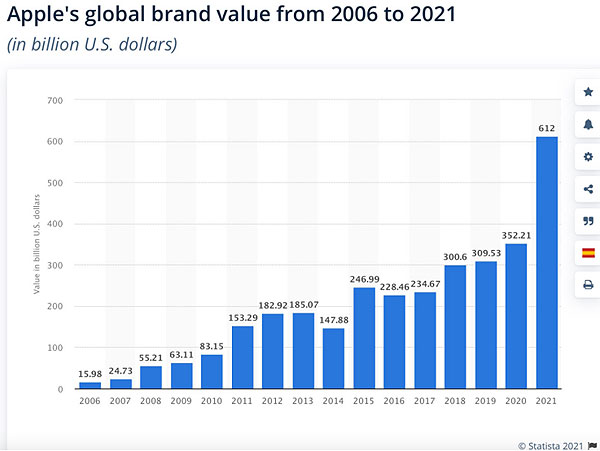
    It was to catapult the Apple being one of most worthy  brands on the planet. Today, it is worth $ 612 billion.


    In many ways, the commentary of Think Different glorified the Apple user and made her/him feel a strong part of a tribe around the world.


    As we remember Jobs, this powerful and shared feeling carries on.


  • Ashraf Engineer’s All Indians Matter podcast tops Apple, Spotify roster

    By A Correspondent


    The All Indians Matter podcast has been featured as the top pick in Apple Podcasts’ ‘New & Noteworthy’ section and has shot up to No 11 on the Apple India charts after debuting at No 24. Earlier this month, it was among the top picks in Spotify’s ‘News & Politics’ section.


    Ashraf Engineer

    Presented by former journalist and senior communications professional Ashraf Engineer, the podcast is produced by IdeaBrew Studios. It was launched in August this year and offers commentary and conversations with and about India on issues that matter.


    The weekly podcast has 16 published episodes already and is available on Spotify, JioSaavn, Apple Podcasts, Google Podcasts and Hubhopper. About 20% of its listenership is from countries other than India and 80% of the audience is between 18 and 30 years of age, notes a communique.


    Said Engineer: “I launched www.allindiansmatter.in in early 2020 as a digital home for high-quality commentary on issues that matter to India. The idea was to explain how various events matter to citizens’ lives and why they should care about them. I was fortunate to receive the support of some veteran journalists and commentators, who contributed to the website. A few months later, IdeaBrew Studios suggested I extend the effort to a podcast – an idea that excited me.”


    Aditya Kuber

    Added Aditya Kuber, Co-founder of IdeaBrew Studios: “Our studio is a digital-age storyteller. We present quality content across genres, from news commentary to sports and lifestyle. All Indians Matter is special because it was our first presentation and we couldn’t be happier with its success. Amid the media noise and clutter, audiences are craving content that truly makes sense of their world for them – especially in the audio format. So, there is space for quality commentary on current affairs and national issues. Engineer, with his journalism background of nearly two decades in media organisations, has the right credentials for it. That it’s working is evident in the way audiences – especially the young – are taking to the podcast and also in the recognition the platforms are giving it.”


  • Jio,Airtel,Netflix,Apple,Tata Sky top Kantar CX+ 2020 TMT

    By A Correspondent


    Jio, Airtel, Netflix, Apple, Tata Sky have topped the Kantar CX+ 2020 for TMT. The Kantar CX+ report evaluates the CX performance of companies in the Telecom, Media and Technology sectors, using the Kantar’s CX+ index. CX+ is a sector-specific index to look at brands in the context of their category. It uses customer centricity as its core to evaluate CX performance of a company.


    As per a communique, the basic premise of CX+ is that brand and customer experience have become synonymous, in this increasingly connected environment.


    The roadmap to delivering a holistic experience is based on five key CX success factors:

    1. Clarity of brand promise

    2. Empowered employees

    3. Empowered customers

    4. Creating lasting memories

    5. Reinforcement of brand choice


    Additionally, the study also identifies each brand’s Experience Gap – which quantifies the difference between the Brand Promise and the actual customer experience delivered.


    The CX+ index for each brand is derived based on a combination of the CX Performance and the Experience Gap.


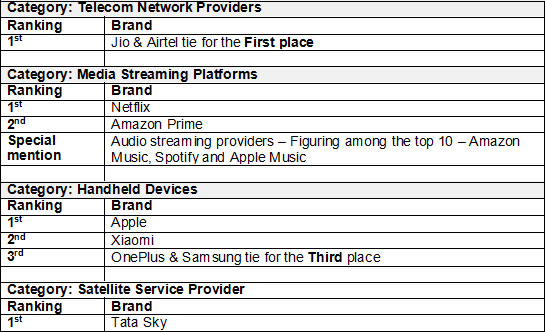
    The TMT study covered Telecom Network Providers, Media Streaming Platforms and Handheld Devices. In this study conducted in early 2020, clear winners emerged in each of the sectors.


    Commenting on the launch of the CX+ TMT report findings, Sushmita Balasubramaniam, Domain Lead for CX and Commerce – South Asia, Insights Division, Kantar said: “The landscape across the TMT sectors has changed drastically over the last one year. Consumers’ adoption of and dependence on digital, whether for basic everyday living, working, studying or entertainment has presented enormous challenges to companies in these sectors. And, the changes in usage of products and services will also mean that customer priorities on the kind of experience they are seeking will be different from the pre-Covid era.”


    Added Soumya Mohanty, Chief Client Officer, South Asia, Insights Division, Kantar: “In the current scenario, with tech convergence and emerging global media giants, the world will see vigorous competition in the TMT sector. This is an arena where tech credentials will become increasingly hygiene, CX will be critical. As network services providers, handheld device brands and streaming media providers, all will leverage customer data to build personalised journeys, CX and owning the relationship with the end user will become increasingly important.”


    Kantar CX+ 2020: Leaders in the TMT sector in India


    The Kantar CX+ TMT 2020 study analysed 6,000+ customers drawn from users across the sectors in India and was conducted in early 2020.


  • Apple, Google hold top spots in ‘Best Global Brands Report’

    By A Correspondent


    Brand consultancy firm Interbrand named Apple, Google and Coca-Cola the three most valuable brands in its 2016 Best Global Brands report, with automotive and technology brands dominating the ranking—and Tesla and Dior entering the Top 100 brands. Now in its seventeenth year, the report reveals the anatomy of growth, and features an insider’s view of how great brands grow great businesses.


    “It’s clear the best global brands are not just weathering change, but driving it,” says Jez Frampton, Interbrand’s Global Chief Executive Officer. “They understand their Anatomy of Growth is complex, unique and personal; they look inward and outward, expand into new markets, and create better experiences to grow their brands and businesses.”


    For the fourth year in a row, Apple and Google claimed the top positions. Apple’s brand value grew by 5 percent to US $178,119m, while Google’s brand value rose 11 percent to US $133,252m. Coca-Cola, Microsoft, Toyota, IBM, Samsung, Amazon, Mercedes-Benz and GE round out the Top 10. Dior and Tesla enter the Best Global Brands report for the first time, at #89 and #100 respectively.


    The world’s five Top Growing Brands include Facebook (48 percent growth), Amazon (33 percent), LEGO (25 percent), Nissan (22 percent) and Adobe (21 percent).


    “There is an increasing shift from businesses leading brands to brands leading businesses. That opens clear avenues of growth. Brands grow businesses by building a strong culture, optimizing structures and governance inside the organisation, while anchoring differentiated experiences on the outside”, said Ashish Mishra, Managing Director, Interbrand India.


    With a combined 29 positions, automotive and technology brands dominate this year’s report. Retail is the Top Growing Sector, increasing 19 percent, followed by the sporting and luxury sectors—each experiencing a 10 percent increase.