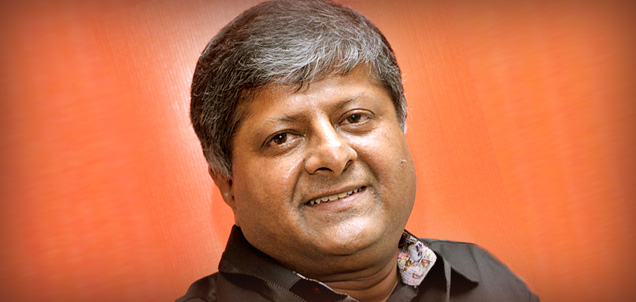
Tag: anil thakraney

  • The media planner has become a zombie: Shashi Sinha


    Shashi Sinha has done a lifetime in the business of advertising and media. It’s been an interesting journey for an engineer who went from selling booze to crunching complicated numbers. The CEO of Lodestar UM shares his views on many important issues, including media research, the demise of the full service agency, key challenges facing media buyers in today’s market and how he managed to restore some credibility in the creative awards. The 54-year-old, who’s usually soft-spoken and politically correct, candidly speaks his mind on this occasion. Media buyers and creative directors must pay close attention. He makes some very valid points.


    By Anil Thakraney


    You work for two companies?

    I work for the Draft FCB group where I handle Lodestar. And recently I have taken charge of a creative agency called Interface. But my primary responsibility is Lodestar.


    Whom do you report to?

    I have dual reporting. I report to the Draft FCB Global CEO, Laurence Boschetto. On the Universal McCann side, I report to a gentleman called Jim Hytner who’s based in London.


    Dual reporting is always a tricky thing…

    It is tricky. Since they are sister companies you have to keep both masters happy. One of my strengths is getting along with people and ensuring that their objectives are met. I have been doing this for five years now. As long as the combined operation is successful, things are okay.


    Cut to the past. What attracted you to advertising, when you were a sales manager with the UB group?

    I actually came into advertising for the wrong reasons. I grew reasonably fast in the UB group at a young age and I was in sales there. But I wanted to migrate to marketing and that would have been an effort. Then a friend said to me I should work in advertising as I would get to work on many brands at one shot. And so I joined the ad world in 1986 and stayed on.


    And you started out as an account planner in Ulka. How did media happen?

    In those days planning was an unknown concept. Bal Mundkur used to run the agency at the time, and he thought planning was an airy fairy function, that it had lost steam. He asked me to do some ‘real work’. So I started doing odd jobs like running the financial advertising cell, selling sponsored prorgammes, etc. Later I shifted to client servicing. Along the way my interest in media grew. When the FCB guys decided to make India the regional hub, Anil Kapoor said the time had come for me to fully move to the media function.


    Share an interesting memory of Bal Mundkur.

    He had balls. Today our revenues and profits are huge and yet I would not take a decision which Bal took in the late eighties. The servicing team handling a large multinational client was very unhappy, they said they were being treated like shit. Bal wrote a six-page hand-written letter to the client explaining why the agency would like to part ways with them. When he told me about it, I was horrified. I asked him to instead change the team on the account. But Bal said, “No, it is a matter of pride.” (After some prodding Shashi reveals the name of the client. It was Glaxo.)


    You are involved in many activities, you run the GoaFest awards, now you are heading the Ad Club as well.  You have excess time on hand?

    (Laughs.) I have enjoyed it for the last three years but it’s getting to me now. I believe when you take something on you must give it your best. I took on GoaFest last year because it was in a mess. So one had to get some credibility back, I had a point to prove.


    I guess next year you would not want to do it.

    I will definitely not run the awards next year.


    Why has the Bombay Ad Club gone dead in the last few years? I recall they used to hold many events in the past.

    You are right, it has ended up becoming an awards-only body. The regular interactions have reduced. The agenda for the future is to make it broad-based. The Delhi market has become very big and it’s a starved market. So we can collaborate and do things. As soon as GoaFest is over you will see a lot of action happening in the Ad Club.


    Do you miss the days of the full service ad agency?

    I do. In fact, I’ll let you in on a secret. I want to go back to the integration system with Interface, and the response I have got so far is very good. I genuinely believe that full service is the final solution. The best ideas come when you are sitting around the table.


    Shashi, after all these years of happily running a media buying agency you are suddenly talking of integration.

    One has been playing to a role. One is building the media agency, building one’s clients. But the best quality works happens in a full service agency.


    And the media buying market has become like a sabzi mandi. How much fun can that be for someone who comes from the old school?

    This is the unfortunate downside of globalization, global clients and global processes. Truth is that internationally advertising is not a hot profession any more, it comes way down the totem pole. Though in India it still has a pedigree, there’s some respect left. Ten years later it may not be there.


    One super media innovation you are most proud of having effected.

    It’s always teamwork so it’s embarrassing to say I did it. We have enabled many, but the one I am most proud of was for Nerolac Paints about five years ago. We took up a Mumbai local and deposited the shades onto the train. Nerolac deposited their paint on the outside of the train and made a shade card out of it. It was a wonderful idea.


    How many years do you give the print medium in this country?

    I can’t say about Bombay, Delhi and Bangalore, but as a country, print will be here for a very long time. The smaller towns are under-leveraged. Secondly, even if there’s internet access, there’s no power supply in these places. So how much can one use the computer, how much can one read on the mobile? If the time spent in Bombay on a newspaper is 15 minutes, for a town in UP it would be forty minutes. The entire family reads it.


    Key challenges the buyer faces in a highly fragmented media market.

    Everyone chases the rate game and how to buy it cheap. To me that’s stupid. For most of the organized media there are metrics in place to measure the media efficiencies. So in media terms how many consumers we’ve reached is all bull. The big challenge is to find whether that’s working for my brand or not. That, no one is able to answer.


    That’s the media planner’s job. And the industry has killed the planner.

    Correct. The problem is that the media business has become all about volumes, the business has become transactional. The planner today has become a zombie, a computer programmer.


    How can the industry improve media research in this nation? There are too many question marks on television audience measurement and print readership studies.

    Someone has to put money on the table, it’s as simple as that. The solutions are all known, I know very bright and talented people in research, what needs to be fixed is known. The problem is: No one is wiling to invest. Today, if television measurement costs Rs 20 crores, what if Rs 100 crores was spent on it? Or, for readership surveys, which cost Rs 4 cores today, what will happen if they had Rs 15 crores? So it’s nothing but lack of funds. Neither the newspapers nor the media agencies nor the clients want to put down that kind of money. And that’s the only problem.


    GoaFest will be a sub-continental event this year?

    This being a tough year, we’ll have to see how to bring Pakistan and Bangladesh in. We have to see how many of them will come, it’s early days yet so I don’t know the answers. We are also trying to get the clients in.


    On the awards, how did you lick the problems of self voting and media leaks?

    On the problem of self-voting, it was very simple, it didn’t need a very bright mind. We stopped the practice of raising hands during the judging, and they had to vote on a piece of paper. So if a judge voted for his own agency’s work, we would block that score.


    You must be very disappointed with the creative directors who were indulging in this.

    Yes, 110 percent. In the Effies, the majority of the judges are the clients. And they are not as desperate to win as the creative directors. Which is why the creative directors take short cuts. And as long as you allow short cuts to happen, people will get even more emboldened. As far as the issue of the leaks goes, we solved it from the media end, because it’s very difficult to nab the person who was doing it. I reached out to various people in the media and got a commitment from their senior leadership that they won’t do it. Also, the switch to secret voting format helped.


    And yet, Lowe refuses to take part. Which means you still haven’t been able to crack the core credibility issues.

    Balki has taken a position and his problems are beyond the purview of someone running the awards. I am just a process coordinator. If he says he does not like his peers judging his work, that he doesn’t respect them, I can’t do anything about it. I can only clean up the processes. But forget Balki, there are other people who have their own agendas for not entering the awards, they fire over the awards committee’s shoulders. Privately they’d say to me they don’t have a good enough body of work so they won’t take part. But their public posture would be very different.


    Can’t you change the composition of the jury? Does it have to consist of creative directors?

    I would definitely like to bring the clients on the jury. Perhaps 50 percent of the panel. But I have been told by creative directors that ‘these are our awards’. You must understand that one is running an industry association and there will be many voices. And so it’s like a democracy; I may have a point of view but there are nine other people voting.


    One rival media buying agency head you admire.

    Jasmin Sohrabji (Managing Director, OMD India). She is far younger than I am but I respect her for building something from the start. She’s built the company from scratch in the last five years, and she’s done a terrific job.


    What are the future goals you’ve set for yourself?

    I think there’s a huge opportunity in the content space. And one would like to do something that’s related to advertising. It could be digital or television content. We have taken some baby steps in that direction but haven’t been able to ignite it. In fact, I have told our global parents they should offer quasi-entrepreneurial opportunities to the team members. In the sense that people within the company are given pilot projects to run, in which they have some stake.


    One big life regret.

    It’s not a regret but sometimes I wonder if after completing my IIT I made the right decision to stay on in India. I had the opportunity to get a scholarship to do my MBA abroad, and I could have stayed on there.


    Why? Don’t like working in India?

    Nothing like that. But the scale of operations abroad is dramatically different. The quality of life is good out here, but one is a big fish in a small pond.


    Click here to view all Goafest 2012 stories

     

  • Anil Thakraney: News for sale

    By Anil Thakraney


    Very recently, a publisher friend called to seek advice. And his question threw me off-balance. Because not only was the query alarming, I frankly had no ready answers. So I copped out, and left it all to his judgment. The question: “A few assembly election candidates have approached us, asking for favourable coverage. They are offering large sums of money in return. What should I do?”


    Since I knew that this particular friend was bleeding and needed some funding desperately, I simply replied with: “Man, it’s really up to you. If you are here to uphold the high standards of journalism, ask them to go fly a kite. But if you rationalize the situation in your mind, and conclude that if you refuse the offer and your rivals would lap it up, then you will be the only loser. In which case, go for it!”


    Quite honestly, I have no idea what the publisher eventually did. But speaking from a larger perspective, it’s becoming increasingly clear that paid news is here, and it’s here to stay. There was a time when elections would excite only the political class, as that would mean big moolah gains for the winners. These days, along with them, a section of the media feels ecstatic. For the same reasons.


    Corruption in the media isn’t really new. In the past, some journalists would accept alarm clocks and booze bottles from financial companies, and then write sweet words about their public issues. Now, of course, you can get your private party pics flashed in the Page 3 pages if you are ready to pick up the tab. We’ve learnt to live with these malpractices. But newspapers, magazines and TV channels accepting money to write good things about political candidates changes the goal posts. It’s clearly harmful to the nation’s future.


    So is there a way out of this mess? I am afraid not. During the 2009 general elections, a few cheating media brands got exposed. Maybe we’ll hear of more culprits after the recent assembly elections in some parts ofIndia. But soon everything will be forgotten. And it will be business as usual.


    [youtube width=”400″ height=”200″]http://www.youtube.com/watch?v=jjYxE2VD7VE[/youtube]

    Yes, it pays to be in the media biz in modern times. If you won’t get support from advertisers, you can always tap into alternative revenue sources.


    Jai Hind!


    * * *


    PS: The context of the Fiat 500 Abarth ad is different, but this commercial is the kind of stuff Tata Nano ought to have done. A car you can take inside your home. Super positioning for a little gaadi. So much better than pitching it as the broke bugger’s vehicle.


  • Anil Thakraney: Media ODed on the Gujarat riots

    By Anil Thakraney


    The whole of this week the media has been going ballistic on the 10th anniversary of the Gujarat riots. Almost as if each media brand competed with another on who can paint a gorier picture. As a result, a whole lot of skeletons tumbled out of ‘secular’ India’s cupboard and many unhealed wounds got exposed all over again. We have to wonder if this carpet coverage of the riots was such a good idea after all.


    I suppose the greatest human tragedy of all time must be the one that happened after the nation’s partition. A million people died and many more were displaced. But because there was no media madness at the time, that catastrophe has been pretty much wiped off from our collective memory. In fact, even the Bombay riots of 1992/93 don’t get much attention any more, again because there was no media madness at the time. This has allowed people to get on with their lives. As a generation changes, the Mumbai riots will also be a closed chapter.


    But the Gujarat riots happened in full glare of the media, so there is plenty of pictorial and written matter to fall back on. And this is where I think our media needed to exercise restraint. Because while the intentions may have been noble, nothing good can come from re-exposing deep injuries.


    So we re-lived the rapes, the burnings, the lootings, the killings… we were given a ball-by-ball replay and not just highlights, to use a cricketing metaphor. For the sake of the nation, I sincerely hope that the negative emotions didn’t get re-ignited all over again. All those affected have tried to pick up the pieces, and are attempting to re-build their lives. As far as the process of criminal justice goes, that’s already in the courts. Which is why I failed to understand the media’s desperation to re-live 2002.


    [youtube width=”400″ height=”200″]http://www.youtube.com/watch?v=fDpwoRlPiKk[/youtube]

    Bottom-line: The Indian media, particularly the news channels, learnt some hard lessons post the 26/11 goof ups, on how terror attacks need to be covered. It’s time some amount of introspection is also done on how anniversaries of riots and terror need to be remembered.


    ***


    PS: Yes, not all stars appear on the screen. A touching and extraordinary idea from Diet Coke. This is one international commercial that can so easily be replicated for Bollywood. What are they waiting for?


  • Debrief: Mahindra Xylo: Er, what just happened?

    By Anil Thakraney


    The ‘happy feet’ gaadi Xylo has had a makeover of some sort. But because the communication is all muddled, one isn’t sure what really has changed. Is it a fresh coat of paint? Or new doors? Or perhaps they’ve upgraded the floor mats?


    The TVC is completely bizarre. Atul Kasbekar, the ace photographer, is back with his leggy models. This time as they drive around in the Xylo, a bird drops crap on the wind screen, leaving our leggy models pretty aghast. The chivalrous Kasbekar takes the dirty Xylo to an automated car wash (do we have those in India?). The magical car wash doesn’t just clean the Xylo, it ‘redoes’ the entire car. It changes the doors, provides a new shade and perhaps overhauls the engine too. Wow! The very impressed leggy models then fondle the car’s exteriors, though I am sure Kasbekar would have wished they did that to his interiors. (Okay, just kidding!)


    [youtube width=”400″ height=”200″]http://www.youtube.com/watch?v=GJ8YMz33h0U[/youtube]

    It’s a disaster, really. A car wash centre that overhauls the entire car? It’s neither interesting nor funny. In fact, it suggests to you that the makeover is totally superficial. And the editing is so sloppy, everything simply flies by, nothing registers, you can’t really tell what exactly has changed out here. Gets worse. The confusion is further compounded as the leggy models and Mr Kasbekar fight for your attention. In the end, you are left with nothing. To be honest, after many exposures I didn’t know what hit me.


    Rating: (On a scale of 1 to 5): 1. A good lesson on how to screw up communication.


  • Anil Thakraney: The Oscar Bore-fest

    By Anil Thakraney


    A few random observations on THE most watched TV show on Mother Earth, the 2012 Academy Awards, which was telecast live on Star Movies.


    Our pride and joy, AR Rahman’s gig was a ‘blink and miss’. The maestro should take offence and refuse further participation. So should Mr and Mrs Anil Ambani, who were probably seated in the last row.


    Some of the presenters seem to have been inspired by the trashy stuff that goes on during desi award shows. The inane, idiotic, incessant chatter on stage. Which young SRK has become an expert at. While I am happy that India is impacting the world, events like the Oscars must ensure award presenters are barred from aping our unfunny jokers.


    But what they SHOULD have learnt from us, they haven’t. The Oscars was a bore- fest; much too long drawn out with too many categories being awarded, and with too much self back-slapping. I almost dozed off mid way through. Pity that the show which honours the world of entertainment must be so yawny. Sizzling dance performances from the Hollywood hotties would have broken the ennui. Penelope Cruz and Natalie Portman were in the house. Some ‘Sheila Ki Jawaani’ action from them would have been nice.


    Every single nominated individual was in the house (except Woody Allen, who’s apparently outgrown the Oscars). This means there was no awards leak. Compare this to Indian movie award events, where only the winners turn up. If we ever hope to reach anywhere close to where the Oscars is in terms of prestige, the first thing we need to do is plug the bloody leaks.


    Host Billy Crystal’s humour has all dried up with age. He looked liked a stoned, embalmed Egyptian mummy. Or, maybe he was ordered by the organizers not to cause the slightest offence. Poor man. Guess when it comes to fragile egos, Hollywood stars are no better than ours.


    However, one must say what did save the show a little bit, which was otherwise headed for disaster, was Angelina Jolie showing off her long shapely right leg. Total paisa vasool.


    ———————————————————————————————–


    [youtube width=”400″ height=”200″]http://www.youtube.com/watch?v=mhAg0COnqds[/youtube]

    PS: Outside the Oscars auditorium, Sacha Baron Cohen dropped Kim Jong IL’s ‘ashes’ on the anchor. The notorious comedian, who was banned from appearance on the stage, made a surprise entry on the red carpet and created a scene. Good fun. He should have been on the stage. He was sorely missed.


  • Introducing the MxM Journalism Review

    So what’s a media, marketing and advertising website doing with a Journalism Review? Isn’t journalism at the bottom of the value chain for some or just one of those things that don’t quite matter? ‘Cos who will advertise on a website/microsite that’s only got journos hooked?


    Monsanto, perhaps, given that it was the benefactor for a major award recently. Or the Jaypee group or various others wanting to curry favour with news media professionals.


    There’s a reason why the MxM Journalism Review (MJR, for short) has happened. For one, we have received an astounding response to our journalism section. And two, as a media and marketing site, we can’t not track what’s happening in this part of the media. While the pressure of running the rest of the operations has taken a toll over my doing Mediaah! regularly, senior journalist, until last year senior editor at DNA and former colleague Ranjona Banerji’s ‘Freaking News’ has been attracting many hits. Plus Gouri Dange’s column ‘Naming no Names’, Deepa Gahlot’s review of reviews, Newswatch by well-known journos, Anil Thakraney’s frequent ‘hard knocks’ on news and of course our regular fare of stories.


    The objective of MJR is not to take journalists to the cleaners. Yes, it’s a ‘review’ but we aren’t watchdogs who like to bark at everyone. It’s more of a celebration of the profession, and in the process reporting on all the good and bad things in there. We don’t think there’s anything wrong with innovative advertising in print. So a coffee-flavoured newspaper is fine and if a newspaper wants to have a full page ad on Page 1 on a big news day, then we guess its folks know how it impacts the brand. We’ll have our commentators do the talking, but we surely don’t believe most publishers are evil.


    Yes, we have a very strong view on paid content. Our standpoint on the issue was evident when we were perhaps the only publication which said RJ mentions constituted an incorrect practice… quite the same when a newspaper asks a restaurant to pay for publishing a picture of its opening. We don’t think it’s right. We stand for integrity in the profession and are worried as media companies compromise on ethics when they get into allied activities like events – conferences, awards, et al.


    We think journalists who accept bribes are as corrupt as those indicted in the various scams. We believe journos who pass off readymade stories handed to them by PR agencies as their own are corrupt even if they may be senior editors at respected print media. We think award organisers who give out awards without a legit process and/or juries deciding on them must be damned.


    We also want private FM radio to air news. We think news journalism – especially local and cultural – will get a huge boost with FM radio. When Markandey Katju went on a rampage against journalists, we were upset because some of it was indeed true, except of course he had no business to do so as Press Council chief.


    The MxM Journalism Review isn’t just about news journalism. We are as interested in documenting how the Maxim editor is doing as is the editor of Hindustan Times. We will write about how Sun News is doing as much as, say, YouTube-based film news offering Lehren.


    A lot of it is tough doing, but we hope to achieve the impossible thanks to a network of well-wishers across the country. In the process, we may experiment. Our columns and features may upset Editors, CMOs and CEOs. While some may threaten to pull their advertising, a few may choose to invest their faith in us.

    MxMIndia’s MJR will strive to bring you unbiased news and views on Indian journalism. So help us God.


    -Pradyuman Maheshwari

    Editor-in-Chief and CEO, MxMIndia

    Email: pradyumanm@mxmindia.com,
    BBM: 23050B5D, Twitter: @pmahesh
    Gtalk: pradyumanm[at]gmail.com

    PS: Taaliyaan!

  • Debrief: Vodafone’s pug returns. And shines.

    By Anil Thakraney


    Ah, the cute pug makes a comeback for Vodafone. This time it’s being used to communicate instant connectivity. I had been wondering where the animal had disappeared to; there’s little doubt it makes Vodafone commercials that much more charming to watch.


    In the new TVC, a young lad (is he old enough to be flirting?) eyes a young gal in a park, and she seems to be giving him the glad eye as well (is she old enough to be flirting?). But because the gal is very shy and the guy a phattu, his puggie plays Cupid and brings them together. Instant connectivity achieved. Cool!


    [youtube width=”400″ height=”200″]http://www.youtube.com/watch?v=mRO8mV3BdGE[/youtube]

    Yup, the ad works as nicely as all of the previous Vodafone pug commercials. The animal brings in a great deal of freshness and simplicity into the communication. The only thing one wonders about is this: Is the pug losing just a little bit of its appeal?


    Has it been overdone? I suppose the advertiser must have commissioned a survey to suss that, and perhaps their findings were encouraging.


    However, it’s critical that the dog be used very, very sparingly. Else, just like it happened to Uncle SRK, excessive exposure will kill its appeal. Then the doggie will have to dress in drag to draw attention to itself.


    Rating: (On a scale of 1 to 5): 3.5. The pug works its magic. Once again.

  • Anil Thakraney: Dual ad play during cricket matches?

    By Anil Thakraney


    I have always wondered what goes through the minds of viewers when they are subjected to commercials that feature cricketers during a live match coverage, when those boys are doing miserably on the field. For instance, ads featuring Sachin Tendulkar are constantly on air, even as there’s hectic talk of his immediate retirement from one day cricket.


    I don’t have research material to prove this, and maybe the time has come for a study on this subject, but I strongly suspect television viewers get mighty irritated, even repulsed, more so in the Indian context, where the average cricket fan is likely to be deliriously passionate about the game. As he gets busy swearing at the player, one can imagine the vocabulary when the commercial featuring the same player projecting him as a hero comes on the air. Clearly, this isn’t healthy for the brand in question, as the player negativity is sure to rub off on the former. And even if that sounds a bit extreme, annoyed viewers are highly likely to zap or mute such adverts. Which means not just money down the tube for the advertiser, there’s also danger of damage to brand imagery.


    And this is a risk advertisers knowing take when they hire sportspersons. As against movie stars, where the only risk is if the actor gets involved in an adverse publicity situation, like Saif Ali Khan did very recently. But that’s a rare occurrence, with cricketers it’s a constant gamble.


    Which then makes me think: Should marketers have a dual ad campaign on the ready during cricket tournaments? One campaign featuring the cricketer and the other based on a different creative route. So that during a cricket match if the player is found performing really badly, or is woefully out of form, the advertiser can switch to the commercial that doesn’t feature him.


    [youtube width=”400″ height=”200″]http://www.youtube.com/watch?v=9Xa7cYMD-Dc[/youtube]

    I wonder if broadcasters can technically make this happen without too many logistical issues. I actually think it shouldn’t be a problem.


    The only question which then remains is this: Does this justify additional spend on creative work? I think it does. Better to spend a bit more on cost of production than have the brand being sweared at during each commercial break.


    * * *


    PS: Fallon has re-created Queen’s ‘Bohemian Rhapsody’ for Cosmopolitan, a Las Vegas luxury resort and casino. Mostly in spoken words. Simple idea and very cool!


  • Anil Thakraney: Yes, we want to read about the Saif punch-nama!

    By Anil Thakraney


    As usual, the knives are out for the media on the carpet coverage of Saif Ali Khan’s moment of madness at the Taj in Mumbai. The noble souls of the nation opine that too much attention is being given to what was just another brawl in a public place. That the media has lost it, that it must instead focus on serious issues.


    Reality check, people. I can assure you all these so-called nobles were hooked to their TV sets and read every single word in the newspapers on the fisticuffs saga, and they fully relished the drama. And then later quickly logged on to Twitter and got busy dissing the media. Such is the hypocrisy we suffer from.


    Truth is, nothing like a story of two ‘decent’ groups behaving like hooligans inside a five star hotel. And absolutely nothing like it if one of the parties happens to be a movie star. This sort of stuff is sensational, riveting and great fun. And secretly, we don’t want the opponents to reach a quiet truce, we would love it if the battle rages on, and some more blows on the nose will be soooo cool! Yup, we all love masala news, whether we confess to it or not.


    And this is not peculiar to India. If a Hollywood star behaved thus, respected newspapers like The New York Times and The Independent would dive right into the action. Celebrity news, especially of the violent kind, sells like hot potatoes; we are all suckers for it. Bottom-line: Saif’s nefarious deed collided with another big story: Congress leader Kripashankar Singh’s ill-gotten wealth. And the latter was given secondary importance to the Wasabi confrontation simply because that’s what excites us people. We are sick and tired of the routine political and civic stories, we need a break from these bores. And the media will give importance to what viewers/readers want, that’s the hard business reality.


    So please, kripa karein, and be a little less hypocritical.

    PS1: There have been allegations that the incident was engineered by the actor’s PR machinery to get some buzz going on his soon to be released flick. Bollocks, I say. Wish our PR industry was that smart. Alas!


    ***


    PS2: Ah! Sci-fi comes into hoardings. Super media innovation in London. A hoarding that ‘recognizes’ you and customizes content for you. High time we saw some excitement happen on this oft neglected medium.


    Link: http://www.guardian.co.uk/media/shortcuts/2012/feb/20/advertising-that-can-recognise-you

  • Debrief: Didn’t smell the coffee (but loved the innovation)!

    By Anil Thakraney


    So, after ‘singing’ newspapers, we have smelly newspapers. (God knows what awaits us next… perhaps farting newspapers.) Last Sunday, makers of Bru Gold executed a sensational media innovation in the TOI. The cover page was made to smell of coffee beans. So that readers could experience the fragrance of Bru Gold.


    To be very honest, I had no idea and only heard about this innovation from reports in the media. Because when I lifted that particular edition, which was soon after the municipal elections in Mumbai, I could only smell rats inside the newspaper, if you know what I mean. But I did not smell the coffee. To give the advertiser the benefit of the doubt here, I must declare that I don’t drink coffee, so maybe that’s why the aroma eluded me.


    Therefore I shall do my evaluation purely on the presumption that most readers were able to smell it. If that is the case, it’s a kick-ass innovation and needs to be applauded. Must have taken a lot of preparation and perseverance to make it happen, and one must appreciate that. I also approve of the innovation because unlike Volkswagen’s musical newspaper (a really corny idea) this one was non-intrusive and silent. So, good work guys, and I will be generous with my rating.


    However, that still doesn’t change the fact that I only smelled rats in the newspaper that morning.


    Rating: (On a scale of 1 to 5): 4. Super media innovation. Should win a few trophies.


  • Anil Thakraney on 9 reasons why KFA must shut shop

    By Anil Thakraney


    Dr Vijay Mallya is in no mood to entertain talks about shutting down his messy airline. He is a proud man, and it would hurt his pride if his pet project got killed. But there’s no place for ego and emotion in business, every die hard dhandhewala knows that. Here’s why I think it’s better to ground Kingfisher Airlines Limited (KFA).


    1. Dr Mallya doesn’t get this business at all.


    2. Running an airline is not the same thing as running a liquor company. Or sailing on a private yacht. Or anchoring Page 3 parties. Or owning an IPL cricket team.

    Totally different sets of rules apply.


    3. Kingfisher’s continuing crisis has badly hurt Dr Mallya’s own image as that of a man who can do no wrong. This is damaging his credibility as an industrialist.


    4. Because it’s a brand extension, the airline’s very poor image in the market could harm UB group’s cash cow beer brand, Kingfisher Lager. It’s not a risk worth taking anymore.


    5. Even if Dr Mallya decides to run KFA as a totally low cost, zero frills airline to slash operating expenses drastically, it will backfire as this strategy doesn’t gel with the stated brand position of ‘Good Times’. So it makes no sense to be around from the marketing point of view either.


    6. The huge inconvenience and financial losses Kingfisher has been causing to thousands of flyers across the nation because of cancelled flights will have seriously eroded brand preference. And this situation in the hospitality industry has a cascading effect. Loyalty once lost is very hard to gain back. Just to give you can example: GoAir once cancelled a flight I was booked on at the nth hour, and I have sworn never to touch them again.


    7. The KFA staff is highly demotivated. I don’t even want to discuss the ramifications if the airline’s maintenance engineers don’t do their jobs with care.


    8. There’s not much hope in his son and heir to the throne, young Sid Mallya. The way he dives into verbal clashes with aggrieved KFA flyers on Twitter is a clear indication that the dude does not fit in with the service business.


    9. Dr Mallya doesn’t get this business at all.


    * * *


    [youtube width=”400″ height=”200″]http://www.youtube.com/watch?v=OuiEKm5dDrY[/youtube]

    PS: Not a very recent commercial, but a must watch in case you missed it. Super one from Playstation. Fantastic understanding of the target audience, and totally exciting creative.


  • Debrief: Bajaj Discover: From Hero to Zero

    By Anil Thakraney


    Looks like The Hindu’s new campaign is going to unleash an avalanche of ‘beeps’ in Indian advertising. No, not to camouflage swear words, but to trash rival brands without naming them. So, all fun and no legal tensions.


    The latest brand to discover the beep sound is Bajaj Discover. In their ad, they have attempted to project the rival brand (read Hero) as the one meant for those who settle for the second best, buggers who compromise in life. The TVC contains testimonials from such people. One guy says he deliberately bought a slower bike so that his boss does not get the impression that junior wants to overtake him. A young lady says she asked her hubby to buy a thakela bike because now that the chap is married, he doesn’t need to show off. ‘Chalta nahin, daudta hai’, is the message.


    [youtube width=”400″ height=”200″]http://www.youtube.com/watch?v=gyp1QECfas4[/youtube]

    Strategically, the commercial makes sense. With the negative approach, Bajaj shows the market leader in a poor light, and in this testosterone-charged product category, such an approach will work. At the very least, it would make bike buyers give Bajaj Discover a nice try before they make up their minds on the brand of choice. Another good thing is the fresh use of the testimonial route. Usually, consumers are made to sing paeans for the advertising brand, but in this case testifiers are people who bought the rival brand.


    The only weak part is the treatment. The situations and the overall direction is too laidback and dheela. Surely they could have executed the whole idea with a lot of flair and excitement. The Hindu ads scored better on this parameter.


    Rating: (On a scale of 1 to 5): 3. Not really a ‘heroic’ effort but chalega ji!