Tag: Amith Prabhu

  • PR firm Zero Hour Strategies launched


    Zero Hour Strategies – a political communications firm built around research and public relations, offering digital, creative and outdoor media solutions to Indian Members of Parliament and Chief Ministers has announced its launch in India. The venture is the brainchild of Amith Prabhu who is the Founder-Director, working with a team of three people initially and partnering with couple of other firms.


    The firm will work with individuals who hold office currently or held them previously across party lines ensuring no two persons from the same constituency are clients in order to maintain objectivity. The offering includes communications research, key messaging, community relations, constituency outreach, speech writing, media insights and digital management among other services.


    A highlight will be the unveiling of a unique programme called CAMP – Communication Assistant to Member of Parliament where young graduates and post-graduates in communications and political science will be hired to manage the communications for the MP. The start-up will be headquartered in New Delhi with offices in Mumbai and Bangalore. The firm is in the process of putting together a ten member advisory board from politics, communications, administrative services and civil society.


    “At Zero Hour Strategies our vision is to be the firm of choice to national politicians as the one stop shop for all things communications. Rooted in research and insights our core service offering will be Public Relations to help clients leverage the earned media opportunities and goodwill through word of mouth. We will also have partners who specialize in digital, creative and event management to ensure a seamless experience to the MPs and CMs we work with,” said Amith Prabhu, Founder Director, Zero Hour Strategies.


    Amith has over ten years of experience in India and USA, having worked mostly at communications and PR firms. He interned in the summer of 2003 with a leading political party. In 2012 he worked as a volunteer in the grassroots advocacy team of the Barack Obama re-election campaign and spent time as an observer and as a consultant on multiple campaigns in the 2014 Lok Sabha elections in India.


  • Amith Prabhu: Politics is all about Public Reputation as it is in everyday life and more

    By Amith Prabhu


    The weekend was hectic. A hectic campaign in Maharashtra was ending and I was closely associated with one individual who was contesting the election in a big way. In the midst of this on Friday I was honored to be awarded the PR Professional of the Year title for the year by exchange4media (e4m) at their annual Public Relations and Corporate Communications Awards. Interestingly, the awards began a few years ago when Pradyuman who now runs MxMIndia was the Editor of e4m.


    One of the reasons the independent jury chose me, I was told, is because of my efforts in uniting the PR fraternity in India by putting together PRAXIS three years in a row. Well, I believe I have a long way to go and this award is more a challenge to do more. I began with politics and a very interesting election just concluded in the two states which are home to the highest number of PR professionals (Haryana and Maharashtra).


    As someone who saw these elections for the last 100 days from very close quarters I can share that the voters are more intelligent than ever before. If a Narayan Rane could face defeat and a Prithviraj Chavan could taste success it shows that voters are beginning to differentiate between good and bad candidates. While the Prime Minister addressed over two dozen rallies in less than two weeks his party could not get a clear majority though they really made headway in a state where they always played second fiddle to their erstwhile coalition partner.


    Political Public Relations is part of the larger Reputation narrative that is playing out where a politician needs to be a good person, needs to do good work and then needs to communicate that work. I would translate that further to state that a politician needs to build a Database of achievements and create Insights from them to excite citizens to vote for him or her. The politician needs to then be Decisive about things he or she says and does to Inspire the electorate to make a smart choice. Finally, he or she needs to be Disciplined in order to Impress influencers to build a case for him.


    More importantly just being a good person is no good. The ability to understand that the world is not kind is paramount. This quality comes with experience. This is with regard to a politician.


    What about public reputation managers who run communications for candidates? There are few other Ds that one needs to inculcate as professionals managing Public Reputation campaigns for clients which all lead to constantly communicating. Three of them are Dedication, Determination and Detailing.


    Dedication is the ability to spend long hours in difficult conditions with multiple stakeholders driving various agendas. Journalists, Analysts, Fundraisers, Party members all respect dedicated professional who may or may not share an ideology. Quitting or Giving Up is not an option whatever be the adversity, until the day of voting and if possible till the day of results.


    Determination is less about getting the candidate to win and more about getting the candidate to embrace all forms of communications especially events that are not just photo opportunities but create a feel good factor. As communication professionals the job is not to make a candidate win but to make sure in his or her quest to win he or she communicates well and communicates through all available mediums. This determination is for the cause of communications which is why we are professionals and not politicians.


    Lastly, the Devil is in the Details. An eye that is always open and a constant ear to the ground is a must to be a successful communications professional in the political space. Everything else follows including queries from future clients who want to run for office.


    An outstanding public reputation manager is the one who can integrate the 3 Ds of the politician and 3 Ds of a professional to deliver a seamless campaign. India is coming of age and is seeing a rise of such professionals. Here’s to the next election.


  • Amith Prabhu: We need to showcase our PR Icons

    By Amith Prabhu


    At the recently concluded ICCO Summit in New Delhi it did not feel good to not see the stalwarts of the Indian PR business around. At least those men and women from the consultancy business who are pioneers in their own right. They may have had their reasons to not be there, but ICCO is the global federation of country associations that represent PR firms.


    We complain that we do not have people to gain inspirations from, in our profession. Our problem is we have not done enough reputation building for our profession. The generations to come will constantly need to look upto achievers and stalwarts.


    The PRomise Foundation that I’m part of was created with that primary objective of doing PR for PR. We hope over the next 100 days we have a list of 100 important people in our profession that is publicly available. To help build that list I created a tentative list of 25 icons we can learn more about who I feel have contributed immensely to our field and still continue to do so.


    The intention of this list was not to say that some people are more superior to the others. The purpose was to tell a new era of youngsters that there is much to look forward to, in what we do and there are at least 25 people we can learn from, right away. I have kept out expats from this list as the aim was to focus on Indians.


    There are few others who are not on the list of 25 but will certainly feature in the Top 100. Some of them include Vinod Nair, Ashwani Singla, Nikhil Dey, Paresh Chaudhary, Ameer Ismail, Amrit Ahuja, Chetan Mahajan and the better halves at Adfactors (Rajesh) and Perfect Relations (Bobby) besides the Founders of Avian Media (Nikhil &Nitin) among others. I hope someone takes the trouble to profile these 25 individuals, so that the hundreds of professionals entering the business every year have a text book to emulate in the years to come.


    Then there are few who retired few years ago including Sunil Agarwal, Sunil Gautam, Mehnaz Curmally, Veena Gidwani and Roger Pereira after running PR firms very successfully. They need to be profiled as well. Without further ado here’s my first list of 25 in random order.


    a. Dilip Cherian
    b. PremaSagar
    c. Madan Bahal
    d. Jaideep Shergill
    e. Atul Ahluwalia
    f. RakeshThukral
    g. Sharif Rangnekar
    h. Bela and NS Rajan
    i. Archana Jain
    j. NanditaLakshmanan
    k. Tarun Deo
    l. Rajiv Desai

    m. Roma Balwani
    n. Shravani Dang
    o. Pragnya Ram
    p. MeenuHanda
    q. SanjivKataria
    r. Mukund Rajan
    s. SenjamRajshekhar
    t. Anthony Rose
    u. Kerman Kasad
    v. AtulTakle
    w. Raza Khan
    x. Seema Ahuja


    I look forward to hearing from you as to who should feature in the list of 100 important people in Indian Public Relations besides the 35 names listed here. Names include those above the list in the paragraphs, so 35. The list of 24 includes the Rajan couple, hence 25.


  • Amith Prabhu: Managing the three Es in PR

    By Amith Prabhu


    I often get asked this question – What do you PR people really do? What else do you need to have besides good relationships with the media? I’m sure every PR professionals gets asked this question every now and then. The response can range from straight forward to sarcastic to convoluted depending on who is asking.


    Well, I do not think there are too many other professions in the world where professionals get asked this question. I have written about this in different ways in the past but will do it once again as India gets ready to host the biggest international PR conference later this week with the ICCO Summit taking place in New Delhi on October 9 and 10.


    I have come to believe that the R in Public Relations should stand for Reputation and Relations is just one aspect of the entire Reputation ecosystem. I am also convinced that PR is about managing three Es – events, egos and expectations. But these lines are useless to people who want a bang for their buck. PR has been defined by various individuals and organisations but those are great for textbooks.


    So how do we find an answer that is sensible and uniform for our own good? There is no one answer that will work. But let me attempt taking a stab at it anyway in two sentences. PR professionals help manage reputation for organisations, individuals and brands through meaningful engagement with stakeholders. The PR profession involves planning, strategizing and executing to achieve favourable results.


    Public Reputation includes Investor Relations, Employee Engagement, Consumer Outreach, Media Management and External Relations which to those not familiar with the range of offerings may just seem like talking to journalists, pushing for a positive story, blocking a negative story interspersed with some wining and dining. This is far from the reality. There is no such glamour in the profession as it is made out to be.


    The high in the business comes from being able to advise senior leaders within the organisation or in the client organisation based on data gathered that is translated into insights. There is a wide canvas to explore creativity if one is able to sell an idea well. Lastly, smart PR campaigns are linked to objectives which when realized can be highly satisfying.


    So the next time you get asked the question or need to explain try the two sentences in bold above. If the other end is blank with just a stare then you have achieved partial success. If the person at the other end still has counter questions then we need to do more homework on how we tell the world what we do.


  • Amith Prabhu: Public Reputation is a matter of PRide

    By Amith Prabhu


    As I write this column my first book is getting wings and taking flight. My first book is a collection of all columns I wrote here from the start and over twelve months. I felt it would be good to put all these columns in one place as our profession lacks literature that one can refer to.


    The book is available for those who want a copy by contacting me on Twitter @amithpr using the hashtag #TakingPRide. Talking of books and I’ve said it earlier that we in India need books on the profession to guide us to do Public Relations the right way. I hope some of the doyens of the Indian PR business will take out time to write books that will inspire and show the way.


    As you read this column, the World PR Forum is taking place in Madrid. This event held once in two years is organised by the Global Alliance for Public Relations and Communication Management, an international federation of organisations and associations devoted to Public Relations. I had made plans to attend but work commitments led to me calling it off at the last minute.


    Communication with Conscience is the theme of this global forum and one can follow conversations on Twitter by checking the hashtag #WPRF2014. I have urged fellow professionals in the past and I do so again to invest in attending one solid national conference in the first five years of the career and one international event in the second ‘five-year’ of the career because there is so much to learn from the connections and conversations that take place in these. It is worth the investment of time and money.


    We have every reason to be proud of our profession, despite the tags that get thrown at it from time to time. In a few weeks ICCO Summit will take place in New Delhi. This global conference is back in the national capital for the second time in six years. Again, a golden opportunity to save on air ticket and visa costs by attending the India edition. If you have not registered yet, the time is now.


    What else can we do in addition to hoping for an accreditation system, of which I wrote in my last column besides hoping that books on our profession get written and attending global events? I think nothing beats award winning work. One way of doing it is by doing some real good work and then entering them for awards. But a better way is to keep awards in mind and design a campaign that will really stand out. Because to have a public reputation is a matter of Pride.


  • Amith Prabhu: Getting professionals together is just half the work done

    By Amith Prabhu


    The third edition of Praxis held on September 12 and 13 in Agra was testimony to the fact that professionals long to belong and would travel a great distance for 24 hours of revelry, learning and belonging. Having stated that I want to say that we have a long way to go! Despite all the shortcomings, the fact that over 300 individuals representing over 80 organizations coming together for 24 hours means this profession is evolving and in the right direction.


    What next? While Praxis will continue becoming an annual feature and we see a lot of interest in an event like this we need to step up to start embracing the concept of accreditation. It is time for Indian professional to get accredited like it happens in the west. Then organisations with the highest number of accredited professionals on its roll will have a better advantage than its peers.


    The goal is that, by the time we are at the fifth edition of Praxis we are able to have a mechanism and structure in place to offer accreditation for Indian professionals. Once again, the leaders need to get together and work on the first draft of this concept. Unless there is a whole hearted support of the stalwarts this idea will not get teeth and wings.


    Much was spoken at Praxis about opportunities in the future for the PR professional. How can we grab them if we are not equipped well enough? Just being smart professionals is not good enough, being smart and respected is the need of the hour.


    The first half of the task is bringing professionals together, the next step is to propel them into a newer orbit of success and growth. Our best quality talent is on par with the best quality talent anywhere in the world but the percentage varies greatly. We need to work towards having a high impact talent force.


    This can only happen when three stakeholders get together. Representatives from academia, corporates and consultancies need to make sure they work towards achieving a higher status for the better professional. One step towards that goal is a smart accreditation programme.


    While the high profile summit, which included several international speakers behind us, and plans afoot for the next edition, it is time to pause and ponder on what we have to offer in terms of innovative ways for the profession in India. It is time to become like doctors, engineers, lawyers and chartered accountants who have exams that qualify them to practice legally and to a large extent ethically. Are we ready to walk that distance?


  • The Promise of Better PR at Praxis


    By Pradyuman Maheshwari


    Not many moons ago, MxMIndia requested Amith Prabhu, earlier head of communications at Vivaki (Publicis Groupe) and then working at the Edelman office in Chicago to write an article on how Indian PR agencies had fared miserably at the Cannes Lions advertising awards. He then mooted the idea of a Lions-like conference for the PR industry, and even as we spoke with him to co-organise it, he had taken the lead with his friends to take things forward.


    We stepped back and offered him all the possible support in the effort, and are happy to report that the third edition of Praxis, as the PR conference is called, is being held starting today (September 12) in the historic city of Agra.


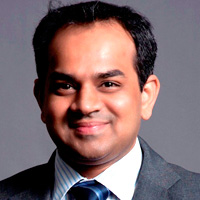
    So while MxMIndia is media partner, that didn’t prevent us from posing some ticklish questions to Amith Prabhu, founder and chief mentor of the event. Amith was not too keen on being interviewed and said the co-chairs of the conference should be doing the talking, but we could finally prevail upon him with an understanding that his pic will not appear as the Big Story image. Pssst, we’ve still sneaked in this headshot. We’ll try and feign ignorance. Read on…

     

    Pondicherry (or Puducherry), Lavasa and now Agra. How will the third edition of Praxis be different from the previous two?

    Each summit is unique in different ways. Praxis 2014 caters primarily to the professionals in the NCR. We call it the super, smarter, slicker edition. The theme is Communicating for a Better World and the focus is CSR. We have nearly 30 speakers of which eight are are international.


    In many ways it was for you a dream to build this forum for early and mid-career professionals. Do you think you’ve been able to achieve what you had set out to? Or is it still mission unaccomplished?

    From 250 professionals in the first edition, 22 months ago to almost 350 this time around we have come a long way. A large chunk of participants from both consultancies and in-house are young and raring to go. We want this to be THE forum that professionals of all levels head to every year and we have managed to achieve that.


    And would you say that the PR industry and professionals have gained from this?

    I still like to believe we are not an industry but a growing community of very smart professionals. These forums help celebrate the profession. It is for those who attend to say if they have gained or not. The response this year has been overwhelming which makes us believe we are on the right track.


    The format though is still very short, right. Like in this year’s edition, just as people would’ve warmed up, it’s time to say your goodbyes?

    Time is at a premium. We have experimented with an additional night in the second edition but the feedback was that it should be optional because half the time we are dealing with client crises which allows for minimal time commitment outside work.


    Why not have a longer format? Because it’s just an incremental extra hotel night that people have to pay for, na? You’ve already got them out of their office and spend on travel?

    As I mentioned earlier, time is at a premium for PR professionals. We have had 15% drop-outs in the last 5 days, especially from clients who would have been over 100 at the summit but are now about 85 at the summit because work exigencies. We offered an option for those who wanted to learn from experts to stay back a second night and attend the workshop at an additional fee. So it is really not shorter in the true sense. Also, an additional night would cost Rs 10,000 more on an average which we felt younger professionals would find hard to bear.


    Has this South-West-North rotation of venues worked? What will you have next year… East? How about a Praxis in Bangkok, Nepal or somewhere cheap and still away from it all?

    We are open to having Praxis in the Eastern part of India or even in another country which does not require visas. We are exploring that option. Hopefully, when the third edition ends the team of volunteers may have a location for 2015. Someday, we will plan it overseas for sure.


    There is a cross-section of top professionals who’ve been giving Praxis a miss? Dilip Cherian, for instance. Various veteran corporate communications professionals.  Comments?

    Like several other leaders, Dilip Cherian has been invited every year and we are hoping to convince him hard enough to be there next year. This year, the CEO of his firm will be chairing a session. We have nine of the Top 10 firms and 18 of the Top 20 firms present in India that are represented. Unlike most events of this kind that are organised by associations we are just a bunch of volunteers with full-time jobs who put this together. Given that, there are six firms participating for the first time this year which is an achievement. One Founder is making his stage debut in a public forum, though his firm has been around for 20 years, which is amazing.


    Also, I was just speaking to the CEO of a Mumbai-based PR firm Who was sadly just not aware of the forum. Would you say this is ignorance on the part of the CEO or still miles to go for Praxis (and the Promise Foundation) to promote the conference?

    We would not say it is either. If you were speaking to the CEO, he or she has now heard of it ;-). Sur summit has been built on word of mouth and primarily on social networks. We have a long way to go as a community. The Summit was sold out a month ago and we decided to increase the number from 300 to 330 which is 10% of the 3000 professionals in the country.


    So a little about this year: standout, must-attend sessions?

    We have the mother of cause marketing, Carol Cone, who is Edelman’s global practice chair of the CSR practice who has flown all the way from New York to deliver the opening keynote. Paul Holmes will do the second keynote on the Consultancy of the Future.  These are not to be missed. The other stand-out sessions are a presentation on Measuring Metrics and four panels – one by millenials, one by CSR experts, one celebrating Founders of India’s iconic firms and one with regional chiefs of PR firms.


    If you were given to chance to go back three years and re-curate Praxis, would you do it differently?

    Each Summit has been planned with learning from the previous one and built with passion. We are proud of the fact that we do not have more than one speaker from an organisation and that we typically do not repeat speakers. We also follow a cooperative sponsorship model where partnering companies pay our vendors directly. What we can do better is to make more Indian professionals in the middle east and far east attend.


    Is the organisation of Praxis really a collective, cooperative effort finally? Wouldn’t you want to give the job to an event organiser to do it on a professional basis?

    Praxis began as a movement and continues to remain so. The commitment of some of us is for ten editions. An event manager still helps put together the final look of the conference. With or without an event manager, we are a professionally run social enterprise. But the personal touch can only be there when those who conceptualised it, remain at the forefront of driving it. We are a dozen professionals who ideate virtually and come together at the summit to bring the event to life. The uniqueness is that the 12 volunteers represent 12 different organisations – some PR firms and some corporations.
    So what’s driving the organisers like yourself and others to spend a huge amount of time, effort and possibly monies to organise Praxis?


    People and passion for the profession are the cornerstones of this initiative. We needed to bring back the reputation to the profession that had begun to get affected by two important events – the controversy of 2010 that led to one of the largest firm shutting shop and the fact that almost all of the Top 20 global firms making their presence felt in India by the beginning of this decade. One would have worked for a non-profit, but instead we decided that we will create a non-profit that builds reputation for the profession. So here we are!
     

  • Amith Prabhu: Public Reputation in Politics

    By Amith Prabhu


    It is good to see numerous Indian politicians investing big on their Public Reputation management. Thanks to the current Prime Minister who brought in a culture of marketing and communication, the importance for this craft has increased ever since the election victory of May 2014. Chief Ministers and Members of Parliament are setting aside time and money to ensure they communicate with their stakeholders, something they never took seriously earlier.


    So what is it that these national politicians can look for from reputation management professionals? If they are expecting a quick fix to their own or their party’s reputation then they have not understood the power of this craft. Public Relations is like Rome – it is never built in a day. What most people miss is that Narendra Modi built a PR campaign over 10 years starting in 2003. He carefully laid the foundation that is today a rock-solid structure.


    In doing so, he ensured the stigma of a deadly riot under his watch got gradually erased. On the other hand, few politicians let their good reputation turn bad and worse in a matter of few days. So, what then can one offer in terms of a reputation management bouquet?


    I think there is much more than mere Public relations or media outreach here. It starts with communications research where talking to stakeholders, especially voters and getting their feedback is the bare minimum. The research can be through surveys or focused groups, which is better known as polling. Polling leads to the understanding of what one needs to communicate. But between polling and communication lies the real Action. If politicians do not do the right thing then no amount of communication can help. Communication needs to happen in real time and not in retrospect. Voters have a short-term memory. A politician is only as good as his or her last appearance. Hence a key messaging framework can stem from a bit of Doing.


    Community relations, constituency outreach, and voter engagement are all the same thing but called differently. If this element is not in place then Doing the right thing is never good enough. Building this connect is part of the larger narrative and needs time and tools to be done well.


    Then there are backroom elements of speech writing and delivery, digital marketing which includes smart use of apps, social, mobile, display, search and creativity that then lends itself to a media plan that encompasses Earned, Owned and Paid. Politicians seldom understand the difference. In simple terms Paid is what we pay for in the form of advertisements, advertorials or buying air time or print space to share content. Earned is what is written, spoken or said about us with no transaction involved in cash or kind. And Owned is having our own outlets and channels to share information.


    In a nutshell, a public reputation mandate for a politician encapsulates the gamut of communications solutions and there are specialist firms emerging to offer just that. Will politicians come forward to use these services? Will they then pay ethically and offer the right price? Will they appreciate the impact of professional support? Only time will tell!


  • Amith Prabhu: The Public Reputation Alphabet

    By Amith Prabhu


    Public Reputation is built on the pillars of Actions, Behaviour, Character and Dialogue. And these are true for brands as well as men and women who manage these brands as executives, spokespersons and chief officers. This is a list of 26 things brands and their custodians need to bear in mind in order to protect and enhance the reputation of the gems under their care.


    Actions are what we do that are known in public. Hence brand custodians, whether in a PR firm, an ad agency or working with the company that owns the brand need to be extremely careful when they represent the brand.


    Behaviour is about mannerisms which is a mix of body language, demeanor, excellence, display of punctuality and various things associated with respect and discipline. Out mental framework is displayed by how we behave.


    Character is the inherent qualities that others look at us for. The character of individuals or groups who work on a brand rubs off on the brand itself, most often.


    Dialogue is how we collaborate and converse with various stakeholders in a process of engagement. Ensuring that this is respectful is of utmost importance.


    But why stop here. Let’s go all the way to Z.


    Ethics at all times. This is not negotiable and this needs no explanation.

    Fearlessness to strive for excellence. Doing the right things is not everything. It has to be the only thing.

    Guts to do the right thing. Building on fearlessness, having the courage needs much more than just the willingness.

    Honesty in every dealing. Need one say more?

    Inspirational product or experience that people want to come back for more. Apple is an example of this attribute and there are few other brands that do not stop inspiring.

    Joyful employees is an important aspect of a brand organisation that help build brand value.

    Kind gestures from employees of the oragnisation that the brand is part of, go a long way in building positivity for the brand.

    Leadership qualities that executives behind a brand display internally or externally are paramount for a brand’s success.

    Meaningful ways of doing things. This ensures every existing and potential brand users is delighted every time.

    Noble deeds are far and few. But along with kind gestures these are important for an organisation to focus on as a part of giving back.

    Openness, especially in times of crisis is very critical for a brand to be seen as forthcoming and transparent.

    Purposeful in terms of brand attributes that add value to the customer.

    Quality is not an option. The first thing that happens when quality of a product or service suffers is the bashing it gets on social media.

    Respect must be earned and this is a slow and steady process that comes from the Right Actions, Right Behaviour, Right Character and Right Dialogue.

    Simplicity is important in an ever complex world of multiple options. This needs no explanation.

    Trust has to be built by what the brand offers and what brand custodians say about the offering. Trust and respect go hand in hand.

    Uniqueness is important to build a good reputation quickly. When the product or service addresses a specific problem that has not been addressed before it becomes likeable.

    Valuable is ultimately about value for money and about creating value. If a brand gets this right then it has hit the right chord with stakeholders.

    Warmth that a brand exudes is seen when dealing with the face of the brand or seeing brand ambassadors. This is important in building a public reputation.

    eXcellence is about ensuring that a brand gets it right each time and in everything it promises to offer.

    Yes We Can’ attitude is how a service brand or a product brand that needs servicing ensures that the user experience is always superior.

    Zeal is about passion and enthusiasm that people working for a brand display at all times.


    I hope this helps public reputation professionals plan reputation enhancement campaigns for brand they work on in a systematic and scientific way.


  • Amith Prabhu: Public Reputation cannot be built in a day

    By Amith Prabhu


    This column is about three separate ideas and how they need a rehaul.


    First idea: Some PR firms in India are known to have built their business based on undercutting, wherein they have made their money but ended up offering low quality service and talent bringing disrepute to the profession. These topics are never discussed in public but we all know this happens in every profession and push it under the carpet. Is there a way this can be fixed? I think there is. We need to welcome an accreditation system, we need to ensure a minimum billing standard which the association of consultants and its members should follow and we need to invest in good talent that delivers beyond media relations.


    Second idea: Talking about talent. I have happened to work directly or indirectly with four to five PR firms in India, as an employee, as a consultant and as a client. I have noticed that every firm has some talent that is on par with those in developed markets. I have also noticed that several firms have a large number of run of the mill human assets who do not want to go above and beyond. This can only change when we identify a minimum qualification and a basic intensive training that is a mix of general training that is common to entry level employees of member firms and specific training from a common syllabus that each firm imparts on its own with required customization.


    Third idea: Having worked for over 50 brands and organizations over the last decade in the corporate world and now in the political world, I have come to realize how shallow some minds at the other end are. Some clients need to be trained on an understanding of Public Reputation and there needs to be a training programme that teaches these clients who do not have a background in PR firms or good corporate communications. The folks I’m referring to generally come from the area of sales, administrative services or writing. They think a media contact can swing a positive story or two and that is good enough. Not any longer in a highly digitally sensitive world.


    This column could be slightly provocative. That was the original intention. When these three ideas are talked about and then solutions are discussed and implemented we will have better days. Public Reputation Management needs some reputation enhancement.


  • Amith Prabhu: Why is Public Reputation Management widely misunderstood

    By Amith Prabhu


    In the start-up I run, I work with a tiny bunch of political clients helping them embrace the power of communications and enhance their public reputation. Kindly note the absence of the term Public Relations. They are in a phase that most corporate clients were in a decade ago – completely focused on media relations.


    They find it hard to believe that Public Reputation Management is a science and not just an art of charming and buttering which may have been the case 20 years ago. But the good news is there is a change in mindset that is slowly evolving.  Let’s examine why there is a complete misunderstanding of our profession by clients and potential clients.


    We do not position right – We are unable to communicate accurately about what we do because we have not taken the pains to get together and find an elevator pitch that make sense. We are questioned by family, friends and random acquaintances and most often than not we end up cutting a sorry figure. Many end up thinking we are in the sophisticated courier business.


    We do not behave like lawyers – PR firms began after the World War II in order to help some smart organizations capitalize on earned media. Firms were designed like law firms and expected to achieve an objective for a fee. Commissions were not paid because remuneration was on a project fee or retainer for consultancy and execution similar to how lawyers first advised a client and then argued a case in court – our courts are the many stakeholders and they make the judgment on how well we offer or position our product.


    We do not convey that what we do is a science and not just an art – Recently, a client of mine wanted me to change the format of a mobile press conference (yes – you read it right, a press conference on wheels) with a 12-hour notice. On telling him that the new plan would not only pose security risks but also hamper positive coverage, he retorted by saying security should not be the worry of PR, just getting positive stories should be. The science I’m referring to is about taking into account every detail to ensure a good reputation only gets better.


    We do not train journalists who move into the profession to understand what we do better – Very often journalists are hired by PR firms without a proper orientation on what encompasses the business of public reputation management. They in turn fail to realise there is much, much more to the profession than mere media relations. I have interacted with a few in the recent past and feel sad that the firms hiring them are not being fair to them.


    We do not measure our efforts in a pre-defined manner – Public Reputation professionals rarely go to their bosses or clients with a focus on measuring their campaigns so that they can be evaluated in a fair and just manner. Measurement is mostly an after-thought. This only hampers making us come across as serious professionals. Hope this changes for the better.


  • Amith Prabhu: From Public Relations to Public Reputation

    By Amith Prabhu


    There is a wrong notion of Public Relations that some very powerful communicators have created and to many this has become the gospel truth. Hence the terminology I will use henceforth to a great extent of Public Reputation. It encompasses much more than just relations.


    Unfortunately, true blue practitioners are too busy chasing targets and meeting goals to be able to make time to correct this perception. It is amusing how some people will refer to professionals as PRs. It is also sad that several veterans do not make the time to engage with the larger fraternity.


    The need of the hour is constant refreshing of knowledge and a few good books written by the stalwarts of the business. I wish ten people come together for a magnum opus. That will be a historical book and a bible for professionals in India.


    I wish Roger Pereira, Madan Bahal, Prema Sagar, Bela Rajan, Sunil Gautam, Sunil Agarwal, Rajiv Desai, Shiv Reddy, Veena Gidwani and few others get together to either write their own individual book or make a magnum opus out of a joint collaboration to bring out a truly world class book on Indian Public Relations. This could include stories of their start up days, best practices, case studies, practical tips, advice for professionals and many other things. Someone really needs to bell the cat.


    Another thing that needs to happen is a regular series that imparts quality education to professionals. We need to constantly upgrade skills and there are very few affordable options for this to happen. There is immense scope for a weekend classroom style monthly workshop programme to impart general training to the professionals at large.


    Several books float in bookstores, several training programmes happen within the four walls of the office but to have a book by the doyens of the Indian PR business and to have experts teaching the art and science of Public Reputation is something else.


    Public Reputation Consultancies is what businesses that operate need to start calling themselves. It may not have takers initially. But this initiative should then lead to the process of having an accreditation process and only then will we bring more respect to our profession and ourselves.


    Some may argue that this is not required or that we are not disrespected. But that is not the truth. We need to make a drastic change in our approach and it has to start with replacing the R in PR to Reputation. We will be better off when we do that and then walk the talk on Public Reputation.