
Tag: Amith Prabhu

  • Jaldi 5 with Amith Prabhu: PRAXIS brought together seniors & juniors in the PR and corp comm community

    He’s made the fullest use of the time zone difference between the United States and India. So when he’s not on his desk at his day job at PR major Edelman in Chicago, he was busy coordinating PR conference PRAXIS 2012 and dreaming up what else the Promise Foundation should do. MxM India caught up with PRAXIS co-chair Amith Prabhu a day before he was heading back to the US and asked him a few leading questions.


    01.   As you look back, and given the standards that you had set for yourself, how would you rate PRAXIS 2012? And vis-a-vis other PR conferences that happen through the year?

    We, the organising committee of 12 at-larges and specifically Shane Jacob and I as summit co-chairs are very pleased with the way PRAXIS 2012  turned out to be. It surpassed all our expectations. When we had conceptualised the event we had thought of a small compact conference but over the months it grew to become bigger than we had imagined. And the final outcome was there for all to see. As many as 260 delegates including 35 top-class speakers and a full-house despite an experimental schedule. Everyone in the audience and backstage took ownership and that was evident even when there were glitches and all were supportive.


    It would not be fair to compare with other PR conferences because our intentions were unique – bringing together the seniors and the youngsters of the core Indian PR consulting and corporate communications community. We achieved this with aplomb and the fact that we are proud of is punctuality throughout the two days.


    02.   While there was representation from most firms, and most CEOs were also present, the big guns from a few agencies were conspicuous by their absence: Dilip Cherian of Perfect Relations, N S Rajan of Ketchum Sampark, Weber Shandwick’s Shiv Reddy/Atul Ahluwalia, Ameer Ismail of LinOpnion. Any reasons for their absence?

    We had invited 30 PR firms of all sizes when we set out on this mission and we had an instant response from over 25 of these wherein 15 had confirmed their presence right at the start. Around 9-10 had expressed their support but had scheduling conflicts. Of the four firms mentioned above we tried hard to connect with them but were not successful. Mr Cherian had responded favourably but was unable to make it. The CEO of his firm was a panelist but had to drop out at the last moment due to a personal emergency. We are confident that we will be able to have all of them not just attend but also be on panels at the next edition.


    What would you tell them given that they didn’t turn up?

    I would tell them that we missed their presence and their insights and they cannot afford to miss a humble attempt put together completely by volunteers next year around. It is also possible that several people were apprehensive of a brand new event by a group of youngsters and would consider being part of it in the future. We are a completely independent not-for-profit venture and our focus is to collect people and give them a forum to learn and share.


    03.   It was in effect just a one-day event, though spread over two days. Given that people are spending a fair bit of time and money to get here, do you think there’s need to pack in more?

    We packed in as much as 24 hours could permit… 6 panels, 3 networking sessions, 2 keynotes and 1 concert was quite a bit. We planned the timings around flights to and from Chennai so those who wanted to spend just one night could make it. But we have feedback that people are open to an additional day and we will consider that when we plan the second edition.


    04.   Chennai agencies and corporate communications professionals didn’t appear to be exploiting the opportunity?

    The summit was promoted and marketed completely on social networks. It is possible that several firms in Chennai were either not aware of the intensity of this endeavour or chose to wait and watch. Honestly, there is nothing to exploit other than being there and having a good time. Hopefully, in the future there will be greater participation from professionals in the vicinity.


    05.   Was Pondicherry a good venue? Isn’t there too much of anxiety of storms?

    The idea is to offer delegates a destination that is unique and has tourist appeal. Our gut feel told us that Pondicherry would have a uniqueness that very few venues could offer. The concern was not so much about storms but about distance from the Chennai airport which was well taken by most despite the long drive, thanks to the decent roads.


    Where will it be next year? Dates finalized? Venue?

    The idea is to take the summit across zones and keep it moving. We have begun in the South. We intend planning the second one in the North or the West. We will decide dates and venue based on feedback received from the delegates which we are evaluating. We hope to announce the same soon on MxMIndia. All that we can say is that it will certainly be bigger and better.
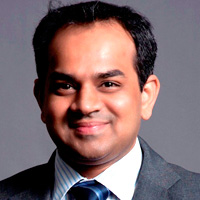
     

  • Jaldi 5 with Amith Prabhu: Only so much ‘spin doctors’ can do in election campaigns

    It’s US Presidential Elections week and given the importance that United States of America affairs have on India (apart from family and friends in all parts of that country), it’s not surprising that our media too is working overtime to bring you comprehensive coverage over the next few days.


    Having read the tweets from Chicago-based Amith Prabhu, former head of communications at VivaKi and co-founder of the Promise Foundation and co-chair of the upcoming PRAXIS 2012, we asked him a few questions on the US Presidential elections and how much of a role the campaign managers of President Barack Obama and Mitt Romney played in their respective campaigns.


    Mr Prabhu keeps a keen eye on Indian and American politics and hopes to manage his own campaign someday. The views here are personal and do not represent that of any organization Amith is associated with.


    01. Having tracked the run-up to the US Presidential elections closely, how much of the campaigning do you think is a creation of the respective campaign managers?

    Matt Rhoades and Jim Messina have definitely played a big role in shaping the campaigns of their bosses Romney and Obama respectively. Unless the machinery is run with exact precision and thorough planning there is no way for a fight to be as close as it has been.


    We read that Obama’s campaign is aided by the way he handled Hurricane Sandy. Obviously perception-management at play? Or he did work to ease the plight?


    Hurricane Sandy was able to influence a few undecided voters who are certainly crucial. Obama is a politician at heart and he knows how to do the right things at the right time. That won’t change the decision of staunch supporters of either party. It definitely had a small role to play.


    It’s obviously naïve to say that the Presidency of the world’s strongest nation is won thanks to spin doctors? Or, is that how it really is?


    American voters are educated and understand the difference between the ideologies of the two parties. There is only so much the so-called spin doctors can do. The rest is what is done and what is seen by the well-informed citizen who finally takes the call on whom to vote for.


    02. With general elections round the corner in India – 2014 or earlier, do you think our political parties too should appoint professional image management practitioners for their positioning?

    Indian political parties have been working with professional firms but like in the US most of the marketing and communications is managed in-house to have better control and for ease of management. I don’t think image management is a positive term. The phrase has been abused and people mistake image management for spin doctoring. What Indian political parties need is a panel of mentors who have great credentials and solid values to guide them to do not just the right things but everything right.


    03. We know that you were at the Obama rally in the early hours of today (India time) and we also figure from your tweets that you actively follow Indian politics from your base in Chicago. As a PR professional, is there an Indian politician whose image you would like to work on?

    I would prefer never to work on individuals but rather would prefer to work for an organisation. I was a summer intern in the Congress party media office way back in 2003 and I subscribed to some of that party’s ideology and had the option of working there in the future but I chose not to, since I wanted a decade of corporate experience. However, two interesting men who have fascinated me are Nitish Kumar and Arvind Kejriwal. I would like to work with the former someday. Another politician who knows how to be in the news is for wrong and right reasons is Lalu Prasad Yadav and is a case study on his own.


    Rahul Gandhi?

    Not likely because from what I have gauged he is not keen on running a government unless push comes to shove. He would prefer to operate like his mother where he runs the party and appoints a PM who can manage the government.


    04 Is there an Indian politician who could do well with US-style image management?

    I think Arun Jaitley and Jairam Ramesh could do very well if they build a mass base, which is not difficult for them to do if they choose to.


    05. Narendra Modi, for instance, seems to have got his ‘image’ in order?

    Narendra Modi had two options after 2002. To either let it all crumble or go the other extreme and focus on building a solid positioning based on development and an iron-hand. He chose the latter, which was a smart decision. He has a bunch of excellent IAS officers with whom I have had the pleasure of working who drive a lot of what is seen and heard about him. Unfortunately, his support base is restricted to his state and to sections of citizens in various parts of the country and on Twitter. His image problem is within the party and that is something he needs to focus on.


    PS: We also asked Amith Prabhu one last question: Your gut feel… Obama or Romney? And his response:  Obama all the way.

    Ah, well. Psephologist, loyalist or just a good observer of political trends?


  • Amith Prabhu: PR frat needs a Goafest-like event

    By Amith Prabhu


    Goafest has become the annual jamboree for the advertising folks in India. And nothing wrong with that if it serves the purpose of those organizing and those attending. It is an expensive programme, especially for younger people. The cost to attend Goafest for a person varies from as low as Rs12,000 (if a person under 30 from Mumbai travels by road or rail and lives in very simple accommodation for 2 nights) to Rs40,000 (if a person over 30 from Delhi flies low-cost and lives in decent three-star accommodation).


    The point is that in all this effort and investment or spending (depends who pays the bill) very little is achieved for the industry in terms of learning. Most high profile speakers either use the opportunity to make a sales pitch or are not effective enough to make an impact (I have been to two events and seen for myself).


    The few who are impactful and are not making a sales pitch have few takers because they are either not well known, haven’t got the right publicity in advance and therefore those who should be listening to them are either on the beach or in their luxury rooms or sightseeing.


    The real achievement is for those who want a break and get it (most often fully or partially company sponsored), great work done in the year gone by gets rewarded (sometimes with controversy), people seeking a job change get to meet their potential employers and those who want to catch up in a non-work environment with former colleagues and buddies get to do that.


    Some PR professionals attend because they are involved in some way with the organizing and some others are connected with the ad agency that has a big role to play.


    But most inspiring of all the achievements is that all the big boys and girls in creative and media agencies who fight it out like bitter rivals in new business pitches and industry awards between May and March come together in April to celebrate the profession. And this to me is remarkable. No doubt there are a handful of boycotts that happen each year, but those are bound to happen and frenemies come and go.


    Cannes, around which part of Goafest is modelled, embraced PR a couple of years ago by including a separate category for PR and having a full-fledged PR jury. I’m not saying Goafest should do that. I’m here to seed the idea of a gathering of PR professionals from around the country. Head honchos of PR firms can collectively do a lot for the industry and the young and mid-level professionals. The three things they should do at break neck speed is put together a forum for PR professionals modelled on PRSA, create an industry award that is transparent, world-class and the gold standard for younger professionals to gain inspiration from and plan a gathering of PR professionals over a weekend to learn from each other. Networking is no longer a major need in the age of Facebook, Twitter and frequent after hours parties in the metros.


    There are several forums that function formally and informally in the PR space. But none that brings together corporate communication executives and public relations professionals, at all levels and of all ages, under one umbrella. It is time for a body that works closely and learns from PRSA. There is so much it does through several chapters for the betterment of the practitioner. With almost 15 of the Top 20 global PR firms present in India there is scope to even be handheld by one of the well-established forums.


    Thereafter, this organization should establish a PR award that enables entries to compete in the global arena. There is a major vacuum that needs to be filled and no one can help us on this but ourselves.


    Finally, the PR fraternity of India needs an annual event where PR professionals get together, listen to experts fromIndiaand around the world and celebrate the profession keeping aside differences for 48 hours at least, if not more. Maybe this could be called PondyPoweR and be held at Pondicherry on the east coast ofIndia. Symbolically, a quaint town with a rich heritage, near the beach for those who want to mix learning with fun.


    Hope this happens sooner than later, so public relations people can ponder on how to do some Public Relations for themselves, their firms and most importantly for the profession.


    Amith Prabhu is a public relations professional who spent a large part of his career in India and is now based in Chicago working for a PR major. Views are personal and do not reflect that of the writer’s employer.Â