
A transcript of the inaugural address by Amitabh Bachchan at the IAA World Congress 2019 held in Kochi from February 20-22.
Â
By Amitabh Bachchan
Ladies and gentleman, Brand Dharma, or as it would said in its Indian language avatar, Dharm – Brand Dharm. Dharm means dharm, not dharma. Like Karm means karm, not karma. Ramayan is Ramayan, not Ramayana. It’s Himalay, not Himalaya.
The discipline of words and their meanings have a unique place in the world of today’s conference. A conference which is being held on Indian soil for the first time. And its iconic legends from across the globe who have made incalculable contribution to the world of branding, marketing and advertising. It is an honour and privilege to be here this morning. Thank you so much.
Words can indeed make or break a brand. We need to be ever conscious of their meaning and important value.
Dharm and Dharma are two different words, or two different worlds. This practice of distorting words which do not belong to the administration is an old colonial custom. Like Thiruvananthapuram, tiruv –anant – puram, was named Trivandrum. Thiruvananthapuram means shelter of the anant. Trivandrum did not mean anything. English was then the language of governance. Dharm actually has no equivalent word in English. I guess in the haste of reducing the scope of other languages some words are not translated into English. So let us not be victims of dishonesty in the meaning of words. Dishonest words will give dishonest results.  So Dharm means dharm to me, not dharma.
The moment you pronounce dharm in its English avatar as Dharma, instead of its actual pronunciation as brand dharm, its meaning, its perception, its concept, its consideration, its viewpoint – all change.  For an English tongued cricket commentator, say Gavas-kar for Sunil, when it is actually Gavaskar.   Rabindranath Thakur has become Rabindranath Tagore in English, when the actual name is Thakur.  Thakur badi his residence in Kolkata is known by his name. On a lighter note, conversely those Indians who were to follow the same example of messing pronunciations as the foreigner, they would be saying cham-pag-ne for champagne. But you know we are Indians, we don’t do that. We have been respectful and tolerant to the 250 years of colonial indoctrination.
Brand Dharm means Brand dharm, not Brand Dharma. A brand promoted as a doctrine or a philosophy as the usage of word dharma would connote, makes it seem like a shadow doctrine. It seems incorrect to me. A code of conduct of a single doctrine when it is addressed as a plurality is  called its dharma.  Brand dharm is surely not a single doctrine. Simply because each brand has its own house rules. So for the purpose of this address, I prefer to say Brand Dharm. Dharm is a larger canvas than dharma. It is not limited to a single philosophy.  But that is easier said than done.
I find myself in a unique position on the subject of brand dharm. Brand dharm. Brand ka dharm. The dharm of a brand. Where dharm is the code of conduct, the performance, the vision, objectives, ethics, values of a brand. Where the brand represents products and services like food products, consumer durables, etc. Or, brand dharm, brand dharm ka, the brand of a dharm. Where the brand represents a belief system called dharm. Where the vision, mission, objectives, performance, or the company’s belief system are the brand.  The associated products and services are only economic activities like those of say Reliance, Tatas, Patanjali, etc. For example, personally, I am not sure branding is the placement of my person or the placement of the products. I cannot say when I am the brand or when a product is a brand. I do not know where one begins and gives way to other. But evidence of this phenomenon of brands is right there in and around us.  As of late, my voice and face appear on at least 24 products from waterproofing to rice, agarbatti, jewellery, mobile phones, DTH television, hair oil, scooter, medicines and many others. I do not advertise alcohol, tobacco products and such alike. That is my dharm. Not doing their ads is my way of saying this my dharm, but I am also glad and happy in reflecting that although my dharm cannot prevent a product from existing in the market, brands themselves are now exercising their dharm by declaring the hazards of their product in the advertisements as well as  on the packaging. I see this as a sign of a healthy market – pun unintended of course – driven by a righteous brand dharm.
Now all this may sound as being unnecessarily loquacious from an uneducated brag, but I do hope you will pardon my impertinence. I am simply thinking aloud and if I miss the mark, I seek forgiveness.
I am not a master of this craft of selling and marketing brands. Far from the mastery, I can’t even sell a bottle of drinking water to a thirsty person without your ingenious scripts. Left to myself, I am more likely to give away a bottle of water free and hope to see some signs of gratitude which doesn’t quite work in the real market, as youl know.  I do not call myself an advertiser. I have no credentials to call myself one. Before anything else, I am a poet’s son. I am inclined to give away the worth of my offering in exchange of a word of genuine appreciation. Your admiration of my work is my profit. Now if any commerce results from my work I have only to thank and credit it to the ingenuity of investors, makers, advertisers who are able to translate the value of my voice and face into real worth. Believe me, no one is more surprised than I when I am told that a product is selling because I am presenting it. It sounds to me like crediting a rooster for the sunshine or the sunrise.
Having said that, I must admit that there has been that odd occasion when it has worked. I remember the Cadbury campaign. Sales had dropped drastically because of the presence of elements in the product, and the sales rose substantially after I was employed to be part of a rather aggressive ad campaign. Why only products, even in public interest campaigns like the polio eradication campaign which was spearheaded by nationwide advertisements, the results are very heartening. India is as you know, ladies and gentlemen, is now polio free. At the august offices of the United Nations in New York , when they were giving me a decoration on the success of the polio campaign, it was revealed that when they asked a lady in one of the villages of India ‘why she had shied away from the dosage to her child earlier and now submitted to it’, she said when I heard Mr Bachchan  getting upset and angry, I got scared and quickly administered the medicine to my child. It was the designing by O&M and Piyush Pandey who is here today with us, of a rather presumptuous epithet attributed to me of ‘the angry young man’, an image that I have carrying for more than three decades which seemed to have done the trick.
But I am digressing.  Getting back to the subject, consider an example. if I were to sell a leaf of neem or a leaf of aloe vera  or a leaf of tulsi, it would only be another herb which is commonly used in many households. Deviyon aur Sajanno, this leaf can do wonders, try for this, this and this. Or, boys and girls, please try this leaf. I am told by reliable sources that pimples pop like soap bubbles when they sense this leaf within a whiffing distance.  Things like that. But that wouldn’t be branding obviously. That could be generic information shared with everyone for the benefit of all. But if we package the leaves in tubes, and give them names and pay the appropriate GST, then, I think, it is a brand.
I am not an advertising guru. I do not know how a branding works at the counters. I cannot say how it creates buying pressure on the target audience, but it does work. I can say this much, I have noticed this myself. I have a significant number of followers on social media. And I find a good word, a message, a genuine concern goes a long way in today’s world of rapid communication. The results may not be visible, in a sense. Nor may a word on the social media be a great asset or opinion building like the traditional media. But the focus that can be claimed to a specific object,   or subject, through the social media is undeniable. Social media may not be news, with due respect to Mr Aroon Purie here. Social media may not be news and, best not to elaborate on that for fear of obvious controversy, but it is certainly a call to attention. It works for good. I share what I can and in turn I receive from millions. Perhaps I should also share some home truths about advertising that amaze me.
In the past when there was no radio, TV, there were spots in marketing places where people of immense thrift and enterprise auctioned goods at the top of their voices. Sounded more like several horns blowing in the air all at once.  The open market works so fast that an unsuspecting bystander in the crowd – just staring around for a while – would often be surprised to find himself in possession of something he didn’t need. You’ll still find some alcoves like that in the old streets of Mumbai where, before you know what is happening, you’ll find yourself in possession of space suit, a parachute, and possibly a shipping anchor. You never know how you ended up buying the stuff. You remember a few minutes too late that you live on the 14th floor of a housing colony in the suburbs, but you are already loaded with the stuff. So it baffles me endlessly. I mean, how does this work. I am sure some of you are able to give that answer.
The customer is king, say some intelligent advertisers and rightly so. But that is where the metaphor ends. The sheer magic of advertising makes this sentimental king buy things which he never needed. So how do you do that? I can understand the eagerness of advertisers to become the most preferred, providers of their products and services. That is pretty fair.  But advertising seems to go a step further. It creates a demand for goods where there may be no demand to begin with. How do you do that? This is quite astonishing. Add to the task of increasing demand, the pressure of research, innovations, inflations, rise and fall of the buying power of the currency, year on year on, growth of income which is expected by investors and stakeholders and a whole lot of other commercial pressures. How do advertisers deal with that? Is monopoly an answer? No, no. Monopoly can be a tool to tackle these challenges. Monopoly actually kills needs for advertising. Who would need to advertise if the product has a monopoly? Some of the research products in the pharmaceutical industry – they are so unique in their application that they no competition. They don’t need advertising. The same applies to some fields like medical equipment, space technology, distribution networks and many such.
Market economics is not about monopolies, quite the contrary. So then is regulation an answer?  Can regulation ensure a fair, competitive market which can control uncertainties and reduce risks? That’s not. Regulation, I presume, cannot create a demand for goods. Regulation cannot ensure growth. This I feel is the biggest challenge faced by advertisers. One of sustaining demand and ensuring growth. This is also, I feel, where the ethics of branding faces its biggest existential challenge – competition. What is fair in competition? I notice that no two brands of similar products advertise the same USP. Each brand highlights something different. I mean, every detergent cannot say we remove the same stains. Each brand adds something unique which is unlike any of the rest. This competition among brands has an intrinsic benefit for the consumer. It puts pressure on each brand to invest in research and development of the products. Every company, be it a manufacturer or service provider, invests in continual improvement in the quality of its products and professional development of its key staff. There are only two options. Either you grow or you perish. Also, redundant technologies cannot last long in a competitive market, even though the markets are as large and diverse as ours.
There was a time when 30 to 50 year old technologies were dumped in India by nations which did not consider us rich enough for the latest innovations. But the situation is different today. We are now among the countries where multinationals launch their newest products simultaneously with their own markets. And let me tell you, ladies and gentlemen, nowhere is this more evident than the profession I come from – films.   Hollywood in recent times has done simultaneous release of their films, and at times, even before their own. Compared with earlier years when their films hit the local market after a gap of several months. At times, even several years.
So competition offers more choices and can seek the best value for money. We now have an option to choose from goods and services made in India, to China, to Japan to Europe and all the rest of the world. I am particularly impressed and hopeful, by the entry and rise of homemade brands in the past few years, products made locally are competing with the best in the world today in household FMCG as well industrial technology brands. I think we are at a promising stage, in a globalise market, and I hope to see this trend lead us to become world leaders very soon.
Competition does have a prevailing influence on various virtues of a brand. For example, the integrity of a brand is the sum of several component features. Primarily, the reliable performance of the product, the effectiveness of the leadership, the pride of the stakeholders, and the confidence of the customer. The endurance of a brand is tested by the efficiency of each one of these components. and I think competition keeps them on their toes.
However, the questions before us are – does competition decide the dharm of a brand? Or the merits of a product enough to meet the sales targets? Or is there more than performance to make the product a bestseller? Should an advertisement speak the truth about the brand to attract more attention? Does a brand become better or worse if it is promoted by a celebrity? Does the celebrity assure better performance? Does the celebrity guarantee the best in-class quality of a product? I have often been at the receiving end of these questions. And in reality, ladies and gentleman, I should be the last person to know the answers. Frankly, I don’t know.
A person buys something trusting my voice and presentation. If he is not happy with the product or service, he writes back to me with some annoyance. Now that is putting it too mildly. They actually take you to court. And I speak from personal experience. I do not know if this is justified. But that is such as it is. Is a celebrity deserving of such? What is the responsibility of my voice and face in the promotion of an object? What is the code of conduct expected of me by those who trust my voice? And above all, what is the accountability of brand towards the consumer?
Let me try to find a few answers. Correct me if I am wrong. A brand, I think, is the name of a product lawfully owned by a person or a company. It represents something unique about the product. Well, I suspect in some cases, only the name of the brand seems to be unique but, I guess that is lawful too. And what is the dharm of the brand? I have no clue. The nearest I can guess is that the dharm of the brand is an assurance that the product will perform as is claimed by the label. If it fails to deliver, then it fails its dharm. We cannot treat customers as experimental subjects. Dharm does not permit that. I am tempted to extent this line of thought to more than a mere product. Dharm, I feel, should have more inclusive and a comprehensive meaning. When I say, kuch din gujariye Gujarat mein,  I am not selling Gujarat. When I say do boond zindagi ki, I am not selling the vaccine of polio. When I say swachh tan, swachh man, swachh bharat, mera prichay, I am not selling hygiene. The brand here is social justice. Its dharm is its function.  Can we apply this vast and invisible concept to a brand? What would be the attributes of such a brand? Or such a dharm, perhaps? The dharm of  brand is an ideal, a vision, a policy and a code of ethical conduct. If the brand fails to meet the standard of its dharm, it fails its purpose.
A brand, like say, an agricultural machine or an engineering innovation is not aimed at consumption. It is aimed at the dharm of development and growth. A most famous tagline comes to mind, a punch which carried every essence of the brand. It was the Tatas most humble declaration ever which said – we also make steel. We also make steel. Four words which said it all. The honesty, the commitment, the virtues, values, ethics – all of them, wrapped in four humble words. We also make steel. The brand is Tata. The dharm is simple ‘we do’.
Ladies and gentleman, I think brand dharm cannot get more profound, get simpler than that. Brand dharm does not just bring glory to the brand in its onus. Brand dharm launches and takes human endeavours to the next level of achievement. The brand is only the wagon, the dharm is the engine.   Compare brand dharm to an idol in a temple. An idol in a temple is like a book in a library. If we can read the book then it makes sense. If we cannot read the book, then it is dead material. An idol is similar. If we know the meaning of the idol, then it makes sense. If we don’t know what it means, then it’s just a piece of stone. Such too is brand dharm. The brand is not the idol, the meaning is its dharm. And for this reason, I think, constructing a consumer market of temptation, desires, greed and gluttony is not dharm. I mean, it cannot be for it was, if it was to be so, humanity would soon consume itself. We would be cannibalising each other’s brains. No.
I don’t think brand dharm is about feeding the consumer’s appetite. I think brand dharm assures maximum value for the money of the customer. If money represents the consumer’s honest work, then it is the foremost duty of brand dharm to offer the best in return. A brand’s dharm is surely not drafted by the states, or its market, or its set-up. Dharm is surely not a strategy. A brand demonstrates the commitment to provide the best products in the world, for the best standards of life for the consumer at the best price. In this sense, the market over nation is advanced as the prevailing brands, where a brand indulges in exaggeration and bluff even if within the [word(s) unclear] diminishes and degrades the respect for the money of the customer. We find several cases of such market misery where the brand does not provide the necessary customer care after a  product or services sold.  This is a shame, for not just the brand but a nation as a whole.
A nation which cannot value the money of its citizens does not deserve the best lifestyle in the world. It sinks in stature to a corrupt developing nation or a third world country. A good brand represents the fairness and dignity of the entire market. A brand which fails the relationship of economic activity and the dignity of the people is only a profit machine.
On the better side, a brand can be a policy to achieve the vision of a wealthy nation, which means the brand should  never betray the nation to which it belongs. This is why I believe that a brand is not merely an exercise in competition. It has far reaching and deep impact on our lives. When we say Mercedes  or like the cameras we think of  Germany, when we Sony it is Japan, Samsung, LG – South Korea, Rolls Royce – England , perfumes and elegant style – France, fashion , clothing, Ferrari, Lamborghini – Italy, football – Brazil, snake charmers, sadhus, Kamasutra – India. Not anymore. For India, it is IT nerds, scientists, engineers, doctors, research scholars, space technology and cricket. That is India today.
So to get back, a brand is an investment in the self-respect of a nation. It is a cooperative investment in sustainable development and global leadership. I can see that the word cooperation strikes a discordant note. Please don’t assume anything. By cooperation of brands, I do not mean match-fixing or price-fixing or mapping the market for equity.  For want of a better word I am using the cooperation. By cooperation I mean fulfilling every feature of a consumer’s need by developing compatible products which are congruent to one another. For example, one company makes equipment, other produces fuel suitable for the equipment, another manufactures electronic  controls, another establishes a network for sales and after sales service. In short, different brands bring everything into being from vision to delivery. They actually do everything except producing their consumers.
There is another aspect of cooperation which makes sense to me. When brands cooperate and invest in reaching the consumer by whichever means available, they inadvertently increase the demand for progress. For example, a vaccine or a medicine for a specific illness requires awareness of the illness among the people and the assurance that it is a preventable or curable. My own medical encounters have often helped me in disseminating vital information from personal experience.
My campaign for the eradication of tuberculosis began with my own trauma and treatment of TB and to be able to state publicly that I am a TB survivor. An undetected hepatitis B virus that entered my system at the time of blood transfusion urgently required to save my life during the treatment after a stunt accident on one of my films helped me in speaking about the condition. To be able to tell the people that a delayed detection had caused the destruction of 75 % of my liver, but I am surviving and standing in front of you, ladies and gentleman, on 25% that is left over. Technically, I am on a condition that is called cirrhosis of the liver. And I am teetotaller. Â The fact that people can be cured with the timely detection became the personalization of the campaign.
Spreading the awareness can be therefore at the forefront of marketing a cure. If brands could come together as an industry and invest in awareness campaigns, it would benefit everyone. And I may risk saying so, cooperation among brands, when moderated by a code of ethics, does not harm the credibility of any participating brand. Apart from manufactured goods, brands are also customary across all other economic activities. Like cricket is a brand of sport among many others that are so prevalent across our country today. Like football, kabaddi, basketball, volleyball, badminton, tennis, F1 car racing, etc. And it subsumes hundreds of other brands.   The [word(s) unclear] f credit gets to include the cooperation of all the brands on a common platform.  You know we are familiar of course with Barclays Premier League, Vivo IPL and many more.
Even in the film industry, the host of awards ceremony each year are all run by brands. The sponsors, the brands are the owners of the dharm. That cooperation does not mean swindling the fans, or sports or films. On the contrary, the cooperation delivers the event to the fan, on their mobile phones, in their bedrooms, or wherever they are. Many of them being worked out in such a way that the fans actually pay nothing. So too are brands in several services. Like television, transportation, tourism, supermarkets, online shopping, etc.
I am of the considerable opinion that ethical cooperation among brands can actually enhance the value of money. If the cooperation can be steered properly even our currency can become a formidable international force to reckon. Nonetheless for such a cooperation to show results brands have to be sustainable. They should last through the cycles of booms and busts. And I am going to attempt a suitable example. Say, there is a brand which makes tractors and farming equipment. Each model actually lasts for several generations. There is little or no chance of the same customer buying the same product twice. The brand cannot survive by raising prices on spares and services or by short-term or long-term austerity. I’m not to think of the long, early years of the Ambassador car and the Fiat. I guess nightmares are there for a reason so that we don’t go back to those days.
Today in the era of innovations, a technology brand becomes sustainable only when it finds a customer for every unit it makes. And only when every new customer gets a more improved product, I think in this respect one of the major threats to a brand success is to be stereotyped by the customer. If the sound bites are repeated in the same manner for the same reasons then you can be sure that the brand is rejected by its customer in the same manner for the same reasons. Â A stereotype invariably fails because of its distrust and the distrust is not merely a perception.
Anything known, tried and tested before the customers automatically becomes a stereotype. And a stereotype is one which goes by common nouns even by local slangs sometimes. Let me place a personal example.    My father, my babuji, his name was Harivansh rai Shrivastava. The surname Shrivastava or any other surname in India traditionally has specific meaning. It belongs to a specific caste. The surname immediately puts a person into a classical stereotype. Yeh Brahmin hai, yeh Baman hai, yeh Kshatriya hai, yeh Dalit hai and so on. My father abhorred the system because it led to deep divisions among the people regardless merits. My father shed the caste from his name and took a nom de plume to be called Harivansh rai Bachchan. Bachchan became the nom de plume and it became the family surname. Bachchan was my father’s brand of rejecting the stereotypes of castes, creed and classes.
I take pride in carrying forward this legacy. I am a Bachchan. Bachchan does not represent Babuji’s poems, his songs or his literature. Bachchan does not represent my own prescience.  It is a brand of dissent against the tyranny of casteism. Bachchan represents my father’s ideals, his vision and refusal to be typecast. Hence, I say, a brand can never be a stereotype. The worth of a stereotype is always a suspect. It seems to me quite similar to a fan following a celebrity. One has to constantly reinvent oneself to remain credible. If you don’t roll, you will be trolled.
A stereotype may also become a terminal misery for a brand. Â Â Brands are designed to be special, to be unique within their domain. Therefore, I am tempted to think that a genuine brand can never be a stereotype. And if it is a brand with a global reach, this can affect the perception of the entire nation. Also, a brand which cannibalises other goods and services is unfair. It can lead to conflicts of interest in national as well as international trade.
Competition must never lead to cannibalising. We are noticing an increasing trend of nations closing their borders to predatory customs of multinationals. Borders are becoming barriers. The vision of globalization is slowly fading into the past. I feel the trade wars between the different nations are not only about trade deficits, they are also about a perceived threat to local entrepreneurs and industries.
I would say that the brand is fair only when it can stand on its own merits, when it is not propped up by undercutting the livelihood of others. A sustainable brand is also a product of brand and, in my opinion, the productivity of a brand is not about its profitability or of the balance sheet at the end of the accounting year. A brand is productive when it achieves the corporate objectives, the company’s mission. For example, if a company aims to be the most preferred service provider in this field, the brand owned by the company achieves the aim by becoming the most trusted service in the sector. If I trust a brand, I call the company for its services. This brings me to what I feel is the most important condition for sustaining a brand which is the independence a brand.
A brand which is subordinated to irrational whims and fancies is not independent. Say a brand is launched to achieve a broad vision and its objectives. The vision may be a good cause and its objectives may be a set of measurable targets to make the vision possible. Now if the vision and its objectives are undermined by whimsical policies and a system of functions which divert the gains of the brand, then the brand is not independent. It is subjugated by internal discord. A brand must be independent of systemic, universal, total complete rifts.
The policies operating system and codes of practices must serve the brand in order to achieve the objectives of the company. The brand is an asset and all other resources are liabilities. Ab prashan yeh hai ki brand dharm ki maryada kya hai? uski pratishtha kisme hai? Uska gaurav kaisa hai, uski seema kahan tal hai? What is the dignity of a brand?  What is it respected for? What is it famous for? What are its boundaries? These are questions that are answered only by its dharm.
Say, here is a technology developed by our own children and it is the best in the world. Here are products made by our own people. And those products are the best in the world. Here is an economy which is driven and safeguarded by our people who are the best brains in the world. This, I think, is the dignity of a brand. Does that sound too idealistic? Well, I think, that is what a brand is. Â Â A brand is the ideal in its class, respected for its leadership, being the best and delivering the best to its consumers. An ideal brand is one which its consumers can pledge their full trust to what is commonly called brand loyalty. A brand is famous for its good performance for meeting its claims without giving excuses for its uncompromised benchmarks. None of this is possible without the best standards of dharm.
Dharm cannot be a tool for exploiting vulnerable consumers. Dharm is a friend of the consumer. A natural ally that participates in the self-esteem and purposeful lives of the people. If I can take the liberty of extending the scope further, it may not be unthinkable that brand dharm, if executed with the right vision, can be a complete belief system. There are many small countries in the world which rely on just one or two products to run their economies like some of the crude oil economies in the Middle East and Africa. Or some which are surviving on the mining of just one or two minerals, but the major leaders of global commerce are those who are invested in original research, science, technology, manufacturing, international trade. Let me just add a disclaimer here. I don’t think a brand means it caters only to high-end rich customers or it corners a section of the total market. Is there a tenet that unbranded products are of less quality or less safe than branded ones. Branding is more than just a marketing ploy. A brand is also the responsibility accepted by a person or a company to produce and deliver a product of service consistently of a certain standard to the best of its capacity and reach. And this responsibility is not a license to monopolise and fleece the consumers. A company with permission to produce and sell drinking water cannot deprive the native population of its access to natural water to boost the sales of its own produced water. It does not work that way.  That cannot be dharm. A brand is not above the law of the land. I believe a brand is associated with our pride as a nation. The pride is that the brand belongs to the whole nation. It represents us globally. It demonstrates our ability to invent and innovate. It is an evidence of our commitment of continual improvement. It is our determination to be the best in the world. And toward this vision I am convinced that corporate social responsibility, CSR of brands is more than mere jargon.
With more and more manufacturers recognising the commercial value of intellectual property, registered brands are now occupying a large part of the shelves in retail outlets. And not only in malls and supermarkets, but also in the traditional mom-and-pop stores. The conventional homemade goods are now being replaced by FMCG brands made and approved for quality and safety. Like the Patanjali products. And when that Patanjali achieves success eating into the bottom line of a long-standing foreign brand, the foreign brand recognising the value swiftly begins to produce the same products with the elements introduced by the new kid down the block.
Thus the advantage of the presence and outreach of a brand comes with equal and analogous responsibility. And I feel this responsibility stretches beyond reliability of the products. Â It is also about continuity, stability and consistency of that economic activity. If people work all day to earn money and find that there is nothing worth buying, then they are betrayed by the brands. A brand or a posse of brands cannot hold the economy hostage. Corporate social responsibility as we know is also about service to society, generating employment, providing essential facilities and contributing to the well-being of a society which is an extension of its employees.
There is no brand which can claim to be successful by destroying the habitats of the people. If I may take the liberty of summing up my bit, I think the paramount rules of the conduct of a brand would be a) reliability, quality, safety b) compliance with the law and standards c) respecting the customer.
Ladies and gentleman, all this is fine about brands and branding. Most of the august scholars on the subject present here this morning will be able to say much more and better than I can, but what truly baffles me is dharm. Particularly the coinage Brand Dharm. Dharm of a brand or the brand of the dharm. Where does dharm begin and end?  What do we mean? I am not quite sure.  And I do not know how I can be sure. I have heard that dharm is the answer to all questions about ethical codes of conduct. But here is a catch. My dharm is not yours.  Your dharm is not anyone else’s  .  Dharm is to each their own. Dharm cannot be imposed.  Dharm is not a collective. Every brand has its own house rules. And there is a particular way in which each brand behaves. So brand dharm cannot be common to all brands. Each brand will have its own dharm. So just let me be sure what is dharm. Then I’ll come back to you with Brand Dharm. I’m not too certain what dharm is? I still hesitate when truth is to be called dharm or adharm. There are so many ways to look at an action, so many ways, true-false, good-bad, suitable-unsuitable, apt-inapt, auspicious-inauspicious, moral-immoral, fair-unfair – all of these and many more dichotomous choices finally leave me on the on the threshold of dharm.
So just let me be sure what is dharm? Then I’ll come back to you with Brand Dharm.
I see the duties and customs are described with regard to people, reality, objects, relationships, occurrences, attribute, etc. These duties and customs are used as illustrations of their dharm. An act is called dharm for one, and a sin for another. By the virtue of one dharm, a conduct, a law, a ritual, and our rule are established. The same are called unlawful, misconduct by another dharm.
So just let me be sure what dharm is once and for all, then think about whose dharm, where, how much and why and I’ll come back to you with brand dharm.
When something begins or something belongs to me, then there dharm also belong to me.  If nothing belongs to me, how can Brand dharm belong to me. If everything belongs to me then why do I need a dharm. It’s like owning a piece of land where you can grow food and you don’t need money to buy food.  The money is the currency which is not required, when the food is grown on my own land. That currency is the dharm. If everything belongs to me, then I don’t need a currency called dharm. In short, the ownership of a dharm goes with the ownership of a brand, either both or none.
And please tell me, who’s dharm? If life is mine, living is mine, soul is mine, devotion, truth, time, effort, struggle, accomplished are mine, the body, the mind are mine, the heart, birth and death are mine, the earth, the sky, the seasons are mine, nature and reality is mine, what will I do with someone else’s dharm?
So just let me be sure what is dharm, and then I’ll come back to you with Brand Dharm.
Do not single me out for my dharm? As an individual I am as universal as anyone else. I’m the fuel, I am also the fire. I’m the seed, I’m also the tree. I’m the wisdom, I’m also the visionary. I’m a companion, I’m also the guardian. I’m the resolve, I’m also the attitude. I’m the act, I’m also the night and day. I’m one, I’m also many. I’m the austerity, I’m also the sacrifice. I’m the doer, I’m also the destroyer. I know I am all of the above.
But just let me be sure what is dharm, and then I’ll come back to you with Brand Dharm.
Our lives are different, each life is a brand. Not birth and death. Birth and death are the same for all of us. When they happen, they just happen completely without any reservations. Why then if I may ask life and living a victims of its incompleteness called dharm. What are these ladders of qualification and eligibility of dharm? What are these struggles about when birth and death are at liberty? Why is life an inevitable bondage of dharm? What sort of evolution is this/ When should I say that dharm is fruitful and successful?
So let me just be sure what is dharm, then I’ll  then I’ll come back to you with Brand Dharm.
I must admit that there are moments when the coinage Brand Dharm reminds me of the stock irony in Mark Antony’s speech after the assassination of Julius Caesar. Brutus says Caesar was ambitious and Brutus is an honourable man. The brand says dharm is ambitious and the brand is an honourable body. I feel an element of utility in imposing something as diverse as dharm on brands, I hope I’m wrong. Life is a brand. Life has its own character. A character has its own code of conduct, its own principles, its ideals, its discipline, proper conduct which leads to an illustrious life. An illustrious life with its own success and glory. It is said that time measure the age of this success. Age is life. Life has a dharm. But wait, just let me be sure what dharm is? I’ve heard that where there is dharm, there is a civilization. I shall also submit to the ways of a civilization.
So let me just be sure what is dharm, then I’ll come back to you with Brand Dharm.
Progress and prosperity in accordance with dharm are called punya. Adharm is called paap. All I request is please tell me what dharm is? Or stop measuring my actions as paap or punya. I can sacrifice my punya, I can also sacrifice and suffer my sins.
But let me just be sure what dharm is, then I’ll come back to you with Brand Dharm.
Ladies and gentlemen, many among you might wonder what is this all about and if I may be a little immodest and self-aggrandize my efforts what I call this poetic prose, what is this poetic prose all about? This broken canto is only to emphasize that dharm is not a narrow lane of marketing and selling. Brand Dharm is not merely about its quality, scope and economic impact. Brand Dharm is far more than that. Brand Dharm is who we are as individuals, as a family, as a society, as a nation, and as a civilization. Generations to come, ladies and gentlemen, will judge us by our brand dharm. A brand will be remembered for its dharm by its contribution to progress. Dharm is not forgotten easily, it is always remembered. We should be scrupulous in choosing our brand. We should be even more scrupulous while scripting its dharm.
The organizers of today’s conference should have been equally scrupulous in inviting me to speak for having already sounded like a sophisticated rhetorician intoxicated by the exuberance of his own verbosity. I suspect that I may have succeeded in dissuading any and all future endorsement deals to come my way. Thank you so much ladies and gentlemen.
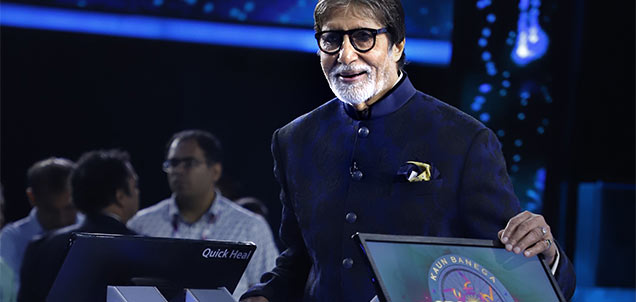
 We have known for years that there’s no one like him. But how he keeps getting better at it is still a mystery of sorts
 In its 10th season, KBC is back with its iconic host Amitabh Bachchan and will applaud the undying spirit behind every struggle. Celebrating the spirit of resilience, Sony Entertainment Television, has unveiled the theme for this year’s campaign – KabTakRokoge.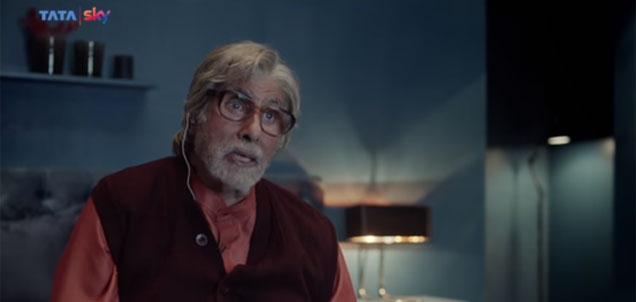
 Every creative team dreams to create a unique communication style deeply associated with a brand. Something so unique, it becomes the default signature style of the brand. It redefines brand tonality and the brand-consumer connect.