Tag: Amitabh Bachchan

  • 6 Reasons why tonight’s the Big Night @ Goafest

    By A N Chorrea


    Yes, Balki doesn’t care an eff about it and the folks at Cag have serious issues about the innumerable fakes that come in as entries, but the Abby is the Abby is the Abby. So why’s it the Badi Raat?


    1. Because the Creative Abbys will be presented tonight


    2. Because even as some of the Creative Abbys were given away last night (and the Media Abbys too!), the meaty, glamourous ones are happening tonight.


    3. Because it will be interesting to see how many metals Agnello Dias nets tonight. Yesterday, wifey Nandini Dias’s Lodestar UM bagged several honours. Tonight could well be Aggie’s. Total domination by the Diases!


    4. Remember Bobby quit Mudra half-way, just as Sonal quit Bates half-way… It will be interesting to see the mix of emotions as their ex and current agencies walk away with honours (If it was a television event, I am sure the camera would focus on Bobby every time Mudra gets an award or on Colvyn when Aggie gets it for Pepsi… quite like they do in the film awards where you see Rekha’s expressions on Amitabh, Vivek Oberoi on Salman. Etc etc etc)


    5. It’s the last day of Goafest. May as well live it up!


    Click here to view all Goafest 2012 stories


  • Awards have no relevance to advtertising: Balki


    By Anil Thakraney


    It’s always fun meeting the big boss of Lowe Lintas. Since we have worked together before and since Balki is always forthright and politically incorrect, one is assured of an exciting but meaningful exchange. Here is he, speaking his mind on various issues. Movies, advertising, the challenges facing the industry, the kind of people he’d like to hire, and yes, about his continuing allergy to advertising awards.


    You have to respect the man for the wonderful work he’s been doing on both, the small and the large screen. And more so for being that rare individual in the ad world who has the balls to stand up for something he believes in.


    Still around in advertising? Shouldn’t you be busy making big films with Big B?

    I am making a movie a day, it’s the same thing. An idea is an idea whether it’s three hours or thirty seconds. The day I stop tripping on getting the high when one gets an idea, that’s the day I will stop. In fact, I haven’t done a film in the last two years, I have been caught up with Lowe Lintas. I do have an idea for a film which I will work on towards the end of this year.


    And it will back to Bachchan, I suppose.

    Not back to, WITH Bachchan. I haven’t gone away from him.


    What’s with the Bachchan fetish?

    When you work with the ultimate guy it becomes difficult to work with somebody else. He’s phenomenal. Such hunger and greed for performing at the age of 70… it’s truly inspirational. I can keep on making films with him for the rest of my life.


    Are you a fan of Abhishek Bachchan too? His career isn’t going anywhere.

    Actually I found his performance in ‘Paa’ the best. It was the most difficult role. I think his problem is more the choice of films rather than the quality of his acting. He’s got his niche, he’s very good at certain things. He’s also a good friend.


    So that’s why you keep using him in the IDEA commercials, often when he’s not even needed.

    He’s a better friend of IDEA than he’s of mine. I didn’t choose him, IDEA chose Abhishek.


    What are the learnings from movies you’ve taken to advertising?

    The biggest thing that happens when you come back from cinema to advertising is that you are even more impatient. Because cinema takes so much time to execute, you want to make the ads even faster. That’s the reason I like making ads. You make them fast and you move on. There’s an idea a day, and that’s an addiction which is difficult to escape.


    Your wife’s directing ‘English Vinglish’. Are you the producer? And what’s it about?

    Rakesh Jhunjhunwala has co-produced it with me, along with another investor. It’s about the insecurities of a middle class woman who doesn’t know English in today’s context. It’s about how she overcomes the fear of English. It’s a very relevant issue to a lot of people in this country. In India, it’s money, fame and (knowledge of) English which determine the class and quality of a person.


    Let’s cut to Lowe. Are you still as hands-on as ever?

    I am. There’s so much of work, yaar. Today, Arun (Iyer) and Amer (Jaleel) have taken on a hell of a lot, they handle 50 percent of the business. My travel has come down but my ideation hasn’t. So yes, I am still involved in major things, I know what’s happening. This is not a profession where internal structures and motivations of the agency can dictate solutions for a client. The client comes to an agency for a solution and we have to get it, by hook or by crook. Gone are the days when creative directors would sit on a revolving chair and give motivational advice to people on how to crack things.


    Piyush Pandey said to me the reason he isn’t making movies is because he’s not bored of advertising.

    It’s about the number of things you can do, it has nothing to do with being bored of advertising. So maybe some people are capable of doing a lot more and some people are not.


    Significant changes you’ve observed in the ad world in recent times.

    It’s the same, in so far as it’s still a problem/solution business. What I find is that the clients today are hungrier for more interesting solutions. I find that clients don’t want to waste an idea. And because of the complexities of the marketing issues, the problem articulation is no longer simple. You can no longer say this is small, this is big or that is cheap. It’s about understanding the complexities and simplifying them. And I find that fewer and fewer people are able to do this. Therefore far more is expected of a creative person today than it ever was. The creative person is now seen as the solutions provider. Planning is now playing a big role in the articulation of the problem. Planners are now working more for the clients than for the agency. This shift is something I don’t quite agree with, but it’s happening. This situation requires more discipline, rigour and understanding from a creative person than ever before.


    And I guess this impacts your hiring policies.

    It impacts that hugely. The three Cannes Gold winners don’t make sense any more. Today a lot of senior creative people have to grow within the current system. So you hire junior people who are clever and intelligent and then groom them into the system of understanding problems. It’s very dangerous hiring very senior people from the outside. We went through a phase in advertising where we said we are losing our respect as an industry. That’s changed. Today the clients respect the advertising agency for providing solutions.


    Both, Prasoon Joshi and Piyush Pandey told me that the industry is losing talent. There seems to be too much pressure from clients, they no longer pamper creative people. And opportunities have opened up for agency personnel in other industries.

    I don’t agree with this. I actually think there’s never been a better time to be in advertising. You are no longer respected for your whacky ideas, being a maverick won’t get you any special respect. The problem isn’t that the industry is losing talent, the problem is it’s not attracting talent. It’s damn difficult to find talent to address today’s problems. In fact, today there are a lot of people in marketing who want to join advertising. Where we are not attracting the right talent is at the junior level. We as an industry haven’t been able to articulate what is the kind of people we want.


    As an old-world creative director, do you find yourself struggling with the new media?

    No. Clients want you do virals in the new media, but it’s still film. The video will never die, though the medium for broadcasting it may have changed. The production methodologies may also have changed. But the idea is the key to it all.


    You are not even on Twitter and Facebook. How will you ever understand the digital world?

    The reason I am not on it is that I don’t want the world to know what the fuck I am doing. That’s a personal choice, it has nothing to do with the new media. In fact, today if I am on Facebook, I am a fuddy duddy cock.


    The problem, Balki, is that all you uncles are obsessed with the TV commercial.

    I approach a problem very simply. There is a solution, and there is an idea. And if the solution demands a certain kind of medium, you use that. Nobody knew how to make films before or how to make a digital programme. So it’s all about expression. And you go into that particular medium and do it. I didn’t know how to shoot a film earlier, so I went to the experts to do it for me. I don’t watch television at all, but that doesn’t mean I am fuddy duddy on television.


    Small shops are springing up. People like Aggie are doing very well. Does that worry you?

    It’s always been happening. What do you think Mohammed Khan and Ravi Gupta did? If Ogilvy and JWT don’t worry me, then why should they? They are all competition. In fact, the more the merrier, it means more people are doing better ads, and that’s fantastic for the ad industry.


    Why are so many creative directors branching out on their own?

    In some cases they believe their talent is far superior to what a large agency can harness. The other reason is there are only so many people who can grow to a point in an agency. So it could be the frustration of not being able to grow beyond a point. They have to start their own thing to be what they want to be. The third thing of course is money. Some people want to be richer than what they are.


    Words of wisdom for young creative people.

    I think if you like sport, you should come to advertising. There is a hurdle to be crossed every day, there is a goal to be scored, there is a wicket to be taken, there are problems that come your way. It is like a game. The moment you start taking it too seriously, it’s very difficult to function in this business. A lot of things don’t make sense out here.


    Shashi Sinha tells me he’s cleaned up the GoaFest judging process. All the scams have been dealt with. But you still won’t take part.

    I believe the advertising industry needs credible awards. But how do you judge advertising? You say, ‘Haha, this is so funny! Oh, what a technique in this one!’ And based on that you award some ads. And two months later the agency loses the business. So obviously it doesn’t work. What the fuck are we doing in advertising? We are supposed to solve a problem interestingly. You are supposed to state the problem and the judges are supposed to ask if that ad could have solved that problem. I judged at Cannes once, and I refused to judge after that. I’ll give you an example of what happens: Those Coke print ads, where someone is sleeping under the shadow of Coca Cola bottles, has been hailed as the greatest piece of creativity. And then you have those great TVCs of Coke with Aamir Khan, which the nation loved, but which they (the Cannes jury) didn’t understand! This kind of judging has no relevance to what the purpose of advertising is. Basically the award show is a game and you play it. So it’s not about cleaning it up, I don’t value what you award.


    And you also have a problem with your peers doing the judging.

    Some of them I respect and some I don’t.


    So what sort of jury will satisfy you?

    Having some respected marketers on the jury would help. And some very good advertising people. Right now they ask anybody who’s free to come and judge, and that’s not the way to do it. You can’t choose people just because you want representation from various agencies. Thing is, before I give you a piece of work to be evaluated, before I give you the right to say if I am good or bad, I need to be assured you are a person who’s capable of telling me that. We need to first judge the judges.


    What disappoints you about the ad world?

    What pains me is the amount we try to market the barometers which decide who’s good and who’s bad in the Indian industry. The Gunn report, the Asian awards, etc, they tom-tom the barometers rather than the advertising itself. And all this has absolutely no relevance to what we do here. It’s time we found a barometer or an evaluation process that tells India which is a good agency. A method through which clients can credibly choose agencies beyond just the surveys and the awards. And this lack of a proper barometer has led to personality driven agencies. This propels a lot of false media management. PR for advertising people happens because of this.


    Why don’t YOU work on that barometer?

    Piyush Pandey and I have had many whiskies discussing this, but we only walk away promising that we should drink some more, and that’s about it. (Laughs.)


    Click here to view all Goafest 2012 stories
     

  • Dog days for pet mags

    By Archita Wagle


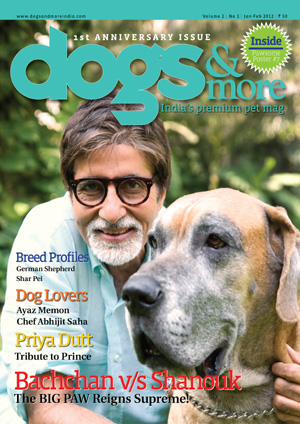
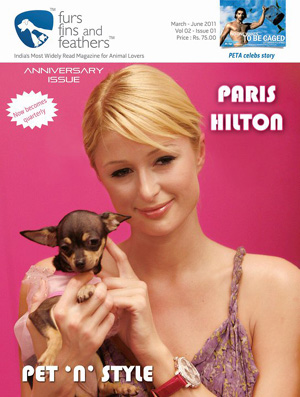
    From the Queen of England downwards, celebrities and their equally famous dogs are almost a cliche. Paris Hilton is frequently seen carrying her pet chihuahua Tinkerbell, who has a book called The Tinkerbell Hilton Diaries: My Life Tailing Paris Hilton to her credit. Closer home Gul Panag’s beagle Milo has a Twitter account. Amitabh Bachchan posed with his Piranna Dane, Shanouk, for the cover of Dogs & More anniversary issue, which was launched recently.


    It’s not just celebs, though, even ordinary people are increasingly getting pets to be a part of their families and participating in their activities. It should logically follow that these owners would be in need of news, views and information resources for their four-legged friends.


    But the pet magazine market is, albeit niche, also extremely small, especially when compared with the growing interest in pet parenting.


    As Shivani Darshan, publisher-editor of the now defunct Furs, Fins and Feathers said, “The pet industry is still a mom & pop kind of industry in India. Abroad, the industry has seen a growth of around 30-40 percent, but in India it is still at a very nascent stage.”


    Veteran journalist and dog lover Ayaz Memon concurs: “The idea of having a pet magazine in India is not fully fleshed out. Even the idea of having pets is not familiar inIndia, it is just growing.”
     

    The pet industry, though not very big, is dominated by dogs, as can be seen from the fact that most of the magazines in the market are predominantly for dog owners.


    Shweta Khurana, editor of Dogs & Pups said, “When we conducted our survey before launching our dog magazine, we found that dogs constituted the maximum number of pets. Also I am a dog lover; the magazine was just a way of turning my passion into a profession.”


    Dogs & More was started by Farzana Contractor, who is also the editor of the magazine. The idea for launching Dogs & More came to Ms Contractor when she realised that dogs teach us a lot about loyalty, patience and ability to love without question. Ms Contractor’s love affair with dogs started seven years ago. “I adopted a dog seven years ago, after a friend suggested it to me as a solution for the depression I was experiencing after losing my husband 10 years ago. I adopted a furry little black Lhasa Apso, and my life changed.”


    Magazines such as Dogs & More or the Delhi-based Dogs & Pups are effort to influence the people to get pets. These magazines, mostly bi-monthly, are reasonably priced and offered at a monthly subscription to the readers. But even then the concept is not taking off. “Considering the expenses related to taking care of a dog, this subscription fee is pretty reasonable. The content is nicely balanced,” said Ms Contractor.


    But a common grouse is that the revenues being generated are not enough. “Unlike a Cosmopolitan, which gets plenty of advertisers, we don’t get so many advertisers. The content is not a challenge but getting revenues is… that’s why we are still a bi-monthly. The content is not a problem,” said Ms Khurana.
     

    But Jaisurya Das, media professional and dog lover, disagrees: “The marketing strategy adopted by the pet magazines is not right. First, their advertising is not done right. They tend to approach only those connected to the pet businesses like vets, groomers, trainers and so on for advertising in the magazines. What is stopping them from advertising FMCG products? The reader who picks up a dog magazine will also consume the FMCG product. They should think of the end audience while going for advertisements, not the advertiser.”


    Ms Darshan however has a different point: “The industry we function in is still very unorganised, the advertisers we approached want free ads. I was bearing most of the cost of printing and distribution. In the end, we had to take a call and decided to stop printing the magazine.” The anniversary issue of Furs, Fins and Feathers on March 2011, which featured Paris Hilton and Tinkerbell on the cover, was the last one.


    Mr Das also points out that one more reason for bare minimum survival of the dog magazines in India is the visibility factor. “The pet lovers are not going to go out and seek out dog or pet magazines. These magazines should be available at the vets, pet shops, dog groomers and so on. The magazines should have tie-up offers with dog products to hook in the readers. Right now, they are surviving mostly on subscription.”


    Mr Memon agrees: “The information given in these magazines is very basic. It is good for those who have just got their first pet. If I need more in-depth information it is readily available on the internet. I feel that there is a lot of scope for dog magazines to grow.”


  • Big B tweets about his BIG Star wins

    By A Correspondent


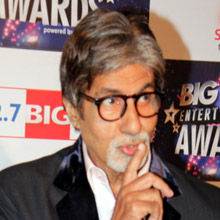
    Sunday night saw the entire entertainment industry heading to Bhavan’s College grounds in Mumbai to usher the first awards of the New Year with the 2nd Big Star Entertainment Awards.


    A constellation of stars stepped out in their finery to cheer, applaud and appreciate some of the most memorable and remarkable performers of the year.


    The biggest and brightest of them all, Amitabh Bachchan came, saw and won two awards.


    After he left the venue….he tweeted about the newest singer from south, Dhanush, who sang live from the audience, a Kolaveri Di number but words to suit the occasion: T 594 -‘And … when complete Entertainer announced, Dhanush sings live


    from audience, a Kolaveri Di number but words to suit the occasion !!’


    Big B was also praise for the actor’s impromptu lyrics: T 594 -Dhanush words were ‘Why this Kolaveri, Kolaveri, Kolaveri ..B, .. big B … TRP .. brilliant absolutely ..!! So lovable and so good !’


    Bachchan won the Best Actor in Social role for Aarakshan in a new category, first of its kind, in any awards so far and another award for being a complete performer.

    He humbly and graciously accepted the award as can be seen when he tweeted: T 594 ‘…. 2 awards .. best Actor in social role for ‘Aarakshan’ and the second for the Complete Entertainer of year .. I am blessed ..!!’


    But this is not all, Big B has also promised his fans: ‘…some rather glorious pictures of the 2 events tonight – the BigStar Awards and the Sunday fans .. but will take a while to post.’

  • Amitabh, Ram Kapoor are top of the pops

    By A Correspondent


    According to the ninth edition of Ormax Media’s quarterly study Characters India Loves (CIL), Amitabh Bachchan (Kaun Banega Crorepati) and Ram Kapoor (Bade Achhe Lagte Hain) are the most favourite non-fiction and fiction characters on television respectively.


    This ninth track of CIL was conducted in October 2011, with a sample size of 3477 respondents in six cities – Mumbai, Delhi, Ahmedabad, Lucknow, Indore & Jalandhar, in the 15-44 years age group.


    Amitabh Bachchan leads the non-fiction popularity list with a staggering 57 percent share. A very successful season of his show Kaun Banega Crorepati (Sony) ended this week.


    Ram Kapoor leads with 12 percent share in a more fragmented fiction category, ahead of past leaders like Anandi (Balika Vadhu) and Jethalal (Taarak Mehta Ka Ooltah Chashma), as well as Priya, his wife in Bade Achhe Lagte Hain.


    The CIL report is available to subcription to broadcasters, advertisers and media agencies.

  • Anil Thakraney’s Hard Knocks: A problem called film publicists

    Part of my work involves doing big, detailed interviews with movie stars. And meeting these mighties is often a tedious process. Interviews get cancelled at the nth hour, or the star will arrive hours late for a pre-arranged meet. And therefore instead of it being a routine story, the ritual turns into an exercise in testing one’s patience. Of keeping your cool. Most filmi journos, for whom actors and directors constitute a regular beat, have reconciled with the waiting game.


    Though I must mention that an interview with Amitabh Bachchan starts sharp at the appointed time. On the occasions I have met him, I never have had to twiddle my thumbs. So if the ultra-big and the ultra-busy Big B can be so disciplined, it makes you wonder about the younger stars. Perhaps they get some jollies out of making journalists wait? Or they are simply disorganized folks, and haven’t been brought up to value other people’s time.
     

    And what makes things worse is the role played by the star’s PR agent or Publicist (or whatever fancy title they’ve acquired these days). Except for very few senior agents, who are a little more professional, I have often had rotten experiences with these front men and women. The job of representing movie stars (and close proximity to them) seems to give these people a false sense of self-importance. And the boom in the media, which also means a boom in celeb journalism, has resulted in too many journos chasing these PR agents with interview requests. And this has made the fronters feel even more powerful.


    The PR agents are often abrupt and rude. Indisciplined too, perhaps influenced by their bosses. And their egos massively inflated because they believe they ‘own’ the stars. As journalists, most of us have learnt to live with these ‘obstacles’ enroute to meeting the actors. Some junior reporters even indulge them, so that interview requests don’t get turned down, and gossip about rivals keeps pouring in. And the show goes on, as it should.


    But a few of them have gotten so drunk on their access to celebrity, they refuse to leave the room even AFTER the interview begins. They continue to hover around like a nasty presence, like ghoulish shadows. Completely ignoring a basic principle of journalism: That the best interviews (at least for the print medium) happen one-on-one, and it’s in their interest if the discussion with their bosses is insightful and meaningful. I have had PR agents politely evicted from rooms, but some die-hards still won’t get it. They’ll hang around despite being ticked off.


    I hope one day we see some degree of professionalism come into this job. So that meetings with film stars can be a joyful ride. And not a pain in the you-know-where, which it often is.


    ***


    PS: My best film interviews, in my own judgment, have so far been with Amitabh Bachchan and Shah Rukh Khan… in both cases there was no middle person involved. And with Aamir Khan and Kareena Kapoor, because their agents were wise enough to leave us alone.

  • Anil Thakraney’s Debrief: Good strategy, poor creative

    There’s a new commercial on air for Parker Pens. And it stars brand ambassador Amitabh Bachchan. The creative thought is this: ‘What the world calls a pen’. And it’s a correct one. Because as we all know, pens as a category is on a fast decline on the product life cycle chart. There will come a time when the pen will become a historical product, much like the typewriter. So it makes sense to make the brand synonymous with the product, to own the category, and thus at least be a leader for as long as the product survives. I completely agree with this strategy.


    But the creative fails to leave a mark. Bachchan is seen sitting inside what looks like a hotel lobby. And he’s got the whole range of Parkers spread out on the table. What is he, a pen seller? That’s not explained. Suddenly, a firang arrives and asks if he can borrow a pen. But instead of lending him one, Big B begins educating the gent on how Parker is pronounced in various nations. Exasperated, the man asks for a Parker, which is immediately handed to him.


    Boring creative. After the first exposure, you will reach out for the zap button on the remote control. Because it’s laboured, un-engaging and witless. While I like the idea of getting the brand to be the hero, so that consumers ask for it at retail outlets, sadly the commercial is very dry. And no, Bachchan has no role to play out here… he’s forced in, as he usually is in ads.


    Rating: (On a scale of 1 to 5): 2. For a sound strategy.


    Anil Thakraney’s ad review column DeBrief will appear twice a week – Tuesdays and Thursdays.

  • Can telly newbies score with biggies around?


    By Dhara Salla

    Whenever one thinks of Antakshari on Zee TV there is only one face that comes to mind: Annu Kapoor. Or it’s Sonu Nigam for Sa Re Ga Ma. Fast forward to today, and the story is much the same – the big faces on television have always helped audiences to connect and reinforce the recall value. Today, all the channels have either celebrity hosts or celebrity contestants, be it the Big B Amitabh Bachchan in KBC, Salman Khan and Sanjay Dutt in Big Boss, Akshay Kumar in Khatron Ke Khiladi, Mithun Chakraborty in Dance India Dance, Madhuri Dixit in Jhalak Dikhla Jaa… and the list goes on. In the reign of big faces, the question to ask is, what is the scope for newcomers and can a new face create the same magic?

    Ms Anita Mookerjee, GM, Mediacom, said, “It depends on the newcomer and the format of the show. However, a big name is most often successful. In most of the cases the celebrity, along with the mass appeal, also has the ability to engage and enthrall the audience. Amitabh Bachchan is an icon, a legend people can’t get enough of.” She further adds, “Salman Khan has a unique mass appeal, he was media elusive for a long time and it was the fact that the audiences were getting to see a more personal side of him which worked to the advantage of the show. Akshay Kumar took Khatron Ke Khiladi to a different level; the same show as Fear Factor didn’t really click.”

    Mr Jamnadas Majethia, MD, Hats Off Productions, says, “No, I don’t believe a newcomer can create the same magic as the big stars. The life of a reality show is limited to about three months or 12-14 episodes. So it would take time for a newcomer to get established. By the time they reach the third or fourth week the viewers would have already shifted their loyalties. The pull that a Hrithik or any celebrity like Madhuri can give, nobody else can give.”

    Industry pundits’ views seem to reflect that a newcomer cannot create the same magic that big names and faces can. An established celebrity with an X-Factor, hence, can add more to the flavour of the show than a newcomer can. Having said that, the success of reality shows depends on influences such as the celebrity quotient, programme promotions, the channel on which the programme is telecast, controversies and PR, and lastly the concept.

    We may remember that Shahrukh Khan, Abhishek Bachchan, Genelia D’Souza and R Madhavan were also hosting shows which did not do well and were taken off air, so the success of reality shows depends not only on the celebrity but also on other things. There is more to it, as Rajendra Dwivedi, Vice President, Starcom Worldwide, Mumbai, explains. “Emotional stakes are more valuable than financial stakes. A real life credible drama or story of the participants works better than prize money. The format has to be engaging and good talent scouting should be undertaken. Then the celebrity host can build on these factors.”

    On Indian television, where there are celebrity hosts there are also celebrity participants on the other side. Examining the question of which one works better, Ms Mookerjee says, “Celebrity participants definitely work; we see spikes in episodes with celebrity participants.”

    On the contrary Mr Majethia says, “The shows with celebrity anchors or judges work better but not really the shows with celebrity participants. Celebrities should be there as they add a lot of value to the content. There is a lot of fresh talent, and because of these celebrity hosts they also get some mileage.”

    When almost all the reality shows currently on television include celebrities, then how does the TG differ? According to Mr Dwivedi, the TG of the reality show depends on the format of the show. Hence, for KBC it will be all individuals but for Emotional Atyachar it will be youth and for Khatron Ke Khiladi, it will be males.

    The big faces have been ruling the roost on the small screen for a long time in the reality show format. What is more interesting, however, is that the emotional storytelling and the HSM focus has added to the success of shows as it helps with audience connect. That’s something for media planners to note.

    Photograph: Fotocorp