Blog

  • Kyoorius DesignYatra returns to Goa

    Kyoorius DesignYatra gets underway in Goa today, with a line-up of speakers across diverse design disciplines, including corporate identity, branding, graphic design, digital strategy, installation design and architecture design. The conference is from September 8th (evening) to Septemeber 10th. The theme for this year’s conference is Next- what’s next in the field of design, branding and visual communications.

    This year’s speakers include legendary Dutch book designer Irma Boom; digital strategist and once described as the Godfather of Guerilla (Marketing)-Mark Chalmers, founder, Perfect Fools; bestselling author of How to be a graphic designer without losing your soul and independent publisher Adrian Shaughnessy; the founding trio of Eva Rucki, Conny Freyer and Sebastien Noel from UK’s leading experiential design agency Troika; Nathan Cooper, creative director at Anomaly, London; Richard Holman, founder and lead creative director at UK’s leading agency devilfish, the chatty Liza Enebis more popularly known as Loveliza to the loyal audience of 5000 listeners who tune in to her radio show Typeradio daily; Michael Johnson of johnson banks, often referred to as one of Britain’s foremost designers; noted creative mind Hermann Vaske, well- known British installation designer Peter Higgins and leading figure on the Indian architecture scene Sandeep Khosla.

    The organisers say what will make this year especially meaningful for delegates will be the screening of a special short film, directed by celebrated web designer and documentary director Hillman Curtis and produced by Kyoorius, featuring noted design commentator Debbie Millman in a conversation with the legendary Massimo Vignelli.

    In addition, the two-day conference will screen the edited version of a film on the life and times of one of the most iconic design partnerships in the history of design- Lella and Massimo Vignelli in the documentaryDesign is One- The Vignellis,directed and produced by Kathy Brew and Richard Guerra.

    Kyoorius DesignYatra, now in its sixth year, celebrates excellence in design across disciplines and has brought together speakers like Sir Martin Sorrell, Stefan Sagmeister, Tyler Brule, Paula Scher, Bruno Maag, Michael Ian Kay, Gert Dumbar, Wally Olins, Kyle Cooper and Neville Brody among others.

    Says Rajesh Kejriwal, founder, Kyoorius, DesignYatra has served as a valuable meeting point for agencies in India and abroad in the sphere of design, branding and visual communications. It has been an opportunity to understand and learn from some of the finest minds in the field, delve into their creative process and be inspired by their work.

    Adds Bindu Nair Maitra, editor, Kyoorius Design magazine, This year, we embarked on a special initiative, which is a property we plan to sustain well after DesignYatra this year is done and dusted. It’s our Tumblr blog- Road to DesignYatra, where we plan to document all the special memories and images from previous editions of DesignYatra and build a hearty online conversation about how the conference has influenced delegates and speakers alike.

    Incepted in 2006, Kyoorius DesignYatra is an annual design conference that has attracted a cumulative audience of 8500 delegates over the last five years. In 2008, a special edition of DesignYatra was held in Malaysia on the invitation of that country’s advertising association. Past speakers at previous DesignYatras have included names like Sir Martin Sorrell, Paula Scher, Tyler Brule, Wally Olins, Michael Wolff, Piyush Pandey, Ross Lovegrove, Erik Kessels, Stefan Sagmeister and Sir Rodney Fitch, to name a few.

    Kyoorius DesignYatra is one of India’s foremost platforms for the intersection of design, branding and visual communications. The conference has served as a valuable meeting point for agencies in India and abroad in the sphere of design, branding and visual communications; an opportunity to understand and learn from some of the finest minds in the field, delve into their creative process and be inspired by their work. Kyoorius DesignYatra is a must-attend event for anyone involved in brand communication.

    You can check http://www.designyatra.com for further details.

  • All izz well for Aamir’s new film

    Much ahead of its Republic Day release in 2012, Aamir Khan’s next film is making tills ring. Sony Entertainment has bought the satellite broadcast rights of the yet-to-be-named production for a record 40 crore from Reliance Entertainment, which had acquired the film’s distribution rights for 85-90 crore.

    This is the highest price paid for a film by a broadcaster, beating 37 crore paid by Sony for the Hrithik Roshan-starrer Krrish 3, along with the rights of three other Hrithik films from his home stable – Koi Mil Gaya, Krrish and Krazzy 4.

    The film is being jointly produced by Aamir Khan Productions and Ritesh Sidhwani of Excel Entertainment at a budget of 40-45 crore, and will be released by Reliance Entertainment.

    Sony will hold exclusive rights for Khan’s new film for seven years, which is the time it gets to monetise the investment. Priti Shahani, chief strategy officer at Reliance Entertainment, confirmed the deal, but refused to share details. “Yes, the satellite rights have been sold to Sony and like all our recent blockbusters, this film too is a much-awaited and big-ticket film that has received its correct value,” she said.

    Manjit Singh, chief executive officer of Sony Entertainment Television, also refused to share details. “When the time is right, we will talk about it,” he said.

    Of late, Sony, one of the country’s top three general entertainment channels, has been consistently acquiring big-ticket films. These tentpole films, as the trade calls them, go a long way in garnering eyeballs for the channels, or gross rating points (GRPs). The higher the GRPs, the more the advertisers. Movies play a big role here and according to TAM data, movies contribute as much as 10.4% of the total GRPs. There are also intangibles that come along with a big film. For instance, the channels use these films to attract the audience to existing and new properties of the channel.

    For the past few months, satellite channels have been demanding a correction in the high rates of acquiring films, arguing that they would all end up as producers at the rates they are paying. But broadcasters don’t have much choice. “We are all spending ridiculous amounts on satellite rights of films. But we have to do this as others too are doing the same,” said Singh.

    Another factor is there are very few unsold big-ticket titles left, with Shah Rukh Khan’s Don 2, Mausam, Karan Johar’s next, Student of the Year and Salman Khan’s forthcoming films, of which Dabangg 2 and Sher Khan are not even in the market so far, leaving just Yash Raj Film’s Ek Tha Tiger up for grabs.


    Source:The Economic Times
    Copyright  2011, Bennett, Coleman & Co. Ltd. All Rights Reserved

  • Why MxM India?

    Offo, ek aur nayi media website! I can’t promise you a Maya Alagh smile when she mouthed a similar line launching Promise toothpaste eons ago, but I can guess at what’s running through your mind even as you read this.

    Agreed MxMIndia isn’t the first off the block. We are in fact Website #15 if you count the outdoor, digital and telecom sites. I have much admiration for the owners, publishers and editors of many of these. They’ve been pioneers, risk-takers and have jointly created a niche that’s unparalleled in the business-to-business media space.

    So if there’s much mush and gush, why MxM? Why fill your inboxes with more content, when there’s enough of it? Because when I spoke to some 300-odd marketing and media professionals over the last few months, I found there was much gap between demand and supply. Yeh dil surely maange more!

    Also, for many of the players, integrity and ethics are fashionable words but not really put into practice. Stories and covers being sold for ads or cash, awards for favours — past, present and future… there is much decay in the system. In fact the decay has set in so much that it may take a few Annas and Kejriwals to cleanse the mess. So while media houses run high-pitched campaigns against corruption, they happily espouse dubious paid content practices.

    I am a huge believer that it’s possible to conduct business ethically. I also believe that if we ask the world to rid itself of corruption, the media must have a squeaky clean rep.

    Hey, I am not here to sermonise. It’s important for you to know how MxMIndia will conduct itself. But we are no prudes. We don’t think innovative advertising is a no-no. We don’t think that there is a way to do away with fake ads. We just believe, as our good friend Arnab Goswami would say, that the nation wants to know more than just what’s on the surface of the world of marketing and media.

    My one-line advisory to my editorial and business team is: we will write about people and companies regardless of whether they advertise.

    After 25 years of working in various jobs (save for a bit when I tried my hand at blogging and assorted consulting), this is an honest attempt at starting an enterprise. MxMIndia has hired some of the best available talent. We believe this is the only way to start if we wish to be counted as the website of choice for mediapersons and marketers. What you see now is the Beta version of the site. There are still many loose ends and the content will only get richer and the sections under each of channels will open up. Please let us have your feedback.

    MxM in our name stands for Media and Marketing and it was suggested by my friend Prashant Basrur. The logo was designed by his art team at Deadline Advertising. Thanks hugely to the entire Deadline team for bearing with me all these months. The site was developed by Mediology Software in Gurgaon (Merci, Gaurav Bhatnagar and Manish Dhingra… and Arun Nair and team). Thanks to Raj Pandian for showing me the way with the numbers, and Nandita Saikia and Saikrishna Associates for the legalese. Thanks to Mahalakshmi DM for being around in my early days and Deepak Joshi for help with all the paperwork. My sincere gratitude to the various people whom I bugged for advice and all of you who I turned to for support.

    MxM wouldn’t have happened without my family supporting me. A big thanks to each member of the MxMIndia founding team, associates and our star writers present and who have agreed to write in the immediate future.

    We will make it happen. Hum honge kaamyaab. Not ek din, but soon, and ethically.


    Pradyuman Maheshwari

    Email pradyumanm[at]mxmindia.com

    BBM: 23050B5D

    Twitter @pmahesh, @mxmindia


  • Facebook at a touch with Vodafone Blue handset

    Accessing Facebook on the go is the latest craze, no matter the amount of indignation over users in public places oblivious to traffic and pedestrians. It’s a need that Vodafone Essar has taken to the next level with the launch of the Vodafone Blue. Designed to put the Facebook experience into the heart of the handset, Vodafone Blue allows users to easily share and connect with their friends, as Facebook starts as soon as the phone does.

    The Vodafone Blue, developed in collaboration with Facebook, brings the qualities of a classic Smartphone together with popular social networking functions – from status updates to sharing a photo at an equally attractive price of Rs 4,950, inclusive of taxes.

    Vodafone Blue is launched in India with unlimited access to Facebook for a year from the date of its purchase. The phone has a designated F button that lets the user upload pictures, visit profiles and update status at a single click. It also provides other updates such as counters and notifications, and displays Facebook posts regularly in the background.

    Speaking at the launch, Mr Kumar Ramanathan, Chief Marketing Officer, Vodafone Essar said, The mobile internet plays a central role in the daily lives of millions of Vodafone customers, many of whom are avid Facebook users. Vodafone Blue is the answer to mobile social networking needs.

    Commenting on the launch of the phone, Mr Henri Moissinac, Head of Mobile Business, Facebook said, Facebook wants to make every phone social. We are really happy that Vodafone has brought the phone to India and enabling people to experience Facebook free of charge from the mobile device for a year.

    Photos taken using the phone’s 2-megapixel camera can be shared at a single click. The phone has 2.4 landscape display, QWERTY keypad, Opera Mini 5 Web browser, Bluetooth 2.1, GPRS/EDGE, email client with POP3 and IMAP support, microSD card slot, 32 GB expandable memory, 40MB internal memory, microUSB port, 3.5mm headphone jack and a 1000 mAh battery.


  • Of 25-year-old TV journos and their half-baked ideas

    Ranjona Banerji


    This week was a roller coaster as far as news was concerned. It started with the continuing aftermath of the Anna Hazare-led anti-corruption movement, with members of what has so trendily been named Team Anna felt they were being targeted by the government  for saying nasty things about MPs, for being exposed in a sting operation and for not paying their income tax.

    But soon Amar Singh, discredited and beleaguered, had his moment in the sun as he was hoisted off to join his political friends in Tihar jail for his role in the cash-for-votes scam where BJP MPs walked into Parliament waving bundles of money, claiming they had been bribed by the UPA. But one more horrific bomb blast on Wednesday morning, this time outside the Delhi High Court, meant that TV attention moved away from Singh. TV attention is a bit like the eye of Sauron in Lord of the Rings. While it is on you, you burn under its gaze but when it goes away, you can scurry into Mordor and do what you want. It may be advisable for Indian TV news channels to get eyes like a housefly instead which looks everywhere.

    Since the Delhi police and India’s one zillion other investigating agencies had no clue about who was behind the blasts, TV reporters have to be commended for coming up with their own theories within 10 minutes. Why waste time reporting on the events when you can hold forth like an expert, pretending that you know what you are talking about? After all, no one in your studio is going to stop you, question you or, shock, horror, cut you off.

    I realize that youth must be worshipped in India today but there is something disconcerting about inexperienced 25-year-olds running around with mikes and cameras, bombarding us with their half-baked ideas. (My advice for young journalists: spend the first five years with your mouth shut, learning! Radical, eh?)

    It would perhaps be more sensible if TV news channels in India tried to first report and then speculate. It seems incredible that that they go back to the same experts over and again in spite of no one having any clue about who has actually done what. One would have thought that the embarrassment of every expert blaming some Islamic group of the other for the Norway attacks would have been lesson enough, but clearly, no. The evening shows with the star anchors were full of former police commissioners and general celebrity experts holding forth. The amount of hot air released in TV studios could be used as a form of renewable energy once fossil fuels disappear.

    Most language news channels switched from their normal combination of astrology and Bollywood to cover the blasts but some like Sahara Mumbai were happy with their comedy corner. The ticker at the bottom kept us informed of events. Guess you have to keep laughing, no matter what.

    Business news channels are rarely if ever distracted from the stock markets and sometimes even major global monetary policy changes in which politics is involved, pass them by.

    International channels airing in India like Al Jazeera, BBC World and CNN are all gearing up to the 10th anniversary of the September 9 attacks on the USA. The rest of the while they keep us informed about what’s happening in Syria, Sudan and such like places that are too far away for Indian news channels to acknowledge.

    **

    The newspapers had it easier. Early in the week, they focused of course on Amar Singh’s arrest and his fall from grace. The Telegraph, Calcutta (it does not use Kolkata) also talked about him being a Calcutta boy. The prime minister’s trip to Bangladesh also got space, with fans and detractors of West Bengal chief minister Mamata Banerjee and her refusal to agree to the water-sharing agreements with Bangladesh having their say. The boxing bout between Mayawati and Julian Assange also front-paged, including with the Hindu which of course printed the Wikileaks revelations in India.

    The Reserve Bank of India asking banks to allow borrowers to pay back floating home loans without penalty got second billing in Mumbai, perhaps understandably. The Hindustan Times called the BJP to task over protection to the Reddy brothers in Karnataka in a hard-hitting editorial.

    The Times of India did an analysis of three versions of the Lokpal bill on its edit page and seemed to agree the most with Aruna Roy and the NCPRI’s version. This is a break surely from Times Now’s vociferous championing of Anna Hazare’s version and no other.

    Mid-Day launched its new look on Tuesday, with bolder lines, less clutter and better use of pictures. It also reintroduced its edit page.

    By Thursday, the bomb blasts were everywhere with legitimate rage over the fact that the authorities neither had improved intelligence nor security measures in place. It is easier to read these arguments than to decipher what several guests shouting at the same time are trying to say.

    By Friday, Praful Patel’s defence of a CAC report slamming the merger of Air India and Indian Airlines and the acquisition of several aircraft took the headlines. The probe into the Delhi blasts is veering between Harkat-e-Jihad-al Islami and Indian Mujahideen, both of whom have claimed they did it.

    The Times of India chose not to front-page LK Advani’s announcement of an anti-corruption yatra and his impassioned speech in Parliament, while Hindustan Times made it the second lead, focusing on the fact that Advani took his own party by surprise. The gist of the newspaper angle seems to be one more political drama, while TV milked what they could from it before moving on.

    The brewing revolt in the tennis world between the top players and the International Tennis Federation over rain problems at the US Open also got play.

    International media is mainly looking at the tenth anniversary of 9/11, stories of victims and heroes and some new chilling tapes of voices from one of the planes which crashed into the World Trade Centre. Irfan Husain in The Dawn has an excellent piece debunking all the 9/11 conspiracy theories. A threat to New York on the anniversary is being taken seriously, making ample effort not to spread panic.

    It seems likely that 9/11 will dominate over the weekend although it will be interesting to see if the BJP is taken seriously in this new effort to regain political centrestage.

  • Slowdown will get worse next year: Pranesh Mishra

    Mr Pranesh Misra, Chairman and Managing Director, Brandscapes Worldwide, launched the global data analytics and insight consulting firm after a career spanning 30 years in marketing, marketing research and advertising.

    With a team of domain experts who mine marketing data for insights, Brandscapes consults in the brand and marketing strategy spaces for consumer goods, retail and financial services sectors.

    Strategy, says Mr Misra, has long been a fascination with him. Having started his career in research with a job in Lintas and then Clarion, he moved to advertising and started Pathfinder, the research division of Lintas. When I look back I realize that it was the part of my career where I was far more intellectually engaged and therefore it was much more enjoyable for me as a person, he says.Strategy was always a passion for me.

    Read on for excerpts from an interview with Ritu Midha


    Is the grass greener on this side of the fence?

    The grass is always greener on the other side of the fence  depending on where you are. But this I can say it has been an exciting experience, because I am doing different things. I am learning new things for instance quantitative analysis, data at a level much higher than one was exposed to; we are also interacting with brands and clients globally.

    Also, starting something from scratch to an entity in itself is a fascinating experience we are now 85 people strong, and have about 25 regular clients. Considering that we started at the same time as the recession began, the fact that we are standing today is a good thing.

    Broadly, what are the work areas of Brandscapes?

    Brandscapes works in broad strategic areas. A large area of interest for us is Research Analytics we look at research data that clients already have, and get more value out of it, through further analysis and cross-fertilization. We also do Marketing Science Application, which is to predict the future based on past data, and Future Forecasting through sophisticated modelling.

    Marketing Dashboards is another service we are proud of. We realized that marketing data is all over the place and it is very difficult for anyone to take a holistic view. There was an opportunity to take sales data, market share data, and brand image data and put it all together on one screen It provides a holistic view, and has given us good traction.

    We also have a brand strategy service known as Strategy Maps.

    Have organizations become more conscious about research?

    If I look back over the last ten years, I can say there is a lot more orientation towards listening to the consumer. Has it has reached the global level? Obviously not. There is not enough awareness about qualitative research. For example, uninitiated marketers today ask, So how many people said this? In qualitative research you can’t answer that kind of question it is about what went behind.

    Having said that, the focus is increasing on listening in on the consumer rather than deciding everything on gut feel. There is definitely expansion of research beyond the larger companies and multinationals.

    I would also stress that research business, per se, needs to be far more accountable. I have noticed over the last few years that research business is far more engaged in downloading the data, than in helping the client take decisions based on the data. Which is why we started with data analytics.

    Moving to a specific area of interest, what are the essentials of brand building beyond logo and packaging?

    To my mind the brand should have seven to eight different dimensions that should be clear to everyone involved in creation of the brand. One, there should be clarity as to who is your competition. Very often you enquire with clients about their competition, and the answer is everybody in the category, or in some cases it is unclear. If I am selling a brand of soap, every soap is my competition. Now that cannot give you a very sharp strategy. Second, clarity on the target audience is very important very often it is not a decision that is very well thought through. It tends to vary from year to year. As a result, the brand architecture remains confused.

    The core insight about the consumer that we leverage into a brand is usually the most difficult one to decide. Very often there is no effort to define it. If you look at Google, the search engine, they said that people don’t want clutter they want information in a clutter-free way. So they want for a strategy where they didn’t want a landing page so it is insight that drove the strategy. Very often it is the most difficult thing to know, but it is a must for the structuring of the brand.

    Then there are elements that people tend to look at: Functional benefits, emotional benefits, and the brand personality. When the client comes up with the feature, the research agency has to check the benefit to the consumer from that feature. Often, that leap is not taken. You could say it is a germicidal soap but that is not enough, you need to look at functional and emotional benefit. For instance in Lifebuoy, the functional benefit is that your family could be free of germs. If your kid gets a cut, and you are using Lifebuoy, you can be free of concern. If you wash your hands with Lifebuoy before eating then you are germ-free. The emotional benefit was translated into Koi dar nahi (No fear). You feel in control because you don’t have the fear of germs coming in. This needs to be documented and discussed.

    Then, of course, comes the DNA and the key differentiator of a brand. These are some of the elements that need to be structured to create a holistic brand.

    Most brands do not succeed because they do not do proper brand planning.

    As per a recent Forbes study, globally customer retention is far more important than acquiring new customers.

    In India, if you look at segments like telecom the last seven-eight years has been about acquisition. If you talk to players about customer retention, you would not get as much attention because the whole game was about customer acquisition. That holds true of other growth sectors too. It is largely because of the country’s development stage and product lifecycle.

    But globally, markets have matured and retention becomes more important. You need to retain the customer for a longer time to get maximum value out of the customer and there is very little to acquire anyway.

    Coming to India, due to the exponential GDP growth in the last ten years, the focus will move to retention, so I see that becoming a need going forward.

    Coming to the obvious question, is the slowdown a reality or is India not that impacted? And is it impacting branding exercises?

    With GDP level at 7.7 percent, India is still seeing some growth. You cannot compare it with the USA and UK where they are either seeing negative growth or no growth. More than slowdown in growth, the biggest challenge is slowdown in sentiment. The optimism that we saw last year is now turning to a little less of optimism bordering on pessimism. And that typically affects the consumer spending pattern. Consumer sentiment has a long-term impact on growth. That is what we have to watch out for.

    It is the reasons inside India itself, rather than global impact, that is generating despondency in people. When they become so concerned they become conservative in their spends they will postpone buying of high-ticket items like houses, cars, etc and that impacts demand.

    Do you see the festive season bringing good news for marketers?

    I think everyone is hoping for that to happen. But marketers would have to come up with really good offers and discounts to start again. This year there is a dampened demand in durables and cars sectors  it is already visible  and it is not going up. So there should be many more cut-throat promotion offers during the festive season this year, as compared to the previous year.

    You are expecting the slowdown to continue to next year

    Unless something very good happens in the economy, the negative sentiment will pull down the demand. As interest rates keep going up, investments will start suffering. Prices are rising. I am not really optimistic about next year

    What about FMCGs, will they sail through?

    I don’t think so if you are talking of mass FMCGS. They did not see a lot of slowdown in top line growth in 2008. I think they are suffering largely due to inflation, because they have to pass on the price rise to the customer. So they might be getting larger value realization today, but automatically consumers will cut back  they will go from large to smaller sizes, they will use things less frequently. Volume growth will be impacted.

    A few companies may sail through because of the audiences they are catering to. If you are in the upper middle and upper segments, your chances of seeing a downturn are less. Companies like LOreal would be able to go through it much better because there is that rich segment, which is not impacted by the price rise because their disposable income is so high.




  • Pushing the needle on the milometer

    Company: MTS

    Execution period: October 2010-December 2010

    Aim and Objectives: Introduce the MTS-Reebok offer in Delhi and NCR

    The Background: MTS has positioned itself as not just another mobile telephony company.

    Data is the face of the brand and is summarised by Hi speed internet and smart mobile telephony.

    The key idea that emerged after discussion: When the campaign was initiated, the question was, In the world of data, what do we stand for? What do we deliver? The answer was Speed, and a better and richer user experience.

    The next step was to define the client’s TG which would be 18-29, SEC A, B who are driven by passion sports (cricket), music, seek to do newer things, willing to explore,lifestyle driven (always aiming for higher things) and impatient,hence wantingeverything here and now.

    Solution: The client decided on an association of two popular brands to generate higher acquisition and attraction among the common target audience, the youth.

    The obvious question here would be why associate with shoes? The choice was because shoes signify High Utility value, High perceived value and most importantly it’s a common factor used by all genders, class and segment among others.

    Innovations: MTS decided to partner with Reebok and the choice for the brand was because it has:

    Largest retail presence

    Largest product line

    Only option in bulk business

    Reebok is associated with Speed and Cricket and has good sports celebrity endorsing their product

    Branding of MTS at Reebok Store. Speed Ka Double Dose (SKDD)

    Key Programmes for SKDD included

    Employee Offer (Internal Communication, Employee Fulfilment Process)

    Press Conference

    Consumer Offer (External Communication, Employee Fulfillment Process)

    The offer:

    Get MBlaze and Reebok Shoes worth Rs 3,499 for just Rs 1,999 !!

    Data Base rate:

    Re 0.10/MB in Day time (7am to 10pm)

    Re 0.05/MB in Night time (10pm to 7am)

    Execution: For the internal communication three phases of interaction were used.

    Build Curiosity : Teaser Phase

    Building hype around celebrities

    Reach employees using Desktop Wallpapers, Posters, Standees and E-mailer

    Unveil : Launch

    An attractive consumer offer was introduced.

    External Communication

    Launch of Consumer micro site

    Launch on Sep 20

    Full function site having registration as well as engagement areas

    Landing page with 2-D animation that contains the needed engagement elements and theme,

    about the Double Dose offer with Sameera and Yuvi in the background, so users interact

    with them using their mouse

    Inside pages designed for the game, User Generated content and Fitness Tips

    The game was a question and answer based on cricket (speed-related) (1 page)

    User generated content for one activity -Show us how fast you can tie your shoelace

    The Fitness section had videos served from the server.

    The multi-media launch programme included celebrity-led communication assault with Yuvraj Singh and Sameera Reddy TV Campaign

    Print & OOH Campaign

    Digital Campaign

    BTL Campaign

    Press Conference & Appearances

    Communication to build on the already established core MBlaze proposition of Speed

    Great Value offer for the coming festive season

    Huge media saliency buildup

    Consumer engagement through massive BTL activation pan-India

    Media Plans:

    TV : Build Reach & Mass Awareness

    Sep 23  Nov 5

    High R&F plan delivering huge GRPs

    Usage of key properties for immediacy

    Print & OOH : Reminders

    Oct 1  Nov 5

    Exciting messages with celebrities

    Extensive use of Reebok stores for promotion

    Facades, Windows etc.

    Digital : Build Interactivity & Drive Traffic

    Oct 1  Nov 5

    Targeted banner and contest-driven lead generation activity

    Driving traffic to microsite

    Microsite as experience destination

    BTL : Consumer Engagement

    Oct 1  Nov 5

    Speed-led activation programme  speed race game at mall / multiplexes

    Instant winner gratifications

    Promoter activity at Reebok stores


    Expected key deliverables: Key benefits sought from the activity were Incremental Gross Adds,

    Revenue and Usage;

    Enhance Retail penetration; Brand Awareness and Rub off Customer Engagement.

    Analysis: A consumer engagement activity which was effectively planned and delivered.

    (Case Study sourced from MTS)

  • The spirit of Mediaah! lives on

    Hoshiyaar, Khabardaar! Mediaah! cyberspace mein waapis aa gaya hai!The blog is rechristened Mediaah! s3. s3 being short for Season 3, thisbeing the third coming for Mediaah!


    After six years of self-imposed exile, Mediaah! returns. In line with the current media order, it’s going to be called Mediaah! s3. s3 being short for Season 3… this being the third coming for the blog. Trittiya, as Amitabh Bachchan would call it.

    And, yes, Mediaah! has a new home @ the all-new homebase for mediapersons and marketers: MxMIndia.com

    Wish me luck. Its my third attempt at being brutal and honest. But like I read Sunil Gavaskar say somewhere that his words may have softened with time, I guess I too may have mellowed in these last few years.

    Plus this time around, Mediaah! is going to be part of a website that I run along with a committed team and friends.


    Fastforwarded Flashback


    But first some flashback to what really got me off cyberspace and what I’ve been doing all these years. One fine morning, in the middle of the night, on a fine, warm day in the year 2005, I was subject to legal missives from the most powerful newspaper group in the land. My sources in the group’s office told me that the orders were to nail me. There were several friends from India and elsewhere in the world who were willing to fight my case. I tried reviving Mediaah!, but the top legal eagles in the country advised me to be careful. So I depressed the Pause button, and continued with my full-time employment.

    Cut to 2008, where I chucked my job with a leading mainstream media player. I wanted to start an MxM-like site, but I switched to consulting with a college buddy turned journalist and entrepreneur who would run Indiantelevision.com. I was there for just a few months and hopped on to exchange4media.com. Upset with the switch, the buddy even sent my new employers a legal notice.

    I had a fun stint with e4m.com and impact. It’s run by an enthusiastic trio, and a team that’s pretty committed. Little wonder that it’s doing so well. But there were issues which got me to move on.

    It wasn’t easy quitting a cushy job. I felt awful that my family was paying for my principles. But then it’s a great feeling to be able to be able to sleep easy with a clear conscience.


    My concerns for Mediaah! s3

    I am not sure if it’s going to be smooth sailing for Season 3 of Mediaah! In fact, I am worried whether I would be able to be as no-holds-barred as I would in the previous seasons. This is because the very people I write about are the folks who will advertise on MxM India. It’ll be a tightrope walk, and I hope to be able to maintain the balance.


    The masala

    Okay, okay, I know what you want to know from Mediaah!. What do we feel about G Krishnan’s exit from TV Today. And where’s he going? Are the rumours of his joining ABP or Fox true? What’s the buzz at Bloomberg UTV? Is a former newspaper CEO taking the top job there? What’s our view on the new-look Mid-Day? Can the new look help the paper regain old glory?

    Read all this and more in Mediaah! as we go along. We’ll be back next week. Tab tak ke liye, alvidaah!


    Buzz me if you have a story to tell. Confidentiality assured. There are various ways you can reach me:

    pradyumanm[at]mxmindia.com, 23050B5D, pradyumanm@gmail.com, @pmahesh, 98338 76278.


  • ‘Taking bets that pay off’

    Mr Karthi Marshan heads marketing for the Kotak Mahindra Group, India’s fourth largest private sector bank and BFSI conglomerate. In his role at Kotak, Mr Marshan oversees marketing efforts across all the verticals that Kotak is present in, including insurance, banking, brokerage, asset management et al.
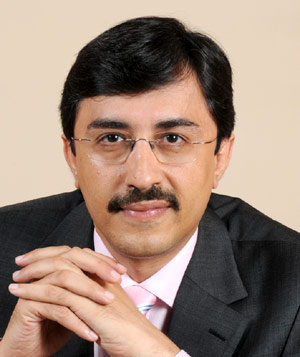
    An alumnus of IIM Bangalore (class of 92), Mr Marshan started his professional career as a copywriter, then moved on to account management at Grey Worldwide, producing television content for Sony India, heading marketing at IDBI Bank, and founding Sharekhan, one of India’s leading retail brokerage firms, along the way. Prior to joining Kotak, Mr Marshan was based in Sydney, where he helped turn around an ailing DTH business that catered to the Indian diaspora in the ANZ region.

    In a candid one-to-one with Tuhina Anand, he speaks about Kotak’s age, both physical and mental, and why Facebook is better than the company website.


    What would you describe as the Kotak Mahindra edge among the other players in the banking sector?

    The first edge we can talk about is the fact that though our firm’s name is that of a bank, we are actually a unique, fully integrated financial services provider, which is able to serve all your financial needs under one roof.

    Beyond that, we have long had a sterling reputation among consumer segments with respect to our expertise in the various financial spaces we operate in.

    Finally, our relative youthfulness is, I believe, our most powerful differentiator. The fact is that our firm and its myriad offerings are all the progeny of the rapid pace of financial reform in this country over the last few decades. Thanks to this, we understand the emerging young post-liberalization India and are able to connect with, customize and serve it best.


    When it comes to banking advertising, relationship seems to have become the focal point of conversation for all banks and it becomes difficult to differentiate one brand from another. Agreed that relationship building is important in banking, but how does one succeed in creating a brand that’s not me too?

    You are absolutely right, the emphasis on relationships in BFSI communication has rendered the space quite commoditized and undifferentiated.

    While the insight is valid, that relationship management is at the heart of successful business in our category, I think a key fact which has been glossed over is that things like service and relationships are merely empty promises if used in advertising, since consumers don’t believe such claims without trying. If you see an ad for a new ketchup that promises something special, next time you can pick up a bottle and give it a chance. If a coffee shop promises great service, you can sample it and decide for the price of just a cup. Banks don’t have the luxury of letting you sample anything, making trial very difficult. And it is compounded by approaches that boast claims which are hard for consumers to digest without trying.

    As far as answering how one can succeed at creating a brand that’s not me too, I can only speculate. What we have been trying to do over the past couple of years is certainly an attempt in that direction, but only time will tell if our recipe worked.


    Kotak’s earlier campaign was It’s great to be 25; now the campaign is Money ka matlab. What prompted them and how do the campaigns tie with each other?

    The grt 2b 25 campaign was our response to what we saw as a disruptive positioning opportunity, rather than just a hoary anniversary celebration. It was our bet that the campaign would help us further enhance our credentials, create disproportionate growth in our recall scores and tell the story of our coming of age.

    The campaign did all that and then some. So when it was time to do another round, we sought to consolidate the good it had done, and build on it. So, for instance, we stayed with the strategic choice of allowing regular folks to speak their minds instead of doing brand propaganda, which had worked really well. Needless to say, we also wanted to ensure we kept the youthful flavor of the brand alive. Beyond that, with Money ka matlab, what we essentially are seeking to do is use our age and connect it with a distinctive insight we developed on the evolving role of money in our country.

    The bridges between the last and the current campaign are in the creative strategy, as also the fact that the current campaign also continues to celebrate our 25 years in the business.


    What is the aim of the campaign and how has it helped the bank?

    It is our belief that for categories like ours, as it is for categories like colas, the advertising is a part of the product. Hence a key aim of our campaigns is to make our brand one that people will prefer, at least from those segments that we are targeting. To this end, our research tells us that we need to constantly work on objective metrics like spontaneous and total recall, and soft measures like credibility, trust, et al. It’s too early to say if this campaign has helped move the needle or not, but I can say that the last campaign did certainly make a significant impact.


    How long will this campaign continue, and what do you expect going ahead?

    This campaign has just reached its most exciting part. We are in the last lap of the broadcast part, where we used TV, outdoor, radio and the internet quite aggressively to communicate the Money ka matlab platform. We have just now kicked off an engagement programme, where two motorcyclists are riding from Chandigarh to Bangalore, and asking people across India what money means to them. These interactions are being captured in video form and will be uploaded every day from along the route.

    At the end of the journey, I am hoping we will be able to produce a meaningful document, in video and other forms, which will provide rich perspective on what money means to the people of India today.


    As the campaign is active on the digital platform, it would mean you are looking at the young TG. How has the campaign fared with that TG?

    The bulk of our fans on Facebook are in the 18-34 age group. However, it is a misconception that our target audience is only youth. We are conveying the brand’s youthful stance, to ensure it resonates with people of all age groups with a youthful bent of mind. What I mean by that is that in mindset terms, we are targeting people who will be comfortable with mobile and net banking, net-based trading, as well as the use of social media etc.


    How much has been the spend on the Money ka matlab campaign? Would you say it looks like about Rs 100cr?

    I will tell you what I can say. We have taken some fairly radical media strategy calls on this campaign.

    First, we opted for very short length films, since we believe frequency is critical in this age of ADD (attention deficit disorder). Our average film length is 15secs.

    On TV itself, we took a bet that really paid off, where we eschewed the main general entertainment channels and focused on news, movies, infotainment etc.

    Next, we used outdoor as a primary medium, not a support medium. We spent as much or more on OOH as we did on TV. Our insight was that people in cities are spending more time on the road than they are in front of their TVs and its mostly idle time, waiting in traffic jams, providing us a receptive audience. Also, the format of the medium itself lends stature to the brand.

    Finally, we focused all our messaging to drive traffic not to our brand website, but to our Facebook page. This again is insight-based. Today, people want to hang out at the mall, not come to your branch. Hence, if we want to engage them, we have to go to the mall. Similarly, few people actively seek out and visit brand websites, but it seems almost everybody will soon be on Facebook. Hence the bet.


  • Dude, where’s my page? The flaw that can hack your Facebook

    By A Correspondent

    How easy is it to hijack a Facebook page? Easy enough, as IT security and data protection firm Sophos has demonstrated in a video which reveals a loophole in the social network’s settings. (http://www.youtube.com/watch?v=4LSKEoXJUDY)

    Facebook Pages are an important part of marketing activities for growing numbers of businesses. Big brands have millions of fans signed up to their pages, and this encourages smaller enterprises to take advantage of the huge reach of the Facebook network. Anyone can create a Facebook Page, and popular Pages will probably require a number of additional co-administrators to help run it.

    This is where the problem can arise. While the onus is on Facebook Page creators to be careful about whom they grant admin access to, it is possible for newly appointed administrators to hijack the Page, removing the original creator’s admin rights and effectively taking permanent control of the Page.

    Facebook’s own help pages state that the original creator of the Page may never be removed by other Page admins,  but the Sophos video proves that this is not the case.

    There are two issues here. Even if a trusted friend or colleague is working as an administrator on a Facebook Page, it is possible that their account may be compromised, giving the bad guys a chance to hijack the Facebook Page you’ve created, said Graham Cluley, Senior Technology Consultant at Sophos. The other possibility is that the Page founder grants a stranger admin rights to the Page. While this might not sound like the best idea, there are several services, such as Fiverr, where you can find plenty of people offering to help you to maximize the success of your Facebook Page.

    If you give a cut-price social media expert admin rights to your Facebook Page, you really only have yourself to blame if you’re ousted.


  • ‘Film industry to see new business models, revenue streams’

    By A Correspondent

    Apex business chamber ASSOCHAM has said that the digital revolution is visibly impacting distribution and exhibition of films in India, as the industry marches towards completion of 100 years with a revenue projection of Rs 12,800 crore by 2015, up 56 percent from Rs 8,190 crore last year.

    Rising disposable incomes, growing popularity of alternate delivery mediums, digitalisation of film distribution, and value-added services like movie on demand and pay TV are set to open up new revenue streams and business models, according to a recent study by The Associated Chambers of Commerce and Industry of India.

    Digital cinema will enable worldwide release of films on the day one like television broadcast and shorten the theatrical window. From the demand side, increasing mobile and internet penetration is significantly changing consumption pattern of viewers within the country as well as in the Indian diaspora overseas, it said.

    Over 1,000 films are produced every year in more than 20 languages, with regional cinema  Tamil, Telugu, Malayalam and Kannada  constituting a large chunk. Backed by 12,000 theatre screens, 400 production houses and a huge viewership, the country’s film industry is the world’s largest in terms of number of films produced and ticket size. It employs about 60 lakh workers, and will complete 100 years in 2013.

    Nearly 14 million Indians (about 1.4 percent of the population) go to the movies every day.Box office collections currently contribute about 80 per cent of total film revenues. But technological advancements like digitalisation, onset of next generation networks and availability of sophisticated devices to access media are contributing to a growing chunk of ancillary revenues that comprise about 15 percent of film revenues.

    Indian cinema is undergoing remarkable changes from where it began. The aggressive expansion of multiplexes, access to organised funding, foray of leading corporate houses into film production and exhibition, and popularity of digital cinema prints have been some remarkable changes seen over the last decade.

    The ASSOCHAM study said there is requirement of more than 20,000 screens, and multiplex penetration is expected to improve further with the government allowing 100 per cent foreign direct investments through the automatic approval route.

    Though the number of multiplexes is rising, the average number of screens is extremely low in India at 12 screens per million compared to 117 in the United States. The film industry loses Rs 300 crore to 400 crore a year due to piracy and there is a shortage of world-class institutions to provide training in film and media.

    With growing viewer expectations in terms of content’s quality and variety, filmmakers need to gear up and leverage global audiences as well, besides making efforts to gain mindshare at international film festivals, said the study.


  • The Anchor: 8 indications when you know it’s time to bid goodbye to your agency

    By Ajay Kakar

    These are the views of a person who has invested 15 years at the agency end. And for the last six years he has been at the client side.


    These are the views of a marketer who strongly believes that the role of an agency partner is invaluable to his success and the success of his brand.


    #1 When you have the frequent need to say all the best to exiting key members of the agency: A brand is built over years. Passion and consistency are two critical pillars in this journey. And if an agency loses/shifts your key team members frequently, that’s bad news.


    #2 When you have many people servicing your account but you do not remember the name of any: You do need mere hands and legs. To quote David Ogilvy, you need people who know more about the brand than even the client. People who leave an impression on you and make an impact on the brand. People you can’t afford to forget. Nothing less will do.


    # 3 When you have meetings only at times of a brief initiated by you: You need Brand Custodians and Brand Stewards. People who are thinking of your brand all the time. And not only when you have a felt need. Else you will always feel compromised.


    # 4 When your agency only discusses advertising or 30-seconders with you: In today’s world you need to surround and engage your fickle and distracted consumer at all times. And if your agency doesn’t help you with that they may be contributing to your losing your customer.


    # 5 When your agency does not meet you after a campaign to enquire about the results: A marketer does not need advertising. He needs advertising that sells. He is evaluated on results. If your agency is not helping you get there faster, cheaper or better, why will you value them?


    # 6 When your agency doesn’t ask for an annual hike with confidence and more so if your agency does not propose a performance-linked incentive plan: A true partnership must be a win-win for both parties. And if your agency is contributing to your success, why would they think twice before asking for your just rewards. Is it because they are not performing?


    # 7 When an agency doesn’t meet you at regular intervals to seek a structured

    feedback/evaluation: If your partner doesn’t have a road map with clearly defined milestones, there is a good chance that you are not headed in the right direction.


    # 8 When an agency does not aspire to win industry recognition/awards on your brand: In our business passion is everything. And if your partner is not excited to do pathbreaking work for your client work that gets noticed and talked about the brand is possibly not in safe hands.


    Ajay Kakar is CMO – Financial Services, Aditya Birla Group