Blog

  • A pinch of cynicism, please!

    Instead of raising awkward questions, theIndian media went along — and encouraged — with the wave of emotionalism which took over some of the country during Anna Hazare’s anti-corruption campaign… introducing a new weekly column by Editors tracking news across the country

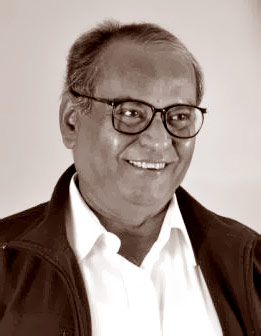
    By Aroon Tikekar

    It is distressing to see the Indian media print as well as electronic- going berserk at the slightest provocation. Has the constant fear for survival affected the healthy vision of the Indian media? Why have the tried and trusted tenets of the profession been disregarded, intentionally or otherwise? These are some of the questions that demand a discussion.

    First and foremost, do the new brand of journalists sincerely believe that a demonstrative approach to solving social problems can and does help? Coming out on the streets shouting slogans can highlight political issues. Pressure put on the powers that be may help hasten a political process. But mere highlighting of social issues does not ensure their solution, as essentially it requires a change in social mind. Obviously journalists are not so nave as to believe that the Anna Team is not going to wipe out corruption from the Indian scene at one go. Then why did they not educate their readers or viewers to doubt the efficacy of any such attempt? Without a pinch of salt called cynicism, media ceases to be the Fourth Estate in a democracy.

    Indian media should raise awkward questions on the right occasions. Joining the bandwagon would have been considered in the past as bad journalism and an affront to the calling. The editors do have a right which is ex-officio to criticize the high and the successful. Reporting on the news and analyzing it for the benefit of readers or viewers as the case may be, is one thing and creating news by emphasizing unimportant aspect and commenting on it is another.

    Today’s Indian media, while fighting a battle of survival, is creating news unworthy of reporting and repeating it ad nauseum, much to the chagrin of readers or viewers. Supererogation of emotion has become willingly or unwillingly the hallmark of our electronic channels, but why should the print media too compete with the electronic media in sensationalizing or pandering to emotions? Whenever we, the people become victims of emotionalism in any large democracy, it becomes the prime duty of the media to educate them. The gullible masses are prone to seek and expect miracles to happen and can easily be tricked into accepting an apparent solution. The media has to come out to warn that miracles are not possible by emphasizing need to be cautious, even cynical of quick successes.

    Secondly, it may sound strange but the media, by definition, is supposed to be critical and is duty bound to take a negative stand by pinpointing weaknesses and lacunae in any proposal or happening which the gullible and innocent person may accept without complain or questioning. Social responsibility is nothing to be ashamed of. In fact it is expected that a newspaper editor or channel editor be so detached from the theatre of activity that he should be able to swim with ease against even torrential current of people’s emotions. The editors should not ride waves of emotionalism. Such objectivity is a pre-requisite in journalism.

    Thirdly, why do the media fail to grapple the historical fact that a political revolution is possible almost overnight but there cannot be a social revolution? Social change can take place only on evolutionary lines. History has shown us time and again that change for the better by slow absorption, not by convulsion, but by assimilation this is the only formula for social change. There are no short cuts to social change, no miracles, and no magical remedies.

    The same newly cropped up weaknesses were displayed by our journalists when the Anna phenomenon was taking shape in Delhi. Society should have been warned that wiping out corruption is not an easy task. Team Anna has only made a beginning. The entire country is aroused and is up in arms against corruption. All these are good signs, but nothing much per se is going to be achieved by the mere introduction of Anna’s Jan Lokpal Bill in Parliament. The roots of corruption have reached deep within our system. Again, on the issue whether the electorate is sovereign or the Parliament, the media should have brought out that our Constitution-framers have taken care to see that no section enjoys absolute sovereignty.

    Even while appreciating the novel idea of distributing caps with I am Anna written on them, the media should have warned the agitators about the limited use of such symbolism. It was on the contrary seen going overboard and was quick to call Anna Hazare as the Second Gandhi.

    The catapulting of Anna Hazare into a national figure is largely the media creation. Media is responsible for creating his larger than life image. One is not even sure whether he has the qualities of a national leader. But media called him as the second Gandhi. Let’s face it. To compare Anna with the Father of the Nation is a cheap gimmick. Comparison of the two is odious. Anna lacks vision. He also lacks wisdom, one doesn’t even know how much the Gandhi literature he has read. The original Gandhi did not even approve of the ways of revolutionaries as he believed that to assassinate is the highest kind of censorship, but Anna does.

    Aroon Tikekar is former editor of Loksatta

  • Amul takes the road less travelled

    Aim and Objectives

    Amul is a Rs 10,000 crore company. The challenge was to maintain a steady growth of 20 percent year-on-year thereby furthering the aggressive sales targets for individual brands.


    The Background:

    Amul caters to an all-encompassing, universal TG; right from the woman of the house who buys Amul Butter, Ghee, Dahi, Cheese, Milk etc., to kids consuming Amul chocolates and Ice creams, and the youth consuming the Amul Kool Beverages.

    With a wide brand portfolio of 45 brands spanning across 14 product categories, Amul’s distribution network is ever-increasing and so is the need for aggressive marketing and advertising of these brands.

    But Amul faces strict spends restrictions, having an A:S ratio of less than 1% and yet needs to compete with megabrands like Nestle, Britannia whose A:S ratio is more than 5%.

    The media planner’s dilemma was how to do justice to 43 brands when the budgets would at best suffice for just 2 or 3 brands.

    We needed a single unifying thought which: Gives the brand a larger-than-life aura; allows for Amul to integrate its brands seamlessly; allows for adaptation to other geographies and profiles; cuts across the nati9on, binds across age and SEC.

    This unifier thought had to ensure that all our brands got the required visibility and in a manner that could help us break clutter, within our budget constraints


    How the strategy was implemented:

    Non-Conventional Media Decision No 1: Amul took a brave decision of ploughing 90% of ad budgets into impact property buys rather than spot buys with sponsorships thrown in.


    Non-Conventional Media Decision No 2: Customizing format shows for Amul in each of the priority markets.


    Non-Conventional Media Decision No 3: Within each show the Amul range was incorporated so as to showcase Amul’s width and depth.


    Non-Conventional Media Decision No 4: For each of the properties, Amul identified situations within show content and conceived ideas to integrate the brands seamlessly, thus creating a property within a property for each of the brands.

    Some brands/ideas were taken across properties to highlight Amul’s omnipresence and hence maintained a thread of continuity across properties. For example, Amul’s iconic mascot The Buttergirl was seen across all shows.

    Amul’s beverage range was highlighted through a branded Amul Mug which was placed on the Judges table across all shows. The Mugs were branded by the various Amul beverage brands such as Amul Kool, Amul Kafe and Amul Koko. Thus, Amul Beverages were seen week on week across all shows


    Non-Conventional Media Decision No 5: Some brand integrations were specific to specific properties and were integrated basis content situation identified in the show. Examples are Amul Masterchef and Amul Chhote Ustaad.


    Non-Conventional Media Decision No 6: The client partnered these shows in true Amul style and pulled out all stops to promote every show in a unique manner.


    Non-Conventional Media Decision No 7: Ensured amplification of every association through a complete surround sound via multimedia promotions.


    Expectations v/s Outcome:

    Amul gained tremendous mileage across each of these shows as a result of which Amul sales saw a surge of approximately 20-30% for brands which were technically zero budget and were struggling to move beyond single digit growth.


    Amul’s omnipresence was seen through:

    • 800 PR articles
    • 23 hours of in show brand presence
    • 872040 secs through promos
    • 27637 Promo GRPs


    Overall Brand Amul grew by 22% in 2010-2011. In terms of Brand Health Scores, Amul has seen a rise in its purity, trust and popularity scores by nearly 15%.Sales for brands like Ice cream, Paneer, Dahi, Mithaimate, Cheese soared by approximately 30 percent.

    The promo mileage that Amul got from these associations was worth Rs 32 crore, higher than the annual Promo GRPs for Britannia and Nestle combined.

    Like any other FMCG brand Amul garnered a reach of 90% @1+ and 80% @ 3+ levels. Healthy for any FMCG brand.

    Amul was present over 123 weeks cumulatively as Title Sponsor, with huge surround sound as part of marketing promotions for individual shows. The icing on the cake was the fact that this entry won a Gold in GoaFest 2011 for Best Use of Sponsorship.

  • Will Anna wave lead to media curbs?

    The Indian Government is looking at ways to curtail exaggeration in press reports, the case in point being the recent coverage of the Anna Hazare Movement.

    Media reports say the issue came up at a recent meeting of the Union Cabinet, with Urban Development Minister Kamal Nath speaking about the need to impose some restrictions on news reports to prevent exaggerations.

    Sources say that a committee to look into the issue of exaggeration in media reports might be set up, but the intention is not to curb the freedom of the press.

    As is known, earlier too the Government had raised the issue of being pressurised due to overdone coverage of events by media.

    The news media obviously is not too happy with this yet to be confirmed development.

    Mr Satish K Singh, Editor, Zee News, opined, Though we have heard about it briefly, we are not aware of the motive of proposed group. We will wait to see what it is all about. And if it is anything like clamping or strangulation  it will be opposed. However, he added that they would have no problem with regular interaction with the Government. It has happened in the past also, and we have always heard and contributed our bit.

    Mr Yatish Rajawat, Managing Editor, Dainik Bhaskar group, too was of the opinion that there is only a very remote chance of such a thing happening. He said emphatically, To begin with, I believe that the minister has been quoted out of contest. Nothing of the type would happen. He went on to question, How can the Government put in a panel? It is neither feasible nor practical or fair. How can a panel look at the news I am carrying every day?

    None of the news media professionals MxM India spoke to saw any virtue in the Government curtailing news media in any way. Mr Sanjay Prabhakar, Mumbai Bureau Chief, p7 news channel, summed up the sentiment with his argument, What is the media’s responsibility, if it is not to bring such issues into focus? Media knows its boundaries and limitations. No panel can decide for us, we are responsible enough to understand.

    And do people in the media that a section did go overboard, or gave the movement undue coverage? Yet once again the answer is a unanimous No. Mr Rajawat stated, I think the Anna coverage did not go overboard  when emotions are running high, the media has to present their angle, and reflect people’s sentiment. It is our job to discover what lies behind that sentiment.

    Mr Singh, meanwhile, was far more vociferous in his response, How can you reach the conclusion that the Anna movement was over-covered? If you see the Government’s stand itself, the Prime Minister himself has said that they are with the ideals of the Anna movement  he even saluted him in Parliament. He added, As for my channel specifically, we actually presented a very balanced view. We have spoken about the sanctity of Parliament, virtues of the Constitution, and also presented the Government’s point of view. I myself discussed these subjects more than 20 times. As a channel we have put everything on the platter.

    Clearly, this is not a debate that will die down in a hurry. Watch this space for more.

  • WagonR The Journey of a Leader

    Company: Maruti Suzuki India Ltd (MSIL)

    Execution period: 1999-2010

    Aim and Objectives: To establish WagonR as the market leader in the Indian passenger car

    In the year 1999, the first tall boy design was launched from MUL (MSIL Udyog Ltd, currently MSIL Suzuki India Ltd. – MSIL). The product offered the Indian car buyer great utilitarian benefits and practicality along with best-in-class space and good mileage. Hence, keeping in line with the product promise, the brand was positioned as a car full of ideas highlighting the brand’s practicality and versatility. MSIL invested in a series of TVCs (television commercials) that were built on the same proposition.

    From its inception, WagonR was ahead in many aspects. It was the first tall boy design and also the first to offer safety features in its class. It also was a first in offering consumers the flexibility in the choice of fuel; it gave the Indian car buyer the dual fuel option.

    And while the brand has faced tough challenges over the years, it has successfully overcome them in its journey to becoming one of the leaders in the segment. A case in point was the uniqueness of the design which posed a challenge for WagonR when it was launched. The Tall Boy Design was the first in the Indian compact car segment which at that time was considered to be ahead of its times. Initially the shape took time to get accepted by car buyers. However, brand WagonR looked to create relatability with the audience in order to communicate the benefits of this uniqueness in shape and the overall value the car offered to the consumers. WagonR was positioned as India’s first Multi Activity Vehicle (MAV). This followed the roll out of two brand campaigns Challenge Boredom and Feel at Home in the years 2000 and 2001 respectively.

    The Multi-Activity Vehicle positioning gave the brand some traction in terms of highlighting the product’s versatility but it was still some distance away from being relatable to the consumers. The brand slowly started getting accepted by the very rational Indian consumer. However, the brand’s potential in terms of sales was yet to be realized fully.

    Being a pioneer, MSIL looked towards a product makeover and a change in stance in the way the brand was talking to its audience in order to keep pace with their needs and expectations. A new campaign was launched in 2002 Interesting People  Inspired Engineering; marking the first time any car brand tried to tap into the buyer psychographics.

    A minor model change hit the roads in 2003 and successfully managed to meet the expectations of the changing consumer and addressed his needs in terms of style and sophistication. This became the inflection point in WagonRs history and the brand never looked back. Not only did the brand gain great traction in sales it also garnered high positive disposition in the consumer minds. Further research into the Brand buyers indicated that those who bought the brand were buying it after a careful research basis their needs and other market offerings. Essentially, the buyers were smart when picking the car of their choice  WagonR. This prompted the change in the positioning plank from being a Multi-Activity Vehicle which was functionally led, to a car brand For the Smarter Race, which was emotionally led.

    This positioning was sustained from 2004 to 2006 till a facelift of the product was introduced. Also WagonR portfolio got a new variant in the form of the LPG Duo, during this time, marking the birth of the first dual fuel option in India. WagonR had a great ride since 2003 with sales increasing at an above industry average of 40% CAGR till 2007. (Please refer to the chart II below). WagonR became one of the industry leaders clocking highest sales in the passenger A2 segment and could assume leadership position with its pioneering stance in several aspects.

    The key idea that emerged after discussion: In the rapidly changing Indian car market, there was an influx of brands coming in. By the year 2008 there was increasing competition in the A2 segment which offered more choices to the Indian consumers. The new age consumer wanted to experience superior products. WagonR, on the other hand, continued to take forward MSILs legacy of being a trusted brand. Trust and reliability were not associated with the newer players in the market. This fact won WagonR many loyalists.

    However, it also became imperative for a leading brand such as WagonR to stay ahead of the competition and continue to be a pioneer brand. Also, despite the increasing competition, the brand never lost ground, in terms of sales, the brand continued to be consistent (refer to Chart II) only reinforcing the voice of the customer. Nevertheless, for a brand that achieved good numbers, and steadily rose, it was important to create a distinct appeal and imagery.

    Solution: To counter the rising competition, the brand positioning was strengthened further by leveraging the leadership aspect, highlighted by sales. Therefore, the new communication plank for the brand became Smart Leader.

    The brand continued to retain its core value of being Smart while confronting the challenges on the consumer front

    a) To make the brand more aspirational

    b) Consumer needs evolving beyond rational benefits to appeal value;

    and the brand/product front

    a) Contemporary offerings

    b) New product launches.

    It was now essential for WagonR to maintain its leadership position and the brand standing in the market by reinforcing the core brand values and sharpening its positioning. Clearly, WagonR was the largest selling car in the segment. Hence Leadership was added as a new dimension to the core promise of the brand -Smartness. The Leadership stance was extended beyond just numbers. This was also, true to its pioneering spirit. A shift was seen from a fact based leadership to thought based leadership with the intent to move to a more sustainable brand platform Thought Leadership. To reinforce this platform, MSIL did interesting outdoor activities across major cities and at airports and followed it up with similar messaging in magazines and placards.


    Innovations: To further the brand assets the 3 new initiatives were deployed

    1) Brand Ambassador – Shashank Srivastava, chief general manager, Marketing, MSIL, said that the target group was the middle or upper middle class families, who look for space and sound engineering, as well as buyers looking for a rational and performance-oriented vehicle. As the brand ambassador, Madhavan was seen as a geographically neutral face, and WagonR’s contemporary, pragmatic and balanced brand values were seen to resonate well with his personality.

    2) Brand Mascot  Mr Wizer becomes the first mascot in the Indian Passenger Car Industry

    3) Think Big Challenge  A national property created on the lines of Thought Leadership, furthering the stance of the brand as a smart leader.


    Challenges and impediments: The Tall Boy Design of WagonR was the first in the Indian compact car segment which at that time was considered to be ahead of its time. Initially the challenge was to get the shape accepted by car buyers.

    By May 2010, WagonR had sold 8.5 lakh cars to the Indian consumers and stamped its authority in the A2 segment. At the same time the Brand and Engineering (product) teams were aware of the fact that consumers are fast evolving with rising aspiration levels, esteem and status needs, growing demand for experience and indulgence, coupled with the fact that they were becoming more self-expressive day by day.

    An all new WagonR with a complete facelift on a technologically advanced platform was conceived. Following were the findings of an exercise conducted to gauge the perception of the product in the market

    1) The new car seen as a more contemporary offering.

    2) The pleasure points of the old WagonR were carried forward in the new model  (Comfort, Safety, Space and Reliability) – Smart Understated Performance.

    3) The key difference is in the level of detailing and finishing.

    4) The additional dimension of a luxury feel was there, but, at the core it was still the Smartest Choice.

    Expected key deliverables: For the launch of the ‘All new WagonR’, the challenge was to infuse newness into something one has always known. With a Full Model Change (FMC) and an all New WagonR, the marketers had the following broad objectives.

    • Retain leadership position and consolidate market share
    • Make the brand contemporary – Highlight the dimension of SMARTNESS which is contemporary and create an aspiration for the brand
    • Reinforce the brand values by building an imagery to suit the evolving consumer while making the sustainable and distinctive brand positioning to thwart competitive launches

    The All New WagonR was launched with a new campaign, keeping the inherent brand associations of Leadership, Smart and Popular intact. The new campaign, the Blue-eyed boy, leveraged the popularity of the car (favourite car) and the need to build aspiration which was now being supported by the added dimension of luxury in the product.

    The Blue Eyed Boy campaign highlighted the All New WagonR and announced the arrival of the new avatar of India’s favourite compact car. It also described the feeling of being the centre of attraction and adulation that the consumer experiences because of the smart choice that he has made. The Blue Eyed Boy was also a salute to consumers who contributed to making the WagonR a celebrated and the favourite car brand in the country.


    Learnings: Today, India is home to more than 40 million passenger vehicles (Source: SIAM & Industry Excerpts). The Indian Passenger Car and Commercial Vehicle manufacturing industry is the seventh largest in the world, with an annual production of more than 2.6 million units in 2009 (Source: SIAM & Industry Excerpts). Naturally, global manufacturers are increasing their investments across the various automobile category to tap into the growing demand. Very evident from the fact that India has witnessed more number of passenger car brands and models in the last decade than over the previous 5 decades. The table below gives the basic segmentation of the passenger car industry.

    The passenger car market in India is one of the fastest growing markets of the world, and from the car buyers perspective it’s a market which offers plenty of choices across all segments (especially A2) and a wide range of brands. Please refer to the chart I below for the sales in the overall passenger car market as well as individual segment sales.


    Analysis: WagonR is the pioneer in terms of its tall boy design in its category, and getting accepted by consumers was not an easy task but it managed to do so by constantly understanding what people wanted thus refreshing its communication strategy from time to time. It began positioning WagonR as India’s first Multi Activity Vehicle (MAV) and then moved on to the positioning of For the Smarter Race to the Blue-eyed boy when it underwent a full model change thus conveying its newness yet maintaining its leadership stance.


    *This case study is sourced from MSIL


  • New, newer, news: Mid-Day’s changing

    On September 6, 2011, Mid-Day came out in a new avatar with a new design and structure. The move seeks to offer the reader news in a convenient way, with several changes across editions bound to build up interest around the newspaper.

    On expectations from the change, Mr Sachin Kalbag, Executive Editor, Mid-Day, said, The USP of the newspaper will remain its city coverage, no matter which city we operate in. While our flagship edition will still remain Mumbai (and the structural changes have been brought about only in Mumbai, while design change is universal), we will continue to do hard-hitting stories across editions. My expectations from the newspaper are the same as they were on the day I joined: to do the kind of journalism we always dreamed about. To do stories that create impact.

    Increase in pages at same price point

    Even as other newspapers are decreasing the number of pages they offer, Mid-Day increased the number of pages from 48 to 64, out of which 15 pages will be dedicated to city news.

    Mr Manajit Ghoshal, MD and CEO, Mid-Day Infomedia said We were getting a lot of feedback from our readers that there were more advertisements and less content. Hence, to cater to the needs of our readers, we decided to increase the content. The number of city and sports pages has been increased substantially. When asked if there will be a hike in cover-price owing to these changes, Mr Ghoshal said There will be no price hike right now. The readers of Mid-Day will get 30% more content in Mid-Day at the same price point.

    Reintroduction of editorial pages

    It is noteworthy, that several newspapers have earlier got rid of their opinion and editorial pages, citing the reason that the pages can’t garner advertising revenue and that it has low readership. However, Mid-Day has gone ahead and re-introduced the opinion pages. When asked about this move, Mr Ghoshal said While it is true that editorial pages can’t reap revenues, the industry of journalism is not only about making profits. We feel it is essential for a media company to inform and also give opinion and take stands.

    With this reinstatement of their platform, columnists will write across all sectors  politics, civic issues, national affairs, internal security, foreign policy, sports, fashion and humour.

    New design and structure

    The newspaper is divided into two clear sections now, which can be easily distinguished. Section one comprises news, opinion and sports. Section two will cover all about entertainment, city, films, television, a comprehensive city events and food guide. There will also be lifestyle features on health, travel, sex, relationships, and fashion etcetera. The entire section two will be called HitList.

    Also, our readers observed, that the section two of our newspaper was not clearly identifiable. Hence, now we have a colourful and bold logo which clearly demarcates it now. Logos for sports and classified pages have changed too, said Mr Ghoshal.

    Advertisers, too, will find that their ads are easy to find, and are not lost in the clutter. Classified and Film advertising will now have their own dedicated pages towards the end of Section two, to clearly demarcate them from the rest.

    Commenting on how these changes will impact Mid-Day’s popularity and readership Mr Kalbag said To be honest, design will not get us more readers; content will. We have already changed the newspaper’s reporting paradigm in the last few months. We will continue to do hard-hitting, relevant stories that shake up the authorities.

    What the new design and new structure will do, is make reading and navigating the newspaper much more simple. One of the prime complaints that our readers had was that the newspaper is cluttered. It is a perception that we want to change with the new design. Mid-Day will be easy on the eye, and more important, news and information will be easy to find, added Mr Kalbag.

    Interestingly, apart from the main cover page, Sports and HitList will also have individual cover pages to pique the interest of the readers, and to differentiate from the crowd.

    How increase in pages impact bottomline

    During recession, most newspapers across boards had cut down on the number pages, and Mid-Day was no stranger to such a situation. However, when asked how the increase in pages will now impact the bottomline, Mr Ghoshal said It is true that such considerations did come to our mind but we had no choice but to cater wholeheartedly to our readers with content. We have been increasing circulation through constant expansion. To cater to the length and breadth of our audience we had to come with newer and more interesting stories  hence the increase in the number of pages.

    The changes made by Mid-Day in their product will definitely churn some interest and add value to the product. The new design and the new structure seek to perform an essential aim  to make news and information that is relevant to the audiences in the simplest, most accessible manner.


  • India gives voice a case study of Anna Hazare’s PR


    A good product generates its own PR. That, in a nutshell, is the success of Anna Hazare’s anti-corruption movement. The movement seemed to have a life of its own. Yet, it was a very successful PR exercise at the same time, and this is what leading public relations and communications firm Hanmer MSL has examined in this case study, the first of the thought leadership studies that Hanmer MSL’s new content service plans to put together on a regular basis.


    Anna Hazare took up an issue that affects the common man in every aspect of his life  he must bribe officials for even simple things like a driving licence to something major like getting his child admission into school. In his interaction with the government/bureaucracy, absolutely nothing gets done unless he pays a bribe.

    The product

    You can compare the Jan Lokpal Bill to a product that satisfies a crying need  the reduction of corruption, if not its extinction.

    The success of the agitation is astonishing because it had no professional help. Yet, a good product (the Jan Lokpal Bill), clear messaging and use of the right communication tools for this age (it’s been a social media-fuelled stir, which is why you see such a large youth participation), have led it to great success.

    The brand

    If the Jan Lokpal Bill is the product, Anna Hazare is the brand ambassador. Here are a few lessons he taught us about brand-building through the campaign.


    Lesson 1: Have an idea that connects

    Rocked by five major scams over the past year, India was angry at the government, its seeming lack of will to tackle corruption and the time it took to act. A strong, independent Lokpal that could investigate ministers, the bureaucracy, the judiciary and even the prime minister was an idea whose time had come.


    Lesson 2: Create symbols, icons

    Every timeless brand has its symbols Nike and its swoosh, for instance. Most brands also have their icons Steve Jobs for Apple, for example.

    Similarly, every public movement has its symbols and icons  the charkha and non-violence as symbols and Mahatma Gandhi as the icon of the freedom movement.

    Similarly, Hazare and the Gandhi topi became the icon and symbol respectively of the anti-graft fight.


    Lesson 3: Offer a consumer experience

    Each brand has a distinct character. But how do you make the consumer experience it? Hazare chose the Ramlila ground for its size, allowing thousands to throng it and take in the atmosphere. Having experienced their own power, the people began to believe they could change things. There was no looking back.


    Lesson 4: Test market

    All successful products are test marketed before they are launched. Anna’s earlier fast at Jantar Mantar showed that the idea could work. It provided the vindication for a larger movement.


    Lesson 5: Package it right

    Product, pricing, promotion, packaging are the four Ps of marketing. In this case, packaging was paramount. Anna’s white dhoti-kurta and his clean image were the perfect magnets for the jeans and T-shirt generation.


    Lesson 6: Make a media plan

    The campaign was timed perfectly to grab media attention. Launched between the World Cup and IPL, it filled the media vacuum that existed then.

    Team Anna Kiran Bedi, Arvind Kejriwal, Prashant Bhushan  gave innumerable interviews to the media, making sure the campaign was centrestage all the time.

    Hazare himself did not give too many interviews in fact, none during the second round of agitations. He spoke just once to Kiran Bedi from Tihar Jail, which he refused to leave after his arrest. This created a larger impact than any media interview could have had.

    Apart from this, he addressed the public and media several times at the Ramlila Maidan.

    There was another critical aspect to the media communication: the campaign had only the abovementioned people speaking to the media. This was smart thinking. The fewer the voices, the less scope there was for distortion of the message.

    Would any corporation have 15-10 spokespersons? Normally, they’d have one or two. No reason why the anti-corruption movement should have been different.

    The campaign made impressive use of PR tools and techniques ranging from symbolism (fasts and meditation) to social media (Facebook, Twitter, YouTube, apps), FM radio, news media, television and mobile telephony.


    Lesson 7: Out-think the competition

    Anna kept the competition (the government) guessing. Example: The government thought it had preempted the agitation by arresting Hazare. But, his refusal to leave Tihar even when allowed to go, trumped the government’s move and fuelled the movement.


    Lesson 8: Use the right imagery

    The image of Hazare meditating at Rajghat or of him lying down at Ramlila ground and clapping along to the bhajans being sung proved to be iconic. When he broke his fast, he took water from a Dalit girl and a Muslim girl.

    With a giant image of Mahatma Gandhi in the backdrop, the message was not lost on anybody  here was a frail 74-year-old taking on the establishment, much as another frail old man had done in the 1930s and 1940s, and he deserves your support.


    Lesson 9: Use the right tagline

    I am Anna Hazare is a lot more impactful than I am for Anna Hazare. It is far more participative and has a way of internalising the struggle. It grabs you and makes you want to act.

    The social revolution

    The young, some of them fresh graduates, were the ones who created a countrywide buzz about the campaign for a strong Lokpal.

    While Arvind Kejriwal may have headed the media cell, it was the responsibility of over a dozen team leaders, most of them below the age of 30.

    A dedicated team of IT experts from Public Cause Research Foundation (PCRF), which acted as a secretariat for India Against Corruption (IAC), ran IAC’s main website (http://www.indiaagainstcorruption.org/) along with 14 city-centric websites round-the-clock. They also monitored TV channels and posted videos on the internet to create a buzz across the globe.

    Another team ensured that the latest information about Hazare, soon after he was arrested, was posted on social networking sites such as Facebook (http://www.facebook.com/IndiACor) and Twitter (@janlokpal).

    Till August 27, there were 3.64 lakh likes on Facebook and over two lakh followers on Twitter. In contrast, the I Hate Anna Hazare Facebook page roped in only 4,137 members.

    Hazare’s video recorded in Tihar had 1.6 lakh views on YouTube.

    The media impact

    • Large swathes of the television-viewing public switched to the saturation coverage of Hazare and his campaign, especially those in Hindi. For once, real life was more riveting.
    • While viewership increased for most news channels, time spent on them doubled in just a week. It may, in fact, have eaten into the sports market, which dropped 33%; and Hindi movies, which showed a 12% fall (from a 16.37% genre share to 14.44%) in the week ended August 20, according to a study by media servicing agency ZenithOptimedia.
    • The genre share of Hindi news channels rose from 5.9% in the week ended August 13 to 11.02% in the week ended August 20, according to TAM.
    • The genre share of English news channels also rose  to 0.54% from 0.31%.
    • Viewers were hooked since August 16, when Hazare began his fast.
    • The average daily time spent on Hindi news channels rose to 16.9 minutes from 8.5.
    • Viewership of Star News rose 15%. From 26 million viewers, Star News reached out to 31 million.
    • There was a viewership surge across Tier 2 and 3 towns in Punjab, Haryana and Rajasthan in the past week, which shows how mass-based the movement was.
    • While the news genre viewership more than doubled, Times Now reached 12 million viewers, said Sunil Lulla, CEO of Times Global Broadcasting. Times Now continued as the No. 1 English news channel with a share of 37.8%, followed by NDTV 24×7 (22.2%) and CNN IBN (20.7%).
    • Among Hindi channels, Aaj Tak continued to lead with a share of 17.9% share, up from 15.2%. India TV’s share declined to 11.6% from 14.2% to bring it down to the fourth place. THIS IS BECAUSE IT HAS A STRONGER ENTERTAINMENT COMPONENT COMPARED TO NEWS. Star News took over as No 2 with a share of 14.7%.
    • Many news channels decreased their entertainment-related content to make way for Hazare. In fact, some dropped ads to accommodate more of Hazare.
    • Every newspaper covered the agitation.
    • All newspapers took the stance that corruption needs to be tackled; ToI took an aggressive pro-Hazare stand. Every other newspaper gave the issue and the agitation wall-to-wall coverage, but was careful to balance it.
    • Regional newspapers, which have far more experience of covering Anna, were more balanced too.

    Top-viewed news events on TV

    Event % of audience Period
    Anna campaign 12.41 Week 34, 2011
    Babri demolition case 11.54 Week 40, 2010
    YSR chopper crash 12.31 Week 36, 2009
    26/11 17.81 Week 48, 2008
    Mumbai train blasts 11.78 Week 30, 2006
    Mumbai floods 9.71 Week 31, 2005
    Tsunami 10.35 Week 1, 2005
    Lok Sabha polls 2004 10.22 Week 20, 2004
    9/11 7.56 Week 38, 2001

    Source: TAM

    How the UPA got it wrong

    Manmohan Singh used to be known as one of India’s most effective prime ministers. By shaking off the communists hold on his government, pushing through a historic nuclear treaty and winning the last Lok Sabha polls, he was on a high.

    Today, he’s the face of a government that badly misread the public mood and bungled the handling of Anna Hazare’s movement. What’s more, his extended silence gave the impression that he wasn’t really in charge and that he had no idea of how to manage ministers who seemed to get shriller by the minute.

    He finds himself at the receiving end of a nationwide upsurge against corruption, his government with its back to the wall.

    Sending out the wrong messages

    Action Impact
    Refused to accept need for anti-corruption law Government created a perception that it was stonewalling, seeking to stall an effort to cleanse the country of corruption.
    Arresting Hazare If arresting him was ill-advised, taking him to Tihar was a PR disaster. Tihar is where those accused of some of the worst corruption in recent times A Raja, Kanimozhi, Suresh Kalmadi were lodged.Hazare turned his arrest into victory by refusing to leave jail until his demands were met.
    Failure to communicate The top leaders stubbornly refused to engage with the media, secure in their 2009 electoral victory.
    Let anti-graft crusaders drive the debate Government should have seized the initiative by moving aggressively on the unfinished reforms agenda. It did not even celebrate 20 years of reforms in July, as though it disowned them.A publicity blitzkrieg would have done wonders for its reputation, especially with young middle class Indians who benefited most from the reforms. It is these people who heeded Hazare’s call. Instead of regarding Manmohan Singh as a benefactor, they saw him as an obstacle to change.
    No magic wand to curb corruption, said PM He would have been better off declaring that the battle against corruption and a strong Lokpal Bill were an integral part of the reforms process. If RTI brings openness in governance, Lokpal is part of the restructuring.
    Missed opportunity It would have been a PR coup if Singh had asserted that he was on the same side as Hazare. He could have even joined Hazare on a day’s token fast. That would have gone a long way in bridging the communication gulf between the populace and the government, which they see as remote and loath to abandon old habits.


    Timeline

    January 30, 2011: Marches in over 60 cities to demand Lokpal bill. Social reformer Anna Hazare, former top cop Kiran Bedi, activist Swami Agnivesh and lawyer Prashant Bhushan participate in Delhi rally.

    February 26: Hazare announces fast unto death from April 5 if Prime Minister Manmohan Singh does not decide on civil society’s inclusion in drafting the bill.

    April 5: Hazare starts fast at Delhi’s Jantar Mantar.

    April 8: Hazare announces decision to end fast as government agrees to form 10-member panel of civil society members and union ministers to draft a stringent anti-corruption law.

    April 9: Hazare ends fast.

    April 16: Joint committee meets, both sides exchange drafts.

    May 2: Second meet with no difference of opinion.

    May 7: Agreement on independent Lokpal with powers to initiate investigation and prosecution.

    May 23: Agreement on empowering Lokpal to order list of movable and immovable assets of accused in corruption cases when sufficient evidence found to book them.

    May 30: Differences appear as government disagrees on including prime minister, Supreme and High Court judges and MPs conduct in parliament within Lokpal’s ambit.

    June 6: Civil society members boycott meet a day after police crackdown against yoga guru Baba Ramdev’s fast in Delhi’s Ramlila Maidan.

    June 15: No consensus on inclusion of prime minister, Supreme and High Court judges.

    June 20: Some ice melts amid war of words; government calls it major step forward.

    June 21: Last meeting of joint committee ends on sour note. Both sides exchange drafts; Hazare warns of another fast.

    August 15: Hazare denied permission to fast at Delhi’s Jayaprakash Narayan Memorial Park after Team Anna agrees to accept only 16 of police’s 22 conditions.

    August 16: Hazare begins fast, detained and sent to seven-day judicial custody to Tihar jail. Government decides to set him free late night. He refuses to leave.

    August 17: Hazare refuses to leave Tihar till a solution is reached on fast venue. Supporters gather outside prison, Hazare continues fast from jail. Permitted to fast at Ramlila Maidan.

    August 19: Hazare leaves Tihar, continues fast at Ramlila Maidan.

    August 23: Government invites Team Anna for talks.

    August 24: Second round of talks, all-party meeting held. No breakthrough in impasse.

    August 25: After meetings with political parties and Team Anna, government agrees to debate all versions of Lokpal bill in parliament.

    August 27: Both houses of parliament debate Lokpal bill, adjourn after adopting sense of the house and agreeing to Hazare’s three demands that will be sent to standing committee on Lokpal bill.

    August 28: Anna breaks fast on 13th day.


    Copyright: Hanmer MSL
  • Suzlon goes for youth connect with green message

    Why would a wind turbine supplier’s campaign target the youth? That’s just what Suzlon has done with p.a.l.s (Pure Air Lovers Society). The campaign, which was kickstarted with a teaser and culminated in highly visible print advertising, aims at driving audiences to its website (http://pals.in/) which indicates that it is looking at bringing the young population into its ambit as they are the ones most active on the digital platform. The website too is unlike what one would imagine from a company that’s into wind power, as p.a.l.s is young, refreshing and interactive  in short, everything that would seem inviting to the youth.


    If one were to look at the link between Suzlon and p.a.l.s, it is really the issue of clean and energy-efficient quality of air. The inspiration for the initiative came from the truth that air pollution and the quality of air in our cities is becoming a serious issue today. This, coupled with research which suggests that Indians are concerned about this and address it as their number one environmental concern, was reason enough for the crusade exhorting people to stop air pollution. The company in fact quotes that more than 5 lakh people a year die of air pollution-related ailments in India.


    Ms Dharini Mishra, Global Head for Brand, Suzlon Group, explains, Suzlon has always been committed to sustainable development of the country. Since we are in the business of clean, pollution-free energy from the wind, we thought Pure Air was the best way to connect our philosophy with the youth of India and the country in general.


    The timing of the initiative is well thought of, as Indian wind energy is attracting global attention. Also, Suzlon’s order books are looking strong and giving the company the confidence of being well placed in the Indian market.


    Suzlon is India’s leading wind energy company for more than 13 years now. We already

    had a cause which is inherent to our business but we were waiting for the most

    engaging manner and right time to take it to the people, that’s how Ms Mishra explains the timing of the initiative.


    The youth connect may not be apparent at the outset but it’s clear when one understands the vision of Suzlon, which is all about a better tomorrow, a change for the better and renewable energy. Ms Mishra added, These attributes are directly related to the young. India’s

    youth is bringing in wide sweeping changes to the way we live and do business. We strongly feel that connecting our brand with people of a young mindset will see a revolution of change across this country which is very critical for our sector and our business as a whole.


    The campaign, which is conceptualized by LoweLintas, has seen a huge response with the number of p.a.l.s growing by more than 1,400 a day. The website has stories, videos and real-time updates on what pals are up to, besides other engaging and interactive features. The company sees it as one of the most successful social cause campaigns for the youth. In the first phase the advertising managed to create awareness about the cause, but now Suzlon will move on to activations and tools that encourage p.a.l.s to make a tangible impact. In this phase the focus will be on partnerships, school connect programs and creating a digital stir.


  • Eco awareness spurs green choices among consumers

    By A Correspondent

    Consumers are increasingly choosing to buy green, and insights from the 2011 Green Brands Global Survey indicate how green brands can connect with their customers

    As more countries gather speed on greener policies and organisations increasingly adopt the organic growth path, is the consumer’s support for going green translating into action at the supermarket and the department store?

    The answer seems to be a heartening Yes, as the annual ImagePower Green Brands survey among consumers in India, China and Brazil shows.

    The 2011 survey, capturing the perspective of over 9,000 consumers across eight countries, reveals that an increasing number of people desire to go green and are willing to pay relatively more to buy a green product.

    However, with transparency and choice being the key decision influencer for consumers, a lot more is expected from the policy-makers and organisations in pushing green products ahead in the supply chain. Some of the key findings from the study:

    Indian consumers want more

    Indian consumers do care, and the green brands survey, which is amongst the largest surveys on consumer perceptions of green brands and corporate environmental responsibility, shows that 64 percent of Indian consumers plan to spend more on green products in the next year. More importantly, nearly 48 percent of Indian consumers and 55 percent of Chinese consumers said they were willing to spend over 10 percent more on a product simply because it is green. The survey showed that 28 percent of Indian consumers in the survey expressed the intent to purchase green automobiles in the next year, as against the 16 percent who purchased green automobiles in the previous year.

    Package it right

    While consumers show a clear inclination towards green products, the challenge for companies is not just in creating greener products but following a marketing strategy that showcases their green side. The green brands survey shows that packaging and publicity both figure high on the consumer mind as important parameters for choosing green products.

    Absence of proper labelling was seen as one of the critical reasons for people not choosing green products. Nearly 56 percent of consumers in China and 33 percent in India felt the green labelling or product information was confusing, which impacted their decision. Along with going green with their products, companies need to improve packaging and labeling by including information such as ingredients and origin, food testing and safety as well as environmental impact. Expanding the distribution to increase the accessibility of green products in shopping venues is another important step.

    Cost considerations

    Price is yet another important consideration for consumers wanting to buy green products. Their lower accessibility and higher prices make consumers see green as a luxury purchase rather than a sensible and sustainable one. This is further accentuated by the inability of consumers to gauge the actual value of the product due to the absence of proper labelling that informs them about its eco-friendly qualities and benefits.

    Advertise green power

    The survey shows that as far as Indian consumers go, nearly 57% would be influenced by TV advertisements to buy green. The green survey shows that consumers in emerging countries are more trusting of advertising compared to their counterparts in developed countries. Clearly, companies must leverage this opportunity to establish their green credentials through awareness and education.

    Regulate responsibility

    Showing a similarity to the global trend, the green survey had 95 percent of Indian consumers wanting the government to support green innovation and regulation. With regard to household goods, consumers want the government to mandate producer responsibility and greater label clarity. Currently, India does not have a consistent standard on packaging and labeling, which leaves unable to make informed decisions. The Indian consumers made a clear indication that they wanted the government to play the role of regulator and ensure the private sector provides consumers with clear and consistent information on their products.

    It’s time for Indian companies to get their green credentials right.


  • Engagement Study may solve magazines’ measurement blues

    By Akash Raha


    Advertisers and media agencies will have more options to choose from in the print industry, as the much-awaited Engagement Study is set to be released at the World Magazine Congress 2011 in New Delhi next month. Mr Pradeep Gupta, President, Association of Indian Magazines (AIM), confirmed this development with MxM India.

    The apex association of magazine publishers is delivering on its promise of the Engagement Study on time. Mr Mitrajit Bhattacharya, General Secretary, AIM informed MxM India that the research for the Engagement Study was conducted by Quantum and IMRB, whereas Quantemplate coordinated the project on behalf of AIM. The research methodology of the study was based on desk research by Quantemplate, qualitative survey (20 one-on-one interviews of 2.5 hours each) by Quantum preceded the large scale quantitative survey (Sample Size: 3600 +, across 10 centers) by IMRB.

    Commenting on the study’s efficacy for the industry, Mr Bhattacharya said, The magazine industry has never been represented well by the large readership surveys like IRS, which are largely designed to cater to the needs of the dailies. The data for magazines has been less robust and highly fluctuating. More so, these surveys do not attempt to cover qualitative dimensions like reader involvement, lower clutter levels leading to higher attention, recall or even the image building capability which are the strengths of the medium. The Engagement Study will be a highly credible tool for the advertising fraternity to understand the engagement of consumers with various media and to evaluate the level of engagement of magazines vis-vis other media. These insights will help the advertisers immensely in choosing a medium like magazines in absence of sound readership data.

    He further added, But let me clarify at this stage that this survey is not attempting to capture any data at an individual title level. It is a very robust survey with a huge sample size, both qualitative and quantitative, trying to address the issues of the magazine industry as a whole, well represented by all major genres and languages.


    The AIM had announced during IMC 2010 its plan to conduct the Engagement Study for magazines, which could act as an alternate source of data for advertisers, after advertisers and media agencies expressed their concerns over the measurement issue that has plagued the magazine industry for long. The study is expected to solve the problem of qualitative measurement that the print industry faces, especially in the magazine domain.

    We have great work available on this subject in countries like the US, UK etc. However, the complex nature of the magazine market like India, with so many titles in so many different languages, makes this survey a unique and challenging one, concluded Mr Bhattacharya.

    Studies have shown that magazines have a completely different level of engagement. Magazine reading is very immersive and concentrated, much more than other mediums. Hence, the study is expected to be a boost for the advertising industry, giving them more options and choices to advertise effectively and efficiently.


  • Educational publication sector will see more ads

    By Akash Raha

    With the growth of the evergrowing middle class, and spread of education to the grassroot levels, educational print publications seem to be doing fairly well in India. According to AdEx figures, education sector print advertising in H1 2011 saw a jump of 4 percent vis-vis the same period in 2010. However, the top two categories advertising in this segment were Educational Institutions and Coaching / Competitive Examination Centres which contributed to 90 percent of this sector’s advertising. MxM India explored the reasons for the growth in advertising in this segment even as advertising in several other sectors continues to shrink, and the reason advertisers from other categories stay away from education sector print advertising.

    It is indeed true that India is a country where education is valued and is sought after. The population of the aspiring middle class to is constantly increasing. India as a country has always been serious with education, says Mr Anindya Ray, Vice President, Lodestar UM, Academics and good job are a sign of ultimate success. Alternative careers like sports, singing, adventure related sports etcetera, are not the staple for the vast Indian middle class. Even though of late such alternative areas are coming up, but a basic level education of graduation is a must. Hence education will always be on the growth path. In fact, during the worldwide recession of 2008/2009 when India was having a soft market situation, when all other advertisers were holding on to their media spends, education sector still showed a growth and was the leading spender.

    Mr Premjeet Sodhi, President, The Collaborative, Lintas Media Group too touched a similar note and said,Education as a sector is fairly liberalised and there is a lot of private/corporate interest in the sector. A large and growing youth population provides an opportunity for private enterprise in India and hence this sector is on the anvil of significant growth. From the advertising perspective, its prominence in advertising shares is mainly because of the huge number of companies that contribute to the advertising of the sector. In the future, more companies are expected to start advertising. Besides, even the existing ones are expected to increase their advertising spends. However, it remains to be seen if these spends will be retained within the print sector or will television and digital take more and more of it. The recent trends do suggest that it will be a challenge for print to continue to grow in this domain. If one were to estimate the growth not in terms of volume but in value then the trend may already be unfavourable for the print category.

    As the number suggests, 90 percent of the advertising in this segment come from Educational Institutions and Coaching / Competitive Examination Centres. The rest 10 percent comprises Computer Education, Vocational Training Institutesand other categories. When asked why advertisers from other categories don’t see this segment as an opportunity to advertise and get to the young and educated Indians, Mr Dinesh Vyas, Business Head, MEC India said, Advertisements gain a lot from the editorial content of a magazine. It might be true that educational publications are doing well and is a medium to reach young-educated Indians but several categories might be a misfit in the publication. A consumer buys educational magazines to know more about education and an advertisement about diamond sets or deodorants would be a total mismatch. While advertising, it is important to match the environment of the magazine

    When asked the same question, Mr Ray said, Yes it does make sense for advertisers from other segments to advertise in this sector  theoretically though. However in our country, education is a serious subject and entertainment, technology, consumer durable industries do not want to be in that atmosphere. More so, because there is not a single minded education platform in India and the best that you have are the various education supplements with mainline dailies.

    In a burgeoning population of educated Indians, the scope of growth in this sector is likely to soar in the years to come. With it, the advertising revenue will rise too and the sector will grow further. However, in the world of digitisation, the current players will have to throw caution to the wind and plan well ahead of time.

    According to Mr Sodhi, as the AdEx data suggests, The education sector is highly dis-organised and fragmented. There have been attempts by various education brands to monetise either their education materials/periodicals, events and their chain of training centers, websites, etcetera by associating with other advertising brands. However, I am not aware of many formal education sector print that can be consistently be used as an advertising media by others.

    How much the sector grows in future, and whether or not it will put up good show at IRS and other measurement researches, only time will tell. But currently, going by the media planners verdict, this sector seems to be giving good value for money for its advertisers even though, some semblance of organization will only help the medium on their bullish ride forward.

  • Breaking news now fresh on mobiles with Tata Docomo

    Phone addicts not content with all that their gadgets give them can now also get breaking news alerts with Video News Alert, a new VAS service launched by Tata Docomo, the GSM brand of Tata Teleservices Limited, in partnership with Network 18, India’s largest network of business news channels.

    The first-of-its-kind service will provide breaking new s alerts in the form of video clips which can be streamed, viewed and downloaded by 2G and 3G subscribers. Subscribers can stream and download video clips, as well as search and view news stories. The service also lets subscribers express their liking for a story, share opinions on it, participate in polls and interact with the story to voice their feelings and concerns.

    The exciting new Video News Alert service is a push service via SMS. What’s enticing is the ability to get news in video format. Tata Docomo has always been at the forefront of offering services that are relevant and affordable. We are pleased to partner with Network 18, our content aggregators for this initiative, said Mr GurinderSingh Sandhu, Head of Corporate Marketing at Tata Teleservices Limited.

    Customers can avail of this service by SMSing  VIDEO NEWS to 53333, following which a subscription confirmation SMS along with a link to access video news will be sent. Subscribers will then receive three video alerts every day. The charges for data access are 10 paise for 10 Kb and there are no subscription charges to use this service. To de-activate the Video News Service, customers can dial 155223 or SMS STOP videonews to 155223.


  • GQ solves dress codes in 2011 manual

    By A Correspondent

    Men’s fashion and lifestyle magazine, GQ India unveils Style Manual 2011, a guide to dressing for Indian men. The issue attempts to be a complete head-to-toe style guide with advice to enable the modern Indian male to discover his own expression of style. The issue will hit the stands at a price of Rs 200.

    Mr Che Kurrien, Editor, GQ India said, The GQ Style Manual is a collection of our best and most indispensable fashion advice under one roof  specifically directed at the Indian male. The idea behind bringing out a Style Manual is to help men figure out their own paths to stylishness, and as a means to that end, to demystify the sometimes esoteric world and confusing rules of men’s fashion. Mr Arjun Rampal is someone who exemplifies a distinct sense of personal style, which made the choice of our cover star very easy.

    The issue will definitely appeal to the young urbanites who care about their dressing. GQ India’s Fashion Editor, Mr Vijendra Bhardwaj said, How one dresses is an integral part of how a man is perceived in today’s image-driven world, and having a sharp sense of style is a powerful weapon. Sharing his views on working with Mr Rampal, he added, Arjun has an imposing personality. He enjoys his clothes and his clothes flatter him. His wardrobe for the GQ India Style Manual shoot showcases different elements of men’s fashion and style, with a notable focus on ethnic wear and demystifying what’s informal and formal.