Blog

  • Yes, the French do have designs on India!

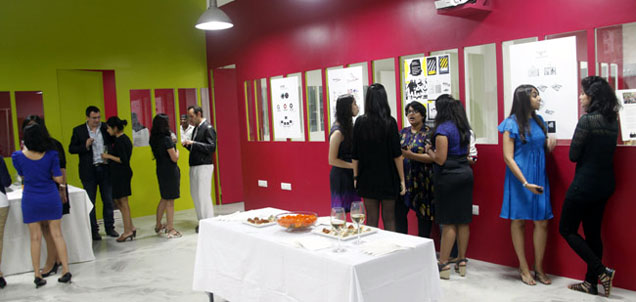
    Students and guests at the formal unveiling of ecole intuit.lab last week


    By Shubhangi Mehta

    École intuit.lab is a design and visual communication French school cofounded in 2001 by Patrick Félices along with Clément Derock and Frederic Lalande.

    The aim of the school has been to produce high quality professionals whose profiles meet the specific needs of the graphic design and visual communication sectors in India, France and across the world. With the newly begun school in India, the syllabus has been especially skewed to meet the professional demands of the visual communications industry in India and to tap the potential that design holds in the country.

    The average fee across various courses is 3.5 lakh annually. The institute will provide the students with high class faculty,French graphic designers which will provide the students an edge over others.

    Mr Ravi Deshpande, co-founder, école intuit lab, India,said, “Over the last few years we have seen a massive talent dearth. I thought of being a part of the solution rather than being a part of the problem. The school has been established to cater to and encourage talented students.”

    École intuit.lab through its students have built solid relationships with over 800 companies in France and other countries.

    The setting up of top French design school, école intuit.lab in Mumbai is a step in the direction of the marked improvement that is required in the field of education related to graphic design, art and advertising.

    Mr Rajesh Kejriwal, founder, CEO, KYOORIUS, said, “India really needs such design institutes; the China government is planning to open 500 design institutions across the country, Indian government should also  try and do something similar as the existing and upcoming institutes are expensive and not everyone can afford them. Hence a lot of talent will still be left behind without opportunities.”

    Ms Preeti Vyas, Chairwoman, VGC, mentioned, “These institutes are extremely important. If we put 20 more such institutes in our country, it will still be a lesser number. The courses are expensive but the kind of inputs, technology and faculty that goes into such institutes, it is impossible to have a low cost institute for such courses until and unless it’s a government funded institute.”

    École intuit.lab has achieved success by incorporating professional exposure in the academic curriculum – a much needed position that has been so far vacant, in the design and art education milieu in India.

    École intuit.lab through its students have built solid relationships with over 800 companies in France and other countries. école intuit.lab’s excellent success rate in finding work placements for its students makes it a real standard setter in vocational training for the visual communications sector.

  • No crisis for magazines in India: Chris Llewellyn

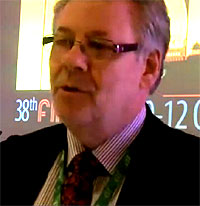
    Chris Llewellyn, President and CEO, FIPP, UK spoke to Akash Raha and Shruti Pushkarna of MxM India at the recently held World Magazine Congress. Mr Llewellyn spoke about the future of magazine, future events of FIPP and about the recently held World Magazine Congress in New Delhi, India.  Federation of the Periodical Press (FIPP) is a worldwide magazine media association, which represents companies and individuals involved in the creation, publishing, or distribution of quality content, in whatever form, by whatever channel, and in the most appropriate frequency, to defined audiences of interest.


    Q: FIPP has been taking up the interest of magazine publishers around the globe. What are the upcoming events that we can expect?

    FIPP exists to help its members construct better strategies and to build better media businesses. And the way they do that, is by finding what is happening around the world. So we come together at various meetings and events, share experiences and share knowledge, and go back better informed. I am really pleased to be able to confirm that next year September 19 to 21, Seoul Korea will be holding the third Asia Pacific Digital Magazine Media conference. And that will be specifically geared towards the Asian market and the hot topics of the time then; and we are talking digitally, so a year from now god knows what they’ll be, but they’ll be on the top of publishers mind. We will bring in some international speakers and we will engage with the Korean market which itself is incredibly digital. So that is an exciting new event next year. On top of that, we will be doing in early November, an American conference, out of Central America. In fact, I can even confirm that it is going to be in Costa Rica, which is a very attractive venue. And again that will be talking about the hot issues of the day, appropriate for the publishers of that territory.


    Q: How do you think the Indian magazine marketing is shaping up?

    The issue at the moment is that we have these two huge forces at play. One is this structural change that the digital revolution is forcing on our thinking and the second one is just the cycle of poor economy. You know, India, which is still booming, still ‘incredible India’, and yet people in India think there is a crisis. But it is not a crisis in India, believe me. This is just the cycle and this will turn around. How long, well, if I knew how long I will be a very rich man. But the truth is, it will change. At the same time, I think the publishers are responding magnificently to the digital changes and realizing that the strong magazine brands that have an emotional engagement with the audiences can be taken to different platforms and it just deepen the engagement. Don’t confuse content with how you deliver content. Content is an art and that content can be on magazines and it can be on any other format that we want it on. But it will still be the magazine publisher’s knowledge of his audience, which is the key, and that’s not going away.


    Q: How do you think digital will affect print?

    Hollywood films have never being bigger – huge blockbusters. Hollywood is making so much more money but not at the box office … their business model has changed. Today, Hollywood is built on the sales of popcorn, the sales of the food and drinks when you visit the cinema. It’s the full cinema experience, not the box office that entails profits. Similarly, in the magazine industry too, we will see a change in the business model, that’s certain. But the medium will still be there because of the strength of the medium. The emotional engagement of turning the pages, fresh magazines, just the way that we represent images is fantastic.  The women’s fashion sector needs glossy magazine too. So magazines are not going away, but the business models will change.


    Q: One can say that the World Magazine Congress has been immensely successful. What are the important points that have emerged from the conference?

    There is still a huge print industry and print is not at all dead. Innovation in print, as we have seen in several publications, is there, creativity is there and it will get more creative. And we have a bigger train set to play with now with all these new mediums and that’s exciting. So print is fine and we have a world of opportunity that is opening up. That is the big take away from the conference I feel.


    Q: What has been the feedback from the World Magazine Congress?

    You know, when we planned this conference two years ago, coming to India and quite a few people were saying ‘that could be interesting’. They clearly meant it in both ways… It could be interesting because it’s exciting and it could be interesting because it is quite a logistical challenge. I can’t tell you how difficult it is to get a visa to come to this country. My word, I am British and we left you bureaucracy which you have taken to another level (he jokes). However, the feedback I have got is really good. The opening reception just got the energy into everyone; The Bollywood dancing, the charisma of Shahrukh Khan. A lot of international people had never heard of him, they do now. I was told that the programmes were fantastic and there was lots of value to it. Many international visitors are extending their stay in India and are going to see a little more of this country. I am going to have the pleasure of seeing the Taj Mahal too. All in all, the congress in India has been absolutely wonderful.


    Watch Chris Llewellyn:

    On the magazine market
    [youtube width=”350″ height=”250″]http://www.youtube.com/watch?v=5rgYpWMJhjU[/youtube]


    Magazine business model might change, but the medium isn’t going anywhere
    [youtube width=”350″ height=”250″]http://www.youtube.com/watch?v=rCMEvZtioqc[/youtube]


    Takeaways from WMC 2011
    [youtube width=”350″ height=”250″]http://www.youtube.com/watch?v=Gtgers8eSAw[/youtube]
  • First on MxMIndia: Uday Varma is new I&B Secretary

    By A Correspondent


    Mr Uday Kumar Varma is the new Secretary, Ministry of Information and Broadcasting.

    Mr Varma is presently Secretary, Ministry of of Micro, Small and Medium Enterprises. Mr Varma, an Indian Administrative Service (MP Cadre, 1976) officer, replaces Mr Raghu Menon who retired last month. He is familiar with the working of the ministry having been Special Secretary before he moved to the MSME ministry.

    The announcement was made by the Appointments Committee of the Cabinet, Government of India.

  • Red FM’s Malishka is RJ No 1 in in Mumbai!

    By A Correspondent


    Radio Jockey Malishka is found to be Mumbai’s most popular RJ for the second year in a row, according to an Ormax Media study. The Red FM 93.5 RJ Network the most preferred radio station in India has an immense listener base in Mumbai. This is evident by a recent study conducted by media research firm Ormax Media that pronounced RJ Malishka as the most popular Radio Jockey in Mumbai for the second time in a row. Undoubtedly RED FM’s RJ Malishka is an unmatched talent in the radio industry!

    The study by Ormax Media was conducted in the month of September amongst 600 radio listeners in Mumbai and Delhi in the age group of 15-44 yrs, SEC ABC. From across the radio stations in Mumbai, Red FM RJs Malishka, Mantra and Rishi Kapoor emerged as instant favorites amongst listeners!

    Commenting on this much celebrated achievement, Nisha Narayanan, Senior VP Projects & Programming, RED FM 93.5 Network said, “Red FM’s leading Morning Show RJ – Malishka has been rated number one in Mumbai by Ormax Media for the second year in a row. This just proves that despite various researches that happen across mediums and the claims by respective radio stations of being number one, we still continue to win the best recognition and awards across categories and hence undoubtedly make us the most awarded radio station in the country.”

    ‘Morning No1’ with Malishka is designed to be exciting, energizing, stimulating, light-hearted and at the same time thought provoking, notes a Red FM communiqué.


  • Suresh Selvaraj quits Outlook

    By Akash Raha

    After a successful stint with the Outlook group, Mr Suresh Selvaraj, President, Outlook Group decides to put in his papers. Mr Selvaraj disclosed this information to MxM India on an email.

    In an emotional message to MxMIndia, he said “In 1998 when I joined the group, I have added a prefix to my name Outlook. In 2006, I had added a surname, Marie Claire. Outlook has always been the pride and Marie Claire, the passion. It’s not easy for me to let go both. But as the Gita says, ‘what have we brought with us to this world to lose it?’ Both these magazines are part of my system and I have always felt a sense of ownership of these magazines – especially, Marie Claire – it is my baby. I am not naïve to believe that I am indispensable. Outlook Group is very strong with sufficient bench strength to face any situation.”

    Giving a reason for his leaving the group he said “I strongly felt that I need to give it a pause after three decades in print media. And, more than that, there got to be peace.” He went on to say “Considering the excellent equation I have with each and every member of my team, it is a very difficult to part. But I reminded them about Jim Hendricks’ lyrics, ‘Memories don’t leave like people do. They always stay with you…’ – a colleague may leave, but the friend in him remains forever!”

    However, Mr Selvaraj will be a part of the group till December 2011. Thereafter, he said “I will take a sabbatical for a few months and shall decide the course of my future. I look forward to the sabbatical as I could fulfill one or two of my long term dreams of biking in Srinagar-Leh Ladakh-Manali region, cycling in Munnar hills, exploring Borneo rainforests in Sabah region of Malaysia or a cruise in Venice-Greece-Spain route.”

  • Get set for .Lux or .Nirma. Even .TOI, .HTMedia, .Bhaskar, .Jagran, .Zee, .Star, .Colors… .Mahuaa!

    By A Correspondent

    It could open the floodgates to a new type of brandwar.

    New generic Top Level Domains (gTLDs) are set to be introduced by the Internet Corporation for Assigned Name and Numbers (ICANN) for the categories of brands, communities and cities and regions.

    Applications for the first round of new gTLDs will open on January 12, 2012 and run until April 12, 2012. During this time frame, organizations will be able to propose and apply for new generic top-level domains associated with particular interests or business sectors.

    Mr Rod Beckstorm, President and CEO, ICANN said this at a seminar organized jointly by the Centre for Development of Advanced Computing (CDAC), Department of Information Technology (DIT) and the National Internet Exchange of India (NIXI) in New Delhi on Friday.

    These domain names are likely to help organizations enhance branding, revenue, security, and user interaction. The availability of new gTLDs will create a unique opportunity for fast-acting organizations to define and acquire their own online namespace. With this brand owners, such as corporations, sports teams, and other high-profile entities can protect their brands and trademarks, enhance brand trust, and create new ways to extend their brand and services to partners, resellers, and customers. Groups of like-minded organizations that share common missions, goals, and challenges can promote commercial or non-commercial offerings to better promote, protect, guide, and serve their communities. Cities and regions can promote greater recognition of their areas, city names, town and other geographical indiactors.

    In his opening remarks, Mr N Ravi Shankar, Additional Secretary, DIT said that the seminar is a crucial step that will determine the success of the gTLD initiative for the Indian Internet Community. Although there is no doubt that it signals a positive time for the Internet users and related organizations, there will be a number of issues that will require deliberation for its smooth implementation, security and confidentiality being some of the key elements within that framework. Both stakeholders and the industry have to come forward to iron out the underlying issues and set the standards towards raising the confidence level of the user community, and thereby its wide acceptance.

    Dr Govind, Senior Director, DIT highlighted the role of the DIT in creating the ecosystem for the implementation of Indian languages on the Internet. Surpassing geographical boundaries, the Internet has brought forth the new dynamics of access, dependability and communication. Of these, language has probably been one of the key issues due to its direct effect on communication and its subsequent reach. The DIT has proactively recognized this aspect and tried to address the challenges by partnering with the best R&D organizations to seek relevant solutions.

    Through this announcement, ICANN has opened up its policy and permitted not only country names and Institutional names but also new Generic Top Level Domain Names (gTLDs), which were earlier limited to .edu, .com, .org etc.

  • Digitisation ups mood at trade show

    By Insiyah Rangwala

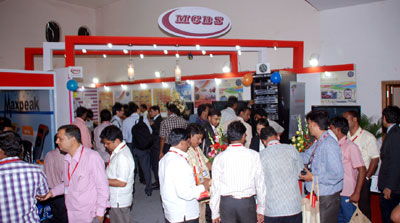
    The announcement of the new regulation enabling the rollout of digital addressable systems in the country, upped the mood at the Satellite and Cable TV Trade Show last week. Organised by the Satellite & Cable TV magazine, the show, now in its 20th year, SCaT saw the attendance of over 15,000 people from the industry and networks.


    Mr Dinyar Contractor, Editor and Executive Publisher of Satellite & Cable TV, said the response to SCaT has been overwhelming. With hardware prices having fallen from three years ago at 100 channels being Rs 1 crore to last year’s Rs 60 lakh and this year’s 200 channels at Rs 27 lakh, this has positively affected the mid size networks, as digital is now no longer inaccessible to them. The critical new element at SCaT has been the discussions of pricing and buying.


    The technologies showcased at SCaT this year were the digital set-top box, MPEG2 and MPEG4 along with emergence HD channels. Mr Dharmesh Gandhi, Product Marketing Manager at NDS, said their key aspect was content protection and providing the middle ware for pay TV. They were showcasing new features such as the search option and targeted advertising. It helps a user with browsing and discovering more related content.


    Mr Vikram Nagda, Marketing and Operations Head, Channel Masters, stated that they feel very positively about the digitization of cable TV in India as it has enabled the internet to become an even larger commodity. Mr Saravanan Narayanasamy, Chief Technical Engineer, Indian CAT from Pace, said that with or without the government digital is picking up as it can be seen at SCaT with the tremendous turnout from newcomers.


    Mr Manoj Thakur Deputy General Manager, Catvision, said that even though currently digital in India is big only in the metros it is increasingly broadening its reach.


    According to Mr Contractor, the mood in the trade is so buoyant that most operators have reconfirmed their presence in a bigger way for next year with stalls being pre-sold.


  • The Anchor: Shouvik Roy’s 6 pointers for a brand to change/refresh its corporate identity

    Three points pre-change/refresh

    #1 ‘Change’ or ‘refresh’? Both are different worlds. Change is radical while refresh may not be. So, if it is ‘refresh’, then be clear about the parts that need to be refreshed; you may or may not want to fix what is not broken.

    #2 Logo change is not the identity makeover – Logo is just one part of the visual identity – not the ‘change’. The first step is to articulate you corporate brand identity verbally. Use simple formats that are understood well and easily by all key custodians. Make sure you have defined the brand essence well and all key stakeholders agree. This will help evaluate the creative work that follows.

    #3 Researching before rebranding is a good idea – you may think you know all the reasons why your existing corporate identity does not work. Prepare to be surprised by what others have to say. Even a small scale research among multiple stakeholders of your brands – customers, influencers, employees, partners etc – will give you a better handle on how and what should change.


    Three points post-change/refresh

    #1 Involve all your employees – they are your key brand evangelists and custodians of your brand. Before you proclaim change to the world outside – make sure everyone at ‘home’ is clear and excited about this. Do not start telling the world at large if your employees are still asking ‘what is this all about?’

    #2 Implement it well across your brand portfolio – most relevant for corporates that have a complex architecture of co- and sub-brands. Make sure that the corporate identity refresh reflects well across your portfolio and the implementation is simultaneous. Often enough, this is where the focus is wanting. Everyone loves big-picture – this is the fine print.

    #3 It is a good time to celebrate – get your teams, partners, supporters, influencers, customers in together and tell them why they should celebrate the change. Every new journey needs a starting gun, or there is never much zest to race to the milestones you’ve set.


    Shouvik Roy is Director, Elephant, Delhi

  • Retail ka Raja’s road to be debt-free


    By Kala Vijayraghavan


    It took 25 phone calls, 50 text messages, a couple of emails and plenty of persuasion over three weeks before Mr Kishore Biyani, 49, India’s largest retailer finally agreed to meet. Two reasons, both related, could explain his uncharacteristic reluctance.


    The interview was on an uncomfortable subject, Mr Biyani’s battle with debt, Rs 4,352 crore to be precise. But then, Mr Biyani was never the one to duck tough questions. The second reason therefore is more plausible. Mr Biyani was busy; he was negotiating deals to carve out his empire, meeting global retailers, talking to investment bankers, planning foreign direct investment (FDI) compliance with corporate lawyers…the works.


    In short, he was doing what every other retail CEO perplexed by the current environment is now doing. He was also nursing a fever. Finally, meet he did…not during the week at his office in Vikhroli, an eastern suburb of Mumbai, but on a Saturday morning at his home in south Mumbai and rather reluctantly.


    Mr Biyani was to have boarded a flight to Paris on Tuesday night, but the fever kept him back. Had he gone, he might well have signed a unique deal with French retailer Carrefour. Mr Biyani is non-committal, but sources say that 17-18 cash-guzzling Big Bazaar outlets may be converted into a Carrefour franchise. There won’t be any equity infusion, so FDI norms are complied with. Big Bazaar is a hypermarket chain, the group’s flagship format and also one of his pet projects. And Mr Biyani is willing to give away parts of it…in return for some cash.


    Mr Biyani has changed. Some of his trademark chutzpah has given way to wisdom and caution. But his resolve to build a sprawling consumption business hasn’t weakened. Earlier he wanted to do this alone; now, he is open to multiple partners. “The business environment is challenging and different. And I have to take a more mature approach to business,” he says. “When we started the retail business, the environment was different. And I was younger to take those risks.”


    King-size Risks


    Mr Biyani wouldn’t be what he is today, the maharaja of Indian retail, if he hadn’t taken those risks. But at the same time, he also wouldn’t have the problems he is facing today if he hadn’t taken those very risks. That’s not the only irony Biyani is living today. In the past, he raised funds aggressively to grow his empire. Now, his biggest challenge is to raise money: to save his empire. Consolidate is the word he prefers to use, not save.


    Says Mr Thomas Varghese, CEO, Aditya Birla Retail: “Retail is cash-guzzling and it needs deep pockets to scale up. That’s the nature of the beast. Also, funding of the business can only be viable though equity and not debt.” Sources add that Mr Biyani opened too many fronts, book retailing, electronics, sports, salons, apparel. Debt was unavoidable because he was constantly experimenting with new formats that would make money.


    Top executives who work closely with Mr Biyani every day say he has decided to take the debt bull by it horns. He wants to raise Rs 5,000 crore in the next 12-18 months to make Pantaloon Retail, the flagship company that owns most of his retail business, debt free. Can he?


    Not so long ago, Mr Biyani was a rockstar in the stock markets. Pantaloon Retail went public in 1992, one year before Infosys. In the past 19 years, it has delivered an annual return of 25%. Investors cheered his rapid growth.


    Pantaloon Retail now occupies over 15.2 million sq ft space in multiple retail businesses. It runs 59 Pantaloon department stores, 42 Ezone electronics stores, over 200 hypermarkets under Big Bazaar and Food Bazaar and over 214 KB’s FairPrice stores.


    It operates 10 formats including Central (seamless malls), Brand Factory (discount fashion) and Ethnicity (ethnic wear). Mr Biyani also got into the financial services business to fund the purchases happening at his stores; he set up a foods business to help stockpile the shelves in his stores; set up venture funds to invest in his suppliers and even floated media companies.


    Notes Mr Biyani: “In most countries, retailers can focus on retailing alone. But when we started to grow, we realised the lack of an industry ecosystem around retail and realised the need to create one. That meant setting up the entire logistics and supply chain networks.


    That meant training thousands of people. That meant setting up technology and back-end processes to handle millions of transactions. And it also meant building enablers, stronger brands, consumer finance, media etc, that could spur consumption.”


    In short, he bet big… real big, on India’s consumption story.


    No Choice, But to Grow


    And, why not? The economy was booming, salaries were rising and consumers wanted to spend, investors were willing to give him great valuations, banks were lending cheap and real estate was easy to come by. It was rock ‘n’ roll. “In this journey, since we were often the first, we made the maximum number of mistakes; we also learnt the most,” says Mr Biyani. “And today, we know each business threadbare.”


    Sure, the feisty, home-grown entrepreneur was hungry for growth. But it is also equally true that he had no choice but to grow. Ever so often, there would be a buzz on retail FDI. Mr Biyani had to prepare for it. Retail is all about size; the bigger the better. Mr Biyani had to become a Godzilla if had to have any chance of fighting the likes of Walmart who would come in some day. Even if he didn’t want the fight, he still needed scale to position himself for a sweet buyout.


    And so Pantaloon Retail grew spectacularly fast. But debt fuelled it. It now clocks Rs 12,366 crore in revenues, about Rs 10,000 crore more than what it made five years ago. Its borrowings have also increased from Rs 700 crore to Rs 4,350 crore.


    Here is a good way to look at Pantaloon’s growth, in the past five years, the company had to borrow Rs 1 to generate every Rs 3 of annual revenues. This was okay when the economy was growing and debt was cheap. But the economy slowed down and inflation went up, forcing the Reserve Bank of India to raise policy rates 12 times since March 2010.


    “The retail business is modular and its expansion can be halted or grown depending on the environment, cash flows, and interest rates. We will grow accordingly and take decisions which are conducive in the given environment,” says Mr Biyani, his new found caution very much in evidence. Pantaloon Retail earns Rs 1,203 crore as operating profit, but more than half of it goes towards paying interest charges, leaving it with only Rs 142 crore in net profit after accounting for depreciation and taxes.


    Dash Bigger Than Cash


    Industry sources say Mr Biyani was reckless in expanding faster than what the cash flows supported, and not slowing down enough even when he had the chance to do so. “All big players including Reliance focused on restructuring and improving operating efficiencies during the slowdown but Biyani was chasing valuations and growth,” says the CEO of a rival company who did not want to be identified.


    “Pantaloon’s debt level is uncomfortable,” says Mr Arun Kejriwal, director, Kejriwal Research and Investment Services. “Also, the management has not shown any concrete plan to reduce debts.” Mr Kejriwal says same-store sales have not grown exceptionally, suggesting that the issue with debt, if not resolved, may create problems in future. “It’s imperative for Pantaloon to retire debt,” says Mr Gautam Duggad, a research analyst with Prabhudas Liladhar, a Mumbai-based brokerage. “Although Pantaloon’s gearing is not alarming, its absolute debt is quite sizeable.”


    All this has made investors jittery. Since April this year, the stock has lost 30% in value, while the BSE Sensex has dropped only 14%. “We are conscious of what the world is thinking about us and we are always discussing ways of cutting  debt,” says Mr Shailesh Haribhakti, independent director at Pantaloon Retail. “We are very responsive to the concerns raised.”


    At Home With Less Control


    At his tastefully done-up residence, Mr Biyani is clear about what he needs to do. There is no emotion, regret or hesitation as he spells out his next steps. He is preparing to take some tough calls, including giving up control of some of his prized possessions.


    Mr Biyani is willing to share ownership in Big Bazaar, Ezone, KB’s Fairprice, and Home Town, all successful formats he has pioneered. “All these years, we have grown the business by ourselves. Now the time has come to get partners. It’s now time to consolidate and let somebody else run the business [shared ownership],” he says. That’s what has brought Mr Biyani to where he is now, in the middle of stitching together half a dozen deals with financial ingenuity to ensure all FDI norms are complied with.


    He has just signed a deal to give 49% stake in the Future Group’s foods sourcing and manufacturing entity to Lawson Inc, Japan’s second-largest convenience store chain. The move will relieve Pantaloon Retail of the burden of funding the aggressive growth plans of the food business. He is in talks with an Indian company to sell equity in Ezone. And then, there is the likely deal with Carrefour.


    Mr Biyani also has plenty of non-core businesses: consumer finance, insurance, textile mills, logistics and JVs in mobile retailing and office supplies, Future Capital Holdings (FCH), life and non-life insurance businesses under a partnership with Generali. The Future Group hopes to raise Rs 2,500-4,000 crore by selling equity in these.


    An Edelweiss report values FCH, and its e-commerce, supply chain, real estate and insurance ventures around Rs 3,000-4,000 crore. “Any such tie-up would bring funds in the company and would help deleverage its balance sheet,” says Ms Sangeeta Tripathi, senior analyst at Sharekhan.


    ‘Picked My Horses Now’


    Industry sources say exiting many of these businesses is a good idea. “Walmart is known for its austerity and Gucci for its lavish luxury,” says a senior industry CEO pointing out that the Future group wanted to be both. It can’t.


    “If I were Kishore Biyani, I would totally back the top two horses and ensure that I become so powerful that I would create far more value,” says Mr BS Nagesh, founder, Trust for Retailers and Retail Associates of India, a not-for-profit organisation that trains front-end staff in retail. Nagesh is also the vice-chairman of Shoppers Stop, but these are his personal views.


    Biyani is thinking along similar lines. He now plans to concentrate on just four large formats, Pantaloons, Central, Big Bazaar and Food Bazaar, limiting itself mostly to food, fashion, home and general merchandise. “In rich countries, retailers are among the largest businesses, wealth creators and employers. We’ll expand prudently and wait patiently for our turn,” he says. “People are right that we should back a few big businesses and scale it up big time. We have picked our horses now.”


    (Additional reporting by Kausik Datta)


    Source:The Economic Times

    Copyright © 2011, Bennett, Coleman & Co. Ltd. All Rights Reserved
  • ‘Social media is an explosion’

    By A Correspondent

    Companies in India have gauged the might of social networking and are currently spending over Rs 1,200 crore with 30 to 40 per cent of marketing budget on digital media according to the findings of a study titled ‘Explosion of Social Media: Transforming The Corporate Business Scenario,’ by The Associated Chambers of Commerce and Industry of India (Assocham).


    Releasing the highlights, Assocham secretary general DS Rawat said, “Goods and services worth about Rs 23,000 crore are traded currently on the social networks across the world and the figure is likely to swell to about Rs 1.35 lakh crore by 2015 with India’s share likely to cross Rs 10,000 crore mark during the course of next three to four years.”


    It was observed that majority of start-ups, leading national and international companies operating in India are embracing the social media to enhance their business and on an average spending anywhere between Rs 2 lakh to Rs 50 lakh a year on social marketing campaigns.


    A large number of national and multi-national corporations in India are using the services of social media management companies that help small, large brands to manage, heighten their social network presence and maximise their exposure in the newsgroups and newsfeeds of the people logged on the social networks.


    “The significance of social media in the current scenario can be gauged from the fact that the department of information technology (DIT) has recently advised all government departments to make the most of social media in their day-to-day work and communicate with citizens effectively,” said Mr Rawat.


    Assocham interacted with about 1,400 directors, chief executive officers, chief financial officers, chairmen, managing directors, executive directors et al from sectors as diverse as BFSI (banking, financial services and insurance), auto, FMCG, manufacturing, IT, telecom, biotech, education, infrastructure, consumer packaged goods and healthcare to ascertain the extent of their spending on online activities and about 75 per cent of them said that they have doubled their spending on social media this year.


    “Companies both large and small are turning to social media platforms as the percentage of internet users on social networking sites continues to climb,” said Mr Rawat while releasing the survey that was carried out in Ahmedabad, Bangalore, Chennai, Delhi, Kolkata, Mumbai and Pune between April and August. “Brands today cannot afford to ignore the significance of social media as a key medium to target their identified customers and connect with them,” said Mr Rawat.


    Companies are taking advantage of social media to advertise, launch new products, study consumer behaviour pattern and communicating, interacting directly with their customers and wooing new clientele. Assocham interacted with 200 representatives of various companies in Delhi and about 60 per cent of them said that they have a dedicated staff who work round-the-clock and are constantly plugged into the web to monitor online traffic on their web portals.


    As many as 110 respondents said that they have hired employees specially for their social and interactive media cell who perform the task of tracking conversations, blogs, discussions, chats on social networks to ascertain the consumer preferences and perceptions towards their products and services. Nearly 40 per cent of respondents in the city said that started their campaigns on social networking websites with a tiny budget and clocked revenue of about three to four times their budget in a span of about five to six months terming it a successful venture.


    Almost all the respondents said that their dependency on traditional print media for advertisements has reduced drastically and people logged on social networks are their core target group and social media allows them to directly interact with consumers Currently, there are over six crore mobile internet users and about eight crore users using internet across India.


    Facebook, Twitter, YouTube, Google+, Linkedin, Orkut, Hi5, Friendster and BigAdda are certain popular social networks used by companies in Delhi to carry out their social media campaigns. “Low cost coupled with higher visibility and wider reach on social media is the grave reason behind this surge in number of companies cashing in on inevitable social media platform to reach young customers as highest number of active social media audience in the country is in the age group of 15 to 25 years,” the Assocham study emphasizes.


  • Creativeland bags Godrej verticals

    By A Correspondent


    Following a multi-agency pitch, Creativeland Asia has won the creative mandate for two verticals of Godrej – Godrej hair colour and a new product line which is soon to be launched.


    Commenting on this partnership, Mr Sajan RaJ Kurup, Founder and Creative Chairman, Creativeland Asia said, “Godrej is one of India’s most trusted and prestigious brands, and it gives me great pleasure to see them place immense faith in Creativeland Asia. I am also excited about the opportunity to launch their new product line. We are looking ahead to this partnership and are certain that our work culture and beliefs will match the unsurpassed legacy of brand Godrej.”


    Creativeland was founded by  Mr Kurup in the summer of 2007, and since has grown to an over 80-strong team with two full-fledged offices in India and nine strategic offices in Asia. Creativeland’s work has been awarded at the D&Ad, One Show, Adfest and Cannes.  It recently became the first ‘Independent Agency of the Year’ at the Spikes Asia 2011.

  • Indian of the Year awards on Oct 18

    By A Correspondent

    NDTV has announced the Indian of the Year Awards 2011, to honour extraordinary Indians and their achievements. The awards will honour eminent citizens who have made the nation proud.


    The most prestigious civilian honour of the country, the Indian of the Year Awards, will salute icons of change for this year in New Delhi on October 18, 2011, at the Taj Palace Hotel. The awards, in its sixth successful year, will be graced with the presence of some of India’s most influential personalities.


    Announcing the awards, Dr Prannoy Roy, Chairman, NDTV, said, “NDTV Indian of the Year Awards recognizes eminent visionaries, and personalities who have made the country proud and helped build Brand India. The colossal success of the initiative over the past five years and the presence of some of the most eminent Indian personalities have given tremendous credibility to the awards. We hope to make this year’s NDTV Indian of the Year bigger and involve the entire nation in the celebration.”