Blog

  • Ad Strat: The Hero in everyone

    Anil Nair, CEO and Managing Partner, Law & Kenneth

     

    Name of the Campaign/Ad:

    Hum Mein Hai Hero – Hero MotoCorp


    The Brief:

    To come up with a thought that will help Hero honda to transform and establish itself as Hero MotoCorp.


    Research:

    Our job was not only restricted to understand the two wheeler market but the people of India on a whole who could be our perspective target audience. Our focus was on the prevailing problems like corruption in India and how an Indian would overcome it.


    The thought process behind the creative:

    Since our hub was India, we saw a tremendous positive attitude amongst the people and we wanted to bring it out. Our focus was on the fact that there is a possibility and we all have a hero within us to overcome any hurdle and ‘self belief’ is the key factor in that.


    [youtube width=”400″ height=”200″]http://www.youtube.com/watch?v=ulbchi7-N9c[/youtube]

    Media vehicles chosen:

    Complete 360 degree approach (TV, Print, Outdoor.,digital)


    Key issues kept in mind while executing the ad:

    Our motive was to not let it look like just an ordinary television commercial and at the same time we didn’t want to sound preachy. We wanted it to look realistic hence we used real people.


    Does the treatment do justice to the brief?

    Absolutely! Its spirit lies in the anthem.


    What according to you is the differentiating factor about the campaign?

    There are three differentiating factors:

    The Idea

    The Music

    Realistic Visualisation


    Market and client feedback:

    Hero MotoCorp enjoyed a higher sales percentage and went ahead of Hero Honda. The client is ecstatic and extremely happy with the work.


  • Big Digital to handle digital promotions for Sadda Adda

    By A Correspondent


    Big Digital, the digital arm of Reliance Broadcast Network Ltd, has been promoting the Ramesh B Agarwal’s multi-starrer Sadda Adda, across various mediums. The youth-centric movie, which released on January 13, has attracted eyeballs due to its promotions on popular youth destinations on the digital space.


    Big Digital has embarked on various activities including Facebook and Twitter page management. The Facebook page is constantly kept updated with interesting insights about the movie, cast and constant interactions and discussions. The page is also kept updated with PR activities of the team and exciting contests. Big Digital is also promoting the songs on mobile via SMS push and WAP promotion.


    The YouTube channel’s promotional videos and songs of Sadda Adda have received over 87,000 video views so far (http://www.youtube.com/user/SaddaAdda). Popular websites like Yahoo! and Rediff have also been promoting the film and songs.


    For this project, Big Digital has brought together different verticals of RBNL network for an effective and widespread promotion and visibility. The partners include radio partner 92.7 BIG FM, TV partners BIG MAGIC and BIG CBS along with BIG Street for the OOH promotions.


    A spokesman for Big Digital said, “Sadda Adda’s widespread promotion on the digital platform has helped the film gain tremendous buzz and popularity. The film is for the youth and hence digital marketing has played a huge role in gaining eye balls. We hope to build many such properties for our clients.”


  • Trade bullish on bus shelter advtg

    By Robin Thomas


    Looking for a cost-efficient medium with high brand recall and healthy Return on Investments (ROIs) to advertise your product, then you should head to the nearest bus stop. The bus shelters, strategically placed in areas with the target group travelling either by foot or in a vehicle, are fast becoming coveted advertising mediums. FMCG brands, television channels and retail brands have increasingly started using bus shelters as a medium to deliver their brand message as ads placed at bus shelter make it easy to see the brand and its message.


    Many advertisers prefer to go for bus shelter advertising as it is cost-efficient and has a high brand recall, especially in the metros like Mumbai, Delhi and Chennai. Hindustan Unilever and P&G are two big instances of big OOH spenders which are very active in bus shelter advertising, particularly in Mumbai and Delhi. According to Bikas Verma, Associate Vice President, Outdoor Advertising Professionals (OAP) Pvt Ltd, bus shelter advertising contributes approximately 10-15 per cent of the overall OOH advertising spends.


    Gurjit Singh, COO, Crayons Advertising observed, “Compared to other OOH formats, bus shelter ads give more frequencies to the campaign as the strategic look gives an edge to the campaign.”


    “Bus shelters are primarily service-oriented street furniture item. They also prove to be a very effective OOH format as they offer an efficient channel for the brands to reach out to the consumers in every nook and corner of the city. Advertisers have acknowledged this medium as very cost-effective, offering best in class ROIs. Bus shelters also provide widespread exposure to their campaigns, catering to a wide range of target groups,” explained Ayush Kakkar, Assistant Manager – Marketing, JCDecaux.


    The road ahead

    Mr Verma is of the opinion that since billboards are now facing government restrictions, bus shelter advertising, which is high-impact and high-frequency advertising, is bound to grow further. “In markets like Mumbai or any other metro, bus shelter and likewise street furniture will be the future of OOH advertising, as these serve the dual purpose of being a utility as well as an ad revenue stream. This format of OOH media is very apt for the female TG and since billboards will not be permitted in these markets in future, their growth potential is nearing the end.”


    Mr Kakkar of JCDecaux noted, “The growth potential in case of bus shelter advertising is huge and it will continue to grow as more and more cities adapt to these service-oriented formats. Globally, bus shelters are already a very popular communication vehicle in the world’s best cities.”


  • Journalists’ covenants on cricket and more

    By Ranjona Banerji


    Aging batsmen, an arrogant captain making bad choices, indifferent performances, the Indian Premier League and the Board for Control of Cricket in India- all or some of these are to blame for the Indian cricket team’s unfortunate performance in Australia.


    Television, which was building itself up, started in a slow frenzy at the start of the weekend but it was all out there – foam, fits – by Sunday evening. Arnab Goswami of Times Now, amply helped by his alter ego Boria Majumdar inAustralia, was extremely saddened as only he can be by Indian cricket captain MS Dhoni in particular. Had Dhoni denigrated Test cricket by suggesting that he might retire from that version of the game? Was this the end of civilisation as we know it and so on? He was supported by Bishen Singh Bedi who was sputtering at the mouth with anger and by the cynical observations of another guest who got Goswami and Bedi even more enraged.


    Newspapers are still more circumspect but try ‘Shame Old Story’ and ‘Disgrace’ from The Times of India, ‘Perth Pangs’ and ‘India blunder, Oz plunder’ from Hindustan Times. Sunday Mid-Day tried to put a spin on it with ‘Bright Spark’, referring to bowler Umesh Yadav getting five wickets but the strap line below the headline emphasisedIndia’s batting collapse.


    Luckily forIndia’s beleaguered cricketers, a week is a very short time in journalism. Just before the India-Australia series started, I seem to rememberAustraliabeing hammered for losing toNew ZealandandIndiafeeling all pumped up because of its enormous talent and at-home victories. A couple of days atMelbourneand all that moaning and hype was completely reversed.


    My journalist friends and colleagues tell me that I should not be so hard on my fellow journalists and that it is the job of journalists to get hysterical and to have no memories at all, especially when it comes to sport. There is apparently some mysterious covenant signed by sports journalists (us general purpose journos are not privy to this procedure) by which they have to swear that they will make every effort not to remember what they had said or written the week before. Also that every loss by a sports team or person has to be portrayed as the end of the world and every victory had to be the best ever. I know this to be true from my experiences as a tennis fan (empirical evidence!).


    We already know that TV people have their own covenant which makes them swear to try and “save” Indiaat every opportunity and know as little as possible about any subject which gets them all excited.


    The cocktail of these two covenants makes for some very dramatic viewing and for those with longer attention spans, there are newspaper articles. Some sober commentators in print will try to look at the larger picture and to extrapolate future courses of action from past experiences. They may be chucked out of the Lodge for breaking the covenant unless they are long term offenders. But in these times, the hysteria will win. Except of course tillIndiawins something!


  • [PR Channel] Flashmobs & guerrilla PR in the digital world

    By Pranav Kumar


    Flashmobs in India are a rare thing – but when they do happen with the right construct, the impact is well, viral. I’m talking about the now legendary ‘Mumbai flashmob’ where two hundred amateur dancers took crowds at Mumbai’s bustling Chhatrapati Shivaji Terminus railway station by surprise in late November 2011 by breaking into a stunning dance performance to a popular title track from the Bollywood blockbuster Rang De Basanti. The ensuing video assumed viral dimensions, trending across the Twitter-verse and attracting over 2 million views on YouTube.


    Flashmobs don’t happen every day in India. The closest we get (sort of) are politically-inspired rallies and other forms of activism that keep the nation tethered to its television sets (such as Anna Hazare’s Gandhian-esque style of revolt against graft and poor governance in India). Though the two don’t really compare in either purpose, ideology or scale, both do evoke public response and represent the widespread generational change currently sweeping India. All of this stems from a need to be heard, a need to make a change based on newfound confidence in a growing India. And none of this would happen if the country’s mainstream (read ‘traditional’) and fast-growing social media dynamics weren’t as conducive with mass penetration and growing adoption.


    In connecting the dots with these sweeping phenomena, we as public relations and digital communications practitioners can seek inspiration, think above and be even more creative in what we do.


    The Rang De Basanti gig in Mumbai is emblematic of the continuing spurt in social media (no surprises here). India’s over 100 million internet users now represent a sizeable audience and, according to consulting firm McKinsey & Co, will triple in size to 350 million by 2015. Smartphone adoption growth is pegged at 15 percent YoY and the mobile device is simply a huge enabler of internet access as opposed to current PC penetration (roughly 8 percent of population). On last count, India had close to 800 million mobile subscribers.


    Mumbai’s flashmob makes another point – the growing popularity of online video consumption. According to the Asian Digital Marketing Association, half of India’s internet users now watch videos online. In a country where traditional media continues to rocket its way up unlike most markets (2011 growth was at 18 percent for newspapers), social media is certainly not outpacing it but assuming increasing importance. Integrated campaigns are therefore essential from any marketer’s perspective and as we at Bite look at it, it’s all about helping companies join valuable and relevant conversations – whether in a blog, on Twitter or via a newspaper interview.


    Coming back to flashmobs, they too can serve as effective platforms to generate a terrific amount of buzz when done right. However, it’s one thing to organize a flashmob for fun, or indeed for a cause. But doing it for marketing reasons is another thing entirely and is much more risky. Innovative brands and organizations around the world have used flashmobs every now and then to their advantage resorting to such ‘guerilla’ tactics to either generate fanfare or indeed to steal attention from a competitor.


    Doubt if we’ll see a flashmob culture in India as yet but at least Mumbai’s Shonan Kothari, the brains behind the Rang De Basanti one, has shown just how effective a carefully orchestrated flashmob can be.


    In the end, the message is clear for today’s increasingly busy communicators: in a hyper-connected and integrated world, it’s all about telling your stories in the most compelling and creative manner. It’s about having a point of view that’ll eventually triumph and transcend through today’s cluttered environment to be heard.


    Pranav Kumar is Managing Director – India at Bite Communications, a part of the Next Fifteen Communications Group plc.


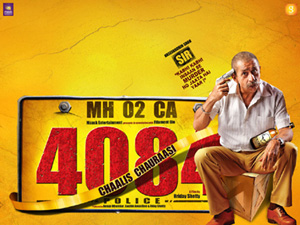
  • Reviewing the Reviews: Chaalis Chauraasi

    Chaalis Chauraasi

    Key Cast: Naseeruddin Shah, Atul Kulkarni, Kay Kay Menon, Ravi Kissen, Shweta Bhardwaj

    Directed By: Hriday Shetty

    Written By: Yash-Vinay

    Produced By: Anuya Mhaiskar, Sachin Awasthee, Uday Shetty


    This Hriday Shetty film got a decent amount of pre-release publicity because of the cast of good actors – not stars, but those who can be relied on for acting well.


    The cast is also probably why the film got mostly 2-2.5 star ratings, but also a 1/2 star by Komal Nahata and Nikhat Kazmi’s usual, over-generous 3.5.


    Most critics liked the performances, agreed that the script did not do justice to the actors. The film is hardly likely to be a big hit, it’s not one of those ‘sleepers’ in spite of three item numbers!


    Soumyadipta Banerjee of DNA gives it 2.5 and writes, “The best part of the film is its star cast. When you have powerful, experienced and talented actors like Naseeruddin Shah, Kay Kay Menon, Atul Kulkarni and Ravi Kissen in the star cast, they are bound to make good for all the lapses in the script. That is exactly what has happened here. All the above three (Zakir Hussain has also received a lot of praise lately) have formed an entertaining threesome who keep you engaged throughout the film.”


    Shubhra Gupta disagrees and gives it a low 1 star: “At one point in this film, we see lots of thrusting groins. Ravi Kishan has the most flexible one, beating all the female dancers in the row. Atul Kulkarni and Kay Kay keep up gamely. And then comes Chaalis Chaurasi’s ace tush-shaker, Naseer himself. He does this not once, but twice. The naach-gaana featuring the Shah comes and goes, and you wait for the movie. All in vain, because Chaalis Chaurasi is like an empty vessel, which rattles around noisily to no effect.”


    Gaurav Malani of Indiatime.com goes with the majority average rating and writes, “It would really take some effort to mess up a film starring four supremely talented actors in lead roles. An uninspiring script and a dreary director work overtime to achieve such lackluster results. At the outset, Chaalis Chauraasi looks promising with its atypical cast and chronicle. But the one-dimensional plot fails to tap the immense potential of both.”


    Sanjukta Sharma of Livemint gives a 2 but has a few kind words: “The screenplay is not flawless, and the story has some banal excesses. The editing is sloppy in parts, and the tacky flourishes in the execution ensure that it looks like a small film in every sense. It is meant to be a potboiler, but with a humour that never borders on the tasteless; the mindlessness in Chaalis Chauraasi has some fun to it.”


    Preeti Arora of rediff.com also gives it 2, but is not so kind: “The film which starts out as a comic caper straddles genres and turns into a display of blood and gore. Aiming at an over-the-top climax, the director only succeeds in prolonging the film with amateurish, badly executed action.”


    Komal Nahata hated it: “Yash-Vinay’s subject sustains the audience’s interest in bits and parts only. Although the film is designed as a crime comedy, the humour does not evoke laughter at too many places. Had the comedy been extraordinary and hugely entertaining, even the script may have worked but given that the humour is not very funny, the film remains ordinary fare. The second half and especially the action and crime portions are so long-drawn-out that they give the audience too much time to think – and that is another sore point.”


    Surprisingly Mayank Shekhar of Hindustan Times gave 3 stars and wrote, “Here’s the deal then. The drama is set in stretched real time. The gang has a common mission, a heist that may or may not go wrong. Each character in the group is loony in his own unique way. Their names are odder still. Blood-fest unnerves no one. The narrative isn’t entirely linear. Style determines the set-up. This motif has generated a gazillion crime capers/thrillers in the past. Quentin Tarantino gave it the modicum of high cool in the ’90s.”… which doesn’t explain anything.


  • The Anchor: 5 tips on how you too can run the marathon

    Every time Bharat Kapadia talks of his training for the marathon, there’s a sense of hopelessness in me on how a man of his stature (and he is indeed a man of several parts) and at his young age is so passionate about running the marathon (or the half-marathon, as he corrects) and here I can barely run a few hundred yards. Yesterday, I asked him about the time he took at the 2012 edition of the Standard Chartered Mumbai Marathon, and he said it was 2.19 hours. That’s commendable. And guess what did he do after the marathon effort? No, not soak himself in beer or go in for a foot reflex. He got into his music class, perhaps planning the recording of his next single.


    Bharatbhai is not the only mediaperson in the act. I was quite impressed that Paritosh Joshi was tweeting away as he was running yesterday. On behalf of the MxMIndia team and I guess the entire fraternity and from myself, to all those who took to the roads yesterday, a hundred thousand salaams!


    My colleague and deputy editor Tuhina Anand spoke to Bharat Kapadia asking him for tips on running the marathon. Here goes:


    By Bharat Kapadia


    #1 Mindset: While getting ready for a marathon, 75 per cent of the preparation has to do with the mindset. The mind will play games and you might think that running is not your cup of tea. But if you resolve to run and decide to complete the marathon, then there is no looking back. At 59, I can run the half marathon (21 km) but when I started, I could not even run for 500 meters, so it is all to do with the mindset.

     

    #2 Fitness: Once your mind is made up, then fitness comes into play. You need to look at a diet that will give you power and endurance. Protein and carbohydrates are a must in a diet when you are running long distance. You have to also ensure that your body remains hydrated as there is a strong possibility of dehydration due to loss of water and salt while running. Practise consuming at least three litres of water.


    #3 Training:  For first-timers, I would advise getting professional training, as it will help you in understanding how to run long distance as well as build endurance. Running a marathon is not just about getting up one day and saying that you will participate. A lot goes into it and the warm up and stretching sessions are as important as the actual running. This is where professional help comes in handy.


    #4 Routine: One has to adhere to a routine while preparing for the big day. Practice is a must, hence you have to dedicate some time in your busy schedule to get ready for the marathon.


    #5 Register on time: The registration for marathon begins much in advance and if you miss that, you will miss the opportunity to run. In that case all the practice will be for naught; hence keeping an eye for the registration date is a must.


    Veteran mediaperson Bharat Kapadia is chairman of Whatuwant Solutions.


  • Anil Thakraney: Star India’s massive gamble

    By Anil Thakraney


    Actor Anil Kapoor, who played a smallish role (after hectic lobbying) in the cult American TV serial 24, now wants to re-make it in India. Have we totally run out of desi programming ideas? Well, that’s a topic for another day. What interests me urgently are media reports which suggest that Star Plus has bought the rights to the Indian version for a mind-numbing sum of Rs 85 crore. No TV show in the history of Indian television has commanded that sort of a price tag.


    One sincerely hopes Star is rejoicing over this sensational investment. Because quite honestly, I have serious doubts if the Indian cast and crew can pull this one off. I watched two seasons of 24, and I can tell you the show is simply unstoppable. I had to postpone work assignments and a lot of sleep in order to finish all the episodes, it was that riveting. Now, here are the reasons why I believe 24 rockedAmerica: the pace is extremely brisk, the script is powerful with many sudden twists and turns, the acting is superlative and the special effects, fantastic. However, what shines the most are the kickass dialogues, they keep you hooked.


    I am not sure if we can deliver all of that in India. And my scepticism is rooted in three huge areas of concern. One, Indian showbiz just does not have writers who can pen such superlative scripts and dialogues. The very average quality of writing in our movies and soaps is a clear indication of that. Two, our directors seldom deliver on both, form and content together. On 99 per cent of those projects, when it comes to producing with style and chutzpah, the content gets compromised. If a talented Farhan Akhtar can commit that folly (Don 2), you can easily imagine what a risk this is with others in the frat. And three, 24 is a gritty show that pulls no punches when it comes to featuring political debates and communal tensions. That’s one of the reasons the American audiences connected with it. In a hyper-sensitive and a vote bank politics-led India, where people are ready to protest at the drop of a hat; that will be a tough act to follow. And too much caution will kill this particular show.


    Well, all I can say is that Anil Kapoor and many others are about to hit the jackpot. Good for them. And I hope the Star network isn’t the only one left short-changed. Good luck to the channel!


    ***


    PS: BBC’s Top Gear presenter, Jeremy Clarkson, has pissed India off. The mischief-monger made fun of our ‘lack of hygiene’ in his India series. Now, instead of ignoring the man’s rubbish, even laughing it off, the Indian High Commission inLondonhas formally complained about the programme. And they have demanded an apology. Come on guys, the man is a comedian. Surely a billion plus Indians can’t be so under-confident as to take a joker seriously. When will this nation learn to be cool?


  • Aston Martin Rapide wins ET Zig Wheels Award 2011

    By A Correspondent


    The ET Zig Wheels Awards 2011 have given the Indian automotive industry a solid platform and direction for growth. Over the years ET Zig Wheels has grown into an esteemed brand. As the journey continues, the organizers believeIndiacan be a global capital for the automotive industry.


    With a wealth of stunning small cars and affordable mid-size segment stunners to choose from, the special jury panel of the 2011 ET ZigWheels Awards 2011 awarded the Aston Martin Rapide as the Sport Sedan of the Year.


    For an international auto major just starting to find its feet in the country, being adjudged as the Sport Sedan of the Year (CBU), is a noteworthy accomplishment. It has just been a few months since Lalit Choudary, Managing Director of Performance Cars, introduced the coveted Aston Martin brand inIndia.


    Mr Choudary was confident of their partnership with Aston Martin. He said, “Partnering Aston Martin offers us a unique opportunity to bring one of the world’s iconic brands to one of the most discerning and fast growing markets.”


    The range of models, the comfortable ride quality the car offers on Indian roads and the exclusivity of Aston Martin has been identified worldwide. Now Mr Choudary is poised to position Aston Martin as the finest car in the luxury auto sector.


  • NICC and CII bring ‘Momentum India’

    By A Correspondent


    National Institute of Creative Communication (NICC) along with the Confederation of Indian Industry(CII) is organizing ‘Momentum India’ that will highlight the growing need for industry-oriented professionals in Media and Design. The event is slated for January 15- 16 at the JN Tata Auditorium, IISc in Bengaluru.


    Momentum India will bring together educational institutions, industry and public on a single platform to establish free and dynamic interaction on design and media technologies that are cornerstones of industrial and economic growth and central to the National and Global industrial-commercial process.


    A joint statement from Mr P.P. Shukla IFS, former Ambassador to Russia, Advisory Council Head, NICC, with M. Anjan Das, Executive Director, CII and Dr. Akash K Rose, Chairman, NICC said, “Indiais a rich source of creative talent and a major potential hub for global design. Momentum India is an effort to display the current scenario of Education in Media & Design in India and abroad, acquire industry perspectives and furnish information on career opportunities to students and parents, as well as illustrate the vital importance of Design to Industry in the process of becoming a Global force – just as we have already done in the IT Sector. Achieving this smoothly and rapidly is best done via closely interactive relationships between the Education and Industrial sectors. It is equally essential that the general public be fully informed of the career and professional scope in Design and Media such that the best talent is drawn to this vibrant and rapidly-growing stream.”


    Momentum India will have speakers from around the world, exhibition, workshops, contests and panel discussions aimed to provide information on emerging global trends, industry-centric specialized education and career opportunities. Topics will comprise both traditional and new age media – ranging from Motion Graphics and Animation, Retail and Retail Design, User Interface (UI) design for Web and Mobile, Photo Journalism, Copy Writing, Cinematography, Fashion Design, Product and Packaging Design, and Television and Print Advertising to name a few.


    The event will host prominent national and international names including Prof. Theo J.J. Groothuizen India Regional Advisor, ICSID, Counsellor for Science and Technology, Embassy of the Kingdom of The Netherlands, Nick Talbot, Global Design Head, Tata Elxsi, Srinivas Reddy, Director, Glynt Jewels, Michael Foley, Product Designer & Founder, Foley Designs, Sonia Manchanda, Director IDIOM Design Consulting, BR Swarup, Creative Director Ad campaign ‘Your Moment is waiting’, Kerala Tourism, Ramesh Ramanathan, Senior Advertising Consultant, Wasim Khan, International Fashion Photographer and Abhijeet Sojwal, Head of Photography and Imaging, Myntra to name a few.

    MxMIndia is partnering Momentum India.


  • The Anchor: 7 painful social media trends

    1. Idiotic “movements”:

    Social media is a place to hang out and chill with friends. And inane conversations are part of the mix. But some of these private conversations are going public and turning into hotly debated topics, communities and even “movements”. Like the WTF or “Women Take Forever” movement that has caught the fancy of over 31,000 men who have hit the “like” button because they think women take too long to get dressed.


    2. Contests… and some more contests:

    The Indian social media scene is exploding with contests of all kinds. Not much wrong with that, except that it’s become one of the few ways to draw attention. What’s worse, each contest seems exactly the same as the previous one. In a single day, I spotted three recipe contests on Facebook from different brands.


    3. Cloned content:

    Everyone’s talking about the same thing, whether it is Sachin’s pending century, Farhan Akhtar’s birthday or a certain song about soup boys. And then comes the copy-pasting of one-liners, jokes, images and videos. Facebook Walls and Twitter feeds are the new SMS, perhaps.


    4. Meaningless Twitter fights:

    Person A (usually a celeb) tweets something. Person B objects. Or Random Person sends hate tweets to celeb. Celeb responds with anger, sarcasm, close to a personal attack. Fight ensues. Enough said!


    5. Everyone’s talking, no one’s listening:

    Conversations, discussions, polls are all great ways to talk to fans and customers. But how about listening to them for a change? Bad product and service experiences abound, and they aren’t necessarily on the brand’s Facebook Page.


    6. Missing the brand story:

    For most brands, the only constant is to post “something”, with the brand’s voice, depth of content and messaging almost an afterthought. For instance, most media brands use social media only to post links to stories on their website, rather than encouraging debate and discussion or positioning the brand.


    7. Lots of fans, no engagement:

    We all know Facebook brand pages with thousands or even lakhs of fans, but take a look beyond the numbers, and the community seems moribund. Very low or no engagement, silly comments and disinterested fans. Wonder what will take the page admins and brand managers to shake things up.


    Rohini Kapur works in social media and web strategy and runs a fashion blog

  • Speaking in tongues, good for TV channels


    By Rishi Vora


    TV channels are gung-ho about the digital revolution India is witnessing. New launches and the ones in the pipeline – all are preparing to be on DTH or Digital Cable. Well, what this brings to viewers and for the industry is a  novel trend: the rise of language feeds. For the consumer, it is now a chance to view a particular channel in his mother tongue. For channels, it is about expanding viewership base and accumulating additional revenues via local advertisers.


    The trend is visibly on the rising side. Big CBS launched Spark Punjabi. Sonic has extended its offering to Marathi and Bengali. History, the factual entertainment channel from the A+E Networks recently launched the Gujarati feed, making it the only channel to be available in seven languages (Gujarati, Bengali, Tamil, Telugu, Marathi, Hindi and English). Discovery serves in English, Telugu, Bengali, Hindi, while National Geographic is present in five feeds: English, Hindi, Bengali, Telugu and Tamil. The trend, quite noticeably is seen in the kids and the factual entertainment genre.


    For these international channels, the opportunity is way too big to be missed. The cost of launching a new feed vis-a-vis the return it brings to the table in terms of reach, viewership and revenue, is negligible. All it accounts for is an additional cost on dubbing, which on most occasions, for all channels would be an incremental cost since English and Hindi languages are by most channels, already operational. Sangeetha Aiyer, General Manager – Marketing A+E Networks and TV 18 JV informs that the cost of dubbing varies between 7 to 15 per cent of a programming budget.


    “The trend has been around for a while,” says Nina Elavia Jaipuria, Executive VP and General Manager, Sonic and Nick India. She further adds, “For us, since we cater to the kids and the young adults of India, it is important that the characters kids have an affinity towards speak to them in their mother tongue – the language they speak at home. That is the best way you can engage and entertain them.” Aiyer agrees that it brings in more revenue and viewership for the channel, but also calls for a lot of co-ordination with studios which at times can be painstaking. Ensuring quality control, scripts, technicians etc is one part of the challenge, while lack of experts in languages like Marathi or Bengali is another challenge.


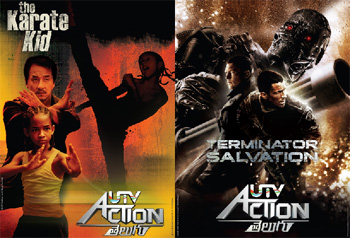
    Most channels outsource the dubbing work to studios, except UTV Action which contracts its sister company UTV Software on the same. UTV Action, as is known was one of the early movers in the movies segment to offer Hollywood films dubbed in Hindi. The channel later launched its Telugu feed. Manasi Sapre, Programming Head, UTV Action says that Telugu feed opens up a big market for the channel. “We’re seeing a lot of traction from the Telugu market, where the appetite for Hollywood movie watching is constantly increasing. Telugu market is one market where you can be rest assured of a good response, given the fact that the southern belt likes to view content in their own language rather than English or Hindi.”


    A separate P&L company within the UTV group – UTV Software, has been in the business of dubbing for more than 15 years now. The company is seen as a pioneer, currently handling projects like Walt Disney, Hungama, Fox Traveller, National Geeographic Wild, NDTV Good Times and UTV Action. The company dubs 40-50 hours of content every month, so considering that content is offered in a minimum of  four languages, it means 200 hours of content being dubbed every month.


    According to Rahul Bhatia, Senior VP – Dubbing, UTV Software, the dubbing industry has grown leaps and bounds in the past five to seven years in terms of the number of players. The market still remains majorly unorganised with UTV as a major player as against many small studios that do one-off projects. “Price-points for dubbing have gone down drastically. From what it used to be Rs 1 lakh for an hour 10 years back, it is now come down to Rs 25,000. But, on the brighter side, volumes have increased. Three years back it was only Hindi, Tamil and Telugu, but now if you see, the market is growing to other languages like Gujarati, Marathi, Bengali and Punjabi.”


    Quite interestingly, for many channels that bring in international content from countries like Japan, Korea or even China, content is translated to English and then dubbed to various other languages, which is a lot of effort on the part of the studios. Part of the reason for this tedious procedure is the fact that channels are extra careful to ensure that  international standards are maintained.


    Given the kind of growth dubbing has seen and that many channels have launched multiple feeds, there are chances that a few broadcast majors would want to set up their own studios. Maybe it is too early to say, or the existing outsourcing practice could well be effective enough as one may not want to get into the business, which could well mean diverting the attention from three major functions: Content, Distribution, Sales. Even for now, Dubbing seems to come later in the priority list of the channels.