Blog

  • Debrief: Kotak hits the clone zone

    By Anil Thakraney


    Another Bollywood classic lifted. Kotak Life promises you guaranteed second income in their new commercial, and the idea is ‘cloning’. The jingle borrows the popular Qurbani film song, and the tinkered words are: ‘Mere jaisa koi meri zindagi mein aaye’.


    In the commercial, people discover duplicates of themselves, much to their delight. And these clones happily assist the originals in their activity. A singer gets a partner to croon with. A chef gets a partner to aid in preparing a delicacy. Another chap gets a look-alike to help him board a moving bus. It’s not a bad idea at all. If the Kotak Life managers are alive to the long term possibilities of the cloning idea, then they are on to a good thing. It can become a powerful brand property. But if it’s just a one-off TVC, then the ad only serves as a cute entertainer, and no more. The real challenge is how they take this one forward.


    [youtube width=”400″ height=”200″]http://www.youtube.com/watch?v=MXvFZqxaEGw[/youtube]

    The one little problem is this: Because all the ad time gets used up in establishing the clones, there’s no chance of telling us exactly how Kotak Life will help us double our income. For that, we have to call/visit them to find out. That’s fine… because you can’t load a brochure on TV… but it also means the idea must be pumped with steroids, else it serves little purpose.


    All said, I like the core thought. Wouldn’t all of us like a duplicate to share our work load? For the politicians, that’s serious double ‘income’, hehe.


    Rating: (On a scale of 1 to 5): 3. Good long term potential


  • Design takes centre stage at Momentum India 2012

    By A Correspondent


    The National Institute of Creative Communication (NICC) along with the Confederation of Indian Industry (CII) organized a two-day forum titled ‘Momentum India’ highlighting the growing need for industry-oriented professionals in Media and Design.


    Prominent national and international names who attended the event included Prof Theo Groothuizen, India Regional Advisor, ICSID, Counsellor for Science and Technology, Embassy of the Kingdom of The Netherlands; Nick Talbot, Global Design Head, Tata Elxsi; Srinivas Reddy, Director, Glynt Jewels; Michael Foley, Product Designer & Founder, Foley Designs; Sonia Manchanda, Director, IDIOM Design Consulting; BR Swarup, Creative Director Ad campaign ‘Your Moment is waiting’, Kerala Tourism; Ramesh Ramanathan, Senior Advertising Consultant; Wasim Khan, International Fashion Photographer; Pradyuman Maheshwari, Founder Director, MxM India; and Abhijeet Sojwal, Head of Photography and Imaging, Myntra.


    The two-day session included topics such as design and its importance, media and design education destination, media and design education opportunities, media and design careers in industry, industry-education collaboration and the Indian media and design entrepreneur. Besides sessions there were also workshops on the art of photography, toy design, copywriting, TV journalism among others.


    Also read: NICC and CII bring ‘Momentum India’

    http://www.mxmindia.com/2012/01/nicc-and-cii-bring-%E2%80%98momentum-india%E2%80%99/


  • Colors dominates Ormax Media’s list of most effective launch campaigns in 2011

    By A Correspondent


    Colors delivered the best fiction launch campaigns in 2011 across Hindi GECs, while Kaun Banega Crorepati (KBC) on Sony was the top non-fiction launch campaign of the year, according to Ormax Media.


    The ranking of the best launches of fiction and non-fiction Hindi GEC shows has been derived from Ormax Media’s awareness tracking tool Showbuzz, which measures the awareness levels of new shows across various Hindi GEC channels. This ranking is a measure of the effectiveness of the campaign, irrespective of how the content fared thereafter.


    In the fiction shows ranking, Colors controls the top three positions and a total of four spots in the top 10. Listed below are the top 10 fiction launch campaigns of 2011:

    Rank Program Channel
    1 Phulwa Colors
    2 Mukti Bandhan Colors
    3 Sasural Simar Ka Colors
    4 Parvarish Sony
    5 Diya Aur Baati Hum Star Plus
    6 Parichay Colors
    7 Kuch Toh Log Kahenge Sony
    8 Hitler Didi Zee TV
    9 Mahadev Life OK
    10 Dharam Patni Imagine TV


    In the non-fiction list, Sony has three shows in the top 10, including KBC at the top spot. Bigg Boss Season 5 (Colors) is a close competitor to KBC, in terms of their launch impact. Listed below are the top 10 non-fiction launches of 2011:

    Rank Program Channel
    1 Kaun Banega Crorepati Sony
    2 Bigg Boss Colors
    3 Zor Ka Jhatka Imagine TV
    4 Sach Ka Saamna Life OK
    5 X-Factor India Sony
    6 Khatron Ke Khiladi Colors
    7 Ratan Ka Rishta Imagine TV
    8 Just Dance Star Plus
    9 Maa Exchange Sony
    10 Wife Bina Life Star Plus


    Research and consulting firm Ormax Media (www.ormaxmedia.com) specializes in the media and entertainment industry, working with India’s leading broadcasters, film producers, radio networks, print publications, media agencies and DTH service providers in the areas of qualitative research, quantitative research and consulting.


    Ormax Media is also the owner of 19 proprietary research products that are being used widely across the media industry. Set up in 2008 by Vispy Doctor and Shailesh Kapoor, the company partners with 81 leading media brands.


  • Deloitte study says outlook for Indian retail sector gloomy

    By Writankar Mukherjee


    The outlook for the organised retail sector in India is gloomy as the economy is slowing down following a period in which monetary policy was tightened to fight inflation, according to a global study by Deloitte Touche Tohmatsu.


    The study, christened 2012 Global Powers of Retailing, says although the monetary tightening resulted in slower economic growth, it did not bring the inflation down. And because of this, policy makers are faced with the conundrum of slow growth with persistent inflation, it says.


    “Indian retail sector offers significant potential for growth of modern trade but given the recent policy flip flop related to FDI in multi-brand retail, both global retailers as well as existing Indian organised sector retailers appear to have adopted a cautious ‘wait and watch’ approach before committing fresh investments,” says Mr Rajan Divekar, senior director of Deloitte India.


    Mr Divekar says Indian retailers are also customising and fine tuning their business models across retail formats to ensure there is a balance between store expansion and profitability. “The recent liberalisation permitting 100% in single brand retail is a welcome sign especially for select luxury and niche retailers,” he says.


    The Deloitte report says retailers have learned to succeed in emerging markets like China and India as they significantly customise both their market models and product offerings to meet local needs and preferences.


    It says foreign investment in multi brand retail will have a positive impact on India’s economic growth. The move could lead to a rationalisation of the supply chain, greater supply chain efficiency, and greater effective spending power for consumers.


    The study says some retailers may find some silver linings in this otherwise cloudy environment. One positive effect of slower global growth will be the continued dampening of commodity prices. “For retailers, this means some improvement on the cost side of the ledger while retail price inflation in some economies presents an opportunity for improved profit margins, even in the context of slow top-line growth,” says Mr Divekar.


    According to the Deloitte report, the world’s 250 largest retailers recorded sales growth in excess of 5% in fiscal 2010 The figures mark a substantial improvement as compared to 2009, when the group of the top global retailers recorded anaemic growth of just 1.2%. The growth took place despite the end of fiscal stimulus in the US, the crisis in the Eurozone, and tighter monetary policy in key emerging markets like India.


    Source:The Economic Times

    Copyright © 2012, Bennett, Coleman & Co. Ltd. All Rights Reserved


  • HT Media Limited launches HT Mini for people on the move

    By Akash Raha


    HT Media Limited (HTML) launched a new product from its stables on January 14 called HT Mini. HT Mini, half the size of a tabloid, is designed exclusively for people on the move and will have daily editions from Monday to Saturday. During the launch period, it will be available in select areas of Delhi-NCR and will be sampled heavily outside Metro stations.


    HT Mini has been designed keeping in mind the needs of people on the move. The size (smaller than an A4) makes it perfectly suited to be read in a crowded Metro. It packs 24 pages of light, snippety content ranging from the top news stories to city news, sports, entertainment and lifestyle. It. Currently the newspaper is being circulated free of cost.


    The Outdoor campaign is being handled by Mudra Max while Lowe Lintas is doing the creatives. The campaign has been in full swing since January 16, and radio spots too are being used to push HT Mini further. The campaign also includes engagement building measures, such as ongoing ‘character of the day’, with the target audience, the metro commuters.


    Shantanu Bhanja, Vice President – Marketing, HTML said: “The needs of people on the move are quite different from those reading the newspaper at home. They want something to pass time while traveling which they are able to pick up on their regular route, and hence their need is for something portable, conveniently-sized, with light, entertaining content. With the introduction of the Delhi Metro in the last decade, such travelers have grown exponentially. According to our research, over 60 per cent of Metro travelers would like to spend their commute reading something, but nothing was readily available to fit their requirements. We have customized HT Mini to cater to such people. We are very excited about the launch of HT Mini and are certain it will address a major need in our readers’ lives.”


    Vasantha Angamuthu, HT special projects editor, said: “HT Mini is a reflection of HT Media’s practice of keeping the consumer at the heart of all our initiatives. The words ‘daily commute’ conjure up images of crowded trains, cramped spaces and the drudgeries of repetition. Until now, there was nothing to look forward to on Metro rides but the launch of HT Mini is sure to inject some fun and entertainment into the daily commute.”


  • The Anchor: 8 reasons why marketers must not fret over the Indian cricket team’s dismal performance down under

    By Hemant Kenkre


    1. Brand Cricket will always rule the roost over all other sports:

    Yes, the intelligentsia will always be (rightly) talking about promoting sports like F1, EPL, Tennis, Marathon, Badminton etc, but the aam janta (read consumers) will always go gaga when MS Dhoni plays the ‘Helicopter’ shot.


    2. All izz always forgiven:

    The history of Indian cricket’s performance abroad will show you that all is always forgiven: 1959, 1974 and 2011 – badly mauled by England. Bruised by the Aussies in 1999/2000. Did not qualify for the ICC World Cup knockout in the West Indies in 2007 and more. None had a major impact on the followers of game which continues to thrive.


    3. Brand Tendulkar rocks:

    As long as Brand Tendulkar continues to deliver, Indian cricket is in safe hands. His tearful tribute to his late father after smashing a hundred in the ICC World Cup in England (1999) or the many centuries scored by the master when India has lost a series is testimony that people don’t care about the result as long as he is around and delivering.


    4. Unveiling of the new poster boys:

    After Virat Kohli, more poster boys will follow; Ajinkya Rahane, Rohit Sharma  and so on. They will be groomed, manicured and made to look like studs. All ready to be unveiled like new products for the masses to lap up!


    5. Apne maidan mein khelenge:

    India’s next Test series abroad is when they tour Sri Lanka in July 2012, Zimbabwe in July 2013 and take on the big bad wolf, South Africa in November 2013. Till then one can be assured of TRP ratings going northwards with the average Indian watching carrom balls, upper-cuts and helicopter shots played against all comers on the flat batting tracks in India.


    6. Maja, masti aur IPL:

    Just wait till April and the IPL. Once it starts, the disappointments will ‘poof’ into thin air and the aam janta will enjoy the traditional trumpet call, cheerleaders as well as the pyrotechniques of the T20 Dadas.


    7. Public memory is too short:

    Bhool Gaya Sab Kuch, Yaad Nahi Ab Kuch: Very Very Special will be dropped (or forced to retire), there will be heated discussions on primetime news channels about Dravid, Sehwag, et al. The bottomline is, like all the other scams and glitches, the consumer (read aam janta) will not even remember the bloodbath at Melbourne, Sydney and Perth in a matter of few weeks.


    8. Kursi badal:

    The eternal optimist in me still believes that India can turn the tables on the Aussies in the forthcoming One Day series. Please do not forget that in the last series that India played in Australia in 2008, India lost the Test series (Monkeygate etc.) but won the CB (One-day) championship. Time to switch the chair? As I said, all will be forgiven!


    Hemant Kenkre is a former first class cricketer, a commentator on radio and in print and a communications/PR specialist. Amongst others, he also consults with Hanmer MSL.


  • Corporate India loses interest in cricket with team’s loss

    By Rajiv Singh & Ratna Bhushan


    It’s being marketed as the ‘Agneepath’ series and Team India’s disastrous tour of Australia will most certainly leave brand cricket with severe burns as companies turn to non-cricketer brand ambassadors, pull cricketer ads off air and negotiate a cut in advertising rates.


    The Indian cricket team is staring at a humiliating second consecutive whitewash overseas after surrendering meekly in the first three Tests in Australia on the back of a debacle in England last year, and most cricket sponsors are unable to hide their disappointment as Indian TV viewers surf away from cricket.


    “We were planning to rope in one of the top Indian cricketers for our forthcoming campaign, but have now decided against having cricketers,” says a top official of a mobile handset brand requesting anonymity. “Going by their present performance, it’s not worth a gamble now.”


    Media experts predict that television advertisement rates will fall at least 20% after this series as cricket is fast losing mindspace after hitting a peak following India’s World Cup triumph last year.


    “There’s absolutely no doubt that advertising rates will fall in the forthcoming series,” says Ms Punita Arumugam, media group chief executive officer of Madison, which buys media for Bharti Airtel, ITC and Cadbury Kraft.


    A senior official of Maruti Suzuki, one of the key sponsors of the ongoing series, says the Tests have been a big disappointment for the country’s largest carmaker.


    “While we will continue to invest in cricket, we feel cricket is over-priced. Considering that results of the team have not been spectacular except for the World Cup, we hope rates will be rationalised,” says Maruti Suzuki Chief General Manager – Marketing, Mr Shashank Srivastava.


    While India’s tour of England had a low average television viewer rating of only 1.79, the first two Tests in Australia fared even worse, with ratings of 0.89 and 0.70, respectively, says rating agency TAM. “Several advertisers are in talks to reduce inventory or pull out from cricket,” says Madison’s Ms Arumugam, declining to mention names.


    ESPN-Star Sports, the official broadcaster of the current series, however, has ruled out a drop in prices for the one-day series. Mr Sanjay Kailash, EVP & head of sales, says the company has sold out 70% of ad inventory for the ODIs.


    He agrees that there has been a dip in advertising interest over 2010-11. “But that’s more to do with the general economic slowdown.”


    Media buyers say the broadcaster sold advertisement slots between Rs70,000-80,000 per 10 seconds for Test matches, and Rs2.75-3.25 lakh per 10 seconds for the One-Day Internationals.


    They say these rates will come down as India’s humiliating shows abroad have alienated millions of loyal TV viewers, already dealing with an overdose of cricket. “As long as you cheese off sponsors, it’s still okay. But this time the fans are feeling betrayed and extremely disappointed,” says Mr Shailendra Singh, joint MD of Percept, a sports and media entertainment firm. “No sponsor would put in money if there are no viewers.”


    SOOTHSAYER DRAVID


    It looks like the warning that Indian batsman Rahul Dravid had sounded during his Bradman Oration address in December is turning prophetic. “Empty stands (during Tests) do not make for good television. Bad television can lead to a fall in ratings, fall in ratings will be felt by media planners and advertisers’ looking elsewhere,” he had said.


    Maybe it’s coming true. No brand has signed an Indian cricketer as its endorser since Gulf Oil signed Indian captain Mahendra Singh Dhoni for its lubricant brand Gulf in September last.


    And there are not many television commercials featuring cricketers on air, despite it being a cricket season. Brands such as McDowell’s and Revital, which had been advertising heavily with their cricketer ambassadors till recently, have become conspicuous by their absence.


    Beverage maker Coca-Cola, which had planned to flood shop shelves with 6.5 million ‘Sachin’ special cans to celebrate Sachin Tendulkar’s 100th international century, is still waiting for the magical moment as 10 months have passed after the master blaster scored his 99th during the World Cup. So do many other brands.


    Also, there are not many potential brand endorsers as most youngsters are yet to cement their place and seniors such as Tendulkar, Dravid and VVS Laxman are set to retire. Captain Dhoni’s comment on retiring from one version of the game may impact his demand, while batting and bowling spearheads Virender Sehwag and Zaheer Khan may not be around for too long either.


    WAITING FOR REBOUND


    While Lady Luck may have deserted Team India, brands such as Emami, which had roped in Dhoni in February 2010, still cheer for the team. “Ups and downs are a part of the game,” says Mr Krishna Mohan, CEO (sales, supply chain and human capital), Emami.


    Source:The Economic Times

    Copyright © 2012, Bennett, Coleman & Co. Ltd. All Rights Reserved


  • Will Kannadada Kotyadhipati make Suvarna #1 GEC?


    By Tuhina Anand


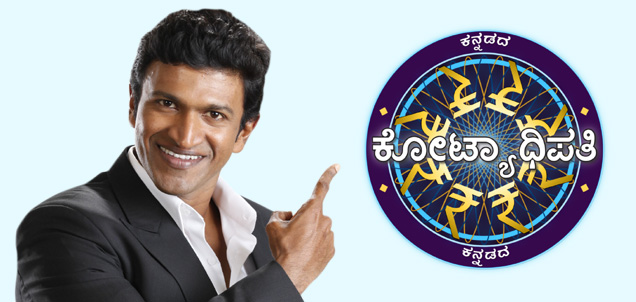
    Kannadada Kotyadhipati (KK), or Kaun Banega Crorepati (KBC) in Kannada, is all set to make its debut on Suvarna, the Star Network’s Kannada general entertainment channel. The show, which will debut in the end of February and will run from Monday to Thursday, is being touted as the biggest format show in Karnataka.


    For the channel, the show will play a pivotal role and people behind Suvarna are hoping that the numbers delivered would do the magic of upstaging the leader Udaya TV. Interestingly, what was unthinkable three years ago can be seen as achievable now, going by the way Suvarna is placed today.


    Anup Chandrashekaran

    As Anup Chandrashekaran, Business Head for Suvarna explained, “In an IMRB tracking, the perception that came about Suvarna was that we deliver fresh ideas and differentiated content and are seen as a young vibrant channel.”


    To reach this level has not been easy, it has taken a strategic shift in the channel’s programming to get newer audience into its fold. This was done by introducing format shows which, according to the channel, is nothing less than social experimentation because of the content of the shows.


    “Of late, only 60 per cent of our GRPs come from fiction. While the format shows ensure that we get newer audience to experience Suvarna, we flank these shows with good fiction that resonates with audience. Ours is a holistic family entertainment channel that includes fiction, non-fiction and movies, and shows what Kannada GEC stands for. We have a healthy mix in terms of SEC demarcation. We have reworked our fiction where we got young protagonists and stories that resonate with the Kannada audience. Our production value is of superior quality and there is a freshness to what appears on Suvarna. This change also shows in our numbers,” added Mr Chandrashekaran.


    Despite the fall in Kannada GE (KGE), Suvarna has grown by 5 per cent in Q4’11 and by 24 per cent in Q3′ 2011. Also Suvarna contributed 48 per cent of KGE’s growth in Q3’11. (TG :CS 4+, Karnataka market. Data updated till wk 53’11). Also Suvarna was the leading prime time channel inBangaloremarket and beat Udaya TV (CS 4+, Wk day19:00-24:00. Wk 41 – 53’2011).


    Even in weekday prime time in Karnataka market, the difference is of 50-60 GRPs and that’s where Suvarna hopes that Kannadada Kotyadhipati will play a major role.


    Considering that KBC has been a successful show in Hindi, especially in 2011, Suvarna is hoping the same magic will work in Kannada.

    The channel has roped in Kannada film star Puneet Rajkumar as the show’s host, and is aggressively marketing the show.

    Talking about the marketing plans, Anil Narang, Head-Marketing and Strategy, Suvarna said, “We have planned to reach out to Karnataka markets in 3 phases. The first is the audition phase and the communication is on how you can register for the show. The response has been better than what we expected and got representation from entire Karnataka. We also have a Facebook page to reach out to new audiences.”


    Mr Narang added, “In the second phase, we will be launching 100 hoardings across Karnataka to ensure visibility. We also have mobile vans that will cover 13 districts and will have a mock KBC set where people can play KBC with a host who will wear a Puneet Rajkumar mask. The third will be the sustenance phase, once the show gets on air, to maintain that the audience.”


    There will be also be print, cinema and TV advertising. The advertising revolves around the idea that ‘knowledge is the key quotient and with basic common knowledge one can win a crore’. The estimated budget could run into Rs10 crore.


    Suvarna is also planning to launch a historical soap along with KK.


  • Mathrubhumi’s George Sebastian wins gold at stamp show

    By A Correspondent


    Matrubhumi general manager George Sebastian’s stamp exhibit titled ‘The Sun – Myths & Manifestations’ has been awarded the Gold Medal in the Thematic category, at Mahapex 2012, the philatelic exhibition organised by Maharashtra Posts in Pune. The awards were given at a glittering function, attended by prominent philatelists and stamp enthusiasts at the Shiv Chatrapati Krida Sankul, Balewadi.


    Mr Sebastian’s award-winning exhibit traced the various aspects of sun worship by different religions and cultures around the world, starting from the Incan and Mayan civilisations, right to the Egyptian and Indian civilisations.


    The impact of the ancient Sun cult Mithraism, on Christianity and other religions was brought in to focus by Mr Sebastian through the medium of philately.


    Stamps and covers from erstwhile states of Jaipur, Gwalior, Junagadh and Mewar illustrated the importance of Surya, as a god, in official insignia of early indian kingdoms.


    The impact the Sun has on literature and in our daily lives has been portrayed through stamps from around the world. Beautiful stamps and miniature sheets showcased aspects of solar eclipse, Copernicus’ heliocentric theory, and even Albert Einstein’s famous equation, E=mc2, found expression through stamps.


    Mr Sebastian, actively encouraged by his father, started collecting stamps at the age of 5. The exhibit ‘The Sun – Myths & Manifestations’ took over four years to complete. The exhibit also won the Trophy instituted by Col Dutta for ‘Best Research’.


  • Ramnath Goenka Awards presented, heated debate on journalists’ intellect ensues

    By Akash Raha


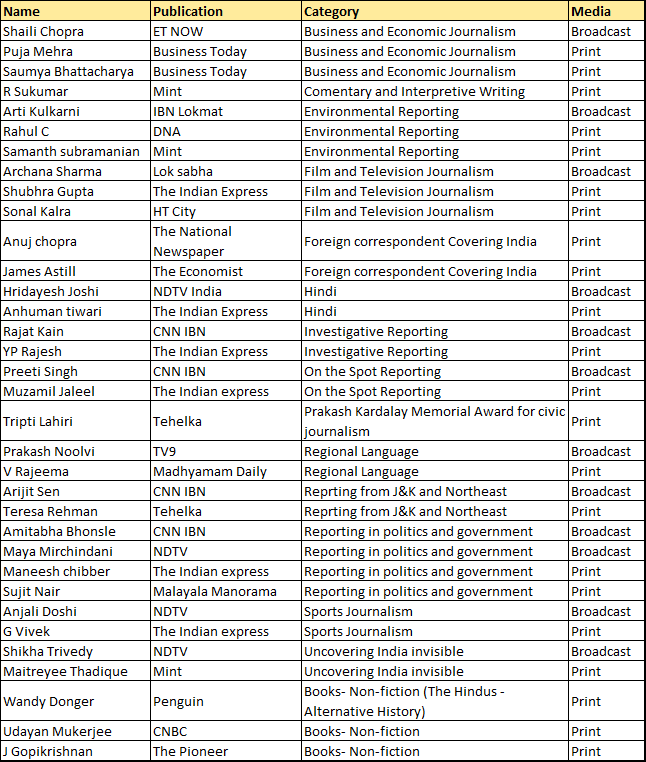
    The Ramnath Goenka Memorial Foundation hosted The Ramnath Goenka Excellence in Journalism Awards, one of the most prestigious awards that acknowledge excellence in all forms of journalism, print and broadcast, in all languages on January 16 in New Delhi.


    The awardees for the year 2012 are as follows.


    Like every year, the award ceremony was followed by a panel discussion. This year, the subject based on the Press Council of India chairman Justice Markandey Katju’s observation: “The majority of media people are of poor intellectual level.”


    Justice Markandey Katju was present during the award ceremony and the discussion that followed. There were several politicians, journalists and academicians present, amongst the audience and the panel, who spoke on the topic and ensured that the discussion and debate was at a fever pitch with their war of words.


    Speaking on the issue, panelist Mr Digvijay Singh of Congress party said that there are black sheep in all works of life and the same holds true for the media as well, but to generalize and say that all of them have low intellectual level would be wrong. However, fellow politician and panel member Mr Sharad Yadav of JDU said that times have changed and with that the standards of journalism have fallen too, illustrating his argument by pointing towards the TV channels, who “invest too much in irrelevant news”. He also pointed at the issue of paid news which has tarnished the image of journalists and media houses alike. He said that the proliferation of media has caused the standards of news to fall.


    Furthermore, he said: “the media industry has to be accountable… If the Prime Minister of India is accountable for his deeds, so shall be the media.”


    Some panel members also raised the question whether it was important for journalists to be intellectually strong. According to some, journalism is of two kinds, hard news and opinion – and in the former, one does not need intellect, only moral integrity. LK Advani, who was the part of the audience said: “I don’t think that journalism has failed the democracy. However, there have been a few shortcomings off late. Yet, I will not say that they have low intellectual levels.”


    Digvijay Singh stated that intellect is required in the whole profession of journalism, be it opinion or reporting. However, he added that with the kind of expansion media has seen lately, it is possible that the training of young and budding journalists remains incomplete. He also advocated for accountability and self regulation in media.


    Union HRD minister Kapil Sibal agreed with Sibal: “Putting out information as soon as possible has become the need of the hour for those in visual media. At such times, news which needs to be evaluated is often not evaluated and is broadcasted without any checks. It is not the fault of the journalist, but that of the medium itself.”


    Pratap Bhanu Mehta, an academician, and a member of the panel said that when a state dictates terms as to what is to be broadcasted or not, it creates insecurity. He made his point when he censured Katju’s stand on Dev Anand’s demise, when he said that the news should not have been on the front page of all newspapers.


    Senior journalist and columnist Tavleen Singh engaged in a war of words with Katju when she questioned the credentials of judiciary. Katju evaded the question by asking her to “please confine yourself to the topic at hand… there will be other days for discussion on the judiciary,” but she persisted with her attacks on Katju and his authoritarian comments on media. She went on to say that PCI has to be more active in the future to regulate media, as judiciary is too incompetent to do so.


    Senior journalist Nalini Singh thought it important that journalists and media houses, especially the visual media, should introspect as to what kind of news stories they are doing. She said that usually only 5-6 big stories are followed on and so many news stories are ignored every day. Udayan Mukherjee of CNBC agreed: “A lot of our media are not up to the mark… and I don’t feel resentful of the idea that there is something wrong with the media.”


    When Shekhar Gupta of The Indian Express group was asked how he feels about visual media and the pace at which news is disseminated today he said: “Everybody with a camera is not a journalist, he is only a transmitter of raw unchecked data.” Editorial intimidation is very important and one has to ensure that the news published is factual, in public interest and of public interest.”


    The panel discussion was brought to an end by Mr Katju where he congratulated all the awardees.


  • I don’t read rival newspapers: Bhaskar Das


    By Anil Thakraney


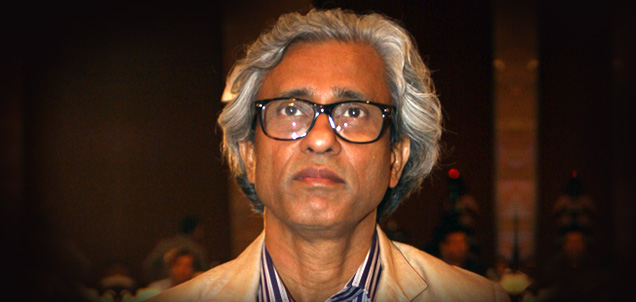
    I have met Bhaskar Das on and off. (I once even secretly freelanced for him in my advertising days.) During my stint with Mumbai Mirror, I got to know him a little better. He has always come across as a cool, calculating and sharp business manager… but someone who’s smart enough not to build his own image over that of his company. In a long conversation inside his plush corner office (previously occupied by Pradeep Guha), Bennett Coleman’s president answers searching questions on his long career with the Times, the group’s ideologies and sometimes controversial practices.


    The one new thing I discovered about Bhaskar during this discussion is that he’s a deeply spiritual person, and often, as he himself said to me, uses learnings from The Gita to ‘sanitise’ his various marketing strategies. Wonder what Lord Krishna would have to say on Media Net.


    But I must say the man who heads the nation’s largest newspaper house retained his composure even when facing tough queries. Spirituality at work, I suppose.


    Boss, when do you retire? You are 58.

    See, retirement has two different connotations. For me, it’s ‘Retyrement’. Like re-treading tyres. And that means adding new capabilities. Coming specifically to Bennett, I have a flexible retirement plan. As per the company’s desire, I should stay as long as I am mentally, physically and intellectually fit. But I must add that I live by the day. So I am only bothered about the now.


    You’ve been with the company for 32 years. Never got bored of the same place?

    Boredom only happens when you don’t love your job. I have continuously rediscovered and redefined my space, so the journey has always been very exploratory. I don’t know whether the excitement would have been there if I had worked in a bank or in some other financial company. Newspaper is a 360 day product. Because of my personal liking for content, I have always been involved in it in some form or the other. Honestly, for me, 32 years feels like 32 days.


    The flip side is some people would say Bhaskar is risk averse.

    It’s not the question of being risk averse. By that logic if you continue in a marriage you are risk averse! I don’t believe in changing jobs for the heck of it. People use it as a spring board for becoming financially more solvent, and that has never occurred to me. For me, a job is a gateway to learning and it’s not for pay slips. Also, even if I have worked in the same company, I have done multiple roles in multiple markets. Our shareholders have always been great teachers. So, I have updated myself continuously, and I can challenge anyone in terms of my cognitive bandwidth on various industries.


    Your biggest achievement in all these years?

    I am proud of having been a part of the company when it re-invented itself. The process started post-1985, when our Vice Chairman took over the reigns of the company and subsequently the Managing Director. And finally, in the last six years, I have been able to drive the ambitions of the company to such great lengths, that today the company is the biggest media house in terms of both, turnover and profitability.


    Bhaskar, the real challenge lies in turning around failed, small brands. Anyone can build on success.

    That’s the classical model. For me, taking a giant brand and making it bigger and taking it to a different level also requires equal guts. And even for a loss making brand, we have done that. Mumbai Mirror, when we started, was making losses.


    Today it is a Rs200 crore brand. This has become possible over a period of six years. And I have to add that I have taken many risks, in terms of launching new brands and making them successful. A number of big groups have also folded up, they screwed up. Success is its biggest enemy. When you are No 1, there’s only place for one person. To stay there requires more energy than reaching there.


    How many years do you give newspapers to survive in India?

    I am very optimistic about news per se. Today, we are leveraging the core and also investing in the embryonic and the emerging media, in terms of a news channel, websites, and so on. We are seeing ourselves as a complementary option as opposed to a substitutive option. Point is, TOI of 1830 and TOI of 1990 and TOI of 2020 will be a very different paper. We are constantly re-inventing to develop the complementary utility of the brand. We have become very futuristic, we are creating more and more niches. As for the newspaper itself, it is a matter of conjecture. I think in the Indian context, there’s a peculiarity, which is that English language is a big deal. Let me explain. To think of India as one nation is a mistake. There is a developing India, there is a developed India and there is an under-developed India. The developed India’s behaviour is more or less like the West, so there might be some erosion of the newspaper in this segment as they shift to Iphones and Ipads. But for the other two Indias, newspapers will continue to prosper for some time. For them, English is a gateway to career and growth.


    Coming back to your question, I am not an astrologer, but I do agree with the gentleman who said that in 2040, the last copy of a newspaper will get printed.

    Having said that, I do not suffer from format myopia, because that would kill a corporation. I think of news as a genre, not as a format.


    There’s been some buzz of an IPO from your group. True?

    This can always be on the agenda of any corporation, including ours. But as of now, nothing has been decided. I am not saying it will never happen, but not in the near future.


    Do you admit that competition has been good for the TOI as a newspaper? Pre HT and DNA, the TOI in Mumbai had lost its edit focus. Now, the news coverage is remarkably superior.

    I have always believed competition is good. Obviously, one has to respond, not react. If, while responding, the quality of the product improves, then that’s damn good. But it’s a part of the re-invention process. In Calcutta, we are the dominant force now. Or for that matter in Bangalore and Delhi, where we became the competition. But not all market leaders have responded positively. We are a dynamic group; it’s in our genetic core to re-invent.


    What are the innovations Bhaskar Das has masterminded in the last five years?

    I have not, it’s all a team effort. ‘I’ as a word does not exist in my dictionary. In our group we all work as a team. No individual is bigger than the team.


    Private treaties, for which your group has been both, admired and dissed… it hasn’t eventually paid off, right?

    It’s thriving; it’s a part of our deep strategy. We didn’t want to make money on these.


    Whoa, the whole idea is to do a space and equity barter for revenue. And to encash on the acquired equity.

    If we wanted to encash on the equity we would have gone to the stock market. Our strategic intent has not been understood, and we want it to remain not understood. It’s a demand-side innovation, and nothing else. Private treaties are now called Brand Capital out here, we have re-invented it and it’s doing extremely well.


    Is Pradeep Guha your mentor?

    I have had many mentors in my life, and he is one of them. He has been a great teacher for me.


    Some years ago, in this very room, Guha said to me that for the group, the target audience is the advertiser. Do you agree with this ideology?

    This kind of question cannot be answered with ‘one size fits all’ sort of a thing.

    We have two customers: Readers and advertisers. Agreed, that our business model is so skewed that we are dependent on advertisers, but we have never forgotten that the reader is the franchise that leads to advertising revenue. The point is to get ad relevant audience… which means people who are culturally and financially solvent enough to engage with the advertisers. But for getting that also you need interesting content. So it’s both, Lakshmi and Saraswati.


    In 2004, you were about to buy Mid Day. What went wrong?

    Nothing went wrong. We wanted to buy and even Mid Day wanted to sell, but in any such deal both the partners have to have a buy-in on terms and conditions. That didn’t happen.


    Regret losing out on Mid Day?

    Now that Mirror has come, Mid Day is not required.


    It’s generally believed Reponse calls all the shots in your group. True?

    There’s no truth in this. I worked in Response for 30 years, and I have never seen any semblance of power. Only thing is, because of the business model, which is that advertising gives us 90 percent of our revenues, it’s perceived to be the most powerful. Every division plays its part. We have no say in the content. If that had been the case, the TOI wouldn’t face the maximum ban from clients (amongst newspapers). We have the Chinese wall, though we do Brand Capital. The editorial is completely independent.


    Cross your heart and tell me. You have never gone to one of your editors to ask him or her to plug an advertiser?

    I have never done it.


    That’s very hard to believe.

    Trust me. I cross my heart. When clients approach us, we ask them to approach the editorial director. Because it will never work if it goes through us.


    Funny that happens in a media company that runs Media Net.

    That’s because people haven’t understood Media Net. Others do it secretly, we are very clear we do it only for the entertainment publications, and with clearly defined protocols. Others do it as legitimate coverage.


    Truth is, Media Net sowed the seeds of paid journalism in this country.

    I don’t think so. There have been enough examples in the past, where, for financial and public issue ads, journalists always got a bad name. I would say it is much more transparent and protocolised out here.


    Are you proud of MediaNet?

    (Slight hesitation.) See, it’s not the question of being proud of it. Life is not black and white. It’s a part of the strategic process we have done. I feel what used to happen previously was more unethical, where, if you knew a journalist, you could get a plug. And we have openly announced these are promotional supplements.


    You’ve kept a very low profile. Looks like you don’t want to repeat Guha’s mistake.

    (Smiles widely) No individual can be like another person. I can’t be what I am not. I don’t think Mr Guha was high-profile; the job is such that you get noticed. Now, maybe there’s nothing noticeable in me! I always say that ultimately it’s the corporation that gives you the halo. And I have no personal halo.


    I think you have decided to be clever about it.

    That’s your conclusion. I did exactly what I believed in. That my work is to serve the company, which I do.


    An Indian editor you admire. Someone not from your group.

    Unfortunately, I can’t comment because I have not worked with them. Also, I don’t read competitive products.


    You don’t read rival newspapers?

    I don’t.


    Don’t you want to know what the competition is doing?

    For that my MIS reports are there. My brand team is keeping an eye on the competition, I don’t have to do it. I don’t have the time to read everything, it’s better to read a few publications in-depth.


    Vir Sanghvi said to me that even if it was the last job in the world, he would still not work at the TOI.

    It’s a democratic country, we respect individual opinion. These things don’t affect me at all. I am a spiritual person.


    When did you become spiritual?

    I have always been spiritual, it’s a journey. We are all expressions of god. And so you must love everyone and not be judgmental of others. When you are spiritual, you love everyone.


    I think the Jain family’s spiritual beliefs have rubbed off on you.

    It would have happened anyway, even if I had worked in any other corporation.


    Photograph: Fotocorp

     

  • Wow! Sandeep Goyal firm will now manage Airtel’s ad inventory & m-commerce

    By A Correspondent


    Bharti Airtel has outsourced all its advertising inventory management and mobile-commerce initiatives to Mogae Media, a firm promoted by former Dentsu India chairman Sandeep Goyal, in a first such deal in the Indian telecom industry.


    This means Mogae Media will sell all possible advertising space on mobile, DTH and broadband services of the country’s top telecom service provider and run its end-to-end mobile commerce initiative including giving special offers, discounts, freebies to subscribers and negotiating deals with companies, a person familiar with the development said.


    Mr Goyal confirmed the deal, but refused to share financial details.


    He said his Mogae Media has already begun selling the advertising inventory and that he saw great potential for his new venture. “My dream is to create an Amazon in the mobile space in India,” he said.


    Analysts said it’s the first time a telecom service provider has collected and outsourced the complete advertising inventory in the country.


    “No one has done that in India so far,” said Mr Prashant Singhal, telecom leader at Ernst & Young.


    Other operators such as Vodafone and Idea offer value-added services created by independent application and content and have outsourced some services.


    “The model has high potential since the mobile phone is the only medium to reach out to 800-900 million people,” Mr Singhal said.


    He says the concept of giving discounts and loyalty points will work among deal-loving Indian consumers. “This kind of selling could generate revenues upwards of $1 billion in two to three years for the industry,” he added.


    An analyst who did not wish to be named said Airtel could rake in around 40-50% of the industry’s revenue based on the sheer size of its postpaid customer base.


    Bharti Airtel’s advertising inventory includes space on text messages, multi-media messages, IVR and recharge coupons in mobile services.


    The default channel, pre-loading screen and messages from Airtel DTH and broadband also form part of the inventory.


    Airtel’s deal with Mogae will work on a revenue-sharing model, the person quoted first said.


    A Bharti Airtel spokesperson said the company would not comment on market speculations and partner relationships.


    Through this deal, Airtel will also offer location-based deals by using advance technology such as geofencing-or tracking users through GPS satellite navigation system-to give discount coupons of nearby retailers to its customers.


    Thus, an Airtel user may get a hefty discount on a particular brand or be the exclusive customers to be informed of a sale prior to it being opened for regular retail customers.


    Such exclusive and customized ‘Airtel Deals’ target small sample sizes.


    Mr Goyal said Mogae Media will invest in creating mobile analytics from data available with Airtel on their subscriber base. For instance, high ARPU clients with substantial roaming and using smartphones would be targeted for high-end car brands and deals in airlines and hotels.


    Similarly, youth with high Facebook usage and 3G connection may be targeted for offering deals on apparel, career institutes, cafes, movie theatres and music.


    This micro-targeting of consumers gives brand the opportunity to fine tune both their advertising promise, as well as avoid wastage and spillage inherent in other media, Mr Goyal said.


    Mogae Media sold 250 million impressions of Life OK, Star TV’s new broadcasting channel that launched mid-December on post-call notification-a message which appears after a pre-paid caller ends a phone conversation showing the amount remaining in the caller’s account.


    On the launch day, around 30 crore messages were sent out within four hours, asking subscribers to tune in to the channel.


    Airtel’s WAP portal also streamed an eight-hour concert for Life OK and 7 million plus Airtel’s DTH subscribers received mails inviting them to see Life OK on channel 104.


    Bharti Airtel is the world’s fifth largest telecoms company that has more than 175 million mobile phone customers in India, the largest share in the industry. Its digital television service has more than 6.6 million customers and more than 1.4 million broadband users.


    Source:The Economic Times

    Copyright © 2012, Bennett, Coleman & Co. Ltd. All Rights Reserved