Blog

  • DID announces tie-up with Reebok

    By A Correspondent


    After nearly three months of anxiety and sleepless nights, the aspirants of Dance India Dance’s ‘Sunehri Taqdeer ki Topi’ have left the gruelling audition process behind.

    All those hours of sweating and stretching will be now rewarded with a chance to be on the coveted stage as a part of Dance India Dance’s (DID) Adbhut 18 and dazzle the viewers with breathtaking performances.


    The Masters, Remo D’Souza, Geeta Kapoor and Terence Lewis announced the names of Adbhut 18 inDelhi, who have secured their places in ‘Remo Ke Rangeeley’, ‘Geeta Ki Gang’ and ‘Terence Ki Toli’.


    Mr. Ashish Golwalkar, Non Fiction Head, Zee TV said: “This is a momentous occasion for us. After weeks of contemplation and deliberation, we have finally chosen our ‘Adbhut 18’contestants. The contestants were handpicked on the basis of their skill, innovative presentation, versatility and ‘never give up’ attitude. Zee, as a channel, takes immense pride in the fact that dance has boomed in popularity inIndiabecause of a show like Dance India Dance.”


    This moment is also significant as DID has announced its tie-up with sportswear giant Reebok. Over the years, Dance India Dance has become a trend setter in the genre. Continuing with the tradition of exploring differentiated marketing on DID; this season the channel has ventured into unexplored territory – a revenue sharing and licensing deal with Reebok.


    Regarding the licensing and merchandising deal with Reebok, Mr Akash Chawla, Head-Marketing, National Channels, ZEEL said: “DID stands for great quality of dancing and extreme rigor. DID has always been a progressive brand which has been an aspiration to many. Taking this forward, this season we have ventured into a licensing contract with Reebok. This is a first at Zee TV that a costume range will be unveiled. As a part of this arrangement, Reebok has designed a customized range of DID dance gear and will retail it in nearly 100 outlets across the country. This will help us to extend our brands into new product categories, and will also help increase the popularity of the brand.”


    Mr. Sajid Shamim, Brand Director, Reebok said: “At Reebok, we have always focused our efforts on creating products that bring elements of life, sport and style together. Through this association with ‘Dance India Dance’, we are celebrating fitness through the medium of dance, which at its core is fun and enjoyable. The Dance India Dance collection has taken its inspiration from the various forms of dance. Comprising of graphic t-shirts in vibrant and bright colours, this collection celebrates the spirit of dance.”


    The Reebok and Dance India Dance Apparel Collection brings together dance and fashion with daily wear, value-added design elements. Graphic T-shirts and hoodies for men, with ‘Born to Dance’ and ‘Live Love Dance’ written in bright neon colours have specially been made keeping in mind dance enthusiasts across the country. The women’s has a ‘DID – Born to Dance’ racer back and flick pant for all the hardcore dancers. Graphic t-shirts complete the “Fit for the street” Dance Inspired Streetwear collection.


    Both Zee and Reebok feel that this synergy between dance lovers and sports lovers will surely work wonders for both the brands.

  • Debrief: Female bonding with Tanishq

    By Anil Thakraney


    There’s not much of an idea in the new Tanishq Glam Gold commercial. But energetic and engaging treatment makes it come alive.


    The setting is an open air party, where lots of young people are dancing. It appears to be a pre-wedding do, given all the finery the ladies are decked up with. One girl tries to bring the couple together on the dance floor, but her plans go for a toss as it suddenly starts pouring. The party abruptly stops, but our spunky girl won’t let her close pal down. She begins dancing in the rain, and then everyone else follows. Much to her buddy’s delight, the party goes on. And yes, as you can imagine, the shots are layered with close ups of the Tanishq Glam Gold jewellery.


    [youtube width=”400″ height=”200″]http://www.youtube.com/watch?v=p9bcCW8GuBQ[/youtube]

    Like I said, the lack of a strong central idea has been compensated by a happening treatment. You don’t expect commercials for gold to go totally into lifestyle, and this refreshing approach works. The endearing attitude of the girl, unwilling to let her friend down, sets the tone for Tanishq’s brand personality. The power of girlie bonding. Which would aid in brand salience. And of course, the dance party makes for a very entertaining commercial. It’s shot well too, and one won’t mind repeat exposures.


    Rating: (On a scale of 1 to 5): 3. The full-on lifestyle approach pays off.


  • FM in the North-East – a foggy picture

    By Robin Thomas


    Phase III of FM is likely to bring more radio services to the North-East, a region known for being music-crazy. Currently, Guwahati, Shillong and Gangtok are the only cities in the region to have any FM radio services. While Red FM and Big FM are the only national players present in this region, the local players are Radio Misty, Radio Gupshup, Nine FM and Radio Ooolala.


    The music generally played in these markets is a mix of regional, English and Bollywood songs. One of the major challenges facing the North-East players, particularly the local FM stations, is the high music royalty rates, and that revenue generation is comparatively lower than the metros, making it a little difficult for survival.


    Nisha Narayanan, Senior VP Projects & Programming, Red FM explained, “Radio as a medium is very popular in the North-East as the North-East has a very strong music connect, it has a rich music culture. The drawback however is the lack of government support for radio in this region. Most radio stations in the North-East are local players, there are not many national players because they do not see too many benefits from these markets.”


    Nishant Mittal, CEO Radio Misty said, “We are in Gangtok and Siliguri, and both these markets have been very good for us and for radio because the youth in this region are very inclined to music.”


    Low advertising revenue

    Most of the advertisers in radio are local, particularly from the retail category. National or corporate advertisers in radio are said to be very few in the North-East. The national-local advertising ratio of Radio Misty, for instance, is 40:60.


    According to S Wassim Ahmed, Station Head, Radio GupShup, the spot rate for radio in North-East is even Rs 100 per spot, thus making it tough for the medium in these regions. “Regional advertisers’ response initially was bad. You cannot blame them, they were not educated about the impact of the FM radio. The national advertisers were equally apathetic towards the Guwahati market (North-East market is non existence for all the practical reason). The spot rate is pathetically low. It is invariably below 100/spot. Radio life is toughs in these parts of the country.”


    The challenge

    Some of the challenges for radio in the North-East according to the industry players are huge royalty rates. Revenue generation is comparatively lower than those in other parts of the country, and the challenge to get the right talent because of limited man power.


    According to Mr Ahmed of Radio GupShup increased government support and minimized capital outflow will ease the burden of the FM radio business in the North-East. “For the radio business model to be sustainable in these remote parts, the capital outflow should lessen. Just like government subsidy is available in any other industry in the North-East, radio too should also get those benefits. Government support in terms of DAVP advertisements would be a great boost.”


  • For reality TV specialist Niret Alva, Survivor India is huuuge

    By Johnson Napier


    Utter the word ‘reality’ in a crowded space or even within the confines of an office and a flurry of mixed reactions are likely to fly thick and fast. From bad to artificial to monotonous, one could expect such and other ghastly descriptors from opinion-makers, however irrelevant their views. But then there are production houses which are assessing the changing market scenario and viewing tastes of the masses and are working their way in providing content of differentiated nature. One such firm is Miditech India, in the news more recently for its reality show, Survivor India. Miditech is of course known as a reality TV specialist.


    The show, which has been running across multiple countries and in different languages, makes its formal debut in India. While different countries have different formats to accommodate the show, in India the show will be spread across 45 days and will include 22 contestants. In all, 22 episodes are to be aired in India. While it would too premature to rate the opening performance of the show on the numbers front, what is commendable is the scale and the effort that has gone in putting the show together.


    For Niret Alva, Co-Founder of Miditech and also Executive Producer of Survivor India, the best thing is that it could easily be billed the biggest reality show that has ever been launched in India. Affirms Alva, “The show is one of the biggest that India has ever seen. In terms of geographic scale, sheer number of people involved, international crew coming together…it is hundred percent huge. The whole breadth of the action is spread across 30-40 sq kms. It is not in one set like other shows. Every day the set gets dismantled and has to be set up anew for another challenge every day. So in that sense, it could easily be the biggest from a production standpoint in India.”


    In fact so huge has been the effort around putting the show together that it has taken Miditech more than 18 months to get it launched in India. Asserts Mr Alva, “The actual process has been in the works for one-and-a-half years. From sourcing the license to developing the show to doing the recce for the location to putting the team together – it is one of the biggest teams on a show with about 400 people from around the world being involved – so the scale at which we have gone about is big.”


    According to Mr Alva, Miditech had wanted to bring Survivor to India for a long time, but for one reason or the other aspirations did not align. “But for the current round, we licensed the show from Survivor and then brought it to the Indian market, and were immediately able to strike a chord with Star India as they were able to understand it and understand that it needed to be done in a particular way.”


    Given the gargantuan effort and the originality in concept, Mr Alva is hopeful that the show will find resonance with the viewers. “The expectation is a hope that the Indian viewing public, which pretty much sees reality as some sort of manipulated, artificial, fictionalised space has its faith restored in the genre. The fact that it is all unscripted, except for the anchor lines, will help in restoring the faith of the people in the authenticity of the characters and the show on a whole.” According to Mr Alva, “People will get to see contestants losing weight, you will see them falling sick, you will see them getting tanned, you will see them in a shabby state, etc all of which cannot be seen on other reality shows.”


    When quizzed on the choice of cast for the show, Mr Alva countered it, saying, “We were very clear that we wanted to do auditions around the country. Star was also excited about that. We were clear that we needed people whom one can recognise on the popularity front – thus celebrities – and then there were the everyday people, who needed to have a degree of excellence or something that made them unique in terms of character. What we were clear about is that we would not compromise on the format for anything. So that’s how we went through hundreds of people literally before we shortlisted the final few.”


    In fact, according to Mr Alva, most of the contestants left the show midway after realising they couldn’t cope with even the basics of what the show demanded. “But we were glad to have received response from certain contestants as those who came to the table had researched the show and they were exceptionally motivated; they had a point to prove to themselves and to the world at large. We then conducted physical tests for swimming, running, cycling and even psychiatric evaluation before we could shortlist the candidates.”


    Brushing aside questions on ROI and response from advertisers, Mr Alva would only state, “The cost of production would be 15-20 per cent more than a big scale reality show. It is definitely huge.”


    So while Survivor India is keeping the viewers busy in India, Miditech has its hands full with other projects, some of which include Achiever’s Club on Star World, Panasonic House of Beauty on MTV, a health-based show for Colors that will go on air in February and also the Guinness World Records that is in the pipeline. “We are also in the language space – Tamil, Bengali and are looking at Kannada as an option. We also did a one-hour special inside Tihar Jail for National Geographic, which is really edge-of-the-seat,” shared Mr Alva.


    Despite being in the business for 18 years, the challenge for the company is to face other format holders who have set up their own production houses and who insist on producing their own shows. “Going forward, it’s not going to be only about good ideas but about good ideas at competitive cost. Also, the TAM meters have to go berserk. It’s really a tall order,” avers Mr Alva.


  • Typically quirky, Mudra ‘welcomes’ Bobby Pawar to JWT

    By Shubhangi Mehta


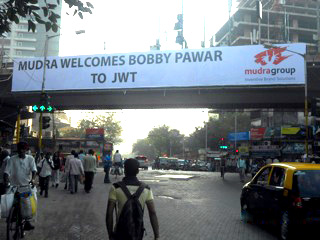
    Mudra showed that it is an agency with a big heart as well as an extraordinary creative bank, demonstrating both innovation and affection in its farewell to Bobby Pawar. In a billboard that has been put up right next to JWT, where Mr Pawar has taken charge of his new responsibilities, Mudra said “Mudra welcomes Bobby Pawar to JWT”.


    The billboard came as a shock to some and a pleasant surprise to some but it undoubtedly managed to catch everyone’s eyes.


    Pratap Bose
    Bobby Pawar

    Pratap Bose, COO, Mudra Communications, said, “Tuesday evening was Bobby’s farewell. The whole idea was to show Bobby how special he is for us. It’s a gesture to show that the fact that Bobby remains in advertising is good news for the creative industry.”


    A generous gesture like this makes one feel proud to be a part of an industry where relationships can be warm as well as professional.


    On the gesture by Mudra, Bobby Pawar, CCO and Managing Partner, JWT, said, “Both the agencies (Mudra and JWT) really touched me with the welcome I received. It feels great to get such a warm greet. My first day at JWT was spent knowing people and understanding the brands. Hope the fun and enthusiasm continues.”


    The way Mudra has wished luck to Bobby for his new innings will sure be remembered by the industry in a very special way. One hopes there are more such instances where people feel proud to be a part of such an industry.


  • FMCGs make hay as noodles, soft-drinks etc drive growth in rural India

    By Samidha Sharma


    Noodles, macaronis and soft-drinks made rapid inroads into the rural markets driving up growth in the fast moving consumer goods (FMCG) industry – 10% by volume and 12% by value – in the first ten months of 2011. The consumption story for most part of last year dispelled slowdown fears as Indian rural households piped urban counterparts in growth sweepstakes , said market research agency IMRB. Rural India had clocked a negative volume growth during 2010 (here volume growth is the increase in sales clocked over last year while value growth is volume growth plus price hikes).


    The urban FMCG market, on the other hand, grew 4% by volume and 7% in value and was led by categories such as ready-to-eat mixes, deodorants , breakfast cereals and soups. Growth for personal care products such as toilet soaps, shampoos and household products stagnated compared to last year, while F&B space saw a healthy growth. The IMRB survey is conducted across 30 product categories.


    Sector analysts said the F&B market witnessed hectic action in rural India with players like ITC and Hindustan Unilever (HUL) leveraging their distribution muscle to push products in this category. ITC’s Sunfeast noodles and HUL’s Knorr brand of soups have been able to penetrate the hinterland leading to increase in the category reach.


    “In the F&B market we are seeing the share of rural markets grow. Packaged fruit juices have traditionally been a very urban market product, but with growing health awareness among rural consumers, we are witnessing a marked growth in demand. To cater to this demand, Dabur has already expanded the distribution footprint for juices to cover smaller cities,” said Mr George Angelo, executive director – sales , Dabur India, maker of Vatika shampoo and Real fruit juice. The FMCG biggie saw its personal, oral care and health supplements report strong growth in the rural markets.


    While the low-penetrated products in the F&B space witnessed good growth, detergents , washing soaps stagnated volume wise. “Due to lower rural reach household care categories such as floor cleaners , household insecticides are showing faster growth. But foods especially staples such as cooking maida, atta/wheat which are driving the growth in volumes,” said Mr Manoj Menon , group business director at IMRB International. In the urban market emerging categories , noodles, macaroni, vermicelli grew 20% in terms of volume, while ready-to-cook mix products saw a whopping 64% growth and soups grew by 20%. In the personal care category , which largely remained stagnant in the urban market, deodorants saw a 31% growth.


    There have been some concerns over consumer spending with price hikes being taken across the board by FMCG companies to offset the impact of rising input costs.


    “Because of healthy disposable income growth and lower absolute spends on FMCG products it hasn’t impacted the consumption yet, however if there is uncertainty around income growth risks of downtrading exist,” said Mr Gautam Duggad, an analyst at domestic brokerage firm Prabhudas Lilladher.


    Most industry players said they haven’t seen any palpable signs of downtrading yet. “Directionally there is no slowdown in the market but there could be some cut back in the next few quarters on discretionary items by consumers. The impact will be felt in the top-end product categories and non-essentials ,” said Mr Saugata Gupta, CEO, Consumer Products at FMCG major Marico.


    Source:The Economic Times

    Copyright © 2012, Bennett, Coleman & Co. Ltd. All Rights Reserved


  • From agency maverick to ‘khadoos’ client…


    By Shubhangi Mehta


    Switching jobs is an avenue for growth. But how does it work when the switch is drastic – such as going from an agency which creates a communication for a brand, to becoming a part of that brand? With increasing numbers of agency heads moving towards the client side, it looks like a trend.


    A mix of work and pleasure is what agency life promises an individual. With that also follows a pattern of sleepless nights, tight deadlines and the pressure to impress the client. What happens when one moves to the client side? How does life change, and do the switchers miss the agency days?


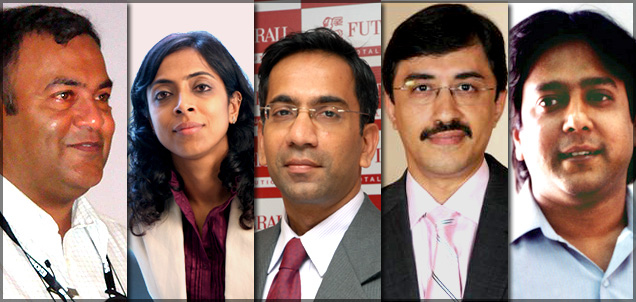
    We have an ample amount of such examples already in front of us. Rahul Kansal, Sunil Lulla, Ajay Kakar, Abraham Alapatt and Sheran Mehra are some such examples.


    Kamal Basu, Head of Marketing, Skoda, who was working with Saatchi & Saatchi is the most recent example of such a move.


    On his new role, Mr Basu said, “Moving to the client side is all about trying something new for me. I personally feel that advertising agency and brands work very closely and cannot do without each other hence the changeover is fairly easy as compared to moving from an agency into banking. For me right now, the most important thing is to have the mindset of a student eager to learn new aspects of the business.”


    Ajay Kakar, CMO – Financial Services, Aditya Birla Group who has worked in a creative agency environment as well, said, “The grass is always greener on the other side. Having been on both sides of the table, at the agency and client ends, I can now relate and empathize with this sentiment. Throughout my 14+ years experience at the agency side I shared the sentiment of every colleague, ie, ‘Hum kaam karte hain, while clients aish karte hain’. And during my more recent six-odd years at the client end, I can’t deny having heard or felt the sentiment, ‘Yeh agency waale kya jaane, what pressure we face’!”


    On the agency side, one is usually thought to be a lot more casual about ideation, creative, deliverables etc and the perspective is that it changes completely when one becomes a client.


    Rahul Kansal, CMO, Bennett, Coleman and Co, said, “I moved to the client’s end nine years ago. I had experienced agency life for approximately 20 years and was itching to implement my own ideas rather than just being an advisor. Though the two lives or work culture cannot be compared, yet as a client there is an ownership of the brand which leads to a personal connect.”


    Certainly an agency person enjoys agency life. But an invitation to partner a client is a thrilling mandate which might be quite enticing.


    Abraham Alapatt said, “After 10 years in the agency business, I was keen to grow into a more complete ‘marketing’ professional (as opposed to remaining a pure advertising man) and when I was offered my first head of Marketing role in 2005 with Reliance Mutual Fund, I took it most eagerly.”


    For those in the agency, the universe tends to revolve around advertising and agency imperatives. But as a as a marketer, one comes to understand that advertising and the agency are key cogs in a very large wheel.


    Sheran Mehra, Head of Marketing and Corporate Communications at Dhanlaxmi Bank, said, “I had planned my career in such a way that I wanted to move to the client side after working with an agency, since I wanted to play a larger part than just being an advisor for the brand. The agency setup is more informal, and more like a family. Not that here it isn’t like family, but it’s more formal, more of a corporate environment.”


    Alapatt further explains, “In terms of effort and pressure, being on the client side is as challenging and difficult, because the line of responsibility and accountability, especially when it comes to ROI, budget accountability etc, is a lot more definitive. If earlier at the agency, I spoke to my clients every morning and then planned my day’s priorities before catching up with my team and then breaking up jobs to meet expectations – now as a client I have to plan my day ahead (based on current business and leadership priorities) and then along with my team, chart out tasks/timelines/deliverables. I also have a lot more information available to help prepare an annual plan, review it regularly, and then make more meaningful contributions to overall marketing and business strategy then when I was on the agency side. Overall it is a lot more organised, planned, systematic, and accountable.”


    A client initiates a brief. And his job is not complete till long after the agency hands over its input and output.


    The most obvious change after moving to the client side is that one can now plan a day or a schedule and prioritize a lot more, and there are far fewer firefighting situations than when working with an agency. This is probably because ad agency teams (who work with multiple clients) need to constantly re-align their priorities in line with their clients’ changing needs.


    Mr Kakar further adds, “Today I feel like the ‘complete man’, because I now have a realistic perspective from both ends. Having been on the agency side I believe that I can be more sensitive to the agency’s needs and constraints. But on the other hand, I am more demanding on what I know is possible. But life in an agency is what I miss… the masti and the laughter in the corridors, the camaraderie, the training sessions, et al.


    “As a client we can say that one is responsible for one’s team delivery (besides your own KPIs). These are directly linked to the company’s overall performance targets and plans, and every idea, plan, activity, campaign needs to be very clearly defined and measurable as one is accountable for every rupee spent to the CEO and the board of directors.”


    Most of the people who have made a move have stuck to the client side, which seems to indicate that working as a client is more enthralling.


    “I am not sure I yet have an answer to which part I enjoy playing more. But I do believe that the agency and client are two sides of the same coin. A marketer’s success depends on his agency partner, just as an agency’s existence depends on its clients. And only when both of them come together in harmony, is there real value in the form of fun, fame and fortune, adds Mr Kakar.


    While Mr Alapatt muses, “Looking back, I am glad I made the shift for the growth, learning and opportunities it has afforded me. But I can confidently say that the first 10 years of grounding/experience that I enjoyed with ad agencies like Ogilvy and the exposure to multiple clients/categories has been invaluable to my growth, both personally and professionally.”


    The big picture seems to be that the transition from one side to another is a natural evolution and part of the growth process. And this part of the journey as a client can be said to mature one as a person and marketing professional.

     

  • Saaru chhe! History channel now in Gujarati

    By A Correspondent


    History TV18,India’s number one factual entertainment channel, announced the launch of its Gujarati feed. The viewers ofGujaratwill now be able to watch their favourite channel in their preferred language – Gujarati.


    History TV18 is the first international channel to launch in Gujarati. With this launch, it is also the only factual entertainment channel to be available in seven languages – Gujarati, Bengali, Tamil, Telugu, Marathi, Hindi and English. All the programmes and the fixed program chart (FPC) schedule will remain identical in all the language feeds.


    Viewers using digital platforms will be able to choose their preferred language through their remote controls.


    Speaking on the launch, Ajay Chacko, President, A+E Networks I TV18 said: “Our objective is to grow the genre and make it a relatively mainstream alternative for viewers in the near future. With this objective in mind, we intend to make the channel available in every Indian language possible and entertain audiences all acrossIndia.”


    Sudheer KG, V P Programming, A+E Networks | TV18 JV said: “As Indian audiences mature and seek out more international content in their own languages, there is no better time than now to launch our Gujarati feed. The incredible level of aspirations of people speaking that language and a large youth population make it all the more appealing and lucrative. We have taken care to ensure that the translation retains a certain local flavour, making the channel more accessible and relatable.”


    Gujarat is an important market for factual entertainment after Mumbai andDelhias it contributes as much as 7 per cent to the genre in 1 Mn+ towns. Ever since its launch History TV18 has been a strong player inGujaratwith the highest viewership in 0.1-1Mn market cluster and also highest time spent per viewer in 1Mn+ market cluster. Through this initiative the channel hopes to strengthen its position even more.


    History TV18 emerged as the number 1 channel in 6 metros in factual entertainment within months of its launch. The channel has in the process expanded the genre by 55 per cent, drawing in the highest time spent per viewer in the genre. It is the first in a bouquet of factual entertainment channels to be launched by A+E Networks I TV18.


  • The Anchor: 4 reasons South India needs its own special interest mags

    By Bina Sujit


    India is such a diverse nation and every region has its own unique characteristic. It is therefore, very difficult to cater to the sensibilities of everyone through a common magazine. There would certainly be a large segment of people who would tend to get neglected in this case. Hence a region-specific, special interest magazine is the answer to fill the gap. Our research before the launch of our magazine JFW (Just for Women), targeted at the women in South India, showed that there was a need to focus on women out here, and the success of our magazine just goes to prove that finding.


    The advertisers’ needs also vary from region to region and they would probably need to position/focus various products in different states /regions. That is why brands also have different brand ambassadors at the national and regional levels (for example, if it is Shahrukh for the national campaign then it is Suriya and Mahesh Babu at the regional level for a particular brand). Hence the availability of a regional medium of communication helps companies to communicate their region-specific brand message.


    Just like our country, personalities are also very varied in various fields. Speaking from JFW’s point of view, women from South India have been making a big mark in the national and international arena. A dedicated magazine for these women ensures that such achievers are given the focus and recognition they deserve.


    The outlook of people across different regions also varies in our country. This results in differing tastes and preferences in what people in South India would want to read and how they would like it to be visualised. Again, a region-specific magazine is the answer to cater to the preference of readers.


    Bina Sujit is the Director & Editor-in-Chief, JFW, CLub Class & A la Carte at Options Media Pvt Ltd.


  • Mumbai papers go aggro on civic issues

    By Ranjona Banerji


    The municipal elections due in Mumbai next month are being treated almost like assembly elections. For weeks now, Mumbai newspapers have been giving readers details of the projects undertaken, completed, unfinished, citizens’ grouses, movements and expectations. apart from a ward by ward breakdown of performance by the incumbent Shiv Sena-Bharatiya Janata Party alliance, details about new political formations and many citizens’ groups have also been provided, analysed and assessed.


    There can be no doubt that this election to the biggest and richest municipal corporation in the country is been seen as a litmus test for the state and general elections. The Congress and Nationalist Congress Party, after some hissing and spitting, have decided on their seat-sharing and are apparently well-prepared to take on the incumbents.


    Is there anything to choose between the papers? as is its wont and reach, The Times of India has gone for a carpet-bombing strategy. The Hindustan Times has gone for the focused approach, concentrating on particular issues. Mid-Day has also looked issues as well as the political twists and turns. Saamna, the Shiv Sena mouthpiece, has looked to attack Raj Thackeray’s Maharashtra Navnirman Sena, which has certainly eaten into its own constituency.


    This is the sort of coverage that Mumbai newspapers are very good at and indeed have taught a lesson or two to other city editions about how to go in-depth into local issues.


    Interestingly, the anti-corruption movement led by anna Hazare has not jumped into the fray. Yet, most problems which people have with government non-performance and bribery are at the local and municipal levels. Your Member of Parliament cannot get you constant water supply or smooth roads or garbage disposal.


    **


    The last six or eight months saw the media looking at internal issues, most specifically the anti-corruption movement and its fallout. But with the suspension of the Lokpal Bill, geopolitics and the neighbourhood have both resurfaced. India’s military capabilities and strategy vis-a-vis China are back on the edit pages and the turmoil in Pakistan is also getting attention. TV channels, predisposed to sensationalism, have concentrated more on former military dictator Pervez Musharraf’s decision to return to Pakistan. The run-up to the US presidential election, however, is yet to find much space in the Indian media.


    **


    another Test series is due to begin and it will be a good test to see how much hysteria can be generated from a good or bad performance by India.


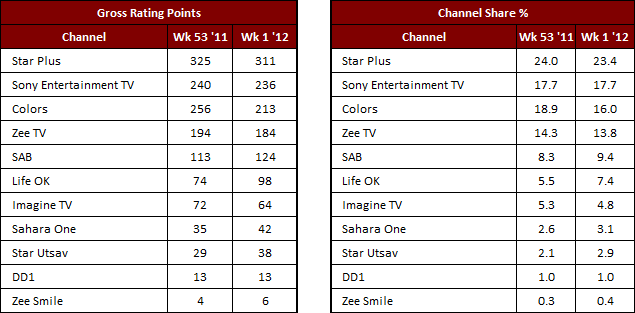
  • TAM Data (GRPs, Channel shares of HGECs)- Wk 1 ’12

    Source: TAM Peoplemeter System
    TG: CS 4+ yrs
    Market: HSM
    Period: Wk 53: Dec 25 to Dec 31, 2011
    Period: Wk 1: Jan 1 to Jan 7, 2012


    About TAM Media Research


    TAM is a joint venture between Nielsen Company & Kantar Media Research. Besides measuring TV Viewership, TAM also monitors Advertising Expenditure of Television, Print & Radio through its division AdEx India. Since 2004, it extended its presence in the PR Measurement & Analysis space for Corporate/Marketing Clients by setting up a separate division Eikona PR Measurement.


    In 2007, the joint venture introduced RAM (Radio Audio Measurement) service to track Radio Listenership for the Indian Radio Broadcast Industry. In year 2009, TAM launched a division, called TAM Sports that specializes in monitoring Sports Sponsorship ROI.


    TAM Media Research’s objective is to fuel media insights that will drive the growth of the Indian Media Industry.