Blog

  • HDFC Life ‘click(s) to protect’

    By Shubhangi Mehta


    HDFC Life has introduced a policy for its urban customer which will help them buy insurance online. The campaign for this will be hitting television screens soon.


    Until now you online purchase was meant for purchasing goods for one’s use but now after the ‘Click 2 Protect’ initiative by HDFC Life, one can now buy term insurance online and secure your family with a large sum assured at the lowest premium rates.


    Click to protect is available in 750 cities, where HDFC Life is accessible if consumers need any help.


    [youtube width=”400″ height=”200″]http://www.youtube.com/watch?v=WsxjzLfPFH0[/youtube]
    [youtube width=”400″ height=”200″]http://www.youtube.com/watch?v=VCoiYnzZUXQ[/youtube]

    Sanjay Tripathy, Executive Vice President and Head, Marketing and Direct Channels, HDFC Life, on this initiative, said, “This is a new online programme mainly for our informed urban customer between the age of 25-40 years. The online programme is an ease for a customer who plans to buy insurance. The campaign that we have created for the product talks about ‘I love my family’ – it’s about being a son, then a husband, to a father. The thought manages to connect with the Indian consumer. For Indians, family comes first and they want to secure their family’s current lifestyle/dreams/goals even when they are not around.”


    The new campaign mainly focuses on the fact that hypothetically, an individual finishes graduation by the age of 20 years. Post that he starts working, gets married, becomes a parent, buys a house etc, ie with increasing responsibility people become more concerned about their family. Today uncertainties have increased and lifestyle has changed significantly as compared to previous generations. The campaign makes the consumer realize that term insurance is very important today to secure one’s family adequately, and seeks to make him feel concerned.


  • Ad Strat: McDonald’s Happy Price Menu

    KV Sridhar, NCD, Leo Burnett


    Name of the Campaign/Ad: Happy Price Menu

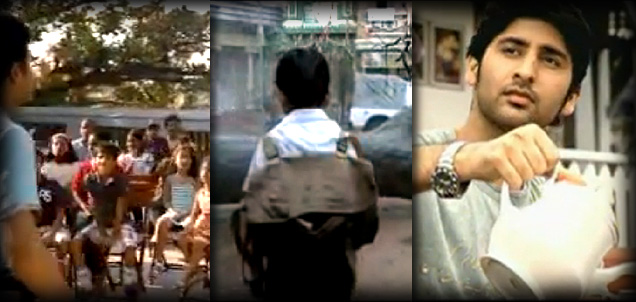
    The Brief: Since the launch of Happy Price Menu in 2004, McDonald’s & Leo Burnett have constantly endeavoured to go to consumers every year with a fresh way of communicating the already established Rs 25 affordability message. The outlined challenge for the 2012 campaign was to go beyond transactional/value communication and forge an emotional bond with customers.


    [youtube width=”400″ height=”200″]http://www.youtube.com/watch?v=iKCe0Za3lBA[/youtube]

    Research insights: While food is why people come to McDonald’s, it’s the moments one shares over that food that makes them come back.


    The thought process behind the creative: McDonald’s is all about simple easy enjoyment. The burger may cost a few rupees, but the conversations, the human connection one creates over that burger is priceless. And hence, the core thought – real happiness doesn’t cost a lot – interpreted through simple, everyday, innocent charming stories that bring a smile to your face.


    [youtube width=”400″ height=”200″]http://www.youtube.com/watch?v=22P9FCX2Ybg[/youtube]

    Media vehicles chosen: The campaign launches with a TV plan and in store merchandizing in the first phase and additional media like radio, outdoor etc will be added in subsequent phases.


    Key issues kept in mind while executing the ad: We needed to adhere to brand tone – fun, optimistic, welcoming and genuine. While we worked on compiling mushy priceless moments, we needed to take care that we weren’t being over the top or unreal. All McDonald’s communication must be stories that you can imagine happening around you.


    Does the treatment do justice to the brief? Simple execution, enjoyable stories and adorable performances – cliched as it may sound, the films touch an emotional chord and take the happy price menu beyond the basic value for Rs 25!


    [youtube width=”400″ height=”200″]http://www.youtube.com/watch?v=-sTqF1owZvI[/youtube]

    What according to you is the differentiating factor about the ad? From discovering love in an arranged marriage to realizing that you are more than just a driver to a bunch of school kids to a role reversal between a father and son, all such moments no one can put a price to. So we took these real slice of life situations and married them to the Happy Price Menu’s affordability to create this fresh campaign-emphasizing price yet talking of making moments that will last a lifetime.


    Market and client feedback: Rameet Arora, Senior Director McDonald’s, says, “The new McDonald’s campaign for the Happy Price Menu reflects the joy, optimism and happiness that epitomizes McDonald’s. The Happy Price Menu, with its deliciously affordable pricing and iconic products, opens the doors for everyone, young old; affluent, budget seeker; working adult, families. The campaign ropes together the brand, the food and the prices. In my opinion it isn’t just advertising for the budget menu, it’s advertising for McDonald’s the brand.” Within a week of the launch, McDonald’s has reported a significant rise in footfalls.


    The campaign got 8,000 hits on YouTube within 4 days of the launch. The films are also being circulated heavily on social media websites.


  • The Impact of Internet in India


    By A Correspondent


    Access to Internet and broadband are widely regarded as catalysts for economic and social development of a country. A number of research studies have demonstrated the positive impact that Internet and broadband penetration have on national income (GDP) as well as its transformative impact on businesses and livelihoods. Internet (among other means of access such a fixed line or mobile) is increasingly viewed as an efficient mechanism for accessing information.


    Several case studies have highlighted the role that information can play in inspiring economic activity and good governance. In this sense, information can be viewed as a public good, access to which yields positive externalities. Internet allows better access to information and hence the existence of ubiquitous information infrastructure becomes a key input to the efficient functioning of markets and government.


    One of the chief tasks of this report is to provide a compelling basis for government intervention in the internet market in general and broadband in particular.


    Scope of study:

    To the best of our knowledge this is the first study that systematically investigates the growth impact of Internet and broadband at a sub-national level. India is ideally placed for such an analysis because it has more diversity within its borders than any other country. Over 1.2 billion people live and work in India in very different circumstances and geographies. Yet critical telecommunications policy is formulated at the national level and applicable across the country. The study would be incomplete if it failed to demonstrate the manner in which Internet and broadband create growth impacts.


    Assessment of internet and broadband impacts – international experiences

    Two broad approaches have been used to measure the economic impacts of broadband and Internet; these are the input-output method and the multivariate regression analysis.


    The former technique relies on input-output matrices to estimate the impact of broadband infrastructure deployment on output and employment generation in a country.


    The latter are largely international cross sectional studies that attempt to gauge the impact of broadband infrastructure on economic activity by establishing a causal link between broadband deployment and economic growth.


    An influential and widely cited study in this genre is the World Bank inquiry into the economic impacts of Information and communication technologies (ICTs) including broadband (Qiang et al 2009). It draws its intellectual inspiration from Roller and Waverman [rW] (1996, 2001), who were the first to quantify the positive impact of investment in telecoms on the economic growth of a country. The research suggests that the contribution of broadband to economic growth is indeed substantial, and may be more profound than comparable narrowband or voice-based ICTs. The study finds that 10 per cent increase in broadband penetration boosts GDP growth by 1.38 per cent in developing countries.


    Many other studies support the growth-dividend hypothesis for broadband. McKinsey & Company found that 10 per cent increase in broadband household penetration delivers a boost to a country’s GDP that ranges from 0.1 – 1.4 per cent. Booz & Company found that 10 per cent higher broadband penetration in a specific year is correlated to 1.5 per cent greater labour productivity growth in the next five years.


    The point of departure for this report is to measure the Internet-growth linkage within the national boundaries using the multivariate regression model.


    Analyzing the growth impact of Internet in India

    India’s teledensity has shown extraordinary growth since private participation was allowed in the sector, rising from less than 1 per cent in 1998 to 61 per cent on September 3, 2010. Several studies have found that the telecommunications infrastructure is one of the significant factors in economic growth, alongside others such as overall investment, education, energy and transportation networks. Despite the rapid growth in mobile penetration rate – an acknowledged driver of growth – India lags behind other countries in Internet and broadband penetration. Based on TRAI data, while there were 687.71 million mobile subscribers as of June 2010, the corresponding numbers for Internet and broadband were 17.9 million and 10.31 million respectively. Net additions in broadband subscribers are merely 0.2 to 0.3 million per month compared to around 15-18 million mobile connections.


    The benefits and externalities associated with greater Internet and broadband penetration are far too significant to wait for the market to deliver these outcomes. India’s federal structure, with some states such as Uttar Pradesh, Maharashtra, and Madhya Pradesh having significantly higher population and geographical area than most European countries, readily lends itself to such analysis.


    Moreover, balanced regional development has always been an objective and therefore studying the impact of telecom’s liberalization across states will provide valuable insights for this policy aim.


    While the rapid spread of mobile telephony has been the most visible demonstration of the benefits of telecom sector liberalization, attention needs to shift to data and Internet. Accordingly, we attempt to answer three questions:


    • What is the impact of Internet penetration on state growth rates?
    • Do less-developed states show a greater impact of Internet penetration?
    • What is the mechanism by which Internet affects growth; and what are the constraints, if any, which limit its impact.


    Our first major finding is the existence of a positive and significant coefficient on Internet. The result shows every 10 per cent increase in Internet subscribers delivers, on average, 1.08 per cent increase in output. Accordingly, Indian states with higher Internet penetration can be expected to grow faster. What it means is, if Bihar had half as many Internet subscribers as Punjab, it would have resulted in an increased growth of 7.02 per cent in state per capita income.


    We also estimate the impact of mobile telecommunication on growth in order to compare it with the growth impact of Internet; the model is the same as used in the 2009 study (ICRIER 2009).


    The coefficient for mobile penetration that 10 per cent increase in mobile penetration delivers, on average 1.5 per cent increase in GDP, is a marginal increase from the earlier estimate of 1.2 per cent in 2009. Given the low Internet penetration levels in India, it is not surprising to find a lower growth dividend for Internet than for mobile (1.08 versus 1.5).


    (Extracts from the report by the Indian Council for Research on International Economic Relations along with the IAMAI and the Government of India’s Department of IT)


    Shruti Pushkarna’s interview with ICRIER’s Rajat Kathuria, who has co-authored the report with Mansi Kedia-Jaju.


    [youtube width=”400″ height=”200″]http://www.youtube.com/watch?v=fzagYBZ19AQ&hd=1[/youtube]

    On the findings of ICRIER study on impact of internet

    The finding of the study is that an increase in internet penetration by about 10 per cent leads to GDP effect of 1.08 per cent, which means that for every increase in internet, we are going to get GDP impact. And this is fairly a large impact but we hope that once internet reaches a critical mass we’ll have even larger impacts.


    Right now internet penetration in India is fairly low, so we haven’t reached what’s called critical mass. But once critical mass is reached, this impact could go up to even 1.5- 1.8 per cent.


    But even at 1.08 per cent, it’s a fairly large impact. So the manner in which internet is beginning to impact India is through small things such as overcoming the constraints of alternate infrastructure, lack of roads, lack of information, and internet is able to breach that gap fairly efficiently and quickly.


    So what internet is doing in India today is allowing small businesses to access information, allowing students to get access to information they never had, allowing doctors to expand the scope of their geographical activities, and if you aggregate all these little impacts that internet is having at the level of entrepreneurs, at the level of individual experts and then at a much higher level, at what it’s doing to a huge retail outlet, to say a WalMart; it improves the supply chain of an entity like WalMart as it improves the efficiency of a farmer or a doctor.


    So internet can have impact across the spectrum of activities, social and economic impacts. And those impacts are beginning to show up in India.


    [youtube width=”400″ height=”200″]http://www.youtube.com/watch?v=eOBMiKpLBM4[/youtube]

    On the recommendation of ICRIER study on impact of internet

    The recommendations of the report are as follows: If you wait for the market to deliver these outcomes, internet will happen, it will eventually happen but it might take a bit too long because private sector is not interested in making such huge investments in the core infrastructure.


    The secretary has recently announced a Rs20,000 crore fund just to lay optical fibre across the country to connect the 250,000 gram panchayats. The private sector is not going to do this because the gestation period is very high and the revenue stream is uncertain.


    But once the government does it, and that’s what we are recommending, the government should shortcircuit this process, otherwise internet and broadband will grow in islands clusters in India. In Gurgaon, Delhi, Ahmedabad and other cities, they will get good internet connectivity and the rest of the country will be deprived.


    In fact, it should be the other way round, we need internet connectivity more in areas where the other infrastructure is weak. So what we are recommending is, short circuit this process, overcome the market failure.


    The government should become a protagonist in investing huge amounts of money upfront and then the private sector will deliver what it does best, create business models around infrastructure.


    [youtube width=”400″ height=”200″]http://www.youtube.com/watch?v=QtjCaItw0lY[/youtube]

    On constraints faced in documenting ICRIER report on impact of internet

    If we had access to more data…one of the constraints we faced in documenting the report is access to information, and if we had better quality information, we could have come up with probably more robust estimates. The estimates would not change maybe but we would have more confidence in the robustness of our estimates if we had improved quality of data access. But that’s something we have to live with in India.


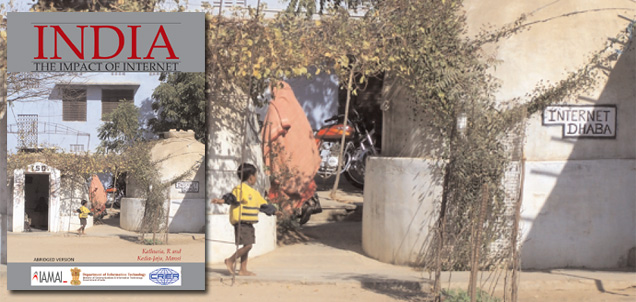
    Image courtesy: cover of ‘The Impact of Internet’.

    Copyright 2011 ICRIER
    All Rights Reserved
    Cover Photograph by Digital Empowerment Foundation


  • Arun Anant will be CEO, Hindu from Feb 6

    By Tuhina Anand


    It is learnt from sources close to the development that Mr Arun Anant is all set to join Kasturi & Sons Ltd as its Chief Executive Officer. He is slated to join on February 6, 2012 and will be responsible for all the non-editorial operations of the company.


    Mr Anant’s appointment comes following the recent development of Mr N Ram, the Editor-in-Chief and Publisher of The Hindu, Business Line, Frontline, and Sportstar stepping down thus paving way for restructuring at the senior level. Mr Ram had mentioned the appointment of a new CEO very soon.


    Mr. Anant, a B. Tech from BHU and a Post-Graduate in Management from IIM Ahmadabad, has earlier worked with The Economic Times and was the CEO of UTVi (now Bloomberg UTV). After moving from UTVi, he has set a management consulting firm called Inc Value. He has also worked on the agency side at Lowe where he was the GM Strategy.


    Also read

    N Ram to call it a day at Hindu

    http://www.mxmindia.com/2012/01/n-ram-to-call-it-a-day-at-hindu/


    Don’t be complacent: N Ram’s goodbye letter

    http://www.mxmindia.com/2012/01/dont-be-complacent-n-rams-goodbye-letter/


    Photograph: incvalue.com

  • [PR Channel] Young PR professionals need a reality check

    By Sayantan Sinha


    When the editor (no I am not talking about Mr. Mehta’s pet) called me to write this piece, I wondered “who’s going to read?”


    We, the breed of superior intellect and pray do not believe that, like to imagine (which is true) that we are the most well-read lot with deep understanding and knowledge on everything from needle to submarine. So my PR brethren, let us get out of our cocoon and do a little reality check.


    The stalwarts of the PR industry are people with huge repertoire of knowledge. Hence they are where they are today. The likes of Prema Sagar, Dilip Cherian, Madan Bahal, Supriyo Gupta, N S Rajan, Sunil Gautam, Roger Periera et al are known for their indelible track record.


    The intellectual growth of PR professionals has been inverse to that of India’s economic growth rate, particularly so in the past few years. While figure, physique and sensational sense of dressing have incorporated the oomph factor, lack of intelligence pervades the industry. Unfortunately, the finest of the gyms or the salons cannot add that aspect to personality. Add to that sheer indolence and Herculean attitude.


    Most of the younger lot, particularly in Delhi, have a lot of both. So much so, they successfully make new editors (refer to Person X as editor of one biz paper when s/he is in fact RE of another pink daily) , create awesome profiles (no link between the journalist, his area of expertise and publication) and above all confidently attribute journalists to publications which they left eons back.


    Why is this happening? I totally agree with my peers about the inflated egos of the younger generation. But we cannot absolve ourselves from the fact that we have not instilled the sense of responsibility in the new lot. Every agency has well-defined (and that has to be another critique) systems and processes. However, despite insisting on regular media rounds, you would hardly find youngsters rushing from one building to another on India’s Fleet Street.


    Of course, if there is a press conference, you will find a few hovering around. Penetration of internet and mobile have done all of us good, but our younger friends need to realise that relationships cannot be built only over emails and telephone /mobile or for that matter BBM.


    It is true that even five years back, it was far easier to meet a journalist. We could amble on the ET floor or chat with multiple journalists in Hindustan Times, but today that is not possible. But it is imperative to meet journalists so that there is connect between the face and the email id.


    It is a different issue that it is far easier to grab an appointment with the President than send a youngster out for media round. One is accosted with barrage of questions like “Why do I need to meet him / her? I get my work done”; “They must be busy”; “They do not come out to meet” and the best “What do I talk to them about?”!!!


    In the good old days, when people used to go for “shikaar” (hunting), they used to study the prey and its surrounding. Transform that to our profession. Even if there is no story to pitch for, go ahead and meet a journalist of the beat you cater to. Read his articles, talk to him about his stories, create a rapport and nurture it. A personal touch can go a long way. Don’t forget the brilliant line of Airtle’s campaign “BAAT KARNE SE HI BAAT BANTI HAI,” though the approach of today’s PR professional is as horrific as Airtel’s connectivity.


    And by the way, media rounds in Delhi can be great fun, if one is a foodie. From the crisp samosas of INS building canteen to dosas and vadas near Jantar Mantar, from bread pakora outside PTI building to finest fresh juices at Bahadur Shah Zafar Marg, the choice is huge. And make friends in Times Building, at-least to visit their swanky canteen.


    The other grey area is the fabled media list. More often than not, the most “updated” media list is the dated one. In Google age, youngsters seem to have forgotten the art of copy & paste! Otherwise how would one explain about a CoB who passed away some years ago still holding that position?


    More often than not, senior journalists complain about young PR professionals calling them and asking what do they write on! This brings me back to the first paragraph of this article. The stalwarts of the industry and anyone in the industry worth his salt, reads. Unless one reads, it is rather difficult to survive in the industry. Every byline has a name and in today’s day and age, most of the newspapers have compartmentalised content according to the beat. It is not rocket science. Even a child reading a newspaper regularly will be able to say what a particular journalist writes on.


    The angst in media against PR professionals is not unwarranted. We have provided them with enough ammunition to allot PR professionals as courier guys, adding no value. Unless one proves his mettle in this value chain, the individual must leave the profession. PR is serious business and we hope to have able people in the industry to take it forward. This is not written to demean anyone but to look within ourselves to find the answer.


    Sayantan Sinha is Founder & Managing Partner, Out-There PR & Communications


  • Sonal Dabral to head crack team at DDB Mudra Group

    By Amit Bapna


    Sonal Dabral, India chairman and regional executive creative director at WPP-owned Bates, is set to head the crack team at DDB Mudra group as its chairman-chief creative officer, people with direct knowledge of the development said.


    Prior to this, Mr Bobby Pawar, who recently moved to JWT India as the chief creative officer, was the group Chief Creative Officer at Mudra group.


    When contacted, both Mr Madhukar Kamath, group CEO and MD of DDB Mudra Group and Mr Sonal Dabral refused to comment. John Zeigler, Chairman & CEO (Asia Pacific, India and Japan) of DDB Group too refused to comment. He, however, said in an email reply, “I will answer all questions when we make our formal announcement on our choice for the Chairman and CCO for DDB Mudra.”


    While Sonal will be the creative face of the organisation, Madhukar will be the busness head, say sources. For over some weeks now, many names were doing the rounds regarding the new creative face of the DDB Mudra. Interestingly, Dabral, one of the hottest Indian creatives of the 90s, was being seen as the best contender, say industry sources.


    Dabral spent his best creative years with ad veteran Piyush Pandey at Ogilvy India, where the two forged a great chemistry and worked on brands such as Asian Paints, Cadbury and Fevicol.


    Another industry veteran points out that Mudra in its new avatar-post Omnicom buyout-would obviously have ambitions of occupying a much bigger space in Indian advertising, for which they would need a creative face with right clout of local and global experience. And Dabral fits the bill, as he turned around the Ogilvy offices in Malaysia and Singapore before moving to Bates.


    Interestingly, this would be Dabral’s second stint at Mudra. He had a short stint with the agency almost 20 years ago, but it did lead to one of the first and most memorable Hinglish campaigns of the country – ‘ Humko Binnies Mangta. Let’s see what he may have in store this time.


    Source:The Economic Times

    Copyright © 2012, Bennett, Coleman & Co. Ltd. All Rights Reserved


  • Filmwallahs, scribes mourn film critic Nikhat Kazmi’s death

    By A Correspondent


    “After people die, they become stars. Nikhat Kazmi just became four and a half”, a tweet by @NumbYaar as a tribute to Nikhat Kazmi aptly summed up feelings at her untimely death at the age of 53 on January 20, 2011. She was suffering from cancer.


    “Was truly shocked to hear about the untimely death of nikhatkazmi…the TOI critic of several years…prayers and thoughts with her family,” tweeted Karan Johar  (@kjohar25).


    “Tragic news. Extremely sad to know about the demise of Nikhat Kazmi, one of the most persistent film critics. Am sure wherever you are, it’ll be a 5 star rating, RIP. May God give strength to your loved ones,” tweeted Akshay Kumar (@akshaykumar).


    Ms Kazmi was the film critic at Times of India where she had been working for almost 25 years. According to media reports, she continued working till the very end. The last films she reviewed were Sadda Adda, Chaalis Chaurasi, Ghost and Blitz  (a Hollywood film). Ms Kazmi was always generous with her ratings, making no distinction between mainstream Bollywood and smaller independent cinema. And her generosity and grace were greatly appreciated by Bollywood.


    “Nikhat Kazmi was generous! Having come to terms with mortality she looked for something good in every film she viewed,” tweeted director Mahesh Bhatt  (@MaheshNBhatt).


    “Nikhat Kazmi was a great support for alternate cinema. Her reviews of Red Alert and Mee Sindhutai Sapkal, reaffirmed my faith in going global,” tweeted director Ananth Mahadevan (@ananthmahadevan19h).


    Many youngsters also gave her credit for always encouraging them in her reviews.


    “RIP Nikhat Kazmi. You enjoyed cinema and therefore encouraged us more than criticized us. We will miss you,” tweeted writer and director Milap Zaveri (@zmilap).


    “The 1st ever review I read of Refugee, my 1st film, was by NikhatKazmi. She always pointed out the road to improvement to me. RIP ma’am,” tweeted Abhishek Bachchan, (@juniorbachchan), mere hours after her demise.


    “Nikhat Kazmi ji the one person who has always encouraged me. Wrote so beautifully and one film critic I respected a lot! May her soul RIP 🙁 ,” tweeted Neil Nitin Mukesh  (@neilnmukesh).


    Not only Bollywood, Ms Kazmi’s death shocked many of her colleagues in the media fraternity too.


    Khalid Mohammed, film critic and filmmaker, said he wished he had known her better. “She was based in Delhi, while I worked in Mumbai. We would meet mostly at film festivals which required a group to cover the functions. I can’t say I knew her well, but I wished I had. I admire her perseverance, for she would review Indian as well as foreign language films,” he told MxM.


    Trade analyst and fellow film critic Taran Adarsh too expressed his condolences via Twitter: “Deeply saddened by the news of Times of India movie critic NikhatKazmi’s demise. RIP.”


    Parsa Venkateshwara Rao Jr, a senior journalist with DNA, had met Ms Kazmi once but she left quite an impression on him. Though he did not agree with her, he said liked her because: “Her heart was in the right place. She understood the importance of Hindi cinema and how it mirrored changing political and social winds of change. She was an anguished liberal,” he told MxM.


    Apart from being a film critic, Ms Kazmi was also an author who had written three books, Ire in the Soul: Bollywood’s Angry Years, The Dream Merchants of Bollywood and Times Guide to Hollywood Blockbusters. She had also written two plays.


    Whether people agreed with her critiques or not, there is no denying that her reviews in TOI will be missed. “RIP Nikhat Kazmi. A beautiful large theatre, with the coziest seat n all your favourite movies await you:) #respect” – Dia Mirza (@deespeak).


  • Anil Thakraney: An unconfident nation

    By Anil Thakraney


    Media ODing on three news items last week caught my attention. And it made me feel, both, confused and agitated. Confused, because the relevance of these stories eluded me. And agitated, because they show a nation of crores of people in a very poor light.


    First, the media going ballistic over Oprah Winfrey. Big time Indian celebs behaving like crazed fans and fawning over her like wannabes. And excitedly uploading their smiling pics, in the company of the exalted lady, on Twitter. The grand finale: Fisticuffs between Oprah’s bodyguards and some journos in a small town. Hello, what’s going on? The lady is just a talk show host, that’s her ticket to fame. So she’s made a little brand of herself, but she’s still a talk show host. Would Barkha Dutt, our own chat show girl, evoke such hysteria in America? I would be surprised if they noticed her on the streets of New York City. And after all the brouhaha, Ms Winfrey has sworn never to return to India. When will the Indian media learn to get some balance in its reportage.


    Later in the week, journalists lost their heads when it was learnt that the notorious mischief monger Salman Rushdie wasn’t going to make it to the Jaipur Lit Fest. And the breathless coverage gave me a huge jolt, I thought a tsunami had hit the Thar desert. Who really cares if Rushdie arrives or not? He keeps coming and going, in any case. Would the Lit Fest be a disaster in his absence? I can assure you, the one person who must be quietly sniggering over this media tamasha is Rushdie himself. This is exactly the sort of stuff he covets; it keeps him in the public eye.


    Then there was that collective outrage over the juvenile comments made by the BBC’s Top Gear host. On our loo habits. And this made the media lose its knickers. Oh, please!


    I don’t know if this has occurred to our content heads and editors, but this ‘phorein’ fixation after over 60 years of Independence is showing not just our media badly, it’s projecting India as a very unconfident and slavish nation. Let’s move on, people. Enough of ass licking these buggers. Let’s look inward, we have many problems of our own, and they need urgent attention.


    * * *


    PS: Happy that at last historian Ramchandra Guha has created his own website. It’s a collection of his best essays, apart from other stuff. Quite valuable. Because Guha isn’t just a columnist, his views give us glimpses into this nation’s past and present. It’s a treasure trove, really.


    Link: http://ramachandraguha.in/

  • The Anchor: 5 things young talent should do before drafting a brand idea

    By K V Sridhar


    #1 Listen to the client: Listening to the clients at various levels of brand management will give you a deeper understanding on the issues facing the brand. It is important to know where the problem or the challenge lies; at times the symptoms can be misleading and point towards the advertising while the issue could be availability of a certain pack size or erratic distribution. Remember, communication is only one of 10 things a brand does.


    #2 Listen to peers: Listening to peers in the Industry or within the agency will give a good intuitive outsider’s unbiased perspective. I believe perceived problems are more dangerous than real ones. Hence the check.


    #3 Listen to the consumers: Listen to their life views and then their views on consumption of various product categories, before you probe into yours. People are passionate about life, not products or brands, hence talk to them as people, not as a specialist trying to run an experiment.


    #4 Listen to your mother/ wife: Often they give a selfless view on brands and their behaviour, they do not hesitate to use harsh words if required to describe the reality. This may even help you to get newer or deeper insights into life and the category.


    #5 Listen to yourself: Having listened to everyone, you have won the right to listen to yourself, use your intuition to come up with a solution which in your judgment will answer the issues or meet the challenge. In the final analysis you need to be convinced about the idea, which can potentially solve the problem. This conviction is what the clients are looking for or paying you for.


    Contrary to popular belief, this profession is all about listening, thinking and making a judgment call – rather than talking and then thinking while talking.


    KV (“Pops”) Sridhar is the National Creative Director of Leo Burnett, India.


  • TV journos, please develop some sense

    By Ranjona Banerji


    If you have ever felt that you wanted to get bored to the point of death, as a sort of scientific experiment, you would do worse than to try and make sense of daytime TV news. Having just listened to a 5 minute conversation between an anchor and reporter about the latest on the controversy about the army chief’s age, all I could fathom was that the Supreme Court has dismissed a petition. Meanwhile, the anchor and reporter repeated the same thing about five times, over and over again. Plenty of ‘of courses’ and ‘in facts’, in fact, of course, studded this conversation.


    * * *


    West Bengal’s hospitals have always had plenty of horror stories in and around them but now that TV has tasted blood there, one can see that there is unlikely to be an escape from the scanner right now. Mamata Banerjee had better watch out.


    * * *


    Mid-Day was first off the block to tell us about extraordinary behaviour of the captain of the capsized ship, Costa Concordia, as he apparently ran away from his ship – later he said he tripped and fell into a lifeboat. The transcript of the conversation between the Italian Coastguard and the captain was an eye-opener. The captain has been accused of trying some kind of stunt which led to the cruise liner running aground. Indian TV and newspapers have as usual only concentrated on the Indians affected by this accident which makes looking for the complete picture a tedious task. Is there no life – or death – outside our geographical borders?


    * * *


    Suresh Kalmadi gets bail and as usual, our TV channels behave as if he has been acquitted of corruption charges. There are few simple things for journalists to remember here: you are innocent until proven guilty in India, bail is a permissible legal option and I throw this in for good measure: it is okay to criticise the armed forces.
    This hysterical self-righteousness demonstrated by most of our TV reporters is not just annoying, it is potentially dangerous.


    * * *


    It might also help if our TV reporters and anchors develop a sense of humour instead of trying to save India’s sensitivities from the BBC programme Top Gear. Surely, we can work on the principle that we are a mature society and can take a few jokes? Or, perhaps Indian news channels should have special telecasts for Indians living abroad who get quite upset quite easily? Then those of us left behind in India can live our lives in peace.


    * * *


    Meanwhile, we still don’t know if writer Salman Rushdie is coming to the Jaipur Lit Fest or not. So much for investigative journalism or a well-constructed publicity stunt?


    * * *


    Veteran and respected journalist Harish Khare has quit as media adviser to the Prime Minister, says The Times of India because he is upset at the appointment of TV journalist Pankaj Pachauri as communications adviser. Is this something to watch out for?


    * * *


    The death of TOI’s film critic Nikhat Kazmi on Friday morning was a sad way to start the day.


  • Winning consumers, dil se


    By Shubhangi Mehta


    ‘Advertising’ generally relates to a 30-60 second commercial which is, in some way, a break from whatever has grabbed our attention on the TV. It is, at times, packed with humour or creativity which manages to engage audiences and pay attention to the product being endorsed. But these days, brands are thinking beyond short term goals such as increasing sales to a long term goal of maintaining goodwill for the brand.


    For a while now, a lot of advertisements are not just based on a self-centred motive to sell the product but the brands and creatives are becoming more and more altruistic and trying to engage the audiences by including them in the commercial.


    Whether it is Coca-Cola “spreading happiness” or Tata Tea asking the consumer to “Jaago Re”, almost every brand is trying to step ahead and be an element revolutionising society.


    [youtube width=”400″ height=”250″]http://www.youtube.com/watch?v=M5ECJrnqPcI[/youtube]

    R Balki, Chairman and CCO, Lowe Lintas India, said, “There needs to be a connect of the message with the product. Brands just cannot jump onto the bandwagon by saying something which isn’t connected with the product. Even before Tata Tea or Lead India, it was Lifebuoy that came up with ‘koi dar nahi’, which encouraged kids to walk out and clean the streets. Hence, there is a definite need of product association with the message. Even in the Tata Tea campaign, tea is always associated with awakening and, with a name like Tata attached to it, we took it a step ahead and correlated it with awakening against corrupt politicians and so on. The thought was based on being optimistic and not cynical.”


    As a matter of fact if we are to recall, such advertisements are also the ones that manage stay in our minds the longest. Be it ‘Jaago Re’ ‘Lead India’ ‘Hum Mein Hai Hero’, ‘Idea’ commercials or the latest Stayfree campaigns.


    [youtube width=”400″ height=”250″]http://www.youtube.com/watch?v=A0M0EZ8T5J8[/youtube]

    “Every businessman today realises that just a transactional relationship with a client does not work these days, there is a very important need for emotional connect with the consumers, and brands like Coca Cola are realising the same. The trend has been there for a while, but its gaining momentum as every brand wants to be in the good books of the consumer. This is a worldwide trend where the society needs to know what exactly we are giving them back,” explained Prasoon Joshi.


    The problem lies when rather than being engaging, these commercials become preachy. The idea should be that it sermonises in such a creative way that it manages to engage a consumer, who considers an advertisement a break from a nail biting cricket/football match, or a soap opera that he /she is watching


    KV Sridhar, NCD, Leo Burnett, India, said, “More and more brand are realising these days that whatever we do is replicable. All the uniqueness and benefits get blurred after a while. Be it the uniqueness of an iPhone which is replicated by Chinese and Korean companies or the uniqueness of a brand communication. The other thing that marketers have understood is that ‘honesty’ and ‘selflessness’ are the keys to attract audiences. The Brand now tries to tell the audience that your ideas and my ideas are the same and this has become the solution to connect with the masses.”


    It won’t be wrong to say that Indian society gives utmost importance to values when compared to any other society. Hence, it helps a brand to come across as socially responsible.


    [youtube width=”400″ height=”250″]http://www.youtube.com/watch?v=6DkS7wfPMdQ[/youtube]

    Rahul Kansal, CMO, Bennett, Coleman and Co, said: “When it comes to using a social message to promote one’s brand, it has to have certain connection with the product. Sometime back, we saw Aircel’s campaign to Save the Tigers. Despite being a good concept, the campaign did not leave a mark, as it didn’t really help the brand because the cause wasn’t really connected with the brand. On the other hand, if we talk about Tata Tea’s Jaago Re campaign, it is a beautiful example of laddering up by a brand since tea is always associated with awakening and here the brand communication took it a step further by making it an awakening of the society towards the corrupt system. The Coke ad is also an example of going ahead with a thought of a drink which is meant to quench thirst, stepping ahead and becoming a brand to spread happiness. Times ofIndia’s ‘Lead India’ and ‘TeachIndia’ are also an example of laddering up by using a social message.”


    One might wonder, is creativity becoming a follower rather than a creator? One can also speculate that creative thought is the slave of trend, where one does something exceptional and others follow, as that becomes what the audiences want. The fact that such campaigns manage to capture the consumers’ eye is evidence. This practice had been seen in the past as well, but more and more brands have been adopting the concept lately. Will it continue, and how well can creativity present it? The fact remains that any product endorsing itself on such messages, even if remotely, needs to be connected with the communication at a certain level.


  • The Anchor: 6 mantras for starting a magazine

    By Shivani Darshan


    #1 Homework. Always understand who your consumers are; more important, who your competitors are. A good, in-depth understanding of the market will allow you to create a solution for the end users.


    #2 Eye on Money. Many businesses fail because they forget to focus on the revenue stream. Great paper, great pictures and articles account for nothing if you do not have advertisers and subscribers. Keep your focus and energies targeted on the money.


    #3 Supplier Management. Always keep your suppliers, vendors, contributors on check and keep a good backup at all times. Many startups fail to have backup writers and printers, and end up being blackmailed by a few good ones. Do your homework and always keep options open.


    #4 Money Management. Most startups fail to keep cash flow in check. Negotiating credit period and collecting money on time are some of the most difficult things to do when you start something new. Master this and you are ready to do business.


    #5 Future Planning. One of the biggest needs in today’s environment is to keep the future in mind. If you are launching a magazine you should also plan an ezine (e-magazine). After all the future is e-publishing and not paper publishing. The market is changing and today’s businesses need to be dynamic and ready for change.


    #6 Have Fun. Most people work so hard that they forget to have fun. It’s no use launching a new business if you are not going to enjoy doing it. Have a fun-filled atmosphere in your office. Always remember, a happy team is a productive team.


    Shivani Darshan is the Managing Director at Boutique Publishing India Pvt Ltd.